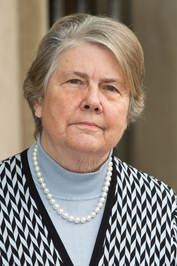
Isabel V. Sawhill is a senior fellow in Economic Studies at the Brookings Institution. She serves as co-director of the Budgeting for National Priorities project and co-director of the Center on Children and Families. She holds the Cabot Family Chair. In 2009, she began the Social Genome Project, an initiative by the Center on Children and Families that seeks to determine how to increase economic opportunity for disadvantaged children. She served as vice president and director of the Economic Studies program from 2003 to 2006. Prior to joining Brookings, Dr. Sawhill was a senior fellow at The Urban Institute. She also served as an associate director at the Office of Management and Budget from 1993 to 1995, where her responsibilities includeIsabel V. Sawhill is a senior fellow in Economic Studies at the Brookings Institution. She serves as co-director of the Budgeting for National Priorities project and co-director of the Center on Children and Families. She holds the Cabot Family Chair. In 2009, she began the Social Genome Project, an initiative by the Center on Children and Families that seeks to determine how to increase economic opportunity for disadvantaged children. She served as vice president and director of the Economic Studies program from 2003 to 2006. Prior to joining Brookings, Dr. Sawhill was a senior fellow at The Urban Institute. She also served as an associate director at the Office of Management and Budget from 1993 to 1995, where her responsibilities included all of the human resource programs of the federal government, accounting for one third of the federal budget.
Dr. Sawhill helped to found The National Campaign to Prevent Teen and Unplanned Pregnancy and now serves as the President of its board. She has been a Visiting Professor at Georgetown Law School, Director of the National Commission for Employment Policy, and President of the Association for Public Policy Analysis and Management. She also serves on a number of boards. She attended Wellesley College and received her Ph.D. from New York University in 1968....more
As a rhetorical ideal, greater opportunity is hard to beat. Just about all candidates for high elected office declare their commitments to promoting opportunity – who, after all, could be against it? But opportunity is, to borrow a term from the philosopher and political theorist Isaiah Berlin, a "protean" word, with different meanings for different people at different times.