
Paul Polak's Blog
March 10, 2017
Black Swans and the Future of Energy by Paul Polak and Krish Desai

Energy experts now confidently predict that by 2040, solar and wind will drive no less than 60% of global power; natural gas will replace the lion’s share of the burning of coal, and the market for electric cars will soar. Nassim Taleb, on the other hand, questions the ability of experts to predict just about anything. He asserts instead, in The Black Swan: The Impact of the Highly Improbable, that the future is consistently shaped by unexpected, high-impact outlier events, which we do our best to rationalize after the fact. Who could have predicted the Black Swan disruptive transformative impact of Henry Ford’s Model T or Jobs and Wozniak’s Apple?
As a faithful Black Swan convert, I doubt our ability to predict our planet’s energy future in 2040. We can, however, make educated guesses about the forces likely to give shape to the energy Black Swans in our immediate future. Here is one of them.
The actions of 2.5 billion or so people in the world who live on less than $2/day will shape Black Swan disruptions in the next 20 years more powerfully than most of us can imagine. They are already responsible for just about all of the planet’s population growth in the next two decades, which will profoundly affect environmental balance. Conversely, they are disproportionately distributed in close proximity to dispersed stands of high energy invasive biomass which can most easily be converted to low carbon emitting alternatives to coal, and in the process move out of poverty. A perfect example is the prevalence of mesquite in arid lands which can be easily converted to low carbon-emitting dense biomass sources.
This omission of the impoverished actions in predictions of our energy future is astounding. These shapers of our energy future are disproportionately distributed in dispersed, poor rural areas in close proximity to stands of high energy biomass, easily converted into low-carbon emitting alternatives to coal, creating millions of new jobs and massive new markets for village produced energy products.
Nature takes 300 million years to produce coal. But through a process called torrefaction, which is exactly the same as roasting coffee, a group of volunteer engineers at Ball Aerospace have reduced the time to one hour, producing a blackened biomass that looks like coal, burns like coal and best of all mimics nature’s carbon cycle instead of increasing carbon emissions.
Using selected agricultural waste streams and invasive species growing in arid wastelands as inputs, it is now possible to design 100,000 village kilns, each capable of producing 7 tons a day of a low carbon emitting substitute for coal. The shortening of the collection radius from 150 kilometers to 4 kilometers, taking advantage of low-cost labor in rural villages, and adding carbon credits to the mix is now likely to produce a new breed of multinational corporations partnering with village enterprises and capable of replacing up to 20% of global carbon emissions. Best of all, if it works, it will become a profitable international corporation, supported by investment capital instead of the begging bowl.
This is my dream for the future. Whether it will turn out to be a dream or a nightmare remains to be seen.


July 8, 2016
Sharks, Pigs, & Coconuts: Economic Development and Mental Health by Paul R. Polak, M.D.
This research article was written by Dr. Paul Polak in the 1970’s while he was the Executive Director, Southwest Denver Community Mental Health Services, Inc., 1611 South Federal Blvd., Denver, CO. 80219.
* Paper presented at the 55th Annual Meeting of the American Orthopsychiatric Association, San Francisco, CA., March 1978.
The most effective mental health program in a poor country is the initiation of successful economic development programs. By economic development I do not mean the large-scale grafting of high technology and dollars to village cultures that is so typical of U.S. foreign aid policies. Economic development to me implies much more of a process in which technology and dollars are changed around so that they fit into the cultural realities of the country in which the economic development takes place. I regard this type of economic development, which concerns itself with improving the supplies of food, housing, self esteem and income of poor people and poor countries, as a basic science for the practice of psychiatry.
Some 16 years ago when I finished psychiatric residency in Denver, I was fascinated by psychoanalysis and the intra-psychic processes that I felt determined behavior. Two years ago I started a program which developed better ways of catching, processing, and selling salted and dried shark meat in Belize, Central America. What I would like to do today is tell you something about the process which led me from an intra-psychic, psychoanalytically-oriented view of mental health problems to a position which sees economic development as a basic science for psychiatry, and to describe some of the initial economic development projects I am involved with.
When I left residency and went to work at Fort Logan Mental Health Center in Denver as Director of Research, I was concerned with the evaluation of treatment effectiveness of psychiatric hospitals. I quickly found out that people didn’t end up in the state hospital just because they were crazy. There were many people with crazy symptoms who never got close to a psychiatric hospital. For those who did end up in the state hospital, a major conflict in the patient’s family or primary living group was almost a prerequisite. As I gained more experience with the social process leading to hospitalization both at Fort Logan and later at Dingleton Hospital in Scotland, I came to believe that a social disturbance in the patient’s family typified by several unresolved crises a more significant determinant of admission than the patient’s psychiatric symptoms, and I began to evaluate and treat patients routinely in the context of their families in their real-life settings.
I did not abandon the intra-psychic model at that point; I was just enormously impressed by the very significant interaction between what was going on inside the psychotic patient and what was going on between him and family or primary living group. After four years’ experience with the crisis intervention service at Fort Logan Mental Health Center in which we routinely saw the family of the patient in a real-life setting, I was convinced that no patient being admitted to a psychiatric hospital can be treated competently unless there is a direct evaluation of and intervention in the social forces pertinent to the reasons for treatment. Direct evaluation of families and other pertinent social systems within the patient’s natural environment became an integral part of the routine treatment of seriously disabled psychiatric clients. After a series of subsequent research and clinical studies, I became convinced that the relationship people have to basic aspects of the physical environment is an important determinant of the fate of small social systems in the same way that families and small social systems are important determinants of what happens to individuals. I am referring to such basic survival issues as food, shelter and clothing, and the jobs and income that make them available.
More recently, we have initiated a comprehensive system of community treatment in southwest Denver which has essentially replaced psychiatric hospitalization. It is impossible to work routinely with psychotic clients outside institutions, and especially with chronic clients, without being impressed by the enormous impact of food, housing, self esteem, and income on their lives. It is quite obvious that these variables are much more important than exposure to any standard psychiatric treatment program. It is just these variables, and the very significant problems of human organization that are required to improve food, housing and income, that are the essence of economic development programs. I am convinced that these variables are more important determinants of the well being and mental health of an individual than is psychological makeup or the characteristics of his family. In any case, individual variables, social systems variables, and environmental variables all interact significantly with each other. Family stability and individual makeup very significantly influence the ability of a family to maintain adequate supplies of food, shelter, clothing and income. However, when a whole culture routinely is faced with deprivation in relationship to meeting these basic human needs, much higher proportions of physical and psychiatric illness take place even in the presence of significant individual and family strengths. It takes the most exceptional individual and family to survive productively under these circumstances.
ECONOMIC DEVELOPMENT
Economic projects work directly to develop culturally relevant procedures to improve the food, shelter, income, and self esteem of a poor country or a poor population. By carrying out such projects, I believe it is possible to learn a great deal about basic processes that determine mental health and mental illness, and how some of these processes can be influenced. That is why I think economic development should be regarded as a basic mental health science. What I would now like to do is describe briefly some past and present economic development projects. I should point out that what I like to do best is to build practical working models. It took about 15 years to develop, test, and finally put into practice a whole system of treatment modalities that has essentially replaced psychiatric hospitals. That system is now in place in southwest Denver, and it works. In contrast, I have only been working on economic development projects for the past three years. This means that we are only at the stage of building, testing, and learning from our first generation of pilot projects in economic development. What I will now present is a brief status report on four economic development projects, our current approach to longrange financing, and our plans for the future. The first of these projects was the development of a shark fishing and processing project in Belize, Central America. The second was the development of a small pig rearing operation, also in Belize. The third is the initiation of a fish processing plant in British Columbia, and the fourth is the development of an oil well drilling program, which is being utilized to finance all of these projects. I’ll start with the first of these, that is, the fishing operation.

SHARK FISHING OPERATION
I wish I could say that I got involved in economic development because it was a logical, rational outgrowth of my work in psychiatry. The fact is that I got involved in my first economic development project because I like scuba diving, and the connection with mental health only became apparent later on. I’m an avid scuba diver and was on a diving vacation in British Honduras, which has the second largest reef in the world, with my friend, Harry Groom, who is a commercial fisherman. In Belize we met Willard Young, who was at that time lighthouse keeper of Half Moon Key, a beautiful island 50 miles off shore. He invited us to come back with our families, and we became good friends. Willard added to his small income as a lighthouse keeper by catching fish, and during Lent he always sold a few hundred pounds of dried shark meat. During the Lenten season, salted and dried shark meat is a preferred form of fish in Central America. Harry, the commercial fisherman from Vancouver, thought he could improve Willard’s catch rate, and I thought I could develop new markets for byproducts. So after a lot of discussion we all decided to explore the feasibility of a commercial shark fishing operation in Belize.
Belize, with its population of 130,000, is about as undeveloped a country as you can get. Whereas most third-world countries are struggling to progress from primarily an agricultural economy to an industrial one, Belize is still struggling to develop and agricultural economy. Over 80 percent of the food raised in Belize is produced by Mennonites living in separate communities. The native Belizians lack the capital, know-how, and work ethic required to produce significant amounts of food. The end result is that many foods that could be raised in Belize are currently imported from other countries, adding an additional burden to the balance of payments problem. I took a three-month leave of absence from work to get the shark fishing operation started. We had no idea when we started the commercial shark fishing operation that it was quite impossible to develop a full-scale fishing, processing, and marketing operation in the short period of three months. Because we didn’t know that it couldn’t be done, we found we actually were able to accomplish all three quite nicely.
With our Belizian partners, who, by the way, had majority control of the enterprise, we established a fishing operation which caught 1,000 – 2,000 pounds a day of sharks. We established processing procedures for salting and drying the meat, and markets for the meat in Spanish Honduras. We processed the livers into a cod liver oil type product for the local market. We cured the skins and shipped them to the U.S. to be made into leather. We designed, manufactured and sold jewelry from the teeth. However, we made some very basic and painful mistakes. We found we had to quickly abandon both complicated fishing machinery and all complicated fish processing procedures described in standard textbooks. People in Belize just don’t know how to operate machinery and keep it operating. A very basic simplified technology that would work had to be created for each operation For example, in place of a steam boiler that extracted oil from shark livers, we simply minced livers into green garbage cans and let them heat in the sun to get the same result. The main problem with this project was that the total fish life on the reef was not large enough to support enough sharks to maintain an extensive shark fishery. Warm waters simply do not support a large fish population, compared with cold waters where upwelling currents bring up large quantities of plankton that fish feed on. On the west coast of Canada, more fish are thrown away every day than the total fish population of the Belizian reef. This was to lead eventually to the establishment of a fish processing operation in British Columbia. Meanwhile, a byproduct of the shark fishing operation developed into a second, small economic development project in Belize.
Sharks, Pigs and Coconuts
Although salted and dried white shark meat is a highly prized source of food, for some reason people in Central America don’t eat the red meat found just under the shark’s skin. So we set up an experiment to see if we could use the red meat as a protein source for raising pigs. The original idea came from Willard Young, who told us how his father had often raised one or two pigs on the islands, feeding them occasional fish scraps and coconuts. We decided to try bringing several purebred pigs out to Half Moon Key to see if the traditional practice of raising one or two pigs on an island could be expanded and organized into a larger-scale food rearing operation. There are over a thousand unoccupied islands on the reef in Belize, and most of them have coconut groves on them, with an unused coconut crop. It takes two or three years to grow a coconut crop from a planted coconut, and this is a relatively easy thing to accomplish. 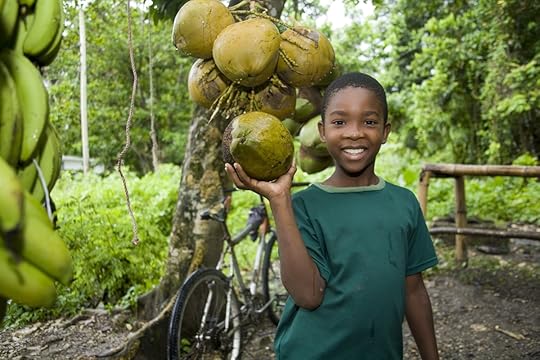 Small-scale fishing is a way of life on the islands, and there is always a supply of fish scraps. Fish provides an excellent source of essential amino acids for monogastric animals who cannot manufacture their own essential amino acids. If a pilot project raising pigs on coconuts, fish scraps, and a green weed that grows naturally on the coral islands of Belize was possible, a series of small pig rearing operations at different locations on the reef could be considered. We decided to start by bringing two purebred pigs to Half Moon Key.
 Now you may think that getting two purebred pigs and taking them out to an island should be a relatively easy thing to accomplish. The problem is that everything that is normally taken for granted in a so-called civilized country becomes incredibly complicated in a poor country. First of all, the only place where purebred pigs could be bought in Belize is in the government experimental station, which is a three-hour drive from the capitol. Since it was impossible to reach the experimental station by telephone, Willard got a taxi driver friend of his to take him out to pick up two pigs. After a terrific amount of negotiating, he was able to buy two pigs, and get them back to town in the taxi. But then another problem came up. Willard goes from Belize to his island in his sailboat. Usually the trip out to the island is against the wind. Because he ran into rough headwinds, Willard gave the two pigs for safekeeping to a friend of his who had his outboard operating. Unfortunately, this friend only delivered one pig to Half Moon Key, which was not an auspicious beginning for a pig rearing operation.
The story was that during the storm on the way across the ocean, one of the pigs jumped out and drowned. A more likely interpretation is that one of these pigs jumped into a cooking pot. I attempted to remedy this situation by coming out a month or two later after having made the same trip to the experimental farm, using a borrowed truck, followed by a rented motor boat, and delivering to Willard’s island eight purebred pigs, all of them females. Now we had enough breeding stock, with the one pig already deposited on the island being a male, but we had another problem. Nine pigs were far too many for Willard to handle. Our intention was to start with a culturally acceptable idea, that is, one or two pigs, and simply expand the idea to a larger size. The jump from one or two pigs to three or four pigs is quite acceptable. A jump from one or two pigs to nine pigs is almost unacceptable, and the project was almost aborted because of my overambitiousness. I mentioned this to point out some of the difficulties and some of the problems in making an economic development project culturally acceptable. In spite of this rocky beginning, the pig project proved to be successful; the pigs both survived on the experimental diet and were able to produce young.
Since that time, Willard has been transferred to another lighthouse and was able to move his growing retinue of pigs by making four trips on his sailboat. At last count 30 pigs are now alive and well. If this project continues to survive our plan is to expand it in size and scope. Our biggest problem will be not that of buying pigs or organizing the technology to raise them. It will be the problem of how to organize partnerships with Belizians in such a way that rearing pigs will be workable.
THE VANCOUVER FISH PROCESSING PLANT
It is impossible to become seriously concerned with problems of food, income, and economic development in one country without becoming immediately aware of world-wide food and energy resources, and how they are being used. Schumacher, in his book Small is Beautiful, lucidly described how wealthy countries are using up a vastly disproportionate share of the world’s supplies of both food and energy. Schumacher and others have convincingly pointed out that the incredible waste of food and oil, which has become a routine part of life in countries like the United States, is becoming a standard for poorer countries to strive for. What led to the establishment of a fish processing plant in Vancouver was the realization that more fish was thrown out in one day off the west coast of Canada than was represented by the total fish population of the 200-mile tropical reef off of Belize. The amount of high quality fish that is routinely wasted by the fish industry off the west coast of Canada and the United States is staggering.
On a recent twelve-day fishing trip a 60-ft. dragger operating out of Vancouver threw out a million pounds of turbot. The turbot was caught, killed in the process of catching, and thrown overboard because no processor in the Vancouver area would buy it. Such wastage is a routinely accepted fact in the fishing industry in spite of the severe protein shortage in many underdeveloped countries. In fact, about one-half of all the fish caught by fishermen is thrown overboard because there are no current profitable markets for it. Simply processing the turbot thrown out by that one dragger on one 12-day fishing trip could supply 500,000 pounds of salted and dried fish for the Belizian market, which is the equivalent of over three pounds of fish for every resident of Belize.
The fish company that we have established in Canada has as its primary objective the processing and utilization of the species of fish that are currently being wasted. As an example of what we are doing, I will describe our current involvement in the herring roe fishery. In the month of March during the herring roe fishery on the west coast of Canada, 75,000 tons of herring will be thrown out. This is 150,000,000 pounds of edible fish or more than one-half pound of fish for every person of the United States. The reason such a staggering amount of good food is wasted is simply because herring eggs are expensive, and the herring itself is cheap. Of the 86,000 ton annual quota of roe herring for the west coast of Canada, 8 – 10,000 tons of eggs will be sold to Japan for a price of 110-150 million dollars. The meat has a potential economic value of only 5 – 10 million dollars, so the fish themselves are handled very poorly, and 150 million pounds of edible herring are turned into fertilizer in reduction plants. As I am describing this to you today, our fish processing plant in Canada is attempting to pioneer ways of handling and processing roe herring so that the carcasses of the female herring can be used as a source of food. We have an initial purchase order from Germany for 300 tons of marinated herring to be made from female herring after the eggs have been removed. This operation has a high degree of risk, but if it can be carried out successfully, it could have a major impact on world food stock. A second objective of the Vancouver project is the utilization of the vast quantities of unutilized or under utilized species of fish, such as turbot, hake and dogfish shark. We plan to set the technology of the fishing industry on the west coast back- wards by 50 to 100 years by instituting salting and drying procedures for these species of routinely wasted fish similar to those we used in processing shark meat in British Honduras. The salted and dried fish will then be sent to Central America for final processing and sale.
ECONOMIC JUDO — AN APPROACH TO FINANCING
The funding source for the fish processing plant and other economic development projects relies on a process which I refer to as economic judo. Judo is a way of using the already existing momentum of a larger opponent to your own advantage. It is my contention that human stupidity in the over use and waste of resources is predictable and will continue. I am making use of this predictability to generate the funding for projects which will, in effect, recycle some of those wastes. The price of oil is certain to rise at a meteoric rate because of the predictable pattern of its continued overuse and because the supplies of oil are finite. Therefore, I got involved in a partnership that drills, produces, and sells oil in rural Kansas. These little wells, called stripper wells, are only about 800 feet deep, and each produces only a few barrels of oil, so the big companies have not shown much interest in them. However, they routinely produce for 30 to 50 years. This means that our little oil wells, which are economically feasible now, will increase meteorically in value over the next 30 to 50 years, and it is this increase in value which will be used to finance future economic development projects. The turbot, hake, and dogfish shark that will be salted and dried will be bought and processed using oil revenues. It will then be sold in low protein countries, with the proceeds used to finance local economic development projects like the pig rearing operation.
WORKING PRINCIPLES
The biggest problems we have encountered so far in our economic development projects are not related to money and technology but to people and cultural differences. I cannot overemphasize the vast cultural differences between the people in rich countries, who plan economic development projects, and the people in poor countries, who end up working in them. The people in rich countries make assumptions that arise quite naturally out of their own environmental context. Unfortunately, most of these assumptions are totally inapplicable to the people of the poor country they are dealing with. When I suggested to Willard that he raise three or four pigs instead of one or two pigs, he quickly agreed to it. When I came blundering to his island with eight pigs, a number which to me was really not very large, I pushed Willard almost to the point where the project became unworkable. The economic projects that have the best chance of success are those which start within the culture of the country itself, and are carried out simply by adding a small amount of money, a small amount of technological assistance, and a huge commitment to working out the problems of human organization that will make the projects work. I would like at this point to list a few basic working principles for economic development projects that come out of initial experiences.
1. Cultural relevance. The economic development project should be culturally relevant and culturally acceptable.
2. Structure of economic development proiects. 50-50 partnerships, evolving eventually to majority control by local residents work best
3. Funding. It is best to spend as little as possible to get a project started, and let it grow gradually.
4. Technology. Small-scale technology as outlined by Schumacher is usually far more workable than large-scale technology in third-world countries. Systematic dismantling of complex technology to make it fit the culture is far more practical than trying to make a local culture adapt to an inappropriate technology
5. Profit. Economic development projects must eventually make enough profit to be self sufficient. To accomplish this, the skills of a businessman-entrepreneur are far more important than those of a social worker/professional helper.
SUMMARY & CONCLUSIONS
The evidence is overwhelming that poor people experience much more psychiatric and medical illness than people who are well off. That this is directly related to access to food, shelter, and other environmental conditions for survival is obvious. I have described several pilot projects in economic development, how they are financed, and some initial working principles. I am struck with how relevant some of the principles derived from economic development projects in poor countries are to working with populations such as chronic psychiatric patients in community settings. I hope that our continued work will produce more practical information about some of the environmental forces that contribute to mental health problems, and what can be done about them.
SHARKS, PIGS, & COCONUTS: ECONOMIC DEVELOPMFNT AND MENTAL HEALTH* by Paul R. Polak, M.D.
This research article was written by Dr. Paul Polak in the 1970’s while he was the Executive Director, Southwest Denver Community Mental Health Services, Inc., 1611 South Federal Blvd., Denver, CO. 80219.
* Paper presented at the 55th Annual Meeting of the American Orthopsychiatric Association, San Francisco, CA., March 1978.
The most effective mental health program in a poor country is the initiation of successful economic development programs. By economic development I do not mean the large-scale grafting of high technology and dollars to village cultures that is so typical of U.S. foreign aid policies. Economic development to me implies much more of a process in which technology and dollars are changed around so that they fit into the cultural realities of the country in which the economic development takes place. I regard this type of economic development, which concerns itself with improving the supplies of food, housing, self esteem and income of poor people and poor countries, as a basic science for the practice of psychiatry. Some 16 years ago when I finished psychiatric residency in Denver, I was fascinated by psychoanalysis and the intra-psychic processes that I felt determined behavior. Two years ago I started a program which developed better ways of catching, processing, and selling salted and dried shark meat in Belize, Central America. What I would like to do today is tell you something about the process which led me from an intra-psychic, psychoanalytically-oriented view of mental health problems 1to a position which sees economic development as a basic science for psychiatry, and to describe some of the initial economic development projects I am involved with.
When I left residency and went to work at Fort Logan Mental Health Center in Denver as Director of Research, I was concerned with the evaluation of treatment effectiveness of psychiatric hospitals. I quickly found out that people didn’t end up in the state hospital just because they were crazy. There were many people with crazy symptoms who never got close to a psychiatric hospital. For those who did end up in the state hospital, a major conflict in the patient’s family or primary living group was almost a prerequisite. As I gained more experience with the social process leading to hospitalization both at Fort Logan and later at Dingleton Hospital in Scotland, I came to believe that a social disturbance in the patient’s family typified by several unresolved crises a more significant determinant of admission than the patient’s psychiatric symptoms, and I began to evaluate and treat patients routinely in the context of their families in their real-life settings. I did not abandon the intra-psychic model at that point; I was just enormously impressed by the very significant interaction between what was going on inside the psychotic patient and what was going on between him and family or primary living group. After four years’ experience with the crisis intervention service at Fort Logan Mental Health Center in which we routinely saw the family of the patient in a real-life setting, I was convinced that no patient being admitted to a psychiatric hospital can be treated competently unless there is a direct evaluation of and intervention in the social forces pertinent to the reasons for treatment. Direct evaluation of families and other pertinent social systems within the patient’s natural environment became an integral part of the routine treatment of seriously disabled psychiatric clients. After a series of subsequent research and clinical studies, I became convinced that the relationship people have to basic aspects of the physical environment is an important determinant of the fate of small social systems in the same way that families and small social systems are important determinants of what happens to individuals. I am referring to such basic survival issues as food, shelter and clothing, and the jobs and income that make them available. More recently, we have initiated a comprehensive system of community treatment in southwest Denver which has essentially replaced psychiatric hospitalization. It is impossible to work routinely with psychotic clients outside institutions, and especially with chronic clients, without being impressed by the enormous impact of food, housing, self esteem, and income on their lives. It is quite obvious that these variables are much more important than exposure to any standard psychiatric treatment program. It is just these variables, and the very significant problems of human organization that are required to improve food, housing and income, that are the essence of economic development programs. I am convinced that these variables are more important determinants of the well being and mental health of an individual than is psychological makeup or the characteristics of his family. In any case, individual variables, social systems variables, and environmental variables all interact significantly with each other. Family stability and individual makeup very significantly influence the ability of a family to maintain adequate supplies of food, shelter, clothing and income. However, when a whole culture routinely is faced with deprivation in relationship to meeting these basic human needs, much higher proportions of physical and psychiatric illness take place even in the presence of significant individual and family strengths. It takes the most exceptional individual and family to survive productively under these circumstances.
ECONOMIC DEVELOPMENT
Economic projects work directly to develop culturally relevant procedures to improve the food, shelter, income, and self esteem of a poor country or a poor population. By carrying out such projects, I believe it is possible to learn a great deal about basic processes that determine mental health and mental illness, and how some of these processes can be influenced. That is why I think economic development should be regarded as a basic mental health science. What I would now like to do is describe briefly some past and present economic development projects. I should point out that what I like to do best is to build practical working models. It took about 15 years to develop, test, and finally put into practice a whole system of treatment modalities that has essentially replaced psychiatric hospitals. That system is now in place in southwest Denver, and it works. In contrast, I have only been working on economic development projects for the past three years. This means that we are only at the stage of building, testing, and learning from our first generation of pilot projects in economic development. What I will now present is a brief status report on four economic development projects, our current approach to longrange financing, and our plans for the future. The first of these projects was the development of a shark fishing and processing project in Belize, Central America. The second was the development of a small pig rearing operation, also in Belize. The third is the initiation of a fish processing plant in British Columbia, and the fourth is the development of an oil well drilling program, which is being utilized to finance all of these projects. I’ll start with the first of these, that is, the fishing operation.
SHARK FISHING OPERATION
I wish I could say that I got involved in economic development because it was a logical, rational outgrowth of my work in psychiatry. The fact is that I got involved in my first economic development project because I like scuba diving, and the connection with mental health only became apparent later on. I’m an avid scuba diver and was on a diving vacation in British Honduras, which has the second largest reef in the world, with my friend, Harry Groom, who is a commercial fisherman. In Belize we met Willard Young, who was at that time lighthouse keeper of Half Moon Key, a beautiful island 50 miles off shore. He invited us to come back with our families, and we became good friends. Willard added to his small income as a lighthouse keeper by catching fish, and during Lent he always sold a few hundred pounds of dried shark meat. During the Lenten season, salted and dried shark meat is a preferred form of fish in Central America. Harry, the commercial fisherman from Vancouver, thought he could improve Willard’s catch rate, and I thought I could develop new markets for byproducts. So after a lot of discussion we all decided to explore the feasibility of a commercial shark fishing operation in Belize. Belize, with its population of 130,000, is about as undeveloped a country as you can get. Whereas most third-world countries are struggling to progress from primarily an agricultural economy to an industrial one, Belize is still struggling to develop and agricultural economy. Over 80 percent of the food raised in Belize is produced by Mennonites living in separate communities. The native Belizians lack the capital, know-how, and work ethic required to produce significant amounts of food. The end result is that many foods that could be raised in Belize are currently imported from other countries, adding an additional burden to the balance of payments problem. I took a three-month leave of absence from work to get the shark fishing operation started. We had no idea when we started the commercial shark fishing operation that it was quite impossible to develop a full-scale fishing, processing, and marketing operation in the short period of three months. Because we didn’t know that it couldn’t be done, we found we actually were able to accomplish all three quite nicely. With our Belizian partners, who, by the way, had majority control of the enterprise, we established a fishing operation which caught 1,000 – 2,000 pounds a day of sharks. We established processing procedures for salting and drying the meat, and markets for the meat in Spanish Honduras. We processed the livers into a cod liver oil type product for the local market. We cured the skins and shipped them to the U.S. to be made into leather. We designed, manufactured and sold jewelry from the teeth. However, we made some very basic and painful mistakes. We found we had to quickly abandon both complicated fishing machinery and all complicated fish processing procedures described in standard textbooks. People in Belize just don’t know how to operate machinery and keep it operating. A very basic simplified technology that would work had to be created for each operation For example, in place of a steam boiler that extracted oil from shark livers, we simply minced livers into green garbage cans and let them heat in the sun to get the same result. The main problem with this project was that the total fish life on the reef was not large enough to support enough sharks to maintain an extensive shark fishery. Warm waters simply do not support a large fish population, compared with cold waters where upwelling currents bring up large quantities of plankton that fish feed on. On the west coast of Canada, more fish are thrown away every day than the total fish population of the Belizian reef. This was to lead eventually to the establishment of a fish processing operation in British Columbia. Meanwhile, a byproduct of the shark fishing operation developed into a second, small economic development project in Belize.
Sharks, Pigs and Coconuts
Although salted and dried white shark meat is a highly prized source of food, for some reason people in Central America don’t eat the red meat found just under the shark’s skin. So we set up an experiment to see if we could use the red meat as a protein source for raising pigs. The original idea came from Willard Young, who told us how his father had often raised one or two pigs on the islands, feeding them occasional fish scraps and coconuts. We decided to try bringing several purebred pigs out to Half Moon Key to see if the traditional practice of raising one or two pigs on an island could be expanded and organized into a larger-scale food rearing operation. There are over a thousand unoccupied islands on the reef in Belize, and most of them have coconut groves on them, with an unused coconut crop. It takes two or three years to grow a coconut crop from a planted coconut, and this is a relatively easy thing to accomplish. Small-scale fishing is a way of life on the islands, and there is always a supply of fish scraps. Fish provides an excellent source of essential amino acids for monogastric animals who cannot manufacture their own essential amino acids. If a pilot project raising pigs on coconuts, fish scraps, and a green weed that grows naturally on the coral islands of Belize was possible, a series of small pig rearing operations at different locations on the reef could be considered. We decided to start by bringing two purebred pigs to Half Moon Key.
Now you may think that getting two purebred pigs and taking them out to an island should be a relatively easy thing to accomplish. The problem is that everything that is normally taken for granted in a so-called civilized country becomes incredibly complicated in a poor country. First of all, the only place where purebred pigs could be bought in Belize is in the government experimental station, which is a three-hour drive from the capitol. Since it was impossible to reach the experimental station by telephone, Willard got a taxi driver friend of his to take him out to pick up two pigs. After a terrific amount of negotiating, he was able to buy two pigs, and get them back to town in the taxi. But then another problem came up. Willard goes from Belize to his island in his sailboat. Usually the trip out to the island is against the wind. Because he ran into rough headwinds, Willard gave the two pigs for safekeeping to a friend of his who had his outboard operating. Unfortunately, this friend only delivered one pig to Half Moon Key, which was not an auspicious beginning for a pig rearing operation. The story was that during the storm on the way across the ocean, one of the pigs jumped out and drowned. A more likely interpretation is that one of these pigs jumped into a cooking pot. I attempted to remedy this situation by coming out a month or two later after having made the same trip to the experimental farm, using a borrowed truck, followed by a rented motor boat, and delivering to Willard’s island eight purebred pigs, all of them females. Now we had enough breeding stock, with the one pig already deposited on the island being a male, but we had another problem. Nine pigs were far too many for Willard to handle. Our intention was to start with a culturally acceptable idea, that is, one or two pigs, and simply expand the idea to a larger size. The jump from one or two pigs to three or four pigs is quite acceptable. A jump from one or two pigs to nine pigs is almost unacceptable, and the project was almost aborted because of my overambitiousness. I mentioned this to point out some of the difficulties and some of the problems in making an economic development project culturally acceptable. In spite of this rocky beginning, the pig project proved to be successful; the pigs both survived on the experimental diet and were able to produce young. Since that time, Willard has been transferred to another lighthouse and was able to move his growing retinue of pigs by making four trips on his sailboat. At last count 30 pigs are now alive and well. If this project continues to survive our plan is to expand it in size and scope. Our biggest problem will be not that of buying pigs or organizing the technology to raise them. It will be the problem of how to organize partnerships with Belizians in such a way that rearing pigs will be workable.
THE VANCOUVER FISH PROCESSING PLANT
It is impossible to become seriously concerned with problems of food, income, and economic development in one country without becoming immediately aware of world-wide food and energy resources, and how they are being used. Schumacher, in his book Small is Beautiful, lucidly described how wealthy countries are using up a vastly disproportionate share of the world’s supplies of both food and energy. Schumacher and others have convincingly pointed out that the incredible waste of food and oil, which has become a routine part of life in countries like the United States, is becoming a standard for poorer countries to strive for. What led to the establishment of a fish processing plant in Vancouver was the realization that more fish was thrown out in one day off the west coast of Canada than was represented by the total fish population of the 200-mile tropical reef off of Belize. The amount of high quality fish that is routinely wasted by the fish industry off the west coast of Canada and the United States is staggering. On a recent twelve-day fishing trip a 60-ft. dragger operating out of Vancouver threw out a million pounds of turbot. The turbot was caught, killed in the process of catching, and thrown overboard because no processor in the Vancouver area would buy it. Such wastage is a routinely accepted fact in the fishing industry in spite of the severe protein shortage in many underdeveloped countries. In fact, about one-half of all the fish caught by fishermen is thrown overboard because there are no current profitable markets for it. Simply processing the turbot thrown out by that one dragger on one 12-day fishing trip could supply 500,000 pounds of salted and dried fish for the Belizian market, which is the equivalent of over three pounds of fish for every resident of Belize. The fish company that we have established in Canada has as its primary objective the processing and utilization of the species of fish that are currently being wasted. As an example of what we are doing, I will describe our current involvement in the herring roe fishery. In the month of March during the herring roe fishery on the west coast of Canada, 75,000 tons of herring will be thrown out. This is 150,000,000 pounds of edible fish or more than one-half pound of fish for every person of the United States. The reason such a staggering amount of good food is wasted is simply because herring eggs are expensive, and the herring itself is cheap. Of the 86,000 ton annual quota of roe herring for the west coast of Canada, 8 – 10,000 tons of eggs will be sold to Japan for a price of 110-150 million dollars. The meat has a potential economic value of only 5 – 10 million dollars, so the fish themselves are handled very poorly, and 150 million pounds of edible herring are turned into fertilizer in reduction plants. As I am describing this to you today, our fish processing plant in Canada is attempting to pioneer ways of handling and processing roe herring so that the carcasses of the female herring can be used as a source of food. We have an initial purchase order from Germany for 300 tons of marinated herring to be made from female herring after the eggs have been removed. This operation has a high degree of risk, but if it can be carried out successfully, it could have a major impact on world food stock. A second objective of the Vancouver project is the utilization of the vast quantities of unutilized or under utilized species of fish, such as turbot, hake and dogfish shark. We plan to set the technology of the fishing industry on the west coast back- wards by 50 to 100 years by instituting salting and drying procedures for these species of routinely wasted fish similar to those we used in processing shark meat in British Honduras. The salted and dried fish will then be sent to Central America for final processing and sale.
ECONOMIC JUDO — AN APPROACH TO FINANCING
The funding source for the fish processing plant and other economic development projects relies on a process which I refer to as economic judo. Judo is a way of using the already existing momentum of a larger opponent to your own advantage. It is my contention that human stupidity in the over use and waste of resources is predictable and will continue. I am making use of this predictability to generate the funding for projects which will, in effect, recycle some of those wastes. The price of oil is certain to rise at a meteoric rate because of the predictable pattern of its continued overuse and because the supplies of oil are finite. Therefore, I got involved in a partnership that drills, produces, and sells oil in rural Kansas. These little wells, called stripper wells, are only about 800 feet deep, and each produces only a few barrels of oil, so the big companies have not shown much interest in them. However, they routinely produce for 30 to 50 years. This means that our little oil wells, which are economically feasible now, will increase meteorically in value over the next 30 to 50 years, and it is this increase in value which will be used to finance future economic development projects. The turbot, hake, and dogfish shark that will be salted and dried will be bought and processed using oil revenues. It will then be sold in low protein countries, with the proceeds used to finance local economic development projects like the pig rearing operation. WORKING PRINCIPLES The biggest problems we have encountered so far in our economic development projects are not related to money and technology but to people and cultural differences. I cannot overemphasize the vast cultural differences between the people in rich countries, who plan economic development projects, and the people in poor countries, who end up working in them. The people in rich countries make assumptions that arise quite naturally out of their own environmental context. Unfortunately, most of these assumptions are totally inapplicable to the people of the poor country they are dealing with. When I suggested to Willard that he raise three or four pigs instead of one or two pigs, he quickly agreed to it. When I came blundering to his island with eight pigs, a number which to me was really not very large, I pushed Willard almost to the point where the project became unworkable. The economic projects that have the best chance of success are those which start within the culture of the country itself, and are carried out simply by adding a small amount of money, a small amount of technological assistance, and a huge commitment to working out the problems of human organization that will make the projects work. I would like at this point to list a few basic working principles for economic development projects that come out of initial experiences. 1. Cultural relevance. The economic development project should be culturally relevant and culturally acceptable. 2. Structure of economic development proiects. 50-50 partnerships, evolving eventually to majority control by local residents work best 3. Funding. It is best to spend as little as possible to get a project started, and let it grow gradually. 4. Technology. Small-scale technology as outlined by Schumacher is usually far more workable than large-scale technology in third-world countries. Systematic dismantling of complex technology to make it fit the culture is far more practical than trying to make a local culture adapt to an inappropriate technology 5. Profit. Economic development projects must eventually make enough profit to be self sufficient. To accomplish this, the skills of a businessman-entrepreneur are far more important than those of a social worker/professional helper.
SUMMARY & CONCLUSIONS
The evidence is overwhelming that poor people experience much more psychiatric and medical illness than people who are well off. That this is directly related to access to food, shelter, and other environmental conditions for survival is obvious. I have described several pilot projects in economic development, how they are financed, and some initial working principles. I am struck with how relevant some of the principles derived from economic development projects in poor countries are to working with populations such as chronic psychiatric patients in community settings. I hope that our continued work will produce more practical information about some of the environmental forces that contribute to mental health problems, and what can be done about them.
June 24, 2016
July 22, 2015
What is the Role of Science in Ending Poverty?
Ten years ago I attended The Alicante Conference on Water and Science, which focused on hydrogeology – the science of water in the ground. Most of the participants were members of science academies in their countries.
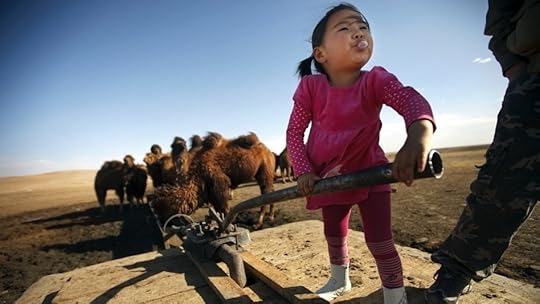
Amin-Erdene Galkhuu pumps well water to her family’s Bactrian camels in Mongolia’s South Gobi region.
The first point I made in my talk was that science was making only a feeble contribution to practical solutions to poverty. I went on to present the data that the farms where poor people make their living are microscopic in size. For example, 85% of all the farms in the world are less than five acres. Science in the fields of water, agriculture, economics, and design need whole new initiatives centered on one-acre farms. The scientists attending the meeting were blown away by the farm size data. They had no idea that so many of the world’s farms were miniscule.
Before I gave my talk, I had a very interesting experience. My friend, Ramon Llamas, organized an event in which five-minute summaries of the status of hydrogeology in 25 countries were presented by ministry of water officials and scientists from 25 countries, both in the developing and developed world.

A farmer stands next to his well in inner Mongolia.
After the first two reports, I realized that poverty wasn’t even on the agenda. So I decided to carry out a quick content analysis. I recorded each time the word poverty was used by any presenter, and then each time any indirect reference to poverty was made.
At the end of the 25 presentations, I stood up and presented my findings. Not one of the presenters had even used the word poverty once! I said that in light of the crucial role groundwater plays in poor people’s access to drinking water and water for crops, the complete absence of references to ‘poverty’ from the agenda of scientists in hydrogeology, as indicated by their presentations, was unconscionable.
The head of the Academy of Science for Spain, who was a conference co-sponsor, said I was being unfair. But many people applauded what I had said. The representative from Mongolia said there was a real opportunity in that country to utilize ground water to improve the livelihoods of rural people. More to come about this in my next blog post.
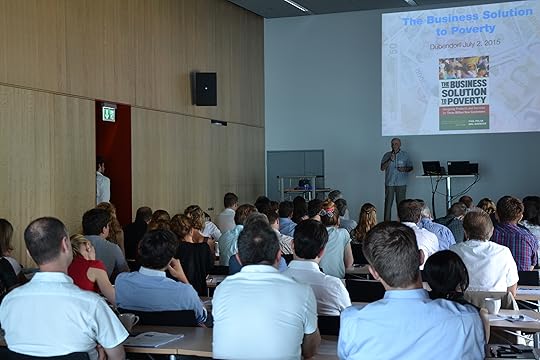
Keynote speech at the Swiss Water Partnership Conference.
Fast forward to three weeks ago on July 2nd, 2015, when I gave the keynote speech for a conference organized by the Swiss Water Partnership. The conference was held at the Eawag Aquatic Research Center in Dübendorf. It thrills me to say that most of the science institutions in Switzerland today are very much involved in creating business opportunities using groundwater to improve the livelihood of poor people.
Transformation is not an overnight process.
July 15, 2014
Running the Numbers
by Paul Polak and Sydney Bergen

Over the last 30 years I have found it useful to constantly and obsessively “Run the Numbers” when I look at any business opportunity. I try to do this in a way that quickly strikes to the heart of any business. Running the numbers can identify key transformative opportunities as well as the greatest likely stumbling blocks to success. Just about every entrepreneur I know can generate the financial projections required by a standard business plan. But the ability to carry out rapid and sequential back-of-the envelope estimates of things like where the sweet spot in the market lies, the down-to-earth costs of production, distribution and marketing, and the potential value of waste streams can be much more challenging, but much more likely to contribute to bottom line profits.
If you’re selling sanitary napkins to women who earn less than $2/day, what price are they willing to pay and what are the essential features that satisfy the customers’ needs? Are you producing waste streams that could be put to profitable use? If your current price point is too high, what are the key contributors to cost and how can they be modified?
Each year that I have served as a mentor for social entrepreneurs at the Unreasonable Institute, I’ve scheduled one-hour interviews with anybody who wants to talk to me. The rules are that there are no rules. They are free to ask me whatever they want and I am free to tell them whatever I think; we keep an open discussion going from there.
This year, running the numbers emerged as the most important part of our conversations. A key reoccurring issue was how to achieve scale. I believe that earning a decent profit is the most important determinant of scale. Running the numbers regularly from the very beginning, and changing quickly as new information comes in, is the most important contributor to profitability.
Here are some examples from my time at the Unreasonable Institute this year:
Sixty percent of mangos grown in Nigeria have no market and simply rot in the fields. At the same time, poultry farmers are struggling with the high prices of chicken feed. So Kelvin Ogholi and Blessing Mene have started UNFIRE, a business that makes highly nutritional chicken feed from the mango pits they extract from a portion of the 60% of mangos that are thrown away. Running the numbers revealed that UNFIRE sells chicken feed for 30 cents a kilo, but the juice that could be made from the pulp they throw away could sell for $3 a kilo. So why not sell mango juice in addition to chicken feed?
Kelvin and Blessing said that the machines that produce mango juice in existing plants are too big and expensive. But when I asked if simpler mango juicers were available they said a $50 household model was widely used. They would have to run it for 5 or 6 hours to learn how much juice it produced – with the price of mango juice, maybe they could even run 4 or 5 family size juicing machines at the same time. If they could dramatically increase their bottom-line profits by adding juice to their product line, they could probably sell a lot more chicken feed.
Watch a clip from our lively discussion here:
UNFIRE meeting with Paul Polak

Women in Malawi receiving their Dignity Kits from Transformation Textiles
Rachel and Jeff Starkey founded Transformation Textiles in Egypt; this company manufactures and distributes low-cost underwear and reusable feminine hygiene inserts, recycled from fabric waste, to girls in Africa. Rachel and Jeff have created an aspirational brand that is attractive, durable and could sell millions at the right price. Their current product, the Dignity Kit, sells for $6.75 to NGOs sponsoring girls in schools; this kit includes 2 panties, 2 leak-proof liners, 6 reusable pads, a bucket, soap, an informational booklet and a drawstring bag. Transformation Textiles aims to serve the market directly with a $3 product that includes the panty, a leak-proof liner and 2 reusable pads, which would last for 3 years. They intend to have another option for $1.50, which would not include the reusable pads.
But in speaking with customers living on $2/day or less, I have discovered that women and girls cannot afford a product at this price, even with the promise of long-term benefits. By simplifying the design of an inclusive starter product to a liner, 3 reusable pads and a colorful cloth belt, they could lower the cost to less than $1.20 and still deliver an attractive, functional product. Another option would be to use agricultural waste like banana fiber to create a biodegradable and disposable napkin insert for .08 cents each. These entry-level product options could more readily meet the price point that is affordable to millions of customers and expand the existing Transformation Textiles product line.
Greenlink is a company that provides an off-grid structure for schooling and includes a furnished 40-foot container with a 1500-watt solar energy system, technology and software system to teach students English. The model costs $40,000 and operates on a lease basis. We calculated that an average school has 400 students, at $3/student/year that leads to a 12-year payout plan, not an economically attractive option. In my experience, a competitive leasing business needs to have something like a 3-4 year payout to cover costs of things like bad debt. If you want to reach scale you have to optimize the economic value and negotiate the pricing at every stage of your product. Some options we discussed to reduce the overall product cost for Greenlink (along with raising the lease rate) include:

Children attending school in the elements of Africa without shelter, electricity or modern teaching tools
1.) 50% ($20,000) of the total cost is in the container alone. I would set a target of lowering the cost to $10,000 using local materials and ‘out-of-the-box’ thinking. For example, is a local type of polyurethane a possibility? 2.) Customized containers from the West are comparatively expensive, but rehabbing a used shipping container and transforming it in–country could also significantly lower the price. 3.) 30 % ($12,000) of the total system cost is in the photovoltaic (PV) equipment. Recently there have been a number of initiatives under way to significantly lower the cost of traditional PV systems. One such example is SunTrolley, a portable solar, high-flow PV water pumping system currently being tested in India to replace millions of diesel pumps.I think it might be useful to apply some of the systems design approach used to lower the cost of conventional PVs to the design of Greenlink’s model.
You can watch an excerpt from our video discussion here: Greenlink meeting with Paul Polak
Running the numbers is one of the most important components of a successful entrepreneur’s tool kit, but it requires striking to the heart of the economic processes that form a business from the very beginning. A back-of-the envelope calculation at the start of each business is extremely useful, but the numbers always change rapidly as learning takes place. Running the numbers habitually and effectively sharpens the price point at which the product or service is delivered, optimizes the most cost-effective use of staff time and usually uncovers vibrant new market opportunities.
April 21, 2014
Who Will Grab the Fortune at the Base of the Pyramid?
Re-posted from NextBillion Blog, Next Thought Monday: Who Will Grab the Fortune at the Base of the Pyramid?
by Paul Polak and Mal Warwick
In a recent post on NextBillion, Stuart Hart, who  coauthored The Fortune at the Bottom of the Pyramid with C.K. Prahalad, wrote with concern about the potential of creating disruptive innovations for poor customers that can trickle up to Western markets. He fears “the risk that corporations [will] gradually come to view the world’s slums and rural villages primarily as laboratories for incubating innovations for the rich.”
We don’t believe Professor Hart has anything to worry about — because major corporations have demonstrated no meaningful interest in the bottom-of-the-pyramid market. And we don’t think they’re likely to do so in the future, either.
It’s highly unlikely that any product or service explicitly designed to address the needs of the world’s poorest people could be put to wide use in North America or Europe. The problems of the poor — 70 percent of whom live in rural areas — are not the problems faced by those who live in the West. Most of the poor work some 500 million farms of five acres or less. With rare exceptions, their most urgent needs include irrigation to grow their crops and financial services that allow them to smooth out the ups and downs in their income and feed their families in lean times. In rural and urban areas alike, what we regard as the necessities of life are too often lacking: shelter fit for human habitation; a variety of nutritious foods; safe drinking water; electricity; quality education; affordable and responsive healthcare. Some of these problems that underlie the need for radically affordable, disruptive innovations for poor customers exist for the rich as well, but the products and services based on those innovations require radical re-design to fit the specific context of their wealthy counterparts. It’s hardly likely, then, that any profit-centered corporation would go squander its resources at the bottom of the pyramid even if its leadership were inclined to do so. As a philanthropic effort, perhaps, or in connection with its commitment to corporate social responsibility — but not in search of profit.
It’s also important to note that we believe Prahalad and Hart’s conception of the bottom of the pyramid was based on a fundamental misunderstanding of poverty. In their article in the Harvard Business Review that introduced the concept, they defined the “bottom” as those living on $1,500 per year or less. Here is their original definition:
“Now consider the 4 billion people in Tier 4, at the bottom of the pyramid. Their annual per capita income — based on purchasing power parity in U.S. dollars — is less than $1,500, the minimum considered necessary to sustain a decent life. For well over a billion people — roughly one-sixth of humanity — per capita income is less than $1 per day.”
That $1,500 per year translates into slightly more than $4 per day in 2002 dollars, when their article was published, and to over $5 per day in current dollars. However, the most widely accepted global poverty line is $2 a day per person. Between those two income levels lies a vast difference in circumstances representing markedly different market needs and opportunities. Moreover, most of the case studies included in The Fortune at the Bottom of the Pyramid described businesses serving what are essentially middle-class customers in developing countries, many of them selling products and services to those earning substantially more than $4 a day. The true bottom of the pyramid are the 2.7 billion bypassed customers in the world who live on $2 a day or less. They represent the greatest challenge —and the greatest opportunity — for creating new markets and earning new profits at scale.
But not profits for the world’s existing multinationals.
Paul Polak (one of the authors of this article) has spent the last 30 years interviewing 3,000 $1-a-day families and designing market-based solutions to poverty based on what he has learned from them. As a result, iDE (International Development Enterprises), the organization he founded in 1981, has enabled some 20 million, $1-a-day customers to earn enough new net income to essentially move out of poverty — permanently. The key to success in these efforts was to harness the energy of thousands of small village-based enterprises to act in their own self-interest by manufacturing, marketing, and installing radically affordable, income-generating tools such as the treadle pump.
In the process, Paul had direct experience attempting to persuade large corporations to start designing products and services that could profitably serve customers living on $2 a day or less. In this he failed miserably. For example, one-acre farmers in Asia and Africa desperately needed — and still need — affordable small-plot drip irrigation technology, but when he tried to persuade the largest drip irrigation companies in the world to enter this market, they turned him down flat. Inevitably, he concluded that most multinational corporations prefer not to serve $2-a-day customers. Why? Because (1) they don’t feel they can earn attractive profits in this space; (2) they don’t have a clue how to design radically affordable products and services that are attractive to poor customers; and (3) they haven’t found ways to cross the last-mile distribution barrier and make a profit.
Mobile phones are the one exception to this pattern. Most poor people in the world now either own a mobile phone or have access to someone who does. This sudden new reality created a revolution in communication for $2-a-day customers, but it was largely home grown enterprises, not multinational corporations, that spread the technology within emerging nations. Furthermore, the most promising innovations to result from the widespread availability of mobile telephony—such as the M-PESA system of funds transfer by text messaging in Kenya—were local innovations, not invented in the West.
During the past four years Paul has had many positive relationships with multinational corporations. He has found them to be extremely receptive to help design radically affordable products for $2-a-day customers. For example, General Mills collaborated with him in designing a nutritious soft drink that could be sold for a nickel, and aeronautical engineers volunteering at Ball Aerospace have now designed a solar water pump that cuts the cost of conventional solar photovoltaics by 80 percent. However, he has been unable to persuade either of these two companies—or, for that matter, any other large corporation—to undertake any effort to create new markets that serve $2-a-day customers.
Paul’s many friends who are corporate leaders have advised him that the best way to involve big corporations in the $2-a-day market is to create new enterprises himself. Persuading a corporation to invest capital and human resources in businesses serving poor customers, they said, is a task equivalent to asking for an oil tanker to execute a 90-degree turn. Consequently, Paul has spent the last four years creating four model companies for a new breed of multinationals serving the bottom of the pyramid (as we define it). Each of these new companies is designed to transform the livelihoods of at least 100 million $2-a-day customers, generate $10 billion in annual revenues, and earn sufficient profit to attract international commercial investors.
For example, one of the four companies Paul is incubating with his colleagues is a company designed to transform agricultural waste into a low-carbon-emitting, economically attractive substitute for coal and charcoal. European utilities, which are under pressure to reduce carbon emissions, have invested hundreds of millions of dollars in building plants utilizing timber by-products and a process called torrefaction (essentially, roasting them in an oven)—at a cost of between $10 million and $40 million each. But the majority of agricultural waste and invasive species of plants is found in scattered rural locations in many of the same places inhabited by the world’s $2-a-day customers. So the new energy company we’re creating is in the process of designing a $25,000 torrefaction plant to be located in villages with a four-kilometer collection radius. Each of these plants is designed to earn $1,000 a day from the sale of approximately seven tons of torrefied briquettes—a huge boost to the villagers’ income.
The key problem shared by Nova Scotia’s timber industry and $2-a-day villagers in India is the high cost of collecting biomass waste in its bulky, low-density form. If our torrefaction company is successful, this disruptive, radically affordable innovation can be migrated upwards, but only by redesigning the technology from the ground up to take into account the much higher labor rates in the West. Instead of a $25,000 torrefaction plant, it may be possible to design a $300,000 torrefaction plant for Nova Scotia. Maybe.
Prahalad, Hart, and others have made a giant contribution to ending poverty by pointing the way to a market-based solution that engages Big Business. What remains is to refocus the base of the pyramid on $2-a-day customers who represent the biggest challenge and the greatest opportunity for creating profitable new virgin markets. The success of the new breed of frontier multinationals conceived to serve them is likely to create systematic moves up-market applying the same principles. But just as it’s not possible for a corporation to make cosmetic changes to product lines serving the rich and sell them to the poor, it is not possible to make cosmetic changes to products and services successfully serving poor customers and expect them to be applied to markets serving the rich.
April 18, 2014
Why Entrepreneurs Will Beat Multinationals to the Bottom of the Pyramid
Re-posted from the Harvard Business Review Blog Network. See the original post here.

Why Entrepreneurs Will Beat Multinationals to the Bottom of the Pyramid
by Paul Polak and Mal Warwick
C.K. Prahalad and Stuart Hart’s seminal book The Fortune at the Bottom of the Pyramid gained a wide audience when it was published in 2004 and has continued to be widely read ever since. Its iconic phrase, “bottom of the pyramid,” entered the English lexicon. The book was a call to action to the world’s largest companies to develop new products for the four billion people living on $4 a day or less—a market representing what was in effect the new frontier for corporate expansion.
What was the result of this stirring cry a decade ago?
On the fifth anniversary of the book’s publication, Professor Prahalad was interviewed by Knowledge@Wharton. He was asked “what impact have your ideas had on companies and on poor consumers?” Prahalad asserted that the impact had been “profound,” citing the $200 laptop computer, the spread of cell telephones, and Kenya’s M-PESA text- messaging funds transfer service. But the concept of the $100 laptop was a project that emerged from MIT, not a large company, and was judged a failure; cell phones spread rapidly through developing countries was a result of local entrepreneurship, not multinational initiative; and M-PESA was a Kenyan innovation.
Five years further along, there is scant evidence that multinational corporations have expanded any further into the bottom-billions market. We believe they’re unlikely to do so, and that entrepreneurs working solo or in teams are far better positioned to go serve these customers. The reason is that multinationals face the constant temptation to apply their substantial resources to extend the reach of their existing businesses, rather than starting from scratch. Entrepreneurs, by contrast, start from scratch almost by definition. For reasons we’ll describe, that approach is essential to successfully serving the bottom of the pyramid.
The tendency for too many multinationals is to design products for the bottom of the pyramid by stripping features from existing products. But this approach seldom works. In our experience, products and processes must be designed not merely to reduce prices by, say, 30% below developed world prices, which might be achieved by removing features; success requires prices close to 90% less. As you can imagine, this puts pressure on product design, and this focus has become the centerpiece of “zero-based design” which seeks to build inexpensive products from the ground up. Entrepreneurs, unconstrained by pressure to expand existing brands and product lines, are better positioned to utilize this approach.
This zero-based design approach also avoids a reliance on preexisting business models. One of the greatest challenges at the bottom of the pyramid is “last mile” distribution. A large number of the world’s poor live in villages without much infrastructure. Delivering products in this environment adds to the cost, making it further unlikely that preexisting product lines can be tweaked and brought to market successfully. By designing products from the ground up, entrepreneurs are better positioned to consider the challenges of distribution early on, and account for them in their products and business model.
Moreover, most multinational corporations are, inevitably, bureaucratic enterprises riddled with barriers to doing things differently. If someone far down the chain of command does devise a great solution to a problem the company had never before considered, it’s a fairly sure bet that his idea will be vetoed somewhere up the line. (Remember the two guys named Steve who took their idea for a personal computer to HP? Whatever happened to them?) The difficulty is compounded if the proposed project requires a wholly fresh approach to design, marketing, and distribution and must be carried out in an exotic locale in an unfamiliar language and confounding culture. Somewhere up the ladder in the corporate hierarchy, someone is sure to balk.
Finally, success in nascent markets requires a commitment to agility and constant refinement. This means not only tweaking products, but everything about the business. Here again, entrepreneurs are able to incorporate their learning more quickly, as opposed to multinationals whose teams often have to run changes up the flag pole.
For all these reasons we believe it will be new companies more than old ones that help those living on a few dollars a day move out of poverty. Of course, we’d love to be proven wrong – there’s certainly plenty of room at the bottom of the bottom of the pyramid for experimentation and collaboration. For companies of any size serious about these markets, it is critical to remember that lessons learned selling to richer consumers likely do not apply.
April 10, 2014
University Innovation Fellows Respond To Paul’s Open Letter to Larry Page with a Letter of Their Own

April 7, 2014
Larry Page
1600 Amphitheatre Pkwy
Mountain View, CA 94043
Dear Mr. Page,
We are writing to you on behalf of a group of over 100 student leaders from around the country to express our support for Paul Polak’s ambitious challenge to Google to help end poverty.
We are the University Innovation Fellows. We believe that poverty can be ended, and we are thrilled with the opportunity that Mr. Polak has presented you. By taking on this challenge, Google can help change the lives of over 100 million people, and can inspire millions more to address one of the world’s greatest challenges in a revolutionary way.
We do believe, though, that time is of the essence. By responding to this moonshot challenge now, Google can bring a spirit of optimism to the global community and spur a grassroots movement of innovation that spreads around the world. Too often, compelling ideas aren’t ever brought to life due to a lack of funding or problems with scaling. Google could address this challenge head on by paving the way for innovators to invest their time and talents in designing better solutions rather than writing grant proposals.
How many moonshot-sized ideas lie dormant inside the minds of people who have limited access to technology and resources? By focusing on access to education, healthcare and technology, Mr. Polak is offering simple solutions that will equip people with the tools and skills with which they can not only survive, but begin working creatively toward solutions of global consequence.
Many of us had the opportunity to meet Mr. Polak at the NCIIA OPEN Conference after spending time at Google and meeting with partners from Google Ventures. We were inspired by his message, which is why we are dedicating our time and talents to the effort of ending poverty in our lifetimes. In light of your mission to increase access to the world’s information, we invite you to join us in helping the world attain the basic means to access it, and we would gladly contribute anything we could towards coordinating such an effort.
The future depends on us. The time is now.
Sincerely,
The University Innovation Fellows
The University Innovation Fellows are part of a national movement to ensure that students gain the necessary attitudes, skills and knowledge required for them to compete in the economy of the future. These student leaders from schools around the country work with their peers to catalyze innovation and venture activity on their campuses. Our program is sponsored by the National Center for Engineering Pathways to Innovation (Epicenter), which is funded by the National Science Foundation and directed by Stanford University and the National Collegiate Inventors and Innovators Alliance (NCIIA).
March 27, 2014
An Open Letter to Larry Page
In response to a recent article in which Larry Page, CEO of Google, stated, “I would rather give my billions to Elon Musk than charity” Paul Polak wrote Larry Page this open letter:
Dear Larry,
In your recent conversation with Charlie Rose at TED, you said you’d rather hand over your cash to Elon Musk (Tesla, SpaceX, Solar City) instead of donating it to a philanthropic organization.
I understand the sentiment. The nonprofit sphere has generally proved itself incapable of solving many of society’s most intractable problems. In particular, 2.7 billion people left behind in the most extreme poverty—40% of the world’s population, living on $2 per day or less—while global wealth concentrates in fewer and fewer hands, putting humanity on an unsustainable course.
But for all of us, it’s a practical challenge, not just a guilt trip. The poor drive the population explosion with high birth rates; they represent a catastrophic waste of human talent; they contribute to global warming through deforestation, habitat destruction, and systemically wasteful use of the planet’s resources. Meanwhile the poor partake only minimally in the market economy that enriches the rest of us.
Poverty’s persistence, despite hundreds of billions in nonprofit and NGO resources vaporized trying to “solve” it, remains one of humanity’s greatest failures.
But poverty can be ended—in precisely the way you suggest—by designing and deploying a new breed of for-profit business that address critical human needs while making a profit.
I offer Google an audacious challenge: select a region or a country with a population of, say, 100 million, which has a huge endemic poverty rate—perhaps in South Asia or sub-Saharan Africa—and bring Google’s resources to bear on a project to end poverty decisively in that region in 15 years. And you wouldn’t have to give away a dime, just invest. The result? A model for ending poverty planet-wide.
I’d like to suggest a framework for deploying a set of these new breed businesses based on my thirty years of work using market mechanisms in some of the world’s poorest countries to launch 20 million people permanently out of poverty.
The key to meeting this challenge is to build businesses in the target region around a common core of enabling technologies you already have at hand, including:
Low-cost or no-cost ubiquitous wireless connectivity in the region (Project Loon, etc.)
A set of relatively low-tech Android devices, emphasizing text-to-speech and speech-to-text alternatives, to create digital access for the illiterate
A generation of ultra-low cost digital devices emphasizing ruggedness, replaceable batteries, and low power consumption
A fair, secure, and very low-cost ubiquitous micro-payment system
Carried by that core, incubate a suite of rapidly scalable businesses that address critical needs of the ultra-poor, including:
Distributed healthcare, including low-cost diagnostics and treatment of curable diseases at the village level
A village “power station” driven by radically affordable solar, which provides low carbon-emission energy to recharge batteries, pump irrigation water, power post-harvest processing, and support LED-based home electricity
A high-quality pay-as-you-go childhood education system, drawing on digital resources such as Khan Academy and priced at $4 to $6 per month per child
Agricultural information services delivered digitally which are proven to raise incomes and nutrition levels dramatically among small-hold farmers
Companies to distribute safe drinking water, upgrade and build new housing, rationalize food distribution, provide insurance and financial services, and possibly many others: the opportunities seem endless.
Designing businesses that address the critical needs of poor populations while turning a profit has been the focus of my life for the last 30 years. There are numerous examples of this type of initiative, some of which I have started personally. They all treat the poor as partners and customers, rather than victims and helpless consumers of charity
I would be very happy to sit down with you personally to explore these ideas. In 30 minutes I can explain to you simply and directly how you could make this vision work. Bringing it about would be a strategic accomplishment for Google, and it would put the world on a steady upward path much more surely than hoping we can colonize Mars. Google could pioneer this effort and make a profit by doing so.
Sincerely,
Paul R. Polak
Author, The Business Solution to Poverty: Designing Products and Services for Three Billion New Customers
*See the full article here. This Open Letter is posted in the discussion section.
Paul Polak's Blog

- Paul Polak's profile
- 8 followers

