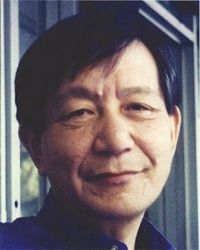
Born in colonial Korea in 1939, Hong Yung Lee grew up during a turbulent period in Korean history. His childhood was marked by political events triumphant and tragic: from Liberation in 1945 to the Korean War (1950-1953). Perhaps because he came of age during the corrupt and ineffectual rule of Syngman Rhee, it is not altogether surprising that his initial choice of career was journalism, which he studied at Yonsei University. Later, his search for truth and ideals, alongside his lifelong commitments to democracy and anti-colonialism, would take him to the study of political science.
As a graduate student at the University of Chicago, Lee worked with Professor Tang Tsou, under whose tutelage he would write his dissertation on one of the defBorn in colonial Korea in 1939, Hong Yung Lee grew up during a turbulent period in Korean history. His childhood was marked by political events triumphant and tragic: from Liberation in 1945 to the Korean War (1950-1953). Perhaps because he came of age during the corrupt and ineffectual rule of Syngman Rhee, it is not altogether surprising that his initial choice of career was journalism, which he studied at Yonsei University. Later, his search for truth and ideals, alongside his lifelong commitments to democracy and anti-colonialism, would take him to the study of political science.
As a graduate student at the University of Chicago, Lee worked with Professor Tang Tsou, under whose tutelage he would write his dissertation on one of the defining political phenomena of the 1960s: the Chinese Cultural Revolution. Lee’s dissertation, The Politics of the Chinese Cultural Revolution, was revised during two years of postdoctoral fellowship at the University of California, Berkeley, from 1973 to 1975 – and proved to be a pathbreaking and long-lasting contribution to our understanding of Chinese politics in general and the Cultural Revolution in particular. Harnessing original data sources, such as the Red Guard newspaper, Lee provided a foundational and granular analysis of the Cultural Revolution that had been occluded to the outside world.
After spending nearly a decade at Yale University, Lee returned to UC Berkeley. In his three decades as a tenured member of the Berkeley faculty, he taught a generation of students about the politics of East Asia, especially China and Korea. His legion of Ph.D. students could be found at major universities around the world, but his pedagogical legacy was most notable in South Korea where many of his students became major scholars in their own right. Lee also chaired the Center for Korean Studies for a decade. Amidst his ever-escalating academic demands across the Pacific, he published a major monograph in 1991: From Revolutionary Cadres to Party Technocrats in Socialist China, a massively detailed and exhaustively-researched analysis of the transformation of erstwhile revolutionaries into routinized bureaucrats.
In the last quarter-century of his life, Lee worked steadily on his magnum opus: a comparative study of East Asian politics and culture. He sought to uncover the fundamental institutional frameworks of three major societies: China, Korea, and Japan. ...more

 Sign in with Facebook