C. William Perkins's Blog
March 4, 2020
Star Trek Picard: Episode 6
Locutus returns to the cube. Picard confronts his nightmare past. "The Impossible Box"


February 27, 2020
Star Trek: Picard Episode 5
Seven of Nine: Space-Vigilante! The ex-Borg Fenris Ranger from the Delta Quadrant. 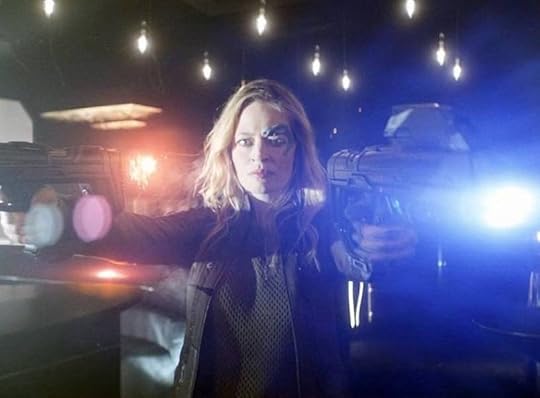
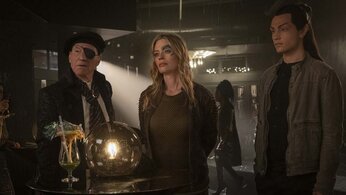 "Stardust City Rag"
Another episode directed by Jonathan Frakes (after last week snuck under my radar). Unfortunately, you can't really tell, which is maybe the point in television. But he always gets the good episodes and he always does a great job. You can tell the cast feels comfortable having fun under his direction.
This week is a Seven of Nine episode, as if she didn't get enough of them during her four-year stint on Voyager. The model Jeri Ryan was originally brought in to be eye-candy and wear a catsuit and act like a combination of fan-favorites Spock and Data with Borg appendages. Needless to say it worked in spite of itself, as the writers channeled all their efforts into her character development and it turned out she could act. She still can. Years have past since Voyager returned to Earth, and she's become something of a space-Batman, fighting crime in the lawless former Neutral Zone with a rag tag team of Fenris Rangers (not to be confused with the Power Rangers). She's grown her hair out and upgraded the catsuit to a leather jacket, but even as she's evolved a much more naturalistic affectation, you can still sense the layers of stiffness beneath the surface.
Everyone likes a good caper episode. The crew have to play dress-up to infiltrate a criminal Casino Royale on Freecloud and make a deal to rescue Bruce Maddox. He's the roboticist who knows about the Data twins, the guy returning from TNG episode "Measure of a Man" (so many callbacks and returning episodes!). Anyway, we've been hearing all about him and everyone is looking for him and he's finally here just long enough to be incapacitated. We learn Dr. Agnes Jurati had a romantic relationship with him, which makes the ending all the more tragic. Spoilers: She kills him, and it's so perfectly executed. The clues were there for weeks, something was off about her arrival on this mission. But she wasn't a spy or a shapeshifter. She learned something, something that caused her to kill her lover. What could it be?!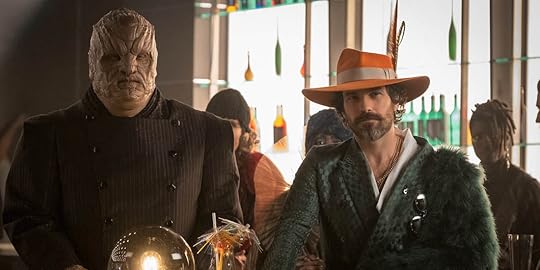 Conclusion: Another tight entry with a clear focus. Self-contained enough to feel satisfying, while still contributing to the larger season narrative. I criticized the earlier decompression, but this is exactly the pacing and the structure I'm looking for. Stuff like this every week. Great hijinks and humor out of Elnor and Rios. Good drama out of Jurati and Seven of Nine and Picard. I could've skipped the Raffi family reunion, though. I get it, her obsession with the Mars Truther movement distracted her from raising her family and she hit bottom and became a junky. It explains why she aimed a gun at Picard when he first recruited her, but otherwise it was too heavy-handed in too short a window.
Last Episode
Conclusion: Another tight entry with a clear focus. Self-contained enough to feel satisfying, while still contributing to the larger season narrative. I criticized the earlier decompression, but this is exactly the pacing and the structure I'm looking for. Stuff like this every week. Great hijinks and humor out of Elnor and Rios. Good drama out of Jurati and Seven of Nine and Picard. I could've skipped the Raffi family reunion, though. I get it, her obsession with the Mars Truther movement distracted her from raising her family and she hit bottom and became a junky. It explains why she aimed a gun at Picard when he first recruited her, but otherwise it was too heavy-handed in too short a window.
Last Episode
Next Episode
"Stardust City Rag"Another episode directed by Jonathan Frakes (after last week snuck under my radar). Unfortunately, you can't really tell, which is maybe the point in television. But he always gets the good episodes and he always does a great job. You can tell the cast feels comfortable having fun under his direction.
This week is a Seven of Nine episode, as if she didn't get enough of them during her four-year stint on Voyager. The model Jeri Ryan was originally brought in to be eye-candy and wear a catsuit and act like a combination of fan-favorites Spock and Data with Borg appendages. Needless to say it worked in spite of itself, as the writers channeled all their efforts into her character development and it turned out she could act. She still can. Years have past since Voyager returned to Earth, and she's become something of a space-Batman, fighting crime in the lawless former Neutral Zone with a rag tag team of Fenris Rangers (not to be confused with the Power Rangers). She's grown her hair out and upgraded the catsuit to a leather jacket, but even as she's evolved a much more naturalistic affectation, you can still sense the layers of stiffness beneath the surface.
Everyone likes a good caper episode. The crew have to play dress-up to infiltrate a criminal Casino Royale on Freecloud and make a deal to rescue Bruce Maddox. He's the roboticist who knows about the Data twins, the guy returning from TNG episode "Measure of a Man" (so many callbacks and returning episodes!). Anyway, we've been hearing all about him and everyone is looking for him and he's finally here just long enough to be incapacitated. We learn Dr. Agnes Jurati had a romantic relationship with him, which makes the ending all the more tragic. Spoilers: She kills him, and it's so perfectly executed. The clues were there for weeks, something was off about her arrival on this mission. But she wasn't a spy or a shapeshifter. She learned something, something that caused her to kill her lover. What could it be?!
Conclusion: Another tight entry with a clear focus. Self-contained enough to feel satisfying, while still contributing to the larger season narrative. I criticized the earlier decompression, but this is exactly the pacing and the structure I'm looking for. Stuff like this every week. Great hijinks and humor out of Elnor and Rios. Good drama out of Jurati and Seven of Nine and Picard. I could've skipped the Raffi family reunion, though. I get it, her obsession with the Mars Truther movement distracted her from raising her family and she hit bottom and became a junky. It explains why she aimed a gun at Picard when he first recruited her, but otherwise it was too heavy-handed in too short a window.
Last EpisodeNext Episode
Star Trek: Picard Episode 4
Warrior Nuns who speak their mind plus some classic space battling. Can't go wrong. 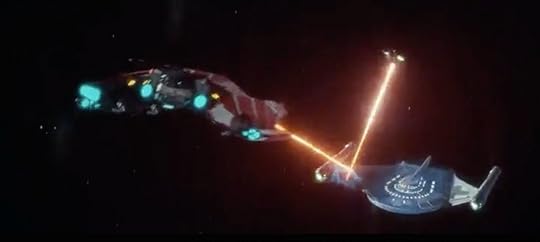
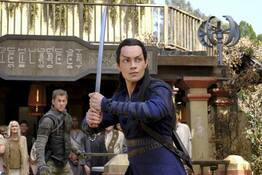 "Absolute Candor"
We open with another flashback. This time, we visit Vashti, the Romulan Relocation hub, where Picard makes friends with warrior-nuns and teaches the orphan boy about fencing and the Three Musketeers, It's all very idyllic until news of the robot attack interrupts. Picard promises to return soon. We already know he won't.
Cut to the new crew. Dr. Agnes Jurati bothers Captain Rios while he's trying to read about existentialism. We meet more holograms so that that particular actor can show off more accents. More F-words while they argue about taking a guilt trip to the aforementioned Relocation camp, to visit the old warrior-nuns who practice "the way of absolute candor" (which is pretty much how I live). They'll only help if he meets the criteria and the criteria is a cause which is hopeless (so that bodes well).
Picard's return to Vashti is not met with enthusiastic greetings. The nuns aren't mad, but the orphan boy Elnor is all grown up into a regular ninja warrior. When he won't join Picard's cause, Picard has to go pick a fight with a bunch of angry Romulan immigrants who are about to kill him. Of course the boy saves him at the last second, and joins his adventure, but only because it's hopeless. They get back to the ship just in time for some retro combat with an antique Bird of Prey (keep your ears pealed for the incessant foreshadowing!), which they only narrowly defeat with the help of an unexpected fan-favorite cameo: Seven of Nine! Seven of Nine
 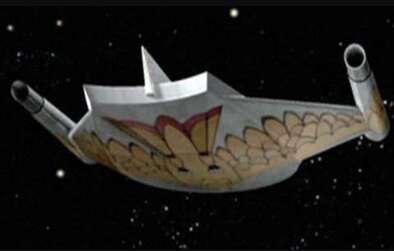 The OG Bird of Prey Conclusion: I joked last week that all they did was get going and this week they'd arrive. But this week they don't even arrive, they took a quick detour. Maybe the series will be a journey, with a series of stops along the way. I could dig that. Either way, it's a nice tangent, standalone episode, with some good character building and interpersonal dynamics. I like how the crew is evolving and responding to each other, even if it's generally subtle character work. The actors are definitely bringing their A-Game even if the plotting is plodding. I liked Raffi reminding Picard of their old motto: "One impossible thing at a time." I think Stewart is gradually slipping back into the Picard I remember and not Professor X. The vintage Bird of Prey is pretty awesome to see. The Original Series design was always underrated, even if its presence here is pretty blatant and gratuitous fan service. And Voyager gets some well-deserved love with the apropos addition of Seven of Nine. In a story about rehabilitated Borg, she'll fit right in.
Last Episode
The OG Bird of Prey Conclusion: I joked last week that all they did was get going and this week they'd arrive. But this week they don't even arrive, they took a quick detour. Maybe the series will be a journey, with a series of stops along the way. I could dig that. Either way, it's a nice tangent, standalone episode, with some good character building and interpersonal dynamics. I like how the crew is evolving and responding to each other, even if it's generally subtle character work. The actors are definitely bringing their A-Game even if the plotting is plodding. I liked Raffi reminding Picard of their old motto: "One impossible thing at a time." I think Stewart is gradually slipping back into the Picard I remember and not Professor X. The vintage Bird of Prey is pretty awesome to see. The Original Series design was always underrated, even if its presence here is pretty blatant and gratuitous fan service. And Voyager gets some well-deserved love with the apropos addition of Seven of Nine. In a story about rehabilitated Borg, she'll fit right in.
Last Episode
Next Episode
"Absolute Candor"We open with another flashback. This time, we visit Vashti, the Romulan Relocation hub, where Picard makes friends with warrior-nuns and teaches the orphan boy about fencing and the Three Musketeers, It's all very idyllic until news of the robot attack interrupts. Picard promises to return soon. We already know he won't.
Cut to the new crew. Dr. Agnes Jurati bothers Captain Rios while he's trying to read about existentialism. We meet more holograms so that that particular actor can show off more accents. More F-words while they argue about taking a guilt trip to the aforementioned Relocation camp, to visit the old warrior-nuns who practice "the way of absolute candor" (which is pretty much how I live). They'll only help if he meets the criteria and the criteria is a cause which is hopeless (so that bodes well).
Picard's return to Vashti is not met with enthusiastic greetings. The nuns aren't mad, but the orphan boy Elnor is all grown up into a regular ninja warrior. When he won't join Picard's cause, Picard has to go pick a fight with a bunch of angry Romulan immigrants who are about to kill him. Of course the boy saves him at the last second, and joins his adventure, but only because it's hopeless. They get back to the ship just in time for some retro combat with an antique Bird of Prey (keep your ears pealed for the incessant foreshadowing!), which they only narrowly defeat with the help of an unexpected fan-favorite cameo: Seven of Nine!
Seven of Nine The OG Bird of Prey Conclusion: I joked last week that all they did was get going and this week they'd arrive. But this week they don't even arrive, they took a quick detour. Maybe the series will be a journey, with a series of stops along the way. I could dig that. Either way, it's a nice tangent, standalone episode, with some good character building and interpersonal dynamics. I like how the crew is evolving and responding to each other, even if it's generally subtle character work. The actors are definitely bringing their A-Game even if the plotting is plodding. I liked Raffi reminding Picard of their old motto: "One impossible thing at a time." I think Stewart is gradually slipping back into the Picard I remember and not Professor X. The vintage Bird of Prey is pretty awesome to see. The Original Series design was always underrated, even if its presence here is pretty blatant and gratuitous fan service. And Voyager gets some well-deserved love with the apropos addition of Seven of Nine. In a story about rehabilitated Borg, she'll fit right in.
Last EpisodeNext Episode
February 23, 2020
Star Trek: Picard Episode 3
"Engage!" 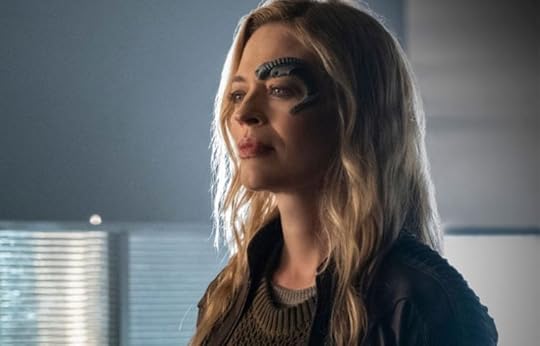
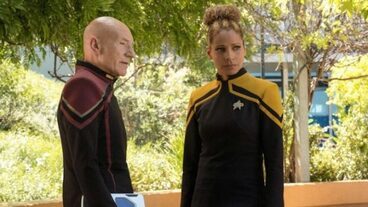 Neat new "old" uniforms. "The End is the Beginning"
Episode 3 marks the end of the First Act for the season. Or put another way, the series is finally gonna get get going... next week! These first three episodes truly constitute the full Pilot, the opening setup and all the introductions. If it were early Nineties TNG, this would've all been done in the first ten minutes of a single episode. Nowadays, it's not prestige television if it isn't stretched out and character moments are all we have yet to fill the void.
Picard puts his team together. We've got Raffi, the begrudging old pal he shouldn't have waited fourteen years until he had favor to reconnect with. She's bitter since hitting bottom vaping orchids and she's definitely not joining the team, until she does. There's Agnes, the world's foremost robot-nerd who' can't pass an opportunity to hunt down more robots. And now there's Captain Rios, who seems depressed and self-destructive after the loss of his last Captain, and spends all day with differently accented holograms of himself. Together, they're off to have an adventure!
Meanwhile, there's Data-daughter Soji. Yes, I'm using her name, finally, since she's finally starting to do... something. Remember she's the synth-twin that's still alive, but she continues to have a completely incomprehensible subplot with the Borg. It seemed cool and mysterious last episode. This time it's just vague. Her Romulan spy boyfriend is in love with her. Sure. She talks mythological nonsense to a mentally-ill former-Borg fortune teller. Okay. And her new mentor-figure is Hugh, a holdover from The Next Generation. Alright. He's the original ex-Borg, you obviously recall. He was the first one to break from the collective and reclaim his identity and then immediately get confused about it (welcome to the party). Here, he doesn't do a whole lot. His arrival is a little underwhelming when it should've been more dramatic. It's so vanilla, in fact, I'm giving up on all my fan theories of any clever plot twists about Soji being his daughter instead of Data's. This show clearly isn't playing at that level. Still, it's nice to see the tie-in.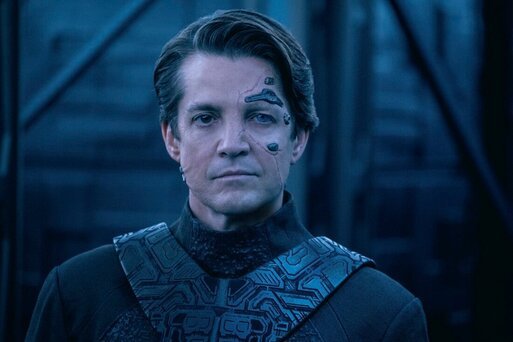 Conclusion: Another slow episode of setup. Beautiful touches evoke memories of TNG, like the teleporter effect when Picard finally boards a space ship or the classic theme music sneaking in at the final moments. "Engage!" he says. Remember how he used to say that? And he points in the direction he wants them to go and they go there? Yeah, good times. But the show suffers from saga-storytelling syndrome: It's just dinking around, meandering its way along the plot, instead of moving in big bold strides. It's decompressed, and it's all well and good in a Coen Brothers film, but I wouldn't mind they have fewer scenes talking about the story and about the characters and more scenes where they actually do stuff. I thought maybe the industry learned something from the Netflix Marvel decompression disaster, but nope. This week, they get together, they get on a ship and they go. That's it. Next week, maybe they'll arrive. Until then, at least the theme song is growing on me.
Last Episode
Conclusion: Another slow episode of setup. Beautiful touches evoke memories of TNG, like the teleporter effect when Picard finally boards a space ship or the classic theme music sneaking in at the final moments. "Engage!" he says. Remember how he used to say that? And he points in the direction he wants them to go and they go there? Yeah, good times. But the show suffers from saga-storytelling syndrome: It's just dinking around, meandering its way along the plot, instead of moving in big bold strides. It's decompressed, and it's all well and good in a Coen Brothers film, but I wouldn't mind they have fewer scenes talking about the story and about the characters and more scenes where they actually do stuff. I thought maybe the industry learned something from the Netflix Marvel decompression disaster, but nope. This week, they get together, they get on a ship and they go. That's it. Next week, maybe they'll arrive. Until then, at least the theme song is growing on me.
Last Episode
Next Episode
Neat new "old" uniforms. "The End is the Beginning"Episode 3 marks the end of the First Act for the season. Or put another way, the series is finally gonna get get going... next week! These first three episodes truly constitute the full Pilot, the opening setup and all the introductions. If it were early Nineties TNG, this would've all been done in the first ten minutes of a single episode. Nowadays, it's not prestige television if it isn't stretched out and character moments are all we have yet to fill the void.
Picard puts his team together. We've got Raffi, the begrudging old pal he shouldn't have waited fourteen years until he had favor to reconnect with. She's bitter since hitting bottom vaping orchids and she's definitely not joining the team, until she does. There's Agnes, the world's foremost robot-nerd who' can't pass an opportunity to hunt down more robots. And now there's Captain Rios, who seems depressed and self-destructive after the loss of his last Captain, and spends all day with differently accented holograms of himself. Together, they're off to have an adventure!
Meanwhile, there's Data-daughter Soji. Yes, I'm using her name, finally, since she's finally starting to do... something. Remember she's the synth-twin that's still alive, but she continues to have a completely incomprehensible subplot with the Borg. It seemed cool and mysterious last episode. This time it's just vague. Her Romulan spy boyfriend is in love with her. Sure. She talks mythological nonsense to a mentally-ill former-Borg fortune teller. Okay. And her new mentor-figure is Hugh, a holdover from The Next Generation. Alright. He's the original ex-Borg, you obviously recall. He was the first one to break from the collective and reclaim his identity and then immediately get confused about it (welcome to the party). Here, he doesn't do a whole lot. His arrival is a little underwhelming when it should've been more dramatic. It's so vanilla, in fact, I'm giving up on all my fan theories of any clever plot twists about Soji being his daughter instead of Data's. This show clearly isn't playing at that level. Still, it's nice to see the tie-in.
Conclusion: Another slow episode of setup. Beautiful touches evoke memories of TNG, like the teleporter effect when Picard finally boards a space ship or the classic theme music sneaking in at the final moments. "Engage!" he says. Remember how he used to say that? And he points in the direction he wants them to go and they go there? Yeah, good times. But the show suffers from saga-storytelling syndrome: It's just dinking around, meandering its way along the plot, instead of moving in big bold strides. It's decompressed, and it's all well and good in a Coen Brothers film, but I wouldn't mind they have fewer scenes talking about the story and about the characters and more scenes where they actually do stuff. I thought maybe the industry learned something from the Netflix Marvel decompression disaster, but nope. This week, they get together, they get on a ship and they go. That's it. Next week, maybe they'll arrive. Until then, at least the theme song is growing on me.
Last EpisodeNext Episode
January 31, 2020
Star Trek: Picard Episode 2
Now with more robots! 
 "Maps and Legends"
Worldbuilding: Last week was a strong pilot, re-introducing us to Picard as if we could forget and updating us on his tea preferences, safety-deposit box status, and 24th Century media bias. Sure. Fine. Not bad. I watched it twice. This week zooms out a little and gives us what we want: More robots and more Borg. And no, they're not the same you noob.
We flashback to 14 years ago in future-history time, and get a glimpse of the Robot Revolution on Mars (they're called Synthetics here, not to be confused with what your nephew smokes in his grandma's basement while trolling Flat-Earthers). They all look a little like bald Datas until they suddenly go murder-happy. The attention to detail is good here and the world feels pretty lived in. You can't go wrong adding more robots to a story, and this is an important establishing scene because all the ubiquitous worker-bots they said last episode were made illegal had never really been previously seen or mentioned in The Next Generation timeline. Data was always one of a kind (one of three, technically, and then he had that daughter once for an episode, but who's counting?).
As for the Borg, some random leftover cube is floating in Romulan space, as cubes are wont to do, and various alien tourists and scientists are hanging out there, helping the cyber-zombies return to their previous identities. And occasionally boning. Female Object of the Plot #2 (the twin sister of last week's Object of the Plot) hooks up for some casual sex with the allegedly hot Romulan (kinda scruffy-looking if you ask me, but you didn't) who turns out to be a spy and the girl is his mission. This is what makes her an Object of the Plot. I look forward to her making choices later maybe and joining the growing cast of characters. Special shout out to the "Days Since Last Assimilation" sign.
Also Picard is in this episode. He makes an Admiral drop the F-Bomb. The Federation's Utopian days are long gone, my friend. Also, he's dying. This must be the fourth terminal condition he's got over the course of the show (Irumadic Syndrome, Shalaft's Syndrome and a double fake-heart transplant in case you question my count). The writers should just start reusing them. Mostly him and his Romulan immigrant maid talk ghost stories about double-extra-secret spy agencies that she knows a convenient amount of detail on and he tries to get a ship but no one will help.
Conclusion: And then it's over again. These episodes feel so short it's kinda hard to watch them one at a time. It'll make for a great binger when it's finished though. I love the pacing and the naturalistic drama, I just wish we were getting bigger chunks at a time. Right now it feels like trying to watch a film late at night and your kid wakes up and you have to quick turn off the screen or they'll start begging to watch Peppa Pig and if you don't let them watch at least two episodes -- No Five! -- they'll be screaming their over-tired tantrums on the floor till you lay with them in bed for an hour wondering who was that chick at the end Picard brought the wine for and how come he has so many old friends who are young. I guess I'll have to wait till next week...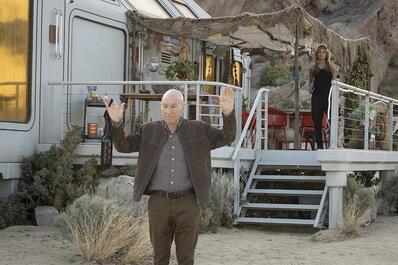 Don't Forget to Like or Retweet!
Let me know what you thought in the comments!
Last Week's Episode
Next Week's Episode
"Maps and Legends"Worldbuilding: Last week was a strong pilot, re-introducing us to Picard as if we could forget and updating us on his tea preferences, safety-deposit box status, and 24th Century media bias. Sure. Fine. Not bad. I watched it twice. This week zooms out a little and gives us what we want: More robots and more Borg. And no, they're not the same you noob.
We flashback to 14 years ago in future-history time, and get a glimpse of the Robot Revolution on Mars (they're called Synthetics here, not to be confused with what your nephew smokes in his grandma's basement while trolling Flat-Earthers). They all look a little like bald Datas until they suddenly go murder-happy. The attention to detail is good here and the world feels pretty lived in. You can't go wrong adding more robots to a story, and this is an important establishing scene because all the ubiquitous worker-bots they said last episode were made illegal had never really been previously seen or mentioned in The Next Generation timeline. Data was always one of a kind (one of three, technically, and then he had that daughter once for an episode, but who's counting?).
As for the Borg, some random leftover cube is floating in Romulan space, as cubes are wont to do, and various alien tourists and scientists are hanging out there, helping the cyber-zombies return to their previous identities. And occasionally boning. Female Object of the Plot #2 (the twin sister of last week's Object of the Plot) hooks up for some casual sex with the allegedly hot Romulan (kinda scruffy-looking if you ask me, but you didn't) who turns out to be a spy and the girl is his mission. This is what makes her an Object of the Plot. I look forward to her making choices later maybe and joining the growing cast of characters. Special shout out to the "Days Since Last Assimilation" sign.
Also Picard is in this episode. He makes an Admiral drop the F-Bomb. The Federation's Utopian days are long gone, my friend. Also, he's dying. This must be the fourth terminal condition he's got over the course of the show (Irumadic Syndrome, Shalaft's Syndrome and a double fake-heart transplant in case you question my count). The writers should just start reusing them. Mostly him and his Romulan immigrant maid talk ghost stories about double-extra-secret spy agencies that she knows a convenient amount of detail on and he tries to get a ship but no one will help.
Conclusion: And then it's over again. These episodes feel so short it's kinda hard to watch them one at a time. It'll make for a great binger when it's finished though. I love the pacing and the naturalistic drama, I just wish we were getting bigger chunks at a time. Right now it feels like trying to watch a film late at night and your kid wakes up and you have to quick turn off the screen or they'll start begging to watch Peppa Pig and if you don't let them watch at least two episodes -- No Five! -- they'll be screaming their over-tired tantrums on the floor till you lay with them in bed for an hour wondering who was that chick at the end Picard brought the wine for and how come he has so many old friends who are young. I guess I'll have to wait till next week...
Don't Forget to Like or Retweet!Let me know what you thought in the comments!
Last Week's Episode
Next Week's Episode
January 25, 2020
Captain's Blog Returns for Picard, Season Premier
Captain's Blog: Patrick Stewart is finally done with Professor-X and the X-Men. After some six appearances and 18 years he returns to the only other role you know him from. Callbacks to Stewart's last appearance (Nemesis), the reboots (Star Trek, 2009) and fan favorite episodes like, "The Offspring," "Family," "The Measure of a Man," or "All Good Things" do more than pad the premier with fan service, they flesh out a world we forgot how much we missed visiting.  "Remembrance"
Growing up, my dad used to wake me at midnight to watch reruns of TNG on CBS. I still remember the pilot episode of Voyager, or waiting in line to see First Contact seeing one of the ushers wear a Starfleet uniform opening night at the theater. Every year for my birthday I rewatched "The Best of Both Worlds" on a two-part VHS set. I took my future wife to see the 2009 JJ reboot and I'm proud to say when it came out on DVD she made all her roommates watch it with her. This is the kind of stuff I live to blog for. When I titled this thing "Captain's Blog" I had no idea how much actual new Trek I'd get to write about. In fact, there wasn't any Trek at all. Rumors of Discovery were still in the distance and even the new movies seemed to be sputtering out. Now we're on the cusp of a full blown Trek-topia (Trekolution? Trekassance?) Discovery Season 3 is due later this year (I still stand by it!), there are rumors of a new Christopher Pike prequel series (yes please!), multiple cartoons, copycats like The Orville and that one great Black Mirror episode (USS Callister), and even Tarantino wants to direct a film! CBS is basically building a streaming platform purely off the marketing power of the Trek brand alone, and it's so lucrative they're making their biggest competitor Netflix foot the bill for only a slice of it! Needless to say, it's a great time to be running the Captain's Blog, and don't think for a second my new day job is gonna get in the way!
Let's do this: We open with an absolutely stunning starscape, reminiscent of the old show intro but with a level of definition and richness they could never have afforded before. That's when we see her, the ship, the one from our childhood, the Enterprise-D, a perfect beauty shot. We zoom into Ten-Forward to a scene that seems like it could've picked up right where the show last ended: Picard playing poker with his pals. I don't know if they used any trickery or just good makeup to make Data look... "younger" (or at least approximate to his last appearance), but hearing Brent Spiner's stilted and aloof robot-voice again was worth ten times those expensive special effects.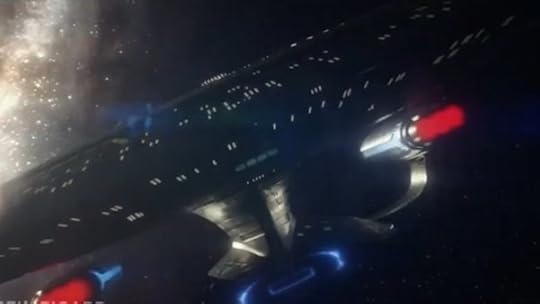
 Of course it's a dream. Mars explodes, and Picard wakes up at his family winery, Chateau Picard (from which you can get real wine, now, I guess!), a place he has sought solace in the past. He's hiding here, again in a way, until the media catches up to him and manipulates him into an exposition arm-wrestling match until we all understand the premise of the show. The short version: The Romulans' sun went supernova (see Star Trek, 2009) and Picard fought to relocate them because he's a good guy like that, but in a completely unrelated incident some Synthetics (robots, I guess, of which we've never really heard before) attack Mars and kill some people and blow up some ships. Star Fleet bowed to pressure to ban Synthetics and abandon the Romulans, and Picard resigned in protest. For those with their heads in the sand, this is a metaphor for the world's current refugee crisis and right-wing protectionism and xenophobia. The robots represent... Well, sometimes it's just cool to add robots, they don't always have to mean anything.
Other stuff: We meet a girl. I forget her name (it doesn't matter). Some Romulans try to kill her. She turns into Jason Bourne and pew-pews them. She has a convenient vision that tells her to go to Picard. I guess this was more succinct for the writers than actually coming up with a reason. They chit-chat over "Tea, Earl-Grey, Decaf," and then she leaves again so she can find him a second time (seriously, this could've been tightened up in a second draft). But it gives Picard time to visit his nerd-vault where he stores all his fan-service (anyone else remember Captain Picard Day?! I do, I do! See Season 7 episode "The Pegasus") so he can discover she has a connection to Data. And also that he has a bad memory. If my best friend was a robot and he painted me two identical pictures called "Daughter" because he always wanted a daughter, and I put one in a super-sci-fi-safety-deposit-box and the other IN MY OWN HOME, I should think I would remember it. This is a major plot point! Picard is going crazy. I'm calling it right now, my hot-take of the week: Picard is living out some kind of alzheimer's fantasy, and things aren't what they seem. And it probably involves our old frenemy Q (notice Data's poker hand in that dream sequence? All Queens? All... Q's?) You heard it here first.
Anyway... The girl comes back, kicks more ass, and then dies. The fight scenes are actually pretty good. Picard runs like a legit old man, and in like three seconds he is winded and overklemped . Her death prompts him to go to that Daystrom Institute they'd been referring to all episode where they are not only forbidden from building synthetics anymore, but also apparently from reallocating their classroom desks and chairs to other uses (post-scarcity indeed!). They name-drop some deep-cut fan service like Dr. Maddox (the guy who didn't think Data was a real "person" in Season 2 "The Measure of a Man" but Picard ultimately prevails in one of future-history's most heavy-handed and legally dubious lectures (seriously, you gotta click these links!) Anyway, turns out the guy kept trying to build more "Datas" and now he's disappeared!). We're given just enough info to believe this dead girl had a twin and that she might be Data's daughter, but my red-herring detectors are blaring. My bet is that she's something else. And since we know the actor who played Hugh is returning from "I, Borg" (Season 5) I suspect she may actually be his daughter. Either way, we cut to said sister with nary enough time to show that she's hanging out with refugee Romulans and they're building a cliffhanger in the shape of a Borg-cube. I rest my case.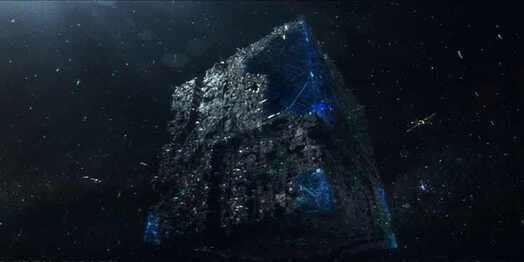 Conclusion: That was a whole episode? I watched it twice and it still seemed fast. The show moves quickly, even as it decompresses the former "adventure of the week" episodic structure into today's saga-centered serialized storytelling. It's clear we're going to have to experience this particular adventure one chapter at a time, but if it's going to look this rich and vibrant, I won't complain. The cinematography and production value is every bit as good as any of the movies, if not better. The storytelling feels more self-confident than Discovery first did in its pilot. Namely, it's not trying so hard because it doesn't have to. Patrick Stewart exudes confidence at all times, even in self-pity and regret. I don't think he's quite pulled himself out from the shadow of Professor-X and the avuncular empathy more appropriate to that character, but there was one moment when he got stern with the reporter that I saw the Picard I remember. The one who gets angry with a righteous authority and lectures you about morality. That Picard is perhaps deliberately pressed under the surface of this languished old man, and I'm curious how much of him we'll see rise to the occasion this season. His arc may not be so different from Luke Skywalker's in The Last Jedi, an old hero mired in the muddy reality of his own imperfect and futile successes, who rouses himself for one last purposeful return to stature.
The show makes a bold choice not to put our hero on the bridge of a ship where we best knew him, not to put him in charge of anything at all, or to surround him with his supportive crew. There is no space anomaly, or ship battle, or alien encounter to solve in under forty minutes. We spend more time on future-Earth than most of Trek history combined. Yet it all works. It all feels connected to that same past that we remember. Whether you're a tried-and-true Trekkie, or a casual channel flipper who's been known to peruse an episode here or there on reruns, Star Trek: Picard will feel like a warm visit home. I suspect it will keep moving slow, and like a gentle wood flute, lure us to it's own tempo.
Captain's Blog Supplemental:
-Has no one ever seen two circles on a necklace before? Who's in charge of production design?!
-The intro music was a little bland, to me. I think they were trying to evoke the wooden flute music from "The Inner Light" episode (Season 5, one of Steward's favorites) but it just felt amorphous and empty. Meanwhile Discovery's is still stuck in my head. Missed opportunity to homage the more momentous TNG opener. I'm pretty disappointed.
-Dunkirk. Good, timely reference. Christopher Nolan made sure a new generation will always get that reference.
-So there were two metaphorical stand-ins for refugees and xenophobia? Romulans and Synthetics? This seems redundant. Some rogue faction of Romulans should've been the ones to bomb Mars. That would've paralleled more accurately the real-world complexities of the Mid-East refugee crisis after 9/11.
-And where did all these Synthetics come from anyway? I don't see any reference to them in my Start Trek Encyclopedia (1994 or 1999 editions). They are supposed to be robots, right? We don't really get to see them, I just want to make sure we're not supposed to think Synthetic drugs are what attacked Mars. Like a bunch of methamphetamines.
-Was the Federation of the future ever really so progressively humanist? Or was it always just Picard, and our lens was tainted because he was always on camera? This explains a lot of episodes... and basically all of DS9.
-The dog's name is Number One. Whoever wrote that patted themselves on the back and took an early lunch.
-Was Picard planning to hire all the Romulan refugees as Maids and Butlers? Or are these two House-Romulans just an anti-thematic coincidence? Don't forget to Like and Retweet!
Next Episode
Star Trek: Discovery Season One
Star Trek: Discovery Season Two
"Remembrance"Growing up, my dad used to wake me at midnight to watch reruns of TNG on CBS. I still remember the pilot episode of Voyager, or waiting in line to see First Contact seeing one of the ushers wear a Starfleet uniform opening night at the theater. Every year for my birthday I rewatched "The Best of Both Worlds" on a two-part VHS set. I took my future wife to see the 2009 JJ reboot and I'm proud to say when it came out on DVD she made all her roommates watch it with her. This is the kind of stuff I live to blog for. When I titled this thing "Captain's Blog" I had no idea how much actual new Trek I'd get to write about. In fact, there wasn't any Trek at all. Rumors of Discovery were still in the distance and even the new movies seemed to be sputtering out. Now we're on the cusp of a full blown Trek-topia (Trekolution? Trekassance?) Discovery Season 3 is due later this year (I still stand by it!), there are rumors of a new Christopher Pike prequel series (yes please!), multiple cartoons, copycats like The Orville and that one great Black Mirror episode (USS Callister), and even Tarantino wants to direct a film! CBS is basically building a streaming platform purely off the marketing power of the Trek brand alone, and it's so lucrative they're making their biggest competitor Netflix foot the bill for only a slice of it! Needless to say, it's a great time to be running the Captain's Blog, and don't think for a second my new day job is gonna get in the way!
Let's do this: We open with an absolutely stunning starscape, reminiscent of the old show intro but with a level of definition and richness they could never have afforded before. That's when we see her, the ship, the one from our childhood, the Enterprise-D, a perfect beauty shot. We zoom into Ten-Forward to a scene that seems like it could've picked up right where the show last ended: Picard playing poker with his pals. I don't know if they used any trickery or just good makeup to make Data look... "younger" (or at least approximate to his last appearance), but hearing Brent Spiner's stilted and aloof robot-voice again was worth ten times those expensive special effects.
Of course it's a dream. Mars explodes, and Picard wakes up at his family winery, Chateau Picard (from which you can get real wine, now, I guess!), a place he has sought solace in the past. He's hiding here, again in a way, until the media catches up to him and manipulates him into an exposition arm-wrestling match until we all understand the premise of the show. The short version: The Romulans' sun went supernova (see Star Trek, 2009) and Picard fought to relocate them because he's a good guy like that, but in a completely unrelated incident some Synthetics (robots, I guess, of which we've never really heard before) attack Mars and kill some people and blow up some ships. Star Fleet bowed to pressure to ban Synthetics and abandon the Romulans, and Picard resigned in protest. For those with their heads in the sand, this is a metaphor for the world's current refugee crisis and right-wing protectionism and xenophobia. The robots represent... Well, sometimes it's just cool to add robots, they don't always have to mean anything. Other stuff: We meet a girl. I forget her name (it doesn't matter). Some Romulans try to kill her. She turns into Jason Bourne and pew-pews them. She has a convenient vision that tells her to go to Picard. I guess this was more succinct for the writers than actually coming up with a reason. They chit-chat over "Tea, Earl-Grey, Decaf," and then she leaves again so she can find him a second time (seriously, this could've been tightened up in a second draft). But it gives Picard time to visit his nerd-vault where he stores all his fan-service (anyone else remember Captain Picard Day?! I do, I do! See Season 7 episode "The Pegasus") so he can discover she has a connection to Data. And also that he has a bad memory. If my best friend was a robot and he painted me two identical pictures called "Daughter" because he always wanted a daughter, and I put one in a super-sci-fi-safety-deposit-box and the other IN MY OWN HOME, I should think I would remember it. This is a major plot point! Picard is going crazy. I'm calling it right now, my hot-take of the week: Picard is living out some kind of alzheimer's fantasy, and things aren't what they seem. And it probably involves our old frenemy Q (notice Data's poker hand in that dream sequence? All Queens? All... Q's?) You heard it here first.
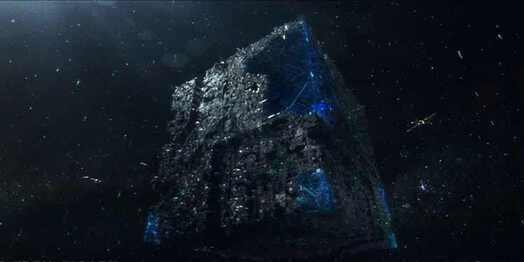
Anyway... The girl comes back, kicks more ass, and then dies. The fight scenes are actually pretty good. Picard runs like a legit old man, and in like three seconds he is winded and overklemped . Her death prompts him to go to that Daystrom Institute they'd been referring to all episode where they are not only forbidden from building synthetics anymore, but also apparently from reallocating their classroom desks and chairs to other uses (post-scarcity indeed!). They name-drop some deep-cut fan service like Dr. Maddox (the guy who didn't think Data was a real "person" in Season 2 "The Measure of a Man" but Picard ultimately prevails in one of future-history's most heavy-handed and legally dubious lectures (seriously, you gotta click these links!) Anyway, turns out the guy kept trying to build more "Datas" and now he's disappeared!). We're given just enough info to believe this dead girl had a twin and that she might be Data's daughter, but my red-herring detectors are blaring. My bet is that she's something else. And since we know the actor who played Hugh is returning from "I, Borg" (Season 5) I suspect she may actually be his daughter. Either way, we cut to said sister with nary enough time to show that she's hanging out with refugee Romulans and they're building a cliffhanger in the shape of a Borg-cube. I rest my case.
Conclusion: That was a whole episode? I watched it twice and it still seemed fast. The show moves quickly, even as it decompresses the former "adventure of the week" episodic structure into today's saga-centered serialized storytelling. It's clear we're going to have to experience this particular adventure one chapter at a time, but if it's going to look this rich and vibrant, I won't complain. The cinematography and production value is every bit as good as any of the movies, if not better. The storytelling feels more self-confident than Discovery first did in its pilot. Namely, it's not trying so hard because it doesn't have to. Patrick Stewart exudes confidence at all times, even in self-pity and regret. I don't think he's quite pulled himself out from the shadow of Professor-X and the avuncular empathy more appropriate to that character, but there was one moment when he got stern with the reporter that I saw the Picard I remember. The one who gets angry with a righteous authority and lectures you about morality. That Picard is perhaps deliberately pressed under the surface of this languished old man, and I'm curious how much of him we'll see rise to the occasion this season. His arc may not be so different from Luke Skywalker's in The Last Jedi, an old hero mired in the muddy reality of his own imperfect and futile successes, who rouses himself for one last purposeful return to stature. The show makes a bold choice not to put our hero on the bridge of a ship where we best knew him, not to put him in charge of anything at all, or to surround him with his supportive crew. There is no space anomaly, or ship battle, or alien encounter to solve in under forty minutes. We spend more time on future-Earth than most of Trek history combined. Yet it all works. It all feels connected to that same past that we remember. Whether you're a tried-and-true Trekkie, or a casual channel flipper who's been known to peruse an episode here or there on reruns, Star Trek: Picard will feel like a warm visit home. I suspect it will keep moving slow, and like a gentle wood flute, lure us to it's own tempo.
Captain's Blog Supplemental:
-Has no one ever seen two circles on a necklace before? Who's in charge of production design?!
-The intro music was a little bland, to me. I think they were trying to evoke the wooden flute music from "The Inner Light" episode (Season 5, one of Steward's favorites) but it just felt amorphous and empty. Meanwhile Discovery's is still stuck in my head. Missed opportunity to homage the more momentous TNG opener. I'm pretty disappointed.
-Dunkirk. Good, timely reference. Christopher Nolan made sure a new generation will always get that reference.
-So there were two metaphorical stand-ins for refugees and xenophobia? Romulans and Synthetics? This seems redundant. Some rogue faction of Romulans should've been the ones to bomb Mars. That would've paralleled more accurately the real-world complexities of the Mid-East refugee crisis after 9/11.
-And where did all these Synthetics come from anyway? I don't see any reference to them in my Start Trek Encyclopedia (1994 or 1999 editions). They are supposed to be robots, right? We don't really get to see them, I just want to make sure we're not supposed to think Synthetic drugs are what attacked Mars. Like a bunch of methamphetamines.
-Was the Federation of the future ever really so progressively humanist? Or was it always just Picard, and our lens was tainted because he was always on camera? This explains a lot of episodes... and basically all of DS9.
-The dog's name is Number One. Whoever wrote that patted themselves on the back and took an early lunch.
-Was Picard planning to hire all the Romulan refugees as Maids and Butlers? Or are these two House-Romulans just an anti-thematic coincidence? Don't forget to Like and Retweet!
Next Episode
Star Trek: Discovery Season One
Star Trek: Discovery Season Two
October 7, 2019
Book Review: 007 From Russia With Love
Russia discovers Bond's kryptonite: sexy women! And yes, it basically works. 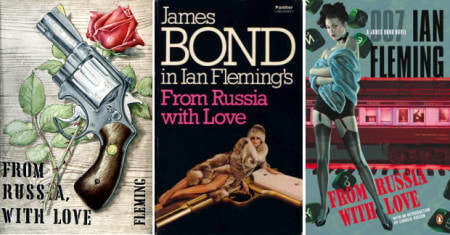 90 pages! Over 90 pages before we're finally introduced to our titular hero. That's how long we spend in Russia, developing the plan to humiliate Britain and James Bond for the humiliations suffered in previous installments. That's how much groundwork is put into setting up the suspense for this plot. Ian Feming really bats for the fences as he sets up all the inevitable subplots and traps that Bond will fall into. An English assassin psychopath triggered by the moon. A sexy young cipher clerk trained to fall in love with him. A tempting Spektor decoding device, wired to explode. The full force and brilliance of the Soviet spy force SMERSH directed at discrediting and embarrassing Bond in an international incident aboard the exotic Orient Express. And this is effectively the prologue.
Bond is bored, when we finally catch up to him, killing time between adventures. Word comes that a young Soviet girl named Tatiana Romanova (does it get any more Russian?) has fallen in love with him and wants to defect and deliver the Spektor, everyone assumes it's a trap. They just can't put their finger on it, and they figure, hey, it's James Bond, it could happen. He'll be fine. Besides, they just want that darn Spektor so much, they'll take the chance. There's only one way Romanova will defect, however, and that's by dramatic irony and exciting set pieces: Bond must be the one to collect her in Istanbul and he must only transport her to England by the Orient Express (you'd think there was only just that one train in all of Europe).
You can guess the rest. Bond teams up with a gypsy partner in Turkey, and they have a quick gypsy side adventure killing criminals. Of course Bond is suspicious when he meets Tatiana, but sleeping with her seems to solve that (they couldn't fake it in the fifties I guess). She can't be a spy if she's a good lay, and wouldn't ya know it, she starts to actually fall in love with him! Bond's gypsy pal gets killed ridding the train of Soviet secret agents and MI-6 sends Bond a back-up, but the back-up turns out to be the assassin we haven't seen since the start. He poisons them both but Bond outsmarts him in the end and he manages not only to get the girl home but make an honest defector out of her, and warn the scientists of the bomb in the Spektor. All is well until he unexpectedly comes face to face with the architect of his demise, an old woman behind the men who outsmarted everyone, and she stabs him with a poison knife in her shoe and Bond goes down for the count and... "Breathing became difficult. Bond sighed to the depth of his lungs. He clenched his jaws and half closed his eyes, as people do when they want to hide their drunkenness. ... He prised his eyes open. ... Now he had to gasp for breath. Again his hand moved up towards his cold face. He had an impression of Mathis starting towards him. Bond felt his knees begin to buckle, pivoted slowly on his heel and crashed head-long to the wine-red floor." ...wait a minute? That's the end? Did Bond just die?
The Death of James Bond. Turns out Ian Fleming was getting bored with Bond and this really was the death of our beloved playboy. The movies didn't catch on for another couple years, and Fleming thought he might move onto other stuff (check out Chitty-Chitty-Bang-Bang, no I'm not joking.) So for about a year, this was the end of the series and the end of Bond. Until it wasn't. Dr. No came next, and that got made into a movie with Sean Connery and Bond has pretty much been immortal ever since.
Conclusion: 3.5 out of 5 stars. From Russia with Love is a mixed bag. On the one hand I love Fleming's return to experimental story structure. This is only the fifth novel and Fleming has already deconstructed his own formula about as often as he's adhered to it. The first 90 pages are like their own separate short story prequel to the real novel. Half the setups teased in it are never referenced again until their payoff, showing great retraint from the writer and greater confidence in the reader to remember all the clues in time for them to count. The details omitted are even more ominous than the threats we know about, and even though we're given so much behind the scenes planning from the outset, we're also denied whole swathes of secret scheming. It's the illusion of dramatic irony. The Fleming-Sweep is in full effect, building to some great page-turners at the end of exciting chapters. But there are also some long, slow slogs that make a better fifth installment for the franchise than a first. What I mean is that it's probly most rewarding for recurring readers who think they know what to expect. There are also some ridiculous and somewhat sexist cliches, including a topless gypsy catfight, the old Soviet S&M lady, and almost everything about Tatiana who basically begs to be in an abusive relationship. Pulp fiction doesn't get any pulpier than this, and it has as many pros as cons. The villain walks around naked and has to kill during full moons. Gypsies operate like a secret society. The Russians are cold and brilliant but mad and petty. All the ups and downs of the Bond franchise are on full display, from the trick gadgets and the product placements, to the villainous monologue and sleeping with the sexy defector (for the good of your country!). It's actually a pretty good installment in the series, but only if you've been tracking with it so far and you can tune out its more dated social norms. Better than Diamonds are Forever, at least, which leads me to my current rankings:
1. Moonraker
2. Casino Royale
3. Live and Let Die
4. From Russia with Love
5. Diamonds are Forever
What are yours?
90 pages! Over 90 pages before we're finally introduced to our titular hero. That's how long we spend in Russia, developing the plan to humiliate Britain and James Bond for the humiliations suffered in previous installments. That's how much groundwork is put into setting up the suspense for this plot. Ian Feming really bats for the fences as he sets up all the inevitable subplots and traps that Bond will fall into. An English assassin psychopath triggered by the moon. A sexy young cipher clerk trained to fall in love with him. A tempting Spektor decoding device, wired to explode. The full force and brilliance of the Soviet spy force SMERSH directed at discrediting and embarrassing Bond in an international incident aboard the exotic Orient Express. And this is effectively the prologue. Bond is bored, when we finally catch up to him, killing time between adventures. Word comes that a young Soviet girl named Tatiana Romanova (does it get any more Russian?) has fallen in love with him and wants to defect and deliver the Spektor, everyone assumes it's a trap. They just can't put their finger on it, and they figure, hey, it's James Bond, it could happen. He'll be fine. Besides, they just want that darn Spektor so much, they'll take the chance. There's only one way Romanova will defect, however, and that's by dramatic irony and exciting set pieces: Bond must be the one to collect her in Istanbul and he must only transport her to England by the Orient Express (you'd think there was only just that one train in all of Europe).
You can guess the rest. Bond teams up with a gypsy partner in Turkey, and they have a quick gypsy side adventure killing criminals. Of course Bond is suspicious when he meets Tatiana, but sleeping with her seems to solve that (they couldn't fake it in the fifties I guess). She can't be a spy if she's a good lay, and wouldn't ya know it, she starts to actually fall in love with him! Bond's gypsy pal gets killed ridding the train of Soviet secret agents and MI-6 sends Bond a back-up, but the back-up turns out to be the assassin we haven't seen since the start. He poisons them both but Bond outsmarts him in the end and he manages not only to get the girl home but make an honest defector out of her, and warn the scientists of the bomb in the Spektor. All is well until he unexpectedly comes face to face with the architect of his demise, an old woman behind the men who outsmarted everyone, and she stabs him with a poison knife in her shoe and Bond goes down for the count and... "Breathing became difficult. Bond sighed to the depth of his lungs. He clenched his jaws and half closed his eyes, as people do when they want to hide their drunkenness. ... He prised his eyes open. ... Now he had to gasp for breath. Again his hand moved up towards his cold face. He had an impression of Mathis starting towards him. Bond felt his knees begin to buckle, pivoted slowly on his heel and crashed head-long to the wine-red floor." ...wait a minute? That's the end? Did Bond just die?
The Death of James Bond. Turns out Ian Fleming was getting bored with Bond and this really was the death of our beloved playboy. The movies didn't catch on for another couple years, and Fleming thought he might move onto other stuff (check out Chitty-Chitty-Bang-Bang, no I'm not joking.) So for about a year, this was the end of the series and the end of Bond. Until it wasn't. Dr. No came next, and that got made into a movie with Sean Connery and Bond has pretty much been immortal ever since.
Conclusion: 3.5 out of 5 stars. From Russia with Love is a mixed bag. On the one hand I love Fleming's return to experimental story structure. This is only the fifth novel and Fleming has already deconstructed his own formula about as often as he's adhered to it. The first 90 pages are like their own separate short story prequel to the real novel. Half the setups teased in it are never referenced again until their payoff, showing great retraint from the writer and greater confidence in the reader to remember all the clues in time for them to count. The details omitted are even more ominous than the threats we know about, and even though we're given so much behind the scenes planning from the outset, we're also denied whole swathes of secret scheming. It's the illusion of dramatic irony. The Fleming-Sweep is in full effect, building to some great page-turners at the end of exciting chapters. But there are also some long, slow slogs that make a better fifth installment for the franchise than a first. What I mean is that it's probly most rewarding for recurring readers who think they know what to expect. There are also some ridiculous and somewhat sexist cliches, including a topless gypsy catfight, the old Soviet S&M lady, and almost everything about Tatiana who basically begs to be in an abusive relationship. Pulp fiction doesn't get any pulpier than this, and it has as many pros as cons. The villain walks around naked and has to kill during full moons. Gypsies operate like a secret society. The Russians are cold and brilliant but mad and petty. All the ups and downs of the Bond franchise are on full display, from the trick gadgets and the product placements, to the villainous monologue and sleeping with the sexy defector (for the good of your country!). It's actually a pretty good installment in the series, but only if you've been tracking with it so far and you can tune out its more dated social norms. Better than Diamonds are Forever, at least, which leads me to my current rankings:
1. Moonraker
2. Casino Royale
3. Live and Let Die
4. From Russia with Love
5. Diamonds are Forever
What are yours?
April 18, 2019
Star Trek Discovery Season 2 Finale
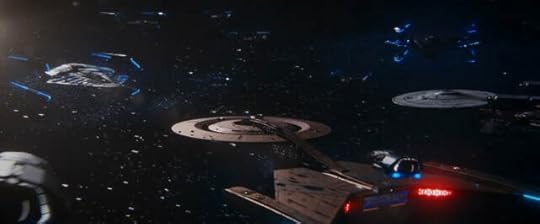 Captain's Blog: The ship hits the fan this week in the climactic conclusion to Star Trek Discovery Season 2. The evil AI 'Control' closes in on Discovery and Enterprise and time is running out to travel to the future and save the galaxy. Will the Riders of Rohan rush to the rescue when all seems lost? Is timey-wimey stuff enough to snuff the badguys? Will Spock ever shave that beard?! Find out what happens and my full season review...
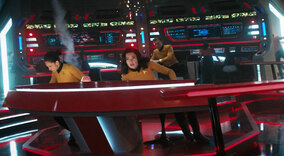 Are we leaning your left or my left? "Sweet Sorrow" Part 2
All the phasers get fired as Discovery and Enterprise buy time for Burnham to launch her time-traveling Red Angel suit and save the galaxy. That's basically all that happens, right? Let's start with the battle. It's cool if you're on Adderall, but for the rest of us it's pretty frenetic. It would've been enough for the two iconic vessels to face off against a fleet of thirty ships, but instead they added dozens of shuttles and fighter-pods and thousands swarming mini-drones and enough bright flashing lights to cause an epileptic seizure. There are flavors of Battlestar Galactica and Abram's Star Trek 2009 as well as Michael Bay's Transformers, but it's basically awesome anyway. Don't get me wrong, it's bonkers and chaotic but it makes for the guiltiest of pleasures. There are sparks on the bridge. Inspirational diatribes. Extras leaning left and right. Shield statuses shouted out. It's never been more Trek and Trek has never been better. The plot may be generic in a certain sense, but there are some truly exciting moments. "We are Starfleet. Get it done."
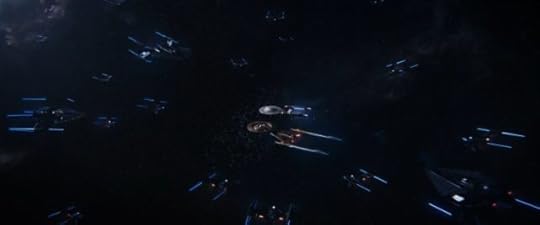 Surrounded by Section 31 drone ships
 Red Angel Wrap Up. Burnham suits up and heads out with Spock in tow, and can't seem to get the darn thing to work. Isn't that always how it goes with time-crystals? And then Spock figures out what we've all suspected on the internet: Burnham isn't supposed to go forward in time, she has to go backward to produce all those red lights that have been leading them through the season. All those detours were functionally necessary to get to this point and succeed. This leads to one of the best moments of the episode which I have been hoping for for a while, even if it turns out a little half-baked. The black hole time jumping is beautiful as Burnham reappears at key moments from throughout the season, reminiscent of Interstellar in it's visual creativity. But instead of seeing these same scenes from a new perspective, we're given little more than closeups of Sonequa Martin-Green intercut with flashbacks of recycled footage. Bit of a letdown. And it doesn't help some of these plot points are tenuous as best. The mission to Kaminar was necessary because... Saru's sister shows up in a starfighter to help in the battle? Not likely. She only learned about space travel -- what, like days ago? And did she really help? Really? It was gratuitous and sentimental mush. Tig Notaro and Po were at least a little more functional, but their contributions bordered on Tell and not Show, and felt contrived. I appreciate the attempt to wrap everything up, but at least half of it felt improvised rather than planned ahead.
 Haphazard writing. This is where it gets tricky, but I really do think the fault here lies in the writers, who are working backwards. They start with great set pieces and scientific ideas and deep cuts into Trek canon, but struggle to balance that with eye-rolling dialogue, character inconsistency, stop and go pacing and illogical plot holes. These are medium quality writers trying to produce movie-quality Game of Thrones in space -- and I applaud them for their bold reach, they really leap for the moon -- but they can't always land it. The incredible actors compensate for so much of it, but can't hide all of it. When Nahn says, "Yum yum," I had to slap myself in the face. Throwaway comments about Terrans and Mirror Universes and "this isn't where your story ends" are just distracting. On the other hand, homages and farewells to characters like Spock and Pike are handled with such perfect subtlety and nuance that I want to stand and clap. Tilly's antics and the Culber/Stamets melodrama falls somewhere in the middle: mileage may vary. I would've taken those scenes in different directions but that's just me. What's most disappointing about it all is the name Michelle Paradise, this week (and last's) credited writer, and next season's showrunner. I thought she did a killer episode with "Project Daedalus" in which she succinctly develops and kills off Computer-Head Girl (Airiam), but in this two part finale she only manages to hide egregious plot holes, gratuitous climactic clichés and underdeveloped storytelling shortcuts beneath fan service and distracting "Wow!" moments. Which, in her defense, the fan service really *really* landed, and the wow moments, well, yeah they really did make me go wow and I feel no shame in that. But what am I to make of such inconsistencies? What does this bode for Season 3? Is she propping up the writers room or are they covering for her? Who deserves credit for what in an ensemble production? (...There are no answers to this.)
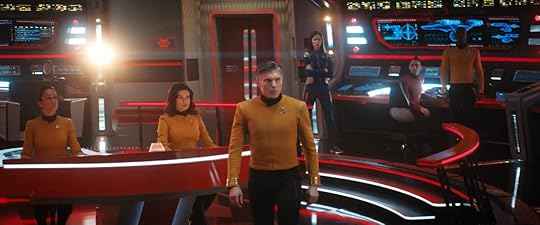 Enterprise Bridge, approx 7 yrs before Kirk and TOS Conclusion: A flawed finale that works in spite of itself. And by works, I mean it's working hard and the effort does not go without notice. Somehow, I still loved it and I'm not surprised so many other people online are raving about it too. It easily stands among the season's strongest. At least half its flaws are a mere matter of preference, so I won't belabor those, but I was not a huge fan of the directorial style of repeat director Olatunde Osunsanmi who basically edited the episode by dumping the film roll into a woodchipper. It's movie quality, sure, but I don't generally like those kind of movies (looking at you Bourne!) So in short, here is what works and what didn't. Works: Klingons in character as violence-intoxicated pirates "It's a good day to die!"; Time travel visuals a'la Interstellar; The long cinematic shots of the space battle (just WOW!); Georgiou/Leland's Inception-style zero-G hallway fight scene (did not see that coming!); All the blue phasers (pew pew); Everything on the Enterprise bridge - sounds/colors/uniforms; Everything Pike; The farewell sendoff to the Enterprise and crew including a glory-shot of the ship repaired in space dock, shaven Spock in his blue uniform "Spock to the Bridge", one last smirking "Hit it" from Pike, and the wonky zoom-out through the ceiling dome that homages and reverses the opening shot from "The Cage". Doesn't Work: the D7 battlecruisers to the rescue (superficial); Saru's sister showing up (dumb, just needless); Nahn saying "Yum yum" (so weird!); time travel flashback footage (cheap); Cornwell's sacrifice and explanation (unnecessary?) while Pike is safe behind a glass window from a torpedo that can otherwise blow a hole in four decks (must be transparent aluminum!); Spock advising they eliminate all record of the Discovery (Starfleet needs advice from a Lieutenant?); Number One stating her name as Number One (trying too hard); Why do they have to go to the future once they kill Leland and neutralize Control? (because the writers wanted to, duh!) Final Verdict: Stop overthinking it! It was awesome! Trek has never been flawless, it's just never had Twitter haters to contend with. This was some great television with a high dose of cheese, but I'm from Wisconsin so I know how to consume a guilty pleasure.
 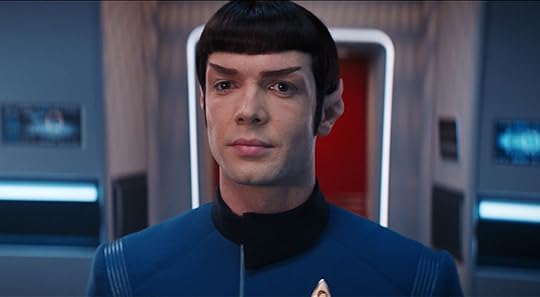 Tell me you wouldn't watch a series with more of this guy! So how was Season 2 overall? Last Season I felt like Discovery had so many cool ideas truncated by trying too hard. I mostly liked it but mostly in spite of itself. This Season wasn't perfect either, but it was far less problematic, and I found myself enjoying almost all of it without any effort at all. They fell back on traditional conventions that just work: things like establishing shots of the ship to both orient the scene and also show off how cool it looks without jarring angles, lens flares, and motion blur mucking it up. There was more screen time for the larger crew. Explanations for continuity discrepancies (it's okay to waste a line of throwaway dialogue once and while to prove you know what you're doing). And story choices that redeem and vindicate unlikable characters and plot points without undercutting what came before. Season 2 showed that Discovery
is
Star Trek without compromising the identity it had from the start. In short, it had its cake and ate it too.
Tell me you wouldn't watch a series with more of this guy! So how was Season 2 overall? Last Season I felt like Discovery had so many cool ideas truncated by trying too hard. I mostly liked it but mostly in spite of itself. This Season wasn't perfect either, but it was far less problematic, and I found myself enjoying almost all of it without any effort at all. They fell back on traditional conventions that just work: things like establishing shots of the ship to both orient the scene and also show off how cool it looks without jarring angles, lens flares, and motion blur mucking it up. There was more screen time for the larger crew. Explanations for continuity discrepancies (it's okay to waste a line of throwaway dialogue once and while to prove you know what you're doing). And story choices that redeem and vindicate unlikable characters and plot points without undercutting what came before. Season 2 showed that Discovery
is
Star Trek without compromising the identity it had from the start. In short, it had its cake and ate it too.Acting: 4.5/5 Some truly good stuff from all across the cast. Newcomers Anson Mount and Ethan Peck stole the show and brought out some of Sonequa Martin-Green's best work. Their performances were layered and rife with intellectual and emotional subtext. Shazad Latif as Ash Tyler was surprisingly improved, and so was most of Wilson Cruz's work as Culber, but the romantic stuff in general was just shotty material for Anthony Rapp to work with and a little disappointing. And there were little things, flashes of attitude and snark from just about everyone at some point that always made me roll my eyes. I think some of it bordered on mushy sentimentalism, but it was a deliberate choice and some people like that. The most important emotional beats were among its best.
Format: 5/5 The hybrid style of serial and episodic storytelling worked a lot better this season as it leaned more heavily episodic at the start and transitioned naturally to serial by the end. I really feel like they understood the balance this year, even if a few episodes sputtered. Most shined.
Writing: 3.5/5 All over the map. Pacing wavered between breakneck and boring. Dialogue was emotionally poignant and perfect for some scenes and full of gibberish exposition in others. There could've been more show-don't-tell and I think most of the season would've benefited from a second draft. You could tell which scenes they cared the most about and put the most thought into, and which they had to put up with to keep the story moving. There was clearly an overarching vision for the season, but it felt like some of the minutia started to fall apart for them.
Character Development 4.5/5 Pike's arc was superb, full of haunting tragedy and heroic self-sacrifice. Spock's was a little riskier, but it worked for me, and ended exactly where it needed to, preparing him to work with his quintessential foil, a certain Captain Kirk. The sibling-squabbling dynamic between Spock and Burnham was brilliantly arranged. But the storylines surrounding Tilly felt skippable, and the romantic complications between Culber and Stamets were too hokey for my taste. Vain attempts were made to include Owo, Detmer, Jet Reno and of course Airiam that wet the appetite but were never gonna be enough. Ash Tyler's character came a long way for me, I really gotta hand it to them, and L'Rell felt more fully fleshed out despite the brevity of her scenes. But Cornwell and Leland were flat all the way through. Georgiou was all over the map (is she space Hitler or mommy? Pick one!). And Saru's was pitch perfect right up until it wasn't relevant in the ending; They missed one simple opportunity to utilize his newfound assertive aggression by having him make some drastic and risky space maneuver that pays off big time (I'm thinking something akin to "Ramming speed!"). Ultimately it was a season built around Burnham finding reconciliation with her family and like Season 1, this primary thematic through-line worked the best.
Plotting 3/5 Echoes of Season 1 here. Huge plot developments are built up only to be tossed aside and forgotten. Some setups were not properly paid off: D7 battlecruisers, Saru's character shift, Georgious's treachery, Culber and Tyler's rivalry. While other payoffs were not properly set up: Airiam, Project Daedalus, Po, Serana. And there are a lot of glaring plot holes. The whole deal with Control and the Sphere Data and Time Travel never held water, especially in the end when there's no longer a need to hide in the future. Luckily they hid all these embarrassments behind...
Production Design: 5/5 Huge improvement. All the new Enterprise uniforms, interiors, and bridge design were beautiful and faithful and exciting. All the old stuff felt slightly improved and salvaged while new stuff like the Section 31 ships and exotic planets demonstrated greater confidence and competence. They really did a great job keeping what worked and fixing what didn't. Special effects were just incredible this year, no wonder they had budget problems again! But better lighting and steadier establishing shots went a long way to letting us actually enjoy their hard work. Someone deserves an Emmy, this year, I think.
Fan Service: 5/5 I could go on and on here. Pike. Spock. Number One. Talos IV. Holograms. Everything. Was. Perfect. Never pandering. Never cheap. Always handled with love and respect and occasional humor. Which is saying something because in a certain sense, there was a lot of fan service this season, but it all worked. Every time.
Innovation: 3/5 Peaking in on the "lost years" of Pike and Spock was great, taking a sliver of Star Trek continuity and expanding on it. The backstory of the Ba'ul and the Kelpians. The data Sphere. Time Crystals at the heart of a Klingon monastery. Section 31 and Control. Many of the most innovative notions this season built themselves out of small but pre-existing ideas. Instead of too much brand new stuff, they played with obscure old stuff but in new ways. Not as many patently original ideas as last season's Black Alert or Spore Drive, but good ones all around. No complaints.
Social Commentary: 3/5 Could've been more integral. While the LGBTQ folk are all aflutter over representation (and I must admit, they did a good job casually including diverse people in normalized roles without the need to draw attention to it) the satirical and allegorical social discussion was minimal. A few gratuitous arguments over environmental responsibility (remember that awkward tiff between Stamets and Reno?) and the dangers of AI or fake news felt unexplored. Culber's PTSD, Tyler and Culber's identity confusion, Airiam and Detmer's augmentations, Spock and Burnham's multi-culturalism, Saru's emancipation, all of it felt like fertile ground for story telling that minimal lip service and then sidetracked in favor of martial arts and phaser beams. Missed opportunities all around.
Star Trekkiness: 4.5/5 It really just felt like Star Trek. And not just because of the inclusion of fan favorite characters and subject matter, it really had a Trekky vibe that I quite enjoyed. After trying to stand out last season and be its own thing, they took a step back and embraced the legacy of what's come before. It just worked. There was faith in the face of despair. Heroism in the face of hardship. Utopian altruism in the face of corruption. Reconciliation in the face of betrayal. As Pike said, "We're always in a fight for the future." The "Discovery is not Trek" debate has never had less wind in its sails.
All in All: Discovery's missteps have never been more glaring and yet they hardly matter in the face of such great achievements. The good easily outweighs the bad, and most episodes were instantly rewatchable. I can't praise Anson Mount and Ethan Peck any more for their wonderful contributions. They elevated the entire season to such an apex I can't imagine how they'll ever top it. It will go down as a fan-favorite in the years to come and no doubt both actors will build their careers off these break-out performances, unless the petitioners get their wish for a spin-off (20k signatures and counting! They have my vote!). Discovery has flaws, but it's awesomeness-quotient is as high or higher than Trek has ever been (excepting maybe 1996-98, the stretch that included First Contact, the Dominion War in DS9 and the Borg on Voyager). I loved it and I don't care what anyone else says. Comment Below with Your Thoughts!
Don't Forget to Like and Retweet!
Last Week's Episode
Season 2 Reviews from the Beginning!
Season 1 Reviews from the Beginning
Season Three (Pending...)
April 12, 2019
Star Trek Discovery 2.13
Captain's Blog: Shields up! Red Alert! Everyone writes their last letters home and says their goodbyes before the big battle in this penultimate chapter of Season 2. 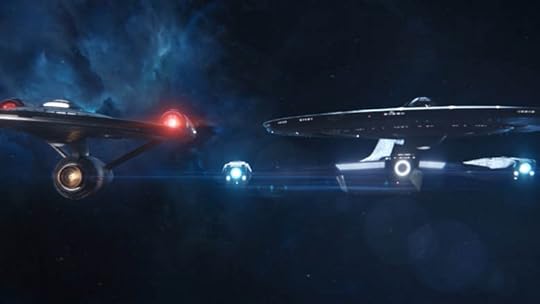
 "Such Sweet Sorrow"
The Enterprise is back. And this time we get to really see it. Interior hallways, the bridge, yellow and blue uniforms, familiar sound effects. It's all stunningly realized, and full of tiny nods to the original aesthetic. Brabo to the production design team! We also catch up with Po from the Short Treks , the queen of [insert made-up planet name] who is also a teen engineering prodigy, as if we need another one to argue with Jet Reno and Stamets about pseudo-science.
But with a title like "Such Sweet Sorrow", you can bet there will be some parting along the way. And you would win that bet, sir or madam, and clean out the house! There are literally goodbyes sandwiched between goodbyes. Last Episode left off with Section 31 closing in for battle but it seems Discovery evaded that catastrophe because there is no such battle here. Only time crystal visions of unavoidable futures attempting to cast suspense over the proceedings (mixed results). Discovery rendezvous easily enough with Enterprise where they evacuate and attempt to auto-destruct the Discovery and all it's artificial intelligence data, but the data stops them. They photon-torpedo it a couple times for fan service, but give up when its shield go up. Why do they give up? I don't know, it's not like it's fighting back. Just keep shooting till you wear it out! In a whirlwind of technobabble, they decide instead to rebuild the Red Angel suit and Burnham will carry the Discovery into the future. Pretty much all the rest of the episode is people saying their goodbyes, saluting what an honor it's been to serve and all that, and touching time crystals to reassure the audience that yes, real action is still pending and somehow everyone will die (unlikely). There's a literal countdown on the viewscreen. And because last week's cliffhanger was so effective, they decided to use it again, as Section 31 once again arrives to surround them for battle. Roll credits. Again. Conclusion: Let's go already! For a second to last episode, too much time is wasted setting up a prologue for next week when stuff should've been happening this week. The goodbyes are all too sappy and contrived with not enough actual storytelling to make them matter. At this point they're just trying too hard to make me cry. And too much of the story is propelled forward by treknobabble problems and solutions. I understand this is a classic Trek trope, but when it stands in for actual story movement, it's a shortcoming. This episode is all about telling us what to feel, and what's gonna happen, rather than just showing us stuff happening and letting us decide how to feel for ourselves. That's not a Trek trope, exactly, but a problem with serialized TV in general. Which means next week is gonna be crammed full of too much stuff happening without room to breath. Seeing some glory shots of the Enterprise and Discovery flying together and docking and preparing for battle are pretty great, but they're just a distraction from the fact that this is all just a long commercial for next week's climax. Who am I kidding? I'll be there and it'll probably be awesome!
 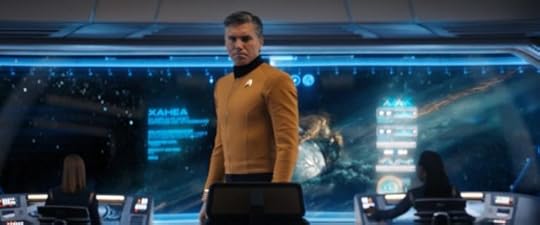 Captain's Blog Supplemental:
Everything between Tilly and Po: Trying to hard! I get it, you met before in the Short Treks. Is that really all you're contributing? Show your relevance, don't tell!
Why does Georgiou keep telling people she's Terran? Who is she trying to convince! Wait... Is she NOT from the Mirror Universe?!? (gasp!) That's the only thing that explains Pike's wink...
Stamets and Culber finally talk... awkwardly, and decide to go their separate ways (like I'm falling for that!). Why don't fans petition for them to have their own show... Where nothing happens! And I used to like them when they mattered to the story...
Did I mention how good the Enterprise looks?
Don't Forget to Comment, Like and Retweet!
Next Week's Episode
Last Week's Episode
"Such Sweet Sorrow"The Enterprise is back. And this time we get to really see it. Interior hallways, the bridge, yellow and blue uniforms, familiar sound effects. It's all stunningly realized, and full of tiny nods to the original aesthetic. Brabo to the production design team! We also catch up with Po from the Short Treks , the queen of [insert made-up planet name] who is also a teen engineering prodigy, as if we need another one to argue with Jet Reno and Stamets about pseudo-science.
But with a title like "Such Sweet Sorrow", you can bet there will be some parting along the way. And you would win that bet, sir or madam, and clean out the house! There are literally goodbyes sandwiched between goodbyes. Last Episode left off with Section 31 closing in for battle but it seems Discovery evaded that catastrophe because there is no such battle here. Only time crystal visions of unavoidable futures attempting to cast suspense over the proceedings (mixed results). Discovery rendezvous easily enough with Enterprise where they evacuate and attempt to auto-destruct the Discovery and all it's artificial intelligence data, but the data stops them. They photon-torpedo it a couple times for fan service, but give up when its shield go up. Why do they give up? I don't know, it's not like it's fighting back. Just keep shooting till you wear it out! In a whirlwind of technobabble, they decide instead to rebuild the Red Angel suit and Burnham will carry the Discovery into the future. Pretty much all the rest of the episode is people saying their goodbyes, saluting what an honor it's been to serve and all that, and touching time crystals to reassure the audience that yes, real action is still pending and somehow everyone will die (unlikely). There's a literal countdown on the viewscreen. And because last week's cliffhanger was so effective, they decided to use it again, as Section 31 once again arrives to surround them for battle. Roll credits. Again.
Conclusion: Let's go already! For a second to last episode, too much time is wasted setting up a prologue for next week when stuff should've been happening this week. The goodbyes are all too sappy and contrived with not enough actual storytelling to make them matter. At this point they're just trying too hard to make me cry. And too much of the story is propelled forward by treknobabble problems and solutions. I understand this is a classic Trek trope, but when it stands in for actual story movement, it's a shortcoming. This episode is all about telling us what to feel, and what's gonna happen, rather than just showing us stuff happening and letting us decide how to feel for ourselves. That's not a Trek trope, exactly, but a problem with serialized TV in general. Which means next week is gonna be crammed full of too much stuff happening without room to breath. Seeing some glory shots of the Enterprise and Discovery flying together and docking and preparing for battle are pretty great, but they're just a distraction from the fact that this is all just a long commercial for next week's climax. Who am I kidding? I'll be there and it'll probably be awesome! Captain's Blog Supplemental:Everything between Tilly and Po: Trying to hard! I get it, you met before in the Short Treks. Is that really all you're contributing? Show your relevance, don't tell!
Why does Georgiou keep telling people she's Terran? Who is she trying to convince! Wait... Is she NOT from the Mirror Universe?!? (gasp!) That's the only thing that explains Pike's wink...
Stamets and Culber finally talk... awkwardly, and decide to go their separate ways (like I'm falling for that!). Why don't fans petition for them to have their own show... Where nothing happens! And I used to like them when they mattered to the story...
Did I mention how good the Enterprise looks?
Don't Forget to Comment, Like and Retweet!
Next Week's Episode
Last Week's Episode
April 8, 2019
Book Review: The Sound and the Fury by Faulkner
 His middle name is Cuthbert. He won a Nobel Prize and two Pulitzers. He's one of the greatest American authors of the Twentieth Century (behind Hemingway but ahead of F. Scott Fitzgerald IMHO) and this is his signature work. The Sound. The Fury. William Faulkner. Wow, this one was rough. There are some so-called "literary" works which are eminently accessible to your everyday reader, and as such are quite popular in and out of the classroom. Great Gatsby, for example, or 1984, or much of Steinbeck. Kurt Vonnegut is always sold out at used bookstores, too, whenever I look. But The Sound and the Fury is not mainstream. In fact, Faulkner went out of his way to make the beginning half of the novel as hard to read as a foreign newspaper, upside-down. There is a high price of admission, but if you can afford to pay it the novel will yield rich and thought provoking returns that almost beg you to invest in a second reading.
 Out of Focus. We're brought into the story first through the eyes of Benjy, a man who's essentially been "three for thirty years". He's mentally handicapped, incapable of normal speech, and experiences the entirety of the novel's events in a blur of non-linear impressions. There are snippets of dialogue, smells, and the names of loved ones tossed about out of order as he absorbs the emotions of dramatic turning points throughout the story. It's a fascinating stream of conscious experiment that goes on for some eighty pages without much in the way of explanation or even punctuation. We know he loves his sister Caddy, and bemoans her absence, and the family life swirling around him includes funerals and frustrations and family divisions.
The Illusion of Clarity. Part two jumps back in time some 18 years, but it hardly matters. Every section, though dated officially within a single day, is intercut with memories and flashbacks that overlap across the same couple decades. At first we feel a breath of fresh air, as the perspective shifts to Benjy and Caddy's brother Quentin, a Harvard boy, as he goes about his day. But Quentin is only half saner than Benjy, and his narrative voice meanders in and out of intense traumatic events from his life, leading to his suicide. We learn that like Benjy, he too loved Caddy quite dearly, but Caddy grew up and let's just say got around town, in her own way. When she came back pregnant, Quentin claimed it was his, born of incest, as if he could drag them both to hell together and only there keep them both safe from the world and it's judgments. Logical? No. Weird? Yes. Nobody believed him, though. His obsession with his sister's virginity and their family honor comes to reveal a loose and overly sentimental grasp of reality that slowly slips away as he fails to confront who he thinks is the real father, and Caddy rushes into a marriage to hide the pregnancy behind. It doesn't work, the husband leaves her and Caddy leaves the baby and the family behind as Quentin begins pouring gasoline around his dorm room.
Over-focused. Part three jumps back ahead to the "present" in 1928 (the day before Benjy's first part) to Jason, the last Compson sibling, and youngest, but now head of the household that includes their chronic hypochondriac mother, his handicapped brother Benjy, a couple black servants, Dilsey and Luster, and Caddy's abandoned daughter named Quentin (after her deceased uncle) now seventeen and unsurprisingly difficult to manage. Jason is obsessed with one thing: money. Also racism, sexism, pride and control. His section is not only clear and traditional in it's writing, but intensely focused, and linear. Too focused. Perhaps obsessive in its own right. It reads like a pulp detective novel or action story, full of tight dialogue and intrigue and suspicion. But Faulkner plays a trick on us by finally giving us the "sane" point of view we think will explain everything. We're left with just as many mysteries and omissions about the facts here too, and that's assuming Jason is even being truthful in the first place, which is doubtful. He lies, cheats and steals from everyone he can't easily rip-off and he's been embezzling the money Caddy leaves for Quentin, who he follows all over town. He tries to catch her skipping school with a gentleman in a red tie from the traveling band passing through town. He fails.
Objectivity. Lastly, in the fourth section, Faulkner zooms out all the way to third person omniscient and we think surely now the story will reveal itself. Was Quentin actually the father afterall (doubtful but she is named after him)? Was Benjy (scary thought, but they did sleep in the same bed until they were "too old for it" and Jason did have him castrated later for some reason)? Whatever happened to Caddy and how did she get all that money (she might be a Nazi wife now)? Is it all just a metaphor somehow for the South after the Civil War (always yes)? Instead we follow Dilsey, the matriarchal black woman who takes care of the Compson family as it slowly declines from greatness over the generations into this, what may be the last generation. Set a day after Benjy's first part (and two after Jason's third) on Easter Sunday. Quentin (the girl), in the midst of Jason's overbearing attempts to reign her in, breaks into his office and steals back all the money her mother sent along with every other nickel and penny he scraped into his life savings (about seven grand, though he only admits to three to the police). We see Dilsey's unshakable patience and faith as she puts up with all the Compson drama and takes Benjy to their black church for Easter.
And that's all we get. We don't get clear answers, but vague references to a story that took place somewhere else, some other time. It's not really about Caddy or her daughter, even though they are such obvious touchpoints. They aren't characters. They are objects of the plot, around which we watch everyone else act and react. The Sound and the Fury isn't actually their story, but rather the story of Benjy, Quentin, Jason and Dilsey (among a few other bit players) who struggle to figure out what to do with themselves on a day to day basis as their once great family name degenerates into mediocrity and irrelevance. They blame Caddy and her daughter Quentin. They blame the idiot Benjy, so misunderstood. They blame the black servants, those poor scapegoats. Their greatest attempts at order devolve into fractured chaos. Quentin committed suicide. Benjy is castrated. Jason, a bachelor, foregoes a family in favor of the pursuit of nominal wealth and business. There will be no more Compsons.
 Now this is an author pic!
  From Macbeth:
Tomorrow and tomorrow and tomorrow,
Creeps in this petty pace from day to day
To the last syllable of recorded time,
And all our yesterdays have lighted fools
The way to dusty death. Out, out, brief candle!
Life's but a walking shadow, a poor player
That struts and frets his hour upon the stage
And then is heard no more: it is a tale
Told by an idiot, full of sound and fury,
Signifying nothing.
These lines from Shakespeare, obvious inspiration for the title, inform the thesis of the novel. As time passes from yesterday into tomorrow, it all leads to ruin, and everyone is just strutting arrogantly in denial of their day-to-day pettiness on their way to inevitable demise. They think their tale is full of important drama but they are an idiot, and their story means nothing nearly so profound. This is the story of the Compsons, proud but foolish, selfish and idiotic, as we see the minutia of their day-to-day which they think holds such significance, but which is all just for naught. The idiot would presume to be Benjy, but I would propose it is everyone else, caught up in their obsessions eventually collapsing into ruin. The drama they think matters so much, that of Caddy and her illegitimate daughter, can't even be found in these pages, only eluded to indirectly and incompletely. They strut but they are not great, they are petty.
Conclusion: 4.8 out of 5 stars. The back half of the novel is some of the greatest literary work ever inked onto paper, stuck onto a front half of pure, unrestrained experimentation. It falls short of five stars not because that front half is 98% incomprehensible, but because it's 68% too long for all the point it makes. Individual results may vary. Percentages my own. What really happens in The Sound and the Fury is a matter of speculation and study. There are contradictions and lies and missing information. But the experience remains: of a wanderer trying to bring order of chaos and make sense of insanity. It may very well be the "story of the South", or perhaps it is the story of all mankind, but you'll have to take a course in Southern Lit to know for sure. Either way it is full of life and like life, full of incomprehensible challenges to chew on. The most incomprehensibly written portions hide a secret rhythm if you can find it, and secret truths. I kinda liked them in spite of themselves. Faulkner proves one of the greatest writers of the 20th Century by mastering styles and perspectives
Don't forget to Like and Retweet!
Other Great Literary Reviews:
To Have and Have Not by Hemingway
East of Eden by Steinbeck
Breakfast of Champions by Vonnegut