Roni Wing Lambrecht's Blog
May 17, 2018
Making the Right Connections
Since losing our only child in 2013, my husband and I have really taken notice of families not paying attention to each other; either distracted by activities, books, electronics, or cell phones, yet spending lots of time and money going out to dinner or traveling to amazing places, only to find themselves still "connected" to everyone other than their children. That being said, it's become our mission to remind parents and kids alike to cherish each moment. I'm sure you've heard that a lot, right?Be present.Be mindful.Pay attention.Focus on the important things.Do those words really mean anything to anyone anymore? I'd venture to guess they don't, so I'll share a couple scenarios with you instead...The first one took place March 16, 2016, just 15 months after we'd lost our son. I walked in to our favorite wing restaurant to get our typical Wednesday night dinner and, while I was standing in line, I saw a family sitting at a table together wasting away their valuable time; everyone staring at their phones, instead of focusing on each other. I waited 22 minutes for our order to be cooked, and for the entire 22 minutes, each one of them ate their dinner and stared at their phones without a single word or any eye contact.As you can imagine, I was a blubbering mess by the time our take-out order was complete. Once I gained some composure, I decided to buy them dessert and write them a quick note along with sharing two of our son's Pay It Forward cards. In the note, I explained to them that I would give ANYTHING for one more dinner or dessert with my angel, and to please not waste another moment of their precious family time on their phones. I didn't hang around to see how they reacted, but I do hope it stirred up some emotions in them and changed the way they eat dinner together now.Another incident took place while we were in Riviera Maya, Mexico. It was the night of Dalton's 2nd Anniversary in Heaven. We decided to get some dinner at a nice restaurant near the beach, hoping it would allow us some escape from our reality of life without Dalton. As we waited for our drinks, we noticed a family of three sitting at the table beside us; Mom, Dad, and Daughter (about 12 or 13 years old). The mom and dad were each on their phones and the daughter was just sitting there staring at both of them, silently begging them to pay attention to her. They put their phones down just long enough to glance at the menu, choose an entrée, and pick up their phones again. After their dinner came and they all ate in silence, the mom looked away from her phone just long enough to say to the daughter, "You can order dessert, if you want to." After finishing her silent dinner, the daughter flagged the waiter down, ordered dessert, all with zero conversation in the company of her distracted parents. The entire time, we're thinking, "How in the world could our son have been taken away from us and these parents couldn't care less that they had their own daughter sitting right in front of them for an entire meal?!?!?!" It was maddening, to say the least.I can't tell you how many times we see this, sometimes even with our own extended family, and it literally makes us sick to our stomachs. PLEASE PUT YOUR PHONES AWAY DURING MEALS. Nothing, I mean NOTHING, is as important as those few moments you have with your children. Whatever is on your phone can wait. Have a conversation, tell a corny joke, play a game, laugh a little; anything that includes interacting with each other.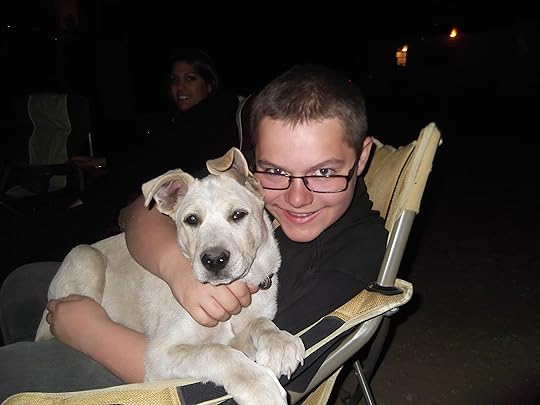 Our last meal with Dalton was about 13 hours before he died. We all sat around a campfire eating steak with all the fixin's, each of us sharing what we were thankful for at that moment. Sounds kinda cheesy, right? Maybe it is, but we are incredibly thankful that dinner was spent talking and laughing, rather than being distracted by our phones.Please, please, please...Do it for us, do it for Dalton, please do it for your family.You never know when those little momentsmight be the last ones you ever have♡♡♡.#DIFDLSubmitted by Roni Wing Lambrecht, Speaker and Author of three books available at www.ParentingAtYourBestWithoutRegrets... at Your Best; Powerful Reflections and Straightforward Tips for Becoming a Mindful ParentA Parent's Guide for Journaling to Their Child; Simple Strategies for Writing Heartfelt Love Letters to Your ChildA Parent's Journal to Their Child; With Simple Strategies for Writing Heartfelt Love Letters to Your Child
Our last meal with Dalton was about 13 hours before he died. We all sat around a campfire eating steak with all the fixin's, each of us sharing what we were thankful for at that moment. Sounds kinda cheesy, right? Maybe it is, but we are incredibly thankful that dinner was spent talking and laughing, rather than being distracted by our phones.Please, please, please...Do it for us, do it for Dalton, please do it for your family.You never know when those little momentsmight be the last ones you ever have♡♡♡.#DIFDLSubmitted by Roni Wing Lambrecht, Speaker and Author of three books available at www.ParentingAtYourBestWithoutRegrets... at Your Best; Powerful Reflections and Straightforward Tips for Becoming a Mindful ParentA Parent's Guide for Journaling to Their Child; Simple Strategies for Writing Heartfelt Love Letters to Your ChildA Parent's Journal to Their Child; With Simple Strategies for Writing Heartfelt Love Letters to Your Child


March 26, 2018
Events That Transform Our Lives
As John and I move deeper and deeper into our grief journey, it’s become quite obvious to me that our everyday world does not teach people about grief - how to handle it, how to help others during their grief journey, or even simple things (you would think), like what not to say.Thankfully, not everyone will have to endure tragedy in their lives. Yet it’s important to know how to react when someone else is struggling so that your words and actions help rather than hinder.I believe it’s extremely important to begin teaching our children about grief, compassion, and helping others at a young age so they are better at it as they go through school and become adults. Hopefully, it will then be passed down to future generations. It’s important to realize that words are often spoken out of context because most people don’t have any idea what to say. Nothing you or I say will bring someone back from the dead, from a terrible accident or disease, or from divorce or job loss. What your words do convey, though, is your willingness to be present; to listen, to love, to support. Most times, just saying their loved one’s name or saying nothing at all is the best option.There’s a great blog written about the words people say after someone they know has faced tragedy. It’s written by a wonderful woman whose words are so eloquently written in everything she writes, and she is a bright light in what seems like a pretty dark world for those of us who have lost children. I hope to meet this woman someday.Angela Miller is a writer, speaker, and grief advocate who provides support and solace to those who are grieving the loss of a child. She is the author of You Are the Mother Of All Mothers: A Message Of Hope For the Grieving Heart, founder of the award-winning online communityA Bed For My Heartand writer for theOpen to Hope FoundationandStill Standing Magazine. All of her posts really speak to me, but this one fit so well in this chapter…Easy For You To Saywritten March 27, 2013, by Angela MillerA couple months ago, after having one too many clichés flung in my face, through a mess of tears, I wrote this. Then I daydreamed about the next time someone clichés all over me– instead of nodding and smiling while crying inside, or kindly educating them about a more comforting and helpful way to talk to a bereaved parent– I’d have enough grit and grace to recite this instead:Easy for you to say God needed another angel— since God didn’t ask you for yours.Easy for you to say God has a plan— if all of God’s plans for you have precisely tailgated your own like a lovely fairy tale.Easy for you to say everything happens for a reason— please tell me one good reason my son is forever buried deep underground?Easy for you to say trust God— if you’ve never felt betrayed by the heavens themselves.Easy for you to say hang on to hope— if you can still find your rope.Easy for you to say time heals all wounds— if time has already made perfect heart-shaped scabs of yours.Easy for you to say be thankful for what you have— would you like to switch places with me and feel how little I have left?Easy for you to say God needed another flower for his garden— if none of your ‘flowers’ have ever been plucked before their time.Easy for you to say find peace and move on— if you haven’t had to hold your dead child’s hand inside the curves of your living one.Easy for you to say he’s in a better place— if you still get to hold your child in the best place there is.Easy for you to say you’re young, you can have more— would you be willing to exchange your living child for those you might someday have?Easy for you to say every cloud has a silver lining— if you haven’t been asked to walk through this never-ending storm of mine.Easy for you to say it was God’s will— if the plan you got currently includes all of your childrenrambunctiously romping around your living room.I shared this on my Facebook page, and the comments were wonderful. People shared their fear of never knowing what to say, admitted to saying so many of these phrases, and most importantly, learned from what both Angela and I, and so many others, have to face every day for the rest of our lives - waking up without our children. If there’s anything in my grief journey I wish to do, it is to share with others anything I can to make this world a brighter place to live in.Straightforward Tips for Parenting at Your BestAs a supporter of someone grieving, there are many wonderful things we can do to help each other. I’ll start with the list of things I have learned were helpful for us after Dalton left for Heaven…Be sure to talk about their loved one every chance you get. Say their name! Make them important. They DID exist. They were here, and their life mattered. It still matters.Talk about their loved one and write down any memories you have of them in vivid detail.Help them make notes of everything, because what they are going through will not allow them to process or remember much for a very long time.Sit down with them and write or record what happened the days and weeks previous to the death(s), starting with today and moving backward.Go through their photos by hand and/or on the computer and sort them Year-Month-Date-Event as this will help them sort for the life celebration/funeral, as well as for looking at/watching in order later. It also helps stir up the good memories, and they need to be reminded of those every chance you get.If they are cremating their loved one, there's no need to have a service right away. People who are grieving can take time and plan something creative that would mean something more to everyone later, rather than just being a blur of people they can't remember when it’s over.If they are doing a service, lighten it up by having family and friends speak and tell funny stories about the deceased. Be sure to video this so they can watch it in a few years when the numb wears off.Create a spreadsheet to track names, addresses, phone numbers, emails, gifts, cards, donations, etc. Later they can write thank you cards later and remember who did/sent what (you wouldn't believe how many people ask how the plant they sent is growing, or what was done with the money they sent). At Dalton's service, I actually had five friends bring their laptops and, in lieu of a guestbook, people checked in on the Excel spreadsheet. This was so helpful!If the loved one who passed away was a Facebook or other social media user, it would be good to gather screenshots of each of their posts before they passed, as well as those condolences that will come through on social media, and put them into a binder.Make sure they have water, toiletries, and paper goods at their house. It’s crazy the amount of toilet paper that is used!Keurig coffee makers are very helpful. (We were making full pots of coffee for one or two visitors at a time and then dumping them out, so one cup at a time was very helpful.)KEEP THEM BUSY! I cannot stress this enough. Assist them in going through pictures and belongings, listen to their memories pour out (no need to speak; just listen), watch movies, play games, keep their mind and body active. Get them back to work ASAP. Laying around makes the pain so much worse!!!!Help them find a way to help others. It takes the focus off their own loss and focuses their energy on someone else in need.As far as gifts go, gift cards for food and movies are great as they get them out of the house and remind them to eat.If they are open to it, finding a counselor or a grief support group may be helpful. GriefShare and Compassionate Friends were the ones most recommended to us.Encourage them to be blatantly honest when people ask questions about the death, as it helps curb questions later. And, when it’s a child who has passed, being open to questions from that child’s friends is very important, as knowing the “who,” "what," and “how” seems to help younger minds along in their grief journey.If you hear music or see a video or movie or story that reminds you of their loved one, please share it with them. It's nice to know their loved one is remembered.Help them count their blessings.Help them make a very deliberate decision to be thankful that people are trying to help, even when they say/do the wrong things. That said, let others know that it is perfectly okay NOT to know what to say, as NOTHING anyone can say will bring their loved one back. I'd rather you say, “I don't know what to say,” than to use a cliché about God needing another angel. When people do say hurtful things (and they will), remind the griever to bite their tongue, remembering to be thankful that people care enough to even try to say something. Have them keep in touch with friends of their loved one. Stay involved with the friends, as it's neat to watch how they'll grow and change. That way, they can get a glimpse of what their angel might be like if they were here today.Set reminders in your calendar to call or send a card four months out and every few months after that, as it seems like everyone forgets at the 4-month-mark.Additionally, it was very helpful for us to do a "Grief Letter," which was a letter explaining how we were doing, what we had been doing to keep busy, thank you's, etc. It helps curb the questions from people that they’ll be answering so often. It also helps people to see where they are at, literally and figuratively. We did one a few months after Dalton passed and also again at the 1st and 2nd anniversary. This idea came from the Compassionate Friends meeting I attended. It was helpful for our family and friends to learn about where we were in our journey, and it was also very healing for me to write it. Our letters can be viewed at www.DoItForDalton.com to give them an idea of where to begin.Great options for memorial gifts can be found at www.PerfectMemorials.com and www.ArtfulAshes.com.And, last, but not least, everyone has their own religious/spiritual beliefs. We have been very open to listening to what people have to say. We take what we like, discard the rest, and have made up our own little belief system. We count our blessings every day that we had those precious years with Dalton and are very thankful for the countless memories we all made together in that short period of time.Death is not a matter of “if,” it is a matter of “when,” therefore we should all be taught how to help those going through the loss of a loved one.Excerpt from Parenting at Your Best; Powerful Reflections and Straightforward Tips for Becoming a Mindful Parent Written by Roni Lambrecht In Loving Memory of Dalton John Lambrecht ©2016
It’s important to realize that words are often spoken out of context because most people don’t have any idea what to say. Nothing you or I say will bring someone back from the dead, from a terrible accident or disease, or from divorce or job loss. What your words do convey, though, is your willingness to be present; to listen, to love, to support. Most times, just saying their loved one’s name or saying nothing at all is the best option.There’s a great blog written about the words people say after someone they know has faced tragedy. It’s written by a wonderful woman whose words are so eloquently written in everything she writes, and she is a bright light in what seems like a pretty dark world for those of us who have lost children. I hope to meet this woman someday.Angela Miller is a writer, speaker, and grief advocate who provides support and solace to those who are grieving the loss of a child. She is the author of You Are the Mother Of All Mothers: A Message Of Hope For the Grieving Heart, founder of the award-winning online communityA Bed For My Heartand writer for theOpen to Hope FoundationandStill Standing Magazine. All of her posts really speak to me, but this one fit so well in this chapter…Easy For You To Saywritten March 27, 2013, by Angela MillerA couple months ago, after having one too many clichés flung in my face, through a mess of tears, I wrote this. Then I daydreamed about the next time someone clichés all over me– instead of nodding and smiling while crying inside, or kindly educating them about a more comforting and helpful way to talk to a bereaved parent– I’d have enough grit and grace to recite this instead:Easy for you to say God needed another angel— since God didn’t ask you for yours.Easy for you to say God has a plan— if all of God’s plans for you have precisely tailgated your own like a lovely fairy tale.Easy for you to say everything happens for a reason— please tell me one good reason my son is forever buried deep underground?Easy for you to say trust God— if you’ve never felt betrayed by the heavens themselves.Easy for you to say hang on to hope— if you can still find your rope.Easy for you to say time heals all wounds— if time has already made perfect heart-shaped scabs of yours.Easy for you to say be thankful for what you have— would you like to switch places with me and feel how little I have left?Easy for you to say God needed another flower for his garden— if none of your ‘flowers’ have ever been plucked before their time.Easy for you to say find peace and move on— if you haven’t had to hold your dead child’s hand inside the curves of your living one.Easy for you to say he’s in a better place— if you still get to hold your child in the best place there is.Easy for you to say you’re young, you can have more— would you be willing to exchange your living child for those you might someday have?Easy for you to say every cloud has a silver lining— if you haven’t been asked to walk through this never-ending storm of mine.Easy for you to say it was God’s will— if the plan you got currently includes all of your childrenrambunctiously romping around your living room.I shared this on my Facebook page, and the comments were wonderful. People shared their fear of never knowing what to say, admitted to saying so many of these phrases, and most importantly, learned from what both Angela and I, and so many others, have to face every day for the rest of our lives - waking up without our children. If there’s anything in my grief journey I wish to do, it is to share with others anything I can to make this world a brighter place to live in.Straightforward Tips for Parenting at Your BestAs a supporter of someone grieving, there are many wonderful things we can do to help each other. I’ll start with the list of things I have learned were helpful for us after Dalton left for Heaven…Be sure to talk about their loved one every chance you get. Say their name! Make them important. They DID exist. They were here, and their life mattered. It still matters.Talk about their loved one and write down any memories you have of them in vivid detail.Help them make notes of everything, because what they are going through will not allow them to process or remember much for a very long time.Sit down with them and write or record what happened the days and weeks previous to the death(s), starting with today and moving backward.Go through their photos by hand and/or on the computer and sort them Year-Month-Date-Event as this will help them sort for the life celebration/funeral, as well as for looking at/watching in order later. It also helps stir up the good memories, and they need to be reminded of those every chance you get.If they are cremating their loved one, there's no need to have a service right away. People who are grieving can take time and plan something creative that would mean something more to everyone later, rather than just being a blur of people they can't remember when it’s over.If they are doing a service, lighten it up by having family and friends speak and tell funny stories about the deceased. Be sure to video this so they can watch it in a few years when the numb wears off.Create a spreadsheet to track names, addresses, phone numbers, emails, gifts, cards, donations, etc. Later they can write thank you cards later and remember who did/sent what (you wouldn't believe how many people ask how the plant they sent is growing, or what was done with the money they sent). At Dalton's service, I actually had five friends bring their laptops and, in lieu of a guestbook, people checked in on the Excel spreadsheet. This was so helpful!If the loved one who passed away was a Facebook or other social media user, it would be good to gather screenshots of each of their posts before they passed, as well as those condolences that will come through on social media, and put them into a binder.Make sure they have water, toiletries, and paper goods at their house. It’s crazy the amount of toilet paper that is used!Keurig coffee makers are very helpful. (We were making full pots of coffee for one or two visitors at a time and then dumping them out, so one cup at a time was very helpful.)KEEP THEM BUSY! I cannot stress this enough. Assist them in going through pictures and belongings, listen to their memories pour out (no need to speak; just listen), watch movies, play games, keep their mind and body active. Get them back to work ASAP. Laying around makes the pain so much worse!!!!Help them find a way to help others. It takes the focus off their own loss and focuses their energy on someone else in need.As far as gifts go, gift cards for food and movies are great as they get them out of the house and remind them to eat.If they are open to it, finding a counselor or a grief support group may be helpful. GriefShare and Compassionate Friends were the ones most recommended to us.Encourage them to be blatantly honest when people ask questions about the death, as it helps curb questions later. And, when it’s a child who has passed, being open to questions from that child’s friends is very important, as knowing the “who,” "what," and “how” seems to help younger minds along in their grief journey.If you hear music or see a video or movie or story that reminds you of their loved one, please share it with them. It's nice to know their loved one is remembered.Help them count their blessings.Help them make a very deliberate decision to be thankful that people are trying to help, even when they say/do the wrong things. That said, let others know that it is perfectly okay NOT to know what to say, as NOTHING anyone can say will bring their loved one back. I'd rather you say, “I don't know what to say,” than to use a cliché about God needing another angel. When people do say hurtful things (and they will), remind the griever to bite their tongue, remembering to be thankful that people care enough to even try to say something. Have them keep in touch with friends of their loved one. Stay involved with the friends, as it's neat to watch how they'll grow and change. That way, they can get a glimpse of what their angel might be like if they were here today.Set reminders in your calendar to call or send a card four months out and every few months after that, as it seems like everyone forgets at the 4-month-mark.Additionally, it was very helpful for us to do a "Grief Letter," which was a letter explaining how we were doing, what we had been doing to keep busy, thank you's, etc. It helps curb the questions from people that they’ll be answering so often. It also helps people to see where they are at, literally and figuratively. We did one a few months after Dalton passed and also again at the 1st and 2nd anniversary. This idea came from the Compassionate Friends meeting I attended. It was helpful for our family and friends to learn about where we were in our journey, and it was also very healing for me to write it. Our letters can be viewed at www.DoItForDalton.com to give them an idea of where to begin.Great options for memorial gifts can be found at www.PerfectMemorials.com and www.ArtfulAshes.com.And, last, but not least, everyone has their own religious/spiritual beliefs. We have been very open to listening to what people have to say. We take what we like, discard the rest, and have made up our own little belief system. We count our blessings every day that we had those precious years with Dalton and are very thankful for the countless memories we all made together in that short period of time.Death is not a matter of “if,” it is a matter of “when,” therefore we should all be taught how to help those going through the loss of a loved one.Excerpt from Parenting at Your Best; Powerful Reflections and Straightforward Tips for Becoming a Mindful Parent Written by Roni Lambrecht In Loving Memory of Dalton John Lambrecht ©2016
February 19, 2018
The Time to Buy Life Insurance is Now
I lost my only child in an ATV accident over Christmas break 2013. Dalton was only 15 years old, and our entire world revolved around him. The grief that goes along with losing a child is unimaginable and beyond explanation. It's baffling what emotions can do to your brain and how they affect your every move and decision, if you can even make decisions. I have a hard time even figuring out how to move one foot in front of the other these days. That said, I am so very thankful for my brain working in 2012 when I finally purchased life insurance for my son and each of my sister's children. I never intended to actually use the life insurance for its purpose, as the inexpensive policies I purchased carried a guarantee that would help each of the kids later in life, where they could raise the death benefit up to $450k, without ever having to re-qualify for the insurance. To me, that was a safety worth paying for, just in case any of them ended up with a debilitating disease that would somehow not allow them to qualify for life insurance later in life.Dalton's accident happened in California, so we had to cover all of the standard expenses there, as well as covering them again, here in Colorado. Then, there was the added cost of transporting him home in the proper container at the proper temperature, paying the funeral home in California to work with the funeral home here, then paying for the casket here for the viewing (because the box we brought him home in was not for viewing). Then we had the blessing, celebration of life, programs, pictures, urns, cremation, food and drinks to feed everyone while they were here, travel expenses, toiletries and paper products (you have no idea how many people travel through your home during this time), etc. With all the expenses, this could have bankrupted us. Just a few months after the accident, we had incurred over $21,000, not including any of the time we spent away from work, or medical expenses incurred at the accident scene.Had I not spent the $60/year for the life insurance policy I bought for Dalton, we never would have been able to give him the celebration his short, beautiful life deserved, nor could we have made our house payment, or paid any other bills for several months following the accident. More importantly, though, we would not have had the brainpower to figure out how to make it all work. That, in itself, proves to me that life insurance is something which must be budgeted for every single month.So, please, if you have children, grandchildren, nieces, nephews, or friends with children, who do not have life insurance, there are so many other benefits more than just a death benefit. Please, look into it for a birthday or Christmas gift or just because. It's worth it just for the guarantee that they'll be covered when they grow up and have babies of their own.My husband and I never dreamed this could happen to our son, but it did. Please think about it, and then DO something about it. Waiting until tomorrow could be too late.Submitted by Roni Wing Lambrecht,Speaker and Author of three books available at www.ParentingAtYourBestWithoutRegrets... at Your Best; Powerful Reflections and Straightforward Tips for Becoming a Mindful ParentA Parent's Guide for Journaling to Their Child; Simple Strategies for Writing Heartfelt Love Letters to Your ChildA Parent's Journal to Their Child; With Simple Strategies for Writing Heartfelt Love Letters to Your Child
I never intended to actually use the life insurance for its purpose, as the inexpensive policies I purchased carried a guarantee that would help each of the kids later in life, where they could raise the death benefit up to $450k, without ever having to re-qualify for the insurance. To me, that was a safety worth paying for, just in case any of them ended up with a debilitating disease that would somehow not allow them to qualify for life insurance later in life.Dalton's accident happened in California, so we had to cover all of the standard expenses there, as well as covering them again, here in Colorado. Then, there was the added cost of transporting him home in the proper container at the proper temperature, paying the funeral home in California to work with the funeral home here, then paying for the casket here for the viewing (because the box we brought him home in was not for viewing). Then we had the blessing, celebration of life, programs, pictures, urns, cremation, food and drinks to feed everyone while they were here, travel expenses, toiletries and paper products (you have no idea how many people travel through your home during this time), etc. With all the expenses, this could have bankrupted us. Just a few months after the accident, we had incurred over $21,000, not including any of the time we spent away from work, or medical expenses incurred at the accident scene.Had I not spent the $60/year for the life insurance policy I bought for Dalton, we never would have been able to give him the celebration his short, beautiful life deserved, nor could we have made our house payment, or paid any other bills for several months following the accident. More importantly, though, we would not have had the brainpower to figure out how to make it all work. That, in itself, proves to me that life insurance is something which must be budgeted for every single month.So, please, if you have children, grandchildren, nieces, nephews, or friends with children, who do not have life insurance, there are so many other benefits more than just a death benefit. Please, look into it for a birthday or Christmas gift or just because. It's worth it just for the guarantee that they'll be covered when they grow up and have babies of their own.My husband and I never dreamed this could happen to our son, but it did. Please think about it, and then DO something about it. Waiting until tomorrow could be too late.Submitted by Roni Wing Lambrecht,Speaker and Author of three books available at www.ParentingAtYourBestWithoutRegrets... at Your Best; Powerful Reflections and Straightforward Tips for Becoming a Mindful ParentA Parent's Guide for Journaling to Their Child; Simple Strategies for Writing Heartfelt Love Letters to Your ChildA Parent's Journal to Their Child; With Simple Strategies for Writing Heartfelt Love Letters to Your Child
November 13, 2017
Ten Lessons from the Surreal Life of a Mom Who Lost Her Only Child to the Newly Orphaned Parent
Numbness has set in. You can barely feel your fingers, yet you have all kinds of emotions running through you every second of the day and night. You're going through each day as if you're watching yourself go through the motions of being a human being, barely remembering what you did 3 seconds ago, much less 3 hours, or 3 days ago. Each day, when you wake up, you are horribly surprised to find that that, yes, this is your new reality, and yes, you did make it through another night, and yes, you are still alive. You often forget to breathe, and therefore find yourself out of breath more often than not. With that, hiccups seem to happen more than you ever remember in your previous existence. People are talking to you, and around you, yet you cannot comprehend what they are saying. It often feels like you're in a Charlie Brown episode and the teacher is talking gobbledygook, because nothing seems to make sense. Their mouths are moving, but all you seem to hear is wawawawawawawawaw. While you're traveling through this surreal existence, you will have some episodes where you land back inside your body and somehow move through another day. These are some lessons for those moments of awareness…Lesson one: Be thankful for every single word anyone ever says to you from this moment forward. People are not taught what to say when you lose a child. More often than not, they say shocking things like, "Think of it as retiring from parenthood early. Now you can travel and do all the things you'd have had to wait to do till he/she graduated." While they ("they" are the people who have never lost a child) have no idea their comments are hurtful, it's best to be thankful that they tried to say anything at all. At least they tried. Remember, there aren't ANY words that will bring your baby back, so you really can't blame someone for saying the wrong thing, because there's no right thing to say. You can advise them, however, to talk with you about your child. Ask them to say your child's name and tell you stories about how they knew them. Remind them that it is important to you that they remember you were, and still are, your child's parent.Lesson two: One thing that never seems to go away is the question from strangers, "How did you lose him/her?" At the onset, you will find that telling this story over and over and over becomes easier as the days go by. It's often like you're listening to yourself on a record that replays again and again. That's ok. It's good to have something to talk about with the people who ask. As the days and weeks pass, though, you will find that it doesn't matter how your child died at all. What matters is that they did die and they're not here for you to physically touch, hug, kiss, etc. So, tell your story often and thank people for asking about your child. Remind them that you'd rather talk about your child's life though, rather than their death.Lesson three: Write about your child. Start from today, and work backwards, as far as possible. Write down the events of today, then yesterday, then the day before, and so on. Do that until you can no longer remember the days. Look at your calendar to help you remember. If there are days with no information, then move to the days previous that you remember, including birthdays, holidays, vacations, and other events; big or small.Lesson four: Keep a new calendar to write down what you do from today forward. Ask your guests to "sign in" when they visit you, and to write down what they helped you with, or what they did while they were with you, as well as gifts received. I know this seems crazy, but you'll want to know this later on down the line. It could be that they helped with your dishes and you can't find the dish you need a few months later. Maybe they'll remember where they last saw it.Lesson five: If you're lucky enough to be reading this before you have your child's funeral or life celebration, put someone (or several people) in charge of collecting names, phone numbers, addresses, and email addresses, at the service. This will help you to know who was there, and also to write thank you cards later. Our list has evolved into a constantly updated directory of family and friends who want to be updated periodically on our progress through this new life.Lesson six: Even though you may feel like you don't want anyone around you right now, take their help while you can, as, soon enough, they will all disappear from your daily life (about 4 months, or so) because they need to move ahead with their own lives. At that point, it may feel like they completely forgot about you, but remember they have lives of their own that they must get back to living. Be thankful for them while they are around. You'll find that other family and friends simply vanish into thin air (sometimes those that have been in your life for years). Why? Maybe because they are afraid that if they're near you, their child may die too... I don't know, but just be aware that you may lose some of your close family/friends. On the flip side, you'll be completely amazed at the beautiful people, angels really, who do show up to help, cook, clean, say your child's name, etc. Cherish them and thank them often.Lesson seven: I thought I needed to read every single grief book ever written, thinking it would help me cope with losing my son. In all reality, the books led me to more sadness, as I was often questioning whether or not I was grieving properly because I was/wasn't going through something the books said I would. Additionally, reading those types of books helped me focus on my grief. My advice would be to steer clear of any "general" books on grief, as they have not been helpful to me, or anyone else I know who has lost a child. Center your reading efforts on positive books like, Solve for Happy, or fiction books that allow you to escape from reality for a while.Lesson eight: Focus on the positive. Count your blessings for the moments you did have with your child; even those moments where you were not around, yet you knew they were living their life. Who are the friends your child made? What activities did your child enjoy while they were here? How did they make you smile? Were they funny or serious? What were their favorites (food, colors, clothes, etc.)? Ask family, friends, and teachers to share and write about your child; funny events, ways they made them smile, etc. (Example: If I focused on the fact that my son never got his driver's license, never fell in love, never got to graduate, never got to go to the Marines, never got married or had kids, I would be burying myself in a never-ending hole of darkness. Instead, I work diligently to focus on the fact that we had 15 wonderful years together. We cuddled nearly every day, we enjoyed each other's company, he was really funny and could impersonate any voice, etc. I focus on the happy places we've been together and the fact that his friends have great memories of him. I focus on letting his friends know our door is always open and they're welcome at our home anytime. I focus on sharing our story and teaching others to Pay It Forward in Dalton's memory every chance I get. I focus on making him proud of the way I have handled myself in his absence. I focus on watching for butterflies and dimes and dragonflies, because I think those are the ways he comes to visit me.) Be open to finding little bursts of happiness and sharing that happiness with others.Lesson nine: Be busy! Go through all your photos, videos, and memorabilia. Take time to laugh and cry and enjoy the memories. Do this often. If you work or volunteer, get back to those positions quickly. Schedule dinners and game nights with family and friends. Get back to doing the things you used to love to do before you lost your child. If you're a home body, use this time to purge your closets/storage areas. Spend quality time with your animals. Write a book. Create a foundation in your child's honor. Travel. Write and partake in your bucket list. DO SOMETHING! Down time leaves room for dark thoughts and sadness that can often overtake your life. It's important to keep yourself moving physically, mentally, and emotionally. Get busy!Lesson ten: You will find that this journey somehow leads you to other families who have lost a child. I call it, "The new car syndrome." When you get a new car, you often begin seeing that same type of car more often because you're now completely aware that it exists. Sadly enough, the same happens when you lose your child. You will meet people at the grocery store, when you're out for dinner, at work, at a party, at school, in the checkout line at a department store, etc. They are everywhere. Some will become lifelong friends and you will help each other along this journey. Embrace them. Cherish them. Be the support they need to make it through a tough moment and, I'm sure, they will return the favor.There are so many lessons I have learned during my journey without Dalton. The fact that other parents also know this pain is incredibly upsetting to me. While I cannot take your pain away, I do hope the tips above offer some light in your darkness. And, I hope you, too, will offer light to another parent someday soon♥♥♥…Article submitted by Dalton's Mom, Roni Lambrecht.303.902.0121 / DoItForDalton@gmail.com