Kristi Hugstad's Blog
November 26, 2020
Young adults and coronavirus: how to practice self-care in the face of a pandemic

 The coronavirus pandemic has impacted our lives personally, financially, and socially to an extent we couldn’t have imagined. We are more isolated, more afraid, and more stressed.
 During this time period in our lives, self-care becomes more difficult because when you’re bored or stressed out, it’s easy to fall into unhealthy habits and negative patterns. However, it is because of this that self-care becomes more important, and practicing it will make you physically, mentally, and emotionally healthier. READ THE FULL ARTICLE HERE


November 12, 2020
Motherless Mothers 2020 Retreat
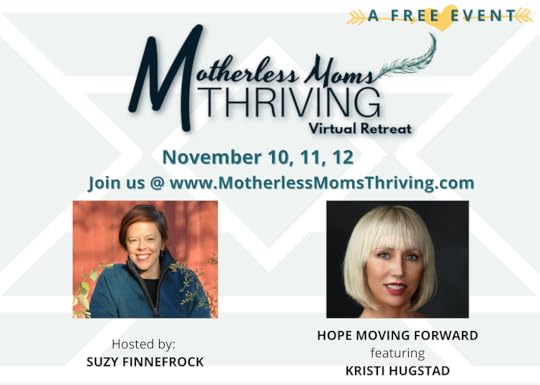 Join me and other women as we share our stories of grief and hope.
The holidays are approaching. This can be a time when grief can re-emerge and take us by surprise and with COVID this year, holidays are going to look and feel very different. Let’s get ahead of it and even plan for it.
I’m sharing my personal story of my journey through grief during the Motherless Moms Thriving Virtual Retreat. This retreat is about taking time to reflect, connect, be inspired, and feel hope from sharing our stories. CLICK HERE TO WATCH MY SEGMENT
August 18, 2020
6 ways to keep your cool with this year's back to school

With summer winding down and a new school year on the horizon, it’s an exciting time of year for you and your family – unless, of course, it isn’t. So far, 2020 hasn’t been what anyone expected – and it doesn’t look like school this fall will be, either.
How do you and your family cope with back-to-school when kids aren’t actually going back to school? Or if your child’s state and district is headed back, how do you deal with altered schedules, social distancing precautions, sweeping uncertainty and the risk of getting sick?
If the thought of starting an academic year under this “new normal” feels daunting, take heart. The 2020-2021 school year doesn’t have to be a wash. In fact, finding simple, healthy ways to adapt to and cope with the current situation can help you and your family thrive – whatever this year of school looks like.
Simplify the process
If you’re currently thinking “I never wanted to be a homeschool parent,” well, you’re not alone. In fact, a recent USA Today article titled “This is Hell” claimed that parents and students across the country hated online learning. If those feelings are all-too familiar, maybe it’s time to simplify.
For many of us, our calendars are clearing themselves these days, but if you’re still bogged down with activities and commitments, take a good look at your current load and bail on anything unnecessary. Depending on your child’s grade level (not to mention work ethic!), you may need to add time into your schedule to help or supervise your student – but planning for that beforehand can save you the frustration and anxiety of taking on too much.
Structure the day
Last March, we were all hit with an unprecedented problem: how to stay active, engaged and productive in the face of incredible disruption to our routines. We were no longer commuting to work, hustling to school drop-off, planning around sporting events or work dinners. With our routines disrupted, many of us realized how much we depend on structure to boost not only your productivity, but also our mental health and wellbeing.
Now that we’ve had a chance to adapt (as much as possible) to this “new normal,” use that experience to create routines that structure your day. From online learning to remote work to Zoom social meetups, structure provides you with a sense of purpose and sets realistic expectations. In fact, research shows that healthy daytime routines improve mental health. This school year, take some time to create a structured routine – even if things feel incredibility unstructured.
Live in the moment
One of the most difficult challenges of the COVID-19 situation has been its unrelenting uncertainty. From whether we’ll have jobs next month, to what the economy will look like in a year, to whether your children will attend (or fall behind in) school, it can be difficult to stay positive and motivated in the face of so many unknowns.
Unfortunately, none of us have crystal balls – but that doesn’t mean we need to live in fear. Practice living in – and appreciating – each moment. Focus on what you can do today to stay positive, help your children learn and create meaningful experiences, even in the face of instability.
Observe behavior
As an adult, you already know what it’s like to face the disruption and disappointments of the last several months. Unfortunately, children aren’t immune to this disruption, and along with feeling bored and disappointed, they may also experience fear and confusion.
Watch for behavior changes in your child. A helpful list from the CDC outlines some behaviors that may be worrisome, such as unusual irritation or bouts of anger, regression to outgrown behaviors, changes in sleeping and eating habits, inexplicable headaches or body pain – just to name a few. If you notice anything alarming in your child’s behavior, talk to your pediatrician or another medical or psychiatric professional.
Don’t demand (or expect) perfection
If you’re looking for a sense of permission, here it is: relax. Don’t sweat the small stuff. Settle for less than perfect – and expect less than perfect. Demanding too much of yourself during this challenging time is the equivalent to asking for disappointment and guilt. After all, if you were born to teach children reading, writing and arithmetic – not to mention calculus and chemistry – you’d likely have sought out a teaching career.
The COVID-19 situation has taught us many things, not the least of which is patience. Now more than ever, you need to practice that patience with your kids – and especially yourself.
Ask for help
If there’s one thing you take away from this article, let it be this: recognize when you’re in over your head, and don’t be afraid to ask for help. The challenges you and your family are facing are not less difficult just because everyone else is facing them too. If you need support – whether that’s a listening ear, a school tutor for your children or treatment from a medical professional – ask for it. Talk to a trusted friend, a family doctor or your kids’ teachers or school staff. Chances are, they can help.
We’re in this together, and that means no one should face it alone.
For more information on mental health, visit www.thegriefgirl.com.
June 28, 2020
Center Your being through Breath and A Mindfulness Body Scan
 Breathing exercises are so important to do on a daily basis when you are grieving.
 They helped me deepen my connection with my body and bring awareness to the present moment. I found that when tension in my body was released, my mind was able to take a break from worrying about my loss and how I would cope in the future, which is a side effect of grief.
My grief settles in my belly and chest. I find myself tensing up to protect myself from future pain. Learning to breathe and soften my stomach and chest muscles has helped me to relax and let go of tension.
After completing my body scan meditation, which I do morning and evening, I often ask myself, “What does my breath tell me about how my body is coping with my grief?” When I invite my body to relax, it not only stops my stress reaction, (fight or flight), it reverses the harmful physical effects of stress. My breathing helps me experience a greater sense of calm and control that is essential in my grieving process. I have learned to breathe through my grief and beyond.
Body Scan Meditation (Progressive Relaxation)
Lie on your back in a relaxed position, arms down at your side, palms up. Take a deep breath through your nose, bringing your awareness fully to the present moment. Exhale through your mouth and feel your body relax.
Continue to breathe slowly and gently as you bring your awareness to the top of your head. As the feeling of relaxation begins to spread down from the top of your scalp, feel the muscles in your forehead and temples relax. Allow your eye muscles to relax and your jaw to soften. Let your ears, nose, chin, teeth, and gums relax
Let your cheeks and your jaw soften and let go of all your teaching. Now let the same feeling travel down into your neck. Feel it loosening every muscle and every fiber. With each breath you take, this relaxing feeling becomes deeper and warmer. Feel it work its way down deep into the muscles in your shoulders. Feel it loosen the muscles in your upper arms, your forearms, your hands, relaxing and soothing all the way down to the tips of your fingers.
As your body relaxes so does your mind, and your thoughts become lighter and seem to diminish. You are thinking yourself into a dreamlike state of stillness and relaxation.
Bring your awareness now to your chest and your stomach. Feel these areas gently rise and fall as you breathe. The peaceful sensation is soothing every muscle and relaxing every organ.
Turn your attention to your upper back, and feel this relaxing sensation flow all the way down your spine. Allow it to gradually work its way down your body feeling every muscle in your back relax and unwind. Your entire upper body now has become loose and relaxed.
Now allow this sensation to travel to your hips and start to work its way through your lower body. Relax your glutes, the back of your thighs, the front of your thighs. Feel all these large muscle groups becoming more relaxed and loosening with each passing breath.
Send the same soothing feelings of relaxation down through your knees, and into your calves, ankles, and feet. Allow your entire lower body to relax, allowing any tension from anywhere in your body to flow out to the tips of your toes.
Enjoy your peaceful and relaxed state. Leave the external world behind, and go on an inner journey. A journey to a greater inner peace. Spend as long as you like in this peaceful state visualizing your personal goal and following your highest path. Visualize yourself living your ideal in the personal growth area of your life.
When you are ready to return to your full waking state, take the sense of newfound freedom with you into your daily life. Become aware of your physical body and your surroundings. Wiggle your toes and fingers and when you are ready, in your own time, open your eyes.
June 10, 2020
Memorial ideas for those who cannot be together

If you are planning a memorial for a loved that has passed away, you can organise a service for people that cannot be there in person.
The Coronavirus pandemic has meant that friends and family have not been able to gather for funerals due to the social distancing regulations in place across the whole of the UK and much of the world. This, however, is not a new thing with families who are living in different countries having to think of memorials where not everyone can attend.
Everyone knows that funerals are a way for people to come together to celebrate the life of a loved one and to remember the impact they had on the world. In this article, we look at some of the best memorial ideas for those who can’t be together now and in the future.
Plan an in-person memorial for later
When a loved one passes away there are a lot of things that you can arrange remotely such as browsing for headstones and buying one for the deceased, but gathering together for a memorial is not possible at the moment.
Kristi Hugstad runs The Grief Girl blog and she recommends you arrange a memorial for a later date so that family and friends can come together to remember the deceased.
“The right decision for some families may be to plan a memorial for a later date when it’s safer to gather publicly.
“It’s important for surviving loved ones to feel supported by their community. When the time comes when an in-person gathering is possible, the support will be waiting for you.” READ THE ENTIRE ARTICLE
May 28, 2020
How to stay emotionally healthy during the pandemic
All of us are experiencing a wide range of emotions during the COVID-19 Pandemic, but the most common one is fear. Fear of the unknown, fear of getting the virus, fear of losing a loved one. So how can we keep ourselves emotionally healthy?
Start by developing an attitude of HOPE.  HOPE is not just about a fleeting moment or temporary feeling that things will get better. It's about a lifestyle. A lifestyle you develop that's a reflection of everything you do and everything you are. Using HOPE as a platform to help motivate you to think positively and be proactive helps you make the most of every situation, even those not-so- good ones.
When you learn to manage your thoughts, nothing gets the best of you as you will respond in a positive way because you've learned to take action to improve your situation. HOPE is something we develop as we face adversity and learn from our struggles; it's not something we are born with.
As we shift how we think about life, we develop the strength to overcome our biggest fears and toughest challenges. Focus on solutions and what you can control and what you can do to move forward . Be proactive by turning your focus to what you can contribute and help those around you. When you bring hope into the lives of others, it inspires hope within you.
HOPE reassures us that the expectations of our future are greater than the fear of our present.
These lifestyle changes are especially important during this time of uncertainty.
Start by developing an attitude of HOPE.
HOPE is not just about a fleeting moment or temporary feeling that things will get better. It's about a lifestyle. A lifestyle you develop that's a reflection of everything you do and everything you are. Using HOPE as a platform to help motivate you to think positively and be proactive helps you make the most of every situation, even those not-so- good ones.When you learn to manage your thoughts, nothing gets the best of you as you will respond in a positive way because you've learned to take action to improve your situation. HOPE is something we develop as we face adversity and learn from our struggles; it's not something we are born with.
As we shift how we think about life, we develop the strength to overcome our biggest fears and toughest challenges. Focus on solutions and what you can control and what you can do to move forward . Be proactive by turning your focus to what you can contribute and help those around you. When you bring hope into the lives of others, it inspires hope within you.
HOPE reassures us that the expectations of our future are greater than the fear of our present.
These lifestyle changes are especially important during this time of uncertainty.
April 11, 2020
11 Tips for Celebrating a Birthday or Anniversary During Social Isolation
 It was my birthday this week. Usually, I have a couple of gatherings to celebrate; dinner with my mom, outing with my sisters and maybe a breakfast or happy hour with some friends. But this year is different ... it's different for all of us who are celebrating in isolation, let alone when grieving.
 In honor of all our birthdays, I came up with some self care tips on how to celebrate your special day. These self-care tips will help you stay emotionally and physically healthy and better able to ride through the highs and lows we're all experiencing during this pandemic.
Learn to enjoy those post-self-care feelings of satisfaction, gratitude, completion, and pride. Being at your best is especially important on your special day; your birthday or anniversary. Make it happen. Your deserve it.
HAPPY BIRTHDAY!
1. Dress up. Looking your best makes you feel good about yourself. It boosts your confidence, improves your attitude, energy, and you'll be more personable to those around you.
2. Put on make-up, shave. Your beautiful reflection in the mirror will act as an instant pick-me-up. Putting forth your A-game is a great reminder that you've still got it..
3. Light candles. No need to wait until dark. Light scented candles to create the mood you want. Use the power of aromatherapy to send powerful signals to your brain. For romance, try orange, rose, and patchouli. For relaxation, lavender, jasmine, vanilla and chamomile.
4. Get out in nature. A natural environment helps you center your mind, decreases stress hormones, improves blood pressure and the harmless bacteria found in soil boosts your serotonin levels.
5. Play your favorite songs. Music releases dopamine which results in increased pleasure. We don't feel threat or danger when listening to music so it's a much needed break from our current reality.
6. Dance around the house. Dancing releases endorphins in your brain and reduces stress, anxiety, and depression. As you move, your muscles relax to the music and that helps release built up tension. Dance alone or with your partner or kids.
7. Prepare your favorite meal. The act of cooking is meditative and leads to improved diet and higher levels of serotonin. It requires you to be engaged and present and is a perfect activity to enjoy alone or with your partner.
8. Cuddle. When you cuddle with someone you care about whether it's your dog, cat, spouse, child; your body releases oxytocin, a feel good chemical that calms you, reduces stress, lowers blood pressure, and lowers cortisol levels.
 9. Watch a movie. One movie. Although binge-watching (2-5 hours consecutively) has become a socially accepted term, it actually can affect your health and well-being. Excessive TV watching increase the risk of obesity, diabetes, depression, and may become an addictive behavior.
10. Consume your favorite beverages. Enjoy a glass of wine, quarintini, green tea or sparkling water. Stay hydrated while rewarding yourself with a cocktail or two.
11. Take 10 deep breaths. (4-7-8.) Inhale to count of 4, hold breath for 7, exhale for 8. Deep breaths increase the lungs' capacity to push out excess air and clear out toxins and deliver oxygen to the blood at a greater rate. This helps to reduce stress, slow heartbeat and reduce blood pressure.
April 5, 2020
Lockdown blues? Here’s how to fight depression while you’re hunkering down.
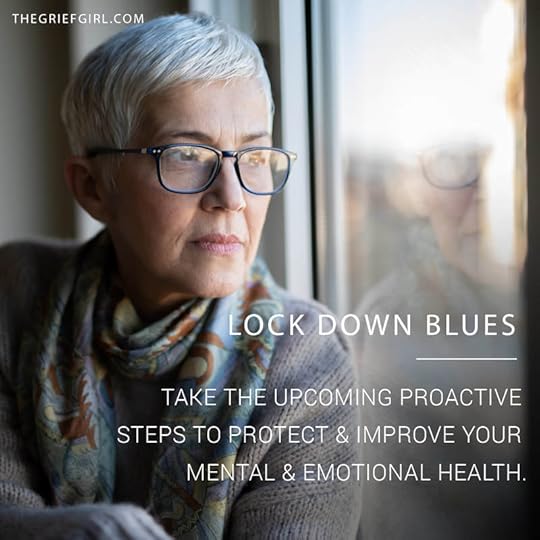 What happens when the tools we use every day to combat depression and anxiety are literally spreading a global pandemic? Throughout the country, more and more states are mandating “social distancing” tactics, requiring residents to stay home from school, work, social and religious gatherings and closing movie theaters, restaurants and gyms. The result? We’re all left with time on our hands – alone time, that is. Add to that the ever-spreading anxiety brought by sensationalized media, panicked disaster preppers and the creeping fear of the unknown and you have the ultimate recipe for depression.
Whether you’re living in a state with a stay-at-home order or you’re just doing your part to stop the spread of the COVID-19 pandemic, all those long days of hunkering down can certainly take their toll on your mental wellbeing. If you suffer from depression or anxiety, or you’re just feeling stir-crazy and fearful about the coming weeks, take these proactive steps to protect and improve your mental and emotional health.
READ THE REST ON THE ELEPHANT JOURNAL


January 27, 2020
Grieving The Inexplicable
 When tragedy strikes, it’s important to grieve in an honest and healthy way.
Death and grief are part of each of our lives, but sometimes these losses are more difficult – or even impossible – to understand. Today, the sudden and premature deaths of nine people aboard a California helicopter, including NBA legend Kobe Bryant and his 13-year-old daughter, has left the country reeling in grief and disbelief. Here at The Grief Girl, we send our love and deepest sympathies to the families and friends of everyone in that helicopter.
Sudden deaths, along with natural disasters, terror attacks and other tragedies, evoke a range of emotions in all of us. It’s normal to feel saddened, vulnerable, fearful of the future and overwhelmed by the helplessness you feel to comfort others or inflict change on a seemingly cruel world. At times like these, it’s important to honor your feelings in an honest and healthy way. You might feel shock, sorrow, fear, anger, grief or any number of emotions. Through this time, there are a few things you can do to heal and help others heal:
Talk to someone. Even if you were not personally affected by an event, it’s natural to seek comfort in a time of grief, fear and stress. Whether you talk to a friend, family member or a professional, it’s important that you allow your feelings to be heard.
Take a break. It might be empathy, curiosity, anger or worry that compels you to sit in front of the news for hours on end – or frequently check headlines on your phone. Being informed is important, but obsessively following the news (particularly following a tragedy) can deepen your sense of distress and helplessness. It’s okay to unplug. Honor those affected in quiet prayers or meditation instead.
Help others. In the wake of a tragedy, there is always help needed. And when you’re feeling helpless, small acts of kindness and love can help these feelings dissipate. Whether you’re donating blood, raising money for victims or simply lending a hand in an unrelated cause, helping out – and being around others who are doing the same – can restore your faith in human love and kindness.
Please remember that the world in which we live is filled with love and beauty. As we struggle to understand events like these, it’s important that we, above all else, show kindness and acceptance to each other. From all of us at The Grief Girl, our prayers and love are with you.
January 16, 2020
Real life isn't a movie. But for many, this movie is real life. Honey Boy
 Movies speak to us, not just because they acquaint us with worlds and emotions we’ve never experienced, but more often, because they do. And for as many as two thirds of American adults, Honey Boy will speak straight to the heart.
According to Psychology Today, long-term studies show that as many as 60 percent of children experience neglect, abuse or another type of trauma by age 16, and more than 30 percent were exposed to multiple traumas. Unfortunately, for most of us – including Shia LaBeouf, who wrote and starred in Honey Boy – past trauma doesn’t stay in the past, often haunting adulthood through addiction, depression and even suicide.
Honey Boy brings the LaBeouf’s past trauma frankly and wrenchingly into the spotlight. Portraying his own father, a verbally and physically abusive alcoholic and registered sex offender, LaBeouf underscores the gritty reality of abuse and the tragic effects that remain years after the trauma is over.
As a mental health professional and certified grief counselor, I have seen firsthand how childhood wounds can fester and grow, urging their victims toward unhealthy coping mechanisms and preventing them from experiencing healthy, fulfilling relationships.
READ THE FULL ARTICLE ON THE ELEPHANT JOURNAL