Ken Britz's Blog
June 23, 2024
Star Wars: Lando Calrissian and the Starcave of ThonBoka (Book Review)
Welcome my next read of the Star Wars Expanded Universe/Legends:
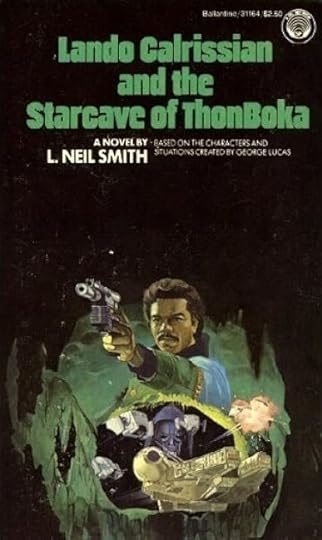
Cover image by William Schmidt. Image courtesy of Goodreads
Here we are on the last of the pre-Thrawn trilogy era novels that kicked the Expanded Universe into high gear. As such, I’m going to do the next few reviews a little differently, but we’ll see that as we go along. The cover again shows an Empire Strikes Back/Return of the Jedi Lando Calrissian, but the coloring definitely speaks RotJ. I believe it hints at the StarCave, which is really a nebula bounded by a string of close stars, but Schmidt takes it far too literally. Rokur Gepta is here as well, though he looks more like Doctor Doom than a sorcerer of Tund. Still, it’s an evocative image, both distinct from the pair of novels that came before it and yet tonally familiar.
What do they think this is, the Clone Wars?— Lando Calrissian and the StarCave of ThonBoka
In this last installment of the Smith’s Lando Calrissian series, it’s a few months after the events of Flamewind. Lando encounters a massive manta-ray like creature who can intuitively hyperjump. We’re introduced to Lehesu, a young curious Oswaft, who is saved from starvation by Lando and his droid companion Vuffi Raa. Rokur Gepta, a growing background character in Mindharp and Flamewind, is now the main protagonist, with control of a fleet of ships harassing the Oswaft into the StarCave and destroying their source of interstellar food. It’s a unique story and pulls you along. Smith’s writing is confident and strident, though the overall story is not as interesting as his sophomoric effort Flamewind.
A long time ago, a machine of my acquaintance pointed out that a person who believes that violence is the first or only alternative is morally bankrupt.— Lando Calrissian and the StarCave of ThonBoka
Smith also ties up many loose threads with the last novel between both Gepta and Vuffi Raa. Vuffi Ray’s wrap-up feels sprinkled throughout, though that does not prevent the ending from having a deus ex machina feel to the ending. We’re fortunate that we don’t get a final scene where Lando meets Han and loses the Millennium Falcon (some lore is best left unwritten, though I’m sure it’s probably in a later EU novel), but Smith places Lando in a position where the reader can transition Lando into being the con artist administrator of the Cloud City of Bespin. There’s also a lot of new Star Wars lore sprinkled throughout. Gepta and the Sorcerers of Tund is one of the first non-Force magic-users in the Star Wars universe—before the Nightsisters of Dathomir even. The Oswaft are the first interstellar species we see in Star Wars outside of the Exogorth space slugs in ESB. They harken (to me) as ancestors to the hyperspace traveling Purrgil in Star Wars Rebels and Ahsoka, though the Oswaft are more than sentient and communicative. To them, any sort of mechanical transmission is communication to them.
Save your parlor tricks, old man! We stopped doing what we were told when your precious Navy destroyed anything we had to lose by disobeying.— Lando Calrissian and the StarCave of ThonBoka
On display is Lando’s growing confidence in his piloting skills. He was quite inept in Mindharp, but now we see him confident and competent. The Millennium Falcon, more so than even in the Han Solo Adventures, is as much of a character here. She’s definitely portrayed well as a souped up and tricked out hotrod disguised as a freighter. Vuffi Raa also makes a fair amount of modifications to the ship, most having to do with her shielding and speed. Smith builds further with his Star Wars lore by adding small fighters tractor-beamed through hyperspace (this happened in Flamewind with a modified starship engine, now with a repurposed pinnace), showing both a cleverness in storytelling and building lore where not all one-manned fighters are interstellar capable (something we see much later with the prequel trilogy with the Jedi Starfighters that required a hyperspace ring).
But some folks seemed to be missing from his life, missing from places they’d carved for themselves only recently.— Lando Calrissian and the StarCave of ThonBoka
I enjoyed delving into the non-Jedi aspects of Lucas’ Star Wars universe. Daley’s work had a fast-paced pulp feel, whereas Smith injected Lando with more nuance, contemplation, and the cleverness of a Sabacc playing con artiste. It is a shame that either Smith’s work or the relationship between him and Lucasfilm did not hold up. Outside of the smaller dated issues—Lando referring to Vuffi Raa in every 20th century way (“Old Toaster!” “Old Telephone!”), Smith’s writing is better than Daley’s. Smith conveys character thought and emotion better than Daley. Unlike Daley, Smith didn’t give Lando a large character arc. He changes subtly from novel to novel, but like the archetypes, Calrissian’s cleverness, luck, and heart carry him through to ultimate victory. I would’ve enjoyed another Lando Calrissian tale, perhaps something post-RotJ where we see an older, wiser Lando surrounded by a growing network of friends. If I were to rank Smith’s work, I would say:
Lando Calrissian and the Flamewind of Oseon
Lando Calrissian and the StarCave of ThonBoka
Lando Calrissian and the Mindharp of Sharu
To rank the novels of the EU I’ve read so far, purely based on my enjoyment and the author’s skill in telling a gripping yarn, here’s where I sit:
Lando Calrissian and the Flamewind of Oseon
Lando Calrissian and the StarCave of ThonBoka
Han Solo’s Revenge
Han Solo and the Lost Legacy
Lando Calrissian and the Mindharp of Sharu
Han Solo at Star’s End
I’m certain this will be upended once we enter into the Thrawn trilogy and the dozens of novels that expand both the universe and the lore of Star Wars. Next up, a revisit to a series that I read many years ago…
May the Force be with you.


May 27, 2024
Star Wars: Lando Calrissian and the Flamewind of Oseon (Book Review)
Welcome my next read of the Star Wars Expanded Universe/Legends:
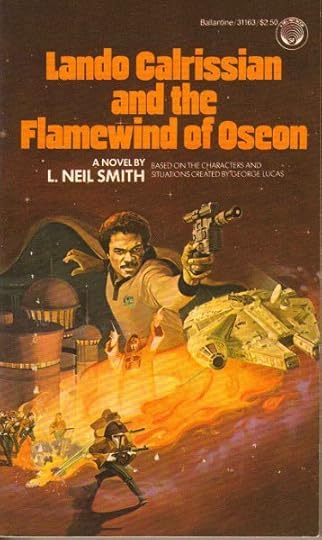
Cover image by William Schmidt. Image courtesy of Wookiepedia
It’s been a hot minute since my last review, but I’ve finally gotten time to finish this novel. Some time has passed since their adventures in the Rafa system, and Lando is making a go at being a freighter captain, though he’s finding that it’s hard to make a living that way. With the life crystals sold, he’s back in his usual games of Sabacc and quickly runs into trouble while in the Oseon system during the seasonal Flamewind, a beautiful cosmic radiation phenomenon that is also deadly to space navigation. Let me take a moment to both praise and damn Schmidt’s cover. While beautiful in its 1970’s aesthetic collage, Lando older than in the novel and wielding a variant of Han Solo’s DL-44 heavy blaster pistol—a weapon he doesn’t have. It’s clearly art based on photoshoots from the Original Trilogy and does the job of making any Star Wars fan want to crack the cover to see what treasure lies in the pages within.
Cycer was dealing the cards when a small spherical droid rolled up beside Lob Doluff and whistled imperatively, then split into a pair of hemispheres.— Lando Calrissian and the Flamewind of Oseon
Unlike Daley’s Han Solo Adventures, Smith really hits a stride with a mix of world building, character, and plot. Smith leans further into Lando’s life as a gambler and con artist with a conscience. He feels much more distinct as a character than the rough template Daley used for Solo. Published in September 1983, Smith has more material to work with in terms of thematic elements from A New Hope and The Empire Strikes Back. And yet, Smith takes more license to play with the character and explore him and the world in interesting ways. The world building feels unique, with the Flamewind as a sort of beautiful man vs. nature backdrop, and the Millennium Falcon’s design as a supercharged hotrod posing as a junk freighter gives the ship a deeper unexplained history. We also see a bit of Star Wars concepts and lore here as well. The quote above describes what could be an early prototype that becomes BB-8 of the Sequel Trilogy. Vuffi Raa, his penta-tentacled droid companion, displays more skills and character as well. He’s able to break himself apart into component tentacles, though we never quite see that in the universe after that. Smith also blends more science into space fantasy—characters need space suits in space, zero gravity is a thing, and the tech of handling the Falcon through twists and turns shows that Smith spent effort blending elements with plot. We learn more about Sabacc as a game—more interesting SW lore.
As usual, Lando’s luck, both good and bad, was operating at full blast.— Lando Calrissian and the Flamewind of Oseon
My favorite element that Smith builds upon is Lando’s luck as a part of him. He’s often (and often) incredibly lucky or incredibly misfortunate. Looking at the character in this light gives a new perspective to The Return of the Jedi. Vader captures Luke to confront the Emperor so that he is distracted from using his Force abilities to guide the fleet at Endor. His luck could also play a factor in Solo and Leia destroying the shield generator at the right time for his team to fly into the Death Star to deliver the killing blow. It’s a stretch, but there’s more color to Lando in Smith’s book that undoubtedly influences the character in later stories—in particular Timothy Zahn’s Thrawn Trilogy later.
An exasperated expression on his face, Lando asked, “Why do jerks like you always have to go into this thespian routine? If you’re going to kill me, do it with the gun instead of boredom, there’s a good fellow.— Lando Calrissian and the Flamewind of Oseon
Lando also has a clever wit about him—you’d need such to be a swindler as long as he has. Is this book perfect? No. The constant quips by Lando to Vuffi as ‘old telephone’ or some other tool/instrument was interesting for the first time—but not the twentieth. The secondary plot (a holdover from the Mindharp story) feels unnecessary and unwarranted. There are some hilariously silly new characters like Wayway Fybot, who is clearly a Star Wars equivalent of Sesame Street’s Big Bird, and Bohhuah Mutdah is a pale replica of Herbert’s Baron Harkonnen. Even the secondary villain elicits Lando’s derision at having the villainous plot mansplained to him. Still, I enjoyed this story over all the ones I’ve read in the Legend/Expanded Universe thus far (of which this is only the 6th entry). Smith moves away from the existential feel of Mindharp and into something more character driven. The story is better for it.
May the Force be with you.
March 24, 2024
Star Wars: Lando Calrissian and the Mindharp of Sharu (Book Review)
Welcome my next read of the Star Wars Expanded Universe/Legends:
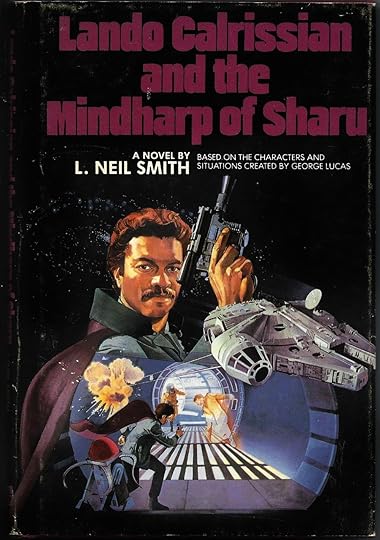
Cover image by William Schmidt. Image courtesy of Reddit
Star Wars: The Lando Calrissian Adventures By Smith, L. NeilL. (Lester) Neil Smith makes his Star Wars debut here, having been brought in by Brian Daley to pen another series of short novels similar in vain to his own Han Solo Adventures. Much like those adventures, the Lando Calrissian Adventures are set in the years before A New Hope as a bit of pulp background to a newly popular character Lando, introduced in The Empire Strikes Back. According to L. Neil Smith himself, the experience of writing the novels was not a good one, nor was the pay or treatment, though I’m unsure if that was because of the publisher (Del Rey), Lucas’ company Lucasfilm, Ltd. or Lucas himself, the story isn’t clear. The Lando Calrissian Adventures were not Smith’s first publications, having gotten his start selling The Probability Broach to Del Rey in 1977 (published in 1980), but this was his first and last foray into another’s branded story universe. Outside of Star Wars, Smith had a modest career and was well known in Libertarian writer circles, culminating in a lifetime achievement award from the Libertarian Futurist Society before his passing in August of 2021.
Some things are better faced in daylight.— Lando Calrissian, Lando Calrissian and the Mindharp of Sharu
Released on June 12, 1983, Lando Calrissian and the Mindharp of Sharu arrived a month after the last installment of the first Star Wars trilogy with Return of the Jedi. Much like Daley’s Han Solo Adventures, this clutch of novels follows the adventures of the smooth gambling con artist named Lando Calrissian, made popular with Billy Dee Williams’ portrayal in The Empire Strikes Back. Unlike the Han Solo Adventures, Lando is more of a loner than Han (where Chewbacca is ever present at his side). As with Han Solo and the Lost Legacy, William Schmidt continues his cover work, and the imagery is cinematic and evocative except for the droid Vuffi Raa, described as a starfish-like design rather than an astromech droid with tentacles about its dome. Regardless, this is one of the better covers we’ve seen since McQuarrie’s beautiful work in Splinter of the Mind’s Eye. The in-universe timeline of this novel has been revised a few times — from 10 BBY (Before Battle of Yavin in A New Hope) to 4 BBY, then 2-3 BBY. We know from the novel a couple of hints—Lando, though of an indeterminate age, is young though still knowledgeable. He’s also in possession of the Millennium Falcon, which certainly puts this story well before the Han Solo Adventures. Also like HSA, we spend more time in the universe outside of anything dealing with Jedi, Sith and the Force.
Regardless of the timeline, the novel starts with Lando on asteroid Osean 2795 in a sector run by the Centrality—another sector not exactly under the jurisdiction of the Galactic Empire, as with the Corporate Sector Authority in HSA. Lando is deep into a game when he hears of a valuable treasure in the Rafa system. He cleans out at least one player, but not before getting a less than mediocre piloting droid to get him to the Rafa system on the MF. Lando is a poor star pilot, still learning the ropes of how to operate the newly gained MF. This is a nice contrast with Han Solo, and sets him apart as a character that’s less of a shoot-from-the-hip smuggler and more of a cool con artist. Also, much like HSA, Lando gains a companion, Vuffi Raa, a rather unique droid. Against the grain of the established SW universe, he has a name that is not an alphanumeric (C3PO, R2D2, R4D5, etc.) or a nickname thereof (Threepio, Artoo). He is also a Class II droid, which in Smith’s universe parlance means it is a sentient droid, though he is required to follow programming as any SW droid should. He’s also unique in design, neither a trashcan style nor anthropomorphic, but more like a short walking robotic starfish. Both qualities give him character and some ability beyond the normal SW ken.
Did you know, old pentapod, that these things were once used for telling fortunes?— Lando Calrissian, Lando Calrissian and the Mindharp of Sharu
What I like about this novel is Smith’s approach to Lando. It’s set well before the events of ANH and long before we see Calrissian in ESB, but Smith strips away from Lando a bit. He’s not the pilot he is in RotJ he’s younger and as interested in seeing the galaxy as he is in making a score. It delves deep into some world-building, spending time in alien systems and seeing interesting pieces of galactic industrialization. There’s very little Star Wars lore here, except a card game called sabacc. Smith expands upon this lore, adding to the shape of the cards their ability to change faces based on a game field over the table. Later, Lando uses them as a Tarot deck to guide his own future and luck.
Lando looked at Mohs, who still had some of his shrug left. He used it.— Lando Calrissian, Lando Calrissian and the Mindharp of Sharu
Where many take issue with Smith’s license is where the novel goes off the rails deep into the metaphysical. Star Wars is space fantasy, so seeing Lando wander through an ancient alien structure and deal with things beyond the normal space-time continuum is antithetical to Star Wars as we know it. In parts, this was interesting, but poorly executed and hence why reviews are scathing. Smith is quite capable, though I found his use of every different term to refer to his droid beyond inane and bordering on old man speak. Your own experience may be just as existential as mine.
May the Force be with you.
References
L. Neil Smith’s interview on IFS’ Prometheus Blog, June 19, 2019
L. Neil Smith’s Wikipedia Entry
March 3, 2024
Star Wars: Han Solo and the Lost Legacy (Book Review)
Welcome my next read of the Star Wars Expanded Universe/Legends:
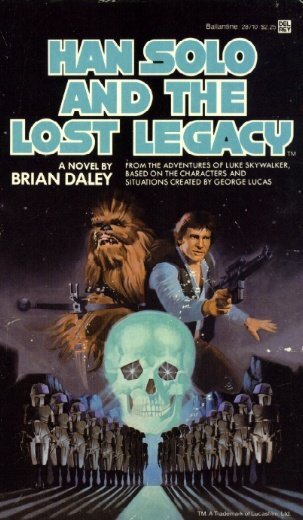
Cover by William Schmidt (image courtesy of Wookiepedia)
The Han Solo Adventures: Star Wars Legends (Star Wars - Legends) By Daley, BrianHere we have the last volume of Brian Daley’s work on Han Solo’s Adventures. We also see a change to the cover design that continues through the upcoming Lando Calrissian series to artist William Schmidt. The Star Wars font remains fluid here, and compared to the previous covers is ever so slightly more eye-catching. Even the typical branding we see later as Star Wars deepens into cultural zeitgeist is nonexistent at this stage. The pale skull of Xim’s logo is more literal than stylistic. Personally, I like the change, but like the previous covers, they don’t grab the reader as much as the later works—we’ll see more of that with Timothy Zahn’s Thrawn trilogy.
Released on August 12, 1980 (four months after Empire Strikes Back), we pick up some time after the events of Han Solo’s Revenge with Han and Chewie into a new adventure. The droid pair Bollux and Blue Max are still here. Han is at the end of his large payout from the last big adventure, even working for someone he despises. He has an opportunity for a new score, so he ditches his day job in spectacular fashion and heads off to meet up with an old friend, Badure, whom he did some smuggling in the past and owes something akin to a Life Debt. We have another woman (Hasti) who joins the plot to find a missing ship, the Queen of Ranoon, the treasure ship of Xim the Despot, a tyrant long before the age of the Galactic Empire. The ship was lost long ago, and it’s a story of hunting down the contents of the treasure ship itself.
There are some fun Star Wars tidbits worked into Daley’s story. Han Solo gets his chin scar here (the result of a car accident in 1969 by Harrison Ford1), received as the result of a knife cut. Daley hints at the piping along his trousers was more than a stylistic choice, but the result of military service.
Didn’t you notice the red piping on the seams of his shipboard trousers? They don’t give away the Corellian Blood-stripe for perfect attendance.— Badure, Han Solo and the Lost Legacy
Daley deftly weaves the ending of the novel to line up as a precursor to the events of A New Hope—the off ramping of the droid pair Bollux and Blue Max, a discussion of another Kessel Spice run, and Jabba the Hut (a misspelling here, though I’m unsure if Daley was aware of Lucas’ script spelling of Jabba the Hutt). The hinging problem is that as a Star Wars fan, I know Han Solo doesn’t score big because he’d not be in the tight spot we find him in at the midpoint of ANH, which ultimately puts him into the hands of the bounty hunter Boba Fett in ESB. It’s a problem we’ve seen before (Titanic, anyone?) but with careful writing and framing can be sold to the reader. I find this a light, but a middling story. Daley throws out complication after complication, but rather than the hero (Han and Chewie) overcoming them, they are often overcome by other characters, and losing agency is this story’s weakness. We get the thinnest of character in Han Solo himself. We know he’s a smuggler, a hotshot pilot, a crack shot, and skirts the edge of amorality. Daley does attempt to add some depth with his concern for his new crew and a deeper past with the Corellian military and what got him drummed out, but nothing affects who he is or adds more than just shading. Badure, Hasti, the new antagonists, and a different plot keep the story fresh rather than treading old ground, and this is credit to Daley’s blank canvas approach to each story. The opening scenes hint at a galaxy spanning treasure hunt, but ultimately we end up on a planetary walk that’s not all that satisfying, but it’s another short novel. Ranking the three novels, I’d put Revenge above Lost Legacy, but both above Star’s End—the longer I sit with it, the sillier the circus performer bit becomes.
Next up in Legends is a set of novels written after Return of the Jedi, focusing on the character of Lando Calrissian, one of smoothest and classiest rogues of the Star Wars universe. Come along for the next jump!
May the Force be with you.
February 18, 2024
Star Wars: Han Solo's Revenge by Brian Daley (Book Review)
Welcome my next read of the Star Wars Expanded Universe/Legends:
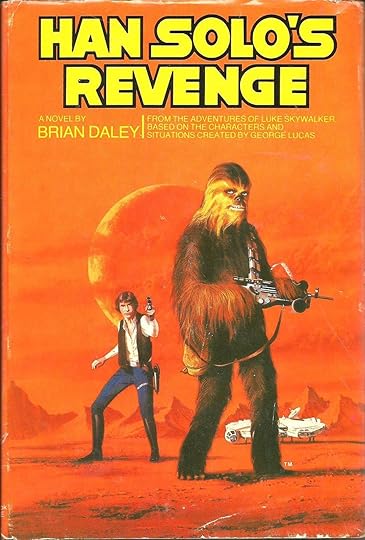
Cover by Dean Ellis (image courtesy of Wookiepedia)
The Han Solo Adventures: Star Wars Legends (Star Wars - Legends) By Daley, BrianHan Solo’s Revenge picks up more or less after the events of Han Solo at Star’s End, though it’s implied that there’s been some time between this and the previous book. Han Solo and Chewie on the ocean less planet of Kamar, having abandoned the smuggling trade for the moment and playing travel holovids for the locals when a fellow smuggler Sonniod visits, bringing him a new holofeature to play for the Badlanders. Things go awry when Solo realizes his travelogue holovid of ocean bearing worlds represented a whole new religion for the locals and swapping it out caused the religion to fall into chaos. Fleeing the planet, Solo takes up Sonniod’s gossip on a ‘no questions asked’ smuggling job.
Not everyone is happy with the rigid restrictions that were imposed after the Clone Wars— Zlarb, Han Solo's Revenge
The smuggling job goes sideways, and Han, Chewie and the Falcon are embroiled in a slave trafficking ring much bigger than themselves. He runs afoul of multiple factions for and against the trafficking ring, hopping through multiple star systems. There’s Fiolla, an auditor who’s looking for a name for herself and who’s defining characteristic is her ability to mimic other people’s gesticulations. There’s also Spray, a simple otter-like character who’s simply a debt collector. Bollux and Blue Max are still with Han and Chewie, providing the support roles to another fast-paced novel.
There are a couple pieces of Star Wars lore, including the callback to one beat of dialogue between Luke and Obi-Wan in A New Hope about the Clone Wars. We also see the first use of a vibroblade, the likes of which pervade the Star Wars universe in many forms and variations. They have more utilitarian uses and, unlike lightsabers, can penetrate energy shields. Here, though, it’s a simple hand-to-hand weapon used to impressive effect.
Deft hands and a pure heart triumph again!— Han Solo, Han Solo's Revenge
Compared to the Star’s End, this story is much better crafted and moves well. We get more from Chewbacca’s point of view as well, and Daley takes time to add more color to the principles. There are also fewer contrivances, though there are a couple—Han Solo’s pursuit of payment for a job he specifically canceled himself is one (why would he want to be paid for an incomplete job?) and Chewbacca’s rather ridiculous hang gliding scene. Since this novel is years before Return of the Jedi is even in development, did this kernel become the Ewok glider shot? Well-turned story twists balance the contrivances out, putting this sophomore effort ahead of Daley’s first Star Wars piece. It’s a short and fast-paced, fitting Han Solo’s adventuring lifestyle. My next read will wrap up this trilogy of Daley adventures with Han Solo and the Lost Legacy. Until then,
May the Force be with you.
February 11, 2024
Star Wars: Han Solo at Star's End by Brian Daley (Book Review)
Here’s the next book in my read of the Star Wars Expanded Universe/Legends:

Cover by Wayne Douglas Barlowe (image courtesy of Wookiepedia)
The Han Solo Adventures: Han Solo at Stars' End / Han Solo's Revenge / Han Solo and the Lost Legacy (A Del Rey book) By Daley, BrianThis is the first of a series of novels published by Del Rey from 1979 to 1980. The Han Solo Adventures were set roughly a couple of years before the events of A New Hope, starring Han, Chewbacca and the Millennium Falcon against the galaxy. Written by the late Brian Daley, these novels are short (under 200 pages) and you can find them collected in an ebook trilogy set. These novels, like Foster’s Splinter of the Mind’s Eye, came out before Empire Strikes Back, so there’s little material to build upon—or blue sky if you’re creatively open. The first novel, Han Solo at Star’s End, came out and was an instant New York Times bestseller, post Star Wars release. Han is figuratively solo and without Luke and Leia (who are probably kicking around Tatooine and Alderaan, respectively), and interesting contrast to Splinter.
Han is a smuggler living on the fringes of both the galactic and the legal, but it is fun to get a peak of life in the Star Wars universe for those rare few (in the Galactic Empire, less so in Disney Star Wars) force users, and just a high paced space opera. There are some tidbits about Star Wars lore here, as I see them. First, the radar dish (Falcon’s long range sensors) is sheered away in a daring pursuit and escape from the Corporate Sector Authority ship. It’ll be years before Lando sheers the dish off in his escape from the second Death Star’s destruction in Return of the Jedi, and it’s not the reason the Falcon has a rectangular dish in The Force Awakens, but it gives the Falcon a sense that it’s been in more than a few scrapes over the years. In TFA, it’s a note that the radar dish was replaced by Lando, but it ultimately didn’t have Solo from losing his precious ship. The other tidbit is that—as we know definitely before Lucas tweaked ANH in his Special Edition—that Han shot first.
I happen to like to shoot first, Rekkon. As opposed to shooting second.— Han Solo, Han Solo at Star's End
Solo and Chewie deal with the damage to the Falcon and go to where she needs repairs, sending him on a journey that brings along two droids, Bollux (a worker bee droid who’s seen some sh!t and whose name was changed to Zollux in the UK version as the original is offensive) and Blue Max (a stripped down, amped up super brain that lives within Bollux much like Krang from the Teenage Mutant Ninja Turtles). One departure from the meager canon here is that these names are not much in keeping with the established alphanumeric designation (i.e. R2D2, C3PO, R5D4, etc.) in ANH, so it’s easy to surmise these were entirely Daley’s fabrication. The CSA appears to be another invention of Daley’s, as there’s no mention whatsoever about the Galactic Empire/Senate. CSA, to me, thinly alludes to a seceding portion of the Galactic Empire, perhaps, since the Confederate States of America share the same acronym.
The novel also codifies a couple of SW tenants. First, Solo is a hotshot pilot no matter what ship controls he’s behind. There’s even a fun bit of actual dogfighting in the novel with ships that have interstellar and atmospheric capability. It occurs to me that this also may be why Lucas did not want dogfights in Foster’s Splinter, but that may just be happenstance. Second, Solo is also a crack shot with his weapon and will use it any time he has to, and Daley uses it to good effect.
The problems arise in the characterization. Solo in this novel talks one way (tough), while somehow always doing the right thing (moral compass). It’s only problematic because it’s just not conveyed well to me—Daley brings some of his Vietnam veteran experience into play. Solo can talk tough, but the subtext could be better. As a character and smuggler, if Solo did the right thing all the time, he would be weak and easily manipulated. Chewbacca is more fleshed out here, though like Splinter, only by degrees. The world building is where Daley adds liberally with new races, the addition of gravity generators and the like. The plot is paper thin—with a whole circus motif so harshly contrived that even I couldn’t help but roll my eyes while reading. There was also some dialogue that appears ripped straight from the 70s itself—Lucas did this himself in ANH:
It is for me, sister! Look, I ain’t in this for your revolution, and I’m not in it for you, Princess. I expect to be well paid. I’m in it for the money!— Han Solo/Lucas, A New Hope
While it’s fine, such lines didn’t sing on the page as well on the screen.. While a quick read, I thought I missed something, though it may have been the frenetic pacing. The characters weren’t particularly memorable here—there were Jessa and Doc, who could’ve been any tough, spunky woman or absent-minded professor, respectively.
I looked up the late Brian Daley and learned he was one of the staff writers on a short-lived but much beloved tv cartoon series called The Adventures of the Galaxy Rangers. I loved that show, and he gets some credit for doing work on the small screen. For its brevity, Daley packs some world building in here and the writing works to breeze you through the story. He has two more novels in this series, and we’ll see what other kinds of scrapes Solo gets into and out of. If you’re interested in Daley, his most famous work outside of Star Wars is his GammaLAW series, completed over twenty years. If you’re interested in radio dramas, Brian Daley worked the screenplays for all of these, and passed away the day after the wrap party for RotJ’s completed series in 1996. You can find out all about them here.
May the Force be with you.
References:
Legends Book Review: 'Han Solo At Star's End' - Jedi News
Jedi News Review: The Official Star Wars Fact File Issue 7 - Jedi News
February 4, 2024
Star Wars: Splinter of the Mind's Eye by Alan Dean Foster (Book Review)
Preface: There’s a lot of hate for Disney Star Wars online. For me, it’s not so much hate as disappointment.
I grew up with Star Wars. One of my earliest memories is watching Star Wars in an actual theater—we mostly watched new movies at the local drive-in where I grew up. Only the TIE fighter dogfights and the lightsaber remain, but, hey! I was only five or six years old. Into my teens, there remained a plethora of toys for Star Wars, but little material compared to the bookcase of Star Trek novels I encountered in my local mall Waldenbooks. I voraciously devoured Timothy Zahn’s Thrawn trilogy when it came out (not that one, this one). It kindled my enjoyment and wonder. I watched the prequels alongside many of the Millennials, sympathizing with much how they would enjoy these characters as I had with my own toys and self-made stories. The Force Awakens, while derivative, sparked insane fandom speculation even among my friends. I was interested in Rey and her origins—my favorite theory was that she was a love child of Obi-Wan and Satine Kryze. How crazy that would be as a subplot beneath The Mandalorian? But since The Last Jedi, Star Wars has been a long series of disappointments amidst a few bright sparks. After an anticipation of Ahsoka (and subsequent rewatch to understand what was so wrong—who writes a 10,000 word treatment of a different and better version of a show? Me, apparently), the flame of excitement and wonder gutters, soon to be just a wisp. I fear this deep disappointment.
Fear is the path to the dark side. Fear leads to anger. Anger leads to hate. Hate leads to suffering.— Yoda/Lucas, Star Wars The Phantom Menace
Instead of anger, I feel disappointment, and disappointment leads to apathy. Yet I resist the apathy about a cherished treasure. I’m no longer interested in recent Lucasfilm streaming content, but what to do? In resisting this apathy, I’ve stumbled across the Expanded Universe (re-titled Legends to remove their canonical placement post-acquisition), which exploded after Zahn’s work. I’ve read some of Legends in the past, but I a recent read of Dark Horse’s Star Wars: Dark Empire by Tom Veitch and Cam Kennedy fanned the flames enough for me to realize that there’s a lot more out there than just lackluster streaming product. Strap in, because we’re going back to the beginning and reading all the Star Wars novels (except novelizations—I find them lackluster) in publication order. First drop out of hyperspace: Alan Dean Foster’s Splinter of the Mind’s Eye.
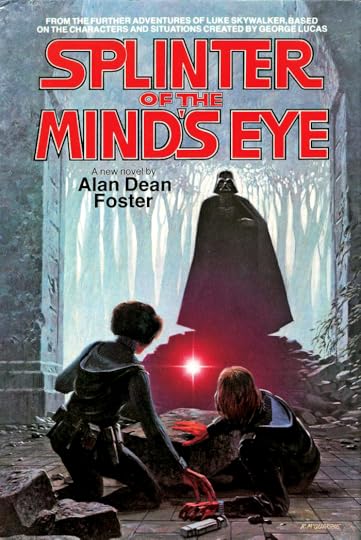
Cover by Ralph McQuarrie (image courtesy of Wookiepedia)
Splinter of the Mind's Eye (Star Wars) By Foster, Alan DeanWhile in the development of Star Wars, Lucas reached out to Del Rey to contract someone to turn his script into a novelization. Alan Dean Foster, a writer who had been published since 1971, already had some experience writing novelizations, including Dark Star and a series of novels based on Star Trek: The Animated Series, which became the Star Trek Logs series. From a short list of authors, Foster was chosen and met with Lucas. With little to go on but the script and production material, Foster churned out Star Wars: From the Adventures of Luke Skywalker in about 4-6 weeks (something that became a penchant long before the Amazon Kindle sparked the indie publishing era). Ballantine Books published it in November 1976, six months before Star Wars hit the theaters. Without the movie, the novel had little interest and faded into relative obscurity, but what Lucas also wanted from Foster was a sequel novel if the movie became a modest success. That would become Splinter of the Mind’s Eye.
Del Rey books published this novel in March 1978. I’ve read some Alan Dean Foster in the past (Icerigger being one of them, and what got him on the list from one of Star Wars’ producers). As this takes place after Star Wars (retroactively re-titled A New Hope) and before Empire Strikes Back, it was intended as a lower budget novel, reusing production units and constraining locations as much as reasonable. The cover is a beautiful piece of work by the late-great Star Wars conceptual artist, Ralph McQuarrie. He cleverly kept Luke and Leia’s face hidden, as Lucas had yet to contract their likenesses.
Splinter follows Luke Skywalker and Leia Organa post-Death Star, heading to a critical Rebel Alliance meeting on Circarpous IV with C3PO and R2D2, when Leia’s Y-Wing suffers a mechanical failure en route and must land on Circarpous V, a fog-shrouded jungle planet with terrible atmospherics. Luke follows her down in his X-Wing, and these bad atmospherics damage their instrumentation and they crash land. Per Wikipedia, there was a dogfight written in by Foster, but it was removed from the story (perhaps to rein in the sequel budget or it had already been done in ANH). Its removal makes for an abrupt introduction, as it’s hard to believe Leia would a. travel in a Y-Wing of her own accord and without an entourage and b. that it would be a defective ship.
Since Harrison Ford had not yet contracted for a sequel, Han and Chewbacca as well as the attractive tension between the three leads are missing, leaving just the tension between the moisture-farm-hick-turned-rebel-pilot Luke and the princess/former senator/rebel leader Leia. It’s a light story, without a lot of depth and Foster makes a few amplifications of Star Wars lore here. Luke is growing in Rebel deeds and Leia is growing in political power (as this story takes places before the events of ESB). As this is maybe a year or less after ANH, the torture suffered by Leia at Vader’s hands is still fresh in her mind, giving her a trauma unexplored in the films. The kyber crystals (spelled Kaiburr in the novel) are present and they either resonate or touch the Force (or the Dark Side, it’s not truly clear). These didn’t exist in Lucas’ script, but Foster needed a sort of MacGuffin that has since become an integral part of Star Wars. Luke also senses Vader’s presence (as Vader did of Obi-Wan) and is certain the once Jedi can sense and follow him, endangering Leia and their goal. Luke actually battles Vader here in an almost comical Ewok style battle, but with more blasters, and Leia faces her own trauma.
There are plenty of hints even at what would become ESB. Circarpous V is a jungle planet, full of wildlife, extreme dangers, and yet a mysterious temple that hints at deep connections to the Force. The battle between Vader and Skywalker is more mechanical here, not personal, but it exists. As I mentioned above, the Jedi sense between Luke and Vader is seen here and in Return of the Jedi, as well as the sense of mission endangerment Luke feels in that film. One interesting take that was not kept in Star Wars canon was Luke’s ability to adjust the length and width of the lightsaber blade, turning it into something of a multi-purpose tool.
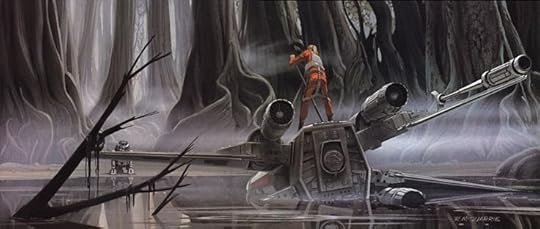
Luke on Dagobah concept art by Ralph McQuarrie (image courtesy of various site sources)
The novel lacks in several areas. Foster’s visual cinematic writing style coupled with the foggy planet and dark caves feels sparse instead of expansive. While the characters of Luke and Leia are fleshed out more than the film, this is also superficial. New characters do have interesting aspects, though the character Halla was more bumbling old woman than mentor to Luke, and the Imperial Captain-Supervisor Gremmel, too, lacked any Empire menace. Darth Vader was uncharacteristically written, but one must remember that this was Vader of ANH, and not Vader of the entire Star Wars universe. Later twists were fabricated later in the movie-making process by Lucas, so it would be two years still before we would even find out that Vader and Luke were father and son. Splinter’s lukewarm plot and the absence of Solo underpin the story’s spine. Although we don’t see the three principals together until the second half of ANH, they make up the core cast for the entire franchise until their destruction in the Sequel Trilogy. After reading Splinter, I no sense sense of profoundness and nothing stuck with me after the novel (it is a pulp work, but I still mine for gems). Foster’s craft is fine—he doesn’t use much shorthand and constructs a plot that glides, but doesn’t leave an impression with the reader. As he’s written other novels that explore other aspects of the Star Wars universe, I look toward to Foster’s growth over the decades.
PostScript: While Alan Dean Foster penned several Legends novels, including the novelization of The Force Awakens, he ran into legal issues with Disney because of the non-payment of royalties. With SFWA’s legal help, this was resolved for Foster and writers previously contracted under Lucasfilm prior to Disney’s acquisition in 2014. If you’re interested in Alan Dean Foster’s work, including his original stories, you can check out his 50 year bibliography of over 100 works.
References:
An Interview with Alan Dean Foster: The Pioneering ‘Star Wars’ Novelist (Part 1 of 2) - Jedi News
An Interview with Alan Dean Foster: The Pioneering ‘Star Wars’ Novelist (Part 2 of 2) - Jedi News
Alan Dean Foster Writes Open Letter to Disney Regarding Overdue Owed Royalties - Jedi News
#DisneyMustPay Alan Dean Foster - SFWA
Alan Dean Foster and Others to be Paid Overdue Royalties by Disney - Jedi News
Alan Dean Foster’s interview with Dice Junkies
An Interview With "Splinter of the Mind's Eye" Author Alan Dean Foster - Star Wars News Net
'Star Wars' Author Alan Dean Foster on 'Splinter of the Mind’s Eye,' the Sequel That Might Have Been
January 28, 2024
Reading List for 2023 and Goals for 2024
It’s been a busy year, and it’s interesting to see that I thought my fantasy trilogy would be releasable last year. As of now, book 1 is complete and in proofreading, book 2 is at the editor, and I’m amid writing book 3, which, when finished, will be the longest novel I’ve written. I had some audacious goals last year, but I took something of an interesting right turn in my reading. Without further ado, let me highlight some of the memorable reads!
Nonfiction:
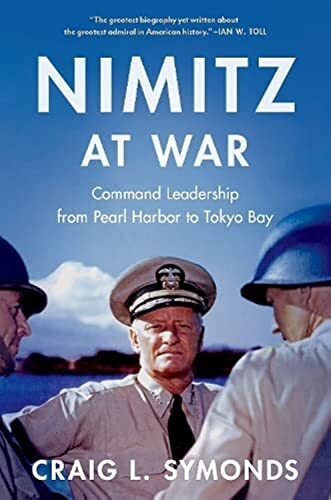 Nimitz at War: Command Leadership from Pearl Harbor to Tokyo Bay By Symonds, Craig L.
 I’ve extolled on how much I enjoy Craig Symonds historical accounts, delving into many aspects of World War II, so it’s no surprised that I enjoyed this ‘war biography’ of Admiral Chester Nimitz. It’s an absolutely engrossing read of how Nimitz navigated military and political waters while driving the war effort in the Pacific theater. If you’re a fan of military non-fiction and biographies, this is a perfect blend of both.
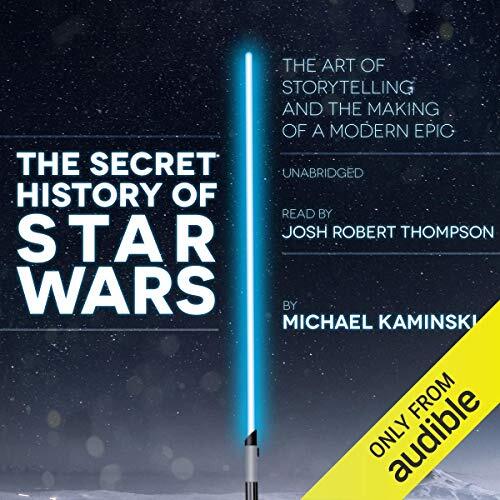 The Secret History of Star Wars By Michael Kaminski
 It’s no secret that since the age of five, sitting within my first indoor theater, I’ve been a fan of Star Wars. While I’m deeply disappointed in the current state of Star Wars (more on that in another lengthy post coming up), I continue to devour reading about the creation of the original movies. I’ve read all J. W. Rinzler’s ‘Making of’ for the Original Trilogy, but this book delves deeper into more interviews and exhaustively goes through the interactions of the movie scripts. It’s enjoyable to look back and see Lucas’ creative process and how he developed the story. If you love Star Wars and the creative process, you’ll love this book. Bonus: the audiobook narrator is a voice actor who nails Lucas’ voice.
Fiction:
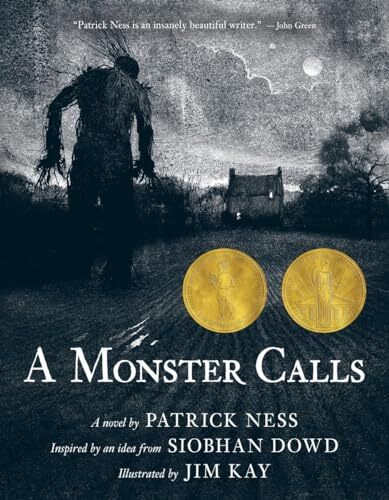 A Monster Calls: Inspired by an idea from Siobhan Dowd By Ness, Patrick
 I read this novel as a bit of a study in pain and loss for my work, and I found it moving and absorbing. If you are going through the loss of a parent or a loved one, you may find this novel cathartic.
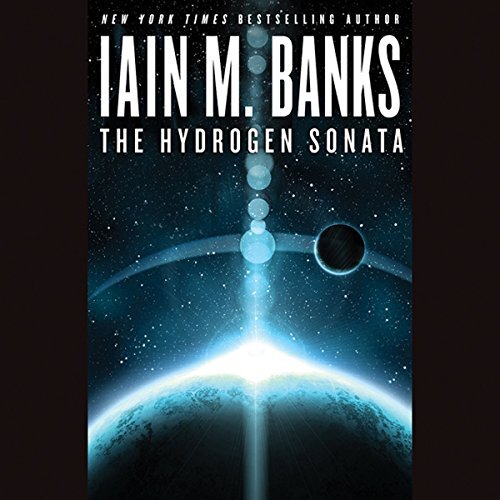 The Hydrogen Sonata By Iain M. Banks
 After several years of reading, I finally finished Iain Banks’ Culture series, and I have to say that Hydrogen Sonata feels like it is both peak Banks and peak Culture story-telling. As much as I loved Look to Windward, this book takes science fiction into interesting head spaces for me. Read this if you enjoy science fiction that feels absolutely unique with pitch perfect humor at points.
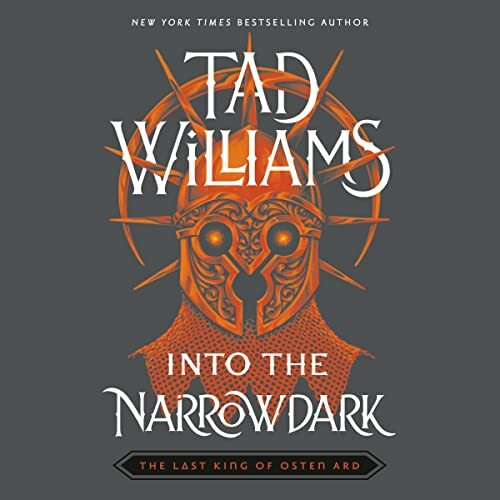 Into the Narrowdark: Last King of Osten Ard, Book 3 By Tad Williams
 I’m a fan of Tad Williams. Specifically, I love his fantasy, and even more specifically, I love his world of Osten Ard. Mr. Willams wrote a sequel trilogy, and in true Tad Williams fashion, it’s a four book trilogy. I am intensely disappointed that the incomparable Michael Whelan did not make the last two novel covers, but that only takes away from the visual enjoyment I have with these tomes. I have the last volume in my hands (along with a novella that needs to be read beforehand) to savor the last dregs of a story, the world, and characters I’ve deeply enjoyed. If you love epic fantasy, Tolkien level of lore, and the slow burn story telling that has you on the edge of your seat as you watch the choreography play out, this is a series for you. Better yet, go back to the beginning and treat yourself to Memory, Sorrow, and Thorn. You won’t regret living in this world.
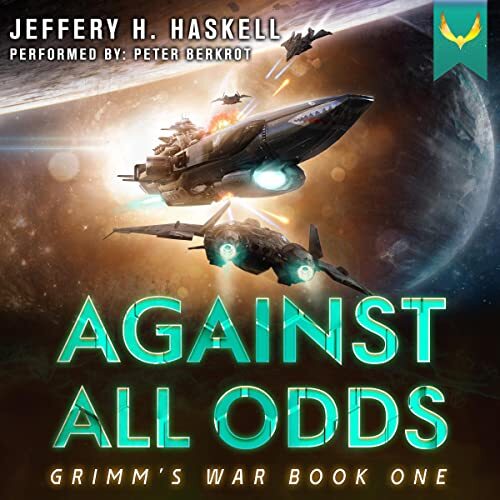 Against All Odds: A Military Sci-Fi Series (Grimm's War, Book 1) By Jeffery H. Haskell
 On the science fiction side, I don’t think I can recommend Jeffery H. Haskel enough as an excellent balance of gripping characters and action. Read this is you enjoy a perfect blend of space fleet and space marine military science fiction. Take a look at what I wrote back in January 2023. Book 6 (A Grimm Decision) is out, and it’s definitely on my TBR pile.
As always, I enjoyed something about the books I’ve read, and I’ve read some moving nonfiction and fiction, from William Shatner’s To Boldy Go: Reflections on a Life of Awe and Wonder, Matthew Perry’s struggle in Friends, Lovers, and Big Terrible Thing, Scott Moon’s Homeworld Lost series to Rhett C. Bruno & Jaime Castle’s Vein Pursuits.
Here are my goals for 2024 (referring to last year’s goals):
Read 92 books in 2023. I read 89 books in 2023, but a lot of that was delving into a genre I have touched little for the last decade or so—comic books. Since my daughter’s interest in manga has skyrocketed, I’m reading some of her books, going over some old ground I enjoyed at her age, and treading into some unfamiliar territory with select new material.
Read at least 20 Indie books. I got closer this year at 16 books. I should continue this trend to break over 20 and increase this as I find more independent authors whose work I enjoy.
Read more fantasy series. I didn’t touch one Malazan Book of the Fallen this year, though I read most of Tad Willams’ new series. This is an ongoing process.
Read classics. I started out this direction but veered into other genres, but I still find reading classics an enjoyable experience. Rather than trying to consume every bit, I’ll try to read two plays by Shakespeare and two works by Hemingway.
That’s all I have and here’s the rest of what I’ve read in 2023. I’m rewriting the last novel of my fantasy trilogy, which should be off to the editor and beta readers by the end of spring. If you’re interested in the journey, let me know. Got a great fantasy series for me? Hit me up! Tell me what you’re reading by commenting on this blog or just by hitting reply.
February 21, 2023
Indie Reads for January
In my effort to read more indie books—a task I’ve failed at for the last couple of years—I thought I’d put down what I’ve read or tried. I’ve had a few recommendations and enough to at least get me going this year. What did I try?
I kicked off with Jeffrey H. Haskell’s first space fleet novel, Against All Odds. Being critical of space fleet novels for many obvious reasons, this novel surprised me. Yes, it relied on some tried and true military science fiction tropes, but it does a few things well: 1. world building is top-notch; there’s a good feel for the technology, the astropolitical arena, and warfare itself. 2. characters have good depth. It leans into the duty trope, but just enough to pull you with the characters, not as a substitute for rational thought. 3. the story turns in expected, but interesting ways and yet keeps the pages turning. By the second novel With Grimm Resolve, I warmed up to the characters, but for drama things got stretched thin—things were just too convenient for the character, or the enemy was simply too stupid. You lose that sense of tactical commanders in battle to simply playing out as usual. In this, Haskell falls short. However, that’s not to say the series doesn’t remain strong. One Decisive Victory leans harder into the set pieces, so I know how it will end, but I’m along for the ride because I’m invested. If you didn’t like the poorly done romance or dumb-as-a-starfish enemies of Campbell’s Lost Fleet series but enjoyed the space battles, read Grimm’s War. If you don’t want to get bogged down in Weber’s political and Mary Sue death spirals, read Grimm’s War. It’s by far some of the best space fleet you’ll find today by any metric.
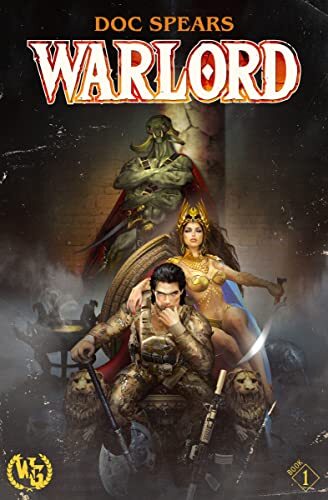
Next, I picked up Doc Spears’ Warlord novel based on recommendation and the amazing cover. Sadly, this novel lived up to the trope of ‘don’t judge a book by its cover’. It’s billed as a love letter to Edgar Rice Burroughs’ John Carter of Marsseries but is really a what-if that misses the mark by a mile. John Carter was an adventure story of a stranger in a strange land, of an Earthling making his way through the barbarically high tech world of Barsoom. Warlord is what happens when a special forces team shows up on Barsoom instead. What ensues? Well, you don’t get an action adventure and the story of a stranger in a strange land. Instead, you get a book full of backstory flashbacks filled with SF jargon, lingo, and things best left in the story binder. The characters are also more lingo and caricatures than people. It wasn’t a man on an adventure, it was a to do list for Mars Team Six. If you prefer SF to mean Special Forces and not Science Fantasy, this novel is for you. If you like it the other way around, give this novel a pass.
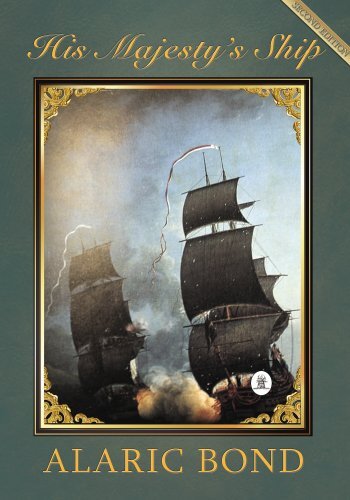
Last, someone recommended a historical fiction novel halfway out of my wheelhouse (I love most things naval, but the age of sail isn’t a particular draw for me), Alaric Bond’s His Majesty’s Ship was a well written, slow burn novel steeped in an immense amount of knowledge of the era, both in terms of naval ships, warfare, doctrine, but also the British and French navies and the historical period. Some characters were forgettable, having names, but nothing much beyond that. But others were notable, and the battle scenes were excellently written if cryptic trying to hide the tactical reveals. An excellent recommendation and I’ll return to this series after some time to reflect. There were a couple of typos in the layout, but nothing to trip you up as a reader, if that’s bothersome. Read if you love naval warfare in the age of sail and depth of the era.
That’s it for January. I have another post for February as I continue on and reach my goal. Have you read any of these? What are your thoughts?
January 6, 2023
Reading List for 2022 and Goals for 2023
It’s been another quiet year, although my head is down and I’m near the end of a long journey of writing my first fantasy trilogy. I completed the first novel (with some world building tweaks to be added), the second is in the hands of beta readers for feedback, and I’m in the middle of rewriting the final tome. If all goes well, this will be polished and released this year. More on that when I finish.
Without the last week of 2022 off, I wouldn't have made it this year. I sped through several novels as a terrific clip for me. I hadn’t planned to be so far behind this year, but it took me 6 months to complete The Wheel of Time, reading 15 novels from beginning to end (I skipped the prequel that was written long after I’d been reading the series as it was originally published, abandoning it at Path of Daggers. I have a series overview in a later book to collect some thoughts I had of the series as I progressed through it. The series could’ve been 2 books shorter and it would not have affected the overall storyline in any significant way. Regardless, here are some highlights!
Nonfiction:
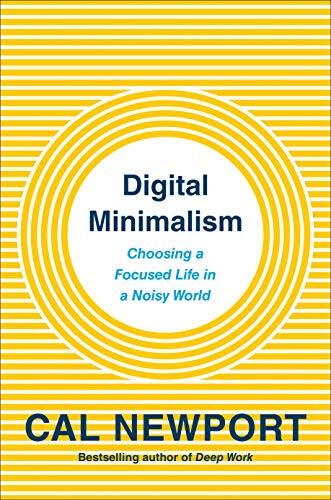
I read less non-fiction this year, but my favorite read this year was Cal Newport’s Digital Minimalism: Choosing a Focused Life in a Noisy World. It captured many issues (primarily through anecdotes with some studies) with the ‘always on’ digital lifestyle. I took a few habits to heart, particularly regarding social media and networking sites. If you’re anxious about life that stems from an always on life, I recommend this book.
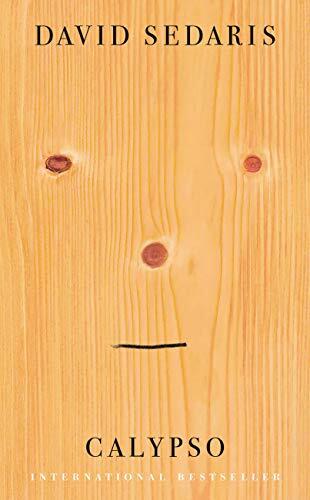
David Sedaris’ Calypso was hysterically funnyl (bonus if you listen to the audiobook version, read by the author).
Fiction:
I read a lot of fantasy last year, which includes a reread of The Lord of the Rings, prompted by a few reasons; first, it is the gold standard in world building and the shoulders of which all other fantasy writers stand upon. Second, I was deeply soured by Amazon’s Rings of Power. And third, it had been at least a decade since I’d read it, so I returned to Middle-Earth. I also read another book in Malazan Book of the Fallen. After Gardens of the Moon, I was left bewildered, although I enjoyed some incredible prose Erikson evoked. I also had a few rereads, mostly to recharge my creative batteries after either a long writing stint or fantasy reading slog.
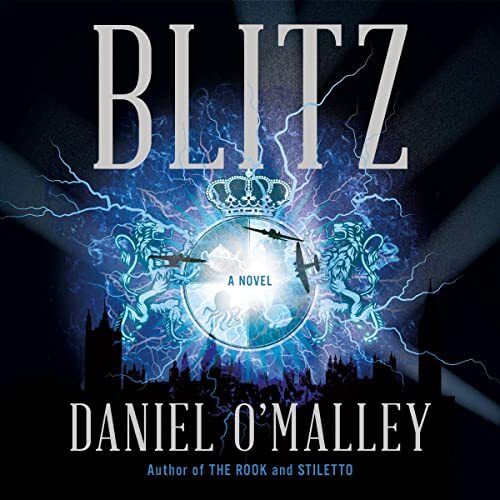
Although Dan O’Malley’s sequel to The Rook, Stiletto, wasn’t as interesting as the first novel, his third installment of the series, Blitz was amazing, fun, and witty at the right points. Kudos also to the narrator of the audiobook, Moira Quirk—a fantastic listen and read.
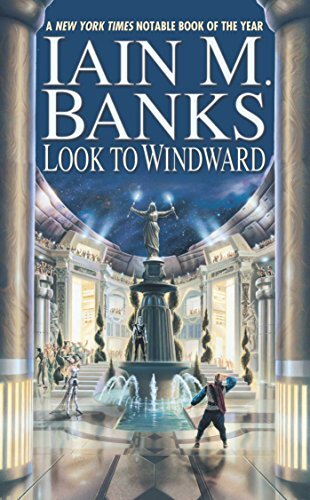
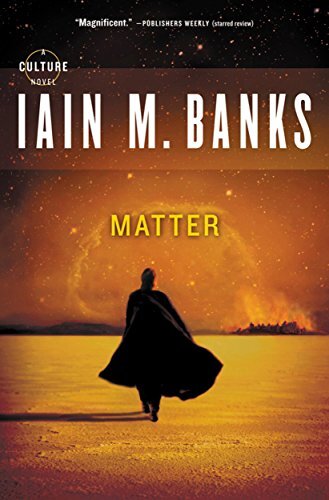
While I’m working my way through Iain M. Banks’ Culture series, I’m haunted by the last two I read, which have struck some world building and emotional chords for me. Look to Windward and Matter are well worth the read. I only have two more novels to go before I reach the end of his series of loosely connected novels, but he hits a few high bars with these two novels.
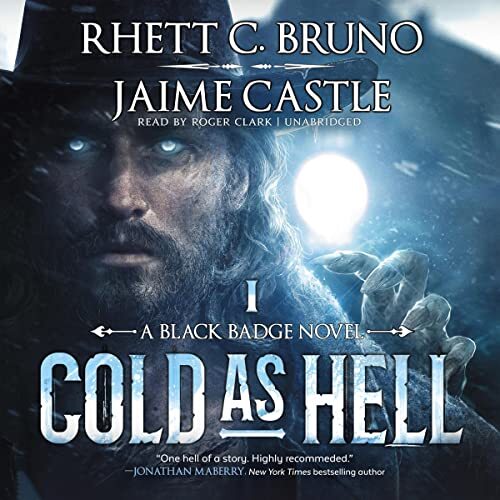
On the Indie side of things, the high mark was Cold as Hell (Black Badge #1) by Rhett C. Bruno and Jaime Castle. It is a new series grown out of a fantastic novella, Dead Acre, which I’ve written about a couple of years ago. Again, I recommend the audiobook, narrated by Red Dead Redemption’s Roger Clark, who brings the story to another level.
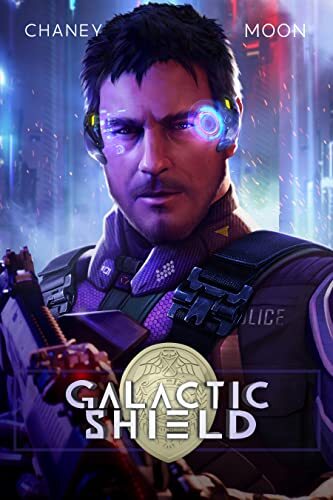
Another I enjoyed was a fun science fiction police procedural by JN Chaney and Scott Moon called Galactic Shield. It leaned less into the procedural and more into a squad than I expected, but that didn’t detract from the story.
As always, I enjoyed something about the books I’ve read. Nonfiction always uncovers some facet that appeals, and fiction takes me on a new journey.
Here are my goals for 2023 (referring to last year’s goals):
Read 84 books in 2023. I read 82 books in 2022, but it was a near sprint at the end helped with the last week off. I slowed down significantly in the first half of the year reading The Wheel of Time and I never quite caught up in the second half until the last days. I can read more this year, mixing a lot of the things I’d like to read with some fantasy tomes on my radar.
Continue to read through the Culture series. I read Look to Windward and Matter, two books I mentioned above. I enjoyed them and I’m in the final two novels of this long series. I’ve enjoyed most of the books to varying degrees, but nothing I disliked. Consider Phlebas is a weak start, but still an engrossing read. I’m down to the final two. I recommend this series if you’re looking for science fiction and space opera that feels lived in as opposed to skinned over (sci-fi as core elements vs. sci-fi as setting).
Read at least 20 Indie books. Again, I missed this mark by a wide mile. I’ll be more intentional this year. I want to find and read more indie books. I’ll report on my progress monthly here on my blog.
Read more fantasy series. I did complete The Wheel of Time. The series is a tremendous success, with some failings endemic to such a long series (more on another thorough analysis post). I’d like to continue and finish Tad Williams’ Last King of Osten Ard series. I’m halfway, having read the bridge prequel, The Heart of What Was Lost and The Witchwood Crown, so I’ll finish with Empire of Grass and Into the Narrowdark. I’ll also continue with Malazan Book of the Fallen. These are dense novels and worth giving time to. And if possible, dip into a few other fantasy worlds.
Read some classics. I’ve had an itch over the holidays to go back and read some Shakespeare and Hemingway. Why not make it a goal to read all of Shakespeare’s plays and Heminway’s works?
That’s all I have and here’s the rest of what I’ve read in 2022. I’m in the midst of rewriting the last novel of my fantasy trilogy, which should be ready by this summer. If you’re interested in the journey, let me know. Tell me what you’re reading by commenting on this blog or just by hitting reply.