,
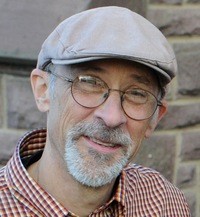
Paul       Lewis

Paul Lewis’s Followers (3)

member photo
member photo
member photo

Paul hasn't connected with their friends on Goodreads, yet.


Paul Lewis

Goodreads Author


Born
New York City, The United States
Member Since
August 2017


Paul Lewis is the president of the Poe Studies Association and an English professor at Boston College where he teaches courses on American literature, gothic fiction, and nonfiction writing. He brought a career-long interest in dark humor to the writing of A Is for Asteroids, Z Is for Zombies: A Bedtime Book about the Coming Apocalypse (2017), Cracking Up: American Humor in a Time of Conflict (2006), and articles on gallows humor, political humor, and humor and terrorism. The neologist who coined the word “Frankenfood,” Lewis has also published op-ed, feature, and humor pieces in leading newspapers.

To ask Paul Lewis questions, please sign up.

Popular Answered Questions

Paul Lewis He knew that he hadn't been cremated when his head hit the wood of the pine casket lid. Alone in the dark, he smelt the damp earth, felt a rodent craw…moreHe knew that he hadn't been cremated when his head hit the wood of the pine casket lid. Alone in the dark, he smelt the damp earth, felt a rodent crawling up his leg, and thought he could hear the sound of worms trying to get in.(less)
Paul Lewis How could anyone, no less an English professor in his fourth decade of teaching, imagine the many scenarios of doom in "A Is for Asteroids, Z Is for Z…moreHow could anyone, no less an English professor in his fourth decade of teaching, imagine the many scenarios of doom in "A Is for Asteroids, Z Is for Zombies"? To some extent, the drumbeat of apocalyptic news stories—about everything from killer viruses to nuclear war, melting glaciers to dying species—is enough to give anyone paying attention the shivers. Still, I brought my own life experiences going back to early childhood to these widely shared concerns.

When I was growing up, my family spent summers in a lakeside town an hour north of Manhattan. The house we lived in was old, musty, even damp when it rained, and it rained a lot. It had long hallways I would creep through when I woke in the night and needed the bathroom. Moving through the shadows, I heard the sound of crickets in the walls and saw an orange light flashing on and off from a convenience store sign across the road. In that house, just after my third birthday, my father died suddenly, clutching his chest in the middle of the night.

Since then and to this day, I’ve been inclined to expect that things will turn out badly, indeed to imagine possible calamities, and then, more often than not, laugh them off. Dropping a friend at the airport and noticing that he’s nervous about the flight, I’m inclined to say, “Oh, what’s the worst that can happen?” Not very reassuring, I know, but, then, we live in a not very reassuring world.

As a teenager I was entranced by horror films featuring Dracula, Frankenstein, giant ants, and radioactive dinosaurs—all of which seemed both scary and funny to me. In graduate school I studied the development of gothic fiction and published a macabre parody of TV quiz shows called “The Funeral Game” in Crazy Magazine. Later I became interested in dark humor, in why we joke about what we hate or fear. In 1992, in a letter to the editor of the New York Times, I coined the word “Frankenfood,” which quickly went viral and became associated with resistance to genetic engineering.

In the spring of 2016 I started to think about the many end-time scenarios that were percolating in popular culture. Were we getting to the point where we had a potential apocalypse for every letter of the alphabet, I wondered. A for asteroids, B for bugs, C for chemicals, all the way to N for nuclear war and Z for zombies? You can see why the question intrigued, okay haunted, me, right? How it globalized my worst-case expectations and reverberated with every beating of my tell-tale heart?

I was working the question into an op-ed piece when PJ Manning, a student in an undergraduate writing seminar I was teaching, heard me talking about it and noted that it sounded like an alphabet book. With the “New England Primer,” Edward Gorey’s “Gashlycrumb Tinies,” Heinrich Hoffmann’s “Shockheaded Peter,” and Adam Mansbach and Ricardo Cortés’ “Go the F**k to Sleep” in mind—I set to work on “A is for Asteroids, Z is for Zombies.” Once Ken Lamug signed on as illustrator, the project came vividly together through the email exchange of pages and Skype conferences.

When I was 16 the satirist Tom Lehrer included a song called “So Long Mom, I’m Off to Drop the Bomb” in his “That Was the Year that Was” album. Noting that the nature of nuclear war dictated that any songs about it would need to be written in advance, Lehrer used grim but also hilarious lyrics to conjure images of people sweltering in bomb shelters while jet planes were leaving on a 90-minute mission that would reduce civilization to rubble. Upbeat in tone, the song nonetheless mocked Cold War strategies that threatened global destruction.

Now that nuclear annihilation has taken its place among a terrifying array of threats, “A Is for Asteroids,” like Lehrer’s song, offers gallows humor for our doom-haunted time. It also distinguishes between real threats (for instance, climate change) and fantasies (for instance, zombies), implying that some of the worst dooms facing us can still be resisted. Appearing in the middle of the protest-rich 1960s, “So Long Mom” was embraced by anti-nuclear protesters. My greatest hope for “A is for Asteroids” is that it will find a place in the strange, dark genre of pre-apocalyptic satire.(less)
Average rating: 4.04 · 151 ratings · 67 reviews · 4 distinct worksSimilar authors
A Is for Asteroids, Z Is fo...

by
4.12 avg rating — 129 ratings — published 2017 — 3 editions
Rate this book
Clear rating
Cracking Up: American Humor...

3.77 avg rating — 13 ratings — published 2006 — 3 editions
Rate this book
Clear rating
Comic Effects: Interdiscipl...

3.67 avg rating — 6 ratings — published 1989 — 2 editions
Rate this book
Clear rating
The Citizen Poets of Boston...

2.67 avg rating — 3 ratings — published 2016 — 5 editions
Rate this book
Clear rating

* Note: these are all the books on Goodreads for this author. To add more, click here.

No comments have been added yet.