Durga Prasad Dash's Blog
October 10, 2025
Guest Post : Closely Guarded History and Beauty of Mahendra Giri
A VISIT TO THE HISTORICALLY MOST IMPORTANT MOUNTAIN IN THE EASTERN GHATS WHERE LORD PARSHURAM THE IMMORTAL BEING IS SAID TO BE IN MEDITATION.
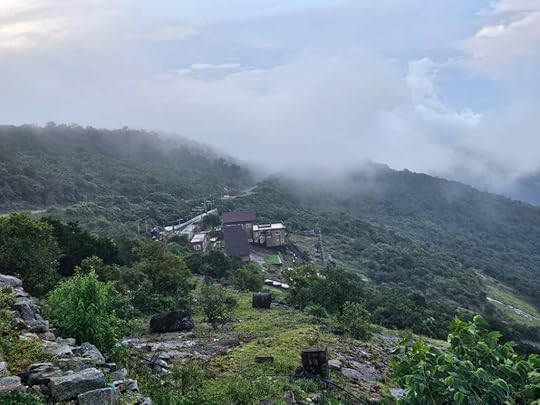
Recently, I had been to Mahendra Giri, which has the second most highest mountain peak of Odisha. Mahendra Giri is part of the Eastern Ghats, which is the second oldest mountain range of India.
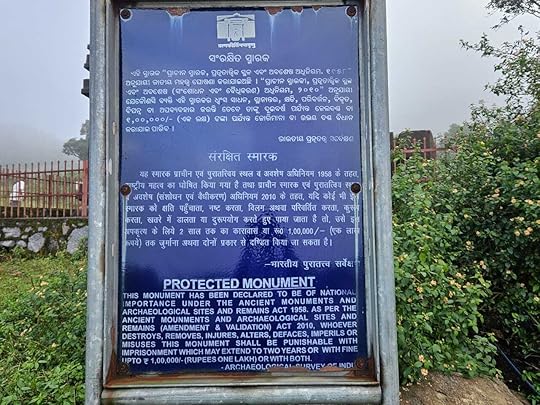
Mahendragiri today stands at stands at 1500 odd meters and it may be the third highest peak compared to nearby mountains like Jhinda garh in AP and Deomali in Odisha. But Mahendragiri is historically the most important mountain in the region, even though it is one of the les travelled destinaions of Odisha.
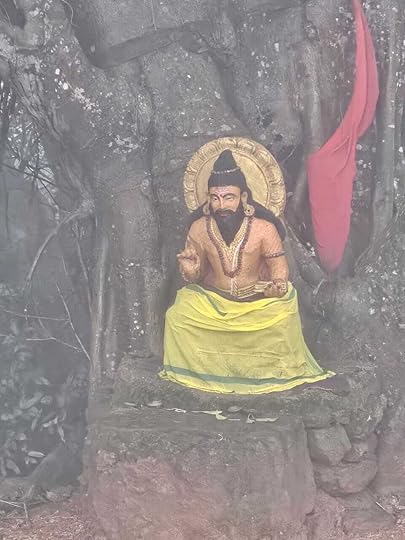
Lord Parshurama is said to have retired to this place after finishing his worldly role. It is believd that, as an immortal he is still in deep meditation somewhere on it’s top. Why so much importance on this peak while other two are hardly known to ancestors? My speculation is that it could have been the highest in the past and now it has come down because of erosion and land slide.
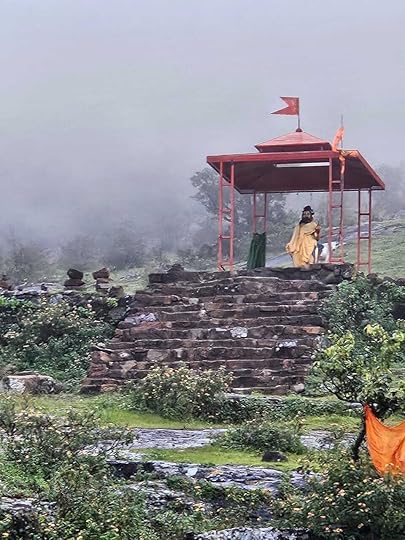
It’s Parshuram connection was the only thing I knew before visiting the place. However, it holds more real history secretly within. Eastern ghats were formed when India was part of Gondwana land that gave rise to India, Australia and Antarctica as per theory of plate tectonics. When India separated out from main Gondwana land, the Eastern ghat broke and half of it came with India and the other half remained in Antarctica as Rayner complex. Strange, and even mind blowing is the folklore in southern India about a lost extension of India called Kumari Kandam. Is it somehow linked to some land mass now under the sea or previously attached, but now separated land mass like Sri lanka, Antarctica or Australia? I wonder.
Coming to more recent history, here there are temples built in the names of Yudhisthira, Bheema and Kunti, but dedicated to lord Shiva . They were built by a Chola king and cholas a we know were staunch Shaivites. But strangely, the temples are not in Dravidian, but in Nagara style. The ASI inscription on door relief says that King Rajendra Chola constructed this temple in 8th CE after defeating his own brother- in- law and Eastern Chalukya King Vimaladitya. A tiger and two fishes are there as mark of his emblem.
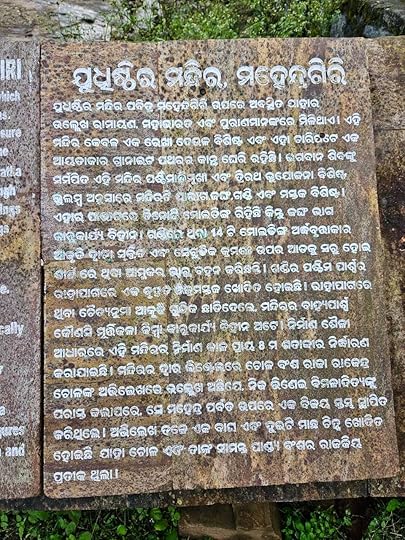
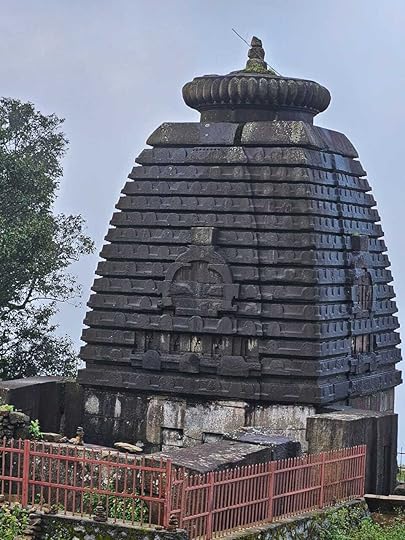
I was wondering as to why would the Cholas build a temple here for something in eastern Chalukya kingdom of Vengi? That would mean their zone of influence extended upto eastern Ganga Kingdom of southern Kalinga (often called just Kalinga) centred at Mukhalinga. Maybe, Mahendragiri served as a border between Kangoda-the middle kingdom of Kalinga and Utkala – the northern half. (Kangoda was most of the time part of the northern half except for a short time probably).
Google search though says that following Vimaladitya’s death, it was Raja Raja l who attacked Vengi over a succession duel between half brothers Narendra Rajraja and Vijayaditya Vll. There are few smaller temples which look evidently much older, but I could not find who built them and to which deities they were dedicated. Or were they built to house any monk?
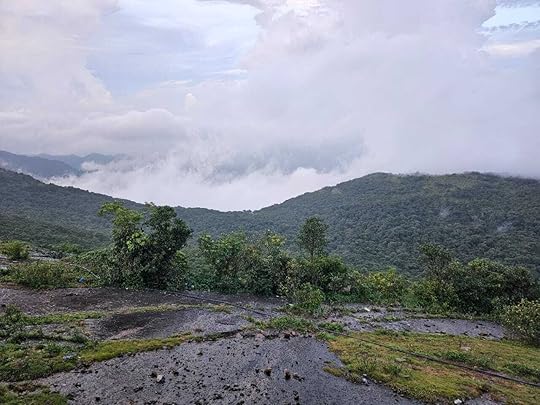
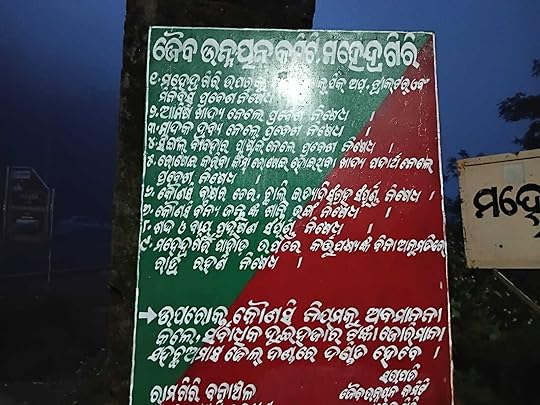
The place probably has many rare important medicinal plants. So, a board says it is strictly prohibited to take any part or whole of any plant from here and there is a watch tower to detect fire and extinguish it as soon possible which further confirms the importance of plants found here. Feeling lucky not only to have visited such an important and beautiful place, but also to have escaped being stranded because of land slide that occurred just next day as a result of unusually long and heavy rain fall this year.
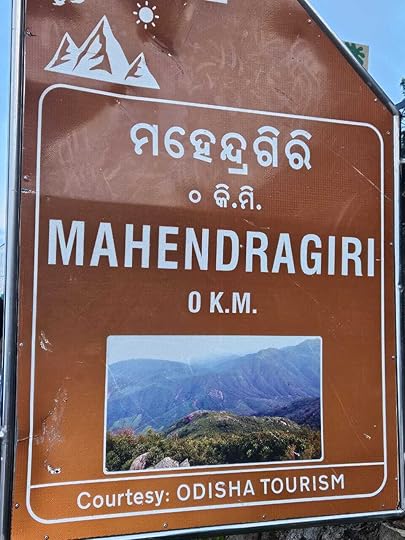
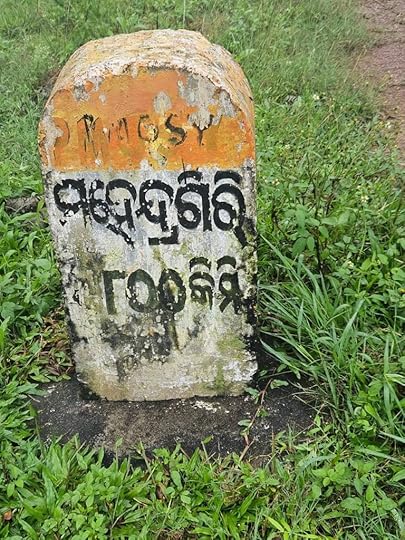 Trivia : Do not go by this Board that says that Mahendra Giri is still 800 kms away
(Contents for this article provided by Dr. Siddhartha Mishra. He is a practising physician currently based in Ranchi. He is an avid traveller with special interest in exploring historical and culturally important places.)


August 12, 2025
August Contemplations
I: Spirituality and Freedom
August here in India is the rainiest month. In spite of that we have celebrations galore.
Most of our religious festivals follow the lunar calendar. There are two types of lunar months in India. Some states, especially those in South India follow a system where in the month ends on the new moon day. This is usually known as the amanta system of lunar calendar. Others follow a month that ends on the full moon day (Poonrnimanta). In this arrangement usually the bright half of the lunar month, which is known as Shukla Paksha, would be common to both. Coincidentally most of the major religious festivals fall on Shukla Paksha.
But one such exception is the celebration of the birth day of Lord Krishna. He was born on Krishna Paksha Ashtami – the eighth day of dark fortnight of the month of Shraavana (Amanta) / Bhadrapada. Even though there would be usually 24 astamis in any lunar year, this particular astami is known as Janmastami. This year Janmastami falls on 15th August, and as we know this is also our Independence Day
Sometimes certain crazy thoughts come to my mind.
Before 15th of August 1947, is it we who were dependent on the British or is it the British who were dependent on us?
Whatever it may be, since we are celebrating our freedom movement this month, maybe, it is time to ruminate on the true meaning of freedom.
And this month of Shraavan is a special month. Starting from this month is the period of four months known as chaturmasya. In ancient times, because of the rainy season, people did not take many outdoor adventures. Imagine the situation a couple of centuries back when rivers did not have bridges, roads were few and those few roads were not pucca like we have these days. Added to that public shelters were few. It was prudent to remain indoors.
But people did not let this period go waste. They flocked to the local gurukuls or Ashrams where there were regular discourses about the ultimate freedom of life. This was a time for them to listen and listen well to the ultimate knowledge.
The month of Shraavana derives its name from the Shravana Nakshatra (Aquilla Constellation). The word Shravan literally means to listen. Even though spiritual practices and seeking of knowledge should be pursued consistently, this is the month that is most ideal for listening to spiritual discourses.
By the way, there are three stages of mastering spiritual knowledge – Shravana (listening), Manana (contemplation), and Nididhyasana (internalisation after being convinced of its veracity and authenticity). In Jain tradition, a disciple in the initial years of discipleship is known as shravaka which literally means a listener.
For those who are interested in spirituality but have been postponing a serious pursuit of spiritual knowledge, this is perhaps the right time to start the journey by being a good shravaka or a listener of spiritual knowledge from a master. This tradition is still followed in many Ashrams in India where in the Master holds regular discourse for the disciples during this period.
As we know, the highest knowledge of our ancient Rishis were about the ultimate freedom of human life. Lord Krishna, who was born in a prison, gave us the ultimate knowledge of our duty and freedom throughout his life, especially through his discourses in the Srimad Bhagavad Geeta.
Volumes can be written about the glory of Lord Ganesha. Volumes can be written about the sacrifices made by our ancestors for obtaining freedom from the British rule. However, one thing worth mentioning is that in most of the years, Ganesh puja (which follows a lunar calendar) and our Independence day (which is as per the Gregorian calendar) usually fall in the month of August. Is it a mere coincidence?
By the way, Ganesha puja does have a role in inspiring patriotic feelings and bringing people together to fight the British. In ancient times Ganesh Chaturthi celebration was a private affair. But it is Gopala Krishna Gokhale who started the tradition of public or sarvajanika Ganesha puja in Maharashtra. This provided an opportunity for people to come together to discuss national issues at a time when the British discouraged public gatherings. Sometimes the British resorted to severe coercive measures to prevent public gatherings.
II: Unique sibling bonding of Sri Jagannatha Dhama
The full moon day of Shraavana, which falls on the ninth of August this year is a special day. Lord Balarama, the elder brother of Lord Krishna, was born on this day.
In Ramabatara, the elder brother Lord Rama takes the centre stage. However, in Dwapara, it is the younger brother Sri Krishna who takes the centre stage. It is said that both Laxmana of Treta-yuga and Balrama of Dwapara Yuga are the incarnations of Sheshanaga, the snake on whom Lord Vishnu takes rest.
Lord Rama and Lord Krishna are studies in contrast, though they are both avatars of Lord Vishnu.
While Lord Rama was the upholder of traditions, Lord Krishna was the rebel ultimate. Of course he broke only those customs that had become obsolete. Lord Rama is regarded as someone whose conduct is worth emulation. He is known as purushottama. At a time when taking multiple wives was the norm, he stuck to one and was loyal to her throughout his life. He was also not reluctant to sacrifice personal and family comfort for the sake of Raja Dharma.
Some say Lord Krishna’s life is not worth emulating while his wisdom is the ultimate knowledge. Many stories around his life are steeped in symbolism and mysticism. Taken literally, it may lead to lots of practical and ethical problems.
However, there is one thing that is worth emulating. In Jagannatha Dhama Puri, He is worshipped along with his brother and sister. Usually, in temples different deities are worshipped along with their consorts. But here in Jagannatha Temples he is worshipped along with his brother and sister. All three of them are seated in the same sanctum sanctorum. In Jagannatha tradition there are rituals when his consort Laxmi objects to this. But still Lord Jagannatha continues to side with his siblings.
In today’s world when family bonds are breaking even in eastern countries, this is a reminder not to break ties with siblings. As people grow up, usually this bond gets weakened.
Here it is worth remembering that as per the principles of Karma, siblings bring certain deep karmic bonds from previous lives. From this point of view also one should not forsake sibling relationships for trivial reasons. The full moon of Shraavana is also celebrated as Rakhi Poornima to highlight the bond between brothers and sisters. But why limit it only to brother-sister relationship? Looking at the history of Balrama, Krishna and Subhadra it should be celebrated as a sibling day. It should be a time to take stock of and strengthen all sibling relationships.
Another lesson that we learn from Lord Balarama is that even though he is the elder brother and his younger brother takes all the limelight, he does not suffer from the jealousy related with sibling rivalry. He continues to help his younger brother and sister whenever needed. He does not mind not being the centre of attraction and has full respect for his multi-talented younger brother, who is said to be a master of all sixty four art forms.
In addition to other celebrations associated with the Full moon of Shraavana, it would be worthwhile to celebrate all sibling relationships, following the example set by the deities of our beloved Jagannatha Dhama.
We may even take up the case to declare this day as International Sibling Day.
III: Of Sanskrit and Freedom
The full moon day of the month of Shraavana, which falls on the ninth of August this year, is also celebrated as the International Sanskrit Day. Coincidentally this is also the month in which we celebrate our independence from the British rule.
There was a time when Sanskrit was the language for interstate communication in India. Had we not been subjected to the rule of external invaders starting with the last millennium, Sanskrit would have perhaps continued its status as a kind of national language. Even though it is debatable whether Sanskrit was the mother of all regional languages, its influence in most of our country’s languages cannot be denied. Most of our recognised language scripts follow the pattern of Devanagari script. About sixty to seventy percent words of majority of Indian languages are either exactly like Sanskrit words or are slight deviations from their original Sanskrit.
The most intellectual discussions and debates in ancient India took place in Sanskrit. These were in contrast to the kind of television debates or other public debates we have these days. The subjects were then about highest goal of human life which of course was about how to find the ultimate freedom from all kinds of bondages.
Sometimes there were unique criteria as to who would be the winner in the debate. These days, debates are about who can be better at shouting out others. If you could shout out and shut up others, you hold the key.
There is the story of this famous debate between Adi Shankaracharya and Mandana Mishra. It was a debate to establish the supremacy of either advaita or dvaita darshana. The Judge was the wife of Mandana Mishra who was there to debate in favour of dvaita darshana. The judgment was to be delivered not only based on the quality of argument but also based on the attitude of the debaters. The debater, who was calmer during the debate, scored more points over his opponent. In this case, the story goes that even though both were equally adept in their arguments and grasp of the subject, the deciding factor was about who remained less agitated. Adi Shankaracharya won the debate. As a result, as was the custom, Mandana Mishra along with his disciples became the disciples of Adi Shankaracharya.
As English dominates to be a common, convenient and utilitarian language both at national and international level, it is unlikely that Sanskrit will regain its lost glory in the near future. However, individuals can enrich themselves a lot intellectually and spiritually by taking an interest in Sanskrit.
Those who are interested to have some introductory knowledge about the specialty of Sanskrit can go through my book – The Beauty of Sanskrit Language and Texts. The book is available online.
August 9, 2025
Of Sanskrit and Freedom
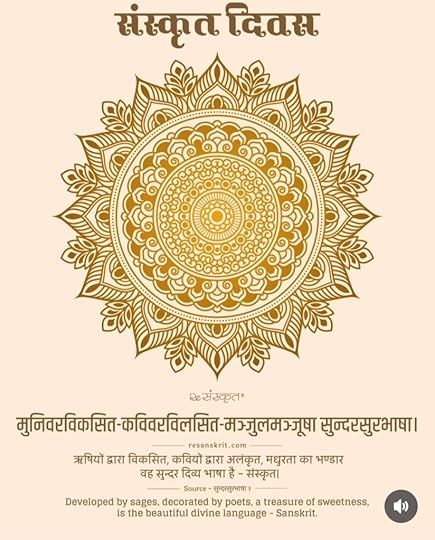
The full moon day of the month of Shraavana, which falls on the ninth of August this year, is also celebrated as the International Sanskrit Day. Coincidentally this is also the month in which we celebrate our independence from the British rule.
There was a time when Sanskrit was the language for interstate communication in India. Had we not been subjected to the rule of external invaders starting with the last millennium, Sanskrit would have perhaps continued its status as a kind of national language. Even though it is debatable whether Sanskrit was the mother of all regional languages, its influence in most of our country’s languages cannot be denied. Most of our recognised language scripts follow the pattern of Devanagari script. About sixty to seventy percent words of majority of Indian languages are either exactly like Sanskrit words or are slight deviations from their original Sanskrit.
The most intellectual discussions and debates in ancient India took place in Sanskrit. These were in contrast to the kind of television debates or other public debates we have these days. The subjects were then about highest goal of human life which of course was about how to find the ultimate freedom from all kinds of bondages.
Sometimes there were unique criteria as to who would be the winner in the debate. These days, debates are about who can be better at shouting out others. If you could shout out and shut up others, you hold the key.
There is the story of this famous debate between Adi Shankaracharya and Mandana Mishra. It was a debate to establish the supremacy of either advaita or dvaita darshana. The Judge was the wife of Mandana Mishra who was there to debate in favour of dvaita darshana. The judgment was to be delivered not only based on the quality of argument but also based on the attitude of the debaters. The debater, who was calmer during the debate, scored more points over his opponent. In this case, the story goes that even though both were equally adept in their arguments and grasp of the subject, the deciding factor was about who remained less agitated. Adi Shankaracharya won the debate. As a result, as was the custom, Mandana Mishra along with his disciples became the disciples of Adi Shankaracharya.
As English dominates to be a common, convenient and utilitarian language both at national and international level, it is unlikely that Sanskrit will regain its lost glory in the near future. However, individuals can enrich themselves a lot intellectually and spiritually by taking an interest in Sanskrit.
Those who are interested to have some introductory knowledge about the specialty of Sanskrit can go through my book – The Beauty of Sanskrit Language and Texts. The book is available online.
August 7, 2025
Sibling Bonding and Jagannatha Dhama
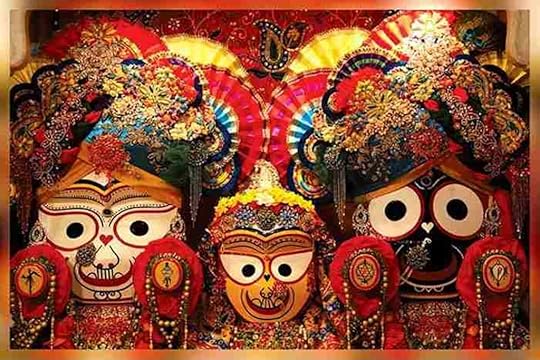
The full moon day of Shraavana, which falls on the ninth of August this year is a special day. Lord Balarama, the elder brother of Lord Krishna, was born on this day.
In Ramabatara, the elder brother Lord Rama takes the centre stage. However, in Dwapara, it is the younger brother Sri Krishna who takes the centre stage. It is said that both Laxmana of Treta-yuga and Balrama of Dwapara Yuga are the incarnations of Sheshanaga, the snake on whom Lord Vishnu takes rest.
Lord Rama and Lord Krishna are studies in contrast, though they are both avatars of Lord Vishnu.
While Lord Rama was the upholder of traditions, Lord Krishna was the rebel ultimate. Of course he broke only those customs that had become obsolete. Lord Rama is regarded as someone whose conduct is worth emulation. He is known as purushottama. At a time when taking multiple wives was the norm, he stuck to one and was loyal to her throughout his life. He was also not reluctant to sacrifice personal and family comfort for the sake of Raja Dharma.
Some say Lord Krishna’s life is not worth emulating while his wisdom is the ultimate knowledge. Many stories around his life are steeped in symbolism and mysticism. Taken literally, it may lead to lots of practical and ethical problems.
However, there is one thing that is worth emulating. In Jagannatha Dhama Puri, He is worshipped along with his brother and sister. Usually, in temples different deities are worshipped along with their consorts. But here in Jagannatha Temples he is worshipped along with his brother and sister. All three of them are seated in the same sanctum sanctorum. In Jagannatha tradition there are rituals when his consort Laxmi objects to this. But still Lord Jagannatha continues to side with his siblings.
In today’s world when family bonds are breaking even in eastern countries, this is a reminder not to break ties with siblings. As people grow up, usually this bond gets weakened.
Here it is worth remembering that as per the principles of Karma, siblings bring certain deep karmic bonds from previous lives. From this point of view also one should not forsake sibling relationships for trivial reasons. The full moon of Shraavana is also celebrated as Rakhi Poornima to highlight the bond between brothers and sisters. But why limit it only to brother-sister relationship? Looking at the history of Balrama, Krishna and Subhadra it should be celebrated as a sibling day. It should be a time to take stock of and strengthen all sibling relationships.
Another lesson that we learn from Lord Balarama is that even though he is the elder brother and his younger brother takes all the limelight, he does not suffer from the jealousy related with sibling rivalry. He continues to help his younger brother and sister whenever needed. He does not mind not being the centre of attraction and has full respect for his multi-talented younger brother, who is said to be a master of all sixty four art forms.
In addition to other celebrations associated with the Full moon of Shraavana, it would be worthwhile to celebrate all sibling relationships, following the example set by the deities of our beloved Jagannatha Dhama. We may even take up the case to declare this day as International Sibling Day,
July 9, 2025
Sitting Near The Guru
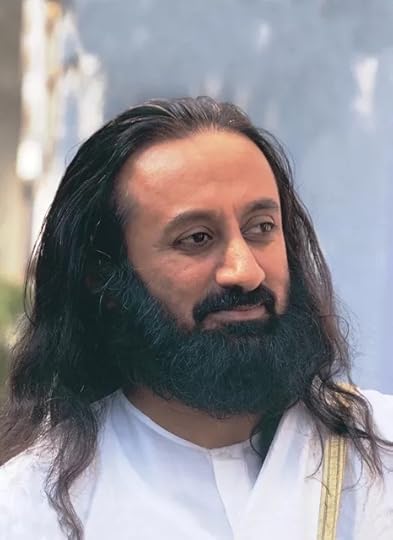
In our Indian tradition, great importance has been attached to being in the presence of the Guru as much as possible and getting knowledge directly from him. While this is applicable to all forms of knowledge, this has crucial significance in the case of spiritual knowledge.
The crux of vedic wisdom are compiled in books whose titles do not contain the word wisdom or knowledge. Interestingly, such books of distilled spiritual knowledge and and deep inquiry into the nature of the ultimate reality are titled as UPANISHAD – which means sitting near, which of course is a short form for sitting near the Guru.
Coming to present times, online learning is the order of the day. Even spiritual classes are offered online. It has its use no doubt. We all remember how useful it was during Corona period. However, such mode of learning is useful in specific circumstances only. It can never fully replace the transfer of knowledge that happens in the physical presence of the master. In the physical vicinity of the master something happens Even though sometimes it is unavoidable to attend online classes, the physical presence of the master can never be fully replaced, especially, as far as spiritual growth is concerned,
In India there are certain practices whereby people throng to the temples and burial places of masters who are long gone. No doubt people have felt positive effects in such places. But luckiest are those who are able to soak in the presence of a Guru who is alive. Such moments are priceless.
Of course most of the knowledge are available in the written form. One can study the books. But, there is a reason why in our tradition the crux of any form of knowledge is transmitted in Guru parampara. The written word has all the potential to be misinterpreted. Same goes even for the spoken word. But with a Guru certain transmissions happen without words. Hence we need a living Guru. Hence, there have been lineage of Gurus of different traditions. When you go to a Guru you get the knowledge and the vibe of all the masters of that lineage.
No doubt knowledge is timeless. But the understanding and interpretations may change from time to time. The Guru makes the timeless knowledge contemporary. The Guru puts the ancient knowledge in the present context. Hence, our scriptures put so much importance on a Guru. Guru bina gnana na hoya – Real knowledge does not dawn without the help of a Guru.
Sant Kabir has gone to great lengths to describe the importance of the Guru.
गुरु सो ज्ञान जु लीजिये, सीस दीजये दान।बहुतक भोंदू बहि गये, सखि जीव अभिमान॥ Guru so jnana ju lijiye, sheesh dijiyea daan,Bahutak bhondu bahi gaye, sakhi jeeva abhimana
(Obtain knowledge from Guru even if you have to pledge your head. So many have floated through life feeling proud of wealth and other material possessions, but their ship never reached the shore of the Guru.)
Gurupurnima, which falls on Ashadha Purnima (the full moon day) gives us an opportunity to feel grateful to our Gurus and rededicate ourselves to be a part of his missions. Of course this need not be a once in a year opportunity. For someone in spiritual path every day is a day of opportunity to feel the presence of the Guru and be grateful.
March 16, 2025
The Meaning and Purpose of Life
Life has no inherent meaning or purpose. It is you who brings meaning and purpose to life – so would say the western philosopher. But is it?
The wonder and dilemma associated with meaning and purpose of life has been as old as civilization itself. Our ancient Rishis too have meditated upon it. They have come up with four dimensions of life that every human being aspires for. These are called four purusharthas . Aspiring for each of these makes a balanced and fulfilled life. But depending upon the leanings of an individual, one or more elements may dominates in one’s life.
These purusharthas are – Dharma, Artha, Kama, Moksha. Let us examine each of these and how they are different from one another yet are interdependent.
Over the years, dharma has been literally translated to mean religion or doing religious duties. It has also been commonly understood that doing one’s dharmic or religious duties will automatically lead to Moksha (emancipation, Nirvana) which is the ultimate goal of human life according to all the eastern philosophies.
In a broader sense, Dharma is actually doing the duties that promote individual as well as collective good. It is also about refraining from those activities that harm individual as well as collective interests. For this, many tenets and conventions have been formulated by the ancients that have come down through generations. Conventions, tenets and laws also develop and change over time to keep pace with the spirit of the time. Dharma is closely associated with good karma. It leads to accumulation of good Karma.
As we see, out of the four purusharthas, Dharma and Moksha are related with spiritual dimension of life, while the other two – artha and kama are related with the mundane aspect of life. Sometimes, the activities related with Dharma and Moksha get mixed up, and sometimes one gets the impression that doing more Dharmic activities may get one moksha.
However, doing Dharmic activities as opposed to doing more non-dharmic activities, brings good karma which may make one’s future life easier. But, it does not mean that Dharmic activities will lead to Moksha. For Moksha, one needs to do Moksha related activities. Moksha is more abut journey in one’s inner world of various levels.
In puranas, we have examples of individuals engaging in extreme charitable activities so that they could replace Indra- the king of Gods. Indra is the one to whom all kinds of pleasures are available with ease. Engaging in extreme dharmic activities may or may not make one’s life conducive to Moksha. There is always a danger of getting attached to the fruits of one’s good action, which is not at all conducive to Moksha, as Moksha is all about non-attachment.
Artha has become synonymous of money. However, all kinds of material resources constitute Artha. Without the required material resources, one may neither engage oneself in religious activities nor may one lead a comfortable normal life. Traditionally in India, it was ensured that everyone in society learned certain skills that would not only help the individual in earning his livelihood, but also make creative and positive contribution to the society. It was also ensured that individuals learned varied skill sets that would complement other’s skills. This led to specialization of skills and also more interdependence in society and maintenance of communal harmony. Even though a seeker of Moksha abandons most of his acquired material resources, but not all. Even a serious seeker of Moksha, needs basic material resources to sustain his living.
So the very first purushartha is Dharma. At its most rudimentary level it could be following a set of commandments. Then there are social norms. There are various laws, rules and regulations. A foundation in dharma gives stability to other areas of life. When more and more people in any society or country become unrighteous, it threatens the stability and the progress of the society. The need for restoration of the dharma and the reason for the supreme godhead to come down to earth (avatar), has been explained by Lord Krishna in the Bhagavad Geeta through the most quoted shloka – yada yada hi dharmasya glani bhavati bharata ……
Thus pursuit of dharma is not only good for the individual, it is also good for the society as a whole. Where majority of the citizens do not follow the path of dharma, such societies disintegrate and perish. Our individual well being is connected with the collective well being. Hence, the rishis and the deep thinkers of every age have taken care to show us the path of dharma.
Of course it does not mean one should follow every rule regulation set by the society blindly. When the laws are not aligned with natural dharma and are not conducive to collective good there is need to stand up. Our leaders during the freedom movement defied the rules made by the British. The Mahabharata war is known as Dharma yudha. It was against rulers who had shun the path of Dharma.
At the other extreme, becoming a rebel should not be fashionable. There is no point becoming a rebel without a cause. In India we are witness to rebellions which are fueled by forces inimical to the interest of our country.
It is all the more important for the mass leaders to follow the path of dharma. They have more responsibility than the common men. Once again to quote a shloka from the Bhagavad Geeta –
यद्यदाचरति श्रेष्ठस्तत्तदेवेतरो जनः। स यत्प्रमाणं कुरुते लोकस्तदनुवर्तते।।3.21।।
Whatsoever a great man does, that the other men also do; whatever standards he sets up, those the common man follows.
Leaders, celebrities and the so called influencers not following the path of dharma has far reaching effects. Perhaps that was the reason, the entire clan of the kurus had to be destroyed.
The second Purushartha is Artha. Artha is closely interlinked with other Purusharthas. Artha i.e resources both tangible and intangible should be earned through fair or dharmic means. After earning, it should be spent on fulfilment of wishes that is not inimical to the common good of the society and the country. Scriptures advise that the major portion of the Artha should be spent for the sake of the welfare of others so that one obtains merit to be eligible for moksha which is the ultimate goal of human life.
Even kama should not cross dharmic boundaries. Every society has certain kamya kama and akmya kama – i.e. desirable desires and undesirable desires. As a human being, unless one has obtained the state of Buddhahood, it is not practicable not to have any desire. That is why the ancient Rishis, in stead of denying the existence of desires or the fulfilment of desires, recognized kama as one of the purusharthas.
According to the wise Rishis the forceful suppression of all desires become counter productive. Hence legitimate desires need to be fulfilled. In stead of suppressing the desires forcefully, the yoga sutras have suggested means as to how to wean away the mind slowly from all forms of desires.
Kama puts our life in a perpetual dilemma. It is the ultimate paradox. Even the desire for moksha is also a desire. But if there is no desire for Moksha one would not embark on a journey in the path of spirituality. However, a stage comes when one has to drop even the desire for moksha. But there lies the greatest paradox of life. Even though kama is inimical to moksha, by recognizing kama as a purushartha to be pursued, the ancient rishis have emphasized that the desires should not be suppressed forcefully, but rather need to be tamed skillfully by following the art of yoga, bhakti, combined with and spiritual knowledge and the grace of a sadguru.
Our ancient scriptures including itihasas like Ramayana and Mahabharat are full of practical examples regarding the correct principles of Dharma, Artha, Kama and Moksha. Such scriptures are timeless. When it comes to the basic principles of the four purusharthas, what was applicable thousands of years back, are equally applicable in the modern context. Hence, such scriptures continue to guide us in pursuit of the purusharthas, and will continue to do so in the times to come.
November 18, 2024
Let us save the native plants
 Oplus_131104
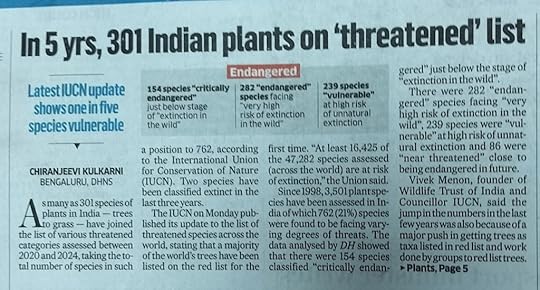
This news report should come as no surprise. Till now the extinction of animals and birds have been the subject of much public discourse. It is not that plants have not been getting extinct. What could be alarming is that there could be plants that have become extinct without coming to our notice for being in existence.
Coming to native plants, here are a list of plants which find mention in Kalidasa’s Ritusamhara. This is not an exhaustive list of native plants. The plants that come into limelight depending upon the seasons are mentioned here. But this can be taken as a starting point. Maybe, the reader can check how many plants he or she can identify as having come across somewhere.
Summer: Bhadramusta // Palasha // Sindhura // Bamboo // Salmali // Patala //
Rainy season : Padma // Kandali // Utpala // Bimba // Kadamba // Sarja // Arjun or Kakubha // Ketaki // Bakula // Aguru // Malati // Yuthika //
Autumn: Kasa // Saptaparna // Bandhuka // Kovidara // Kutaja // Sephalika // Nipa or Kadamba // Nilotpala (Blue water lily) // Padma or Kamala or Pankaja (Lotus) // Kumuda (white water lily) // Priyangsu // Asoka //
Hemanta or Dewy season : Lodhra // Kunda // Kaliyaka //
Spring: Amra // Kusumbha // Karnikara //Atimukta // Kurubaka //Saileya // Asoka // Jasmine
My maternal grandparents had a huge garden surrounding two sides of their house. It was a small village and theirs was the corner house. The garden contained a sample of most of the fruit / flower plants native to Odisha. The garden had ten to fifteen varieties of native mango plants, lots of banana, lemon, palm(tala) and coconut trees. In addition it had at least one plant of these (as far as I remember):
Shikakai
Amla (Amalki)
Harida (Haritaki)
Bahada (Bibhitaki)
Narakoli (Nurphal)
Karamanga (Kamrakh, Star Fruit)
Ramphal
Sitaphal
Dalimba (Anar)
Bela, Kapitha (wood apple), Tarata, Mandara(Hibiscus), Madhu malati, Ganga- shiuli(Har singar), Bakula, Kaniara
I might have missed some. To keep it simple I have given mostly their desi names. Hope many would be able to identify them. For those who want more hints, of course Google does help.
Last year I visited their village. I did not have time to scan the entire garden. But I could spot only a few of those plants.
For various reasons, our road sides and barren lands were planted with many imported trees. Or with plants that needed less water. Modern landscapes around posh houses are mostly about grass and imported plants. We as human beings do have fascination for exotic things. There was a time when even in the name of forestation, plants like Eucalyptus etc. were preferred over native trees. These could be some of the reasons why we see less of native plants in private gardens and public spaces in India.
In vedic astrology the apparent movement of sun has been divided into twelve zodiacs and twenty seven Nakshatras. Each zodiac and Nakshatra has been mapped with a particular plant. This comes from the tradition of Indian Rishis.
Our ancients also prescribed particular food for particular festivals. Even particular flowers have been associated with particular festivals and deities. Many may not agree with their esoteric significance. But, can we deny that such traditions made us care for our native plants?
I am sure such things must be happening in other countries also. There are reports that massive deforestation is happening in African countries to meet the demands of developed countries. Countries in South America are also facing the same issue.
Whatever has happened has happened. At least now on let us take the warning bell seriously and start concerted efforts to preserve the native plants. All of us can do something in this regard. Whenever we get the opportunity to plant something, let us give priority to native plants. And if you are a social media influencer, you can spare some time at least to create awareness about this. Who knows, our small individual efforts may turn into huge collective impact in due course of time.
November 2, 2024
Now out in Paperback
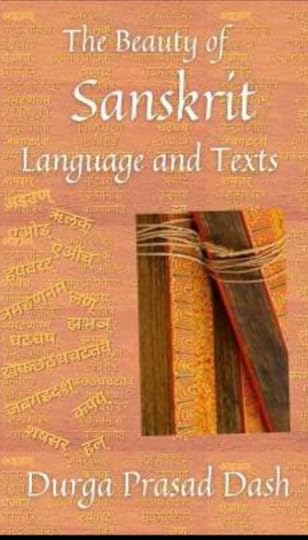
The Beauty of Sanskrit Language and Texts is now available on paperback on select countries. Of course it is available on Amazon Kindle for all the regions. It is one of those books which is very close to my heart. Would be very happy if you could buy the book and leave a review on Amazon.
Here are the links for download
India, UK, US, DE, FR, CA, Brazil, AU
The Beauty of Sanskrit Language and Texts – the book
October 30, 2024
Bus Journey 1984 vs Metro Travel 2024 (Pt-2)
(The reasons and explanations for certain words being marked with * are given at the end)
We could hear the roof top passengers banging the roof signaling the driver to stop. The cleaner signaled* and shouted at the driver to stop. Then he shouted at the rooftop passengers when the bus stopped, “Hey you fellows, would you break the roof top or what?”
Coincidentally there was a road side tea shop nearby. It was a hut with thatched roof and mud walls. In addition to tea, the shop sold biscuits and other locally made snacks. All got down and crammed into the tiny hut. The rain increased in intensity.
Inside the bus, we noticed the roof leaking. It was crowded so much that there was no space to open the umbrella. Still one person opened his umbrella. The rain water fell on the umbrella and trickled down to the heads of a few passengers. It was not a pleasant experience for them. They shouted and scolded the umbrella man. One of them, being too impatient to wait for any response from the umbrella man, snatched it, folded it and handed it back to him. The umbrella man accepted it with all gracefulness. May be for not being beaten. Even passengers from inside the bus got down and headed to the shelter which was already overcrowded.
There seemed no respite from the rain. After some time, the cleaner came out and made an announcement that the bus had to move. He said, “Those who can, adjust yourself inside. Those who can, climb up and bear with the rain. But no umbrella will be allowed on roof top. It is windy. If any of you is blown away with the umbrella and dies, I will have to end up in jail. So I will not allow that.”
A group of six to seven young man volunteered to brace the rooftop. The cleaner assured them that their luggage would be in safe custody inside. Once again he warned them against use of umbrella. Others squeezed themselves inside. Earlier we had felt that there was no more space even to allow a ghost inside. But, miraculously, there indeed was space to accommodate all of those who got inside.
These days metro travel also reminds me of similar instances. During peek hours, sometimes when the coach is overflowing with its capacity, everyone would think that it would not be possible even to accommodate a single passenger however weightless he may be. But, if there is ten seconds delay in closing of the door, a group of five to six people would push themselves into the coach. Miraculously they would fit inside and after the door closes everyone would behave as if nothing unusual has happened.
The Bengalurean catch phrase ‘Swalpa Adjust Madi’ (Adjust a bit, please) is a pan Indian phenomena. Not only are we ever ready to adjust to any crowded situation, but also it is our birth right that others do so.
Coming back to our bus journey, the group of young men who volunteered to brace the rooftop and enjoy the rain ride included a special young man. He was so thin, a ghost would outweigh him. He was like a human skeleton walking and talking.
The cleaner said to him, “Hey you Bhootnath, (master of ghosts), why are you venturing into the rooftop. Come on inside. We have enough space for a ghost like you”.
His friends joined the fun. “His name is not Bhootnath,” they said “call him nar kankal“. (Human skeleton)
Obviously, Bhoothnath was not pleased with all such attention being showered on him. He was not a narcissist. His face displayed annoyance. Actually his face displayed annoyance since time memorial. But we though it has become so now because of our unsavory remarks. At least the cleaner thought so. He said, “Alright boy, don’t feel bad because we cracked a few jokes. You are a brave man. But remember to take care of yourself while on top”.
Bhootnath was climbing the backstairs of the bus when one mischivous passnger shouted, “Bhootnath jindabad”. Others joined in unison – jindabad. jindabad. Undeterred, unperturbed and determined to accomplish his mission Bhootnath climbed and took his rightful position among his friends on the rooftop.
“Gadi right”, the cleaner shouted and ringed the bell* twice. We continued our journey. The rain continued.
It was about 6:30 PM. But it felt like mid night. We had travelled sixty kms in those six and half hours. It was not bad even in terms of today’s Bengaluru standards. Here in Bengaluru too sometimes it would take that much time to travel 60 kms.
Only 20 kms to go to reach my home town. But I was not sure I would be just in time for the dinner after a hard day’s journey.
My apprehensions came true. We heard the roof top guys banging the roof top and shouting – stop, stop. It felt like emergency. The driver applied sudden brakes.
The cleaner got down. A few passengers too got down out of curiosity.
Bhootnath is missing.
The news spread like wild fire. Passengers inside kept on murmuring. No one had any clue as to what exactly had happened. Some were vocal in their opinion that he must have fallen down and died. However facts merged slowly out of the chaos and murmurs.
There was a tarpaulin sheet on the rooftop. Such sheets are normally used to cover luggage on rooftops. This sheet was neatly folded and tied with the rooftop railings. Bhoothnath and his friends got an idea to save themselves from the rain. They were opening the sheet. There came a point when Bhoothnath was the only one holding it. Before anybody realized this, the sheet had become an escape parachute carrying Bhoothnath into the air. His friends did not know what happened next. He just vanished out of sight.
By voice vote it was unanimously decided that the bus must make a detour in search of Bhootnath.
“Where exactly did you lose your friend” – the driver asked the Bhoothnath gang. “Near the bridge” – one of them answered.
The bridge was not far off. There was a possibility that he might have fallen into the river. In that case there were chances though injured, he must have survived. That was our speculation. We approached the bridge. The bus stopped and half of the passengers got down in search of Bhootnath. The driver was asked to slightly turn the bus in such a way that its headlights would the downstream of the river. Some were looking down the river standing on the bridge. Some were getting down from the side of the river to follow the course of the river.
Someone shouted, “Hey, look”.
There we found Bhoothnath. hanging from the branch of a roadside peepul tree, alive and kicking.
Bhootnath was captured alive and made to sit inside. He was unhurt. Someone said his weightlessness had saved him. This did not go down well with the conductor who was occupying the whole seat meant for two. He was adamant that his own prayer to his favourite mother goddess had saved him, even though chronologically speaking, he had prayed after Bhoothnath was struck in the tree.
Rain had stopped. But the bad road had become worse. Everyone requested the driver not to rush.
Finally, I was home past midnight. Too late for dinner but too early for breakfast.
*************************
P.S: There are certain unique features and titbits connected with the buses of those days. I did not mention this in the story as it would have interfered with the flow of the story. So I am putting them here
> The buses we travelled in those days usually did not have any scheduled stops. If there were any they never followed it. I expected it to be a universal phenomenon. So we had taken it for granted that public buses are supposed to stop if you signaled them to stop, no matter where you were. When I visited a big city outside Odisha, it was a cultural shock to see that buses stopped only at scheduled stops.
>> While the private bus cleaners / conductors used a whistle to signal the driver, the corporation buses had a bell near the driver’s seat. The bell was controlled by a rope that extended upto the gate. To give the signal to start, the cleaner near the gate pulled it twice in quick succession, to sound -ting ting. To stop he has to pull only once. A similar convention is followed in case whistle is used. The helper has to blow twice in quick succession – whirr , whirr – to start and once to stop. A whistle-less and bell-less cleaner bangs the the door, twice to stop and so on. I don’t know if this is a kind of international convention.
>>> A passenger bus (or for that matter a train) is named so, not only because it ferries passengers as opposed to goods, but also because it is not an express bus. Isn’t it strange?
>>>> Popular singer Akshaya Mohanty has immortalized the driver, conductor and cleaner of such a bus as I have described in one of his songs. It was very popular in our childhood days. Those who understand Odia will be able to relate with this.
October 23, 2024
Bus Journey 1984 vs Metro Travel 2024
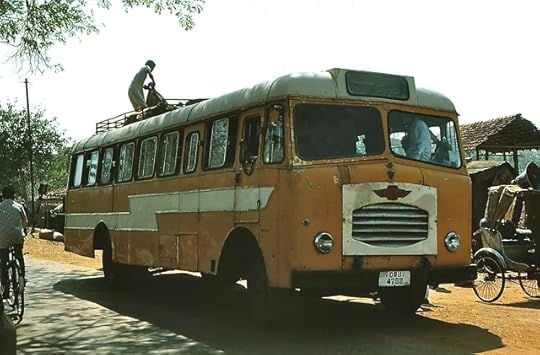
Photo credit: reddit user KKthebookworm
Sometimes when I travel by the Metro in Bengaluru, a few memories of bus travel during my college days come as vivid flashbacks – particularly the way people rush to reserve the seat and enter into the coach. There is an art to it and I am as unskilled in this art now, as I was then. I was never able to get a seat back then. And now also when it is a case of too many people chasing too few seats, I usually lose out.
My hometown to my college town is about 80 kms. Those days, I mean in the 80s, buses were few and far between. If there was a strike by the private bus operators (these strikes were frequent and came without much prior notice), the only option was to squeeze yourself somehow into one of those government buses. Of course rooftop travel was the rule rather than the exception.
Then there were certain conventions, like reserving a seat by throwing a handkerchief, or a bag or any personal possession through a window when the bus arrived. Some even pushed their children through the windows. The situation was chaotic. There was no queue system or any advance booking system. At least in the case of the metro, people do form a queue and wait patiently for the the train. But the queue lasts till the arrival of the train and once the train arrives nobody bothers about the queue or entering the coach in a disciplined manner. The situation is as chaotic as our bus stands during my college days.
For we the Indians, some habits die hard.
I remember one particular journey. It was a strike day. When I went to the bus stand with the hope of catching the state corporation bus, rumour was that even these buses were off the roads. Some believed the rumour and left the bus stand. I lingered around for some time not knowing what to do because it was the last day before our hostel closed for the Dussehra holidays.
It was a pleasant surprise to spot a state corporation bus with the a name board of my hometown entering the bus stand. This time it was a case where there were not enough passengers to occupy all the seats. I thanked my luck for getting a seat. It was 11 AM. But the bus would not leave until it was 12. By this time the bus was crowded as people had come to know that the rumour was not true.
The bus stopped every four to five kilometers to load and offload passengers. The route to our home town was dotted with densely populated small towns and villages. If a passenger or a potential passenger asked or signaled it to stop, it had to stop. So the eighty kilometers distance to our home town usually took four to five hours by bus. After sometime, you when the bus became too crowded with people and luggage, you felt you have also become a piece of luggage.
Quarter way through, there were people on rooftops. This old bus was already in a dilapidated condition and we prayed that if at all the roof collapsed let it not happen before we reached our destination. Another problem was that the rooftops provide protection only from sun, not from rain. So most of us had an umbrella for such eventuality. Sitting inside the bus, even though it was overcrowded somehow we managed to open our umbrellas. However the real problem was when it was not raining. If any rooftop passenger felt too lazy to climb down and urinate on the road side, we would not even be forewarned to use our umbrellas.
Those days every bus had three staff members. The driver, the conductor and the cleaner. I think the cleaner has already become an extinct species in many parts of India.
As the word suggest the cleaner was supposed to clean the bus. So those not familiar with his entire job description may think that why the hell should he be part of the journey and why each bus should have a separate cleaner. Because a cleaner could simply be stationed in the bus depot and clean multiple buses in a day. But as per his job description he should open and close the door, decide when the bus should stop and start and signal the driver accordingly. The cleaner was also an expert in guiding the driver when it needed to go reverse or when some difficult maneuvers were required along a dangerous patch of the road. Thus, being a crew member, he exercised concurrent jurisdiction along with the driver over the fate of the passengers.
To confess, I have never seen such a cleaner ever cleaning any vehicle. He was also the back up driver even though he did not have a license to drive. While the duty of the driver was of course to drive the vehicle, the duty of the conductor was to collect the fare and doze off and snore for the remaining part of the journey.
Half way through our journey there was a fight between the cleaner and the conductor. The cleaner gave the ultimatum that he would no more continue with the journey. While the driver along with a few passengers begged the cleaner to withdraw the ultimatum, the conductor opposed it. He told the driver to continue the journey without the cleaner and said that he himself would don the mantle of the cleaner even though it was not befitting his status.
At that time the sky was also threatening to rain at any time. So we were all in a hurry and begged the crew to temporarily pause fighting and continue the journey. Another problem was that – we the passengers did not know what they were fighting about. The rumor was that there were some disputes about sharing of the booty. But there was no way you to confirm it.
After much persuasion the cleaner agreed to resume his duty. Some people knew that the conductor was a drunkard and did not mind having a peg or two even while on duty. There was a country liquor shop nearby. Someone took the conductor and the cleaner both to the shop. After emerging they were seen to be in jovial and friendly mood. The mediator who had brought about this reconciliation confirmed that the fight was about sharing of the booty.
So after the cleaner and the conductor had been appropriately propitiated, the bus resumed its journey. The cleaner shouted and signaled in a jovial mood. The conductor went to his seat and snored happily.
But it seems we had forgotten to propitiate the rain god. After sometime it rained. It was also windy.
(to be continued)