Damien Larkin's Blog
June 29, 2025
Motherland Climax by Vlad Puting - Chapter 1
FOREWORD
Vladimir Vladimirovich Puting, without question, ranks as one of the greatest speculative fiction authors of our generation. From the bustling bookshops in London to the global Thames online store, one can’t scroll or stroll for too long without coming across a work by Vlad Puting (best known to his legions of fans as the ‘P-Man’ or ‘VVP’). Given the remarkable events of his life, his status as international bestseller was never assured, but well deserved.
How did a former Rus Imperial soldier escape from what was once known as the Rus Empire and make his mark? First here in the United Kingdom of Great Britain, Iceland, and Ireland, and then the wider world. By what means can one man turn the speculative fiction scene upside down and build hordes of fans from not only the Rus émigré communities, but Old Blighty’s very own proletarian class? To attempt to understand Vlad’s fame and prowess, we must look to his past (See Afterword – Ed).
Vlad was born in 1952 in the occupied city of St. Petersburg. Germanic colonists from the Holy Roman Empire clashed with the ethnic Rus, Poles, and Ukrainians who inhabited these ancestral lands. Pogroms broke out frequently. After one such event, Vlad and his family relocated to Moscow. There, they sought the succour and protection of the ailing Tzar Peter III. Like so many others, they found nothing but misery.
At the age of eighteen, Vlad was conscripted into the Rus Imperial Army to fight in its never-ending succession of wars. In his diary, Vlad wrote of hoping for an assignment in the east (with naïve optimism, he writes) to fight against the forces of the Empire of Nippon, ravaging their way through China and Mongolia. Instead, due to his fluency in German, young Vlad was sent west and participated in the various border clashes between the Holy Roman Empire, the Red Rus dissidents, and Polish partisans. Twice, Vlad received wounds in combat. For his bravery and competence, he was dispatched to officer school.
Upon receiving his commission, Vlad served for another brief period in the former Polish territories before transferring to the secret police. It was here, he wrote later, he came into his own, and the seeds of mistrust at the faltering regime rooted. Witnessing firsthand the level of repression the state levelled against its people in a bid to prop up the dying Romanov dynasty, he began to question his previously undying loyalty to the state.
Vlad worked his way up the ranks, eventually reaching Lieutenant-Colonel and, in this capacity, fought in the Battle of Moscow. For two long weeks, the last remnants of the Rus Imperial forces battled the Nipponese invaders from seizing their capital. Through sheer force of will, they won a narrow victory. Decorated for his personal bravery, Vlad was transferred to the security force of the Mad Tzar himself. Here, marked the spectacular downfall of such a capable military officer.
Critics of Vladimir Vladimirovich Puting point to the rumours of his inappropriate relationship with the then eighteen-year-old Tzarina Antoinette Romanov. His supporters argue thousands of men and officers suffered exile in the purge following the Battle of Moscow, in yet more evidence of Tzar Peter’s withering mental health. Vlad himself refuses to talk of those dark days. Regardless of the reason, in 2001, Vlad relocated first to the French Republic and then to his new adopted home in the United Kingdom of Great Britain, Iceland, and Ireland.
Such a remarkable journey could have ended, and how worse off would the world have been without the ‘P-Man’s’ stories? To support his family, Vlad worked a variety of jobs, although he attained true solace in his writing. Using the little spare time he had, he poured his energies into what grew into his Rus folklore inspired Baba Yaga Rising series of young adult fantasy novels.
Try as he may, Vlad was unable to land a traditional publishing deal. He languished in anonymity for years until the advent of self-publishing arrived. Finally, Vlad had an outlet for the universe inside him bursting to escape. In 2012, he self-published his first Baba Yaga Rising novel, followed in quick succession by three more books in the series, alongside two novellas.
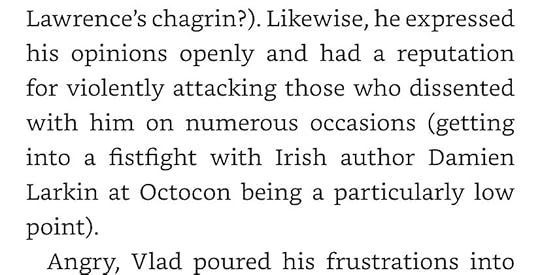
Despite the level of fanaticism of a hardcore group of fans, Vlad didn’t achieve any breakthrough moment beyond the (then) insulated world of fantasy fandom. His attendance at cons drew attention, more so for his outlandish and sometimes bizarre stunts (who doesn’t recall him riding bare-chested on a horse at BristolCon, much to Mark Lawrence’s chagrin?). Likewise, he expressed his opinions openly and had a reputation for violently attacking those who dissented with him on numerous occasions (getting into a fistfight with Irish author Damien Larkin at Octocon being a particularly low point).
Angry, Vlad poured his frustrations into something new. He landed an agent and signed a deal with a small press that prodded Vlad to step outside the box with his writing style. It took something quite different to put Vladimir Vladimirovich Puting on everyone’s radar and, it’s safe to say, the literary world has never been quite the same.
The launch of Motherland Climax: The Viktor Petrov Chronicles placed Vlad Puting in the spotlight overnight. Part alternative history, spy thriller, science fiction novel, and political discourse, Motherland Climax lit a fire in the collective imagination that critics still debate. The vision of an orderly, unified, and even militarily significant Rus state stands in stark contrast to the variety of ethno-states that replaced the old Rus Empire. Almost overnight, tens of thousands clamoured for a copy, even beyond the Rus emigres living here, in the Holy Roman Empire, the French Republic, the Iberian Union, and the Confederate States of America. The global working classes flocked to the idea of a neo-Bolshevik revolutionary republic capable of overturning the monarchies (if one can be forgiven for indulging in fruitless fantasies).
The main character of the series, Viktor Petrov, has been the subject of intense discourse. Cruel, chauvinistic, and ruthless on one hand. Loyal to millions of people and the dream of a strong and united Rus state on the other. Someone intent on fostering a stable world with the neo-Bolshevik Republic of the Rus as the guarantor of planetary peace. Many draw comparisons to the ‘Jans Bunt’ character so wildly popular in the Holy Roman Empire in the forties. It’s true, both are secret agents, devoted to their respective states, and quite willing to do what it takes to safeguard their country’s interests. But here, the comparison ends.
Where Jans Bunt remains the forever stoic agent in service to the emperor, Viktor Petrov sees it as his unflinching duty to seize power for himself and draw a fragmented Rus Empire back together. He alone has been chosen by history, God, Destiny, and Providence alike to guide his newly crafted neo-Bolshevik Republic of the Rus onto the world stage. In Viktor Petrov’s thoughts and actions lie the keys to building a new world.
Another comparison, and certainly a source of inspiration, can be noted in the writings of Corsican author Napolean Bonaparte. Puting’s an avid fan of The Ottoman Dream, telling the story of a young French general invading Egypt at the turn of the nineteenth century and establishing an empire. While Bonaparte writes of epic battles with dragons and magic, Puting utilises the latest technology, momentous war machines of the Phoenix Project, and threats of nuclear annihilation.
In Vlad’s vision, Rus rises from the ashes of the old world and transforms itself into something remarkable. People from every stratum of society band together under the leadership of one godlike man. Together, they build the neo-Bolshevik Republic of the Rus into a technological powerhouse unlike anything seen before. One where Rus is economically, politically, and militarily feared and respected as the single greatest power in the new human epoch.
To say such things aloud does sound fanciful in this day and age. Especially as we need only stick on the news to see pictures of the latest genocide, famine, or atrocity in the lands of the once-proud Rus Empire. But it’s a testament to the power of speculative fiction that it can lift us from what we know and transport us to another place and time.
Countless people around the world rejoice at his best-selling series and imagine a world quite different from our own, an indication of the power of Vladimir Vladimirovich Puting’s heightened imagination. I’m honoured to write this introduction on the fifth anniversary of Motherland Climax for my good friend Vlad. Like many others, I look forward to seeing what he comes up with next.
If you’re reading this for the first time, I envy you. Dive headfirst into the Motherland and thank Vlad later!
– Hamish Skellington, best-selling author of the Confederacy Burning series.
(London, February 2022)
Praise for Vlad Puting’s works:
“The rad mad-lad Vlad’s not just a fad!”
– Tripp Ainsworth, author of Smokepit Fairytales
“Vlad Puting’s writing is so powerful that if he wasn’t a writer, he’d probably take over the world.”
– Chelsea Burke, author of Second City
“Sauve, sophisticated, daring; a homoerotic masterpiece.”
– Lee C Conley, author of A Ritual of Bone
“Horseback or otherwise, taking a ride with Vlad will bring you to your happy place.”
– Tam DeRudder Jackson, author of Talisman
“Vlad’s novels have more twists than a Kremlin conspiracy and more subterfuge than a Holy Roman thriller.”
– Michele Packard, author of Aesop
“Vlad put in the work and now he’s reaping what he sowed.”
– Craig Kelly, author of The Phoenix
“He may have a glass jaw, but he spins a good yarn.”
– Damien Larkin, author of Big Red
CHAPTER 1: A HARDENED MAN RE-ENTERS
The chilled Moscow air cut deep into Viktor Petrov’s lungs. After three years of exile on the Tzar’s command, he had returned to the loving bosom of Mother Rus. One way or another, he would never leave again. Either he lived out his days as a true patriot for the Motherland or his bones would rest within her sacred grove. The warriors of the neo-Bolshevik movement refused anything short of total victory...
Motherland Climax by Vlad Puting is out Tuesday 1st July available exclusively on Amazon.
https://www.amazon.com/Motherland-Climax-Vlad-Puting-Alternative-ebook/dp/B0F5QKSZBJ/
https://www.amazon.co.uk/Motherland-Climax-Vlad-Puting-Alternative-ebook/dp/B0F5QKSZBJ/


June 28, 2025
Damien Larkin vs Vlad Puting: The Interview.
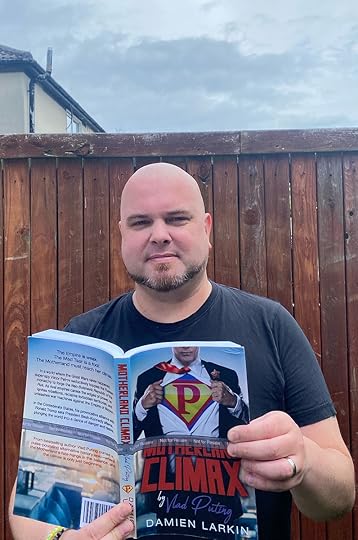
DL: Today, I’m joined by Vlad Puting, bestselling author of the Motherland Climax series of alternate history/spy thriller novels. On the fifth anniversary of Motherland Climax, we’ll be delving a bit more into the world he created, his inspirations, and aspirations, and a secret new project he’s working on dubbed a ‘special literary operation.’ Vlad, we’ve had our difficulties over the years, but it’s a pleasure to have you here.
VP: The pleasure is all yours, I’m sure.
DL: I’d say thank you for agreeing to this interview, but it was your agent who reached out to me and paid me a bunch of cash, so…yeah. Just wanted to get that out of the way.
VP: You’re welcome. I’m told you could use the money.
DL: Funny guy. For this interview, it’s best to get the obvious out of the way. Our altercation at Octocon in His Britannic Majesty’s city of Dublin a few years back led the media to speculate we were engaged in a feud. I’m happy to state quite clearly that what a certain author friend of yours, Hamish Skellington, reported as a fistfight, was merely a misunderstanding taken out of context. Would you agree?
VP: A lion doesn’t concern itself with the opinions of an ant.
Except from the Foreword of Motherland Climax written by Hamish Skellington (appears in the fifth anniversary special edition):
DL: Right… Moving on. So, we’re here today to discuss the fifth anniversary of Motherland Climax. A multiple million-selling novel featuring one of the literary world’s most applauded or vilified characters, Victor Petrov. If you were given the chance of going back and changing anything about the book or Victor Petrov, would you?
VP: No. It was a story that had to be told, and I am glad it resonated.
DL: Even those excessive and gratuitous battle scenes that have drawn outrage from groups like the Confederate Mothers Against Fictional Violence or the League of Britannic Mothers? Activist committees who condemn, what they refer to as, chauvinistic, and misogynistic themes in your works?
VP: I care little for the false outrage others feel over trivial non-issues. The fact they protest me at every book signing or speaking tour shows they perceive me as a threat. My message has been simple and well received by those it was meant for. That is the only thing that matters.
DL: And what is your message? If you were to explain it in the most basic of ways to a wider audience, what would it be?
VP: Read my book and find out.
DL: Oh, I have.
VP: Thank you for the royalties.
DL: You served with the Imperial Rus Army during the Battle of Moscow in 1998. Three months after that, you and several thousand officers and enlisted were purged and either arrested or went into exile on the Mad Tzar’s orders. There’s been speculation that you, a battle-hardened and decorated officer, were singled out due to reports of an inappropriate relationship with Tzarina Antionette. These rumours have been fuelled by a fictional version of her appearing in Motherland Climax and being coerced into marrying Victor Petrov. Care to make a statement?
VP: No comment.
DL: I thought the lion didn’t concern itself with the opinions of an ant.
VP: I have nothing to say on this matter.
DL: Fine. Let’s talk about what you refer to in your books as the Doctrine of Equality but which many interpret as a veiled hatred of modern liberal democracy. Most of your detractors see this as you promoting authoritarianism to a new generation. Do you believe democracy should be replaced with a new system of government—one more autocratic, paternalistic, and less inclined to stay within the bounds of the law?
VP: I believe the best man should rule his country as he sees fit.
DL: The best man… not the best woman? Or person?
VP: To each their own.
DL: Motherland Climax has certainly had an impact on a specific subset of (mostly) young men, as can be witnessed at any convention. Was that intentional, or just luck?
VP: I don’t believe in luck. I make my own destiny.
DL: Ok… how about the fictional political creed you mention throughout the series referred to as neo-Bolshevism? Your detractors continually point out that there’s very little of the actual dogma explained throughout the entire series. No explanation of the economic or social model of that system of government aside from a few vague references. The Victor Petrov character appears to utilise it purely to rally popular support, but if anything, it comes across that he’s only interested in his own power. Was that a deliberate decision on your part?
VP: Petrov does what needs to be done depending on the circumstances. He doesn’t have the time or luxury to sit down and debate it. He acts decisively and in the interests of his nation, as any true leader should.
DL: I’d like you to expand on that. Petrov doesn’t shy away from using military force as a political tool, but he also orchestrates high-level acts of espionage and destabilisation against nations he perceives as rivals, even though they’re not technically at war. Things like widespread disinformation campaigns, disruption of free and fair elections, eroding political and legal institutions, economic warfare, and so forth. Do you believe a civilised leader should engage in such practices? Doesn’t that blur the lines between war and peace?
VP: I never dreamed of entering politics, so I cannot answer that question. I merely imagined a character with a different outlook from what you would call the mainstream and allowed him free reign. If the Rus Empire never collapsed, in the right set of circumstances, there’s always the possibility I would have followed a different path and given you a different answer. We will never know.
DL: Vlad, from my perspective you’re being quite cryptic and vague. This is your five-year anniversary book tour of Motherland Climax. Your team asked me to host this interview. Is there anything you’re prepared to talk about without being so…evasive?
VP: Yes. I am working on a special literary operation.
DL: A special literary operation…what exactly is that? Like a new book?
VP: No. It involves a hundred thousand words and tells a new story set inside the world of Motherland Climax.
DL: That’s a book, Vlad.
VP: No. It is a special literary operation.
DL: Will it be printed in paper and available in digital format?
VP: Yes.
DL: Sounds like a book to me. Care to share any details?
VP: It is a special literary operation. Not a book.
DL: …
VP: …
DL: When can we expect this new book to land, Vlad?
VP: Nothing is landing! This is a special literary operation, not a book! This interview is over.
DL: Come on, you lion. I call a spade a spade. Why won’t you call a book a book? Unless there’s something fundamentally different about this special literary operation? I mean, from what you’ve described, it sounds exactly like a book.
VP: I will not waste my time with you, Larkin. I am leaving.
DL: Did I hurt your feelings?
VP: I refuse to be taunted by a washed-up author whose sole contribution to the literary world is writing about a pot-head Irish soldier with an itchy trigger finger.
DL: Not a Big Red fan then?
VP: This interview is over.
DL: I hope your book flops, you prick. Oh, sorry. I meant special literary operation. What a wanker.
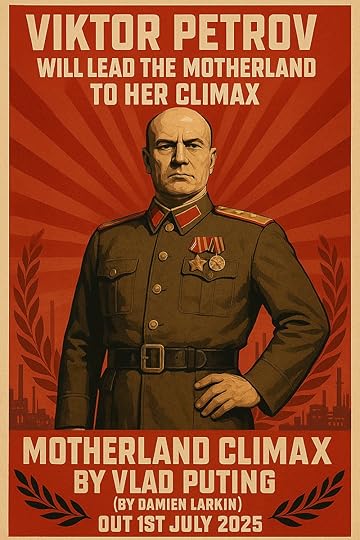
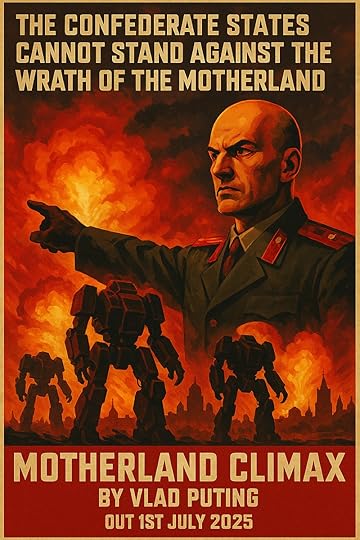
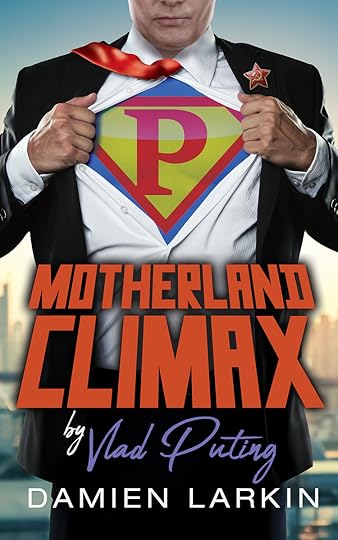
Motherland Climax by Vlad Puting (by Damien Larkin) out Tuesday 1st July 2025 exclusively on Amazon.
https://www.amazon.com/Motherland-Climax-Vlad-Puting-Alternative-ebook/dp/B0F5QKSZBJ/
https://www.amazon.co.uk/Motherland-Climax-Vlad-Puting-Alternative-ebook/dp/B0F5QKSZBJ/
May 28, 2025
Motherland Climax by Vlad Puting: The Great Powers
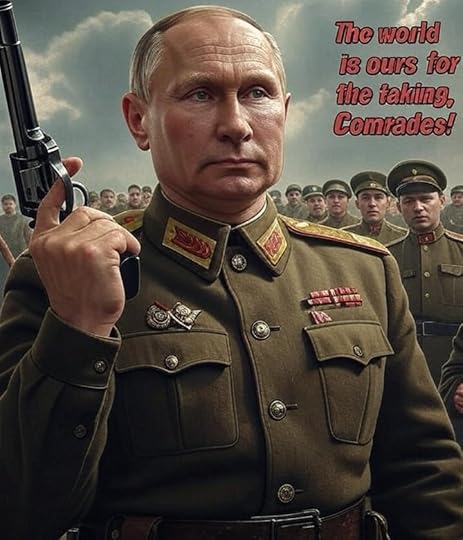
In my last blogpost, I chatted a bit about the origins of Motherland Climax by Vlad Puting and what drove me to write something so unlike anything I’ve penned before. For this post, I’ll be a delving a bit more into the actual world of Motherland Climax, giving insights into how it differs from our reality, and exploring the various Great Powers mentioned throughout the story.
Most alternative history novels have a point of divergence. One event that doesn’t happen quite like it did in our world or a pivotal historical figure behaving in a very different manner. In some cases, it might only be a slight deviation that has huge knock-on ramifications for later events. It varies from story to story. I must admit, I was deliberately vague on what the point of divergence was for Motherland Climax, but I do hint at it in the ‘Foreword’ (the actual Chapter One). Take this quote from the (fictional) bestselling author Hamish Skellington discussing Vlad Puting’s writing style:
“Another comparison, and certainly a source of inspiration, can be noted in the writings of Corsican author Napolean Bonaparte. Puting’s an avid fan of The Ottoman Dream, telling the story of a young French general invading Egypt at the turn of the nineteenth century and establishing an empire. While Bonaparte writes of epic battles with dragons and magic, Puting utilises the latest technology, momentous war machines of the Phoenix Project, and threats of nuclear annihilation.”
Essentially, in the world of Motherland Climax, the Napoleonic Wars never happened. This left the Holy Roman Empire intact, preventing the rise of Prussian militarism, the reunification of Germany, and no World Wars.
Warfare does exist between the various Great Powers, but nothing to the extent of what we’ve seen in our timeline. This has led to a certain degree of technological, economic, and political stagnation. Nuclear weapons/technology have never been developed, the living standards for the lower classes are far below average (having a radio or electricity is seen as a luxury), and the world has become far more stratified.
The opening chapters of Motherland Climax are set in the early twenty-first century, but it resembles our version of the early twentieth century in many ways. Colonialism is very much rampant with the Great Powers competing for control of land and resources. Powerful empires prey on weaker states for influence and to expand their territory, all the while attempting to prevent their rivals from doing the same.
The world of Motherland Climax provides amble opportunity for a ruthless and disgruntled super-spy named Victor Petrov to seize power and rewrite the course of history. Without further ado, meet some of the so-called Great Powers you’ll read about in Motherland Climax by Vlad Puting:
The Rus Empire:
Viewed as the weakest of the Great Powers, the Rus Empire suffered a catastrophic decline over the last century, ushered on by Tzar Peter Romanov III (also referred to as the ‘Mad Tzar.’) Due to a series of devastating wars, its territory has shrunk to a sliver of what it is in our timeline, with vast tracts of land under foreign occupation. Against this backdrop, Victor Petrov leads a revolution against the Romanov dynasty to establish the neo-Bolshevik Republic of the Rus. Under his firm and unwavering hand, he will bring the Motherland to her climax…
The Confederate States of America:
By far, considered the strongest of all the Great Powers in every respect. Officially, the CSA adopts a policy of isolation, showing little interest in the affairs of Europe, Asia, and Africa while focusing its energies on its ‘Forever War’ in South America. For generations, the CSA has slowly but steadily occupied Central and the northern portion of South America in a bid to subjugate all the Americas under the Confederate banner. As the story starts, it has become bogged down in a new confrontation with the Empire of Brazil.
Unofficially, the CSA exports its ‘Doctrine of Equality’ as a sort of soft power strategy against perceived rival nations. Espousing the belief that all people should be treated equal (even though slavery is still legal in the CSA), this concept works to destabilise other countries by creating a core cadre of agitators to demand change and more freedoms in their own societies.
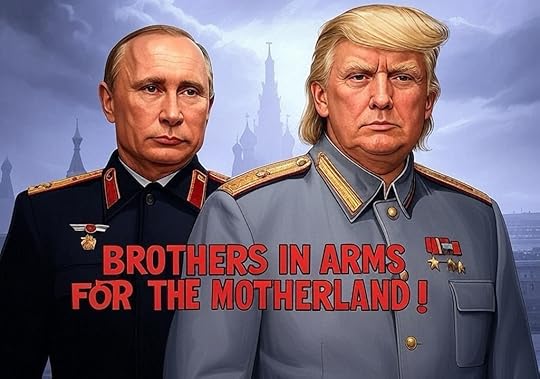
Many of the Great Powers despise this tactic but genuinely fear Confederate military might and are actively grateful they’re focused on their own territorial ambitions in South America, so tend to ignore it for the most part. Fearing the neo-Bolshevik Republic of the Rus’ rising power, Hereditary President Besh-Kunnedy will stop at nothing to thwart Victor Petrov. The only internal threat that concerns him is presidential contender and tremendous war leader, machoman, and philanderer, Ronald Tromp.
He’s a tremendous guy. Absolutely tremendous. Of all the guys, he’s the most tremendous. Modest too.
The Holy Roman Empire:
This loose confederation of states dominates middle and Eastern Europe to varying degrees. Internal dissent remains a constant problem as various ethnicities demand more political freedoms after centuries of Germanic domination. With a weakened Rus Empire on the eastern flank, the Germanics manage to narrowly consolidate their position. But a new, self-assured neo-Bolshevik Republic of the Rus poses an existential threat. Should the Holy Roman Empire fall, what will rise from its ashes?
The United Kingdom of Great Britian, Iceland, and Ireland:
Seen as one of the most dominant powers in Europe, the British have had less success overseas with retaining their empire. Nipponese encroachment in Asia and independence movements in Africa have weakened their grip on some colonial possessions, but the British Navy remains one of the most powerful in the world. As the story takes off, we learn a little bit more about British plans to apply pressure to the faltering French Republic and a general wariness about the rapid growth of Rus military strength and technology.
The French Republic:
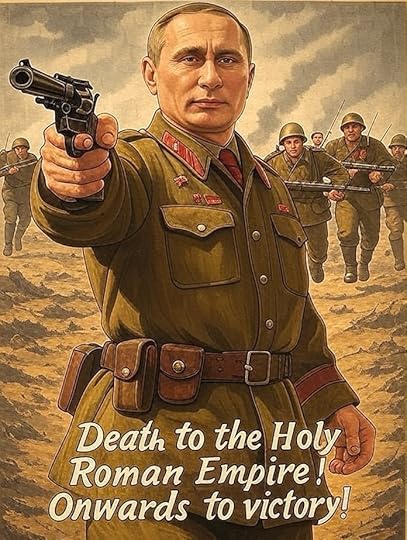
Facing similar problems to the British in Asia, the French fear the loss of their Great Power status. Led by right-wing zealot President Marie Lepen, they eagerly seek out an alliance to fend off British encroachment on their colonies. Even going so far as to opening relations with the neo-Bolshevik Republic of the Rus. Surely, such an agreement will be to the benefit of both nations and not a lopsided affair (in every sense of the word…)
The Empire of Nippon:
In our timeline, Imperial Japan sought to build the ‘South-east Asia Co-Prosperity Sphere’ prior to and during World War Two. This involved a massive enlargement of Japanese military power to occupy new territories, subjugate people for labour, and harness vast newly-won resources to continue expanding its influence.
In Motherland Climax, the Empire of Nippon has been successful in this endeavour. Without foreign interference or any serious counterbalance in the Pacific, it occupies huge areas of Asia, including Siberia. One of the Victor Petrov’s core drives is to seek revenge for the Battle of Moscow (which happened three years prior to the story.) Although it ended in a slim victory for the Rus, his subsequent dismissal from service embitters him and spurs him on to seek vengeance against all who wronged him (perceived or otherwise).
The Iberian Union:
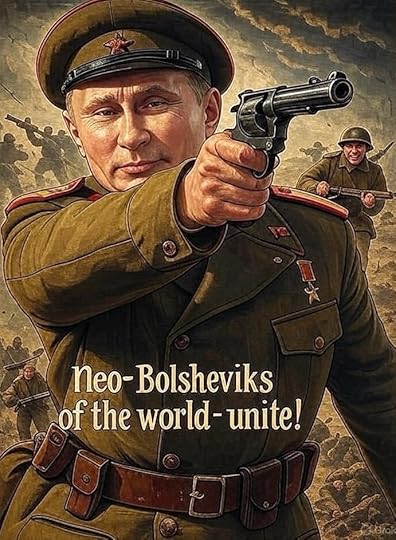
Historically viewed as one of the preeminent colonial powers, the Iberian Union has fallen into disarray over the previous century. Independence movements in South America cost it virtually all its colonies. Despite its shrinking political clout, the Iberian Union takes strong exception to Confederate intervention into an area it considers rightfully theirs. One reckless action could start a chain of events leading to the first ever Intercontinental War…
If you hadn’t guessed it already, the history buff in me really shone through in this story. I admit, some of what I proposed may not be plausible even in extreme circumstances, but it was fun to write about. As I mentioned in my previous post, I enjoyed tearing up the rulebook for this project. If you pick up on nothing else when reading Motherland Climax, I hope it’s that I had an amazing time writing it!
Motherland Climax by Vlad Puting out 1st July 2025. Available for pre-order now:
https://www.damienlarkinbooks.com/sho...
May 4, 2025
Motherland Climax by Vlad Puting (by Damien Larkin)
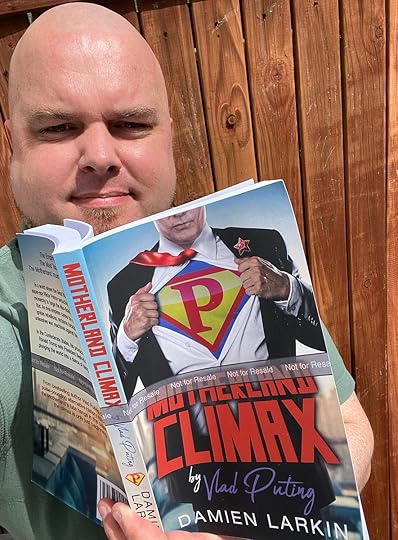
So, I’ve been busy. I know, I know… every few months (ahem, years) I come back to this blog with an excuse and it’s always the same one. I’d much rather pen a ninety-thousand-word novel than write a two-thousand-word blog post. I am getting better, though and recent participation in anthologies and shared projects with other writers has spurred me on to get back into blogging a bit. Timing-wise, it’s probably a good idea especially with the release of ‘Motherland Climax by Vlad Putting’ only two months away!
First off, I know what you’re thinking. The title, right? Let me dig into the background a little bit.
Around a year and a half ago I read ‘The Iron Dream’ by Norman Spinrad. It utterly blew my mind in that way fantastic books do. It’s a satire set in a world where a certain genocidal German dictator emigrated to the USA instead of entering politics and became an illustrator and novelist. In his seminal work, he wrote about a post-apocalyptic future where mutants reigned supreme and ‘pure’ humans were in the minority. The story follows a ‘pure’ human character who retakes his country, rebuilds society in his image, and wages relentless war against mutant nations.
If you’ve read anything on World War Two, you can see the parallels.
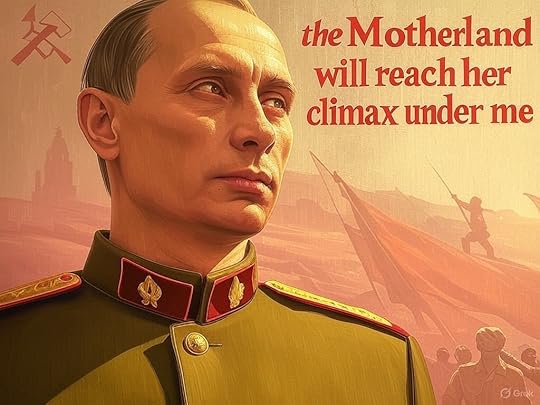
It was the discourse at the start and end of the book that really hooked me in. The fact that it’s a book-within-a-book allows the suspension of belief to the point that for me, it was like reading what a deranged genocidal maniac dreamed of doing, in a world where he lived a normal, everyday life.
My mind went into overdrive after reading it. I wanted to write something like it so I turned my attention to whose perspective it could be written from. If you follow me on social media, you most likely know I’m a firm supporter of Ukraine against Russia’s illegal invasion, so my thoughts shifted to a certain Russian politician. What if he never entered politics and instead penned a series of novels? What would he write about? Who would his characters be? With that train of thought ‘Motherland Climax by Vlad Putting’ was born.
The Foreword of the novel (it’s actually Chapter One) sets the scene. It explains the backstory of how a former Russian KGB operative moved to the UK and eventually wrote what was to become a best-selling series of novels featuring super-spy Victor Petrov. The world itself is geopolitically quite different from our own, with vague references to the two World Wars never happening and even a mention of a ‘Corsican novelist named Napoleon.’
Colonialism is still very much alive with the likes of the United Kingdom of Great Britain, Iceland and Ireland, the Confederate States of America, and the Holy Roman Empire vying for supremacy, often at the expense of the Rus Empire. Against this backdrop Victor Petrov will stop at nothing to seize political power for himself, install the neo-Bolshevik Republic of the Rus, and wage unrepenting war against the hated ‘Doctrine of Equality.’
I describe most (if not all) of the novel as written in ‘purple prose’, a delightful term I only discovered after penning it. Essentially, the writing style is gratuitous, excessive, and at times, downright barmy. There are sections dedicated to how manly the Victor Petrov character is from fighting a bear in the Siberian wilderness, engaging in hand-to-hand combat with ninja assassins on a plane to taking on two divisions of heavily armed insurgents, alone, while piloting a mech.
Ludicrous, I know, but I approached this story with the sole purpose of tearing up the rulebook. I wrote it from the perspective of someone who, in our world, wields massive power, but in the setting of the story, doesn’t. The novel draws on a feeling of inferiority and the need to be glorified and worshipped while espousing views that I think most people would find abhorrent.
In the Afterword (the last chapter) a contemporary fictional author delves into some of the themes and ideas in the book in an attempt to understand why this series is so popular. That for me, sums it up nicely, and hopefully explains what I was trying to do with this project.
The excessive number of times the ‘Motherland’ is referenced, (mostly in a weirdly erotic manner) is also explored in the Afterword. The author ponders if it’s an ‘Oedipus Complex but on a nationalistic scale’ and they’re right. Dictators and those who seize power often link their egos with the country they’ve usurped. Any past, perceived slight on their person becomes one for the entire nation to endure.
More than anything, the Victor Petrov character dreams of bringing the Motherland to her natural climax on the world stage. The persecution and suffering he experienced in his early career becomes the driver behind him making the neo-Bolshevik Republic of the Rus the world’s preeminent economic, political, and military power.
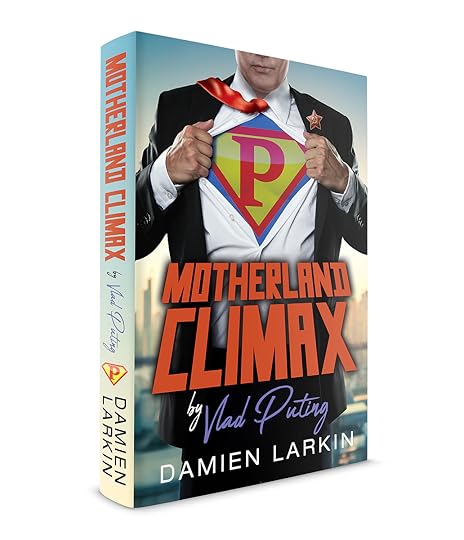
I genuinely have no idea how Motherland Climax will be received since it’s such a radical departure from what I’d normally write. This is my first foray into satire and alternative history, and I’m hopeful people enjoy it and see what I was trying to do. Thankfully, pre-publication reviews and feedback have been positive, so fingers crossed that trend continues.
Over the coming weeks, I’ll be delving more into the world of Motherland Climax, plus updates on my other projects (yes, three books coming this year alone). Stay tuned, and if you’ve read this far, well done.
Go pour yourself a nice cup of coffee/carbonated beverage/water or beer, if you partake.
You’ve earned it!
Motherland Climax by Vlad Puting is available for pre-order now:
https://www.damienlarkinbooks.com/sho...
September 1, 2023
AN INTERVIEW WITH SINEAD MCGUIGAN
In this weeks interview, I'm joined by the one and only Sinead McGuigan. Sinead is the author of 'A Gift and a Curse' and 'Unbound.' Be sure to check out her work!
Welcome, Sinead. How long have you been a poet?
I started writing poetry in 2019.
Where did you get the inspiration for your books?
My poetry is directly linked to my own personal healing journey from cancer and my past. I write from a deep emotional place and am influenced a lot my women's rights and freedom.
What is the biggest challenge you’ve experienced in your writing career, so far?
I find it hard to make time to write as much as I would like to, life can get busy so really my greatest challenge is being disciplined more in my creative endeavours.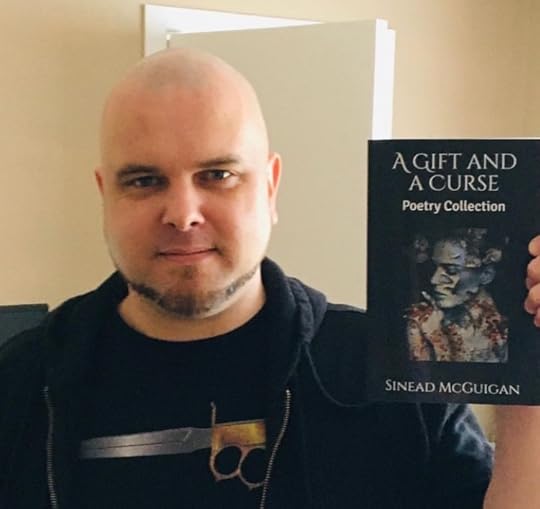
If you could go back and give your younger self a single piece of writing advice, what would it be?
I used to write as a teenager and certainly I would have wished I hadn't ignored that side of me for so long.
What do you think the biggest challenges are for aspiring writers and poets, right now?
The social media aspect in a sense really is challenging and it can be confusing perhaps to see people with large following and little talent. In Ireland I think there is a certain snobbery almost in what is deemed good poetry
Do you believe that having a strong social media presence leads to more book sales?
It can help absolutely as often it's the only option for self-published authors . I definitely feel it helps me so much and I'm very grateful.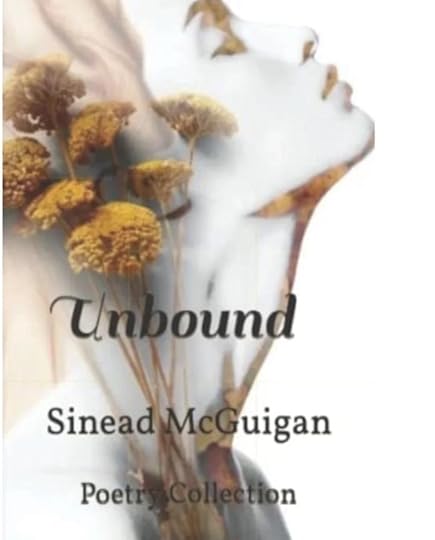
How do you deal with writer’s block?
I genuinely don't get writers block but there are periods in which I don't write.
What is your favourite part of the creative process?
When I see a piece of art or feel instantly inspired by a subject and it flows naturally.
If you could collaborate with any other poet or poets on a project, who would it be and why?
I generally collaborate with artists and my main projects are related to women's issues.
What are you working on now?
I am trying to decide what my next book will focus on.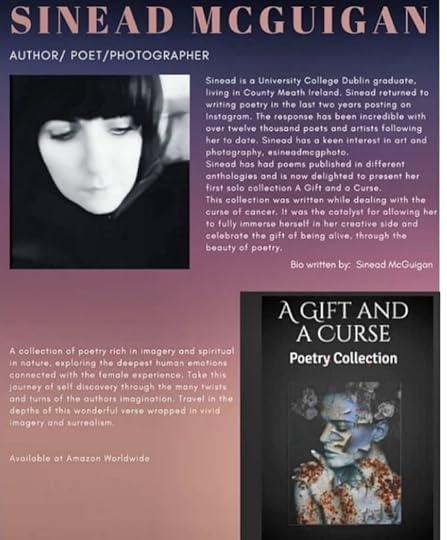
Where do you see your writing career in 5 years?
I really would like to write short stories and perhaps in time a novel.
Have you ever considered writing in another genre?
Yes, certainly fiction and perhaps a healing journal for others.
What marketing tips would you give to someone starting out in their career?
Always be true to yourself and your art. There are different flavours to be explored but write from your authentic self.
Be sure to follow Sinead's writing journey over on @sineadmgpoetry on Instagram.
August 25, 2023
AN INTERVIEW WITH K.A FINN
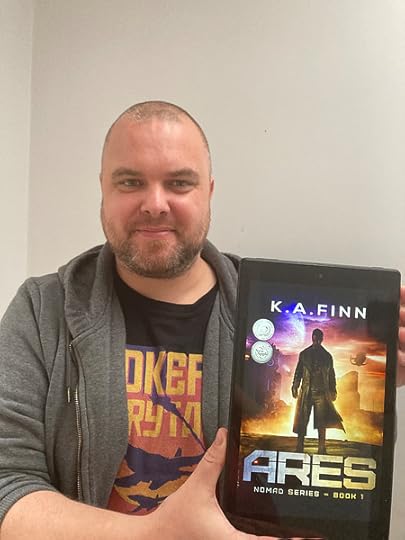
For today's interview, I'm joined by K.A Finn author of the Broken Cords, Blackjacks, and Nomad series of books. So far, I've only read book one in the Nomad series, so it's clear I have a lot of reading ahead of me. Enjoy!
How long have you been a writer?
I physically started writing my first book in 2011 but the idea was with me for years before that.
Where did you get the inspiration for your books?
It’s different for each series but my sci-fi one was inspired by Star Trek TNG. I watched it all the time and developed my own set of characters as part of that world. A few years later I had created many more characters, too many for the Star Trek ‘fanfic’ world, so I gave them their own.
What is the biggest challenge you’ve experienced in your writing career, so far?
Marketing! I love writing but I hate marketing my writing. Imposter syndrome also comes into play a bit – especially when I’m working on a brand new series and the doubt series in. I go through phases of thinking this is the best thing I’ve ever written, then flipping to this is total rubbish after I reread it. Trusting yourself and what you’re writing is difficult at times.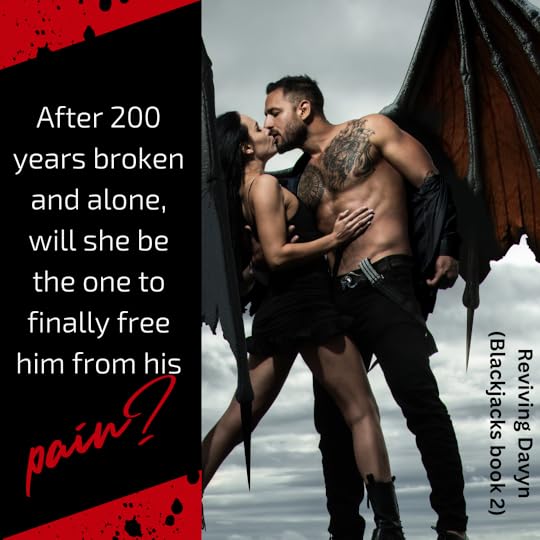
If you could go back and give your younger self a single piece of writing advice, what would it be?
I think I’d say not to worry about what people might say about your writing – just do it. I talked myself out of so many ideas or removed whole scenes because I was afraid. I still am at some stage of each book, but not as bad as I was. All that doubt meant my first book took four years to write. If I’d just stopped worrying and doubting, it would have been completed a lot sooner.
Are you a plotter or a pantser?
Pantser all the way! I tried plotting a few books but I never managed to stick to it. I prefer to let my characters run wild and see what happens. I love being surprised by what they get up to!
What do you think the biggest challenges are for aspiring writers, right now?
I think it’s getting noticed in such a flooded market. It’s relatively ‘easy’ to publish a book nowadays. There are so many books being published every single day it’s difficult to stand out - especially with the rise of AI written books.
It can take me up to a year to write, edit, re-edit, rewrite, format etc one of my books, but I’ve read of other authors using AI to complete a book in a matter of hours. I’m not going to change the way I create my books, but it does makes it difficult to compete.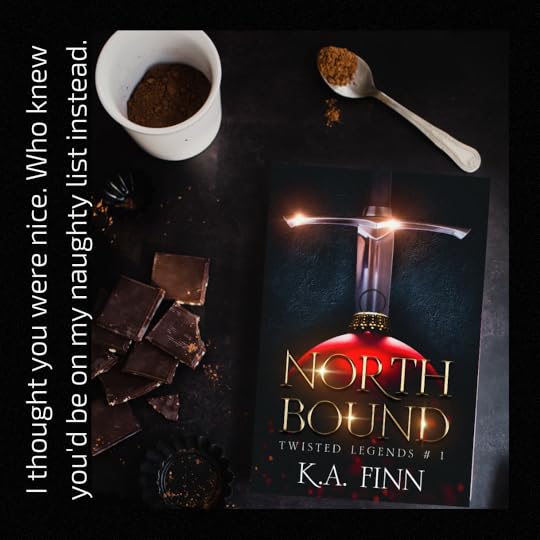
Do you believe that having a strong social media presence leads to more book sales?
No one will buy your book if they don’t know it exists…unfortunately! As much as I dislike social media dragging me away from my writing, I think it’s absolutely vital if you’re to succeed as an author. You absolutely need to shout about your books over and over again on as many different platforms as possible.
How do you deal with writer’s block?
I’ve never actually had writer’s block. At the moment, I am actively writing six books and have started another fifteen or so. If I get stuck on one book, I move to the next one. I have a limited few hours a day to write while my kids are at school, so I can’t afford to waste any of that time staring at the screen. So far I’ve been able to work like this very successfully. If the cyborg from my sci-fi series finds himself on stage with my rockstars, while the vampires watch from the audience, there’s a strong chance I might have become a little confused. So far so good though!
What is your favourite part of the writing process?
I absolutely love holding the completed hardback book in my hand. I read each book numerous times on my Kindle to check for errors before publishing, but holding the physical book, then putting it on my shelf alongside my other books, is the best feeling in the world.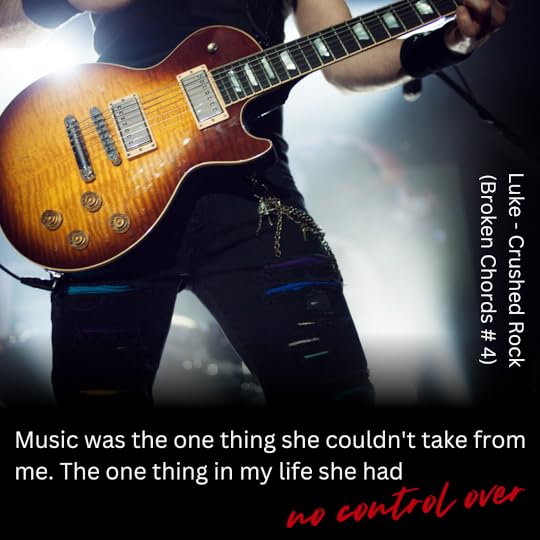
If you could collaborate with any other author on a project, who would it be and why?
Michael Scott. I was addicted to his young adult novels growing up, and read them repeatedly. I still have them on my bookshelf. I love the way he incorporates Irish mythology/fantasy in his books with a modern twist. It was my first introduction to that merging of old and new. It’s something that’s always stuck with me and it’s something I include in my books to a certain extent.
What are you working on now?
Lots and lots of books!
I’m just running through the final edits on my fourth Broken Chords (rockstar romance) book, Crushed Rock. That is due out in a month or so (fingers crossed). I’m also completing the final edits on a new fantasy romance series, North Bound, about a sword swinging, demon fighting Santa. It’s my take on Rise of the Guardians – for adults! Once the rockstar is out of the way, I’ll be finishing up my third vampire Blackjacks series book, then on to some wolf shifters, back to the next rockstar. I’m also planning to finish the seventh book in my sci-fi series. It’s my favourite series and I’ve been neglecting the characters for too long.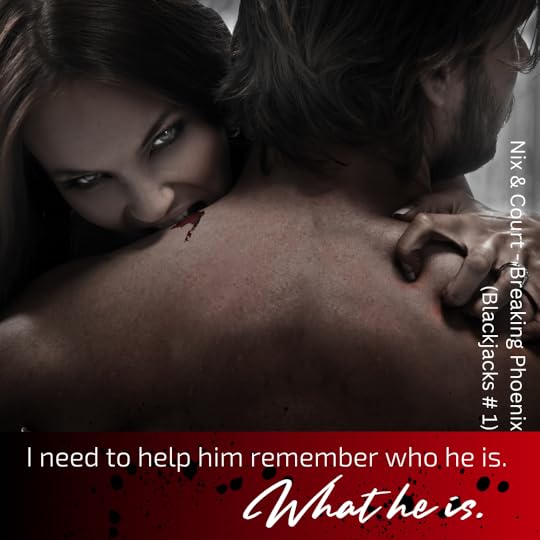
Where do you see your writing career in 5 years?
In my over-active imagination I see all my books on TV as massively successful series’. And I would absolutely be left to sort out the casting for the different characters! Realistically though, I would love to have my books on more shelves around the world, in the hands of more readers, and for my fans to still love my books as much as they seem to at the moment.
Have you ever considered writing in another genre?
I began writing sci-fi, then ventured into more romance genres (rockstar, paranormal, and now fantasy). It really depends on the characters that pop into my head and where they want to be situated. I’m just along for the ride.
Pen names – yay or nay?
I use a pen name and always have. I like to remain mysterious!
What marketing tips would you give to someone starting out in their career?
Dedicate one day a week to marketing. I have Marketing Monday. I plan and make any Instagram, Facebook posts, make the images etc and schedule them for the week. If I don’t force myself to do that, I’ll get lost in the writing. Get it over with at the start of the week then spend the rest of the time doing all the fun writing!
To learn more about K.A Finn and her books, check out the below links:
Website: www.kafinn.com
IG: kafinnauthor
FB: kafinnauthor
https://linktr.ee/kafinn
August 18, 2023
AN INTERVIEW WITH CHELSEA BURKE

Today, I'm joined by Chelsea Burke who recently self-published her debut dystopian romance novel Second City. I had the pleasure of reading an advanced copy and really enjoyed it. Add to your TBR!
Welcome, Chelsea! How long have you been a writer?
I think I’ve been a writer my whole life, but it’s only in the last few years that I’ve actually shared that with anyone. When I was younger I’d write my own stories, or if I’d read a book that didn’t end the way I wanted it to I’d rewrite my own ending. I used to tell my mam that the dream was to move to New York, sit in a coffee shop and write books all day long. I just finally have the confidence to do it… I mean from Tallaght but, alas.
Where did you get the inspiration for your books?
I think just from the many, many books I read. I always found myself thinking ‘I wish this book had this. I wish this happened. I wish this was different.’ So I really just figured out what I felt was missing from all those books and wanted to try write something using those elements. I figured if I feel like these aspects are missing, surely there’s other people who want them too. Also I adore fantasy, but it can be hard to swallow sometimes, hard to follow along. Writing a realistic dystopia kind of felt somewhere in the middle of fantasy and normal romance and that’s what I wanted.
What is the biggest challenge you’ve experienced in your writing career, so far?
Trying to figure out where Second City fits in the market and in my niche. There are so many amazing romance books and writers out there at the moment and trying to explain what makes Second City special and different and worthy of readers time has been a real personal struggle. Marketing overall I think is the hardest part, but for me it’s more of a ‘where do I fit in in all of this?’ I think it’s some sort of existential crisis. Self-publishing is hard, doing everything on your own is hard. I have no real experience in any of this. That’s the biggest struggle for me.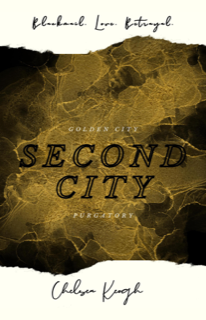
If you could go back and give your younger self a single piece of writing advice, what would it be?
STOP WITH THE CLICHES! I love a cliché in a romance book as much as the next person. They’ve become cliches because they work, but in the beginning I thought my writing had to have them or it was awful. Looking back at some of the drafts I’ve abandoned I think they could have been great stories if I had just done my own thing instead of trying to make them like every other book. Starting a book with the main character waking up was my go to. Makes me cringe just thinking about it.
Are you a plotter or a pantser?
I am a pantser with every fibre of my being. I wrote the last chapter of Second City on a whim… then wrote the rest of the book based on that. I literally had no idea what the beginning of my story was. Had no idea why the characters ended up the way they did. I just had that one end scene in my mind and then figured out how to get them there. I hate planning. It definitely does not work for me. I like winging it. For me it feels more natural, a little bit chaotic. I live for chaos.
What do you think the biggest challenges are for aspiring writers, right now?
I think it’s the same as it has always been; getting published. So many more people, like me, are choosing to self-publish because in many ways it really feels like the only option. As all writers know it’s a very lucky few who get traditional publishing deals. It’s something I’d love to achieve one day, but for now just doesn’t seem doable. It’s a big world out there, and a lot of people have stories to tell. Finding a publisher is a tough task.
Do you believe that having a strong social media presence leads to more book sales?
100%. Especially TikTok. The reader presence on TikTok is insane right now. When I was growing up I used to read my books and never tell a soul because reading wasn’t cool. Now? Some of the biggest accounts on TikTok are ‘booktok’ accounts. If you want more sales that’s where you need to be. It’s an amazing community to be a part of. You can really connect with readers and find people who are looking for your type of book specifically. Instagram is brilliant too, but on a smaller scale I’ve found. One viral video on TikTok and your sales can go through the roof. It’s wild.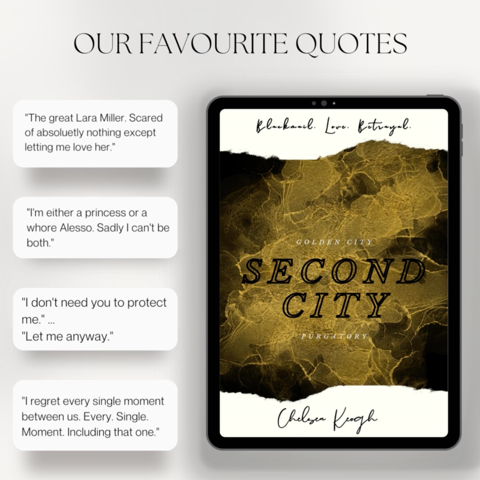
How do you deal with writer’s block?
I read the Throne of Glass series by Sarah J Maas. It is a work of art. If I can’t write I read that series and before I know it all I want to do is write a book that makes other people feel the way that series makes me feel. If you haven’t read it- read it. Seriously. I’m on my millionth re-read right now and it still puts me on the edge of my seat. That’s my cure for writers block. Get inspired.
What is your favourite part of the writing process?
Writing the ending. I think endings are the most important part of any book. If a book doesn’t end well it ruins it for me. I love (and hate) endings. As I mentioned, I started my debut novel by writing its ending. I lie in bed at night writing endings to stories that don’t exist yet. They’re so fun, and heart breaking, and cathartic. It’s hands down my favourite part. Editing it until its perfect? Delicious.
If you could collaborate with any other author on a project, who would it be and why?
Stephen King. I’d pay money just to watch him write a story. He just writes like nobody else. When I read IT for the first time when I was young I just didn’t understand how he could write a horror that had me sleeping with the lights on and yet still have me in tears. (I like to pretend that one part in IT never happened, if you don’t know what I’m talking about carry on in blissful ignorance.) I just adore his writing. I’ve read every book he’s ever written and I’d give anything to work with him on something, even if horror isn’t my bag.
What are you working on now?
I have about 5 different manuscripts that are different degrees of finished right now. I like to switch between stories. One of my favourites is a novel with the working title of ‘The Offering.’ It’s a fantasy. Not entirely sure where exactly it’s going yet but I’ll figure it out. I’m also working on the sequel to my debut Second City. Someone once told me that the second book is the hardest you’ll ever write. I believe them. The sequel might just be the death of me.
Where do you see your writing career in 5 years?
In complete honesty I have no idea. Not a clue. I just hope I’m still writing. I hope people are reading what I’m writing and that some of those people feel about my books the way I feel about some of my favourite books. I’m not that great at planning ahead, but I do hope that I reach readers the way other authors have reached me.
Have you ever considered writing in another genre?
I think I’ll always be in romance. Whether that be fantasy romance, contemporary, romance or even just a romance sub plot. I live for it. I can’t see myself writing a book that doesn’t have that. It’s home for me.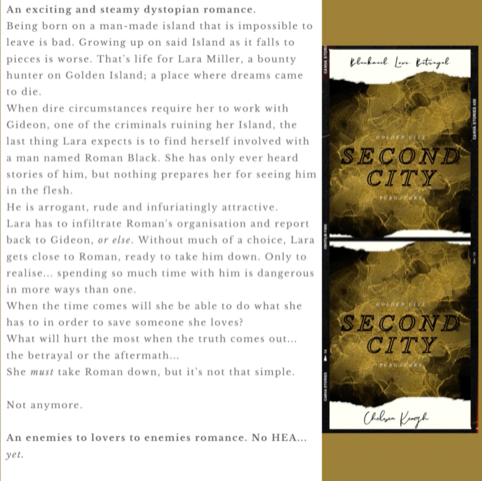
Pen names – yay or nay?
I think that depends on where I take my books. Right now I’m okay writing under my own name. I like dark romances though, so if I decide to delve into writing the darker side romance I think I might write under a pen name. I don’t know if I’d like my family to read some of the books I’ve read… never mind if I decided to write something like it. I’ll have to wait and see.
What marketing tips would you give to someone starting out in their career?
Start early! Find your readers and get them excited about your book. ‘Booktok’ is a great community and TikTok is an amazing (and free) way to market your book without too much effort. If you can build up excitement around your book before it’s released you’ll already have some dedicated followers dying to get their hands on it. It’s extremely beneficial.
To learn more about Chelsea and her writing journey, check out her social media and website links below:
TikTok: https://www.tiktok.com/@chelseakeoghauthor
Instagram: https://www.instagram.com/secondcitybook/
Amazon: https://a.co/d/eikleRz
Website: second-city-h74i4s.mailerpage.io
August 11, 2023
AN INTERVIEW WITH OWEN QUINN
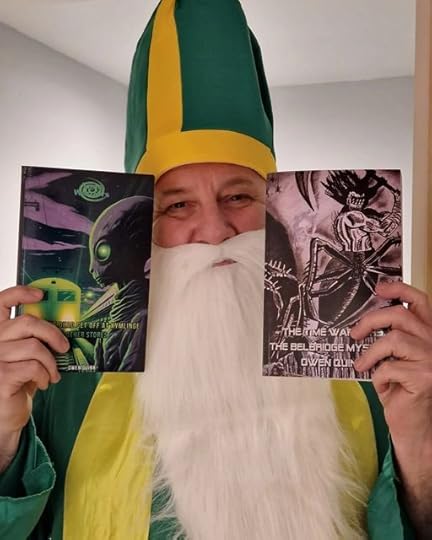
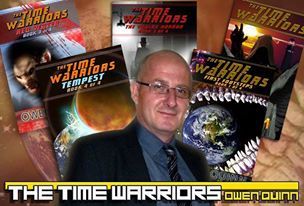
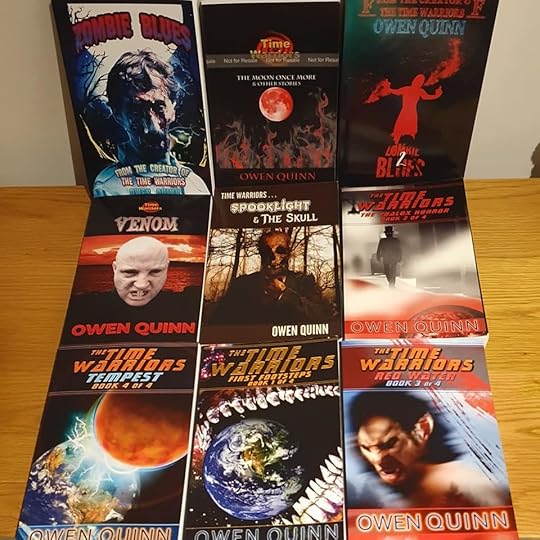
This week, I'm joined by Owen Quinn, a Northern Ireland based writer and author of the Zombie Blues and Time Warriors series of books. He also has big plans to be the first Irish Doctor Who, so keep an eye out!
Hey Owen, thanks for dropping by! How long have you been a writer?
Forever it seems. Without sounding arrogant, it’s something I was born with, and life keeps getting in the way of that as a fulltime occupation reducing me to a daydreaming night owl creating new worlds while our world sleeps.
If there’s a story in me then it literally will not me rest until it comes out on the page. No bloody wonder I have suitcases under my eyes. My first primary school teacher first saw it when she put a story about lambs in a field in the staffroom for all to see. I thought to my young self, I quite like being the centre of attention and telling stories, so I never really stopped.
Where did you get the inspiration for your books?
I got really tired of seeing shit on television that was dressed as sci-fi. So, as I was a fan of Doctor Who, I knew if I wrote a story for them, they would take it straight away and hail me as a new talent on the rise. From there on I would be headhunted to write for other shows and movies and spend the rest of my days living the dream.
Oh, to be a naïve fifteen-year-old. I wrote my Doctor Who story all by hand and even drew the cover for the Target novelisation, but they sent it back as they didn’t take handwritten submissions. So, the Time Warriors was born thanks to Doctor Who.
Zombie Blues came from a question I had about the Walking Dead. I wondered why Morgan’s wife came to her house and tried to open the door. She stared through the peep hole. I wondered what if the original person was still there trapped and helpless. Why would they be trapped I wondered? Then I figured it out and Zombie Blues, now in its third book, was born.
What is the biggest challenge you’ve experienced in your writing career, so far?
Two things: time and cliques. How do you write a book when you have bills to pay? You can’t write while the kids need feeding and raising as well as giving enough attention to your spouse or partner. The house needs cleaning, you have to turn up to work but in your head is that dream that if your book hits the big time then you can have that time.
There are too many people out there who think if you ask for advice/help with your writing that it will somehow impact their dreams of sipping champagne on a yacht with one hand and typing the new blockbuster with the other while their butler rubs suncream on their forehead. You’ll find these people are loners or surrounded by people that tell them what they want to hear even when the shit is running off the page. That’s why I was very isolationist for many years until I found people that weren’t so insular.
If you could go back and give your younger self a single piece of writing advice, what would it be?
I’m still learning but click on these links to see what I would tell me:
https://timewarriors.co.uk/2023/07/26/writing-tip-reach-out-and-ask-for-help/
https://timewarriors.co.uk/2023/04/03/to-sit-down-and-write-get-off-your-arse/
https://timewarriors.co.uk/2022/09/19/tip-to-chill-between-writing/
Are you a plotter or a pantser?
Aren’t all fiction writers a hybrid consisting of each? I get an idea and start writing but along the way plot points change or a character goes left instead of right when it wasn’t your intention. Book 4 of the Time Warriors Tempest delivered a plot twist that once it hit me seemed so obvious and was quite smug about it when I read the finished result lol.
Remember that writing controls you. It tells you when to start and when to end. We are puppets dancing to its tune. Like Patrick Swayze tormenting Whoopi Goldberg in Ghost, we get the reviews and maybe the dosh but it makes our fingers do the walking.
What do you think the biggest challenges are for aspiring writers, right now?
Fitting life around your writing and fucking sharks out to exploit you. Gone are the days of big advances from publishers. The world as it is has changed the playing field for us all years ago.
Look at any supermarket selection of books and it’s big names or celebrity autobiographies. The term celebrity sadly includes those wank sticks from reality television which has also impacted quality television drama. Yet we have the greatest resource for new and editing fiction right here in self-publishers which is tarnished by the ability to publish any old shit with a thousand typos and again those telling them how great their writing is when it really deserves to be used as toilet paper. Then you have these publishers that charge you to publish their book.
Let that sink in.
When you see bad singers pleading with Simon Cowell for a chance to go through to the following round, you cringe. But in the writing world you have exactly the same thing. People are desperate to get the JK Rowling level of success and will pay these publishers to publish their book. In their minds this gives them a credibility that is short-lived if it ever really lived at all. You get little in return. You need to have multiple social media platforms pushing your book.
You are doing all the work and you are being asked to give sums between £4000 to £8000 to them. They didn’t sit up all night writing. They didn’t do your editing. They don’t push your social media. They didn’t pay someone to design your cover. They didn’t help you format or learn how to format Kindles. But this desperation to be JK Rowling makes people do dumb things. I’ve been tempted several times with contracts on the table, but I like my testicles where they are and not having them ripped off by my wife for plunging us in debt.
Do you believe that having a strong social media presence leads to more book sales?
No, not at all. It is so much more but again without networking and reaching out for help, they are paths most aspiring writers miss. It’s about networking. It’s about learning how to format. It’s about learning what platform to publish on. What happens to that platform if a publisher suddenly comes along?
You need friends that can draw, design, and help edit leaving you to write the story. You do edit along the way, but you need more than one pair of eyes to get where you want to be. You on the other hand have to develop a thick skin.
Listen to criticism, take, and learn from the feedback. Pass your knowledge on as every day there are writers of all ages starting their first book with no idea what’s in store. Put visuals and videos on your social media but remember the work behind a simple post to Facebook or Instagram. Listen to your in inner voice. If something doesn’t sit right with you, sort it. And never ever publish until you’re very sure there are no typos, and everything is as you want it to be. Why would you buy a mistake riddled book when you wouldn’t buy a faulty kettle? It won’t be perfect, you might still miss things but with technology today, it is resolved literally over night with no real impart to anything else.
How do you deal with writer’s block?
Click here for that answer https://timewarriors.co.uk/2022/09/19/tip-to-chill-between-writing/
What is your favourite part of the writing process?
It’s when you get feedback from someone who would not normally read e.g. sci-fi books and they tell you they loved your work. I don’t tell people my work is good. I need them to tell me it struck a chord with them. Then I know I’ve done something right. Someone totally bored of the sci-fi genre read the first Time Warriors and it reignited their love of sci-fi which is humbling. The Time Warriors One school teacher read Vegetarian Zombie to her class of primary school children, and they got so aminated about zombies, I was, and still am delighted. Similarly, I got lovely feedback on No Dentures Zombie making people laugh out loud.

If you could collaborate with any other author on a project, who would it be and why?
I don’t do collaborations because I’m such a control freak. Only I know the story and I can be very reactive to someone interfering. Although I would like to hear the late Manny Coto, Harlan Ellison, and Garth Ennis’ take on a Time Warriors story. Ellison and Coto especially wrote sci-fi with a heart that the audience could identify with. That’s how I’ve always pitched the Time Warriors.
What are you working on now?
Two new Time Warriors books, a new children’s anthology, and comedy book which I hope will work. Verbal and visual comedy is easier than written ones from a character people have never heard of.
Where do you see your writing career in 5 years?
I want it to be a career rather than a constant struggle to put new books out for little return. I have a quality product but it’s always trying to break that mainstream barrier.
Have you ever considered writing in another genre?
I’m writing a children’s book or novella, whatever the word count is will determine that and a comedy which I’ve never done before. I have made people cry with the beginning of Experiment 4 in the first Time Warriors book First Footsteps so time to laugh too.
Pen names – yay or nay?
HELL NO! For the work you put in and the struggle to publish a book, you want people to know it is you. On a selfish and probably petty note, I want to show all those fuckers who ran me down and bullied me for my love of sci-fi that what they belittled me over for years is a world that is no longer for geeks and nerds but inspires children of all ages to be artists and writers and movie makers, not drunks and wasting life for fear of social ridicule.
What marketing tips would you give to someone starting out in their career?
Buy my books and see what sci-fi with humanity is. See life through the eyes of a zombie wracked with love, regret, fear, inspiration, and a belief that together humanity can overcome anything in Zombie Blues. Other than that, write your book and if it doesn’t make an impact, do another and another until your writing is done. If by chance you make it big with your twentieth book, your other nineteen, which inwardly you considered failures, are now a marketable product that can hopefully touch peoples’ lives. You’re not just writing for yourself even though you think you are; you’re writing for the people out there too afraid of a blank screen with a story burning inside of them.
https://www.amazon.co.uk/s?k=the+Time+Warriros+Red+Water
https://www.amazon.co.uk/Time-Warriors-Spooklight-Skull/dp/1983389994/
https://timewarriors.co.uk/the-time-warriors-and-beyond/
https://www.instagram.com/the_time_warriors_author/
https://twitter.com/TheTimewarriors
August 4, 2023
AN INTERVIEW WITH DEREK POWER

To kick off the first in a series of interviews with Irish writers, creators, and poets, I'm delighted to introduce Derek Power. Derek is the author of the 'Filthy Henry' series and a fellow BFS award nominee for our collaboration on 'Sky Breaker: Tales of the Wanderer.' Enjoy!
Hey Derek, welcome! How long have you been a writer?
I began writing a little during college years, but mostly short stories. There was a contest ran in the college paper, they provided a line and you had to write a story that was 1000 words long. I entered, it won, and I didn’t write again properly until maybe 2013. That was when I had the idea for my first Filthy Henry novel, and I’ve been pretty much writing ever since.
For Filthy Henry the inspiration comes from a few sources, mostly the ancient myths and legends of Celtic Ireland and then whatever modern day type stuff I can bring in to make the story work. A lot of the background characters in the Filthy novels are based on people in my life and one or two strangers who asked me at a convention if they could be in a novel. I’ve also drawn on my favourite authors/writers and seen the type of stories that they craft and wondered if I could do something in a similar vein.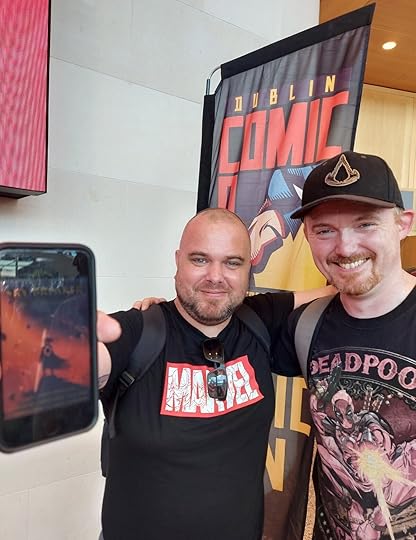
Me and Derek at ComicCon 2022
What is the biggest challenge you’ve experienced in your writing career, so far?
In writing, nothing much really. I seem to be able to write whenever I want and I’ve a notebook full of ideas. Are they all winners, who is to say, but they are stacking up so that I usually have the next three books plotted out before I start working on something. For me it is the marketing side of things. Being an indie author is great, but the marketing is a full time job and you can copy/paste the formula of somebody successful you’ve seen online and it just doesn’t work the same for you. That bit can be the big challenge.
One of the hardest things I had to learn when working on the first Filthy Henry novel is that you don’t need to get your sentence right first time. I must have spent about a month working on the perfect ‘first few pages’ instead of just writing the first draft and then editing over and over. If I could go back to the early days of writing that’s the advice I’d give myself, just write the bloody story and let the following drafts be used for refining and tweaking and making things perfect. Then, when you are just about ready to give up because you don’t think any more edits will help you have a finished novel.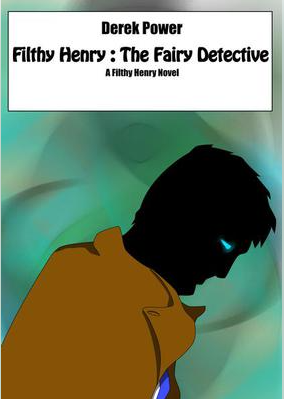
Big time plotter, I have no idea how people pants a book. I need my outline, my chapter outlines to ensure the overall plot points get hit in the right spots, all that good stuff. That isn’t to say that I stick to the plot outline rigidly, sometimes you will have a great idea only as the story unfolds before you and the plot will need to be adjusted and tweaked. I think that’s the happy middle ground between the plotters and the pantsers.
There could be a few. I know when I first started out I Googled ‘How long is a short novel’ and set that as my minimum word target. It felt like a huge mountain to climb, but the trick is if you do a little every day that word count gets bigger and bigger. Marketing is definitely a big challenge, even if you are good at it, because it takes up time. Time that could be used on writing. Plus people will try and predict trends, which they shouldn’t. Write the story you want to write and let the trends come and go.
I’m not entirely sure on this one. Some people swear by having a Facebook, TikTok, Twitter, Instagram - but followers do not automatically translate into readers and book sales. My Twitter, for example, has a respectable six hundred followers, but I haven’t seen that translate into sales in the least. However a good ad campaign can bring in more followers on social. I know a lot of people who seem to get some success for sales based on social followers, but I dunno. Jury is still out with me on that one. I will say that I think social media is a great way for writers to keep in touch with readers that probably replaced the old ‘fan mail’ of the pre-internet days. From that perspective it is important to maybe even focus on just one social media platform and really work it well.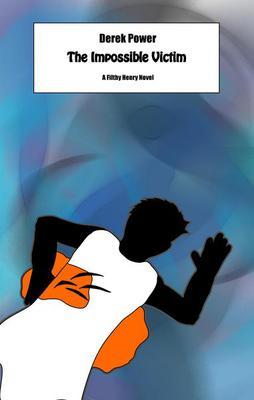
I’m lucky in that I haven’t been hit by this yet in all my years writing. I generally come up with an idea quick, refine it with a bit of my process, then start writing. The only block that I have when it comes to writing is there aren’t enough hours in the day to work, family and write…with sleep being needed somewhere there too.
I do enjoy the plotting stage. Sometimes my plot outlines can run into double digits of pages as I build out the story and world around it. I often wonder if I shouldn’t include the plot pages as a bonus in the back of the book so people can see them. As one person said after reading the third Filthy Henry novel, there are versions of the book that exist that nobody ever sees because I will edit and cut and add and change. They said it made them jealous, even though they enjoyed the finished piece.
Well I’ve had the pleasure of collaborating with yourself on one and that was fantastic fun. If I could go with another one, I’d go with Philip K. Dick. He wrote my all time favourite sci fi novel ‘Do Androids Dream of Electric Sheep’ (which was turned into Blade Runner) and I’d love to write a story with his unique approach. Somehow nobody has been able to reproduce the mad methods he used to get an average person suddenly involved in an otherworldly situation.
I’m actually on a few projects at the minute because idle hands are something I don’t like. I’m writing a sci-fi story for a contest I stumbled upon online. I’m doing up a Filthy Henry case file, which is a short story that never gets published in print but appears on the podcast for Filthy Henry that a friend of mine produces. I’m writing the plot outline for a screenplay and also working on a one act play to enter into the Drama League of Ireland contest. I think I have a nap scheduled there somewhere as well.
Probably still pumping out Filthy Henry novels. The novels are written in such a way that you can read one and get a fully self contained story with all the information required in that book, but also easily part of the shared and growing world that Filthy inhabits. Ideally I’d like to see more sales happening, but I have to figure that out and maybe cut back on some writing to do the promoting.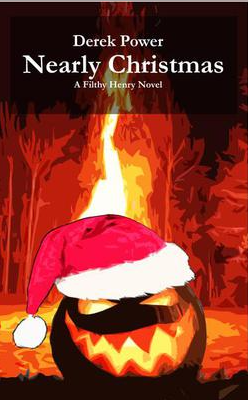
So Filthy Henry is comedy-fantasy with a detective spin. I’ve written a sci-fi story with a detective as the main character. I’ve written a real world story that is a crime/detective one - I think I’m trying to create an ‘omni detective’ genre that all my books would fit into.
When I started out I thought nay, but as I’ve branched out into different genres I have reconsidered. I think a pen name can be good if a writer doesn’t want to risk polluting their fanbase. If you had written a lot of comedy novels the last thing you want your fans to do is get annoyed that your new one is a murder mystery, so maybe a pen name per genre and then use your real name for the main genre.
Hire somebody who knows that world, because there are grifters online who will promise you the deal of a lifetime for a mere two hundred euro and you get all their tricks and it comes to nothing (speaking from experience sadly).
Derek Power is the mind behind Filthy Henry, the fairy detective. Born and bred in Dublin, he current lives in Skerries with his family. He predominately focuses on comedy-fantasy works, but has dabbled in sci-fi noir with his novel 'Duplex Tempus'. When not writing he spends his days refreshing the inbox wondering when Hollywood is going to come knocking for the film rights to his books.
Website: https://www.powerwrites.com/
Twitter: https://twitter.com/dcpower_author
Books in one handy place: https://t.co/f6AmEZ6jHV
Podcast (audio book version of the first three novels): https://t.co/VvQJy4SYw6
May 21, 2023
WE STAND WITH UKRAINE BOOK LAUNCH
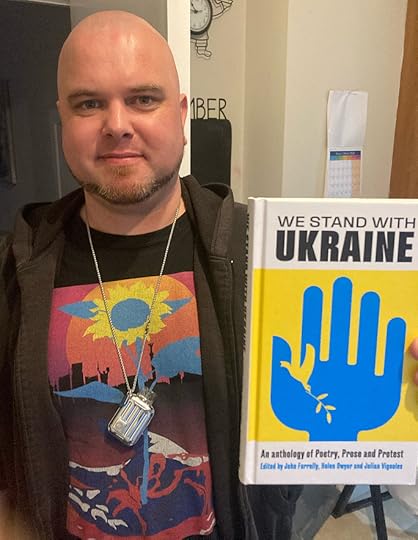
I had the pleasure of attending the launch of We Stand With Ukraine on the 3rd of May. The event took place in Hodges Figgis bookshop in Dublin, and it was fantastic to see so many people gathered to support it.
We Stand With Ukraine is an anthology of poems and prose written by protesters who’ve picketed the Russian embassy here in Dublin since Russia’s invasion of Ukraine. What struck me most was that these were all ordinary people. All with different backgrounds, walks of life, and professions. One thing bound them all. From the moment they heard about the invasion, they wanted to do something.
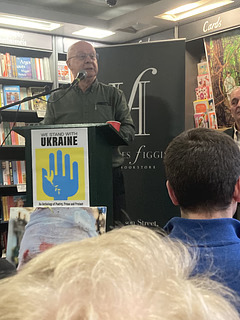
Without any organisation or central leadership, ordinary people banded together to amplify the voices of Ukrainian civilians. Regardless of the weather, they engaged in peaceful protest outside the Russian embassy. They may not have been able to influence the outcome of such an unjust and cruel war, but they were determined it will never be forgotten.
The anthology came about as a suggestion from my good friend, writer, poet, and protester Helen Dwyer. She wanted to document the thoughts and outlooks of such a diverse group of people, to better understand why they were there and what they hoped to achieve. After some discussions, most of the protesters signed on to write a little bit about their experiences. One goal drove them. All proceeds and royalties from book sales of We Stand With Ukraine, go to Ukrainian Action, a registered non-profit organisation built to get much needed funds to Ukrainian civilians in need.
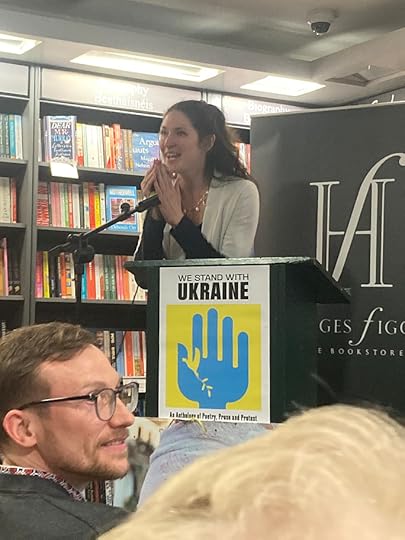
The book launch was a moving event. Protesters read excerpts of their work and spoke of their heartbreak at the suffering of so many civilians. Members of the Ukrainian community in Ireland spoke of the horror inflicted on their country and thanked everyone who refused to remain silent and continued speak out against the crimes of the Russian war machine.
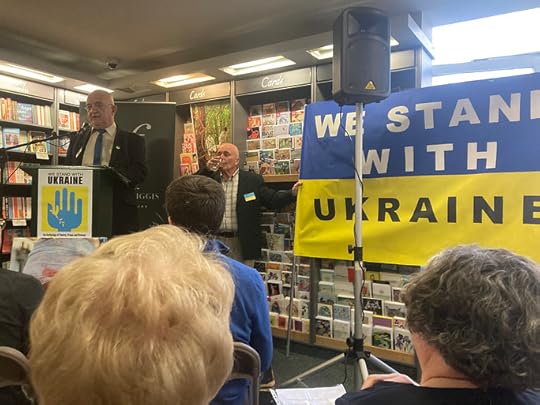
I’m still reading the anthology. What I have read is a powerful account of people shocked by the invasion who are determined to exercise their democratic right to protest. There’s a clear distinction between the corrupt leadership of the Russian Federation and the Russian people, who don’t even have the right to speak out against the war without suffering criminal charges.
There’s hope, too. Optimism that Ukraine will prevail, this horrible war will end, and tyranny will be brought down, as it has been so many times in the past.
We Stand with Ukraine is available now for Mercier Press and all good bookshops:
https://www.mercierpress.ie/irish-boo...