Patricia Wilkinson's Blog
November 22, 2025
Weekend Learning Ideas That Don’t Feel Like School
The weekend rolls around and you’ve got about 48 hours before the next school bell rings. There’s laundry to do, errands to run, but you know that time is moving fast — too fast — and these young, weird and wonderful humans in your house won’t be this age for long. You want to give them a weekend that feeds their brain without turning into a lecture. Something fun that also helps them grow, an experience that affects them in a positive way. It just takes a little thought, a loose plan, and a willingness to participate alongside them.
Start With a Shift in FramingThe best weekends don’t start with rigid agendas — they start with intention. You’re creating a situation where curiosity runs the show, and you’re gently steering it. What you’re aiming for is boosting learning while still completing household chores, hopefully with your children’s help. Let them help pick from a menu of options on the family “to do” list. Maybe give tasks silly nicknames to add some fun. Give them a timeframe that you will do chores together and set an alarm to stop for total free play. Trust that structure and spontaneity can live side-by-side.
Get Outside With a Purpose“Go play outside” is great advice, being that free play stimulates insight and creativity. But being outside on a mission can be fun too. A five-minute setup can turn an aimless wander into something magnetic.
Print or sketch a scavenger list: something red, something fuzzy, something that smells weird. Let your kids take pictures or draw what they find. Kids who learn to scan their environment — to really look, listen, and narrate what they see — get better at focusing in all kinds of circumstances. And bonus: Moving their bodies stimulates the release of healthy chemicals in their brains for better mood and fitness.
Bring Science Into the KitchenYou don’t need to be a scientist to run a decent experiment. And you definitely don’t need a trip to the craft store. What you need is vinegar, baking soda, food coloring, and maybe a balloon or two. Give your kids a mystery to solve or a prediction to test, and suddenly you’re connecting cause and effect in the real world. That’s what makes simple indoor experiments using household items so powerful. It’s not just the fizz or the color change — it’s the look on their faces when something they imagined or predicted becomes something they made happen.
Leave the House for Something That SticksA few hours at a local museum or even a small historical site can do more for your kids’ learning than any flashcard. The key is interaction. Let them lead. Let them touch the things that are meant to be touched. Ask weird questions. Make it about discovery, not memorization. When they’re out of the house, in a place where everything feels somewhat new, their attention sharpens in a different way. That’s why visiting interactive environments for rich learning works so well — it taps into the part of the brain that remembers experiences, not just facts.
Add a Language Twist That Feels Like PlayYou know what’s weird? How fast kids can pick up new words when they’re not trying. Language exposure can come from silly songs, pretending to order food at a fake restaurant, or joking using phrases they learned five minutes ago. Let your kids experiment with language, your own or a second language, and relax about mistakes. If your child is interested in Spanish, for example, look for a flexible and supportive learning platform with human-led Spanish courses (this is a good option). Or check out fun videos on YouTube that introduce kids to other languages.
Keep Something Cozy for IndoorsSome weekends, the weather might keep everyone inside, or your family might need to relax and recharge. This is your chance to slow down. Avoid screens as much as you can and pull out the art box — crayons, paper, scissors. An empty cereal box? Empty toilet paper or paper towel roll? Sure. Tape? Even better. Let your kids create and decorate homemade shakers or design a home or post office for their stuffed animals. Sometimes I used to buy art and science kits on sale after the holidays for our random down days. There’s a quiet kind of brilliance in watching them duct-tape a world into being while you sip your coffee or herbal tea and pretend not to help.
End With a Recap, Not a DebriefAt the end of the weekend, ask questions like: “What part was your favorite?”, “What felt silly?”, and “What would you do differently next time?” This kind of inquiry amplifies enjoyment and growth and sends a subtle but powerful message: reflection matters, and so does joy. You’re raising thinkers. Feelers. Doers. And when they associate learning with fun — that’s when the magic sticks.
You don’t have to plan the weekend. You can take a walk and point out plants and animals you see along the way. Play with ingredients in the kitchen. Toss around new words in Spanish at the dinner table, or whatever language your family finds interesting. You’re just showing up with a sense of play and the quiet belief that learning can happen anywhere — even on the couch or in mid-laugh. And that’s more than enough.
FAQsQ: How much structure should I build into a weekend like this?
Not much. Think of it more like offering a buffet than serving a seven-course meal. A few lightly planned options with room to wander usually works best. Let your kid lead where they can. You’re creating space, not a schedule.
Q: What if my kid resists learning activities?
That’s normal. Try weaving learning into things they already like — a comic becomes a writing lesson, a fort becomes an engineering project. Keep your tone light. If it starts to feel like school, pull back. The goal is to allow opportunities to explore curiosities.
Q: Can young kids benefit from language learning?
Absolutely. They’re wired for it, particularly before age 9 when their brains still have language specific neurons. We can learn languages after age 9, though speaking with less of an accent is more difficult. And if learning another language is playful and pressure-free — like singing songs in Spanish or ordering imaginary meals in French — they’ll absorb more than you think. Learning a second language develops creativity, improves focus, and boosts cognitive abilities like problem solving. Just keep it consistent, human, and low-stakes.
Thank you, Laura Pearson, for contributing this article. We appreciate your insights.
Parents, enjoy the journey. It goes fast.
Best wishes,
Trish Wilkinson, founder Brain Stages Education and Parenting
The post Weekend Learning Ideas That Don’t Feel Like School appeared first on Welcome to Trish.


September 24, 2025
Homegrown Learning: Real-World Ways to Support Kids in Their Learning, Including Those with Special Needs
By Laura Pearson
Every child learns differently. As a parent, you’re more than a helper — you’re the interpreter, the innovator, the anchor. You don’t need a perfect plan or special training to help your child grow. You need patience, flexibility, and faith in small moments. This guide is about finding learning in the messy, in-between spaces of daily life — and realizing you’re already more equipped than you think. The following suggestions are powerful for all children, including those with special needs.
Note: Many of the links go to pages with activities for those children who have special needs, but the activities are great for ALL kids’ brain development!
Start with Texture, Not Textbooks
Your child may not respond well to worksheets or flashcards, but give them a tub of rice and suddenly, they’re focused. That’s not distraction — that’s engagement. Sensory activities stimulate multiple brain areas at once, building pathways for learning through physical input. What looks like play is often deep neurological work, especially for kids with processing or regulatory challenges.
To do this well, don’t just hand them a bin and hope for the best. Instead, try to engage them in purposeful sensory play that’s tied to goals — matching textures to words, sorting by color, counting scoops. The play becomes a bridge, not a break. The key is structure without rigidity, and repetition without boredom.
Let Real Life Do the Teaching
Let’s drop the idea that learning only happens at a desk. It also happens in breakfast prep, watering the garden, and laundry folding. One of the most effective strategies is to build hands-on learning into everyday routines.
Let your child measure cooking ingredients, group socks by color, and count stairs as you go up. These aren’t hacks. They’re functional academics deeply rooted in context, muscle memory, and task connection. This is learning they’ll use in life as well as apply to what they learn in school.
Reduce the Pressure — For Both You and Your Child
Let’s be honest: structure is hard to maintain when you’re juggling work deadlines, household needs, and caregiving. For parents — especially moms — that tension is constant. It’s easy to slide into guilt or packed schedules and elaborate plans.
And one of the most sustainable ways to support your child’s learning is by reducing the pressure on yourself. That includes routines that flex when life demands it and schedules that make room for rest. It’s possible to honor your child’s needs while still balancing care and career needs. The trick isn’t perfection — it’s pacing, realism, and grace.
Shape the Play Without Stealing the Lead
Play is not just fun — it’s serious developmental business. Some unguided play is healthy and good for our brains. But if you have a child who needs extra structure, a light hand makes a big difference.
Set up scenarios that nudge them toward problem-solving: a pretend store for practicing math, a costume box for sequencing and story-building, a scavenger hunt for objects that start will letter sounds.
Parents often overlook how powerful it can be to embrace guided play for learning when the scaffolding is subtle but present. The child still feels free, but the environment is quietly shaped to provoke thought, emotion, and discovery that gets stored in their long term memory centers for future use.
Notice the Learning That Finds You
You don’t need a plan for every moment — some of the best learning happens unannounced. Your child asks a question during a walk. You talk through the answer. That’s a lesson. Or they get frustrated zipping their coat, and you coach them through it with patience. That’s executive functioning in action. There’s magic in these tiny, unplanned exchanges. Learning can be light-footed if you let it.
Try teaching through naturally occurring moments at home — not by turning every minute into a teachable moment, but by staying present enough to recognize one when it comes. Show up with your eyes open, not a script.
Let the Art Say What Words Can’t
Sometimes words fail — especially when emotions run hot or feel tangled. Art can step in where language lags. For children, especially those with special needs, creative outlets like painting, clay work, or textured collage are more than crafts. They’re expressions of processing, reflection, and connection. When given freedom and encouragement, children often surprise us with what they can convey through color, shape, and material.
One of the most grounding approaches is emotional expression through sensory-based art, where the focus is not on perfection but participation. Let them tear paper, smear glue, mix media — the product doesn’t matter. The process is the point.
You don’t need expert credentials to raise a child who learns and thrives. Just presence, flexibility, and a willingness to try again.
Real learning happens in the ordinary — in laughter, frustration, repetition, and rest. Forget the perfect program. Your rhythm, your care, your instincts — they’re enough. Start simple, stay responsive, and trust that what you’re doing matters. Because it does.
A little reminder: You can unlock the secrets to raising smart, confident kids with The Brain Stages and discover how to bring joy back into education and parenting!
Special thanks to Laura Pearson for contributing this article to our Brain Stages Surefire Tips blog. If you would like to contribute an article to our community, please send an email to trish@thebrainstages.com .
Enjoy the journey!
Best possible wishes,
Trish Wilkinson, founder Brain Stages Education and Parenting
The post Homegrown Learning: Real-World Ways to Support Kids in Their Learning, Including Those with Special Needs appeared first on Welcome to Trish.
July 27, 2024
Indoor Summer Fun for Ultimate Imagination in Bad Weather
Who says you need to go outside to enjoy camping? Have your kids set up a cozy indoor campsite in your living room!
Create a Tent: Use blankets and chairs to make a tent. If you have a pop-up tent, even better!Campfire Stories: Gather around with flashlights and tell spooky or funny stories.Picnic Indoors: Prepare some picnic snacks like sandwiches, fruit, and s’mores made in the microwave.Stargazing: Stick glow-in-the-dark stars on the ceiling and turn off the lights for some indoor summer fun under the stars.This activity sparks imagination and brings the fun of camping indoors—without the mosquitoes and dust.
2. DIY Art and Craft StationSet up a craft station and let creativity flow! If your kids are age 5 or older, have them set up the craft station—and clean up after themselves when they’re finished making their projects.
Painting and Drawing: Provide watercolors, markers, colored pencils, crayons, paper, and poster boardSculpting: Use clay or playdough to create sculptures. Modeling clay can be used over and over, and it’s great for building strength and dexterity in our hands.Jewelry Making: Use beads, strings, and charms to make necklaces and bracelets.Recycled Crafts: Use cardboard, plastic bottles, and other recyclables to create something new.Life hack: We used to have an “art cupboard” where we stored the items listed above. This worked great for impromptu summer craft projects as well as having materials on hand when our kids needed art supplies for school projects.
Crafting not only offers indoor summer fun but it also helps develop fine motor skills and encourages creative thinking.
3. Indoor Scavenger Hunt
An indoor scavenger hunt is a fantastic way to keep kids active and engaged.
Create a List: If your kids are old enough to write, have them come up with a list of items to find around the house, such as a red sock, a house key, a phone charger, a book with an animal on the cover. . . You get the idea. Hide Clues: For older kids, create clues, or have them take turns creating clues for each other, that they hide with the items and lead from one item to the next.Themed Hunts: Choose a theme like “pirate treasure” or “detective mystery” to make it more exciting.
This activity promotes creativity and problem-solving skills while it keeps kids moving.
4. Kitchen Science ExperimentsTurn your kitchen into a mini-laboratory with fun and safe science experiments.
Baking Soda and Vinegar Volcano: Create a small volcano using baking soda and vinegar. Or, you can just put a tablespoon of baking soda in a tall glass and add a 1/4 cup of vinegar. I’ve found that kids of all ages love to do this, even if they’ve done it before. For older kids, Google “What is the scientific explanation for the chemical reaction when adding vinegar to baking soda?”Rainbow in a Jar: Layer different liquids like honey, dish soap, water, and oil to see how they stack. Then ask Google: “Why do different liquids stack on top of each other?” to discover the science behind what you’re observing.Oobleck: Make a non-Newtonian fluid with cornstarch and water (and maybe some food coloring
). Homemade Oobleck is fun to play with and a great way to observe chemistry in action. To understand the chemical reaction, ask Google: “What happens when you mix cornstarch and water/”This is a great way for kids to learn about science in a hands-on way.
5. Family Game DayBring out the board games, card games, and puzzles for a fun family game day. On rainy, hot, or smoky days—what could be better?
Board Games: Play Monopoly, Scrabble, Clue, Yahtzee, any of the classic games that teach strategy while they improve math and language skills.Card Games: Play Go Fish, Crazy Eights, or Uno—and teach them a new game they haven’t learned yet!Puzzle Time: Work together to complete a challenging jigsaw puzzle, play Sudoku, or fill in a crossword puzzle.Games are great for building strategic thinking and cooperation skills while having a blast.
6. Indoor Fitness FunKeep active with indoor fitness activities that are both fun and healthy, for their bodies and their brains!
Dance Party: Put on some music and dance around the living room.Yoga: Follow along with a kid-friendly yoga video on YouTube.Obstacle Course: Set up an obstacle course using pillows, chairs, and other household items. Kids can get so creative with this!These activities help burn off energy, especially when stuck inside your home.
Being indoors doesn’t mean you have to miss out on summer fun. With these six creative activities, kids and teens can stay entertained, active, and engaged no matter what is going on outside. And supporting your children in cleaning up after themselves will be good practice for them to take responsibility for their own messes. So, encourage them to set up some indoor adventures and let the fun begin!
If you have any questions, feel free to reach out. Happy indoor adventuring!
Best wishes,
Trish Wilkinson, Coach, Group Facilitator, Founder of Brain Stages Parenting and Education
July 23, 2024
Indoor Summer Fun for Ultimate Imagination in Bad Weather
Try these six ideas for kids and teens to enjoy indoor summer fun in ultimate imagination and make the most of those summer days when its too hot, smoky, or stormy to go outside. Or maybe there’s a bit of the mid-summer blahs going on, or your kids just need a break from going outdoors.
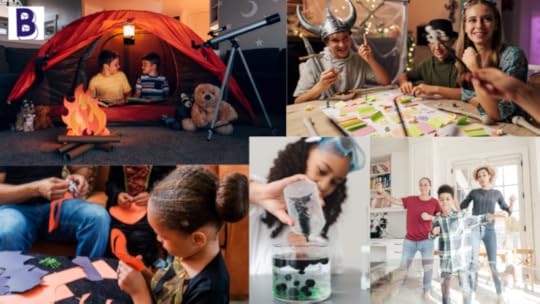 1. Indoor Camping Adventure
Who says you need to go outside to enjoy camping? Have your kids set up a cozy indoor campsite in your living room!
Create a Tent: Use blankets and chairs to make a tent. If you have a pop-up tent, even better!Campfire Stories: Gather around with flashlights and tell spooky or funny stories.Picnic Indoors: Prepare some picnic snacks like sandwiches, fruit, and s’mores made in the microwave.Stargazing: Stick glow-in-the-dark stars on the ceiling and turn off the lights for some indoor summer fun under the stars.This activity sparks imagination and brings the fun of camping indoors—without the mosquitoes and dust.
2. DIY Art and Craft StationSet up a craft station and let creativity flow! If your kids are age 5 or older, have them set up the craft station—and clean up after themselves when they’re finished making their projects.
Painting and Drawing: Provide watercolors, markers, colored pencils, crayons, paper, and poster boardSculpting: Use clay or playdough to create sculptures. Modeling clay can be used over and over, and it’s great for building strength and dexterity in our hands.Jewelry Making: Use beads, strings, and charms to make necklaces and bracelets.Recycled Crafts: Use cardboard, plastic bottles, and other recyclables to create something new.Life hack: We used to have an “art cupboard” where we stored the items listed above. This worked great for impromptu summer craft projects as well as having materials on hand when our kids needed art supplies for school projects.
Crafting not only offers indoor summer fun but it also helps develop fine motor skills and encourages creative thinking.
3. Indoor Scavenger HuntAn indoor scavenger hunt is a fantastic way to keep kids active and engaged.
Create a List: If your kids are old enough to write, have them come up with a list of items to find around the house, such as a red sock, a house key, a phone charger, a book with an animal on the cover. . . You get the idea.
Hide Clues: For older kids, create clues, or have them take turns creating clues for each other, that they hide with the items and lead from one item to the next.Themed Hunts: Choose a theme like “pirate treasure” or “detective mystery” to make it more exciting.This activity promotes creativity and problem-solving skills while it keeps kids moving.
4. Kitchen Science ExperimentsTurn your kitchen into a mini-laboratory with fun and safe science experiments.
Baking Soda and Vinegar Volcano: Create a small volcano using baking soda and vinegar. Or, you can just put a tablespoon of baking soda in a tall glass and add a 1/4 cup of vinegar. I’ve found that kids of all ages love to do this, even if they’ve done it before. For older kids, Google “What is the scientific explanation for the chemical reaction when adding vinegar to baking soda?” Rainbow in a Jar: Layer different liquids like honey, dish soap, water, and oil to see how they stack. Then ask Google: “Why do different liquids stack on top of each other?” to discover the science behind what you’re observing.Oobleck: Make a non-Newtonian fluid with cornstarch and water (and maybe some food coloring
). Homemade Oobleck is fun to play with and a great way to observe chemistry in action. To understand the chemical reaction, ask Google: “What happens when you mix cornstarch and water/”This is a great way for kids to learn about science in a hands-on way.
5. Family Game DayBring out the board games, card games, and puzzles for a fun family game day. On rainy, hot, or smoky days—what could be better?
Board Games: Play Monopoly, Scrabble, Clue, Yahtzee, any of the classic games that teach strategy while they improve math and language skills.Card Games: Play Go Fish, Crazy Eights, or Uno—and teach them a new game they haven’t learned yet! Puzzle Time: Work together to complete a challenging jigsaw puzzle, play Sudoku, or fill in a crossword puzzle.Games are great for building strategic thinking and cooperation skills while having a blast.
6. Indoor Fitness FunKeep active with indoor fitness activities that are both fun and healthy, for their bodies and their brains!
Dance Party: Put on some music and dance around the living room.Yoga: Follow along with a kid-friendly yoga video on YouTube.Obstacle Course: Set up an obstacle course using pillows, chairs, and other household items. Kids can get so creative with this!These activities help burn off energy, especially when stuck inside your home.
Being indoors doesn’t mean you have to miss out on summer fun. With these six creative activities, kids and teens can stay entertained, active, and engaged no matter what is going on outside. And supporting your children in cleaning up after themselves will be good practice for them to take responsibility for their own messes. So, encourage them to set up some indoor adventures and let the fun begin!
If you have any questions, feel free to reach out. Happy indoor adventuring!
Best wishes,
Trish Wilkinson, Coach, Group Facilitator, Founder of Brain Stages Parenting and Education
The post Indoor Summer Fun for Ultimate Imagination in Bad Weather first appeared on Brain Stages Parenting.
The post Indoor Summer Fun for Ultimate Imagination in Bad Weather appeared first on Brain Stages Parenting.
July 15, 2024
Let’s Restore JOY in Education—For Students and Teachers!
On Saturday, April 27, 2024, I’ll be giving a talk at TEDx Wilmington in Delaware entitled “Can Five Practices Restore JOY in Education?”
[Spoiler Alert: The answer is YES. These five brain-friendly practices in the classroom made learning a blast for my students and made me love teaching again.]
And this is where YOU come in.
If you’re a parent or teacher, and you would like your children or students to experience JOY in education, to LOVE going to school, and you would like to see teachers less harried and much happier, talk to teachers and administrators at your school about doing an EMPOWERED SCHOOL PILOT PROGRAM.
I’ll walk teachers through how to painlessly implement these five evidence-based, brain-friendly, synergistic practices that MAKE TEACHING AND LEARNING FUN while they save time!
These five practices become part of the classroom routine where students get to PREPARE their brains for learning, define a PURPOSE for their efforts, and provide a simple way for students’ brains to PROCESS what they learn for sticking power.
My students enjoyed a supportive environment and kicked booty on the standardized tests. Would you like those things for your kids too? Let’s Talk I’ll do an Empowered School Pilot for FREE for the first two schools that make a commitment for the summer or fall terms in exchange for data, a quick weekly survey.This is a weekly quick Google Form that takes 2 to 3 minutes to complete – I promise.
Will you help me prove we can restore joy in education with these five simple, synergistic practices that produce amazing results—for both students and teachers? That is; will you help me to provide a simple way to create a supportive, cohesive classroom community where students learn in accordance to how their brains acquire, store, and use information?
LET’S MAKE EDUCATION MORE FUN AND EFFECTIVE IN RESPECT FOR OUR STUDENTS AND TEACHERS! I’M INTERESTED BUT I NEED MORE DETAILSDr. Dan Young, founding director of the Wharton-AltFinance Institute at the University of Pennsylvania, curates TEDx Wilmington. This TEDx event is in the top one percent of all TEDx franchises in the country, with more than 52 million views on YouTube.
This is a BIG DEAL! My talk was chosen to be one of eighteen speakers out of several hundred applications.
Would you like to be responsible for sparking a renaissance in education in this country—for restoring JOY in education?Let’s make this talk count by getting a commitment from your school, or several teachers at your school, to participate in an EMPOWERED SCHOOL PILOT.
We need data, real numbers, to show how this simple, yet powerful, brain-friendly combination of five practices supercharges learning in all areas.
These practices are the nitrous racing fuel for boosting brainpower in social, emotional, and academic learning—without the politics. I’M READY FOR LEARNING TO BE MORE FUN!After the TEDx Wilmington event on Saturday, April 27, we’ll need to wait for the TED (Technology, Education, and Design) organization to review the video and release the YouTube link so we can all watch it.
I’m told this takes from one to six months! (I promise to make the link available as soon as I get it.)
In the meantime, let’s set up an Empowered School Pilot, so your children or students can have their best school year yet! I WANT TO KNOW MORENote: I’ll be traveling in April and May, 2024 so my calendar availability is tight for the next five weeks. If you can’t find a convenient time for a conversation, please send an email to trish@thebrainstages.com, and we’ll come up with a time that works.
I’m so excited to have the opportunity to share “my idea worth spreading” at the TEDx Wilmington event this Saturday! I hope you’ll decide to join me in being a catalyst to restoring the JOY in education.
Best possible wishes for you and the children in your life,
Trish Wilkinson
Coauthor Brain Stages: How to Raise Smart, Confident Kids and Have Fun Doing It, workshop facilitator, and coach
My TEDx Talk: How to Keep Students Engaged in Learning with These Five Synergistic Practices
Let’s make the pandemic the catalyst to making education stronger than ever. Let’s keep students engaged and bring back the joy of learning!
TEDx Wilmington in Delaware has invited me to give a TEDx Talk on April 27, 2024, on How to Keep Students Engaged in Learning with Five Synergistic Practices in the Classroom. How exciting, right?
Full disclosure, that’s a working title. The name of this TEDx Talk keeps evolving.
Given the aftermath of the pandemic—the learning gaps, gaps in social skills and emotional maturity, lack of motivation, neglected “smart kids” because we’re trying to help other kids catch up, high stress for teachers as well as students—it’s time for a solution.
We need to support our system of education in emerging from this setback stronger than ever!If you’ve followed me for a while, you know I often write about and give presentations for parents on ways to boost their children’s thinking power and mental health in accordance with how kids’ brains develop, function, and learn.
Heck, that’s what Jackie’s and my book, Brain Stages: How to Raise Smart, Confident Kids and Have Fun Doing it (December 2018) is all about.
Much of the information I’ve collected, and the tools I’ve found or created, came from my quest to help my own twice-exceptional children, who are now quite successful adults.But meeting their needs was a tough road. Because I didn’t know what I didn’t know.
Sometimes I would do or say things with the intention of helping them, and tears would result—their tears, my tears, sometimes both. And being a teacher who had taught most of the grades, I was supposed to know how to help them. But I didn’t.
I began to read studies and books and talk to experts. I started to try new ways of communicating, and I shifted our routines in ways that led to clearer expectations. Yippee! No tears. Real smiles. Self-confidence sparked curiosity and motivation. My children began to do better in school and get into trouble less often.
One day, William, a fourth grader in my class said, “Mrs. Wilkinson, did you run this morning? You’re not as funny and happy today.”
I knew running in the mornings relaxed me and helped me think more clearly, but I hadn’t realized I was behaving any differently. Apparently, my morning exercise had a much greater effect than I knew.
That inquiry sent my students, and me, on a trajectory of empowerment.I thought: If the tools we’ve been using at home have worked so well with my own lovely quirky kids, I wonder what would happen if I brought them into my classroom. Would these tools work their magic to transform my class into intrinsically engaged students?
Long story short, due to several circumstances, we ultimately made five brain-friendly shifts in our classroom routine.(You’ll learn more about my students’ transformation in Approaching the Red Carpet, an anthology of TEDx Speakers’ stories for how they came to share their “Idea worth spreading” with the world. The book will be released at the TEDx event in Delaware in April and be available on Amazon after the event on April 28, 2024.)
Five Synergistic Practices in the Classroom that Supercharged Learning (and made us happier too):We did some form of cardio exercise for 10 minutes in the mornings before we got to work.Students were encouraged (and reminded) to drink water regularly.We played a 90 second working memory game after recess and lunch like “Add a Move”.We brainstormed for 60 seconds how we might use new information or a new skill.We spent five minutes mentally processing the information we heard in a lesson or learned while doing a project or assignment to give the material what I called “sticking power”.If you’ve been reading my posts, you likely recognize most of these concepts. However, I don’t know if I’ve mentioned doing these five practices in my classroom.
I bet you can guess how using these five practices together in my classroom turned out.Those fourth graders loved learning and earned some of the top scores on the state tests for our district. The following year, at the same public school, I taught language arts to fifth and sixth graders. One of our sixth graders won first place in the district essay contest, and one of our a fifth graders won second place. Our students were published in a poetry anthology. Our language arts scores were the top in the district that year.
Make no mistake. Students didn’t go from apathetic to energized learners because I was an amazing teacher. The transformation happened because of the five practices I listed above. Each is evidence-based. In fact, lots of studies back up each one.
The thing I sort of stumbled upon was the positive synergy created when these five practices are done regularly in the same program.Heck, the five practices empowered me too because it was SO much more fun to go to work. It reminded me of when I first started teaching in East Los Angeles, and I would say, “This is so much fun! I can’t believe they’re paying me for this!”
The five practices created a supportive community in our classroom.Kids wanted to come to school, to treat others with kindness, to be considerate, to participate, to be curious, and to be creative. All of this happened with these five practices before I ever heard the term “Social and Emotional Learning”, which has become the popular phrase for developing empathy, kindness, social skills, and emotional maturity.
Now imagine an entire public school that uses these five tools daily.People keep telling me I should do a pilot with these five practices in a private school, and I have connections to do that. I love education. All forms of education—public, private, home schooling—have a place in meeting children’s and families’ needs.
But in my opinion, public school makes the difference between a first and a third world country.So, picture an entire public school that keeps students hydrated, gets their heart rates up for ten minutes before jumping into work (which saves SO much time!), plays a 90-second game to calm their minds and prepare their brains for learning, establishes a clear purpose for lessons and projects, and gives students’ brains a simple way to process information and skills for “sticking power”.
The person who is in charge of research at a public school district is talking to his colleagues right now about the possibility of doing a pilot project at one or more schools in the district.
I want to do the EMPOWERED SCHOOL pilot so badly that I told them I will teach a class as a long-term substitute while facilitating the program so there won’t be any extra cost to the district.
And the truth is, I CAN’T WAIT to get back into the classroom!I left teaching when our youngest hit middle school and our oldest hit high school because their attention issues weren’t being well received. Despite all the interventions we had done for our oldest child, she’d had a miserable experience in middle school. My husband and I decided that we only had one opportunity to raise our children, so I came home to do my best to get our children’s needs met.
I missed teaching, but I got to write articles for parenting magazines, coach other writers and give workshops, and ultimately write Brain Stages. Not to mention, I got to catch up on all the latest research to fine tune the five practices to make them easy for any teacher to do in the classroom in almost any situation.
Think of the implications if we can get empirical data on the effectiveness of doing these five synergistic practices in the classroom as a school community!If we can get anywhere near the results my students and I enjoyed in just a few months doing these five practices in a whole school, we could create a ripple throughout the country—maybe even beyond!
No extra money. No change in curriculum. Happier teachers. More successful students.Please hold good thoughts for us to make this happen. Send us positive vibes. If you’re the praying kind, please ask for assistance. We CAN make this happen. I’m a big believer in collective consciousness.
The TEDx Talk will be entertaining and make good points regardless of what happens with the school district.
Taking data with me to that TEDx event in Delaware that proves the synergy of these five practices could spark a post-pandemic, much-needed renaissance in education!Best wishes for a wonderful 2024 and second semester for your children, from preschool through high school. My dearest wish is for every child to LOVE learning!
In deepest gratitude for teachers and parents everywhere, bringing up the next generation,
Trish Wilkinson, author, coach, educator
Teach Kids Resilience in “Do-Overs”: From Negative to Positive NOW!
“Do-overs” are a great way to teach kids resilience because we allow them to “fix” mistakes immediately as well as learn to forgive others. If you’re already granting “do-overs”, bravo! If not, you’re about to learn a powerful tool!
Have you ever said something that you wish you could take back?Most of us have accidentally hurt someone’s feelings at some point. When we get triggered, and cortisol or norepinephrine kick in, our brains get hijacked. We may not catch ourselves in time before we say or do something we regret.
One of the most powerful tools in teaching kids about resilience is to help them understand that mistakes are often how we learn.And EVERYONE makes mistakes.
Whether a mistake is ours or someone else’s, a “do-over” offers the ability to re-start—before a situation gets out of hand.
A “do-over” allows for immediate forgiveness and for the person to set something right that had been headed off the rails.So, how do we introduce the concept of a “do-over” to our children?
Follow the steps below a couple of times, and it will become easy.
4 Steps to Get Started with “Do-Overs”1. When you say something that you wish you hadn’t, or you wish you’d used a kinder tone, ask for a “Do-over”.Example: “Can I have a do-over, please?”
2. Explain that a “do-over” is a way to give someone a chance to apologize and start over in a nicer way.Something like: “I’m sorry. That sounded crabby. Let me try again. I want to say what I want to tell you in a kind way.”
3. Restate what you want to communicate in a way that the other person will feel respected, not judged or attacked.Example: “I feel frustrated when dirty dishes appear in the sink after I’ve just cleaned the kitchen. After we use dishes, they go in the dishwasher, right? What can we do about that?”
Sometimes, you’ll find that your child will begin to fix the problem before you even finish talking.
4. When your child snaps at you, ask your child if they would like a “do-over”.Emotions sometimes cause children to say something disrespectful or use a cranky tone with us. Those emotions are often rooted in fear.
Their fight, flight, or freeze hormones hijack their brains. They end up saying and doing things they wish they hadn’t.
Inviting a child to stop, take a deep breath, and try out a “do-over” allows them to get their emotions under control. They can apologize and try to explain what’s on their minds in a more respectful way.
We teach kids resilience when they learn how to get past their fears, and “do-overs” provide the brain safety to help children do just that.A parent I know has even learned how to be successful at “do-overs” between her and her two-year-old!
All is forgiven, and kids begin to learn how to be much more effective in getting their needs met.Practice these steps several times, and your kids or students will begin to ASK for “do-overs”.
AND they will offer “do-overs” to others.
The interesting thing is that sometimes you won’t realize you needed a “do-over” when a child offers you one.
You’ll avoid misinterpretations and hard feelings you didn’t see coming.
So, the next time you get upset and start on a negative trajectory, take a breath and ask for a “do-over”. In my experience, kids love this concept. They appreciate adults showing them respect in this way.
Kids also like being forgiven and getting a chance to set things right as well as learning how to forgive others.
Watching you “redo” your communication allows them to forgive themselves when they make a mistake.When you teach kids resilience in this way, you allow them to let go of past experiences as well as being able to sort out a problem that was created in the moment.Of course, if you have questions or you would like support in setting up the “do-over” tool at home or in your classroom (or you have any other situation to run by me), I’m here to help.
You can schedule a conversation with me here.
I promise I won’t bite. . . unless you taste like chocolate. Then you might be in trouble.
Best possible wishes,
Trish WilkinsonFounder of Brain Stages Parenting and Education
Show Kids How to Shift Arguments to Conflict Resolution
It feels SO good to watch your child work through a conflict with a friend, where they come up with a resolution on their own, and both are happy!
I love sharing how to shift arguments to conflict resolutions with kids.
When I learned to do this with my kids, I also used the skills in this post to improve my relationships with my partner and coworkers too!
This could happen for YOU as well!
Welcome to Part 6 (of 6) in the Brain Stages Social and Emotional Learning series.If you missed a previous post or posts, you can click on the links below.
1: How to Help Kids Identify Emotions and Work Through Them 2: Build Children’s Confidence and Empathy for a Better Life. 3: Giving Your Child a Purpose for Learning 4: 6 Ways to Celebrate Effort and Progress to Boost Kids’ Learning 5: 6 Ways to Reduce Kids’ Stress and AnxietyThis is the final post in this series to support toddlers through teens in developing emotionally and socially for success in today’s world.
I don’t know about you, but when I was growing up, adults just let kids argue and “work things out” on their own.
This can be great for developing problem solving skills and independence. . .
Except I didn’t have any TOOLS.That was a disaster for me.
My attention issues (ADHD, though I’m not deficient, nor disordered—my brain just works differently than the mainstream), slowed my social maturity.
Translation: An argument with a friend often devolved into a shouting match.
I needed help to develop positive communication skills.
In fact, most kids need tools for effective, positive communication.All they need is practice with a few simple tools.
Then there are the adults who try to solve kids’ conflicts for them.Meddling in our kids’ conflicts causes more harm than good for two reasons:
First, kids come to believe they can’t peacefully resolve conflicts on their own.
Which makes sense because . . .
Second, when people step in to fix kids’ problems, those kids don’t develop the skills they need to solve their own issues.
So, how do we support kids in learning to resolve their own conflicts—in a way where everyone feels good about the resolution?1. Take a pause.Model taking a few deep breaths when you get frustrated, annoyed, or angry.
These emotions cause the secretion of cortisol and other stress hormones. Our brain produces these hormones when it senses the need to protect us.
This means our brain’s response is designed to get us out of trouble—at all costs.
Unfortunately, this fight, flight, or freeze thing often gets us into more trouble.
We think less rationally and strategically because our emotions have practically shut down the thinking areas in our brain.
This seems to be the opposite of what we need in the face of a conflict.
We need our brainpower shifted to the thinking areas so we can resolve whatever has bothered us.Taking a little break in the form of a few deep breaths gives our brain the time and space to dissipate the fight, flight, or freeze hormones for clearer thinking.
When you get frustrated, annoyed, or angry and take a few deep breaths, explain WHY the breaths help you to your kids.
Then practice “taking a pause” with your child or children before the next time someone gets upset.If you’ve had a little practice, when you remind your child to breathe in the midst of a conflict, they’ll understand the request without feeling judged.
2. Teach active listening.Listening can be a tough one—not only for most children in a disagreement but for many of us.
I’ve coached several families where everyone wants to talk at once—parents and kids alike. This means no one can hear what anyone is saying.
In times like these, we choose an object for a family member to hold—a ball, a doll, a toy car, or whatever is available. No one is allowed to talk except the person holding the object.
Model restating what the other person has said so they know you have heard and understood them.After you’ve modeled listening to someone (maybe your child) and restating what they said in a few situations, bring this technique to your child’s attention.
Then coach them in how to truly listen to others instead of thinking about what they will say next.
Teaching your children HOW to be a good listener will give your kids a HUGE ADVANTAGE in every area of life.
3. Use neutral “I” statements.Model how to use neutral “I” statements after some deep breaths and active listening where you restate what the other person has said.
I say neutral I statements because sometimes kids can get upset and stop listening when we say: “I feel bad when you …Don’t get me wrong. “I feel disrespected when you point out my mistakes to other people” is better than saying, “Quit pointing out my mistakes. That’s so rude!”
But it’s most effective to use a neutral I statement like:
“I feel uncomfortable when people point out my mistakes in front of others.”
Then ask a question, something like:“Do you think you could say, ‘Excuse me, can I talk to you for a minute?’ and pull me aside to tell me?”
[We had a highly gifted, very observant child who used to call us out in public settings when we’d made a mistake in her view. Sometimes this could be helpful—other times, not so much.]
4. Promote Empathy.Practice “walking in someone else’s shoes” out loud when you get upset with someone else.
Example: “I’m so tired of people asking me for money. We wouldn’t be able to buy food if I gave to everyone who asked me contribute to their favorite charity. But this cause must be really important to them, or they wouldn’t put so much time into it. I’m glad there are people willing to help raise money for that organization.”
Then, when your child gets impatient with someone, ask them how they might feel in that person’s situation.Help them to see that often when people do things, what we see isn’t the whole story.
Learning to give people grace when they make mistakes helps kids be more patient with themselves. If kids don’t have to be perfect, they have the freedom to be curious and explore.
Learning to give people grace is a WIN/WIN!5. Use a problem-solving process.Come up with a system as a family to solve problems in a positive way. The idea is to create resolutions that every family member can buy into and feel good about.
If you don’t have a clear process, you can get this free video that walks you through the sure-fire process we used with our kids. The original form came from How to Talk so Kids Will Listen and How to Listen so Kids Will Talk by Adele Faber and Elaine Mazlish. I just modified it a bit to make it even more effective (at least in my experience).
The more you practice these steps for conflict resolution with your kids, the more they will feel it’s the natural way of doing things.You’ll find they’ll begin to do these things with their siblings and friends.
Ha! You’ll likely notice them taking deep breaths, repeating what they think you just said, and initiating your problem-solving process.
Remember, these skills will take time to develop.Be patient with yourself and your kids.The best time to offer guidance is when you are problem solving with them, rather than injecting yourself into a situation your child or children want to resolve.
Offer suggestions on next steps for how your child can resolve the conflict.
Then ask them if they’ve talked to the person or people and tell you what happened.
In other words, be a coach.And if you have any trouble with this, please schedule a consultation with me.
No judgment—ever!
Someone had to teach us how to tie our shoes and eat with a fork (or chopsticks). Raising and educating our children are the most important jobs in the world. Doesn’t it make sense that most of us could use support on how to raise our kids to be successful adults in today’s complicated world?
(And the first consultation is free.)
Best possible wishes,
Trish WilkinsonCoauthor Brain Stages, parent coach, speaker, workshop facilitator
6 WAYS TO REDUCE KIDS’ STRESS AND ANXIETY
When kids are stressed and anxious, the thinking areas in their brain shut down. The good news is that using a few of these suggestions can help your kids manage stress and anxiety—so they can THINK!
Welcome to Part 5 (of 6) in the Brain Stages Social and Emotional Learning series.If you missed a previous post, you can click on the links below.
Part 1: How to Help Kids Identify Emotions and Work Through Them Part 2: Build Children’s Confidence and Empathy for a Better Life. Part 3: Giving Your Child a Purpose for Learning Part 4: 6 Ways to Celebrate Effort and Progress to Boost Kids’ LearningIn this series, we’ve discussed how letting kids know what they’ll learn, how they’ll use what they learn, setting realistic goals, and focusing on effort and progress boosts motivation.
The bonus is these things also reduce stress and anxiety.
So, if you’ve been following the Brain Stages Social and Emotional Learning series , you’re off to a great start for managing stress and anxiety.
In addition, try the following suggestions and see which ones work best for the kids in your life.
Each of the suggestions work well for most kids. If you have a child or work with children who struggle with attention issues, these are definite gamechangers.Notice I didn’t use the term ADHD.
YOUR CHILDREN ARE NOT DEFICIENT, NOR ARE THEY DISORDERED! Their brains just work differently from the mainstream.
6 WAYS TO HELP KIDS MANAGE STRESS AND ANXIETY1. Help your child identify triggers.Work together to understand what situations often cause stress that leads to anxiety. That way, your child can be ready to use tools to keep them grounded and regulated.
2. Practice tools together to reduce stress while your child is calm.Practicing with tools for emotional regulation before your child needs them will give them confidence and a way to deal with stress when it arises.
For example:
a) Practice taking ten deep breaths together.
Say: Inhale – two, three, four. Exhale – two, three, four.
It takes about 90 seconds to disperse the cortisol (stress hormone) in the brain, which is roughly ten deep breaths.
b) Visualize an emotion in a bubble above your heads.
Close your eyes, and picture stress or anxiety filling a dialogue bubble, like in graphic novels. Looking directly at an emotion, rather than trying to push it away or stuff it down, allows the space for us to release that feeling.
I like to have kids picture the “emotion bubble” floating away from their heads and popping in the distance.
c) Drink plenty of water.
There are several studies that show a hydrated brain makes for a more relaxed mind. Think about it. Our brains are 72 percent water. When we have the hydration we need, everything works better, including our coping skills. It may sound strange, but a big drink of water can help us manage our stress and anxiety.
A good rule is to have your child fill and drink the contents of their water bottle at least four times each day.
d) Get into an exercise routine in the mornings before school and work. All it takes is 10 minutes!
Researchers in Canada set out to find the least amount of time we could engage in cardio exercise and get ALL the benefits.
And guess what?
They found the magic number is 10 minutes of exercise.All the chemicals and neural pathways operate at their most efficient levels for the next four hours!
Note: Doing 10 minutes of exercise before homework is a big help too.
Put on a 10-minute kick-boxing video on YouTube. Jump rope or dance to your favorite music for 10 minutes. Whatever your kids like to do for exercise, do THAT!
You won’t believe how this small amount of movement will reduce the stress and anxiety and help your family think more clearly!
3. Create routines.Structure and consistency reduce stress because kids know what’s coming.
Of course, life will toss in exceptions.
But having consistent times for meals, homework, getting ready for bed, and lights out offer kids a sense of security that allows them to relax.
4. Model self-care.Yep, life is hectic. The easiest way I know to model self-care is to do the things listed above WITH your kids.
It’s also good for your kids to see you hang out with friends, read for fun, write in a journal, do some deep breathing when you get stressed, and whatever else you like to do to be intentional about supporting your own mental health.
5. Validate kids’ feelings.When your child(ren) get frustrated, angry, stressed, or anxious, acknowledge the emotion and help to reframe their thoughts.
For example, if you pick up your son or daughter from school, and you see stress on their face, you might say: “Hey, great to see you! Hmm. You seem stressed.” Then be silent and let them tell you what’s going on.
Once you understand their anxiety, you can reframe their thoughts by saying something like:
Validation: “Yeah, that seems like a big project. I can see why you feel stressed about it.
Reframe: You have two weeks to do it, though. How could you put time into your homework schedule to get some of it done every day? That’s what I do at work when I have a big project. When you move forward every day, soon you’ll have the whole thing finished, probably a few days ahead of time.”
6. Encourage your kids to take regular breaks.After school, have your kids get a drink of water and give them some playtime before starting homework.
(And NO, screen time doesn’t count.)
You can set up your kids for faster, more efficient homework by doing 10 minutes of exercise before they get started on assignments.
If you notice them staring off into space while doing homework, have them get up and drink some more water and do 25 jumping jacks to reset their brain to be able to think again.
Note: Many elementary schools no longer assign homework. This makes the transition to doing homework in middle, high school, and college extremely difficult, if not impossible, for some kids.
If your child’s school doesn’t assign homework, encourage your child to read for fun at home and do projects, like cooking or building a doghouse. If they practice the skills they learn at school in real life, making the transition to doing homework is much easier.
Whether your kids do all six or just a few of the things on this list, they’ll enjoy a more peaceful school year.And, as always, if you would like support or need some troubleshooting, you can schedule a consultation with me here.
The first consultation is complimentary, and I can save you a LOT of time. 
Best wishes on your parenting journey,
Trish WilkinsonParent Coach, founder of Brain Stages Parenting and Education
6 WAYS TO CELEBRATE EFFORT AND PROGRESS FOR KIDS LEARNING
Celebrating kids’ efforts and pointing out their progress as they go can keep them engaged and motivated to learn instead of feeling stressed or bored.
Welcome to Part 4 (of 6) in the Brain Stages Social and Emotional Learning series.If you missed a previous post, you can click on the links below.
Part 1: How to Help Kids Identify Emotions and Work Through ThemPart 2: Build Children’s Confidence and Empathy for a Better Life. Part 3: Giving Your Child a Purpose for LearningSometimes kids can be excited at the beginning of the school year, and then their enthusiasm wanes. They start counting the days to the weekend.
Kids who experience learning challenges or focusing issues may have high hopes at the beginning of the school year. But eventually their troubles resurface. They either stress out or they check out on schoolwork—neither of which are good for their emotional development.
Being engaged, understanding the purpose, and tracking progress in projects and goals leads to competence.
And remember, competence leads to confidence.
So, if you want to keep your kids engaged in their learning . . .
Try These 6 Simple Ways to Celebrate Effort and Progress1. Set realistic goals WITH your child.Remember, to get buy-in, your child has to feel like the goals chosen are theirs, chosen by them.
And “realistic goals” doesn’t mean there’s no room to dream big and come up with a huge goal they want to accomplish in the future that they can work toward.
Their learning goal might be:
“I plan to check off everything on the list that I’m supposed to learn this year and challenge myself to use each concept in some way in my life.”
Brainstorm smaller benchmarks together that show progress toward a goal.
Breaking a learning goal, or any goal for that matter, into bitesize chunks removes the fear of not being able to meet the larger target. Checking off each step along the way, no matter how small, allows your child to enjoy the journey of effort and progress all along the way.
2. Limit the number of goals to no more than three.You may have noticed that three is sort of a magic number when it comes to these things. When we get past three things to focus on, the extras tend to get lost.
For example, you and your child come up with the goal above for learning (with your guidance), a health and fitness goal (which includes mental health), and a spiritual goal.
3. Post goals somewhere visible to be read and evaluated often.We had a family bulletin board in the kitchen where we pinned such things. Our kids also wrote goals on large Post-Its and stuck them on the wall above their beds.
Remember to reread their goals with them occasionally to keep the goals fresh in their minds.
Now our kids use their cell phones.
When your kids get old enough for a cell phone, they can type their goals into an app to keep track of their effort and progress.
Our kids found this to be rewarding because the apps usually give visuals, like graphs and written acknowledgements. Many give visual “awards” like “medals” when a benchmark has been met.
4. Point out specific accomplishments—large and small.Apply new concepts in some way at home so they see the value of what they’re learning.
Maybe your child is learning multiplication or division. Have them use that skill by creating equal amounts of almonds, for example, or some other snack with family members or friends. Then praise them for figuring out how to give each person their fair share.
Maybe your child is learning to write.
Write notes to your kids on Post-Its and stick them in various places. Have them write notes to you and other family members too.
Be sure to remind them how a sentence begins with a capital letter and ends with punctuation.
Model positive statements about the notes you are given, and encourage siblings to do the same, allowing for “invented spellings” using letter sounds.
Maybe your child is engaged in a group project. Ask what their role is and what they’ve done so far. Praise them for whatever tasks they’re doing to participate in reaching the group’s goals. No matter the subject, give specific praise for progress and effort all along the way.
5. Give small rewards for effort and progress.Examples:
You use specific praise to point out the effort and progress your child has made.Maybe you slap a high-five.You could offer a “treat” whatever that means in your family.If your child is into screen time, maybe they get “bonus minutes” to celebrate their effort and progress toward learning something.Maybe you plan a trip to the museum, library, or other significant location that has to do with the project.Maybe you have a “movie night” or play at the local park.Note: The best way to get more of a behavior we want from our children is to acknowledge them in a way that makes them want to repeat it.
6. Encourage your child to evaluate their own effort and progress.You’ve heard the saying:
“Give a man a fish and your feed him for a day. Teach a man to fish, and you’ll feed him for a lifetime.” ~ mid-19th century author Anne Isabella Ritchie
Supporting our kids in paying attention to their own effort and progress gives them a lifelong skill that will move them toward any goal they choose.
We can do this by asking open-ended questions like the examples below.
What do you feel good about that you’ve done so far?Where do you think you are at this point?What do you think you want to do next?What do you wish had turned out better?What do you think you can do to get the result you want?Depending on the age of your child and their personality, invite them to write down a few questions for themselves in first person (What do I feel good about so far?). They can post their questions next to their goals and use the questions periodically to evaluate their effort and progress.
It’s important to tailor these six ways to celebrate effort and progress to what inspires your child. The key is to create a supportive environment where your child feels valued and motivated to keep making progress toward their learning goals.
And, as always, if you would like support, you can schedule a consultation with me here.I love helping kids come up with goals that excite them.
I’m also great at helping to set up an effective routine for building confidence and growth along the journey to reaching those goals.
And the first consultation is complimentary.
Best wishes on your parenting journey,
Trish Wilkinson, Parent Coach, founder of Brain Stages Parenting and Education