Gary Dickson's Blog
February 8, 2019
A Man’s Checklist for Valentine’s Day
A Man’s Checklist for Valentine’s Day
“The source of all goodness and of all joy is love.” Herman Hesse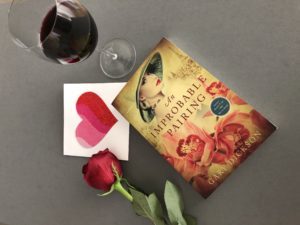
Flowers, red roses the best
Chocolates, high in Cacoa
A well-chosen card
Jewelry, always a winner
Lingerie, silk and lace
A candlelight dinner
Champagne, bubbles are nice
A romantic embrace
A whispered, “I love you.”
A passionate kiss.
The post A Man’s Checklist for Valentine’s Day appeared first on Gary Dickson.


December 20, 2018
A Panettone Christmas
A Panettone Christmas
Gary Dickson
Hardly any English was spoken, and my French at the time was shaky, but more to the point, my Italian consisted of a few words, a friendly smile, and a repertoire of gesticulations. I was in Ascoli-Piceno, Italy for Christmas. Ascoli lies 130 miles Northeast of Rome just 25 miles from the Adriatic coast in an area known as The Marches. In 1965, to say that it was off the beaten path would be a gross understatement.
I wasn’t backpacking around, hosteling my way through Europe. No, I had come to Ascoli by invitation from the Marquis Pio Ambrosi Natale Saccone, my good friend at the university in Lausanne, Switzerland. We shared an apartment. My guess is that he felt sorry for me. I would be alone and a long way from home over Christmas. From Lausanne to Ascoli required an arduous train ride with a change of trains in Milan. I arrived around eight in the evening in San Benedetto del Tronto, a coastal town some twenty-five miles from my destination. Pio’s man servant, Giorgio, picked me up at the train station. Giorgio had no problem identifying who I was.
About an hour later we arrived in Ascoli on what looked like the main piazza. Giorgio pulled the car into a porte-cochere of a palazzo that ran for the length of the square. And I was not the only one approaching the front door. Dozens of people were being greeted by a small entourage inside, and about that time I heard Pio. “Gary, you’re here.”
I had arrived mid-party. I gauged there were well over a hundred people at this feast that would last into the early hours of the morning. And the next day more partying, it was Christmas Eve. Pio introduced me to his parents, Marchese e Marchesa Saccone. His father was reserved and sour, maybe even resentful that his son had invited a stranger into their midst, but his mother, a beautiful woman, formally dressed, jewelry dripping from every appendage, was warmly welcoming. She and I remained close friends until her death many years later.
In what appeared to be a giant ballroom–one of many I was to learn the next day–a buffet table had been prepared. At one end were all the shellfish, oysters, and caviar, followed by various pasta concoctions and risottos, then the fish dishes of roasted cod, fried eel, next the meat dishes of pork loin, steak, beef roasts, chicken, and lamb chops. The cheese and fruit had their own layout, and finally came dessert, more pastries, cakes, pies, and candy than I had ever seen in one place. And centered among them all was a series of round domed cakes of an unimposing presence, circling a large bowl of mascarpone. Pio informed me that this was a traditional cake served mainly around Christmas all over Italy. It’s panettone he said. A feathery light white cake with dried citrus fruit and raisins. The mascarpone improves it a lot. Over the next three days it was always around even warmed for breakfast.
Funnily enough, it has followed me over the years. Christmas is not really Christmas without my panettone. When I left Ascoli for St. Moritz a few days later, I had a parting panettone under my arm.
The post A Panettone Christmas appeared first on Gary Dickson.
November 19, 2018
Swiss Thanksgiving

Swiss Thanksgiving/ 1964
In Switzerland, the fourth Thursday in November isn’t special. It’s just another day like any other unlike in the United States where it’s Thanksgiving.
I was invited as a friend of a friend–and I’ll say straight off that I regret that I wasn’t more appreciative of the hostess’s gesture at the time. Madame Geneviève des Beauchamps had taken it upon herself to organize a Thanksgiving dinner–in French as it has become known, le jour de Merci Donnant– for her somewhat adrift American friends and a few more of those considered sympa towards Americans.
While I didn’t know Madame des Beauchamps, one of my acquaintances–Karen of Philadelphia and the Main Line–who was attending a Swiss boarding school in Clarins was. Karen was the reason I was included.
I picked Karen up in my Austin Healey around 15:00, three in the afternoon. And we only had to backtrack from Clarins to a remodeled farmhouse halfway up the slope on the lower Corniche above Lutry, a small medieval town with its famous bell tower, located on the Lake of Geneva between Lausanne and Montreux. The weather was autumn headed towards winter, cool but dry and a certain stillness and calm prevailed.
The farmhouse sat on a commanding promontory isolated by vineyards crisscrossed by small lanes bordered by walls of long ago origin. Moss and lichen encrustations splotched their north walls. By November, the once green vines heavy with fruit are gnarled and only the support wires and stakes stand out casting a desolate landscape, yet the sky was a crystal blue with the sun just beginning to be tangent to the peaks of the Alps.
Karen introduced me to Madame des Beauchamps, immediately recognizable as a woman of sophistication and hospitality, while Monsieur des Beauchamps, who I learned later was a violinist in the Lausanne Symphony Orchestra, was more reserved, even shy and self-effacing.
Although the farmhouse was modest from the outside, the interior reflected the taste of a connoisseur des arts. No item escaped the expert curation of someone who knew what they were doing. The casual seating arrangements comfortable and conversational, luxuriously clothed in silks and skins. Lighting fixtures and all manner of interesting and varied glass and metal bric-a-brac were silhouetted against walls and paneling of imported woods and tiles where important works of modern art watched over us. The Thanksgiving table, a setting for twelve dominated the space in front of the huge window that overlooked the vineyards, the lake, and the Dents du Midi. Baccarat crystal, Christolfe silver, and Bernadaud china were positioned on hand-embroidered place mats with motifs of Swiss Alpine origin. In the middle of the rectangular but hand-hewn farmhouse table were two flower arrangements with orange roses, green pine needles, and miniature fir cones.
I can’t remember each of the twelve. There was Karen, myself, Monsieur and Madame des Beauchamps, a couple, I believe Edward and Elizabeth from Kansas City, he working for Citibank, and a young woman, Molly, an American, another American from Minneapolis visiting Molly, a Dutch couple, he working for the International Herald Tribune, but posted in Geneva. There was another couple, I think a banker with Credit Suisse and his wife, but they were at the opposite end of the table. Most of the conversation was in English although the Dutch couple and the banker couple of course spoke excellent French.
Tradition dictates that most special occasions begin with Champagne. And this was no exception. Just the right amount of time was allowed by Madame des Beauchamps for all the guests to arrive, enjoy a flute or two of Champagne, size each other up, and then dinner was served.
The meal began with a cocktail of crab and hearts of palm on a bed of butter lettuce with a sauce Louis accompanied by a crisp Swiss white Dezaley. Next, came not the moribund turkey that I was accustomed to, but a magnificent Bresse chicken, prepared with a cream sauce laced with mushrooms. A medley of sautéed vegetables was there for those not mesmerized by the chicken. A Pommard from Burgundy was the perfect wine pairing for this dish. Dessert was a delicious combination of fresh de-veined blood orange slices and a lemon sorbet with a dollop of crème fraiche. Coffee and Kirschwasser–a Swiss aquavit based on cherries and the omnipresent squares of individually wrapped chocolates finished us off.
I remember that after dinner we all moved to the living room where now we could see Evian’s lights across the lake. It seems that at least some of the conversations touched on the nostalgia of Thanksgivings past with families and friends at homes in the United States. As the afterglow began to wear off, first the Dutch couple thanked the hostess and wished us all well and said their adieux. And once a break is made, a general exodus slowly but surely follows. Karen and I too thanked the hostess and elaborated on her thoughtfulness, the excellence of the meal and the good camaraderie that her generosity had provided.
I’ve always liked Thanksgiving more than Christmas, less stress and less competition. And I have many great memories of my own small family and my extended family particularly while my grandmother was still the matriarch without rival. But I will always mark down my unexpected Swiss Thanksgiving as one of the best.
The post Swiss Thanksgiving appeared first on Gary Dickson.
October 9, 2018
PERFUME
Poetic License
Une femme sans parfum est une femme sans l’avenir.
A woman without perfume is a woman without a future.
Coco Chanel
A woman’s secret weapon. Men don’t know they like perfume. They only know they like you. Don’t confuse them with specifics. And most of all, don’t tell them what you wear. After all your perfume has two parts: the perfume itself and then your own unique pheromone scent. Used sparingly and judiciously you can lead your man down the path you desire.
But, please… perfume–eau du parfum, not eau de toilette. Perfume lasts two or three times longer than eau de toilette, and you never know when that special something that–je ne sais quoi– might be required. There’s a perfume for every woman, every season, and every occasion. And you can’t have just one.
If you’re ever in Paris, Caron, on the rue Francois 1er will formulate a perfume tailored just for you. A luxurious and self-satisfying treat. You’re worth it.
as revealed by the Countess
The post PERFUME appeared first on Gary Dickson.
Chic Shirts
The extensive measurements are taken on the third floor where you’re escorted by one of the very reserved and courteous staff. The tape measure held in the seasoned hands of the tailor has mapped many a torso’s dimensions and inevitable asymmetries. Who knew there would be at a minimum twenty-five to thirty individual numbers of calibration? And all this…for a shirt?
When in Paris, most visitors think in terms of monuments, museums, fashion and of course food and wine. But what is not readily apparent is that Paris, and indeed France, is home to some of the most talented artisans producing goods and services of the highest quality in almost every conceivable category.
There are the well-known houses of Cartier/jewelry, Baccarat/crystal, Christolfe/silver, Hermes/leather, and Bernardaud/fine china, but these are only a few among a cadre of others that are experts at their specialty. Producing exquisite wallpapers, rare book bindings, as well as all the haute couture support industries of finishing techniques such as embroidery, lace-making and jewel appliqué. In France, there is a fierce pride in craftsmanship and in the intricate and passed-down knowledge that is revered to be part of the patrimony of France. It is considered a national treasure.
Which brings me back to shirts. Every year as I invariably make my way back to the City of Light…and Love, I always look forward to my visit to Charvet; a store considered to be the finest tailor of shirts in the world and reputed to be the world’s first retail shirt maker. As a matter of fact, Charvet holds so many firsts in the bespoke shirt category that there is no second place. Charvet was the first to cut cloth in shapes to fit the body rather than in random squares, first to cut the shoulder yoke, first with the folded down collar, and the list goes on and on.
Located in Paris at 28, place Vendome, the beautiful square that is midway between the Tuleries Gardens and the Opera. This storied square is also home to some of the world’s most important jewelers like Cartier, Boucheron, Van Cleef, and Mauboussin. And the famed Ritz Hotel stands across the square strategically located for Charvet’s customers. The firm dates to 1838 and even prior to that the family and founder had a connection to Napoleon Bonaparte as the keeper of the “linens” which included bedding, shirting and underwear. Since Napoleonic times through wars and worse, Charvet has continued to make shirts for luminaries of each period including Edward VII, and many other royals, Charles Baudelaire, the French poet, Marcel Proust, Charles De Gaulle, Nelson Rockefeller, Baron de Rothschild, John F. Kennedy; the list is endless.
My own experience with bespoke shirts started in London back in the mid 1960’s. At that time, Carnaby Street was fashion-forward central, and I had a few shirts made by John Stephen, the King of Mod, as he was known, who also made shirts for The Beatles and the Rolling Stones. I can’t say I would wear them today, but I wish I had saved at least one of them because they have become quite valuable as collectibles of the period. Then in Florence, Italy, I had handmade shirts, a gift from my father-in-law of the time. He was obsessed over his shirts to the point that he had the tailor make his shirts and boxers in one piece. This unusual architecture prevented the shirt from gradually creeping out of the trousers and the result was a kind of day-long smoothness to the shirt. In Florence, real Florentines had everything handmade, suits, shirts, belts, shoes, ties, gloves. After these early experiences, finally, about fifteen years ago, I got up enough nerve to enter those revered halls at Charvet, aka the Mecca for shirts.
While Charvet sells ready-to-wear shirts in the Paris store and across the world in exclusive stores like Bergdorf Goodman in New York, the inner sanctum is the third floor in their signature building on the place Vendome in Paris. Here there are 6,000 bolts of cloth displayed. Organized by color, stacks of cloth are piled on tables and stuffed in shelves, filling the entire floor. Moreover, each color way encompasses a complete spectrum of the color in solids, stripes of varying widths, dots of graded diameter, and checks in various sizes. Then there is “the wall of whites”, hundreds of shades of cream to white to bright white, white on white, cream on white, white with stripes, ad infinitum. As Jean Cocteau once mused, “it’s where the rainbow gets ideas.”
The Charvet experience begins with the measurements, but then a barrage of other questions come up; like what cloth? Most of the shirts are made from the finest Egyptian cotton from the Nile Valley, but there is silk as well and all kinds of weights of cloth dependent on season and geography. Buttons are important, too. Only Australian mother-of pearl from the top surface of inside the shell will do for the elegant buttons of a Charvet shirt. Then there is the choice of collar style, and whether French cuffs or regular buttoned sleeves. Meticulously, they tailor the left sleeve with a greater circumference to allow free passage of the cuff over a large wrist watch accommodating the current fashion. Finally, the style, size, and location of the embroidered initials are determined. I take mine plain, no initials. But before any shirts are made, a sample is prepared for a “fitting.” Only after everything is verified for appearance and comfort will the shirts be made. And each shirt is made by a single artisan. No assembly line efficiences here.
Over the years, I have built up quite a collection, and my inventory allows me to wear each shirt sparingly. And it is important how they are cared for because rough machine laundering and pressing can do more harm than any wearing can. I have also discovered that there is a side health benefit to owning these lovely shirts. I call it the Charvet scale. When any of my shirts start to get a little tight, I cut back on the calories to make sure that the shirts don’t become obsolete.
Most years, I’ll fill in where I think I’m short a color or trend. Charvet is constantly designing new shirt fabrics with new designs and colors and combinations, some 1000 annually, all of which are registered. Now when I go in—I make an appointment– I’m always greeted by the same person, who has an encyclopedic knowledge of what is new, what I have, and when I bought it.
And there was a year when I didn’t make the pilgrimage, but not to worry, a selection of swatches was sent to me. I made my choice and voila, four weeks later the shirts miraculously appeared. And Charvet has clients all over the world who routinely use this personalized service.
Once and awhile, I will buy other shirts that I like, but I always continue to patronize the artisans on the place Vendome, because I respect and treasure their devotion to their craft, plus there is hardly anything more luxurious than having something made specifically for yourself.
The post Chic Shirts appeared first on Gary Dickson.
October 3, 2018
Hair
N’oubliez pas que les vents joueraient voluntiers avec vos cheveux.
Don’t forget that the wind joyously plays with your hair
– Gibran Khalil Gibran
Hair, obsession is the rule, considered quite normal to fuss and fume. Hairdressers, part coiffeur, part psychologist. With him, our chief confidant is formed a conspiracy of two, determined to highlight and color, curl or straighten, volumize, texturize, cut, or trim. “Just do whatever, but make me beautiful Jean Claude.”
as revealed by the Countess
The post Hair appeared first on Gary Dickson.
La Choucroute
Choucroute
The Alsatian specialty, brought to Paris
A region know for its dried and cured meats
This dish known for its sausages and sauerkraut
And potatoes prepared, the steamed version
After the disastrous Franco Prussian War,
The Alsatians fled to Paris
Carrying their culture including the breweries
The Choucroute and the draft beer
The plate itself is a celebration of pork
No one leaves the table still hungry
Lovers of Choucroute are strict
The sausages of Strasbourg and Montbéliard are required
Only in the bistros of Alsace or in those of Paris
Unfortunately, the Choucroute doesn’t travel far.
———
La Choucroute
Spécialité Alsacienne apportée à Paris
Cette région bien connue pour sa charcuterie
Ce plat gouteux de saucissons, et de choucroute
De pommes de terre préparées à la vapeur
Après la guerre désastreuse Franco-Prussienne
Les Alsaciens ont migré vers Paris,
Portant leur culture incluant leurs brasseries
La choucroute et la bonne bière à la pression
Le plat est une célébration festive du porc
On ne quitte pas la table en ayant faim
Les amateurs de la choucroute sont très stricts
Les saucisses de Strasbourg et de Montbéliards exigées
Seulement dans les bistros de Paris ou en Alsace même
Malheureusement la choucroute ne s’exporte pas trop loin
———
As excerpted from: La Poésie de la Bonne Bouffe/The Poetry of Good Eats by Gary Dickson
The post La Choucroute appeared first on Gary Dickson.