Jared Beasley's Blog
January 17, 2024
Leaving Alabama: A Case Study in losing the best.
The fallout of Nick Saban retiring from Alabama has led to a flood of decommitments and transfers. The aftermath of what is taking place will resonate through the sport for decades.
Some people texted me before the CFP that this was, in their estimation, the last season of college football as they knew it. I pushed back. The ideals of college sport - love of team and teammates - would win out I told them. I was wrong.
Alabama hired a new coach lickety split, one that was just in the National Title Game. That took 48 hours. He called a team meeting right away. Two days later, he had a team in place: a top OC, top offensive line coach, one of the most well-regarded general managers in football, and two sitting head coaches to add to the defense. It wasn't enough.
Wednesday, Alabama's top player, Caleb Downs left the program, most likely the linchpin holding what's left of the team together. Before him, there was DB Dezz Ricks, Antonio Kite, and Bama's best wide receiver, Isiah Bond. Texas snagged him up so fast you'd think he'd already been on speed dial. Word was NIL money in the $700,000 range and the promise of a leased Lamborghini sealed the deal. "A business decision," Bond told ESPN. One hour after Down's announcement, starting left tackle Kadyn Proctor entered the portal. Bringing in Joe Moore award winner Scott Huff wasn't enough to hold him.
The question is: what pulled him away?
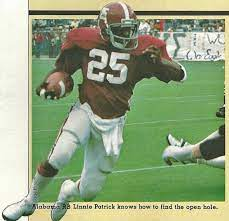
I saw my first football game at Legion Field. It was the 315 game. My stepfather held me up so I could catch a glimpse of Bear Bryant, and I can still see Linnie Patrick breaking five tackles on a run - a flash of white and crimson - the thunder of thousands of adults rising to their feet. The 33-yard scamper is featured in Alabama's “Our Tradition” video for every home game. The sophomore surely would have left for another school his senior year after Bryant retired in '82. That is, if it were today's world. If the sport of college football had such a promotional video today, I wonder what would it show? If the past week is any indication it would most likely have money raining from the sky, bright orange sports cars, and players donning Mr. T-sized gold chains.
Players can now take money without contracts. They can accept cars and gifts. If a coach retires, they have 30 days to leave and find a new home. Teams, however, cannot. The only hope Alabama has of replacing the players it's losing, which at current count is 25 scholarship players, is to pick off free agents fleeing other schools who've lost a coach. Techinically, if there weren't any other recent coaching changes, a team could desert a school, and there would be nothing the school could do about it. An empty backfield would take on new meaning.
What's happened to college football? What's lost? Some might say everything. At least, everything they watched the game for. Fans love their schools, their colors, their fightsongs, and traditions. The greatest loss may be what Saban fought so hard for at Alabama, the idea of team. The A in the center of the field meant something. You didn't walk on it casually wihtout getting barked at. Team was something greater than the individual; it was something to buy into.
No one can fault Caleb Downs for choosing to go wherever he ends up. Most likely, it will be with the promise of something more attractive for his future. A certain coach. A better connection with the NFL. But the kid could've started anywhere. What he won't find somewhere else is what he's leaving - his team. He missed a great opportunity by choosing to go. If he'd stayed, he would have been a leader, someone whom the rest of the team would have looked up to for staying the course, "finishing" as Saban often put it. He would have been the promise for a new recruiting class - a stable of DBs that would want to play with him, learn from him. Hear how Saban did things.
What's lost?
Maybe what kept Bryce Young and Will Anderson, just a year ago, in the bowl game. Alabama wasn't selected to the playoffs. As talking heads like Danny Kannel would tell you this year, the games no longer mean anything - why play? But they did play, and won. It did matter - to them.
Maybe, it's what brought Tommy Lewis off the sideline in the 1954 Cotton Bowl to tackle Rice running back Dickey Maegle. "I was just too full of Alabama," he told Ed Sullivan.
https://www.youtube.com/watch?v=eSteCSinjTsUltimately, the A in the center of the field meant something. It not only represented the sweat and pain of the offseason, but the look of pride in their teammates' eyes, many who were playing the highest level of ball they would ever play. It represented the scout team that showed up to get hammered for no glory, who have a name but no image. It represented the past: Joe Namath, Kenny Stabler, George Teague, Scott Hunter, David Palmer. It represented Bart Starr and Cornelius Bennett, Tua Tagovaila, Jalen Hurts, Devonta Smith, Tyrone Prothro, and Linnie Patrick.
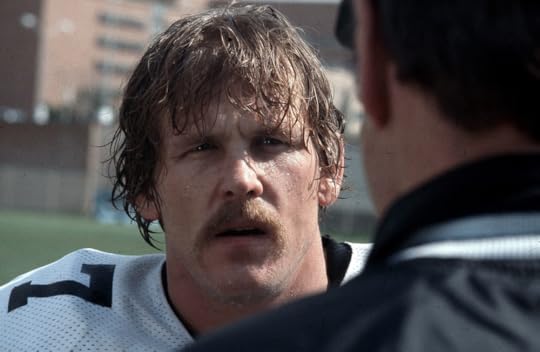
After Saban retired, I felt compelled to rewatch North Dallas Forty. The film and novel are bleak reminders of the stench of business in sport. "We aren't the team," Nolte screams to the coach at a board meeting. "They're the team," he says, gesturing to the owners as they sit silent - their plan of pushing the wide receiver out working to perfection. "Hell, we are just the equipment."
It's only when the business turns on you that you realize that, when the dollars run out and the car won't run anymore. In the past, your former teammates would be the ones to pick you up and get you on your feet. Afterall, you bled together, triumphed together, and yes failed together.
There is no "I' in team, coaches have always said. But there is a "me." If serious changes aren't made and fast, College football will simply become be NFL B.


December 22, 2023
The Grand Strand's Ultimate Creation

The bunkers weep from greens into the dark water of the lagoons. And the greens? Some have five tiers. The tee boxes? There are so many levels and options that given the variations with the greens, a hole can play differently each day of the week. This course was not created by one of the all-time greats that fill other properties in Myrtle Beach. Names such as Player, Nicklaus, Jones, Dye. This one was created by Mike Strantz. And he was an artist.
Located between a busy four-lane highway and the Waccamaw marshlands, sits the most innovative yet playable golf course on The Grand Strand. Nestled in the heart of Pawley's Island, South Carolina is True Blue.
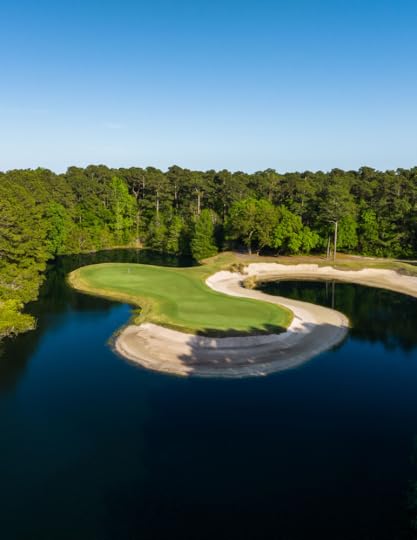
Its sister course sits across the road and boasts iconic views of the Waccamaw marshland. It was Strantz's first creation. But True Blue may be his best. It curves and weaves through trees and swamp and lakes. The par-five fourth, curves like a crescent moon around the water - waste bunkers line the shore and slope down until the ease into the lake. The green is not overly bunkered. Not many are. But they are strategically placed. The par-three third is a marvel to behold. The island green is one of the largest I've seen, but it's the shape that sets it apart. Imagine a scrunched up bottle cap. But still make it elegant.
The front nine finishes with a par-five and hole 10 gives you another straight away. The long ample driving area narrows as the fairway bends hard right. A line of waste bunkers form a barrier to a next-level fairway. Reach that and you have a strip of swamp to fly to get to a well-placed bunker and onto the multi-tiered green. The par-three 14th... well... just go - see it - play it. Enjoy.
August 31, 2023
Wozniacki at 33 - The U.S. Open at 50

After three year out of the sport of professional tennis and giving birth to two children, Caroline Wozniacki returned to the U.S. Open and defeated eleventh-seeded Petra Kvitova. It was a brilliant match, wisdom versus power, the former winning out in long, turbulent ralleys in the late August humidity of Queens, New York. Odds given on ESPN before the match, gave Wozniacki a less than 20% chance of victory.
But this is the U.S. Open, where women have now been paid equally as their male counterparts longer than any other major - 50 years now. The energy on court in New York is unlike any other. Unruly, loud, irreverent, but alive in a way that makes dreams reality. For Wozniacki, who had been in the booth as a commentator and fought a chronic battle with arthritis, it was an unlikely dream. Her opponent had more power, more recent experience, had a rhythm hard to emulate in practice. But Wozniacki took the first set and kept the pedal down in the second. After dropping two match points, it seemed, the momentum may be swinging against her - the picture she stayed up at night painting of returning to Arthur Ashe fading away back into a dim, elusive fantasy. Then she striped a couple of winners and it was over.
Such is the power of the age we live in. A mother of three, at 57, recently became the second woman to ever run 300 miles in three days. She did it in one of the toughest race formats in the world. At 50, Queen's porter Memo Morales consistently places in the top tier of athletes half his age in New York road races. It certainly seems, whether you believe 50 is the new 30, that the idea of aging is changing - for the better - that we are not what we thought we would be at a certain age; that proves to be the lie: that we have to be what came before.
Wozniacki isn't listening to those age-old tropes. We shouldn't either.
August 17, 2023
Video-Game Golf is Real

Golfzon has just opened its second location in the United States, and it is so happened to be next door. I gave it a testdrive, and these things aren't playing.
First, the graphics are outstanding. There is a certain supsension of disbelief that occurs that really makes one feel "on the course." The Kawana Country Club with vistas of Mt. Fuji was not only stunning but accurate. From high on the tee box, the fairway soared down to a valley and they climbed back up a steep slope to the green - all visible. How do they do this? By scanning the course with drones and a body on the ground walking the property with a scanner. The result: an extremely accurate recreation of many of the most famous golf courses in the world. Pebble Beach. Beth Page Black. Torrey Pines.
Aiming comes natural - hit it left, it goes left. Hit is right, it goes right. Have a sidehill lie? The bay moves. That's right. It angles with the slop of the fairways and greens.
Then, there are the numbers: clubhead speed, ball speed, backspin, sidespin, carry distance and more. Those looking to seriously improve their game can get lost in this facility for days.
And did I mention this place also serves booze, totally decent food, has couches and booths galour? There are fourteen bays for hitting. This place is big!!
Here in New York and other places that can endure hard winters, Golfzon offers a heated or air-conditioned space for you to play golf. For real.
March 29, 2023
Backstage at the Barkley Marathons
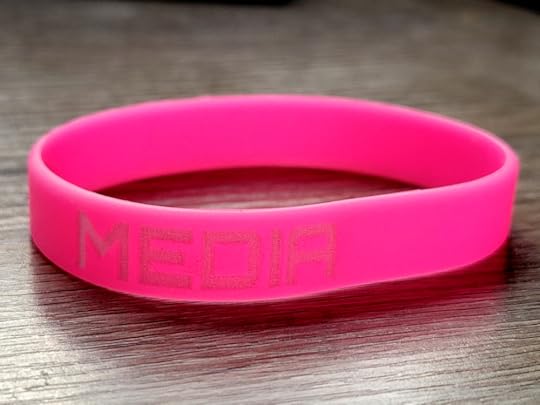
This year, I joined the Barkley Marathons as a member of the media. This is a peek at my experience.
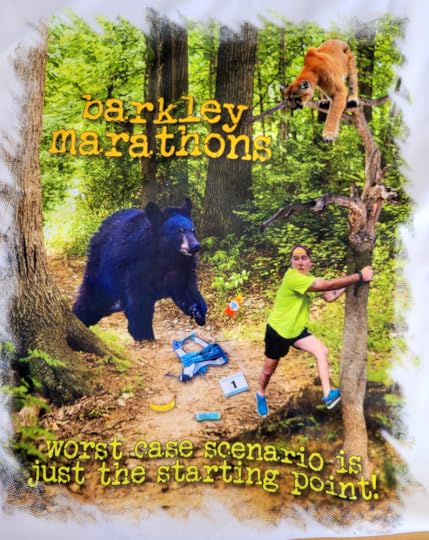
Everyone at the Barkley, no matter in what capacity, will endure adversity. This I learned quickly as the weather shifted as soon as the runners checked in. A wind came upon us like a monstrous hand from the sky and tore through the mountains and into camp. What had been moderately warm weather turned frigid. Snow, then icy rain.
Most of the journalists and camera crews fled 30 miles away to Oak Ridge and the comforts of hotels. One of these was a German crew that had arrived a day early. They missed the start by 10 minutes.
When night fell and you could hear the wind whistling on top of the mountains, the enormity of what these runners were going to be asked to do made you think of war - how nature didn't care what silly cause your were fighting for - how it was going to do its thing regardless. In Frozen Head State Park, it felt like the land wanted its space back. Mike, a journalist and photographer, shared my parking space with me. I could almost hear him shivering in his 4x4. I certainly was in my rented Nissan Murano.
I'm a film person. I process things through films stored in my psyche. For me, I was reminded of "The Amityville Horror," specifically the scene where the priest enters the bedroom on the second floor. He was already in a cold sweat when a voice came from somewhere in the walls: "GET OUT."
At 11 p.m., camp went to DEFCON 3. At any moment in the next 12 hours, Laz could blow the conch and send crews and runners scrambling to get set for a cigarette and a start. Sent to cover the race for The New York Times, the last thing I wanted to do was wake up to daylight and the knowledge that I'd missed it. Exactly how loud would this conch be anyway? Twice a person in a tent next to me blew their nose like someone trying to work a duck call. Both times, I jolted upright and looked around for signs of life in the camp. Are we on?
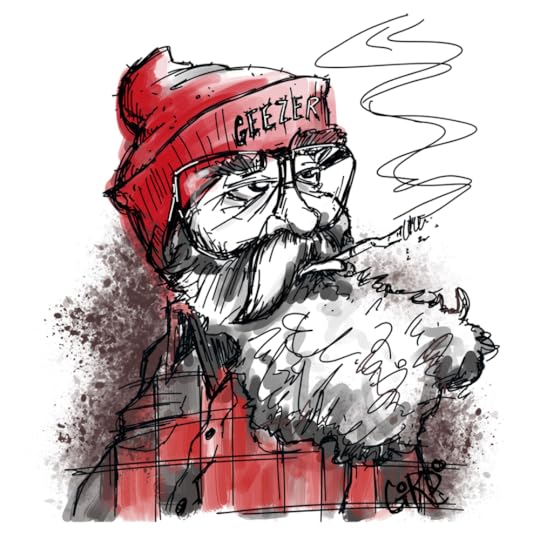
I checked my phone out of habit, but it was useless. I've seen one bar and sometimes no bars on my service icon. This was the first time I saw an "x." We were cutoff and alone. We were on unfriendly ground. Hundreds of prisoners had died in those mountains, buried without ceremony when the walls of a mineshaft would cave in. The guards would just leave them. You felt for these people. Given the manner of their deaths, you were certain they weren't in hell. But... given what they'd done to get into Brushy Mountain State Penitentiary, you were fairly sure they weren't in heaven either. You got the sense they were in limbo, in the park itself, and roamed restlessly looking for souls to harass. Ahab at the gate with the mountain-man beard and the "Geezer" toboggan seemed to invoke them. He sat next to a kerosene lamp, smoking a cigarette.
Sometime around four a.m., I nearly ended the Barkley before it began. I'd gotten too cold. In my thermals and down and under three of my grandmother's quilts, I was turning into a human-flavored popsicle. But, I had another problem. I couldn't turn on the blasted heat. The rental car had fog lights that would not turn off. Yes, I know the switch on the left-side handle that you can usually rotate and cut them, but it would not, I repeat... would not work on this vehicle. This meant that if I turned the car on to get warm, I'd be shining light into numerous tents, interrupting the much needed pre-conch sleep of the runners. But I had to move - take action. This race was about making decisions. I obviously had come in underprepared, but no sense wallowing in it now. Let's go.
I had the idea to make it to the bottom of the camp where there was a much larger parking lot and a light pole. There, my lights would bother no one, and I could get warm, crack a window so I wouldn't suffocate, and get some sleep. But would I be able to hear the conch?
Anyway, I was moving, my hands shaking on the wheel. Unwilling to hit the entire camp with my light beams, I drove with only the fog lights on. I weaved down the narrow lane between the dark shadows of tents and campers like a slalom skier. I nearly took out Harvey Lewis' whole setup but with a quick jerk to the left, I whispered right by him.
Safely at the bottom, I got two and half hours of perfect sleep. Warm as a bug in a rug. Then, nerves got the best of me. Had I missed it?
Back into the slot next to Mike, I saw a few signs of life but nothing out of the ordinary. A lady was exiting her RV in the spot next to us. "You hear the conch?" I asked in a raised tone, not wanting to step out into the cold unless need be. She shook her head side to side. Ah, no way to go back to sleep now, I thought. So, I layered up and stepped out. No sooner had my feet hit the ground then I heard the moan of the conch. Nope, if I was asleep, I never would have heard Laz's one-hour to "places people" call to camp.
It was like dropping a smoke bomb in an ant mound. Arms and legs and faces were scurrying about in all directions. They carried food and thermoses and running gear.
I made my way to a rock behind Laz and Keith Dunn and suddenly... a powerful feeling poured over me. This was the Barkley. Behind them stood the gate and beyond that were faces and names I'd written about for years but had never met. They were strangers to me, but I knew them in some way. At least, I had the warm feeling that I did. They were familiar. In a malevolent place like Frozen Head, it was comforting.
Laz lit his Camel and off they went. "It's fun time," he yelled back up the trail behind them. And suddenly I was wide awake. My fatigue had vanished; the cold and the sleet and the sleeplessness were rendered irrelevant. This was a race. This was the Barkley.
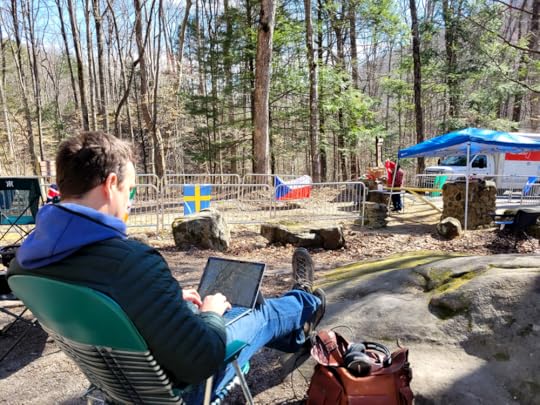
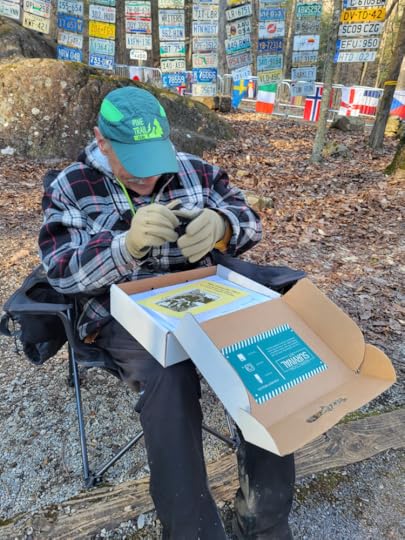
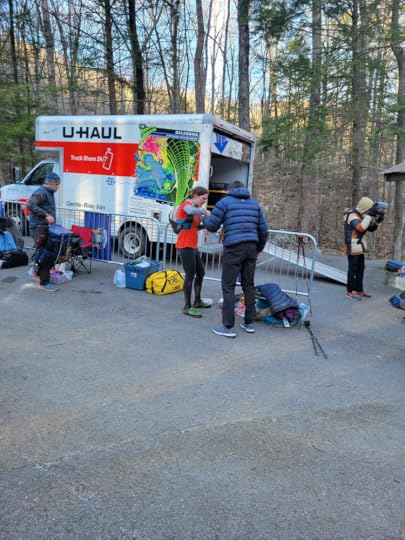
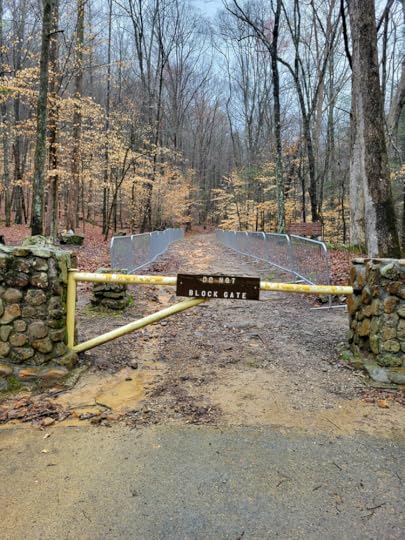
#BM100 #ultrarunning #NYTimes
December 14, 2022
YOU have received a special CHRISTMAS GIFT

A special game. A true sport of mind and body.
Not everyone who plays golf will become a golfer. Not every golfer will become decent, much less will ever be deemed to be good. For the latter, it takes years of dedication, focus, opportunity, patience, willpower and a true, bottomless love of the game.
For women, it may sometimes seem like an uphill battle. Golf shops have less options for them. Tee boxes can sometimes be inconsiderate and overwhelming, making courses appear demonstrably long. Only 1.98% of female golfers ever break 80.
Those ladies that have managed it are proven golfers and the game becomes less a sport and more of a way of life. They are elite.

It is with great pleasure that I can now inform you that this Sunday at 11 a.m., you have an appointment at GOLFDOM.
Unfortunately, Jon Pak, world-renowned club-fitter, does not work Sundays and Mondays. However, due to a last-minute phone call by an impassioned husband and Jon Pak's immeasurable generosity and the fact that he lives two minutes from the store, he has offered you a special club-fitting appointment... for CHRISTMAS... for a new DRIVER!!
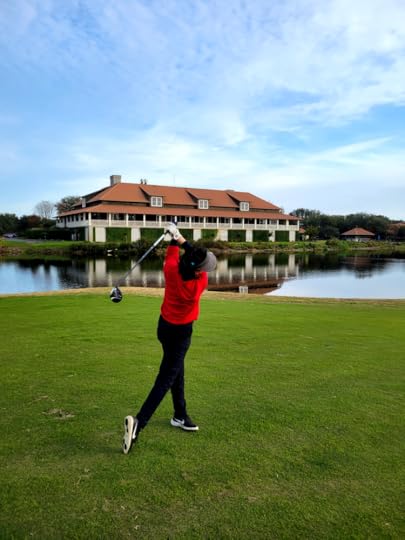
* Author's Note: This post was a surprise Christmas present for my wonderful wife, who on 12/13/22 shot a 39 on the front nine of Oyster Bay Golf Links in Calabash, NC. I couldn't have been prouder. I grew up playing this course with my father. It was one of his favorites. Just bringing her here has always been a pleasure, but seeing her grow in the game (now only five years in) to the point where she's on the cusp of breaking 80, I feel honored and enveloped with gratitude.
August 20, 2022
Jim Butera: Leadville's Lost Founder
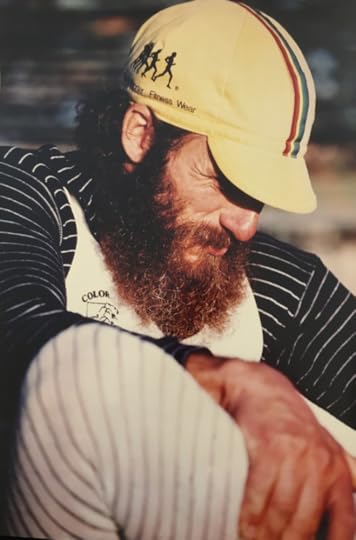
Will any of us be remembered? If so, how long?
It seems natural, when staring out at a vast ocean or a limitless sky, to say "not long." And what does it matter? As Woody Allen put it, homework is hard to do when "the Universe is expanding." He explained to his doctor, "the Universe is everything and if it's expanding, one day it will break apart and that will be the end of everything."
Yet, that doesn't stop us from hanging onto our memories, our past, the people and the moments that have defined us. It's how we make sense of movement and change: the spinning atoms and ringed planets and the miasma of unending cycles of political upheaval.
Jim Butera's place in the canon of the Leadville 100 is non-existent. He never fought to hold onto it. A select few, however, refuse to let it slip away.
In 1983, Jim was working in Frank Shorter's running store outside of Denver, Colorado. He sold shoes, ran a Colorado ultrarunning club, and lived for time alone in the mountains. He spoke to everyone who entered the shop. A good salesman does. But there was something different about Jim. He was a dreamer. On the walls hung handmade fliers for his biggest dream yet: a 100-mile race across the high mountains of Colorado. First, he thought to hold it from Vail to Aspen and switch the starting point each year. A more practical sensibility led him to a mining town, reeling from the collapse of their mine: Leadville.
Jim mapped out the course and measured it with a bicycle wheel, an innovation of ultra pioneer Ted Corbitt. He started the race that year, 1983, and served as race director till '85, when he decided he wanted to run it. Afterward, he left Colorado for California and a chance to make more money - something he never had much of.
Since then, the Leadville 100 has become an icon. Due in large part to the charisma of Leadville local Ken Chlouber, who organized the race until 2010. That year, he sold it to Life Time Fitness for over a million dollars. Each year, hundreds arrive in Leadville from all over the world. They hear about the town and the beauty and the dangers of the high Rockies. But they never hear of Jim. Only a few remember his contributions. One is his widow, Sheila Butera. She was kind enough to share this poem she wrote for him. (It is produced here in part.)
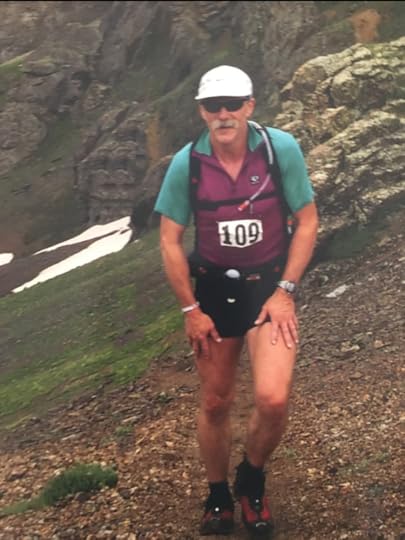
Jim
We loved him.
He made us laugh.
He was quirky. A one of a kind.
But oh what a man!
He was a free spirit.
Couldn't be hemmed in.
Loved the wide outdoors
and the sound of the wind.
He loved the good Earth,
The sun, moon and stars.
Yes, his precious runs took him afar.
He loved all animals, great or small;
They brought him joy, each one and all.
He never missed a chance to pet a dog as it walked by.
They warmed his heart and made him cry.
He pounded the dirt, crossed ragging streams,
And always lived out his wildest dreams.
He never wasted a single day.
Life was his treasure in every way.
He never let any grass grow under his feet...
The sacred grounds on which he ran will whisper his name
With each gentle sound.
**********************************************************************************
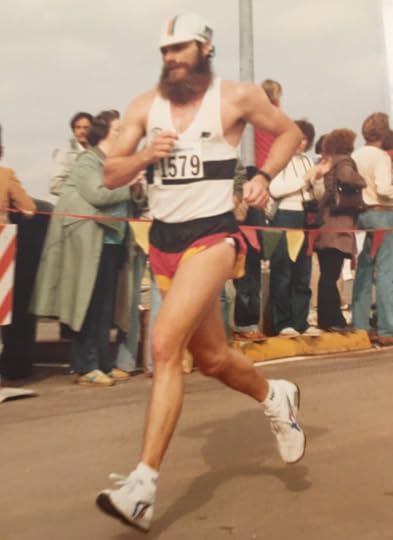
Jim was first and foremost a runner. He ran Western States in 1982 and finished three more times in his career. He ran Across the Years, the Pacific Trail 50, and the Gibson Ranch 24-hour. He won none of those.
His measuring wheel sits in Marge Hickman's garage in Fredonia, Arizona. Marge, a 14-time finisher, is one of a handful of Leadville veterans, trail hogs, firemen, and neighbors who still remember Jim. He passed in 2012, too soon. Those that knew him know he is still running - up there somewhere - on a never-ending trail, his steps as light as the clouds.
July 26, 2022
David Blaikie: A Season in Lowertown
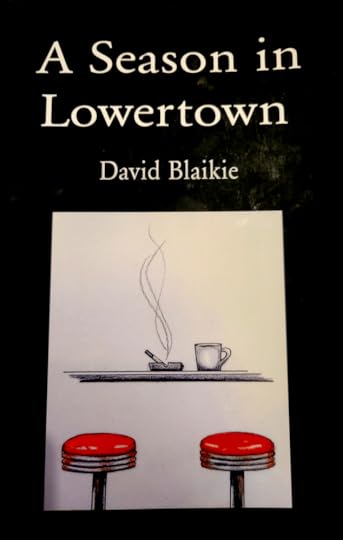
The business of sports writing is most often full of who did what, when, where and how fast. Occasionally, a "why" is added when space allows. Very rarely will you find poetry in it. However, when I first read David Blaikie's articles on Al Howie, I was transfixed by his prose - the beauty and the dirt and the truth in his pieces. Now happily in retirement, he's published a book of poetry on his early years in Ottawa.
"My season was in Lowertown in the 1970s, one of the oldest districts of Ottawa, just east of Parliament Hill and the Chateau Laurie Hotel, where the Rideau Canal tumbles through ancient locks to the Ottawa River - the neighborhood where French and Irish immigrants drank and fought, and made the capital of Canada to rise from the northern wilderness."
On the heels of a divorce, Blaikie found a certain solace sharing his cups with strangers and living in a humble abode on Friel Street - "a worn-out place that felt about right." The neighborhood came alive at night, and memories were both sharpened and blunted. Thoughts of what had gone wrong, what he might have done different, and of the greater vicissitudes of making something of yourself. He delicately describes the life of escape many of us, all too sensitive to the trappings around us, feel as we try to understand who we are by plying away from those we know we aren't - "I wanted no one and nothing to find me."
His poetry is a detailed collection of vivid vignettes - pieces of a city - the smell of a stranger - sex as a fleeting sanctuary, a spell broken by the morning light. In his work, we also see the transformation of the city and country, a political wave set in movement by wars, Nixon, and free love. One can't help but feel a sense of loss or be reminded of Hunter Thompson's "high water mark" line from Fear and Loathing in Las Vegas: "So now, less than five years later, you can go up on a steep hill in Las Vegas and look West, and with the right kind of eyes you can almost see the high-water mark—that place where the wave finally broke and rolled back.” There's is a loss of the dream in Blaikie's work as in Thompson's, a knowledge that things could have been different - if only we could have kept pushing, a sense that the loudest voice may have won the day and in their gluttony, overrun a bygone, simpler time.
Perhaps it is no coincidence then that Kerouac is such a prominent figure in this work. Having died at the tail end of the '60s, bursting his guts with drink, he looms large for those who grew up On The Road with his wild freedom and rambling style. Blaikie also battled with alcohol and opens up about it in flashes and visions in poems like "Melancholy" and "Quarts." But like Kerouac finds the beauty and poignance hidden in the everyday.
In this collection, we see Blaikie for the poet that he was, before there was running and pacing and timesheets. We see a writer who learned to report, not the other way round, a sensitive man, keenly aware of the world around him, who, like many before him, never forgot the small things - the taste of a cheap beer, the smell of the night air, the new feeling of being new and everything being uncertain and thrilling and alive. And in A Season in Lowertown, we see the poet that he has become, a wordsmith with a stout memory of "his season" in his part of the Capital and a gift for making it live again.
You can find his work on Amazon here.
March 31, 2022
Race Director Laz Lake and... the Times Square Torso Killer
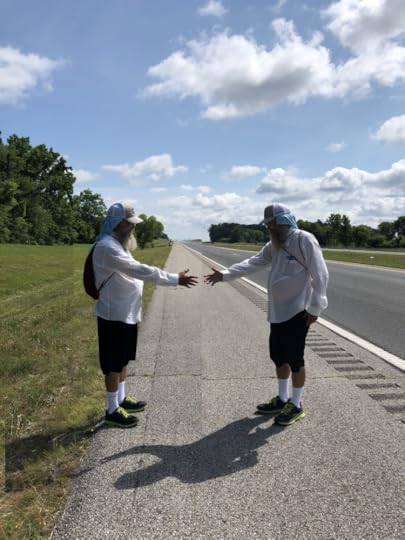
With someone like Laz, it’s rare you can add anything to the conversation. The iconic creator of brutal trail races and the innovative last-man-standing backyard ultras is a storehouse of information on everything under the sun. He's a student of life. He told me more about the geology of North Alabama where I grew up than any of my ancestors ever knew.
But while interviewing him for what would turn into the article Laz Lake's Math Problem for UltraSignup, he mentioned that he’d lived at the Quality Inn in Hasbrouck Heights, New Jersey for six months back in the ‘80s. I felt a perverse buzz well up in my chest. I have a twisted fascination with serial killers, and I asked him if he’d ever heard of the Times Square Torso Killer, the terror responsible for the deaths of 11 young women and who claimed to have killed 100. He hadn’t. I informed Laz that two of his victims were found murdered at that same Quality Inn in the ‘70s and ‘80s, and that Richard Cottingham, the Torso Killer, was arrested there attempting to off a third.
“They never told me about that,” he said.
Curiosity, it would seem, was not encouraged at the Quality Inn.
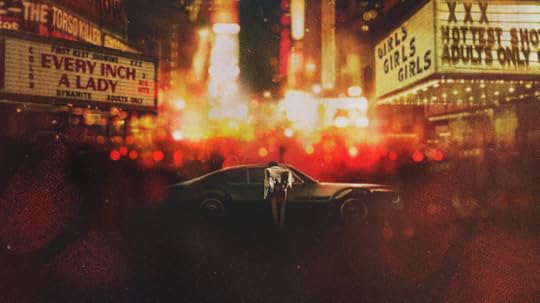
The Times Square Torso Killer also known as the Torso Ripper was named for two unidentified (at the time) bodies found in a motel on 42nd Street near 10th Avenue, an area referred to as Hell's Kitchen. They were both female sex workers and had been dismembered and decapitated on December 2, 1979, in the Travel Inn Motel. The room had been set on fire but not, according to authorities, with the intention of burning it down or destroying evidence but rather to bring attention to the atrocities he'd committed there. A recent documentary on Netflix titled The Times Square Killer, released on December 29, 2021, filled in many gaps in the story and trended on the top ten list for some time.
I decided, rightfully so, with some urging from my editor, not to include this tidbit in the article, but these bits of coincidence always stick with me. I had just seen that documentary when I interviewed Laz. Of all the places he's stayed and could have stayed in New Jersey? And how often do we name the motel we stayed at? Don't we usually just say, "I stayed in New Jersey for several months?"
I often find myself wondering about this interwoven world - how tied together things are even when life seems enormous, isolated, and alien. Do places have memory? Can people feel that? If so, only a certain, sensitive-minded kind? Or is it all just a crazy bowl of happenstance? Either way, it's intriguing as hell. No?
March 21, 2022
IMAGINARY EMPORIUM OF MINE
By: David Steven Simon
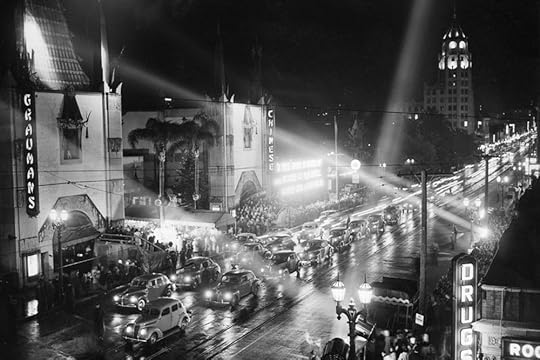
Ever since I was Late, Late Show little
I have lived in
A house bursting
with shimmering strangers
Whom I have never met
And cannot live without.
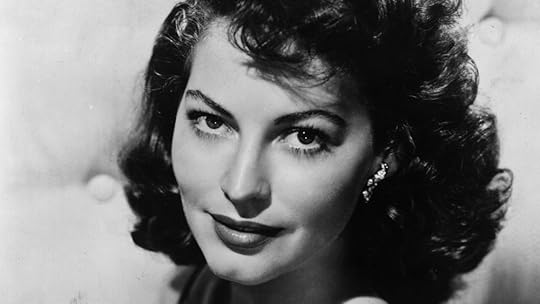
They are the movie spirits
Who have shrugged off time and death
With throaty, cocktail party laughs
Drenched in bone slinky gowns
And all night tuxes
Lit by the light of Hurrell
Diffused by plumes of Chesterfield smoke
Armed with trigger happy flasks
Tappy feet
Swooning kisses,
And jazzy bursts of
syncopated banter
That clicks and clacks like
The fascinating rhythm of a reporter’s
hot story keyboard
They’re clowns
who can tumble in a windstorm
cling for dear life to the spindly hands of a clock
shyly tip their derbies to flirty ingenues
And twirl their canes like a mini windmill.
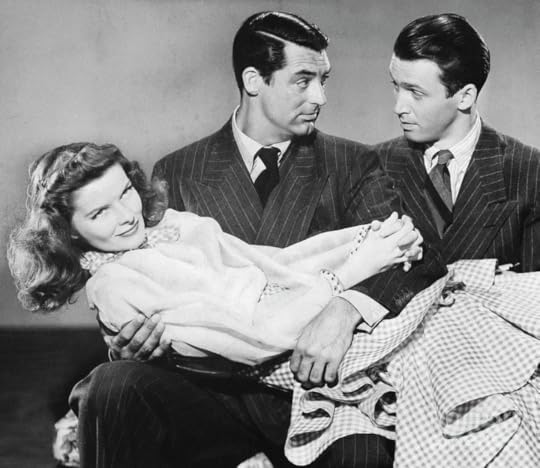
They’re coin flipping gangsters
crooning cowboys
twirling dancers
golden hearted harlots
baby faced soldiers
heavy lidded private eyes
and fated romantics
who always suffer from
a collapse of judgement
before love sets them straight
With the wake up call of just the
right kiss.
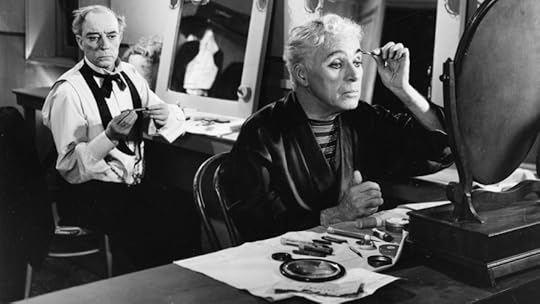
They are my on-demand friends
Each and every one of them
Who are as dependable as a pulse
And as vital as the stories
As the unpredictable people and
Threatening circumstances
Of my life
Continue to
Deviate from the script
wander off without direction
And fade out
Day after day
Without
A satisfying conclusion
I find that I am happiest
Living here
In this imaginary emporium of mine
With its silver screen walls
flickering light
CinemaScope tenderness
and happy endings
Which are always delivered
In the very dark
That I fear the most.
***
David has played a role in Hollywood since the 1970's and has written for many of the shows you've grown up with: The Fresh Prince of Bel-Air, Mad About You, Full House, Sister,Sister, The Wayans Brothers... to name a few.