Tim Calkins's Blog
November 19, 2025
Why Influencer Marketing is the Future
This fall I’ve been teaching the Influencer Marketing course at Northwestern University’s Kellogg School of Management for the first time.
It has been terrific fun, from preparing to teach the material to assembling the slides, to working the students and welcoming some amazing guest speakers.
One of the big takeaways from the class is that influencer marketing is likely the future of brand building.
The DataThe numbers behind influencer marketing are incredible.
A remarkable 86% of companies are using influencer marketing in 2025, and 71% of companies will be increasing spending in this area. Overall spending on influencer marketing is up by 55% vs prior year.
Unilever, for example, has committed to dramatically expanding its focus on influencer marketing. CEO Fernando Fernandez recently said, “Today, brands – by definition and by default – are met with skepticism when their messages come directly from corporations. Creating marketing activity systems where others can speak for your brand at scale is incredibly important. Influencers, celebrities, TikTokers – these are the voices that matter."
The ForcesThere are three factors driving the growth of influencer marketing.
The first factor is a basic truth: almost everyone has a smart phone. There are about 8 billion people in the world, and 5.8 billion have a smart phone. Virtually all of these people are on social media platforms.
Second, people pay attention to social media. We live in a world of information and clutter, so getting people to pay attention to anything is an enormous challenge.
One trend is clear: fewer people pay attention to traditional TV. Viewership statistics are dramatically down. The trends are similar for all the old media platforms: magazines, radio stations, movies and newspapers.
What do people pay attention to? Social media platforms like TikTok and Instagram. If you are a marketer, you have to follow your audience. If people are devoting their attention to social networks, that is where you have to be.
Social media is undergoing a fascinating shift. It is now less about following friends and family and more about watching engaging content. TikTok, for example, is an entertainment platform with millions of creators, most of which viewers don’t personally know.
Finally, there is trust, or lack of trust. People are skeptical, and reluctant to trust. Traditional experts no longer have the impact that they did previously. People are skeptical of politicians, doctors, insurance executives and marketers.
Remarkably, people trust the creators they see on platforms like TikTok and Instagram. While there isn’t a personal connection, people feel like they can relate to influencers. The authentic content of a creator has a significant impact.
The ImplicationThe combination of factors leads to just one possible conclusion. Influencer marketing is going to become more and more important.
This means that marketers are going to have to learn new skills, because influencer campaigns are dramatically different than traditional advertising efforts.
A marketer explained just one difference to me last week. In a traditional ad campaign, a company might develop two or three advertisements. Each one is tested and polished. In an influencer campaign, a company might engage 40 influencers, with each one creating three pieces of content. Instead of two or three spots, the company now has perhaps 120 spots of wildly varying quality.
Companies that understand influencer marketing can drive growth and new product adoption. Firms that are late to this world will miss out on opportunities and are vulnerable to disruption by innovative new entrants.
The post Why Influencer Marketing is the Future appeared first on STRONGBRANDS.


October 24, 2025
Creating a New Course on Influencer Marketing

I’ve been teaching at Northwestern University’s Kellogg School of Management for more than 20 years. During that time, I’ve taught the Marketing Strategy for Growth and Defense course every year. By this point, I have completed more than 100 sections and taught over 10,000 students. I created the Biomedical Marketing course more than a decade ago and have taught that class more than 25 times.
This week is the first class of my new course: Influencer Marketing. Creating a new course is a very different challenge.
The ChallengeMost of the time, instructors are teaching familiar material. Perhaps they’ve taught the class before, like my experience in Marketing Strategy. If not, there usually is an existing course design. We have a new instructor teaching Marketing Management this fall at Kellogg; he is following the established course flow and teaching the same cases.
A new class? That is a completely different endeavor.
Start with a basic question: what should the course cover? That isn’t a simple question, especially when the topic is influencer marketing, a completely new space.
Then there is a design question. Which topics come first? What is the flow?
Then there are questions about examples, cases and exercises. How many slides do we need on a topic? What are the interesting topics for a class discussion? How do we engage students?
The entire venture is somewhat unknown. How long will a particular topic take? Is this block of material likely to take ten minutes? Or twenty? If it runs short, the class might end early and that isn’t ideal. If it goes long, then the end of the class will be a scramble and that also isn’t good.
Influencer MarketingMy first step when considering the Influencer Marketing course was to get some help. Linda Kim, a former student and digital marketing leader at lululemon recently taught in my Marketing Strategy course and was terrific. She was willing to partner with me on the class.
Then came the process of learning about the topic. What is happening today in the world of influencer marketing? We did a series of interviews with brand leaders and influencer firms and read a lot of white papers and research studies.
From there, we sat down to design the overall flow. The course goes like this:
Week 1 is an introduction to the topic: why is it so important and growing so fast?
Week 2 gets into the brand decision. When should a business consider an influencer program? Are real influencers the best way to go, or virtual influencers?
Week 3 will cover different ways of working with influencers.
Week 4 walks through the process. What happens first? This class gets into all the complicated steps in the process: the brief, approvals, measurement.
Then week 5 focuses on the risks: what can go wrong?
After getting the flow, we shifted to the next question: case studies and guests. What case studies will add to the discussion? Who could be our guest speakers?
Finally, it was time to construct the content, which includes developing pages and finding materials.
Fortunately, I’ve been able to teach the topic in a few different executive sessions. This was enormously valuable; I could figure out where students were interested and how the materials flowed. In one section, I realized it was too much talking and not enough class interaction. I redesigned that section.
First WeekThe class kicks off this week. We have a full class of 70 with a waitlist, so the topic is appealing. That is a start. I’ll keep you posted on how things work out.
The post Creating a New Course on Influencer Marketing appeared first on STRONGBRANDS.
September 24, 2025
Building Chicago’s Brand with a Swim

How do you build a city’s brand? Here’s one idea: swim.
Last weekend, Chicago hosted an open water swim in the Chicago River. Organized by the non-profit A Long Swim, the one and two-mile swims raised money for ALS. The event was successful at raising funds. It also did remarkable things for the City of Chicago’s brand.
City BrandsBrands are the associations linked to a name, mark or symbol. Almost anything can be a brand, because associations develop: Products, services, people and, yes, cities.
Many cities have strong, positive brands. When you think of Paris you might think about the Louvre, the Eiffel Tower, the glorious boulevards, French culture, food and wine. Sydney brings to mind the iconic Sydney Opera House, the spectacular harbor and Bondi beach. New Orleans is linked to jazz, Bourbon Street, the Mississippi River, amazing restaurants and beignets.
Not all city brands are positive; most are a mix of positive and negative associations. Minneapolis has lakes and lively downtown, but also associations of cold and George Floyd.
City brands matter. People decide about vacations, conferences, job opportunities and corporate relocations based on perceptions, and perceptions are shaped by brands.
Chicago’s Branding ChallengeChicago is a city with a questionable brand. Chicago has incredible assets, including a clean, clear lake, a spectacular urban core and an astonishing collection of cultural institutions, corporations and restaurants.
But Chicago also has associations linked to crime, financial instability and urban decay.
Donald Trump is not a fan of Chicago; his constant attacks reinforce the negative parts of Chicago’s brand.
The Chicago River SwimThe only way to improve a brand is to create positive associations. You can’t debate the negatives; this just highlights the problems. You have to replace the negative associations with positive associations.
This is why the Chicago River Swim was such a triumph for Chicago.
The event captured attention. The headline story was catchy: the first open-water swim event in the Chicago River since 1926.
The entire event was surprising: who would think that there would be a swimming race in the middle of downtown Chicago?
The coverage was remarkable. Media outlets around the world featured the story, including the New York Times, NBC, NPR, the Guardian, CBC and many more. The common theme: the Chicago River has bounced back and is now clean enough for swimming.
More importantly, social media lit up. If you search on TikTok for Chicago River Swim you’ll see post after post, all positive. Influencers talked about the event; it was interesting, promising content to work with.
The Chicago River Swim was an enormous positive boost for Chicago’s brand. Hundreds of swimmers took part. Chicago looked glorious. The participants were excited and happy. The Chicago River looked clean and appealing.
What is Chicago? It is an urban, vibrant city with clean waters where people swim and have fun.
There were no drownings on Sunday. No dead fish. No notable crime. No overwhelming police presence. It was all positive associations for Chicago.
Apparently, the organizers had trouble getting a permit from the City of Chicago. This is ridiculous. The City of Chicago should rush to host more surprising and unique events like this that puts Chicago in the news in a positive way.
It is the only way to rebuild Chicago’s brand.
I missed this year’s swim but I’m planning to swim next year and be part of a new Chicago tradition. I hope to see you there.
The post Building Chicago’s Brand with a Swim appeared first on STRONGBRANDS.
September 15, 2025
The FDA Commissioner’s Flawed View of Drug Ads
This weekend the NYT ran an opinion piece by FDA commissioner Dr. Marty Makary attacking direct to consumer advertising of pharmaceuticals. I teach healthcare marketing at Northwestern University’s Kellogg School of Management and can’t resist responding.
In his article, Makary presents the usual attacks on pharma ads: they promise too much, disclose too little and lead to overuse of expensive medications.
He writes that in most drug ads, “the most common message seems to be that a drug will instantly transform you to be singing and dancing endlessly.”
This ridiculous generalization about drug ads an insult to anyone working in healthcare communications. It is disappointing when a senior healthcare regulator presents absurd statements as fact.
Dr. Makary then notes that the FDA will be pursuing companies for advertising efforts and making dramatic changes in the regulatory landscape. If allowed, the actions will largely eliminate healthcare advertising to patients.
Makary’s attack on pharma ads is flawed in many ways. Let me review just a few.
Informing PatientsThere is general agreement in the U.S. that patients should be involved in their healthcare decisions. The ideas of shared decision-making and informed consent are at the heart of this: patients should have a voice in their care and be active participants.
Healthcare advertising is one source of information. When people see advertisements about different diseases and medications, they learn about available options. People are skeptical of advertising, but patients might ask questions and learn more.
Studies show that informed patients are better patients. When people understand their condition and prescribed medication, they are more likely to actually fill the prescription, take it and stick with it. In one study, patients who asked for a specific medication received better care overall, though usually not the requested medication.
Dr. Makary seems to think patients are best left in the dark when it comes to healthcare. He writes, “As a physician, I’ve had patients walk into my office to ask about medicines they saw advertised,” suggesting this was a terrible situation.
Why is letting people know about medications a bad thing? Aren’t patient questions good?
The Role of PhysiciansIndividual patients can’t access medications on their own; they need a health care provider to provide a prescription.
This means that the worst thing that might happen from a pharma ad is that a patient will ask a doctor for a particular drug. It is then up to the physician to determine if the drug is appropriate and explain it to the patient.
Dr. Makary believes that patient questions distort medicine. He writes, “For far too long, these ads have distorted the physician-patient relationship and have created increased demand for medications regardless of whether they are appropriate for the patient.”
Patient engagement leads to better healthcare outcomes, not worse.
In reality, most doctors don’t make medical decisions based on patient requests; they are trained to identify diseases and provide the best possible care.
If Dr. Makary really believes that doctors are blindly giving patients prescriptions for medicines they don’t need, the problem is with the doctors, not the companies.
Regulated ContentAds from pharmaceutical and medical device firms are tightly regulated; there are clear rules around what companies can say, and what they must disclose. For example, companies can only make claims that are grounded in rigorous, scientific studies. The size of the type, the choice of talent and the visual composition in a piece of advertising are all restricted.
Dr. Makary notes that some advertising doesn’t comply with existing regulations, such as the Super Bowl spot from Hims & Hers that flagrantly violated the rules. The FDA is right to evaluate healthcare advertising and ensure that spots that don’t follow the regulations are taken off the air. The lack of warning letters in recent years suggests that some step-up in enforcement is warranted.
Compared to regulated drug ads, most healthcare content on the internet isn’t evaluated at all. An individual can post pretty much whatever they want about different drugs and therapies.
If an influencer wants to sing the benefits of using a drug in a totally inappropriate way, there are no restrictions. Pharmaceutical firms are absolutely blocked from doing this, but not individuals.
Alternatively, someone can attack a therapy as dangerous even if there is no data supporting the claim. If a creator wants to encourage people to lay on the kitchen table for 20 minutes each day while taking Advil to improve their inner spirit, they are free to do so.
If the FDA is successful at blocking healthcare firms from communicating information about their products to patients – content that is scrutinized, accurate and fair balanced – the result will be a world where the only health information available to individuals is completely unregulated.
Healthcare advertising isn’t a problem; it is way for patients to gather information. Imposing restrictions that will eliminate it will leave the U.S. healthcare system less well-off.
The post The FDA Commissioner’s Flawed View of Drug Ads appeared first on STRONGBRANDS.
August 28, 2025
My Top Ten Case Studies
[image error]
My post last week about Cracker Barrel received quite a bit of attention. I’m surprised to report that not everyone agreed with me. Cracker Barrel is following some of my recommendations and pulled back from the logo change. There is hope.
Today, I’m focusing on a less controversial topic: great business school case studies.
A Great CaseWhat makes for a great business school case discussion? First, it has to be a situation most students won’t know about. This makes some topics inappropriate for a case discussion. Can Tesla successfully enter the auto-industry? This is not a great topic because Tesla pulled it off (at least so far!). Should Goldman Sachs enter consumer banking? This is another poor topic because they tried and failed in a spectacular fashion. What is the outlook for Contrave, a new drug from Orexigen? This might work, since I suspect few people have heard of the drug or the company.
Second, there has to be something interesting. Maybe there is a great debate, and students can argue the different sides. Perhaps there is a twist or something unexpected. A discussion that is just pros and cons won’t last. Remember, a case study discussion usually lasts 90 minutes, so there has to be something to keep it engaging.
Third, the case has to lead to broader lessons. Learning that the quality of packaging is important in industrial fertilizers isn’t going to be important for most students. Understanding why executives so often misjudge competitors is more broadly relevant.
My Top TenHere are my top ten favorite cases. These are cases that I enjoy teaching; I suspect there is a correlation with student opinion, but I haven’t done the research to prove this. During my time as a marketing professor, I’ve likely taught over 50 different cases. These are the best ones. I’ve written many of them, but not all.
10. Crescendo: Steinway’s Growth Strategy
This is my newest case. It is focused on Steinway – a remarkable global brand. The question for discussion is simple: how do you build this business? The case is easy to teach, with distinct discussion questions about positioning, brand portfolio and strategic choices that lead to a nice resolution.
9. Solvaldi: Pricing a Breakthrough Drug
Two of my Kellogg colleagues wrote this case: Meghan Busse and Craig Garthwaite. If you know that pair, it isn’t a surprise that the case is a joy to teach. The initial question is simple: Did Gilead price Solvaldi too high, or too low? A majority of the class argues it is too high. This leads to a lively discussion about pricing, ethics, value and corporate responsibility.
8. Genzyme: The Synvisc One Investment Decision
I believe that ultimately all business questions link back to the financials. The numbers have to work. The Synvisc case is wonderfully complex. To evaluate investing in a clinical trial, students have to work through the financials. This is a great finance exercise. But in the process, the discussion shifts to the assumptions. What are we assuming will be the product appeal? What will be the adoption rate? Why? The case teaches important concepts in a natural way.
7. How Peloton Built the Foundation for Enduring Success (A)
This is a complicated case to teach for the simple reason that the title is completely wrong. The case, written by Columbia’s Len Sherman in 2020, is focused on Peloton’s amazing growth. That is all interesting, but most students know what happened: instead of enduring success, Peloton is perhaps best known as a pandemic stock that crashed partly due to inept management.
But that is what makes this case fun to teach. What happened? What went wrong? And what is the outlook today?
6. A1 Steak Sauce: Lawry’s Defense
This is, without a doubt, the easiest and most fun case I teach. It isn’t easy for students. It is easy for the instructor. The reason is that this case breaks down into a series of distinct activities. What is the A1 income statement? How worried should A1 be about Lawry’s steak sauce? Why? What should A1 do? The learnings are important and hit home after the discussion.
5. Chlorhexidine Adoption in Nigeria
I wrote this case with my Kellogg colleague Kara Palamountain. The topic: reducing infant mortality in Nigeria. Chlorhexidine is a very effective product with the potential to dramatically reduce mortality. The challenge: how to build adoption? This case teaches important lessons about global health, understanding people, sustainability and the important work of organizations like USAID.
4. Merck: Pricing Gardasil
One of the questions when writing a case is finding the issue. I wrote a case about Gardasil, Merck’s HPV vaccine, but it just didn’t work. I couldn’t find the interesting piece. I then rewrote the case to focus it on pricing. What is the right price for Gardasil? That is an interesting question. With the new focus the case worked beautifully; there were lots of issues to address including healthcare value and cost per QALY calculations.
3. Building Hoopes Vision
This is the most popular case that I’ve written, at least according to the latest sales report. It is a very fun discussion about a LASIK practice. I begin it with a video of a LASIK surgery, which gets students engaged. The discussion then focuses on competitive threats, financial analysis, customer insight, and strategic choices.
2. MedImmune: FluMist Introduction
Many case studies are long and complicated, loaded with data. FluMist, a case I wrote about a nasal flu vaccine, isn’t one of those. The case is just a few pages. But the discussion is complex, and the case dramatizes the power of a crisp positioning.
1. Philip Morris: Marlboro Friday (A)
My favorite case is actually the oldest one that I teach. The case, written by Bruce Isaacson and Alvin Silk from HBS, looks at the dramatic pricing move Philip Morris rolled out in 1995. I often ask students to evaluate the move before class. Usually the class splits, with 50% in favor and 50% against. This leads to a lively debate. The resolution is unexpected and the learnings are sharp.
The post My Top Ten Case Studies appeared first on STRONGBRANDS.
August 22, 2025
Rebranding Cracker Barrel

People are up in arms this week about Cracker Barrel’s rebranding efforts. Some people are accusing the company of abandoning its history while others claim the brand has bone woke.
Here is my assessment.
Brand RepositioningThe world changes and brands need to change in order to keep up. As people’s interests evolve, a brand can’t just stand still.
The challenge for a brand is to be relevant and change without losing too many of its fans.
Dramatic repositioning or rebranding efforts can be a bit like sepsis. In the healthcare world, sepsis is known as the common pathway of death. When someone gets very sick, what actually causes their demise often isn't the problem that sent them to the hospital, it is sepsis, which causes multiple organ system failure.
Brand repositioning sometimes acts the same way. When a brand is struggling, marketers are tempted to embark on a bold repositioning. Unfortunately, the repositioning can drive away the existing customers. If new customers don't quickly appear, the brand collapses.
Cracker Barrel’s SituationTo understand the Cracker Barrel situation, it is important to realize the brand has been struggling. While the chain has grown significantly since its creation in 1969, it is no longer on a promising path.
Net income was $255 million in FY 2021. Profits have declined every year since then, falling to $41 million in FY 2024. The stock is down from a high of about $175 in 2021 to less than $60 this year.
Behind the brand’s struggles is an aging consumer base. Cracker Barrel’s core target is over 65: individuals with time to enjoy a leisurely lunch and browse through the retail offerings. Traffic with this group fell off post-pandemic and remains weak.
It is hard to see how the current trajectory leads to better results; the brand’s old-time look and feel is comforting but not likely to resonate with younger consumers or those entering their older years.
The RebrandIt is wrong to call Cracker Barrel’s latest moves a dramatic rebranding. The fundamental product proposition isn’t different. I suspect the brand positioning, brand character and brand purpose haven’t changed in a notable way.
It is better to think of this as a brand refresh.
-Store design: Cracker Barrel is dialing back the clutter, moving to something of a country modern look and feel. The new restaurants definitely feel rural, but it is more prosperous rural than old farm house rural.
-Menu: The menu is shifting, though not dramatically. Cracker Barrel is still offering eggs and pot roast and casserole.
-Logo: The new logo keeps the color but drops the character and the barrel.
The moves make a lot of sense. How do you perk an old brand? You make it slightly more modern and interesting.
The ReactionReactions to the rebrand have varied. Some people like the more modern look but others are enraged. You can get a sense of the comments on Tik Tok here and here.
The problem is that the Cracker Barrel rebrand is becoming political. The former Cracker Barrel imagery was old, rural, traditional and, for some people, racist. Any move away from that can appear inclusive or woke.
In a world with hair-trigger social media and commentators eager to stir up controversy to drive ratings, this is a dangerous area.
Now WhatSo how should Cracker Barrel respond?
First, stick with the program. There is no question Cracker Barrel needs some changes and the current moves seem reasonable. People will likely move on when the next hot issue comes along.
Second, respond to the critics. It is tempting to be quiet and hope the controversy dies away. That doesn’t work; Bud Light tried the approach and the results were disastrous. Perhaps, the CEO could say, “We love that people are so fired up about Cracker Barrel. We’ve been making changes and we are going to listen to the feedback. The brand needs to evolve, but we will of course consider adjusting course. One first step: we will be using both versions of the logo for at least the next several years.”
The part about the logo seems like a big concession, but it isn’t really: any logo change leads to a transition period. Cracker Barrel can just extend this period and gather feedback along the way.
Third, Cracker Barrel should encourage its employees and supporters to post positive things about the brand. This is also a great time for influencer marketing, to ensure that people see a balanced portrayal in their social media feeds.
Sometimes doing the right thing isn’t popular. That doesn’t mean it isn’t the right thing to do.
The post Rebranding Cracker Barrel appeared first on STRONGBRANDS.
August 19, 2025
Teaching With Cases: My 1H 2025 Usage Report

This week I’m teaching incoming Kellogg students about case studies. Why do we use them? How can you get the most from the discussions?
As a result, I’ve been thinking about case studies. Today’s post is the first of three on the topic. Next week I’ll post my top 10 cases and the week after I’ll dig into the process of finding and learning a new case.
Writing CasesCase studies are a core part of business education. If you’ve been to business school or are a business executive, you’ve likely read and discussed cases. When I went to Harvard Business School, all we did was case studies.
A case study is simply a description of a situation. Sometimes a case will be about a well-known brand, like Starbucks or Nike. More often, the case is focused on an industry like industrial gaskets or medical imaging systems, businesses where most students don’t have a base of knowledge.
When everyone in a class reads a case, they all have similar information to work with. This sets up a discussion. In the perfect discussion, things unfold in a surprising way, in the process bringing to life some timeless business lessons.
I’ve written perhaps two dozen cases over the years, and these are all available for instructors to use through Harvard Business School Publishing, apparently now renamed Harvard Business School Impact; (a pretty debatable move).
1H Case Usage ReportThis week I received my case sales data for the first half of 2025. It is an interesting document.
I’m happy to report that twenty of my cases were used in the first half of the year, in schools including UCLA, Penn State, Pepperdine, Yale, IIT Calcutta and King’s College London.
My most used case was Hoopes Vision, an interesting case about a LASIK surgeon dealing with aggressive price competition. This was followed by a defensive strategy case, Lawry’s – A1 Steak Sauce. This case naturally breaks into discussion points for the instructor, making it very easy to use: spend 10 minutes on this question, then 10 minutes on the next question, then 10 minutes on an exercise….
A series of healthcare cases came next: FluMist, Gardasil, Synvisc and others.
I was surprised to see considerable use of a case I wrote on Taco Bell’s Breakfast Line. I’m not teaching that case currently in my classes, but perhaps I should revisit that. Clearly some people are finding that it works well.
My most used item was actually “Note on Writing Great Marketing Plans.” This is a pretty short and crisp piece on creating practical, useful plans.
Some of my older cases are selling the best. This makes sense; once an instructor finds a case that fits in a class and then figures out how to teach it in an interesting way, there is a huge incentive to stick with it.
SteinwayMy newest case is Crescendo: Steinway’s Growth Strategy.
I think Steinway is a fascinating brand: a global icon with tiny sales. It is a great case for teaching brand positioning, competitive strategy, brand portfolio strategy and growth.
I used to teach a Harvard case on Steinway. This worked very well, but eventually the case was just too old. Students like newer cases, so while it is possible to use an old case on occasion, a course full of old cases can seem out of date.
In 2023, Steinway was planning for an IPO so released a lot of financial information. I used all this information to write the case. The result is a case that is new, interesting and relevant.
I’m gradually learning how to teach the case well. I find that it might take five or ten class sessions to really learn how to manage the class discussion: where to spend the time, what to ask students, and when to move on. The more I work with this case the better it seems to flow.
If you are an instructor and interested in learning about the case (or any of my cases), just let me know. I’m happy to share my teaching plan and slides, in addition to the teaching note available at HBS.
The Next CaseI’m not working on a new case at the moment, but if you see a fun situation unfolding please let me know! The best cases are timeless and debatable. A case on whether or not Apple should launch the iPhone isn’t going to be too interesting. The answer is yes.
The post Teaching With Cases: My 1H 2025 Usage Report appeared first on STRONGBRANDS.
July 17, 2025
Marketing, Finance and United’s Troubled Plus Points

In my Marketing Strategy class at Kellogg, I spend a lot of time on the critical link between finance and marketing. It is impossible to be an effective marketer and business builder without a deep understanding of financial considerations.
United’s Plus Points program is a perfect example of why this link is so critical.
United Plus PointsIn 2019, United rolled out Plus Points. This Mileage Plus program replaced a system of global and regional upgrade certificates.
In theory, the Plus Point program looks great. United awards Plus Points to people who fly a lot. Premier Platinum flyers receive 40 Plus Points and 1K flyers receive an additional 280, with the potential to earn even more if they keep flying.
When announced, United highlighted the program’s flexibility and the potential for instant upgrades. Flyers could deploy the Plus Points to upgrade on domestic flights or save up their Plus Points for a long-haul upgrade. An instant upgrade on a long-haul flight? That is the best of all possible uses for Plus Points.
What could go wrong?
The ProblemThe program with Plus Points is simple: it is almost impossible to use them. Putting Plus Points on a flight takes effort and is rarely successful.
In my case, I’m a 1K flyer and started the year with 420 plus points. I now have 380. I’ve tried to upgrade with Plus Points on 23 flights, and succeeded on one, a very short flight from Durango to Denver. It looks like all my remaining Plus Points will expire unused.
My experience isn’t unique. One flyer wrote on Reddit, “They're like a pile of Chuck E. Cheese tickets, but all the prize shelves are empty.”
This isn’t a good outcome for United.
Delighting customers – especially important customers – is critical for long-term business success. Great brands are built on positive experiences.
Plus Points do the opposite; the system gives United’s most important customers a steady flow of disappointment and frustration.
Almost every time you use Plus Points – and it takes effort to use them – you get a bad experience. Maybe it will work this time! No, no luck. Another disappointing flight on United. Maybe this time! No, not happening.
To make it worse, the Plus Points then expire and vanish. All those hard-earned Plus Points, gone!
A New PlanUnited knows the system doesn’t work and is changing it. In the future, people will be able to use Plus Points for a range of things, like extra miles or gifting Premier status.
These are positive moves. People like choices, and everyone will be able to use the Plus Points for something.
What Went WrongSo, what went wrong with Plus Points? How did United design such a flawed program?
To me, this is a classic example of marketing and finance not working together.
The marketing team designed a neat program to build loyalty. In theory, the Plus Points program is a great idea.
The finance team wasn’t on the same page. The revenue/pricing group focused on selling every possible premium seat on the plane. If United could sell a business-class seat to someone at the last minute for an extra $2,500 that was a great outcome. Heck, if United could sell a business-class seat for $50, it was still better than nothing.
For United’s finance team, the unspoken goal was to ensure that nobody ever used Plus Points. Filling premium seats with revenue generating customers was the objective. Seeing all the Plus Points expire unused was the perfect financial outcome.
The LearningUnited has created a lot of disappointment with Plus Points. If the goal was to enhance positive feelings for the brand, it was a total fiasco.
This is a simple example of what happens when marketing and finance aren’t aligned, and why thinking through programs and building alignment is so critical.
The post Marketing, Finance and United’s Troubled Plus Points appeared first on STRONGBRANDS.
June 30, 2025
Sweet Green and the Risk of AI Driven Customer Service
Business leaders are infatuated with the potential of AI to automate interactions, expand creativity and reduce costs.
There is no question that AI has the potential to transform marketing, but my recent experience with restaurant-chain Sweet Green is a cautionary tale and a good reminder that companies shouldn’t rush to embrace automation.
The basic story: Sweet Green’s apparently automated customer service is dreadful. I recommend people avoid the brand – if the company can’t handle a simple customer question, I have little confidence that it can safely source and manage fresh ingredients.
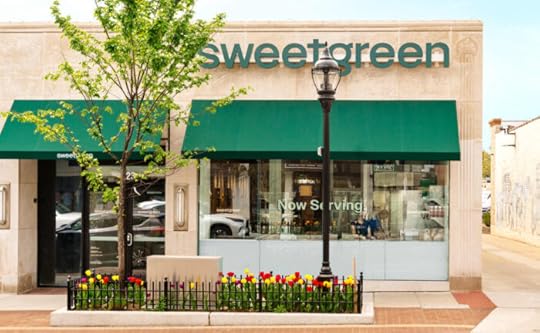
Sweet GreenSweet Green is a large U.S. restaurant chain, founded in 2006. The company has over 200 locations and serves salads and bowls. The food is tasty and seems to be healthy; it is a popular lunch destination for affluent young people.
The firm went public in 2001, trading near $50 a share. The stock hasn’t performed well and now trades at $11.
A Gift CardMy son’s birthday was in January. He lives in New Haven, and I knew Sweet Green would be opening a new location in town. He is a fan of the chain, so I sent him a $100 gift card for the birthday. I received a confirmation email from Sweet Green, and the company charged my credit card for the amount.
Unfortunately, my son never received the gift card. Now, he might have missed it, or I might have typed in the wrong address. Or perhaps there was a technical problem.
Regardless, this is an easy situation to deal with. At least that is what one might think. I clearly bought a gift card, and we just need it resent.
So, we contacted Sweet Green.
Customer Service DisasterThis is where everything went wrong.
In response to my son’s email, he received this cheery response from Fredy:
Thank you for taking the time to write us + we are happy to help!
We appreciate bringing this to our attention and we are sorry to hear your redemption link for your gift card is not working. Would you be so kind to please share with us the gift card number and order number?
Wishing you all the best,
Fredy,
sweetgreen customer experience team
My son sent the order number, but not the gift card number since he didn’t receive the gift card.
Ingrid from Sweet Green then asked for my email address. My son sent it over. Ingrid then asked for the last four digits of my credit card number. My son sent it over.
Ingrid replied:
Please request to your father the following information:
purchase date
last 4 digits of the card
email address used
Looking forward to your reply.
Warmest regards,
Ingrid- Sweetgreen customer specialist
So, I sent over the information. Fredy then responded:
Thank you for taking the time to write us + we are happy to help!
We appreciate the details provided. We were unable to locate any account with the email provided. Could you please share with us the order number? Is usually a 12 digits order number that starts with a 6?
Wishing you all the best,
Fredy,
sweetgreen customer experience team
We replied with the requested information, along with a copy of the credit card transaction.
Fredy then replied:
We are deeply sorry for the experience, but unfortunately we are unable to locate your gift card with the details provided. Could you please share with us a screenshot of the email confirmation you received where we can view all these details?
Wishing you all the best,
Fredy,
sweetgreen customer experience team
So, we sent a screen shot of the email I received. Stephany then jumped in:
We have tried to track gift card number: 1150012971736806535024 but I'm afraid this seems to be an inactive gift card. Do you have by any chance the order number of this gift card?
Looking forward to hearing back!
Warmest regards,
Stephany - Sweetgreen customer specialist
Feeling somewhat frustrated by this point, I replied with this impactful email:
Hi Sweet Green – Of course it is an inactive gift card! That is the problem.
I purchased it, gave it to my son, and there is no gift card. The only number I have is the long order on the email you sent me.
Can I talk to a manager? What is the problem?
Did we buy a gift card? Clearly yes. I think you agree with that.
Do we have it? Clearly no. I think you also agree with that.
Please send us the gift card I purchased or connect me to a manager.
If you can’t help, I’m happy to discuss this situation in my newsletter, my blog, LinkedIn, Instagram and all the rest. Also, I’m happy to file a report with the Better Business Bureau.
Should I go to a store to talk to the manager there?
Tim
This clearly promoted a reaction because Fabian now jumped in with this:
Hi there,
Thanks for reaching out to us + we would love to help you. Do you have the order number of the gift card?
If you have any questions don't hesitate to contact again.
All the best,
Fabian- sweetgreen customer experience team
The useless discussions continued, with Sweet Green asking the same questions despite my clear frustration.
An ExplanationAnytime something strange happens, you have to wonder what is actually going on. This is embarrassing customer service. The company could fix it with a $100 gift card, the value of which is probably just $20 since the $100 has to be used to buy Sweet Green products that would generate a margin.
The entire situation doesn’t make any sense. Why is Sweet Green so inept? Who are these people? Are they actually people?
The logical answer has to be that this is an AI driven customer service platform. It is just creating responses to emails and sending them automatically, without review.
I understand why Sweet Green might be doing this. It is cheap and quick. It looks nifty and feels personal. One can imagine Fredy and Fabian at their desks responding to us.
The problem is that the system just isn’t good enough. Instead of addressing issues, it creates immense brand damage.
RecommendationsTwo recommendations. First, don’t go to Sweet Green. The company clearly values cost savings over quality. For a restaurant that sells fresh ingredients, this is a bad situation.
Second, be careful if you plan to turn your customer service over to AI. There is a reasonable chance the system will annoy your customers and damage your brand. You may not even know that it is happening.
A PleaIf you happen to know someone at Sweet Green, please let them know that their AI system isn’t working well. And ask them to send me the missing gift card.
The post Sweet Green and the Risk of AI Driven Customer Service appeared first on STRONGBRANDS.
May 29, 2025
Branding Advice for Graduates

It is commencement season! Kellogg’s graduation isn’t for a few weeks, but my Facebook feed is full of joyful photos of families celebrating the big day. I am a huge fan of recognizing these positive life transitions; we should take every opportunity to celebrate events big and small.
With commencement comes a new reality: a lot of young people will be starting new jobs in the coming months.
I study brands and branding at Northwestern University’s Kellogg School of Management, so I wanted to share some advice on personal branding.
Your Brand Is EverythingBrands are the associations linked to a name, mark or symbol. People are brands, just like beer, toothpaste and airlines are brands. You can think of brands like reputations. We all develop a reputation. We are brands.
If you build a brand with positive associations, good things will happen. If people think you are smart, strategic and responsible, you will get high-profile opportunities. People will listen to you. You will have the freedom to do things. People won’t scrutinize your work, looking for mistakes. You will get promoted.
If your brand has negative associations, life will be different. You won’t get great opportunities, and you won’t get promoted on the fast-track. People will check your work, and then find mistakes, reinforcing the perceptions.
Branding is all about perceptions. You can be the best employee and have a negative brand, and you can be a mediocre employee and have a great brand. It all seems unfair, but, well, that is life.
Five SuggestionsSo how do you create a positive brand? Here are five suggestions to consider.
Show UpPeople love to work from home. I understand the appeal: commutes take a lot of time. At home you can exercise between meetings, and dress in casual clothes.
Unfortunately, to build a strong brand, you need to show up. Arriving early for work, dressing appropriately and bringing energy and enthusiasm all have an impact. Casual conversations are wonderful opportunities to learn.
Staying late on occasion and coming into the office on the weekend can have an impact as well.
If you have already established your brand, remote work can work. For a new person, showing up matters.
Talk Less, Smile MoreAaron Burr gave this advice to Thomas Jefferson in Hamilton. It is good advice for new graduates, too.
I might rephrase it slightly: Talk Less, Listen More.
You’ve been encouraged all your life to share your thoughts, and you’ve been celebrated for your accomplishments. As you join a company, everything is now different. In most situations, nobody cares what you think.
You are the new person. You don’t know anything about the company. You have no experience or credibility. The more you talk, the more you will make mistakes and annoy people.
So, listen and learn. Watch what people say. Pay attention to what is happening in a meeting. Who is speaking? Who is quiet? Who is asking the tough questions? Why might they be doing that?
Contribute ideas and suggestions, but be selective.
Know the NumbersIn the world of business, the numbers matter. There is no quicker way to damage your personal brand than getting the numbers wrong.
There are two potential problems. First is not knowing the numbers. What was your market share last quarter? How did that compare to last year? If you know these numbers, people will think you are on top of things. If you don’t know the numbers, people will wonder if you are paying attention.
Second is getting the numbers wrong. If you show up with a presentation that says your market share is 42% when it is really 24%, you will look sloppy and unreliable. These characteristics will not enhance your brand.
As you settle into your new job, figure out what numbers people pay attention to and learn them. When I worked at Kraft Foods, I would carry with me a binder full of the key numbers, so I was always really to answer a question.
Take the InitiativeOne of the truths in life: people love to contribute opinions, and nobody wants to take ownership for things.
As a new person, if you take on projects, you will be seen as a positive contributor. Remember this line: “I would be happy to lead that project.” And take on the small projects that others don’t want. Perhaps you can organize the holiday party or recruiting effort at a local school. These efforts will be appreciated, especially if you do a good job.
Now, you can’t take on everything, so be careful. Getting overwhelmed will just lead to trouble as you scramble to keep up.
Taking the initiative and leading things will make you an invaluable player.
Present WellPresentations are a core part of corporate life. Presentations are how people share information and bring forward recommendations.
As a result, knowing how to create and deliver an effective presentation is a critical skill.
There are many resources to help you with delivery. You can sign-up for class or join Toastmasters, hire a coach, or use one of a plethora of interesting apps. These are all good.
The creating side? Not so much.
My advice: learn how to write a great presentation and then practice over and over. With time, you will learn how to do it. To learn, figure out who creates great presentations in your company and watch what they do. See if they will share some advice.
My book on presenting is a good resource, too. It is called How to Wash a Chicken: Mastering the Business Presentation. You can find it on Amazon and elsewhere.
It is worth getting a copy, reading it, and putting the ideas to work. It is an easy way to start building a strong brand.
The post Branding Advice for Graduates appeared first on STRONGBRANDS.