Nidhi Srivastava's Blog
June 6, 2025
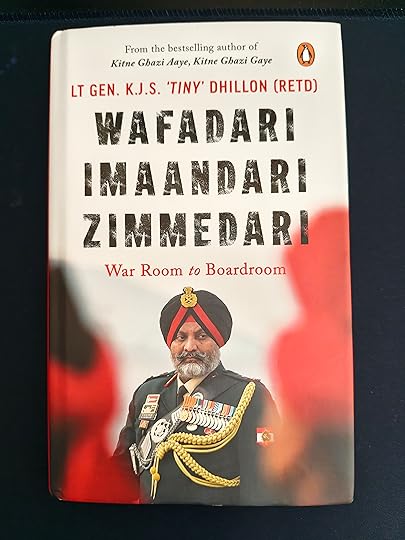
Book Review – Kitne Ghazi Aaye, Kitne Ghazi Gaye
Book Title – Kitne Ghazi Aaye, Kitne Ghazi Gaye: My Life Story
Author – Lt. Gen. K.J.S. ‘Tiny’ Dhillon (Retd.)
Format – Hardcover
Length – 320
Publisher – Penguin Veer
Blurb – He has extensively served in Jammu & Kashmir (J&K) and the North-East of India. He has the distinction of commanding the elite Chinar Corps (15 Corps). And, his last assignment before superannuation was the Director-General Defence Intelligence Agency and Deputy Chief of Integrated Defence Staff (Intelligence) under the Chief of Defence Staff (CDS), Lieutenant General KJS ‘Tiny’ Dhillon (Retd) opens a window to his life in this book.
From the fascinating tales and the toughest challenges he has encountered in his career, including those from his multiple tenures in J&K since 1988 to the responsibility of maintaining a balance between counter-infiltration and counter-terrorist operations on one hand and the use of military soft power on the other in Kashmir, in this book Dhillon unfolds his journeys from a young boy to the Commander of Chinar Corps. With Kashmir being an inseparable part of this story including the exodus of Kashmiri Pandits, barbarous attack on the convoy of Indian security personnel on the Jammu-Srinagar highway in Pulwama district, killing 40 CRPF personnel, Balakot to the abrogation of Article 370 and its impact on the socio-political, economic and law and order, among others, the book takes us behind the scenes to bring out the nuances of various intriguing developments at a critical juncture in the history of the erstwhile State of J&K.
My Rating – 5/5
Review – Kitne Ghazi Aaye, Kitne Ghazi Gaye is not just a memoir — it’s a testament to duty, grit, and the indomitable spirit of the Indian soldier. Lt Gen. KJS Dhillon, a decorated officer with nearly four decades in uniform, brings to the reader a deeply personal, honest, and insightful account of his service — most notably his time as the XV Corps Commander in the volatile Kashmir Valley.
What sets this book apart is its raw authenticity. There’s no attempt to dramatize or romanticize; instead, the narrative stands tall on the strength of lived experience. From leading anti-terror operations in Kashmir to making bold decisions under immense pressure, Dhillon Sir lays bare the responsibilities and moral dilemmas faced by those at the highest echelons of command.
One of the most moving aspects of the book is how it sheds light on the unseen emotional toll of service — not just on the men in uniform but also on their families. The stories of sacrifice, missed milestones, and the relentless demands of military life are told with grace and humility.
For aspirants of the armed forces, this book is nothing short of a playbook in leadership, courage, and integrity. For civilians, it’s a wake-up call to the realities behind the headlines — the human side of soldiering we often overlook.
The title, borrowed from the famous war cry of the Indian Army, echoes through every chapter — “Kitne Ghazi Aaye, Kitne Ghazi Gaye” — a reminder of the legacy each generation leaves behind and the price of peace we so easily forget.
Highly recommended for anyone seeking to understand the ethos of the Indian Army, and the unshakeable resolve of those who serve it.
In my opinion, I don’t consider myself qualified to “rate” a book authored by one of India’s most respected military leaders. This title had been on my TBR list for quite some time, and reading it was a humbling experience.
I would like to emphasize that Chapter 21 remains my favourite chapter of this book, describing Tiny Sir’s experience with CDS Gen. Bipin Rawat Sir.
When a senior officer reflects on their years of service, it becomes more than just a memoir — it transforms into a source of motivation for those aspiring to join the Armed Forces. But even for someone like me, working in the corporate world, the book serves as a powerful reminder of the privilege we often take for granted — the ability to leave work at 5 PM and return to the comfort of our homes.
Our soldiers don’t have that luxury. Many don’t even get the chance to witness the birth of their children or be present for life’s defining moments. This book is a pure consolidation of decades of selfless service and an unfiltered window into the ethos of the Indian Army — how its personnel are shaped, strengthened, and led.
Civilians may never fully grasp the scale of sacrifice made daily by soldiers and their families, but books like this help bridge that gap, one story at a time.

Some of the fav quotes from this book
“An army wife’s life and what they have to endure never makes headlines but its always the heartbeat of the main story”
“The most difficult part of a commander’s duty is to salute one’s brothers in arms one last time”
Buy here FaujiDays
Looking forward to reading the next one – #WIZ


June 5, 2025
Book Review – Kupwara Codes
Book Title – Kupwara Codes
Author – Maj. Manik M. Jolly (Retd.)
Format – Paperback
Length – 240 pages
Publisher – Harper Fiction India
Blurb – In the heart of the volatile Kashmir Valley, Maj. Danny and Capt. Deepak from the legendary Gorkha Regiment unite against a sinister plan hatched by the ISI and their enigmatic ally. As the young officers struggle to decode the cryptic messages of the ‘Codeman’, they are thrust into a high-stakes mission to thwart a devastating terror attack on India.
My rating – 4.5/5
Review – I just finished reading a compelling nonfiction piece. Thanks to following FaujiDays on Instagram, I often find myself lured into picking up military-themed reads. One such recommendation was Kupwara Codes, a concise yet gripping fiction title that delivers a cinematic narrative straight to your imagination.
Authored by Maj. Manik, the book draws heavily from his first-hand experiences in uniform. He masterfully translates the intensity of real-world combat into dramatic storytelling. As a reader, you’re transported to the frontline — scenes of firefights, explosive encounters, and battlefield banter unfold vividly in your mind.
From vivid imagery of “guns blazing” to the spine-chilling moments where a terrorist’s end is graphically portrayed, the writing doesn’t shy away from realism. You can almost hear Maj. Danny’s smirk echoes in your thoughts as the action unfolds. It’s storytelling with the grit of lived experience — a short read, but one that leaves a lasting mark.
This isn’t your typical military fiction filled with romance between a dashing officer and a civilian love interest. Kupwara Codes goes far deeper. It’s a powerful portrayal of brotherhood, camaraderie, ethos, and the often-unseen hardships faced by soldiers.
One of the most courageous moments in the book isn’t a battle scene — it’s when an officer boldly raises his voice to demand advanced equipment, not for himself, but to protect his comrades. That moment alone speaks volumes about the values that bind men/women in uniform.
Though labeled fiction, the book’s narrative is strikingly authentic. The chapter where Lt. Deepak Lathwal visits the village of Nar Bahadur Thapa to return his mortal remains left an indelible mark on me. The emotions were so raw and real, I found myself unable to hold back tears. It’s a story that doesn’t just entertain — it moves, resonates, and honors the spirit of service.
In short, Kupwara Codes is a fast-paced military thriller that sweeps the reader through the dense forests of Kashmir, into high-stakes field operations, the strategic meeting rooms of the 15 Corps Commander, and even a covert safe house where Maj. Jha deciphers a critical code — all sparked by a cricket feud. And that’s just the beginning.
Really excited about the next part of the Gorkha Garrison Series – ‘Jammu Juggernauts’
Buy here – Fauji Days
Some of my fav quotes from the book
“The Army is much more than just about killing terrorists”
“A very unpopular leader might just be result-focused, someone who pushes everyone hard and thus ends up being not liked”
“… wondering how difficult it must have been for someone to leave the thing he loved most”
May 3, 2025
Daughter of Two Rivers
Author: Dr. Arun Krishnan
Publisher: Penguin Random House India (Ebury Press)
Pages: 288
Expected publication date: Aug 2025
Blurb: Inspired by the authentic archaeological discovery of a Sumerian tablet off Mumbai’s coast, “Daughter of Two Rivers” presents a groundbreaking historical narrative that rewrites our understanding of ancient global connections. This meticulously researched novel addresses the increasingly relevant question of cultural identity in our globalized world, offering a uniquely personal perspective on how civilizations have always been interconnected through trade, conflict, and shared humanity.
My rating: 3/5
Plot: 4/5
Review: It took me a while to finish this gem, not because it dragged, but because I wanted to savour every detail of this beautifully woven tale. Daughter of Two Rivers by Arun Krishnan is a masterfully told historical fiction that seamlessly blends ancient mythology, political strategy, and emotional intensity into one unforgettable journey.
Set in the evocative era of early Babylonian civilization, the novel explores the intriguing tradition of royal alliances—where one royal family entrusts the training of their heirs to another, in the hopes of securing diplomatic ties and mutual survival. Right from the beginning, I was pulled into a world brimming with opulence, ritual, and calculated diplomacy. The author’s grasp on historical nuance is impressive, bringing alive the dusty streets of Babylon and the intricate power plays between kingdoms.
The plot takes a sharp, suspenseful turn with the kidnapping of royal princesses, throwing the reader into a fast-paced mission brimming with danger, strategy, and emotional stakes. What follows is a secret rescue operation that serves as the novel’s beating heart. Here, Krishnan crafts some of the most human, layered relationships I’ve encountered in recent historical fiction.
One of the standout dynamics is between Prince Arjuna of Rohitaka—a noble but untested royal—and Lilith (also called Chitrangadha), the enigmatic and fiercely loyal warrior who serves Babylon’s queen. Initially at odds, their relationship develops through tension, understanding, and unexpected empathy. Watching their bond evolve from mistrust to mutual respect and finally into something far deeper was an emotional experience in itself.
But what truly sets this novel apart is its deft handling of emotional storytelling intertwined with geopolitical drama. One moment you’re immersed in ancient treaties, royal decrees, and war councils; the next, you’re struck by deeply personal moments of grief, longing, and internal conflict. The intensity of earthquakes, betrayals, and battles is balanced by quiet reflections on identity and belonging, making the narrative both epic and intimate.
And the climax? I wasn’t prepared. It’s a raw, unexpected, and poignant resolution—one that left me emotional and contemplative long after I turned the final page. The life-and-death stakes, which are subtly layered throughout the book, crescendo in a finale that is powerful, tragic, and beautiful all at once.
Daughter of Two Rivers is more than just a historical novel—it’s a reflection on how cultural intersections, duty, and personal sacrifice shape our destiny. It’s for readers who seek richly detailed worlds, morally complex characters, and stories that linger in the heart.
Review Goodreads
View this post on InstagramA post shared by Nidhi Srivastava (@nidhantrika)
March 17, 2025
Book Review: I Am A Soldier’s Wife: The Life and Love of Toni Lidder
Book Title – I Am A Soldier’s Wife: The Life and Love of Toni Lidder
Author – Geetika Lidder
Format – Hardcover
Publication – Roli Books
Blurb – In one of her last messages to her husband, Toni on 8 December 2021, Geetika ‘I want to go to the Taj with you. Moonlit night.’ ‘Yes yes… let us do it first week next year,’ he replied almost an hour later, onboard a Mi-17V5 helicopter when the helicopter crashed near Coonoor. A decorated officer of 2 JAK RIF with ‘sharp military intellect’, Toni’s life was cut short, at only 52 years, just as he was set to take over a division in J&K, and his family was looking forward to spending more time together.
An army daughter herself, Geetika knew the perils of being married to an infantry soldier. But does anything prepare you for such a sudden, quick, cruel turn of events? How do you gather strength to respond to media at the funeral of your loved one, ‘I am a soldier’s wife… We must give him a smiling send-off’?
Life is tough for a soldier’s wife and is not often written about. Geetika’s book is a brave step in opening her heart and sharing the constant battle between emotions, courage, and integrity in the lives of army wives. This book is part love story, tribute, and family history, but above all, it’s a story of celebrating the person that Toni was to his family, friends, and paltan.
My rating – 4/5
Review – As I reflect on this book one year later, I feel compelled to offer my heartfelt appreciation. The Lidder Legacy is a powerful and deserving tribute. I still remember, as a civilian, hearing the news of the tragic chopper crash that claimed the lives of several soldiers, including our first CDS, General Bipin Rawat. This book delves into the life of Brigadier Lakhbinder Singh Lidder, brought vividly to life through the words of his partner, Geetika Lidder.
The tragic chopper crash of December 8, 2021, we lost great soldiers and families lost their loved ones. Through this book, Geetika ma’am continued to keep the ‘Lidder charm’ alive. The book is a reminder that leaders are born as ordinary people, they are shaped as officers in the Indian Army. I hope it helps to inspire many budding defence aspirants.
It takes immense courage to revisit such painful moments after the loss of a loved one, and Geetika’s strength shines through in her writing. Military life may prepare one for many challenges, but I believe no training can truly equip you to cope with the overwhelming grief that follows such a loss. Grief has its own timeline, and this book poignantly captures that journey.
The book has been divided into 24 chapters, discussing about the military achievements of Brid. Lidder. The book is not just about the trials of being married to someone in the military but also the resilience and strength it takes to endure constant separations, periods of uncertainty, and the fear of losing a loved one.
Excerpts from the book
“I believe in people coming into each other’s lives for a reason. As souls, we have all travelled through life in many forms – as siblings, friends, lovers, parents – each one giving us a new role. And in every life, we attract and interact with the same souls. They have scores to settle with each other – some must repay the kindness and deeds of their past life while others have to work harder to create balances, yet again. This is the circle and cycle of karma and our entire life is about closures.”
Resonating with every word extracted from this book which I picked up last week. In it’s entirety, the book speaks volumes about Late Brig. Lidder and how the Army prepares you for the unexpected.. yet grief takes its own time to absorb in our souls.
Buy Amazon
Review Goodreads
View this post on InstagramA post shared by Nidhi Srivastava (@nidhantrika)
August 12, 2024
Book review – Nimbu Saab
Book Title: Nimbu Saab : The Barefoot Naga Kargil Hero
Authors: Diksha Dwivedi, Neha Dwivedi
Publication: Harper Collins India
Format: Paperback
Blurb: Captain Neikezhakuo Kenguruse, affectionately called ‘Nimbu Saab’, is a lesser known hero of the Kargil War. He belonged to the second battalion of the Rajputana Rifles. It played a crucial role in defending Point 4590 – an operation during which it lost twenty-three soldiers. One of the fallen heroes was the twenty-five-year-old Captain Kenguruse, who led his men barefoot into combat in temperatures of -10 degrees Celsius.
Kenguruse was posthumously awarded the country’s second highest gallantry award, the Maha Vir Chakra. Even so, his story remains relatively unknown.
On the occasion of the War’s twenty-fifth anniversary, Neha and Diksha Dwivedi, daughters of a Kargil War hero themselves, come together with Kenguruse’s brother, Neingutoulie, to tell us who Nimbu Saab was, about his life in uniform and beyond, and the act of bravery in which he lost his life.
My Rating: 5/5
Review: I’ve read books by both authors—Letters from Kargil by Diksha Dwivedi, and Vijyant at Kargil and The Lone Wolf by Neha Dwivedi. I was eagerly waiting to get my hands on this new book. Last week, I finally picked up my copy from the renowned Blossom Book House in Bangalore. While most of Bangalore complains about the traffic, I find it to be the perfect opportunity to return to my bookworm self. Just last week, on my way to the office, I was stuck in traffic near the Army Service Corps (ASC) Center, holding Nimbu Saab in my hands. I glanced twice at the entrance that morning to confirm what I saw—indeed, there stood the magnificent statue of Captain Neikezhakuo Kenguruse.
This year marks the 25th anniversary of the Kargil War. This book is a tribute to the barefoot Naga Kargil hero, affectionately known as ‘Nimbu Saab.’ The book consists of 10 chapters, in which the authors weave together the story of a boy’s dream to become an Officer. A story about the war hero who motivated his soldiers climbing the Lone Hill barefoot. “Being a true leader, Neibu was the first to take off his shoes despite the bone-chilling air and the freezing surface of the stone before him.”
The book carries a profound narrative, beginning with the author’s note that provides context on how the authors met Atoulie at the Kargil War Memorial during the 22nd annual commemoration ceremony of Kargil Vijay Diwas.The prologue delves into Atoulie’s thoughts before meeting the country’s defense minister, Mr. George Fernandes. His mind races with concerns about securing his family’s rights now that his brother has achieved martyrdom. Attending a gallantry award ceremony is an emotional ordeal for the families of martyrs, as they grapple with the loss of their loved ones who gave their lives in the line of duty. The Kargil War, in particular, is a conflict whose casualties continue to bring us heartache.
The story begins with a vivid description of Nagaland and its unique geographical placement, setting the stage for a deeper exploration of the complex relationship between the Nagas and mainland India. The authors delve into the often-overlooked historical and political tensions, which I believe many readers may be unaware of. The narrative also sheds light on the significant role the Nagas played in both World Wars, and further examines the challenges they faced in post-Independence India. This context is crucial to understanding the broader dynamics at play in the region and the experiences of its people.
The inclusion of personal anecdotes and family accounts adds a deeply human dimension to the book. The authors highlight the impact of Captain Kenguruse’s sacrifice on his family, particularly his brother Atoulie, whose journey from grief to acceptance is portrayed with sensitivity and empathy. The book does not shy away from depicting the harsh realities of war—the pain, the loss, and the long-lasting scars it leaves on those left behind.
Nimbu Saab is more than just a military biography; it is a tribute to a forgotten hero, a reflection on the sacrifices of soldiers, and an exploration of the often-neglected history of Nagaland. The authors have succeeded in bringing Captain Kenguruse’s story to life in a way that is both informative and deeply moving. For anyone interested in military history, Indian history, or simply a story of extraordinary courage, this book is a must-read.
In conclusion, Nimbu Saab is a powerful reminder of the price of freedom and the enduring legacy of those who fight to protect it. It is a book that will stay with you long after you’ve turned the last page, leaving you with a renewed sense of respect for the soldiers who serve and sacrifice for their country.
“….Neibu was just an ordinary man, not a genius or a saint, but he chose to be the exception. He chose to be hardworking, he made the best of whatever he had and even when he didn’t have enough, he still chose to share. He gave his anxiety and fears to God and simply walked in faith.”
Reading about the Kargil War is always challenging. Although I could have finished this book in one sitting, the chapters take such an emotional turn as they depict young, newly commissioned officers being sent to the war front. Even after 25 years, it’s heart-wrenching to read about the emotional journey that a martyr’s family endures.
I always look forward to reading books by the Dwivedi sisters, whom I’ve followed on Instagram for years. Their courage and dedication to sharing stories from the Indian Armed Forces is truly commendable.
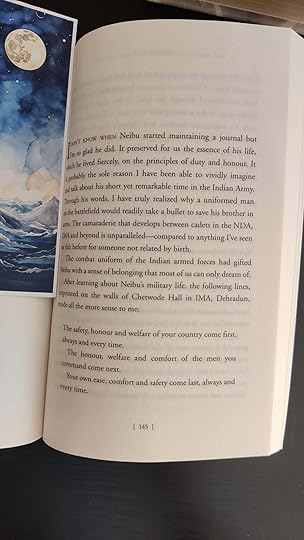 As imprinted on the walls of Chetwode Hall, Indian Military Academy (IMA)
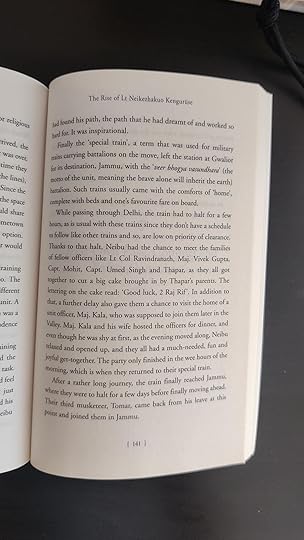 वीर भोग्य वसुंधरा
August 9, 2024
I met Qais Bhatt
Yesterday, I watched the 2018 movie Laila Majnu, and it was a nostalgic experience. I’ve been a long-time fan of the iconic song “O’Meri Laila,” which has become a staple in my mornings—I often start my day vibing to its rhythm. Recently, I came across a reel on Instagram where a group of girls was running from café to café, searching for the actor who portrayed Qais Bhatt/Majnu in the film. The excitement surrounding the movie’s re-release feels like the culmination of the love and admiration that countless fans, including myself, have held for this film since its original release. It’s as if the collective yearning for this timeless love story has brought it back into the spotlight.
A few days ago, my best friend warned me she’d disown me if I watched Laila Majnu. After seeing it, I can’t blame her—it’s definitely a gut-wrenching experience. The film is emotionally intense, and every scene has you hoping that Laila and Qais will finally find peace in each other’s arms. But the movie’s second half completely broke me, especially when Qais’s character transitions into Majnu. I couldn’t stop the tears streaming down my face as I watched the heartbreaking transformation unfold.
In the scene where Majnu runs to the mountains, stumbling and bruising himself along the way, you can’t help but desperately wish for the agony to end. There’s a part of you that clings to the hope of seeing the charming Qais Bhatt again—the cool, flirtatious lover who once brought so much joy to Laila. But instead, what we witness is Majnu, utterly consumed by his longing, retreating into the mountains, far from the world. He dreams of a life with his Laila, and in a way, he does live that dream—but to everyone else, he’s become a madman, lost in his own world, completely detached from reality. It’s a haunting portrayal of love’s descent into obsession, where the line between romance and madness blurs beyond recognition.
Once in a lifetime, we experience a love so profound that it’s often labeled the purest form of love—a love that’s selfless and transcendent. But if I’m honest, I don’t think I could ever love like Qais Bhatt, to the point of becoming a Majnu, willing to forsake the entire world. The truth is, we care too much about what the world thinks.
“Jaa ab nahi aata, ab tu hi dhoondh mujhe”… these lines where Qais manifests his love story stayed with Laila till her deathbed. In another world where Qais-Laila lived happily ever after… end note of the movie.
When I returned home, I couldn’t shake a lingering thought: We might love with all our hearts, but how often do we truly surrender ourselves to that love? More often than not, we settle for the comfort of knowing that we exist under the same sky, separated by miles but united by memories. We find solace in the small victories—the strength to lift our chins and smile, even as we walk through the predictable patterns of our daily routines. It’s as if we’ve made peace with the distance, with the unspoken understanding that, despite everything, life goes on, and we find our own ways to endure.
I will carry into my old age the memory of meeting Qais Bhatt, and I’m grateful he dared to become ‘Majnu.’ He chose not to live as a coward. Those who have never confessed their love—they are the true cowards.
Power of Manifestation
Yesterday, August 8th, 2024, marked the Lion’s Gate Portal, a powerful day for setting our intentions and affirmations for the year. Everyone focused on writing affirmations to lead happier, healthier lives. I believe in the significance of manifestation, as seeing your intentions come to life reinforces your faith in their power. I feel privileged to have experienced the power of manifestation in my life this year.
Whether by misfortune or fortune, an accident in 2021 changed my life. Though I believe it was for the better, it left me with a deep-seated fear, leading me to stay within my comfort zone and never truly challenge myself. However, my difficulties this year brought me closer to the Almighty. I never considered my spiritual side, but as the months passed, my faith grew stronger and more profound.
Every year, my friends and I would discuss the idea of taking a trip to VaishnoDevi in Katra, but it never went beyond talk. There was always something holding me back—whether it was doubt, fear, or just a lack of commitment. However, on July 25-26, I finally took the plunge and made the pilgrimage. The experience of trekking up to the Shrine, reaching the top of the Trikuta hills where the goddess resides, left me speechless. Words fail to capture the profound sense of accomplishment and spiritual connection I felt upon arriving at the sacred site. The trek from the base camp at Katra to the Vaishno Devi shrine is approximately 13 kilometers (8 miles) one way. As you inch every kilometer towards ‘Bhawan’ you will feel an energy driving you to push through all the pain. Tears streamed down my eyes through the last 1 kilometer, it was the sight of Bhawan that left me in awe. With a ligament tear in my leg, I never thought I would be able to pull off this visit. It’s your faith that gives you all the power. It’s the power of manifestation that brought me to the Holy Shrine. I sat the whole night at a cafe looking at the Bhawan with teary eyes, I didn’t wish to take my eyes off and lose sight of the miracle. While I sat there in that cafe from 12AM – 3:30AM, I thought about every privilege I had in this lifetime, I thought about every opportunity life bestowed upon me, I thought about every person supporting me through my tough times, I thought about the journey that brought me here to Jammu. I could relive this moment every time I closed my eyes but this spiritual hang-over will help me surpass everything. I quote it as a life-altering day of my year. It has restored my belief in the power of manifestation. “I have faith in my faith”
 First look of the Bhawan
 View of Katra
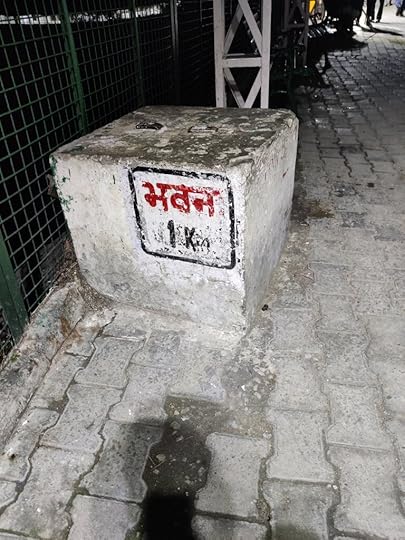 Bhawan trek 1km
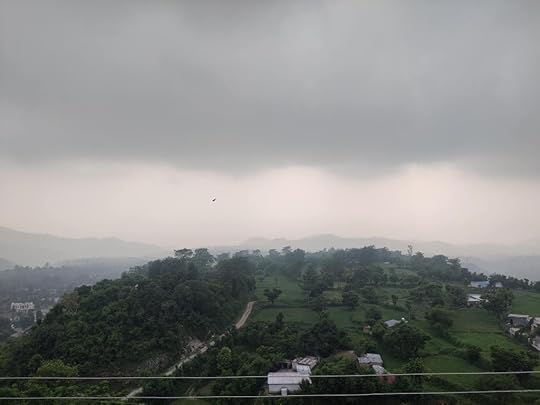 Glimpses from top
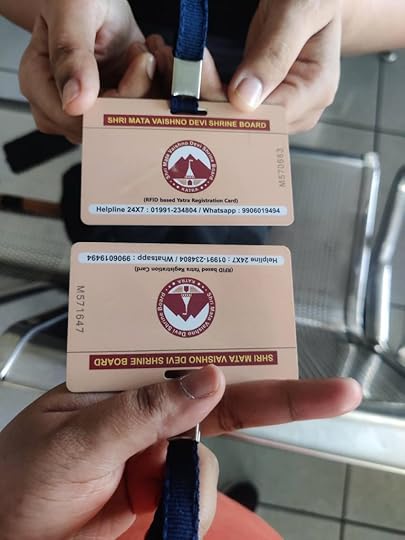 RFID cards issued at the starting point
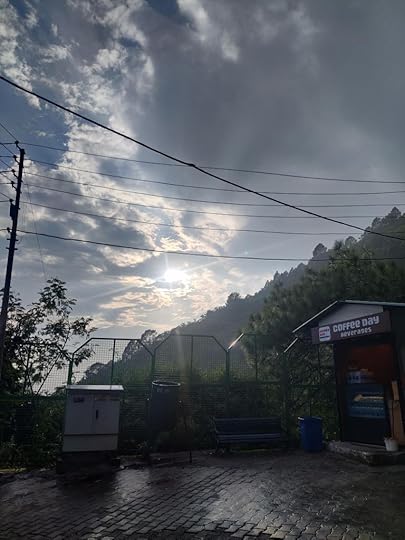 Refreshments on the way
 View from trekking 4kms from base
 Morning view at 5:30 AM
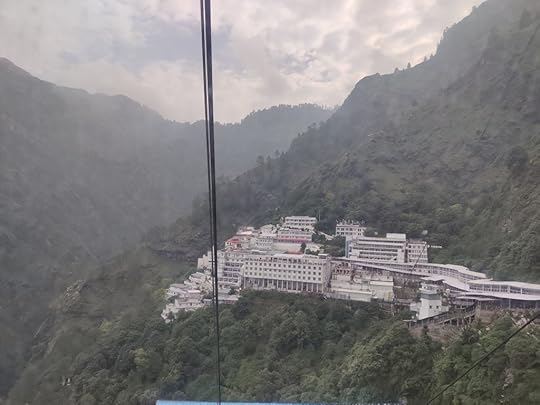 View from Ropeway
 Trekking downhill
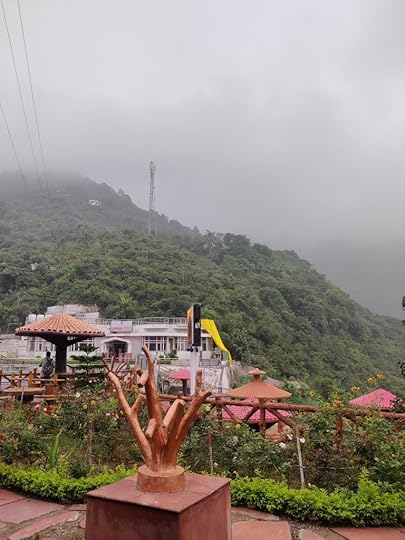 Langar on the trekking way up – Tarakote Marg
 Trekking pathway
May 23, 2024
Somewhere, its someone’s birthday
The first conversation, a whisper now faint,
A memory half-lost, yet your smile, a sweet paint.
We clashed, a tempest that time cannot erase,
But through the battles, a flicker of grace.
Time wove a bond, a tangled embrace,
Laughter and anger, a complex interlace.
From clashes we rose, a resilience newfound,
Strength blooming vibrant where shadows once cowered.
A year unfolds, your essence unfolds,
A simple man, with a heart of pure gold.
Each passing day, my admiration takes root,
In you, a soul where kindness bears fruit.
Though words may falter, awe fills my sight,
As your spirit’s gentle flame burns ever bright.
A wonder walks with each purposeful stride,
Respect blossoms, where you forever reside
March 20, 2024
Book Review – An Uncommon Love
Title: An Uncommon Love: The Early Life of Sudha and Narayana Murthy
Author: Chitra Banerjee Divakaruni
Publisher: Juggernaut
Format: Hardcover
Length: 352
Blurb: Sudha Kulkarni was forging a career as TELCO’s first woman engineer when she met the serious, idealistic and brilliant Narayana Murthy, and they fell in love. For the first time comes the story of their early years – from their courtship to Infosys’s founding years, from their marriage to parenthood – told by Chitra Banerjee Divakaruni. What drew them together and kept them bound tightly through the challenges and loneliness they faced? What was it like to create a start-up during the licence raj, when there were no VCs, and entrepreneurship was regarded as a dirty word? How did Sudha Murty balance being a career woman, a mother and a start-up wife? How did Narayana Murthy’s obsession affect himself and his family? Taking us deep inside the minds, hearts and values of the Murthys, with exclusive access to them, Divakaruni tells their story with extraordinary emotional depth, bringing them and their worlds vividly alive. This book is about the sacrifices it takes to forge a powerful and lasting marriage, about the early story of Infosys and Indian business before liberalization, and most of all about two icons before they became the legends that transformed the fields of business and philanthropy.
My rating: 4/5
Review: The book likely delves into the early lives of both Sudha and Narayana Murthy, exploring their backgrounds and aspirations that eventually led them to co-found Infosys. It portrays them as ordinary people with extraordinary dreams, emphasizing that achieving success doesn’t require ostentatious displays of wealth or power.
Building Infosys from Scratch
The narrative likely goes into detail about the couple’s journey of building Infosys from the ground up. It probably describes the challenges they faced, the financial hurdles they overcame, and the impact of government regulations on their business. The book might depict their perseverance in starting in a small apartment and transforming Infosys into a multi-million dollar company, providing livelihood for many.
Humility and Simplicity: The Core Values
The book highlights the importance of humility and simplicity in the couple’s approach to business. It might illustrate how these values, often seen as contrasting success, were instrumental in Infosys’s growth.
Overcoming Challenges
The book would probably cover the various challenges Infosys faced during its initial stages. This could include navigating complex government regulations, securing funding, and building a strong team. It might also explore how Sudha and Narayana Murthy tackled these challenges and steered the company towards success.
Impact and Legacy
The biography might also explore the wider impact of Infosys on the Indian IT industry and the country’s economy as a whole. It could delve into the legacy of Sudha and Narayana Murthy as pioneers who helped establish India as a major player in the global IT sector.
The final part of the book could explore how Infosys grew from a small operation in a matchbox apartment to a multi-million dollar company, providing livelihood for many. It might also touch upon the wider impact of Infosys on the Indian IT industry and its role in establishing India as a major global player.
In the chapters, specific technical jargon is employed, which individuals with an engineering background would likely comprehend more easily. I wish to emphasize that Sudha Murthy was among the pioneering female employees at TELCO, and today, numerous women have the opportunity to work at Tata Motors (previously known as Telco). Hailing from Jamshedpur, a city founded by the Tata Group, Sudha Murthy’s exchange with JRD Tata evoked a heartfelt response when I encountered it.
JRD Tata’s words quoted from his conversation with Sudha Murthy (the day she resigned from TELCO, she bumped into JRD at Bombay House) – “Never start with diffidence. Always start with confidence. When you are successful, you must give back to society. Society gives us so much, we must return it. I wish you all the best”
Narayan Murthy’s quote – “Understanding challenges is the first step towards finding a solution”
The book also contains witty and funny conversations, as I recall the birth of their daughter brought tears to Narayan Murthy’s eyes while he held the newborn Akshata. His father-in-law humorously said – “It seems the robot has a heart, after all!”
Sudha Murthy’s quote – “I want you to be like the trapeze artist in a circus and take a spectacular leap of faith. I’m willing to be your safety net.”
Furthermore, we often overlook the romance that blossoms among aging couples in our midst. Reading about Narayan Murthy’s proposal to Sudha Kulkarni was truly one of the most beautiful expressions of love ever witnessed.
March 12, 2024
Reading Shelf – February
February began with a re-reading of the Harry Potter series. My close friend circle has been intoxicated with this series. One person, one fine day decided to open Pandora’s box of nostalgia and here, our entire flock is immersing themselves in Hogwarts, after wrapping up our weekly work engagements.
Book 1: Harry Potter and the Philosopher’s Stone (Laugh if you wish to)

Book 2: She and Her Cat: Stories
Currently, obsessed with Japanese translations and cat chronicles

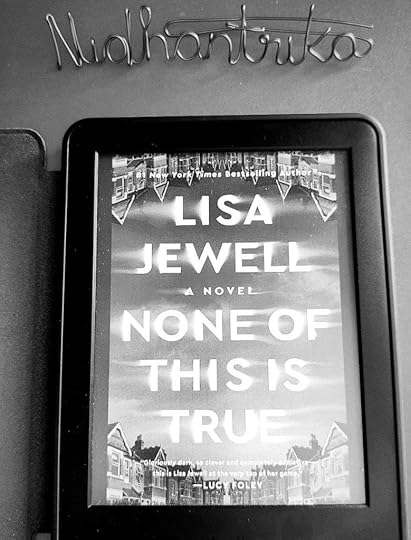
Book 3: None of This Is True
This book was collectively voted on in our office Book Club. One of the best thriller books, I read so far. I completed this book overnight and it was such a read that I found it difficult to take my eyes for even a minute.
Book 4: The Cat Who Saved Books

Book 5: Klara and the Sun
I saw this book on a celebrity’s Instagram handle and there was a quote from this book – “The Sun was very kind to me”. Klara is an artificial friend of a child and the journey of Klara has been described beautifully in this book.

I hope to return with another elaborate reading diary from March. I am currently reading – Big Magic by Elizabeth Gilbert. What are you reading?