
Vanessa Veselka's Blog
September 9, 2022
Blood Barons, Dishwashing, and The New York Times…
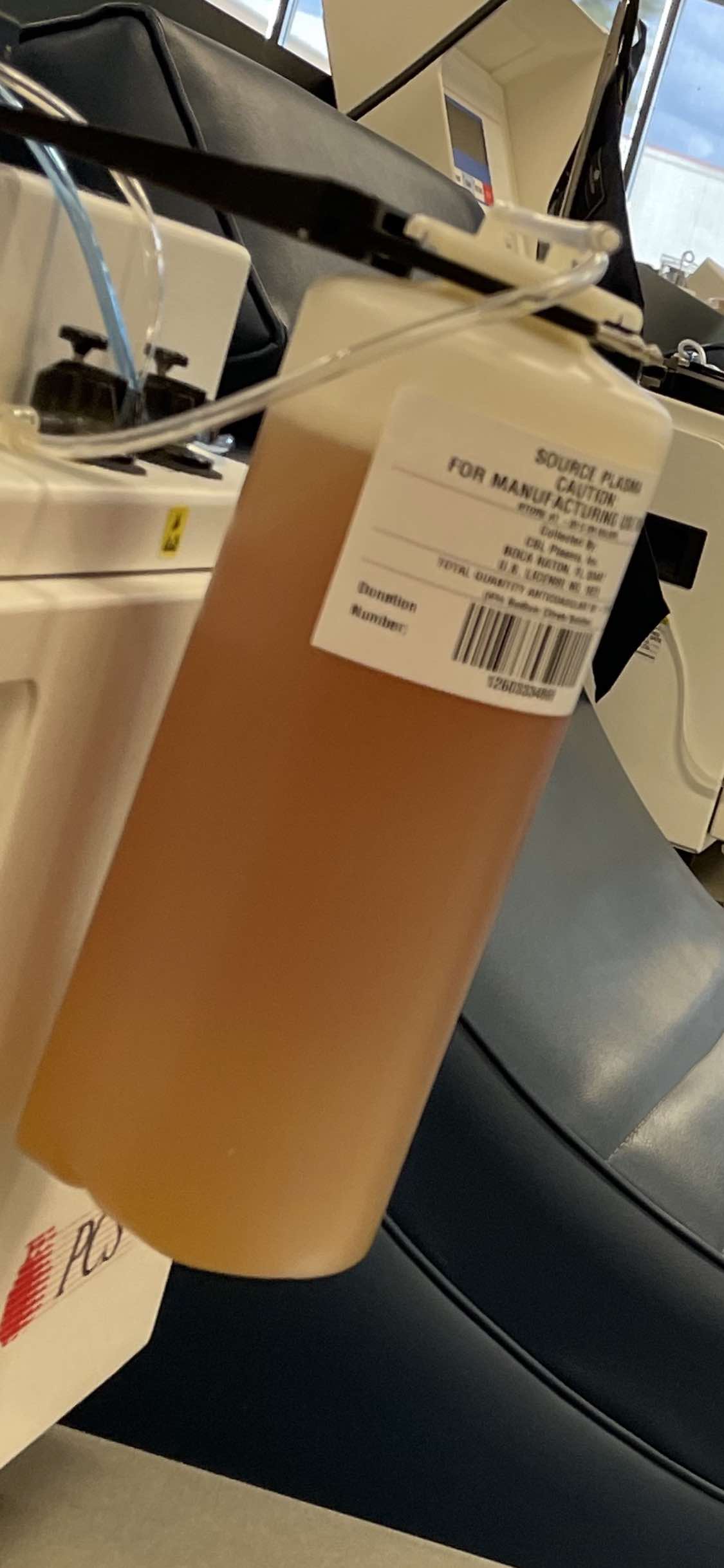
I wrote a story about selling plasma. Not because that experience is unique, but because it isn’t – or not unique enough. There are so many things I could say about the commercial Plasma industry, but the gist of it is here and I want to thank the New York Times for giving me space to write about it.
 OPINION
GUEST ESSAYThe Exceptionally American Experience of Selling MyPlasma
Like for profit nursing homes built on private equity real estate deals, like drug companies leveraging insulin, like plasma companies – all blood barons.
More on jobs.
I am in a transition back to writing more, but that also means I am in a transition back to figuring out what my second job will be. It’s a known fact that artists, writers, clowns, dancers, massage therapists, interpreters for the deaf, amp builders, community mental health workers, comedians, and vet techs will likely work two (or more) jobs in perpetuity, but what kind of second job?
When thinking about which bridge to burn next, I review past work experiences.

I weigh each one on a scale of misery v. money, meaning v. mindlessness, and requirements of performative extroversion. Some jobs have more status, some jobs earn martyr points, some pay well but are erratic and feel gross, some make you feel fortunate, and some just make you feel triumphantly human.
When writing, there is always the appeal of a job you can burn, that you don’t take home, physical enough to get your mind in the zone where you can think or not think, usually with music in the background that you are not in control of….and this time because the labor market has forced wages upward, that came up dishwasher.

The Wikipedia definition of dishwasher says, “Typically, dishwashers scrape food residue from dishes, pots and kitchen utensils; sort and load racks of dirty dishes into a commercial dishwashing machine.”
Having worked in restaurants for years, this is not unknown to me. Yet I have found in searching job postings, new requirements. Along with scrubbing pots and pans, hosing down mats, and pulling garbage, I am now expected to…
Confront and resolve difficult situations Embrace change by being open to new ideas.Presents a positive image by having good body languageOne posting explain that they have a “Steward Leadership” as a core value. and then goes on.
Job Summary
The Steward’s main responsibilities include the washing and putting away of dishes, glassware, flatware, pots, and pans. The Steward also assists in maintaining the kitchen, front of house, and back work areas and equipment clean and in orderly condition. Stewards will assist the Line Cooks in the cleaning of the kitchen from open to close. In addition, Stewards shall assist Chefs and Bartenders with prep projects as time and training allow. Stewards will aid in debris, compost, and recycling removal from the restaurant.
 A Steward hard at work in the wild – I particularly like the sign about oyster shells
The point about jobs is that most of us – and 99% of artists – will have a work life that is more of a set of collages than a trajectory. I am grateful that I get to write for money, even if it is not enough. I am grateful that the rise in worker power in this moment allows me to take jobs that demand less for more money than I could have gotten 5 years ago.
In the very recent past, I wrote another NYT piece about caregivers at The Rawlin who were striking to get $14-$16 an hour so they could hire enough staff – and the employer spent $4500 a day for over a month to stop 38 of them from doing just that. That is still happening. I’ll make more as a dishwasher in my neighborhood than as an LPN or a CNA in most of the country. All over the country with for-profit care built on real estate equity trusts is a crime. The life that gets sucked out of poor people is a crime.
 880ml
880ml


October 26, 2021
The reissue of Zazen comes out on Vintage, the best book video ever, and looking at novel #3.

On October 19th my first novel, Zazen, was re-released on Vintage, something for which I am very grateful. One of my favorite things ever in the world was the result of an algorithm for aggregating random quotes into motivational images and video. The random algorithm somehow found me and Zazen and made what I consider the best book video of all time. The day they take it off YouTube my life will grow a little less meaningful. I offer it to all of you now:
Most of this is from Zazen, there are a few other quotes – caveat, I love the agent I have (Sarah Bowlin) and she is very patient with me! Roll on…
I travelled to New York and read to live people for the first time in 4+ years. I saw old friends and felt more human than I have in a long time. Thank you, Powerhouse Arena, for hosting me.
 I want more chandeliers in my life
Reading from something you wrote a long time ago is a strange feeling. Once, I returned to the city of my first band (Vienna, Austria) to play a reunion show. I was mixed on the idea. We had broken up years before and my head was now filled with different ideas. I found it almost impossible to sing lyrics I’d written as a passionate, but self-obsessed and angry teenager. Passionate angry teenagers rarely suffer from a lack of lyrical ambition. I tried mumbling, swapping a few key words, but had to give up and just sing what I wrote without winks or apology.
 Once more, first band
I walked around all that week in someone else’s head.
 My dear friend, Issy, our bassist, who was always very kind to me no matter what I did me
After writing Zazen, I thought I’d never write another novel. Everything in my head had gone into it and there was nothing left. The same thing happened after The Great Offshore Grounds. My mind was an empty attic. Slowly, it has been filling back up.
July 14, 2021
A Defense of Imbalance
In the 2 weeks since the paperback release of The Great Offshore Grounds, I have had the chance to peer out above the work I do as a union organizer into the life of different mind.
 mine has a black bar through it
I returned to union organizing 2.5 years ago because I had finished writing my last novel and had been feeling useless in the world. I get asked frequently about activism and art, if art is sufficient citizenry in times of crisis and unfettered Capitalism, and I find it hard to say that (my) art is enough.
And yet I plan to leave organizing for writing.
Options on perspective seem insufficient.
Stay in your hula hoop. Make what you can touch or control better and (see below) to the rest of it.
2. Become a martyr to the movement(s) so that you can say truly swear you did everything you could.
 I have an imaginary City where I put all my hope
3. Swing between extremes, putting it all in wherever you go then when your 110% drops to 90%, run to the other side of the ship.
 The Modern Express, wrecked in Bay of Biscay, scrapped in Turkey – a warning to all!
4. (GOLD STAR) Find some kind of balance where you only give a f*ck about things you can’t control for 7 hours a day, emotionally commute no more than 2 hours a day, limit chores to 1 hour a day, eat a healthy meal while sitting down, hug your or have sex with your loved ones and go to bed at a reasonable hour, saving art and exercise for the weekend.

Some of us can’t turn our brains on and off when we’re done with the world. Some of us must guard our mental health so we have any options to lose our mind over.
I choose option #3.
I have an immersive temperament and a mind that works best when fully consumed. This is how I studied Invertebrate Paleontology, wrote novels, learned how to be a union organizer, learned guitar, and watch a television series. Sadly, the part of me that could have been a lawyer or a polyglot or scientist or a lower-level field General is not the same part of me that writes novels or songs. One thrives on the parasympathetic nervous system, and the other, sympathetic. I can’t switch back and forth throughout the day or week.
Personal Beliefs
Writing fiction requires down time. I see young writers, particularly young women, and particularly young women with young children, brutalize themselves because they can’t write a novel in the scraps of time they’ve set aside. They blame themselves and think it should work, but just because a human can go a long time on water, doesn’t mean they don’t need food. Downtime tells your brain it’s not an emergency. Downtime leads to play and imagination, and nothing in our culture is built for that.
When I was driving cab and waitressing and had a younger kid, I wrote, but I had to stack double shifts back-to-back, glide for as long as I could then snap back fast. After 2013, I was lucky enough to have book money to write for a while and slipped into my own mind.
I went to the store in my long johns because I forgot I wasn’t dressed. I was thinking about something…very, very deeply.
 Union suit
A coworker said that my leaving organizing to write novels was as bizarre to him as if I had said, “I’m leaving to play with model trains.”
 Italian man finally makes trains that run on time
I do not argue that my fiction is a sufficient form of citizenry, but it is how I fall in love with the world.
May 3, 2021
The Kindness of the Winds of Fortune…

Some days are just a whole hell of a lot better than others, and some days are pure joy. This is one. I want to thank Literary Arts and the other stellar writers nominated for The Ken Kesey Award for Fiction. They are: Lidia Yuknavitch, Chelsea Bieker, Genevieve Hudson, and Mark Savage. It was an honor to be in your company.
October 14, 2020
US 395, Joshua Tree, Ghosts and Bad Things to Do in the Desert, and the Southern Route…
The original section went on a little longer–often my fascination with something extends well beyond a reader’s, which is why I’m a bore at parties and show up rarely–when there were parties.
The Alabama Hills and Lone Pine are fascinating because of how they were named and the kind of movies shot there. As I say in the book, Gunga Din and How the West was Won were both filmed there–along with a million westerns. It goes from being a backdrop to the colonial glory-shot of Manifest Destiny or the British in Northern India, to Afghanistan, the Planet Vulcan (where Winona Ryder lived), or the stomping grounds of Godzilla. As such, it is a place of myth-making, repressed guilt, and loss.
[image error]Wait, I think I hear…Hotel California?
The character of Cheyenne gets half her calories from peanut butter. USDA peanut butter and cheese is a staple of government food boxes. WIC food package VII – the others no longer pony up the cheese. Not sure if this a step forward or back. Cheese as a takeaway? Cheese as an oppression of breast-feeding women? Such things are not clear…
[image error]
Cheyenne travels through Joshua Tree, spending a night in past, very personal hells, heightened by designer drugs, menstrual cramps, and loneliness. I got to have a wonderful conversation with Susan Rukeyser at The Desert Split Open. We talked about promiscuity and feminism and character – but the recording was lost. I loved the conversation though and it’s comforting to know that some conversations stay between the people present, their memories, and their imagination, a small, shared, world of its own.
[image error]
Two coyotes appeared on the horizon, back behind the closest house. They trotted side by side in a perfect tandem gait. One seemed slightly bigger than the other, but it might have been the angle of approach. They came in her direction and crossed within 6 feet of where she was. Then without a pause or look between them the two coyotes split at the very same second. Not a beat apart. They tapped a new vector into the sand and dirt. She realized then that despite the misery of the night, no matter how hard she tried, she couldn’t quite give up the idea that the world was a wild place where anything could happen.
[image error] Cotton is seasonal. So are grapes.
My first trip through the Arizona desert was at fifteen. I was hitchhiking under the delusion that I could find work in a cotton gin outside Gila Bend because some random person in Florida told me that I could go there and do that. I tell that story, and what I saw there, in the interview below with the Yuma County Library. The short version, is that such work is seasonal, but the abuse of undocumented labor is, apparently, endless.
Support your local library!
I meditated on charnal grounds and got sick of my own daydreams. I want to be a blank. I want who I am to have nothing to do with anyone else...
[image error]
The Navidad River cuts through the black prairie lands before emptying into a lake damned and full of catfish. On both sides of the river, stands of live oak twist and shelter, and small painted churches dedicate themselves to the patron saints of Slavs…You can see their names in census-takers’ neat cursive. A woman of either 22 or 27, born in Bohemia or Moravia or Austria, claiming ten or twelve children, half of whom are dead. For the record, the census taker says, tell me where you lost them? Did you eat them? Olga, Elisabeth, Frank, Anna, Catherine, Joseph, Walter—where are they? No, she says, I did not lose them. I did not eat them. They are under the black prairie. They are in the mud of the Brazos tangled in cottonmouths.
I was born in Texas, as were many generations of my family. The other side came from Czechoslovakia…and went to Texas.
[image error] I was not born in Eagle Pass because my grandmother didn’t trust the doctors so she convinced my mom to drive to Houston for the full saddle-block, knock-you-out birth experience. Safe as PineSol and Clorox bleach, Tab, Merit cigarettes, and just-off-the-Katy Freeway subdivisions.
John Sayles, a remarkable screenwriter famous for his dialogue, was once paid a king’s ransom to write the script of Clan of the Cave Bear. Every time you hear a story like this, a broke writer gets their wings. John Sayles had an enormous effect on me and how I think about the way people talk. His film Lone Star was shot in Eagle Pass.
[image error] Presente! Elizabeth Pena who died too young of cancer.
It was in the month of June
All things were bloomin’
Sweet William on his deathbed lay
For the love of Barbara Allen…
She got a ride with a trucker to Birmingham, which is where she said she was going. He didn’t believe her but didn’t care. She said she’d called a friend from a payphone and her friend was waiting in Alabama. Just outside Birmingham. We’re supposed to meet in this motel where she works. Just off the Interstate.
They rode to the east
And they rode to the west
Until she came nigh him
And all she said when she got there
Young man I think you’re dyin’…
My Czech family was “oil trash.” Meaning they moved back and forth across the Louisiana – Texas border working the refineries, having children, fighting, raging, and working, working, working. Good and bad. Masonic Democrats and organizers of the anti-lynching league, racists and drunks and teetotalers, liars and secret poets, share croppers and bridge sharks, and the south will never be out of me.
Another Texas, Slavic compatriot, Karolina Waclawiak, who wrote Life Events was kind enough to join me for a conversation at the marvelous Avid Bookshop in Athens, GA where we ended the second road trip among friends. Below is our conversation. More about Karolina Waclawiak.
Next week begins the last leg of the “road” trips. This one takes place on the sea. Offering legitimacy to my claim that the best elevator pitch for the book is…
“A Neo-pagan, nautical thriller, which takes place mostly on land, about the Open Door Policy in China.”
September 26, 2020
The Rust Belt, Lake Erie, and New England – Rest areas, Tall Ships, College towns, Labor Strikes, and Dying at Sea…
*This post is part of a virtual road trip, which traces the routes taken by characters in The Great Offshore Grounds. For more on that go here.
Neither sister had seen the rustbelt, but it was apparent that a giant metal locust had crawled across this part of the country leaving behind its discarded shells in the form of smelters, bridges, ironworks. They drove along the Great Lakes where tall ships were reenacting a famous battle, their sails flying, circled by helicopters from cable channels. They, too, were after a different history…p 75
[image error]
I first spent time in Michigan when I was touring through there with my band in the late 90s. My first Michigan memory was trying in a rest area near Battle Ground with people banging on the sides at 3am.
[image error]This is actually Minnesota but the only rest area photo I have from that ’98 tour
Our first show was in Flint, which was still deep in its Roger and Me period.
Worth it for the voice-over that says, ‘I’m used to doing cigarette ads and talking about what cleaning supplies make women happy.’
The booker said the woman from the movie who was surviving on rabbits lived down the street. He took us around and pointed at huge beautiful houses, Victorians, and warehouses with lofts and sunlight—you could buy whole blocks of Flint for $30,000 and the city would give you $20,000 extra to fix them up. It was that kind of dilapidated and abandoned downtown core.
We played in front of a beleaguered Tuesday-night-in-Flint audience. The band after us, a local one, rendered The Wall flawlessly. THE ENTIRE ALBUM.
At first it was funny. Then I felt joy at the disjointedness. By track 5, I was all bought in. Clearly, the only thing you could do on a Tuesday night in Flint was play The Wall start to back. And the conflation of Rogers, the tyrant Smith, and the traumatized Waters, was not lost on me either.
Still works on me
Our next show was in the Cass Corridor in Detroit, which was different in 1998. The people in Flint told us not to go there. They said it was too dangerous. One woman told me that if we did go, we should strip the van and buy a shotgun. In attempt at a polite pass, I said we didn’t have the money for a shotgun.
“Honey, this is Flint,” she said, “You can get a shotgun for fifty bucks on a Wednesday morning year-round.”
We were going to sleep in the van, but everyone told us to sleep in the bar because Flint was too dangerous. The same conversation was probably happening with a band in Detroit heading for Flint. Every down-and-out place needs another down-and-out place to be above.
After those years of touring, though, I didn’t see the Rust Belt until 2013 when I spent a month on the tall ship, US Brig Niagara, and, somewhat unwittingly, ended up in a re-enactment of the 1813 Battle of Lake Erie.
[image error]I was actually on the ship in the smoke when this was taken.
The re-enactment had 7000 small craft full of drunken onlookers encircling the tall ships. Helicopters from the Discovery Channel carried it live while the Ohio State Marching Band played and a B52s flew over and saluted us. Donors dressed in period clothing or “funny clothes” were loaded on like sardines, rumored to be up to $1000 a head, they jammed up against each other on the deck for a romantic ride and ended up vomiting over the side in a small chop. Every time I end up in the Rust Belt, new things happen.
I took the picture below in the evening, after the re-enactment, when we sailed for Erie, PA, free of fanfare and funny clothes. It was one of my favorite moments on the US Brig Niagara.
[image error]
But the idea of re-enactment stayed with me. There are civil war re-enactments and Custer’s Last Stand re-enactments. In Japan there are Samurai re-enactments. I once came across people on horses in armor jousting under an overpass in Seattle (looking at you SCA).
It’s very telling, the histories we choose to re-enact. Usually not the Palmer Raids or The Wounded Knee Massacre.
[image error]I have 11 kids that lived!
“Can you imagine if they reenacted women’s history? Hundreds of teenagers in bonnets dying in childbirth. It would be fucking perfect.Heroic midwifes race between bedsides covered in blood.” p98
On their road trip through New England, Cheyenne and Livy see elite college towns and decimated neighborhoods, brick textile factories and smokestacks.
Snowy hillsides in winter, canopies of green, the foliage of fall. It cut down through mineral-rich black earth and struck the bone undercarriage of an enormous bleached ribcage. That’s where the whale was. You could track the spine straight back up the hill to where town fathers planned their homes…p77
[image error]
Future Chinese ministers of agriculture. Saudi overlords…Shark-tank, think-tank, President Whatever. Lobsters. Alan Watts. p81
[image error]
Lowell, the City of Spindles where women wove slave-picked cotton to scratchy cloth, struck for wages, were crushed, and went back to weaving again. p81
[image error]This is only the beginning of a story
I began work as labor organizer in 1999 as a “salt” trying to organize Amazon at their warehouse in Seattle.
After that, I worked for 1199NW organizing hospitals. The picture below is from my first campaign. Note the “You are crazy if you’re going to try to talk to me now” expression on my face. It could also be “What do you mean they left the country for three weeks?” Or maybe, “There are no hot pockets left at the 7-11? How the hell am I going to get dinner?”
[image error]I have not slept in a bed in days
I loved the workers I met and learned a lot about what it means for people to trust each other. Little is said about the way the intimacy of righteous struggle transforms people’s lives. It’s not just wages and benefits; when workers demand respect and dignity on the job, they demand it in their lives. They leave abusive husbands, learn to drive at 57, get the eye glasses they’ve need for 15 years – they become powerful actors in all aspects of their lives. The experience of organizing can change the workplace, the person, that person’s’ family, and the community.
This happened with the Lowell Mill Girls strike in 1836. Even though they lost, many went on to organize for suffrage and build for other strikes. The document below is from their first strike. It may be the first Vote Yes petition in US History…?
[image error]On a Vote Yes petition, workers commit to each other publicly that they are ready to take the next step together. Petitions like this are used today to build toward an election or a strike.
If you want to know more about the strike in Lowell, check out their Library. They also know a lot about Jack Kerouac and Ruth Bader Ginsburg.
[image error]One of the oldest libraries in the country, filled with nice librarians!
Canals and Rust Belts, mill workers and whalers–these things fascinate me, their physical structures, their social and economic structures.This is the point in my meandering where my editor would intervene and say, “It’s a character-driven book!”
[image error]here.
September 20, 2020
The Nebraska Territory – Montana, Wyoming, and The Dakotas…
(This post part of a virtual road trip, which traces the routes taken by characters in The Great Offshore Grounds. For more on that, go here.)
A few hours past Missoula the land changed again, flattening and turning brown, scoured by wind. They crossed the Yellowstone River, then followed it as it ran, north by north east, fed by the Yellowstone Lake. It had poured over the falls and through the Black Canyon before they ever knew it... p 60-61.
[image error]
My travels through Montana, Wyoming, the Dakotas, and Nebraska have always been framed by physicality and history. Geology, as seen above, taught me that there were many living things here before I came, and before we all come. It also taught me that what is preserved is not an accurate depiction of the life that flourished because only the hard parts survive, the shells, the bones, the statues, belief systems that, when institutionalized and perpetuated, turn a point of view into a concrete thing, seemingly undeniable as truth.
[image error]
Then they came to the great Powder River, which was fed by the Little Powder, as well as oil from pipeline breaks, Red Cloud’s War, and benzene as it joined the Yellowstone. The Yellowstone, which already had inherited so much, the Bighorn and the Wind and the Tongue, as it flowed toward the Missouri River, which had no choice either but to inherit the watershed as it drained toward the Mississippi, that unstoppable force. And maybe there just is no way out of history. No matter how much you want to come from a different story, you can’t...p 61
[image error]
I grew up knowing that above all else, I was Czech-American. My grandfather made sure of that. The prevalence of other histories and nationalities were dismissed. Bohunk was an early word in my vocabulary, and when I read Willa Cather, it was my own personal story, even though it wasn’t. It was not the only history I was raised on. I was also raised on the American Indian Movement. We were big fans.
[image error]Digital image of original artifact.
I was taught about COINTELPRO as well as theories on rural uprisings like the Omaha Platform with all…their…complexities, and I understood that my history was not the only history, but only partly.
[image error]
All of these ideas, ghosts. My Antonia, Little House on the Prairie, Agents of Repression, and the land itself, its badlands and Pine Ridges and coal-bed-proof of (extinct) life, histories that won’t let any of us go, these are things I tried to write into the “place” of the novel.
[image error]I tried scrying and got nowhere
Passing through the Black Hills, North of Mt Rushmore and Pine Ridge, south of the Bakken Shale basin and Standing Rock, they drove the Badlands…East of the coal beds, west of the Black Hills…In an unsparing white flash of midday light, they drove through miles of the cash crop ethanol, a pentimento of buffalo skins behind it, untanned and rotting in piles on the prairie; they, too, were shadows...p 62
I cannot help but think that we all live in Territories more than States. The borders keep shifting. There are waves of people and thought. Everyone wants to feel more certain in this, their own America. Livy and Cheyenne, the main characters in The Great Offshore Grounds, are no different.
[image error]
The storm came from Nebraska. When the high winds began, they had to stop to wait it out. Tornados touched down and lifted. Mad ballerinas, storm goddesses, they danced across flat lands and flood plains. When the winds died, they drove again, racing power outages and wild skies…p75
If you want to read more, or read My Antonia or Agents of Repression or anything else your heart desires, think about supporting these two wonderful independent bookstores The Country Bookshelf in Bozeman, MT and the wonderful Francie & Finch in Lincoln, NE.
Next, Michigan…
[image error]
[image error]
September 17, 2020
Van-touring the Internet…or weather, history, and bad ideas.
In The Great Offshore Grounds (my new novel) the sisters, Cheyenne and Livy, crisscross the United States motivated by speculation, need, and bad ideas. Starting in the Pacific Northwest, they pass through mountains and Badlands, the Rust Belt, college towns, pine forests and deserts. Their trips cover terrain from the deep south to Alaska.
In a pre-Covid world, I’d planned to tour behind the novel in the same way, driving around the country, stopping in small towns, reading in odd places. I believe that the nature of America is best experienced in a stream of place and history, and in reflecting on a thousand conversations with strangers.
And the truth is that I have been feeling very far away from this country recently.
[image error]Ultrasound detects unborn nation
When I was four, my mom drove my brother and me from Alaska to Texas in a VW bus. We slept in rest areas and on beaches all the way down the coast. A year later, my father and his new wife drove us from New Jersey back up to Alaska in a VW bug with a golden retriever on our laps and everything they owned strapped to the top. We slept in campsites, bathed in ponds, camped by rivers and fled in the middle of the night when they flooded. We also moved a lot.
[image error]
As a fifteen-year-old, I hitchhiked 15,000 miles within these borders. I met all types of people, some predatory, some kind. Many were grifters, people with unconvincing plans to which they were firmly attached—all with their own ideas about America and how they were going to make it.
Years later my band would do multiple 45-date tours in a bread truck with all four of us sleeping on the same mattress in back.
[image error]
I can count on two hands the number of times I have stayed at a motel while traveling. I was kind of looking forward to that changing, book tours being so much less shady and all…
But Covid.
[image error]
When the kind folks at Knopf suggested we set up virtual tours based on the three road trips in the novel, I said “that sounds great!” followed by, “how the F%^K do we do that?”
The answer is… we’re tracing the routes in order through a combination of bookstore zoom events, radio, book groups and small public libraries and tall ship societies. Go here for more detail.
[image error]Road Trip #1 with 2 more to come!
Most of these are public events, though some, like book groups, will not be. On each of these routes we’ll be talking about history, personal and collective, as well as the ‘America’ of the characters in The Great Offshore Grounds. Like a real tour, some of it will be solid, some of it will be extremely half-assed, and some we’ll have to book as we go.
If you are a librarian, a host of some kind, or have a book group in an area we go through and want to join, please contact my publicist and we’ll try to sort it out.
September 8, 2020
First Up Against the Wall or exactly how I feel about real estate & private equity moguls who get rich off Medicaid money…
I wrote this because these guys shouldn’t get to hide behind Covid and lobby for less regulation and no liability and continue to get rich on the backs of their workers.
Innocuous image of Nursing Homes that won’t get me (or The Daily Beast) a cease and desist letter:
[image error]
Actual article:
August 28, 2020
Book release zoom parties, the NBA, and a lost song…
I have been blown away by the kindness and support I have received from people during this first week of my novel’s foray into the world. Thank you. Independent bookstores and writers and friends have all made a huge difference. I’m posting a recording of the virtual event I did for Elliott Bay Bookstore in Seattle with my pal, Lidia Yuknavitch. It takes a few minutes to get going but is worth it because Lidia is always the best.
I’ll post the ones with Kristen Arnett and Emma Donoghue when they are available.
[image error]Raindrops on Whiskers
The best of the week was talking to readers, and the NBA.
[image error]
LeBron James’ voting rights group converting arenas into polling places
The worst of the week was…
[image error]The continued pounding by capitalism
Below is a song from the “lost years” of my music life. I offer it here as proof that I am trying to be less weird about it all. “It” meaning many things.
The gorgeous piano is being played by Johnny Sangster. He also recorded it. I wrote it on guitar and had him play along with me then I loved what he did so much I took out the guitar until the end. Stefan Jecusco cut it to video with found 16mm.



![[image error]](https://vanessaveselka.files.wordpress.com/2020/10/joshua-tree-high-desert.png)
![[image error]](https://vanessaveselka.files.wordpress.com/2020/10/57c30b44805fb271722a3840eef41e37.jpg)
![[image error]](https://vanessaveselka.files.wordpress.com/2020/10/river-trees-1.jpg)
![[image error]](https://vanessaveselka.files.wordpress.com/2020/10/eagle-pass.jpeg)
![[image error]](https://vanessaveselka.files.wordpress.com/2020/10/lone-star.jpeg)