Mayra Calvani's Blog - Posts Tagged "human-trafficking"
Interview: Rudy A. Mazzocchi, author of Equity of Evil
Please welcome my guest, Rudy A. Mazzocchi, author of the controversial debut thriller, Equity of Evil, just released by Twilight Times Books. Mazzocchi reveals what’s inside the mind of the medical thriller author and discusses various aspects of his novel, among them his hero, his villain, and the challenges he faced during the creative process.
About the author:
Rudy is best known as a medical device and biotechnology entrepreneur, inventor, and angel investor, with a history of starting new technology ventures throughout the U.S. and Europe. He's been privileged to have the opportunity to see the newest innovations in healthcare and work with some of the most brilliant researchers, scientists and physicians  in the industry.
Authoring more than 50 patents, he has helped pioneer new companies involved in cardiology, oncology, orthopedics, neurosurgery and even embryonic stem-cell development. Through these efforts, he has become the recipient of many technology and business awards, including the Ernst & Young Entrepreneur of the Year in Healthcare and the Businessman of the Year Award.
Combining these experiences and opportunities, with thousands of hours of travel and long evenings in hotel rooms, he found the initiative to start writing a collection of medical thrillers based on true events, the first of which is entitled Equity of Evil.
Interview:
Congratulations on the release of your medical thriller, Equity of Evil! Tell us, what’s inside the mind of a medical thriller author?
I believe most (if not all) authors of medical thrillers have a direct connection to the medical or healthcare industry, either as a physician, researcher, caregiver or industry expert. A medical thriller author needs to capture all the necessary literary components of a successful novel, in addition to those of a suspenseful thriller, AND also include the correct medical terminology and technology description in such a way that the layman can seamlessly understand. The compelling thing about writing medical thrillers is that we have an opportunity to educate readers about real technologies that potentially impact each and every one of us. It’s a theme that every reader could potentially relate to.
Equity of Evil deals with the controversial subjects of abortion and genetic engineering. During the creation of this novel, were you worried about what the general reader’s response might be?
It is important for readers to understand that I made a substantial effort to not take either a Pro-Life or Pro-Choice position when using the abortion theme as a backdrop of this story. Neutrality on such a controversial topic is very difficult, but I believe that regardless of your political or moral position, the reader will find support in the words and actions of the book’s characters for whatever perspective they might have. However, sometimes a novel comes along that forces us to face the brutal reality of our world. If Equity of Evil produces a response from readers on these topics whom otherwise may have never given any thought about them, then I’ll consider myself a successful writer no matter how many books are sold!
Tell us about your protagonist, Roman Citrano. Share with us something about him that readers won’t be able to resist.
Roman is one of those rare individuals who we may all know… successful, charismatic, willing to take risks that only others talk about, but one that has also experienced as many failures as successes. Divorced many times,  but always dating the woman who seems unapproachable, he gives the impression of a womanizer, but shows his embarrassment of being a man when he realizes that his new business venture has placed many of them in harm’s way. As many of us often do, he starts out with the best intentions, only to become a victim of his own ambition and self-determination. He’s human… very human.
It isn’t fair to leave the villain behind. Tell us something about Professor Marcus Levine that readers will love to hate.
Although they share a common desire to be successful, Professor Levine is just the opposite of Roman Citrano. He believes he’s untouchable, with an ego and insatiable desire for wealth that grows with each incremental step of his conniving plan. He’s a manipulative, lying, inhumane scientist who treats women as he does the animals in his research laboratory. Readers will find it easy to hate him!
Who is your favorite character in the book? Why?
Although I can personally relate to Roman, my main character, I favour Andrea who is not only dedicated to the field of medicine, but very passionate about providing care for her young patients. She’s a strong, independent woman who becomes an unfortunate victim, whose fight for survival turns into a search for justice and revenge.
Several scenes in your story are particularly violent against women. Were these scenes difficult to write?
Yes, there are several violent scenes in the story that were difficult to write, but this was not designed to focus on the atrocities against women, but the atrocities of our society. Many of these scenes were taken from reported incidences, in real environments, that unfortunately occur with real people all too often. Yes, they’re difficult to write about, but even more difficult to accept that they are a part of the dark side of our world.
What did you find most challenging, the scientific details of the story or the technical aspects of novel writing? Did you stumble along the way?
I’ve been living the scientific details of this story for a long time, so this is an easy one. I had to learn the basics of writing as I wrote this original manuscript. My first editor (Gerry Mills) had to school me on the fundamentals of point-of-view (POV), transitions, some basic grammar, and as I hate to admit it, often times… punctuation. I frequently stumbled, tripped, and fell along the way.
How long did it take you to write the novel and how did you find the time to sit and write between your demanding job and all the travelling that you do?
It took approximately a year to research and write the initial manuscript. I became obsessed with writing during every flight (including long trans-Pacific and trans-Atlantic flights), during long evenings in hundreds of hotel rooms, and during early morning and late nights over the weekend. Don’t all writers do this?
What do you want readers to get from Equity of Evil?
There are several new scientific innovations and breakthroughs that will impact our lives in the near future, and many more that will affect the next generation. We will have no choice about their existence… they’ll be here if we like it or not. Therefore, we all need to be aware of them and start to think about how society is going to accept and manage them. Equity of Evil touches on many of these medical and scientific innovations that are on the cusp of shaking up public and political views in the major nations of the world. I’m hopeful that this novel (and those underway) will help open up people’s willingness to process such new revelations that will surely disrupt our current moral and ethical opinions.
I hear you’re working on a second medical thriller. When will that one come out?
My second manuscript is well underway in hopes of releasing it near the end of the year. My goal is to make this the second of a trilogy that we might refer to as “The EQUITY Series”. It will carry a similar theme, but focus on a technology (which currently exists) that can allow us to re-wire the brain… a process known as “neuroplasticity”. Can you imagine a world in which we can eliminate fear, restore memories, create artificial desires and dislikes, or even eliminate pain?
Is there anything else you’d like to share with my readers?
I just sincerely hope that my readers take away something positive from this story, while learning a little more about the advancement of medical technologies that many others don’t want to admit even could exist.
Read an excerpt of Equity of Evil:
http://twilighttimesbooks.com/EquityofEvil_ch1.html
Equity of Evil is currently up at Barnes and Noble at the discounted price of $2.99 http://www.barnesandnoble.com/w/equity-of-evil-rudy-mazzocchi/1109327667
Equity of Evil is also up at OmniLit and available in ePub, PDF, mobi and prc for $2.99.
http://www.omnilit.com/product-equityofevil-740141-249.html
Also on Amazon Kindle: http://www.amazon.com/dp/B007H9QNQW
Note: the $2.99 price will be in effect until March 10th (midnight EST), then Equity of Evil will be available for the discounted price of $3.48 via ebook distributors and the Twilight Times Books website until the end of March.
[youtube http://www.youtube.com/watch?v=KAYkQE...]


A Chat with Amy Rivers, Author of Complicit

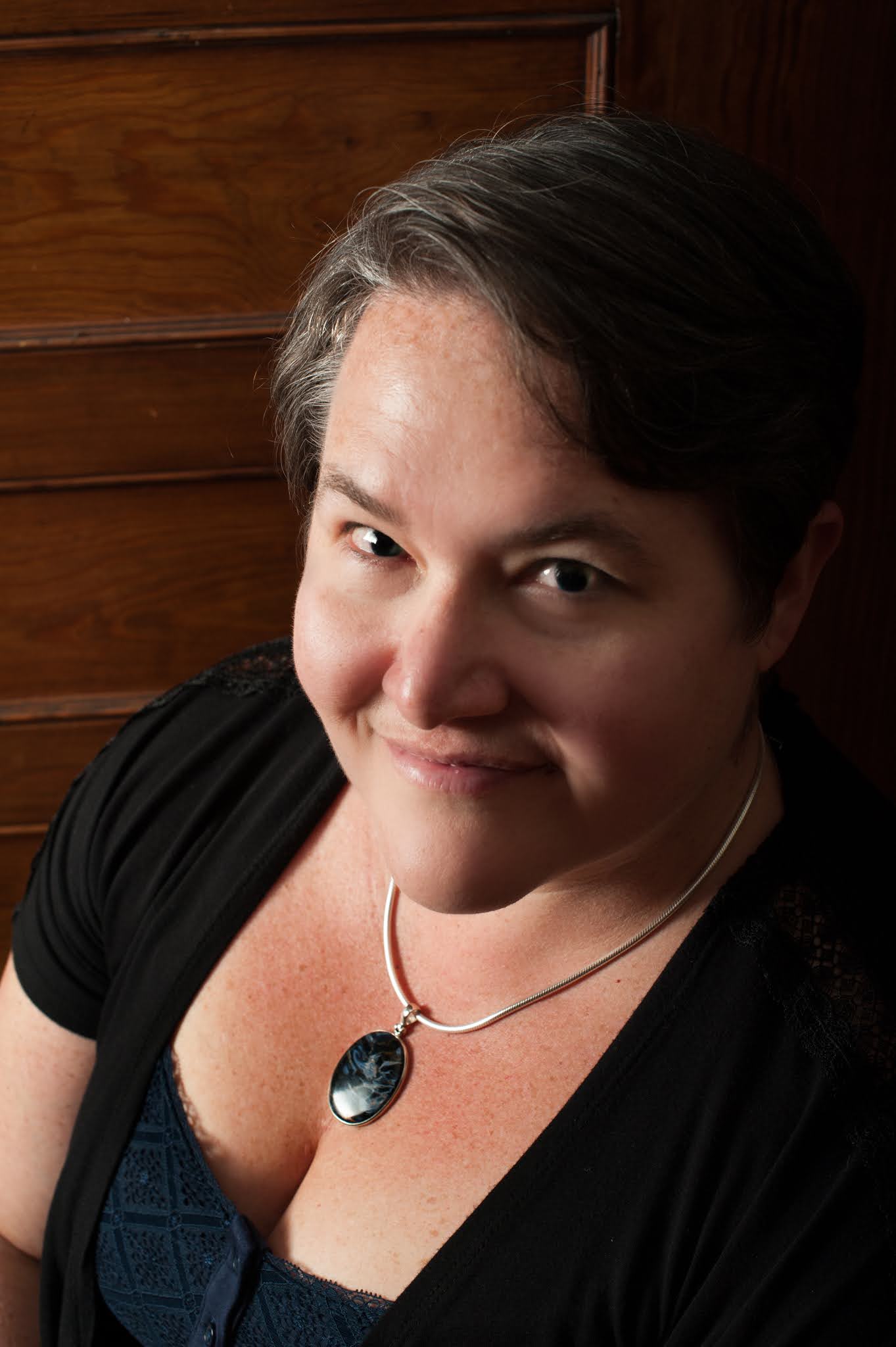
Amy Rivers writes novels, short stories and personal essays. She is the Director of Northern Colorado Writers. Her novel All The Broken People was recently selected as the Colorado Author Project winner in the adult fiction category. She's been published in We Got This: Solo Mom Stories of Grit, Heart, and Humor, Flash! A Celebration of Short Fiction, Chicken Soup for the Soul: Inspiration for Nurses, and Splice Today, as well as Novelty Bride Magazine and ESME.com. She was raised in New Mexico and now lives in Colorado with her husband and children. She holds degrees in psychology and political science, two topics she loves to write about.
Connect with Amy on the Web:
Facebook: https://www.facebook.com/amyrivers.writer
Twitter: https://twitter.com/WritingRivers
Instagram: https://www.instagram.com/amy.rivers38/
INTERVIEW:
What got you into writing?
I’ve always enjoyed writing, but my professional journey took me in a number of different directions first. After twenty years in management and marketing, I became the director of a sexual assault services program. I developed a passion for violence prevention and I got to see first-hand how victims and perpetrators behave and how the criminal justice system functions in such cases. When I moved to Colorado, I started writing in earnest. First, I wrote an essay about one of the forensic nurses I worked with. Then I wrote my first novel—the story of a woman hiding behind her career to avoid getting hurt. I’ve been truly blessed with the opportunity to write full-time for the past six years.
What do you like best about being an author?
I love working on my characters. As a reader, I want characters who are complex and fully developed, so it’s probably no surprise that that’s where my focus lies in writing. Human behavior is fascinating, and I love thinking about all the reasons a person might react a certain way or do a particular thing. Sometimes we focus too much on the big influences or events. I like to consider all the little things that might impact the way a person thinks about things. The way they see the world.
When do you hate it?
Not sure I hate anything about being an author. I’m not terribly patient, and there’s a lot of waiting so that can drive me a little crazy at times.
What is a regular writing day like for you?
I’m definitely a morning person when it comes to writing and I don’t write everyday. I try to take at least the first hour or two of my day for actual writing, and save administrative things for the afternoon when my coffee has worn off. Being an author isn’t all about writing. There are a lot of business and promotional tasks that have to be done regularly or they pile up on you and become a distraction from writing. So, on a writing day, I start by booting up the computer, taking care of any urgent emails, and then diving into writing. When my mind starts to wander, I make some coffee and push through until lunch. Of course, if I’m in the middle of something or I’m on a roll, all bets are off. I just write until I can’t write anymore.
Do you think authors have big egos?
Some do. I think being an author requires a certain amount of ego because you have to balance that against all the rejection and negative criticism you invariably get. As an author, you’re sort of stuck in this perpetual tug-of-war between euphoria and abject terror. For instance, when I hold my book for the first time, I go from excitement and pride to the overwhelming sense that the minute I let that book out of my hands it’ll all come tumbling down. A little bit of ego helps you sit back down and write some more regardless.
How do you handle negative reviews?
Some authors say never to read your reviews, but I admit, I do. Sometimes reviews are really just a person’s emotional reaction to the book but as I read them, I can look for patterns and use what I learn to improve my craft. That doesn’t mean I believe all the negative reviews and I understand that you can’t please everyone, but I also know that by the time a book goes to print, I’ve read it so many times I start to lose perspective. Reviews, even negative reviews, can help me get that perspective back.
How do you handle positive reviews?
I say a little “thank you” to the Universe, smile, sometimes do a happy dance, and then move on. I’m always elated when a reader connects with my story and characters. I am so grateful when a reader takes the time to leave a review.
What is the usual response when you tell a new acquaintance that you’re an author?
They say “have I heard of anything you’ve written,” and I try not to chuckle because there are so many authors and books and I’m constantly being introduced to authors I’ve never heard of—even in my own genre. What’s really startling is when they HAVE heard of my books and they recognize my name or a title. Then I feel like I might just be doing something right.
What do you do on those days you don’t feel like writing? Do you force it or take a break?
I never force it. When I try, what I write is usually total crap so it doesn’t really do me any good. That being said, I never lack for things to do. I run a writing organization and right now I’m homeschooling my two kids so spare time isn’t something I usually get. If I don’t feel like writing, my to-do list will happily keep me busy the rest of the day.
Any writing quirks?
I like to have movies playing while I write. That’s my background noise. I love music, but it feeds my emotions and sometimes that can be distracting, so I have a handful of movies I watch over and over again. Right now, I’m “watching” The Client for the gazillionth time.
What would you do if people around you didn’t take your writing seriously or see it as a hobby?
I’m sure some people do, but the people in my life who matter most have always supported and encouraged me. I try to pay that back because I know not everyone is so lucky. What frustrates me is that it takes so much time and energy and creativity to write. It’s hard work. If a person wants to be a writer, they are committing to doing the work, facing the rejection, and juggling all the other aspects of their lives. The least we can do is encourage them.
Some authors seem to have a love-hate relationship to writing. Can you relate?
I can understand, but my own relationship with writing is somewhat different. I came to this profession after years of owning my own businesses and running organizations so I’ve always approached my writing as a job. It’s a job that I love, but it still has all the highs and lows of any other task you do day after day. I definitely have some dancing-around-my-office scale moments of joy. And there are days when I’m feeling low and looking for a day job seems like the thing to do. But mostly I approach my writing as a project or series of projects. I break it down into tasks. I celebrate my victories. Learn from my mistakes. Mostly, I try to stay even and balanced so that I don’t go insane.
What’s on the horizon for you?
More writing! Complicit is book one in a series. Originally, I envisioned a trilogy, but as I continue, my protagonist Kate has a lot more to say. I also write short stories and essays as I go, so there are a lot of moving parts in my writing life. I’m so thankful for the opportunity to share them with you.
Leave us with some words of wisdom about the writing process or about being a writer.
Just write! There’s really only one thing that can keep you from being a writer. If you sit down and do the work, if you make room for improvement and growth, then the sky’s the limit. Whether you’re putting aside hours in your private office or stealing a few minutes to write in a notepad on your kitchen counter, just write. As much as you can, as often as you can.
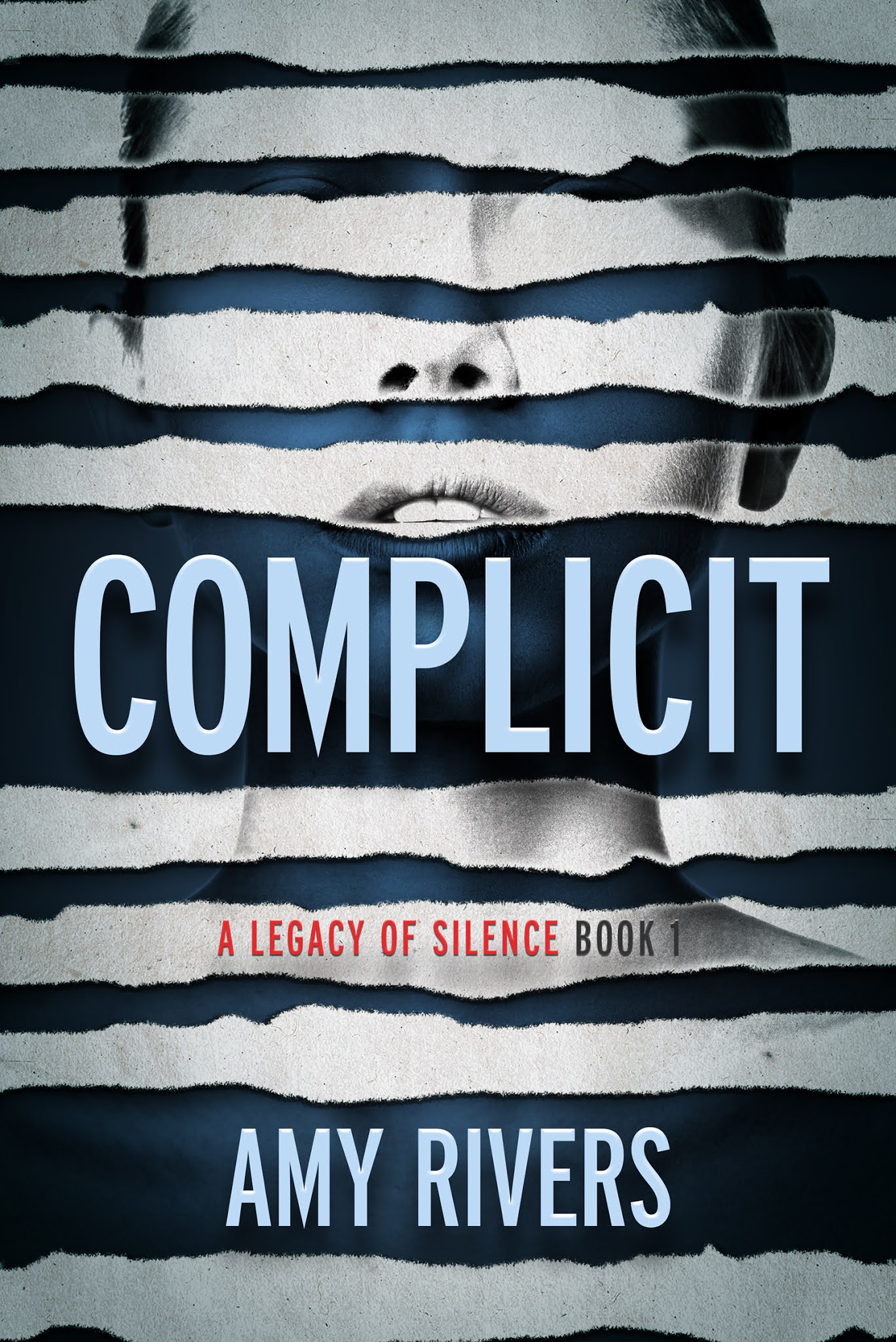
ABOUT THE BOOK
A tangled web of deception and duplicity where predators are shielded by respectability and no one is safe
Kate Medina had been working as a forensic psychologist and loving every minute until a violent attack left her shaken to the core. Retreating to her hometown where it's safe, she accepts a job where the prospect of violence is slim to none. As a high school psychologist, Kate tends to the emotional needs of the students. It's not the career she envisioned for herself.
Five years later, a student disappears, leaving the school in crisis and Kate at the helm of another traumatic event. Roman Aguilar, the lead detective, reaches out to Kate for assistance. Kate's position at the school and her training make her an ideal ally, but her complicated relationship with Roman puts them at odds.
When the girl's body is found, changing the focus of the investigation to homicide, Kate finds herself in the middle of a situation she never anticipated. What started as her desire to help puts Kate directly in the crosshairs of an enemy who remains largely in shadows. As her past and present collide, Kate is dragged into the middle of a dangerous game where only one thing is clear-no one can be trusted.
Find out more HERE.