Mayra Calvani's Blog - Posts Tagged "latina"
Celebrate Hispanic Heritage Month with ‘Latina Authors and Their Muses’
For immediate release
Contact: Lida Quillen
(423) 323-0183
publisher@twilighttimes.com
(September 25, 2015, Kingsport, TN)
Wisdom and Inspiration from Latina Authors in New Compilation
Latina Authors and Their Muses features advice from 40 women writers
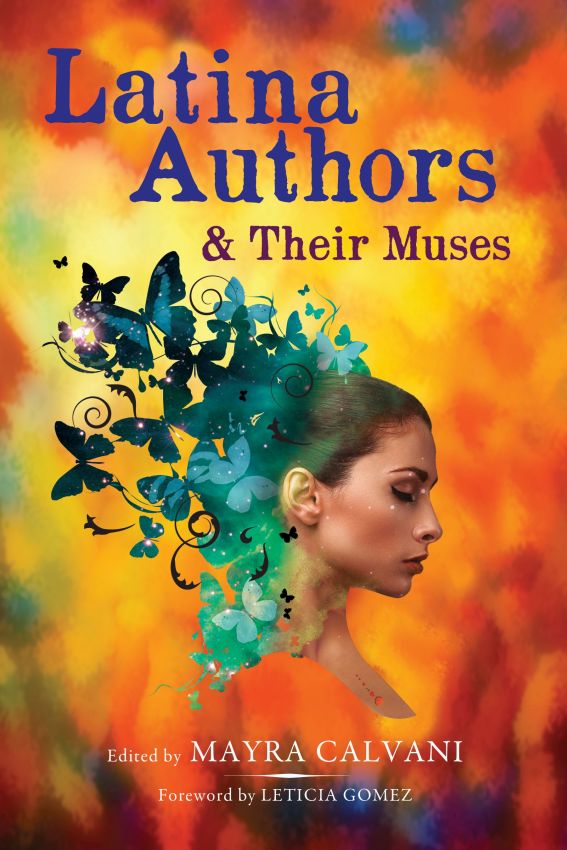
As the Hispanic American population of the U.S. increases, with influences ranging from Mexico to Central America and the Caribbean, so does interest in literature inspired by those cultures. Celebrate Hispanic Heritage Month by delving into
Latina Authors and Their Muses
.
Award-winning author Mayra Calvani has now edited a collection of interviews with 40 Latina authors living in the U.S. and writing in English.
Latina Authors and Their Muses
is an inspirational and informative book focusing on the craft of writing and the business of publishing, one that provides aspiring writers with the nuts and bolts of the business.
“
I had the opportunity to meet Carmen Dolores Hernandez, the book review editor at
El Nuevo Di
́
a
newspaper in San Juan, Puerto Rico, when she visited me in Brussels,
”
says Calvani.
“
She
’
d published some of my short stories and novel excerpts in
Revista Domingo
in the past, and I deeply admired her wisdom as a writer and woman of letters.
“She mentioned the anthology she had put together back in 1997, Puerto Rican Voices in English. I ordered a copy and became absorbed by the candor and insight of the authors as they talked about their backgrounds, books, and writing,” Calvani continues.
“
Wouldn
’
t it be perfect to put together a similar anthology showcasing Latina authors writing in English in the United States? This book would not only showcase prominent figures but emerging voices as well, writers working on a wide range of genres from the literary to the commercial.
”
The result of several years of research and interviews is
Latina Authors and Their Muses
. Writing in genres ranging from the literary to children
’
s picture books to fantasy novels to chick lit, and more, this remarkable group of talented authors shares their passion and commitment to their craft and to sharing their stories with the world in spite of the odds.
Latina Authors and Their Muses
is a celebration of creativity, the writer
’
s life, and the passionate quest for spiritual and artistic freedom.
About the editor:
Award-winning author Mayra Calvani has penned more than ten books for children and adults in genres ranging from picture books to nonfiction to paranormal fantasy novels. She
’
s had over 300 articles, short stories, interviews and reviews published in magazines such as
The Writer
,
Writer's Journal
and
Bloomsbury Review
, among others. A native of San Juan, Puerto Rico, she now resides in Brussels, Belgium.
Discount price of 99 cents from Sept. 25th to Oct. 5th!
Book info
Title:
Latina Authors and Their Muses
Author: Mayra Calvani, Editor
Author web site:
http://www.mayracalvani.com/
Publisher: Twilight Times Books
Genre: Reference/Writing Skills
*Print ISBN:
978-1-60619-063-0
Format: 6x9 trade paperback; 340 pages; $19.95 USD
Distributors: Ingram, Baker & Taylor, Brodart, Follett, etc.
*eBook ISBN:
978-1-60619-062-3
; $6.50 USD
Format: ebook in pdf, ePub, Kindle, Mobi, PRC, etc.
Distributors: Amazon Kindle; Apple iBookstore; BN.com Nook; Kobo Books; OmniLit; OverDrive, etc.
Release date: September 25, 2015 ebook; December 15, 2015 print
LCCN:
2015952662
Chapter excerpt:


Talking Craft with Liza Trevino, Author of ‘All That Glitters’
 Liza Treviño hails from Texas, spending many of her formative years on the I-35 corridor of San Antonio, Austin and Dallas. In pursuit of adventure and a Ph.D., Liza moved to Los Angeles where she compiled a collection of short-term, low-level Hollywood jobs like script girl, producer assistant and production assistant. Her time as a Hollywood Jane-of-all-trades gave her an insider's view to a world most only see from the outside, providing the inspiration for creating a new breed of Latina heroine. Visit her at lizatrevino.com
Find out more on Amazon: All That Glitters
INTERVIEW:
Q: Congratulations on the release of your latest book, All That Glitters: A Tale of Sex, Drugs and Hollywood Dreams. To begin with, can you give us a brief summary of what the story is about and what compelled you to write it?
A: It follows the rags-to-riches Hollywood journey of a creative, ambitious, street smart and gorgeous Latina who sets her sights on making it big in Hollywood as a writer and film director in the 1980s. All That Glitters has grit, glamour, Hollywood and some romance mixed in for good measure.
I was re-reading a Jackie Collins book I’d love as a teenager, and I began thinking I wanted to read this kind of story, but with a Latina as the main character. That’s definitely something I wanted to read. I couldn’t find it in the marketplace, so I started writing.
 Q: What do you think makes a good women’s fiction book? Could you narrow it down to the three most important elements? Is it even possible to narrow it down?
A: The thing about women’s fiction is that it mixes with so many other genres, well, any other genre, really. That’s what I find so interesting about this genre. It allows me to investigate a woman’s point-of-view and her character’s evolution in relation to any other genre or story that I’m interested in experiencing, whether it be a Hollywood romance or a horror or a mystery. But I digress… three fundamental elements are a believable character or characters the will draw the reader in. A character that makes you care or, whether it’s love or hate, the character has drawn you in. Also important is a universal struggle. Sure, there’s plot, structure and what not, but is the central question or struggle one that is a larger one that the reader can understand? So, again, no matter what the particulars are, the reader is caught up in the ‘what would I do’ game. And, finally, a good villain. Whether it’s external or internal, the project needs to struggle and be tested, and that’s exactly what a great villain does for the story.
Q: How did you go about plotting your story? Or did you discover it as you worked on the book?
A: Originally, I just started writing. I had an idea of the overall structure I wanted, as well as a few specific things I wanted to happen, so I attempted to write with that in mind. What I discovered was that, for me, that didn’t work out so well. At all. It’s really important to get that ‘inspiration about the story you want to tell and how you want to tell it, but when digging into the actual work of writing an entire novel, I need to outline and plot. It helps me see where the holes are and what is and isn’t working.
Q: Tell us something interesting about your protagonist and how you developed him or her. Did you do any character interviews or sketches prior to the actual writing?
A: The initial idea for Alexandria Moreno came from the fact that I was reading a lot of Los Angeles and Hollywood fiction. I have a soft spot for this type of writing. And, two of my favorite characters from this type of writing, and in general, are Lucky Santangelo and Maria from Play It As It Lays. From there, I wanted to create a Latina heroine that was a blend of those two characters – a character with ambition, confidence and who also exhibited nearly clinically depressed ennui. I also wanted to explore Hollywood glamour – both its magic and its darkness.
Q: In the same light, how did you create your antagonist or villain? What steps did you take to make him or her realistic?
A: My villain was more difficult, but fun. I say difficult because there were different iterations of this character in earlier drafts of the story. Once I got my head straight about the structure of this story, I realized there were three different characters that would be so much better if I just combined them into one person. After I realized that, filling him out and finding the physical traits was the easy part.
Q: How did you keep your narrative exciting throughout the novel? Could you offer some practical, specific tips?
A: That’s where plotting or outlining comes in handy. Even with an outline, you can find yourself at odds with the pacing when you actually get into writing. To keep the narrative exciting, I think it’s important to keep the protagonist always discovering something. It’s important to end chapters with a question asked and lingering, which will propel your reader to move onto the next chapter and further into the story.
Q: Setting is also quite important and in many cases it becomes like a character itself. What tools of the trade did you use in your writing to bring the setting to life?
A: I’m a big architecture and urban planning geek, so setting is always a particular joy and challenge to me. I go out of my way to select specific details that interact with buildings or rooms, like light quality, grit on the windows or streets, or the furniture upholstery. Depending on the type of scene I’m working on, will determine how I go about filling out the scene. That is, if I have general action occurring, then I will go broader with descriptions, like how is traffic on the street moving. But, if the scene is more intimate in nature, like a stilted conversation between two estranged friends, then I’ll pick small details that would evoke what the character is doing and experiencing. For example, with the stilted conversation I just mentioned, I might add a detail about the table their sitting at and the grain on the table or crumpled napkins sitting on the table.
Q: Did you know the theme(s) of your novel from the start or is this something you discovered after completing the first draft? Is this theme(s) recurrent in your other work?
A: I set out to write about relationships. There are three key relationships in the book, and each of the relationship highlights different but complimentary themes that overlap. Themes that include the redemptive nature of loyalty and friendship, the destructive power of giving into your worst impulses, facing your demons, learning to love yourself, self-acceptance and trust. But, I’m most intrigued by the idea of free will vs. fate. Do we have free will or are things set before we even take our first breath? How in control are we of our life journeys? Is there some pre-determined destination that all of our little, everyday decisions ultimately leads us? Or, is it all just chaos? And, if it is chaos, then how do we account for certain repetitions in life? I suppose I’m quite taken with that theme because I see it played out and the questions come up again and again in different stories I’ve written. And, to all of this, I’d say that the themes became apparent after I wrote the story.
Q: Where does craft end and art begin? Do you think editing can destroy the initial creative thrust of an author?
A: There’s an argument to be made on both sides. Ultimately, I believe it’s not an either/or proposition. Craft and art co-exist. What I found is that art is the inspiration and vision of what you want to say and craft gives you the skills to create. Editing, when done constructively, can bring out the beauty of the initial inspiration, not diminish it.
Q: What three things, in your opinion, make a successful novelist?
A: Desire, perserverance and discipline. You have to want to tell the story that’s in your head. You have to want to tell it so much that you will persevere against all odds. I know that sounds melodramatic, but it’s true. There’s nothing harder to do than to keep pushing forward through all the obstacles that come with everyday life. And that’s where the discipline comes. You have to train yourself to say no to that snooze button if you’re going to get up early to write. In the end, you have to shut everything else out so that the story you want to tell can make it to the page. Simple, right?
Q: A famous writer once wrote that being an author is like having to do homework for the rest of your life. Thoughts?
A: I don’t see it like that because homework has such a negative connotation – at least to me, anyway. Homework was something assigned to me that I had to get done in order to not fail out of school, never get into a good college, and have my life ruined. See what I mean? Instead, writing and all the other stuff is something I choose to do, so, yeah, it’s work, but it’s an entire world/universe that I’ve created and choose to visit. That’s WAY better than homework.
Q: Are there any resources, books, workshops or sites about craft that you’ve found helpful during your writing career?
A: So many resources over the years were helpful. Among the best, I think are local writer’s conferences. It is a great way to dip your toe into the waters of the publishing world. You spend a couple of days hanging out with a bunch of writers who have varying degrees of experience and success. The most important thing from going to this is just being around other people who have the same passion or crazy idea about writing that you do. That’s awesome.
Q: Is there anything else you’d like to share with my readers about the craft of writing?
A: Draw inspiration from everything, always be curious about the world around you and you’ll never want for inspiration or stories.
Also, that words matter. It sounds funny or obvious, but it’s something I’ve learned. Once you have to name, describe or explain the idea floating in your head and make it concrete in the real, physical world, then how you express it with language makes all the difference. Now, that sounds paralyzing. But, it isn’t. Because the other thing that writing has taught me is that fifteen minutes can be an eternity. I used to think I needed hours and hours of dedicated time to get writing done. Timed writing sprints are a Godsend for focusing your thoughts and getting your story out of your head and onto the page. Then, after you’ve finished your draft, the ‘words matter’ revision and refinement process can begin.