Jeremy Zimmerman's Blog
December 10, 2018
Cobalt City: Recommended Reading Order
 I’ve been asked a couple times recently for suggested reading order for Cobalt City books. Or, “I read X, what should I read next?” So here’s me taking a stab at it.
It’s kind of a loaded question, since there’s been such a hodgepodge publication history. In theory, most of the books are written to stand on their own. But it’s certainly helpful to have earlier context for some of the items. You can read Kensei without having read any other Cobalt City books, but the storyline is built out of a lot of stuff that happened earlier.
If you want a strict chronological order of events, setting creator Nathan Crowder has a timeline on his website.
Below is my reading order recommendation, framed as sort of a “complete Cobalt City experience.” This is meant to be mostly chronological where I can, but also geared towards reading complete books at a time. So even though some short stories in the anthologies take place much earlier in the timeline, I’ve tried to minimize the need to bounce around between books.
I’ve added a series of asterisks to the titles. Here’s what they mean.
* These are titles that I feel like you can jump into reasonably easily. They represent the beginning of a new story arc, and could be jumped into pretty easily.
** These are collections that have new content but also include content previously listed.
*** These are stories that appear in anthologies that are not related to Cobalt City.
Protectorate Era
Chanson Noir by Nathan Crowder*
Cobalt City Blues by Nathan Crowder
Cobalt City: Dark Carnival by Nathan Crowder, Matt Adams, Ashley Bates, Erik Scott de Bie, Rosemary Jones, Charlie Kenmore, Amber Keller, Dawn Vogel, Andrew Warren, Catherine Warren, Jeremy Zimmerman, Minerva Zimmerman
Cobalt City: Adventure Unlimited (podcast)
Cobalt City: Los Muertos by Nathan Crowder
Cobalt City: Ties That Bind by Nathan Crowder
Interregnum
Greetings from Beuna Rosa by Nathan Crowder*
Ride Like the Devil by Nathan Crowder
Cobalt City Christmas by Nathan Crowder, Nikki Burns, Rosemary Jones, Angel Leigh McCoy, Jeremy Zimmerman
Cobalt City: Timeslip by Caroline Dombrowski, Nathan Crowder, Erik Scott de Bie, Michaela Hutfles, Rosemary Jones, S. Aarron Kemp, Dawn Vogel, Jeremy Zimmerman
The Devil, You Say by Jeremy Zimmerman**
Sparx & Arrows by Dawn Vogel**
Snowflake War Journal by Jeremy Zimmerman**
Revival
“Sword Saint of Karlsburg” by Jeremy Zimmerman
Kensei by Jeremy Zimmerman*
The Love of Danger by Jeremy Zimmerman
Kensei Tales: Offensive Driving by Jeremy Zimmerman
Kensei Tales: It’s the Great Yule Cat, Jamie Hattori by Jeremy Zimmerman
Kensei Tales: Live and in Concert by Jeremy Zimmerman
Kensei Tales: Unorthodoxy by Jeremy Zimmerman
Cobalt City Rookies by Nikki Burns, Rosemary Jones, Jeremy Zimmerman
Eye for an Eye by Erik Scott de Bie*
Prather Administration
“Madjack” by Nathan Crowder***
Cobalt City Christmas: Christmas Harder by Nathan Crowder, Amanda Cherry, Erik Scott de Bie, Dawn Vogel, Jeremy Zimmerman
Rites & Desires by Amanda Cherry*
Cobalt City: Resistance by Nathan Crowder
Nathan Crowder on Patreon
Notes
Protectorate Era
I’d argue that Cobalt City starts with Chanson Noir, which features the superhero team called the Protectorate. It was not the first book written in the universe, but it’s the first book that takes place in Cobalt City proper. Combined with its sequel, Cobalt City Blues, it sets up a lot of the universe that later authors have played around with.
There have been other superhero groups in the setting, but none as detailed in books as the Protectorate. Nathan Crowder has called this the Golden Age of Cobalt City, chiefly because of the influence it has had on the rest of the setting.
In addition to the original Protectorate series, I’ve included a few other pieces that are part of this period. Cobalt City: Dark Carnival is the only anthology specifically set during this time period.
Cobalt City Adventures Unlimited was a short-lived audio drama that we are trying to slowly return to existence.
Cobalt City: Los Muertos and Cobalt City: Ties That Bind are stand-alone pieces set in the same time period. You could arguably read them on their own, but I think you get more out of them if you are familiar with the characters.
Interregnum
There’s two parts to the books included here.
Greetings from Buena Rosa was the first Cobalt City book published. But it and its sequel, Ride Like the Devil, are set after the dissolution of the Protectorate. I read Greetings first, and wished afterwards that I had read the two Protectorate books first. There’s a lot of context to character relationships with the main characters that are really explored more in the Protectorate series.
The rest of the books here represent a relative lull in Nathan writing more books, as well as him inviting other authors to play around in his sandbox with a series of short story anthologies. The anthologies I included here often have stories taking place all through the timeline for Cobalt City, from pre-Columbian time to what I’ve classified as “Revival.” But I feel like they were shaped by the fall of the Protectorate.
Revival
This period marks the rise of new fullish length books in the setting. Nathan published two bundles of novella length fiction, all set about five years after the Protectorate dissolved. The were meant to represent a new wave and (in the case of Cobalt City Rookies) a new generation of stories. Cobalt City Rookies collected three young adult novellas, including my first published book. Cobalt City Double Feature had two books within it, of which Eye for an Eye is the only one available now.
The Prather Administration
This period marks a new wave of fiction in the setting, shaped by a mix of Nathan’s Patreon and the 2016 presidential election. In universe, the big event is the election of anti-super pundit Lyle Prather. Cobalt City: Resistance have a different view of what superheroes look like in a polarized and increasingly fascist United States. And Nathan is still producing new content on his Patreon that has not yet been made available outside of there.


November 22, 2017
AmberCon Northwest 2017: After Action Report
It’s been a long while since I’ve done a recap of my ACNW weekend, but I had a great time and tried a bunch of new things, and thought I’d share.
For those not familiar, AmberCon Northwest is a four-day game convention just outside of Portland, Oregon, at the McMenamin’s Edgefield. It (and other AmberCons) was originally started as a venue to play the Amber Diceless Roleplaying Game. In recent years, it’s also attracted a wave of indie gamers. So the core of it is still Amber, but it’s a chance to try out all sorts of things.
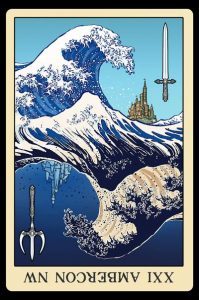
Ambercon Northwest XXI T-Shirt, with art by Lee Moyer.
There are seven scheduled game slots, and you pick your games (or other events) in advance. Membership is, in theory, capped by the number of offerings available. Fortunately people have stepped forward enough that it hasn’t been an issue. You can check out this year’s game book to see what sort of things people got up to. This doesn’t include games that people have run before, after, or in the spare moments of the convention.
In addition to four days of scheduled gaming, the Edgefield is a beautiful location with a winery, brewery, and distillery on location. A dozen bars. A spa with a salt water soaking pool. And all kinds of good food.
This was the 21st year of the convention, which makes me feel really old. My first year was 1999, making this the 19th year I’ve attended. It’s a reasonably small convention with about 120 attendees. After almost twenty years, it often feels like a family reunion without the weird toxic relations. But we’ve also managed to have a constant influx of new members, which keeps it from getting too stale.
Pre-Party
We arrived early on Wednesday so that we could lounge about the hotel and decompress after the drive from Seattle. Thursday afternoon we got our nails did.
Before the gaming starts, there’s an opening reception where there’s a buffet table, cash bar, and a lot of mingling with people we probably haven’t seen in a year.
Slot One (Thursday Night) – AustenWorld Playtest
GM: Me!
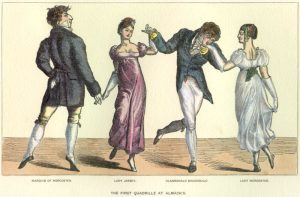
Dawn and I have been working on a Jane Austen hack of Apocalypse World, mostly inspired by Monsterhearts, that we refer to as Austenworld until we come up with a better title. This was our second year trying it out at the convention. We did a pretty drastic re-write of our rules after our first few playtests, and came to the convention with a pretty raw set of rules. I think it generally went well, though there was some tripping over things as we discovered oversights that didn’t come out while we were drafting things up. Certainly people had fun.
My favorite bit was the player who came in and said, “I want to play someone hella gay who is just looking for a gay man who will be her beard.” We’ve been wanting to work on ways to include more LGBTQ content and this filled my heart with joy.
Slot Two (Friday Morning) – Dragon Age: Solstice
GM: Celeste Van Houten
This was a hack of the Amber Diceless rules, adapted to the Dragon Age setting. I signed up for this mostly because it was a GM I hadn’t played with before and I was curious. It was fun, but I know much about the setting going in. It’s been years since I’ve played Dragon Age: Origins, and I haven’t gotten around to playing any of the sequels.
What I have been playing lately is just a ton of Skyrim, so I had a large amount of cognitive dissonance about the nature of elves, dwarves, and Empire in the setting. But otherwise this was a solid mission style game featuring the minions of powerful nobility with dubious morals.
Slot Three (Friday Afternoon) – Blades in Amber: Beginings
GM: Kai Ford
Kai reskinned Blades in the Dark to fit into Amber, using the Vigilantes playset. We were a bunch of dark(ish) protectors. I had a great time playing The Fallen, who was a cutter that had made an unholy pact with a demon to save his life while dying on a battlefield. I played up the whole dark knight thing to the hilt and had a blast.
Slot Four (Friday Night) – The Nightwood Society: Philosophy Club 2
GM: Dan Garrison
When I signed up for this, I had missed that it was intended for returning players only. (Ongoing campaigns are a thing that happens at ACNW.) Fortunately it ended up working out and I was able to play in this.
The pitch for this was very appealing: a band of people who had gone into this mythic and secret forest and returned transformed into magicians. Inspiration for the game included Mythago Wood by Robert Holdstock and Last Call by Tim Powers, which basically sold me on the concept. Mythago Wood (or rather, it’s sequel, Lavondyss) was one of those things I read in my teens that stuck with me for decades later. I couldn’t tell you half the plot, but hearing the title alone calls to some weird part of my soul.
Seeing that in the game description really snagged my attention.
The game was very fun and the other players were very welcoming. Which was helpful, as I worried that a lot of the game involved getting me up to speed. The system used tarot cards, but I don’t feel like I got to see it in action a whole lot, but I’m definitely jazzed to look into it more. It felt a little similar to Castle Falkenstein, where different suits corresponded to different types of actions. But each player had their own tarot deck and the mixture of cards in the deck varied by player.
Setting-wise, I feel like this better embodied the mythic journey than other games I’ve played or read. Especially both Mage: The Ascension and Mage: The Awakening. I’m not sure how much of that was mechanics or how much was GMing style.
I also got a new tarot deck for the game. Or, rather, Dawn got me a new one. After my divorce several years ago, I had far fewer tarot decks than I once did. And neither the Vertigo deck or either of the World of Darkness Mage decks seemed appealing. So Dawn ran to our local new age store for me with a request to pick something that was very me.
This is what she ended up getting.
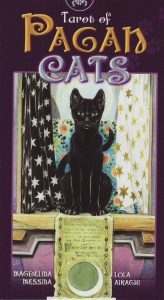
Meow.
Slot Five (Saturday Morning/Afternoon) – The Sliding Academy: The Fallen Valkyrie
GM: Me!
This was the third installment of my Harry-Potter-inspired game set in Zelazny’s Courts of Chaos. I have this weird fondness for world building in weird places, trying to figure out how something might work in an alien environment.
Previously I’d done a series of games about street-level characters in the same setting, trying to figure out what the have-nots looked like in a universe of shapeshifters, patchwork realities, and vast cosmic powers. This game was instead about figuring out what a private secondary school looks like in this same universe.
I’ve been cribbing heavily from the Harry Potter series, and this year corresponded to The Prisoner of Azkaban. Which meant I finally got to do a reveal on a plot element I’d been sitting on for years: my Snape analogue has secretly been Prince Brand of Amber, who had survived his fall into the Abyss by ending up in the school itself. The escaped prisoner, in this instance, was his sister Deirdre who had also survived.
The reaction from the players on discovering it was Brand this whole time filled me with GMing glee. I’ve spent far too much time trying to figure out what I’ll do as a parallel to the Tri-Wizard Tournament next year.
Slout Six (Saturday Night) – Fame, Gold, and Glory
GM: Me!
This was a pretty basic run of Dungeon World. I had wanted to submit a third game but hadn’t felt inspired, so I offered this as something fun that didn’t involve a lot of prep. We had fun. I basically did Google Image searchs for dungeon maps on my phone and made crap up frantically.
Slot Seven (Sunday Morning/Afternoon) – Death Came Howling
GM: Felicity Shoulders, Michael St. Clair
I signed up for this based on the GMs, but didn’t quite know what I was getting myself into. It told the tale of the 1900 Galveston Hurricane, which I knew nothing about, using a game system called Geiger Counter. The game system is described as being GMless but allows for the possibility of a GM. I don’t think this would have worked well without a GM, as Michael and Felicity brought an extensive knowledge of the history and the setting. Everything that happened in the game was based on real things that happened in the historic disaster.
Both the game system and the historical reality are brutal. The game system ramped up in lethality pretty quickly, making us all a little risk averse towards the end. At least half of the player characters died by the end. The history? The scale of the disaster was epic and hard to get my head around. But what nearly broke me, though, was a post-script the GMs threw in at the end. They sketched out the fate of a group of orphans associated with a player character that hadn’t been chosen among the options, bringing in players to make some on-the-spot decisions.
Suffice to say that most of the orphans didn’t make it. The part that wrecked me was Felicity singing the hymn that they sang, as the survivors (who had gotten snatched away in the floodwaters) watched the lights in the chapel go out.

No YOU’RE crying.
Wind Down
Dawn and I have made it a tradition to find somewhere off the property to eat dinner on Sunday night. Previously we had gone to a nearby Salvadoran restaurant, but they were no longer around. Instead we visited a little Mexican restaurant called Tapatio.
There’s a closing reception at the end, a chance for more cash bar fun and dessert. From there a lot of us went off to the soaking pool to relax, socialize, and maybe drink. Some people will run a pickup game in an unofficial “Slot 8”. (Sometimes called Slaaaaate. Because it’s late. Get it?) But this year I opted to just hang out with friends.
And now I count down the days to next year.
August 22, 2017
Slush Pile Lessons, Part Three – Math is Hard
This is the third installment of my posts about lessons learned from slush. You can read the other two parts here: Part One, Part Two.
We read a lot of slush. We’ve written a lot of stuff. Sometimes we see bad habits that we realize we’ve been doing all along. These posts are about lessons we’ve learned.
Short recap of disclaimers:
I hate canned advice.
There’s a reason that advice exists.
This is skewed towards short fiction editors because I am one.
You can’t account for luck, but you can make choices about your fiction. This is about those choices.
Playing with Numbers
 I like numbers. I think they can give a sense of scale, even if they depress the hell out of me sometimes. Or a lot of times.
You could be thinking, “How hard is it to get an editor to read your story to the end and like it?” I mean, I talked a lot about trying to avoid pitfalls. But how hard could it really be to keep an editor’s attention?
As I go through this, it’s worth noting that we typically look for stories 500-8,000 words long. It’s a typical range for short fiction. Markets may vary significantly, but it’s good enough for government work. (I’m a government bureaucrat. I would know.)
Also worth noting is the financial cost. For those not hip to the jargon, a “token paying market” pays less than 1-cent/word. A “semi-pro” market pays at least 1-cent/word, but less than 6-cents. A “pro” market pays at least 5- or 6-cents/word.
(For those wondering, “If you get paid for doing work, doesn’t that make you a pro? Who decided that 6-cents is ‘pro’?” The answer is: genre-specific professional organizations like Science Fiction & Fantasy Writers of America. 6-cents/word is the minimum pay for a short story to be considered professionally published by SFWA. Which is one of the ways you can become a member. This makes pro-paying magazines that much more appealing to submit to. Horror Writers Association is 5-cents/word for professionals, but they have lower tiers of membership available. Romance Writers of America appears to no longer have that requirement.)
Volume (Pump It Up?)
For this last Kickstarter, we received 242 submissions. This was the largest volume of submissions we’ve gotten for an anthology. Twice as many stories as our previous record. We were also paying twice as much: 2-cents per word.
How does this compare to pro-paying markets? The info I could find for pro-paying anthologies was pretty sketchy. Comparing it to a pro-paying magazine seemed dubious, because there are different environmental factors between an ongoing magazine and a one-time anthology.
So what about comparing MSJ‘s regular token paying slush pile to a pro-magazine’s slush pile? From looking at Duotrope and Submission Grinder, there are 20-50 times more submissions to pro-paying markets reported than there are to our token-paying magazine. The numbers vary so wildly between the two sites that I don’t think I could give you an adequate comparison of payment vs. volume of submissions.
But if you’re willing to assume at least 20 times the submissions, you’d be looking at a minimum of 3,500+ stories in the last year. About 300 a month. A good deal more than our recent anthology, but also monthly. (This assumes they are open year round. Some markets close periodically, which means that the content is redistributed to the open months.) That’s the conservative estimate. They have about a 1% acceptance rate, which seems to fit with their publication rate.
Time Is Not On Your Side
Not everyone included their word count for their story, so I can’t give an exact number, but we could easily have had a million words worth of fiction submitted. That’s more than twice the length of the Lord of the Rings trilogy. It’s comparable to the length of the entire Dark Tower series.
Google tells me that the average person reads 200 words per minute. With a range of 500-8,000 words, each story takes an average person 2.5 to 40 minutes to read. For a million words, that’s over 80 hours of reading.
Larger markets will often have a first tier of slush readers, so that load would be distributed among multiple readers and filtered before they get to the editor. It’s still a lot of reading.
Bringing it Together
A publication can only accept so many stories. Usually this is limited by word count. When they pay by the word, their budget for authors limits how many words you can buy. If there’s a print edition, they may have a printing budget as well.
When you submit an 8,000 word story, you have a steep climb. You’re asking for 40 minutes of someone’s time, and you need to keep them interested that whole time. It’s in their best interest to give up early. For a 2-cent/word market, you’re also asking for $160 from them. And in a 100,000 word anthology, you are asking to take up 1/12th of the book.
If you’re looking at a pro-paying market that puts out a monthly magazine, they have a shorter word count limit. Glancing at a few pro magazines, I’m seeing 3-4 stories a month. One magazine appears to have about 20,000 words of fiction for that month. So this hypothetical 8,000 word story would cost at least $480 for a story that could take up almost half of their fiction budget for that issue.
Looking at it that way, can you tell your story in fewer words?
On the flip side, a 500 word story only takes a few minutes to read. It’s easier to take a gamble on finishing it if you’re only taking an extra minute. When you’re trying to hit a specific word count, really short pieces are great for filling in those final gaps. It pays $10 at 2-cents/word and $30 at pro rates.
And you can take more stories if they’re all shorter. Which means you can talk up how many awesome stories your publication has when you go to market it. Unless they’re a writer, telling someone a book is 100,000 words long doesn’t mean much. Page count, when applicable, might tell more. But saying the number of stories? 12 stories doesn’t sound as awesome as 24 stories. Which doesn’t sound as awesome as 36 stories.
Added bonus: If a book has 36 stories, it could have 36 authors who will share news of their publication to their audience.
But can you tell a satisfying story in that space of 500 words? It’s hard to do. There’s a reason I don’t write flash fiction. Some people are great at it. It ain’t me, babe. It ain’t a lot of people. Babe. Sometimes it can work without much of a plot. We’ve published dating profiles and brochures that were super short just because the concept was delightful enough that it was worth the two minutes of reading.
More often, though, they’re just incomplete stories that end abruptly and we don’t know what we just read. Sure, it only took us two minutes to read. But it ended with us throwing our hands up in confusion. That isn’t a great reaction to inspire.
These numbers are what you’re fighting against when you submit a story. Your challenge will be to catch that interest, do it well, and leave the editor satisfied with what they read. And even if you do everything right, it may still not get accepted. Because, seriously: 1% acceptance rate.
Beyond the Numbers
Okay, let’s recap.
Over three posts I’ve spat out a whole bunch of stuff. Numbers and tips and sophomoric philosophy. How does this all fit together?
When we evaluate stories, we try to balance out a whole bunch of factors that went beyond just whether we thought the story was well written. These included things like:
Length: For all the reasons above. We’ll give a shorter story more of a shot than a longer one just because it’s less of a time commitment. And we’re more likely to buy a shorter story because that means we can accept more stories overall. (And we have to tell less people “No.”)
Who the author was: Were they a returning author? Familiar faces are fun to work with. A big deal name we couldn’t believe submitted to us? That could sell a few more books. A newer author that we could help along? We’ve been the first publication for a lot of authors, and that’s a great feeling.
Reflecting our values: Stories impact how we shape the world, so we want to know that we’re publishing stories that shape things in a positive way. Is this a story that we want to stand beside and champion? I’m a social justice bard, so this influences me a lot.
Adding something to the mix: For the anthologies in particular, we want a good range of stories from a good range of authors. Some of this ties into having stories that stand out, and not wanting to have the exact same story 20+ times. But we also try to have a broad range of themes and tones. Even if the plots are completely different, we are probably not going to have five stories about airship pirates in a book that is not explicitly about airship pirates.
This is not to say that these things offset the need for a well-written story that we enjoy. It’s always heartbreaking to get a story that is everything we want to publish, and we don’t think it’s good. Those items above can turn a soft yes into a strong yes. And they can break ties when we just really don’t know.
Our priorities are not going to be the same as other markets. But I’d like to think there’s some overlap. Some of these you can’t do anything about. You can’t change who you are. You can’t always know what you’re going against.
But hopefully knowing these things can ease the sting of rejection. As an editor, these choices are painful to make. The difference between choosing or rejecting a story can be just a hair’s worth of difference.
In the end, all you can do is use some perseverance metaphor to keep going.
July 25, 2017
Slush Pile Lessons, Part Two – Telling a Story
Welcome to part two of “I’ve read a bunch of slush and I think I’ve learned something.” You can find Part One here. You can find Part Three here.
This post also got long, so there will be a part three. Sorry. I babble.
To recap stuff from the other one: we’ve read a bunch of stories over the years, and we’ve noticed things that a lot of writers do that are frustrating as an editor. Many of these things are things we’ve also done as writers, so it’s extra embarrassing. This is a chance to share these insights.
Here’s the super short version of my disclaimers.
I hate “conventional wisdom.”
But knowing what editors experience can help.
I use the term “editor” because I’m an editor. This advice may not apply to other groups.
This advice is about controlling what you can control, because there’s so much you can’t.
First, a Half-Baked Metaphor
I had this random epiphany just as I was ready to publish Part One. But I couldn’t fit it into the previous post. So here’s just a random thing to think about when it comes to standing out or finding your voice. I’m not going to claim this is wise. I just like the idea and thought someone else might find it helpful.
There’s this idea that all stories have been told before, and all you bring is your own voice and point of view. And that made me think of musical covers.
When you’re looking at covers of songs, they come in all kinds of flavors. Some just try to perfectly emulate the source material. Some add their own flair to the songs they’re covering. (“All Along the Watchtower” sounds very different depending on whether it’s Bob Dylan, Jimi Hendrix, or U2.) But sometimes you bring your own thing, and it doesn’t cause the song to stand out.
I listen to a lot of Postmodern Jukebox. It was what prompted this half-baked metaphor. For those not familiar with PMJ’s oeuvre, it’s a musical project by a guy named Scott Bradlee. He does these retro arrangements of popular songs, and gets a bunch of musicians and singers to perform the songs.
Sometimes they are amazing and bring their own energy to the song. Sometimes they don’t sound very different from the original. Even by bringing his own “voice” to these songs, he doesn’t always cause it to stand out. Compare Cee Lo Green’s “Forget You” (Original/PMJ) to Nine Inch Nails’ “Closer” (Original/PMJ).
PMJ’s “Closer” is very different from the original, “Forget You” is less so. You might not care for the cover of “Closer” compared to the original. You might even hate it. But it stands out in a way that “Forget You” doesn’t. It’s become its own thing.
This doesn’t mean that one that stands out is “better.” Sometimes what you need is the “Forget You” cover instead of the “Closer” cover.
When you start getting into genre expectations, getting too weird can sabotage you. If you have eclectic tastes, PMJ’s “Closer” could totally be your jam. If you are a hardcore fan of electronica or industrial music, PMJ’s version could be your sworn nemesis. (But you might enjoy Kawehi’s cover instead.)
To bring this back to writing, consider romance novels. Romance readers have expectations that fans of other genres might not. You might not want to be the romance writer who is described as “WEIRD 1 [STAR].”
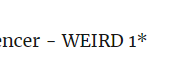
This is literally the only review I’ve seen from my brief foray into writing romance.
On the other hand, Chuck Tingle has made quite the career in going off the rails. But then, he understands that love is real for those who kiss.
In your journey to find your voice or your strengths, this metaphor might be helpful. This doesn’t mean that stories that fit the norm aren’t good or can’t sell. And for some authors, their strength is cleaving closer to the expected norms. The bulk of commercial fiction is arguably more like “Forget You,” so if that’s your strength, then strength the hell out of that.
But that’s not what I’m here to tell you about.
I’m here to talk about the draft. I’m here to talk about telling stories.
Tell a Story
From the stance of writing being self-expression, the thought of formulaic storytelling seems awful. From the stance of getting people to pay you for your writing, especially an editor, formulaic storytelling helps. And a lot of things use the same formula.
That Formula
It’s easiest to see at work in mainstream movies. They’re usually two hours long, so you get to see it all in one go. Some movies mask it better than others, but you can often still find it. Heck, I remember even seeing it at work in pro wrestling matches. It has a bunch of names. The Master Formula. The Hero’s Journey. The Three Act structure.
Why do they do this? Because it works remarkably well.
It can also be really hard to write. One of the reasons short fiction is recommended as a starting point is that it gives you a chance to experiment with writing narrative arcs on small scale. Novels, on the other hand, are more unwieldy for this sort of practice.
There are a lot of great resources that provide advice on story structure. My go-to is always Mark Teppo’s Jumpstart Your Novel. At the end of the book, he breaks down the structure of the movie Die Hard as a neat illustration. I also recently learned about Pixar’s writing prompt, which is part of a long list of advice they have.
As someone who hates self-help novels, I’m leery of a lot of writerly advice. Prior to MSJ, I’d consider these great brainstorming tools but would sneer at the idea of codifying a story.
As an editor…?
If I’ve just read 50 stories, and I have 150 more to read, I’m not interested in feeling frustrated, lost, or confused. At a certain point, I’m even looking for an excuse to just stop reading and move on to the next one.
There are questions I that I don’t want to ask when I’m reading a submission:
“What is this about?”
“Where is this going?”
“Is this really where it ends?”
In workshops, they’ll often talk about “getting booted out” of a story. The moment where something is suitably jarring where the story gets ruined for them. In a workshop, they’re obligated to finish. An editor isn’t.
As an author, I’ve been guilty of all of the narrative arc problems. I’ve written stories that don’t actually start until the middle of the manuscript. I’ve written stories where nothing happens. I’ve written stories that were just a series of events that didn’t go anywhere. I’ve written stories that leave too many things left dangling so that it’s more like the first chapter of a book rather than a self-contained story.
If you’re too cheap to buy Mark Teppo’s AWESOME BOOK, here’s the free half-assed version of the typical narrative arc: Convey the plot, setting, and themes as quickly as possible up front BLAM. Have a bunch of bad shit happen. When things have gotten as bad as they can get, provide a reasonable conclusion.
If you don’t think that’s helpful, maybe you should cough up $3 for a longer explanation, you cheap jerk.
It’s super basic, and yet super hard to do. I’m sure there are pros out there who can just knock it out of the park every time. I’m not that person. I use Mark’s book every time I write an outline just to have exercises that help me think about how to structure it. (And, to be clear, he is a pantser and still uses his brainstorming to get a feel for what his story is about.)
Sometimes you can get by without any of that narrative arc/hero’s journey/formulaic nonsense. Sometimes an idea is just so great that it can stand on its own without a plot. Sometimes the prose is just so rich and beautiful that you just get sucked in and it’s an experience unto itself. Sometimes you manage to hit on an editor’s favoritest thing and they are going to love it despite the odds.
For MSJ, we’ve totally bought stories that are fun even without a plot. A neat concept with good prose can keep us reading even if there’s not much of a plot. But the definition of “neat concept” or “good prose” is extremely subjective. If you’re playing the odds and hedging your bets, you may be better off going with a more conventional structure.
Of the dozen or so stories I’ve published through other people, they’ve all had something resembling that narrative structure. My prose isn’t so dazzling that someone has been swept up into the beauty regardless of plot. I’m sure there’s someone out there who thinks that about my prose, but none of them have paid me money to put a story in a book or magazine.
I was going to say, “If you do think my prose is dazzling and you want to give me money, call me!”
But, let’s be honest: I hate talking on the phone. A phone call from a strange number is just going to terrify me. What sort of monster even uses phones anymore?
But email or Paypal works. I’m Bolthy at Gmail.
Workshop, Sashay, Shante
It’s easy to be blind to whether your plot works, so getting outside opinions is valuable. And not just from people who love you and want you to be happy. Unless your mom is a professional in the publishing industry, don’t ask her for help. She’ll just put your story on the fridge and tell you it’s great. Heck, she may even do that if she is a professional in the publishing industry.
Ideally you want input from people with experience reading and writing fiction. You might argue that you want to get feedback from your target market, and that has a certain value. But if you’re going through a gatekeeper like an editor, you need to be able to sell it to them before you can sell it to anyone else.
The common advice is a critique group. And they have a lot of value. I’m always learning new things when I do critiques. But I’ve never been part of a regular critique group. Critique groups are time consuming. Getting words on paper is time intensive. Getting words on paper and reading manuscripts for a half-dozen other people for your weekly writer kaffeeklatch and providing meaningful feedback? I couldn’t do it.
My solution has been to just make friends with writers who are willing to help me out once in a while. We get together, hang out, and sometimes get each other to look something over. It doesn’t have quite the intense drive for productivity as a critique group that meets regularly, but it fits better with my schedule.
If you have disposable income and vacation time, you could consider one of the residential retreats. You have to apply, with no guarantee that you’ll get accepted. Some are more exclusive than others. I went to the CSSF SF Workshop out in Kansas and got a lot out of it. I also had a great experience with online workshops taught by Alyx Dellamonica through UCLA Extension. There are many others out there.
If you have less money and vacation time, some conventions will offer workshops. Fairwood Writers, for example, does a workshop at Norwescon. You get paired with at least four seasoned writers: three of the pros attending the convention, plus a representative from the Fairwood Writers. I had my stories critiqued there several times when I was starting out, and I’ve been one of the pros there. I’ve only been driven to tears once, and she hasn’t been back in years.
If you have money but no vacation time, you can also straight up pay someone to provide feedback. There are many fine editors out there. I’ve had great experiences with Lillian Cohen-Moore, Andrea Howe with Blue Falcon Editing, and (of course) Dawn Vogel.
If you have no money or vacation time, there are always online writing communities like Critters.org.
Wisdom from the Workshop
I learned a bunch of stuff when I did the CSSF workshop several years ago. There’s a comment from instructor (and SFWA Grandmaster) James Gunn that has stuck with me. I can’t find it written down, but here’s the general gist:
In the argument between the author and the reader, the reader always wins.
Specifically, this is about the difference between what you intend for a story to convey and what readers get out of it. This is not about ideas of fan entitlement about what an author should or shouldn’t do.
A story can only be judged by what is on the paper. It’s unlikely you will be on hand to be able to explain what it means while the person is reading it. If you’re writing with the aim to have people pay you, then this is the ultimate value of workshops: getting that outside perspective. It’s a beta-test for your writing. (And, in fact, some authors will have beta readers to give feedback on writing.)
I’m certain you can think of lots of situations where you wish, “Why didn’t they stop and get an outside opinion?” Like “My favorite color is Hitler” or the inadvertently pornographic Super-Soaker Oozinator. While you might not hit that big of a gaff, it’s best to get that check in from people who will catch it.
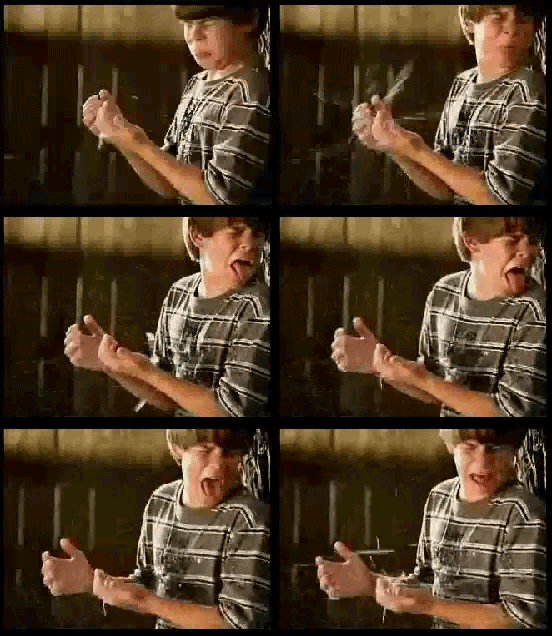
Does anyone want to have the fictional equivalent of the Oozinator?
Again, you can’t control a lot of things about how readers will react. But you can at least learn ways to avoid some obvious things by getting that outside point of view from people who know their stuff.
In part three, I’ll hopefully bring this series of posts crashing down.
May 25, 2017
Slush Pile Lessons, Part One – Standing Out
We just finished reading through 240+ stories for our new anthology. Other people have echoed similar sentiments, but reading slush really highlights things I’ve done as a writer that I probably want to rethink. I thought I might share some of the things I’ve seen over five years of slush.
This post got longer than intended so I’m breaking this up into two three posts. You’re welcome. (Click here for Part Two. Click here for Part Three.)
I’ll try to focus more on things I could do better. When using examples from things we’ve edited, I’ll also try to highlight things from Mad Scientist Journal rather than anything recent.
Before I dig in, here are some disclaimers:
I dislike the idea of “conventional wisdom.” In part because of survivorship bias. In part because there are constant exceptions to any rule that gets laid down.
One of the many pearls of wisdom I learned from James Gunn’s writer’s workshop is: never give an editor an excuse to say, “No.” There’s value in knowing why an editor will say no.
I say “editors” because it’s what I am and what I know. This could apply to agents, publishers, or other literary gatekeepers you want to impress. But I’m just going to say editors because I’m lazy.
The advice here is about controlling what you can actually control. The universe is fickle and there are variables that you have no way to know about or plan for. So focus on what you can actually do.
Don’t Blend In
Sometimes people think this means you need to do something zany with their submission. (“I’m going to submit this with red text in comic sans!”) So first off: don’t. It doesn’t look like they’ve hit upon a new way to stand out. They just look like they either didn’t bother to read the submission guidelines.
Don’t be the person who doesn’t bother to read and follow the submission guidelines. It just looks unprofessional. Don’t give them an excuse to dislike your story before they’ve read a single word.
With that mini rant out of the way, let’s talk about the actual writing.
After years of reading slush, we have seen the same stories over and over again. Let me tell you: it’s mortifying to see something I thought was clever written by fifty other people.
Themed anthologies intensify this trend. There are obvious stories associated with a theme. If you run a mad-scientist-themed magazine, you get a lot of people submitting rambling monologues from misunderstood geniuses. These get old fast.
I often hear that there are only so many stories, and they’ve all been told. The common advice, then, is that each author brings their own unique take to any individual story. You can probably find a poster or meme with a quote from Neil Gaiman about that. Probably on Etsy.
From a high concept philosophical point of view, it sounds great. As a younger writer, I would have found it truly inspirational. It wouldn’t have helped me much, but it could have buoyed me up with some short-lived over-confidence.
With some experience, the suggestion to “write the stories only you can write” is as useful to me as “just start running marathons.”
I only run when chased.
It’s arguably a great idea, but provides no sense of how you get there. After over a decade of trying to write professionally, and over a decade of less professional writing, I am only starting to understand what the hell the “story only I can write” even means. And, for that matter, is that all I want? A me-shaped box?
Coming at this as an editor, I can say it’s hard to see those nuances in manuscripts. Does this mad scientist monologue stand out from the dozens of other mad scientist monologues? Not really.
I have no great ideas for how to fix that. But here are some maybe okay suggestions.
First, try a bunch of shit and fail a lot.
It’s easy to psych yourself out and second guess every choice, but that way lies paralysis. You will focus on lists of things to avoid, and beat your head uselessly against the fear that you’ll be just the same as everyone else. I have a lot of first paragraphs I’ve deleted and re-written just because I “knew” I was doing it wrong.
So just go for it and see what happens. I would not be close to having any sense of my writing strengths if I didn’t learn what I’m bad at the hard way. Repeatedly. With tears and prescription medication.
No matter what else I might say, no matter how many rules you know about, don’t be afraid to screw up spectacularly. Even if they are the same mistakes that thousands of other writers make.
Second, reconsider writing the first story that comes to mind.
Some people will suggest that you should trust your instincts. Or your muse. Or whatever. If you feel inspiration, you should go with that feeling.
Me? My brain hates me and can’t be trusted. It’s a constant stew of anxiety, depression, and knee jerk reactions. Decades of immersion in media means my brain is conditioned to react to basic stimulus with pop culture things lodged forever in there. “Mad scientists?” my brain will say. “I know just the thing! A rambling monologue!”
I also get “One Week” by Barenaked Ladies stuck in my head all the time. Words like “one week,” “two weeks,” “Aquaman,” “vanilla,” “waiver,” and “funeral” will get me instantly thinking of a line from that song.
It’s great to steal from the best. I often want to take my own stab at stories that I’ve loved. Whether it’s Raymond Chandler, Roger Zelazny, or Neil Gaiman. And it can be useful to emulate others while you seek to find yourself. Sometimes that’s worked out for me, sometimes it just came off as derivative.
But I’ve also had success trying to think about where else I can take that obvious story. I’m certainly more proud of my weird stories that worked.
The second story I ever submitted to a magazine was for the romance issue of Crossed Genres. My first thought was some vampire/human romance. Because that’s what surrounded me. This was also the same year the first Twilight movie came out, so even I was able to see that the market was glutted with vampire romance. So I thought, “What is the least likely romance option they are going to see?” My answer? “Extra-dimensional Lovecraftian horror.”
It was a gamble. Even overconfident younger-me wasn’t sure he could pull it off. I almost chickened out and didn’t submit it. I was pretty sure they’d hate it, and probably me, either way.
But they bought it. When they did a year’s-best collection, mine was the story they picked from that issue.
This isn’t a golden bullet. As both an author and an editor, I know this can go horribly wrong. Most often, it’s because I’m either not as clever as I thought or my skill wasn’t where it needed to be in order to pull it off my zany idea.
But I don’t think I could have told a genre-crossing romance story with a vampire that would have been noteworthy among all the other vampire stories. Or werewolf stories. Or fairy stories. It was only by going off the map that I really stood a chance.
Third, do some research.
Some nerdy elders will tell you that you need to understand the classics or read the archives of a magazine so that you never tell a story that someone else has already done. And that may work. I never do it, but it kinda makes sense.
A faster and easier option is to just look at submission guidelines.
A lot of magazines will tell you what they don’t want. You can find examples at Clarkesworld and Beneath Ceaseless Skies. Strange Horizons has a lot of great resources, including a (no longer updated) list of stories that they’ve seen too often.
Another oft-cited resource is the Turkey City Lexicon. It covers a things that people in SF workshops have seen frequently enough that they gave a name to them.
Fourth, try a bunch of shit and fail a lot.
At this point, you might feel overwhelmed by all the ways you could inadvertently write something derivative and unoriginal. That’s one of many fears running through my head when I’m writing. (Or thinking about writing. Or lying awake at night and worrying about everything.) So I understand.
All you can do is try, screw up, learn lessons, and write the next thing. Getting people to buy your writing is hard and discouraging, but all you can do is get back on the horse and plug away at the metaphor.
None of these are rules that You Must Obey. They’re things that I have noticed and have heard other editors comment on. So don’t feel you must know and follow every rule that someone tells you.
Except for submission guidelines. Seriously, read them and follow them.
I’ll be back later with part two, where I have more things to make you anxious.
Continue on to Part Two. Or skip ahead to Part Three.
April 18, 2017
Norwescon 40, Come and Gone
It’s Tuesday after the 40th annual Norwescon, held in beautiful and scenic Seatac. While it’s fresh in my mind, I thought I’d jot down a few notes since there had been some interest in things I learned.
Norwescon is one of the largest regional SF/F conventions in the US, according to Wikipedia. It runs every Easter weekend. I was there as a panelist, mostly discussing comic books and gaming. But I also contributed to the Fairwood Writers Workshop, which pairs a panel of pros with a new author looking for feedback on their writing.
One new thing I did this year was participate in the Gamemaster’s Manifesto podcast, run by Jacob Osterhaus and Troy Lenze. They did a total of three panels for their podcast, with a different set of gamer panelists in each. I was in the panel called “Put Your Phone Down!” Based on the title, I was certain I was going to be a lone voice in favor of electronic devices at the gaming table. But there were some very positive comments about the role technology can play in enhancing the gaming experience. OrcaCon organizer Donna Prior and Dylan Templar from Green Ronin were on my panel and had lots of great things to say. What kind of great things? Well, you’ll have to wait for the podcast. Other podcasts that weekend included people like game designers Ogre Whiteside, Veronica Hamilton, and Phil Brucato, and author Nathan Crowder.
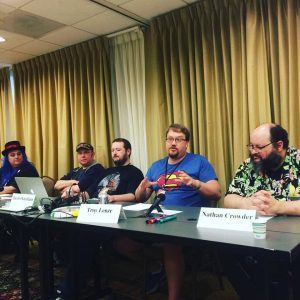
Panelists for The GameMaster’s Manifesto Podcast – GMing From The Hip
The always lovely Lee Moyer gave a talk on branding as an author. I’m still processing some of what he had to say about web presence. He opened with some basic stuff: choosing the name you write under, choosing a memorable website address, how your marketing materials reflect your brand. Since I’ve been doing this for a while, it left me anxious about whether I’ve been doing it all wrong. Is “Jeremy Zimmerman” the name I should be writing as? Is it too long? Is bolthy.com too weird of a domain name? I’ve been using it for almost 20 years, long before I took writing seriously. Has that been a mistake? None of this anxiety is Lee’s fault. I’m just an anxious guy in general. And I’ve been having some authorial existential angst.
A big chunk of the time was spent discussing cover art, including a Powerpoint slide show of good covers and not-so-good covers. I learned the term “line design,” which is about having a consistent look throughout your covers in a series. It left me wondering if our mix of cover styles for Mad Scientist Journal has been a mistake. He also highlighted some challenges with common cover themes and the perils of using stock art. Apparently a lot of books have figures in black hooded robes. Some even use the same stock image. Some of these were traditionally published novels by big publishers.
Sadly it didn’t get into one thing described in the program: choosing five words that you want people to think of when you enter a room, and how to include that in your branding. Which is just as well: trying to imagine what those five words are just causes me to freeze up.
Another panel I attended was “Advanced Self Publishing.” It was moderated by Tori Centanni and included Annie Bellet, Mark Teppo, Elliott Kay, and K. M. Alexander. The biggest advice they had was to get the next book out there. They framed it as a numbers game: you have a better chance at making money with four books a year than one book every year or two. It also tied into gaming Amazon’s system. New books in a series boost sales for the rest of the books in a series. It keeps the successful books appearing in recommendations. There are drop-offs for recommendation lists that hit at 30, 60, and 90 days.
Several books had been recommended, which I jotted down. They were recommended by some of the panelists, but I cannot vouch for their quality. I’m dubious about self-help books, but these may be different.
2k to 10k: Writing Faster, Writing Better, and Writing More of What You Love by Rachel Aaron
Let’s Get Digital: How To Self-Publish, And Why You Should by David Gaughran
Let’s Get Visible: How To Get Noticed And Sell More Books by David Gaughran
For Love or Money: The How to Guide For Crafting a Career as a Self-Published Author by S.K. Quinn
Indie Author Survival Guide by S.K. Quinn
Worth noting is the Broad Universe Rapid Fire Reading. Broad Universe is an organization built around promoting women in the SFF genre. I also have learned that they are welcoming of non-binary people and men. They offered a two-hour block Saturday night, featuring several amazing authors and giveaways throughout the evening. Featured authors included Marta Murvosh, Brenda Carre, Carol Berg, Jude-Marie Green, Cat Rambo, J Tullos Henning, Chrysoula Tzavelas, Dawn Vogel, Janka Hobbs, and Krista Wallace. There was also a reading in honor of S. A. Bolich.
The strangest moment of the weekend came close to midnight on Saturday night. I was a little tipsy and utterly exhausted when I encountered two people dressed in bunny-ish costumes. As they passed people they asked, “Do you want candy from a stranger?”
In a way, it isn’t too weird for strangely dressed people at a convention filled with cosplayers and SCA types. But I was so out of it, all I could think is, “This is the beginning of either a roleplaying game or an urban fantasy novel.” If I hadn’t been careful, I was sure they’d take me off to Wonderland or something stranger.
I took their picture just so I could be sure that I hadn’t just hallucinated the whole thing.
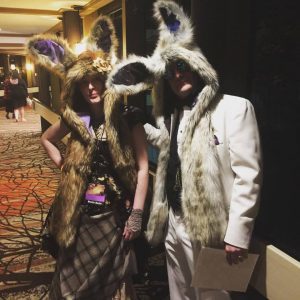
“Bunnies! Bunnies! It must be bunnies!”
March 17, 2017
Ebook Market Share
I got curious recently, and poked at some numbers for ebook sales. I often wonder whether there’s value in not caving and using Amazon exclusively. Amazon has some perks for people who only publish ebooks through them. You appear in Amazon Unlimited, Kindle Owner’s Lending Library, and get better royalties in some international markets.
But I’ve avoided doing it because it means aiding a monopoly, and it doesn’t sit right for me.
I’ve generally known that my stuff on Amazon sells better, but I don’t usually bother do do an extensive comparison. But here’s a look at 2016 numbers. I’m sharing it here in case anyone is curious.
There are two main places my books get sold through.
Smashwords distributes out through over a dozen ebook markets, most of which I haven’t heard of. But it covers B&N, Kobo, Apple, and Scribd. They say they distribute to Amazon, but it comes with a huge caveat. Things have been on hold “temporarily” while they work out some technical issues to handle bulk upload to Amazon. This has been “temporarily” on hold since I started publishing with them in five years ago. Currently they only distribute books to Amazon that have earned at least $2,000. (And, in five years of publishing with them, I don’t think that I’ve earned $2000 off of all my books combined, let alone for a single one.)
And then there’s Amazon’s Kindle Direct Press (KDP).
Before I get into numbers, I do have some caveats.
When I first announce a book on social media, I used to link to a page or post that would have links to all the vendors. Since there has always been a disparity between the two, I have instead linked directly to Amazon in hopes of streamlining sales. I don’t know that that has had any significant impact on it, though. But in the interest of full disclosure, I felt I should mention it. Because my advertising budget is so (relatively) small, I don’t think I’m really skewing things.
This does not include any other routes that people get our ebooks: Patreon, Kickstarter, or Channillo. It also doesn’t include any of our print sales through Createspace or at events.
At the end of 2016, we had 33 books available for sale. 23 anthologies of other people’s writing, two books by Dawn, and eight books by me.
On Smashwords, we sold 48 books in 2016. That averages out to a little over 1 copy of each book in a year. Most of these books are sold through either Apple, B&N, or Kobo.
On Amazon, we sold 302. An average of 9 of each book.
Turning it another way, here are the royalty payments for 2016. This isn’t a perfect overlap with my book numbers. The book counts are all based on when the books sold. The payouts are at least a month later. For Smashwords, maybe more. It’s not super easy for me to quickly pull that data so it matches up perfectly, so I didn’t bother. It’s good enough for government work. (I would know, because I’m a government employee.)
Smashwords paid out $98 last year. Amazon paid out $489.
Again, there’s probably some increase due to my shift to focusing things a little more towards Amazon. But these numbers look pretty typical for what’s been happening for the last several years with or without my marketing. Because, seriously? I’m not exactly a marketing whiz.
The thing that always stands out for me with this is that the Smashwords portion represents several markets. With lackluster marketing all around, my Amazon sales vastly dwarf my sales on the other noteworthy ebook markets (and some very not noteworthy ebook markets). It makes my “moral stance” regarding Amazon’s monopoly feel small and hollow.
What do I do with this information? I don’t know. All told, I made $700 on ebook says last year off of 33 books. That’s not raking in the dough. Even if going exclusively Amazon would somehow get me double that amount of money, it’s still not going to let me quit my day job. Especially since production costs basically eat up everything I might earn.
But it’s interesting to note at least.
Originally published at Jeremy Zimmerman. You can comment here or there.
Ebook Market Share
I got curious recently, and poked at some numbers for ebook sales. I often wonder whether there’s value in not caving and using Amazon exclusively. Amazon has some perks for people who only publish ebooks through them. You appear in Amazon Unlimited, Kindle Owner’s Lending Library, and get better royalties in some international markets.
But I’ve avoided doing it because it means aiding a monopoly, and it doesn’t sit right for me.
I’ve generally known that my stuff on Amazon sells better, but I don’t usually bother do do an extensive comparison. But here’s a look at 2016 numbers. I’m sharing it here in case anyone is curious.
There are two main places my books get sold through.
Smashwords distributes out through over a dozen ebook markets, most of which I haven’t heard of. But it covers B&N, Kobo, Apple, and Scribd. They say they distribute to Amazon, but it comes with a huge caveat. Things have been on hold “temporarily” while they work out some technical issues to handle bulk upload to Amazon. This has been “temporarily” on hold since I started publishing with them in five years ago. Currently they only distribute books to Amazon that have earned at least $2,000. (And, in five years of publishing with them, I don’t think that I’ve earned $2000 off of all my books combined, let alone for a single one.)
And then there’s Amazon’s Kindle Direct Press (KDP).
Before I get into numbers, I do have some caveats.
When I first announce a book on social media, I used to link to a page or post that would have links to all the vendors. Since there has always been a disparity between the two, I have instead linked directly to Amazon in hopes of streamlining sales. I don’t know that that has had any significant impact on it, though. But in the interest of full disclosure, I felt I should mention it. Because my advertising budget is so (relatively) small, I don’t think I’m really skewing things.
This does not include any other routes that people get our ebooks: Patreon, Kickstarter, or Channillo. It also doesn’t include any of our print sales through Createspace or at events.
At the end of 2016, we had 33 books available for sale. 23 anthologies of other people’s writing, two books by Dawn, and eight books by me.
On Smashwords, we sold 48 books in 2016. That averages out to a little over 1 copy of each book in a year. Most of these books are sold through either Apple, B&N, or Kobo.
On Amazon, we sold 302. An average of 9 of each book.
Turning it another way, here are the royalty payments for 2016. This isn’t a perfect overlap with my book numbers. The book counts are all based on when the books sold. The payouts are at least a month later. For Smashwords, maybe more. It’s not super easy for me to quickly pull that data so it matches up perfectly, so I didn’t bother. It’s good enough for government work. (I would know, because I’m a government employee.)
Smashwords paid out $98 last year. Amazon paid out $489.
Again, there’s probably some increase due to my shift to focusing things a little more towards Amazon. But these numbers look pretty typical for what’s been happening for the last several years with or without my marketing. Because, seriously? I’m not exactly a marketing whiz.
The thing that always stands out for me with this is that the Smashwords portion represents several markets. With lackluster marketing all around, my Amazon sales vastly dwarf my sales on the other noteworthy ebook markets (and some very not noteworthy ebook markets). It makes my “moral stance” regarding Amazon’s monopoly feel small and hollow.
What do I do with this information? I don’t know. All told, I made $700 on ebook says last year off of 33 books. That’s not raking in the dough. Even if going exclusively Amazon would somehow get me double that amount of money, it’s still not going to let me quit my day job. Especially since production costs basically eat up everything I might earn.
But it’s interesting to note at least.
March 2, 2017
Norwescon 2017
I’ll be at Norwescon, April 13-17. We’ll be selling books in the dealer room, and I’ll be sitting on panels.
My schedule is below.
Friday, April 14
Choosing the Right Game for My Group
11:00am – 12:00pm @ Cascade 7&8
Ogre Whiteside (M), Donna Prior, Jeremy Zimmerman, Sar Surmick
Saturday, April 15
Autograph Session 2
3:00pm – 4:00pm @ Grand 2
Why Do Villains Look Like That?
6:00pm – 7:00pm @ Cascade 5&6
Julie McGalliard (M), Jeremy Zimmerman, Jaym Gates, Erik Scott de Bie
Creating the Socially Conscious Comic
8:00pm – 9:00pm @ Cascade 12
Mickey Schulz (M), Jeremy Zimmerman, Ogre Whiteside
Sunday, April 16
Reading: Jeremy Zimmerman
11:00am – 11:30am @ Cascade 2
Jeremy Zimmerman (M)
Tabletop RPG’s: What’s a Story Game?
3:00pm – 4:00pm @ Cascade 7&8
Ogre Whiteside (M), Jeremy Zimmerman, Scott Hamilton, Erik Scott de Bie
Originally published at Jeremy Zimmerman. You can comment here or there.
Norwescon 2017
I’ll be at Norwescon, April 13-17. We’ll be selling books in the dealer room, and I’ll be sitting on panels.
My schedule is below.
Friday, April 14
Choosing the Right Game for My Group
11:00am – 12:00pm @ Cascade 7&8
Ogre Whiteside (M), Donna Prior, Jeremy Zimmerman, Sar Surmick
Saturday, April 15
Autograph Session 2
3:00pm – 4:00pm @ Grand 2
Why Do Villains Look Like That?
6:00pm – 7:00pm @ Cascade 5&6
Julie McGalliard (M), Jeremy Zimmerman, Jaym Gates, Erik Scott de Bie
Creating the Socially Conscious Comic
8:00pm – 9:00pm @ Cascade 12
Mickey Schulz (M), Jeremy Zimmerman, Ogre Whiteside
Sunday, April 16
Reading: Jeremy Zimmerman
11:00am – 11:30am @ Cascade 2
Jeremy Zimmerman (M)
Tabletop RPG’s: What’s a Story Game?
3:00pm – 4:00pm @ Cascade 7&8
Ogre Whiteside (M), Jeremy Zimmerman, Scott Hamilton, Erik Scott de Bie