
K.J. Taylor's Blog
February 25, 2021
Update
I know it’s been a while since I posted anything here, but that doesn’t mean nothing has been happening! It just means I’m lazy and have been mostly posting updates on Facebook and Twitter because it’s faster.
Anyway, so here’s where I’m at right now. My crime and sci-fi novels are being looked at by publishers, as is a new children’s book I’ve been trying to find a home for for a while. My first picture book is slated for release this year, and if all things go to plan the Drachengott series will be republished this year as well.
On a less important note, I turned 35 last month. Definitely not a kid any more, which is nothing to be ashamed of! Only actors and models need to worry about getting older. Authors just get more life experience and therefore more grist for the creative mill out of it. With the benefit of hindsight, you need life experience to write anything much that’s worth a damn in the long run. So it goes.
My nephew Rowan is now more than a year old and getting more talkative by the day. We’re all so proud of the little guy! One day when he’s older I’m going to sit down with him and tell him stories, which other than the eventual rights to my estate is the greatest gift I can give him.


September 7, 2020
Guest Interview – Chris Andrews
My friend Chris is back!
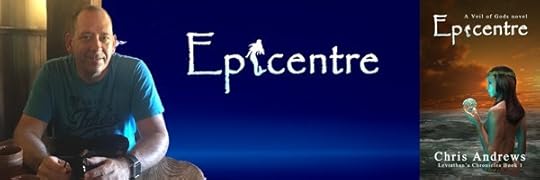
Where did you get the idea for this book? Was there a big moment of inspiration, or was it a slower process?
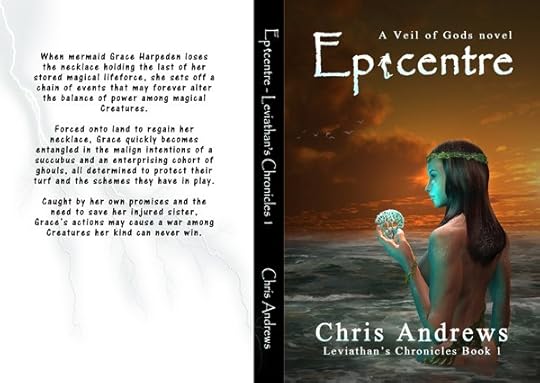
Epicentre grew from the idea or image of a mermaid stalking a beach, looking for someone to drown and hating herself for doing it. I don’t remember where I got the idea from, though it was probably a dream. That first scene hasn’t changed.
Beyond that, my Veil of Gods story universe includes everything from Gods and dragons to werewolves and dryads. I didn’t want to just stick to what was popular at the time I wrote the first draft of Epicentre – mainly werewolves and vampires – though that’s changed considerably since I wrote it.
Mermaids have a certain reputation of being ‘nice’, depending on which story you read or movie you watch. I wanted slightly darker mermaids who have to do unsavory things whether they like it or not, but to still be relatable and human.
Despite the fact they drown humans in order to ensure their own survival, I wanted them to be the protagonists.
Having to kill to survive forms the basis of the story’s overarching theme and helps to generate its conflict.
Is it a standalone novel, or are you planning to write sequels?
Epicentre began as a NaNoWriMo project (National Novel Writing Month – where you write at least fifty-thousand words of a novel in the month of November). All I had at the beginning was the idea of a mermaid stalking a beach as she looked for a victim.
Sequels were a very distant thought, but the more you immerse yourself in a story the more ideas come to you. So yes, definitely sequels.
Writing the first book was the trickiest part. Coming up with fresh ideas while trying to punch out two thousand words a day and keep a day job can be very hard, but by the time I’d finished writing the book I had some good ideas on where to take it.
There will be two sequels to complete the trilogy.
What got you interested in writing about mermaids?
I’ve always been a fan of mermaids. I liked the movie Splash starring Daryl Hannah and Tom Hanks, and I used to watch the Australian TV series H2O: Just Add Water with my daughters when they were younger. There’s also the TV series Sirens which I’ve started to watch, not to mention there were mermaids in one of the Pirates of the Caribbean movies. They get around.
Mostly though, it’s probably because I was a huge fan of Peter Pan as a kid. It’s been a while since I revisited the story, but somewhere in the mix of interpretations was a line along the likes of: ‘Mermaids aren’t quite the nice creatures of legend you think they are’ (or something similar). That concept intrigued me and spurred part of the idea for Epicentre.
Do you base any of the characters on people you know?
No, but I’ll sometimes ‘borrow’ the first names from people I like. If I’m going to spend a lot of time with a character I want good connotations, even if they’re antagonists.
Considering that, I might have to find a place for a Katie in my next book. Good or evil, that’s the question…
Usually though, or at least for my main characters, I try to find a name that suits the character and situation. Grace, for instance, was chosen because it’s an old name, but also because she’s tall and athletic and graceful. I also wanted a name that reflected how she moves and draws attention on a beach, so the name worked.
Abbey, on the other hand, was chosen because the character’s personality traits defy many of the connotations the name can imply, a subtle way to subvert expectations. It suited the story and the character.
What was your favourite part to write?
There were two. The opening scene where Grace is looking for someone to drown, and the big ‘boss fight’ at the end when she’s up against it.
In the opening scene, a toddler bounces off Grace’s leg and falls under her enchantment. The toddler’s a gorgeous little girl that would probably have looked a lot like a child Grace might have had herself when human. Grace, desperate to drown someone and steal their lifeforce, finds herself falling victim to her own instincts. As the child’s parents aren’t around… well, no spoilers.
The ‘boss fight’ was simply a lot of fun. Lots of action and… again, no spoilers.
What was your least favourite part to write?
I had no idea where the story was going or even what the next scene was most of the time. It was both a blessing and a curse, making certain aspects really hard to write.
On one hand it’s incredibly satisfying and fun coming up with ideas and solutions on the run, but it’s also draining and can halt a story in its tracks or lead into tangents that go nowhere.
I was at the halfway mark when I realised I had absolutely no idea how the story was going to end or even what the main conflict was about.
Early on it was a case of ‘keep it interesting’ and ‘keep it moving’, but that doesn’t help with the overarching storyline. It’s probably why so many unplanned stories come to nothing or end up with an unsatisfying ending.
At least I recognised the problem early enough to do something about it. I ended up workshopping the question at the CSFG Novel Writers Group.
Ironically, the solution was right in front of me, but I was so close to the story I couldn’t see it at the time. Everyone else could though. If anything’s an argument for planning out a story or at least figuring out the main conflict before you begin, that’s it.
What’s next for you?
Several projects. I want to write a follow-up book to Character and Structure as well as the sequel to Epicentre, but I’ve also got another book written and partially edited already – Moonlit Genesis – another NaNoWriMo project that needed quite a bit of work.
Moonlit Genesis is a stand-alone novel, but set in the same Veil of Gods story universe as Epicentre. Whereas Epicentre is set in and around Batemans Bay on the NSW South Coast, Moonlit Genesis is set in Canberra. It’s about a visiting werewolf who gets drawn into a local turf war between vampires. I came up with the idea long before werewolves and vampires were popular, but NaNoWriMo was the catalyst for writing it.
Although it probably makes more sense to focus on Moonlit Genesis and get it out there considering it’s so close to being finished, I’m keen on writing the sequel to Epicentre because it’s where my head is at the moment.
Another main project I’ve started is the sequel to Divine Prey. I’m holding off because it contains spoilers for the sequels to Epicentre and some other stories.
The problem with being a writer is that you’ve usually got more stories in your head than you’re ever likely to be able to write, which means that there’s at least a couple of dozen more novels waiting in the mix.
August 31, 2020
New Interview!
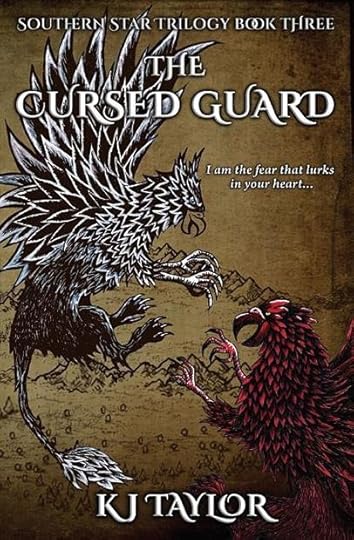
Fellow author Chris Andrews was kind enough to interview me on his blog for a second time, this time to talk about the final book of the Southern Star trilogy!
June 28, 2020
June 19, 2020
June 18, 2020
Chris Andrews Guest Blog
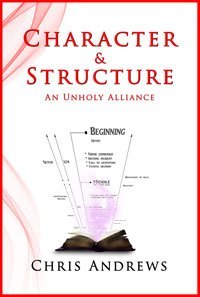
And now for a guest interview from my friend and fellow author, Chris Andrews!
Chris’s Facebook page Chris’s Amazon profile Character and Structure: An Unholy Alliance Chris’s Story Structure DiagramChris’s Newsletter sign-up page
What prompted you to sit down and write this book?
I found most of the classic books on storytelling very difficult to read (ironic, isn’t it?), and couldn’t find a lot of alternatives.
The Hero’s Journey and The Writers Journey are lauded as classics, and maybe they are, but they’re also really tough to get through let alone understand. I couldn’t finish either of them.
Story by Robert McKee, which I’ve opened several times, is still unread on my bookshelves, though I’ve had a couple of cracks at that too.
What I wanted was a clear, straightforward and simple book that explained storytelling, what needs to go where and why, and how to troubleshoot the story problems I was having. I couldn’t find one, and trust me, I looked.
Character and Structure: An Unholy Alliance was born from that frustration. It amounts to years of research.
Before I wrote Character and Structure I put together a story structure diagram for my own use.
When I shared it with some friends they loved it, so I put it on my website for other writers to use as well. It’s still the most popular page on my writing website, and if you Google ‘novel structure diagram’ you’ll find it’s been shared like a virus (despite the fact I asked people not to post it everywhere). It’s the fourth image that comes up on Google, and the first on Bing.
The book was a natural progression after that, particularly as I found many writers had the same issues I did – the need for clear and simple storytelling information.
Character and Structure illustrates story points and concepts with examples anyone can relate to, making it easily understood.
You use movies a lot as examples of storytelling. Is that because movies generally use broader strokes to tell stories and are therefore nicely straightforward for the purpose, or just to make the book more accessible to a lay audience in general?
Movies and scenes are great for teaching.
I sought out information everywhere, and found one of the easiest and fastest ways I was able to learn about how stories worked was to watch and re-watch movies. They’re easily understandable and people relate well to them.
Anyone can watch a movie in a couple of hours and re-watch it repeatedly to figure out why it works.
Back when I had TiVo it caught a movie that, at first glance I couldn’t figure out exactly why it worked, but it did.
That movie was Wir Sind Die Nacht (We Are The Night), a German vampire movie, and I must have watched it twenty or thirty times, each time breaking it down a little more and gaining further insight. It’s very well put together.
Anyone can do the same thing with their own favourite movies, so I use movies to break down the common story-points that successful stories tend to share.
In the book I included examples that people would be familiar with while ensuring a range of genres to meet differing tastes.
I also included a couple that seemed to be doing everything wrong at face value (Like Ferris Bueller’s Day Off and Happy Death Day), but were actually doing everything right. They show how creativity can be used while still following a standard story structure.
Did you read any other “how to write” guides for inspiration?
I’ve read a lot of ‘how to write’ books, but none explained storytelling to me in a clear and simple way.
I also listened to a lot of podcasts, watched scriptwriting videos, read magazines and blog posts, taught writing at conventions and as evening courses (if you want to learn something, teach it), and did just about anything else I could to learn about storytelling.
The one writing book I would thoroughly recommend for improving your writing (though it’s not about structure) is On Writing Well by William Zinsser. It’s a classic, and one of the first books I read on the subject of writing.
Tell us about your background as a writer. How and when did you start writing? What motivates you to keep doing it? What’s been the biggest highlight so far? What was the toughest part?
A lot of stories have helped inspire me to be a writer. For instance, I had a bunch of Golden Books as a child, with Dumbo being a favourite. I also had a big picture book of Peter Pan (the Disney cartoon move version), and I loved it. I still wish I could fly, and it could also be why my next book will be about mermaids.
The movie that really inspired me as a kid (okay, obsessed me) was Star Wars. I was six when I went to the movies with some of my neighbours to see it.
That was it for me. Everything was Star Wars after that.
In high school I found Epic Fantasy novels and they became my way of escaping the world.
Don’t get me wrong, I had a great childhood, but it’s tough watching someone die of cancer over several years. I read a lot of epic fantasy books during that time.
I started with popular books like Magician by Raymond E Feist and moved to whatever else I could find or afford. Some fantasies were great, some were terrible, but I read everything I could find.
It may be a cliché among writers, but after being inspired by great storytelling and unable to find enough books that ‘did it for me’ after a while (a bit like a Netflix subscription, I guess), I decided I would write my own book when I was about fourteen.
I didn’t think it would be all that hard to write a bestseller. How wrong was I?
I have a lot more respect for anyone who’s published a book these days, successful or not. Producing any book is a badge of honour. It’s hard, and not just because you’ve got to master the technical aspects of writing like punctuation and grammar, or have the stamina to finish it. You’ve also got to master storytelling, and they’re all very different things.
What motivates me to keep going? The same dream I had as a fourteen-year-old.
I still want to write that bestseller, although I have a much better grasp on the realities now. It’s the dream of just about every writer I know, and I’m happy to share it. Everyone can have a bestseller as far as I’m concerned.
My biggest highlight… now that’s a question that doesn’t have an easy answer, but I’ll try.
It’s that feeling you get when someone tells you they like something you’ve written, and it comes in many forms. For instance, a young writer recently contacted me through my website asking for a signed copy of Character and Structure, but being overseas the postage alone was more than they could afford.
After a few emails discussing options, I was able to offer him a one-of-a-kind copy of the book, produced just for him. It included my uploaded signature and a personalised message printed as the first page of the book. I was able to send it to him directly from a printer in the US.
It ended up costing him roughly about what he’d have paid through Amazon, but he got his own personalised copy. That felt great.
The toughest thing has been coming to terms with the changing industry. When I started writing there were only publishing houses and vanity presses. Self-publishing was considered to be vanity publishing, and it took me a long time to get past that bias.
With publishing houses being the only real option when I was younger, I spent a lot of time working on my first novel because you only got one shot with a publisher, and I didn’t want to blow it. So I wrote, and rewrote, and rewrote again, trying to ‘get it right’. I’d have been better off writing half a dozen different novels and trying them all on the publishers, rather than trying to get ‘the one’ right. Hindsight is great, isn’t it?
I did eventually get an agent and publisher for the book, but they both disappeared in the process of publishing the book.
Self-publishing was already big by then, and that when I decided to give self-publishing a go. I have to admit, I wish I’d done it years earlier despite the steep learning curve.
That doesn’t mean I wouldn’t go with a publisher again. I’m considering traditional publishing for the next book as it lends a certain amount of legitimacy and they’re more likely to be able to get it into bricks-and-mortar bookshops, but I’ve certainly got a better idea now of what my career means to me and how to control it, which I didn’t have before.
Tell us your favourite joke!
My humour tends to baffle people most of the time, though it makes sense to me.
Let me explain. It’s like when you get an idea that leads to a better idea which leads to something else and so on. You then mention the final idea to the people you were discussing the first idea with, they look at you like you’re crazy because they haven’t seen the mental steps you’ve used to reach it.
That’s how my humour works, so I try to stick to Dad Jokes now. People get them, even if they groan.
My favourite Dad Joke is when one of my kids asks: ‘is it this or that’ (ie, is it red or blue). I say: ‘Yes’ or ‘No’, depending on whether it’s one of those two options. They rarely ask those types of questions anymore.
Dad Jokes are terrible, but I love them.
Books mentioned in this post
On Writing Well by Willian Zinsser The Hero’s Journey by Joseph Campbell The Writers Journey by Christopher Vogler Story by Robert McKee
Movies mentioned in this post
We Are The Night (Wir Sind Die Nacht) Ferris Bueller’s Day Off Happy Death Day
About Chris
Chris Andrews is a writer, editor, teacher and mentor. Having listened to master storytellers all his life, Chris boldly and ignorantly believed he could tell stories too.
It turns out writing an awesome book is a lot harder than it looks, and so a journey of discovery has begun which won’t end before the universe kicks him off the planet.
Being a writer, it’s traditional to have cats, but his dogs thought that was a stupid idea and vetoed it.
June 9, 2020
Finally!
I’m on Instagram at last. Right now it’s mostly pictures of my pets, but it’s a start.
June 15, 2017
Super Series Spotlight Multi-Author Promo Tour!
And I’m back with another blog post! I know it’s been a while, and I’m sorry for that, but don’t worry; there’s plenty more news coming down the pipeline.
For this promotional tour, I and a group of other authors will be talking about one of the series we’ve published. For me, the series chosen was the Drachengott quartet. What inspired me to write it, and why did I write it in the way I did?
There are a few answers for that. At the time when I wrote it I was just coming off the success of the Fallen Moon and Risen Sun trilogies, which were part of a series which is quite complex – not to mention long. The cast is huge, the plot is – dare I say – epic, and the events of the series take place at various points in no less than thirteen different countries (yeah, it gets bigger as it goes along, trust me). I was in the mood for writing something a little simpler, with a broader audience appeal. Less politics, more magic, and more spectacle. I also wanted to write something less bleak (the first book of The Fallen Moon was rejected by no less than three publishers for being “too depressing”). Something a bit more fun.
At that time I was taking evening classes in German, just for the challenge of it. I’ve always been good with languages and had already learned some German in highschool. So when it came to creating the setting, I thought why not do something a little different and specifically base it on Germany? Thus the place names are German, most of the character names are German, and most of the protagonists explicitly speak German. In the second book, I introduced a couple of French-speaking characters. During the “conceptual” phase I consulted my German tutor to make sure I’d gotten it right, and most of the place names actually have a specific meaning in that language. For example, “Drachenburg” means “dragon castle/fort”. “Zauberwald” means “magic forest”. “Hundberg” means, roughly, “dog mountain”. “Thaler” was a currency used in Germany before the Deutschmark came along. And so on.
Syn the dragon was originally intended to be the main protagonist, and though that didn’t really work out in the end, mostly because I realised Rutger worked better as the (initial) protagonist, she remains the driving force behind the story. It is her visions which show the four protagonists the way to go. But I deliberately left it ambiguous as to whether her visions are an absolutely accurate revelation of the future, or whether they only come true because she obsessively works to make it so. It’s telling that she never really questions whether her visions are real or not, or where they come from. Nobody else can see the future – just her. When the truth is eventually revealed, it all falls into place. There’s a reason why she never questioned her dreams of the future, and it all comes back to the Drachengott, who is easily the most mysterious figure in the series. Whose side is he truly on? What does he actually want? In all honesty, for a long time I wasn’t too sure myself.
I wanted to play with the idea of a prophecy/seer which may in fact be either a lie, or a trap. I also wanted to have a seer character who, not content simply to tell the hero what’s going to happen next and leave it at that, is so determined to make her visions become reality that she will stoop to absolutely anything – even murder. If you read between the lines of the series, Syn does some pretty heinious things behind the scenes and in some respects is probably a lot more evil than the Drachengott himself. But it’s all for the sake of a greater cause… or is it?
March 14, 2017
Writing About Grief and Loss
Characters tend to die a lot in fiction, for obvious reasons. For one thing it’s an easy way to introduce drama and suspense, and to raise the stakes in dangerous situations. It would after all be a bit silly if you wrote about a war in which none of the named characters died (unless you’re writing for children, perhaps). Even Disney is prepared to kill off at least one character per movie.
But it’s one thing to write about a character dying, and quite another to portray how the death affects the other characters. Sadly there are at least a few works of fiction out there in which the protagonist loses someone they’re close to (usually a parent) and the death does nothing more than serve as a plot device while the protagonist remains largely unflustered by the tragedy.
In reality, the death – particularly the sudden and violent death – of someone you know has a profound effect, and if it happens to you you’re probably never really going to “get over it”.
I had grasped this concept more or less as just plain common sense when I was younger, but at the end of 2016 I went through the experience of losing someone myself and learned some painful lessons in the process. And here is what I learned.
The person I lost wasn’t a family member, but a childhood friend. He was one of the oldest friends I had, in fact. We bonded over our mutual love of video games, and had a similar cynical but secretly good-humoured view of the world. We both loved stories, reading and movies. His name was Alexander. He was three years younger than me. He introduced me to the graphic novel series Fables, countless games including Grim Fandango, and often talked about his travels in various countries. I envied him, in all honesty – he was so much more adventurous and willing to take risks than I ever was.
Then one day in the summer of 2016, right out of the blue, I had a phone call from my sister. Alexander had been killed in a road accident, at the age of only 28.
He never even made it to the hospital.
My initial reaction was total shock. How could this have happened? The first thing I said over the phone was “WHAT?“. Shortly afterwards I started crying.
I spent most of the rest of that day feeling numb and empty. Nothing really seemed to matter. I didn’t cry very much, but simply went through the motions as if I were on autopilot. My sympathetic work supervisor repeatedly said I could go home, but I said I couldn’t see much point – I could either be miserable at work and get things done, or be miserable at home and do nothing.
I eventually recovered and started to feel like myself again, but later on I experienced feelings of anger and nihilism. What was the point in being alive if it could end that suddenly and pointlessly? I raged at hearing people say he’d “gone to a better place”.
Now, months later, I’m still not “over it”. I’ve gone back to life as usual, but little things remind me of him right out of the blue, such as the other day when I was in a comic book shop, found a copy of Fables and suddenly had a lump in my throat, or when I was listening to the Grim Fandango soundtrack and unexpectedly found myself thinking about how we played the game together and how we laughed at a funny easter egg he’d found. Twice now he’s appeared in my dreams. Not doing or saying anything – just there and looking at me, expressionless. I can’t forget him and I don’t want to, ever. Even when thinking about him makes me sad, I cherish that sadness because it means I still have him here in my heart. It means I haven’t forgotten him, and such a good person and such a good friend deserves to be remembered.
And this is the important thing when it comes to writing about grief and loss in fiction. A deceased character should never be brushed off as if they never existed in the first place, or worse be treated as a plot device or handy motivation for the hero, rather than as a human being with a life, hope, dreams and fears. If your protagonist is truly close to the departed, then they cannot simply forget about them as it suits either you or the plot. In real life grief can be crippling, and it can and does change people for life. Death is something that shakes a person to the very core, and especially if it happens while they’re young and have never before lost anyone they were very close to. Allowing a dead character to be summarily forgotten is both unrealistic and disrespectful, and it doesn’t matter a damn that the character wasn’t “real” – they should be real to you, and to your readers. In reality, the dead never truly leave us. And they shouldn’t.
I miss you, Alex. And I always will.
February 20, 2017
And We’re Back!
Hey everybody! KJTaylor.com is back up and running at last! Many many apologies for the long absence. The site was temporarily taken down by the service provider thanks to a hack-in by person or persons who I sincerely hope will die a horrible gory death. It took a while to find out how much damage they had done and then fix it. I’ve had to disable commenting on the site since this can be exploited by hackers to break in.
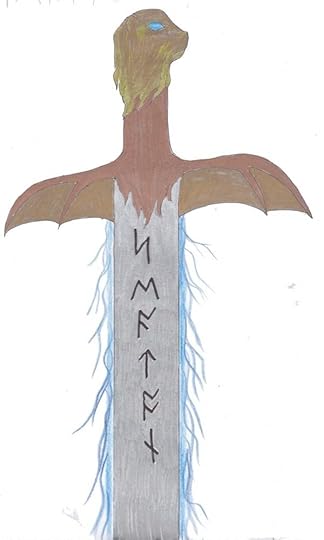
Either way we’re back now, thank all that’s unholy, and I will soon have some exciting news to announce! For now I leave you with this image, and a question. Why does destiny always choose the young and foolish, rather than the old and wise?
K.J. Taylor's Blog

- K.J. Taylor's profile
- 91 followers

