Michelle Browne's Blog: SciFiMagpie
November 28, 2025
Did you know that Chinook Phase is out?

Or at least, the first chunk of it is out! You can read the first 13 chapters, with a new one coming every week, on my Patreon or my Substack - and on Patreon, they're all free! (So far!)
That said, if you fall in love and want to kick a couple of dollars my way, that would be amazing.
What is Chinook Phase, you ask?
Well, it's the first novel in my cozy academia trilogy, a love-letter to my home town and university. Set in the early 2010s, it follows the multiple interwoven stories of a group of friends and frenemies, trying to sort out their love lives and friendships - and you know, maybe getting stabbed, drunk, or stalking each other along the way.
Follow Natalie, Charlotte, Kyla, Amanda, Rachel, and Greg through mishaps, heartbreaks, and disasters. Come for the gossip, stay for the friends-to-lovers and "I can make him worse" villain couple.
Check out the beautiful new face for the first novel!
SHE'S SO BEAUTIFUL! Amazing work by Rachel A Rosen, Renaissance woman extraordinaire. Get your covers from her!
Anyway, so, catch my first Prairie Weather posts on Patreon or Substack!
***
Creation of this project was made possible in part by the generous funding of the Canada Council for the Arts, and the author gratefully acknowledges their contribution.

***
A writer and artist, Michelle Browne lives in southern AB with xer family and their cats. She is currently working on the next books in her series, other people's manuscripts, knitting, jewelry-making, and drinking as much tea as humanly possible. Find xer all over the internet: *Website * Amazon * Substack * Patreon * Ko-fi * Instagram * Bluesky * Mastodon * Tumblr * Medium * OG Blog * Facebook


November 25, 2025
A History of Failure
 Art by Rachel A Rosen,who also designs amazing covers for books (HINT!)
This essay is not about Taylor Swift – or at least, it’s gotfar less to do with Taylor Swift than my last essay. But there is a connection.
It’s pretty hard to deny that even though it’s made adequatebank, Life of a Showgirl has had – at least on parts of the internet I’veseen, i.e. my Discord channels and my Youtube and Substack algorithms – a prettynegative reaction from fans and a lot of critics. The line between “fan” and “critic”is blurrier than it’s ever been, in this current era of accessible content creationand platforming. You don’t need to be an expert for your opinion to matter; youjust need to catch the algorithm at the right or wrong time.
Regardless, some people are treating the album, and Swift,as a laughingstock, and not for the first time.
Now, in my own life, I mentioned in my last essay that I wasrunning for the local public school board, and while I managed to get over 2900votes, from a voting turnout of about 18% and about 20k voters or so, I didn’tget a spot on the school board.
(My shitshow of a provincialgovernment apparently is floating the idea of just abolishing school boardsanyway. If you’re Albertan, this is a reminder to make a fuss and do your bestto piss off the UCP. Operation TotalRecall is underway, and please check it out, because this government isattacking our democratic rights and everyone’s interests, regardless of preferredpolitical affiliation.)
Now – my personal failure here was a disappointment, but I’vehad a much kinder reaction from people. Partly, I don’t have the expectationsplaced on me that, you know, a seasoned political candidate or a world-famouscelebrity like Swift does. And while I’m proud that I made the attempt, there’sstill a certain shadow over any effort that doesn’t bear fruit.
It got me thinking: what does failure mean?
There’s something really interesting about failing thesedays. Now, maybe it’s a modern problem, or maybe there’s a historical precedenthere, but at least in my own English-speaking, Western cultural context, it seemsto me like failure has developed this moral weight to it.
A Quick, Dirty History of SuccessI’ve alluded to the basic concepts of Calvinism and gesturedat the Protestant work ethic and its resulting trauma before. In a quick, dirtyoverview, a prominent strain of Christianity held that some people were chosenfor Heaven and others simply aren’t, and the seats are limited: predestination.However, and here’s the extra nasty bit, people thought that God would hint atwho was destined for eternal salvation by favouring them with success in theirearthly life.
So of course, people who belonged to Calvinist strains ofChristianity ended up working as hard as possible to try and demonstrate their stateof blessedness. Mix that into the cultural soup of the Industrial Revolution,and you have an extremely toxic recipe for the future.
This whole belief system has kind of evolved into what’s nowcalled the Prosperity Gospel, which is a more aggressive focus specifically onthe idea that God will reward you in not only Heaven, but your earthly life,with actual riches. Immortality in a paradise of fellowship amongst loved ones anda divine parental figure is no longer enough to satisfy people who are scrapingto make ends meet.
John Steinbeckdid not actually say, “Socialism never took root in America because thepoor see themselves not as an exploited proletariat but as temporarilyembarrassed millionaires.” The thing that this popular misquote gets wrong is atleast partly its attribution of blame. It has this implication that damn it,these poor people are just stupid and stubborn, or ignorant – if only they’dsee what’s gone wrong!
That perspective glides over the extremely intensivepropaganda efforts that have gone into making people believe that poverty istheir own fault. After all, if you just work hard enough, you can be abillionaire too, right? Ignore the widening legal loopholes for transference ofwealth, avoidance of taxation, and the inheritance chains of property, wealth,and privileged advantages that directly tie into chattel slavery and Europeanaristocratic families, of course. It’s just about luck and working hard! Get onthat grindset, girl!
Back to FailureThe thing about focusing on success and The Power ofPositive Thinking, and other similar late-Victorian and early 20thcentury self-help texts, is that it doesn’t really account for what the fuckhappens if…you just fail. In The Secret, one of the more recent anddeeply influential permutations of modern prosperity gospel, there’s a wholething about “The Universe” wanting to reward you by giving you whatever youthink about most. Of course, that means that worrying about failure willactually result in failure…because the universe is kind of stupid and bad atconsent, I guess.
Perhaps, dear reader, you can see the direction I’m pullingyou in. The logical corollary of the axiom that success = favour from God orthe Universe…is that failure means God, or the Universe, is disappointed in you.
I haven’t seen this discussed much, but the idea lurks likean urban legend intruder beneath the bed, breathing and panting damply, evidentbut too terrifying to confront directly.
“BadThings That Happen to You Are Your Own Fault”People don’t say this out loud in exactly these words, butthe implication sits there, and turns up constantly, just like that urbanlegend slasher. Even after #MeToo in the late 2010s, people still say and implythat one’s clothing or behaviour could have been responsible for sexual assaultand harassment.
Not attaining the success you expected at work, missy? Clearlythe problem is that feminism has failed, and it’s time to Retvrn to the(imagined) past mode of life. Be more…traditional. You want a family, don’tyou? Wouldn’t it be relaxing to just spend time with your children at homewhile your husband takes care of things? All you have to do is the chores, andyou already do those! Why work in addition to that?
This particular message is all over social media, popping upin different forms like mutating toxic mushrooms around the earthen cellar doorwhere fascism dwells.
Never in this line of propaganda is there a discussion of,say, fertility problems. Despite the wide accessibility of fertility treatmentsin our current era, having any kind of trouble, say, getting pregnant orimpregnating someone, still carries the sting of humiliation. Never mind thequestion of what happens if you find out that you can’t crack it as a parent*after* you have children, or the constant, pervasive fear every parent has offailing their child.
As mentioned, the dominant cultural milieu in the West is flavouredby both capitalism and Christanity. Both the wealthy and the super-wealthybenefit from having the broad working class focused on aspiration rather thanjustice. If people are trying to grind their way to the top, and fighting eachother for scraps, they won’t target the people actually holding the reins ofpower and wealth. Furthermore, if people see wealth as a blessing from God or theUniverse, poverty indicates either withholding of a blessing, or failure.
Failure and poverty are thus made uncomfortable housemates,necessary to each other. Any type of failure risks the danger of poverty, andpoverty itself is a form of implied failure.
Let’s Make It WorseSo, this is pretty bad, right? Like if you take apart theidea that failure is always your own fault *and* a result of not being goodenough for the Divine Parent (whether that’s God or the Universe), it’s prettyscary and daunting. It’s a damn hard standard to meet.
Now put that in the context of our panopticon society. Speakingof 19th century morality that’s stabbing us in the ass, the panopticonwas a prison design meant to allow constant surveillance of prisoners, to makesure they were reforming properly. Constant scrutiny and an absolutedestruction of privacy is clearly the way to stop someone from hurting people,right? Of course, if we’re talking about people breaking the law, we shouldprobably allude to that whole “poor people commit crimes because they’re poor”thing that tends to happen. So basically, if you surveil and shame peopleadequately, it should be possible to fix their unfortunate moral defect ofpoverty.
The best part is, now we have the thing where userinterfaces on social media treat every person like a content creator, peoplefeel both social pressure and algorithmic pressure to post regularly. Betweenthe data exposure required for social media and actually posting stuff about one’spersonal life, we’ve developed a societal system of self-exposure and peersurveillance.
Now, peer surveillance has always been kind of a thing –people have been up in each other’s business for as long as we’ve been socialanimals, and in fact, other animals are nosy, too. But the current mode of peersurveillance transcends previous social models. Before, you’d have to be seen orheard doing something you weren’t supposed to; your thoughts, at least, were sacrosanct.
But now we share our thoughts as well, and present the worldwith an entirely new path of judgement.
And, in a world where the middle and lower class arecollapsing together, rather than forging class solidarity and focusing on ourmutual opposition, we resort to cannibalism, in hopes of temporary catharsisand relief. After all, if we can root out the class traitors, the “Treatlers”who still order snacks from food delivery services, surely we’ll be able todefeat our enemies, right? Somehow, people bullying each other on social mediaplatforms has failed to trigger the revolution.
How the fuck do we fix this?The thing is, this situation isn’t unfixable. In addition toplain compassion and critical thinking and asking ourselves questions – should I*really* repeat this or engage with this content? Am I being too harsh on otherpeople? – we need to practice both self-compassion and compassion towardsothers.
This sounds extremely boring and un-fun, so if you findyourself with superfluous hostile or mischievous energy, direct it towards thereal targets: people in power. You have a right to be angry for what they’redoing to us, so write angry, ferocious letters, make art, or find othercreative outlets to express your anger. People in power are so much morefragile than we think they are. We should make them scared again. For legalreasons, I am not directly advocating violent action, but I am advocating protestsand strikes, and whatever forms of disruption you can manage.
Harass politicians and political figures who are trying tostrip your rights away. Cover for your coworkers when they’re sick or “quiet quitting”.Ignore shoplifting customers, especially if you’re a fellow customer. Buy foodfor homeless people (and also just give them money). Find out what yourneighbours’ names are and actually say hi to them. Be nice to random people onthe internet, especially when you don’t want to. And above all else, reframehow you see failure.
What failure really meansNot everything we try to do is going to succeed, but insteadof seeing failure as the end of a story, see it as part of a cycle. We can’t learnwhat works without failures along the way. Like death, failure is aninevitability. Also like death, it tends to be terrifying until you actuallyencounter it, and realise that it’s an essential part of living. In variousways, we will fail over and over – so the trick is to see how long one can keepgoing before the next failure; as well as to stop treating failure itself as amoral judgement on everything about us in our lives.
This is hard, slow work, and sometimes being nice toyourself is harder than being nice to other people – so turn your compassionoutward; towards friends, family, and strangers, even celebrities.
(Compassion doesn’t mean blind defense, but if you don’tknow the difference, maybe go spend some time sitting with that before you yellat me. There’s your first lesson: stop wasting your time yelling at randompeople on the internet when you could be trolling and harassing CEOs of largecorporations.)
With practice at turning compassion outward, it gets easierto ask, “Would I say this to my partner? My best friend?” when dealing withnegative thoughts and judgements rooted in the Christian/capitalist paradigm.
The other thing to do with failure is to see the freedom init. If you’ve already failed, you’re already “a sinner”, and “damned” – so whatcomes next?
Well, actually, anything you want. If you’re already lost,why not go further? Modify your approach. Find a new goal. Instead of waitingfor happiness later, find small happinesses now. Instead of longing to be a billionaire, orwaiting for heaven, ask yourself – what were you hoping for from those thingsanyway? To help your friends? You don’t need a billion dollars to do that. Lifeonly gets better when you realise that the metrics of success were impossibleanyway. To quote a song I like, “we’llnever get to Heaven ‘cause we don’t know how.”
Now, do I actually succeed in living by all of theseprecepts? It’s a work in progress. But hey, the more I fail, the more I have achance to try again.
***
A writer and artist, Michelle Browne lives in southern ABwith xer family and their cats. She is currently working on the next books inher series, other people's manuscripts, knitting, jewelry-making, and drinkingas much tea as humanly possible. Find xer all over the internet: *Website * Amazon * Substack * Patreon * Ko-fi * Instagram * Bluesky* Mastodon * Tumblr * Medium * OG Blog * Facebook
October 21, 2025
The "Life of a Showgirl" Backlash is Making Me Nauseous
This essay is not an analysis of Life Of A Showgirl. Notexactly.
Is it even a coherent analysis, or is it just a messy,confused vent about what happens when a woman is famous? Well, dear reader, we’regoing to find out together.
First, a disclaimer on my own biases, my own littlestandpoint theory discursion.
I have a Swiftie in my life who’s very important to me, andthat definitely prejudices my perspective on this. I started out as a prettythoughtless Taylor Swift hater myself. She was tall, blonde, and pretty, and I’mnone of those things, depending on who you ask about the last one; it was easyto project the cruelty I’d suffered at other people’s hands onto her as anaggressor.
Commentators I like, like Todd in the Shadows, also werevery happy to make fun of her. Did I unpack this at the time? No, that had tocome later, with some maturity.
Still, nobody is ever neutral about these things, and anyonewho thinks they’re an objective critic is being fooled by the very concept ofobjectivity.
So, let’s start with the album itself. What did I think?
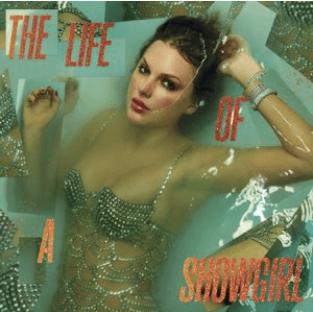
Life of a Showgirl is fine. It’s pretty mid, but it’snot the worst album I’ve ever heard by a female artist – that dubious honourbelongs to 0304 by Jewel, which failed so spectacularly at its conceptof mixing Big Band music with showtunes that my teenage heart was broken.
Still – it has some clunky lyrics, yes, and the songs aren’tas catchy as on some albums. Is it one of her best albums ever? Absolutely not.But it’s also not the artistic massacre that some people seem to think it is.
Between this and The Tortured Poets Department, mypersonal analysis of the last two releases is that Swift has started puttingout music for herself, rather than with her career and her fans in mind. It’salso entirely possible that she’s going through what I’ve seen happen with manyauthors; namely, she’s too big to critique properly, and people who should be hercreative aides are yes-manning rather than editing her.
The thing about the album that I personally appreciated,though, was that she seems happy.
The internet, however, has lost its goddamn mind over thisalbum.
Mass HysteriaBy and large, this album has been succeeding financially,but failing with fans and critics. A bunch of people I know have absolutelyloathed this album, and there’s a huge backlash among both Swifties andSwift-haters alike.
The thing is, though, the backlash isn’t just a matter of dunkingon clunky lyrics. There’s an aura of self-righteous triumph among critics, anda sort of woeful, “Whoa, was she really Bad all along?!” response from a lot offans, that’s seriously skeeving me out.
Now, this backlash comes in multiple parts; let’s start witharguably the most damning and justified part.
The Woobification of Charlie XCXThe song “Actually Romantic” is apparently a riposte to “Sympathyis a Knife” by Charlie XCX. Now, podcasts I like (suchas ICYMI) went into detail on this, but not quite *enough* detail.
As this essayput it, ghere’s no getting past the aggressive element and tone-deafness ofwriting a song called “Sweetheart” about other women picking on you, thenwriting “Actually Romantic” and what could be read as biphobia/homophobia. I’mnot going to defend that perspective, because at best, it’s a bad look, andshortsighted.
The interesting thing is, people are mostly going from thecontext of the song “Sympathy is a Knife” and this song – but that’s just notthe whole story about whatever has gone on between Charlie XCX and Swift.
For one thing, as the Swiftie in my life pointed out,Charlie didn’t *just* write the song. She made tweets and other cageyreferences to Swift online. And there was also this photoshoot, which totallyis just symbolic of Charlie’s struggles with fame and definitely, absolutely,not a reference in any way shape or form to the friendship bracelets that are ahuuuuuuge thing among Taylor Swift fans.

Add to that, the fact that Charlie XCX – who is not a tiny,up-and-coming indie artist, even though she’s obviously not Taylor Swift – was previouslyopening for Swift on the Eras tour, and that she’s married to a bandmate of oneof Swift’s exes, Matty Healy…and it all just turns into something a little lesscut-and-dried. My personal read is that they’ve probably bickered in private,and stuff has happened that the general public doesn’t know about.
But to read and hear about the internet’s reaction, you’dthink Taylor Swift had football-kicked a puppy.
To summarize, then: is it homophobic? Kinda. Petty?Definitely. But is there more going on here than meets the eye? We have noway of knowing, but the internet sure isn’t pausing to consider that.
A History of Misogyny and VictimhoodThe reactions I’ve seen to this album’s release have been,to put it mildly, fucking unhinged – particularly because the album itself isbeing read in the absolute worst faith possible, and being used as an indictmentof Swift as a person. I’ve seen comments that included, but weren’t limited to,the idea that Swift is “lowering herself” with Kelce and that she “could dobetter” with a partner; the idea that she’s now signalling herself as atradwife and is secretly MAGA, to the idea that her opalite necklace is a codedwhite supremacist nod. (On the necklace, there are 8 lightning bolt charms and14 links between them, which some people think is a dogwhistle about the Nazimeme “1488” – recently referenced by Pete Hegseth in an infamous militaryaddress with top generals. 1488 references the fourteen words, a whitesupremacist pledge, and 88 references the eighth letter of the alphabet, H, andstands for “HH”, meaning “Heil Hitler”. It’s a whole thing, because fascistsused to have to hide their shit, and couldn’t just say things the way they seeminglycan nowadays.)

So, is Swift drifting rightward?
The problem is, it’s almost impossible to extricate the conjectureabout Taylor Swift from both normal press misogyny and the problems she’screated for herself. Swift has built a career as a confessional songwriter,coding in little hints and references to past relationships in her songs, and thepress and fans have been delighted to hunt for these Easter Eggs. The problemis, hunting for patterns that sometimes exist is ripe ground for conspiracytheorists. Now, Taylor Swift isn’t the right kind of chronically onlinepolitics nerd who’d understand the danger of this, but it’s somewhat directlyfed into the problem of the Gaylors, chronically online queer conspiracy nerdswho’ve concocted increasingly elaborate explanations for how Taylor Swift issecretly in a relationship with Karlie Kloss, a former best friend. (And ofcourse, “Actually Romantic” isn’t exactly going to help these allegations.)
But, back to the subheading. Is Swift a victim or a perpetrator?
God, that’s a stupid setup, and yet it’s the one we’re allbeing offered, twenty-four-seven right now. The shine is off the apple! Thiswill sink her career! Never mind the fact that this kind of background radiationhas been in the air since, I don’t know, Reputation? Or Lover? Iunderstand that not every news story can be a serious piece about, say, the riseof fascism or the ongoing climate crisis that I guess we’re all just fuckingignoring now. Still, the way international press and media are crowding aroundto join in on the Serious Speculation about whether Swift has *finally* losther touch is, frankly, terrifying.
From the whole reference entrapment with Kanye West – where sheagreed to be referenced in a song, though not in the way he portrayed her (as anaked wax doll in bed with him, in the context of sexual conquest and saying he“made that bitch famous”) – to whichever jeering article has come out about herdating history, it seems like the media is genuinely trying to knock Swift offa balance beam at every opportunity.
The White Woman ConundrumThere’s a queasy problem at the heart of criticizing TaylorSwift. Let’s talk about white women.
Now, I don’t really identify as a “woman” anymore; that particularword has always stuck in my throat. But as a “political woman”, i.e., someone perceivedas a woman who experiences misogyny and etcetera? Yeah, for sure. For thepurposes of this essay, I’m going to lump myself in with womanhood, becausethat’s how I’m perceived and how a lot of my experiences fit.
There’s this weird, uncomfortable thing where white womenare simultaneously protected from our possible failures in a certain way, andalso the most delicious, juicy, easy target for certain kinds of misogyny. Asusual, I’m going to talk about a Canadian and American context, because that’swhat I know best, but your personal cultural context may include more than whatI’m talking about. Whereas Black women, Latina women, and Asian women arehighly sexualised and fetishized, white women are weirdly both de-sexualised andthe object of desire. Everyone is supposed to be like “us”, but we’re supposed tocollect traits and clothes from other cultures, trophy-like. We mete outdiscrimination against other women and often hand down violence, but also endup being really, really comfortable targets for hatred.
White women are both allowed to express ourselves sexually,yet also seen as virginal and weirdly de-sexed. The standard for beauty andsuccess, but also an extremely easy target for criticism, both on the left andthe right. White women are also the figureheads and standard-bearers for whatis deemed to be cringey.
Now apply these thorny contradictions and nuances to TaylorSwift. As a conventionally beautiful white woman who’s suffered from disorderedeating and anorexia in the past, she’s both defined beauty standards andsuffered from them. As someone who’s also suffered from disordered eating,there’s something that breaks my heart about this. Even someone who defines thebeauty standard both didn’t feel like she was enough.
Swift has definitely lashed out and been petty in public andprivate, and she doesn’t seem to see her own role in conflicts very well. Thesong “Karma” from Midnights, which is my favourite of her albums, exemplifiesthis perfectly well. She has a tendency to re-open old wounds and dig up pastconflicts and relationships. She puts her foot in her mouth. She can’t leavewell enough alone – and sometimes she recognizes these traits, and sometimesshe doesn’t.
The Morality TrapThe thing that makes me, personally, deeply uncomfortablewith the backlash to Life of a Showgirl is that people seem to beaddressing Taylor Swift without an iota of self-awareness that a) she’s nevergoing to see their thoughts, and b) most of the people who will…are just herfans.
Now, it’s really fucking tricky to criticize something thatpeople like. Angry clicks get attention. Hell, there’s something deeplyuncomfortable to me about even writing this essay, because in a way, I’m stillparticipating in the same attention economy around Swift that I’m criticizing.There’s an ouroboros of criticism on the left in particular that really worriesme; an endless well of critique and self-critique that sometimes verges on thepolitical equivalent of self-harming your movement. Self-reflection andaccountability are important, but do we really think Taylor Swift is going toexperience either of those from our critiques?
What’s more likely is that a) Swifties in your life aregoing to see you mocking her work, and feel kind of vaguely shitty and uncomfortable,or b) feel that peer pressure to join in. Or, in my case, c) wonder just howmany of these invisible and extreme standards are actually in the back ofpeople’s minds, and being applied to other women.
Because here’s the thing that’s eating a hole in my brain, andhas been since I started seeing articles about how Swift getting engaged to herfootball boyfriend was “a disappointment”.
How many of the standards being applied to Taylor Swift areactually representative of people’s background thoughts about the women intheir lives?
White women like Swift tend to get a lot of criticism, butalso a lot more forgiveness for our fuckups. We have a lot more chances to comeback from disappointments and rebuild our reputations – so many nonwhite women,particularly if they’re Black, get absolutely fucking wiped out and persecutedfor far, far smaller and much more dubious offenses than Swift has committed.
So the question is, who are all these thinkpieces *for*?
Talking to OurselvesI don’t think there’s anything wrong with trying to processyour feelings out in the open, but I do think there’s something reallyinteresting and possibly rather bad about the way that sometimes, criticisminfluxes from the right and left create a confluence. Swift has beengetting a fresh backlash of hate ever since she started showing up at herboyfriend’s games. Meanwhile, people on my side of the street are veryearnestly criticizing her for what we certainly think are more meritoriousreasons, with actual grounding.
But when does criticism just become a kind of misogynisticblur of background hate and radiation? It’s awfully hard to make a good pointwhen you’re just part of a crowd, and if there’s one thing I’ve noticed on theinternet, it’s that people are absolutely shit at contextualizing theirperspectives with those of others.
One person hating something is an observation; two dozenhating something is a clamour; two hundred thousand is a sort of oceanic roar, forwhich all the details blend together.
So, then, what do we do? Does that mean we can’t hold publicfigures accountable?
The thing is, I’m not so fucking sure that all this critiqueis really about accountability. I also don’t know if people who are talkingabout accountability see how they’re pretty much just playing out games ofpunishment and shame, just with updated language and internal self-justificationsthat this time, the hate is justified, and the target is big enough thatreally, it’s harmless.
Who’s Fair Game?And now we come to the part of the essay that has beenkeeping me up at night. Who are we allowed to hate? I’m certainly not innocentof despising some famous women and people, or mocking them – preferably inprivate or semi-private, rather than adding my voice to the cosmic radiationstatic of hate and jeering that tends to blare from every portal to theinternet.
For those who don’t know, I’ve been running as a publicschool board trustee in a local election. That will be over by the time thispost is up, although results won’t be in yet. Recently, I was at a Pink Tea celebratingthe Famous Five who brought voting rights to Canadian women (vote rights for whitewomen, that is, because the five were also anti-immigrant eugenicists).
The topic of misogyny came up among some city council andpublic school board trustee candidates. We talked about our local member of parliament,Rachel Thomas, whose policies I strongly dislike (to put it somewhat mildly).She’s advocated against safe injection sites, voted against abortion, and votedagainst trans rights. While yes, she’s experienced misogyny, as oldercandidates pointed out, she’s also voted only in favour of certain women. Thething is, the more centrist people there were keen to protect and shelter herreputation and save her a seat at the table, figuratively speaking.
It comes back to the concept of white feminism. Can we trustthose who don’t advocate for us? The question I would ask is, maybe we shouldfocus on those who are not just failing to advocate, but directly advocatingagainst us. But even then – how often do we let ourselves slide into the guiltysecret pleasure of misogyny when we deem a woman to be safely hateable? I don’thave an answer for this one, but I’m going to be looking into the mirror aboutit for a long time to come.
But Taylor Swift is also not a goddamn activist, despitewhat people would like her to be; she’s a pop star, and an extremely normalperson. I have been developing a terrible, creeping suspicion that all these billionairesand people in power are, in some regards, terribly normal and petty, and utterlyunprepared for and unable to understand the power they wield.
That does not mean we should not hold them accountable – butit does mean that we should, amongst ourselves, fucking interrogate both our prioritiesand the meaning of accountability itself.
What we need are nuanced discussions. What we have is atrend cycle being doused in the gasoline of AI slop and propaganda.
And at the end of the day, I wonder – has all this culturalcriticism of creative works amounted to a hill of beans?
KurtVonnegut dryly commented, “Duringthe Vietnam War... every respectable artist in this country was against thewar. It was like a laser beam. We were all aimed in the same direction. Thepower of this weapon turns out to be that of a custard pie dropped from astepladder six feet high.”
I guess what I’m saying is, treating Taylor Swift’s marriageand parental dreams as a failure of her feminism is extremely stupid bullshitin the context of vicious backlashes against queer rights.
Pick your fucking priorities,people, and think more carefully about the standards you apply to women andfemmes in your lives. It’s just a mid album, but there’s something fundamentallygross about being this excited for a woman’s downfall.
***
A writer and artist, Michelle Browne lives in southern ABwith xer family and their cats. She is currently working on the next books inher series, other people’s manuscripts, knitting, jewelry-making, and drinkingas much tea as humanly possible. Find xer all over the internet: *Website * Amazon * Substack * Patreon * Ko-fi * Instagram * Bluesky* Mastodon * Tumblr * Medium * OG Blog * Facebook
October 14, 2025
September Ended, I Overslept
I’ll get an essay or a poem out every Tuesday, I said. Can’t be that hard, I said. Well, at least I haven’t missed any days with the serialised release of Chinook Phase, the first book of the Prairie Weather trilogy. That’s going up for free on Substack and Patreon, and you can find the first chapters here and here! The most recent chapters are here and here.
This whole parenthood and life thing kind of kneecapped me, so here’s a quick rundown of where I’ve been.
About 3 weeks ago, my kid got RSV, an upper respiratory infection, and was extremely sick.
Only a few days later, my beloved cat Chester died.
I’m also running for office for the first time, as a public school board trustee!
I’ve been running my booth for Rainbow Bazaar Art Collective at markets.
This weekend, my period slammed into me with the force of a semitrailer. I haven’t had one this bad in *years*.
So, all of that plus normal household shit, like cleaning and chores. If it sounds like a lot, it has been. But my brain also doesn’t have an off switch, so I do, in fact, have some essays planned! Next Tuesday is going to be about the release of Life of a Showgirl and some thoughts I’m mulling about internet cultural norms. It’s going to be uncomfortable, so strap in.
I might write a post about all the gothic horror I was reading (at least, until The Horrors slammed into me IRL) and how much I enjoyed my Gothic Girl Summer.
I also might write a tribute post about Chester, with some talk about grief, memories, and of course, plenty of cat photos.
What would you like to hear about most, readers? Drop me a line and let me know!
***
A writer and artist, Michelle Browne lives in southern AB with xer family and their cats. She is currently working on the next books in her series, other people’s manuscripts, knitting, jewelry-making, and drinking as much tea as humanly possible. Find xer all over the internet: *Website * Amazon * Substack * Patreon * Ko-fi * Instagram * Bluesky * Mastodon * Tumblr * Medium * OG Blog * Facebook
September 10, 2025
What We Owe Our Fans: The Emotional Contract of Storytelling
[Warning: This essay contains spoilers for The Last of Us and Game of Thrones/A Song of Ice and Fire, as well as Mass Effect. I’m talking about endings here, so if you see a thing, just kind of assume spoilers are on the table. Also, yes this is late, but it’s also like twice as long as my usual posts, and I’ve been thinking about it for weeks, so them’s the breaks.]
Ending a story is hard. Hell, getting a series off the ground is hard. Of the three series I’ve started – The Nightmare Cycle, The Memory Bearers, and The Meaning Wars – only one is complete.
(I still have plans to finish the first two, but quite frankly, book 2 for The Nightmare Cycle took ten years to write…and when I was finished last year, I decided I wasn’t happy with it, and that it needs a complete rewrite. The good news is, I’m a much faster writer than I used to be, so that’s part of my plan for 2026 and 2027; to finish The Nightmare Cycle. The Memory Bearers takes place in the same world, and will involve consequences from The Nightmare Cycle, so that’s why I haven’t been able to continue and finish that series yet, either!
That and, you know, the whole “adjusting to parenthood and scheduling” thing. And the hyperfixation committee decreeing exactly what I’m allowed to focus on, and when. Wheee. But I digress severely.)
Series are hard, yoI’m going to focus mostly on books, because that’s my primary artistic storytelling medium, but I will reference other narratives to reinforce my point, which I think is broadly applicable to most narrative mediums, including a lot of nonfiction.
There are a lot of authors out there with series that have been started, get one book deep, and then – either due to personal reasons or publishing company-imposed limitations – don’t get to finish. (I’m looking at you, company that won’t let Seanan McGuire/Mira Grant release the sequel to Into the Drowning Deep!)
However, when some authors get big enough, like George R R Martin or Patrick Rothfuss, they can set their own schedules.
Now, I wrote an analysis of A Song of Ice and Fire’s failure to launch some years ago, but the example has certainly stuck in my mind.
The thing that led to my disgruntlement, touched on there, is the issue of the Red Wedding. Now, at the start of the book series, we get a rather hamfisted foreshadowing that Ned Stark is gonna bite it. His death felt entirely fair and unsurprising. Again, intense foreshadowing.
Book 1 starts with a family sundered, and emotionally, that should mean that the end of the series brings all of the family members back together, damaged but surviving, to recuperate together. That is the emotional core of the story of Game of Thrones that holds the first couple of books together.
This is a powerful storytelling concept, and it’s also the reason the series fell the fuck apart. In book 3, when Caitlin and Rob Stark are horribly and brutally murdered, Martin threw a subversive curveball in the equation.
However, killing family members means that the reunion is impossible before it happens. By killing off his probable king, instead of, you know, badly disabling him or injuring him in some way, Martin effectively slew the emotional core of his own story.
It’s easy to see the evidence; without the emotional anchoring of their protagonist family for us to cling to, books 4 and 5 are a rambling mess. Now that so many years have passed since book 6’s expected due date, it’s pretty obvious that Martin is hopelessly stuck.
I’m not going to say he should pass the writing on to some other author because he might die soon. (In fact, you should never say that to an author; I can’t express how phenomenally rude and inconsiderate it is.) What I do think is that any remaining fans with a lingering sense of hope…need to mourn the series and move on.
By waiting too long to publish, and by destroying the emotional anchor point of the story, Martin broke the emotional contract.
What’s an emotional contract?I hasten to add that I’m sympathetic to other authors who get partway through a series and get completely stuck, or who start a series and don’t finish it. After all, I have my own context with that.
In the current romance writing world, there’s a publishing norm that’s become so hard and fast, it’s getting ossified: genre romance novels must end happily, with the couple/people in relationships together. It wasn’t always like this, and I personally think that less predictable love stories are due for a comeback. However, it’s important to signal to people that a story may be tragic, or at least that it’s meant to be less predictable. Otherwise, readers will respond VERY poorly to a broken emotional contract.
There’s that phrase again! An emotional contract is an implicit agreement with readers to finish a story in a satisfying manner.
The thing is, this concept transcends narrative medium and genre. Whether it’s a twenty-five-part story time on Tiktok, a prestige TV drama, or a niche genre book series – the audience expects a satisfying ending.
The blowup around Mass Effect is a pretty great example of the ball getting dropped. Now, the writing was very complex there, so it was going to be hard to make everyone happy with the myriad different relationships – but by promising a happy ending with some characters’ romances, and showing the importance of teamwork and the hope of survival in previous games, the third game’s ending was in conflict with itself. Killing off Shepard might have been okay in a vacuum, but given the themes of previous games, a lot of people felt betrayed. People would even have been willing to sacrifice Shepard…if they felt more autonomy over the ending’s decisions. The backlash was so famous and so bad that the gaming company was bombarded with three-colour cupcake orders, among other forms of trolling, and eventually had to go back and remaster the ending.
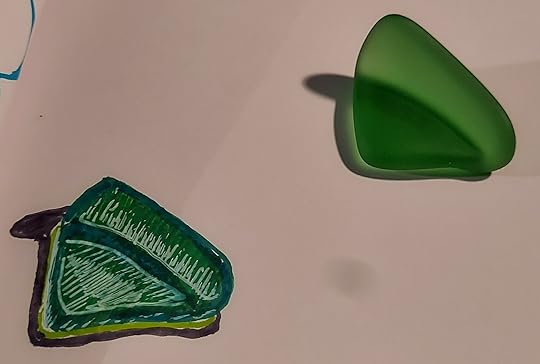
Completely unrelated illustration, but it’s progress in my attempt at a year-long drawing-a-day effort.
What’s satisfying?People tend to get hung up on specific details and what they think they’ve been promised, which is a huge issue – the amount of entitlement people have towards creative media is pretty frustrating, and that entitlement also transcends genre, unfortunately.
An emotional contract is formed in stages. You’ll all have to forgive me for referencing the Hero’s Journey structurally a bit – but I’m commenting primarily on what I’ve seen of stories that are either written or translated into English, and mostly, published within the cultural milieu of North America and Europe.
The first part is the setup, where the status quo is explained and demonstrated. Then we get a disruption, where the desire/goal is established. In, say, the game Mass Effect, which I’ve also spilled a lot of digital ink thinking about, the fundamental goal is “handle the Reaper threat”. In like 99% of romance novels, the fundamental goal is connection and union with one or more love interests. In a mystery novel, it might be the setup of the fundamental question – you know, “Who killed Roger Akroyd” or whatnot. Fantasy and science fiction can have a whole range of situations, including any of the previous questions, or others, but there’s still usually some sort of question being asked at the start of the book. (I mean, that’s why it’s called speculative fiction, really.) In a horror novel, the desire or goal is usually just survival, but horror has different expectations, and as long as the ending is satisfying, audiences are pretty tolerant of a range between happy, bittersweet, tragic, and deeply upsetting endings.
Through the plot arc or arcs, we see the establishment of stakes (i.e. the risk versus reward for a character pursuing their desire). We see hints of the consequences of not having the goal or desire fulfilled, as well as hints of what attainment will lead to. Different stories and formats have different stakes, structures, and interruptions; for instance, video games have a very different structure than a TV series, even though they’re usually both visually-focused mediums. Regardless of medium, the end of a story usually comes from either the attainment of the desire/goal, or the fallout and results of its attainment.
The problems come into play when either a) a series simply never finishes, leaving its question unanswered, or b) audiences are unhappy with the attainment.
The delicate dance of audience dissatisfactionA lot of authors claim to be writing for themselves, but while this is fundamentally true to an extent, writing is also a form of communication. It is possible to write entirely for yourself – if you don’t publish or share your work with anyone, ever. Communicating with yourself is still a valuable and worthwhile pursuit, but writing always represents an act of communication.
Writing is also the absolute cheapest medium in terms of raw production, which is probably why it’s so popular; it also underpins many other art forms and narratives. No matter how a story is produced, whether that’s a video game or a podcast or a grand movie, it starts with being written down.
However, the more expensive the production, the greater the weight of the audience expectations. Authors can often afford to piss off their audiences a bit more – in theory – but the greater one’s prestige or recognition, the more audiences will develop expectations based on previous works. This is unavoidable, since humans are pattern-seeking creatures, just like many other animals. And that’s fine! The existence of patterns is morally neutral, but much less so once we get into the specifics of those patterns.
For instance, in true crime narratives, there’s a common emphasis on the heroism of law enforcement. Given that I’ve gone on the record many times as being against the concept of policing, especially as it currently exists, myself and other people find this quite objectionable. Still, even true crime and other non-fiction narratives follow narrative structures that parallel those in fiction. “Reality” TV still uses a degree of scripting, and often presents unpleasant characters who eventually suffer downfalls and other inconveniences, in the morality plays of our time.
In The Last of Us’s TV show adaptation, audiences have been incredibly pissed off about the death of Pedro Pascal’s character, Joel. While shifting the focus to Ellie’s character is fine, killing Joel off broke the emotional contract of a found family. It’s okay to kill some members of a found family in a situation with multiple characters – after all, look at D’Argo’s heroic sacrifice in the big finale of Farscape, which also has a pretty satisfying ending. But when there’s only two people in the found family, killing one off…destroys the found family. Emotional contract, broken. Result? Not just a few grumbles, but an internet full of fans lashing out.
Why is satisfaction important?Life is unpredictable, chaotic, and unorganized. Humans impose structural narratives to keep ourselves from going fucking insane and to make sense of the world. Narratives also help us articulate our desires or goals, or relay values. Stories mean a lot, blah blah blah, power of story is significant. (I’ll be dissecting the whole “power of story” fetishization in a future article, by the way.)
Basically, we crave stories so we can get something that real life seldom offers. Abusers go unpunished, loved ones leave us and don’t forgive our trespasses, and sometimes love falls apart. On the other hand, sometimes we can only make sense of our triumphs and achievements with the benefit of hindsight. Not everything in our lives is a story of perpetual loss, attrition, and entropy. Or, you can look at it that way, but you might go insane, and even the nihilists and existentialists agree that in a world without divinely ordered meaning, we have to make and find our own.
Enter the narrative.The practical upshot of all this is simple: life is fundamentally dissatisfying, and to avoid getting lost in it, we want our stories to make sense. Having a story take a sharp left turn – for example, a conventionally plotted romance novel having a shocking twist ending that leaves the main couple forever sundered – breaks the emotional contract. Like a hull breach in a space craft, it exposes us to the deeply dissatisfying chaos outside.
Now, don’t get it twisted – it’s okay to have unpredictable endings, as long as you set the audience up for an expectation of unpredictability. To put it mildly, storytelling and its conventions have changed a lot over the centuries, as values and audience desires have changed, too. In mythology, whether that’s the Bible or the Bhagavad Gita or The Journey to the West, narratives served to organize and teach morality and apply structure from a divinely ordained perspective. Wealthy aristocrats and royalty ruled by divine right, but could be toppled if a particularly clever and righteous beggar or lower-class person proved to be their better. In this way, mythology tends to be fundamentally conservative. It’s okay for Zeus to assault beautiful women, because that’s how heroes are born, after all. (PLEASE NOTE THAT I AM NOT ENDORSING THIS REASONING; I’M JUST EXPLAINING MY BEST UNDERSTANDING OF ANCIENT LOGIC.)
The line between instructive and entertaining fiction and narratives gets more and more blurry the farther back you go. The modern era clearly distinguishes between these categories, but it wasn’t always so. Still, every story in every format sets up a promise, and has to deliver.
Promises, promisesPartly to organize the chaos of the world, both humans and social animals have come up with concepts of agreement and promises. A pack of wolves might not sit down and hash out a contract to share and divide up their kills evenly, but they have an implicit agreement to work together and share food. Domesticated dogs, cats, and other animals understand that doing a trick or obeying a command leads to some sort of reward.
A promise is inherently transactional; it means giving something to get something. The thing given in return might just be trust, but that emotional and social capital has a very real value. Audiences give us their attention and money; we give them entertainment, instruction, or a mixture of both. Again, I have to emphasize that even non-fiction follows this structure; you wouldn’t still be reading this essay, two thousand words deep, if not for the implicit promise that I’m going to explain something of interest or value.
So let’s circle back, at long last, to the beginning thesis: emotional contracts underpin all narratives, fiction or non-fiction, and creatives break those contracts at their own peril. An example of deeply satisfying emotional contract fulfillment would be, say, the ending of Return of the Jedi or Return of the King, just to choose the absolute simplest examples I can think of. In Jedi, Luke is at peace with his father’s legacy, the insurgent communal anarchist rebel Ewoks survive and escape, the Death Star is destroyed, and Han and Leia are together. It’s everything we’re told to hope for through the original trilogy. Return of the King foreshadows the bittersweet twist of Frodo’s parting throughout the narrative by showing how the Ring damages its keepers, even the most stalwart and resistant. But even so, we’re still promised that eventually, Sam and Frodo will be reunited some day in the West, aka Elf Heaven.
What do writers need to know?Emotional contracts might be very specific (“This couple will get together”) or very broad (“This story will be completed”) but failing to fulfill them introduces discomfort and chaos. A little discomfort and chaos is absolutely a good thing, because a completely predictable narrative is boring. It doesn’t satisfy the fundamental need to create meaning and order out of our chaotic lives. Too much chaos, however, and too many arbitrary changes, result in something like season 8 of Game of Thrones, which was so widely reviled that it retroactively pretty much killed the fandom.
Metanarrative actions can also destroy an emotional contract. JK Rowling, for instance, made a big point in the Harry Potter books of standing up for marginalized and bullied people. (How well she succeeded at that is a matter of some debate, but the broad strokes were there in the original work). When she turned on trans people and revealed virulent hate in her heart, she broke the emotional contract implied by the values of her series.
I’m not saying writers have to be as heroic as their characters, but if your work conveys broad-strokes values, it’s probably a good idea to try and follow those values in your professional life. Everyone makes mistakes, and the internet can be unforgiving, but if you develop a fanbase, it’s also like, worth having a personal ethos and trying to be consistent with it.
The slippery bits and caveatsObviously, there’s a giant “But…” in my conception of emotional contracts, and that is – some audience members are going to misinterpret the specifics for the broad strokes. That is, there are going to be people angry that their particular ship wasn’t rewarded. Now, again, this is slippery, because we’re touching on the concept of queerbaiting just by implicating ships. It’s not 2009 or 2011 anymore, and the representation of queer relationships has definitely increased in the last ten to fifteen years, but I would caution my fellow authors in particular about watching out for queerbaiting. In my experience, the people who see a few minutes of contact and get excited about a potential ship are pretty self-aware and reasonably self-deprecating. It’s mostly when a relationship spans the long term, has a lot of focus, and is heavily built up that authors get into trouble for not fulfilling reader expectations.
Now, you’re just not going to make everyone happy. That’s human nature. But it’s very important to go over a particular project and make sure that the biggest promises that were set up actually get fulfilled.
(And that, among other reasons, is why I wasn’t happy enough with my first draft of Monsters and Fools, the sequel to Underlighters, and why I’m rewriting the whole damn thing.)
If there’s a particular couple that you’ve spent a lot of ink and time on, get them together OR have a damned good reason for them to not end up together. If there’s an underlying philosophical point in your work, even if you’ve outgrown it, just fulfill it and write something more mature in the next book or series, instead of trying to retcon the story to fit your new ideals. (ASK ME HOW I KNOW.) Villains don’t always have to die, but the fundamental questions asked by a work do need to be answered.
So get out there, and answer some questions!
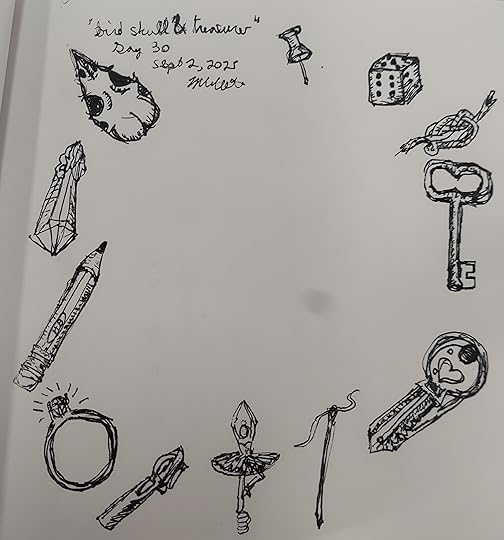
I’m pretty happy with how this one turned out.
Meanwhile, I’m going to make progress on wrapping up the enormous private online tabletop roleplay game I’ve been working on. After that, I feel mortally compelled to work on the gothic horror rewrite of my first novel ever, a standalone that’s going to feature themes of gender dysphoria, colonization, and a tech oligarch villain. I’ve been struggling with Synchronicity (different title coming; I’m thinking “The Violent Ones”) since a former friend figuratively ripped its original draft to shreds and convinced me it was unsalvageably bad, in need of wholesale rewrites.
I kind of wish I’d just published that messy baby as my first novel anyway, buuuuuuuut I also know that my ideas for this complete rewrite are going to be a banger, and I’m going to do my best to do justice to it, on behalf of my shy, petrified teenage self, who hoped so dearly to release her first novel ever to the wide world, and to be a child prodigy.
Anyway, happy writing to all of us!
If you liked this article, and boy I hope you did, please do give me a subscribe, or take a peek at my Patreon and Substack. I’m trying to keep my stuff accessible and not paywalled, and your support helps me with that goal.
***
A writer and artist, Michelle Browne lives in southern AB with xer family and their cats. She is currently working on the next books in her series, other people's manuscripts, knitting, jewelry-making, and drinking as much tea as humanly possible. Find xer all over the internet: Website Amazon Substack Patreon Ko-fi Instagram Bluesky Mastodon Tumblr Medium OG Blog Facebook
August 26, 2025
Creative People Aren’t Good (Part 2)
Last week, I had a few things to disentangle about thecommonly-held societal more that being able to make stuff means you’re holisticallysmart. This week, I need to continue that train of thought to explain the cycleof sabotage plaguing online fandom communities.
As before, I’m talking about English-speaking communities incultures I can access. I truly don’t know if other communities and otherlanguage-speakers are doing the same toxic shit that we are. If you know the answer,please reach out! I’m very curious, and I love thinking and talking about theways that our culture and language shape us and feed into themselves.
I’m also obsessed with trying to understand exactly howthings got so fucked up, why they’re staying that way, and how we can fix it.
Cultural self-sabotage: a case studyLet’s talk about Neil Gaiman.
People who’ve followed my career for a long time, or whoknow me personally, are aware that I used to really admire Neil Gaiman. Idescribed his prose as feeling like a friend telling a whispered secret storyto you in a dark room. Loved the atmosphere of his writing, his mystery-shroudedworlds and complicated characters.
I’ve reconsidered anawful lot about whether he’s actually as good as I thought he was, but I’m notready to reread his work more critically yet. (If you’re interested in seeing somecritical essays, let me know.)
Obviously, a number of potent allegations about hispredatory behaviour have emerged. Some authors and people in the writing worldhave quietly mentioned that his name was a sour one among the whisper networks.Long before the viscerally upsetting details came out in courageous articles lastyear, at least some people in the BDSM scene in Australia and in fan conventionand expensive professional writing class scenes knew that Gaiman wasn’t to betrusted.
But Tumblr didn’t, and for a while, he was the internet’sbeloved English teacher. All of the affection for queer or queer-affirmingteaching professionals who saved so many of us from peers’ rejection andcruelty was projected onto Gaiman. He didn’t deserve it, but we didn’t knowthat.
And how could we? After all, there’s a persistent, clangingnotion that to be a creative person is to be a good person. That’s not true,but how did we get here?
Gifts from godHang on tight here, because I need to contextualise thisshit with cultural Christianity. I don’t think North Americans, especiallyex-believers and non-believers and pagans and whatnots, really grasp the powerof the background radiation of Christianity. Little turns of phrase representthe way our thoughts and feelings are shaped by this background.
Now, the idea of sainthood is particularly linked toCatholicism, which also happens to be part of my background, but it’s certainlyspread beyond that. Like mildew and algae blooming in one corner of a pond, theidea that creativity is a divine gift is casually accepted – and pernicious. (I’mnot getting into the Roman roots and how all of that affected the wayChristianity developed ideologically because frankly, I don’t know enough aboutit, and I’m also not sure that it’s really relevant to the discussion.)
“Talent” is considered a gift from god. A blessing. Anarbitrary state of being bestowed by deities or fate. Even secular people tendto talk about artistic skills as though they just happened overnight, as thoughsomeone simply woke up with them one day, a divine act of reward or caprice.
Creativity is a blessing, so the corollary of that is:creative people are blessed, and blessed people are sanctified, and sanctified peopleare better than others.
This simple assumption manages to hold firm against everysingle disproof imaginable. Simply put, we expect famous creative people to besaints, and then we get pissed off, shocked, and disappointed when – surprise! They’rejust people. Even the goddamn saints weren’t saints, as any hagiographer willtell you. (I’m not a biographer of the saints myself, but I have a few scrapsof passing knowledge.) St Jerome was famously cranky. Don’t even get me startedon the Apocrypha, the fig tree incident with Jesus, or any of that.
There was a time when we saw the imperfections of saints andgods as inspiring and relatable, but in the current era, all of those flawshave been sanded away. Some mistakes have a degree of acceptability, but othersare too deep to bear. The measures for which sort is which tend to be painfullyarbitrary. (Trust me, I have a lot more to say about our internet culturalstandards and how fucked up they are, so stay tuned for that in the future.)
What is talent?Here’s the goddamn problem. Because we see creative skill asa Thing, an inherent quality rather than a gradually developed one, our culturehas a very toxic relationship with it. We don’t want to talk about the hours uponhours of skill grinding required to improve at something, and we certainly don’twant to admit that sometimes, people will just not get very good at somethingthey practice. We don’t understand why some people are good at a thing andothers aren’t. Some level of enjoyment or satisfaction, plus the willingness tospend time and outlast frustration plateaus, are the only concrete metrics wereally have.
But those aren’t sexy and mysterious, unlike the concepts oftalent and inspiration. Can anyone grind their way to looking talented? Caneveryone do everything if they work hard enough at it? The first one is amaybe, and the second one is too expansive a claim to earn an honest “yes”.That whole Malcolm Gladwell “ten thousand hours” thing hasbeen debunked bya bunch of people more patient and possibly more spiteful than I am. (Asusual, misinterpreting and overapplying a scientific study was to blame. Who’ssurprised?)
And anyway, repetitive work and practice means embracingfailure. Failure is stigmatized here, in the English-speaking Western world,and is thought to indicate a moral weakness or faltering of some sort, so whothe fuck wants to embrace failure? No, better to sigh wistfully over the ideathat talent or inspiration simply passed us by. Never mind that creativity worksthe same way as other muscles, including the need for rest days.
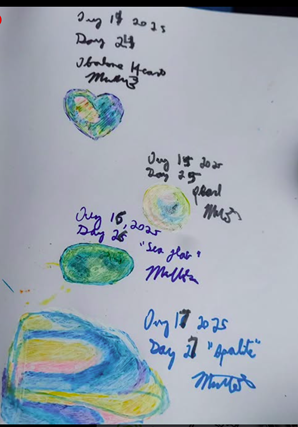
Above: my own slow, patient, grinding efforts to improve mydrawing skills. Drawing gems is really damn hard.
Who should we be?The thing is, as I talked about last week, just making stuffwell doesn’t indicate anything about the quality of a person.
Let that sink in. None of the artists or creative people youlike are guaranteed or even likely to be good, kind, or otherwise lovely bymere dint of their creative skill.
However, that means something rather nice – anyone who’skind, patient, or otherwise lovely got that way by choosing to be so. Anyonecan develop patience and kindness for others. It’s not a god-given talent; it’sa skill that’s trained.
Artists are not better people than the rest of the world –and we ought to forgive them for it, and the rest of us artists need to forgiveourselves for being messy, complicated, mistake-making creatures. We don’t owethe world goodness because we happen to be skilled at something. Kindness andgenerosity are their own rewards, not the side effects of a skill. Learning togive yourself and others grace, benefit of the doubt, kindness, and help? Wecan all earn those skills, regardless of whether we can paint a good sunset orwrite a brilliant string of code.
If you believe in God, maybe this is God telling you to giveyourself some damn credit. If you don’t, then hey! Take it from me and mymultiple therapists; recognizing your own achievements is a requirement for survival.It’s very hard to be nice to others when you’re busy being shitty to yourself,and not having been “blessed” with a “talent” tends to make people beat themselvesup. It’s not easy to stop hating yourself, but just fighting the ideas aboutwhat makes people good, important, or generally better than you is a vitally criticalstart.
***
A writer and artist, Michelle Browne lives in southern ABwith xer family and their cats. Xe is currently working on the next books inher series, other people's manuscripts, knitting, jewelry-making, and drinkingas much tea as humanly possible. Find xer all over the internet: *Website * Amazon * Substack * Patreon * Ko-fi * Instagram * Bluesky* Mastodon * Tumblr * Medium * OG Blog * Facebook
August 19, 2025
Creative People Aren’t Smart (Part 1)
Another day, another discussion about media where I findmyself mildly dismayed by the creative implications of someone’s choices, orlack of thought about said choices. Now, it’s always easy to Monday Morningquarterback things, and god knows there’s no need for the literary equivalentof Cinema Sins. We had that in the early 2010s, it was on blogs and Goodreads,and frankly, I’d rather leave the trend of gleeful dunking and fake outrage inits grave, where it belongs.
But that said, once in a while, I stumble across a piece ofinformation so hard to comprehend that I’m staggered by it. Often, it’s relatedto a particularly stupid bit of worldbuilding that, say, a world-famousbillionaire author who wrote children’s books did. Just as an example.
As I was discussing some particularly nonsensical creativedecisions with some friends and colleagues, however, I had an absolutelystaggering realisation about JK Rowling – one that applies more broadly, infact.
Being creative, and good at creating things, can coexistwith absolute stupidity.
A defining of termsSome people are going to read the title of this and fire offan angry post anyway, but lend me a few moments’ indulgence before thathappens.
I should probably explain what the hell I mean. I’m nottalking about the fake, racist metrics of IQ tests. Developmental delays andbirth differences are entirely unrelated to these skills, although theysometimes have an impact on their development.
Stupidity and smartness are actually rather nebulous conceptsin English, but here, stupidity refers to a mixture of willful ignorance andstubbornness leading to overlooking things.
In contrast, the particular type of smartness people expectfrom artists is critical thought, both analytical and creative; in particular,the ability to contextualise fiction and reality.
What’s that mean?The ability to contextualise fiction and reality can keepyou from, say, writing a cozy, sweet book about a magic school with elementsbased on real-life cultural genocide, for instance.
Stupidity can make you say “but mine’s different!” even whenthousands of people are begging you to understand that no, your portrayal of aparticular character type isn’t different or subversive enough to avoid ableistharms.
At least in the English-speaking parts of the internet I’veseen – there’s a cultural idea that being able to make stuff automaticallybestows other forms of intelligence. (I blame European colonizers for this.)
But…doesn’t artistic skill make you a genius?Things like the Masterclass program and TED Talks areparticularly pernicious for spreading the idea that people who can make stuffare superior in some way. We often use the term “gifted” for creatives. Theproblem is, this leads people to the idea that skills in one or two areasindicate skills in all areas or most areas. Sure, people *say* “you can’t begood at everything”, but we sure as shit act surprised when someone famouslytalented turns out to be skilled at one thing and terrible at another.
The truth is, the ability to create something isn’t the sameas the ability to understand either the act of creation itself or the contextof that creation. Analysing your own work is a pain in the ass, as anyone who’sever had to write either a grant or an artist’s statement will tell you. Partof the problem is that it’s really hard to have perspective on your own work,but the other part is, a lot of people have a drive to create that theystruggle to explain.
Now, I need to underline that I don’t want to demean peoplewho struggle with the analysis and critical thinking part of creation. Everyonecan’t be good at everything, and as the world of media critics shows, there areplenty of people who can analyse things brilliantly and can’t make things worthshit. There are others still who canteach and relay skills very well, even when they struggle to apply their ownskills. And still others are brilliant at applying creative skills, but can’tcommunicate their methods to others.
Why bring this up now?As I look around and try to cope with the rising tide of fascism,I see a lot of people, myself included, searching for leadership and hope. Oneof the first places we turn to tends to be those we admire. A lot of people weadmire tend to be skilled in multiple areas of creation and the arts – say,Brennan Lee Mulligan, who’s a very good performer, storyteller, and roleplayer,among other things; and who is something of an online darling right now.
Don’t get me wrong; I think he’s great, but I’ve also seenthe rise and fall of creative figures before, and it’s really getting to me.Lin Manuel Miranda and Hank and John Green were similarly lionized in the 2010s,and when they made even the mildest of human missteps, or even just did thingsthat a few people disliked, it was enough to dislodge them from theirpedestals.
So what’s going on there? Next week, I’m going to talk aboutthe painfully human nature of people we admire – and why we, theEnglish-speaking internet citizens, need to absolutely chill the fuck out withour standards.
***
A writer and artist, Michelle Browne lives in southern ABwith xer family and their cats. Xe is currently working on the next books inher series, knitting, jewelry-making, and drinking as much tea as humanlypossible. Find xer all over the internet: *Website * Amazon * Substack * Patreon * Ko-fi * Instagram * Bluesky* Mastodon * Tumblr * Medium * OG Blog * Facebook
August 15, 2025
It's LIIIIIIIIIIIIVE! Get your fix of university student ...
It's LIIIIIIIIIIIIVE! Get your fix of university student cozy academia, with maturation, love, and just a little revenge, on Patreon or on Substack!
And of course it's queer. I'm physically incapable of writing something without queerness and multicultural backgrounds. Also featuring such hits as:
disability representationtrauma friends fighting sick 2010s setting and playlist people kissingSo yeah, pick your preferred platform and get reading!
***
A writer and artist, Michelle Browne lives in southern AB with xer family and their cats. Xe is currently working on the next books in her series, other people's manuscripts, knitting, jewelry-making, and drinking as much tea as humanly possible. Find xer all over the internet: *Website * Amazon * Substack * Patreon * Ko-fi * Instagram * Bluesky * Mastodon * Tumblr * Medium * OG Blog * Facebook *
August 12, 2025
Fix Your Life: Notes From Reconstruction
So, I don't really do self-help, for a variety ofreasons, but I've had this article jangling around in my head for aminute.
I'm in the middle of working on a bunch of healthconditions, and changing my lifestyle and habits to actually try and improve ormanage them, and I couldn't help but think about how deeply ineffective andfrustrating most self-help tends to be.
This, then, is a quick rundown of techniques I've beenrelying on and making use of while I've been trying to improve myfunctionality.
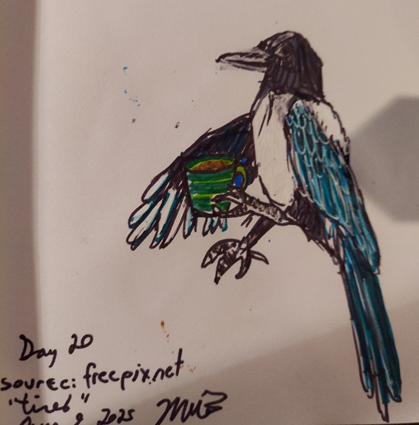
Where I started
For some context, I've been struggling with really terribleburnout from my editing practice for a few years now. Life stuff happened, itwas bad; it left me with mental health scars. I won't bare every inch of mysoul for the internet, but suffice to say that the Tolstoy quote about howunhappy families are unhappy in their own way is not that accurate. Trauma canfollow exhaustingly repetitive patterns between people's lives. It's notparticularly exciting or salacious, although there were a few dramatic momentshere and there.
What matters is, I got better, and I got back to editing,but I also got worse. As anxiety and depression paralysed me and depressionweighed me down like pocketfuls of stones, I couldn't finish projects, lettingdown clients and friends one by one. I dragged my feet, though, terrified tochange my career and lose all the progress I'd made.
I'd been suspecting I was burnt out for years, but I was tooscared to let go. My wife's pregnancy, two house moves, and our son's birth letme delay the decision, even though I'd already made my mind up in private. ThenI had a mental health backslide a couple of months ago, my partners gottogether and insisted I deal with my shit, and well, I had to do exactlythat.
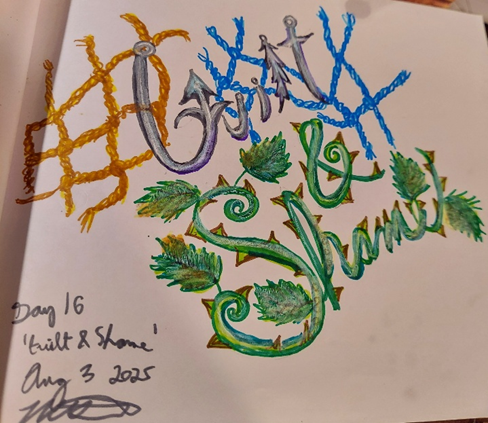
What I'm doing
For most of my life, I've struggled with body image andweight issues, with a glaring exception - in the first year of university, Ihad to bike to school every day and was also swimming regularly, and it made astark difference in my mental health. Accepting that I needed to work outregularly whether I liked it or not, but not worrying about weight loss orgain, has been shatteringly effective. I've also changed my language aroundworking out, avoiding the term "exercise", which is too loaded withtrauma and negative associations for me personally. I considered my options andwent with biking and swimming, with a surprise addition of some gardening,which I really enjoy; in addition to some housekeeping and chores, which I wasalready doing, of course. Biking and swimming make me feel fast, strong, andgraceful, and having physical ways to move that make you feel good isabsolutely vital.
You will not fix your life by suffering. You'll justexhaust yourself and end up in the same place you started, or worse. Find waysto move your body that are a) safe for your physical constraints, b)cost-effective, and c) sustainable for you personally. One person'storture is another person's pleasure, and vice versa. Don't just do whateveryone says you should do if you absolutely fucking hate it.
I'm also in four different kinds of therapy right now, doinga short-term intensive for three months, which I'm about halfway through rightnow. It's pretty tiring, and yes, it can take a lot of time each week. Findingtherapy and groups that work for you is essential. Again, it's not going to beeasy, but there's a difference between difficulty and pain. Free therapy groupsare abundant online and more available locally than one might suspect, and Ihave to admit that group counselling has been surprisingly helpful. Thedominant approach is called Dialectical Behavioural Therapy, an improvement onCognitive Behavioural Therapy, and it's working really well forme.
Subsequent to the therapy thing...I'm using mindfulness alot, and for me, it's working well. Now, mindfulness is actually a hazardoustechnique for some people, and can worsen their mental health, but many othersbenefit from it. However, it actually refers to a bunch of techniques. Forme, that's colour breathing, grounding, and exercises to create sensoryawareness of my body. Sometimes fully tensing all muscles andreleasing them can really help. Point is, mindfulness involves a variety ofconcrete techniques and approaches; it isn't just a sort of vague mindsetthing. It's a bunch of stuff. Try things, carefully. Those therapy groups oftentalk about techniques with more expertise.
Frustratingly, the whole thing about scheduling has alsobeen proven true. It's often told to neurodivergent people that we need toschedule our shit, and...yeah. I use a digital calendar app to block off mytime and handle both regular obligations and appointments. For instance, I havereminders about when to scoop our cats' litterboxes, my therapy sessions, andmy intended swimming times all colour-coded out. Adjust your reminders'frequency to help you actually pay attention to them.
Self-care often gets described as either really unpleasant,important tasks like doing the dishes and scrubbing the toilet and making phonecalls, or as a sort of fuzzy, vague, indulgent thing, like baths and eightkinds of skincare. However, it's a balance of these things. The most importantthing I'm finding is re-framing what I consider a reward or a treat.
Very recently, I've been shifting the perception of a treatfrom physical rewards to actual time. Setting aside my little chunk of time toread a book and have a little snack and a cup of tea, or to draw some words formy daily drawing challenge, has immensely enriched my life. The way Ieven have time for those things is that I've had to identify where I waswasting time. Doomscrolling can take many forms, and it's important toremember that our phones and social networks and apps and Netflix and games andsuch are designed to keep us watching. Spend time on people, things, andactions that either make you happy or challenge you.
Another thing has been moderating the content I take in morecarefully. I'm limiting some of my interactions with politics, because quitefrankly, a lot of people are just fucking using the news to self-harm, and Idon't want to be one of them. Toquote Propaganda the rapper and activist, tapping out is vitallyfucking important right now.
I will never advocate for people to wrap themselves in abubble of ignorance either. Completely disengaging from the news isreally dangerous. But limit your exposure, and especially if you're on multiplesocial networks - for god's sake, don't try to be politically focused andactive on every single one of them. That's a shortcut to burnout. Internalboundaries are required for survival. Don't let anyone guilt or shame you intothinking otherwise. They're not respecting their own limits, and they'll end uppaying for it or hurting other people along the way.
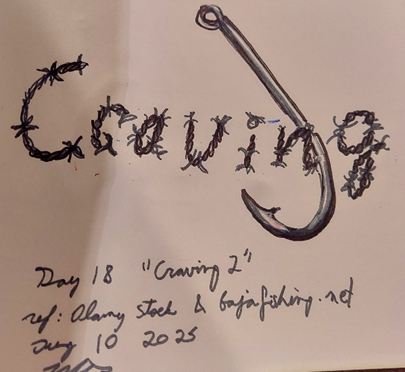
Caveats
There are several important components that are making thispossible for me. One is, frankly, financial support from my parents andpartners. Now, I realise that's not doable for most people, but I'm not goingto be one of those people who pretends they've hauled their asses up by theirbootstraps with no help or support. My family isn't wealthy, but the smallamount of money and more generous supportive time, has been a huge advantage.My unconventional family structure with my partners also makes things a hell ofa lot more doable and accessible.
One of the most important components of this whole thing isjust time, period. I'm lucky enough to live in Canada, where we have a flawedbut still extant social service and safety net. I also have health insurancethat covers my therapy. Being white and having an English-speaker name means Iget the benefit of the doubt in a lot of situations. I think about these thingsa lot, and I'm grateful for them.
We're often taught to be ashamed of privilege, rather thanpractical about it. If you have it in any area of life - and most people haveit in one or two ways - lean on it and use it. Play into it, if you can do sowithout harming yourself mentally. Use privilege as a ladder foryourself, and then extend the same help to others who don't have it.
That said, it's important to get your shit together enoughto survive, and balancing that with community care and help is tricky. I'm notgoing to say "fuck everyone else, save yourself" because frankly,that's also bad for you, but it's also really important to learn yourlimits and know how much you can do without hurting or exhaustingyourself.
What should you do?
Still, if you find yourself in need of help direly, the bestthing I can suggest to anyone is to stop trying to do it alone. If you have afew poor friends, band together. If you're living alone, move back home or findsome kind of co-living situation. A bunch of disabled people working together,or family or friends, can patch each other's holes both financially andsituationally.
If you already have roommates, family, or housemates,moving to a cheaper living situation or talking to the landlord about a rentreduction might be necessary. Changing living situations to be aroundpeople who will actually support you might also be necessary. I knowsome people find the thought of living with others unbearable, but if it's achoice between living with others and dying alone, find a way to make it work.Have boundary and alone time talks. It beats working yourself to death for anillusion of independence.
I cannot recommend enough that, wherever you live, youtake advantage of any resources available. Rent relief, affordable housingprograms, any kind of food stamps, free therapy groups, and outreach centres.There are no prizes for not using the social safety net, while it stillexists.
Furthermore, the social workers I know have made it clear tome that their programs actually live and die on participation. Even if thewaitlists are long, it's much better to get involved, because then local,provincial/state, and federal programs see that *the resources are being used,and therefore need to be funded.* Yes, I know what's happening in the USA rightnow, but they haven't actually destroyed the entire system *yet*.
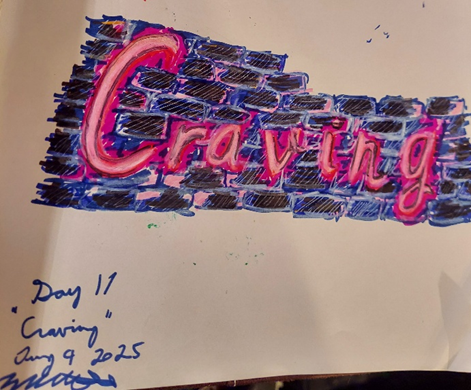
But Magpie, I can't do any of this stuff.
Now, for those who are looking at this list and going,"I don't have a safe home, I don't have a regular diet, I don't havesupportive people..."
The truth is, your life is already in the process ofcollapse, and my type of recovery plan is not right for you right now. What youneed is to work on stabilizing your living situation. You absolutely cannot fixyour shit right now, and that has to be okay. I'm sorry to be the one tellingyou. However, some of these tips - utilizing program resources, talking tofriends and family to pool resources, scheduling, and getting movement in - areall doable. Working through the panic and overwhelm is important.
If you have any type of privilege or resources you canlean on, without harming yourself, use them. There's no sense infeeling guilty about it, and remember that what people think of you doesn'thave to reflect who you are inside. Again, I stress that there's a line hereabout self-harm - other trans folks will know this line well, because it's commonfor nonbinary people to have to portray themselves as binary-gendered, forinstance - but as long as drawing on a systemic or familial resource isn'tactively hurting you, it's okay to do it. To be even clearer, approachingabusive family members for help is probably a bad idea, but may be required insurvival circumstances.
It's often said that "nobody can save you butyou," and while that's got elements of truth to it, it's also completelywrong. Support networks of various kinds - systemic infrastructure andinterpersonal ones - are the only way out.
You have to ask for what you need. Yes, I know that'sfucking scary. Yes, it means figuring out what you need. But it beats dyingslowly and suffering all the way down.
The quick and dirty summary
To fix your life and mental health issues, you need:
1) Financial support - a stable place to live and food toeat, plus therapy fee coverage if applicable
2) Emotional support - people who will support and enableyou to change and make changes
3) Health plans - these are going to be different for everyperson, but movement is a basic need. Find a safe and sustainable way to moveyour body regularly. Figure out food supplies and needs. Same with meds orother therapy access. Procrastinating on health issues does not make them goaway, and in fact, can make them get worse. They also won't make waiting listsfor appointments get any shorter.
4) Scheduling - I know, it's annoying and overwhelming, butyou gotta do it.
5) Advantages - if you have any form of privilege that youcan use without causing yourself mental or physical distress, use it.
6) Self-knowledge - this is fucking hard, and comes inch byinch, but you have to learn your own mental and physical constraints. What canyou do sustainably? What help can you give others without tiring yourselfout?
7) Boundaries - limit your news exposure and pick a fewareas you care about. Overwhelm and witnessing suffering can be a form ofdigital self-harm. People will try to convince you that this is cowardly, butit's not your job to perform enlightenment or empathy. Also, you can't knoweverything, and trying will exhaust you. Consuming media is not the same asactually doing shit for your community, whether local or global. Supporting andhelping others is essential for building mental health, but you also have tonourish yourself.
I realise a bunch of these need to be tailored and adjustedto each person's situation. I definitely have a bad-faith Tumblr/old Twitterghost in my head arguing with every single point, but this is the best I can doto dole out some survival advice.
I'm going to end with some media recommendations - for news,I really like Cool Zone Media's podcasts; It Could Happen Here, Behind theBastards, Hood Politics, There Are No Girls on the Internet, and Better Offlineare probably my favourites. I also like the journalistic coverage from SomeMore News, Vox's Today Explained, What Next from Slate, and Frontburner fromCBC.
For non-news, I'm really enjoying enjoying working throughall the albums I've been meaning to listen to over the years, including newmusic from artists I already like and exploring artists whose songs catch myears. I've been making absurd numbers of playlists, soif that's your thing, check out my Youtube and see if anything intriguesyou.
Oh, and I've gotten back intoactually reading books for pleasure, which is amazing. I'll probably have anarticle about modern gothic horror coming out soon, because that's what I'mfixated on right now, but everything I'm reading has been wall-to-wall bangers.You can follow my reviews on Goodreads, Amazon, or Storygraph,but please be aware that I am *NOT ACCEPTING REVIEW REQUESTS* forbooks.
A writer and artist, Michelle Browne lives in southern ABwith xer family and their cats. Xe is currently working on the next books inher series, other people's manuscripts, knitting, jewelry-making, and drinkingas much tea as humanly possible. Find xer all over the internet: *Website * Amazon * Substack * Patreon * Ko-fi * Instagram * Bluesky* Mastodon * Tumblr * Medium * OG Blog * Facebook *
August 8, 2025
Hi, everyone. Here's what comes next. -
Happy Friday.
I was born on a Friday, and I’m thinking it might be a very good publishing day. What do you think? When do you usually read your newsletters and emails? (No, really, sound off and tell me.)
So, one thing about the blog articles I used to write, before I took basically a two-year hiatus, is that they were very structured and kind of formal. Now, I’m not saying I’ll never write essays like that again, but I think I need to change up my style because not everything that comes to me readily presents itself in that format.
Now - I want to try and publish regularly. This is how writers survive, after all. Although many writers affect reticence or suffer from social anxiety, we’re still a sort of artist, and all artists perform and communicate to some extent; and without attention, we dry up and wither away like a forgotten houseplant.
(Just a moment, I need to water my plants.)
Right. So, I’ve spent this week wrapping up my editing practice - contacting clients, deleting my website and Facebook page, and kind of saying goodbye internally. But that means I’m now freed up to, you know, actually pay attention to things like both writing and marketing (and writing articles again, something that got awfully thin on the ground over the last few years).
What will go here?In addition to returning to non-fiction essays and opinion pieces, and in addition to a less formal style for quite a few of them, I’m going to be serializing my next work, Prairie Weather!
Prairie Weather?My Canada Council of the Arts Grant-winning novel project is 155,000 words long. A cozy academia with many PoVs, it’s about exploring queerness, coming of age, and navigating friendship, love, and heartbreak. Set in my hometown of Lethbridge, Alberta, It’s a fun and sweet romp with plenty of interpersonal drama.
I mean, as long as your definition of a fun, sweet romp includes things like a stabbing, revenge, and a men’s help group going deeply awry.
I’m thinking that, since the trilogy is complete, I’ll post a chapter each Friday, and essays or nonfiction on Tuesdays. Partly to warm up the space and break in my Patreon and Substack, I’ll be posting some of my best works from the archives - possibly with updates and commentary.
I’ve also been reading actual books lately (gasp!), so I might talk about that a bit, especially where it relates to my creative journey(s). Right now, I’m enjoying a “Gothic Girl Summer,” where I’m getting around to a whole bunch of gothic horror novels I’ve been meaning to tackle for a minute. It’s giving me some serious ideas for the style and direction of the bottom-up rewrite of my trunked first-ever novel, then called “Synchronicity”.
Not just writing?For the Patreon specifically, I might also post about my art, but if people are into it, I can do that elsewhere. If you don’t know, I make jewelry and knit, and I’m getting a little more serious about drawing, too, for the simple reason that I’ve always wanted and meant to, and now I’m doing a drawing challenge. (Follow that on Instagram!)
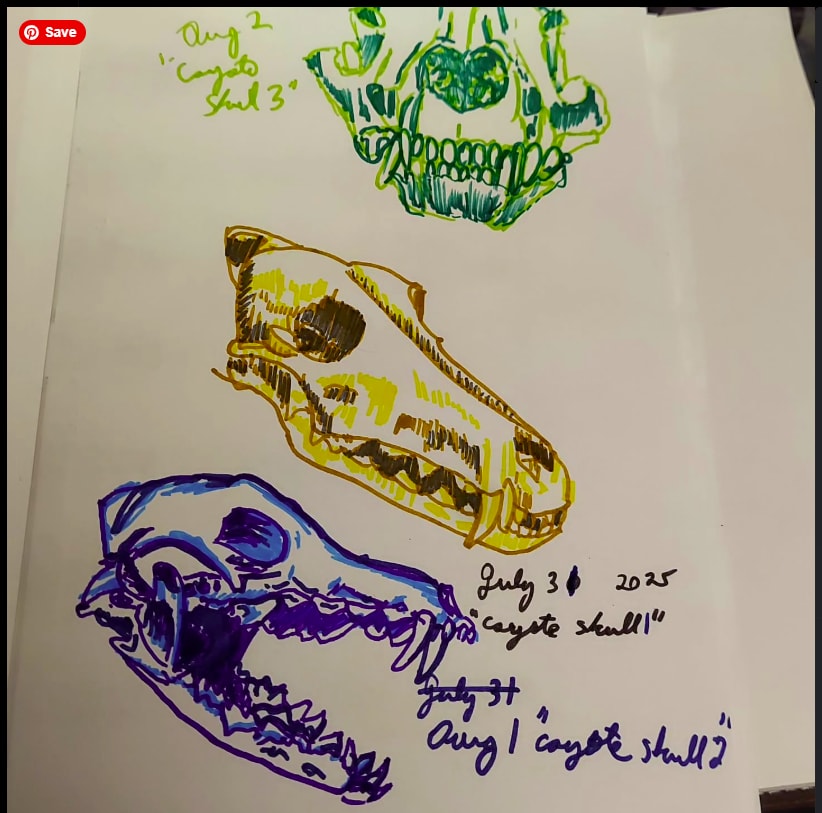
That should be everything for now, but I’d love to hear from you! If you’ve been following me for a while, what would you like to see more of? Less of? If you’re new here, say hi!
***
A writer and artist, Michelle Browne lives in southern AB with xer family and their cats. Xe is currently working on the next books in her series, other people's manuscripts, knitting, jewelry-making, and drinking as much tea as humanly possible.
Find xer all over the internet: *Website * Amazon * Substack * Patreon * Ko-fi * Instagram * Bluesky * Mastodon * Tumblr * Medium * OG Blog * Facebook *
SciFiMagpie

- Michelle Browne's profile
- 601 followers