Etgar Keret's Blog
November 25, 2025
Una Pausa
 Gemini Generated Image
After five eventful years that included a global pandemic, a judicial coup, and a brutal war, Alphabet Soup is taking a much-needed vacation this week. If any of you spot me sunbathing on a Mexican beach, I just want you to know that I’m not holding my tummy in: I really am that slim!
Translated by Jessica Cohen

November 18, 2025
Alternative Fun Facts: A Butterfly With an Agenda
 Image by Fanatic Studio
And then He decided to create a squirrel that shits exclamation points. I said to Him, “Begging your forgiveness, my Lord, but what’s the point of that?” Instead of answering, He created a zebra whose stripes swirl together until they form the Declaration of Independence. Next it was a butterfly that turns into a pupa and then goes into politics. I tried to sound reverential and polite – after all, this is God we’re talking about – when I warned Him that this whole blending nature with ideology business wouldn’t end well. But He just kept at it, creating an anti-vaxxer whale, a libertarian fly, and a climate activist pigeon.
November 11, 2025
Spiderless Funeral
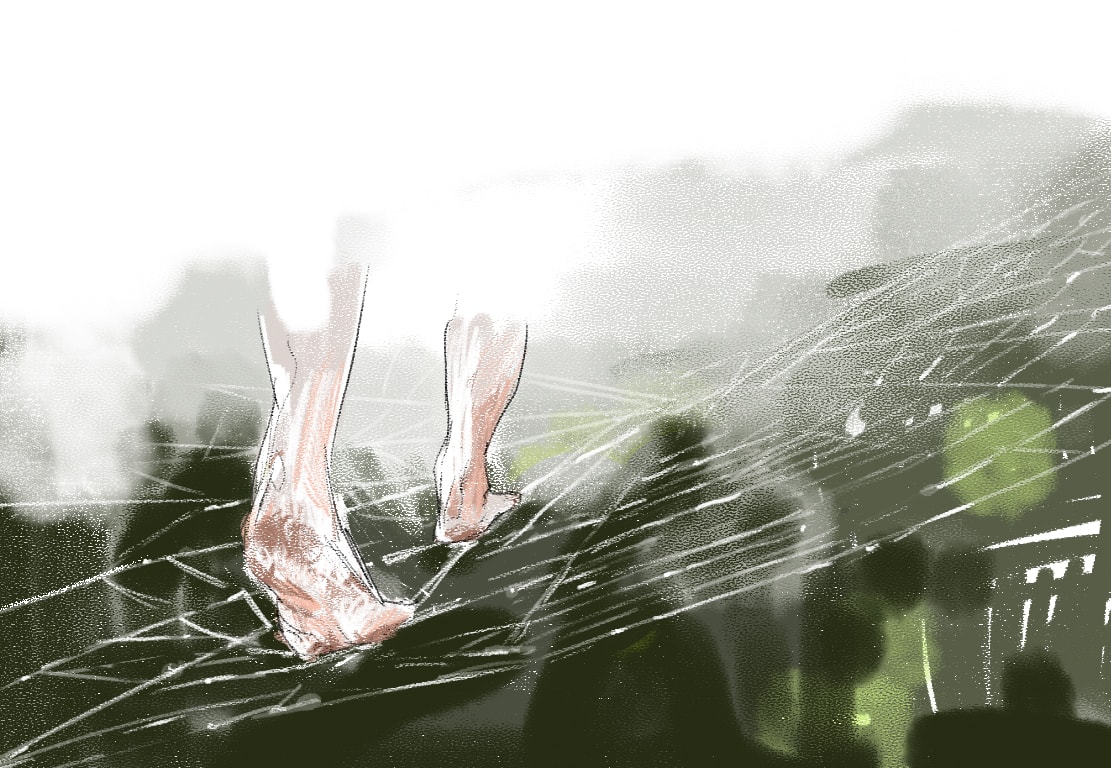 Illustration by Ofra Kobliner
Spiders love my wife. Every time they come into our house, she traps them in a plastic cup and sets them free in the yard. The spiders think it’s the best thing ever: scurrying out from under a cup onto some grass, with no clue how they ended up there. For them, every such journey is an exodus, a transformation, a voyage from within to without, from civilization to nature, from bondage to freedom. I’m much less skilled than my wife, and although I’ve never perfected the art of capturing spiders, I am very good at stepping on them.
Spiders love my wife. In the spider kingdom, there’s a giant gold-plated statue of a plastic cup with my wife’s name engraved in large bold letters, and beneath that, in much smaller letters, the names of all the spiders whose lives she’s saved. In the spider kingdom, there is not a single statue bearing my name. Not even a statuette. The only thing I’ve ever given them is a quick death.
Spiders love my wife. When she dies, they will come to her funeral in the tens of thousands, like the disciples at a rabbi’s burial, and they will cover the cemetery in a giant puzzle made of millions of eight-legged pieces, each offering words of praise and lamentation for my wife. They will stand over her grave and delicately pluck on the harp strings they will have woven from their own silk, and they will sing Leonard Cohen and Pixies songs until evening falls. At my funeral, there will be poets and professors and, if I’m lucky, maybe a president or two. But you could turn over every stone in that cemetery and you still wouldn’t find a single spider.
Translated by Jessica CohenNovember 4, 2025
Rabin’s Dead
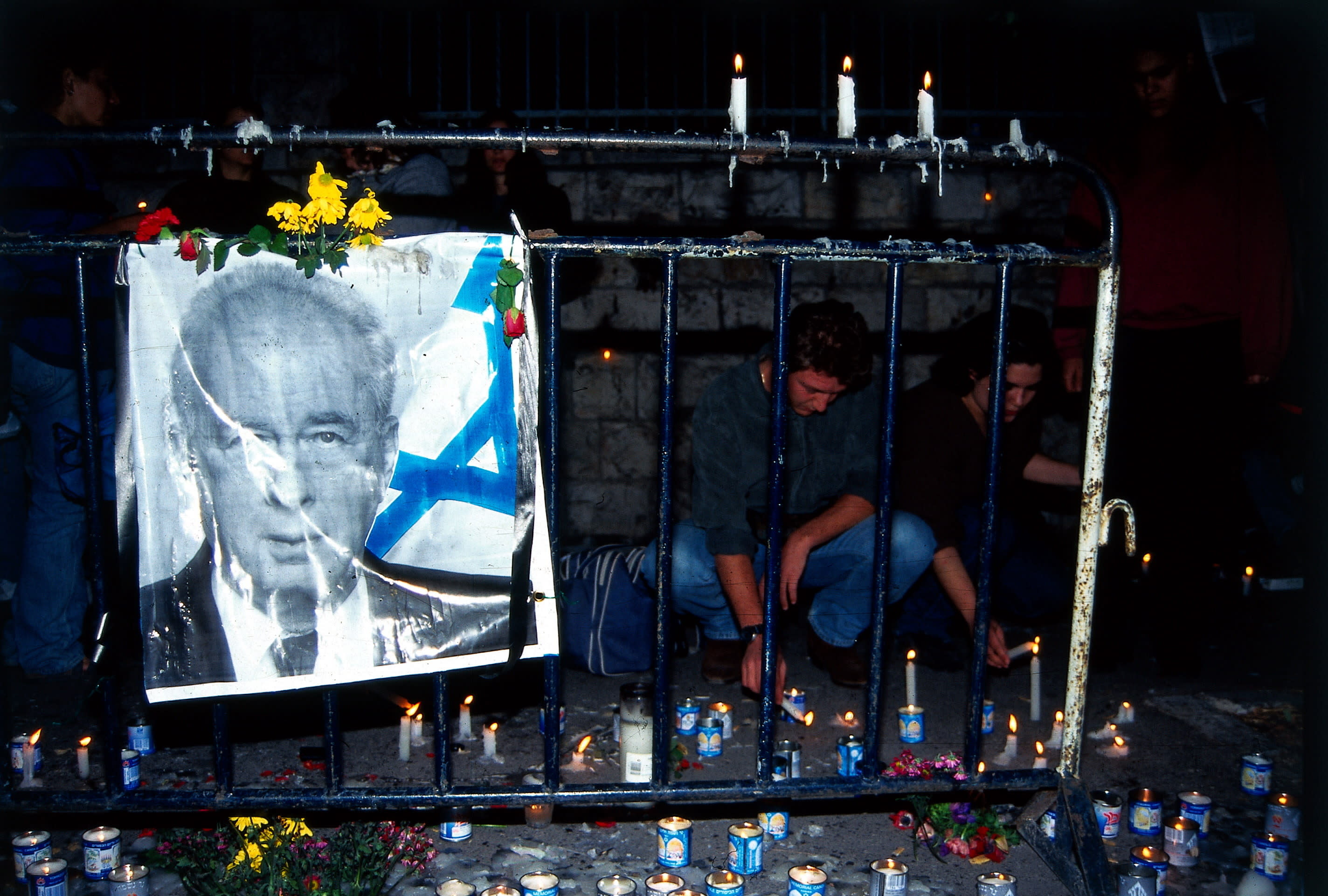 Image by ullstein bild
Rabin’s dead. It happened last night. He got run over by a scooter with a sidecar. Rabin died on the spot. The guy on the scooter got hurt real bad and passed out, and they took him away in an ambulance. They didn’t even touch Rabin. He was so dead, there was nothing they could do. So me and Tiran picked him up and buried him in my back yard. I cried after that, and Tiran lit up and told me to stop crying ‘cause I was getting on his nerves. But I didn’t stop, and pretty soon he started crying too. Because I really loved Rabin a lot, but Tiran loved him even more. Then we went to Tiran’s house, and there was a cop on the front stairs waiting to bag him, because the guy on the scooter came to and squealed to the doctors at the hospital. He told them Tiran had bashed his helmet in with a crowbar. The cop asked Tiran why he was crying and Tiran said “Who’s crying, you fascist motherfucking pig.” The cop smacked him once, and Tiran’s father came out and wanted to take down the cop’s name and stuff, but the cop wouldn’t tell him, and in less than five minutes, there must’ve been like thirty neighbors standing there. The cop told them to take it easy, and they told him to take it easy himself. There was a lot of shoving, and it looked like someone was going to get clobbered again. Finally the cop left, and Tiran’s dad sat us both down in their living-room, and gave us some Sprite. He told Tiran to tell him what happened, and to make it quick, before the cop returned with backup. So Tiran told him he’d hit someone with a crowbar but that it was someone who had it coming, and that the guy’d squealed to the police. Tiran’s dad asked what exactly he had it coming for, and I could see right away that he was pissed off. So I told him it was the guy on the scooter that started it, ‘cause first he ran Rabin over with his sidecar, then he called us names and then he went and slapped me too. Tiran’s dad asked him if it was true, and Tiran didn’t answer but he nodded. I could tell that he was dying for a cigarette but he was afraid to smoke next to his dad.
We found Rabin in the Square. Soon as we got off the bus we spotted him. He was just a kitten then, and he was so cold he was trembling. Me and Tiran and this uptown girl with a navel stud that we met there, we went to get him some milk. But at Espresso Bar they wouldn’t give us any. And at Burger Ranch, they didn’t have milk, ‘cause they’re a meat place and they’re kosher, so they don’t sell dairy stuff. Finally at the grocery store on Frishman Street they gave us a half-pint and an empty yoghurt cup, and we poured him some milk, and he lapped it up in one go. And Avishag—that was the name of the girl with the stud—said we ought to call him Shalom, because shalom means peace, and we’d found him right in the Square where Rabin died for peace. Tiran nodded, and asked her for her phone number, and she told him he was really cute, but that she had a boyfriend in the army. After she left, Tiran patted the kitten and said that we’d never in a million years call him Shalom, because Shalom is a sissy name. He said we’d call him Rabin, and that the broad and her boyfriend in the army could go fuck themselves for all he cared, ‘cause maybe she had a pretty face but her body was really weird.
Tiran’s dad told Tiran it was lucky he was still a minor, but even that might not do him much good this time, because bashing people with a crowbar isn’t like stealing chewing gum from a candy store. Tiran still didn’t say anything, and I could tell he was about to start crying again. So I told Tiran’s dad that it was all my fault, because when Rabin was run over I was the one who yelled it to Tiran. And the guy on the scooter, who was kind of nice at first, and even seemed sorry about what he’d done, asked me what I was screaming for. And it was only when I told him that the cat’s name was Rabin that he lost his cool, and slapped me. And Tiran told his dad: “First, the shit doesn’t stop at the stop sign, then he runs over our cat, and after all that he goes and slaps Sinai. What did you expect me to do? Let him get away with it?” And Tiran’s dad didn’t answer. He lit a cigarette, and without making a big deal about it, lit one for Tiran too. And Tiran said the best thing I could do would be to beat it, before the cops came back, so that at least one of us would stay out of it. I told him to lay off, but his dad insisted.
Before I went upstairs, I stopped for a minute at Rabin’s grave, and thought about what would have happened if we hadn’t found him. About what his life would have been like then. Maybe he’d have frozen to death, but probably someone else would have found him and taken him home, and then he wouldn’t have been run over. Everything in life is just luck. Even the original Rabin— after everyone sang the Hymn to Peace at the big rally in the Square, if instead of going down those stairs he’d hung around a little longer, he’d still be alive. And they would have shot Peres instead. At least that’s what they said on tv. Or else, if the broad in the Square wouldn’t have had that boyfriend in the army and she’d given Tiran her phone number and we’d called Rabin Shalom, then he would have been run over anyway, but at least nobody would have got clobbered.
Housekeeping Note:As requested by readers, my narration of the story in English is followed by a bonus recording. So if you hear me talking to you in a weird language after the story ends, I’d like to assure you that I’m not mumbling a spell to conjure up the spirit of Lilith or trying to hypnotize you into joining the Mossad. It’s just me reading the story in Hebrew.Intro translated by Jessica Cohen״Rabin’s Dead״, Translated by Miriam Shlesinger, from the book “The Bus Driver Who Wanted to Be God & Other Stories” published by Penguin Random House 2015October 28, 2025
It’s On Us
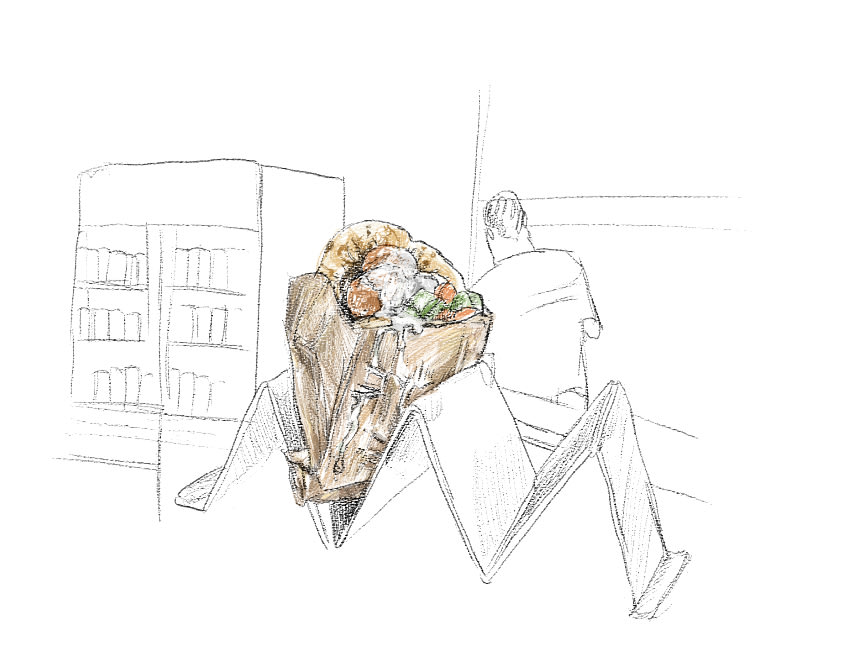 Illustration by Ofra Kobliner
The sister of the guy who died says no fries. The second she walked in, Harel whispered in my ear: Give her all the extras, stuff that pita full, don’t take her money. “Her brother’s a hero,” he added quietly, standing by the soft drink fridge, “but for real. Not some sheep. Ran out to the street in his flipflops with a gun …
October 21, 2025
Human Writes: The Garden of Forking Paths
 Image by mikkelwilliam
We live in strange times. And I’m not saying that to bring you down. “Strange” isn’t necessarily bad. Here’s a strange thing that happened to me very recently:
An Israeli newspaper that’s been publishing my work for years asked me for a story having to do with the Gaza war, for a special literary issue they were preparing. I immediately sent in “Prickface,”* a story about loss and alienation that appeared here at Alphabet Soup a few months ago. The story is understated, but the title…not so much. And indeed, the editor loved the story but found the vulgar name problematic. If this had happened a decade ago, I think I would have put my foot down and stood up for my principles. But the past two years of bloodshed and senselessness in this simmering cauldron of war have cooked me into a far more tender, pliable frog. So instead of getting caught up in an endless argument, I decided to simply change the title to “Tradition”—an easily digestible name that, oddly, fits the story and also pays homage to my favorite song from Fiddler on the Roof. The change was an unexpected success, transforming a tough, painful story with a controversial title into something no less tough and painful, but, it turns out, a lot more palatable.
October 14, 2025
Two Things
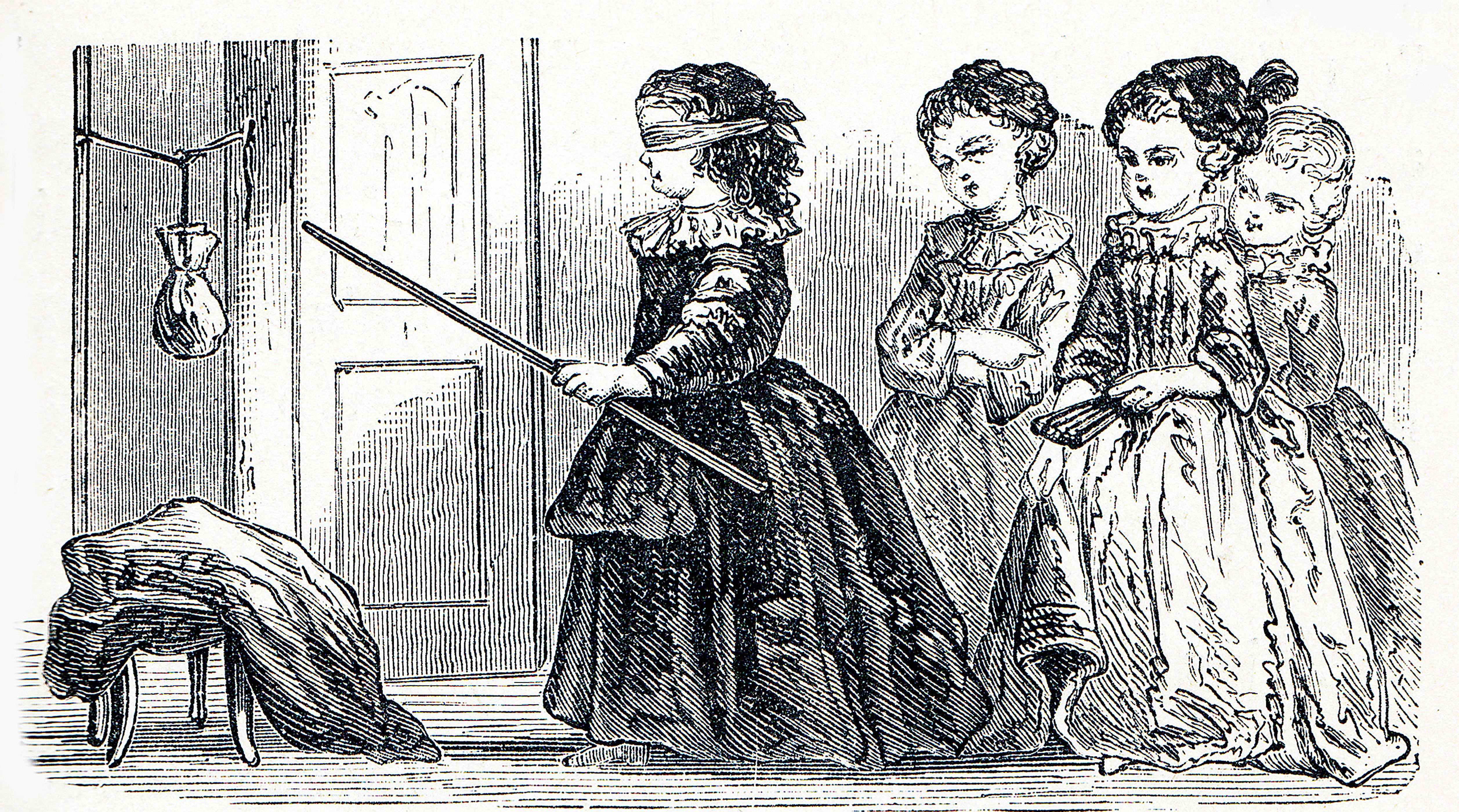 Image by Luisa Vallon Fumi
On Yom Kippur my wife and I play a game she learned from someone at work. The way it goes is each person has to say two things about himself: one that everyone already knows, and another that no one in the room knew before.
My wife goes first. She says that she loves me and that she slept with another man. I ask her who, and she says he’s just some guy from management and I don’t know him. I ask if he’s the one who taught her the game and she says yes. I’m curious to know what he told her about himself that she didn’t know before, and she says he told her that she and his wife have almost the exact same hairstyle, and that when he does it doggystyle with his wife, he always looks at the back of her neck right when he’s about to come and imagines that she’s my wife.
“Hang on,” I say, “I don’t get it. Is that the thing you knew before?”
My wife laughs. “No, dummy, that’s the thing I didn’t know.”
“Okay… And what did he tell you that you already knew?”
“That he’s not Jewish. I mean, you know, he’s not circumcised. His family moved here from Russia.”
“And everyone at work already knew he wasn’t circumcised?! Was it on the agenda for a team meeting, or what?”
“Stop it,” she scolds me in a childish voice, “you’re holding up the game. Now it’s your turn to say two things.”
I try to think of two things. But the thing I’m really thinking about is that Russian guy from the office. I think he’s called Roman. That’s the only Russian name I’ve heard her mention, at any rate. Him and some guy called Yuri, but this Yuri is definitely gay.
“Go on,” she says, “tell me your two things already.”
The first thing I tell her is that it was me who burned the silver Skoda that belonged to the neighbor who was always parking it right in front of our entryway. I can’t remember her name: kind of tall, squeaky voice? And the second thing is that I’ve been depressed for almost two years and I constantly have suicidal thoughts.
My wife is quite for a moment, and then she says I wasn’t following the rules of the game because I told her two things she didn’t know instead of one. I sit quietly for a few seconds too, and then I ask if she’s sure we didn’t talk about that tall woman with the shrill voice, and about how when I tried to tell her she couldn’t keep blocking the entrance, she flipped out at me as if I were the one doing something wrong. “Don’t you remember? We talked about it when we were standing outside, just before the firetruck arrived.” My wife says she definitely remembers the car going up in flames but that I never told her it was me who set it on fire. She insists that I change one of my statements to something else, something she already knows about me.
I ask her if the Russian guy from work is called Roman, and she sighs and says I’m totally missing the point: instead of going with the flow of associative thoughts and seeing where it takes me, I’m getting bogged down in trivial factoids. When she and Roman played, they couldn’t care less about the world outside. All that mattered was the game and the brilliant honesty it uncovered. Which meant that one minute they could be talking about how Roman and his wife take the kids to his parents in Ness Ziona for dinner every Friday, and his mother, who was raised Christian after WWII, says a blessing over the Shabbat candles and cries, and the next minute my wife could find herself on her knees in the office, giving Roman a blow job. “But with you,” she mutters, “there’s no letting loose, no taking flight. You’re all about keeping score and trading gossip.”
I tell her she’s right, I ruined it, I’m sorry, from now on I’ll go with the flow. And then I quickly ask, like it’s no big deal, why she loves me. She pauses, shuts her eyes, then smiles. “I love you,” she says, “because of what you’re not: you’re not violent, not a coward, and not selfish like all the other shits around me.” I ask her if an uncircumcised dick feels different in your mouth, on your tongue—does it feel like a dick and something else? Dick-plus?
My wife opens her eyes and looks at me. Her smile has almost completely vanished. “Never mind, I can see this isn’t the game for us,” she says, standing up. “I’m going out for a smoke.”
Translated by Jessica CohenOctober 7, 2025
Signs of Life
 Image by Oboltus
Now close your eyes and try to stop being angry. Try to stop raging at all those who deserve your righteous fury. Close your eyes and allow yourself, just for a moment, to simply feel the pain. To hesitate. To be confused. To feel sorrow. Remorse. You still have your whole life to spend persecuting, avenging, reckoning. But for now, just close your eyes and look inward, like a satellite hovering over a disaster zone, searching for signs of life. A lot has been taken away from you—but you’re still a human being. Wounded, bloodied, angry, hurting, frightened, drowning in sorrow, but still: human. Take a deep breath and try to remember the feeling. Because you know that a minute from now, when you open your eyes again, it’ll be gone.
Housekeeping Note:As requested by readers, my English narration is followed by a bonus Hebrew narration.Translated by Jessica CohenSeptember 30, 2025
Shriki
 Image by Image Source
Meet Reuven Shriki. A fantastic guy. The man with the plan. Someone who had the guts to live the dreams most of us don’t even dare to dream. Shriki’s rolling in money, but that’s not the point. He also has a girlfriend, a French model, who posed in the nude for the world’s best slick magazine—if you didn’t jerk off to it, that was just because you couldn’t get your hands on it—but that’s not what makes him the man either. What’s special about Shriki is that, unlike others who made it big, he’s no smarter than you, no better looking, no better connected or shrewder, he isn’t even luckier than you. Shriki is exactly—I mean exactly—like me and you, in every way. And that’s what makes you so jealous—how did someone like us get so far? And anyone who tries to say it was the timing or the odds is full of crap. Shriki’s secret is much simpler: he made it because he took his ordinariness as far as it could go. Instead of denying it or trying to hide it, Shriki said to himself, This is who I am, and that’s all there is to it. He didn’t try to make himself more or less than he was, he just flowed with it, naturel. He invented ordinary things, and I stress, ordinary. Not brilliant, ordinary, and that’s exactly what humanity needs. Brilliant inventions might be good for brilliant people, but how many brilliant people are there in the world? Ordinary inventions, on the other hand, are good for everyone.
One day, Shriki was sitting in his living room eating olives filled with pimentos. He didn’t find the filled olives very fulfilling. He liked the olives themselves much more than the pimento filling, but, on the other hand, he preferred the pimento to the original hard, bitter pit. And that’s how it came to him—the first in a series of ideas that would change his life and ours—olive-filled olives, what could be simpler? An olive without a pit, filled with another olive. It took the idea a little while to catch on, but when it did, it refused to let go, like a pit bull clamping its jaws on its victim’s ankle. And right after the olive-filled olives came avocado-filled avocados, and finally, the sweet crowning glory, apricot-filled apricots. In less than six years, the word “pit” lost one of its meanings. And Shriki, of course, became a millionaire. After he cleaned up in the food business, Shriki moved on to real estate, and with no special vision there either. He just made sure to buy where it was expensive, and guess what, within a year or two, it got even more expensive. That’s how Shriki’s assets grew and in time, he found himself investing in almost everything, except tech, a field that put him off for reasons so primal he couldn’t even express them in words.
As it does with every ordinary person, money changed Shriki. He got more cheeky, more cheery, more beefy, more touchy-feely, in short, more everything. People didn’t adore him, but they didn’t abhor him either, which is nothing to sneeze at. Once, during a TV interview that got a little bit too personal, the interviewer asked Shriki whether he thought a lot of people aspired to be like him. “They don’t have to aspire,” Shriki said, smiling, half at the interviewer, half to himself. “They already are like me.” And the studio filled with the sound of wild applause booming from the special electronic device the show’s producers had purchased especially for up-front answers just like that one.
Imagine Shriki sitting in an armchair on the deck of his private pool, trailing a piece of pita through a plate of hummus, drinking a glass of freshly squeezed fruit juice, as his curvy girlfriend sunbathes naked on an air mattress. And now try to imagine yourselves in his place, sipping the freshly squeezed juice, tossing some sweet nothing to the naked French girl. A snap, right? And now try to imagine Shriki in your place, exactly where you are, reading this story, thinking about you there in his mansion, imagining himself sitting beside the pool in your place, and zap! Here you are again reading a story, and he’s back there. Ordinary as hell, or as his French girlfriend likes to say, trés naturel, eating another olive and not even spitting out the pit, because there is none.
"Shriki" translated by Sondra Silverston, from THE NIMROD FLIPOUT by Etgar Keret, Copyright © 1992, 1994 by Etgar Keret. English translation copyright © by Etgar Keret. Used by permission of Farrar, Straus and Giroux. All Rights Reserved.Intro translated by Jessica CohenSeptember 23, 2025
The First Angel You See
 From “Inside Out” exhibition, Jewish Museum Berlin, Image by Kristin Krause
I only ever heard this story once. My parents had just come home from a wedding, and my mother was completely drunk. If she’d had one fewer drinks that night, I probably wouldn’t be able to share this story with you. It’s a little hazy in my imagination, but in the story, my grandmother holds my mom’s little hand while carrying Mom’s baby brother, and the three of them race up the stairs in their building. Mom can hear the footsteps of the people chasing them. When they get to the roof, my grandmother tells Mom to run as fast as she can and jump onto the adjacent rooftop, which is slightly lower. “Don’t be scared,” she says, “you can do it.” Mom waits, expecting her mother to say, “And I’ll be right behind you,” but she just stands there, out of breath from the run. “When will I see you again?” my mother asks, and her mother bends over so that their faces are very close, and says, “You’re going to run as fast as you can, and then jump as far as you can, and as soon as you land you’re going to keep running and not stop until you get to Daddy. After that, you will grow up into a woman, and you will meet a man and fall in love, and start a family with him, and in the end you’ll grow old and die. And right after you die, go up to the first angel you see and tell him: I’m going to see my mom. And he’ll know, because I’ll talk to him before you get there, and he’ll bring you to me.”
This is not where the story ends. After my mom jumped onto the other roof, she did not run as fast as she could, the way her mother had instructed her. Instead, she hid and watched the Nazi soldiers kill her mother and shatter her little brother’s head against a brick wall.
When she told me this, I could feel the heavy guilt engulfing her. But I also sensed how proud she was of her mother, who even in the last moments of her life refused to lie to her daughter. Forty-seven years after she told me the story that evening, my mother died. And the last words she said were, “I’m going to see my mom.”
Housekeeping Note:As requested by readers, my narration of the story in English is followed by a bonus recording of the story in Hebrew.Translated by Jessica CohenFirst published as part of the exhibition INSIDE OUT - ETGAR KERET at the Jewish Museum Berlin (21 Oct 2022 to 19 Mar 2023)