Karina Lumbert Fabian's Blog
April 12, 2017
science fiction parody and silly human tricks
Space: It’s big; it’s full of crazy, exciting, unknown things; and it’s ours for the exploring! These are the adventures of the HuFleet ship Impulsive. It’s ongoing mission, to explore new worlds, to meet new species and learn their way, and most of all to do stuff! Any stuff. Hey, that looks interesting? Can I do that? Hold my beer and watch!
Are you ready for sci-fi clichés and ridiculousness? Let’s explore the lighter side of human nature, play with television shows and books along the lines of “How It Should Have Ended,” and generally have some fun.
Starting April 19 (as many of you know), I’ll be launching the adventure of Space Traipse: Hold My Beer. It’s a standard science fiction world, along the lines of Star Trek, but with any multi-world government with a fleet warp-drive-enabled starships that can travel the universe running experiments, surveying subspace phenomena again and again, and getting into trouble on a regular, almost episodic basis. I’ve been on a Voyager jag lately, so the first few episodes reflect that, but I intend to bring in all manner of SF oddness.
One thing I hope to do, though, is see what kind of trouble we can get to without making the crew act dumb. Impulsive? Oh, yes, we like them that way. But not stupid. No holding back important information because you’re embarrassed. No refusing to follow protocol – but no waiting for the Captain to tell you how to do your job. No ignoring the possibilities of technology because it makes for better TV.
Come check it out April 19 at
http://karinafabian.com/test-blog/
Are you ready for sci-fi clichés and ridiculousness? Let’s explore the lighter side of human nature, play with television shows and books along the lines of “How It Should Have Ended,” and generally have some fun.
Starting April 19 (as many of you know), I’ll be launching the adventure of Space Traipse: Hold My Beer. It’s a standard science fiction world, along the lines of Star Trek, but with any multi-world government with a fleet warp-drive-enabled starships that can travel the universe running experiments, surveying subspace phenomena again and again, and getting into trouble on a regular, almost episodic basis. I’ve been on a Voyager jag lately, so the first few episodes reflect that, but I intend to bring in all manner of SF oddness.
One thing I hope to do, though, is see what kind of trouble we can get to without making the crew act dumb. Impulsive? Oh, yes, we like them that way. But not stupid. No holding back important information because you’re embarrassed. No refusing to follow protocol – but no waiting for the Captain to tell you how to do your job. No ignoring the possibilities of technology because it makes for better TV.
Come check it out April 19 at
http://karinafabian.com/test-blog/


March 26, 2017
The Inspiration Behind Mind Over Mind
Way back in 1986, when green monochrome fish screen savers were cutting edge technology, I took an honors seminar for which I had to read Frogs Into Princes. This is the seminal book about a branch of psychology/communication called neuro linguistic programming. The basic idea, psychology-wise, that Bandler and Grinder proposed is that it really didn't matter what a person's delusions were; the key was whether they can function in society or not.
Communication-wise, they theorized that you could guess a person's thought processes by watching the movement of the eyes - whether they were making something up or remembering a truth, if they were seeing or hearing the thought, etc. They gave lots of examples from their own experiences treating patients.
I was fascinated by the book, but as a mathematics major, I never thought beyond what a cool idea it was. However, of all my textbooks, this one stayed with me as I graduated, went to the Air Force, then got out and had kids.
Another thing that followed me all those years was the novel I'd written about a psychic in college and his roommate accidentally teleporting to another planet. It wasn't horrid, though now I blanch to think I sent it to a publisher. That, too, got packed away through all the moves and career changes.
In 2001, I decided I wanted to rewrite the novel. I liked Tasmae and the idea of the planets at war, but the psychic was too cool, too easy. Too shallow. As many of you know, I kept torturing the poor guy with "what if?" until he ended up in an asylum. But how to get him out?
Even after twelve years, Frogs Into Princes had stuck with me, so I found the book and reread it, thinking what fun it would be to apply the principles to a young, troubled man who didn't just believe he was psychic, but truly was psychic. Oh, what fun it was! I loved the challenge of thinking of my characters in terms of how they thought--visually or verbally?--and how that affected Deryl. The case study where they worked with a catatonic patient (which reminded me of a story called, "Son, Rise" about an autistic child whose mother reached him by following his rocking rhythm) gave me a terrific idea for a very tense scene. Deryl retreats into a catatonic state to escape a disturbed man's violent thoughts, and Joshua has to bring him out using NLP.
Looking at Amazon, I see that Frogs into Princes was the book that started NLP and, as one review put it, "introduced the still cutting edge technology of human communication and cognition...a seminal book in the field of human communication, linguistics, perception, cognition and psychology."
I'm a writer, not a psychologist, but I'd like to thank Richard Bandler and John Grinder for sharing their ideas and experiences, and to my honors professor who assigned the book. You helped transform Mind Over Mind from bleah to yeah!
Mind Over Mind came out in 2011, and the characters did end up teleporting to another planet and saving it and the neighboring world, but through it all, you'll see Joshua using the psychology he'd learned as a student and intern. I hope you'll check it out.
Communication-wise, they theorized that you could guess a person's thought processes by watching the movement of the eyes - whether they were making something up or remembering a truth, if they were seeing or hearing the thought, etc. They gave lots of examples from their own experiences treating patients.
I was fascinated by the book, but as a mathematics major, I never thought beyond what a cool idea it was. However, of all my textbooks, this one stayed with me as I graduated, went to the Air Force, then got out and had kids.
Another thing that followed me all those years was the novel I'd written about a psychic in college and his roommate accidentally teleporting to another planet. It wasn't horrid, though now I blanch to think I sent it to a publisher. That, too, got packed away through all the moves and career changes.
In 2001, I decided I wanted to rewrite the novel. I liked Tasmae and the idea of the planets at war, but the psychic was too cool, too easy. Too shallow. As many of you know, I kept torturing the poor guy with "what if?" until he ended up in an asylum. But how to get him out?
Even after twelve years, Frogs Into Princes had stuck with me, so I found the book and reread it, thinking what fun it would be to apply the principles to a young, troubled man who didn't just believe he was psychic, but truly was psychic. Oh, what fun it was! I loved the challenge of thinking of my characters in terms of how they thought--visually or verbally?--and how that affected Deryl. The case study where they worked with a catatonic patient (which reminded me of a story called, "Son, Rise" about an autistic child whose mother reached him by following his rocking rhythm) gave me a terrific idea for a very tense scene. Deryl retreats into a catatonic state to escape a disturbed man's violent thoughts, and Joshua has to bring him out using NLP.
Looking at Amazon, I see that Frogs into Princes was the book that started NLP and, as one review put it, "introduced the still cutting edge technology of human communication and cognition...a seminal book in the field of human communication, linguistics, perception, cognition and psychology."
I'm a writer, not a psychologist, but I'd like to thank Richard Bandler and John Grinder for sharing their ideas and experiences, and to my honors professor who assigned the book. You helped transform Mind Over Mind from bleah to yeah!
Mind Over Mind came out in 2011, and the characters did end up teleporting to another planet and saving it and the neighboring world, but through it all, you'll see Joshua using the psychology he'd learned as a student and intern. I hope you'll check it out.
February 8, 2017
Why I Love Writing Science Fiction
One of the best things about being a writer of science fiction and fantasy is that sometimes, science fiction comes true. Communicators and replicators of Star Trek are cell phones and three-D printers of today, for example, but there are scores of different technologies that were imagined or popularized by science fiction writers long before they became practical technologies.
There are three reasons for this. The first is that scientists are often science fiction writers. Isaac Asimov, who wrote Foundations, I Robot and other famous science fiction stories, was a biochemist. More recently, we have Michael Crichton and Travis Taylor, both science fiction writers with science degrees.
Second, science fiction authors, even when not scientists themselves, often study science and think about the applications. For my own stories, like Discovery, I had to study VASIMR drives and spacesuit technology. I then pushed that technology about 150 years into the future, imagining what we could do if untried research came to fruition and widespread use. Other writers (and me, in other stories) push the envelope further, taking wild theories and imagining their applications and consequences, and when no theory is available, creating one in a “What if”?
The final reason – and my favorite – is that scientists are inspired by science fiction. It’s no surprise that the communicator of the 1960s Star Trek became the flip phone of the 80s. The inventor was directly inspired by the design. Many other Star Trek technologies, even the outlandish idea of warp drive, are being studied by scientists today. In print, we can point to Jules Verne, whose story, “Five Weeks in a Balloon” inspired Sikorski to invent the helicopter.
As technology grows, so do writers’ imaginations, and those imaginations spark further growth in science and technology. It’s a wonderful symbiotic relationship that makes me proud to be a science fiction writer.
There are three reasons for this. The first is that scientists are often science fiction writers. Isaac Asimov, who wrote Foundations, I Robot and other famous science fiction stories, was a biochemist. More recently, we have Michael Crichton and Travis Taylor, both science fiction writers with science degrees.
Second, science fiction authors, even when not scientists themselves, often study science and think about the applications. For my own stories, like Discovery, I had to study VASIMR drives and spacesuit technology. I then pushed that technology about 150 years into the future, imagining what we could do if untried research came to fruition and widespread use. Other writers (and me, in other stories) push the envelope further, taking wild theories and imagining their applications and consequences, and when no theory is available, creating one in a “What if”?
The final reason – and my favorite – is that scientists are inspired by science fiction. It’s no surprise that the communicator of the 1960s Star Trek became the flip phone of the 80s. The inventor was directly inspired by the design. Many other Star Trek technologies, even the outlandish idea of warp drive, are being studied by scientists today. In print, we can point to Jules Verne, whose story, “Five Weeks in a Balloon” inspired Sikorski to invent the helicopter.
As technology grows, so do writers’ imaginations, and those imaginations spark further growth in science and technology. It’s a wonderful symbiotic relationship that makes me proud to be a science fiction writer.
January 31, 2017
Book giveaway, new story coming
Just a quick note to let everyone know a couple of things:
1. My publisher, Full Quiver, is doing a Goodreads Giveaway for Discovery through Feb 15. Check it out: https://www.goodreads.com/giveaway/sh...
2. The next FabianSpace newsletter comes out Feb 4. It has exciting news about my next novel and a funny DragonEye story in honor of Valentines Day. If you havne't signed up, please do so at http://eepurl.com/dc-8M
1. My publisher, Full Quiver, is doing a Goodreads Giveaway for Discovery through Feb 15. Check it out: https://www.goodreads.com/giveaway/sh...
2. The next FabianSpace newsletter comes out Feb 4. It has exciting news about my next novel and a funny DragonEye story in honor of Valentines Day. If you havne't signed up, please do so at http://eepurl.com/dc-8M
January 24, 2017
Registration for Catholic Writers Conference Online Ends Feb 10
I help organize this and present at it. It's an awesome opportunity. Non-Catholics are also welcome as long as they respect our beliefs.
The Catholic Writers’ Guild will hold its annual online conference for writers Feb 17-19, 2017. This faith-focused authors conference offers presentations covering all aspects of writing from the faith aspects of your calling as a writer to publishing and marketing your books. There will also be online pitch sessions with noted Catholic publishers and secular publishers.
Attendees must register by Feb 10 at https://catholicwritersguild.org/cath....
The conference will be held using webinar software, making the experience more personal and immediate.
"Last year, we had amazing success with presentations in webinar format. It took the learning to a new level," said organizer Karina Fabian. Fabian said the workshops offer terrific opportunities to ask in-depth questions and get feedback from knowledgeable instructors.
This year’s sessions include a wide range of talents, including speakers like Lisa Mladinich, host of the TV talk show WOMAN; Lisa Hendey, author and founder of CatholicMom.com, horror author Karen Ullo, and attorney Antony Kolenc. In addition, there are practical workshops on indie publishing, Goodreads, characterization and more.
Pitch sessions give authors with finished books a chance to personally interest a publisher. Pitch sessions include well known Catholic publishers like Our Sunday Visitor and Ave Maria, and secular presses like Liberty Island and Vinspire.
"Every year, we hear back from an author who finished a book, started a project, or got a publishing contract thanks to the Catholic Writers’ Conference Online. Plus people make contacts and good friends. It’s a terrific opportunity, especially for those who can’t afford to attend a live conference,” Fabian said.
This year’s conference is $40; $30 for members of the Catholic Writers’ Guild. To register or for more information, go to https://catholicwritersguild.org/onli....
The Catholic Writers’ Guild will hold its annual online conference for writers Feb 17-19, 2017. This faith-focused authors conference offers presentations covering all aspects of writing from the faith aspects of your calling as a writer to publishing and marketing your books. There will also be online pitch sessions with noted Catholic publishers and secular publishers.
Attendees must register by Feb 10 at https://catholicwritersguild.org/cath....
The conference will be held using webinar software, making the experience more personal and immediate.
"Last year, we had amazing success with presentations in webinar format. It took the learning to a new level," said organizer Karina Fabian. Fabian said the workshops offer terrific opportunities to ask in-depth questions and get feedback from knowledgeable instructors.
This year’s sessions include a wide range of talents, including speakers like Lisa Mladinich, host of the TV talk show WOMAN; Lisa Hendey, author and founder of CatholicMom.com, horror author Karen Ullo, and attorney Antony Kolenc. In addition, there are practical workshops on indie publishing, Goodreads, characterization and more.
Pitch sessions give authors with finished books a chance to personally interest a publisher. Pitch sessions include well known Catholic publishers like Our Sunday Visitor and Ave Maria, and secular presses like Liberty Island and Vinspire.
"Every year, we hear back from an author who finished a book, started a project, or got a publishing contract thanks to the Catholic Writers’ Conference Online. Plus people make contacts and good friends. It’s a terrific opportunity, especially for those who can’t afford to attend a live conference,” Fabian said.
This year’s conference is $40; $30 for members of the Catholic Writers’ Guild. To register or for more information, go to https://catholicwritersguild.org/onli....
January 18, 2017
How I started writing Catholic Science Fiction and Fantasy
I never intended to write Catholic science fiction and fantasy. I didn’t even know such a subgenre existed. I had not yet read Canticle for Leibowitz or heard of Father Andrew Greeley. (Although I enjoyed Katherine Kurtz’s Deryni series. Is she Catholic? The stories had those elements.) I certainly didn’t go looking for Catholicism in my fiction. So why did I start writing it?
It all started on a date.
My husband and I are good communicators, so even with two toddlers and him working long hours, we didn’t need alone time to discuss budgets or dreams. I got the idea that we should write stories together. A notebook would be our dinner companion, and I’d take notes.
Our first date this way, I had been writing a series on different religious orders for women, and Rob was active in Artemis society, which was a civilian effort to get a commercial presence on the moon. We got to talking about a religious presence in space, and what they might do to earn their keep. The Rescue Sisters were born.
The Rescue Sisters – religious sisters from the Order of Our Lady of the Rescue – are women who do search and rescue operations in outer space. It’s serious, exciting work that gets them to the frontiers of space, which makes a ripe playground for stories. The first stories led to Rob and me editing the anthologies Leaps of Faith, and Infinite Space, Infinite God I and II (http://karinafabian.com/infinite-spac...). It’s also sparked fan fiction. The first Rescue Sisters novel, Discovery, is going to be on Goodreads Giveaway Jan 25-Feb 15. Stay tuned!.
From a faith aspect, it’s been interesting to postulate the role of religions in the future and especially in a harsh and unforgiving environment like space. There would be great opportunities for faith in action, but less tolerance (we believe) for the kind of faith expression that leads to conflict. That, along with other reasons, led us to create a code for living in space. The Spacers Code are common sense rules, but after a generation, they become their own religion, which is one of the subplots in Discovery. It makes an interesting dichotomy because while the sisters are protected from persecution under the Code, they also have to be careful about how they share their faith.
My foray into “Catholic fantasy” came as a natural result of character development. I was looking for a unique idea about a dragon for an anthology I really wanted to be in. After having multiple cliché’s discarded by my well-read husband, we decided to watch Whose Line Is It, Anyway, with the kids. This is a comedy improv show, and they do a shtick about a noir detective. I realized I could do comedy noir with a dragon!
As I started playing with the tropes, I realized that every noir detective has something in his past to feel bitter about. What was more logical for a dragon than a rough encounter with Saint George? Enter Vern, a snarky dragon who lost all his might and power in a battle with St. George and who has to earn it back by doing good for all sentient creatures under the direction of the Faerie Catholic Church. Most recently (and for reasons he cannot fathom) that means living in the Mundane world and working as a private problem solver for the particularly desperate. Wisdom of the Ages, Experience of Eternity, and he’s stuck finding lost cats…when he isn’t saving both the Faerie and Mundane worlds from disaster.
The story, “DragonEye, PI” did make the anthology, and has led to dozens of other stories from flash fiction to novellas, plus two novels. (Magic, Mensa and Mayhem (http://www.amazon.com/Magic-Mensa-May...) and Live and Let Fly (http://www.amazon.com/Live-Case-Files...)). I’m writing the origin story now, and plan on rebooting the whole series.
Vern has become my all-time favorite character. He puns, makes alliterations, talks like a pulp 40s mystery, and never fails to point out how superior he is, despite St. George. But he’s also kind and deeply caring, sometimes despite himself. And thanks to St. George, he’s learning he has to trust in God and in the aid of others (even if they are lesser beings). I decided he needed a sidekick and someone to gentle his rough edges, so he’s teamed up with Sister Grace, a Faerie nun and mage who channels magic through song. It’s fun to have her alternate between best friend and nun-with-a-ruler.
I have explored the religious aspect from several angles with this universe. First, I’ve made Vern an immortal being. Dragon souls work differently than ours, giving him an outsider’s view of the Catholic faith while still being influenced by it. Second, I created a Faerie world in which there was no Protestant Revolution. Through magic, Satan has a more visible presence in the world – people can and do see demons in action – so the Church remained united against the foe. This has led to some interesting developments on the political side of things.
Finally, there’s great opportunity for tension between the Mundane world, particularly America’s secular and freedom-of-everything ideals, and the Faerie with its one faith and strict moral code. (In Live and Let Fly, we learn the Faerie have censored printed materials from the Mundane after a Duchess sent the archbishop a chatty letter written on the back of a “death cookie” tract. Colored paper and illustrations were a novelty, so all the “right” people were using the backs of flyers as the trendy new stationary, and she never bothered to read the content.)
I’ve written many other stories and novels. My latest comes out this summer. Mind Over All is not Catholic, yet there are influences: one character is a faithful Catholic; his fiancé less so but working her way back. There are pro-life themes. My Neeta Lyffe, Zombie Exterminator series is all about slapstick and creative ways to take out the undead, from chainsaws to bleach. Not a lot of religion in there, and even when there is, it’s not always Catholic. However, our faith still makes a showing where the story demands it.
What it boils down to is that the Catholic influences in my fiction came as a direct result of worldbuilding. I think that’s how it should be. Our faith calls us to be part of the world, even as we are separate of it. Faith in fiction, therefore, can (and should) do the same. It should be there, present and everyday, yet influential. When it’s not forced, it’s a viable part of any genre – including science fiction and fantasy.
It all started on a date.
My husband and I are good communicators, so even with two toddlers and him working long hours, we didn’t need alone time to discuss budgets or dreams. I got the idea that we should write stories together. A notebook would be our dinner companion, and I’d take notes.
Our first date this way, I had been writing a series on different religious orders for women, and Rob was active in Artemis society, which was a civilian effort to get a commercial presence on the moon. We got to talking about a religious presence in space, and what they might do to earn their keep. The Rescue Sisters were born.
The Rescue Sisters – religious sisters from the Order of Our Lady of the Rescue – are women who do search and rescue operations in outer space. It’s serious, exciting work that gets them to the frontiers of space, which makes a ripe playground for stories. The first stories led to Rob and me editing the anthologies Leaps of Faith, and Infinite Space, Infinite God I and II (http://karinafabian.com/infinite-spac...). It’s also sparked fan fiction. The first Rescue Sisters novel, Discovery, is going to be on Goodreads Giveaway Jan 25-Feb 15. Stay tuned!.
From a faith aspect, it’s been interesting to postulate the role of religions in the future and especially in a harsh and unforgiving environment like space. There would be great opportunities for faith in action, but less tolerance (we believe) for the kind of faith expression that leads to conflict. That, along with other reasons, led us to create a code for living in space. The Spacers Code are common sense rules, but after a generation, they become their own religion, which is one of the subplots in Discovery. It makes an interesting dichotomy because while the sisters are protected from persecution under the Code, they also have to be careful about how they share their faith.
My foray into “Catholic fantasy” came as a natural result of character development. I was looking for a unique idea about a dragon for an anthology I really wanted to be in. After having multiple cliché’s discarded by my well-read husband, we decided to watch Whose Line Is It, Anyway, with the kids. This is a comedy improv show, and they do a shtick about a noir detective. I realized I could do comedy noir with a dragon!
As I started playing with the tropes, I realized that every noir detective has something in his past to feel bitter about. What was more logical for a dragon than a rough encounter with Saint George? Enter Vern, a snarky dragon who lost all his might and power in a battle with St. George and who has to earn it back by doing good for all sentient creatures under the direction of the Faerie Catholic Church. Most recently (and for reasons he cannot fathom) that means living in the Mundane world and working as a private problem solver for the particularly desperate. Wisdom of the Ages, Experience of Eternity, and he’s stuck finding lost cats…when he isn’t saving both the Faerie and Mundane worlds from disaster.
The story, “DragonEye, PI” did make the anthology, and has led to dozens of other stories from flash fiction to novellas, plus two novels. (Magic, Mensa and Mayhem (http://www.amazon.com/Magic-Mensa-May...) and Live and Let Fly (http://www.amazon.com/Live-Case-Files...)). I’m writing the origin story now, and plan on rebooting the whole series.
Vern has become my all-time favorite character. He puns, makes alliterations, talks like a pulp 40s mystery, and never fails to point out how superior he is, despite St. George. But he’s also kind and deeply caring, sometimes despite himself. And thanks to St. George, he’s learning he has to trust in God and in the aid of others (even if they are lesser beings). I decided he needed a sidekick and someone to gentle his rough edges, so he’s teamed up with Sister Grace, a Faerie nun and mage who channels magic through song. It’s fun to have her alternate between best friend and nun-with-a-ruler.
I have explored the religious aspect from several angles with this universe. First, I’ve made Vern an immortal being. Dragon souls work differently than ours, giving him an outsider’s view of the Catholic faith while still being influenced by it. Second, I created a Faerie world in which there was no Protestant Revolution. Through magic, Satan has a more visible presence in the world – people can and do see demons in action – so the Church remained united against the foe. This has led to some interesting developments on the political side of things.
Finally, there’s great opportunity for tension between the Mundane world, particularly America’s secular and freedom-of-everything ideals, and the Faerie with its one faith and strict moral code. (In Live and Let Fly, we learn the Faerie have censored printed materials from the Mundane after a Duchess sent the archbishop a chatty letter written on the back of a “death cookie” tract. Colored paper and illustrations were a novelty, so all the “right” people were using the backs of flyers as the trendy new stationary, and she never bothered to read the content.)
I’ve written many other stories and novels. My latest comes out this summer. Mind Over All is not Catholic, yet there are influences: one character is a faithful Catholic; his fiancé less so but working her way back. There are pro-life themes. My Neeta Lyffe, Zombie Exterminator series is all about slapstick and creative ways to take out the undead, from chainsaws to bleach. Not a lot of religion in there, and even when there is, it’s not always Catholic. However, our faith still makes a showing where the story demands it.
What it boils down to is that the Catholic influences in my fiction came as a direct result of worldbuilding. I think that’s how it should be. Our faith calls us to be part of the world, even as we are separate of it. Faith in fiction, therefore, can (and should) do the same. It should be there, present and everyday, yet influential. When it’s not forced, it’s a viable part of any genre – including science fiction and fantasy.
January 15, 2017
Excerpt from Discovery
From Discovery
Augustus laughed and put a friendly arm around James' shoulder, leading him down to the ship's offices. He said nothing more until they got to the conference room. He held the door open for James, and when they had stepped through, announced, "Gentlemen, I'd like you to meet Dr. James Smith. He thinks I want him to find Atlantis."
Two men sat at the table. The younger dressed in jeans and a gray collared shirt with the Luna Technological University logo over the pocket; his mousy brown hair and pale brown eyes combined with a tense, nervous posture reminded James of many worried grad students he had known. The older, a fifty-something man dressed in a similar shirt but with tweed pants, nodded James' way. His relaxed full-throated chuckle was for Cole's benefit.
Augustus continued, "James, this is Dr. William Thoren, Dean of Astrophysics at LunaTech, and this is Chris Davidson." "My protégé," Thoren added when Augustus paused.
The entrepreneur's eyes flicked in annoyance. He hated having his dramatic moments spoiled. Nonetheless, he continued on as if the dean had not spoken. "Chris has been working on a rather uninspiring project for his doctorate that has had a surprising result. But wait!"
With that impish grin, he reached into his pockets and pulled out four small devices, which he set at four points of the room. When he pressed the remote in his hand, they heard a brief hum, then a shimmery fog formed a dome over them. No one outside the dome would be able to hear them and would only see vague shapes.
Scientists from the moon? Security fields? Well, if Augustus wants my attention, he's got it. James took a seat at the table, and cocked a brow at Augustus. "So you've found the Lost City of Atlantis in space?"
"Close, my friend. Close. Chris?"
Chris gave a brief glance at his supervisor, and Thoren nodded in a benign, "carry on." He pulled out a handheld computer, set it on the small table, and pressed some buttons. A holographic map of the solar system from the Sun to the asteroid belt appeared, beautifully detailed and large enough that James had to sit back a bit.
"Sir, are you familiar with the Kuiper Belt?" Chris asked.
James shrugged. What's going on? "Ky-per Belt? That's not like the asteroid belt?"
"This is the asteroid belt." Chris set his finger on the thin line of rocks just past Mars' orbit. He slowly pulled his finger toward himself. As he did, planets rushed past James' field of vision: Jupiter, Saturn, Uranus, Neptune, Pluto. A moment of black space, then the image stopped at a smattering of dots of various sizes.
"This is the Kuiper Belt. K-U-I-P-E-R, even though it’s pronounced ‘Kyper.’ It's really just the rubble left over from the formation of the solar system. Most of it isn't even rock, but ice. Comets come from here. We don't hear much about it because the distances even from the Outer Planets mean it's not really cost effective to live or work there. And since the commercialization of space, most people don't even care…"
"Excuse me, Chris, but why am I getting an astronomy lesson?"
The entrepreneur grinned. "Give him a minute." He jerked his head encouragingly at the grad student, who gave him a shy smile in return.
From the corner of his eye, James saw Thoren glower; then, the expression was smoothed away.
Chris didn't notice. "Okay, the last time anyone has bothered to explore the Kuiper Belt was with the Seeker Probe of 2215. The American President, Linda Montero-Fadil, pretty much pushed it through on personality and stubbornness, but they called it Fadil's Folly…” Thoren cleared his throat.
"Anyway!" Chris started, then floundered a moment, his train of thought derailed. He took a breath, touched an area of the map with two fingers and pulled it apart, expanding that area. He did it again and again, then rotated it and circled an object with a dark center. The rest of the map fell away.
"This is 2217RB86. Seeker did a flyby of it and its neighboring objects. That's what you call, um, objects in the Kuiper Belt. Or Ky-boes. That's what we call them at the university. So, this Ky-bo caught my attention because it's got some very unusual readings, especially around this dark dot... I won't bore you with the details. The point is, Dr. Thoren was able to get us some time on Old COOT — that's a telescope on L5 Station - and um…" He stopped to glance around, as if making sure the security field was still in place. Then he pressed another button and pulled up a different, sharper image of the Ky-bo.
"We found this."
"Oh, my." James leaned forward, his nose only inches from the image. The dark circle had resolved into six crescent arms jutting from a sphere. One arm was partially dug into the rock.
"He didn't find Atlantis," Augustus smirked.
No, he didn't.
Chris Davidson had discovered an alien starship.
Augustus laughed and put a friendly arm around James' shoulder, leading him down to the ship's offices. He said nothing more until they got to the conference room. He held the door open for James, and when they had stepped through, announced, "Gentlemen, I'd like you to meet Dr. James Smith. He thinks I want him to find Atlantis."
Two men sat at the table. The younger dressed in jeans and a gray collared shirt with the Luna Technological University logo over the pocket; his mousy brown hair and pale brown eyes combined with a tense, nervous posture reminded James of many worried grad students he had known. The older, a fifty-something man dressed in a similar shirt but with tweed pants, nodded James' way. His relaxed full-throated chuckle was for Cole's benefit.
Augustus continued, "James, this is Dr. William Thoren, Dean of Astrophysics at LunaTech, and this is Chris Davidson." "My protégé," Thoren added when Augustus paused.
The entrepreneur's eyes flicked in annoyance. He hated having his dramatic moments spoiled. Nonetheless, he continued on as if the dean had not spoken. "Chris has been working on a rather uninspiring project for his doctorate that has had a surprising result. But wait!"
With that impish grin, he reached into his pockets and pulled out four small devices, which he set at four points of the room. When he pressed the remote in his hand, they heard a brief hum, then a shimmery fog formed a dome over them. No one outside the dome would be able to hear them and would only see vague shapes.
Scientists from the moon? Security fields? Well, if Augustus wants my attention, he's got it. James took a seat at the table, and cocked a brow at Augustus. "So you've found the Lost City of Atlantis in space?"
"Close, my friend. Close. Chris?"
Chris gave a brief glance at his supervisor, and Thoren nodded in a benign, "carry on." He pulled out a handheld computer, set it on the small table, and pressed some buttons. A holographic map of the solar system from the Sun to the asteroid belt appeared, beautifully detailed and large enough that James had to sit back a bit.
"Sir, are you familiar with the Kuiper Belt?" Chris asked.
James shrugged. What's going on? "Ky-per Belt? That's not like the asteroid belt?"
"This is the asteroid belt." Chris set his finger on the thin line of rocks just past Mars' orbit. He slowly pulled his finger toward himself. As he did, planets rushed past James' field of vision: Jupiter, Saturn, Uranus, Neptune, Pluto. A moment of black space, then the image stopped at a smattering of dots of various sizes.
"This is the Kuiper Belt. K-U-I-P-E-R, even though it’s pronounced ‘Kyper.’ It's really just the rubble left over from the formation of the solar system. Most of it isn't even rock, but ice. Comets come from here. We don't hear much about it because the distances even from the Outer Planets mean it's not really cost effective to live or work there. And since the commercialization of space, most people don't even care…"
"Excuse me, Chris, but why am I getting an astronomy lesson?"
The entrepreneur grinned. "Give him a minute." He jerked his head encouragingly at the grad student, who gave him a shy smile in return.
From the corner of his eye, James saw Thoren glower; then, the expression was smoothed away.
Chris didn't notice. "Okay, the last time anyone has bothered to explore the Kuiper Belt was with the Seeker Probe of 2215. The American President, Linda Montero-Fadil, pretty much pushed it through on personality and stubbornness, but they called it Fadil's Folly…” Thoren cleared his throat.
"Anyway!" Chris started, then floundered a moment, his train of thought derailed. He took a breath, touched an area of the map with two fingers and pulled it apart, expanding that area. He did it again and again, then rotated it and circled an object with a dark center. The rest of the map fell away.
"This is 2217RB86. Seeker did a flyby of it and its neighboring objects. That's what you call, um, objects in the Kuiper Belt. Or Ky-boes. That's what we call them at the university. So, this Ky-bo caught my attention because it's got some very unusual readings, especially around this dark dot... I won't bore you with the details. The point is, Dr. Thoren was able to get us some time on Old COOT — that's a telescope on L5 Station - and um…" He stopped to glance around, as if making sure the security field was still in place. Then he pressed another button and pulled up a different, sharper image of the Ky-bo.
"We found this."
"Oh, my." James leaned forward, his nose only inches from the image. The dark circle had resolved into six crescent arms jutting from a sphere. One arm was partially dug into the rock.
"He didn't find Atlantis," Augustus smirked.
No, he didn't.
Chris Davidson had discovered an alien starship.
January 29, 2014
Blogging Intermittently
Hi, all,
With the new job, plus the SaintConnection work, plus my columns for Voluted Tales, and my fiction, I find I just don't have time to devote to the blog on a regular basis, so I'll be giving blogging a rest for awhile. Please follow me on Facebook or Google Plus to catch up on my news. I'll still howst folks on tour and post reviews now and then, and I'll be blogging on Girl Zombie Authors.
Thanks to all who follow me!
With the new job, plus the SaintConnection work, plus my columns for Voluted Tales, and my fiction, I find I just don't have time to devote to the blog on a regular basis, so I'll be giving blogging a rest for awhile. Please follow me on Facebook or Google Plus to catch up on my news. I'll still howst folks on tour and post reviews now and then, and I'll be blogging on Girl Zombie Authors.
Thanks to all who follow me!
January 5, 2014
Anselm by Florence Byham Weinberg
Florence is a friend and a fellow author at Twilight Times books. I've not read the book yet, but I have bought it because it sounds like fun. Thought you guys might be interested.
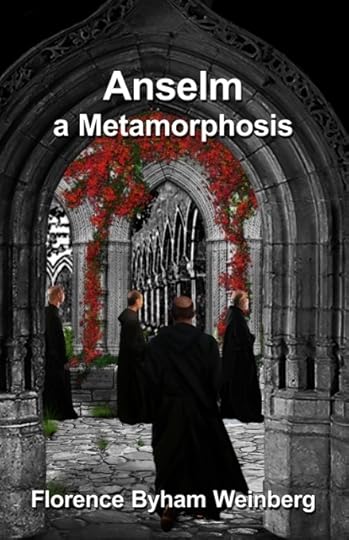
Summary: Fearing imminent death from a heart defect, Anselm Farnese, a 53-year-old, overweight Benedictine monk, discovers a 12th-century ritual in a dusty archive. If he locates a victim who—even momentarily—wishes to be someone else, he can usurp that person’s body. But he must commit himself to the Powers of Evil. Twenty-seven-year-old, cocky Professor Eric Behrens seduces an undergraduate student. Summarily fired, he curses the world and wishes to be someone else. He trips, falls, and wakes up in Anselm’s ailing body. Each man retains his own consciousness. One gleefully usurps Eric’s parents, lover and life; the other lives a nightmare as he desperately struggles to survive.
If, as Christians believe, the soul, mind, or consciousness survives the body, then, as the philosopher René Descartes tried to prove, it is separate and distinct from the body. This fantasy novel imagines the metaphysical, psychological and real-life consequences of transplanting the self in an alien body.
Chapter excerpt:
http://twilighttimesbooks.com/Anselm_ch1.html
Buy it on Amazon: http://www.amazon.com/Anselm-Metamorphosis-Florence-Byham-Weinberg-ebook/dp/B00DSVDJ60
Author Bio: A native of Alamogordo, NM, Florence Byham Weinberg traveled extensively with her military family during World War II. Travels continued after marriage to scholar-critic Kurt Weinberg in Canada, France, Spain and Germany. After earning her PhD, she taught for twenty-two years at St. John Fisher College, Rochester, NY, and ten at Trinity University, San Antonio.
http://www.florenceweinberg.com/
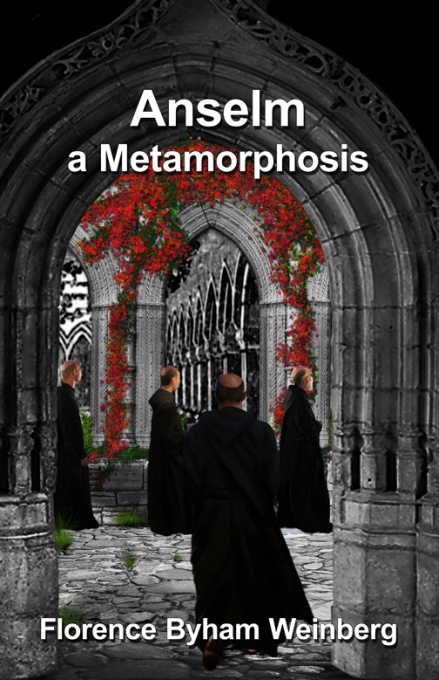
Summary: Fearing imminent death from a heart defect, Anselm Farnese, a 53-year-old, overweight Benedictine monk, discovers a 12th-century ritual in a dusty archive. If he locates a victim who—even momentarily—wishes to be someone else, he can usurp that person’s body. But he must commit himself to the Powers of Evil. Twenty-seven-year-old, cocky Professor Eric Behrens seduces an undergraduate student. Summarily fired, he curses the world and wishes to be someone else. He trips, falls, and wakes up in Anselm’s ailing body. Each man retains his own consciousness. One gleefully usurps Eric’s parents, lover and life; the other lives a nightmare as he desperately struggles to survive.
If, as Christians believe, the soul, mind, or consciousness survives the body, then, as the philosopher René Descartes tried to prove, it is separate and distinct from the body. This fantasy novel imagines the metaphysical, psychological and real-life consequences of transplanting the self in an alien body.
Chapter excerpt:
http://twilighttimesbooks.com/Anselm_ch1.html
Buy it on Amazon: http://www.amazon.com/Anselm-Metamorphosis-Florence-Byham-Weinberg-ebook/dp/B00DSVDJ60
Author Bio: A native of Alamogordo, NM, Florence Byham Weinberg traveled extensively with her military family during World War II. Travels continued after marriage to scholar-critic Kurt Weinberg in Canada, France, Spain and Germany. After earning her PhD, she taught for twenty-two years at St. John Fisher College, Rochester, NY, and ten at Trinity University, San Antonio.
http://www.florenceweinberg.com/
December 29, 2013
Mini Review: By Darkness Hid by Jill Williamson
Summary: Half of Er’Rets is locked beneath an impenetrable shroud. On the side that still sees the sun, two young people struggle to understand the mind-communication abilities thrust upon them.
It's called bloodvoicing. Some say it's a gift. One of the newly "gifted" wish it had never come.
Achan has been a slave all his life. Worse than a slave—a stray. He is consigned to the kitchens of a lord and forced to swallow a foul potion every day. When an enigmatic knight offers to train Achan for the Kingsguard, he readily accepts. But his new skills with the sword do not prepare him for the battle raging between the voices in his head.
Vrell Sparrow is not who she seems. She masquerades as a boy to avoid capture by the powerful forces that seek to exploit her. But Vrell feels called to help a young squire who recently discovered his bloodvoicing gift, even if doing so requires her to work with those who could destroy her.
While Achan learns to use his new ability, Vrell struggles to shut hers down. All the voices strive to learn Achan and Vrell's true identities—and a different kind of voice is calling them both.
Toward a destination that is by darkness hid.
Purchase on Amazon: http://www.amazon.com/Darkness-Blood-Kings-Book-ebook/dp/B00266Q078
Mini-Review: Loved it! I read it on a trans-Atlantic flight when I should have been sleeping, but I could not put it down. Although it's the familiar "Chosen one" plot (serf boy really hidden royalty), Willimason adds wonderful details tot he world that make the story unique. Normally, I don't like a lot of description, but she does it with great skill, and I didn't skim as I often do. Although styled as Christian fantasy, it's a great read no matter what your faith beliefs are. No wonder it won the Christy award.