Laura Boggess's Blog
September 18, 2024
Year of the Monarch—A Visit to Craik-Patton House
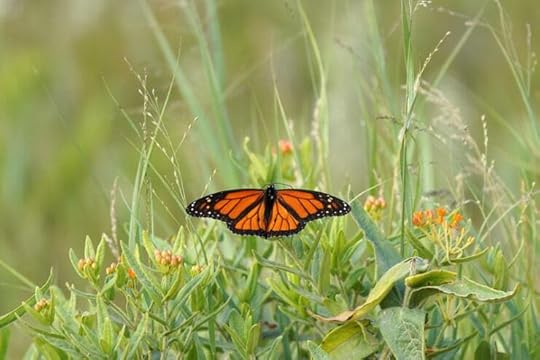
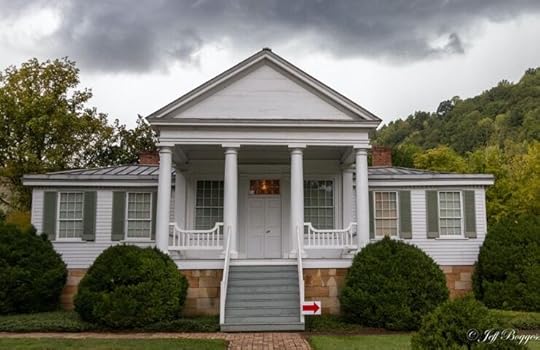
Not a drop of rain the entire month of August and we were parched, ready to crack into a million jagged pieces. We went to the garden party looking for something to slake the thirst—at the least a change in scenery. We’d been promised butterflies, and music—the event was called “Monarchs and Music,” after all. But when we arrived at the historic Craik-Patton House and strolled the lovely parterre garden with its neatly trimmed boxwoods hugging a multitude of lantana blooms, not a single butterfly appeared.
A band played in the garden and other musicians were invited to join in, but I was there for the monarchs. Well, the monarchs and poetry. I’d emailed the museum’s executive director, Nathan Jones, when I’d heard about “Monarchs and Music,” and told him about Tweetspeak Poetry’s Year of the Monarch project, including a link to one of my posts on the topic.
Nathan’s generous response came promptly. How would I like to tell the audience about the Year of the Monarch project and then share one of my poems? “Would you like to speak for the butterflies?” he asked.
Of course I was thrilled to say yes. And that was how we ended up at a garden party when the thermometer read 101°F in the shade of the magnolia trees surrounding the property.
I wonder if the Reverend Craik ever had such a hot day when he lived here? I mused to myself.
I had recently come to speaking terms with Reverend James Craik, the builder of this historic house and one-half of its namesake (read about the “Patton” half here). And by “speaking terms” I mean, I did all the talking to this man who died in 1882. I had never been to the Craik-Patton House before, so in preparation for my poetry reading, I familiarized myself with its illustrious history. In response to the stories I encountered, my imagination began to take a slow walk around the garden.
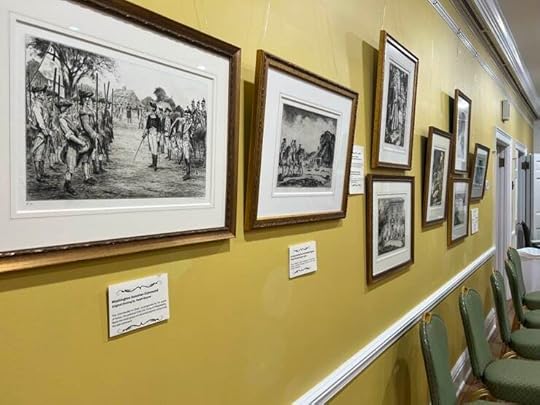
The Craik family was closely affiliated with George Washington. James Craik’s grandfather, Dr. James Craik, was Washington’s personal physician and his father, George Washington Craik, served as his secretary during his second term in office. The family’s close association with Washington is evident throughout the Craik-Patton House, most notably in a collection of original etchings that depict various events in Washington’s life on display in the conference room.
When James Craik built the house he called “Elm Grove,” he was a prominent attorney in the Charleston, WV area; but he eventually left his law practice to pursue ministry. He became the rector of St. John’s Episcopal Church, one of the first churches established in Charleston. As I read the Reverend Craik’s story, I found myself curious about his decision to change careers and how it impacted his life. Was ministry a more prestigious profession at that time in history? Did he care? Did his family? And how did his becoming “a man of the cloth” impact his views on the issues surrounding the Civil War (of which he was a contemporary)?
The monarchs had led me into a full-on history lesson and I was smitten. Though the house had been moved twice since the Craiks lived there, it wasn’t hard to imagine the Reverend sitting in the garden, walking along the banks of the Kanawha River, perhaps communing with Monarch butterflies.


I walked through the garden, holding my love for the monarch butterfly and my curiosity about the good reverend simultaneously, when suddenly, the low rumble of thunder filled the heavy air around me. A gentle rain began to fall and I could not keep myself from laughing out loud as I sought shelter under the tall magnolias. I heard a shout from someone in the band and he pointed. A small, fluttering orange and black figure lifted into the sky, seeking a safe place to wait out the storm. We had to move the party inside when the lightening and winds came, but this, too, seemed like a gift, as I walked the same floors my new friend Reverend Craik had once paced. We listened to the band play while the storm raged outside, faces misted with rain. And when I faced the room to read my poem, I was overwhelmed with a wave of gratitude.
May there always be people who want to preserve and learn from history; may there always be people who tap their toes and clap their hands to good music; may there always be lovers of the monarch butterfly among us.
This day that started in dryness, ended in a well-watered garden.
Quenched.
Here is the poem I read to the good people who braved the storm at the Craik-Patton House:
The Butterfly Effect
Butterfly Effect: From chaos theory—in which a small change in one system can result in large differences in a later state.
Did you know, dear reverend,
that some butterflies hear
with their wings—
they sense sounds
through tiny veins and membranes
laced through their very essence—
the low thrum
of a stand-up bass or
the quick thud of a predator’s paws—even
the soft intonations
of a reverend’s prayers…
I wonder what they hear
tonight?
How could you have known,
when you built this house in 1834
about the Butterfly Effect,
about chaos theory,
and meteorology…
How something soft as a butterfly
flutter can altar,
the impact of a tornado,
as well as the weather
inside our hearts?
It’s called a kaleidoscope—
when a group of butterflies
cluster like small pieces of sunlight,
shimmering
I wonder…
if you could have looked
through all the long years
into the future, dear reverend,
and seen us gathered
here in this garden—
A kaleidoscope of our
own,
serenading honeybees,
and gold finches,
and tiger swallowtails,
viceroys and painted ladies—
enraptured by the slow
disappearing heat
of the day and sound
of strings strummed in invitation
to the cool of night,
Dear old Reverend
Craik, if you could have seen
into the future, would you have prayed for us?
What about you, Reverend?
did you
ever stand in the garden
at dusk and feel your spirit
lift with the wings of a monarch,
it’s music flooding
your own soul?
Shhh… hush now,
do you feel it?
does it surprise? the way
this tiny flutter creates
a shift? listen with the wings
of your heart; let it move you,
ever so slightly,
on
to the next flower.
—Laura Boggess (ed. By Susan Mulder)
Featured photo by USFWS Midwest Region. Creative Commons license via Flickr. Post photos by Laura Boggess and Jeff Boggess. Post by Laura Boggess, author of Mildred’s Garden, Waiting for Neruda’s Memoirs and serial novel The Honey Field.
The post Year of the Monarch—A Visit to Craik-Patton House appeared first on Tweetspeak Poetry.


March 20, 2024
Year of the Monarch: Butterfly Dreams

In the night I dream of the Monarch butterflies. This is how I know spring is near. I dream of them huddled together in their winter sleeping grounds—in the oyamel fir forests of western Mexico, some in California along the Pacific coast, others in secret places—coloring the trees in living, fluttering, orange and black—“small pieces of sunlight.” Here, the butterflies have been resting in diapause, a hormonally-controlled state of dormancy that enables them to survive the winter—since the fall. But soon, usually in mid-March, the butterflies will rouse and, upon awakening, will mate and begin their long journey north, laying eggs along the way.
 The butterflies who leave their overwintering site in Mexico will live no longer than a month after their departure, so it will be the next generation who emerge from the eggs they lay who will complete the next leg of the migration journey. All together it will take three to four generations of butterflies to reach their usual summer breeding sites in the United States and Southern Canada.
There will be danger along the way.
Though most animals will not eat monarch butterflies due to their bad taste, the eggs they leave behind on milkweed plants are vulnerable to ants, spiders, and wasps. The migrating butterflies may encounter storms or droughts that can decimate large numbers of monarchs. Scientists believe climate change is a very real threat to the monarch population. But perhaps the greatest threat to the monarch butterfly in recent years has been habitat destruction. The unbroken prairie full of native milkweed and other rich nectar sources that used to be common throughout the mid United States is mostly a thing of the past. New construction and large-scale farming using herbicides that wipe out native milkweeds have disrupted the monarchs’ habitat, making the journey north much more treacherous than it used to be.
That’s why the monarch butterfly needs our help. This is the time—in early spring—to plant native milkweeds and pollinator friendly plants they will need to sustain them on their journey. Especially native milkweeds, as we know this is the only plant the butterflies will lay their eggs on and the only plant the newly emerged monarch caterpillars will eat. Have you taken the pledge? Together, we can make a difference for the monarch butterfly population.
In late February, I start to dream about the Monarch butterflies. I begin to wonder if the milkweed I planted last fall will grow in time for their arrival. I start preparing new seeds for planting—giving them the time they need for cold stratification, increasing their chances for germination. An orange shard of light flutters through my dreams—the great-great-great-great grandchild of a monarch caterpillar who munched through my milkweed last year. How did they find me? How do they know the way back to their ancestral grounds? In the night, I dream about the monarch butterflies and I wonder …
Do they dream of me?
Do butterflies
dream? I googled
the question, sent
it to the ether
of the internet,
landing in a forum
for insect lovers.
The philosophy
guy said no, they don’t
have the “mental
machinery” needed
to dream. But, how
long have we known
that trees talk to
each other? That birds
navigate using stars
and the earth’s
magnetic field? bees
dance out directions
to the best nectar
sources? I can get lost
in the music of the
mysteries of nature
all we know
all we don’t know
we know nothing, really
Zhangzi dreamed
he was a butterfly
and when he awakened
the way he saw the world
was changed. Don’t we
all need such an
awakening? Do
butterflies dream?
And if they do, do
they dream of me?
—Laura Boggess
Photos and post by Laura Boggess, author of Mildred’s Garden, Waiting for Neruda’s Memoirs and serial novel The Honey Field. Photos used with permission.
The post Year of the Monarch: Butterfly Dreams appeared first on Tweetspeak Poetry.
November 15, 2023
Year of the Monarch: Harvesting and Planting Milkweed Seeds
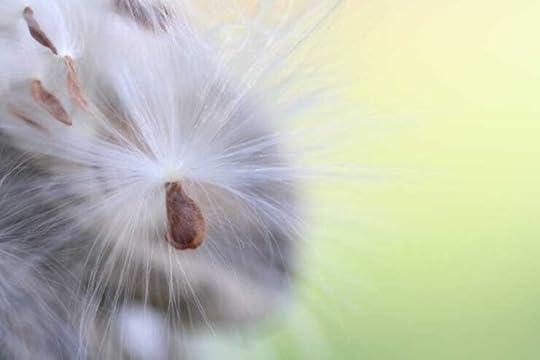 Fall is the time to plant milkweed
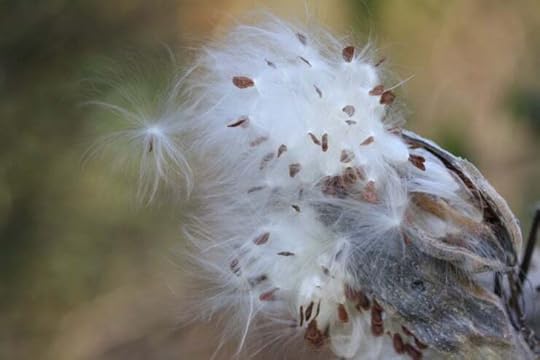
In the mid to late fall the milkweed pods rend their hearts wide open, spilling feather-soft seed carriers into the wind.
Earlier today, when I was out walking our dog Bonnie, I noticed those white, fluffy bits of fuzz hovered everywhere in our midst—silky wisps swirling and bobbing above our heads. Bonnie tried to catch them, taking great bounding leaps and biting the air. But the more she chased, the more she disturbed the invisible current of air underneath and the higher the seed cluster lifted into the sky.
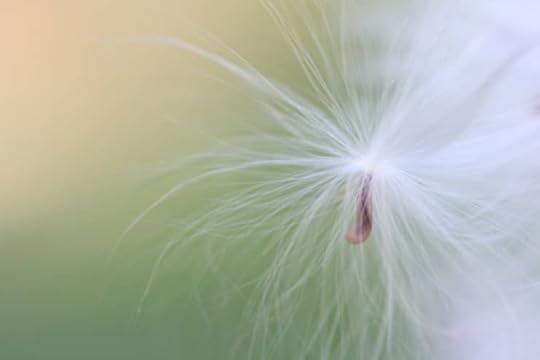
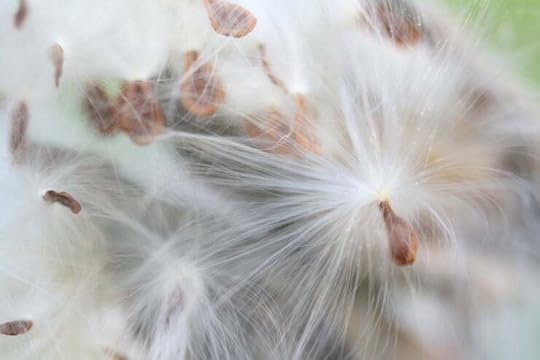
Learning from Bonnie’s mistake, I stood very still and let one of those flying seeds drift right out of the sky and into my hand. I looked at it closely. In my hand was a tiny brown seed buried by a crown of silky hairs. I could see how the silky threads act as miniature parachutes when the wind lifts them. These soft halos allow the wind to carry the seed as far or as close as it will. That seed was created to lift into the sky—perfectly designed so that an invisible current can take it anywhere.
We had our first hard frost this week here in West Virginia and I have spent the better part of the morning cutting back the perennials that succumbed, pulling up what’s left of my peppers and squash, picking kale for a batch of zuppa Toscana to warm the cold days to come. I haven’t seen a monarch butterfly for weeks, but I am already thinking about ways to welcome them back in the spring. The milkweed parachutes remind me I am late in gathering and planting their seeds this year.
Have you ever had the chance to look inside a milkweed pod? Not only in flight, but also at rest, the milkweed is a thing of wonder. The way the seeds are lined up in neat rows when they are within the pod—like the feathers of a bird—makes me wonder at the order that can sometimes be found in nature. Attached to each seed is a fine strand of white flossy material. Everything fits perfectly together. And when the time is just right, this floss expands, causing the pod to burst and allow the wind to disperse the seeds.
The milkweed is in the genus Asclepias, named after the Greek god of healing. It was named thus because of the many folk remedies it has been used for in the past. The milky white sap used to be applied topically to remove warts, and the roots were chewed to cure dysentery. Infusions of the roots and leaves were taken to suppress coughs and used to treat typhus fever and asthma.
Through the years, science has found more effective ways to treat the ailments milkweed once served, but it has one important use that remains: milkweed is the host plant for the larvae of the monarch butterfly. Declining monarch populations have been found to be, in large part, related to the loss of milkweed. Therefore, one of the best things we can do to help our monarch populations rebound is to plant and maintain milkweed patches.
Harvesting and planting milkweed is trickier than one might think. I found this out the hard way one year when I tried to grow milkweed from seed using traditional methods of germination. I kept my seeds moist and warm in a greenhouse-like environment and was surprised when nothing sprouted. I later learned this is because milkweed requires what is called cold stratification. This means that, to germinate, milkweed seeds require a period of exposure to cold temperatures before responding to the warm temperatures of spring. There are ways to artificially create cold stratification using your refrigerator, but Mother Nature will do this naturally if you plant your seeds in the fall. However, most successful plantings are started indoors, probably because conditions are better controlled. <
If you’ve joined us here at Tweetspeak in taking the Pollinator Pledge, I hope you’ve planted or plan to plant some milkweed this year. Whether you plant in the spring or the fall, we wanted to highlight some resources that may be helpful.
Just remember what our friendly West Virginia extension agent Sheldon Owen told my class of master naturalists. When planting pollinator plants, Sheldon says, be patient, because
The first year they sleep
The second year they creep
The third year they leap
It takes time and patience to grow milkweed, just as it does to catch those windblown seeds. Standing still and waiting can be the hardest part, but in the spring, when the monarchs return, the wait will be well worth it.
Helpful milkweed resources:Here is an easy guide to harvesting your native milkweed seeds and here is a guide to planting.
This video demonstrates an easy way to remove milkweed seeds from a ripe pod.
Here’s another method with some extra tips on the readiness of the seeds to be planted.
If (like me) you’ve waited too long and the milkweed in your area has already popped open, this video shows a couple methods to make sorting the seeds from the silk easier. This would be a fun way to get children involved in the process.
And here is a video that walks you through the cold stratification process using refrigeration.
Photos and post by Laura Boggess, author of Mildred’s Garden, Waiting for Neruda’s Memoirs and serial novel The Honey Field. Photos used with permission.
The post Year of the Monarch: Harvesting and Planting Milkweed Seeds appeared first on Tweetspeak Poetry.
September 27, 2023
The Honey Field—19: Corrie is Gone, Your Master is Gone
Oh, sweet poetry. This article is password protected. To view it please enter your password below.
Don’t have a password yet?
All you need to do is become a Tweetspeak patron,
for as little as $2 a month. (Thank you!)

OR, if you are taking either the 30 Days to Richer Writing workshop or The Joyful Partnership of Poetry & Memoir workshop with us, use the password provided in the workshop materials.

Password:
The post The Honey Field—19: Corrie is Gone, Your Master is Gone appeared first on Tweetspeak Poetry.
September 13, 2023
The Honey Field—18: The Honeybee’s Journey
Oh, sweet poetry. This article is password protected. To view it please enter your password below.
Don’t have a password yet?
All you need to do is become a Tweetspeak patron,
for as little as $2 a month. (Thank you!)
OR, if you are taking either the 30 Days to Richer Writing workshop or The Joyful Partnership of Poetry & Memoir workshop with us, use the password provided in the workshop materials.
Password:
The post The Honey Field—18: The Honeybee’s Journey appeared first on Tweetspeak Poetry.
September 6, 2023
Year of the Monarch: The Native Wildflowers Formerly Known as Weeds

I grew up a child of the earth. My paternal grandfather was a farmer, my mother and father more than hobbyists at growing things. Putting hand to earth has been my heritage. I was raised in rhythm with the seasons—the cycles of sowing, tending, and harvesting part of my DNA. Each season had its own celebrations: the waking of spring, a song of wildflowers; summer, catching fireflies; the harvest feasts of the fall, lit by bawdy bonfires; the shut-in-ness of winter, taste of cellared root vegetables on the tongue.
It was my way of life.
butterfly weed, pictured here, is a form of milkweed!
Until it wasn’t. And that thing that happens to most young people when they leave their family of origin and start to make their own life happened to me: I chose a different way. I learned the way of apartment dwelling and side-walked streets. Later, I traded that world of concrete for the way of the suburb—all those tidy squares of fescued lawns.
I forgot the joy of sky-filled days and running barefoot over the earth—one way the holy men and women of old considered that the sacred blessing of the earth enters our bodies. They believed with nothing tangible between our feet and the ground, the sacredness of mother earth flows freely up through the soles of our feet and into our very being. Yet, the skin on the soles of my feet became soft and blind, wiped clean of the memory of the earth’s crust.
In my blindness, the old ways would whisper to me sometimes. The turn of seasons brought inexplicable sadness and a longing to be outdoors. I now know I was experiencing what is known as earth grief in conservation circles. It is part of what Francis Weller, in his book The Wild Edge of Sorrow calls the third gate of grief.
“[A] facet of the third gate is the loss of our connection with nature. We no longer live with a sensuous intimacy with the wind, rivers, rainfall, and birdsong. For many of us, the voices of the wild world have faded, receded in mind and imagination. The philosopher Thomas Berry said that we have become autistic to the world and have ceased to register the songs and moods of the singing planet. Human biologist Paul Shepard said, ‘The grief and sense of loss, that we often interpret as a failure in our personality, is actually a feeling of emptiness where a beautiful and strange otherness should have been encountered.’”
I felt that loss of that beautiful and strange otherness.
So, in a near-miss, I embarked upon that truly suburban ideal of gardening known as landscaping. I traded that soul-connection with mother earth for a pair of rubber-soled garden clogs.
In my neatly manicured suburban world, I scrubbed my lawn clean of “weeds” and all the plant life that spilled over from the meadow behind our house. I waged war on the wild violets and milkweed that sprouted up through my carefully planted daylilies every year. I mulched and edged and pulled up by the root. I tried to make my flower gardens look like the neatly tended beds featured in House Beautiful.
But the meadow fought back. If I looked the other way for any amount of time, the native plants that that grew on my patch of land before it became a subdivided lot stubbornly kept coming back. All it took was a week-long family vacation and when we returned? The back yard had re-wilded itself. Blue mistflower, wingstem, ironweed, Joe pyeweed, the violets (oh, the violets!) and milkweed … all the grasses that used to grow wild when this plot of land where my home stands used to be a meadow for horses.
And then one day everything changed.
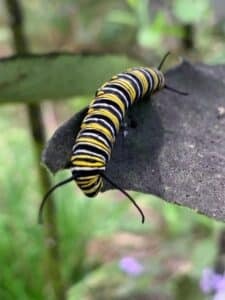
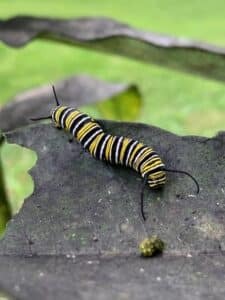
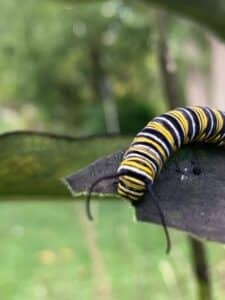
I remember standing over my daylilies, overwhelmed by the milkweed that kept insisting on crowding in. When suddenly, I noticed color and movement among the green. I moved closer. There, making a quick meal of that trespassing milkweed, was a monarch caterpillar—so vibrantly beautiful with its yellow, black, and white bands. I knew what this creature was, but it wasn’t until I did a little research that I understood the value of that encroaching milkweed to a fading population of monarch butterflies. I learned that milkweed is the only food the monarch caterpillar eats. And the disappearance of this food source due to land development and other habitat dangers has led to a drastic reduction in the monarch butterfly population. I had no idea that my backyard exploits could impact a species—even in a small way. But they do. And yours can too.
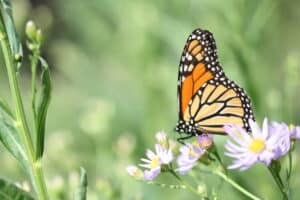
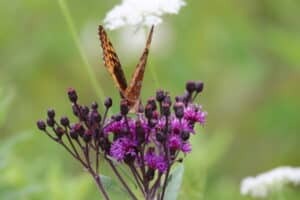
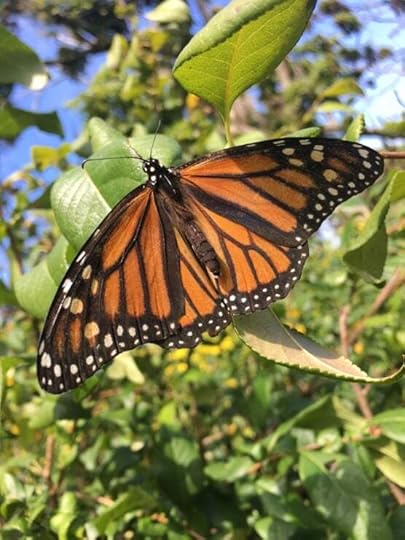
It’s been a few years since I spotted that first monarch caterpillar. I no longer pull up the milkweed in the back yard. In fact, I’ve planted more. My flower beds have gone a little wild. My formerly landscaped plantings now happily co-exist with native wildflowers (formerly known as weeds). It’s not perfect, but with each year my neglectful pruning is rewarded with more diverse wildlife in my small back yard. And increasing numbers of monarch butterflies.
Learn more about the Year of the Monarch and take the pledge!
West Virginia Wildlife Extension Specialist Sheldon Owen recently told a class of budding Master Naturalists, “A wilder backyard is better for wild life.” Here are some tips from Owen to help establish a wild backyard habitat:
Edging. Mow or edge around beds of native growth. This gives a crafted appearance and may delight the neighbors.Plant natives when able. Most communities have native plant societies who will be happy to advise. Native plants attract native pollinators, are usually better sources of nectar and pollen, and provide specific foods for specific caterpillars (like milkweed for the Monarch).Choose plants that flower at different times to provide food throughout the growing season.Use container gardening to plant natives if you are hesitant about letting your yard go wild. Plant in clumps rather than single plants (Owen says it takes 30 stems of milkweed to get one Monarch to Mexico).Plant a variety of colors and shapes.Pay attention to vertical and horizontal space—plant tall and short plants.Try using attractive signage to explain this is a pollinator habitat. This can also go a long way in helping your neighbors understand what you are up to.Contact your state Department of Natural Resources for helpful resources and suggestions, as well as possible programs that may assist you in your pollinator garden endeavor. In West Virginia, we have a Wild Yards program that provides a variety of resources and support, and also certifies qualifying applicants as designated “wild yards.” ( Download the Wild Yards “Book” here )Try It: Native Wildflowers Poetry PromptWhile you’re taking in the tips to grow native wildflowers, try penning a poem to your favorite native wildflower. Poetry thrives on the specificity of names, so feel free to research a little if you’re not sure of the names of the wildflowers in your region!
Photos and post by Laura Boggess, author of Mildred’s Garden, Waiting for Neruda’s Memoirs and serial novel The Honey Field.
The post Year of the Monarch: The Native Wildflowers Formerly Known as Weeds appeared first on Tweetspeak Poetry.
August 30, 2023
The Honey Field—17: The Family She’s Always Wanted
Oh, sweet poetry. This article is password protected. To view it please enter your password below.
Don’t have a password yet?
All you need to do is become a Tweetspeak patron,
for as little as $2 a month. (Thank you!)
OR, if you are taking either the 30 Days to Richer Writing workshop or The Joyful Partnership of Poetry & Memoir workshop with us, use the password provided in the workshop materials.
Password:
The post The Honey Field—17: The Family She’s Always Wanted appeared first on Tweetspeak Poetry.
August 16, 2023
The Honey Field—16: Twenty-Seven Ounces
Oh, sweet poetry. This article is password protected. To view it please enter your password below.
Don’t have a password yet?
All you need to do is become a Tweetspeak patron,
for as little as $2 a month. (Thank you!)
OR, if you are taking either the 30 Days to Richer Writing workshop or The Joyful Partnership of Poetry & Memoir workshop with us, use the password provided in the workshop materials.
Password:
The post The Honey Field—16: Twenty-Seven Ounces appeared first on Tweetspeak Poetry.
August 2, 2023
The Honey Field—15: I Can’t Lose Her
Oh, sweet poetry. This article is password protected. To view it please enter your password below.
Don’t have a password yet?
All you need to do is become a Tweetspeak patron,
for as little as $2 a month. (Thank you!)
OR, if you are taking either the 30 Days to Richer Writing workshop or The Joyful Partnership of Poetry & Memoir workshop with us, use the password provided in the workshop materials.
Password:
The post The Honey Field—15: I Can’t Lose Her appeared first on Tweetspeak Poetry.
July 19, 2023
The Honey Field—14: What Does Your Week Look Like?
Oh, sweet poetry. This article is password protected. To view it please enter your password below.
Don’t have a password yet?
All you need to do is become a Tweetspeak patron,
for as little as $2 a month. (Thank you!)
OR, if you are taking either the 30 Days to Richer Writing workshop or The Joyful Partnership of Poetry & Memoir workshop with us, use the password provided in the workshop materials.
Password:
The post The Honey Field—14: What Does Your Week Look Like? appeared first on Tweetspeak Poetry.