Lisa A. Moore's Blog
December 2, 2025
The Monster Under the Desk: Outsmarting Imposter Syndrome
A few weeks ago, I was deeply absorbed in a bestselling fantasy novel — the kind that sweeps you away so completely you forget the real world exists. Then my brain did that rude thing it sometimes does: it tapped me on the shoulder and whispered, “Why would anyone read your books when writing like this exists?”
And just like that, I wasn’t reading for pleasure anymore. I was comparing, spiraling, and wondering whether my drafts should be ceremonially set on fire.
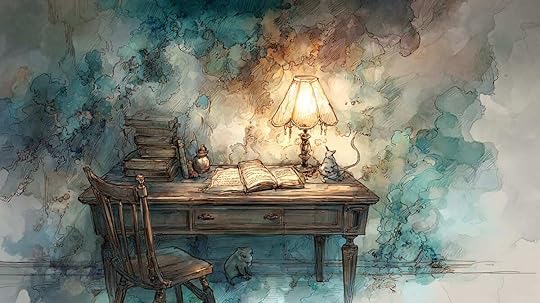
If you’ve ever had a moment like that, meet the culprit: the monster under the desk.
Mine is small, rude, and very committed to chewing on my self-esteem at inconvenient moments.
Why Writers Feel Like Frauds
Imposter syndrome isn’t a personal flaw — it’s a psychological glitch. Writers in particular are vulnerable because we:
1. Compare our messy drafts to polished published books
2. Spend too much time inside our own heads
3. Are experts at imagining worst-case scenarios
4. Crave validation but also fear being seen
5. Have perfectionist tendencies with gym memberships
It’s a perfect storm. And our brains are very dramatic.
The Monster’s Favorite Lies
You’ve probably heard some of these:
“Everyone writes better than I do.”
“My success was a fluke.”
“If people read my work, they’ll find me out.”
“Real writers don’t struggle like this.”
None of these are truths. They’re fear wearing a convincing costume.
How to Outsmart Your Monster
A few strategies to take back control:
Firstly, name it.
Giving your monster a silly name creates emotional distance.
Secondly, collect receipts.
Start a victory list with positive feedback, finished chapters, and tiny wins.
Thirdly, reframe the lies.
Challenge the thought, replace it with something grounded.
Fourthly, compare fairly.
Your draft is not supposed to look like someone else’s finished novel.
Fifthly, write anyway.
Confidence grows through action, not waiting to feel “enough.”
A Truth Worth Holding
That bestselling author I was reading? Their brilliance doesn’t erase mine. And mine doesn’t erase theirs. We’re different writers with different voices, histories, and magic. There are readers waiting for both.
Your monster may always lurk under the desk, but it doesn’t get to hold the pen.
Keep writing.
You’re doing far better than that gremlin gives you credit for.


November 25, 2025
Your Chronotype: The Secret Plot Twist Behind Your Writing Chaos
Some days you write like a creative superhero. Other days you stare at your keyboard wondering if words ever existed in the first place. The problem isn’t motivation. It isn’t discipline. And it definitely isn’t a personal failing.
It’s your chronotype—your biological schedule that decides when your brain wants to be brilliant and when it wants to lie face-down on a pillow.
There are three chronotypes.
Larks peak early.
Third Birds peak mid-day.
Wolves peak in the evening, long after society has decided “productive hours” should end.
Here’s the twist: your most creative ideas don’t arrive when you’re fresh. They show up when you’re tired. When your brain relaxes its grip on logic and lets your imagination run around unsupervised. That’s when the unexpected connections happen. That’s when your best lines appear out of nowhere, usually right before bed or midway through your third cup of coffee.
Night owls, in particular, are often more creative and better at problem-solving, but the world forces them into early schedules that completely ignore their biology. It isn’t a lack of ability. It’s a mismatch between the person and the clock.
So what do you do with this information?
Firstly, save your high-focus work for the hours when you naturally feel sharp. Editing, outlining, and solving plot puzzles belong there.
Secondly, use your lower-energy hours for creative drafting, brainstorming, and building new ideas. Your imagination thrives when your brain is a little unraveled.
You don’t need heroic discipline to be productive. You just need to stop arguing with your internal clock and start working alongside it. When you honor your natural rhythm, your writing finally clicks into place—not because you forced it, but because you stopped fighting yourself.
November 4, 2025
The Year That Almost Ate Me (And the Spells That Saved Me)
This was the year that tried to swallow me whole.
Deadlines with teeth. Expectations with claws. Coffee cups multiplying like gremlins on my desk. Somewhere around March, I realized I was no longer living the year—I was being consumed by it, one anxious bite at a time.
Every time I thought I’d found my footing, the ground politely turned to quicksand. The calendar flipped faster than I could cross things off. My inbox started breeding like rabbits. And still I kept saying yes—yes to new projects, yes to collaborations, yes to saving everyone’s sinking ship while my own was quietly taking on water.
Then November knocked on the door, smug as a cat. “Still standing?” it asked. I nodded, pretending not to notice the smoke rising from the remains of my to-do list.
The Feast of Too Much
Some years feel like a seven-course meal of chaos—served without utensils, and you’re expected to smile while chewing. This was mine.
I said yes to everything because I was afraid of what might happen if I didn’t. I chased every spark of inspiration like a moth with commitment issues. I poured more time, more energy, more self into everything until the line between passion and exhaustion blurred into something unholy.
And then came the crash. The kind that isn’t loud but hollow—the moment you realize you’ve been sprinting so long you forgot why you started running. The kind of burnout that doesn’t look like flames, but like smoke curling out of the corners of your own mind.
I told myself I was fine. That it was just a busy season. That all I needed was one good night’s sleep, a few days off, a slightly better coffee ratio.
(Narrator: it was not fine.)
When the Spells Stopped Working
Normally, I can brute-force my way through chaos. A little sarcasm, a lot of caffeine, and the comforting delusion that I thrive under pressure—it’s been my go-to survival kit for years. But around midsummer, none of it worked.
The playlists that usually rescued me from creative fog suddenly grated on my nerves. The candles that used to make my workspace feel warm and focused just sputtered out halfway through. Even writing—my oldest form of alchemy—started feeling like an obligation rather than oxygen.
It was unnerving, that silence. Like the static had finally cleared, and what was left was… nothing. Just the hum of exhaustion and the question that won’t leave: What if this version of me has nothing left to give?
That was my reckoning. Not a meltdown, not a grand revelation—just a quiet realization that I couldn’t keep pretending the same old tricks would save me from a year determined to devour me.
The Spellbook of Survival
Recovery didn’t arrive as an epiphany. It stumbled in slowly, wearing fuzzy socks and carrying a mug I forgot I owned. It looked suspiciously like rest—something I’d labeled “lazy” for years and filed under “maybe later.”
So I started rebuilding, one small act at a time. Not resolutions. Not goals. Just little spells disguised as self-preservation.
The Candle Spell:
Light something every night—not to be productive, not to chase inspiration, but to prove the day happened. Even if all you did was survive it. Some nights the candle burned bright. Some nights it struggled. Both counted.
The Boundaries Charm:
A friend once told me that “no” is a complete sentence, not a door that needs decorating. I started saying it out loud. To extra commitments. To unrealistic expectations. To that inner critic who thinks “rest” is a dirty word. Turns out, boundaries glow in the dark.
The Gratitude Sigil:
Every night, one line in a notebook: something that didn’t destroy me today. Sometimes it was profound (“a kind message from a reader”). Sometimes it was petty (“the printer jammed, but I didn’t throw it into the sea”). Gratitude doesn’t have to be pretty. It just has to exist.
The Mirror Ritual:
Look yourself in the eye—literally. No pep talk, no toxic positivity, just acknowledgment. “You look tired,” I’d tell my reflection. “But you’re still here.” That was enough.
The Silence Incantation:
Instead of forcing sound into the quiet, I started letting silence do what it does best—heal. No music, no background noise, no pressure to fill every minute. I found out that when you stop talking over your own exhaustion, it tells you exactly what it needs.
How to Be Unswallowed
There’s a strange power in surviving the year that almost ate you. It teaches you what’s essential—not the grand, dramatic essentials, but the quiet ones: sleep that feels like forgiveness, conversations that don’t require performance, mornings that start with something other than dread.
I stopped trying to win the year. Instead, I decided to outlast it. I learned that sometimes endurance is its own kind of magic—less like lightning, more like embers that refuse to die out no matter how hard the wind blows.
The funny thing about being consumed by chaos is that it forces you to decide what you’re unwilling to lose. Somewhere between the deadlines and the burnout, I rediscovered the small rituals that tether me to myself: a slow walk, a handwritten note, a cup of something warm that doesn’t need to be earned.
No epilogue. No transformation montage. Just this: I’m still here. And this time, I don’t want to be everywhere. I just want to be present.
For Anyone Still in the Belly of the Year
If you’re reading this with a half-empty mug and a calendar that won’t stop shouting at you, take a breath. You’re not alone in the monster’s mouth.
Maybe your year looks different—family chaos, creative drought, endless “almosts.” But if you’ve been swallowed by circumstance, I promise there’s still light in there somewhere. The kind that flickers, stumbles, refuses to go out.
Start small. One act of defiance against the exhaustion. One moment of stillness that belongs only to you. One thing that reminds you that you exist outside the storm.
The year may have sharp teeth, but it also has a terrible attention span. Eventually, it gets bored of trying to eat you. And when it does, you’ll crawl back out—singed, maybe, but unbroken.
Because survival isn’t glamorous, and it isn’t loud. It’s the quiet decision to keep showing up for yourself, even when the world keeps changing the rules.
The candle that wouldn’t stay lit? It’s still burning now.
Not bright. But steady.
And for now, that’s enough.
October 27, 2025
Masks, Monsters, and Mischief: The Other Side of Halloween Traditions
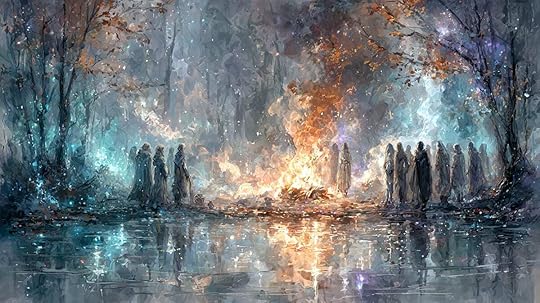
Halloween isn’t about pretending to be someone else. It’s about finally being allowed to try.
Once a year, the world gives us permission to experiment—to wear the crown, the claws, the cape, or the chaos—and nobody asks for an explanation. Maybe that’s why I’ve always loved this season: it’s the one night we can step into a story without apology.
The Art of Becoming Someone Else
Long before we turned October into a carnival of candy and costumes, the ancient Celts wore disguises at Samhain to confuse wandering spirits. Faces were blackened with ash, masks carved from bark or bone, and every figure in the firelight became both human and ghost.
Back then, it wasn’t about style—it was survival. The dead were said to walk, and hiding among them was the safest choice. But the magic stuck.
Thousands of years later, we’re still putting on masks—but now it’s for fun. And in that small shift, something remarkable happened: disguise became art. Halloween transformed into a night of creative permission. We don’t hide in fear anymore; we explore for joy.
Masks don’t conceal—they expand. They let us test edges of identity, play with aesthetics, try on confidence or chaos. Writers do this every day through their characters; Halloween just lets everyone else join in.
The Monster as Muse
Every generation invents its own monsters, and every monster tells us what the world is afraid of—or secretly fascinated by. The sea witch, the vampire, the selkie, the revenant… all once stood for something untamed.
But now? We identify with them. We see parts of ourselves in their defiance. The creature is no longer just the threat at the door; sometimes it’s the person who finally opens it.
In my own stories, the monstrous is often the most human. Morwenna Brightwood’s selkie form isn’t a curse—it’s her reclaimed identity. Amara Nocturne’s undead heart isn’t horror—it’s resilience in the face of loss. And Dain Finnlan, the smuggler who thrives in the shadows, isn’t lawless—he’s loyal to the kind of freedom daylight can’t afford.
The monster gives us permission to be complicated. To embrace our rough edges, our desires, our power. To become—if only for a night—something beautifully uncontainable.
The Joy of Mischief
Of course, every bit of magic needs a little mayhem.
In old Celtic lore, the nights before All Hallows were times of sanctioned mischief—fae pranks, toppled carts, swapped gates, a touch of chaos before the long dark set in. Mischief Night wasn’t cruelty; it was catharsis. A reminder that a little disorder keeps life interesting.
Modern Halloween keeps that spark alive. The trick in “trick-or-treat” is just a softened echo of an ancient truth: we need moments where rules bend and imagination rules.
And maybe that’s why I love this season as both writer and reader. It’s a space where creation thrives in the cracks—where we remember that every story begins with a little trouble. Some people egg houses. I throw my characters into storms.
Creativity in Costume
The beauty of Halloween is that it doesn’t demand honesty—it offers freedom.
You can be a hero, a ghost, a queen, or an entirely new creature born of your own invention. It’s not about revealing your inner truth; it’s about exploring all the possible ones. For one night, we trade the mirror for a stage, and imagination becomes a safe rebellion.
Maybe that’s why the masks never really come off for writers. We just change the stories they live in.
So go on—pick up your lantern, choose your disguise, and step into the night. Pretending is just another word for practicing possibility.
October 20, 2025
Halloween at Crumbleton Manor: Snacks, Spirits, and Sarcasm
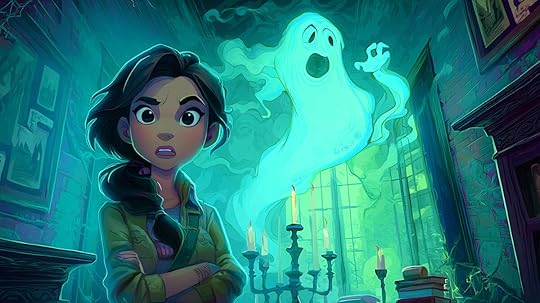
If you ever wondered what a true haunted house party might look like—minus movie clichés and plus actual ghosts—let the cast of The Haunting of Crumbleton Manor set the scene.
Welcome to the Haunted Host Committee
It’s a classic October evening at Crumbleton Manor, all flickering pumpkins and moaning floorboards. Maggie Hawkins, our endlessly sarcastic blogger, has her phone out and her skepticism at the ready. Tom, Crumbleton’s resident Snack Engineer, arrives carrying an armload of pizza and trick-or-treat potential. Nina, the gothic ghost believer of the crew, has an EMF meter in each hand and hopes for an authentic haunting. Lady Eleanor, Crumbleton’s eternal Victorian hostess, glides through the halls she’s been haunting for decades. Barnabas, always up for a prank, ensures your left sock goes missing the minute you step inside.
Plotting the Perfect Paranormal Party
Maggie livestreams while rating hauntings from “basic decor” to “properly cursed.” Tom promises party snacks as his best shield against ghosts (who, according to him, are terrible tippers). Nina leads a candlelit séance, determined to connect with the spirits—especially the ones who haven’t RSVP’d.
The manor itself sets the mood: drafts, shadows, and a punch bowl that vanishes just when the drinks start flowing. Lady Eleanor oversees the midnight costume judging: tragic, dramatic, and absolutely intolerant of polyester.
Séance, Snacks, and Specters
Nina calls for calm and candlelight. The pizza levitates thanks to Barnabas (who finds food-related poltergeist activity hilarious). Maggie chimes in: “Welcome to Crumbleton, where the Wi-Fi is bad and the ghosts are better.” Tom loses a sock to the sock drawer spirit—a running joke for the manor’s living and ghostly residents.
Lady Eleanor, pearls gleaming, insists on proper Victorian etiquette for all snacks and drinks. Maggie, naturally, threatens to add “Victorian Snack Disasters” to her blog rating system.
The Ultimate Haunted Party Trick
The staircase stage is set for a classic ghostly entrance. Maggie’s livestream picks up a shadowy figure (Lady Eleanor, so dramatic) descending the grand stairs as candles blink out. Playlist tracks are outdone by Barnabas, who whispers punchlines from the gloom. Socks and snacks levitate; the glow-in-the-dark cobwebs spell out “Subscribe!” in the corner.
Maggie jokes: “This is why you keep ghosts on your guest list. No one else can manage floating furniture and a punch bowl that goes missing just when you want a refill.”
Closing Ceremonies: Haunted Group Selfie
The party ends with Maggie posting a slightly blurry group selfie:
“Haunted by deadlines, pizza, and the search for decent Wi-Fi. Happy Halloween from Crumbleton Manor—where the spooks are real and so are the snacks.”
If you were invited, would you bring snacks or a séance kit? Let me know in the comments how your favorite fictional character would survive Halloween at Crumbleton.
Wishing you haunted pages, spirited friends, and just enough mystery to keep your October creative.
Have you read The Haunting of Crumbleton Manor? Which character would you want on your Halloween team? Drop your thoughts—and your best haunted party tricks—below!
October 13, 2025
Why Writers Love October (Even When Our Deadlines Haunt Us)
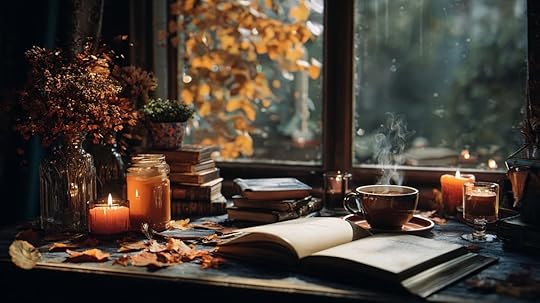
Why Writers Love October (Even When Our Deadlines Haunt Us)
Writers love to pretend October is calm—
all flickering candles, pumpkin spice, and cozy productivity under amber light.
But let’s be honest.
October isn’t calm.
It’s beautiful chaos wrapped in a flannel scarf.
The Season of Pumpkin-Spiced Panic
That first crisp breeze hits, and every writer thinks,
“This is the month I finally finish my draft.”
Two weeks later, we’re surrounded by fall-scented candles, half-empty caramel coffee mugs, and plot holes that whisper like haunted leaves.
It’s the same energy as carving a pumpkin and realizing halfway through that you’ve made a mess you now have to justify artistically.
If the manuscript’s on fire, at least it’s candle-scented.
The Haunted Calendar
Every October, my planner starts looking like a séance.
Sticky notes everywhere. Margins full of desperate deadlines.
The ghosts of abandoned projects rise from their folders, demanding attention like exes who “just want to talk.”
I light a cinnamon candle, top off my coffee with pumpkin spice creamer, and mutter,
“Fine, haunt me—but make it productive.”
The Magic of Creative Decay
Maybe that’s why October feels so perfect for writing—it’s a month built on transformation.
Leaves fall, stories shed their old versions, and what’s left behind might actually be something worth keeping.
Editing in October feels like composting creativity.
You toss in dead dialogue and questionable plot decisions, and somehow—through time, pressure, and caffeine—it all becomes fertile again.
Deadline Spirits and Other Frequent Visitors
Some people hear ghosts in old houses.
Writers hear them in their inbox.
Every revision request feels like a whisper from the beyond saying, *“You missed a comma.”*
But there’s comfort in that haunting, too.
Deadlines remind us that something in this half-finished draft still wants to live.
Rituals of Survival
My October routine isn’t mystical, but it’s sacred.
I start the morning with caramel coffee and the promise I’ll “just edit one chapter.”
(Spoiler: it’s never just one.)
Spotify hums with instrumental fantasy tracks, and when the words stall, I take the dog for a walk around the park.
The trees are gold, the air smells like woodsmoke, and for a moment, even my deadlines feel poetic.
Some days I write at my desk, other days I camp out on my bed under a blanket—creative flexibility, not procrastination.
Why We Keep Coming Back
We love October because it reminds us why we do this at all.
It’s messy, unpredictable, and alive.
The same way the world shifts colors, our stories do too—burning bright, fading, and returning in new form.
October is when writing becomes what it’s meant to be:
A little haunting.
A little hopeful.
And absolutely impossible to quit.
Join the Conversation
What haunts your deadlines this October?
Tell me in the comments—I’ll be the one editing with coffee in one hand and a candle burning in the other, pretending this is all part of the plan.
October 6, 2025
The Dark Origins of Halloween Traditions
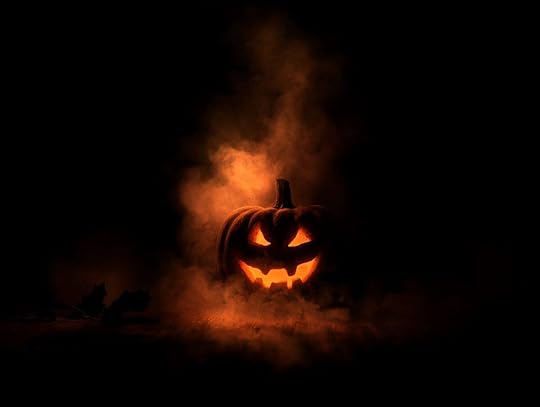
Before the fun-sized candy bars, there was fear of the dark.
Long before neighborhood block parties, there were bonfires meant to keep the dead at bay.
Halloween has become one of the most light-hearted holidays of the year, but its roots? Far older, far stranger—and far more haunted. Pour yourself something autumn-spiced and settle in; let’s wander through the shadows of where it all began.
The Lantern That Warded Off the Damned
The first jack-o’-lanterns weren’t pumpkins at all—they were turnips. According to Irish legend, a trickster called Stingy Jack fooled the Devil one too many times and was cursed to roam the earth with only a hollowed-out turnip and a burning coal to light his way. To ward off Jack and other restless spirits, people carved grim faces into vegetables and set them by the door.
When Irish immigrants reached America, they found pumpkins—larger, easier to carve, and perfectly eerie when lit from within. Every glowing grin on your porch tonight is a faint echo of that old protection spell.
Masks and Disguises: Survival, Not Fashion
During Samhain, the Celtic festival that inspired much of Halloween, villagers believed spirits walked freely among the living. The safest plan? Disguise yourself so the dead mistook you for one of their own.
Ash-smeared faces became costumes; the need to hide became a celebration. Even now, when my characters slip on masks in Song of the Drowned, it feels like a nod to that ancient instinct: conceal yourself, or be claimed by the dark.
Trick-or-Treat: A Bargain with the Dead
Centuries ago, the poor and children went “souling”—knocking on doors to offer prayers for departed loved ones in exchange for bread or coins. Each gift sealed a tiny bargain between the living and the dead. Fast-forward a few hundred years, and the candy companies turned the ritual into something sweeter—but the bones of the pact remain. Every “trick-or-treat” is still a whisper of that old exchange.
Fire, Smoke, and the Thinning Veil
At the heart of Samhain burned great bonfires. They weren’t just for warmth—they were wards, beacons to guide ancestral spirits and repel anything less welcome. The Celts believed that on this night, the veil between worlds grew thin. Prophecies flickered in flame and smoke; omens walked beside the living.
Modern bonfires may be tamer, but I like to think the old magic still lingers in the crackle and the ash. After all, the sea—and the Otherworld—never forget their debts.
When you light your pumpkin this year or slip into a costume, remember: you’re keeping an ancient promise. Every candle and mask was once a line of defense against the dark.
References
Bane, T. (2013). Encyclopedia of fairies in world folklore and mythology. McFarland.
Daniels, P. (2020). Halloween: From pagan ritual to party night. Oxford University Press.
Hutton, R. (1996). The stations of the sun: A history of the ritual year in Britain. Oxford University Press.
Rogers, N. (2002). Halloween: From pagan ritual to party night. Oxford University Press.
Santino, J. (1994). Halloween and other festivals of death and life. University of Tennessee Press.
Smith, S. (2018). “The evolution of trick-or-treating.” Folklore Journal, 129(2), 145–164. https://doi.org/10.1080/0015587X.2018...
September 29, 2025
The Dark Magic of Samhain: How Celtic Traditions Shaped Modern Halloween
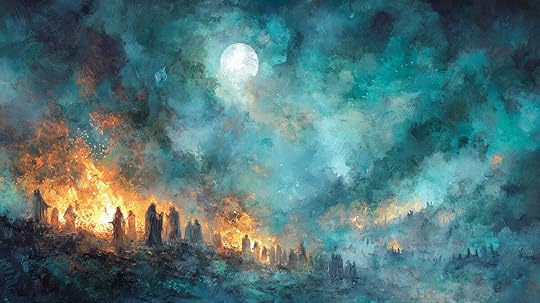
Halloween today means candy, costumes, and the annual ritual of pretending you’re not home when the neighbor’s kid shows up in their third Elsa outfit. But before plastic skeletons and pumpkin spice took over the season, there was Samhain—the Celtic festival that marked the end of harvest and the beginning of winter’s long dark.
And unlike our candy-coated traditions, the Celts took their spooky season seriously.
Samhain: The Celtic New Year
For the ancient Celts, Samhain (pronounced Sow-in) was the hinge of the year, the liminal night when the veil between the living and the dead was said to thin. The harvest was done, the herds gathered, and people lit great bonfires on hilltops to guard against whatever might slip through from the Otherworld.
Spirits of the dead could return to visit their families—or punish them if forgotten. To avoid becoming a ghostly plus-one, people disguised themselves in animal skins or masks, hoping the wandering dead would mistake them for something supernatural. Think early Halloween costumes, but with far higher stakes.
Fire, Food, and Fortune
Bonfires weren’t just dramatic—they symbolized protection. Families carried home glowing embers to relight their hearths for winter, a ritual of renewal. Food was shared, with empty seats left at the table for the visiting dead.
Samhain was also a time for prophecy. Apples bobbed, nuts cracked in fires, and flames read like messages from the gods. People looked for glimpses of the year ahead during the one night when the boundaries between worlds blurred.
From Samhain to Halloween
When Christianity swept in, Samhain merged with All Saints’ and All Souls’ Days. Guising evolved into children going door to door, and Irish legend gave us the jack-o’-lantern—first carved from turnips, later pumpkins once the tradition traveled to America.
The result? A mash-up of solemn ritual and playful mischief, now better known as Halloween.
Why Samhain Still Matters
Even if we’re no longer setting out feasts for the ancestors, Samhain’s essence lingers. It’s about thresholds—between seasons, between life and death, between worlds. That liminality still captures our imagination, which is why the idea of “the veil thinning” shows up everywhere from horror movies to Halloween parties.
For me, while Samhain rituals don’t appear directly in my books, the themes do. My selkies exist at thresholds—between land and sea, human and otherworld. My stories draw on the Celtic sense that magic thrives where boundaries blur. In many ways, that same spirit of Samhain fuels the myths and atmospheres that shape my writing.
Closing Thoughts
Today’s Halloween may come wrapped in candy and neon costumes, but its roots lie in firelit nights, ghostly visits, and the unsettling thrill of walking a boundary between worlds. The Celts didn’t need plastic skeletons to feel the chill—they knew the magic of Samhain was in the crossing itself.
So when you carve your jack-o’-lantern this year, remember: you’re echoing an ancient tradition. And if you feel a cold draft at your shoulder, maybe don’t blame it entirely on the autumn wind.
September 22, 2025
The Art of Sarcasm as Ghost Repellent
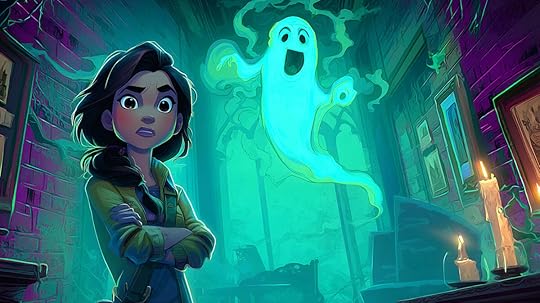
Some people pack holy water, silver bullets, or sage bundles when heading into a haunted house. Maggie Hawkins, heroine of The Haunting of Crumbleton Manor, prefers something far more dangerous: sarcasm. While most ghost hunters would be fumbling with salt circles, Maggie is rolling her eyes and muttering snark under her breath—and somehow, it works.
At first glance, this looks like pure comedy. But humor has always carried power in folklore, and as it turns out, modern neuroscience agrees. Sarcasm doesn’t just deflate egos; it can actually help us face fear.
Humor vs. Horror in Folklore
Folklore brims with stories where wit outsmarts the supernatural. In Celtic tales, laughter could break a spell or send faeries packing. Trickster figures survived not through brute strength but with a clever retort at the right moment.
The logic is simple: a ghost’s whole job is to unsettle. But when you laugh—when you answer fear with a smirk—you’ve rewritten the script. You’re no longer the trembling victim; you’re the heckler in the cheap seats, refusing to take the show seriously.
The Brain on Fear and Laughter
Neuroscience shows why this works. When we’re frightened, the amygdala—the brain’s threat detector—hits the panic button. Heart races, adrenaline surges, every instinct says “run.”
Humor flips that. Crack a joke, and the prefrontal cortex reframes the situation, labeling it as less dangerous. Psychologists call this cognitive reappraisal. Add in a dose of dopamine, the brain’s reward chemical triggered by shared laughter, and suddenly fear feels manageable.
In other words, when you mock the ghost in the corner, you’re not just being cheeky—you’re tricking your own brain into calming down.
Maggie Hawkins: Patron Saint of Sarcasm
This is exactly why Maggie thrives at Crumbleton Manor. She refuses to play the role of terrified victim. Instead of bowing to the theatrics of spectral nobility or running from shadowy wraiths, she treats them like bad performers in need of a reality check.
Every sarcastic jab becomes a shield, reframing the horror as absurdity. Her strategy doesn’t make the manor less haunted; it simply makes her less willing to hand her fear over to it. Readers get the same effect—our brains toggle from dread to delight, enjoying the comedy alongside the chills.
Why Readers Love Snarky Survivors
Sarcastic survivors have become a staple of horror and fantasy because they let us laugh even as the lights flicker. Neuroscience tells us shared humor triggers reward pathways, releasing tension without breaking the mood.
It’s catharsis in stereo: the amygdala screams, the prefrontal cortex laughs, and dopamine says, “Do that again.” We don’t just want to be scared—we want to be entertained. A clever heroine who treats a haunting like open-mic night gives us both.
Closing Thoughts
Haunted houses thrive on fear, but sarcasm thrives on cutting fear down to size. Humor shifts the power dynamic, helping both characters and readers face the spooky and the absurd. Maggie Hawkins may never get her ghost-hunting manual, but she proves that sometimes the sharpest tool is a sharp tongue.
If you’d like to experience Crumbleton Manor’s ghosts, wraiths, and one heroine armed with enough sarcasm to make the dead roll their eyes, you can find The Haunting of Crumbleton Manor on Kindle Unlimited: https://a.co/d/bb4WfaB
And remember: when the spirits rise, don’t scream—snark.
September 17, 2025
Haunted Houses 101: From Crumbleton to Castle Ruins
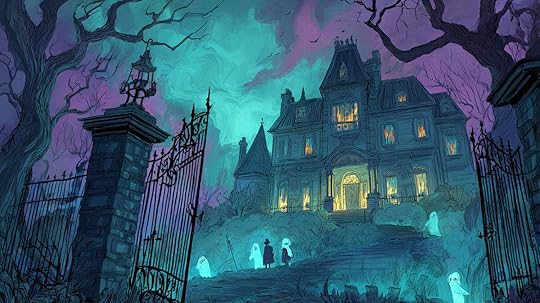
Not all houses come with good insulation. Some come with ghosts.
Forget granite countertops and energy-efficient windows—if you really want a property with character, you’ll need rattling chains, whispering corridors, and a portrait whose eyes definitely moved when you weren’t looking. Haunted houses have been captivating people for centuries. They show up in folklore, fiction, and, if you’re Maggie Hawkins in The Haunting of Crumbleton Manor, they also come with sarcastic ghosts who steal your socks.
So why do haunted houses hold such a permanent spot in our imaginations? And what makes them so irresistible, whether you’re wandering through a ruined Scottish castle or trying to livestream in Crumbleton’s drafty grand hall?
Why We Love Haunted Houses
On paper, there’s nothing appealing about them. They’re dark, damp, and riddled with drafts. And yet, people are drawn to them. Haunted houses are places caught between states of being. They are not alive, but not entirely gone either, just like the stories tied to them. That uncertainty sparks our imagination.
They are also layered with memory. Unlike a new build, which still smells faintly of paint and optimism, these places feel saturated with secrets. A broken banister isn’t just a safety hazard—it’s a clue to a tragedy. A sudden cold spot isn’t poor insulation—it’s the Lady of the House checking in to make sure you dusted the grand piano.
And of course, there’s the thrill factor. Haunted houses let us flirt with danger at a safe distance. You can feel the adrenaline of fear without actually having to negotiate with a Victorian specter in pearls.
Haunted Castles and Manors in Scotland
Scotland is famous for its restless estates. Edinburgh Castle claims drummers and prisoners who never quite left. Glamis Castle is known for the mysterious Monster of Glamis, supposedly locked away in a hidden room. Fyvie Castle carries legends of cursed stones and a restless lady who refuses to leave.
These places became ghost magnets not because of one tragic event but because of their layered histories. They were seats of power, homes of betrayal, and sites of heartbreak. Over centuries, every draft becomes a whisper, every creak a footstep, every cold spot a soul who missed their afterlife appointment.
Crumbleton Manor borrows directly from this tradition. Its ivy, staircases, and suspiciously dramatic ghosts could easily belong to any Scottish ruin. The only difference? Most castle spirits don’t argue over Wi-Fi.
Gothic Tropes We Can’t Resist
Haunted houses thrive on familiar imagery. The grand staircase, perfect for Lady Eleanor’s theatrical entrances. Drafty hallways designed for whispers. Portraits with eyes that move just enough to ruin your sleep. The locked door, never protecting you from termites but always hiding the one room you should not open.
Maggie Hawkins’s “survival kit” for Crumbleton skips the crucifix and sage in favor of a flashlight, a slice of pizza, and a sharp tongue. And strangely enough, sarcasm worked almost as well as holy water when it came to banishing a wraith.
Closing Thoughts
Haunted houses are never just about the ghosts. They are about the spaces themselves—decaying yet alive, layered with memory and mystery. They remind us that the past lingers, sometimes in whispers, sometimes in sarcastic commentary from a long-dead man in a shabby suit.
Crumbleton Manor may not exist on any map, but it follows the grand tradition of haunted houses everywhere: drafty, dramatic, and undeniably irresistible.
If you’d like to meet Maggie, Tom, Nina, Lady Eleanor, Barnabas, and the wraith who really can’t handle TikTok jokes, you can read The Haunting of Crumbleton Manor—available now on Kindle Unlimited: https://a.co/d/bb4WfaB