
Leon J. Podles's Blog
December 6, 2024
The Hands That Restored Notre Dame
My church is finishing rebuilding 1850 rowhouses as part of a restoration product for the whole complex. I have enjoyed working with the contactors and artisans. But there are so few artisans these days, from plasterers to decorative painters. They can make a good living, but shop and apprenticeships have largely disappeared. Everyone needs to go to college and learn – well, learn what?
A vaster project has concluded in France. Notre Dame is restored. The New York Times has a good article on the work. Michael Kimmelman writes:
Restoring the roof would also enlist skilled carpenters, stone workers and artisans trained in ancestral techniques with roots in French and European history. Notre-Dame could help rejuvenate these fragile but precious crafts.
After Macron’s announcement, a French organization of artisans called the Compagnons du Devoir, dating back to the 12th century, began receiving thousands of applications.
“In France, as in America,” one of its former leaders, Jean-Claude Bellanger, told me at the time, “those who go into manual trades today tend to be considered failures by the elites. Notre-Dame has reminded everyone that such work is a path to dignity and excellence.”
This is one of the timeliest and most uplifting outcomes of the restoration.
Nobles and kings used to have to learn a trade, to connect them with their people, and also to remind everyone that the King of Kings, the LORD, when he came among us earned his daily bread by working with his hands.
The post The Hands That Restored Notre Dame first appeared on Leon J. Podles :: DIALOGUE.


November 29, 2024
Misinformation c. 1900
In researching my wife’s extensive Lawrence clan, I came across a 1902 murder case.
The facts briefly were:
The 17-year-old Sarah Ray Lawrence, aka Dimples, was the daughter of a moderately prosperous insurance executive. While summering in Good Ground, Long Island, she had a habit of disappearing, supposedly visiting relatives, but in fact going off with boyfriends.
The boyfriends happened to be 20-something married men. One, Clarence Foster, was a local who worked for the hotels ferrying people around on the water. He had been married only a few months, but his wife was sick, so he amused himself with Dimples. The other, Louis Disbrow, was the son of a meat merchant. He had married a 16-year-old about 5 years previously and quit his job to move in with his in-laws. When his father-in-law insisted Louis get a job, Louis moved and left the wife behind.
The three, Louis, Clarence, and Dimp went out on the water together and had a rollicking good time. On June 9 they went out dining and drinking. Afterwards there was a quarrel and a fight between the two rivals, and Clarence and Dimp went off in a leaky skiff. Their bodies turned up in the water a few days later. Louis, who had been passing bad checks all over town, absented himself and was suspected of and indicted for murder.
There were thousands of articles all over the country about this sordid affair. These were the Gilded Youth of Society, maybe in a ménage à trois, misbehaving and even murdering.
The Brooklyn Eagle was a reputable paper, and on June 19, 1902 it decided it was necessary to preach a little.
“The first province of a newspaper is to print the news. This is a truism which, in these days of sensation-mongering, may be repeated definitely to the benefit of all and to the detriment of none. Nothing is gained by the distortion of fact or by the magnification of the unimportant.
“Certain newspapers … are more than anxious that the lamentable tragedy at Good Ground should turn out to have been a double murder.
“But supposing that Clarence Foster and Sarah Lawrence were murdered, what is the use of lending a fictitious interest to the case by misstatement. Foster has been described as an “amateur yachtsman” of such extraordinary skill that he was invariably barred out of all club contests on Shinnecock Bay. Miss Lawrence was described as a “great beauty” and an “heiress.” Both were “fearless” and “skillful” swimmers , therefore they could not have been accidentally drowned , and so on until the unintelligent reader lost sight of the most obvious explanation of the miserable affair, that a drunken baymen afloat in a leaky boat was unable to save either himself or his companion from the effects of an unexpected capsize. Foster was not an “amateur yachtsman,’ with all the social status that the name implies. He made his living largely by sailing as the servant of others, and for this reason, and not because he was so expert at handling tiller or sheets, was he debarred from competitions limited to those who were amateurs within the accepted meaning of the term. He was just an ordinary swimmer, too, and Sarah Lawrence could not swim a stroke, so that death by drowning was quite possible, and, in fact, quite likely, under the known circumstances of the case. Miss Lawrence was not a beauty and she was not an heiress, and the attempt to make her either or both belongs to the category of misdirected effort mainly responsible for the delusion of that part of the public which daily invests faith and money in the purchase of yellow journals.”
The most egregious example was the story that got circulated about a supposed eyewitness:
A bayman named Otto Schwanecke later said that he was sleeping in a boat when he was awaked by the cries of men. From the cockpit of his catboat he saw two rowboats on the water. Each contained a man; they were fighting. One contained a woman; she was screaming for her companion to sit down before he capsized the boat, Schwanecke then saw an oar flash across the woman’s head and hit her companion on the forehead. He fell into the water. Schwanecke cowered from fear in the cockpit. When it was quiet he looked up and saw an empty boat floating. Shortly he saw a man rowing toward shore; he beached his boat and ran into the trees.
There was no such person and no such catboat. The story is a total fabrication.
Disbrow was tried and acquitted after a 40-minute deliberation by the jury. His doctor testified that he had a serious arm injury and had difficulty moving that arm.
But he had been tried and convicted in the press, and the millions who had read it never got the truth, and probably assumed that Society had protected its own.
The post Misinformation c. 1900 first appeared on Leon J. Podles :: DIALOGUE.
November 20, 2024
The Spirits Among Us
Rod Dreher in his substack today quotes an exorcist who explains how demons get a hold of people
“So, what are some of the common ways they come to possess or otherwise attach themselves to a person? Father writes:
• Engaging in impure sexual activity: fornication, adultery, pornography, masturbation, contraception, homosexual acts, perversion, etc.
• Lying, deception, breaking promises, oaths, contracts, covenants, etc.
• Irreligiosity (refusing to practice religion as God desires it; excusing oneself from observing the precepts of religion and morality; relegating oneself to being merely “spiritual”).
• Hardness of heart (refusal to forgive others, refusal to forgive oneself, prolonged rage, prolonged sadness, entertaining suicidal thoughts, etc.).
• Use of blasphemous language.
• Enjoying profane or perverse entertainment.
• Practicing Wicca, sorcery, witchcraft, black magic, white magic, voodoo, divination, etc.
• Casting spells, sending curses, etc.
• Practicing Freemasonry, New Age, Reiki, etc.
• Using Ouija boards, horoscopes, tarot cards, etc.
• Consulting “healers,” curanderos, mediums, fortune-tellers, psychics, practicing necromancy, etc.
• Engaging in role-playing games and violent or sadistic video games.
• The effects of past trauma—e.g., excessive fear, rage, arrogance, vengefulness, etc.—which often leads the victim to make poor choices.”
That covers just about every human being.
I am reading Addison’s and Steele’s papers, The Tatler and The Spectator, the early 18th century equivalent of blogs and substacks, and they mention the persisting belief in witchcraft. Usually, old half-crazy poor women were the focus of accusations. The seventeenth century saw a strong revival of belief in witchcraft; the Salem witch trials were one of the results.
My wife thinks that Protestants were especially vulnerable to this. Medieval Catholics were surrounded by angels, saints, and holy things – relics, states, medals, holy wells. These were all abolished by the Reformers, especially by Calvinists, But the presence of evil was still felt. Catholic authorities often tried to suppress belief in witchcraft and the protect the accused: Charlemagne outlawed belief in witches, and the Spanish Inquisition also tried to discourage such belief.
I wonder whether the rationalism of the Age of Reason was a relief to people who had been haunted by the belief in evil spirits.
When the Huguenot French prophets came to London and tried to stir up anti-Catholic feelings, the government contacted the leading puppet master and he had Punch turn prophet. That ended that bout of Enthusiasm.
But both good and evil spirits are omnipresent in Scripture, including the New Testament. Billy Graham recognized that Protestants tended to neglect the spirits, and wrote a book on angels. Chesterton remarked that the Christianity of the New Testament is very close to dualism: the world is ruled by evil powers, whom Christ came to dispossess.
The post The Spirits Among Us first appeared on Leon J. Podles :: DIALOGUE.
November 17, 2024
Pope Francis recently put Isaac the Syrian into the Roman...

Pope Francis recently put Isaac the Syrian into the Roman Martyrology, so Isaac is now officially recognized as a saint in the Latin Church.
“Pope Francis announced that he had received the consent of Mar Awa III and the Patriarch of the Chaldean Church to include St. Isaac of Nineveh in the Roman Martyrology, the Catholic Church’s official list of Saints.”
Isaac was already widely venerated throughout the East. His writings have only recently been discovered and translated in the West. The best known passage is from Homily 81:
“What is a merciful heart? It is the heart’s burning for the sake of the entire creation, for men, for birds, for animals, for demons and for every created thing; and by the recollection and sight of them the eyes of a merciful man pour forth abundant tears. From the strong and vehement mercy which grips his heart and from his great compassion, his heart is humbled and he cannot bear to hear or see any injury or slight sorrow in creation. For this reason he continually offers up tearful prayer, even for irrational beasts, for the enemies of the truth and for those who harm him, that they be protected and receive mercy. And in like manner he even prays for the family of reptiles because of the great compassion that burns in his heart without measure in the likeness of God.”
This passage was cited recently by someone in the Vatican and provoked a controversy. Isaac is a universalist. He believes the pains of Gehenna are not retributive, but healing. To believe anything else would be to blaspheme against the goodness of God.
Miguel de Unamuno in The Tragic Sense of Life also sees the centrality of universal compassion to life. Unamuno distinguishes carnal, possessive love from spiritual love.
“This other form of love, this spiritual love, is born of sorrow, is born of the death of carnal love, is born also of the feeling of compassion and protection which parents feel in the presence of a stricken child. Lovers never attain to a love of self abandonment, of true fusion of soul and not merely of body, until the heavy pestle of sorrow has bruised their hearts and crushed them in the same mortar of suffering. Sensual love joined their bodies but disjoined their souls ; it kept their souls strangers to one another ; but of this love is begotten a fruit of their flesh — a child. And perchance this child, begotten in death, falls sick and dies. Then it comes to pass that over the fruit of their carnal fusion and spiritual separation and estrangement, their bodies now separated and cold with sorrow but united by sorrow their souls, the lovers, the parents, join in an embrace of despair, and then is born, of the death of the child of their flesh, the true spiritual love.”
Such spiritual love grows from the sense of mortality, each person’s mortality, the mortality of the whole universe.
“And this compassionate feeling for other men, for your fellows, beginning with those most akin to you, those with whom you live, will expand into a universal pity for all living things, and perhaps even for things that have not life but merely existence. That distant star which shines up there in the night will some day be quenched and will turn to dust and will cease to shine and cease to exist. And so, too, it will be with the whole of the star-strewn heavens. Unhappy heavens !”
Suffering and consciousness are intimately connected
“Suffering is the path of consciousness, and by it living beings arrive at the possession of self-consciousness. For to possess consciousness of oneself, to possess personality, is to know oneself and to feel oneself distinct from other beings, and this feeling of distinction is only reached through an act of collision, through suffering more or less severe, through the sense of one’s own limits. Consciousness of oneself is simply consciousness of one’s own limitation.”
This suffering of the self opens it to the suffering of others.
“Beneath the actions of those most akin to myself, of my fellow-men, I feel — or, rather, I co-feel — a state of consciousness similar to that which lies beneath my own actions. On hearing my brother give a cry of pain, my own pain awakes and cries in the depth of my consciousness. And in the same way I feel the pain of animals, and the pain of a tree when one of its branches is being cut off, and I feel it most when my imagination is alive, for the imagination is the faculty of intuition, of inward vision.”
As Paul said, the whole cosmos groans, it is subjected to futility and mortality, not because of its own fault, but that it may someday participate in the glorious liberty of the sons of God.
“18 I consider that the sufferings of this present time are not worth comparing with the glory that is to be revealed to us. 19 For the creation waits with eager longing for the revealing of the sons of God; 20 for the creation was subjected to futility, not of its own will but by the will of him who subjected it in hope; 21 because the creation itself will be set free from its bondage to decay and obtain the glorious liberty of the children of God. 22 We know that the whole creation has been groaning in travail together until now; 23 and not only the creation, but we ourselves, who have the first fruits of the Spirit, groan inwardly as we wait for adoption as sons, the redemption of our bodies. 24 “
Unamuno had no knowledge of Isaac, but their thoughts on contemplating the sorrows of creation were similar.
The post first appeared on Leon J. Podles :: DIALOGUE.
November 16, 2024
Jewish Safety in Europe, East and West
In the Wall Street Journal, Bojan Pancevski confirms what Rod Dreher has been saying: “As Jews Feel Threatened in Western Europe, the East Offers More Safety.” Violent attacks on Jews are skyrocketing in Westen Europe, and the source of the attacks is the Muslim community.
About 10% of France’s 68 million people are Muslim; the Jewish population totals 400,000, the largest in Europe. According to a December 2023 survey, 45% of French Muslims saw Hamas’s Oct. 7 attack on Israel as an “act of resistance against colonization,” and nearly one in five expressed sympathy for it.
It should be no surprise that
Statistics show that anti-Jewish violence has been on the rise in Western Europe for a decade, but it has surged since Hamas’s attack on Israel on Oct. 7, 2023, and Israel’s retaliatory invasion of Gaza. In France, the number of antisemitic incidents increased from 436 in 2022 to 1,676 in 2023, while physical assaults, including stabbings, nearly doubled from 43 to 85. Antisemitic incidents in the U.K. rose from 1,662 to 4,103, with physical attacks increasing from 136 to 266. Only a fraction of such incidents are reported to the police or community agencies, according to the Institute for Jewish Policy Research, a British nonprofit.
But Eastern Europe, which rejected Muslim migrants, is safe for Jews. Since October 7
Hungary and Poland, home to around 45,000 and 17,000 Jews respectively, each registered a single violent incident. In the Czech Republic, home to around 5,000 Jews, two incidents were recorded.
When a country has a Muslim population in the millions, a large portion of whom are hostile to Jews, it only requires a miniscule percentage of violent anti-Semites to make life unendurable for the Jewish population.
As I have said before, European countries can have a Muslim minority or a Jewish minority, but if they have both there will be violence. I am beginning to suspect that European elites know this, and secretly hope the Jews will depart; the anti-Semitic violence of the Muslim community is not a bug, but a feature. I remember when John Allen, a correspondent at the Vatican, attended functions, he was surprised at the prevalence of casual anti-Semitism. Perhaps the elites of Western Europe have found the Final Solution to the Jewish Question – and they can blame the Moslems, whom they imported en masse.
The post Jewish Safety in Europe, East and West first appeared on Leon J. Podles :: DIALOGUE.
November 14, 2024
Unamuno and the Eternal Journey into God
Miguel de Unamuno in The Tragic Sense of Life expresses his dissatisfaction with the view of heaven as a static vision of God.
“A beatific vision, a loving contemplation in which the soul is absorbed in God and, as it were , lost in Him, appears either as an annihilation of self or as a prolonged tedium to our natural way of feeling. And hence a certain feeling which we not infrequently observe and which has more than once expressed itself in satires. And altogether free from irreverence or perhaps impiety, with reference to the heaven of eternal glory as a place of eternal boredom.”
“It is clear that those who feel thus have failed to take note of the fact than man’s highest pleasure consists in acquiring and intensifying consciousness.”
“And perhaps the joy of the beatific vision may be not exactly that of the contemplation of the supreme Truth, whole and entire (for this the soul could not endure), but rather that of a continual discovery of the Truth, of a ceaseless act of learning involving an effort [my emphasis] which keeps the sense of personal consciousness continually active.”
Miguel is not aware that some of the Greek Fathers questioned the static concept of heaven.
In the Platonic analysis of human nature, man was composed of logos, thumos, and epithymia. Logos was reason, thumos was the spirited part of man, the energy that led man to receive glory by overcoming great difficulties, and epithymia was desire.
Gregory of Nyssa in his later works emphasized “that desire is inherent to the dynamics of the soul’s participation in God. This theory of participation is called epektasis . Coming from Phil. where Paul says that he has not yet attained perfection but is straining forward (epektainomenos) to the prize that lies ahead, epektasis, as coined by Jean Daniélou, refers to the Nyssen’s view of perfection, not as rest in God (as in an Aristotelian or Augustinian view of perfection), but as the soul’s eternal movement into God’s infinite being. Because God is infinite in goodness and virtue, the soul will never be satiated in its contemplation of God or of its imitation of God’s virtues. Therefore the soul will never stop growing in its knowledge of God and in its conformity with God’s virtues. The Nyssen’s account of perfection in Vita Moyis as unending growth into the likeness of God presupposes participation in God through the dialectic of the illumination of the intellect and the purification of desire. The more a Christian’s desire is purified by her separation from the sensual goods, the greater the illumination her mind is able to receive and with it a clearer vision of God’s beauty and goodness. The more clearly she sees God’s goodness and beauty the greater and more pure her desire for God. Similarly, in Cant. Nyssen interprets the Bride’s unending pursuit of the Bridegroom who is ever running away from the Bride to describe the soul’s unceasing search for God. Because God is infinite, the soul’s vision of God is never complete. Therefore, even in the resurrection the soul’s incomplete vision of the divine beauty will arouse desire to see more of God’s yet unrevealed beauty. This view of desire reflects the ontological difference between God and humanity. While God is eternal, humanity as a creature who came into being from nothing is inherently changing. God is infinite Being; creatures inhabit the realm of becoming. Since there is always a gap (diastêma) between God’s Being and our becoming, there will always be something of God the soul loves that eludes its grasp even in the resurrection. Therefore, God will always be the object of the soul’s epithymia that is ever straining forward to glimpse more of the God whose infinite goodness exceeds our grasp.”
(Supplements to Vigiliae Christianae)
This also implies, although I cannot find the citation, that thumos is part of human nature in the resurrection. Attaining an ever-greater vision of God is the supremely difficult work, for how can a creature ever comprehend the Creator? The effort, the struggle to overcome the limitations of creatureliness is given energy by thumos, with the goal of receiving an ever more profound vision of God and an ever-greater honor of being transformed by that vision into an ever more perfect image of God – theosis.
The post Unamuno and the Eternal Journey into God first appeared on Leon J. Podles :: DIALOGUE.
November 13, 2024
Unamuno and Universal Salvation
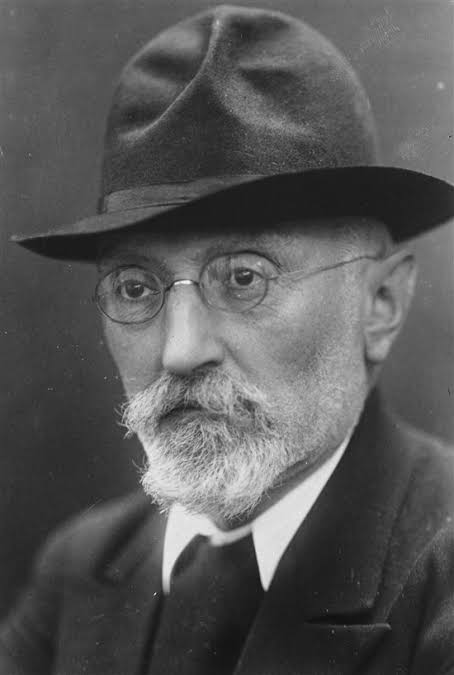
While looking for something to read in my library, I cam across Miguel de Unamuno’s The Tragic Sense of Life. Many people have heard of it, but few have read it. I think I looked at it years ago, but did not read it through.
I turned to the index to look for a promising chapter and discovered, to my surprise, that chapter 10 was on universal salvation, specifically the apokatastasis (the return of all things to God) and the anacephalosis (the recapitulation of all things in Christ).
Unamuno writes “When our Catholic theologians seek to justify rationally – or in other words, ethically – the dogma of the eternity of the pains of hell, they put forward reasons so specious, ridiculous, and childish, that it would appear impossible that they should ever have obtained currency.”
If all things are recapitulated in Christ, in His mystical body, and in Him all things return to God, does this not mean that “all things shall acquire consciousness and that in his consciousness everything that has happened will come to life again, and that everything that has existed in time will be eternalized?”
“Heaven, so many think, is society. Just as no one can live in isolation, so no one can survive in isolation. No one can enjoy God in heaven who sees his brother suffering in hell.”
At the beginning of Mass according to the Book of Divine Worship, the priest addresses the congregation:
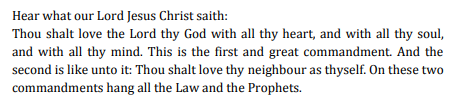
The Law and the Prophets: all of revelation is contained in these commandments. They are the heart of the Torah and of the New Law because they express the heart of God.
I do not see any conditions or limitation in these commandments: “you shall love your neighbor unless he goes to hell forever, in which case you can forget about him or take pleasure in his eternal torture.” The commandment to love neighbor has no limit, and more than teh commandment to love God has.
The post Unamuno and Universal Salvation first appeared on Leon J. Podles :: DIALOGUE.
Unamuno
While looking for something to read in my library, I cam across Miguel de Unamuno’s The Tragic Sense of Life. Many people have heard of it, but few have read it. I think I looked at it years ago, but did not read it through.
I turned to the index to look for a promising chapter and discovered, to my surprise, that chapter 10 was on universal salvation, specifically the apokatastasis (the return of all things to God) and the anacephalosis (the recapitulation of all things in Christ).
Unamuno writes “When our Catholic theologians seek to justify rationally – or in other words, ethically – the dogma of the eternity of the pains of hell, they put forward reasons so specious, ridiculous, and childish, that it would appear impossible that they should ever have obtained currency.”
If all things are recapitulated in Christ, in His mystical body, and in Him all things return to God, does this not mean that “all things shall acquire consciousness and that in his consciousness everything that has happened will come to life again, and that everything that has existed in time will be eternalized?”
“Heaven, so many think, is society. Just as no one can live in isolation, so no one can survive in isolation. No one can enjoy God in heaven who sees his brother suffering in hell.”
At the beginning of Mass according to the Book of Divine Worship, the priest addresses the congregation:
The Law and the Prophets: all of revelation is contained in these commandments. They are the heart of the Torah and of the New Law because they express the heart of God.
I do not see any conditions or limitation in these commandments: “you shall love your neighbor unless he goes to hell forever, in which case you can forget about him or take pleasure in his eternal torture.” The commandment to love neighbor has no limit, and more than teh commandment to love God has.
The post Unamuno first appeared on Leon J. Podles :: DIALOGUE.
November 12, 2024
Recovery
If any of my readers are still out there, I have decided to resume my posting. The election is over, so I will not get nasty comments when I make jokes and seem not to take seriously the imminent end of of the Republic and the collapse of the ecosystem and the horror of WAR! PESTILENCE! FAMINE, WILD HEDGEHOGS! STUDENTS, SMOG!
This blog serves as a notebook in case I get around to writing articles or even, heaven forfend, another book. Of the making of books there is no end, especially now that it is so easy to self-publish.
I also have the stimulation of talks with our learned office manager at Mount Calvary, Mr. John Devine, who varies his duties of paying the bills and removing dead rats from the church sidewalk by encouraging me to fill in the gaps in my reading.
Recently he reminded me of the existence of the Menippean satire, possibly by Seneca, Apocolocyntosis Claudii, or the Pumpkinification of Claudius. The work is in Latin, but the title, in Greek, has several meanings. It alludes to the apotheosis that emperors regularly underwent (like the canonization of recent popes, which seems to be their final promotion). But the title also refers to pumpkins or gourds, and to the colon and things that come out of it (genteel enough?). Claudius was supposedly poisoned which resulted in explosive diarrhea, an incident referred to in the text.
After his death, Claudius (this is the Claudius of I, Claudius) ascends to Olympus and expects to become a god. However, Augustus, who has kept his mouth shut since his own apotheosis, protests because of the numerous murders Claudius has ordered. Scholars say that Augustus in the text gives a good imitation of the real Augustus’s pompous style.
So off Claudius goes to Hades. There the infernal gods debate whether he should take over Ixion’s wheel or Tantalus’s place (who is getting mighty thirsty), but instead sentence Claudius to forever play dice (one of his many vices) with a cup without a bottom which is forever dropping the dice in the grass.
There are many officials in both church and state who could be immortalized in such a literary work. Marciel Maciel, founder of the Legion of Christ, was, among more serious vices, a drug addict and incestuous pedophile. He fully expected his followers to engineer his canonization – money talks in the Vatican, as elsewhere.
The post Recovery first appeared on Leon J. Podles :: DIALOGUE.
September 7, 2023
Elizabeth Lawrence Gilman
Elizabeth Lawrence Gilman (1905-2006) was the daughter of Arthur Lawrence Gilman (1878-1939) and Elizabeth Wright Walter (1875-1964). She was teh third cousin twice removed of my wife. Betty was born in 1905, graduated from Smith College in 1927, and married Malcolm Evelyn Anderson (1900-1950), a writer for the New Yorker, in 1936. They divorced in 1940. She was active in many organizations including: National Audubon Society, the Adirondack Mountain Club, the Society for the Preservation of the Adirondacks, the Saranac Lake Free Library, the Saranac Lake Village Improvement Society, and was a member of the Bohemians (a New York musicians’ club). She worked in New York in publishing and at FAO Schwartz. She died at the age of 101 in Kennett Square, Pennsylvania.
The post Elizabeth Lawrence Gilman first appeared on Leon J. Podles :: DIALOGUE.
Leon J. Podles's Blog
- Leon J. Podles's profile
- 11 followers

