Henry McLaughlin's Blog
December 20, 2023
A Blessing from God

Recently, my wife and I had plans for a movie matinee and then dinner. Turned out God had a plan for us too.
It started with a visit to our cardiologist’s nurse practitioner at 2:00 pm. Just a routine follow-up appointment. One attribute we appreciate most in the practitioner is she is always willing to give each patient as much time as they need. The downside is she frequently runs late. And we would not want it any other way.
So, we ran late. But she answered all our questions. We left reassured and encouraged.
The movie theater was a short distance away. We arrived at 3:15 for a movie that started at 3:05. The cashier estimated the movie was about seven minutes into its showing.
We walked into the theater. The screen was blank.
I went back to the cashier. She went to find the manager. She came back to say the manager would start the movie in a couple of minutes.
I joined my wife, and the movie began. No ads ran. No trailers of coming attractions. Just the movie.
We were the only two people in the theater.
God had arranged a private showing for the two of us and we didn’t miss a second of the movie. How exceptional is our God that he would think to bless us in such a way. He blessed us because he loves us. He knew the movie was special to me, one I wanted to see since seeing the trailer in the theater months earlier. For me, it was a special touch from him, an expression of his love for me. A touch that showed me I am worthy despite my sometimes rebellious attitude.
Our declaration at the beginning of the day was the timing of our day was in God’s hands. He was in control of the events. An exciting part for me was the peace I had throughout. No impatience or irritability at being late. No frustration with things not in my control. A very unusual attitude for me. Just ask my wife. No—wait—on second thought, don’t.
God blessed us. How wonderful it was to recognize his care for us.
He didn’t answer a specific prayer—he blessed our faithfulness
What about other people who hear this and say, “Well, God never blessed me like that!” or “I asked God to save my Father from dying and Dad died anyway.”
I confess I do not have answers for these people. My wife and I are not any holier than others. We don’t have an inside track to God. Sometimes we joke that we’re God’s favorite children. The truth is we are all God’s favorite child. He loves each of us uniquely.
I have experienced the death of a child too soon. And in that devastation, I experienced the love and comfort and peace of God like never before.
I have been in a hospital bed wondering if I would live or would my heart finally give out on me. And in that turmoil, I experienced the touch of God. I was aware of his presence and his message: If I stayed on this earth, he would be with me. If I went to heaven, I would be with him. And he would continue to watch over and comfort those I left behind.
What I’ve learned in these difficult times is God is always with me. And he’s with you in your hard times. He loves you and has a plan and purpose for each of us. And he is faithful. In all of it, he also surrounds us with a community to come alongside us to rejoice with us in good times and to help us and weep with us in the hard times. Whatever happens, we are never alone. We are always in his presence.
Like a cherry on an ice cream sundae, he drops blessings like the private showing of a movie just for us without our asking. Why? Because he loves us.
I pray you all experience a deeper closeness and connection with our Heavenly Father. Especially at this time of year as we celebrate our Savior’s birth.
The post A Blessing from God appeared first on Official Website of Author Henry McLaughlin.


December 13, 2023
The Meaning of Christmas
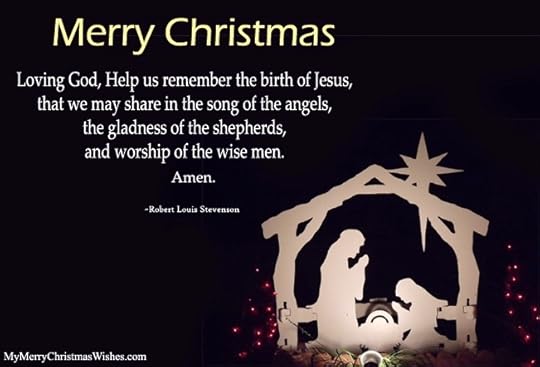
As I focus on this time of year and all the craziness that goes with it, I returned to a blog I posted three years ago about the meaning of Christmas. I revisit and update my thoughts on this wonderful time of year.
Christmas can be a season when many ponder the questions:
“What’s it all about?”
“Why do we do all this decorating and buying and cooking?”
“Why do we put with relatives and others we wouldn’t spend a minute with at any other time of year?”
In 2023, it looks like nothing’s changed. Some would say it’s become even worse.
Covid seems to be over—or is it? There seems to be a strong segment in the government and media who want to keep it around.
There is still violence on the streets. The very foundations of our nation and our freedoms are under attack. We’re looking toward an election next year that has all the makings of a repeat of 2020 (or worse).
Where is the moral integrity of our leaders—at every level and in every branch of government and in both parties? Where is the integrity in the media, in our universities and colleges, in the sciences? People are still accused of misinformation and the U.N. now has a plan to encourage censorship of anyone who doesn’t agree with the accepted narrative. And we see censorship rampant in our own country.
Terrorists attack Israel with the intent to wipe the people and the nation from the face of the earth. And Israel is the one asked to show restraint or stop fighting all together. Not a word about the horror of the attack, the killing of civilians, including children and infants, the rape of Jewish women. The rise of antisemitism, especially on our college campuses. And universities can’t even decide if the actions violate the school’s own code of conduct.
This is a time to really study the meaning of Christmas, to see the season from a new perspective. A time to listen to teachers like Pastor Robert Morris give new insights into what Christmas means and to study books such as Because of Bethlehemby Max Lucado.
I’ve we have jaded long by the commercialism of Christmas. Over the years, our own traditions have evolved from focusing on family more than spending, taking part in celebrations and events at our church. In all this, we’re striving to honor the reason for the season.
But all too often, I think we lose sight of Jesus in another way. We see him as the infant in the manger. Images of our own experience with babies filter and distort our view of Jesus. We remember the funny faces, the first smiles, the coos, the eyes wide in wonder and study.
We forget Jesus’ uniqueness. He’s the only person ever born who knew he was going to die a horrible death and when it would happen. And he did it anyway because he knew why he did it. For me and for you.
Jesus, our God, became human so he could die for me personally. And for you as well. For every person on this Earth.
Easter begins at Christmas. A straight line connects the two. Jesus came at Christmas so Easter could happen, so we could all be saved.
Jesus, our God, came so you and I could be redeemed and enjoy eternal life with him. And he came so we could have a personal relationship with him every day. He really wants us to be in his presence every day.
Christmas isn’t about gifts. It’s about celebrating the Gift no one else can give—the gift of Jesus. We remember he loves us. We walk in faith that he walks with us through this crazy year. Christmas is about anticipating the joy that awaits us in eternity.
This is also a time to lead with our faith, to be bold in who we are as Christ-followers, to look to build bridges with those we would rather avoid. Please allow me to share a resource with you about leading with our faith this Christmas. It is from Pastor Allen Jackson of World Outreach Church in Murfreesboro, TN: Leading with Our Faith.
I wish you all a joyous Christmas and a freshening in your hearts of why Jesus came.
Merry Christmas!
The post The Meaning of Christmas appeared first on Official Website of Author Henry McLaughlin.
September 13, 2023
We Are Called to Create

“One of the dangers of having a lot of money is that you may be quite satisfied with the kinds of happiness money can give, and so fail to realize your need for God. If everything seems to come simply by signing checks, you may forget that you are at every moment totally dependent on God.” – C. S. Lewis
The world tells us we need to work to accumulate fame and fortune for ourselves and to prove we are important and have value and worth. Simply put, the world puts value on what we do, not who we are.
But this isn’t true. It’s a deception of the devil. The world’s way offers false security, false happiness. It’s fleeting happiness dependent on things, not on who God says we are, on how he values us. The world’s way is a call to serve mammon, to use our work and accomplishments and money to show our importance and value. In the Old Testament, mammon is a false god that will demand and demand and demand more and more from us. The god of mammon will never be satisfied, no matter what we do.
And doing things the world’s way never satisfies us. What we truly need cannot be found in the world..
Jesus is the one who achieved what we seek. He is the ultimate measure of our worth and value. He died for us. Nothing we do on our own can take the place of that. Any fame or fortune we gain will never measure up to what Jesus did for us. Worldly wealth and stature can never gain us eternal life in heaven.
Sometimes we forget all Jesus has done, and we focus on our writing as if we are using our accomplishments to cover up our weaknesses and doubts, in essence, our sin nature. It’s like we are using our writing to add more value to ourselves. We can’t add more value than what he’s already done.
The work of Jesus completed our salvation. We can’t add to it. His work is complete. He gives us unsurpassable value. His sacrifice and resurrection also give us holy motivation for our writing. The Gospel of Jesus frees us to craft stories, not for ourselves, but for him. Jesus frees and empowers us to create for the pure joy of creating and to be partners with him in spreading the Good News.
We are called to write, but from a godly perspective. According to 2 Timothy 2:15 (NLT), “Work hard so you can present yourself to God and receive his approval. Be a good worker, one who does not need to be ashamed and who correctly explains the word of truth.”
Let’s do everything we do to thank God for all he’s done for us..
As writers, we create works to inspire others, to encourage others, to give to others, to share Jesus with others. Even when writing seems a drudge, even when we are not inspired or when the muse is silent, we are called to create, to keep writing through the muck.
Writing stories is a joyful task because it honors Jesus and his work on the cross, as well as his work in and through us.
The ultimate joy of our creativity is the reward he will have for us when we join him in heaven.
What stirs inside you when you hear the call to create?
The post We Are Called to Create appeared first on Official Website of Author Henry McLaughlin.
September 6, 2023
The Post Conference World

Hello, fellow writer!
Another way to phrase this title is, “You Just Finished a Writers Conference. Now What?”
At a conference, your mind fills with visions of submitting requested material. Then there is the looking forward to applying all you learned. And let’s not forget firming up the networks you started with other writers.
Yes, this is all true and wonderful.
The word for what happens next is REALITY. It’s what happens when you walk in the door to your home.
Reality starts with the unpacking and sorting laundry rather than business cards. Reality is watering the droopy and thirsty gardens after several days of being away. And you’re amazed at how quickly the lawn grew. If you have a swimming pool, you’re faced immediately with adding water, checking chemical levels, cleaning leaves and other debris.
If you have pets, they’re running to meet you, ecstatic you’re home, yet giving you the look that sends waves of guilt over you because you left them.
Kids want to be hugged, chattering about what they did while you were gone, or snitching on their siblings.
Your spouse is waiting for the chaos to simmer down so they can welcome you home and have some special time with you.
And you might say to yourself, “Wait. Was the conference a dream? Did I imagine all that good stuff?” The calendar reminds you it’s been a few days since you’ve been home.
My advice is for you to take control of what happens next.
First, reconnect with God. Do this before you do anything else. You’re going to need his presence, his wisdom, his peace, and his direction as you ponder your writing and your return to reality.
Make the time to settle into your real world. Spend time with your spouse, with your kids, with your animals. Listen as they share their adventures. The priority here is to reconnect with the most important and most valuable people in your life. Make time to adjust to normal life with its routines and chores and relationships. Especially the relationships. Those relationships are what will get you through the challenges, the defeats, and the victories of your writing journey.
Perhaps at the conference, an agent or editor asked for a proposal or a query letter or chapters of the story you’ve labored over for years. Many years ago, one of the top agents in the country told us at a conference if this happens to you—Great! Celebrate it! But don’t send it as soon as you get home. If you send it shortly after the conference, it will be waiting for the agent/editor when they get into the office, along with everything else that came in while they were away. Your submission may get lost in the volume of material they will need to sort through.
Wait and make it the best you can. What you send is what the agent or editor will base their decision on. If it takes weeks or months for you to make it the best you can, let it take weeks or months. Don’t sweat the time. Focus on preparing the best material you can.
The same with applying all you learned. Put it aside for a few days. Then go through it one class at a time and decide what, if anything, is still useful to you and your writing. Sift through and glean the gems and nuggets that will improve your story and help you grow into a better writer.
For networking with all your new friends and writing partners, follow the same pattern. Give them time to settle into their own reality. Reach out gradually. Check out their website, their blog, their social media presence. Ask God for guidance—Lord, is this someone you want me to build a relationship with?
These are some nuggets I’ve learned over many conferences. I pray you find them helpful.
A question for you: What have you found most helpful in returning from a conference?
The post The Post Conference World appeared first on Official Website of Author Henry McLaughlin.
April 12, 2023
What Inspires My Stories?

People often ask where I get my story ideas from. The most common way I get story ideas is from an image that pops into my mind. Many times, I can’t remember what I was doing, reading, or thinking when the idea came to me. I gave up asking myself, “Where did that come from?” If it sticks in my mind or comes back, I’ve learned to trust that God is behind it.
One story I’m working on right now, Mr. Latham’s Lincoln, is with a prospective agent. The idea came to me over ten years ago. On this one, I remember what I was doing when I received it. I was lying in bed about to go to sleep.
In the image I saw a man around sixty years old. He was fumbling to put his cowboy boots on. Then he was fumbling to connect the lights on his flatbed trailer to his truck. He wasn’t drunk or under the influence of anything. He was flustered and in a hurry. It was late at night, after midnight. Don’t ask me how I knew this. I just did.
The next night, it was the same image. By that time in my writing career, I’d learned enough to know I had to go further with it. The right brain creative side—the boys in the basement, as James Scott Bell calls them—came alive.
The key question I asked was “Why is he doing that?”
And the answer: It’s the middle of the night and he—his name is Charlie—receives a phone call from his adult son, Jake. The son’s wife’s car was found off the interstate in Oklahoma City. And they cannot find his wife. Charlie is hurrying to get there to help his son and is bringing a flatbed trailer to carry the car back.
More questions told me more about Charlie. He’s a horse rancher in the North Texas town of Justin. He loves Jake, his only child, and his daughter-in-law, Amy. A strong Christian, he is a rock in his church. His wife left him and Jake 30 years earlier for another man. Charlie never remarried and has avoided serious relationships with a woman like the proverbial plague.
From there, it was, as Faulkner suggests, following Charlie around. What happens? What actions does he take? Why does he do one thing and not the other? It’s getting to know Charlie on his terms, on letting him show me who he is through what he thinks, says, and does.
More questions followed:
What does he want? What is his goal? He wants to find Amy and restore her to the family.
What obstacles prevent him from achieving his goal? They find evidence Amy planned her disappearance. Why? What is she running from? Or running to? How does he overcome them?
And what does he do about the female police detective who walks into his life and touches his heart where it hasn’t been touched in years?
And the big question: Where is God in all this?
Charlie answers these and other questions over the course of the story. This is where writing by the seat of my pants is fun. Charlie is free to go where his heart and the story lead him.
How about you? What inspires your stories?
The post What Inspires My Stories? appeared first on Official Website of Author Henry McLaughlin.
March 22, 2023
New Book Coming

I’m excited to announce I recently signed a contract with Elk Lake Publishing. We just finished the first round of edits. We don’t have a definite release date yet, but I will keep you posted.
The working title is Emily’s Trial. The story is about a female attorney in Kansas. It’s set in the mid-1880s in the town of Abilene.
There’s an interesting story behind the story of Emily’s Trial. Several years ago, I was reading a novel which I now can’t remember the title of or the plot or much else about it. But in the middle of reading it, I had the thought, “When was the first female attorney?”
I did some research and discovered each state admitted women to the bar at different times. Kansas had its first female attorney in the early 1880s. This fits the historical period I usually write about.
I contacted my agent at the time and presented the idea, “What do you think about a story about a female attorney in the 1880s?”
She wrote back, “I like it. It’s the best idea you’ve ever had. Send me a proposal for a three-book series.”
I wrote back, “All I have is a female attorney in the 1880s.” I didn’t have characters or a plot or anything else.
Then I wondered how did she know this was the best idea I’d ever had? Had she been talking to my wife?
I got to work on the story. I’m a pantser. When I began, I knew how the story would end and I knew some obstacles the heroine would have to overcome along the way, including dealing with prejudice about a woman entering a previously all male profession. I looked forward to discovering the journey I would follow with my heroine.
On a dark and stormy night, the opening scene came to me. I don’t remember the actual weather. I just thought it would be fun to throw in the cliché. Besides, the story really opens in a horrendous rainstorm, but during the day.
The main character is Emily Peyton. She passed the bar two years earlier and works in a law practice with her father, a prestigious lawyer in the area. Her father raised her as a single parent after her mother deserted the family for another man when Emily was eight years old. Their closest friends are Doc Everett and his wife, Caroline. Caroline became Emily’s surrogate mother while she was growing up.
In the opening scene, I throw Emily into a catastrophe. She learns her father was seriously injured because of his carriage being washed off the road while he was on his way to visit a client. His injuries are both serious and extensive. Besides being unable to walk, he can’t speak coherently.
I thrust Emily into taking over the law practice.
For those of you who like writers’ jargon, the first doorway of no return occurs when a robbery and murder take place. No other attorney in town will take the case because the evidence against the accused murderer seems open and closed. The accused’s friend, Terrence McCarthy, comes to Emily and her father. Her father is reluctant to take the case because Emily has yet to represent a client in court. Yet he is in not physically or mentally capable of being in a courtroom himself.
Emily’s reluctance stems from her believing the accused is guilty, but they agree to take the case because her father believes every person is entitled to legal representation.
And then the fun begins.
I’ll write more as we get closer to publication date.
As you can see, Emily throws me quite a few curveballs and we’re early in the story.
What curveballs or surprises have your characters thrown you? How did you handle it?
The post New Book Coming appeared first on Official Website of Author Henry McLaughlin.
February 8, 2023
Proverbs for Writers

There is so much wisdom and wise counsel in the book of Proverbs. Like many believers, I spend time in this book every day. Sometimes a single verse or a few verses grab my attention. Other times, I’ll read an entire chapter. Often, what I read will speak to a specific area in my life. The following are some verses I believe apply to all of us, but especially those of us who are pursuing the dream of being writers.
Proverbs 3:12 (NLT)
For the Lord corrects those he loves, just as a father corrects a child in whom he delights.
We are writing for the Lord in response to the call he has placed on us. Some of us do it enthusiastically. Some of us not so much. Perhaps we’ve become discouraged by the struggles of getting published.
Remember, the Lord loves us, and he delights in us when we do our best to answer his call. And he corrects us. Maybe writing is frustrating because we’re trying to write in an area God hasn’t called us to write in. Perhaps we’re focusing on devotionals or inspirational books when he wants us to write fiction.
Wherever the Father calls us to write, he has a plan to use our words to inspire and guide our readers into closer relationships with him. Whether it’s fiction or nonfiction, but if we’re not in the area he wants, writing will feel like trying to go forward with one shoe nailed to the floor. We’ll only go in circles.
Maybe we believe we can’t write in the area he wants us to write in. Then we trust in his correction and his guidance. He won’t call us to do something without equipping us. It might be hard. You can count on it being hard. But he is doing it for our good, to build our character, and to build his kingdom. It’s a call to persevere.
As Paul wrote, we are all part of the body of Christ, and we each have our unique place. If we step out of that place, he will correct us because he loves us, and he delights in us. After all, each of us is his favorite child.
Proverbs 12:1 (NLT)
To learn, you must love discipline; it is stupid to hate correction.
It’s rare for the Bible to use the word “stupid.” Some translations use the word “foolish.” Is there that much of a difference?
Hebrews 12:11 (NLT) takes us a little deeper into this concept: “No discipline is enjoyable while it is happening—it’s painful! But afterward, there will be a peaceful harvest of right living for those who are trained in this way.”
Receiving and implementing discipline is hard. Often, we have to give up behaviors and attitudes that are very dear to us. But they aren’t working. At least in our writing. So, we need to learn new disciplines to become the writers God has called us to be.
Proverbs for Writers
I’ll leave you with these final thoughts in the form of proverbs:
He who learns the craft through correction and discipline shall produce stories worth reading.
A writer seeks counsel (discipline and correction) and feedback, for in these are strength and wisdom.
A writer who walks in humility is wise and will grow in skill, talent, and ministry.
Be blessed as you continue your writing adventures in God.
What proverbs—either Biblical or from another source or written by yourself—help you be the best writer you can?
The post Proverbs for Writers appeared first on Official Website of Author Henry McLaughlin.
February 1, 2023
Writing Through the Struggle
There are times when writing is hard or at least seems harder than it should be. Ideas don’t come. Or the ideas do come, but the words to flesh them into coherency flutter away like a butterfly in a swift breeze. You reach for it and it’s gone.
Then an idea comes, and the words start to flow. And we freeze because the words trigger memories and the memories trigger pain. Pain we thought was healed or resolved or forgotten.
Or the pain is unrelated to our topic, but it surfaces just the same. The way our minds and emotions are wired, a thought can cross a synapse into an area we weren’t even thinking about. Then BAM! We’re triggered and the pain and the struggle are there.
Our writing stops, stuck in the mire and muck of our present struggle or one from our unhealed past. It hurts like someone ripped the scab off.
What’s a person to do?
I wish I had a secret formula, a simple answer to fix this. But I don’t.
One word that comes to mind is MOVE. If we don’t move, the struggle and pain win. They overwhelm us and drive us back into the pit we thought we’d escaped.
Moving physically is part of this. Physically exercise—something as simple as taking a walk—releases chemicals in our brain. Heaviness lifts, perspective shifts, and we see the situation more clearly.
But physical movement usually isn’t enough to bring us the relief and healing we need.
Continuing with the MOVE theme, the first and best thing to do is to move toward God. The neat thing is we can do this while we’re physically moving. We don’t have to go far because God is always with us and in us.
He doesn’t move. We move emotionally and spiritually. The pain and struggle hurt deeply. They arise unexpectedly, even from our past. There is a shock element that first freezes us and then makes us withdraw into what seems like a comfort zone of isolation. We feel safe.
But we’re not. We’re alone in our pain. We’ve unlocked a door for the devil to slip in and play his games with our mind and emotions and spirit. He sows lies and doubts and fears.
Our first step is to seek God and proclaim our trust in him. Resist the devil, and he must flee.
And God is there. Ready with all we need. One of the most effective prayers I’ve ever heard is, “Lord, help!” It invites him into our situation, into our pain and our struggle. It acknowledges we can’t do it on our own.
In the Bible, we find God’s promises for the healing of body, soul, and spirit. We pray his Word. We know he knows his Word. Our praying it brings it into our minds and our emotions. His Word feeds our spirit. Praying and speaking his Word reminds us he is in control.
All too often, we try to control, especially when we’re hurting. This is the time we need to seek him, to snuggle into his lap.
In our pain and struggle, we also need other people. Fellow believers we trust. Believers we know are in tune with God. People we’re comfortable sharing our hurts and doubts, our fears and pain. People who will listen and who will provide wise counsel, support, and encouragement. They may not have solutions, but they offer us relationship, empathy, and caring and tender, listening hearts.
Experiencing pain and struggles? Get moving.
Please share how you’ve dealt with pain and struggles.
The post Writing Through the Struggle appeared first on Official Website of Author Henry McLaughlin.
December 14, 2022
Spiffing Up Our Writing

This week, I want to discuss ways we can improve our stories. One instructor called it “Spiffing up our writing,” and it works for me. One definition of spiffing up means composing and revising stories that draw the reader into the world we’re creating.
How do we do that? We hear about creating interesting characters, writing vivid descriptions, and having plots that can carry the weight of the story. One of the basic tools we have to do all this is one I think we neglect the most—the words we choose.
How many of us have read boring books full of cliches and stereotypes and tossed it across the room? As I quote Dorothy Parker said, “This is not a book to be put down gently. It should be thrown with great force.”
The words we use are the crucial element in conveying the full depth of our story. And sometimes we get stuck on finding that best word. So we use a more familiar word, or we drop in an adjective or adverb. We may get tired or lazy and throw a word that is close to what we want to say, thinking we’ll go back and fix it in the next draft. But we don’t. As Mark Twain said, “The difference between the almost right word and the right word is really a large matter – ‘tis the difference between the lightning-bug and the lightning.”
The craft of writing is using the best word for each sentence. Sometimes, this can be hard.
Here are two areas to keep in mind. There are others, but these are the areas I see most frequently in my editing and coaching. And in my writing, especially the first draft.
Avoid Boring Words
I sometimes call these weasel words. They sneak into our writing without our realizing it. A few of them are ‘that’, ‘just’, ‘got’, ‘very’, ‘to be’ verb forms (these are usually an indicator passive voice).
For example, “I was going” is a passive verb form. “I went” is an active verb, but it’s still boring. Here is where we can look for a stronger verb that conveys the sense of action more clearly. Such as “I ran,” or “I shot over to Billy’s”, or “I ran three red lights getting to Billy’s.” These convey more of the urgency of the scene.
‘That’ is a word which frequently takes up space, adding nothing to the sentence, never mind the story. Here’s my tip for eradicating the unnecessary ‘that’s’ creeping into our stories. When you find a sentence with a ‘that’ in it, take it out. If the sentence still makes sense, you don’t need ‘that.’ For example: “John told me that Mary was filing for divorce.” Remove the ‘that.’ “John told me Mary was filing for divorce.” Bingo! The sentence still makes sense without carrying the extra word. Your writing is tighter.
Another example is the word, ‘very.’ He was “very angry.” One of my mentors told me this was lazy writing and to ditch the ‘very’ and come up with a stronger verb. One version I had was, “he fumed.” Another was “heat rose up his neck until he thought his head would explode.”
I rarely see these weasel words while I’m writing. I catch them when I’m reading my previous day’s work. Then I’ll circle them to remind myself they need to be junked and replaced in the next draft. When I’m in editing mode, I attack them with a vengeance.
Delayed Action Words
These are more weasel words. Think of words like ‘started to’ or ‘began to’ or ‘tried to.’ I learned early on these words imply an action started but never completed. “He started to open the door.” Well, did he ever finish? I’ve used phrases like this in the past to give a sense of real time and I still find them when I write today. Thankfully, not as many. As one of my mentors said, “Just have them do it, for crying out loud.”
There may be rare occasions when you want to use a phrase like ‘began to’ as part of an action sequence. Such as, “He began to open the car door when a shot rang out and he slumped to the ground.” But, for the most part, these phrases are weasel words and should be put out of the reader’s misery.
Action Steps
Earlier, I hinted at one way to identify these kinds of weasel words and correct them. Before I write for the day, I read what I wrote the day before. The purpose is for me to pick up the story flow for today. While doing this, I do a light edit—circling typos, circling weasel words, etc. The second draft is when I take corrective action. I do not want to bog down the first draft, which is hard enough to write. I don’t want to slow it to a crawl. The deep edit to fix these things begins with the second draft.
What techniques do you use to identify and get rid of your weasel words?
The post Spiffing Up Our Writing appeared first on Official Website of Author Henry McLaughlin.
December 7, 2022
Proverbs for Writers
There is so much wisdom and wise counsel in the book of Proverbs. Like many believers, I spend time a lot of time in this book. Sometimes a single verse or a few verses grabs my attention. Other times, I’ll read an entire chapter. Often, what I read will speak to a specific area in my life. The following are some verses I believe apply to those of us who are pursuing the dream of being writers.
Proverbs 3:12 (NLT)
For the Lord corrects those he loves, just as a father corrects a child in whom he delights.
We are writing for the Lord in response to the call he has placed on us. Some of us do it enthusiastically. Some of us not so much. Perhaps we’ve become discouraged by the struggles of finishing a manuscript. You know where our characters don’t cooperate or the plot wanders into some swamp of confusion. Or we fight the hurt of rejection as we attempt to get published.
Remember, the Lord loves us, and he delights in us when we do our best to answer his call. And he corrects us. Maybe writing is frustrating because we’re trying to write in an area God hasn’t called us to write in. Perhaps we’re focusing on devotionals or inspirational books when he wants us to write fiction. Wherever the Father calls us to write, he has a plan to use our words to inspire and guide our readers into closer relationships with him. Whether it’s fiction or nonfiction, but if we’re not in the area, he wants us to be, writing will feel like trying to go forward with one shoe nailed to the floor. We’ll only go in circles.
Maybe we believe we can’t write in the area he wants us to write in. This is where we must trust in his correction and his guidance. He won’t call us to do something without equipping us to do it. It might be hard. You can almost count on it being hard. But he is doing it for our good and to build his kingdom. As Paul wrote, we are all part of the body of Christ, and we each have our unique place. If we step out of that place, he will correct us because he loves us, and he delights in us. After all, each of us is his favorite child.
Proverbs 12:1 (NLT)
To learn, you must love discipline; it is stupid to hate correction.
It’s rare for the Bible to use the word “stupid.” Some translations use the word “foolish.” Is there that much of a difference?
Hebrews 12:11 (NLT) takes us a little deeper into this concept: “No discipline is enjoyable while it is happening—it’s painful! But afterward, there will be a peaceful harvest of right living for those who are trained in this way.”
Receiving and implementing discipline is hard. Often, we have to give up behaviors and attitudes that are very dear to us. But they aren’t working. At least in our writing. So, we need to learn new disciplines to become the writers God has called us to be.
Some Proverbs for Writers
I’ll leave you with these final thoughts as proverbs:
~ He who learns the craft through correction and discipline shall produce stories worth reading.
~ A writer seeks counsel (discipline and correction) and feedback, for in these are strength and wisdom.
~ A writer who walks in humility is wise and will grow in skill, talent, and ministry.
Be blessed as you continue your writing adventures in God.
What proverbs—either Biblical or from another source or written by yourself—help you be the best writer you can?
The post Proverbs for Writers appeared first on Official Website of Author Henry McLaughlin.