
Elisabeth Storrs's Blog
November 19, 2025
On Inspiration: Interview with Marion Kummerow
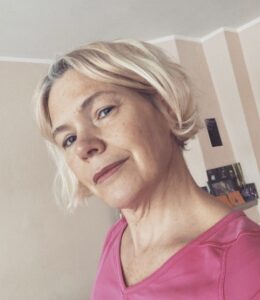 My guest today is Marion Kummerow, a USA Today Bestselling author who has received rave reviews from readers and critics for her novels about the German resistance during World War II. Her historical fiction explores the dark side of human history, featuring characters who face moral dilemmas, make difficult decisions, and fight for what is right. She also infuses her stories with humor and undying love, because she believes that love is what makes the world go round. Her stories are authentic and immersive, transporting readers to another time and place. She writes with the conviction that we must never forget the past, so it won’t repeat itself.
Born and raised in Germany, Marion has lived in various countries before returning to Munich with her family. After writing several non-fiction books, she felt drawn to the past and the subject of resistance to the Nazi regime. It took her years of courage and hard work to turn the true story of her grandparents Ingeborg and Hansheinrich Kummerow into a trilogy: “Love and Resistance in the Second World War”. Unrelenting is the first book in this series. Her other series include “War Girls“, “Berlin Fractured” and “Escaping the Reich“, and “German Wives“.
Bringing history to life through her books is Marion’s passion. She visits museums, travels to memorials and the locations in her books, reads original source material, and consults experts to meticulously research the historical facts and details in her novels. When she’s not writing or researching, Marion likes to travel, do yoga, and spend time with her family. She also enjoys reading books by other historical fiction authors.
You can connect with Marion via her website, Facebook, Instagram, Youtube and Amazon. You can shop for all her books here.
Marion’s recent release is The Last Safe Place, a standalone novel Marion was kind enough to answer some of my questions about her writing together with her inspiration for the book.
What or who inspired you to first write? Which authors have influenced you?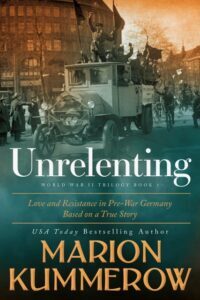 Writing began for me with a family story I could not let rest. My grandparents, Ingeborg and Hansheinrich Kummerow, resisted the Nazi regime. Their courage intrigued me since I was a child, until I finally honoured their lives by putting the story to paper.
I admire Erich Maria Remarque who depicts the human cost of war in his famous anti-war novel All Quiet in the Eastern Front, and also Primo Levi, an Auschwitz survivor whose work reminds me to look closely at ordinary people and the choices that change a life.
What is the inspiration for your current book? Is there a particular theme you wished to explore?My current novel, The Last Safe Place, is inspired by the real Operation Seven, when a small group of Jews were spirited to Switzerland by Abwehr officers who used the machinery of the regime to subvert it.
I wanted to examine conscience inside institutions, and how tiny bureaucratic acts can become lifelines. It is a story about risk, but also about the human capacity to protect one another in dangerous times.
What period of history particularly inspires or interests you? Why?I am drawn to Germany during the Third Reich, especially the everyday texture of civilian life and the tiny pockets of resistance. It is personal because of my family, and it is urgent because memory fades when we do not tend to it.
That period lays bare how fragile democratic norms are, and how quickly compromise can harden into harm. Writing into it is my way of insisting that we must never forget, so it will not repeat itself.
What resources do you use to research your book? How long did it take to finish the novel?I begin with primary sources. I read letters, diaries, eye witness accounts, and historic newspapers to capture voice and detail. I consult archives such as the Bundesarchiv and museum collections, and walk the streets where my characters live so I can place a doorway or a tram stop with confidence. I also lean on historians and subject experts who generously correct me. From first idea to finished novel usually takes nine to twelve months, with research and writing happening side by side until the final page.
What do you do if stuck for a word or a phrase?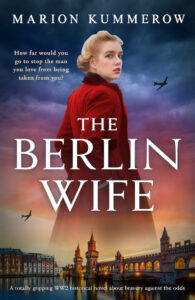 When a word refuses to arrive, I leave a placeholder and keep the scene moving, because the first draft doesn’t need to be perfect. Later I open my period dictionaries and scan contemporary sources to check how people spoke about a thing in 1943 rather than how we describe it now.
I write best in absolute silence, thus I’m not one of the authors you’ll find happily writing away in a coffee shop, unless it is absolutely necessary.
Do you use a program like Scrivener to create your novel? Do you ever write in long hand?I draft in Scrivener, because it lets me keep chapters, research clippings, and timelines in one place. When the structure is solid, I move the manuscript to Word to write the first draft. I usually outline on one sheet of paper in long hand, jotting down just a few words per chapter.
Is there a particular photo or piece of art that strikes a chord with you? Why?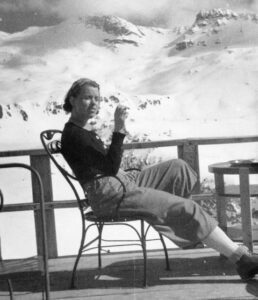 There is a small black and white photograph of my grandmother in a sunchair against the backdrop of the Swiss alps during her honeymoon. She is young, and everything hard still lies ahead of her. It reminds me that history is carried by ordinary people who choose, one day at a time, to do what is right.
Write the best story you can, and build a relationship with your characters. Once your characters become your friends or enemies, you’ll feel the way they feel and can transport this to the reader.
Tell us about your next book.I just finished a draft on a new novel in the Berlin Wife series. It’s set in the first years after the war, when cities lay in ruins. My heroine Roxy is leading a somewhat “boring” and normal life, but this all changes when she recognizes the man who commanded the camp at Belzec and she goes to the quest of bringing him to justice.
If you are new to my books, you might start with my trilogy “Love and Resistance in the Second World War” which begins with Unrelenting and is inspired by my grandparents’ story.
And if you prefer a stand-alone inspired by a daring rescue, The Last Safe Place explores Operation Seven through the eyes of German protagonists who choose conscience.
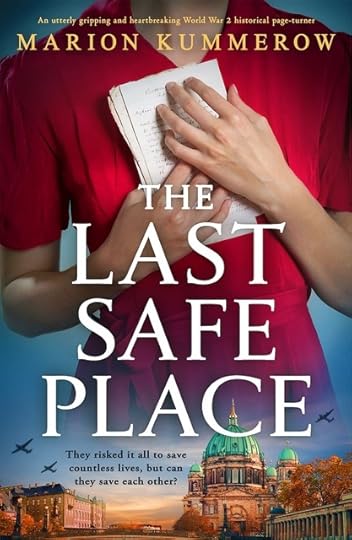
Inspired by the incredible true events of Operation Seven, where a handful of Jewish citizens escaped Berlin in 1942 by posing as German intelligence agents. A beautifully emotional and action-packed historical novel about a forbidden love affair, unfathomable courage and the power of never losing hope.
Leonore: An aspiring journalist, Leonore cannot believe she’s now undergoing covert training to be a German agent. Her instructors have no idea she is Jewish. With her family gone, she refuses to wear the yellow star. And this secret mission to escape Berlin is her last chance to be free…
Knut: Lieutenants Knut and Bernd have fallen in love in stolen moments. Bernd, with his warm brown eyes, is Knut’s last safe place in a regime built to hate who he is. They pretend to be loyal to their Nazi superiors. But their real mission—recruiting Jewish agents to smuggle them out of the country—has only just begun.
Michaela: As a Jewish doctor banned from practicing, the threat of deportation looms. But what about her two precious little girls, living in secret with their Aryan aunt outside Berlin? She must put all her faith in Knut and Bernd if she’s ever to see them again… with no idea if she can really trust the two softly spoken men in Nazi uniforms, posing as a German spy is her only option.
Hope forges unlikely friendships between the people of Operation Seven. But when the cover of the entire group is threatened, will they make it across the border to Switzerland in time?
Fans of The Nightingale, All the Light We Cannot See and Kate Quinn will be totally swept away.
Thanks so much Marion. Truth is indeed stranger than fiction. What an incredible story.
Connect with Marion via her website, Facebook, Instagram, Youtube and Amazon. Buy her books here.
 Enjoy learning about the inspiration behind this novel? Subscribe to my Inspiration newsletter for insights into historical fiction and history – both trivia and the serious stuff! In appreciation for subscribing, I’m offering an 80 page free short story Dying for Rome -Lucretia’s Tale.
The post On Inspiration: Interview with Marion Kummerow first appeared on Elisabeth Storrs Historical Novels.


October 14, 2025
A Tale of Ancient Rome trilogy is re-released
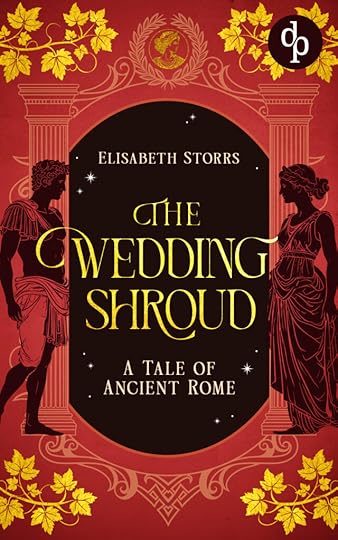
I’m excited to announce the digital rights to my A Tale of Ancient Rome series has been acquired by Dp Books! All three books have been has been revamped with terrific new covers. The Wedding Shroud is currently on sale at a discounted price. The Golden Dice and Call to Juno are on sale.
The post A Tale of Ancient Rome trilogy is re-released first appeared on Elisabeth Storrs Historical Novels.
The Wedding Shroud is re-released
I’m excited to announce the digital rights to my A Tale of Ancient Rome series has been acquired by Dp Books! The Wedding Shroud has been revamped with a terrific new cover. It’s currently on sale at a discounted price. The Golden Dice and Call to Juno are on presale.
The post The Wedding Shroud is re-released first appeared on Elisabeth Storrs Historical Novels.
October 10, 2025
Never give up – the journey of the girl in red
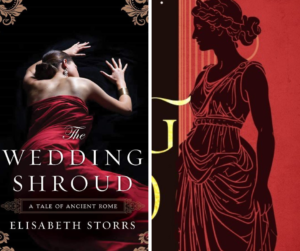
With the re-release of The Wedding Shroud by Dp Books this month, I’ve decided to share my journey in the hope it might give inspiration to other aspiring writers to never give up – and to give readers some insight into the tribulations of authors.
Write, revise and rewriteIt took me ten years to research, write and publish The Wedding Shroud when I was part of the ‘sandwich generation’, squeezed between raising children and caring for elderly parents. I had a busy job and was coping with myriad other pressures that women experience in our various roles of spouse, mother, daughter or sister. Apart from a few precious periods where I could devote solid blocks of time to writing, I only had a minimum of two hours per week to spare on Thursdays which I diarised. I kept those diary dates religiously by hiring a local schoolkid to childmind while I wrote. Meanwhile I kept a notebook to jot down ideas whenever they came to me – often at 4am in the morning! Back then, I produced paper manuscripts so I would edit on my daily train commute (if I was lucky enough to score a seat), and in my lunch breaks.
My first agent couldn’t sell the book but I was advised to submit again if I changed my focus to emphasize the love story and explore a clash of cultures.
I rewrote the manuscript with a revised plot and did further research. No luck.
I rewrote it a third time in a different style with the help of a mentor. My new agent got the book over the line! I will never forget my disbelief then exultation at hearing I’d been offered a contract with Pier 9 Murdoch Books, an Australian publisher. To add icing to the cake, I was also commissioned to write the sequel, The Golden Dice. My next big excitement was to gain an endorsement from the legendary Ursula K Le Guin!
Pier 9 took pride in producing books that were visually appealing both inside and out. I was thrilled with the cover design which featured a woman in red in a dramatic pose with the title in an elegant font, curlicues adding a sensuous flourish.
And so began the journey of the girl in red.
Caecilia – a prickly heroine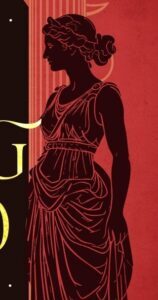 The Wedding Shroud tells the story of a Roman girl, Caecilia, used as a pawn in a decades old conflict between the austere, fledgling Republican Rome and the sophisticated Etruscan city of Veii. To seal a tenuous truce, Caecilia is wedded to an Etruscan nobleman, Vel Mastarna. The warring cities lie only twelve miles across the Tiber, but its peoples are from opposing worlds so different are their customs and beliefs. Leaving behind a righteous Rome, Caecilia is determined to remain true to Roman virtues while living among the sinful Etruscans. Instead she finds herself tempted by a hedonistic culture which offers pleasure and independence to women as well as an ancient religion that gives her a chance to delay her destiny. Yet Mastarna and his people also hold dark secrets and, as war looms, Caecilia discovers that Fate is not so easy to control and that she must finally choose where her allegiance lies.
A coming of age story, The Wedding Shroud spans only one year. In that time, a fearful and gullible girl must navigate her way through an alien yet unexpectedly seductive environment. Caecilia constantly struggles with the dilemma of how to stay true to her roots while embracing the possibilities of a new world. As such, the novel explores themes of cultural identity, duty and love, and tolerance and prejudice. Not all readers are patient with my stubborn adolescent heroine. They grow frustrated with her indecision at times, but luckily the majority of my reviewers seem to appreciate the immense challenges facing her. The Golden Dice and Call to Juno continue Caecilia’s story as she matures and becomes a mother during a ten year war, together with the plights of other strong female characters such as a Roman tomb whore, Pinna, and an Etruscan servant girl called Semni.
Debut dreamsDebut authors are naive. We have high hopes our books will be ‘the next big thing’. We expect our publisher to pour dollars into marketing to ensure our novel has the best chance of success. The sad truth is the publishing world works on what I call the ‘spaghetti method’ – they throw debut novels against the wall like pasta. Those that stick are given more marketing dollars. The rest slide down the wall and are tipped into the bin. It hadn’t dawned on me publishers sell books directly to booksellers not readers. An author’s fate is in the hand of a bookstore owner who has limited space and razor thin margins. The shelf life of a new release is 12 weeks at best – thereafter your book baby faces being returned to the warehouse and ultimately pulped.
The Wedding Shroud was released in 2010 at exactly the time the Borders empire collapsed and the Red Group (an Australian book group) also hit financial difficulties. My novel sank without trace. I found the experience bewildering. The book I’d slaved over for ten years had been relegated to the dustheap in the space of a few months. But hope springs eternal, I concentrated on finishing the sequel within 18 months. I made the deadline but heartbreak followed. Pier 9 closed its fiction imprint. The deal for The Golden Dice fell through.
The Indie Gold Rush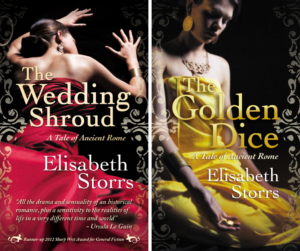
MY INDIE COVERS
The adjective ‘stubborn’ suits me. I now had two books without a home, and was determined that all my efforts would not go to waste. I decided to self-publish. To my great good fortune, a group known as Historical Fiction Authors Co-op reached out to me through the ether to ask me to join them. They were a collective of both traditional and self-published authors, many of whom had successfully cracked the market. The group was led by the amazing M Louisa Locke whom I learned was a guru in self-publishing circles as an expert on Amazon keywords and categories. Using her advice, I launched The Wedding Shroud in 2013 and The Golden Dice in 2014 into the Amazon eco-sphere at a time when the goliath supported Indie authors. By using very short windows of opportunity (3 days) to offer books for free, Indies could gain visibility to compete with legacy publishers. Through this marketing method, my books were bumped into the Historical Fiction popularity lists for months at a time alongside traditionally published heavy hitters. Suddenly I was selling thousands of ebooks, rising in the rankings, and garnering reviews. I was part of the ‘Indie Gold Rush.’ I began to plot the third book, Call to Juno.
The covers photoshoot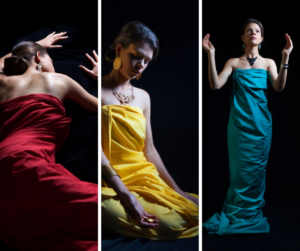
RAW IMAGES FROM THE PHOTOSHOOT
I approached self-publishing as a business. I employed an American editor to ‘Americanize’ my book as my readers were no longer in Australia but in the States. I felt it was important to make the reading experience as comfortable as possible for this new readership by using familiar spelling, grammar and vocabulary so my ‘Australian English’ was less likely to distract from the story. But what was I to do about covers? I wanted to create a brand with a recognisable ‘face’ representing Caecilia across the three books. I was inspired by the ‘girl in red’ concept on the Pier 9 cover but wanted my own version with a different pose and starker lighting. So I hired a photographer, Tom Greenwood, to do a photoshoot for my trilogy. The beautiful girl is the lovely Marcella, a daughter of a friend. And her wardrobe? The red, yellow and turquoise gowns were my sons’ brightly coloured bedsheets! Marcella wore some of her own fine jewellery but others were just cheap costume pieces from K-Mart. I even painted some toy dice with gold paint and inscribed them with Etruscan numbering. The very talented designer, Lance Ganey, produced the covers for the first two books. The girl in red was fashioned anew. And the girl in yellow made her debut.
Opportunity knocks – Lake Union Publishing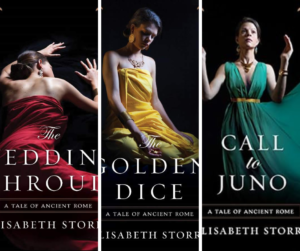
LAKE UNION COVERS
There is a saying that success occurs when preparation meets opportunity. Out of the blue, I was contacted by Jodi Warshaw, a commissioning editor from Lake Union Publishing, an Amazon Publishing imprint. (In fact, I thought her email was simply an Amazon book recommendation so I was glad I didn’t delete it!) Jodi’s team had noticed my indie sales and wanted to buy my first two books, and commission me to finish Call to Juno. The offer was too good to say no, especially as audio editions were also to be produced. I am forever grateful for Jodi’s support and caring advice. The Wedding Shroud and The Golden Dice were re-released in 2015. I finished Call to Juno within 12 months. And what of the covers? Lake Union loved my girl in red and in yellow. And in 2016, the girl in turquoise was introduced for Call to Juno with the old bedsheet enhanced using photoshop (thank goodness!)
Ten years have gone by since Lake Union first launched my trilogy. My books have now sold tens of thousands of copies with over 3,000 ratings on Goodreads between them. Sales continue. The threat of my books being shunted back to a warehouse and pulped as they were in Australia in 2010 is non existent in this digital age. I love the fact Caecilia’s story continues to engage readers to whom I am so grateful.
This is Rome calling…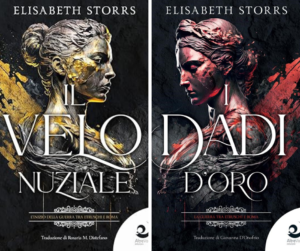
MY ITALIAN COVERS
Readers are the most important people in an author’s writing life. The next unexpected email to land in my inbox was from an Italian fan who loved Call to Juno. An historical novelist himself, Andrea Oliverio, enthusiastically recommended my trilogy to his publishing colleague, Marco Paganini, from AltreVoci Edizioni. It has been a dream come true to have my Roman books translated into Italian as Il Velo Nuziale and I Dadi D’Oro with Il Patto di Giunione to be released next year. Interestingly, Marco chose to swap the colours but I think the images are stunning.
But wait! The story isn’t over. Last year, I was again contacted out of nowhere. This time by Dp Books, a digital only publisher that wanted to acquire my ebook backlist. Dp Books understands the value of an author’s catalogue which can potentially generate sales for years (The Wedding Shroud has already been going for 15!) I’ve been excited to work with James Faktor and his enthusiastic team who are prepared to promote my novels to reach new readers, primarily in the UK. And I’m grateful Lake Union Publishing continues to sell the paperback and audio editions of all my books.
And the covers? Dp Books has taken a different approach based on current trends for ancient world fiction. I’m thrilled with the result. The girl in red, Caecilia, has been joined by her beloved husband, Vel Mastarna. And Dp Books have also given my Amazon pages A+ treatment with lush graphics which I hope will catch a reader’s eye. The Wedding Shroud is already on promotion. The Wedding Shroud is on sale while The Golden Dice and Call to Juno are on pre-sale. The next step on the journey begins!
So my advice is to don’t give up! You never know when opportunity will knock (or a fantastic email will land in your inbox). The girl in red, yellow and turquoise told me so.
Elisabeth Storrs is the author of the ‘A Tale of Ancient Rome‘ series. Learn more at www.elisabethstorrs.com. Subscribe to her monthly newsletter for inspiration, giveaways, and insights into history – both trivia and the serious stuff! https://elisabethstorrs.com/subscribe
The post Never give up – the journey of the girl in red first appeared on Elisabeth Storrs Historical Novels.
May 24, 2025
Garbo & the Swedish Queen – History Girls
My latest post in the History Girls blog is about Greta Garbo’s meteoric rise to stardom from a ‘lather girl’ in a barber shop to a screen goddess. She was keen to make a movie Queen Christina, about the controversial and scandalous C17th Swedish queen. MGM granted her wish but it was a very Hollywood take!
The post Garbo & the Swedish Queen – History Girls first appeared on Elisabeth Storrs Historical Novels.
May 19, 2025
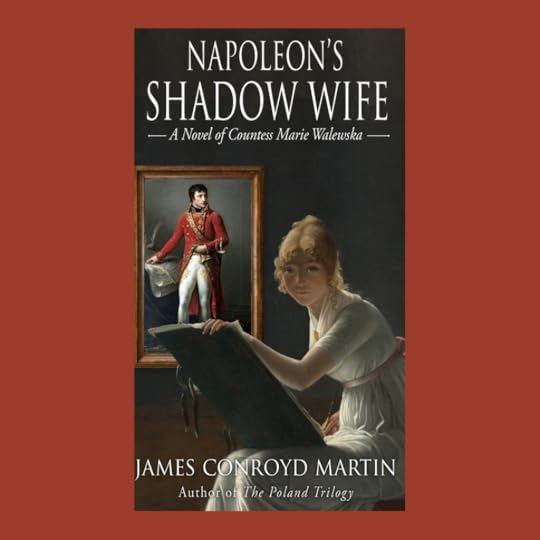
On Inspiration: Napoleon’s Shadow Wife by James Conroyd Martin
 My guest today is James Conroyd Martin who returns to speak to me about his new book, Napoleon’s Shadow Wife. A Chicago native, James balanced his longtime teaching career with that of a novelist. He has retired from teaching to focus solely on writing. The diary of a friend’s ancestor, a Polish countess who lived in the late 1700s, inspired his first novel, Push Not the River. That led to a trilogy, as well as The Boy Who Wanted Wings, highlighting the saving of Vienna from the Ottomans at the Battle of Vienna in 1683. Following that came Fortune’s Child, the first of a duology based on sixth-century Empress Theodora, a woman the BBC rated as the 35th most important woman in World History. He also wrote a ghost story, Hologram: A Haunting, based on a house in Hammond, Indiana. Martin currently resides in Portland, Oregon.
You can connect with James via his website, Facebook, Twitter and Instagram. You might be interested to read my interview with him about the inspiration for Fortune’s Child.
You can purchase Napoleon’s Shadow Wife here.
I asked James to tell us about the remarkable Marie Walewska, the faithful Polish mistress of Napoleon, and his inspiration for the novel.
A love born of politics, consumed by passion, and haunted by betrayal. Marie Walewska (nee Maria Łączyńska) was an incredible woman. At eight years old, she lost her father battling against Russia for Poland’s independence. The loss sowed the seeds of patriotism within her. Shortly after her schooling, in order to save the family estate, she was pressured into a marriage with a much older wealthy count, with whom she gave birth to a son. Marie herself arranged to meet Napoleon in a most unusual way—but not out of any romantic notion. Let’s leave that quest right there.
I had heard people talk of Countess Marie Walewska, and I had seen the 1937 film Conquest with Greta Garbo as Marie and Charles Boyer as Napoleon. In researching the second book of my Poland trilogy, Against a Crimson Sky, which covered the Napoleonic years, I could not help but learn a great deal about her. It came as no surprise that Hollywood had invented a good deal of their screenplay.
But it was only in focusing on the woman as the main player in my novel that I came to feel I understood her. In fact, even after I had written the first draft, I was still unsure about having captured her essence. But as I went over the research again and followed through on one rewrite and then another, did I feel as if I came to really know her.
A story of patriotismMarie’s story is one of great patriotism. And it is one of an unconditional love that nearly defies understanding. She never intended to attract Napoleon, and yet she did. She had no wish to accept him as her lover, and yet she did. I think she surprised herself when—despite myriad complications—she fell hopelessly in love.
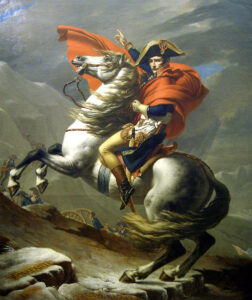 At the start of their affair, Napoleon was still married to Josephine, but he was disappointed that she had not given him a child. He had other affairs, too, but he repeated told Marie that her sincerity and unconditional love were what endeared her to him. That neither Josephine, nor any other woman, had given him the child he so desired, made the emperor think that the fault was his. It took Marie to ease his mind, presenting him with a baby boy.
After a divorce from Josephine, Napoleon married again—but not to Marie. His obsession with creating a royal legacy led to a marriage with Archduchess Marie-Louise of Austria.
And yet, the connection between Marie and Napoleon continued. It would outlast even the second marriage.
Decide for yourselfDid Napoleon love Marie? Many of his actions seem to supply an abundance of evidence that he did not. However, I think that he did, but not in a conventional way—and certainly not in the unconditional way in which she loved him. As the author, I did not try to lead the reader; I placed the evidence on the page, and I suspect readers will judge for themselves.
How could an emperor like Napoleon Bonaparte be so captivated by the twenty-year-old Polish Countess Marie Walewska—admittedly a rare beauty but of minor nobility—that their affair would last through both his marriages? And if it wasn’t romance that first drew Marie to Napoleon, what was it?
Expect to be immersed in Marie’s world, where love and loyalty collide amidst a galaxy of powerful aristocrats, politicians, and military leaders. You’ll journey from Marie’s manor house on the plains of Poland to cosmopolitan Warsaw, through grand palaces in Austria, France, and Italy—before sailing to the Island of Elba, where destiny awaits.
Thanks James! I have heard about Josephine and Desiree but this was the first I’d learned of Marie. What an amazing young woman she must have been. Good luck with the book! And congratulations on your placing in the Goethe Award.
You can purchase Napoleon’s Shadow Wife here.
Haven’t subscribed yet to enter into giveaways from my guests? You’re not too late for the chance to win this month’s book if you subscribe to my Monthly Inspiration newsletter for giveaways and insights into history – both trivia and the serious stuff! In appreciation for subscribing, I’m offering an 80 page free short story Dying for Rome -Lucretia’s Tale.
The post On Inspiration: Napoleon’s Shadow Wife by James Conroyd Martin first appeared on Elisabeth Storrs Historical Novels.
April 14, 2025
On Inspiration: Interview with Galina Vromen
 My guest this month is debut author, Galina Vromen, author of Hill of Secrets. Galina began writing fiction after more than twenty years as an international journalist in Israel, England, the Netherlands, France, and Mexico. After a career with Reuters News Agency, she moved into the nonprofit sector as a director at the Harold Grinspoon Foundation and headed their operations in Israel. There she launched and directed two reading readiness programs, one in Hebrew and one in Arabic, which gifted twenty million books to young children and their families during her tenure and were named US Library of Congress honorees for best practices in promoting literacy. She has an MA in literature and a BA in media and anthropology. She and her husband divide their time between Israel and Massachusetts where Galina loves to swim, hike, kayak, write, read and hang out with friends.
You can connect with Gallina via her website and Amazon author page. You can buy Hill of Secrets here.
What or who inspired you to first write? Which authors have influenced you?My grandfather first inspired me to write. I sent him a poem when I was about eight and he sent me one back, riffing off of my poem. I was a big reader as a kid and I always imagined that I would write. My fantasy was to be a journalist for National Geographic Magazine and I imagined marrying a photographer and traveling around the world as a team, writing and photographing interesting places. In terms of historical fiction, I would say the biggest influences have been Kate Quinn and Kelly Rimmer. In terms of books with changing points of view, Kathryn Stockett’s The Help was a model that I very much admire and used as a guide. In terms of beautifully evocative, sensual writing, Andre Aciman is an author who sets a high bar to aspire to.
What is the inspiration for Hill of Secrets? Is there a particular theme you wished to explore?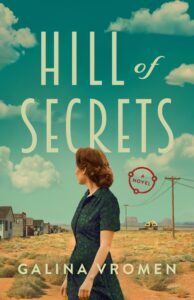 I very much wanted to explore the notion of secrets, the role they play in our personal and collective lives, and to raise the question of when is it best keep secrets and when is best to reveal them – and for whose sake? I chose WW2 Los Alamos as the location for my novel because it was arguably the most secret place in the US at the time (even though 6,000 people lived there!). And my main characters all have personal secrets, except for one (Gertie, a teen) who desperately wants to learn everyone else’s secrets.
I like 20th century history in part because it is a century where so much happened and because so many events then still influences us today.
What resources do you use to research your book? How long did it take to finish the novel?I read a lot about Los Alamos and the Manhattan Project, including American Prometheus, the very detailed biography of Robert Oppenheimer which the film Oppenheimer was based on. There are lots of oral histories of people who lived at Los Alamos during WW2, including children, wives, maids, manual workers and those testimonies were very important in my research. In addition, quite a lot of people who lived at Los Almos during WW2 later wrote memoirs, so I read a lot of them. The book took me 12 years to write but I started reading about Los Alamos for about a decade before then.
What do you do if stuck for a word or a phrase?I use google to look for any kind of synonym for the word or phrase at the tip of my mind. Or – terrible habit – I go to the kitchen and eat something. Unfortunately, that doesn’t help me find the word I’m looking for, just means the more words I can’t find, the fatter I get.
Is there anything unusual or even quirky that you would like to share about your writing?I like to write in small, spare rooms. I wrote my undergraduate thesis in a walk-in closet to concentrate, and I like to write in study rooms in libraries, where I have no excuse to get distracted. Because I was a news reporter for many years, writing while several different radio and TV stations were going on at once, I also can write with a lot of noise around me.
Is there a particular photo or piece of art that strikes a chord with you? Why?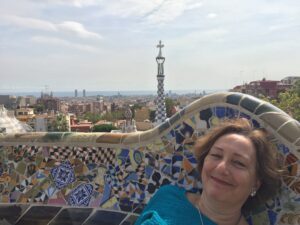 I was blown away by the mosaic work of Antoni Gaudi at the Guell Park in Barcelona. First of all, I love mosaics and love making mosaic work myself, so I was in heaven just being there. I love the riot of colors and how each small bit is part of a whole, how each piece both fits in and yet stands out at the same time. Mosaics just seem such a metaphor for so much in life, and it was just beautiful!
No, I haven’t used Scrivener though I would consider doing so in the future. I never write in long hand because I type very fast from years of being a reporter and I can riff with a keyboard and keep up with my thoughts much better by typing them than by writing long hand.
What advice would you give an aspiring author?Persistence is what it’s all about. You just have to keep at it. And don’t let the detractors, the nay sayers, get to you. I stopped writing for about three years because of something someone I trusted said about my work. I should have just ignored her. Another piece of advice: less is almost always more. Don’t use two adjectives when one will do, don’t overexplain to your reader. So often, writers (including me) feel a need to set a scene, give background before they jump into a chapter, when they could start a page or two down, and get into the action, without the preamble. And there is a tendency go on too long at the end of a chapter. So always look at those first few and last few paragraphs of a chapter and consider whether you really need them.
Tell us about your next book.I’m thinking of doing a sequel that would follow one of the characters in the book into the 1950s. The idea is not very formed yet.
When Robert Oppenheimer gathers a group of scientists at the clandestine desert outpost of Los Alamos to create the world’s first nuclear weapon, their families move there as well with no explanation other than to “Stand by. Make do. And above all, don’t ask questions.” In this immersive novel, the lives of real historical figures intertwine with fictional characters who must cope with suppressed yearning, irrepressible love and guilt. Among them are Christine Sharp, forced to abandon her art restoration business in New York to support her husband’s career and must re-invent herself. She forges an unlikely friendship with Gertie, the precocious teenage daughter of German-Jewish refugee and prominent physicist Kurt Koppel. Gertie enlists Christine to help her capture the heart of Jimmy, a shy soldier, and to deal with parents haunted by their past. Kurt, anguished by what the Nazis have done to his family and bent on defeating them, carries burdens he longs to share. In revealing the complexities of life for those at Los Alamos who knew about the bomb and those who couldn’t be told, HILL OF SECRETS explores the complicated web of secrets we all spin and hold as we navigate our way through life. And like Oppenheimer and his team, they all must contend with the moral questions and aftermath of creating the bomb that destroyed Hiroshima and Nagasaki.
Thanks Galina – the novel sounds complex and fascinating. I hope you figure out an angle for the sequel.
Haven’t subscribed yet to enter into giveaways from my guests? You’re not too late for the chance to win this month’s book if you subscribe to my Inspiration newsletter and comment on the interview. In appreciation for subscribing, I’m offering an 80 page free short story Dying for Rome -Lucretia’s Tale.
The post On Inspiration: Interview with Galina Vromen first appeared on Elisabeth Storrs Historical Novels.
March 12, 2025
On Inspiration: Interview with Annie R McEwen
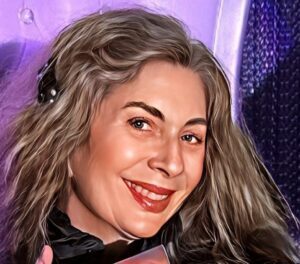 My guest this month is Annie R McEwen, a career historian who has lived in six countries and under every roof from a canvas tent to a Georgian Era manor house. She is published by Harbor Lane Books (US), Bloodhound Books (UK), The Wild Rose Press, and Rowan Prose Publishing. When she’s not in her 1920s bungalow in Florida, Annie lives, writes, and explores castles in Wales. A winner of the 2022 Page Turners Writing Award (Romance Category), Annie garnered both a First and Second Place 2022 RTTA (Romance Through the Ages Award), the 2023 MAGGIE Award, and the 2023 Daphne du Maurier Award. She was a Finalist for the 2024 Page Turners Writing Award and Shortlisted for a Writer’s Mentorship Award. Annie’s short fiction appears in numerous anthologies.
You can connect with Annie via her website, Facebook, Instagram, Goodreads and Bluesky
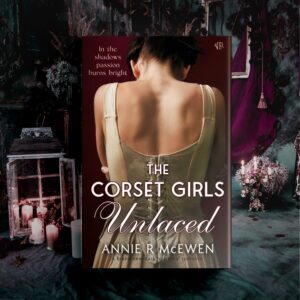
Annie’s latest release is the The Corset Girls, Unlaced. You can find all Annie’s books on Amazon.
 What or who inspired you to first write? Which authors have influenced you?
As a teen I was mad for writers of the Romantic Age (early to late, British, French, and American): Charlotte Bronte, Charles Dickens, Elizabeth Barrett Browning, Edgar Allan Poe, Emile Zola. In more modern fiction, and as a genre fiction author, I have learned much from Diana Norman, Anne Perry, Dorothy Sayers, Daphne du Maurier, and the very clever Joanna Bourne.
What is the inspiration for your current book? Is there a particular theme you wished to explore?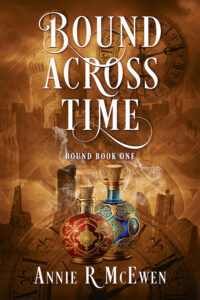 The Corset Girls, Unlaced, is what I call Victorian noir romance. To say I’m inspired by history is self-evident—I’m a career historian—but as a reader of historical romance, especially that of the Regency to Edwardian Eras, I saw a preponderance of themes attached to the upper class at play: wealth, society gossip, the ballroom, bared shoulders and well-cut tailcoats. I like to write the working classes, especially in Industrial Age Britain. Their passion is just as soaring, their quest for happiness just as profound. In The Corset Girls four-book series, the focus is on four working women (staymakers) and the four men (all from problematic and even criminal backgrounds) who love them. All eight are swept along in an age of technological marvels and social unrest. None of the eight appear in Burke’s Peerage, but a couple might be found in Newgate Prison!
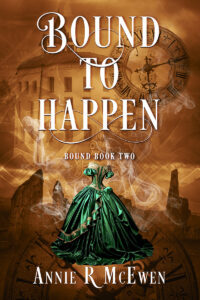 My deep love for and kinship with the Victorian and Edwardian Ages comes from three sources: one familial, one literary, one academic/professional. Familial: One of the most influential people in my childhood was my godmother, born in 1884. A near-invalid, she lived in a cottage surrounded by reminders of her genteel past, and told story after story of what it was like to be a child before automobiles and telephones. Literary: The books I most loved as a child were written in the 1800s. The first I wept over was Black Beauty. I learned what fantasy and adventure were from Jules Verne and H.G. Wells and Robert Louis Stevenson. Charles Dickens taught me about writing character, and how each individual is a metonym for the greater society of the time. Academic and Professional: At university, I was drawn to the vast changes in Western society from the 1840s to World War One; the material culture of that interval is my area of specialisation.
When I became a museum professional (more than 27 years in that work), I had the good fortune to be staff in two sites whose mission was the interpretation of that period (1886 and 1891, respectively), as well as the Executive Director of a historic (circa 1891) house museum. The decades presented at those sites offered the worst behaviours, the most grinding poverty, the most blatant inequality, and the deepest despair. At the same time, they offered a seemingly boundless world of science, ideas, the arts, and education. I find endless inspiration in that contrast.
What resources do you use to research your book? How long did it take to finish the novel?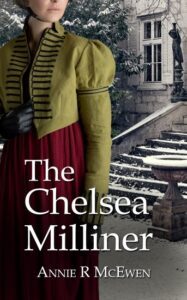 While the final manuscript of The Corset Girls, Unlaced coalesced over a year, I had already spent two years developing the series concept. To write the books, I rely on many years of prior research into Britain in the 1890s, refreshed—as always—by new scholarly work published every week. I’m a fan of the Internet only insofar as it’s the handiest and largest encyclopedia in the known world. It is flawed, however, and is more problematic since the intrusion of AI into search engines. I still use books, the digital or paper kind, and engage my academic habit of digging through scholarly journals (most of them digitised today.) A few online blogs or compendia of historical knowledge provide help: the Jane Austen Centre’s blog articles, for example, or Candace Hern’s excellent website. And The Historical Novel Society, of course.
Walk away, have a cuppa, try again.
Is there anything unusual or even quirky that you would like to share about your writing?I usually retire early and wake at three in the morning. I then write steadily until around ten or eleven a.m.
Do you use a program like Scrivener to create your novel? Do you ever write in long hand?The first, no, never. The second, sometimes. I do some of my best writing in notebooks I keep in my car and scribble upon in coffeeshops. What I write that way undergoes a lot of revision in its journey to a typed manuscript, however.
Is there a particular photo or piece of art that strikes a chord with you? Why?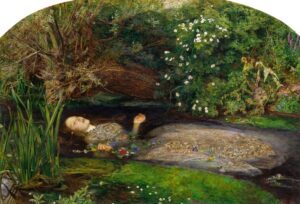 Like most people who first see famous art in a book, I fell in love as a teenager with Botticelli’s The Birth of Venus. As an adult, when I saw the actual painting in the Uffizi in Florence, I was struck by how small it is. It demonstrated that enduring art is not necessarily big. In my work, I don’t strive for big. I strive for compactly interesting, highly textured, and, if possible, beautiful. I also love Ophelia by John Everett Millais. (1851 Google Art Project).
People will tell you, ‘Don’t stop.’ I say, ‘Don’t stop improving.’
Tell us about your next book.Boundless, the last of a trilogy of ghost romance novels (all with hefty historical content), launches later this year. Book Two of The Corset Girls (titled Unbound) sees the light in Summer 2025. Moonlight and Margaritas, launching in March 2025, is a romance anthology that includes my short story set in London just prior to WWII: a tale of spies, love, and cocktails.
After a desperate act leaves Jillian Morehouse a fugitive, she flees to Whitechapel. The escapee finds work in a Mayfair corset workshop, but the walls are closing in.
Jillian catches the eye of the handsome Michael Kelly, a reformed criminal with a dangerous history he’s anxious to keep hidden. The pair are drawn together by a powerful attraction—but their love is tested when she’s kidnapped and abandoned in the catacombs beneath London.
With enemies circling and secrets threatening to destroy them both, Jillian and Michael must confront their darkest fears . . . or lose everything to the shadows of their pasts.
Thanks Annie – all the best with The Corset Girls, Unlaced. I love the idea of Victorian noir!
Haven’t subscribed yet to enter into giveaways from my guests? You’re not too late for the chance to win this month’s book if you subscribe to my Inspiration newsletter and comment on the interview. In appreciation for subscribing, I’m offering an 80 page free short story Dying for Rome -Lucretia’s Tale.
The post On Inspiration: Interview with Annie R McEwen first appeared on Elisabeth Storrs Historical Novels.
January 21, 2025
On Inspiration: Interview with Melissa Addey
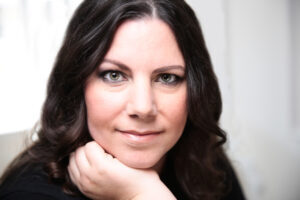 My guest today is fellow Romaphile, Melissa Addey. However, Melissa doesn’t just limit herself to the history of the Eternal City! She also writes historical fiction set in medieval Morocco, 18th century China and Regency England. Her books have been selected for Editor’s Choice by the Historical Novel Society and won the inaugural Novel London award. She has been the Leverhulme Trust Writer in Residence at the British Library and has a PhD in Creative Writing. She lives in London with her husband and two children.
If you’d like to try Melissa’s writing, visit www.melissaaddey.com to pick up two free novellas, The Cup and The Consorts. You can connect with Melissa via Instagram and TikTok.
You can buy Melissa’s (many) books via her Amazon page.
What or who inspired you to first write? Which authors have influenced you?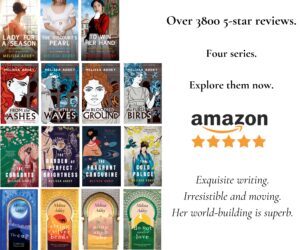 I read an enormous amount as a child (we didn’t have a TV!) – all the classics as well as a lot of myths and legends from around the world, which I loved. I think reading all of those eventually came back out again in my own stories. In historical fiction, Tracy Chevalier who finds fascinating and unusual topics to write about, Philippa Gregory for her Tudor and Plantagenet series, where each book takes a different viewpoint, forcing you to revisit events from a new perspective, it’s something I’ve done in two of my series and I both love reading them and writing in that way – sitting down to write the ‘bad’ person’s viewpoint is a real workout as a writer. I love reading John Steinbeck, Terry Pratchett and Stephen King, so I can only hope something of their skills eventually rubs off on me!
I’m writing a standalone Regency romance series called the Regency Outsiders – it follows the Regency romance subgenre, but tries to explore what it might be like to be a little outside the ‘norms’ of that society – from people declared ‘lunatics’ to those who are neurodivergent or disabled, those who have been locked into engagements from childhood and expected to go through with them. I’m enjoying mixing beloved tropes of the subgenre with characters who do not always fit the expected behaviour of those tropes. Right now the book I’m completing, The Viscount’s Pearl, has a woman who is probably autistic, which I found interesting as it runs in my family and I thought that a section of society that has very demanding social expectations would be tricky for someone neurodivergent to navigate.
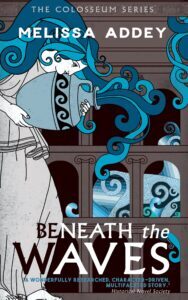 Just before starting this series I worked on a series of four books set in Ancient Rome, because I was curious – if the Colosseum had such vast spectacles, who was organising them? A similar size arena today has 3000 members of staff – yet there is zero mention of the backstage team of the Colosseum, so I had a lot of fun recreating them from the evidence left behind. For example, someone must have found, trapped and trained animals. There is mention of coloured sand in the arena – so someone must dye it and if you have different colours of sand, what are you using it for? Presumably to make patterns, perhaps to dance through (there were dancing girls in the breaks) or to indicate parts of the scenery. All those myths and legends I read came in handy for this series because they used to re-enact a lot of them with gladiators or unfortunate prisoners.
This is a guest post Melissa wrote for A Writer of History about doing the research for those books.
What period of history particularly inspires or interests you? Why?It’s not very commercially savvy of me to keep moving from era to era, but I’ve come to see myself as a sort of wandering minstrel: I go to an era that fascinates me, find the stories I want to share, then move onwards. I hope my readers enjoy travelling alongside me. So far I’ve visited Ancient Rome, medieval Morocco, 18th century China and right now I’m working on Regency England. My Roman Colosseum series consisted of 4 books, From the Ashes, Beneath the Waves, On Bloodied Ground and A Flight of Birds. They followed the backstage team of the Colosseum – a retired centurion, his scribe, an ex-Vestal Virgin, a runaway slave boy and a She Wolf (prostitute) as well as other found family, as they escape Pompeii as it gets destroyed and then inaugurate the Colosseum. Each book follows one element – fire, water, earth and air. I loved following their lives as the Colosseum grew and changed.
What resources do you use to research your book? How long did it take to finish the novel?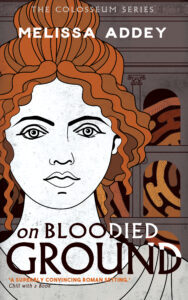 I usually collect books for a while, then start looking for articles or specific pieces of info I need to fill gaps required by the plot. Then I’ll go through a phase of sensory research: cooking recipes from the period, watch dances, go on research trips (my most recent was to London’s oldest perfume shop, which was amazing!) maybe even dress up. I use Pinterest to gather lots and lots of images that bring the book to life for me visually – including the fun of clothes for my heroines especially – I can spend a whole morning picking bonnets and frocks! I listen to music from the era or something suitably evocative while writing. For my Roman books the fantastic Steve Cockings, an international re-enactor, invited me twice to his house for the most wonderful Saturnalia feasts just before Christmas – he cooks food from the period and serves it on real or replica tableware. Everyone dresses up. He dressed me in a Roman lady’s outfit and then put real 1st century jewellery on me and I was sipping from real 1st century cups… it’s an awe-inspiring feeling.
A book takes approximately 6 months from beginning to publication, the first in a new era is always a little slower but once I’m embedded in an era it gets a little faster.
What do you do if stuck for a word or a phrase?The thesaurus is often my good friend, but I also have things like lists of names, slang, cookery books, etc. for each era, and those are very helpful in filling in important details. I have a great book on Regency food, so I have fun devising fancy meals every time my characters need to eat. The Roman plebians ate more simply as many didn’t even have kitchens, but knowing how much Romans today love their food I created a street food owner who is the best friend of my main narrator, so that I could talk about all the delicious things she cooks from simple ingredients.
Is there anything unusual or even quirky that you would like to share about your writing?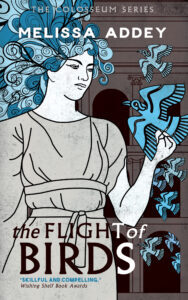 I think I’ve found I love to write about very tight social situations where putting a foot wrong leads to anything from social ostracism to death, and then working out how my characters will cope with not fitting those expectations. I like both the rules and what happens when they are broken or at least challenged. And I love sensory research! I think it makes the era come alive for me and therefore for the reader as well.
No, just Word for me. I scribble a lot of lists of things to do or ideas for plots etc., but they go into the computer pretty fast.
What advice would you give an aspiring author?Read a lot. Write as often and as much as you can because your writing will get better with practising, even if you don’t realise it.
Is there a particular photo or piece of art that strikes a chord with you? Why? It’s a photo from Unsplash but I no longer have the photographer details – when I saw this it perfectly summed up the feeling of my book The Cold Palace, which focuses on an empress of China who ‘went mad’ and her life in the Forbidden City. I love it and I use it in my book trailers for that series all the time.
I’ve just finished and will be editing The Viscount’s Pearl, with the autistic heroine. After that I’m moving on to write To Win Her Hand which will be a Christmas Regency romance. It’s based on a line from Pride and Prejudice where Lady Catherine de Burgh says that Mr Darcy and her daughter were intended to marry since they were in the cradle. I wanted to explore what that would feel like – being duty bound to marry someone you barely know. I read years ago that every author should have a Christmas book in their back catalogue and having just checked Amazon’s Top 100 mid December and found 20+ Christmas titles, so it looks like they might be right. So this is my one! I’m lucky that the Regency era I’m using included not just lovely Christmas traditions but also 1814 had the last Frost Fair where the River Thames in London froze over and there was a huge celebration on it with thousands of people, fires, foods, music and dancing – so I have not just Christmas but a bonus Frost Fair to use in my story!
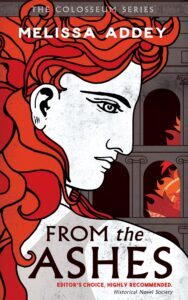
They called it the Flavian Amphitheatre. We call it the Colosseum. Let the Games begin.
Rome, 80AD. A gigantic new amphitheatre is being built. The Emperor has plans for gladiatorial Games on a scale no-one has ever seen before. But the Games don’t just happen by themselves. They must be made. And Marcus, the man in charge of creating them, has just lost everything he held dear when Pompeii disappeared under the searing wrath of Vesuvius.
Now it will fall to Althea, the slave woman who serves as his scribe, to ensure the Colosseum is inaugurated on time – and that Marcus makes his way out of the darkness that calls to him.
Can a motley crew comprising a retired centurion, slaves, a prostitute and an ex Vestal Virgin pull off the greatest gladiatorial Games ever seen? Or will they fail and find themselves in the arena as punishment? Time is running out to deliver an unforgettable spectacle.
FROM THE ASHES is the first, fast-paced novel in the gripping new Colosseum series. Follow the quick-witted and fiercely loyal backstage team of the Colosseum through the devastation of Pompeii, plague and fire. This is historical fiction at its most captivating: both action-packed and tender.
Thanks so much for providing insights into your books, Melissa! I think it’s fantastic how you’ve delved into so many different eras and cultures. Good luck with your Regency series.
You can buy Melissa’s (many) books via her Amazon page.
Haven’t subscribed yet to enter into giveaways from my guests? You’re not too late for the chance to win this month’s book if you subscribe to my Inspiration newsletter and comment on the interview. In appreciation for subscribing, I’m offering an 80 page free short story Dying for Rome -Lucretia’s Tale.
The post On Inspiration: Interview with Melissa Addey first appeared on Elisabeth Storrs Historical Novels.
November 24, 2024
On Inspiration: Interview with Samantha Greene Woodruff
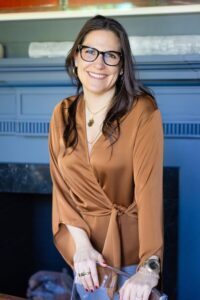 My guest today is Samantha Greene Woodruff who is the author of two #1 Amazon bestselling historical fiction novels, The Lobotomist’s Wife and The Trade Off. Sam has a BA in history from Wesleyan University and an MBA from the NYU Stern School of Business. She spent fifteen years at Viacom’s Nickelodeon before leaving to parent her two young children. After studying in the continuing education program at the Writing Institute at Sarah Lawrence College, Woodruff completed her first novel, The Lobotomist’s Wife, which was an Amazon First Reads pick. Her writing has appeared in Newsweek, Writer’s Digest, Female First, Read 650 and more. In addition, she has contributed an essay entitled “Jew-ish” about her lifelong conflicted relationship with Judaism, to the USA Today bestselling anthology, On Being Jewish Now (2024) edited by Zibby Owens. All proceeds from the book go to Artists Against Antisemitism, a non-profit founded in the aftermath of the October 7 attacks in Israel. Woodruff lives in southern Connecticut with her husband, two children, two dogs and a small reptile zoo.
You can connect with Samantha via her website, Instagram, Facebook and Threads.
You can follow Samantha and buy her books on Amazon.
What or who inspired you to first write?I’m not sure there was one person or book that inspired me to start writing. I always loved to write, but it was a very personal outlet – I used creative writing more like journaling. Professionally I wrote tons of strategy presentations and reports analysing things like TV ratings (I worked on the business side at Nickelodeon.) The first time I tried to write a novel in earnest was in 2015 when I took a beginning novel writing continuing education class at Sarah Lawrence College. I discovered that I loved writing fiction and that writing a novel was a specific skill I wanted to hone. Fun fact: Annabel Monaghan was my first writing teacher.
Which authors have influenced you?As far as influence, like most writers, I’m a reader, so I think I’ve taken a little from many books I’ve read in my life. I’ve long loved historical fiction so, when I decided to start off in that genre, I looked to some of the contemporary greats like Beatriz Williams, Kristen Hannah, Kate Quinn, Martha Hall Kelly. They all do such a terrific job of putting the reader in the time and place in which their books are set and keeping the pages turning with compelling characters and story.
What is the inspiration for your current book? Is there a particular theme you wished to explore?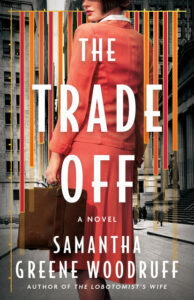 My inspiration for The Trade Off came from a 2021 event in the stock market, the GameStop “short squeeze.” GameStop was a business in decline and one prominent hedge fund manager was short the stock, when the price started to soar, costing the hedge funder a fortune. It grabbed headlines because the people who drove up the price were a group of amateur investors—mostly day traders who were home because of the pandemic—who banded together to “stick it” to what they perceived to be “evil” hedge funder. It was dramatic and personal, the hedge fund investor was reviled on social media and even received death threats.
The stock market had never interested me before, even though I have an MBA and am married to an investor, but the human piece of the GameStop story piqued my interest. I think there is this assumption that most of the very rich, especially in finance, are evil and greedy while the poor are good. But is it accurate to tie make moral and ethical judgements of a person to their wealth? Nothing is ever that black and white. I wanted to wade into the grey area.
What period of history particularly inspires or interests you? Why?I am relatively time-period agnostic. I go to the period that makes sense for my story, or perhaps, the era I which an interesting person who I want to write about lived. Right now, I’m working on a dual-timeline book where the “historical” period is in Romania in the 1980s. The one thing that I know is that I tend to avoid WWII, so many authors do such a wonderful job writing about numerous aspects of this time in history, but it isn’t one that I want to tackle.
What resources do you use to research your book? How long did it take to finish the novel?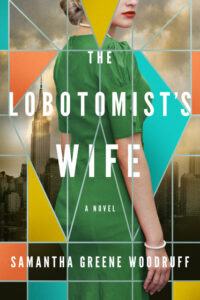 I start with articles I find on the internet and then go to books. For The Trade Off, there were a wealth of sources about the stock market crash of ’29, the roaring ‘20s, the Jewish immigrant experience on the Lower East Side of Manhattan and Wall Street in the early 20th century. Unfortunately, the same was not true of women on Wall Street in that era. I found a total of three books on the subject and a few articles that were excerpts from the same books. Ultimately, I connected with the author of one of these and interviewed him several times. I also chatted with archivists at the NASDAQ and J.P. Morgan Chase. I wrote the first draft for The Trade Off in eight months. Then I had two intense editing periods, one for six weeks and the other for three. I sold this book on proposal, so the timeline was tight!
I put the idea I want to communicate in square brackets and move on. I know I will find a better way to say it when I go back later.
Do you use a program like Scrivener to create your novel? Do you ever write in long hand?I wrote my first two novels in Word. But when I finished my drafts, I made a PowerPoint presentation that was essentially index cards summarizing each chapter, which I then used to move things around as I edited. For the novel I’m working on now, I’m attempting to use Scrivener. I’m fairly certain that I am using about 1% of its capacity but just being able to slide a whole scene to a new spot feels like a win for me.
Is there a particular photo or piece of art that strikes a chord with you? Why? I was recently introduced to the photography of Karen Knorr and it is just spectacular. She has this series of animals in ornate, exotic settings that I could just marvel at for hours.
Becoming a published author takes strength and perseverance. You must be continually self-motivated and believe in yourself even when you feel like a fraud and a failure. Unfortunately, publishing is a business, and these days most authors have to do a lot of hustling to sell books. You are an entrepreneur establishing a new product: you and your writing. So, yes, you need to sit down and write; and, yes, you need to have the stamina to keep coming back to the page day after day, but you also must be willing to market yourself, to network and make connections, to participate in the author world. The good news is that, in my experience, authors are some of the most wonderful and supportive people I’ve ever come across. Oh, and find your writing “tribe.” This is a vulnerable career, and it is so important to have a person, or people, who are in it too and can be there for you in the high moments and the low ones. If you don’t know other aspiring writers, workshop groups or classes are a great way to meet them
Tell us about your next book.I am working on two ideas at parallel right now.
The first, which I mentioned briefly above, is a dual timeline story that takes place in New York City in essentially the present day and communist Romania in the 1980s. It is about a woman who discovers that she was a Romanian orphan adopted right after the collapse of communism in 1989, who goes on a journey to find out the truth about her past. And, the story of her mother, a true believer in communist propaganda in Romania in the last years of the Ceausescu rule, who comes to see the truth about the evil dictators, with painful consequences.
The second is a new genre for me: contemporary social satire/suspense. One year after making the move from Manhattan to one of the tiniest towns in the world, Greenwich, CT, a 30-something young mother thinks she’s finally figure out how to navigate in a world where everything is a competition. She has a a small group of true friends, a ridiculous waterfront home (thanks to her husband’s entrepreneurial success) and a happy three-year-old daughter in the best preschool around. But as she struggles to conceive her second child, odd, taunting things start happening: overly-personal gifts arrive on her doorstep, anonymous emails about her darkest struggles start to populate her in-box, her most sentimental keepsakes begin to disappear from her house. Suddenly, she wonders if her new friends and this town are really as perfect as they seem, or if this move has become the greatest threat to the future she always dreamed of.
A brilliant and ambitious young woman strives to find her place amid the promise and tumult of 1920s Wall Street in a captivating historical novel by the author of The Lobotomist’s Wife.
Bea Abramovitz has a gift for math and numbers. With her father, she studies the burgeoning Wall Street market’s stocks and patterns in the financial pages. After college she’s determined to parlay her talent for the prediction game into personal and professional success. But in the 1920s, in a Lower East Side tenement, opportunities for women don’t just come knocking. Bea will have to create them.
It’s easier for her golden-boy twin brother, Jake, who longs to reclaim all their parents lost after fleeing the pogroms in Russia to come to America. Well intentioned but undisciplined, Jake has a charm that can carry him only so far on Wall Street. So Bea devises a plan. They’ll be a secret team, and she’ll be the brains behind the broker. As Jake’s reputation, his heedless ego, and the family fortune soar, Bea foresees catastrophe: an impending crash that could destroy everything if she doesn’t finally take control.
Inspired by the true story of a pioneering investment legend, The Trade Off is a powerful novel about identity, sacrifice, family loyalties, and the complex morality of money.
Thanks Samantha – what a terrific storyline for a book! Thanks for sharing your inspiration and insights.
You can buy The Trade Off here.
Haven’t subscribed yet to enter into giveaways from my guests? You’re not too late for the chance to win this month’s book if you subscribe to my Inspiration newsletter and comment on the interview. In appreciation for subscribing, I’m offering an 80 page free short story Dying for Rome -Lucretia’s Tale.
The post On Inspiration: Interview with Samantha Greene Woodruff first appeared on Elisabeth Storrs Historical Novels.


