James Vachowski's Blog
November 8, 2025
South Carolina’s First Family of Barbecue
In the summer of 1996, I made a conscious decision to turn my life upside down. After an idyllic childhood in New England— a region where it’s perpetually fall, and where a soundtrack of James Taylor’s pop-rock hits always seems to be quietly playing in the background— I relocated to the Palmetto State.
Yes, that’s right. South Carolina.
At the time, at least, the cross-country move seemed like a wise decision. I’d been given a unique opportunity to matriculate at a distinguished institution of higher learning— one so prestigious, it has the country’s only sports mascot which harkens back to the good ol’ days of legalized cockfighting. Obviously, my academic future was unimaginably bright, and at the tender age of eighteen, I felt mature, confident, and self-assured. Worldly, even. I stood by my decisions, which is why, immediately after arriving in Columbia and spotting a giant pig on the side of the road, I knew where we’d have to stop for lunch.
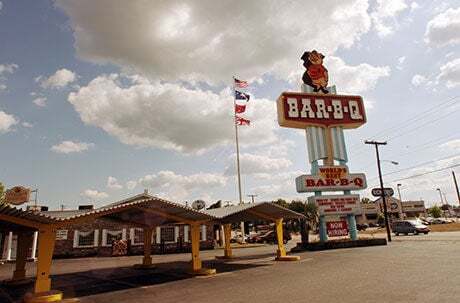
Back then, during my very first visit to Maurice Bessinger’s Piggie Park, the most unusual thing I noticed was that the barbecue sauce was yellow. I struggled to comprehend it— like, how was such a thing possible? Of course, I’ve since learned that this is a point of contention between barbecue gourmands from North and South Carolina, whether one should use mustard or ketchup as a base for their sauces. Who knew it could be such a hot button issue? Either way, the meat itself is always delicious.

My meal was amazing, of course— just like I knew it’d be. But in South Carolina, awesome barbecue is literally available everywhere, and four long years passed before I made it back to the Piggie Park a second time. But this time, when I sat back down in the dining room to celebrate my upcoming graduation, it was obvious that something had changed.
Now, I’d grown a certain level of tolerance for the South’s quirks by that point, so I didn’t pick up on the subtle atmospheric shift until a Yankee tablemate helpfully pointed it out for me. Dozens of Confederate flags now hung from the restaurant’s ceiling, covering nearly every square inch of the walls. At the counter, next to the menus, a rack of free informational brochures championed the South’s glorious lost cause of secessionism. These displays were impossible to miss— and the only reason I hadn’t noticed them four years earlier was because they hadn’t been there.
See, back when I was in school, the political debate in South Carolina was about the fact that the Confederate battle flag still flew over the State House. Apparently, this flag been raised above the building’s dome several decades earlier, at the height of the Civil Rights era. In the 1990s, though, a number of opposition groups were hoping to put the state’s past behind them, and their momentum was growing.

The issue proved so contentious, it even eclipsed the great debate over ketchup- vs. mustard-based sauces. Sometimes, it almost seemed like the “War of Northern Aggression” had never truly ended. On the one side were people whose ancestors had been enslaved; they were understandably upset to be living underneath the shadow of said banner. And then on the other side were Southerners whose ancestors had fought, or even died, for their states’ militias; these folks saw the flag as a reminder of their great-great-grandparents’ sacrifices. Calls to remove it were inevitably answered by cries of “Keep it flying”, and that it stood for “Heritage, not Hate”. Eventually, in April of 2000, the South Carolina State Senate struck a compromise, and moved the Confederate flag to a much more discreet location on a corner of the State House grounds. From July of 2000 to June of 2015, the flag was used as part of a memorial to the state’s Civil War dead.
In Columbia, during the months leading up to this relocation, it was impossible to avoid the issue. It seemed like everyone stood firmly on one side or the other, and Maurice Bessinger was no different. He’d thrown his hat in with the Secessionists— of course— but as I’d later learn, this was hardly a new position for him. Even as far back as the 1960s, Maurice Bessinger’s Piggie Park restaurants were battlegrounds in the Civil Rights movement, after an African American woman successfully sued the franchise for refusing to serve her. Maurice became active in politics after the incident, serving as a chapter president for the “National Association for The Advancement of White People”. Just a few years later, in 1974, he barely missed earning a seat as a state Senator, losing a hotly contested election by just a few dozen votes.

After decades of outspoken resistance to“Northern Aggression”, it was hardly surprising that Maurice Bessinger refused to back down, even after the Confederate flag was officially lowered. He went on to publish an autobiography called “Defending my Heritage”, and argued the point that “God gave slaves to whites.” In all of his Piggie Park restaurants, Bessinger took to handing out tracts which claimed that slavery couldn’t possibly have been evil, since the concept was discussed at great length in the Bible.
The backlash was fierce, and ongoing. Supermarket chains across the state pulled Bessinger’s famous barbecue sauce from their shelves, but Maurice remained steadfast in his views. At the same time, his two brothers took great pains to publicly distance themselves from Maurice’s controversial stance. Thomas and Melvin Bessinger, both successful restauranteurs in Charleston, continued to serve their family’s famous barbecue to all comers.
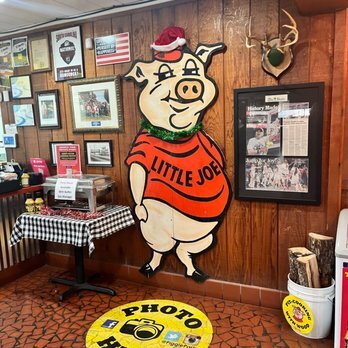
Eventually— as it always does— time settled this dispute. After Maurice Bessinger passed away in 2014, his children assumed ownership of the 8 Piggie Park franchises around Columbia, and adopted a much more inclusive posture. And as I write this, I’m happy to report that all of the Bessinger family restaurants are still going strong today, earning them the undisputed title of South Carolina’s First Family of Barbecue.
The post South Carolina’s First Family of Barbecue first appeared on James Vachowski.


October 10, 2025
“The Pompeii of the Middle East”
It’s impossible to appreciate just how vast the Roman empire was— at least, not until you’ve traveled to its furthest reaches. I’ve been to Rome a couple times, and it’s an absolutely amazing place. The city is layered in history, with ancient ruins on literally every corner, and a person can’t help but be overwhelmed. But then, it always sparked a completely different kind of wonder whenever I stumbled across ancient Roman ruins in some distant parts of England, Africa, or Asia.
At the height of its power, the Roman Empire really did stretch this far, spanning the width and the breadth of the Mediterranean Sea, from Constantinople to Carthage. But the thing is, it’s not as if the Romans just magically built all of their legendary cities from scratch. Some of the places I’ve had the good fortune to visit had been around for hundreds, or even thousands of years, before the Romans came along and absorbed them. Back then, conquering these places involved a fairly simple strategy of demolishing the existing landmarks to make room for their own monuments, temples and and coliseums.
A few years ago, the traveling circus that pays my bills had me flying through the Kingdom of Jordan every few months. The rotations were on a fixed schedule, more or less, so I got to passing the time during layovers by exploring the capital city in a series of day trips. Eventually, after I’d seen all the top-tier highlights in Amman, like the Temple of Hercules and IKEA, I started exploring a little further afield.

The ruined city of Jerash is about an hour’s drive north of Amman, and it’s the country’s second-most popular tourist attraction behind Petra. This area has been continuously occupied for over 6000 years, with the oldest archaeological finds dating back to the Neolithic era— long before anybody in Italy could even imagine the Roman Empire. Still, the city’s most prosperous era came under Roman rule, and Jerash’s archeological site is considered to be one of the empire’s best-preserved provincial towns.

Now, one of the best things about exploring Roman ruins outside of Italy is having the freedom to explore at your own pace. Going where you want, when you want, with considerably fewer restrictions and off-limits areas. Of course, you’re always welcome to hire a guide— during my trip, there was no shortage of local kids who were willing to help out— but at the same time, there’s something to be said for taking a slower pace and just wandering through history. In Jerash, the visit starts beneath the shadow of Hadrian’s Arch, built in 129 AD to commemorate the Emperor’s visit. From there, you can wander through the paved Oval Plaza, and on to the remains of the massive Hippodrome sports arena.

After several hours of aimless drifting, letting the dust of past centuries build up beneath my sandals, I eventually got around to visiting the South Theater. Climbing those dizzying steps probably would’ve gotten me escorted out of any Roman ruins back in Italy, but in Jordan, it was just another part of the tourist experience. In that ancient open-air amphitheater, which is apparently still used for cultural events today, engraved Greek characters have marked each row of seats for the past two thousand years. From my perch at the very top, with a perfectly clear view of center stage below, it was easy to close my eyes and imagine that I was back in ancient times, surrounded by thousands of people, eagerly waiting the start of a performance.

Although the city of Jerash was largely destroyed in 749 AD by a series of earthquakes, parts of the most important temples and monuments somehow survived. Today, Jerash’s archaeological park is one of the best-preserved Greco-Roman cities, welcoming several hundred thousand visitors each year— and earning it the title of “The Pompeii of the Middle East.”

October 2, 2025
Jet Fuel Can't Melt Steel Beams
In the spring of 1993, Jessie Carpenter is fifteen years old, and still alive.
A few months from now, a bullied student is going to shoot up Jessie’s school in a horrific act of revenge. The coming massacre was foretold by her younger stepbrother– an adult version of the autistic toddler from Jessie’s present– who traveled back in time to deliver the warning.
With her future uncertain and her own life hanging in the balance, Jessie works to prevent the tragedy. Taking cues from her father– a professional wrestler whose losing career is now suddenly, almost unbelievably, on the rise– Jessie manages to connect with her troubled classmate through a shared interest in World Wide Wrestling. As the unlikely relationship deepens, the odds of Jessie living to see high school increase exponentially.
But by tampering with the events in her timeline, and by changing her future, Jessie will unintentionally create a second, larger disaster.
One so massive, it will defy all belief.
Jet Fuel Can't Melt Steel Beams is available at all major retailers, including Amazon and Barnes and Noble, in digital, hardcover, and trade paperback editions.
September 18, 2025
The Doctor Demento Show
Social media is weird. Sometimes, those algorithms that control what you see and what you don’t, they seem to work with absolutely no rhyme or reason. Like whenever I Google a particular country just to check what time it is there, I’m guaranteed to see targeted advertisements for vacations and package tours in all my feeds for at least the next month.
And then other times, it’s almost like the Internet knows every last thing about you.
Earlier this year, I was doomscrolling through Facebook when a post from Rolling Stone magazine popped up. Now I haven’t read that magazine in years, and I’ve never interacted with their social media feeds, so this post really came out of nowhere:
[image error]In junior high school, I always struggled to stay awake during my Monday morning classes. And I guess that’s not too unusual for a teenager, but in my case, adolescence wasn’t to blame— it was Doctor Demento.
Back then, every Sunday night from 10 pm until midnight, The Doctor Demento Show used to air on Boston’s Classic Rock station, 100.7, WZLX. And in the days before social media, when kids used to hear about things by talking to other people, at some point somebody let me listen to their tape recording of The Doctor Demento Show, a two-hour show featuring parodies and novelty songs. I was hooked instantly. From that point forward, every Sunday night I’d tune in myself, hiding my Sony Walkman and headphones down underneath the bedsheets.
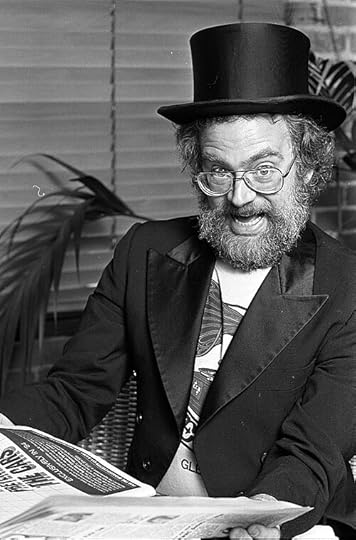
“Doctor Demento” is the radio persona of Barrett Eugene Hansen, a California-based DJ, broadcaster, and record collector. Hansen started off hosting a rock and roll radio show, but over the years, he acquired an extensive personal collection of novelty and comedy records. In 1970, when he started introducing a few of his own records into his show, a friend told him that he’d have to be “demented” to play these songs on the air, and the alter ego was born. The Doctor Demento Show quickly grew in popularity, especially among California’s underground punk rock scene, and in 1974 it went into syndication. The nationwide broadcast ran for an incredible thirty-six years before the show switched to an online-first format in 2010. And while Doctor Demento earned a fiercely loyal cult following, he might be even more famous for introducing the world to “Weird” Al Yankovic.
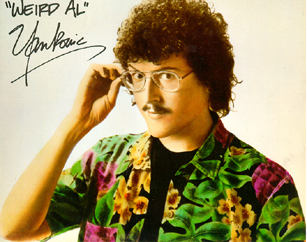
In 1976, when Doctor Demento attended an event at California Polytechnic State University, a young Alfred Matthew Yankovic managed to slip the good Doctor a self-recorded cassette tape of his parodies. And after one of these original songs— an ode to cruising around town in the family’s station wagon— was featured on the show, the positive reception convinced “Weird” Al to make a career out of music.
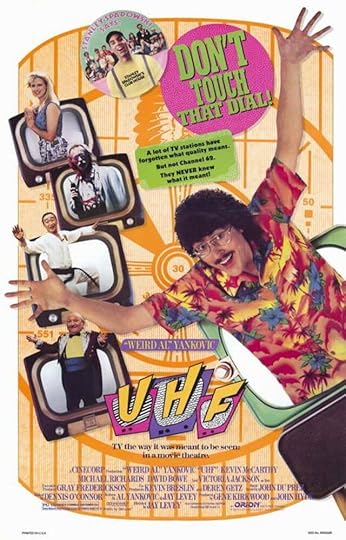
“Weird” Al’s success quickly overshadowed his mentor’s, and us ‘80s kids would be overjoyed whenever MTV played videos like “Fat” or “Like a Surgeon”. By 1989, “Weird” Al’s success led to a feature film called “UHF,” a cult classic about a lovable loser who inherits a local TV station. The film starred future legends like Michael Richards and Victoria Jackson— and of course, Doctor Demento snuck in there for a quick cameo appearance.
Every week, Doctor Demento ended his show with “The Funny Five”, a short list of the week’s most requested songs, and I would always try to stay up until midnight to hear the results. At some point, though, my grades took precedence over my late-night listening, and the Doctor and I parted ways. I hadn’t thought about Doctor Demento much at all since then, but that Rolling Stone article absolutely brought me back in time.
As a fitting end to his career, Doctor Demento is planning to air his last show in October 2025 with a special tribute to the top 40 songs from the show’s history. An extended version of the Funny Five— What a way to say farewell!
From all of us Dementites— past, present, and future— congratulations, Doctor Demento, and best wishes for your retirement!
August 9, 2025
Nomadland, by Jessica Bruder
What comes to mind when you think of retirement? Do you have a vision of grandchildren sitting up on your lap, or of watching the world go by from a rocking chair on your front porch? Do you see an endless string of peaceful days, broken only by the excitement of Bingo Night Thursdays in the church basement?
If so, then you might be living in the past.
Sometime around 2008, at the height of of the Great Recession, tens of thousands of older Americans faced the frightening prospect of not being able to make ends meet. We could debate the root cause of the problem forever— and economists probably will— but in the end, it doesn’t really matter. Whether it was due to a widespread lack of personal preparedness or endemic levels of corporate greed, a frightening number of mid-career professionals were suddenly struggling to support themselves.
If you’re even remotely familiar with American history, you already know that this same situation came up a few generations ago, during the Great Depression. Starting in 1929, millions of working men took to the roads, searching for work wherever it was available. These days, an unknown number of Americans have had to make the same choice, and Nomadland is a fascinating look into their journey.
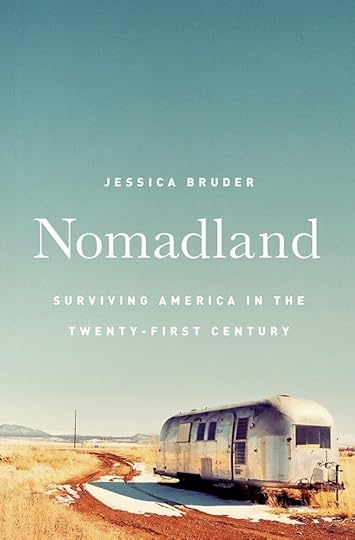
We should start by making one thing clear— Nomadland stands far apart from #VanLife, that Instagram trend where young, attractive social media influencers glamorize their lifestyle of exploring America in their customized campervans. Nomadland is a study of people who live this way out of necessity, not by choice. And even though some of these mobile laborers might be fortunate enough to receive subsidies from retirement savings or Social Security benefits, most face a terrifying level of instability. Underemployment is a chronic problem among these nomads as they move across the country, chasing the next seasonal or temporary employment.
Nomadland is definitely an interesting read. Throughout the book, even though author Jessica Bruder does her best to maintain a journalist’s detachment, her respect for her subjects is obvious. By purchasing her own van and hitting the road, Bruder manages to immerse herself in the mobile community and gain an insider’s perspective of the Nomads’ resourcefulness and independence. Bruder follows her community on a circular route of seasonal employment, from campgrounds and national parks in the summertime, to farms at the end of harvest season. Each year is capped off by a stint at an Amazon distribution center, where the workload surges to meet the demands of online holiday shopping.
But Bruder’s project, while awesome, is hardly a new concept. A full decade before, in the late 1990s, author Barbara Ehrenreich did the same thing— almost— for her best-selling book, “Nickel and Dimed.”
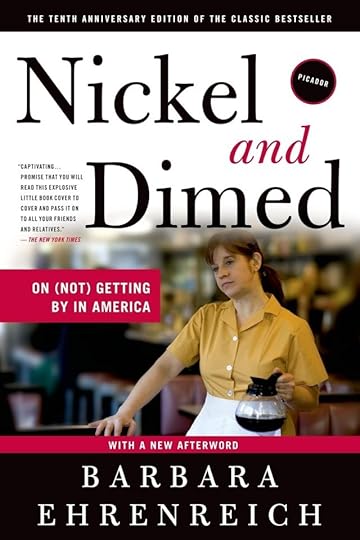
Unlike Bruder, who was fairly transparent in her interactions with the Nomads, Ehrenreich basically went “undercover” and immersed herself in the world of low-paying service jobs. Despite holding several several jobs at the same time, it wasn’t long before Ehrenreich reached the conclusion that most people working as a waitress, house cleaner, or a retail clerk simply wouldn’t be able to earn enough money to survive, let alone get ahead.
So much for that whole American Dream.
With such a downer for a topic, you wouldn’t think that either of these books would’ve done as well as they did. But in an odd twist of fate, Nomadland turned out to be a best seller as well, and was even made into an award-winning movie.
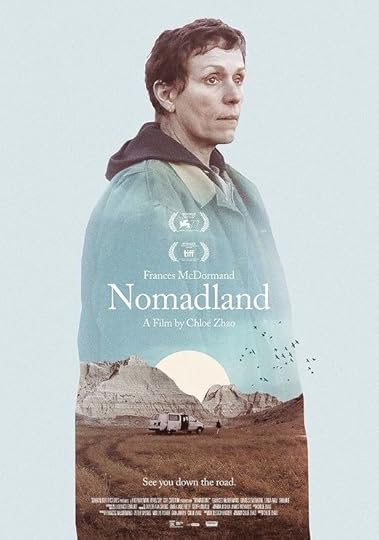
Frances McDormand played the lead role in the film, portraying a middle-aged widower who adopts a transient lifestyle after her late husband’s company goes bankrupt. The movie becomes a quasi-documentary at this point, with the scripted scenes moving the narrative forward, mixed in with footage of McDormand interacting with her community of Nomads. Some of the most compelling clips, though, are the “hidden camera” moments, where McDormand records the grueling conditions of working at campgrounds, farms, and Amazon distribution centers.
No matter whether you go for the book or the movie, Nomadland is an awesome chance to learn more about a fascinating group of people. Because as it turns out, pretty much everybody in America has their own unique story to tell…
July 12, 2025
Bucket List: Babylon
“Oh, you’re working in Iraq? What’s it like over there?”
Back in the heady days of the Global War on Terror, that seemed to be the go-to question whenever I’d come “home” for a quick visit. It was almost like people didn’t know what to say, so they said this. But then somehow, just a decade later on my second go-around, I couldn’t help noticing that the line of interrogation had changed:
“Oh, you’re working in Iraq? Is that still a thing?”
In total, I’ve spent about 31 months of my adult life in Iraq, an absolutely fascinating country on so many levels. For one reason or another, the traveling circus that pays my bills has sponsored several field trips to the Cradle of Civilization, but every time, going back to the U.S. on breaks was an experience in its own right. As hard as I tried, I always struggled to describe a place that I hadn’t really seen. See, out of the 950 or so days that I’ve spent in Iraq, the most iconic landscape I remember was all those concrete blast walls, and you never really see those things on travel posters.

Apart from a few token outings to the Tomb of the Unknown Soldier— plus one long, winding road trip to circle the ziggurat of Samarra— my impressions came in passing glimpses, looking sideways out of armored trucks or gazing down from helicopter windows. And I guess that’s why, over the years, I started to get curious about Iraq’s best-known landmarks. Places that would definitely belong on my bucket list, even if I might never actually get the chance to see them in person.
Mutannabi Street

It’s the most famous road in Iraq, and I’ve never once walked down it! Named for the 10th century poet Abu al-Tayyib al-Mutannabi, this street is a kilometer-long stretch of bookstores and cafes, a tribute to Iraq’s heritage of culture and literature. Never one to pass up a used bookstore, it nearly kills me to have missed this place. My traveling circus actually passed within a few blocks of Mutannabi Street on a couple of our excursions, but there was never any time to stop in for a quick coffee, because the show must go on…
Iraqi National Museum
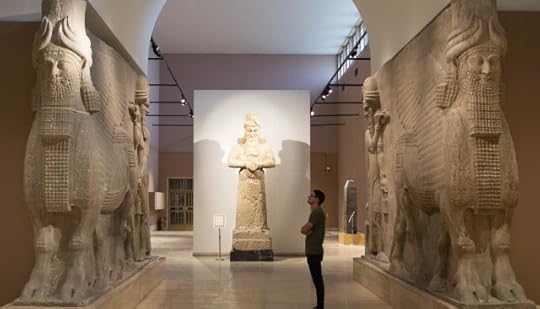
In a country that’s almost a museum in its own right, it’s hardly surprising that the Iraqi National Museum would have one of the world’s most impressive collections of Assyrian artifacts. That alone makes it one of the first stops on my list, and the unsolved mystery angle only makes it more appealing. Back in 2023, during the chaos that followed the American invasion, the museum suffered widespread looting. Some of its most valuable pieces are still missing today… which, logically, must also mean that these valuable treasures could still be out there, somewhere, just waiting to be recovered…
The Ziggurat of Ur

Pyramids have been found across the world: in Thailand, Guatemala, Egypt, and yes, even in Iraq. These ancient mysteries offer countless questions— like who built them, and why? How could the same basic design possibly have been replicated in so many different places, at the same era in history, by such vastly different cultures who never interacted with each other? Even though we might never know the answers, just asking these questions is enough to spark wonder.
Babylon
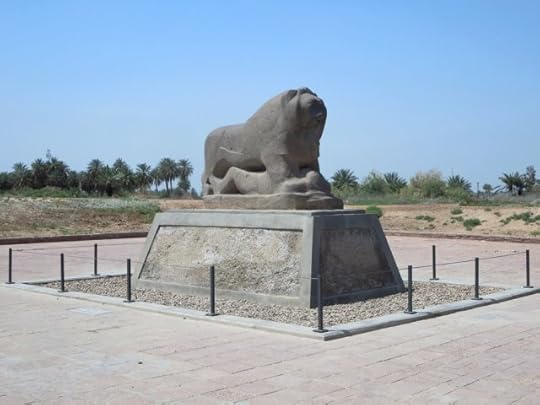
It’s the holy grail on every traveler’s bucket list. A city so historic, so legendary, it’d be a sin not to stop in. From the Ishtar Gate to the Lion of Babylon statue, visiting this city would be like walking through history itself. But as close as I’ve been to the place, I’ve just never been able to make it in. Only a few miles away at times, but it might as well have been a thousand…
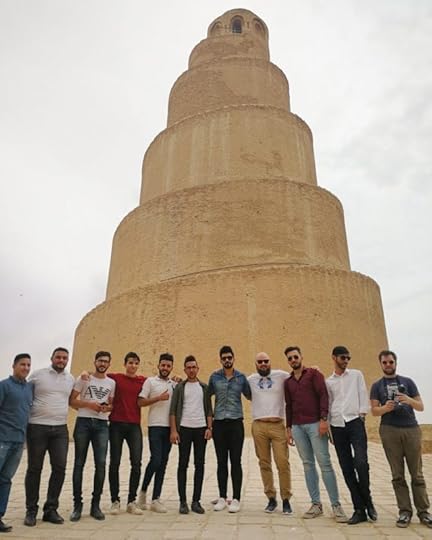
…but here’s a silver lining: in the course of working on this list, I discovered that tourism is actually a thing in Iraq now! Obviously, more than a few people share my fascination with this country, and the demand has to be out there if local guides are setting up package tours. Now I’m not necessarily rushing to put together my own itinerary— at least, not yet— but if you’re an adventurous soul, it’s definitely something to consider.
But then again, so is this.
June 13, 2025
Where’s the Cap’n?
The 1980s were not kind to the US military. Americans had little appetite for foreign intervention, as the disastrous ending to the Vietnam War was still fresh in their minds, and the discovery that the Reagan administration had been facilitating arms sales to Iran only served to erode public trust. And then in 1985, as if the Armed Forces really needed more bad news, a senior Naval officer was kidnapped by a rogue band of pirates.

Captain Horatio Magellan Crunch is best known as the cartoon mascot for his namesake ceeral franchise. Back in my day, “the Cap’n” was a regular fixture on Saturday morning commercials, bravely defending his ship, the SS Guppy, from the evil Soggies— a group of milky, lawless pirates bent on seizing the Guppy’s precious cargo of Captain Crunch cereal.
But then one day, the world ground to a halt when the Quaker Oats corporation announced that the Cap’n had gone missing! Apparently, he’d been kidnapped by a band of Soggies somewhere on the high seas, and now the company was counting on kids to help track him down. Budding sleuths raced to join the hunt by picking up their own detective kits… which Quaker magnanimously provided for free, inside each and every box of Cap’n Crunch cereal.
The mystery was short-lived— the Cap’n was soon located, shaken but unharmed, somewhere in the depths of the Cherry Caves. Kids who’d used their detective kits to decode the correct location could mail in their answer— with a self-addressed stamped envelope, of course, since this was back in the Dark Ages, before home Internet services— and the correct answers would be entered into a sweepstakes for $1,000,000 in prize money. The grateful Cap’n then sent 10,000 lucky winners a certified check for $100 each… though I suspect that to this day, Quaker Oats is still sending junk mail to their childhood homes.
Back then, kids were overjoyed to have helped rescue the Cap’n, especially if they got a cool $100 check in the process. But in hindsight, it’s clear that this supposed kidnapping was nothing more than a marketing stunt. Not to sound all conspiracy minded, but the whole “Where’s the Cap’n?” caper was nothing more than a false flag event, ginned up by Quaker Oats bigwigs in order to sell more cereal. It’s obvious that the Cap’n was in on it the whole time… but of course, what would you expect from a man whose entire career was built on lies?
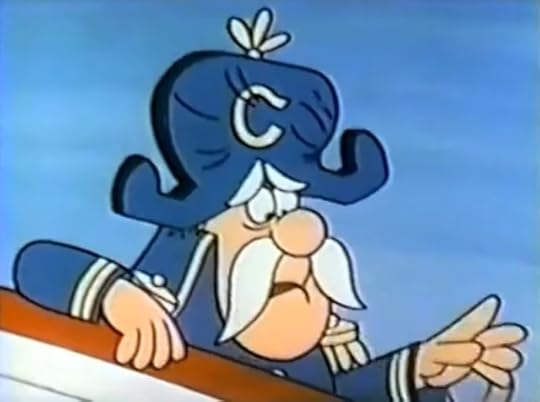
According to the public affairs team at Quaker, the official biography for Captain Horatio Magellan Crunch states that he was was born on Crunch Island, a magical land mass located somewhere in the mysterious Sea of Milk. In 1963, the Captain entered into naval service, at exactly the same time his cereal debuted in stores. Quaker claims that Cap’n Crunch has served with distinction since then, having seen combat across the globe, defending his cereal from brigands.
That’s the official line— but we know better. No matter how much whitewashing Quaker tries to apply, they can’t cover up the Cap’n’s shady past! To start with, how in the world would this random, middle-aged man from the middle of nowhere earn a direct commission as a senior naval officer? To this day, it’s unclear if the Cap’n had any kind of prior military service, or any form of post-secondary education at all. And I don’t mean to profile the good gentleman, but to be polite, the Cap’n is most obviously not a young man. What kind of juice could he possibly have had in order to score such an impressive age waiver?
I’ve done a fair bit of research on his origin, too— enough to know that “Crunch Island” doesn’t appear on any maps. I highly doubt that it’s a US territory or commonwealth, which begs the question— is the Cap’n a US citizen? It’s not my intention to discriminate against the guy or anything, but one has to wonder, how in the world could he have passed a background check, obtained a security clearance, and been permitted to take command of a US-flagged vessel?

Worst of all, the Cap’n has been publicly revealed as an impostor! We’re talking full-on stolen valor here— despite passing himself off as a Captain in the Navy for his entire career, the Cap’n has, at various points, worn either one, two, or three stripes on his sleeve— the ranks for Ensign, Lieutenant, and Commander. It wasn’t until 2023, when military historians had made enough of a row, that Quaker publicly acknowledged the discrepancy and amended the Cap’n’s uniform.
Too little, too late, as far as I’m concerned. This obfuscation goes back to the very beginning of Cap’n Crunch’s service record, when his cereal first hit the shelves. Back then, the very first of his cereal box “prizes” were cheap plastic whistles, which kids could blow to deliver coded messages. Eventually, the first generation of computer hackers discovered that these cheap plastic whistles could be used to simulate the coded sounds used by telephone networks. Long before the World Wide Web even existed in our imaginations, The Cap’n made it possible for these misfits to score an unlimited amount of free long-distance calls, which eventually led them to develop plans for the World Wide Web.

Folks, you just can’t make this up. It’s a global conspiracy playing out in plain sight, right there in the breakfast cereal aisle of your local supermarket. For the past sixty-odd years, “Cap’n Crunch” has apparently been the public face of some sort of black ops naval operation, taking orders from either the Deep State or the military-industrial complex. Think about it— an elderly cartoon character is the last person you’d ever suspect of being a spook. In a way, it’s the perfect cover!
Yes, back in 1985, the “Where’s the Cap’n?” Contest may have been an actual giveaway, with real cash prizes awarded, but in hindsight it’s apparent that there was much more to this story. Personally, I suspect that “the Cap’n” must’ve been in on the whole thing, and with all that high-fructose corn syrup in his cereal, the only thing that truly went missing was nutrition.
So remember, kids— tomorrow morning, do your part to strike back against corporate shadiness. Choose to eat actual food for breakfast.
May 9, 2025
The Old Sheldon Church
America’s Interstate Highway System is a national treasure.
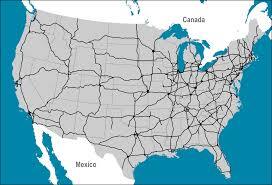
We have President Eisenhower to thank for this, since his administration enacted the Federal Highway Act of 1956— but the massive infrastructure program actually came about for military reasons. Decades before, after World War I, America’s geographic isolation was actually seen as a vulnerability. Back then, the local roads were vastly inconsistent in terms of quality, so it could take up to two months to drive across the country. The military’s thinking was that they should have a quicker way to move vehicles and material from one ocean to another, just in case of another global conflict, or a surprise attack on our own shores. The grand vision might have taken decades of planning and deliberation to come to fruition, but today, our national highway system is an awesome way for people to get where they’re going.
The only problem is, whenever you’re cruising along at high speeds, it’s so much harder to appreciate where you actually are.
Some years ago, back before I joined the traveling circus and became saddled with all the responsibilities that come with life under the big top, I’d developed a practice of cruising the back roads of my adopted home state. With limited professional responsibilities, I filled my time by setting out on a quest to survey all of South Carolina’s back roads and byways. And I remember this one time, while visiting a friend down in the sleepy coastal town of Beaufort, he suggested I take a shortcut home by driving through the middle of nowhere, and past a mysterious old ruin.
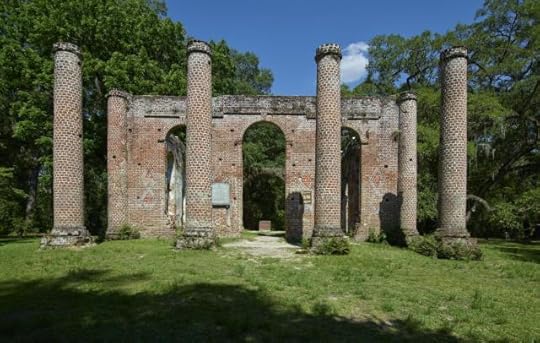
The tiny community of Sheldon is home to maybe 500 people, although most of those nice folks will probably just say they’re from Beaufort, to avoid any confusion. There’s really not much to the place, apart from a couple of private hunting clubs, a few million ancient oak trees, and the isolated ruins of Prince William’s Parish. The church was built between 1745 and 1753, but it didn’t last long— in 1779, during the Revolutionary War, British troops burnt it to the ground. In 1826 these undaunted townspeople rebuilt the structure, and this time it stood until 1865— when it was demolished once again, either by the occupying Union Army, or by newly freed slaves in search of building materials, depending on who you ask. Whatever actually happened, these towering brick ruins have stood silent ever since, standing watch over a patch of woods and a handful of lonely gravestones.

The first time I stopped in to the Old Sheldon Church, it simply struck me as a quiet, peaceful place. Just one more of the Palmetto State’s hidden gems, a spot beyond the reaches of modern civilization where you could disappear to be alone with your own thoughts for a few minutes. Back then, as I weaved my way through the blackened brick pillars and the towering, colonnaded walls, I had absolutely no idea that many architects consider it to be America’s first imitation of the ancient Greek style. And as I admired the way that empty ceiling opened onto a cloudy sky overhead, I was oblivious to the fact that just a few feet away, several of the state’s founding fathers lay at rest.
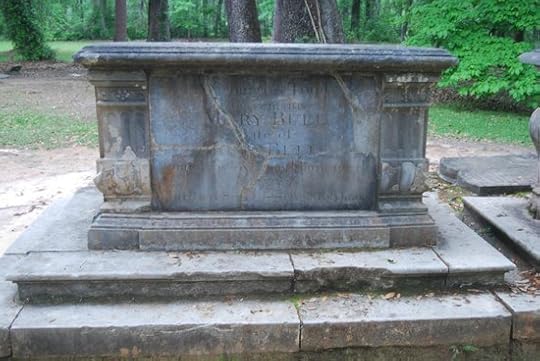
From that point on, every time I passed through Beaufort County, I made a point of stopping in to the Old Sheldon Church. And even though that first visit was overshadowed by ignorance, my appreciation for this special place has grown as I’ve come to learn more about it. But what’s really amazing to me is that in all my visits, I’ve never once encountered another soul at the site— although, judging by the looks of those empty beer bottles tucked away in the tall grass, it’s apparent that a number of local teenagers value the Church’s privacy, too! But even though the Old Sheldon Church will probably always lie in ruins, it was cool to learn that the local parish started an annual tradition of holding their sunrise services out there once a year, on Easter Sunday.
So if you ever do find yourself down in Beaufort, be sure to take a short detour out of your way to stop in. No matter when you end up going, I promise— it’ll be the perfect time for a visit.
April 11, 2025
I Can Has Cheezburger?
America is truly a land of opportunity.
See, back in my day, teachers would always ask us kids what we wanted to be when we grew up, almost as if elementary school was the ideal time to lock in a career track for the rest of your life. Kids today, on the other hand, may never know that pressure, since it’s a good chance they’ll end up working jobs that don’t even exist yet. Figuring out the algorithms that control self-driving cars, for example— or maybe even driving a shuttle bus to the moon. Who knows? The possibilities are literally endless for creative people who’re willing to work hard.
In America, a young person could even make an obscene amount of money just by uploading cat pictures to the Internet.
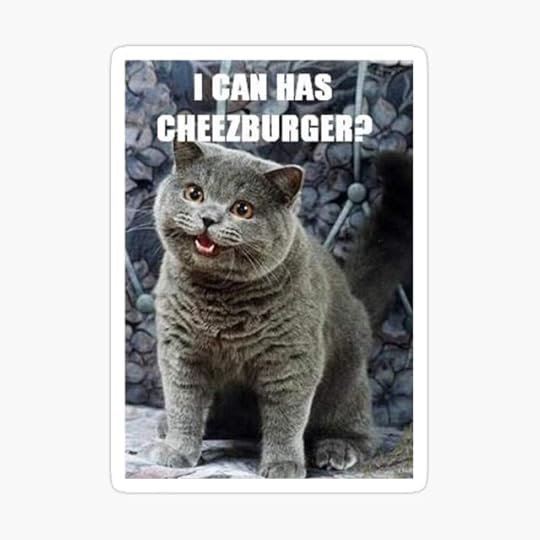
I know that last one is possible, because it’s been done. In 2007, a software developer named Eric Nakagawa was having a bad day at work. He asked his friend, Kari Unebasami, to send him a cute photo to make him feel better— and what he got was a handful of cat pictures with misspelled captions.
In that moment, the two friends realized that they’d found their calling in life. They started a website— or rather, an old-school web blog— to post these photos for their friends’ amusement. The started the project anonymously, using only their nicknames— Eric was “Cheezeburger”, and Kari was “Tofuburger”— but when viewers couldn’t help but share all those cute pictures, the website exploded in popularity. When the site went viral, Eric and Kari cashed in by hosting a few paid advertisements, and the project became a massive business opportunity.

Now keep in mind, it’d be dubious to say that somebody can change the world simply by uploading cat pictures to the Internet. Eric and Kari weren’t exactly solving any world problems, or curing cancer, or anything like that— although to be fair, I guess you could say that spreading laughter could potentially be seen as some kind of noble calling? I guess that’s how Eric and Kari saw their project, especially after “I Can Has Cheezeburger” became one of the very first Web 1.0 sites to go viral.
Years have passed since then. Eric and Kari have cashed out and sold their website, so I can only assume that they’re enjoying a very early retirement out in Hawaii, spending their days trolling the Internet and wading through swimming pools of cash. But even though these two have ceded creative control of “I Can Has Cheeseburger”, their project has had a huge impact on modern communication by popularizing (or even creating) the Internet meme.

We’re probably all familiar with memes: those funny, captioned photos which have a way of popping up in your social media feed whenever a snappy response is called for. And those awkwardly phonetical captions even have their own vernacular— “LOLSpeak”. Yes, the same style of writing that Eric and Kari used in their earliest photos has been adopted by the next generation of Internet trolls. LOLSpeak is an extremely versatile language— depending on one’s mood, you could express humor, discontent, or even solidarity with the original poster. For those of a certain age and/or snark level, the ambiguity of LolSpeak is definitely a feature, not a bug.
And even better— today, I learned that the “I Can Has Cheezburger” website is still going strong! It looks a bit more corporate now, having absorbed a few other Web 1.0 classic sites, but don’t let that slick look fool you. Decades later, it’s still the best place to get your daily dose of cat pictures… which means that you still have at least one solid option for killing time during your work day!
March 7, 2025
Cheap Land Colorado, by Ted Conover
I remember, it was one of those days at the traveling circus. One of those mornings when my cell phone started ringing long before my alarm clock did. Looking back on it now, I have no idea what the crisis of the moment actually was— although I do recall catching a glimpse of black smoke rising up from the big top on my drive in to work. It was a clear indication that whatever the dumpster fire of the moment actually was, that thing was still actively burning.
Everybody has those kinds of days at the office, I’m sure. The kind that makes you want to get back in your car, pull out of the parking lot, and head right back out in the direction you came. To go straight home, or maybe even off into the wild unknown. Now of course I didn’t do that— I went to work and I did my job— but the crisis of the minute imprinted itself on my mind, and stayed with me long after I’d punched the time clock and gone home. That evening, when I’d settled down on the couch after dinner and opened up the trusty old Libby app for my weekly download of library books, one particular title seemed to jump right out at me:
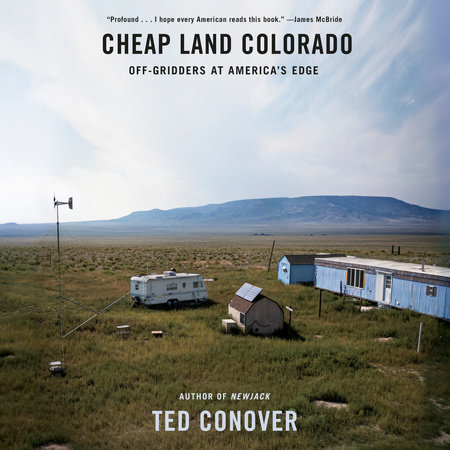
“Cheap Land Colorado” is essentially a study of modern-day frontiersmen. Men and women who’ve, for whatever reasons, managed to live out my daydream by blazing their own trails. Obviously, the premise appealed to me, so I downloaded the book and plowed through it in a single weekend.
Before I summarize this book, I should start by admitting that I’d never read any of Ted Conover’s work before. This is almost shameful to me now— Mr. Conover has been at it for decades, and he’s been called the “master of experience-based narrative nonfiction.” When he’s starting a new project, Conover normally sets aside months, or even years, to live among his subjects and learn their ways. In preparation for one of his books, Conover stowed away on railroads in order to understand the struggles of undocumented Mexican farm workers. His commitment is incredible— Conover’s worked as a prison guard, a meat inspector, and in dozens of low-paying service jobs, all to gain a “boots on the ground” perspective of the challenges people face.
“Cheap Land Colorado” tells the story of modern life on the frontier. In 2017, Mr. Conover moved to Colorado to explore the classic American dream of rural living. Apparently, owning your own land out west is still an achievable goal, thanks in part to poor suburban planning. Although the high prairie grasslands may look bleak and barren, the land can be had for incredibly cheap prices, with five-acre lots in failed subdivisions going for just a few thousand dollars. While he was writing this book, Conover went through the process of purchasing his own off-the-grid homestead, and he also volunteered at a local charity that supports people living below the poverty line. By doing so, Conover gained access to an incredibly diverse group of people, who all shared a goal of striving towards self-sufficiency. Oddly enough, these folks managed to form their own unique little community, out on the fringes of modern society.
But even as he respects all of his subjects, Conover doesn’t pull any punches with his writing. At the same time TikTok influencers try to make us believe that off-the-grid homesteading would be a rewarding and wholesome way to get “back to the land” and reconnect with Mother Nature, Conover’s immersion technique lets us see the challenges of real life on the prairie. Turns out, most of the folks who gave up everything to live out in the middle of nowhere, did so for a reason. This book introduces us to all kinds of people, including combat veterans with post-traumatic stress disorder, recovering (and struggling) drug addicts, and folks with extreme levels of social anxiety. Yet all of these people, with their disparate backgrounds and circumstances, somehow manage live together in a level of relative peace and acceptance. That fact alone seemed like an impressive accomplishment to me— never mind that poverty and shared hardship are the bonds that hold these weird little communities together.
Conover’s gritty perspective might have cooled my urge to chuck it all and head west— but not entirely. Later that week, I was killing time during a never-ending Zoom meeting, and I found myself scouring the Internet for available plots of land. And yes, it really is true— there are several websites out there where you can find your own little slice of paradise. Sure, these plots of land might be hours from the nearest city— but isn’t that part of the appeal? In theory, at least, a person could tow a camper out to the middle of nowhere, settle down, and be left completely, utterly alone.
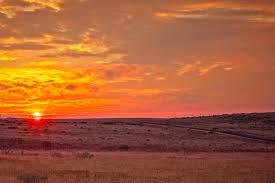
It’s good to know that even in 2024, Americans still have the option to head out west and build a new life on the prairie. But seeing as how my own professional life is still tied to the traveling circus, that’s not an option for me— at least, not yet. But sometimes, just reading about something can be almost as fulfilling as doing it yourself. Thanks to “Cheap Land Colorado” Ted Conover gives all of us a chance to at least imagine the beauty of all those prairie sunsets.