
Kareem Abdul-Jabbar's Blog
June 23, 2008
Saving the Thoroughbred
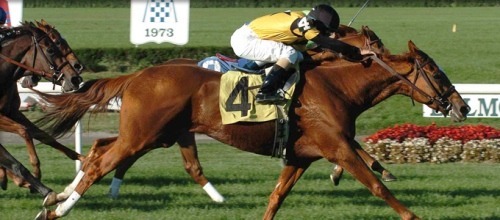
There has been much said about the drugs that are used to medicate the racing horses that have been competing in various stake races. It seems that the breed is suffering a downturn in the ability to perform at the level expected by those who bet on and breed these animals. I have a great idea to remedy this phenomenon but it is directly forbidden by the breeders association by laws.
For those who don't know, all Thoroughbred horses are able to trace their lineage to 4 "foundation sires" of the breed. These horses were Arabian horses and their qualities of speed, stamina, intelligence, beauty, and most importantly, physical soundness are essential to the extraordinary abilities of the Thoroughbred breed. So any Thoroughbred can trace its heritage to the Darley Arabian (1704), the Godolphin Arabian (1729)
or the Byerley Turk (1680's). In addition there were 74 foundation mares of mixed blood (Arabian and English).
I am sure the loss of performance ability in the breed is a result of not renewing the traits that make the Arab horse the most desirable for cross breeding with other breeds. For example, breeding draft horses with Arabs has produced the Belgian draft horse. It is notably smaller than other breeds, but it is the most handsome of those breeds and is the strongest pound for pound by far. If the Thoroughbred can be infused with fresh pure blood. I'm sure it will reverse the undesirable tendencies in the modern Thoroughbred that have affected its health and performance abilities.
The loss of genetic diversity has obviously become a factor in the poor health that has manifest itself recently in racing horses. I hope that some serious thought is given to doing something about it.


June 12, 2008
Kareem's interview with Dave Dameshek, ESPN
Listen to Kareem's interview on ESPN 710 on The Dave Dameshek Show, click here .
June 6, 2008
Game Report 1
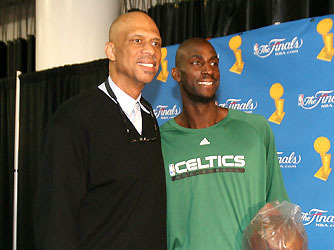
(Kareem Abdul-Jabbar and Kevin Garnett)
The Lakers' Second Half
The Lakers played well in the third quarter and actually had a four-point lead going into the fourth quarter, but then Boston's defense and the poor Laker shot selection really took them out of the game. The Lakers shot 5-for-20 in the fourth quarter. You're not going to win shooting 25 percent. Kobe missed a lot of shots and at times seemed as if he was pressing in the fourth quarter when Boston really focused its defense on him. The team just did not do it correctly in terms of taking the best shots. The Lakers offense is based on constant ball movement and on Thursday night it seemed as if the ball was constantly stuck in one location too often. They needed to move the ball better and the guys who were open needed to take their shots. It might have been a case of guys deferring to Kobe when they should have thought about shooting their shots when they were wide open.
Game 1 Turning Point: Paul Pierce Returns
I think when Paul Pierce got injured, came back and made those two three pointers, that really turned the tides. At that point, when he was out of the game, the Lakers were trying to get the lead. They were only a point or two behind and they missed four or five shots in a row. So he comes back on the court and hits those two three pointers and we missed a couple of shots. It was essentially a 10-point turnaround.
Pierce's return to the game after injuring himself was a great playoff moment. Paul has a lot to be proud of. His dedication to winning that game was quite evident. He comes back on the court and shoots the lights out and puts all the pressure on the Lakers to perform well and it didn't happen for them. It was a very important moment in that game and it really swung the momentum to the Boston team. They continued to make their shots and play good defense, which is why they won.
Sunday: Keys for Game 2
If the Lakers want to win Game 2 they have to figure out a way to keep Kevin Garnett in particular off the offensive boards. They were badly outrebounded 46-33 in Game 1. They're going to have to do a better job on their defensive boards and stick with their offense. Phil has run through this problem at other times when the Lakers decide that it's OK to shoot a lot of three-point shots. That has always spelled disaster for them and it is still the case. If they can stick to their game plan and hopefully make their shots when they have them, they have a good chance of winning the game. The Celtics didn't beat them as badly as they did during the regular season. It was a close game until late into the fourth quarter. That is a good indication.
The Mood of the Lakers
They're disappointed that they weren't able to make the best of this opportunity, because it certainly was a missed opportunity. But they also know that they have as many as six more games to change that. I'm looking forward to them coming out and playing better.
photo credit: Getty Images/ NBA
June 3, 2008
Celtics-Lakers, Past and Present
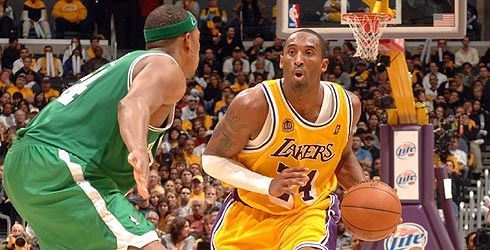
Yes, I Was a Celtics Fan
When I was in high school, my coach Jack Donahue really understood that the Celtics were playing the game a special way, so he always used them as examples as to how to play the game. My high school was only 12 blocks from the old Madison Square Garden and the teams used to practice at my high school when they were in town. I guess because of that my coach could finagle tickets to go see games, especially the doubleheaders. So during my four years of high school I must have seen the Celtics play a good 20 times.
The Celtics Style of Play
The Celtics philosophy was to let the open man get the ball and he's supposed to take the high percentage shot. They didn't have anyone score a whole lot of points, but they had five or six guys in double figures shooting the ball very efficiently. Bill Russell played great defense around the basket and really limited any layups that you might get. The combination of tough defense and efficient offense makes for winning basketball. I was able to learn those lessons early. I think by my going to UCLA and John Wooden emphasizing the same fundamentals, it was very easy for me to make that transition.
Meeting the Great Bill Russell and Other Basketball Legends
I was in the ninth grade, November or December of 1961. I went to the gym and the Celtics were there practicing. My coach introduced me to Red Auerbach, who introduced me to Bill Russell. They told me to go shag balls for someone who was shooting free throws. That someone turned out to be a rookie named John Havlicek. Also, when I was playing grade school ball, we played an All-Star Game at Madison Square Garden and I got to meet and know some of the Knicks like Willie Naulls, who eventually got traded to the Celtics. Because of all those connections I was a Celtic fan and really appreciated the way that they played the game.
Bill Russell, the Role Model
I heard a lot about Bill Russell because of the success of the Celtics and then because Bill had had certain things to say about human rights for black Americans. He had some very profound things to say and I admired what he had to say and listened to what he had to say. It made a lot of sense. He was about being proud and achievement. He represented achievement on the basketball court. We're still friends today. He hosted a clinic in October which I took part in. He set a great example for young athletes. Here he was, someone who graduated from college and did such a great job in his college career, and went on to do the same thing in the professional ranks.
'74 Finals, Bucks vs. Celtics
That was a hard fought series. Unfortunately for our team Oscar had a nagging injury which limited his effectiveness and the Celtics won in seven. I'm pretty sure the outcome would have been different had Oscar been healthy, but that's not going to change anything.
'84 Finals, Lakers vs. Celtics
The things I remember most about that series was that we gave away Game 2 in Boston Garden when Gerald Henderson stole the ball and tied the game up which the Celtics won in overtime. That game ended up being the decisive game. Game 4 included the infamous clothesline of Kurt Rambis by Kevin McHale. I thought it was a pretty cheap shot. Kurt had no chance of falling safely and he's lucky that he wasn't seriously hurt. It was the type of thing that angered our team, and probably provided a distraction looking back. It seems like that was a turning point and it affected us.
Then in Game 5, both teams had to battle the overly hot conditions in the old Boston Garden. Was it something that was done on purpose? I guess you would have to talk to the people who run the ventilation system at the old Boston Garden, but both teams had to play on the same court. It's not like they didn't have to deal with it.
'85 NBA Finals – The Highlight of My Career
I guess you could say that Game 1 was a wake up call for us, me in particular, when we lost big to Boston (148-114). For me it just pointed out that I had taken the wrong approach to dealing with the whole length of the playoffs and I needed to be in better condition. We had a three day gap and I was able to use the time and get sharp again in terms of being in shape and ready to run the court. For the rest of the series I did very well. When you go out there and everything is on the line and you're not prepared, that is embarrassing to you as a professional. I felt like I had let my team down. They rely on me to do my job on a certain level and then here I am when everything is on the line and let them down. So I just made them a promise that if we didn't play well, it wasn't going to be because I wasn't ready to play. Luckily I was able to turn it around.
Having played the series in Milwaukee and then the series the year before that we had given away, it was very important that we played well and live up to our potential. I was very thrilled to be a catalyst in that. But it wasn't just some kind of one man show. James Worthy and Earvin were extraordinary that series. We had a great team effort, guys coming off the bench, everything. Everybody really wanted it and worked hard to make us successful.
I think that was the highlight of my career just because of the significance of finally beating the Celtics for me personally and for the Laker franchise. That I was the key element in that winning the MVP, it really was a special time for me.
Game 4, 1987 Finals: Magic's "junior, junior, junior" skyhook game
I worked with Earvin on his hook shot previous to that the whole season, maybe even longer than that. Earvin got to post up a lot of smaller guards and it was the perfect shot for him to use. So I worked with him to get his mechanics right. On that play it was pick and roll and once Earvin got loose, Robert Parish came off of me to block the lane and Earvin threw a hook shot over them. If the shot hadn't gone in I was pretty sure I had the rebound. No one was boxing me out. I had a free run to the basket. But Earvin dropped it and the rest is history.
The Significance of Lakers-Celtics in the Finals in 2008
The historical success of both the Lakers and Celtics makes it an interesting series for anybody that has studied the game and knows about its history. It's a little bit of added interest and it's something that the fans seem to get into.
Keys for Game 1
Which team is able to establish its style? This is a different Laker team that the Celtics faced during the regular season since they did not have Pau Gasol in their two previous meetings and the Celtics were up and down. I don't expect it to be too much different, though. Gasol's presence will make a difference and if Kobe is able to continue doing what he's been able to do, to involve everyone and make sure that our offense flows and everyone gets to touch the ball, the Lakers can be very effective.
The Importance of Experience
The team that has enjoyed success as a group, they more or less understand how to go to that place more so than teams that don't win regularly. I think that more than anything else is the most important aspect of that.
Any Lakers-Celtics Grudges? Nah
A lot of years have passed since the classic Laker-Celtic Finals matchups of the '80s and though we battled each other on the basketball court throughout the years, we're all friendly now. It was an intense rivalry, but basketball is a brotherhood. I have great respect for them as professionals. They played hard and they played well. They were a credit to the game, so it's nothing to bear grudges over.
Photo credit: (Noah Graham/NBAE/Getty Images)
May 23, 2008
The Lakers Comeback
The Role of Kobe Bryant
Kobe only had two points in the first half, but he was just trying to do what the Spurs were allowing him to do. When he had good shots he took them and if not he passed the ball. Even though he didn't get a lot of good shots in the first half, though, he was able to set up his teammates with five assists. Then in the second half, he started to assert himself more. Kobe is a great finisher. He's one guy that if you're offense is having a problem, he can get shots no matter what kind of defense is being played. In the second half, that's what he did, putting up 25 points.
Game 2 Adjustments for the Lakers
On Thursday at practice coach made a point of saying that they weren't patient enough with their offense, which is why they didn't shoot particularly well. The open shots that they had they passed up and the ones that they tried to get weren't there. So for Game 2 they have to be more patient and understand where their opportunities are.
There was also talk coming into the series about the Lakers potential deficiency on the boards after having been outrebounded by Utah in the last round. However, I don't think that San Antonio has demonstrated a great rebounding advantage. The Lakers should be able to hold their own when it comes to rebounding.
Game 2 Adjustments for the Spurs
The Spurs are going to have to figure out how to be more consistent on offense. When they needed baskets in the third quarter, they really had a hard time once the Lakers figured out what they were doing offensively. And of course they need a better game from Manu Ginobili.
A Great Laker comeback From My Day
The Lakers comeback on Wednesday night had me reflecting on a great comeback we had when I was a member of the Lakers. We were playing Seattle in the playoffs and were down 18 points at the half because we had shot the ball very poorly and Seattle had a great shooting first half. But Coach Riley seemed to think that we could come back and that's just what happened.
Andrew Bynum's Surgery
The last time that I spoke to Andrew he was thinking about getting more opinions on what to do about his knee. Seeing now that he had the surgery, I guess that was the best option presented to him. I'm sure the Lakers and the Laker fans will be glad to see him back at full strength next season.
The Greatness of Charlie Parker
Stepping away from basketball for a minute, I've been reading a book titled, "Chasing the Bird: Functional harmony in Charlie Parker's bebop themes" by Juha Henriksson. I haven't finished it yet but it's great because it kind of talks about what he meant to the art form of jazz in his own personal speak. It's pretty interesting stuff. As far as great jazz musicians go, "Bird" ranks at the very top. And if you want to enjoy a great listen of Bird's, there was a disc that was just released of he and Dizzy Gillespie from June of 1945. It's an incredible find and definitely worth your time if you love jazz.
Kill Bill?
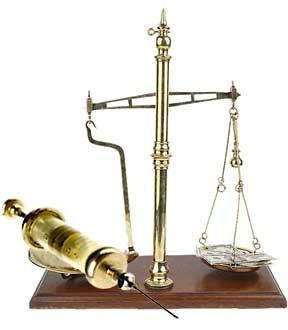
On May 6th in Georgia, William Earl Lynd, 53, became the first death-row inmate executed in the U.S. in seven months. Executions have been on hold all these months while the U.S. Supreme Court decided whether or not lethal injection protocols are constitutional. In an overwhelming vote of 7-2, the Court decided they were constitutional and execution chambers in the 36 states that allow the death penalty are preparing to return to duty.
The Court's decision, and Lynd's execution, have provided another national platform for passionate voices to be raised over the use of death penalty. What's interesting is how loud and zealous the voices on both sides are when we consider that the death penalty itself affects a relatively small number of people. There are 3,263 people on death row, 669 of them in California (which has by far the largest death-row population in the country). Yet, the death penalty is constantly on the front page of newspapers, the lead story on TV news, and a litmus test for many voters on which candidate they will vote for. Why is this one issue so foremost in our heads and hearts? Because when people pass laws about who should live and who should die, they are defining themselves as community. They are proclaiming their values, not through bland patriotic rhetoric, but through their deliberate actions. We know that when the government kills in war, we all have our hands on that trigger—and when they execute in peace, we all have our hands on that syringe.
So what does the death penalty say about us?
The primary purpose of the death penalty, like all laws, is to protect the innocent. Theoretically, if someone deliberately murders someone else, executing that person protects the rest of us by removing him from society, never again to be a threat. But, as always, there's a big difference between theory and practice. While it's true that the death penalty may protect us from the few individuals it does execute, it does not come without a price tag. What Californians have to decide is whether or not we're paying too much for what we're getting.
How Much Money Does the Death Penalty Cost?
Every society is on a limited budget. Therefore, priorities have to be made and every society must face some difficult choices about how to get the most protection out of each dollar. California's current $16 billion deficit threatens to handicap or destroy many institutions designed to protect society—and to save lives. Already a $2-billion cut in school programs and health care for the poor has been approved by the Legislature.
Our hospital situation was already bad, now it can only get worse. Los Angeles County alone lost 27 acute-care hospitals between 1994 and 2004; 7 other hospitals reduced services or cancelled their mental health units. Trauma centers, which save hundreds of lives by providing immediate, specially trained medical care for life-threatening injuries, have closed throughout the state. Of L.A. County's 23 trauma centers, 13 closed or were downgraded into emergency rooms. The Hospital Survey and Construction Act of 1946 compelled hospitals to achieve 4.5 beds per 1,000 people. In 2003, California's ratio had dropped to 1.9 beds per 1,000.
Public schools, which protect our future by providing citizens who are competitive in the economic marketplace and educated in the needs of democracy, have also fumbled the ball. Some inner-city students go through classes without textbooks. Perhaps the greatest threat to California's future is the fact that our students rank next to last in academic achievement in the United States. We rank 50th in the nation (including District of Columbia) in school staff to student ratio, 51st in librarians ratio; 51st in guidance counselor ratio, and 49th in teacher ratio. A 2007 study ranked California 34th in its students' potential for success. That's not surprising when our students test below the national average in math, science, reading, and writing. And current budget woes have caused the state to cut $4.8 billion from education and to issue pink slips to 24,000 teachers, librarians and nurses in our public schools.
While money is lacking in those areas, California has not hesitated in spending $114 million a year of taxpayers' money on the death penalty (beyond the cost of lifetime imprisonment, and not including post-conviction hearings that cost millions more). According to a 2005 Los Angeles Times study, we pay $90,000 more a year per inmate to keep them on death row rather than in the general prison population, which adds up to $57.5 million annually. California's Attorney General spends 15% of his annual budget ($11 million) on death penalty cases; our state Supreme Court spends $11.8 million appointing lawyers in death penalty cases; the Office of the State Public Defender and the Habeas Corpus Resource Center spend $22.3 million defending indigents in death penalty cases. A 2008 study by the ACLU of Northern California concluded that to execute all the people currently on death row will cost $4 billion more than if they had been sentenced to life imprisonment to die of disease, injury, old age. State after state has conducted cost-efficiency studies of the death penalty—most recently New Jersey, Indiana, North Carolina, Florida, Kansas, Tennessee, and Texas—and all have concluded that the death penalty costs significantly more than sentencing someone to Life Without Possibility of Parole (LWOPP).
Because counties that seek the death penalty must pay for the costs, many smaller counties have faced bankruptcy, reduction of social services, and/or increased taxes in order to pay for a death penalty trial. Studies indicate that putting more police officers on the streets would reduce crime and make us safer; yet, budget cuts have forced the early release of thousands of prisoners while at the same time forcing some smaller counties to reduce the number of police officers and firefighters. In 1988, Sierra County, California cut their police force in order to pay for their death penalty trials. District Attorney James Reichele explained, "If we didn't have to pay $500,000 a pop for Sacramento's murders, I'd have an investigator and the sheriff would have a couple of extra deputies and we could do some lasting good for Sierra County law enforcement. The sewage system at the courthouse is failing, a bridge collapsed, there's no county library, no county park, and we have volunteer fire and volunteer search and rescue."
I know some will ask, "How can you put a price on justice?" and "What if it were your mother or son who'd been murdered?" Fair enough. But given the current cost of the death penalty, my family is much more at risk from not having enough police on the street, firefighters in their stations, thousands of inmates released into our communities, and from a critical lack of hospital staff. There are 7,000 deaths annually in hospitals from errors in medication, partially due to understaffing. That's 7,000 every year versus the possibility that an inmate sentenced to LWOPP might possibly escape and kill again.
Is the Death Penalty Color Blind?
A lot has been made of the ratio of whites to blacks on death row. I don't think that statistic in itself proves racism. It's possible that people who have been systematically discriminated against for centuries have less economic opportunities than others and therefore may resort to crime and violence to a greater extent than those with the opportunity to resort to college and business school. In other words, the poor may more often act out of desperation and ignorance more than those who are financially secure. They may have less respect for the rules of a society they see as not giving them a fair break. That could explain why 42% of men on death row are black, though they comprise only 6% of the total U.S. population.
Or it could be that people of color are more likely to be singled out to receive the death penalty. The study by David Baldus and George Woodwort in the 1980s exposed a nationwide practice in which the district attorneys (98% of which are white, 1% are African-American) were much more likely to go after black defendants for killing a white victim, than for killing a black victim, or than go after white defendant for killing a white or black victim. More than twenty years later nothing has changed. A recent Santa Clara Law Review study found that the victim's race significantly influenced whether or not the death penalty would be sought. Studies in Ohio, Illinois, and New Jersey reached similar conclusions. Since then, discrimination continues in various forms, the most common is the attempt by district attorneys to exclude jurors of color, which is unconstitutional.
The studies are condemning enough, but add to that the voices of the experts, and it's pretty convincing that racial bias permeates the death penalty process. Former U.S. Supreme Court Justice Harry Blackmun, who had started as a death penalty supporter, became an ardent abolitionist. He stated, "Even under the most sophisticated death penalty statutes, race continues to play a major role in determining who shall live and who shall die….I cannot see any of these death penalty cases where there hasn't been a violation on the ground of either poverty or race. If we can ever get that straightened out, it will help. But, of course, the real answer to it is to do away with the death penalty." Former U.S. Supreme Court Justice Thurgood Marshall was equally appalled at the injustice of the death penalty: "When in Gregg v. Georgia the Supreme Court gave its seal of approval to capital punishment, this endorsement was premised on the promise that capital punishment would be administered with fairness and justice. Instead, the promise has become a cruel and empty mockery. If not remedied, the scandalous state of our present system of capital punishment will cast a pall of shame over our society for years to come. We cannot let it continue." Former U.S. Supreme Court Justice William J. Brennan reached the same conclusion: "Perhaps the bleakest fact of all is that the death penalty is imposed not only in a freakish and discriminatory manner, but also in some cases upon defendants who are actually innocent."
Yes, some people sentenced to die have been proven to be innocent. In the last 25 years, 129 people in 26 states have been released from death row because of new evidence proving their innocence. Some may think that proves the system is working; innocent people are being found out and released. The problem with that logic is that while these people are still alive long enough for us to discover their innocence, what about those who are executed before their innocence is discovered? Few people will keep trying to prove convicts' innocence after they're dead. Many of the people released have been on death row for decades. A couple weeks ago in California, Adam Miranda, who had been on death row for 26 years, had his death sentence voided by the state Supreme Court after it was discovered that the main witness against him had signed a confession to the murder. The letter was placed in Miranda's file by then-deputy district attorney Lance Ito (who later was the judge in the O.J. Simpson case) without sharing it with Miranda's attorneys. After 26 years on death row, the truth is finally out there.
Various studies have been conducted that conclude innocent people have been executed. That's mathematically inevitable. So, the questions comes down to this analogy: You have ten people condemned to be executed and you know one is innocent, but you don't know which one. Do you execute all of them anyway, chalking up the innocent victim as collateral damage, or do you put them all in prison for life without possibility of parole hoping that one innocent person will be discovered? If this choice defines my community's morality, I would hope we'd choose to protect that innocent person. After all, isn't that what this is all about in the first place?
Final Word: The Body of Evidence
Are there people who commit crimes so heinous and barbaric and unconscionable that they deserve to die? Damn right. But the death penalty, as we now have it, isn't the instrument of justice to achieve that goal. It's like going hunting with a broken gun that blows up in our faces every once in a while, though we never know when. Until that gun is fixed, it's better to use a different weapon.
Yes, we should have enormous outrage over the victims and on behalf of the victims' families who must endure a lifetime of pain. But we can't express that outrage by deliberately risking the lives and welfare of everyone else in society. Instead, we should lock the criminals away for life and get on with the business of serving our community—including the families of the victims—by protecting them with more police, firefighters, hospitals, and teachers. We honor the memories of the slain by redoubling our efforts to protect all the innocent members of our community.
May 14, 2008
Lakers-Jazz Analysis & Career Playoff Games Record

Robert Horry and Kareem Abdul-Jabbar
They got themselves in a tough situation on the road and they got a
little intimidated by the crowd and being away from home, just not
wanting to be there and fight their way in an uphill battle. But that's
what it's like when you're on the road. It surprised me because they've
played Utah pretty tough this season. In fact they were one of the few
teams to beat Utah in Utah this year. I thought that would not be a
factor. For example, if they shot their free throws like they shot them
in the first half, they win the game. It was amazing how the crowd
affected their performance across the board.
What the Lakers Need to Do to Win Game 5
I expect the Lakers to put their Game 4 performance behind them and
come out and play hard and intelligently like they usually do. The goal
is to try to win one here and set themselves up to, even if they can't
win in Game 6, make sure that they return to Los Angeles for Game 7 if
it's necessary.
Jordan Farmar's Struggles
I think Jordan's problem is he's having a very difficult time
defensively. Deron Williams is a very difficult assignment for
him.Deron is stronger than Jordan and just as quick. He's got serious
upper body strength and he just blows by Jordan. It's a real problem.
The Second Round Homecourt Advantage
The homecourt advantage is something that some people rely on.
Teams that are able to focus and win on the road are dominant teams.
Maybe it has something to do with the parity that the NBA has tried to
foster.
Jerry Sloan, the Player
I got to see Jerry Sloan play against Oscar Robertson. We were in the
same division with them when Jerry was with the Bulls. Just the
physical battle that he had with Oscar, those were classics. Jerry was
a hard nosed guy and he saw Oscar as a challenge. Every time he had an
opportunity he went out there and gave Oscar his best.
It was something worth watching. Oscar had success against everybody.
No one could stop him. But Oscar would acknowledge that Jerry was one
of the people who never ever said die. Jerry is that kind of guy. He
brings it all on the court. I have a lot of respect for Jerry.
The Difference in Coaching Styles of Sloan and Phil Jackson
They are totally opposite, as opposite as they are in
personality. Jerry is just a hard nosed guy who understands the
fundamentals of the game and teaches his team how to win. It doesn't
strike me that he is into a whole lot of X's and O's. His offense is
pretty simple and it's all about his team executing the offense. Phil's
X's and O's strategy is a little bit more involved. I have never seen
Jerry coach on a daily basis so it's hard for me to assess how he does
it, but I think Phil's approach is more involved and has a lot of
strategy. He spends a lot of time working on the triangle. Phil feels
that if they run the offense efficiently and with everybody doing what
they should be doing, it sets them up to play good defense and give
them an opportunity to dominate the other team.
Byron Scott's Coaching Success
Byron has done a great job everywhere he's gone. He was doing a
fantastic job in New Jersey and they fired him. I didn't get that. I am
glad he got the opportunity in New Orleans. The team has responded.
Nobody gave him what would be considered a bunch of All-Stars but he's
got them operating on the same page and getting it done. That to me is
all the credit to Byron. He certainly earned his Coach of the Year
Award. I didn't see or hear anything while he was playing to lead me to
believe that he would become a coach, but when I was with the Clippers
in 2000 and Byron was with the Kings I got a chance to go sit with him
for a minute the couple times that we played them. He was enjoying
himself and Coach Adelman thought he was a great addition to his staff.
At that point I thought that Byron would have some future in coaching
and when he got his opportunity he did a great job with it.
Robert Horry: Big shots, Hall of Fame chances and Breaking My Playoff Record of Games Played
Robert has been around because he understands how the game evolves over
the 48 minutes. He knows how to do the right thing at the right time.
He always seems to be at the right place at the right time to help his
team win. He has had many standout shots in his career, but the one
that stands out for me came against the Kings in Game 4 of the 2002
Western Conference Finals because of how fortunate he was on that play.
Vlade Divac could have controlled that rebound but he just took it and
threw it out of the paint and it went right to Robert Horry. If he
tries to control that rebound and smothers it, Robert Horry doesn't get
that chance. So I attribute that one to Vlade Divac not understanding
what he needed to do. Some of the other ones like when he was with
Houston show that when the game comes to him he does good things with
his opportunities. He seems to thrive on rare opportunities. Every time
he gets it he does something great with it. He's got to be a fan
favorite for it.
As far as the Hall of Fame goes, you have to look at the whole
career. His career in the playoffs has been remarkable. You look at the
regular season, you might come to a different conclusion, but you can't
take away his success.
Robert is on the verge of passing my mark for the most games
played in the playoffs. But we're talking about two different eras.
When I first started playing, if you won the world championship you
only played in three rounds of playoffs. So it was an opportunity for
him and he's made the best of it.
Gene Block inaugurated as UCLA Chancellor
Yesterday Gene D. Block inaugurated as UCLA chancellor in festive ceremony at Royce Hall.
The pomp and circumstance befitting such a ceremony was punctuated with music and dance representing UCLA's diverse and talented student community — from a gospel choir rendering of the national anthem to a performance by the Mariachi Uclatan folkloric group.
This was my speech:
We are here today because UCLA has a new Chancellor. That's a funny title, isn't it: Chancellor? Sounds like someone who's running a small European country, wedged somewhere between Liechtenstein and Luxembourg. Yet, when you consider that this man will be overseeing 37,000 students, 27,000 faculty and staff, and a budget of $3.8 billion, he really is running a small country. Only this one's wedged somewhere between Hollywood and our imaginations.
Because UCLA isn't just another country. It's an exceptional country. A visionary country. A country where students come, not just for an academic education, but to fulfill dreams. They come here—just as I did 40 years ago—to find out who they are, who they want to be, and how they will make the most of their lives. I didn't come here just to play basketball, I came here to learn about myself, my community, my place in the world. Although, I did a pretty good job playing basketball, too.
It takes a special kind of person to take on the responsibility of providing that kind of learning and nurturing atmosphere. He must be willing to preserve the legacy of UCLA's past, while insuring the promise of its future. As someone who has worked so hard to bring some honor to UCLA's legacy, I feel like I have a special interest in its future. That's why I always believed the person running this place has to be as exceptional as the school itself. Although there have been various renaissance periods throughout history—from Italy to Harlem—here at UCLA there is always a renaissance going on because this school remains at the forefront of achievement in the arts, in science, in scholarship, and in sports. Naturally it follows that to properly guide this campus would require a renaissance man or woman. Someone with an innovative vision of the future, yet, who possesses the skills and talent to make that vision a reality. And that's exactly what we have in Chancellor Gene Block.
A scholar in circadian biology, an inventor holding several patents, a compassionate teacher, a committed administrator, a restorer of high-performance cars, and, most important, a husband and father. I'm sorry that I must now leave this event – The Lakers are still alive & kicking and I must deal with my coaching responsibilities. But I wanted to add my voice and welcome to Chancellor Block. I hope all of you have a great day today and that UCLA continues to attract great leaders such as Chancellor Gene Block as we continue into the 21st century.
May 11, 2008
MVP reflections: My first ever, my first in L.A., and my last
Winning my first MVP in 1971, my second year with the Milwaukee
Bucks, was a great honor. I liked the fact that it went along with us
winning the world championship, and having done it while playing with
Oscar Robertson made me feel great. During that season, I had to play a
couple of games against Wilt Chamberlain, who was the standard prior to
me for excellence in pivot play. I was able to outplay him -– 40.2 PPG
in five games, including a 50-point game –- and that to me was an
indication that I had possibly arrived.
Prior to the 1975-76 season I was traded to the Lakers. I was very
fortunate to win my fourth MVP award that year, because the team didn't
do well. We finished 40-42 and missed the playoffs. But I had such a
great year statistically, that's why I won it. In 1980, when I won my
last regular-season MVP, that was also the year that a rookie named
Magic Johnson burst onto the scene. When we got Earvin, we had somebody
that could run the team offense. Jack McKinney did a great job of
understanding Earvin's unique ability to play the game and to devise an
offense that worked for all of the people that we had on the team.
I've won six total regular-season MVPs, more than any other player, and
people ask me all the time -- do I think that another player will
achieve that number? It's always possible, but it's going to take a
dominant player to do it. There have been a lot of great players to not
win it.
Thoughts on Kobe's First MVP:
My thoughts on Kobe's first MVP: Kobe has had the ability to score
so prolifically that people at times have knocked him. But winning that
award helps put everything in perspective and shows that he's been a
leader and team player in addition to being so brilliant at what he
does.
Fisher's Return to Utah:
Derek Fisher's return to Utah on Friday is the one-year
anniversary to the day of what Derek went through during last year's
playoffs with his daughter's medical troubles and his emotional return
for Game 2 of the Jazz's Western Conference semifinal series with the
Warriors. I thought Derek made quite a statement both as a professional
athlete and as a parent that day. He was able to do both with an
outstanding degree of determination and focus. When he returned to Utah
this season as a member of the Lakers, I was surprised by the reception
he received from the crowd, and I didn't understand it. Maybe the
people up there in Utah have some issues that I'm not aware of.
What Derek Fisher Means to the Lakers:
I think Derek Fisher brings a lot to the Lakers -- he has meant
quality leadership for the team and he runs the offense with a steady
hand. He keeps the younger players from just flying off the edge
emotionally, keeps them steady and keeps them focused. His excellent
play on the court aside, I think he is very valuable to the team just
because of his leadership qualities. Derek has made everybody focus on
how we need to win instead of getting into useless details. He's
enabled the team to recognize the difference between those useless
details and what is important to succeed.
My Most Memorable Moment:
My most memorable moment for our franchise, and for me personally,
was beating the Celtics in 1985. That was a very special moment. I was
fortunate enough to be the MVP in that series. That, to me, had a whole
lot of emotional value to it, which some people might not understand.
The Lakers were 0-8 against the Celtics in championship play up until
that point, but we finally had the better team. And for me being a key
reason for the Lakers to be able to finally break through was even more
special.
P.S. Today is my last blog for the L.A. Times. Starting Monday, May
12, I will be moving my blog to my own website. I hope you will join
me at www.kareemabduljabbar.com so we can continue sharing.
May 9, 2008
Answering Fan Mail On Olympics Boycott: 1968 vs. 2008
I have received many comments on my article about the Olympics Boycott, on paper and online - so here we go:
To Frank Antonacci, Sid Holmes, Dean Nelson, Jim Beran, Steve Adams,
Ed Robinson, Steve Baker, Arthur Carlson, Rich Larsen, Clarence
Chappell, Greg Gose, Jamile, Ed Shatzen, Carla Nardoni, Christian
DeBlis, Bill Lundy, Bob Guild... Thanks for your support.
To Beau... An Olympic medal would have been a nice experience for me
but I felt that my diploma was a more important priority and stayed
with my summer job. Thanks.
To Klaus Beiten... Klaus stated that many other nations have issues
with U.S. that are quite similar to the issues other say that they have
with China. I am very aware of the double standards that stick out when
life in America is compared with life in other countries. Truly not one
nation on Earth can claim it is doing a perfect job in caring for all
of its citizens. We have a ways to go as a species. I hope more people
like us are able to reach out and create more awareness on these issues.
To Robert Liu... Thanks for your response to my article. I hope
there will be more opportunities for our various communities to
interact. All the best, K.
To Chuck Reilly... As I clearly stated in my article there was no
boycott of the '68 Olympics. I personally did not boycott those
Olympics nor do I regret not going. Our nation was represented by
outstanding basketball athletes in 68 who won the gold medal. I am
proud and happy to say that I don't hate anyone based on their
ethnicity. I've had issues with how some white people have treated
black Americans through the years. You might want to google Emmitt
Till, Medgar Evers or Martin Luther King Jr., also the movie
"Mississippi Burning". The last thing I should share with you is the
fact that any issues between myself and my high school coach were
amicably resolved long before he passed away. Sorry to disappoint you.
Oh and the R.I. tourney was in December of '63.
To Kai Chen... Thanks for your informative e-mail that shares info
on the nature of the Chinese Communist Party. Detailed information on
that subject was not available to me before I heard from you. I will
not be totally ignorant about that subject in the future. I hope that
athletes such as yourself will be able to attain the democratic
freedoms we take for granted.
And finally thank you all, and each one of you. Your K.
Kareem Abdul-Jabbar's Blog

- Kareem Abdul-Jabbar's profile
- 643 followers

