Bart Carroll's Blog
November 19, 2025
The Wooly Willy Incident
I’m thrilled to announce that my debut science-fantasy novel, Bolted to the Bone, is now available!

And when I say thrilled, I mean terrified!
The entire process has been an incredible education for me, not just from the creative side (what I learned actually writing the book), or the collaborative (working with some truly fantastic editors, readers, and artists—including and , right here on SubStack!), or even the technical (what layout software to use, ad campaigns to run, etc.), but also very much from the mental health side as well.
I’m certainly not alone in this feeling, but there’s a very real fear when it comes to a personal creative project such as writing, wherein you can feel creatively emboldened when working on it privately. And then, boom—you play an Uno reverse card (played on yourself no less) and now anyone can read your work!
A recent episode of The Bill Simmons podcast had a conversation between Bill and Chuck Klosterman about this issue, and writing in general. Starts around 01:23:00, and well worth a listen.
It’s a risk, exposing the vulnerabilities of any creative endeavor, and part of my education with this project has been how overwhelming these feelings can get, at least for me.
But to start with a quick story…
Curious Figures is a reader-supported publication. To receive new posts and support my work, consider becoming a free or paid subscriber.
The Wooly Willy IncidentI’ve noted how the Shangri-La for many of our childhoods (which should instead be the “Sangria-La” as an adult) was a trip to Toys ‘R Us.
For me, it was usually my dad who would take me, or sometimes I’d go with a friend and their parents. This one time in particular, I went with my friend Jeff1 and his family. I’m sure Jeff and I each got a G.I. Joe figure. Jeff’s younger sister got yelled at.
Here’s why.
She chose, for whatever reason, a Wooly Willy2. If you’re not familiar, these are the kind of toys we had to play with as kids (shortly evolved after rolling hoops down the street)—a bunch of iron shavings held in a plastic bubble. Behind the bubble, it showed the face of a man suffering some form of severe hair loss. What you then did with the attached magnetic wand, was move the iron shavings around to give the guy whatever hair you wanted or could manage to manipulate into place.
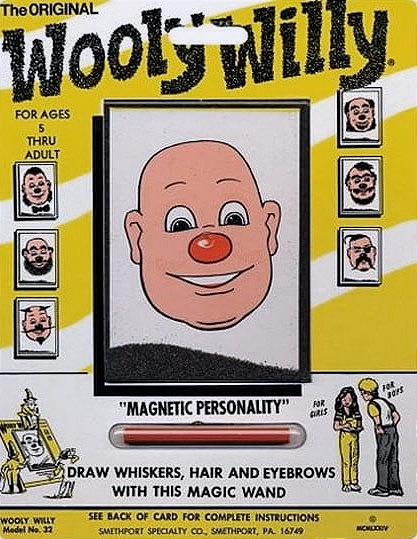 A “magnetic personality”. Get it, kids? Eh? Eh?
It was always a weird toy to me, something akin to the old SNL “Bag of Glass” skit:
Jeff’s sister was excited for it, though.
So excited in fact, that on the car ride home she ripped open the plastic bubble, thinking it was just packaging, to get to the toy inside.
The iron shavings immediately burst all over the inside of their paneled station wagon, the toy was ruined, and Jeff’s parents were pissed.
The Dr. Mindbender IncidentA similar incident happened to me. As an adult. Like, maybe 3 weeks ago.
I recently managed to get my hands on a Dr. Mindbender Classified figure to add to my collection3. So, excited as I was to get to the figure, I ripped open the packaging and yanked him out of the plastic.
Notice anything missing?
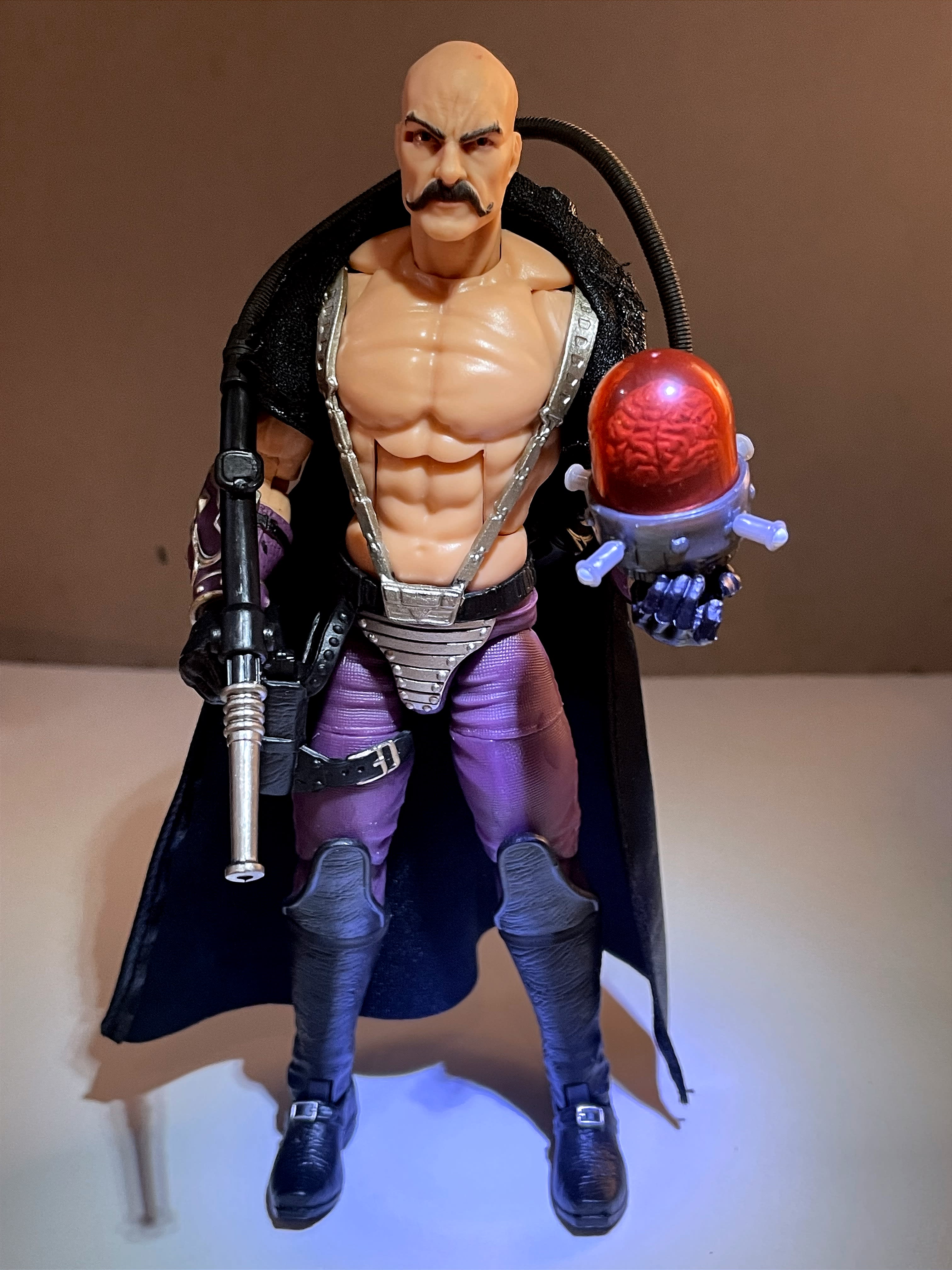 For anyone not a diehard G.I. Joe collector, it’s his monocle. His Mr. Peanut-style monocle. Egads!
In my excitement, I popped Dr. Mindbender’s monocle right off his face. It flew… somewhere. Seriously, my home office is a cluttered mess, and it could now be anywhere. Not anywhere I looked, because I never did find it, but anywhere else I suppose. Maybe it’s in one of the fish tanks.4
Anyway, even as adults, we get excited, we rush things, and there’s a danger that doing so breaks the very thing we’re so excited about in the first place. Hence, the book—which I’ll still circle back to but not before talking about what I managed to not break from Dr. Mindbender.
When it comes to action figures, accessories are just the best. When I was a kid and actually played with them, accessories largely meant whatever weapons and gear they physically carried (the old “snap on/stay on” system of G.I. Joe). As an adult, and action figures are more posed and displayed than anything else (which is still satisfying!), accessories that help set the scene are also appreciated.
And look what we have accessory-wise with Dr. Mindbender: a mummified hand and a brain, both in jars!
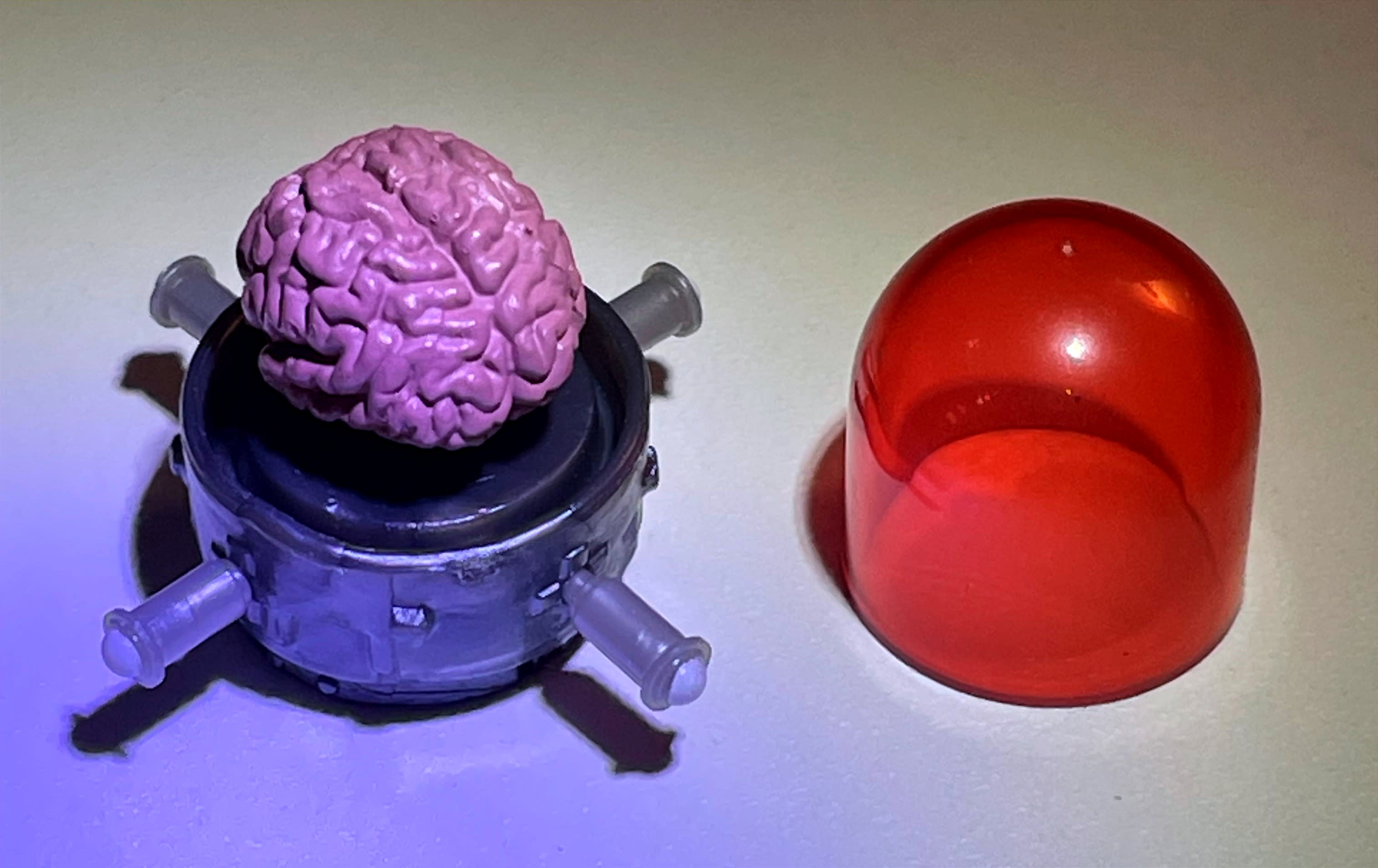
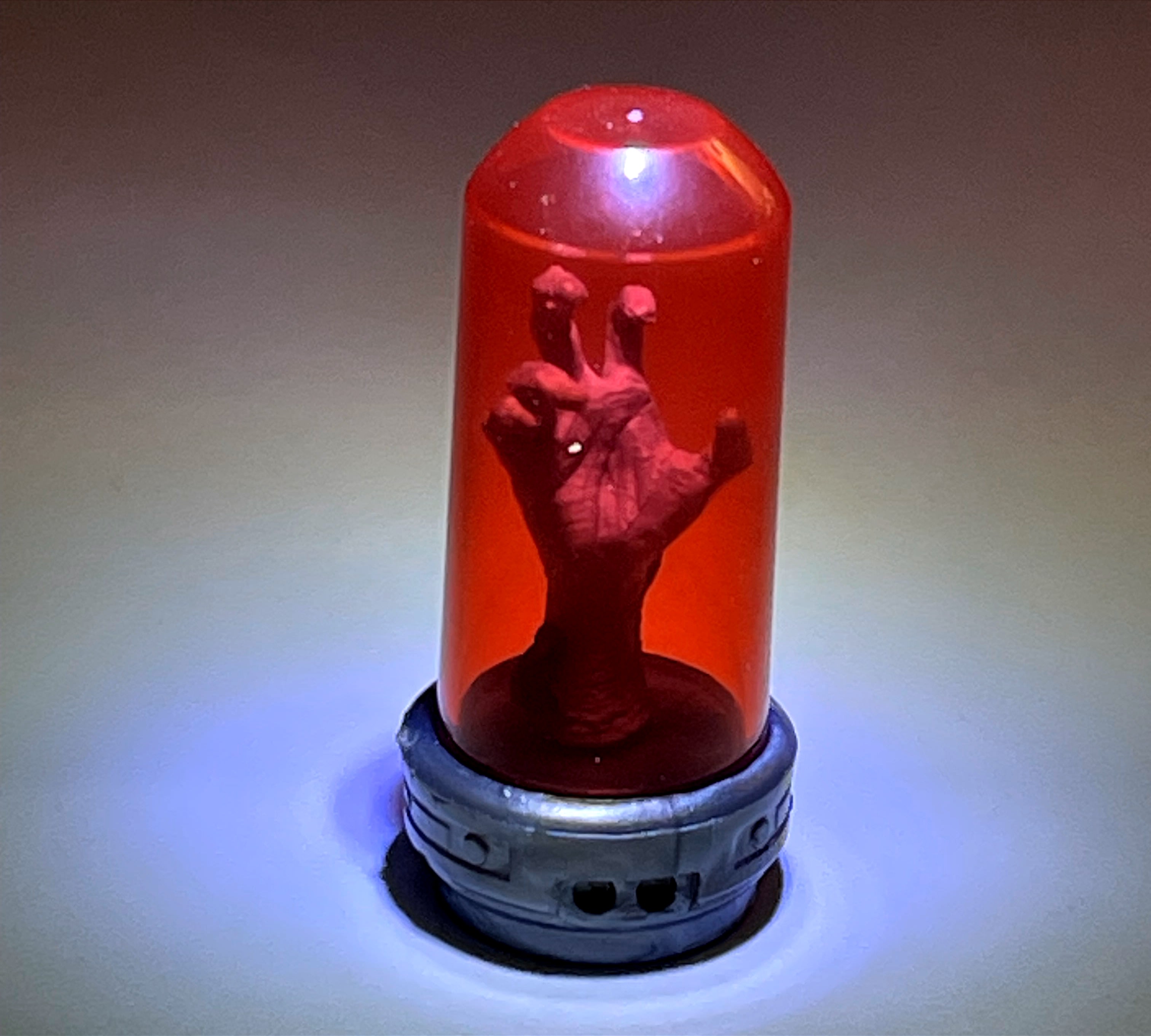
In the original Marvel comics run (and in the cartoon series later that same year, 1986), Dr. Mindbender collects genetic samples from history’s military leaders in order to create Serpentor. I’m assuming that’s what the hand/brain are referencing. Or maybe he too is just into collecting stuff.
So as much as I detest Dr. Mindbender as a character… I’m all for it!
Things in a JarPart of my appreciation is also my love for the trope of “thing in a jar”.
I’m not even sure why; there must be something about the laboratories of evil scientists and eccentric geniuses that I find compelling. Maybe it’s the glass tanks, softly lit, in which we’re able to see their specimens, the promise of their works in progress… and their failures.
The trope of a “thing in a jar” is a favorite of mine. Luke Skywalker suspended in the bacta tank was an early example (as opposed to a BAFTA tank, in which only the finest British and international films are incubated).
There are the face huggers from Aliens of course, and also the start of Balder’s Gate II escaping the dungeon of Jon Irenicus. And a thousand more examples…
When the opportunity came to design a creature for the 4th Edition D&D Open Grave sourcebook, I jumped at the chance to submit an updated Brain in a Jar. If memory serves, Bruce Cordell edited my version (fitting, as he added a 3.5 edition Brain in a Jar to the revised Tomb of Horrors we published to the D&D website).5
And when I designed Lost Laboratory of Kwalish, a 5th edition adventure in support of Extra Life, you bet there were brains in jars aplenty! In the final adventure, they were named alphabetically A-E (Alton through Editha), but in early designs I tried to get away with implying they were the brains of other in-game wizards (nothing so bold as Elminster, but Tenser and the like)6 to go along with Kwalish himself.
(To be honest, I’m still surprised Kwalish was allowed.)
Back to the Wolly Willy of It AllAll of this to note that I’ve carried the trope into Bolted to the Bone as well. There are questionable scientists, hidden laboratories, and many, many things in jars. Some are released. Some break out.
Not all of them are helpful.
As the book leans into Celtic legend, the “jars” are renamed “cauldron-cells”. In part, to take advantage of magic cauldrons appearing in various legends, but also to reference the vat-grown trope of science fiction.
I love both jars and metaphors. So, like the creatures grown in cauldron-cells, my book has been developing in its own cauldron for a good, long while as well.
Now, one of the amazing things about writing nowadays is that while it’s easy enough to keep a project incubating forever, there are also tools and platforms to help bring it out into the world as well. Again, I’ve learned a lot during this process, and I look forward to sharing whatever recommendations and advice helped me.
Here’s one. One of the challenges I set for myself was, when I felt the book was close to ready, I set an end date. An actual publication date to work toward.
And here’s also where the mental challenges came into play.
There’s a very self-preservation component of my lizard brain, and getting close to the publication date (originally November 1) kicked it into high gear. I was worried about breaking open the Wolly Willy packaging by publishing too soon and ruining the thing inside. You would think that in the years leading up to release, I would have caught everything, every issue, every error, every possible reason to not publish it, but no…7
Now, the self-preservation part of our brain is there for a reason; oftentimes, it helps keep us alive (is that a snake in the tree or just a branch? Careful!). And there certainly were parts of the book that anxiety pushed into the forefront of my consciousness and forced me to address for the ultimate net benefit of the book.
(Someday I’ll explore more of these in depth, but let’s use this article as a microcosm: I wanted to add humor, but how dumb are the jokes? Or offensive? I’ve given it multiple read-throughs and found errors in it every time, so how many have I still not caught? How litigious is Wooly Willy or whoever the hell makes it now, because I wasn’t a fan?)
The downside is that anxiety can push well past a “reasonable awareness” of issues and straight into freakout mode, which happened more than once in recent weeks.
As far as tools to address this, I can only say what helped for me personally was having a support network of family and friends. Which is a blessing I realize, one I’m extremely thankful for (this being the season and all) and recognize that not everyone has to the same extent. In addition though, it’s also one thing to have a tool and another to use it… so in this case, actually reaching out to my support network and asking for help (even just to talk things through) was just as important.
And, to be honest, venting here, right now, about this, also helps.
My family is big into giving each other advent calendars each year (we even celebrate our own “calendar day,” usually the day after Thanksgiving). My kid wants his filled with sports cards. I’d be happy if mine were filled with bupropion and ASMR videos (somehow I got really big into Nate the Hoof Guy—if that even counts as ASMR or falls more into the Oddly Satisfying/Power Washing category).
Whatever works.
In any case, here we now are. The book is out, the “thing” is out of its jar, and I hope you enjoy! You can find the eBook here (softcover to follow shortly, in another week):
Amazon | Barnes & Noble | Apple | Google | Kobo
Next time: Maybe I’ll finally get back to playing with more action figures!
Thanks for reading Curious Figures! This post is public so feel free to share it.
1My kid recently received a haircut from a “Jeff”. It pleased him greatly. So an added shout-out to the Jeffs of the world!
2The more I write about it, the more “wooly willy” sounds way too euphemistic.
3I was going to say, with self-effacing humor, my thoroughly cool and in every way adult collection. But then again, why should it? I love collecting action figures! Collecting stuff is awesome!
4I’m trying to figure out who he looks like without his monocle. G. Gordon Liddy? The Iron Sheik? Wooly Willy with a mustache?
5Noting that both of these can still be found online.
6This brain in a jar was more officially added to the game with Icewind Dale: Rime of the Frostmaiden. One crucial bit of development for it, however, was needed: I somehow neglected to give my brain a simple attack action it could make every round. I believe it was Chris Perkins who fixed this by giving each brain the chill touch cantrip. You can find it here, with a D&D Beyond subscription.
7To be counted as part of the learnings—the vast importance of ARC readers to help catch issues, raise questions and concerns, etc. To read your work with a careful and critical eye.


October 31, 2025
3 Films. 3 Fuses Lit
Breaking from our usual look at action figures and character tropes, I wanted to examine three recent films and the success or failures of each.
Oh. My. God. My wife is out of town and my son is at a sleepover. You know what that means… It’s time to go crazy!!!!!!
And by crazy, I mean sit on the couch and catch up on some recent streaming movies.
Ahem, so let’s get to it…
Spoiler Warning: The three films in question are Eddington, A House of Dynamite, and Weapons. If you don’t want the plots of these films spoiled, don’t read ahead.
Curious Figures is a reader-supported publication. To receive new posts and support my work, consider becoming a free or paid subscriber.
A House of DynamiteThe latest film by Kathryn Bigelow (The Hurt Locker, Zero Dark Thirty, and of course, Point Break), this feels like a modern version of 1983’s nuclear thriller, The Day After. What if nuclear war actually took place? How would that play out in a realistic scenario?
Spoilers ahoy, but A House of Dynamite is very much, but only, concerned with the 20-minute window of a singular nuclear missile attack on America from launch detection to just before strike.
Told from various perspectives, we see these 20 minutes play out first from the POV of various ground personnel (largely at the White House and an Alaska Army base). We then rewind and follow the same events from the POV of higher level diplomats (U.S. Strategic Command and Secretary of Defense). And finally, a second rewind to mainly follow the POV of President Idris Elba (I don’t believe we ever get his actually name).
All of which is extremely well told and seemingly precise in playing out a what-if scenario for these 20 minutes. How might various elements of the U.S. government actually respond? What contingencies planning is already set, and needs to unfold?
But… what happens next?
And therein is the very sudden, very disappointing ending of the film. At least for me. Cut to black, Sopranos finale-style (which I also hated, for the record). Leading things to the edge of the cliff, only to end on an unresolved cliffhanger, I don’t consider daring storytelling. I consider it the epitome of lazy storytelling.
Don’t get me wrong; not every films needs to find a pat or even happy ending; in fact, the more troubling or complicated endings land all the harder (see China Town), nor does everything need to be nearly resolved in the ending, either (see Inception). But the story needs to be resolved in some fashion, or you haven’t done your job telling a true and complete story.
You’ve set the stage, but haven’t finished the play. And however well you may have set it—establishing the premise and introducing the players… if you just abandon them, not caring to conclude their story, then why should we care about them or their story either? To put it another way, if you can’t commit to making decisions for your story (in the case of A House of Dynamite, who fired the missile, what happens when it strikes, and what actions are taken in response), then we’re not likely to commit to your story at all as an audience.
Ultimately, A House of Dynamite is entirely about the lit fuse. Let’s watch how it burns along, not caring about the explosion at the end.
But I care.
I care about the explosion, as do our next two films, one of which “explodes” satisfactorily, while the other one doesn’t.
Verdict: 2.5 stars
EddingtonThe latest film by Ari Aster (whose name I constantly confuse with the rather excellent Ad Astra), I’ve been fascinated with his work after Hereditary and Midsommar. Both incredible films, and as someone who has absolutely no stomach (or courage) for horror films, found very satisfying and watchable (even if I had to steady myself against the rising tension and jump scares by silencing my iPad during certain scenes).
Beau is Afraid I took a pass on, and probably should have done so here as well.
To use the fuse and dynamite analogy, the first half of Eddington is a verrrrry slow burn. We meet the characters, with yet another phenomenal performance by Joaquin Phoenix. And we explore the utterly confusing, conflicting days of May 2020 COVID lockdown, taking place in small town New Mexico. This includes, and intersects with, Black Lives Matter protests taking place during this time (which, albeit meant to take place in a small town during lockdown, felt far too artificial to have much believability for me on film).
Shortly after the second half, the fuses start to set off the dynamite at least. My issue with the storytelling here is how much is going off at once. If A House of Dynamite follows the mold of The Day After, Eddington feels a bit like 1993’s Falling Down; an already high-strung character pushed past his limits starts taking extraordinary actions.
Spoilers ahead, but Phoenix’s character falls down himself, into a rabbit hole of crime but also seeming paranoid delusion. One murder is followed by another, followed by an unraveling cover-up… followed by a takeover of the entire town by fictitious or imaginary terrorists?
The lesson here seems that if you light a fuse, you’re looking for something of a controlled detonation (see The Pentagon Wars). Not that scene at the end of Boogie Nights, with that one kid throwing firecrackers around non-stop.
A controlled detonation can still have multiple explosions to it (I will always love the end of Blues Brothers, the action scenes in Raising Arizona, and the construction within Lock, Stock & Two Smoking Barrels), but it all still has to feel meaningful to the story in some way. If everything starts falling apart all at once, it can also feel like the story itself is losing cohesion.
Verdict: 1.5 stars
WeaponsWait, didn’t I watch anything that I liked?
Oh hell yeah, I did!
As much as a started following Ari Aster, I also followed Zach Cregger after his film, Barbarian. Again, not a horror guy. I was petrified in that film of what might be there down in the basement, but the setup hooked me, and the reveal surprised (and disturbed me) in all the right ways as a viewer.
Now, while I did not feel the climax of Barbarian landed particularly well, I was excited to try Weapons. Even if it took me a few false starts (apparently I cannot view explore dark houses or watch ring cam footage by myself at night; I’m too creeped out). But again, the setup hooked me—all but one kid in an elementary school class run off in the middle of the night, never to be seen again…
As with A House of Dynamite, we follow the narrative from different POVs, with some overlap along the way. However, once the fuse is lit, it burns along at a pretty steady clip, and when we finally do get to the detonation (spoiler—it’s a delightfully freaky Ronald McDonald-looking witch), the final act unfolds in a satisfying way both in terms of bringing the story to a conclusion, and also bringing the witch to hers.
In an odd way, I found this one somewhat in the spirit of It. In so far as, however terrifying the monster, they lose their power when dragged into the light and ridiculed—and by god did that final chase scene do wonders to kill the witch with laughter.
Verdict: 4 stars1
In SummationWant to watch 3 good episodes of an 8-part series abruptly cancelled mid-season? A House of Dynamite might be for you. How about reliving all the arguments and paranoia of 2020? Try Eddington!
Or, if you’re looking for a good, solid horror/mystery to watch this Halloween? I’d vote Weapons, streaming now on Netflix.
Next time (which was supposed to be this time): A thing in a jar! It’s a thing in a jar!!
Thanks for reading Curious Figures! This post is public so feel free to share it.
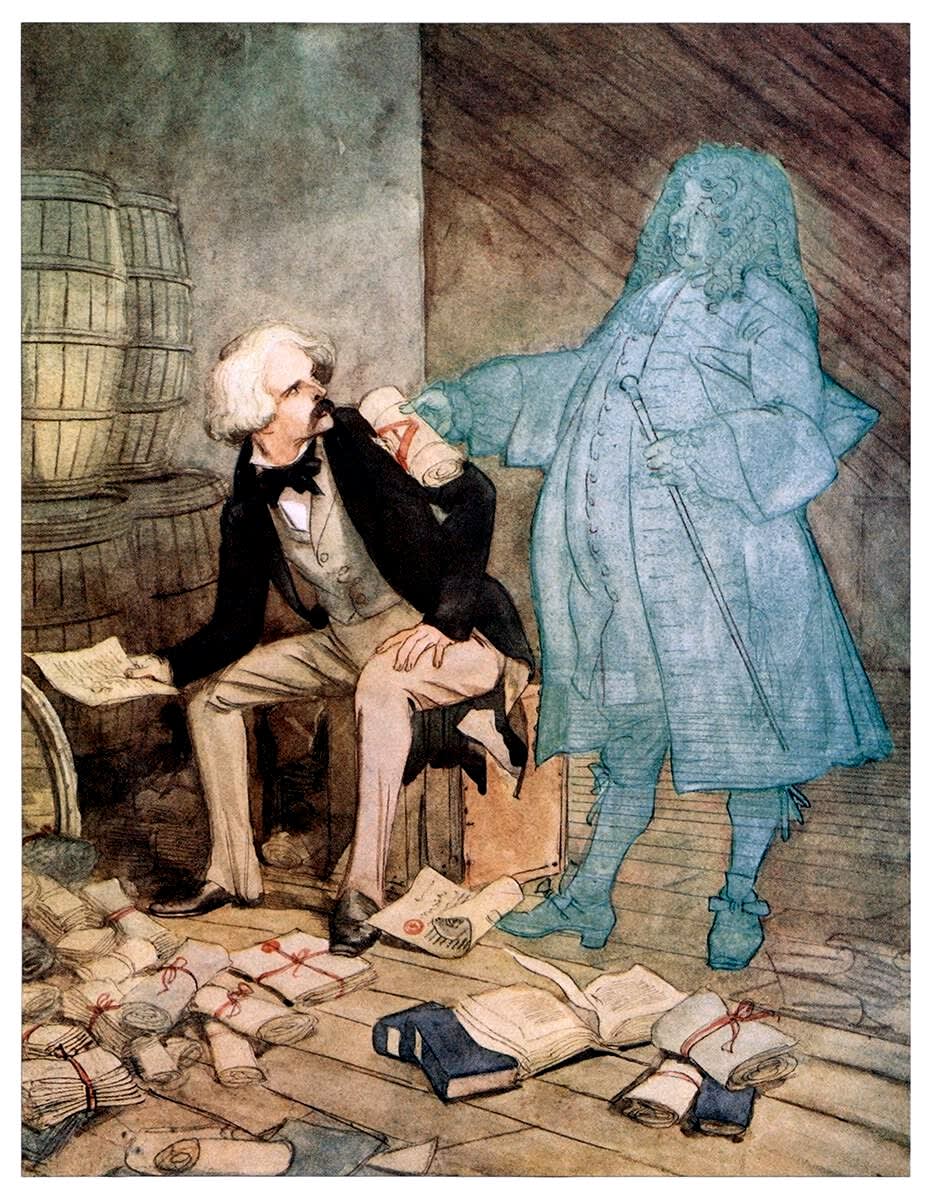 Ahem. I told you I had another ghost story for Halloween. Oh wait, this is actually just a haunted burrito.1
Out of how many? I dunno, more than 4. Let’s say 5?
October 24, 2025
Ghost with a Knife
Following our recent look at G.I. Joe’s Flash, today we dive into his character tropes in fiction; specifically that of “experimental weapons.”
As I write this, our beloved Seattle Mariners just lost Game 7 of the ALDS. My child is absolutely gutted. The entire city is a bit dejected. Appropriate then for me to dedicate this column on ghosts and the afterlife to the Mariners’ 2025 season.
Oh yeah, and for Halloween.
Curious Figures is a reader-supported publication. To receive new posts and support my work, consider becoming a free or paid subscriber.
Anyway, as much as I appreciate the military realism of G.I. Joe, it’s the experimental weapons that stand out the most to me. Cobra Commander doesn’t carry a standard .45, he has some weird laser pistol with a gridded barrel. I don’t even know what it does, disintegrate people?
Same with Flash. Unlike the rest of the figures in his wave, carrying their M-16s, M-60s, and (yawn) crossbow, Flash carried an experimental laser rifle that required protective armoring, mirrored visor, and its own power pack.
The Ghostbusters had a similar set-up, with their Proton Packs and Particle Throwers (the official name for their rifles, although Neutrona Wands is also used). Unlike Flash’s laser rifle, the Ghostbusters’ rifles interacted with ethereal and intangible ghosts… albeit with some spillover into the material world (which we see in the very first minute of their very first field test).For this article, I wanted to run a little worldbuilding writing exercise. Let’s call it, ghost with a knife.
If the Ghostbusters’ particle throwers work against ghosts, let’s imagine a world in which ghosts develop weapons of their own against the living.
For that, we’re going to need to start with a population of ghosts. And somewhere among them, find a particularly crafty inventor. One (like our dear sweet Egon) who’s invented a reverse Particle Thrower…
A Ghost Walks into a Bar…So, first some worldbuilding. For this story, we’re starting with the premise that ghosts are not only real, but have a fairly extensive population. Perhaps even a comprehensive population; meaning, what if everyone who died became a ghost?
But how would that work? It’s a little disconcerting if ghosts exist, proving an immortal soul persists after death, and yet none of these souls fully move on in the afterlife?
And then there’s more practical problems of having so many ghosts in our world. What do they do all day? Where exactly do they manifest; concurrent with the material world? Are they always visible to us? Even from a spatial consideration, it gets tricky. If everyone dies and becomes a ghost, they’d quickly build up after just a few generations. Left unchecked, the spirit world would overwhelm the material world in very short order.
So we better first solve for this.
In most stories involving ghosts, there’s a necessary scarcity of them. There’s just no capacity to have everyone die and become a ghost. Thus, they appear only at certain times, to certain people. They haunt; their fleeting presence is part of what makes them scary. Their rarity makes them unbelievable, and causes those they haunt to question their senses, even their very sanity.
There would also be a troubling moral implication if there were an afterlife (a Heaven or even Hell), but none of the deceased are able to reach it. In which case, there’s often a specific reason why ghosts are still here, regardless of their final destination. They have unfinished business in life. And it’s this purpose that often drives their story.
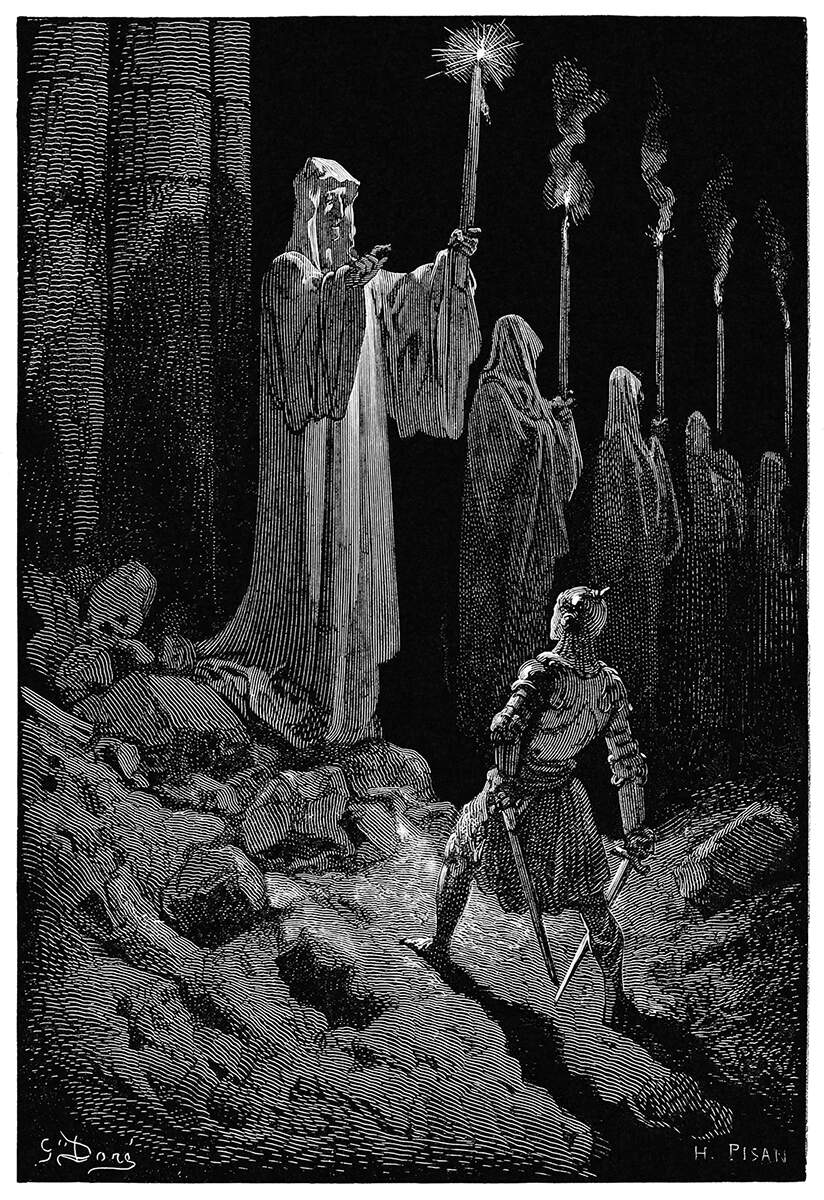 Ghosts in the Machines
All right, so in our worldbuilding, ghosts exist. We’ll say that these ghosts are a more recent phenomenon. That’s one way to help resolve their population; yes, they are more common now, a larger population, but not so much that their overwhelm the living world.
Perhaps these ghosts are not truly souls trapped in this plane of existence, so much as echoes or persistent memories of people (as some views of ghosts already would have it).
So in our story let’s say that advancements in human brain cybernetics, neural pathing and memory capture, etc., etc., have reached such a state that digital echoes of people are consistently, if inadvertently, captured. This is compounded by also having more digital “canvasses,” or near-omnipresent digital displays in our world (think of the individually targeted digitally advertising taking place in Minority Report); thus, these captured echoes are now also consistently, if inadvertently, rendered.
Our ghosts: after-images of people, captured in life and unable to fully escape a world of digital interaction. That also explains why they’re here, without any moral judgement on why they haven’t transcended to Heaven.
Now, some of these ghosts are former scientists and inventors who retain their creative, inventive capabilities. They are not mentally stagnant; they may no longer have living brains, but the digital space allows them the same kind of processing power. Only, now they must advance their fields from the position of the afterlife.
Some of these ghosts and their creations are, by their nature, benevolent. Others, nefarious.
And let’s continue from there…
 The Ghost Knife
Our story begins with a locked room mystery.
A victim lies dead in some impossible circumstance. They’ve secured themselves in a safe room that no one can reach, so how were they killed?
It’s a mystery, so our story needs an investigator. After they pursue more logical paths (was there a secret entrance to the room, was the victim killed before they entered, etc.), the investigator must explore a more farfetched solution…
NOTE: There are already plenty of ways that ghosts interact with the material world, in various media. Possession of a living host is one obvious way. They might also have telekinetic powers, able to move objects and even throw people around (just ask Mrs. Freeling). For this worldbuilding, I’d also look at such characters as the Twins, from the Matrix Reloaded, or Ghost in the Marvel Cinematic Universe, who have powers of intangibility.
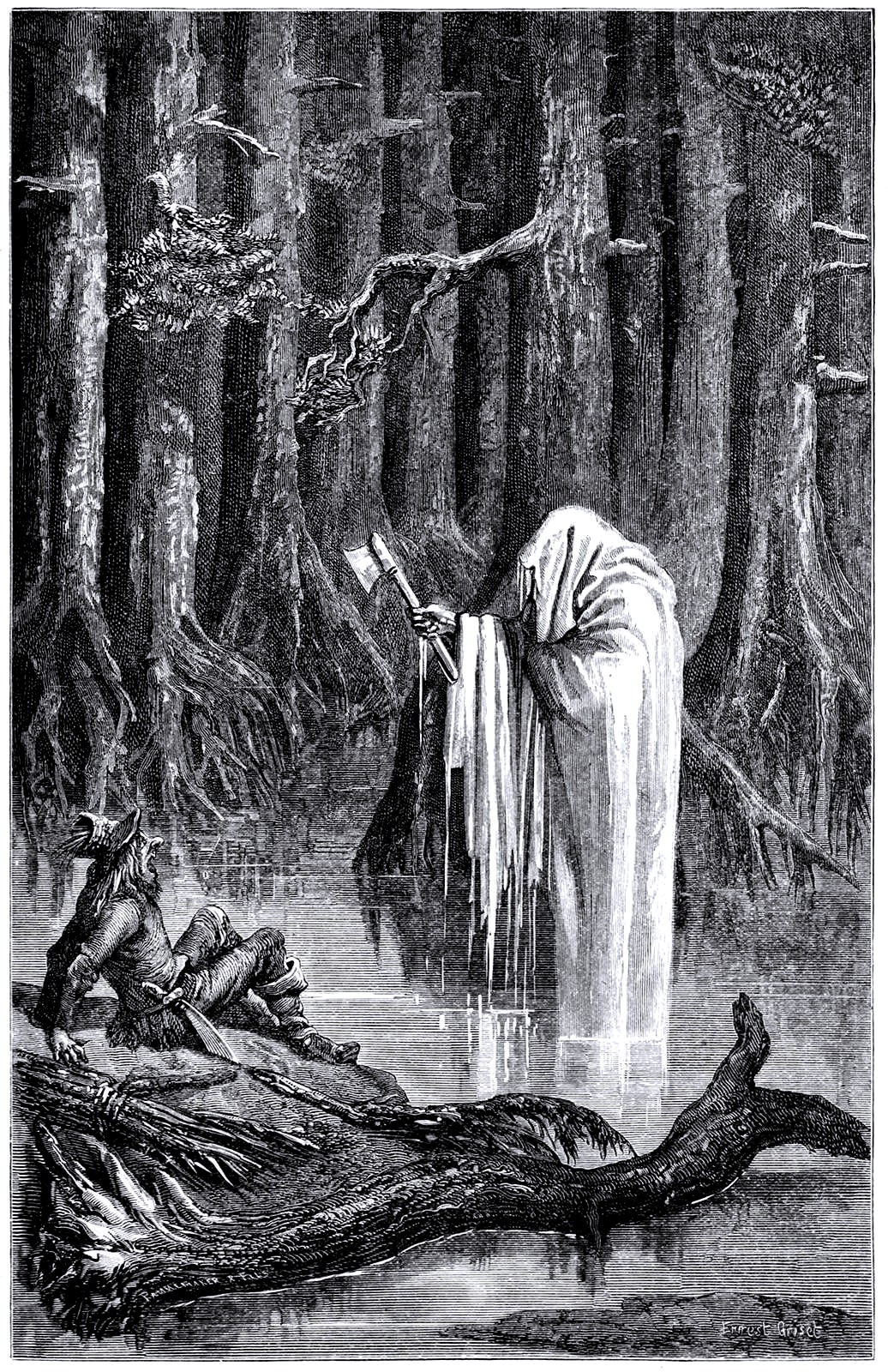
As it turns out, one of our more nefarious ghosts has developed a way to physically access the living world. As a reversal of the Ghostbusters’ Proton Packs, which capture ghosts, there are now ghost “knives” (perhaps even guns) which can be wielded in the spirit world but that affect ours. A reversal of superheroes with intangibility, these ghost knives have the power of tangibility—able to wielded in the spirit world; and, when needed, target victims in the living world.
In our story, our investigator should also have a partner (naturally!). But this one resides in the spirit world, able to explore and converse within this world, and educate the living detective from their perspective. A classic buddy-cop set-up. Maybe the two were partners in life, maybe professional rivals—in fact, maybe the ghost isn’t a former detective at all, but a criminal (48 Hours-style) that the living detective may have even killed themselves.
(How they end up working together, we’ll figure out later.)
In any case, together they must hunt down this ghost with a knife before they can kill more people, by working across the living and the spiritual worlds.
Some other details to consider. If a ghost knife can work against the living, then a response of some kind will need to be developed. Armor. Clearly, our investigator will seek out such protection, before the final showdown.
Now, if our worldbuilding is more supernatural in tone, this may mean invoking certain blessings or charms.
However, if it’s more scientific, this may be anti-particles of whatever mechanism allows these ghost knives to interact with the living world. (And if the investigator is working with their deceased partner or rival, this armor may be developed by our antagonist’s still-living partner, who has knowledge of their experiments and access to their former lab).
Likewise, unlike Proton Packs which merely capture ghosts, other weapons may be developed in response that directly harm ghosts. They’re already dead, so it’s not like you can kill ghosts again… or can you? An opposing “living” or “holy” knife might disrupt a ghost’s energy (our investigator uses one such weapon to dispatch our story’s antagonist ghost), dispersing them from the spiritual world altogether—or banishing them to yet another plane of existence, one which does not directly connect with the living world.
Which, in true storytelling fashion, this allows us a future opportunity for a defeated ghost to fine some new way to escape that prison, and return to our story!
Happy (early) Halloween, everyone!
Next time: A thing in a jar! It’s a thing in a jar!!
Thanks for reading Curious Figures! This post is public so feel free to share it.
Here you are, good sir! A ghost story! Although, any such story I present to you is technically a “ghost” story, har har har!
September 27, 2025
It's Flash! Ah-Ah!
A Brief History of G.I. Joe
Welcome! I look at action figures, mainly from the G.I. Joe line (because I love them so), as a touchpoint to discuss their character tropes in speculative fiction and TRPG game design.
Today, we explore a certain laser rifle trooper from Lodi, CA…
The rebirth of G.I. Joe in its Real American Hero line of figures (1982-1994) came in part as a response to the success of Kenner’s Star Wars line (1978-1985). And the 3 3/4” scaling for that line came in part as a response to the oil crises of the 1970s and the rising cost of plastic. Smaller figures, less plastic, smaller cost.
For G.I. Joe, the last time we saw their figures before this came in 1976, with the final wave of the 12” Action Team line. By then, the brand had moved away from their military identity due to the unpopularity of the Vietnam War, but returned to their roots (with a vengeance) in the first wave of a Real American Hero.
Those 1982 figures were very much grounded in real-world military language and aesthetics, helped in large part by the participation of Larry Hama, a Vietnam War veteran himself and comic book writer. Larry retooled a pitch for a Nick Fury spinoff involving the adventures of a military special forces unit, and used it to create Marvel’s G.I. Joe comic series instead (as well as character backgrounds for the figures themselves).
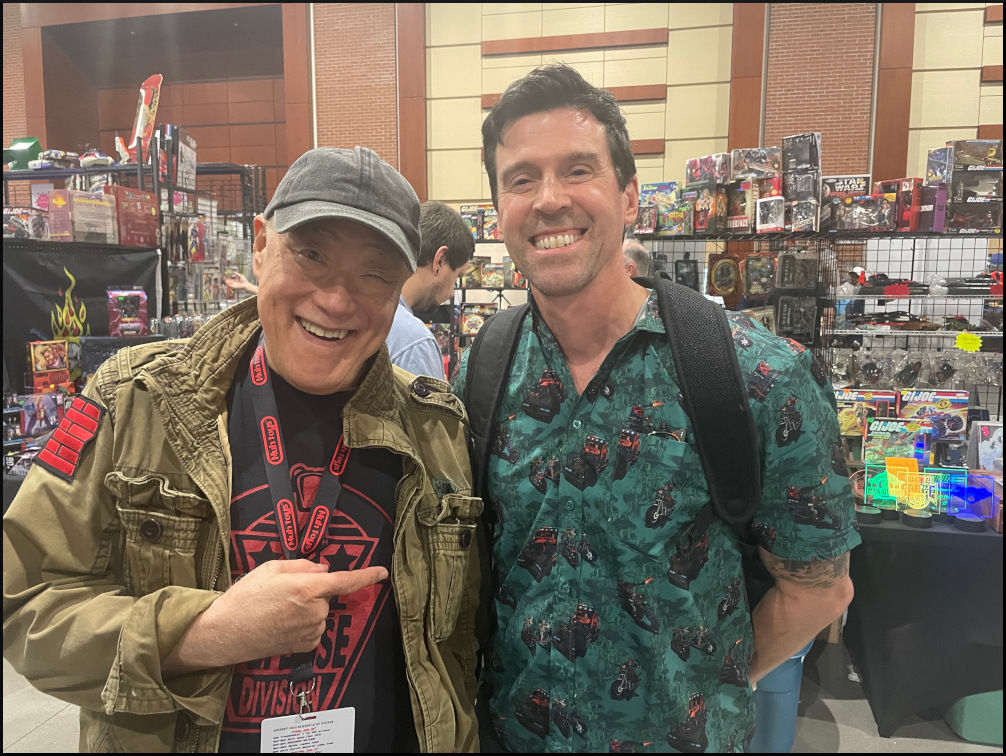 Any chance to use this picture, I will!Bring in the Genre Blending!
What helped set the A Real American Hero line apart was its willingness to weave in genre elements outside of a strictly real-world military universe. Largely, science-fiction and martial arts. Granted, these elements became increasingly pronounced in later waves, and arguably too far by the end when seemingly every figure was either a ninja or a member of some Eco Warrior/Star Brigade/Monster Hunter unit, often wearing the most garish colors and/or carrying the most ridiculously oversized weapons possible.1
(Including whatever the hell this guy is supposed to be.)
In much the same way, I’ve also written before (for an earlier version of the Dungeons & Dragons website now lost to the ages) about how the 1e Monster Manual helped expand the D&D universe by pulling in creatures not just from its own game world (the beholder, bulette, rust monster, etc.) but also from Hammer horror and martial arts films, medieval bestiaries, world folklore and legend—and really, any fertile garden of monsters bearing strange, desirable fruit.
In the 1982 wave, however, we have a more reasonable introduction of sci-fi elements with Flash.
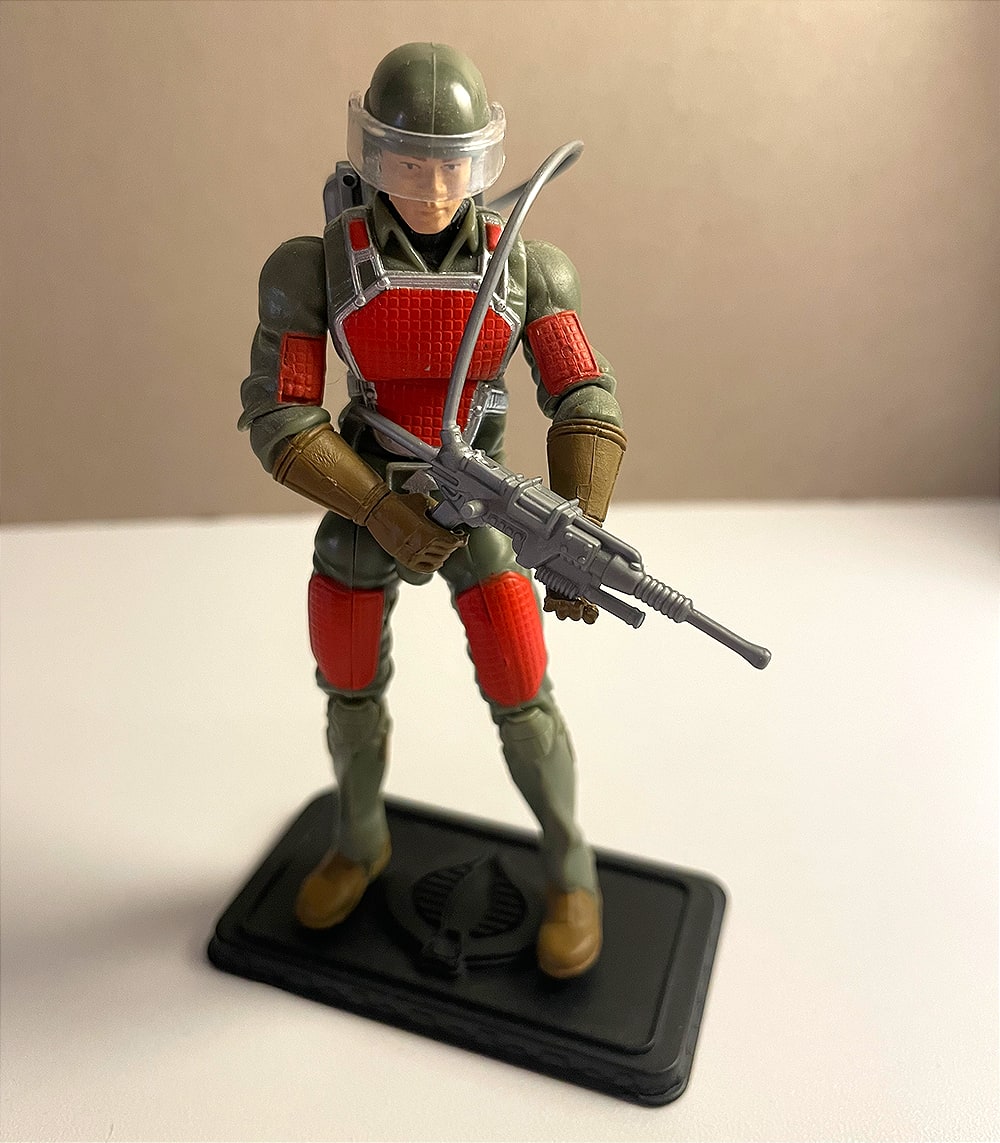 Insert the Queen soundtrack! Insert the Queen soundtrack!!!!Flash! Ah-ah! Savior of the (G.I. Joe) Universe
Identified as the team’s “laser rifle trooper,” Flash came equipped with the XMLR-1a and had a background in Electronics CBR…
Wait, what?
In considering Flash, I realize that another reason I have for creating this Substack is not just for the nostalgic love and appreciation of these figures. It is. But it’s also to gain a better understanding of these figures as well.
Despite being an Army brat myself, I didn’t have a solid enough knowledge of the military terminology being used. I couldn’t even identify Snake Eyes’ satchel charge for what it was, until I saw one used in the greatest film this (or any other) country has ever produced, 1987’s Predator.
OK, so what exactly is Flash’s rifle? What’s with his padded armor? And was he named after Flash Gordon?
The last one, probably… at least to some extent. And while a solid codename for a sci-fi laser trooper, it did also cause copyright problems running up against DC’s Flash. A situation repeated with G.I. Joe’s 1988 Ghostrider figure, where the brand somehow managed to run afoul of its own comics parent company!2
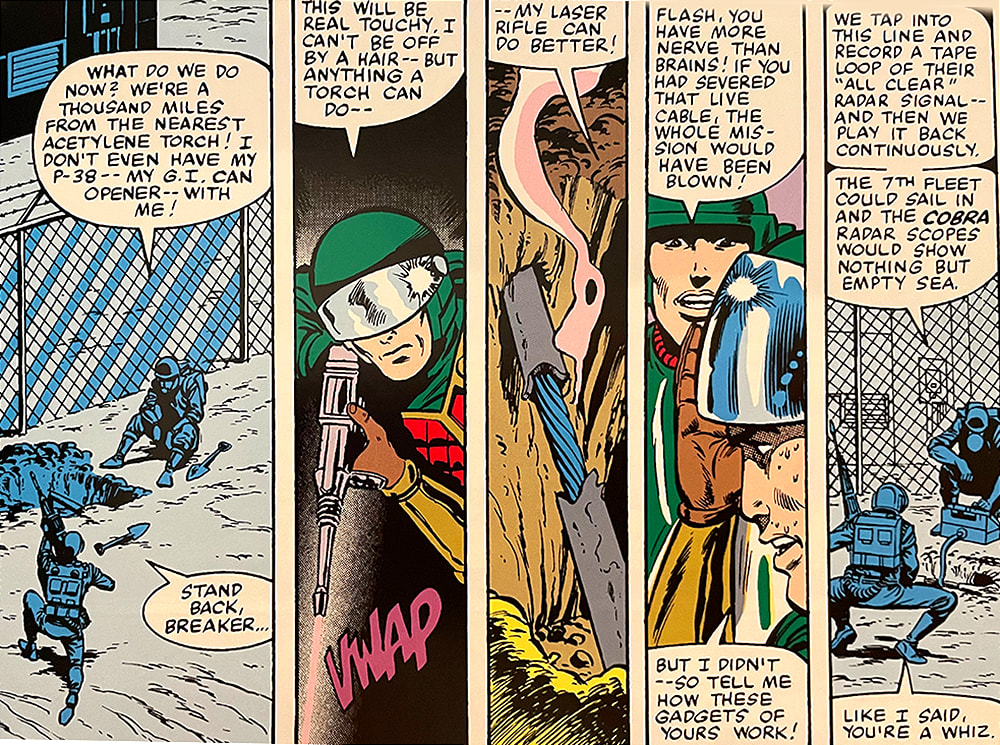 Marvel’s G.I. Joe: A Real American Hero Issue #1Fire the Pew! Pew! Gun
The XMLR-1a thus follows the conventions of other military weapon designations. For example, there’s the M-16 (I always thought the “M” stood for “Machine Gun,” but it actually just stands for “Model”), or the AK-47 (for Avtomat Kalashnikova, or Automatic Kalashnikova, after it’s designer, Mikhail Kalashnikov3, created in 1947).
For Flash, “XMLR-1a” is the designation for “Experimental Laser Rifle”. A damn shame that his successor, the absurdly color-schemed Sci-Fi, is not armed with a 2a evolution of the rifle, but an “XH86 LLOM beam” rifle instead, whose code does not seem to stand for anything (except the “X” as “Experimental”).
From Dan Klingensmith’s outstanding book series, Creating G,I. Joe, Flash’s character concept originated with an aesthetic far more similar to Sci-Fi’s with a more inflatable space suit-style uniform designed to be filled with oxygen and powered by a larger backpack (all to protect him from the heat of his rifle).
The laser rifle itself drew its stated inspiration directly from Star Wars; yet, unlike blasters, Flash’s rifle fired a steady cutting beam. For example as shown in the comics, when the team is trapped in their headquarters, Flash must balance the output of his rifle to cut through the door lock without using up the remaining oxygen in the room.
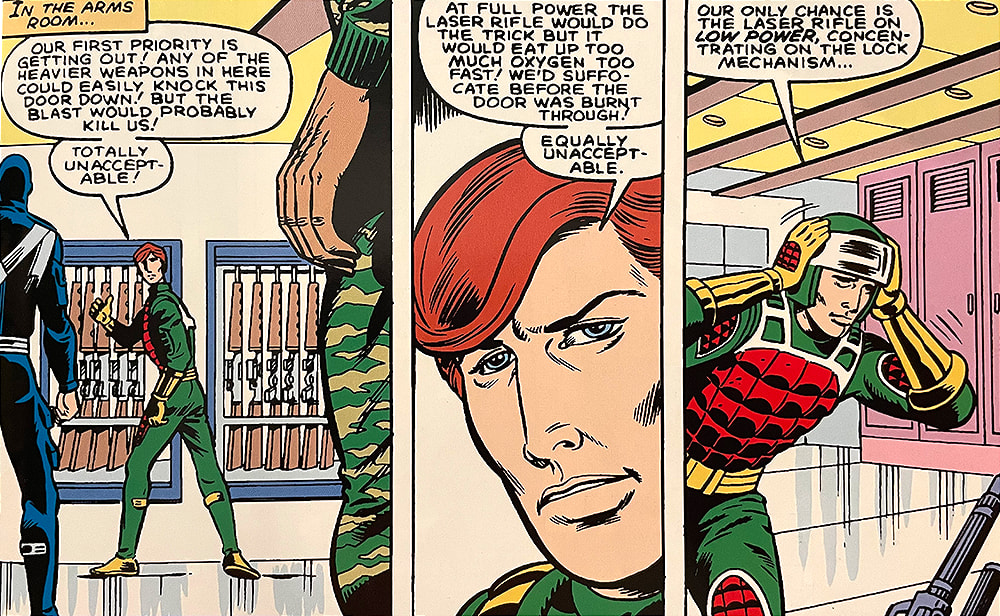 Marvel’s G.I. Joe: A Real American Hero Issue #3
This was exactly the same calculus I had to make when I drove my old Honda Accord. Drive slow enough to minimize it overheating, balanced against a high enough speed to at least get close enough to home before it invariably did.
That’s One Super SuitAll this jargony detail may bore the pants off most people, but I can’t help it! I find it needlessly fascinating...
And so… Flash’s Secondary Military Specialty is Electronics CBR, which (I now know) refers to gear designed to be operable in Chemical, Biological, and/or Radiological-contaminated environments.
Flash is thus trained and equipped to head into contaminated areas as well as to survive such conditions and effects. Which, if I’d have known as a kid, certainly expands the imaginative play for this guy. He’s not just another infantry soldier but with a laser rifle. Now he’s a special forces unit unto himself, specifically able to operate in the absolute worst of wartime conditions, in areas where chemical or even nuclear weapons have been deployed:
Chernobyl at the height of disaster and under enemy fire.
Meanwhile, Flash’s red-padded uniform, as a vestige of his original suit design, seems designed to protect him more from enemy laser fire than his own. Which would indicate that enemy (Cobra or other forces) troops might be similarly armed.
So now I picture a scenario of a post-war city, rendered uninhabitable. A dirty bomb has been set off by Cobra to clear it out. Flash is deployed to go in and recover material of some significance (a scientific formula, a code, a list of secret agents) knowing that Cobra forces will be attempting the same.
I still have questions:
What’s the range of Flash’s laser rifle? Long enough and he may wage a sniper’s duel with enemy troops from across the city.
Can it melt as well as cut? The two sides may cut open doors and through steel beams to maneuver, as well as melt vehicles and obstacles they train their lasers on.
How long is its power source? Running low, Flash may need to find a suitable city generator to tap into.
And finally, can these lasers be redirected by mirrors? The more powerful the laser, the more reflective the mirror would need to be (or else it absorbs the remaining energy); but if so, I can imagine a final twist, wherein Flash, out of power and cornered, manages to turn the enemy’s lasers back onto themselves.
After all, as the t-shirts have long stated, knowing is only half the battle. The other half is lasers.
This is right about where I usually add this little, blue button. Please consider becoming a regular subscriber!
Next time: Exploring the chocolate in your peanut butter of science-fiction in your fantasy.
Thanks for reading Curious Figures! This post is public so feel free to share it.
1Golems alone make as good a case study as anything. The 1e Monster Manual list four types, flesh (derived from Frankenstein’s monster), clay (from Jewish legend of the original golem), stone (fantasy tropes of living/animated statues), and iron (Talos from Greek mythology as seen in 1963’s film, Jason and the Argonauts).
2This led to the one of the dumbest running gags in the G.I. Joe comic series, where every time the character appeared, no one could “remember” his name, since it couldn’t actually be used in the comic.
3And how the .45 Colt refers to its founder Samuel Colt (and its .45 caliber ammunition size), while Colt 45 refers to #45 Jerry Hill of the Baltimore Colts. Allegedly.
September 13, 2025
A Wavy Line Between Wizard and Scientist
For anyone new to this Substack, welcome! It’s where I play around with action figures, especially G.I. Joe, as a touchpoint for both speculative fiction and TRPG game design.
Following our at Dr. Mindbender, today we dive further into his character tropes in fiction; specifically the “evil scientist” in fantasy.
Last time, I noted my genre preference for “science fantasy,” where science largely provides world building explanations for much of a setting’s fantastic elements (Star Wars as the largest example, Gene Wolfe’s Book of the New Sun as my personal favorite). There’s a bit of a play with Arthur C. Clarke’s Third Law1: "Any sufficiently advanced technology is indistinguishable from magic," perhaps leaning more toward the Penn & Teller style of showing how the magic trick works, and how the advanced technology actual creates the magical effects.
What does all this have to do with today’s topic?
Nothing! Nothing at all! (Or does it…)
Instead we’re turning more towards high fantasy and TRPGs, and having some fun with wizards, sorcerers, and magic-users of all kinds. With scientists, we started with no less than Dr. Frankenstein, so for the ür-wizard, who else should we look at than Merlin himself?
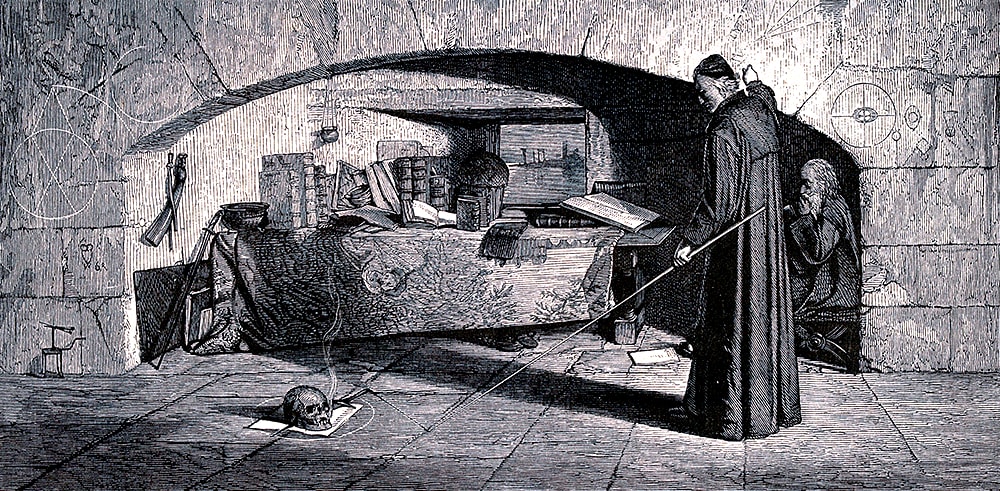 In Defense of Breaking Tropes
But first, an absolute tangent of an introduction to Merlin…
Here’s my confession (for the week; I won’t admit who broke that planter in the bathroom with a misplaced elbow just yet). As a developing writer, there are certain tropes, and models, and pieces of advice that I hold fairly sacrosanct for my own personal approach (no head-hopping POV, avoid Mary Sue characters).
Others, less so.
The Hero’s JourneyI love a good redemption story for the hero. I love satisfying comeuppance for the villain. I am, however, rather full and satisfied with the traditional hero’s journey arc. I get it. It’s a template that goes back to some of humanity’s earliest myths and still carries on into galaxies far, far away. I just don’t need every hero’s story to follow these beats as a proscribed pattern (the call to action, finding a mentor, crossing the first threshold, etc.).
Perhaps it works for stories that want to lean into a sense of the mythic, but I also appreciate those that play against expectation and break convention. The ending of Chinatown stays with us; there is an answer to the mystery, but no sense of justice. We follow Walter White through his complete descent into some kind of “moral villainy.” Not that either of those even attempt pretend to showcase anything other than anti-heroes, but it’s precisely their anti-heroic journey that keeps things more unexpected and therefore more compelling to me as an audience.
For the same reasons, I’d argue that Games of Thrones was more popular in the early seasons because of its “grim ambiguity” and much less so in the final episodes bringing things to a “satisfying” conclusion.
Few were satisfied.
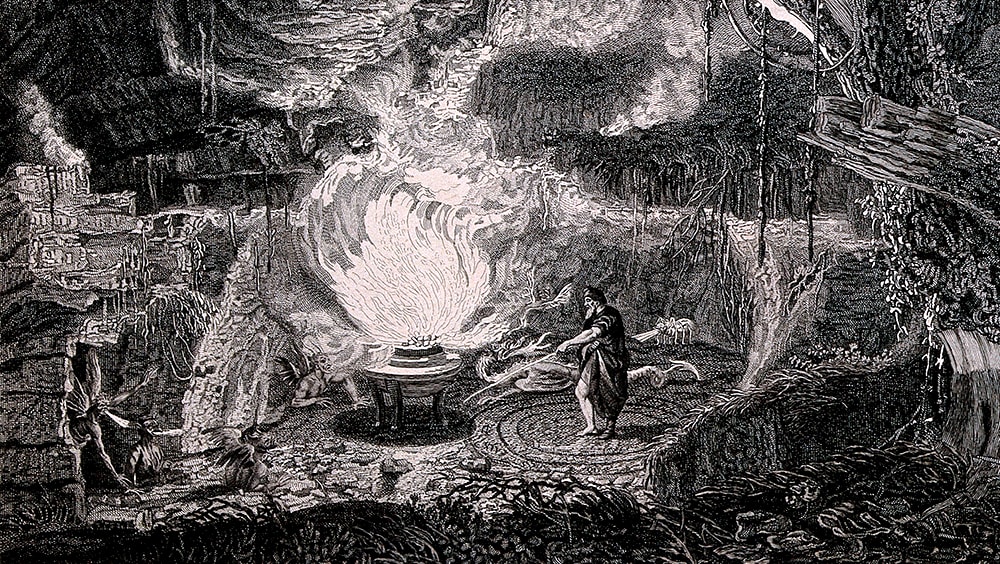 The Long, Descriptive List
Likewise, when it comes to setting the scene, there’s often the advice to avoid long lists in descriptions. You don’t need to include every object in the room, just boil it down to the most essential or the ones that can evoke an overall sense of the room.
Thaaaat said… there are long, descriptive lists in fiction that I cannot help but lovingly pour through, regardless of their drag on any narrative propulsion. For example—and here’s where we finally get back to Merlin!—one of my favorites has King Arthur (in his youthful, pre-sword pulling days; here, touchingly nicknamed “The Wart”) first visiting Merlin’s home:
It was the most marvellous room that he had ever been in.
There was a real corkindrill hanging from the rafters, very life-like and horrible with glass eyes and scaly tail stretched out behind it. When its master came into the room it winked one eye in salutation, although it was stuffed. There were thousands of brown books in leather bindings, some chained to the book-shelves and others propped against each other as if they had had too much to drink and did not really trust themselves. These gave out a smell of must and solid brownness which was most secure. Then there were stuffed birds, popinjays, and maggot-pies and kingfishers, and peacocks with all their feathers but two, and tiny birds like beetles, and a reputed phoenix which smelt of incense and cinnamon. It could not have been a real phoenix, because there is only one of these at a time. Over by the mantelpiece there was a fox's mask, with GRAFTON, BUCKINGHAM TO DAVENTRY, 2 HRS 20 MINS written under it, and also a forty-pound salmon with AWE, 43 MIN., BULLDOG written under it, and a very life-like basilisk with CROWHURST OTTER HOUNDS in Roman print. There were several boars' tusks and the claws of tigers and libbards mounted in symmetrical patterns, and a big head of Ovis Poli, six live grass snakes in a kind of aquarium, some nests of the solitary wasp nicely set up in a glass cylinder, an ordinary beehive whose inhabitants went in and out of the window unmolested, two young hedgehogs in cotton wool, a pair of badgers which immediately began to cry Yik-Yik-Yik-Yik in loud voices as soon as the magician appeared, twenty boxes which contained stick caterpillars and sixths of the puss-moth, and even an oleander that was worth sixpence—all feeding on the appropriate leaves…
Phew! Stopping to catch my breath here. Believe it or not, the description continues uninterrupted:
… a guncase with all sorts of weapons which would not be invented for half a thousand years, a rod-box ditto, a chest of drawers full of salmon flies which had been tied by Merlyn himself, another chest whose drawers were labelled Mandragora, Mandrake, Old Man's Beard, etc., a bunch of turkey feathers and goose-quills for making pens, an astrolabe, twelve pairs of boots, a dozen purse-nets, three dozen rabbit wires, twelve corkscrews, some ants' nests between two glass plates, ink-bottles of every possible colour from red to violet, darning-needles, a gold medal for being the best scholar at Winchester…
What is this stuff? Guns in a medieval fantasy? Some joke about a scholastic award he’s received? Yes and yes, and I love it all!
… four or five recorders, a nest of field mice all alive-o, two skulls, plenty of cut glass, Venetian glass, Bristol glass and a bottle of Mastic varnish, some satsuma china and some cloisonné, the fourteenth edition of the Encyclopaedia Britannica (marred as it was by the sensationalism of the popular plates), two paint-boxes (one oil, one water-colour), three globes of the known geographical world, a few fossils, the stuffed head of a cameleopard, six pismires, some glass retorts with cauldrons, bunsen burners, etc., and a complete set of cigarette cards depicting wild fowl by Peter Scott.
—The Once and Future King
Granted, that is an absolute block of text. And while it does absolutely nothing to move the story forward or advance the plot, it does a wonderfully poetic job of telling us how strange, how wonderful—and importantly—how utterly out of time Merlin truly is (more on that later).
When done well, I luxuriate in these lists. Umberto Eco’s The Name of the Rose describes a door carven with an entire bestiary of animals and strange figures, real or imagined, including “…hydrphora with sawtooth horns, frogs, gryphons, monkeys, dog-heads, leucrota, manticores, vulture, paranders, weasels, dragons, hoopoes, owls, basilisks, hypnales, presters, spectafici, scorpions…”
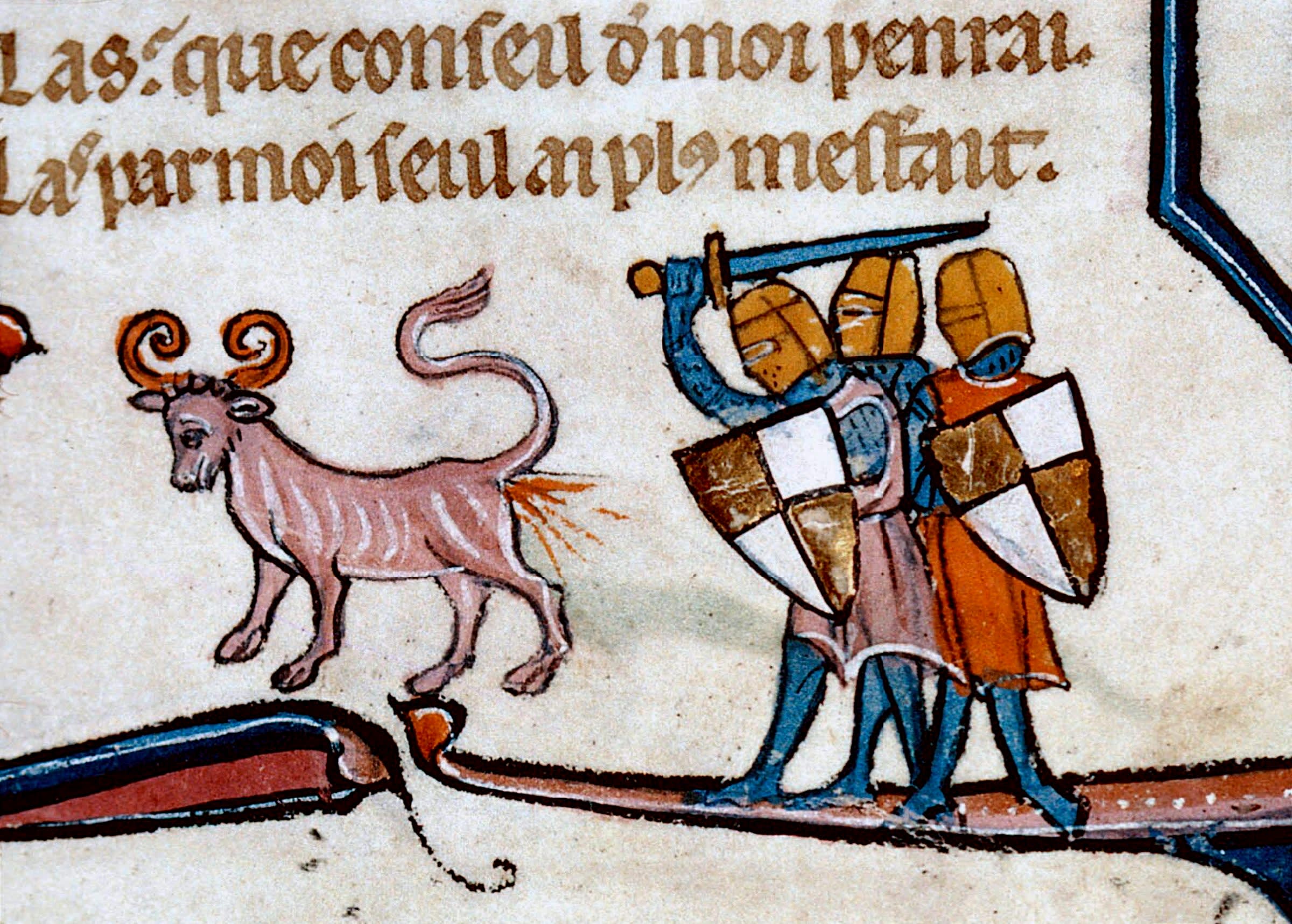 And don’t you dare sleep on the bonnacon! Best creature ever from medieval bestiaries…
I could go on, and on, and Eco certainly does. It reminds me of another favorite list, The Denham Tracts. If you’ve ever googled the etymology of the word “hobbit,” you’ve probably come across this one as well; and someday, I’ve love to examine each creature in turn.
In Bolted to the Bone2, I’ve included my own version of Merlin’s home, written as a similar long lost of “stuff”:
Now Back to Our Spellcasting Already in ProgressFar more of a reaction came from Mister Gold. The tiny luchorman began rustling inside Scrounger’s pocket as it sensed the apartment’s wealth, both hidden and on display—near the cluster of amethyst crystals and opalized fossils, but also the models of magnetic locks dismantled like small robotic corpses under autopsy, the precious metals of their wiring shining coppery red and silvery white in the firelight. There were so many other odd wonderments as well, vials of liquor with the claws and teeth of oll-beasts fermenting inside; and an elaborate orrery, a model of Shattered Earth, with all its many remanants depicted in their place around its fractured core; and a hundred other objects in this front parlor alone, some even from Rhiannon, such as a set of justice knives that could only be wielded by their winning plaintiff against the losing defendant; and some from Antefracturam Earth, surviving artifacts of ancient wealth or technology of the sort to cause relinquarians to travel the remanants hunting after them.
Now then! Returning to the “evil scientist,” or eccentric genius, as a character trope. To me, the trope has connotations of a scientist looking to practice and extend their knowledge, often with a specific project or goal in mind. The formerly “mad” label, more often adjusted now as “eccentric,” refers to their unorthodox or dangerous approach, their equally dangerous or destructive goal, and their general lack of regard for anything opposing their progress.
Carried over into fantasy, it’s likewise not enough for a wizard to merely possess magical knowledge, but also how are they applying it. Do they have a specific project, purpose, or goal they are using their magic to achieve?
Merlin, as such, is not so much an “evil scientist” or eccentric genius figure, so much as he is a prophet (owing to his backward passage in time), teacher, and “wizard on call.”3
The Curse of MagicFor just a moment more, I wanted to explore that element, his backward passage in time.
"Now breakfast," said Merlyn.
The Wart saw that the most perfect breakfast was laid out neatly for two, on a table before the window. There were peaches. There were also melons, strawberries and cream, rusks, brown trout piping hot, grilled perch which were much nicer, chicken devilled enough to burn one's mouth out, kidneys and mushrooms on toast, fricassee, curry, and a choice of boiling coffee or best chocolate made with cream in large cups.
Yes, another fairly long descriptive list. There’s something about fantasy and lists of food oftentimes, isn’t there… Also, who’s choosing the chocolate over coffee, even if it is “best”?
Soon after, we come to Merlin’s explanation of he he experiences time:
"How did you know to set breakfast for two?"
"Ah, yes. How did I know to set breakfast for two? That was why I showed you the looking-glass. Now ordinary people are born forwards in Time, if you understand what I mean, and nearly everything in the world goes forward too. This makes it quite easy for the ordinary people to live, just as it would be easy to join those five dots into a W if you were allowed to look at them forwards, instead of backwards and inside out. But I unfortunately was born at the wrong end of time, and I have to live backwards from in front, while surrounded by a lot of people living forwards from behind. Some people call it having second sight."
He stopped talking and looked at the Wart in an anxious way.
"Have I told you this before?"
"No, we only met about half an hour ago."
"So little time to pass?" said Merlyn, and a big tear ran down to the end of his nose. He wiped it off with his pyjamas and added anxiously, "Am I going to tell it you again?"
"I do not know," said the Wart, "unless you have not finished telling me yet."
It reads a bit Alice in Wonderland. A sophisticated concept baked inside a somewhat nonsensical delivery.
And yet, I read it as so incredibly tragic. This is Arthur’s first time meeting Merlin. But for Merlin, this will be the last time they have together.
So here’s where I turn back to science fantasy.
Magic in fantasy can accomplish physics-defying marvels—much of why I’m not a fan. This may sound ridiculous, for me to have scientific complaints about pure fantasy concepts, but there it is. Never mind Clarke’s Laws, I hate how magic breaks the Laws of Thermodynamics. Especially the first—energy can be neither created nor destroyed.
And yet a lot of high fantasy magic does exactly that—with a word or a gesture, the wizard conjures some force (e.g., a fireball), object or creature out of thin air.
So, I appreciate when there is a high cost shown for magic. It might not be a scientific explanation for how the matter or energy is seemingly newly created, but a cost nonetheless. Raistlin, in the Dragonlance series, has been physically weakened. Elric’s magic sword Stormbringer must be fed with intelligent souls. And Merlin is doomed to an odd backwards life through time.
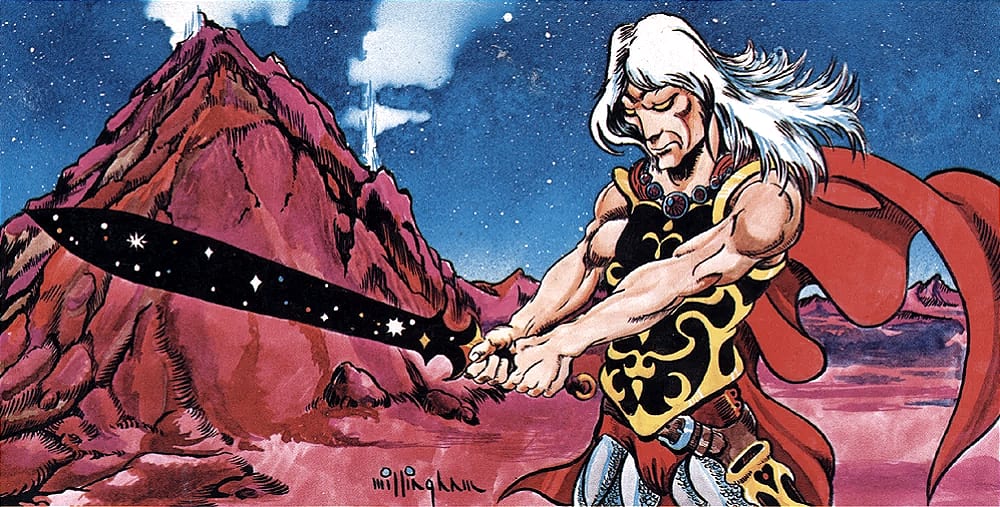 Presenting Stormbringer! I mean, Blackrazor! | (C) Wizards. From White Plume Mountain, art by Bill Willingham.A Table of Scientists
OK. We should include something of TRPGs this time. So, whether scientist or wizard, here’s a little random table for your game. What are your geniuses working to create, their specific motive for doing so, and the source of their knowledge and/or resources?
Let’s find out…
!function(){"use strict";window.addEventListener("message",(function(e){if(void 0!==e.data["datawrapper-height"]){var t=document.querySelectorAll("iframe");for(var a in e.data["datawrapper-height"])for(var r=0;r<t.length;r++){if(t[r].contentWindow===e.source)t[r].style.height=e.data["datawrapper-height"][a]+"px"}}}))}();This is right about where I usually add this little, blue button. Please consider becoming a regular subscriber!
For funsies, I’ve generated a scientist/wizard at random from our table:
1. The ScientistWhat: Genetics (5)
Why: Revenge (1)
How: Ancient Knowledge (8)
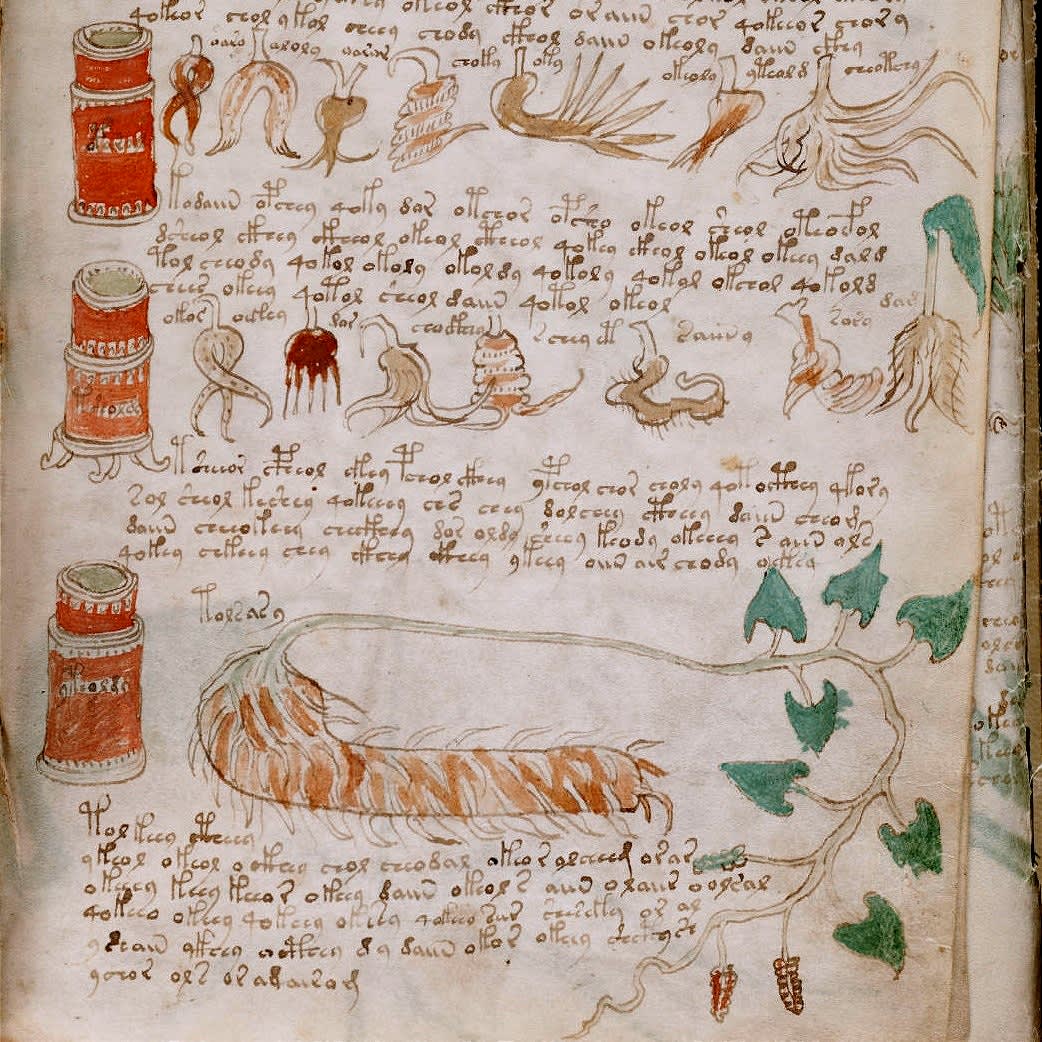
Hmm, all right. So this NPC is an eccentric geneticist. I’m going to go with their work crossbreeding plants; in part because they derive their knowledge from some ancient knowledge. And for that, I’ll use the Voynich Manuscript, a mysterious tome with odd figures of plants and naked humans bathing in green pools.
This scientist is out for revenge. I’ll go with land dispute; they’ve had industrial polluters ruin their groundwater and crops through improper waste disposal (a bit cliche, I know). Through their research unlocking the Voynich Manuscript, they’re developing more waste pollution-resistant crops by crossbreeding various species, as well as incorporating these raw chemical as well in an attempt to “inoculate” them. That’s the goal anyway.
The actual results? These plants could go into the food supply, and now we have a plant-based version of a zombie outbreak… eh, too close to The Last of Us and its fungus-based zombie outbreak.
Fine, let’s have some good ole’ Swamp Thing sentient plants that arise! Our heroes need to confront them, but then decide of the plants need to be destroyed for the sake of nearby housing settlements, or if they’ll join their cause against the polluters.
 Drew Magary’s Super Bowl chili recipe.2. The Wizard
What: Transportation (10)
Why: Predecessor (11)
How: Accidental (9)
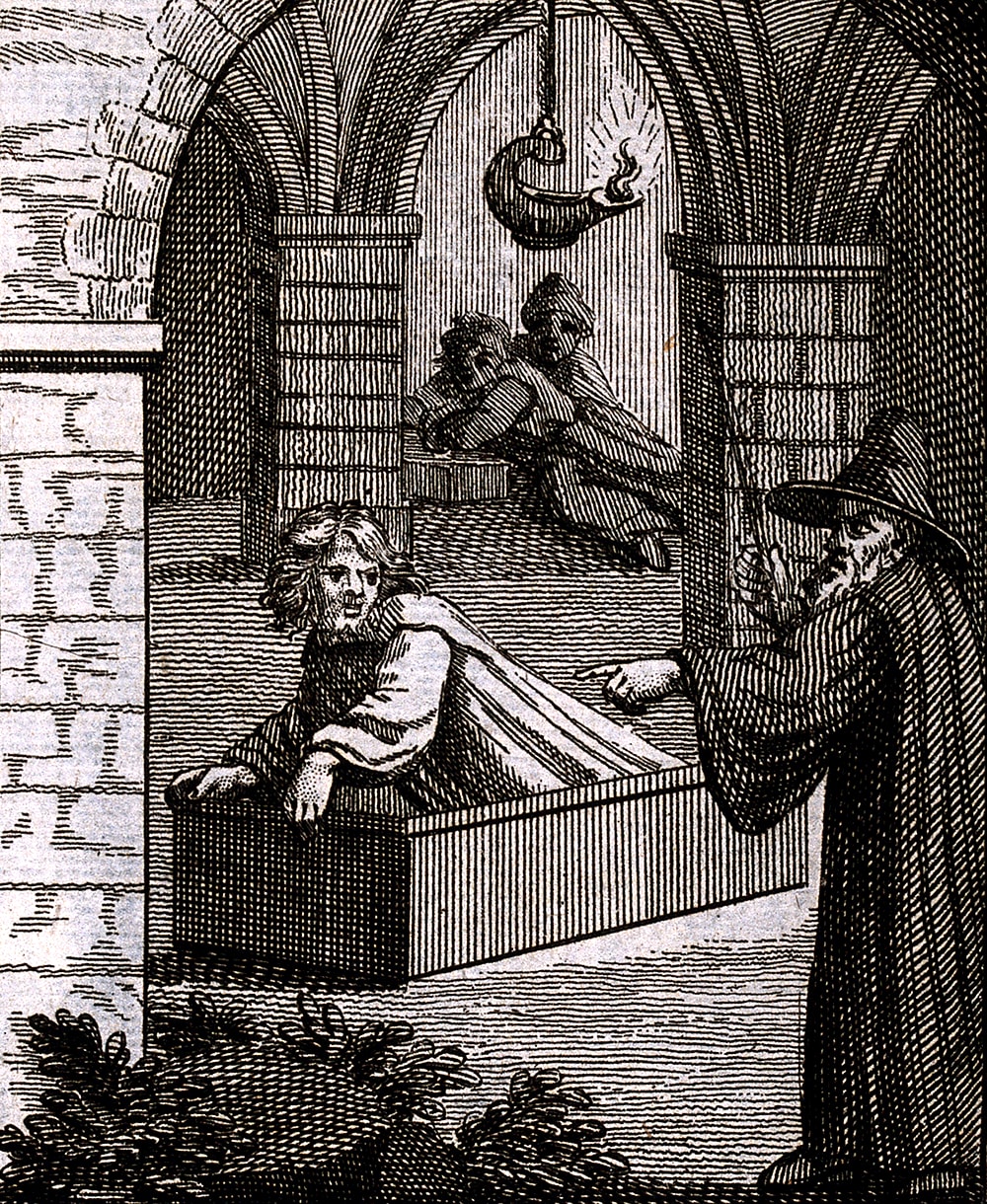
OK, now this gives us a pretty quick story to tell! Our wizard has been carrying on the work of their predecessor, who was looking to develop more advanced teleportation circles… until they mysteriously disappeared.
You can already see where this is going.
Through some accidental discover (a lost page in a spellbook found out of place; being used as a bookmark in the older wizard’s nighttime reading), the teleportation circle can be completed, and the older wizard sought out and potentially rescued on the other side. But where is the other side? And how does one return?
Will out heroes accept this quest, and potentially be rewarded with a powerful magical ally?
Next time: Pursuing science in D&D/TRPGs.
Thanks for reading Curious Figures! This post is public so feel free to share it.
1His first two (much less referenced) laws being:
When a distinguished but elderly scientist states that something is possible, he is almost certainly right. When he states that something is impossible, he is very probably wrong.
The only way of discovering the limits of the possible is to venture a little way past them into the impossible.
2Yep, I sure have been promoting my book extensively this past several weeks, but there’s just a few weeks left until it releases, and I want to take advantage of that time while I can!
3So why even write about then? It’s wizards, I’m compelled to mention Merlin!
August 30, 2025
What have you done? My God, what have you done!?!
For anyone new to this Substack, welcome! I look at action figures, especially from the G.I. Joe line (because I love them so), as a touchpoint to discuss their character tropes and traits in both speculative fiction and TRPG game design.
Following our most recent look at G.I. Joe’s Dr. Mindbender, today we dive into his character trope in fiction; specifically that of “evil scientist.”
How can we start any discussion of the trope without considering the most iconic of them all—Dr. Victor Frankenstein!
“Remember, I am not recording the vision of a madman… Some miracle might have produced it, yet the stages of the discovery were distinct and probable. After days and nights of incredible labour and fatigue, I succeeded in discovering the cause of generation and life; nay, more, I became myself capable of bestowing animation upon lifeless matter.”
—Frankenstein; or, the Modern Prometheus
I’m starting with this passage to note how we’ve seen this trope traditionally labeled as “mad scientist”. Already we have Dr. Frankenstein’s claim that they are not “mad” despite the unconventional nature of their experiments, but therein raises the problematic phrasing of “madness” and mental illness; and while this particular scientist trope can certainly involve elements of obsession, delusion, or other aspects of certain mental illnesses, it just seems like phrasing best to move on from.
With Dr. Mindbender, an alternate label of “evil genius” is apt, but other scientist characters do not always fall so obviously on the alignment chart. “Eccentric genius” has been offered as an alternative, although “eccentric” does not fully convey the dangerousness associated with their work, at least not to me.
Still, let’s go with that for now…
In any case, for Dr. Frankenstein he states that every step in his experiment was perfectly measured and scientific, even if the end result is extraordinary. It is the rationalizing of their work that we’ve seen time and again with the “eccentric geniuses” of literature… and ends as horrifically as we’ve come to expect:
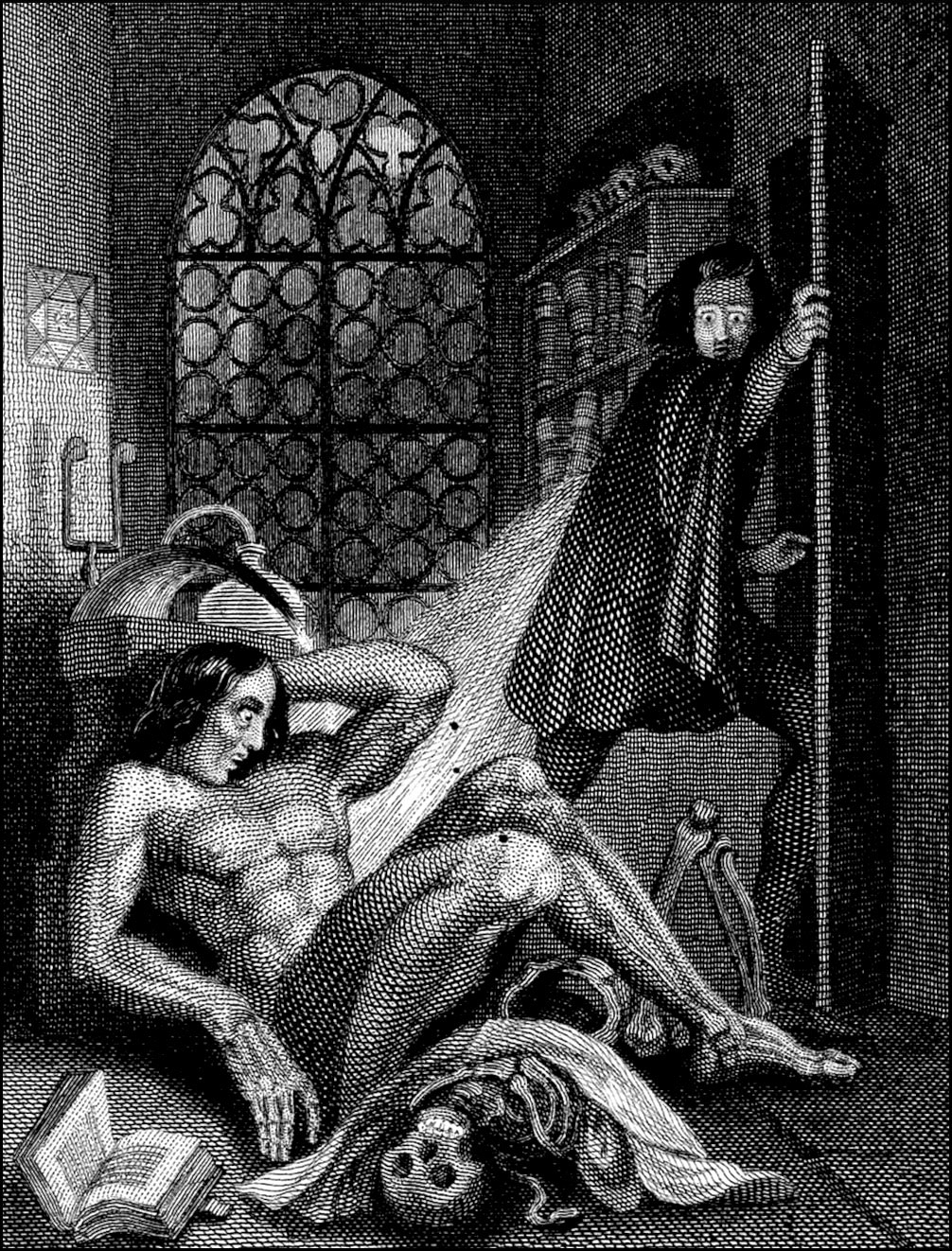
“It was on a dreary night of November that I beheld the accomplishment of my toils. With an anxiety that almost amounted to agony, I collected the instruments of life around me, that I might infuse a spark of being into the lifeless thing that lay at my feet. It was already one in the morning; the rain pattered dismally against the panes, and my candle was nearly burnt out, when, by the glimmer of the half-extinguished light, I saw the dull yellow eye of the creature open; it breathed hard, and a convulsive motion agitated its limbs.”1
This is right about where I usually add this little, blue button. Please consider becoming a regular subscriber!
Yet while Dr. Frankenstein knows he’s selected a perfect specimen of a body to reanimate, seeing its new appearance (awakening with a shriveled, yellowish complexion, pale white pupils, and black lips) has exposed his experiment for what it truly is—the reanimation of a corpse into some new, monstrous life:
“How can I describe my emotions at this catastrophe, or how delineate the wretch whom with such infinite pains and care I had endeavoured to form?… For this I had deprived myself of rest and health. I had desired it with an ardour that far exceeded moderation; but now that I had finished, the beauty of the dream vanished, and breathless horror and disgust filled my heart. Unable to endure the aspect of the being I had created, I rushed out of the room and continued a long time traversing my bed-chamber, unable to compose my mind to sleep.”2
I’m a larger fan of Science Fantasy over, say, High Magic Fantasy. That’s just my preferred flavor of ice cream (thankfully, there are many). And the concept of an eccentric scientific genius serves such a helpful purpose in the genre.
For one, scientists in general can provide the characters (and thus the readers) an explanation for how certain fantastical or even impossible elements in the worldbuilding came to be. (What is that strange creature with feet for hands? The result of science gone amok!) And, in so doing, how the science of their world works altogether. As an important note, they can do so without having to rely on explanations of “magic” or the metaphysical (such as the work of angels or demons).
And let’s not forget that as an antagonist, a scientist can creates threats that are creepier, more unsettling, and with more existential dread than might be otherwise encountered. It’s one thing to fight an opponent hand-to-hand. But to be captured and experimented on? Somehow changed or mutated? Even the bravest hero in any stand-up fight might quail at the thought of body horror inflicted upon them (and such a threat to the hero unsettles us, as an audience).
A Few of My Favorite Things…There are far too many examples of the “eccentric genius” in fiction and media, that I’ll just provide a few of my own personal favorites:
Dr. Bunsen Honeydew: What could be more terrifying than a scientist who comes at you with all smiles and soothing placations? Just ask Beaker—no matter how much you reassure us that everything will go fine… we know that it won’t.
Nikola Tesla: An inventor who goes off in their own direction; a threat to the perceived norm (as well as to the business of his rival, Eddison). The man designed an actual death ray, and was portrayed by no less than the Goblin King himself, David Bowie, in The Prestige.
Dr. Hans Zarkov: Specifically as depicted in 1980’s Flash Gordon. The only scientist that “has provided any explanation” for recent disastrous events. If only people would listen to him! And, a scientist willing to go to such great lengths to prove their theories as to kidnap unwilling test subjects—including the quarterback for the New York Jets!3
David 8: An android from the Alien movie series so fascinated with xenomorph biology as to conduct horrific experiments on human test subjects. We only see sketches and hints of whatever happened off-screen to Elizabeth Shaw between Prometheus and Covenant at David’s hands, and instills the worst fear of what will happen to Daniels later forced to take her place.
Rick: A super-genius inventor who’s greatest rival is various incarnations of himself. Who else can give him a worthy challenge? Season 3, Episode 3: Pickle Rick, tells a fantastic story of a scientist forced to save himself through his inventive powers (while Season 2, Episode 3: Auto Erotic Assimilation, has the saddest, most poignant ending for a scientist who cannot solve all of his problems through invention alone; trigger warning: suicide ideation).
(Honorable Mention) Baldanders: From perhaps my favorite novel series of all time, Gene Wolfe’s The Book of the New Sun—who at first seems a monstrous giant created by his companion Dr. Talos, until their true natures are revealed (and their true relationship reversed).
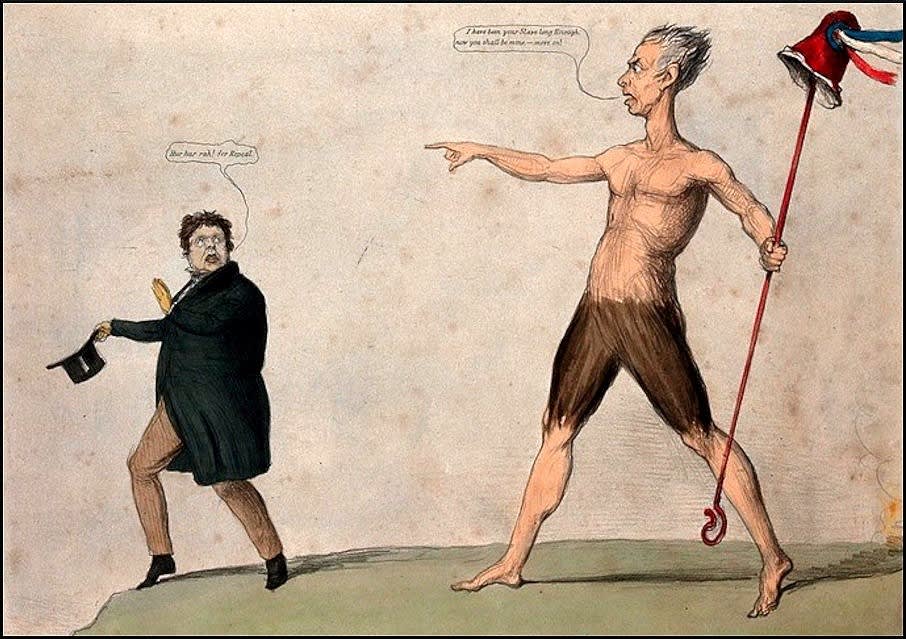 Note: Also an image of Frankenstein, but fits Dr. Talos & Baldanders just as well!
Taking a look at these figures, some of the “eccentric genius” tropes that work so well for them include:
Pursuit of science beyond its limits. The wish to expand the whole of knowledge regardless of the risks. This is Jurassic Park’s John Hammond view of science, only asking if they could, not if they should. A further shoutout to Dr. Hans Reinhardt here, willing to enter a black hole, just to see what’s in there!4
An equally driven rival. What pushes advancement if not competition? The aforementioned Tesla/Edison, the U.S./U.S.S.R. race to the moon, Apple vs. Microsoft. Oftentimes, it’s the hero up against the scientist and his creations, but a scientist vs. scientist rivalry can be far more fun to watch. In China Miéville’s Iron Council, the end battle sees golems fighting elementals, both built from two competing magical-scientific fields, and what could be better than that!
The ends justify the means. When considering the risks, it’s about the science above all else. Nothing else matters, not any moral constraints, legalities… or concerns of a work-life balance.5
Bolted to the BoneFor my own science fantasy novel (out November 1!), the setting involves a piece of Shattered Earth; a small “garden world” rebuilt as a very intentional recreation of an older Celtic Ireland (whether by the creators’ desire to preserve the place of their own lineage or from their misguided hobbied interest). In no small part, this was so that I could explore a science fantasy version of Celtic Ireland for both of these selfsame reasons.
Several towers exist to support this garden world (called the “Emerald Remanant”), both figuratively as well as quite literally holding the artificial firmament in place. Each tower is also tasked with some scientific field needed to help manage the operations of this world—roughly classified as sky, food, water, and life.
Given that the scientists in charge are sent from the more advanced surviving populace (who, before the Earth shattered, had already started colonizing the Moon), there is a natural division between themselves and the populace of the Emerald Remanant. The scientists view the Emerald’s citizens with arrogant disdain; the citizens, despite their reliance on them, view the scientists with resentment and distrust.
As noted last time, the background incident for the book involves a panel of the firmament having fallen out and destroying a village below. The investigation naturally focuses on the Tower of the Sky.
Along the way to the tower, one of the investigators is set upon by some new, monstrous creature—a hydra, that grows a head in the likeness of whatever prey it consumes. And so how does the Tower of Life now play into things?
Well, for that you’ll need to wait until the Nov. 1 release!
Next time: Pursuing science in D&D/TRPGs.
Thanks for reading Curious Figures! This post is public so feel free to share it.
1It was a literal dark and stormy night! Snoopy would be proud.
2My own natural reaction whenever reading drafts of anything I write.
3And to think, just a year ago the thought of a NY Jets QB going into space would’ve just been his returning home!
4And gives us one of the best, most surrealist parts of the film (Disney’s 1979 The Black Hole):
5Somewhat tongue-in-cheek. Part of the trope can also involve the placement of a scientific project before family, friends, and everything else outside of the lab.
August 17, 2025
Hey, Look—It's a Cover!
We take a break from G.I. Joe’s Dr. Mindbender to bring you some shameless self-promotion!
Back in 4th grade at Oak Terrace Elementary (those glorious “80’s kids on bikes” days), our teacher ran a class writing contest. We all had journals to turn in every week, and if you completed the minimum required entry, Ms. Rubenstein gave you a sticker on the big poster board showing your progress.
However, if you wrote extra entries—fiction, non-fiction, whatever—you earned even more stickers. And whoever had the most stickers at the end of the contest won… some unspecified prize.
I didn’t care about the prize. As a kid who sure as hell wasn’t going to win any athletic competitions, and who had just gotten deep into Dungeons & Dragons and fantasy, I was all in!
Near the end of the year, it was neck-and-neck between me and another kid (Shannon? I think? Sorry, Shannon.) when I turned in a 20-chapter “high fantasy epic”. Basically a recap of D&D sessions (real or imagined), my story involved Eric the Knight1 and his many adventures fighting monsters. It was… a big, sloppy mess. But I was immensely proud of it, doubly so when it ended up helping me win the contest (tough loss, Shannon!).2
The unspecified prize ended up being a G.I. Joe toy (the Polar Battle Bear skimobile), which Ms. Rubenstein had clearly spent time picking out for the individual winner and buying with her own money. When she asked if I already had one (I did), I was savvy enough to lie and explain that I used to have one, that it was a favorite of mine but I lost it that winter in the snow. (More storytelling! Finding the right story for my audience!).
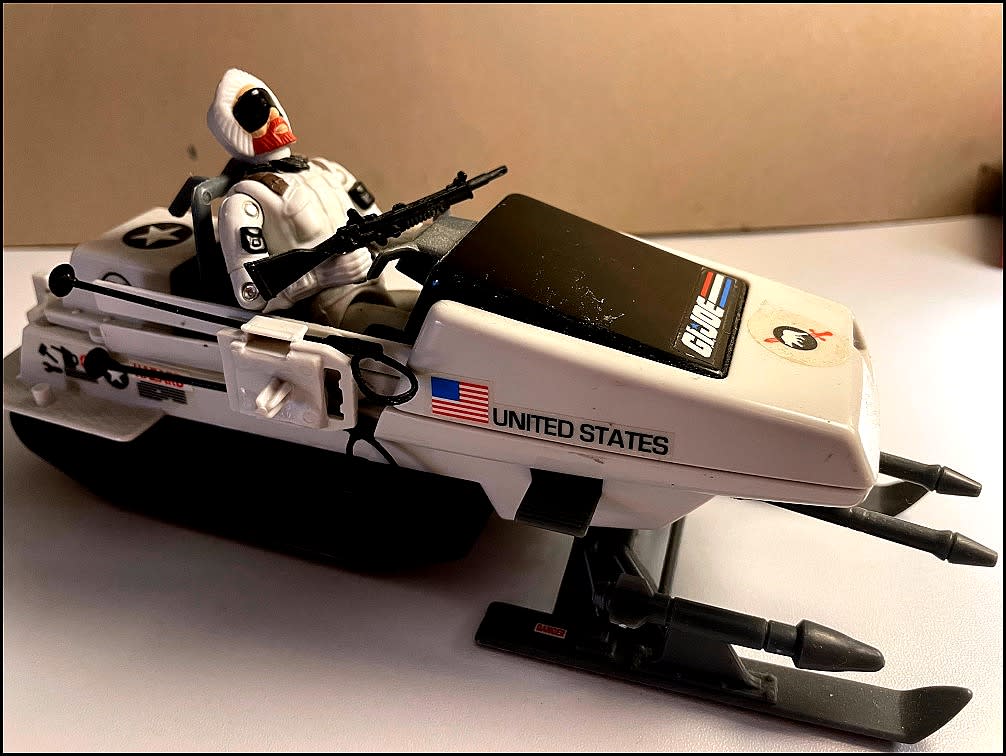 Are you really skimobiling without twin 55mm laser cannons or heat-seeking “Rampage” rockets? Doubtful!
Somehow, Ms. Rubenstein also managed to bring in a freelance editor to work with me on my story. We met in the library for a few weeks during silent reading, and I remember the editor being extremely patient… and my own frustration at not having the right vocabulary for the fully realized story I wanted to tell. (Struggles with editing!)
In one scene for example, I wanted Eric the Knight to use his staff to pole-vault out of danger, but I just couldn’t grasp the right phrasing. I didn’t know the term “pole-vault” even though I’d seen it done on TV.3
Before the school year ended, Ms. Rubenstein offered me the opportunity to read a few chapters of my story to the rest of the class. I… declined. To be honest, I would have pole-vaulted straight through the window to get out of that offer. It was too embarrassing to read anything in front of the class, much less my own story! Couldn’t I just turn it in quietly and earn stickers? I ended up going back to the library while Ms. Rubenstein read it to the class instead. (Fear of readers! Fear of self promotion! Look at all these things I was learning as a writer.)
This is right about where I usually add this little, blue button. Please consider becoming a regular subscriber!
I’ve been involved in creating content—writing, editing, or otherwise producing—for almost the whole of my professional career (except for a couple of years teaching abroad in the Peace Corps, and even that involved teaching English). This has been mainly in the gaming industry, both for digital games (starting with Microsoft/Xbox) as well as tabletop (with a nearly 20-year stretch at Hasbro/Wizards of the Coast), and included work on Magic: the Gathering, Dungeons & Dragons, and other brands—even, thankfully, G.I. Joe.
And what do I enjoy most after a long day at work?
More writing!
Bolted to the BoneI’ve always been a “hobby writer,” which I feel is a perfect term for me; and while I continue to write in my spare time in order to do something with all these story ideas running around my head, it’s also time to finally do something with a story I’ve actually finished.
Bolted to the Bone is now available for preorder (on Amazon, Barnes & Noble, Apple Books, and Kobo) as well as an ARC on NetGalley (but hell, interested in an ARC? Just hit me up directly.). Release date is set for November 1.
Even Eric the Knight needed help and support from my teacher and editor, and it’s no different now. Bolted to the Bone has benefitted greatly from contributions from fellow Substackers—including interior illustrations from (damn it was thrilling to see my characters appear in ink!) and cartography (what’s a fantasy story without a great fantasy map?).
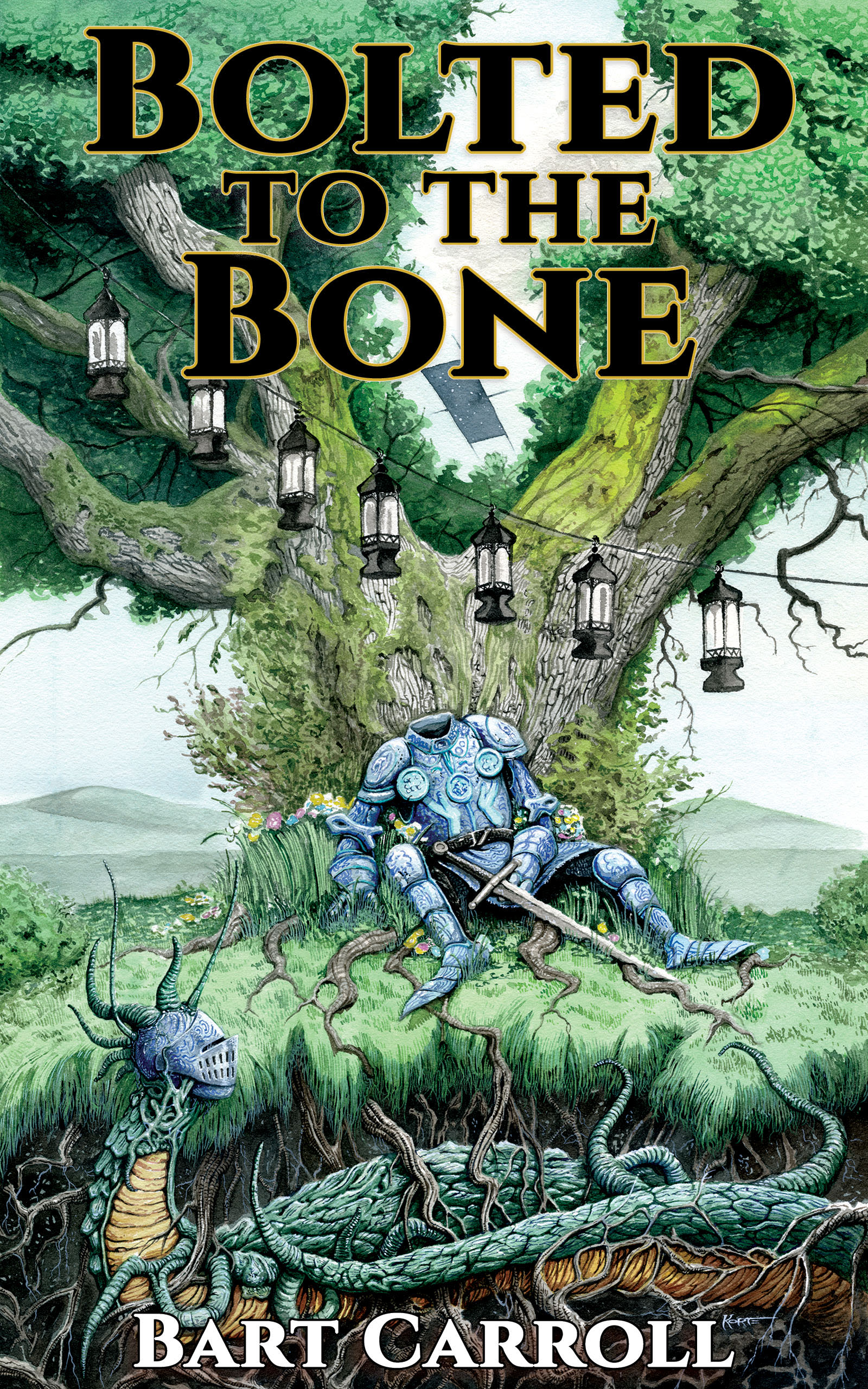
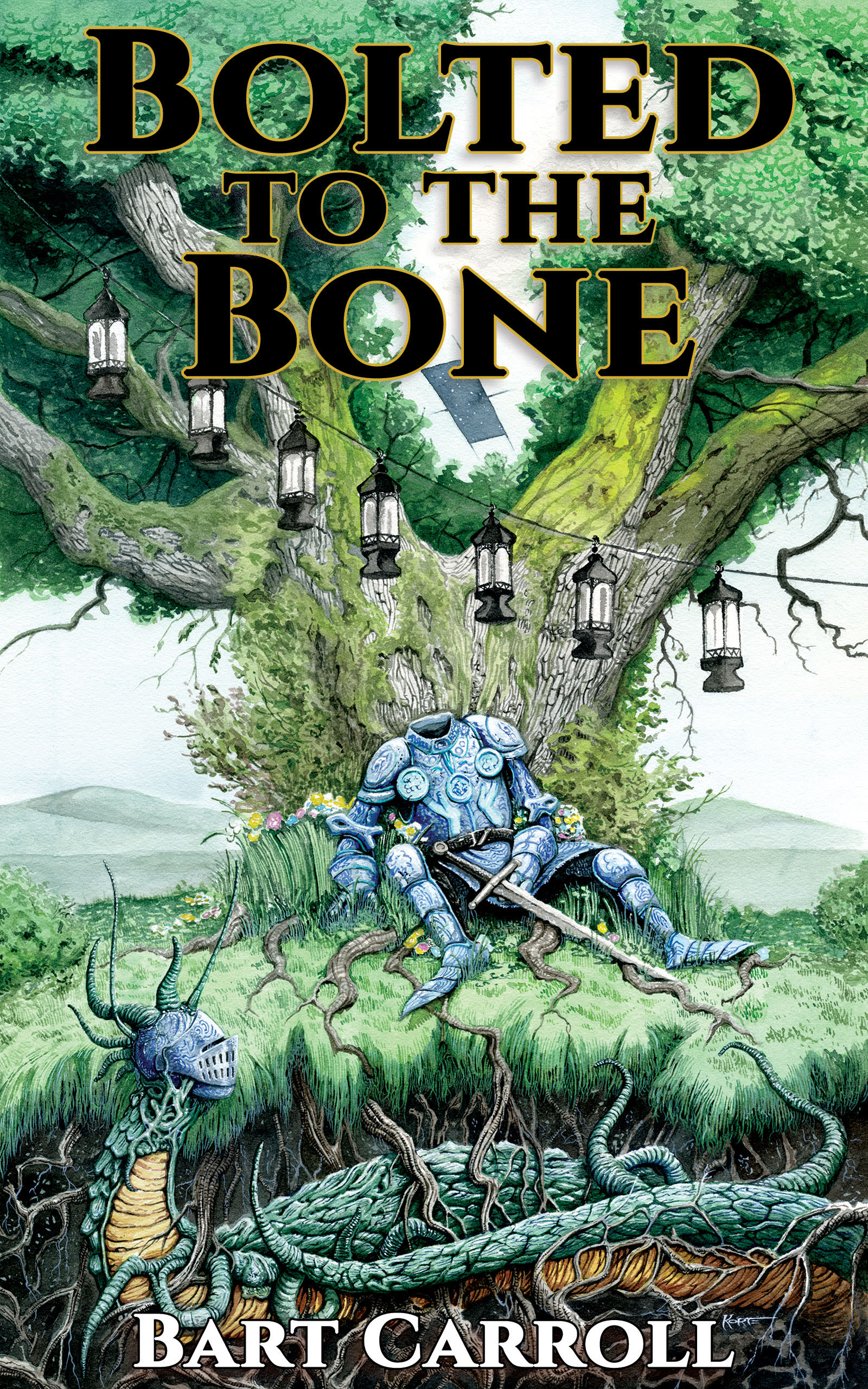
The cover art comes from Lucas Korte. If you’ve played the OSR/TRPG Shadowdark, you’re already familiar with his work. Lucas created it’s distinctive monstrous cover (which you can view right here)!
The title, Bolted to the Bone, refers to the wandering knights-errant of the world: “saints” so committed to their cause that their armor is literally—you guessed it—bolted to their bodies. Originally, the thought was to have the saints earn individual pieces of armor throughout their quests, until I watched this same execution handled in The Mandalorian. (Someday I’ll have to write here about handling multiple discovery.)
The cover depicts more the theme and tone of the story than an actual scene. That said, one of the inciting incidents does involve a monster, a hydra who grows new heads in the likeness of whatever prey it eats, which the cover looks to reference.
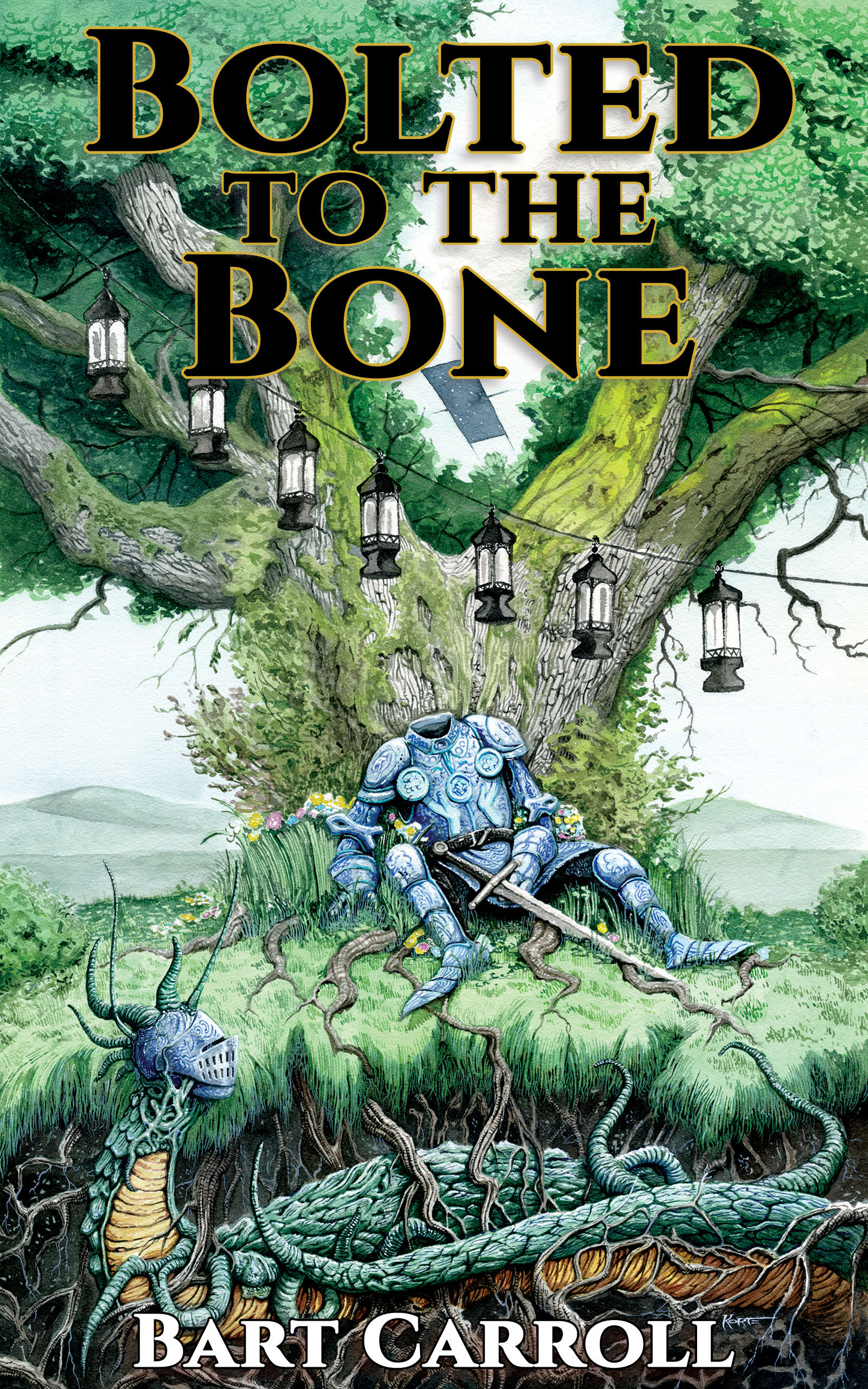
The composition is also meant to recall something of the 1st edition D&D Monster Manual and its various “tiers”—the sky, ground, and what lies beneath. All of which applies to Bolted to the Bone as well—above the knight, for example, you can see where a panel of the artificial sky has fallen out, revealing the stars above…
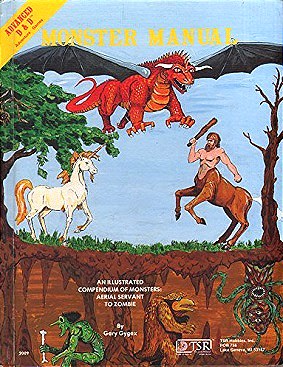
Ultimately, I’m still writing about knights and monsters. And while there’s no skimobile in the book, there is a polar bear… of sorts.
Maybe after all these years I haven’t moved on from 4th grade and Ms. Rubenstein’s class (I may have grown a bit taller, but am still very much fearful of a live audience. The Dragon+ Dungeons & Doodles livestream I ran was an absolute terror.).
Then again, knights, monsters, quests and adventures… with added Celtic legend and lore—what’s not to love?
There’s plenty I’ve learned already about self-publishing in the process, and still have so much more to discover. I look forward to sharing my own experiences, and I greatly appreciate whatever lessons, advice, and cautions that folks may have to share with me as well (writing back of cover copy! Navigating Atticus!). Please reach out (right here, or at contact.bartcarroll@gmail.com).
In any case, thanks for your time here and I hope you enjoy the cover!
Next time: We (probably) return to our consideration of Dr. Mindbender. While he might not be a successful example, there are better ways to explore the “evil scientist” trope.
Thanks for reading Curious Figures! This post is public so feel free to share it.
1Not the most exciting of fantasy names. I must have been studying Vikings/Eric the Red at the time. Later in the story, he was joined by a companion named Crow, blatantly stolen from that inimitable fantasy classic, Hawk the Slayer.
2The next year, my younger sister was in the same class. Murder She Wrote was a big hit at the time, and so she created Murder She Typed stories in her own journal—and took the time to add typewriter-esque serifs to all of her lettering!
3In the end, instead of gloriously pole-vaulting out of danger, Eric merely “dropped his staff to the ground” and ran away.
August 7, 2025
You've Got to be F'ing Kidding Me
Water is liquid at room temperature1, candy corn is disgusting, and I love G.I. Joe. While these statements are all empirically true, there are still more than a few Joes that land so very, very badly with me.
Behold the ignominy that is Dr. Mindbender.
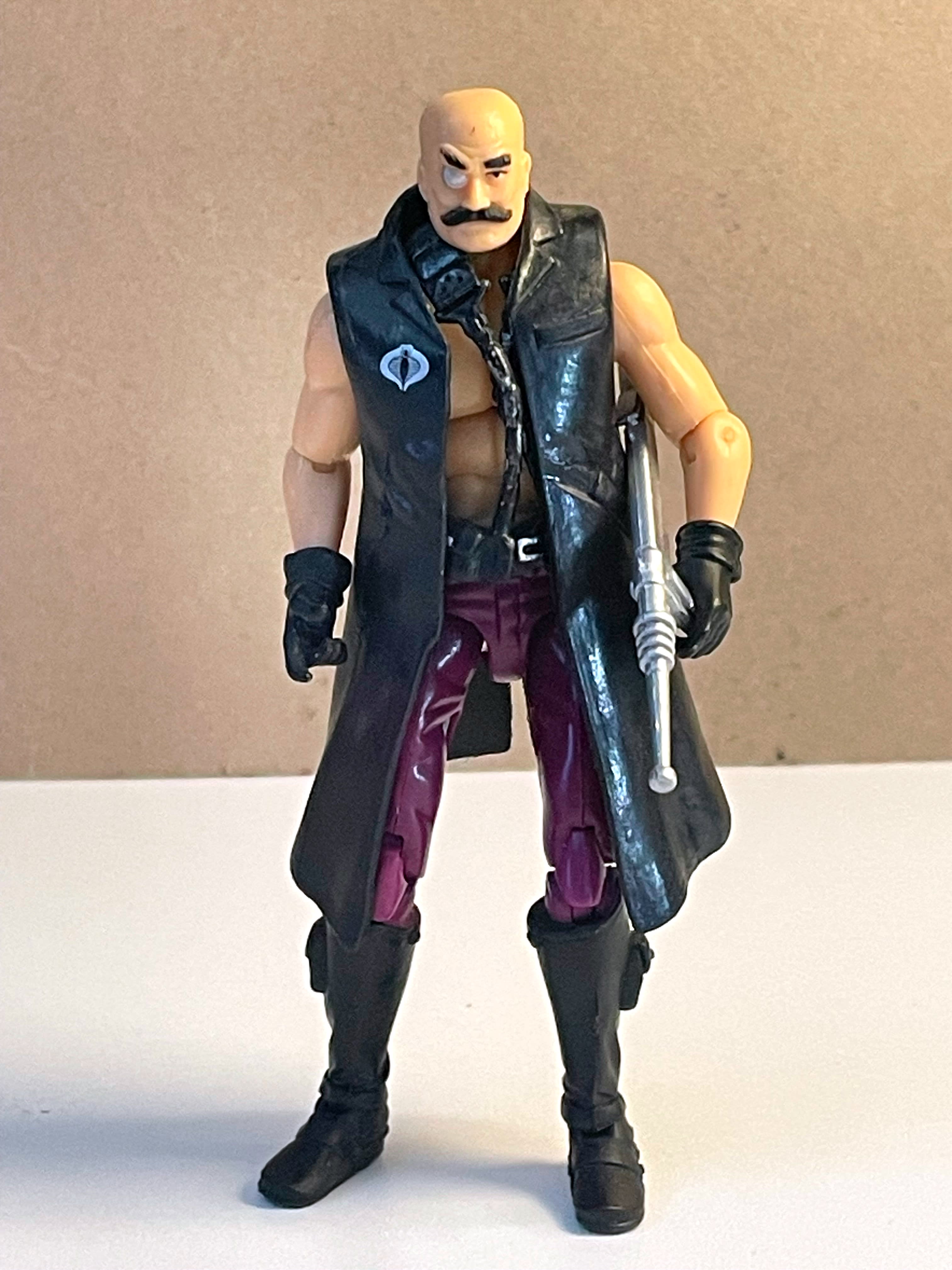 No shirt, no shoes, no (evil) science. Dr. Mindbender: 25th Anniversary edition (2009)
I hated this figure the moment he entered the brand. In large part, because he moved things even further away from its more realistic military aesthetics. Irrationally, I’ve always blamed Dr. Mindbender for this personally—and, owing to his ongoing appearance in the comics and cartoons, he continuously reminded me of it.
My god, Dr. Mindbender’s presence was such a painful irritant to me… as perfectly befitting Cobra’s chief interrogator and torturer! Have I actually had him wrong this while time? Was this all some genius move from Cobra Commander to hire Dr. Mindbender?
Nah. This guy just sucks.
This is right about where I usually add this little, blue button. Please consider becoming a regular subscriber!
A Dork Among PeersI wonder if this is how professional wrestling fans felt as WWE began to consolidate the former territories and started moving the business into even more outlandish, over-the-top characters and performances. Emphasizing the “entertainment” in “sports entertainment.” Of which, Dr. Mindbender would certainly fit in.
And that’s what irks me about him. I demanded some level of verisimilitude in the brand, even (or especially) one involving two secretive military forces effectively vying for strategic control of the free world. Dr. Mindbender does not look like an evil scientist (at least, not in a pseudo-military IP), he looks exactly like a professional wrestler who’s gimmick is “evil scientist,” complete with rippling abs, tights, and ring cape. He’s the Iron Sheik but with a more Prussian look. Hell, his accessories, confounding as they are, look more like a microphone used to delivery his promos than what they actually are—an ELECTRIC PROD TO TORTURE ENEMY TOYS… (ahem, I have thoughts on this element as well).
Dr. Mindbender started as Cobra’s interrogation specialist, later becoming more of a broad “evil scientist” figure in general. However, one problem is that we already had a better “evil scientist” character in the Marvel comic series (more evidence that Larry Hama’s storylines were superior to any others in the brand).
Dr. Venom (real name Archibald Monev) appeared in the early comics. Sad to say that it does not take much more than a lab coat to look the part2, but there it is. But there’s also the fact that he invents the Brain-Wave Scanner, an interrogation machine that made numerous appearances throughout the series as an important plot device.
 Dr. Venom: G.I. Joe Collector’s Club (2010). Also doubles as Andrew "Squiggy" Squiggman.
NOTE: Many of the early comic storylines largely involved Cobra desperate to find the hidden G.I. Joe headquarters. The Brain-Wave Scanner was originally used for this purpose, trying to get this information out of Snake Eyes until he faked his own death and was released from the scanner.
I was never a huge fan of this storyline. So what if Cobra knew where the Joes were located? Aren’t they embedded within the U.S. military?) It felt too much like the ongoing plot hook for a much younger aged cartoon series. Besides, if anyone would have a secret base, it should be Cobra… which they also did (a redundancy that was unfortunately corrected the other way. In the series, Cobra’s location became known, while the Joes continue to move and hide their base.).
Dr. Mindbender by comparison… does not wear a shirt, much less a lab coat of any kind. A shirtless look works more for Gung-ho, a Marine from the bayou heat (and similarly dressed like Dutch or Billy, navigating the jungle heat in Predator), or even for the Dreadnoks, who intentionally dress Road Warrior-punk. Where he would get the time to work on his physique never made sense to me; it’s a strange quibble, but it just further prevented me from ever seeing this character as plausible, even (or especially to) the realities of the G.I. Joe universe.
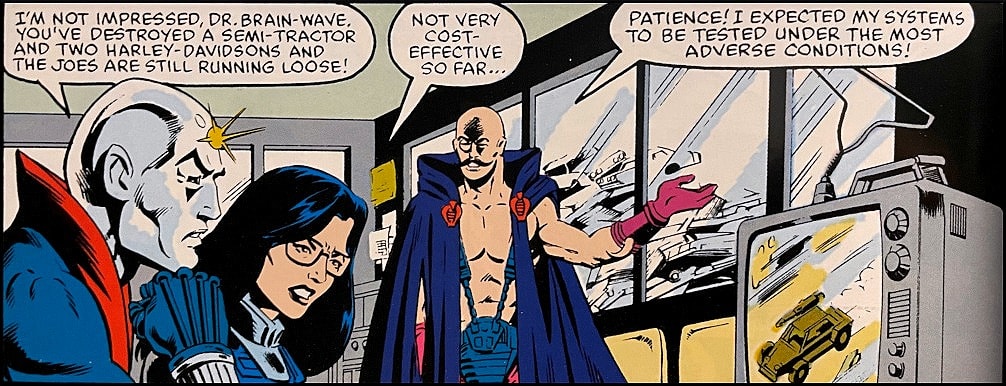 Destro was so unimpressed—watching a tech demo through a TV with a coat hangar for an antenna—that he couldn’t even get the bad doctor’s name right.
Possibly (?) there was a brand decision that scientists and doctors should not be vilified, and so not to depict a basic white lab-coated figure as an agent of Cobra. I’m grasping at straws here for why they went with such a radical departure for Dr. Mindbender.
But then there’s also what his figure came with…
They Gave Him a What?!An electric prod. An electric cattle prod, I’m guessing, but they decided to package it simply as “electric prod” if that were any better or less confusing, along with a portable generator.
I was a kid playing with this guy. I didn’t know what the hell that prod thing was; it looked like he was holding a microphone (one of those long handled Bob Barker models) connected to a speaker. I mean, if he is Cobra’s karaoke master that would count as an enhanced interrogation technique.
I definitely didn’t know what an electric prod was, for god’s sake. I mean, I do get (sort of) that it may be a bit ridiculous to wax nostalgic about Zap’s bazooka or Rock ‘N Roll’s M-60 and question this, but still… my action figure play involved fighting hand-to-hand (more than anything else) or close quarters gun fights. They weren’t capturing and torturing one another!
As adults, the brand’s creators were certainly watching more sophisticated movies than I was at the time. Rambo: First Blood Part II ("I was told there would be no math") released in 1985, where our hero is tortured with electricity. Perhaps Dr. Mindbender could have come with a bedspring set to strap the Joes to? Lethal Weapon had its own electric torture scene, but that movie released after Dr. Mindbender’s debut.3
However, I think we can look at 1976’s Marathon Man as an influence. Laurence Olivier plays Dr. Szell (the “White Angel”), an escaped Nazi prison guard and dentist who tortures Dustin Hoffman. I’d have to imagine that may be where Dr. Mindbender’s background as an orthodontist may have come from… or, who know, maybe just their own kids’ dislike of dentists in general.
In any case, there’s a difference between a somewhat cartoony Brain-Wave Scanner that can read prisoners’ minds and reprogram them, and an electric cattle prod used to brutally torture them.
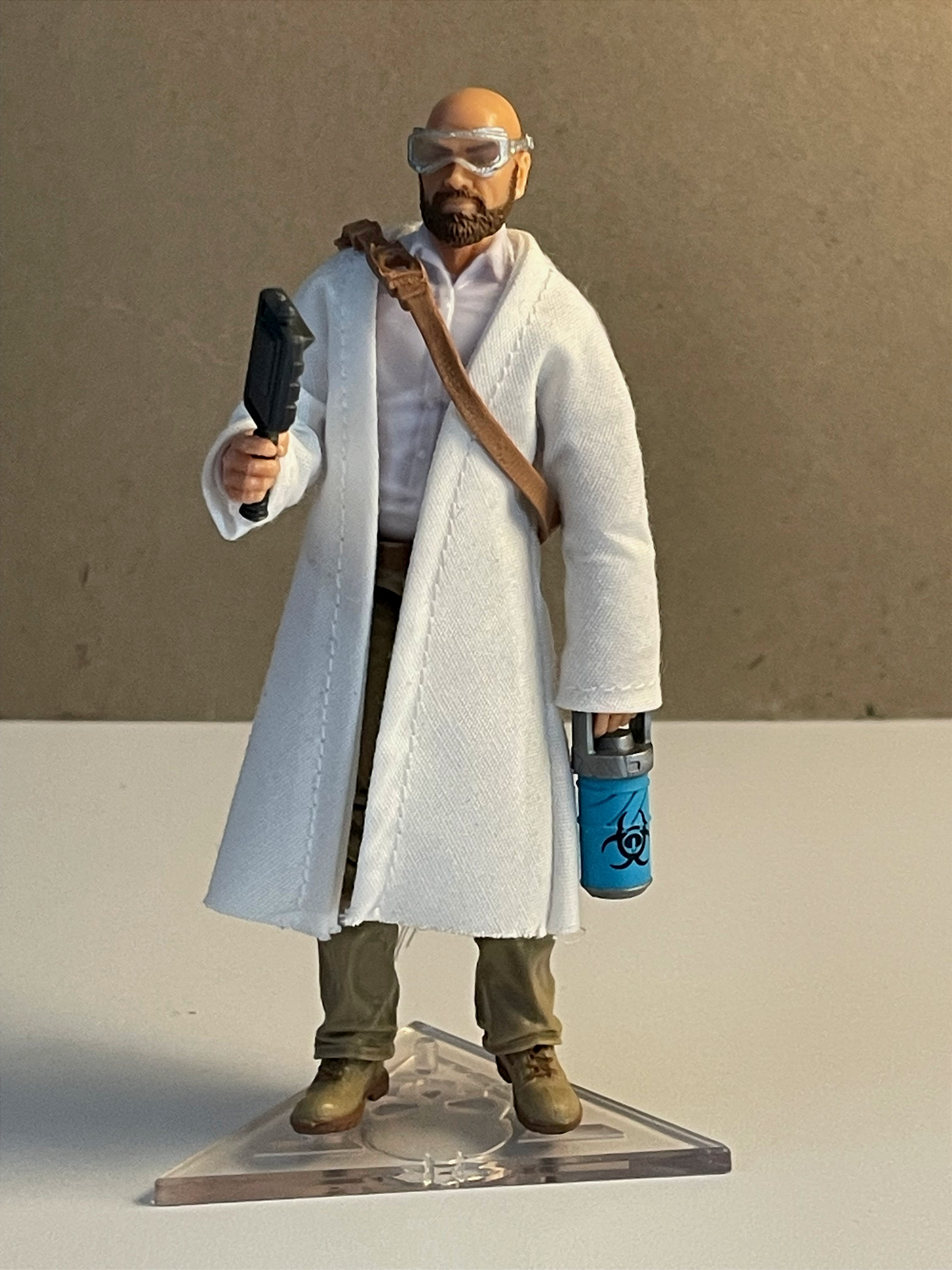 Name your own evil doctor: Marauder Gun Runners/JoeFest ‘25 (2025)Get Off My Damn Corner
Dr. Venom’s work was certainly varied (inventing not only the Brain-Wave Scanner but also a deadly virus). Dr. Mindbender’s as well—part of this no doubt from a very reasonable evolution of a kid’s toy from “torturer” into broader “evil scientist” figure.
Later in the comic series, Dr, Mindbender becomes a genetic expert, able to create Serpentor from the DNA of history’s greatest tyrants and military leaders. Later still, he’s a robotics expert who creates the B.A.T.S. (Battle Android Troopers). At least in the cartoon series, Scrap Iron was involved in their creation, which would have given him a more meaningful role in the continuity if architecting new weapons systems were his specialty all along (how this could not have been a Destro-led M.A.R.S. endeavor is beyond me…).
Instead, all projects went to Mindbender.
I imagine much of this comes from the necessities of showrunning an ongoing cartoon series. On one hand, new characters are introduced all the time in order to sell the next wave of toys. On the other, a cartoon needs to limit the number of characters so as not to confuse the audience and build some character recognition and loyalty. And so, what might otherwise be somewhat niche characters are granted a wider role than they otherwise deserve; it’s easier to simply assign all “evil scientist” duties to a single character. (Which is likely why we also had way too much Shipwreck in the cartoon instead of spreading the focus around a lot more.) Plus, if the voice actor nails a memorable delivery and helps a character stand out from the pack, why not play the hot hand and keep that character in greater rotation?
All of which to say, I just wish that character wasn’t Dr. Mindbender. And who know, maybe Larry Hama might have felt the same. After all in the comic series, Dr. Mindbender ate a bad can of food and died of all things from botulism.
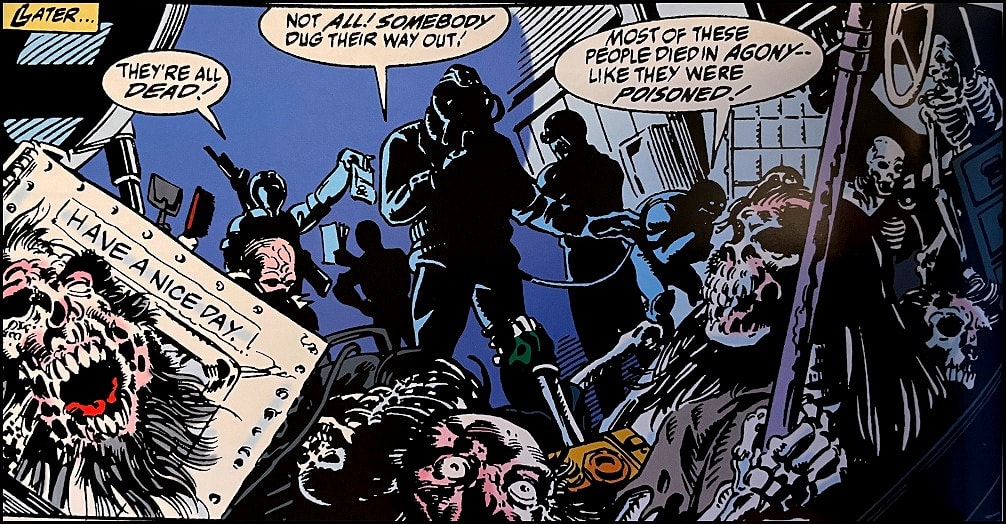
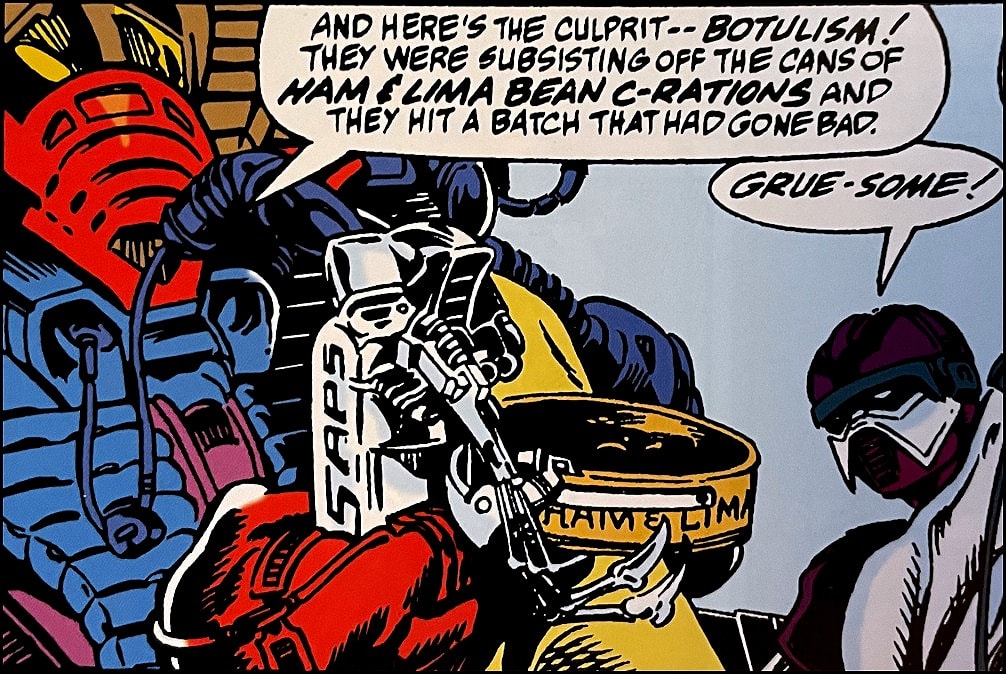 Marvel’s G.I. Joe #114. Grue-some indeed!
1Next time: Further ways to write about the evil scientists in your stories. Until then, please feel free to pass this post along!
The original phrase here was “water is wet” but apparently that’s up for semantic debate.
2Out of curiosity, I looked up why lab coats were always white. In part, it was to express the “purity” and excellence of the medical or scientific practitioner. However, it was also useful to more easily spot any chemical or biological spills on said practitioner (when things did not go as planned), so that they could be more quickly handled. Why Dr. Venom, or anyone else, would wear a lab coat outside of a lab does defeat its purpose (since you can just as easily pick up stains on it going out to lunch), but it does work as a useful shorthand. And hey, this is the same comic series that had Torpedo walking around everywhere in his SCUBA gear.
3However! There was one electric torture scene I did watch as a kid. In Empire Strikes Back, Darth Vader straps Han Solo to some weird hunk of tibanna gas mining gear and starts running electrical currents through his face. Apparently the scene went even longer until they (wisely) decided to cut out some of his screaming.
July 26, 2025
For Anyone Caught Sticking Their Hands in the Treasure Chest
Following our look at G.I. Joe’s Tripwire and bomb diffusers in fiction, we continue exploring that character/role in TRPGs.
In the context of G.I. Joe, the opposite to Tripwire is likely Firefly. Trap-detector/trap-setter. And just as it can be easier to take the perspective of the trap-detector in story-telling, TRPGS have also tended to emphasize that side of things as well. After all, adventurers are the ones exploring the dark, forgotten crypts and dungeons of the world, carefully tapping their way ahead with a 10’ pole.1
It’s the Dungeon Masters setting the traps for them to stumble into. So let’s explore more of the class devoted to foiling their fiendish devices!
A Brief History of the ThiefAnd I do mean brief, because I largely do not know whereof I speak.
I mostly play warlocks…2
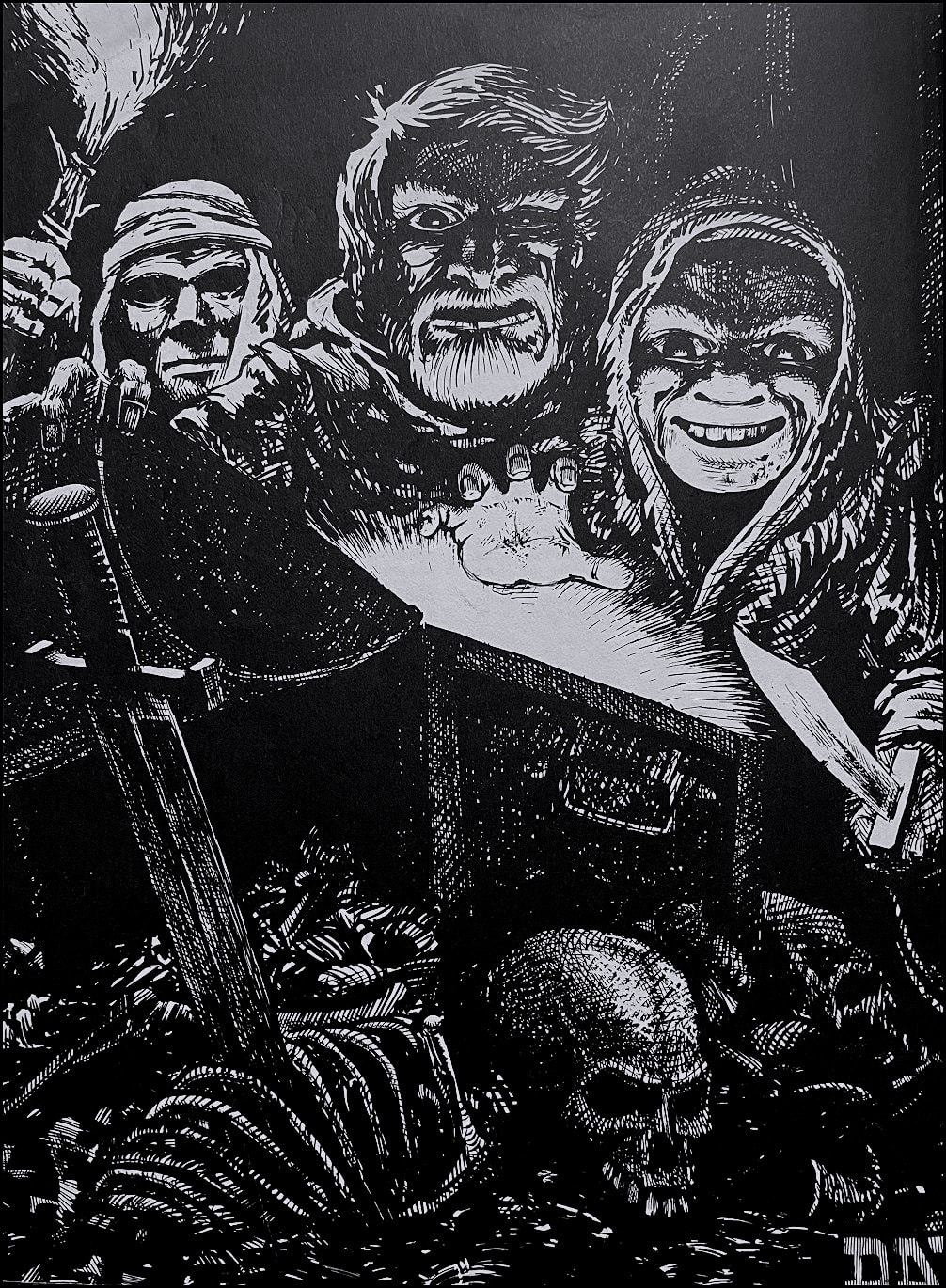 From the back pages of the 1e D&D Monster Manual. | Art by David A. Trampier | (C) Wizards of the CoastThe Thief of Dungeons & Dragons
1st edition D&D had its thief class3, and while their skills included finding/removing traps, it’s unclear to me if other classes could make less proficient attempts as well (sorting through those rules is it’s own kind of dungeon, but here’s a good discussion).
As written, dwarves could at least find stonework traps, and elves could find secret doors, but if a party didn’t have a dedicated thief on hand, just how screwed were they? Presumably clerics needed to stockpile 2nd level find traps spells, but that didn’t help with trap removal, just their detection and avoidance.
Logically any character could state what actions they’d take to look for traps, tapping the ground ahead with 10’ poles or whatever other specific action might permit them to find one. With the introduction of thieves, these attempts seem to shift from a required narrative description of how the party was searching, to a simple dice roll determining success or failure (a change in gameplay that looks to be reversed in Dungeon World).
Later editions would allow other classes the clear possibility of finding/removing traps. In 3e D&D, for example, any character could attempt Search checks to find simple, non-magical traps, and Disable Device checks to remove them; thieves (renamed rogues) had higher skills to so generally, as well as specialized abilities to find/remove more advanced and magical traps.
Similarly in 5e, characters could likewise use their Perception or Investigation skills to find, and their Dexterity ability to remove traps. Thieves (rogues) had better training in these skills as well automatic proficiency with thieves’ tools to make the job easier.
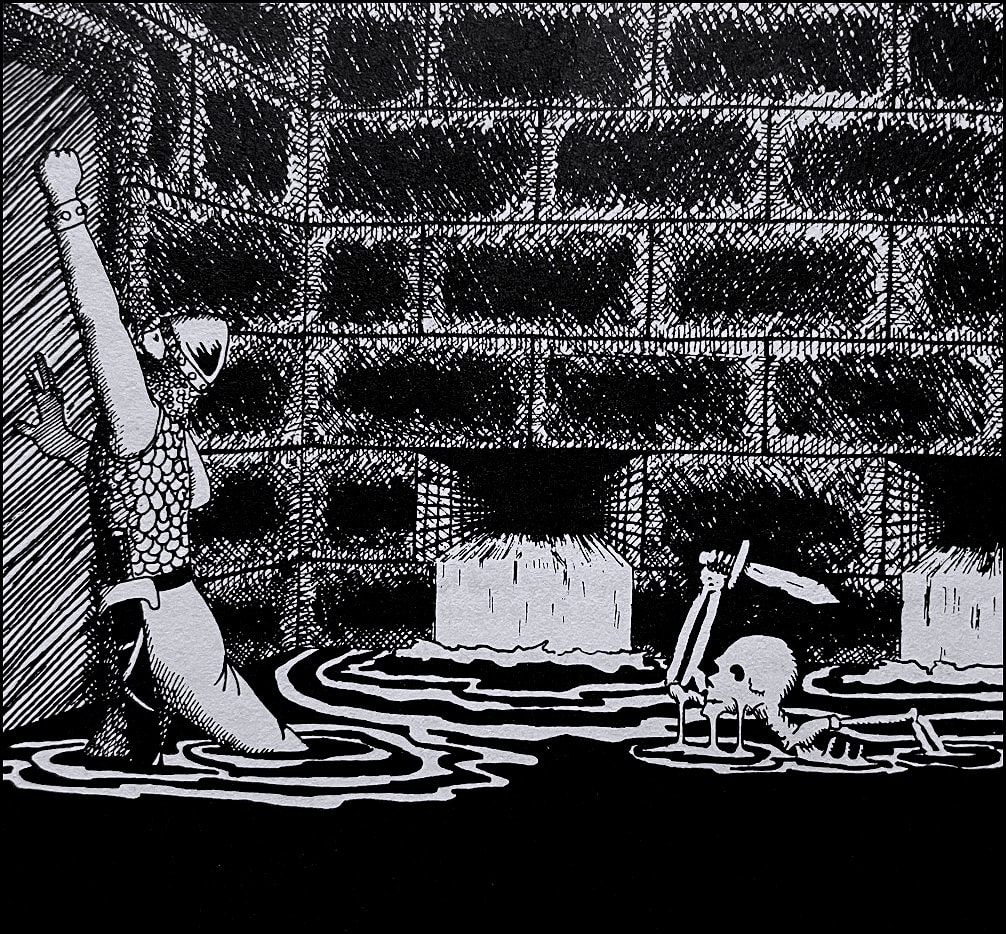 One of my favorite illos from the 1e D&D Dungeon Master’s Guide (and reproduced across the various editions since). | Art by David S. LaForce | (C) Wizards of the CoastIn Other Systems
In so far as I’ve been reading through other systems, including OSR systems, here’s generally how traps seem to operate (and again, please correct me if I’m wrong):
Dungeon Crawl Classics: Thieves can find/remove traps. Other characters can use their Intelligence for “searching and spotting” but I’m uncertain if this includes specifically includes traps. As a DM, I’d rule that it could; after all, most of these rules seem to follow the same basic premise: adventurers can search for traps, while thieves are better at finding them and specially trained at removing them.
Dungeon World: Running the Powered by the Apocalypse system, this is furthest out of my wheelhouse. Still, the base comparisons are similar. All characters can search for traps, but only thieves can both find and remove them. This seems handled by having thieves able to ask more specific questions in the searching phase, with the system’s general promotion of narrative discussion over dice rolling.
Old School Essentials: Any character can search for a room trap (1-in-6 to find), with dwarves excelling at non-magical room traps (2-in-6). Thieves have a further chance to find/remove treasure traps (such as on chests and doors).
Shadowdark: Any character can search for traps, and if they know exactly where to look will automatically succeed. Thieves can find and remove traps, both with advantage on such checks (rolling twice and taking the higher roll).
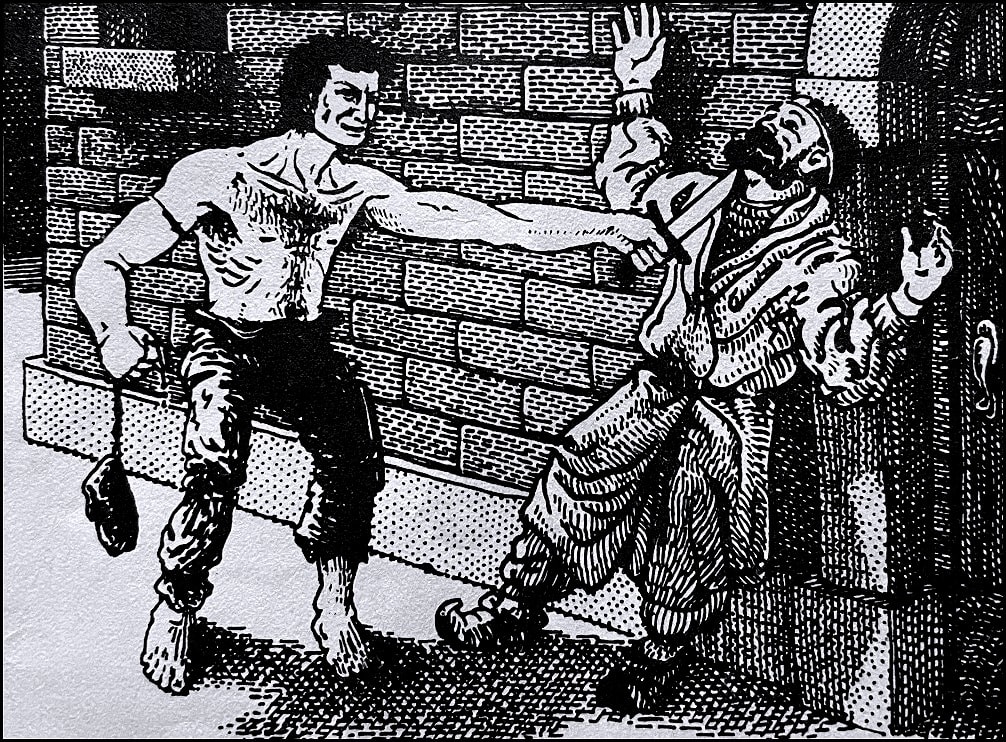 From the 1e Player’s Handbook | Art by David A. Trampier | (C) Wizards of the CoastA Thief By Any Other Name…
Essentially, the goal of the above systems is to ensure that any adventuring party isn’t neutralized by not including a thief. Characters are adventurers after all, experienced in traveling through dangerous, trap-laden areas. They already know a thing or two themselves about pressure plates and covered pits. At the same time, their skills can’t become so advanced as to completely water down the utility of having an actual thief along.
But considering that each class deserves its own unique role, there may be added ways to allow a thief to shine even more; they don’t just find traps better than other characters, they can do so in ways uniquely their own.
Some further options:4
When attempting to find traps, a thief is particularly adept at examining the remains of past victims, no matter how old, to help discern how the trap works. Likewise, they are able to locate these remains in hidden gutters or wells that many traps employ, especially resetting traps, in order to recover gear or loot.
If a thief fails to disarm a trap, they still have a chance to delay its release. In this case, they jam the trap mechanisms in such a way that might allow the party to outrun its effects (such as explosion or release of poison gas), or at least try to “catch” or pull back the person who set it off (such from falling into an opened trapdoor, or away from a falling portcullis, etc.).
A thief may not only attempt to disarm, but at higher levels even rearm or “harvest” a trap. To rearm a trap, a thief effectively resets it such that the party’s bypass is not detected (while also keeping the trap in place to catch any pursuers). To harvest a trap, a thief is able to remove the trap itself, if small enough, to later reset for their own use. If too large or integrated, a thief may still remove key components, such as its trigger mechanism, poison needle, or other features for later use.
In addition, just as scrolls and spellbooks are highly prized by magic-users (and treasure maps by just about everyone), so too are schematics for various traps. A thief that successfully disarms a trap may also attempt to record its operation through notes and sketches; depending on the uniqueness of the trap, such a schematic can be sold for various amounts in the cities and thief guilds of the world.
At higher levels, a thief of great renown is able to employ their skills beyond mere trapwork. They can also make attempts to deactivate golems and magical constructs, deactivate magic items (at least temporarily), disable stationary spells (e.g., magic mouth, symbol, teleportation circle, etc.) and have the inherent knowledge to identify the powers of an artifact… not to mention, thieves at high enough level can recognize a mimic from an ordinary chest at a mere glance!
As a final note, I witnessed two separate incidents at this year’s JoeFest. First, there was a broken water line at a local distillery. The poor bartender had to serve drinks while standing in a growing puddle.5 (In a way, recreating that flooding room trap illo, above).
The second was how, at just about every con, there’s the challenge of connecting and reconnecting A/V equipment between panels running one right into the next. There wasn’t time to get set up for the next panel, causing a small delay in figuring out the right connections for the next group’s slideshow.
The point being, as a DM you might find creative ways for a thief to use their find/remove trap or related skills outside of the dungeon as well. Allow them opportunities to help in small ways that can still influence people; for example, the above bartender need not be bribed for information if the thief can disable a leaky tap with their tools!
Hey! Before we go, please consider becoming a regular subscriber.
RecommendationsFor a solid and comprehensive exploration of the ultimate trap-filled dungeon, the Tomb of Horrors, head to ; they have an excellent write-up including a look at its essential illustrations.
Plus, two folks that have come over to Substack: and (who recently posted on dungeon-relate items with In Praise of the Iron Spike.
I had the chance to visit one of the best bookstores I’ve stepped foot into, The Book Rack on Whidbey Island, where I purchased Gamemasters: A Comic Book History of Roleplaying Games. I missed its Kickstarter campaign, but it’s available now and highly recommended.
Just finished watching Ryan Coogler’s Sinners. And while I didn’t find it a particularly scary film (which was actually a good thing for me), a bit too gimmicky with Michael B. Jordan playing twins, and a bit too tropey in how to dispatch vampires, I found its use of music absolutely stunning and worthwhile for that element alone. And I am not a musical fan.
I am, however, a sucker for Irish vampires and Celtic lore in general. Which leads me to my final note…
ARC Readers WantedI am incredibly thrilled to be nearing publication of my dark fantasy novel. If you’re interested in becoming an ARC reader, please head right over here!
Next time: It’s either going to be Flash/Grand Slam or that goddamn embarrassing idiot known as Dr. Mindbender.
So here we are! Thanks for reading. This post is public so feel free to share it.
1I loved how this became a part of dungeoneering equipment, and I don’t know if it’s from the game being cheeky (playing off the expression “I wouldn’t touch it with a 10’ pole), or going back to actual equipment that this expression derives from (long barge poles or even earlier Roman measuring poles, the decempeda).
2Call them rogues all you want, they’ll always be thieves to me! Han Solo’s a rogue; Bilbo Baggins is a thief. In the politest sense of the word, of course. I may also be biased; when I started at Wizards of the Coast and worked on the Star Wars TCG, I kept misspelling the Rogues & Scoundrels expansion as “Rouges” and Scoundrels. Chris Perkins, I remember, pointing that one out to me as well (shortly after the Vader’s Helmet incident).
3For reference, read Jon Peterson’s Playing at the World. In it, he relates the genesis of the thief class as coming from a play group out in California. Or at least the idea; Gary Gygax wrote of then developing the initial rules in a pre-Dragon Magazine newsletter.
4Not all of which are exactly original, and have likely appeared in some mention of thief skills through the various editions. But so be it, I wanted to jot some thoughts down anyway!
5It was the Second City Distilling Co. Bless that bartender!
July 12, 2025
To Those About to Cut the Red Wire
Following our look at G.I. Joe’s Tripwire, we dive into the character tropes of the “diffuser”. Uh, the bomb version that is, not the hairdryer attachment.1
Before we look at Tripwires in fiction, I couldn’t pass up this opportunity to showcase one of the Marauder figures picked up at JoeFest ‘25. Now, while this is clearly their version of Tripwire, I suppose it’s just different enough to avoid any licensing questions.
 So that’s Tormod S. Skoog on the right and, uh, Skormod T. Toog on the left…
The Marauder figure does look fantastic. Granted, it’s more of a hybrid between classic/Real American Hero Tripwire and the more recent bomb disposal/Classified version. The gear components themselves—the pouches, ammo packs, even the knife and pistol—are even all modular.
Once kitted out though, he’s definitely much more of a display figure than a play figure; I find that some of these components can fall off without too much effort. Still, well worth it…
 Tripwire in the G.I. Joe Classified line. They finally got the mine detector looking right!
For “reasons,” G.I. Joe’s Real American Hero line of figures were upgraded across the various release waves in one of two ways:
A Joe with a given specialty was replaced (or rather “augmented”) by a different Joe with the same specialty: Flash with new laser-trooper Sci-Fi, Torpedo with Wetsuit, Breaker with Dial-Tone, etc.
Or the same Joe appeared in a later wave with a new color scheme or sculpt entirely: Snake-Eyes of course, as well as all of the “Tiger Force” version of Joes and “Python Patrol” version of Cobras.
Tripwire received a Tiger Force version as well as a unique orange/red Listen ‘N Fun version that came with an audio story on cassette tape. Fairly rare, I’m surprised custom creators such as Black Major haven’t offered their own Listen ‘N Fun Tripwire.2
In addition to counterparts on their own team, most Joes also had an opposite number on the Cobra side. To use the same examples as before, Flash faced off against Laser Viper, Torpedo with Eels, and Breaker with Tele-Viper, etc.).
For Tripwire, his counterpart would likely be my favorite figure of the entire Joe line—Firefly. I’ll be covering him in way too much depth soon enough.
Hey! Before we go on, please consider becoming a regular subscriber. It’s free!
The Bomb Diffuser in FictionFor now, I just want to differentiate the tropes of a “Tripwire” and a “Firefly”. It’s often easier to write puzzle-solvers in fiction (at least from the perspective of the protagonist) than the trap-setters, just as it’s easier to run a trap-solver in TTRPGs than trap-setters.3
First, the Bomb-SetterIn this corner! We have the vile bomber!
As characters, the concept of the bomber is far more easily associated with villainy. Bombs can be hidden, and set off remotely or by timer; the bomber is a secretive, furtive figure by their choice of attack. Furthermore, a bomb can be random, indiscriminately harming bystanders as well as any intended target. Sometimes the innocent bystanders are the intended target.
The bomber loses their bravery, even if they gain greater menace. They can be anyone; and they do not fight a stand-up fight.
Second, the Bomb-DiffuserAnd in the other corner! The brave diffuser!
By their actions, bomb diffusers are automatically heroic. They risk their own safety and even life itself to find and diffuse a bomb that would otherwise injure someone else. They are self-sacrificing, noble, brave.
And, since anyone can plant a bomb, but it takes special skills to find and diffuse it, they are also resourceful. We love a resourceful hero.
Further Options for Fantasy BombsAdding to the danger of the bomb itself, there’s the added tension of a literal ticking clock; an easy way to help build suspense in a story. However, there can be more compelling options than simply diffusing a bomb once it’s found (as, for the reasons of “plot armor,” we can pretty much assume the bomb will be diffused by the hero once found, no matter how short the ticking clock). “Cutting the red wire” is a trope played out in everything from The Abyss to James Bond’s Octopussy.
Challenging the hero instead can be finding the bomb in the first place, or where the bomber might strike next—and of course, finding the bomber themselves. Who might have access to the materials involved? The knowledge to make it, if it’s especially complex? Is there a signature to the device, if the bomber wants to leave their calling card and gain infamy? Is there a motive to where the bombs are placed?
And, just as diffusing a bomb may not be as exciting or satisfying as finding the bomb or bomber, you should also consider ways to make the bomb itself more interesting than merely the size and severity of a standard explosion (especially within speculative fiction).
For example:
The Necrotic BombIn Tamsyn Muir’s The Locked Tomb series, the first book begins with a necromancer able to conjure bones from the ground to animate and use against her opponent (Gideon, whom the necromancer is forcing into her employ).
Fantasy bombs might create similar effects instead of mere explosions. When placed in graveyards, tombs, and battlefields, they may raise and animate the dead when they go off (within a certain radius). A tripwire placed near a grave may cause the individual corpse inside to burst out from its coffin (already an initial danger of flying splinters). An area-effect bomb may cause the entire graveyard to animate and start crawling from the ground. Another version might assemble the loose, scattered bones of a scattered ossuary into some singularly larger, more monstrous form.
A quick note before go on. While these are possible effects, when introduced in a story, it’s often not enough to describe what the bomb’s effects may be. As a reader, we do kinda want to see them go off, too.
There’s a necessary balance to achieve in showcasing the dangers of the bomb (perhaps with one going off in an earlier scene, or only some of the bombs starting to go off as an added danger to the battlefield), with showcasing the resourcefulness of the hero in finding, identifying, and resolving the remaining bombs.
Other options may have a primary and secondary effect. The primary effect may be a standard explosion. The secondary effect then animates those corpses to rise as zombies and finish off the wounded and chase after survivors.
Golem Heart BombsBack in the early 2000’s I worked at Microsoft Game Studio on their MMO, Asheron’s Call (or the extra large mouthful at the time, MMORPG). One of my favorite creatures in the game were its golems, which animated from various materials whenever a character walked too close. What was especially cool about them, I thought, was that you could collect their hearts as loot they dropped.
Golem hearts could work quite well as fantasy “bombs” much like necrotic bombs. Triggered by tripwires or proximity fuses, they might animate into a golem from whatever nearby material their attuned. Likewise, their primary effects might be to first blast material (such as in a mine, blasting heavy rocks apart) as its own initial danger to anyone nearby before animating the shards into a dangerous golem.
Now we’re veering more into the TRPGs side of things, but for a diffuser to come across a necrotic or a golem bomb, there may be a greater gain for them than merely diffusing the bomb. Part of my play experience with Tripwire involved him both finding and reusing landmines. Likewise in Predator, the crew deactivates the enemy claymores and possibly reuse the same ones to defend their own encampment.4
I may be misremembering how golem hearts worked in Asheron’s Call. I do know that certain treasure items could be “socketed” into the hilt of weapons (like the mind stone in 1980’s inimitable Hawk the Slayer). I can’t remember if golem hearts could be socketed the same way, imbuing weapons with something of their material natures. Either way, this may be a possible reward for fantasy diffusers; the option to collect such bombs and incorporate them into their own arsenals.
Fantasy Lead CordsOther options might include gorgon eyes that radiate a broad sphere (as opposed to a more directed ray) of petrification, or sci-fi versions that emit waves of gravitational energy slowing time within their radius.
Finally, a fantasy version of a blasting wire or lead cord (connecting the bomb to a remote detonator) may be more than a simple wire. Imagine instead of it were a much longer, almost ethereal version (such as the “silver cord” of the Astral Plane), but which could be followed all the way through an entire city, or even miles back to the secret base of the villain.
In fact, an entire short story might be written about the various places and figures the diffuser encounters along the way (similar to one of the old Family Circus cartoon maps, or those of course of Jason Thompson from Mockman Press)!
So here we are! Thanks for reading. This post is public so feel free to share it.
Next time: Bomb diffusers in D&D/TTRPGs.
And as an extra final note for anyone reading this far! If you’re interested in signing up for my fantasy novel currently in development, please do so right here!
1Such a dumb, stolen joke.
2Or maybe they have! If anyone knows, please send me a link.
3Researching this post, I thought there’d be a cooler etymology for “booby trap”. Nope—it simply meant that if you were caught in the trap, you were a booby. As in, a dimwit (and not, you know, a bird). Although, this is where “booby” comes from, for a stupid and/or slow bird; and still with us today, with the famed blue-footed booby (who really do have blue feet).
4True or not, that’s my own mind canon. It seems weird that they would go in packing claymore mines on a quick extraction mission. Then again, it also seems weird that they would assault a relatively lightly defended compound armed with a M134 Minigun; or, in fact, carry one around with them at all considering it’s meant to be stay mounted on a helicopter.