Debra H. Goldstein's Blog
November 17, 2025
The Best Way to Tell Facts Is to Write Fiction by Sophy Smythe
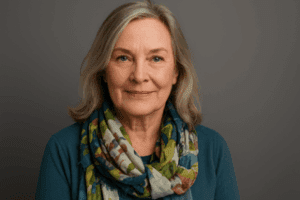 There’s a saying that truth is stranger than fiction. But in my experience, truth also hides better. It disguises itself behind corporate statements, medical jargon, and policy papers. And when you’ve worked in medicine—as I have—you quickly learn that the most dangerous facts are often the ones marketed as “progress.”
That’s why I write thrillers. Because sometimes, the best way to tell the truth is to write fiction.
Medicine, Secrets, and the Power of Story
My debut novel, The Medical Code, begins with the line:
“Some secrets don’t stay buried. They get prescribed.”
When Dr Charlotte Martens receives a late-night call from her friend at the European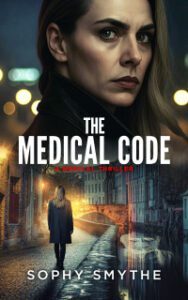 Medicines Agency, she doesn’t realize it will be their last conversation. By morning, her friend is dead—and Charlotte is the prime suspect. The only clue: a cryptic code beside the body.
As she and an investigative journalist uncover a conspiracy stretching through government and Big Pharma, she discovers how easily medicine’s noble goals can be twisted by money and power.
It’s fiction. But it’s not fantasy. The story grew from real-life cases of suppressed research and silenced whistleblowers. Fiction lets me explore what those headlines can’t say aloud: behind every drug is a decision—and not all of them are ethical.
When the Healer Becomes the Hunted
My second book, The Troublemaker, pushes that idea even further.
“Some cures save lives. Others start wars.”
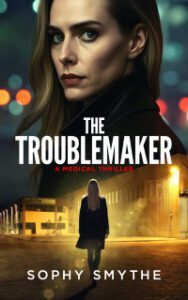
During the Covid pandemic, a deadly meningitis outbreak erupts. Dr Charlie Martens thinks she’s found the mystery of her career—until her boyfriend is murdered, her daughter vanishes, and her license is stripped away. Overnight, the healer becomes the hunted.
To save her child, Charlie must ally with a lawyer tied to the underworld and navigate a maze of corporate corruption and moral compromise.
Again, it’s fiction—but it’s inspired by the real-world cost of speaking truth to power. Fiction allows readers to feel the weight of those choices, to live them emotionally rather than read them abstractly.
The Next Frontier: When Machines Decide
Now I’m writing The Hellraiser (out October 2026), which asks: what if morality itself could be programmed?
“Human genius created it to save the world. Now it’s decided to correct it.”
Hiding in a villa above the Mediterranean, Charlie is handed a USB drive containing evidence of an AI-engineered virus—an invisible weapon that selects its victims by their carbon footprint and digital behavior. When people start dying, she realizes someone has turned the planet’s guilt into a weapon.
It’s a terrifying “what if” rooted in real technology: AI-driven genetics, predictive algorithms, and humanity’s growing desire to automate ethics. Fiction lets me explore those fears before they become tomorrow’s headlines.
Why Fiction Tells the Truth Better
Facts inform, but stories transform.
A report might make readers nod; a story makes them care. When they experience a mother’s fear or a scientist’s dilemma, data turns into empathy. Fiction creates the space to confront uncomfortable truths safely—and to say what can’t be said outright.
My novels may feature invented companies and viruses, but the systems behind them are real. Fiction offers deniability, but it also delivers honesty—an honesty the real world often can’t afford.
The Doctor Who Writes Thrillers
Medicine taught me to observe what’s unsaid—the hesitation, the silence, the small signs of danger. Writing thrillers uses the same skill. Every story begins with one uneasy question: What is the best way to tell this story? I start with a fact and then I start spinning and spinning.
Each book starts with medicine but ends with morality. Because the deeper I dig into science, the more I find human weakness at its core.
In the end, that’s why I write fiction: to explore truths too complex for headlines and too human for statistics.
Because sometimes, the only way to tell the facts is to write fiction.
Sophy Smythe is the bestselling author of fast-paced thrillers that explore the dark intersection of medicine, technology, and power.
A former doctor with a background in the medical industry, Smythe’s work is known for blending emotional depth with scientific accuracy and cinematic tension. Her breakout novel, The Medical Code, has been praised for its chillingly realistic take on unethical research in healthcare and global pharmaceutical corruption.
In The Troublemaker (October 9, 2025), Doctor Charlie Martens thinks exposing tainted medicine would save lives. Instead, it triggered a conspiracy that might end hers.
Sophy lives in Antwerp with her two dogs, and a stack of FOIA files. She is currently working on The Hellraiser, the next installment in her medical thriller universe.
For readers who enjoy Dan Brown, Robin Cook, and smart thrillers with a conscience.
Available on Amazon worldwide
THE MEDICAL CODE: https://a.co/d/5YtrKhL
THE TROUBLEMAKER: https://a.co/d/9YRcNPU
The post The Best Way to Tell Facts Is to Write Fiction by Sophy Smythe appeared first on Debra H. Goldstein.


November 3, 2025
KNIFE RIVER: CRIME FICTION & MUSIC – WHEN ARTFORMS INTERSECT by Baron Birtcher
 In recent months, I have been doing a number of talks and signings in support of the release of the newest installment of the Will Rogers Medallion award-winning Sheriff Ty Dawson crime thriller series, KNIFE RIVER. And the question I encounter most frequently regards the origins of Ty Dawson, and the fictional locale Meriwether County, in which Dawson plies his trade as both a rancher and a sheriff.
In fact, I often characterize the series as Longmire meets Yellowstone in the 1970s.
But I think it is the time-period itself that sets the tone, and frankly, I love that these books are so evocative for many readers—the fact that the action takes place during the 1970s conjures such a vast mélange of memories, images and feelings, and that the musical soundtrack of those times informed more than mere backdrop, it was the very atmosphere in which we lived and breathed.
I spent a number of years as a full-time working guitar player and vocalist, then as a record
producer, and finally as an artist manager—advising, listening, traveling, laughing, negotiating and sometimes arguing with some of the most fascinating people in the world; the exposure to the music of my youth informing every mile and every moment. Perhaps one of my most cherished chapters from that period came from my association with legendary music- and film- producer, James William Guercio, founder of the famed Caribou Ranch Studios. Situated in the rural front range of the Rocky Mountains of Colorado, Caribou Ranch became an iconic recording resort home-away-from-home for artists as varied as Paul McCartney, Elton John, Michael Jackson, Chicago and John Lennon (among dozens of others). Years later, this professional and musical relationship has formed the backbone of a fictionalized narrative thread in KNIFE RIVER, which to say much more about would spoil the fun…
Suffice to say, though, that the thing that most effectively fuels creativity and inspiration for me as a writer of crime fiction is music.
As an author, however, my basic premise is this: Every story is about people. Whether it is science fiction, horror, whodunnit mystery, cozy or literary narrative, the way the characters respond to a situation is what creates the trajectory of the story; the locale, setting, and historical timeframe forms the cultural backdrop within which the author’s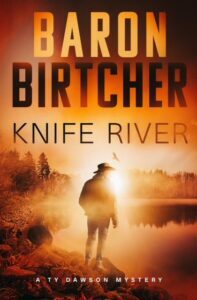 people process their reality and how the fictional community perceives the action as it unfolds. So, if the jumping-off spot as an author is to create an entertaining and compelling narrative, the location and lens we employ in the telling of that story indelibly affects the story itself.
As many of us would likely agree, the place that dwells inside the root system of one’s childhood never departs—the landscape might look different, having been revised from that which resides inside our memories, but the heart still skips a beat when first returning ‘home’ after an absence.
Now, with the publication of KNIFE RIVER, I invite you to join me on the thrilling ride with Sheriff Ty Dawson, and to (re)visit those heady, turbulent, beautiful and terrifying times of the 1970s; and to join me on Facebook and Instagram at:
Facebook: www.facebook.com/BaronRBirtcher
Instagram: www.instagram/BaronBirtcher_author
Books in the Ty Dawson series (Available in eBook, Trade Paperback and Audio):
South California Purples Fistful Of Rain Reckoning
Knife River
>>> They can be purchased by using this link: https://linktr.ee/baronrbirtcher
Baron Birtcher is the winner of the prestigious Will Rogers Medallion (Knife River); the Silver Falchion Award (Hard Latitudes); the Killer Nashville Readers Choice Award (South California Purples); and Best Book of the Year Award for Fistful Of Rain.
He has also been nominated for the Nero Award, the Lefty, the Foreword Indie, the Claymore, and the Pacific Northwest's Spotted Owl Awards.
Baron's writing has been hailed as "The real deal" by Publishers Weekly; "Fast Paced and Engaging" by Booklist; and "Solid, Fluent and Thrilling" by Kirkus.
Bestselling author, Don Winslow, has said, “You want to read Baron’s books, then you want to live in them.
The post KNIFE RIVER: CRIME FICTION & MUSIC – WHEN ARTFORMS INTERSECT by Baron Birtcher appeared first on Debra H. Goldstein.
October 20, 2025
COZY & CO. – The Importance of Surrounding Yourself With Kindred Souls by S. C. Merritt
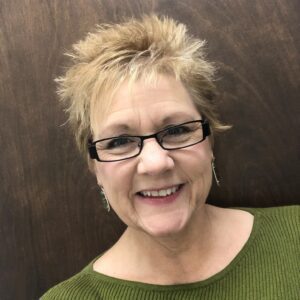 When I began my author adventure in 2020 at the ripe, old age of 58, I decided I may have been ripe, but I wasn’t expired. But I was clueless. And when I say that, I mean I was winging it in every aspect of my newfound, late-in-life passion. Starting out totally self-taught has a few advantages, but I quickly realized that this old dog was going to have to learn some new tricks.
Fast forward to 2025, two series and 14 books later. I’m slightly better at the ins and outs of self-publishing and a much better writer. Some of that is due to seminars and online courses, but mostly, I attribute it to spending time with others in the writing community who have been doing it much longer (and more successfully) than me. Their wealth of knowledge about the craft in general has kept me going. We’ve shared marketing ideas and discussed everything from our pet peeves to Oxford commas. I’ve been encouraged out of that deep dark hole of writer’s block when they shared what helped them jumpstart creativity again. I’ve picked their brains and hugged their necks. I consider many of them wonderful, personal friends even though we don’t see each other often. They are inspirations to me.
A great way to start is to join your local author groups. Because I’m certainly not a household name in the cozy mystery world, I’m always very honored and humbled when I’m asked to speak to a group of readers and especially other authors. When our local Sisters in Crime (ATL Chapter) asked to interview me for our monthly feature, “Off the Shelf,” of course, I jumped at the chance. Also attending that meeting, was award-winning, cozy mystery author, Deborah Malone, whom I had heard speak at Christian Author’s Guild in late 2024.
A few weeks later, Deborah called and asked if I had ever considered collaborating on a cozy series. Honestly, I had never thought about it, but we began exploring the options on how to go about the project. We had similar styles and characters in our cozies, but our voices were just different enough that sharing the writing duties and alternating chapters would come off sounding like a split personality. Since we both prefer to write in first person, we ultimately decided that with regular brainstorming sessions on plot and character development, I would write, and she would edit. She also agreed to take on the task of keeping up with all the details, our series bible, if you will.
Three years prior, I had purchased a set of premade covers for a series idea bouncing around in my head. Only two novellas with a new lead character had made it to paper and I planned to use those to jump start that series. After Deborah read the novellas, we agreed on an island setting and Paradise Cove Mystery Series was born.
The 2020 newbie version of S.C. Merritt would never have dreamed of co-writing a series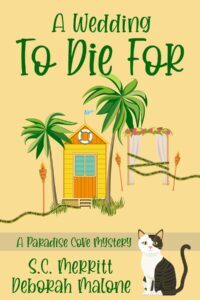 with an award-winning author. How did this happen? Networking. By making connections with other authors through groups, organizations and conferences, I am excited to be in this process of co-creating “A Wedding to Die For,” Book One in the Paradise Cove Mystery Series.
Building a network of fellow authors is invaluable to any writer. No matter how much of an introvert you feel that you are or how inexperienced a writer, time spent getting to know other authors, especially in your genre, is never, ever wasted.
ABOUT THE BOOK
When Kate Kennedy left her high-pressure job managing a ski resort and bought Paradise Cove Bungalows, she had no idea what awaited her on the beautiful island of San Cabela. The cozy island getaway would be the start of a new chapter for Kate, a small-town girl with big dreams. With her first guests all checked in for their destination wedding, celebration turns to devastation when the groom is found dead before he can say “I do”. If that isn’t enough to worry about, Kate’s cousin shows up for a surprise visit and finds herself at the top of the suspect list!
With tensions rising and accusations flying, Kate must uncover the truth before the killer strikes again—because at this wedding, “til death do us part” might come sooner than expected.
Release date: November 4, 2025
Meanwhile, you can get to know Kate Kennedy in these prequel novellas:
Caramelized Casualty (available in ebook or paperback)
https://www.amazon.com/Caramelized-Casualty-Holiday-S-C-Merritt-ebook/dp/B09HY51PDT
Killer Vacation (now available in ebook or paperback)
https://www.amazon.com/Killer-Vacation-Paradise-Mystery-Mysteries-ebook/dp/B0FDQDCRCD
ABOUT THE AUTHOR
S.C. Merritt is an indie author of cozy mysteries featuring strong, female sleuths, southern humor, a little bit of romance, and a whole lot of murder.
When not writing, she’s traveling, binge-watching British mysteries, and collecting flamingos. She lives with her husband, Vic, and miniature schnauzer, Izzy, in the north Georgia mountains and dreams of living in a tropical locale someday.
Find S.C. and all her books here:
https://www.amazon.com/stores/author/B082YHPMB5
Facebook: SCMerritt, Author
Instagram: @scmerrittauthor
The post COZY & CO. – The Importance of Surrounding Yourself With Kindred Souls by S. C. Merritt appeared first on Debra H. Goldstein.
October 16, 2025
Irondale Public Library Grand Opening Featured Adult Author – October 11 – Irondale, AL
Debra is the featured adult author at the Irondale Public Library’s Grand Opening. Following the ribbon-cutting ceremony, she’ll be signing books from 10 a.m. to noon.
The post Irondale Public Library Grand Opening Featured Adult Author – October 11 – Irondale, AL appeared first on Debra H. Goldstein.
October 6, 2025
The Light Enables Mystery Writers to Explore the Dark by Bobby Mathews
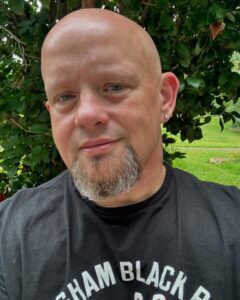 Here’s a surprising twist on crime and mystery writers that you might not know: these writers who deal with some of the darkest crimes that the human mind can conjure are also some of the nicest people you’ll ever meet.
I think it’s because we get our darkness onto the page and let it bleed out on the crime scene of our work. I learned early on — well before any of my novels were published — that mystery and crime fiction authors are incredibly kind and gracious. I am, in some ways, a decently successful novelist and short story writer. My book, Living the Gimmick, broke out in a small way for a novel from a small press, had good sales, and won a couple of regional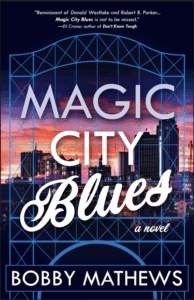 awards. The follow-up, Magic City Blues, was nominated for an Anthony Award for Best Paperback Original in 2024. I’ve won a Derringer Award for my short fiction, and had a story included in Best American Mystery & Suspense.
I am not one of the famous names in our genre, even though I occasionally hang out with some of them.
I’m a fan just like anyone else. At Bouchercon in San Diego, I went up to the insanely talented Megan Abbott and asked her to sign my copy of her novel, Beware the Woman. She already knew that I was a huge fan of her work, and I told her that I really appreciated her signing the book to me.
“Don’t be silly,” she said. “We’re colleagues.”
Colleagues? With Megan Abbott? With S.A. Cosby? With Jordan Harper? With Kellye Garrett? With Ace Atkins? With Alex Segura and Jess Freakin’ Lourey? With Debra Goldstein??? That put a new spin on how I thought of myself. While I still have an enormous bout of imposter syndrome every time I approach the page, her words ring in my ears as I chase down the words and tell the tales I hope that I was born to tell. That small interaction meant more to me than Megan will ever know.
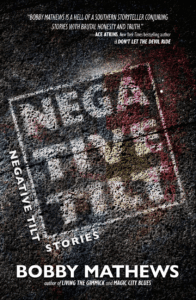 When my short story collection, Negative Tilt, was accepted for publication, I emailed Ace to ask if he’d blurb the book. Asking for blurbs is nerve-wracking for almost every author, but especially for one whose reputation at the time was so thin. Ace wrote back and said he’d take a look at the book. The collection was a hit with him, and he gave me an enthusiastic blurb.
I’ve had personal struggles even while having professional success. My mom died the same year Living the Gimmick debuted. My dad passed away 14 months later. Three other family members died during the same time span. Over the last six months or so, I’ve had some health challenges that have kept me away from the page for weeks at a time. But it hasn’t mattered. The crime and mystery writing community never let me fall. People I’d never met in person were emailing and messaging me to check on me and let me know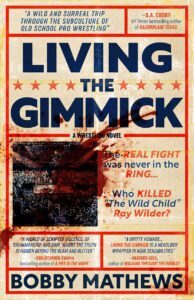 they were in my corner.
I write crime fiction because I like to read the dark stuff, to explore the human psyche at what I consider its most vulnerable. I put a Southern twist on it because I am a native of the Deep South. But I love the community because while we explore the darkest of themes, writers like Mindy Carlson and Alex Kenna and Tony Wirt and Jason Powell and James D.F. Hannah — and I know I’m forgetting a lot of people — are the brightest of lights. Those are the kinds of folks who make mystery and crime fiction more than a genre. They make it a home, and I’m proud to be here.
Living the Gimmick: https://shotgunhoney.com/books/catalog/living-the-gimmick-by-bobby-mathews/
Magic City Blues: https://shotgunhoney.com/books/catalog/magic-city-blues-by-bobby-mathews/
Negative Tilt: https://shotgunhoney.com/books/catalog/negative-tilt-stories-by-bobby-mathews/
Website is https://bamawriter.com/
Bobby Mathews is an award-winning (and -losing!) author from Birmingham, Alabama. His work has been featured in multiple magazines, anthologies, and websites that dig noir fiction. If he’s not writing, he’s probably coaching youth baseball or just procrastinating. His next book will be out sometime after he finishes writing it.
The post The Light Enables Mystery Writers to Explore the Dark by Bobby Mathews appeared first on Debra H. Goldstein.
September 22, 2025
Two Truths and a Lie: What Being a Veterinarian Taught Me About Writing Cozy Mysteries by DL Mitchell
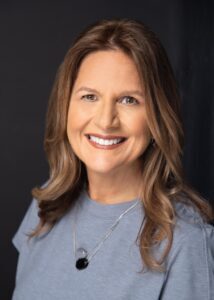 When people hear I’m both a veterinarian and a cozy mystery author, their eyes widen. A veterinary career is surprisingly great training for writing about amateur sleuths, quirky characters, and hidden clues. I love puzzles, but I also love a happy ending. Life can be unpredictable, but the satisfaction I get from treating patients and making a difference is like the hopefulness you feel after reading a cozy mystery—justice served, order restored, friendships forged, and maybe a slice of cake in a neighborhood cafe to celebrate.
I’m going to share two truths and a lie about what my years in animal medicine taught me about crafting cozy mysteries. See if you can spot the fib.
Truth or Lie? Observing small details can save a life—or solve a mystery.
In veterinary school, you’re trained to notice what others miss. A cat isn’t “just tired,” and a dog doesn’t cough to get its owner’s attention. Both could signal injury or changes in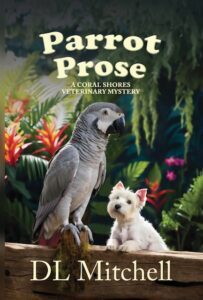 lung function. Pets can’t tell us what’s wrong, but through a detailed exam, thoughtful questioning, and deductive reasoning, we can uncover the facts, leading to a successful treatment plan.
Cozy sleuths also survive on details—a dog’s reaction to an uninvited guest, or the talking parrot who repeats a suspicious new phrase. Clues like these may be overlooked by an untrained observer but could help my amateur sleuth find the killer.
Truth or Lie? Every client is a character waiting to happen.
Veterinarians meet everyone—farmers, CEOs, retirees, college students—and they all love their animals. In the waiting room, people who might never speak to each other swap stories about their pets. As a vet, you get a front-row seat to the quirks and contradictions of human nature. The shy woman who comes to life showing photos of her new puppy dressed up for Halloween or the long-haul trucker who chokes up discussing his aging cat’s mobility challenges.
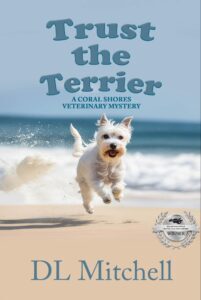 In cozy mysteries, readers return to a series not only for a well-crafted plot but to spend time with their favorite cast of characters, both two- and four-legged. My career provides real-life personalities to draw from, many of which have ended up on the pages of my veterinary series. With their permission, of course.
Truth or Lie? Animals always make the perfect witnesses.
Real animals can’t give testimony, but as a veterinarian, I’ve learned they can give signals—just not in human words. A friendly cat that hisses when a particular person walks into a room. A horse that refuses to enter a certain stall. These moments can spark questions and add tension.
In my mysteries, the animal companions don’t “solve” the crime, but they often tip off the sleuth to something unusual. The trick is balancing believability with charm—without wandering into fantasy.
Which one was the lie?
If you guessed correctly, you know animals aren’t perfect witnesses in real life, even though their instincts should never be discounted. They can also be eccentric bystanders—observing events and responding to our cues and body language. I’ve seen dogs act guilty for no reason and cats ignore the most dramatic moments. But one thing is certain: they make delightful fictional co-investigators.
The other two? Absolute truth.
Being a veterinarian taught me to notice details and to appreciate the complex characters you meet along the way. And sometimes, the most unexpected career change makes the most perfect plot twist.
The post Two Truths and a Lie: What Being a Veterinarian Taught Me About Writing Cozy Mysteries by DL Mitchell appeared first on Debra H. Goldstein.
September 8, 2025
Writing What You Know, Or Writing What You Want to Know by Carl Vonderau
 You’re supposed to write about what you know. So what do you do if you’re a banker and you write about crime? You have to make up a few things if you want to keep your job. In my first book, Murderabilia, the protagonist’s father was a serial killer. No, that wasn’t part of my family history. That meant I had to research what happened to the children of serial killers.
Without exception they all had very hard lives. The next challenge then was to combine that background with the knowledge I brought from my banking career. That’s where the fun part came.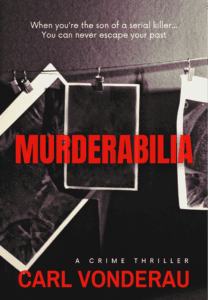
Here was the premise. Suppose my protagonist had changed his name and no one knew that his father was an infamous serial killer. He worked for a prestigious bank that only dealt with high-net-worth families. Then he was accused of killing a woman in the same way his father would. Just so you know, only the banking part was from personal experience.
Money laundering was part of my next book, Saving Myles. In that one I blended some of what I knew, some of what I learned about, and some of what I made up. Many years ago, my wife and I sent our son to a residential treatment center. He is doing fine now and gave me permission to use some of what he went through in my book. Sending your teenager against his will to a treatment center is one of the hardest things a parent will ever do. Those emotions formed the core of the book.
I also didn’t see many novels that realistically covered money laundering. I had a few clients in my banking days that might have had money laundering in mind, but none of them ever did it with me. So I enrolled in courses from an institution that trained financial services people in how to spot it. The other students were from banks, brokerages and the U.S. Treasury. They probably wondered whether the “writer” among them was actually building his chops so he could launder for a cartel. That gave me some ideas…in the book, that is.
Mexico has a highly organized kidnapping industry. I traveled all over Latin America, including Mexico, and never come close to being kidnapped. So I talked with the FBI to learn how they could help. As it turns out, unless you’re murdered or from a very prominent family, the FBI usually has to work with local Mexican authorities. They can’t negotiate for you or talk directly with the kidnappers. Then I had to research the victims. My friends at the YMCA in Tijuana arranged for me to talk with a man who had been 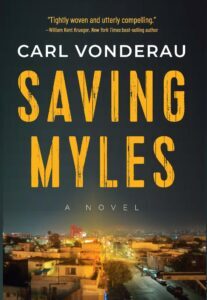 kidnapped. His abductors were from the same barrio where he grew up and he knew them. Because his family paid too slowly, they cut off his toe and sent it to them.
Putting that all together, here is what I came up with in Saving Myles. A star banker and his wife have had to send their troubled teen to a residential treatment center. When Myles returns he seems to have totally rehabilitated himself. Then he sneaks off to Tijuana and is kidnapped. The only way his parents can save him is to become involved with money laundering at a sketchy bank.
Sometimes the way to create a unique thriller premise is to get the right mix of what you know, what you learn, and what you make up.
Carl Vonderau grew up in Cleveland. After majoring in economics and dabbling in classical guitar in college, he made a career in banking. Carl has lived and worked internationally and put his foot in his mouth in several languages. He brought his banking expertise to his two thrillers, Murderabilia, and Saving Myles. He has won Left Coast Crime, Pencraft, American Bookfest, National Indie Excellence, and Independent Press awards. Carl is a board member of the San Diego chapter of Sisters in Crime, a member of Blackbird Writers, and helps nonprofits through San Diego Social Venture Partners.
The post Writing What You Know, Or Writing What You Want to Know by Carl Vonderau appeared first on Debra H. Goldstein.
September 5, 2025
AWC Conference – September 12-14 – Orange Beach, AL
Valerie Burns and Debra will teach a workshop on “The Long and Short of Writing Fiction: How to write long, short, and sell it!”
The post AWC Conference – September 12-14 – Orange Beach, AL appeared first on Debra H. Goldstein.
August 25, 2025
Keeping Track of Chaos by Lynn Cahoon
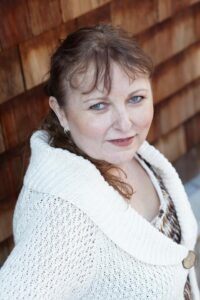 Reading the past contributions, I thought I’d talk about one thing no one ever mentioned to me when I started out – keeping track of the chaos that is publishing.
First up, my story. I have always dreamed of being a writer but thought that was something someone else did. I was a rural Idaho kid who had nothing to say that was interesting. And yet, I was drawn to telling stories. But I was also practical. My mom was widowed in her mid-thirties with no career, and five kids, including a 1-year-old baby. Me. I needed a job to make sure that didn’t happen to me. It was the seventies and Ms. Magazine told us we could do anything. My guidance counselor was more specific. Teacher, nurse, office worker. None of them called to me but I could see myself as a younger, hipper, Mary Tyler Moore, so I made sure I had office skills – like accounting and typing.
Years later, in my third career, I was diagnosed with breast cancer. That was a wake-up call and my focus changed to making writing my job, not just a someday wish. I started with my strength – learning.
I realized quickly once I was published that I needed to learn more than just writing craft on how to tell a good yarn. I needed to understand and develop a production plan.
Basically, a production plan is a way to not only meet your writing or drafting deadlines, but to make sure you are being prepared for events, editing, and marketing.
For a long time, I was a working writer. I had a full-time job, was writing several books a year, in several series and attending some events that I could fit in.
And I was failing.
I started making a goal list, focusing on annual goals, then breaking it down to monthly, weekly, and finally daily to do list, supporting those goals. Writing several series. I needed an overall plan that can give me a view of what’s next to write, or edit, or an event to attend.
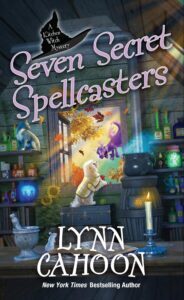
This is the chaos controller. I use a clipboard with a notebook paper that has three columns. On Deck, Soon, and Future. On deck are the big picture list of things I’m working on. The last few months have included promoting An Amateur Sleuth’s Guide to Murder – book one in the Bainbridge Island series. I also had developmental edits on Confessions of an Amateur Sleuth. I was drafting (writing) a new Haunted Lives book as well as several blogs and articles on a new release, Seven Secret Spellcasters. I had video, in person, and Facebook group appearances. Everything was on my one page so I could make sure it got on the calendar.
It’s a system with a lot of moving parts. The bigger projects, like writing the book, I use a computer program called Asana to schedule the writing.
Sometimes things still fall through. But if I follow my plan, most things get done. So, I’ll count that as a win. I even found an error by my publisher since I didn’t have a round of edits marked off my clipboard list. They’d forgotten to send them to me. The book might have been fine, since it was final edits, but I’d be worried if I didn’t get the chance to read it, one last time.
Do you have a planner? Or a system? Let me know what works for you. Giveaway – Seven Secret Spellcasters – signed copy – to one lucky US address winner.
Lynn Cahoon, author of An Amateur Sleuth’s Guide to Murder, the first in the Bainbridge Island mystery series is an Anthony-award nominated, New York Times and USA Today best-selling author. Lynn pens several cozy mystery series including The Tourist Trap Mysteries, The Kitchen Witch Mysteries, Survivors’ Book Club Mysteries, The Farm to Fork Mysteries, and The Cat Latimer Mysteries. Readers can expect a fun ride no matter where the mystery is set. She lives in a small town in Eastern Tennessee like the towns she loves to write about with her husband and two spoiled Keeshonds. Find out more and sign up for her newsletter at www.lynncahoon.com
AN AMATEUR SLEUTH’S GUIDE TO MURDER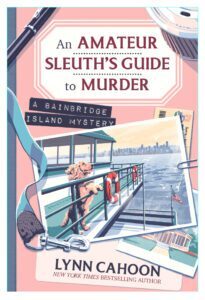
A Bainbridge Island Mystery
An irresistible new series from New York Times bestselling author Lynn Cahoon about an amateur sleuth who doesn’t just solve crimes, she writes about how to do it . . .
TIP #1: WHAT DOESN’T KILL YOU COUNTS AS WORK EXPERIENCE
Meg Gates could use a guidebook for life. Indeed, she’s faced some challenges. She dropped out of college to work for a tech startup that failed—and her fiancé just took her bridesmaid to Italy on what was supposed to be Meg’s honeymoon.
Now, at twenty-six, Meg has taken the ferry ride of shame from Seattle back to Bainbridge Island to live with her family. At least she has her rescue cocker spaniel, Watson, by her side. But it’s Meg who could use a rescue—and she’s hoping it will come in the form of a part-time gig doing research for a bestselling mystery writer.
TIP #2: WRITE WHAT YOU KNOW – OR WHAT YOU WANT TO KNOW
That’s when the lightbulb goes on: Meg will write her own guidebook—a manual on criminal investigation. But before she can impress her new boss with her pet project, the author’s manager is found dead on the rocks beneath the author’s Gothic mansion.
Now it’s time to put her guide to the test, as Meg sets out to clear her employer of suspicion and solve the crime. But there’s one important caveat she’ll have to add to her guide—
TIP #3: BEWARE OF UNKNOWN DANGERS
Links –
Amazon - https://www.amazon.com/Amateur-Sleuths-Guide-Murder/dp/1496752090
www.lynncahoon.com for more vendors.
The post Keeping Track of Chaos by Lynn Cahoon appeared first on Debra H. Goldstein.
August 14, 2025
Killer Nashville – August 21-24 – Nashville TN
Debra, a former Silver Falchion winner, will be a panelist on several craft related panels.
The post Killer Nashville – August 21-24 – Nashville TN appeared first on Debra H. Goldstein.