
 Sign in with Facebook
Sam Gennawey’s Followers (30)


1,914 books
|
369 friends

365 books
|
162 friends

274 books
|
29 friends

386 books
|
39 friends

3,868 books
|
218 friends

1,383 books
|
458 friends

690 books
|
259 friends

974 books
|
25 friends
More friends…
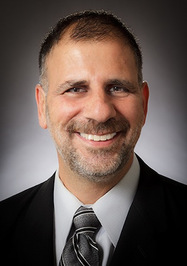
Sam Gennawey
Goodreads Author
Born
in Whittier, The United States
Website
Twitter
Genre
Member Since
November 2011
Universal Prolouge
ProlougeAct I“You can’t run scared and succeed in show business.”
1965 training manual Note from Jeff Kurtti October LAT 1984: October LAT 1984 Work in progress business week Ron Grover book Jay Stein was unrelated to Jules Stein. Los angeles times florida fund may invest in MCA park Kathryn harris 5201985 Work in progress sklar book Disneywar Wasserman book
1965 training manual Note from Jeff Kurtti October LAT 1984: October LAT 1984 Work in progress business week Ron Grover book Jay Stein was unrelated to Jules Stein. Los angeles times florida fund may invest in MCA park Kathryn harris 5201985 Work in progress sklar book Disneywar Wasserman book


More books by Sam Gennawey…


Sam’s Recent Updates
|
Sam Gennawey
rated a book it was amazing

Sacred Landscapes: One Van Lifer's Six-Year, 175,000-Mile National Park Journey
by Sam Gennawey (Goodreads Author) |
|
|
Sam Gennawey
finished reading

|
|
|
Sam Gennawey
has read

|
|
“Using the castle to transition between lands was a visual trick Walt called a weenie. According to Disney historian Jim Korkis, during the development of Disneyland, Walt would come home late at night and usually enter his house through the kitchen, which was closer to the garage. He would walk into the kitchen and grab two uncooked hot dogs, or wieners, one for himself and one for his dog. Korkis said, "By wiggling the treat, Walt could get his dog to go from side to side, around in a circle, jump up and more. Both Walt and the dog loved the game and she was finally rewarded with the tasty and satisfying treat."
"Each of the gateways into the lands offered weenies. The spinning carousel through the portal leading through Sleeping Beauty Castle called guests into Fantasyland. The stockade gates, the steam bellowing from the Mark Twain stern-wheeler, and the seeming infinite horizon beckoned guests to visit Frontierland. Over in Tomorrowland was the clock of the World and the TWA Moonliner ready for launch. Only Adventureland lacked a weenie. It was thought that if guests knew too much, it would not be much of an adventure.”
― Disneyland Story: The Unofficial Guide to the Evolution of Walt Disney's Dream
"Each of the gateways into the lands offered weenies. The spinning carousel through the portal leading through Sleeping Beauty Castle called guests into Fantasyland. The stockade gates, the steam bellowing from the Mark Twain stern-wheeler, and the seeming infinite horizon beckoned guests to visit Frontierland. Over in Tomorrowland was the clock of the World and the TWA Moonliner ready for launch. Only Adventureland lacked a weenie. It was thought that if guests knew too much, it would not be much of an adventure.”
― Disneyland Story: The Unofficial Guide to the Evolution of Walt Disney's Dream
“Evans [the landscape architect] took a transparency of the master plan and placed it over an aerial photograph of the property at the same scale. He marked all the trees that were not in the middle of the street or in the Rivers of America and tried to work around them. Evans tagged trees that were to be saved with green ribbons, and he tagged trees to be removed with red ribbons. His efforts were futile. As it turned out, the bulldozer operator was color-blind and they lost dozens of trees that were 50-100 years old. More than 12,000 orange trees were removed.”
― Disneyland Story: The Unofficial Guide to the Evolution of Walt Disney's Dream
― Disneyland Story: The Unofficial Guide to the Evolution of Walt Disney's Dream
“No people who turn their backs on death can be alive. The presence of the dead among the living will be a daily fact in any society which encourages its people to live.”
― Walt Disney and the Promise of Progress City
― Walt Disney and the Promise of Progress City


Sam's writing is terrific; he truly enriches the discussion. Not only may you learn something new about the chosen subject, he'll likely open up another perspective on it for you too.
Al Lutz Founder/MiceAge
A tour de force. this is a must-read for any urban planner wanting to understand city-building and how people use urban space. sam gennawey provides a rare glimpse into the creative "backstage" of how walt disney planned his theme parks and the experimental prototype community of tomorrow. the irony is that the future 21st century 'economy of ideas' is finding a happier home on walt's human-scale main street than in an epcot community, an irony walt would have loved.
Marsha V. Rood, FAICP; Principal, URBAN Reinventions
Gennawey not only provides his readers with a deeper understanding of Walt's vision for Progress City, he offers insight into the world of urban design as it relates to theme park design. This book serves as an ideal example of how we can apply a wide variety of principles to help us appreciate Disney's dream of a utopian city.
David Zanolla, Department of Communications, Western Illinois University