Max Tomlinson's Blog
October 30, 2025
Grace Under Pressure – an edgy, darkly comic thriller
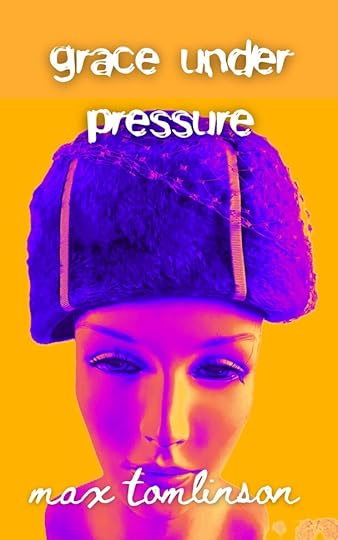
Grace Under Pressure revolves around Grace Cadence, a young Mormon woman who follows Nick, her fiancé, to 1977 San Francisco where he seems to have disappeared with her savings. When Grace stabs a former associate of Nick’s who tries to rob her, she embarks on a series of homicides as she tries to come to terms with the realities of Nick’s new love life and her need to evade the police. But Grace still searches for true love, even as the body count rises.
The thriller, darkly comic in places, is 80,000 words long and tips its hat to Patricia Highsmith, Carl Hiaasen, and Elmore Leonard.
Grace Under Pressure is looking for a publishing home. If you are an agent or publisher and would like to know more, please contact me at maxtomlinson at hotmail dot com or use the contact form on the ‘about’ page. Namaste!


June 10, 2025
July Ebook Sale
Greetings readers – All six Colleen Hayes novels are just $1.99 each for July.
Enjoy!

June 4, 2025
July Ebook Sale
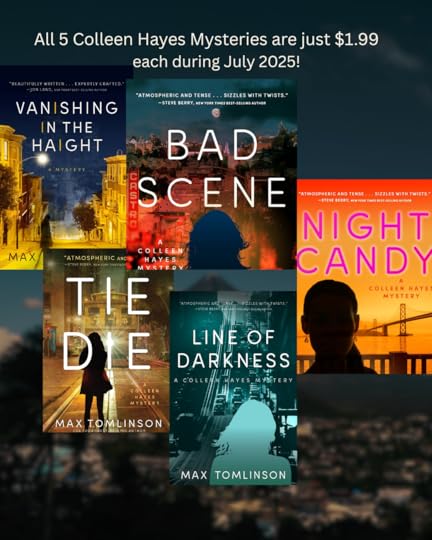
Hola readers – My publisher has dropped the price for all five Colleen Hayes novels to $1.99 each for July.
Click image to see more. Enjoy!
July 23, 2024
Happy Publication Day! – Whereabouts Unknown – A Colleen Hayes Mystery
While Colleen Hayes was in prison, her daughter took up with a biker gang. Now it’s 1977 and Colleen is out. And her daughter is nowhere to be found.
Colleen wants her daughter back – any way she can do it.
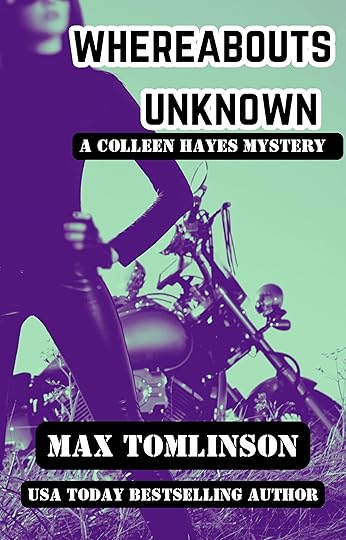
Whereabouts Unknown. the prequel (book 0) to the Colleen Hayes Mysteries published by Oceanview Press, is now available.
Whereabouts Unknown is available for purchase from Amazon and bookstores. If your library does not have a copy, please ask them to order it.
Check out Whereabouts Unknown.
For libraries and bookstores, Whereabouts Unknown is available from Ingram for expanded distribution. See sell sheet: Whereabouts Unknown sell sheet.
June 20, 2024
Whereabouts Unknown – A Colleen Hayes Mystery – coming 7/23/24!
While Colleen Hayes was in prison, her daughter took up with a biker gang. Now it’s 1977 and Colleen is out. And her daughter is nowhere to be found.
Colleen wants her daughter back – any way she can do it.
Whereabouts Unknown is the prequel (book 0) to the Colleen Hayes Mysteries published by Oceanview Press.
Whereabouts Unknown will be available for purchase 7/23/24.
Whereabouts Unknown – A Colleen Hayes Mystery – coming this summer
While Colleen Hayes was in prison, her daughter took up with a biker gang. Now it’s 1977 and Colleen is out. And her daughter is nowhere to be found.
Colleen wants her daughter back – any way she can do it.
Whereabouts Unknown is the prequel (book 0) to the Colleen Hayes Mysteries published by Oceanview Press.
Whereabouts Unknown will be available for purchase 7/23/24.
May 1, 2024
Kindle Monthly Deals for May
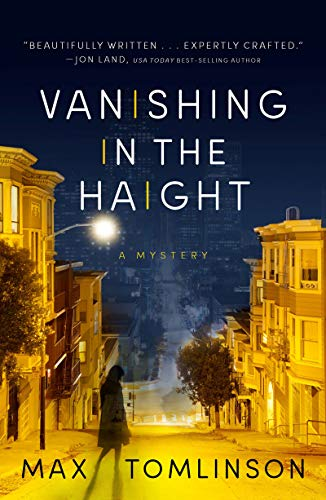
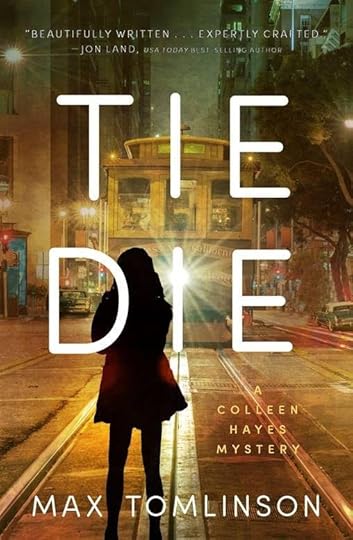
Greetings readers. Hope all is well with you and yours. My publisher has put three of my Colleen Hayes titles on sale for May at just $1.99 each. Check them out!
Click book cover to visit deal on Amazon.

February 29, 2024
Night Candy – $1.99 Kindle Monthly Deal for March 2023
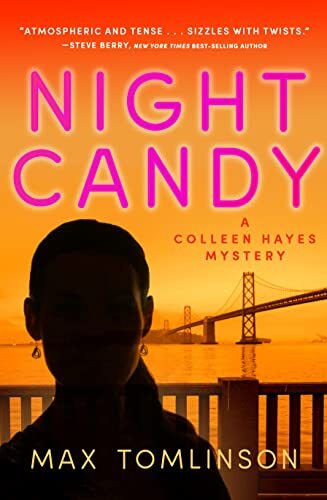
Night Candy is a Kindle Monthly Deal for the month of March 2023 – priced at $1.99. Enjoy!
“As the ‘70s draw to a close in San Francisco, things do not bode well for the city or Colleen Hayes. A stalker by the name of Night Candy is picking off sex workers, both male and female.
Then Colleen’s ally—SFPD Inspector Owens—is arrested for the murder of his ex-wife. But people are depending on Colleen: Owens, and a trio of working girls Colleen keeps her eye on—especially with Night Candy on the loose.
Then one of the three women is next to disappear.
If anything is to test Colleen’s resolve, December 1979 seems to be it.”
Night Candy is already receiving positive reviews. Publishers Weekly had this to say: “Tomlinson is at his best in this fifth mystery featuring San Francisco PI Colleen Hayes.”
You can check out Night Candy here: Night Candy on Amazon
¡vivan los lectores!
February 22, 2024
Agile Editing
 In a previous life, before I became a not-quite-so-famous author, I was a fulltime software engineer, a time in which I rose early to work on my novels before the coding started. After a while I couldn’t help but notice that writing code and writing fiction have an awful lot in common. Both are creative solitary processes that benefit from outside feedback (writing groups and beta readers), refactoring (a fancy software engineering term for rewriting), and performance enhancements (edits and trims).A somewhat recent trend (since the 2000s) in software development is something called Agile, basically a methodology where older software development practices involving lengthy (really lengthy sometimes) design stages were jettisoned for quicker iterations where code (novels) are rapidly refactored (rewritten) in smaller chunks to facilitate the end product—i.e. give the user (reader) something they might actually want.And I’m here to tell you that the Agile process works remarkably well for shaking out those early and even later drafts of your novels. It’s also a boon for breaking writing tasks down to manageable chunks that help when the muse isn’t as present as she could be. Let’s face it: inspiration can be a fleeting thing. But, with an Agile approach, there are a thousand things you can do to improve your draft without a great deal of brilliance. Agile helps you find that inspiration and improve your work—in small pieces.
 Sprints are Iterations: aka cycles, or, for you writers: drafts. These can be amazingly short (sometimes hours) and incredibly effective in getting things done. More on these in a sec.Sprints are kind of what they sound like: short, rapid tasks. In software, generally 1-3 weeks, but I sometimes use extremely short sprints for mundane editing tasks, to help eliminate losing my way and allowing me to focus on the heart of the novel rather than worrying about what day of the week it is in a particular part of my story. Example: a “time” sprint might be just making sure all my AMs are “AM” and not “a.m.” Kind of an idiotically simple example, but this is something that needs be done and you’ll be amazed at what you see elsewhere in your draft when you approach your manuscript in this breakdown fashion. Another sprint might check weather conditions for your entire book. If the story takes place during a season, are the scenes set up appropriately for that season? This sprint involves simple detail checking, generally during scene set up. Is the sun rising at the right time for that day and location? Are you repeating? Not providing enough sensuous weather details? By focusing on this aspect of your book and nothing else for that sprint, you can take care of this continuity issue in a relatively short time and be accurate. Another sprint might be checking pet word usage. I, like all of you, have my pet words I tend to overuse. I keep a list. When I’m on my third or so draft, I search for words like “little” and “beefy” which I overuse and then I slash or replace. A sprint like this can take a few hours at most on a 300-page manuscript.When? The best time to apply these rapid agile concepts, in my experience, is definitely after the first “real” draft, probably more like second or third draft. As often said, a first draft doesn’t have to be perfect—it just has to be done. Agile lets me get to the second draft sooner by not making me sweat the small stuff during the first draft.
 This term has been attributed to so many different writers, I’m not even going to try to reference who it was but suffice to say: we are all guilty. We are artists when it comes to pretty prose, but we are also hacks extraordinaire. It’s a fine line and there are a lot of trees in the forest of your novel. It can be pretty tough to tell the difference between gold and garbage at times, especially during your early drafts. But by taking an analytical, process driven approach to your draft, you adopt a clearer-eyed view of what you are writing. Hard fact: it doesn’t all glitter. That gem of a paragraph that deserves an award might violate a simple sprint. And it will often be shaken out by taking care of the small stuff. And you might even find yourself saying to yourself “Why was I so enamored with that word/sentence/paragraph/scene/chapter” (but hopefully not the entire book!) Agile will make you a more constant, tougher writer.
 This is a big one for me, probably one of the biggest sprints you will be faced with, and where you will see your novel really take shape. Very important if your book is to hold together and be believable by those readers who are prepared to suspend disbelief, but only up until a point.When my story is a story, I print off a blank calendar for the time period covered. On a recent book, this was November 1979 through January 1980.Prior to my Calendar draft, I can simply write “She hadn’t heard from him since [xxx]” (using [xxx] as a placeholder) or “It was [n] days since she had heard from him” knowing I’ll shake out the days and times later and not be overly distracted to getting it right when the muse is in the house. Too much time between key events in your novel? Too little? A pretty easy fix and one that is focused on during the Calendar sprint. Oh wait, do I have a key event that suddenly falls on Thanksgiving Day? Either make it part of the scene with sensuous Thanksgiving details and mood or move it.I work my way through my book with my calendar, arranging dates. If a character is found dead on December the 1st, 1979, many other dates will revolve around that date. What day of the week is it? (It was a Saturday). Other calendar dates become crucial. In this particular novel, Christmas is an important day so days leading up to it are important too. Are there Christmas decorations mentioned leading up to the day? Ad jingles on the radio? Shopping mania?
 Any particular weather events on a particular day? What time of day did the sun set on December 1st, 1979? Google is your friend.Several of my novels take place in the late ‘70s in San Francisco. Historical events play a big part. In December 1979, Dianne Feinstein was elected Mayor of San Francisco. The first female mayor BTW. Worth noting.
 As mentioned, I am a fan of very short sprints. Editing pet words is one. Repetition is another. More than three sentences to set up a scene descriptively (often done in the beginning of a chapter)? Time to chop, going chapter by chapter, looking at the beginning of each scene.
 Another big one, often broken into smaller sprints.Is your protagonista wearing sneakers in a scene? Make sure she’s not wearing flats at the end of the scene. One of my protagonists loves her Pony Top Stars. Do they always have the red stripes? Do the shoes age with time? Is the wound on her calf healing as they story progresses? Focusing on such mundane details while going through a focused sprint can make this kind of tedious task less so and save time.
 Are too many characters wearing glasses? Not enough? Too many Fords? Too many comb-overs? A dedicated sprint takes care of such details and nuances your book immeasurably while letting you write freely beforehand.
 I actually have a “humor” sprint. I write mystery/suspense and love the Noir, but a little comic relief is essential. My early drafts tend to focus on plot, not so much on levity. Later on, I often go through, giving my key characters a quip or two.
 You can have any kind of sprint you want; the key is to break down the elements of your novel into small, manageable tasks. And by doing so, you will see many other opportunities along the way to improving and making your story even better as it comes alive.
 Every successful author has approaches to the novel-writing process. Being more systematic is often one of them. Give Agile a try. I think you’ll like what it can do for you.[image error]
February 13, 2024
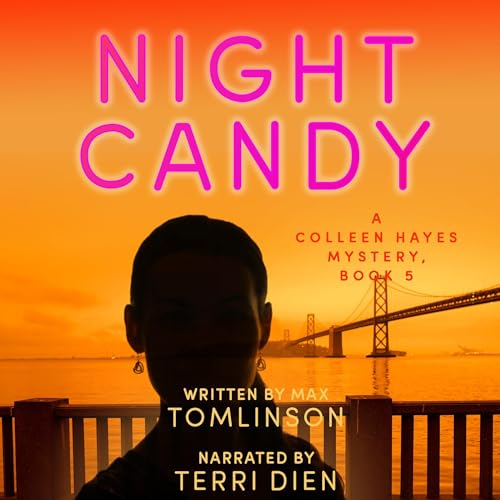
Night Candy Audio Book is now Available!
Greetings readers and listeners.
Night Candy, the fifth Colleen Hayes mystery published by Oceanview Press, is now available on Audible!
Terri Dien does an wonderful job of narrating Colleen Hayes. Check out a sample on the Audible link – (click ‘sample’).
Enjoy!