Jodi M. Clock's Blog
December 18, 2013
Nelson Mandela: Not Mourned, but Celebrated

Not too long ago the world celebrated the life of Nelson Mandela. The entire world watched on national television a “Memorial Service” where dignitaries from all over the globe set aside their differences and gathered together to share stories, reflect, and honor a man who was not just an advocate of change and humanitarian, but also just a regular guy who loved his family and friends. The natives of Mandela’s country were not sad nor were they moping — they were dancing, singing, chanting and full of smiles. They were not “mourning” they were “celebrating” or “paying tribute” to the life that he lived and his accomplishments made during his lifetime.
Truth be told, the world could learn one more lesson from Nelson Mandela — and that is not to mourn, but to celebrate, gather together and share the stories that heal the heart. The culture in the United States is not one of embracing death in a celebratory fashion. Norms for funerals in the states have been more ceremonial, ritualistic and very somber. The vast majority of our culture does not “celebrate,” they mourn.
In my opinion, as a whole, we have turned into a death adverse society. We have accepted that death is a fact of life, but in a few very short decades we have become very reluctant to adhere to the previous funeral norms that our parents and grandparents adhered to. The baby boomer generation is once again changing the look and feel of a funeral, just like they did the school systems, cars, child birth, etc. My husband, son, and myself are all in the funeral profession. Dale and I are boomers and my son is a Gen Xer. Maybe it’s time we, as a profession, provide a solution for our cohorts instead of lamenting for the funerals of day’s past. It’s time we stop pontificating about “educating” the consumer like Tom Lynch (New York Times best selling author and licensed funeral director and funeral home owner) recommends and listen to the voice of the family.
There is no longer a cookie cutter approach to honoring one’s life.
Traditional ritualistic venues may work for a segment of our families — but what about the others? Maybe, just maybe, we can show families that we (the majority of funeral home professionals and funeral home owners) get it. It’s evident that we are our own problem and need to get out of our own way and change our verbiage, our clothing, our decor, and possibly our employee base. If the general public can begin to perceive us as “regular” people, and not how the media has portrayed our profession to be, as uptight, money hungry, and frankly quite “odd” (due to our nature of business), the general public just may want to call on us, enter our facilities, allow us to wait on them and know that when they step through our front door, they, too, can pay tribute in a celebratory or even non-celebratory fashion that is comfortable for them, and not just go through the paces because we tell them what to do.
Families may not end up dancing in the streets like they were for Mandela, but there is no harm in them choreographing their own dance with our guidance. What are your thoughts? I’d love for you to continue this dialogue with me! Please share your thoughts at Facebook, jodi@clockfuneralhome.com, or my blog.
[contact-form]


October 30, 2013
Misinformation from one of America’s most trusted publications – “Reader’s Digest”

 In the June/July 2011 publication of Reader’s Digest an article written by Michelle Crouch called “13+ Things a Funeral Director Won’t Tell You” was one of their lead articles both in print and online. While conducting some research I ran into this article and found it incredibly upsetting. I’m all for the 1st amendment and supporting freedom of speech, however it’s my belief that people, especially the media should report the “facts” rather than slant the title or articles to increase readership or sales. I get that headlines are what sells, especially when they include celebrities, scandals and topics that most people elect not to discuss publicly – like funerals. After re-reading this article, it was evident that its author Michelle Crouch is a “self pro-claimed expert” and very misinformed. In fact, I “googled Ms. Crouch and found her website that listed several of her free-lanced articles that have been published in numerous well-known magazines. The majority of Crouch’s articles, especially in Reader’s Digest are examples of attempting to be a consumer’s advocate through fear based articles such as:
50 secrets your waiter won’t tell you
13 things your florist won’t tell you
50 secrets your pilot won’t tell you
My point here is there is large segment of the population who read articles and assumes there is truth behind it, as it’s printed by a respected publisher. I often wonder if the publishing entity ever verifies the information for its validity. I have been a funeral professional for over 25 years and my husband’s funeral home has been in existence for over 115 years. In fact, I can say with confidence that many of my colleagues both on the supplier side and the funeral home owner/director side would support my sentiments. To prove my point, I’d like to take the next few minutes to debunking “Reader’s Digest’s published article titled “13+ Things a Funeral Director Won’t Tell You”. I hope you find this as eye-opening as I did.
The black print is what was in print directly off the Reader’s Digest website, the burgundy is the factual answer. (http://www.rd.com/slideshows/13-thing...)
Misleading recommendation number 1:

Go ahead and plan your funeral, but think twice before paying in advance. You risk losing everything if the funeral home goes out of business. Instead, keep your money in a pay-on-death account at your bank.
Fact: Pre-paid funerals, especially since the late 1980’s have become regulated. In today’s pre-planning and payment environment it’s very difficult for a consumer to be taken to the cleaners.
1. When a consumer pre-funds a funeral it’s typically placed in a funeral home based insurance policy, final expense or funeral trust. All of the funding vehicles are transportable to other funeral home.
2. Funeral homes are audited to avoid such financial mishaps.
3. A pre-funded contract is between the consumer, the funeral home and the funding company. Therefore the consumer will have a receipt of where the monies are being held and can check on it at anytime.
4. Finally, if the funeral home goes out of business or is sold, the contract is transferable Conversely, if the pre-funded company is acquired by another insurance company the contracts are honored. If the insurance company itself goes out of business there are regulations and funds set in place for the state to kick in to protect the state's policyholders. Typically funeral home policies are smaller than traditional insurance plans so there isn't a problem.
There are many reputable funeral planning insurance companies, Forethought, Homesteaders and NGL are the leading pioneers and are nationally available. Outside of the big 3, numerous regional providers have conducted business and been working with funeral homes for decades.
Misleading recommendation number 2:
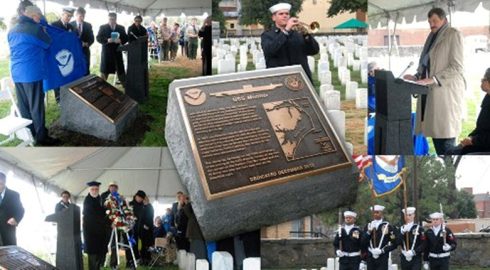
If you or your spouse is a honorably discharged veteran, burial is free at a Veterans Affairs National Cemetery. This includes the grave, vault, opening and closing, marker, and setting fee. Many State Veter ans Cemeteries offer free burial for veterans and, often, spouses.
Fact: Yes, the above is correct. Funeral homes always ask if the deceased was a veteran or a veteran’s spouse. A Veteran is also entitled a military ceremony and a United States flag, along with a grave marker. The difficulty with the blanket statement above, is that there are NOT Veterans National Cemeteries in every town. The challenge is that in the communities where there are NOT Veterans National Cemeteries close by, the deceased must be transported to the cemetery.
The other thing to keep in mind is that the following items are not included as part of a veteran’s benefit:
Funeral professional services
Transportation
Merchandise (casket, printed materials, etc...)
Cash advance items (obituaries and death certificates)
If a veteran would rather be cremated this is not free of charge.
Once a person understand exactly what veterans benefits are, depending on where the cemetery is located it may not make financial sense. http://www.cem.va.gov/
Misleading recommendation number 3:
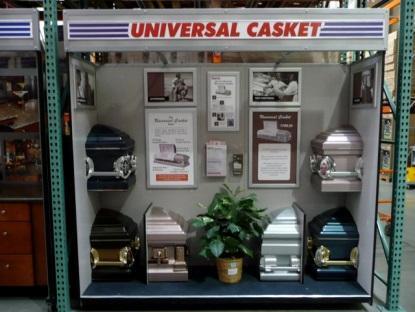
You can buy caskets that are just as nice as the ones in my showroom for thousands of dollars less online from Wal-Mart, Costco, or straight from a manufacturer.
Fact: Not necessarily. Yes, caskets are sold and have been sold for years at Wal-Mart, Costco, Amish woodworking craftsman and online. They are equally attractive as the ones that can be selected at a funeral home. Many of the chain store or online caskets come direct from China or Mexico so they are purchased in bulk to keep the consumer’s cost down. If the consumer truly compares steel metal gauge, to steel metal gauge, paint along with interior color and fabric, you will see that the pricing is the same or similar. What the article and recommendation didn't tell the consumer is that often times there is a large up charge or fee for delivering the casket to the desired funeral home. In fact, depending on the state, city and store where the casket was purchased it’s not uncommon to have union fees and delivery fees added to the retail price. In some cases, the caskets must be ordered as the retailers do not warehouse caskets, so if the expectation is that a consumer can go to a store, select a casket and bring it home the same day that may not be realistic.
Misleading recommendation number 4:
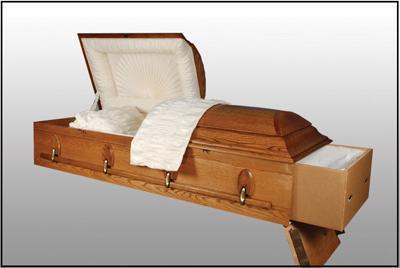
On a budget or concerned about the environment? Consider a rental casket. The body stays inside the casket in a thick cardboard container, which is then removed for burial or cremation.
Fact: The above statement infers two very different topics which can be the same or mutually exclusive. Money and Environment, which are two very different value propositions. Yes, rental caskets are typically and often used for cremations that have a visitation with the body present. After the visitation and or the memorial service, the deceased is cremated and the outer shell of the casket can be reused at another time after replacing the interior with a new liner or corrugated box. Another popular option is to purchase specially designed casket made for cremation (which costs less as it’s not made of bronze, copper or steel it’s made of wood, particle board or cardboard) and then bury that. Most funeral homes have access to these caskets. In reality, there are many caskets that are less expensive than using a rental casket, all you need to do is share that price is an issue. In regards to the environment the green movement / “Eco-friendly it's been around for many years. In fact, there are “green” cemeteries, just not in every state at this point in time. Just like anything else at this present moment in time, “green” doesn't always equate to less expensive. There are many green casket and urn options, some of which are very affordable. As a consumer, one must decide if they want to be environmentally conscious, cost-effective and or both. But please don’t assume “green” or rental always more affordable.
Misleading recommendation number 5:

Running a funeral home without a refrigerated holding room is like running a restaurant without a walk-in cooler. But many funeral homes don’t offer one because they want you to pay for the more costly option: embalming. Most bodies can be presented very nicely without it if you have the viewing within a few days of death.
Fact: Most, not all funeral homes do have refrigeration. In the rare case the funeral home does not have access too, or refrigeration AND there is a large gap of time between the funeral service and the time the body was received into their care, they will ask the family for permission to embalm out of convenience and body preservation – NOT to drive up the cost. In fact, when this is the case some funeral homes don’t charge as it’s for their convenience as well as wanting the family to have a good “last memory picture” of their loved one. Regardless, the funeral home must ask for the family’s permission to embalm by law.
Misleading recommendation number 6:

Some hard-sell phrases to be wary of: “Given your position in the community …,” “I’m sure you want what’s best for your mother,” and “Your mother had excellent taste. When she made arrangements for Aunt Nellie, this is what she chose.”
Fact: This only happens in movies and on television…and in a really bad reality show. (…and if it does happen in your funeral home…run screaming from the building!)
Misleading recommendation number 7:
"Protective” caskets with a rubber gasket - They don’t stop decomposition, in fact, the moisture and gases they trap inside have caused caskets to explode.

Fact: (note a personal favorite!) No one ever said a rubber gasket stops the decomposition. The body will always decompose. The rubber gasket is meant SOLELY to keep water and other earth elements out and to seal the casket airtight. Casket’s DO NOT explode.
Misleading recommendation number 8:

If there’s no low-cost casket in the display room, ask to see one anyway. Some funeral homes hide them in the basement or the boiler room.
Fact: Funeral homes have all price ranges of caskets available for families to choose from, in all price ranges. More than half of the funeral homes today don’t even have a casket selection room as they so it digitally on a flat screen TV and some just by using a lithos (photos).
This is done for the 2 primary reasons:
To keep overhead down by having no physical inventory; therefore passing the savings along to the consumer.
By virtually showing caskets and urns funeral homes are able to show more of a selection, therefore literally having price points for every budget.
Many years ago funeral home’s often kept cardboard box caskets for welfare funerals in their garage or basement as the majority of these services at one time were paid for by the state. Fast forward to this decade, this simply is not the case as the Department of Human Services is underfunded and there are limited, if any funds, depending on what state you live that will fully pay for a funeral.
Misleading recommendation number 9:

Ask the crematory to return the ashes in a plain metal or plastic container — not one stamped temporary container. That’s just a sleazy tactic to get you to purchase a more expensive urn.
Fact: Typically the consumer never meets with the crematory or its operators. The consumer will meet with a funeral director or arranger who legally must oversee the cremation. Depending on the state you live in and or the funeral home the consumer is working with, the funeral home/director then outsources the deceased to a 3rd party crematory or a sister company for the cremation to take place. It’s up to the crematory to determine what the cremated remains (pulverized bones NOT ashes) of the deceased in to return back to the funeral home in, if no urn or container was selected by the family. In fact, families can bring their own container for the cremated remains to be directly placed into.
Some funeral home’s and even crematories are leaning to be more “green” and will return the cremated remains in plastic bag that is placed in a cardboard box. Other crematories may elect to place the cremated remains in a plastic container that is meant to be temporary as no “urn” or container was provided. The reason the word “temporary” is even used is often times the cremated remains are scattered or even co-mingles with other cremated remains to be buried at a later date.
Misleading recommendation number 10:

Shop around. Prices at funeral homes vary wildly, with direct cremation costing $500 at one funeral home and $3,000 down the street. (Federal law requires that prices be provided over the phone.)
Fact: The Federal Trade Commission (FTC) requires that all prices are legally disclosed in a general price agreement. The cost of a cremation from start to finish does vary significantly from state to state and sometimes even from town to town. Typically in the coastal regions the cost to cremate is lower than in the Midwest or even Bible belt. What’s concerning is that people are basing the decision on a price and not comparing apples to apples. There are legalities involved with the cremation process. Natural gas is expensive, and the up keep of the retort (cremation machine) is very expensive. Crematories have insurance liabilities, vehicle up keep and trained personnel. There is some truth to the statement that cremation prices are less metropolitan city where volume can play a factor, however just like any thing else – when prices are good to be true one must ask why. Many crematories and funeral homes have ended up on NBC’s Dateline for breaking the law and unethical practices – don’t let this be you.
Misleading recommendation number 11:
We remove pacemakers because the batteries damage our crematories.

Fact: Yes, pacemakers are removed. The informant is asked to disclose if the deceased has any article limbs, parts and yes a pacemaker. Why - pacemaker explosions. When a pacemaker explodes it can and cause structural damage to the inside of bricking within the retort or more importantly injuries to the operator if it exploded while they were checking on the cremation. This is no joking matter, especially when a person’s safety is hand.
Misleading recommendation number 12:

If they try to sell you a package that say will save you money, ask for the individual price list any way. Packages often include services you don’t want or need.
Fact: Regardless of package pricing, the funeral home must show a standard general price list. Packages are made up so families can easily select the funeral of their choice. General Price Lists are confusing at best. In reality, it’s just the opposite. The package prices will offer families one or two more items at a discounted price if bundled together. On the rare occasion that items are not discounted, if you added each component up, it would match the itemized General Price List. (General Price List requirements http://www.business.ftc.gov/documents...)
Misleading recommendation number 13:

Yes, technically I am an undertaker or a mortician. But doesn't funeral director have a nicer ring to it?
Fact: Legally, a funeral director has a mortuary science license; therefore they are a licensed and practicing mortician. The names have evolved over the years based on what their primary function is. Who cares? It’s no different from a person who is a “meteorologist” who the general public calls a weather man.
In closing:
At the end of the day, society as a whole is death adverse. We don’t want to talk about it. In fact, frankly death creeps people out. What I don’t understand is why people don’t place more emphasis on questions to ask caretakers, physicians, or even construction workers. People will believe them blindly, and are often scammed. Somehow, when it comes to death, they feel that they will be taken advantage of based on a self-appointed expert with no real pool of knowledge to base it on. The majority of the funeral profession is kind caring individuals who have taken over their family businesses. Is it unrealistic for a small business owner to expect to make a fair profit for their services rendered? Most funeral homes are small businesses whose owners live in the community and give back to their community. People don’t barter with their doctor or dentist; however they may take advantage of coupons or sales at the grocery store or restaurant. What they don’t realize is that by pre-arranging their funeral in advance they can guarantee their future funeral home choice at today’s prices – therefore saving their family literally hundreds of dollars, let alone removing the anxiety of having their loved ones wondering if they selected the funeral they would have wanted. Another value added benefit of pre-arranging and funding your funeral in advance is that it’s considered exempt as an asset from Medicaid if you are attempting to go on assistance for long-term care. Funny how the positive attributes of funeral service are not proactively discussed openly for the public to realize the many benefits. Like anything else, media exploitation or sensationalism of miss-facts or half-truths increase ratings which translate to profits.
If you want to check out more of Michelle Crouch’s articles the link shown below.
http://www.rd.com/slideshows/13-things-a-funeral-director-wont-tell-you/#slideshow=slide22 Here is costco’s link for the costo question:
http://www.cem.va.gov/ for veteran cemetery information
September 12, 2013
Memorial Video Brings Classmates Closer Together
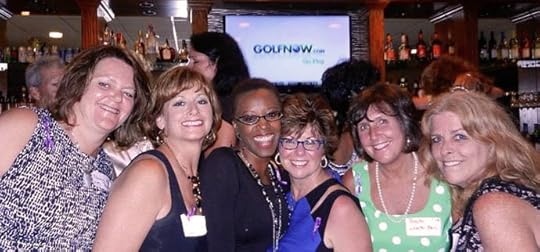
 Jodi M. Clock with her friends from the graduating class of 1979 (Nancy, Robin, Kim, Jodi, Becky and Ginney) Battle Creek Lakeview Mega High School Reunion 1976-1980
Recently I attended a “Mega Class Reunion” for Battle Creek Lakeview High School’s (LHS) graduating classes of 1976 through 1980. I was the foolish one from my class who volunteered to be on the committee, as we needed to have representatives from all classes on board. The reunion committee came about from a Facebook thread of fellow LHS alumni who were approaching their 35th year, post high school. The rationale was that more people would attend the gathering if there were other classmates invited besides the one’s they graduated with. Initially the plan was to have 1978 and 1979, but when the buzz on Facebook started going viral, it somehow morphed into the theme of ’76, ’77, ’78, ’79 and ’80 can crash it! (It was our attempt of being funny as upperclassmen!)
My role was to help get the word out via e-blasts and social media, as well as putting together both digital photo montages from years past and making a tribute to honor those alumni who have died.Before I go any further, it’s imperative that I give a big shout out of thanks to the other committee members and all of the LHS alumni who communicate via Facebook. Without their help, we could never have pulled this event off.
What I found moving was one of our alumni a few years back started a group called “In memoriam of LHS Spartans” for our deceased teachers and students. What’s even more amazing is that numerous alumni diligently posted the obituaries and photos both past and present of the deceased. From there, others posted memorable moments about that individual and it grew from there. Depending on whom the individual was and the alumni that knew them, it has been known to take on a life of its own. Being in funeral service and having several funeral home locations, I found this to be a beautiful thing. As the date drew nearer, I started to capture the names of the classmates who died and make a list that was sorted by year of graduation. Somewhere in the middle of this process, it became deeply personal. I had no idea that we had lost so many individuals along the way -- and these were just who we have been made aware of! I found myself wanting to know the “why” or “how” they died.
I made the decision to not only place their name, date of birth and date of death along with their graduation photo; I wanted to have a current photo and their obituary on their page as well. I felt that if I wanted to know what happened, it’s only natural that others would also. That was a lofty goal. Much of the information is public and very accessible via the internet, if you know where to look. (Being in funeral service, I have that advantage.) What initially would have been a solid day task, turned into three days’ worth of research. After reading what happened to many of my friends, I then felt horrible for not knowing about their death and never acknowledging their loss to their parents or even just going back to Battle Creek to attend the visitation to support friends. After all, one must practice what they preach.
I was able to seek out a large percentage of the information. However there were a handful of individuals where I could not find a thing, short of contacting their family (and maybe I should have). We had arranged for a classmate who is a pastor to conduct a moment of prayer in their honor and another classmate who is a professional vocalist to sing an appropriate song before the night really kicked into gear. On one of the large screen televisions we had the video playing in a continuous loop for people to watch. Numerous times I would look back there to make sure the video was still playing and each time I’d check, there would be a crowd of people standing dumb struck just like me when I mentally processed how many people we had lost, as well as not realizing who had died. In fact, many of the attendees thought some of these people were going to be at this function.
To place salt on our wounds, a former 1976 classmate had died expectantly less than a week from the event. He was working out at the gym and died of a massive heart attack. He and his wife had RSVPed. Needless to say, it was a real downer. As I mingled with people I hadn't seen or heard from in ages, many of them voiced their appreciation for honoring those individuals and also has asked for a copy of the video. Many people felt the same way I had when I realized whose names were on the deceased’s list. It reminded each of us how fragile life is and that it doesn't matter who you are, what click you were in or how much money you have -- your life can change in an instant. None of us are exempt from death, it just happens to some of us sooner than later.
On the bright side, as a group we have made the decision to establish a college scholarship fund in the memory of those we lost. The objective is to have a $500 annual scholarship given to a student from LHS who is in “financial” need. The decision has been made to have the Battle Creek Community Foundation be in charge of holding the funds and overseeing this, therefore the award will be given without prejudges. Prior to leaving many alumni wrote checks or donated cash. For those who were unable to attend, we’ll be sending an e-blast out informing them. Now that we have a centralized collected list of deceased alumni, on an ongoing basis we plan to add to this and annually update the digital video. It’s an honor to be able to do this, however it’s sobering at best, realizing that the list will grow. I only hope that it doesn't grow fast and that it never exceeds the headcount of those alumni they left behind.
Here is the video if you would like to meet some really great people who left a footprint being a Battle Creek Lakeview “Spartan” and a photo of myself and some of my high school friends.
Click here: LHS Spartan 1976-1980 - A class reunion tribute August 2013
July 11, 2013
Life Insurance, Funeral Homes, and Medicaid

 Funeral homes can not be designated as a beneficiary to a traditional type of insurance policy. If the intent is to pay for one’s funeral, there are some simple legal solutions to accomplish this.[/caption]
This month, the “411” on life insurance, funeral homes, and qualifying for Medicaid assistance for long-term care.
I can’t share with you how may times our funeral home receives a phone call from a life insurance agent or financial planner asking if we will allow their client or family member to name our funeral home as the primary beneficiary of a life insurance contract. What even perplexes me more, is that the answer to the question above, is clearly discussed when an individual participates classes prior to taking their life insurance exam, whether a person is taking a full life or limited life exam, this is directly addressed.
Before the answer is addressed, it’s important to understand that there are two very different types of life insurance policies.
The first type of life insurance policy is the kind that this question is referring too. One that is written by a life insurance agent. An example of this would be an agent who represents insurance products from companies like Farmers, Prudential, USAA, State Farm, or Metropolitan. These companies offer consumers products like term life, whole life, universal life, annuities, long-term care, etc.. Professionals who work with these types of companies have what is referred to as a “full life license” as they can sell an array of products that typically don’t have caps on the dollar amount purchased.
The second type of insurance policy is one that is sold by an individual who works at or is affiliated with selling what funeral homes refer too as pre-paid funeral plans. In Michigan, as well as many other states, this type of license is restricted to writing contracts of this nature only and in some cases have very limited dollar amount. The individuals/agents who write this type of contract/policy hold a “limited” life insurance license. Nationally, there are a handful of companies who sell this specific type of product as they are limited in scope, meaning there is usually a high average age, small commission and they have low dollar amounts in comparison to the traditional insurance mentions previously. Some of the most well-known pre-need insurance companies are Forethought, Homesteaders, NGL American, and Assurant.
To my point, the answer is “no,” funeral homes can not be designated as a beneficiary to a traditional type of insurance policy (translation -- a non-funeral related insurance policy). In the eyes of the law, this is a direct conflict of interest.
If the intent of the insurance policy is to pay for one’s funeral, there are some very simple legal solutions to accomplish paying for a funeral with a life insurance policy. One of the most common methods is to have the beneficiary of the insurance policy, after the death has occurred, sign an insurance assignment for the amount of the funeral only and request the remaining amount be sent them. Most funeral homes have a generic version of this form. Many of the insurance companies will accept this along with a certified death certificate. If any additional forms are needed, the insurance company will see to it that either the beneficiary or the funeral home, and/or both, receive the proper forms.
Another method, which is a bit more labor intensive is to contact the insurance company directly after the policy as been issued and ask them if they have an “Irrevocable Trust” form. The purpose of an irrevocable trust is to hold the funds in an entity that can not be cashed in for any other purpose accept the insured’s funeral. These types of forms are only generated if an insurance policy has some form of cash value and or pays dividends. What this does is eliminate is the ability for the insured to take out a policy loan against the cash value. By assigning any form of cash value to the irrevocable trust and then taking the insurance company’s irrevocable trust form, along with the enforce policy to your funeral home of choice, then asking them to accept the funds placed in the irrevocable trust to be assigned to a funeral that will be delivered in the future, the insurance plan is considered exempt as an asset for Medicaid.
Below are the steps that have to happen for an Irrevocable Trust.
1. Traditional insurance policy must be issued and have some form of cash value.
2. Policy owner must contact the writing insurance company and ask them for their irrevocable trust form and any funeral home assignment forms they may have.
3. Policy owner must go to their funeral home of choice and ask the funeral home if they will accept the cash value as proceeds for their future funeral and will they “guarantee” merchandise or services for that amount. If the monies fall short of the funeral costs necessary the dollar amount can be placed towards the overall amount.
4. The funeral home must generate a guaranteed funeral goods and service statement and sign an insurance assignment form. This means upon death they will accept the money from the insurance company AND the insurance company will send the funeral home their assigned portion after receipt of a certified death and funeral bill.
The controversy with the above method is that some rather well known and large insurance companies have irrevocable trusts available, but won’t them available to their policyholders. This becomes problematic when a policyholder needs to qualify for financial aid for long term care (Medicaid) prior to death. If that policy can not be made irrevocable this places the entire policy in jeopardy, and potentially the ability to qualify for assistance.
If a policy holder is applying for Medicaid, one frequently used solution is to take out a policy loan against the cash value and immediately apply the cash value towards the purchase of a pre-paid funeral at a funeral home. This is better than just surrendering the insurance policy over for the cash value. By doing this, the cash value is eliminated from the original life insurance policy; the cash value is placed in a specially designed funeral specific insurance policy that can be made irrevocable, therefore providing the policy owner with the best of both worlds. A life insurance that remains intact until death, a pre-planned and pre-funded funeral, and the traditional insurance policy’s beneficiary will receive the balance left from the face amount of the insurance policy, minus the loan and any interest to cover the loan.

It looks like this.
$25,000 Face Value from ABC Insurance Company
Minus $10,000 Policy Loan (Zeroed out cash value, used to purchase a pre-paid Funeral insurance policy)
Equals $15,000 Balance at time of death
Minus $10,000 Loan amount ABC insurance company recovers from outstanding loan
Minus $300 interest (Whatever the interest rate is)
Equals $4,700.00 Back to beneficiary and funeral is paid in full.
So why all the fuss? There is disconnect in the law around this topic. There are laws that insurance companies follow. Laws that the funeral homes adhere too, case worker guidelines/ manuals, and finally Medicaid qualification guidelines/ manuals, none of which are congruent in vernacular. This leaves the door wide open for subjective interpretation, as well as inconsistency between funeral homes and insurance companies.
What’s the end result? Confusion! Confusion between all individuals or parties involved, who simply want to do the right thing and provide a means to an end.
So please keep in mind, many good people who are trying to do the right thing, can and do receive misinformation, which can and often does end up being fixable. However, what may seem relatively simple may be a very difficult task. What are your thoughts? I'd love for you to continue this dialogue with me! Please share your thoughts at jodi@clockfuneralhome.com, Facebook, or my blog.
June 14, 2013
Tell Me: Why Do You Choose a Funeral Home?

Readers — this is a call for action. As a funeral professional I am asking for your thoughts, feedback or recommendations for continuous improvement. We don’t know, if we don’t ask. As I sit here at my computer I find myself very perplexed. Most everyday, when I sit down at my desk to begin my day, I check my email. (This task in itself at times can take literally all day!) Like many of you, I have set “Google Alerts” to crawl the web and place key topics that I follow in my in box. This morning’s mailbox is unusually loaded with people who are frustrated with funerals, wedding planners who are attempting to add funeral planning to their expertise and entrepreneurs who have a new concept to send their loved one off in style. After reading each of the alerts, I find myself asking the obvious – why? The next few paragraphs will contain random thoughts, observations and questions. As you read this article, please take a moment to reflect and respond either openly in the comment section at my blog here, email jodi@clockfuneralhome.com or facebook me or even tweet me at #AuthorJodiClock.
Why do people choose a funeral home? Past history has told us, because that’s where their family always went. Today, this simply is not the case. Location used to be a primary factor. To some degree, I believe it still is. However, funeral homes, much like hospitals are a destination, typically not a place of convenience. Is price the determining factor? If price is strictly the case that begs some important questions that need to be both addressed and understood. (Please understand that there is no wrong answer.)
1. If price is truly the issue and there is no money, our funeral home offers a “no cost” cremation solution. We are the only funeral home in Muskegon County that offers this. The caveat is that the deceased must not be an IV drug user, have AIDS or any other contagious disease. The deceased also must have been found and pronounced death within 24 hours so the proper protocols can be taken. The family receives one death certificate. All transportation fees and professional services are of zero cost to the family. Anything above any beyond this, the family must pay for.
2. Do families feel that funeral homes are a rip off based on all the media hype? Probably to some degree. It only takes one disreputable funeral professional to place a stigma on what we do, to ruin it for those who operate an above board business. All industries have their “black sheep,” however, because we are in the death care profession, things are sensationalized.
Here’s a fact you should know. The funeral profession as a whole is highly regulated, especially in the state of Michigan. Our profession has to uphold to numerous standards that are set by the Federal Trade Commission, Occupational Safety and Heath Administration, Music Licensing and Regulation, audits for pre-planned funerals, not to mention all the necessary insurance coverage and much more. It’s fair to say that as recent as 15 to 20 years ago, funeral professionals made a comfortable living with an above average income. Today (2013) this is not case. Nobody, let me repeat nobody who is in this profession is getting rich. Not the casket suppliers, urn suppliers, the vault suppliers, cemeteries or the crematories. In fact, many companies have consolidated or gone out of business. Everyone who is in this business — not just here in Muskegon, across the country — are literally making just enough to cover their overhead, their employees’ payroll and benefits, with just enough left over to reinvest back into their business for improvements.
The real question should be, at what at point does a business stop operating with a fair profit margin and operate in the red in hopes that volume will make up the difference? Translation, a business can lower their price and create a price war, but is it worth the cost of going out of business? If a funeral home wants to operate on the “Wal-Mart” volume based method, their must be enough of the general population in the community they live in that is there is an abundance of individuals whose mortality is limited. Unlike Wal-Mart, funeral homes can’t dictate to their venders what price they are going to pay for their merchandise, insurance, vehicles and utilities. We have the same price increases as everyone else.
Does religion or race play a role in funeral home selection? Our community seems to be segregated by choice, meaning that 98% of all African Americans patronage a funeral home that is owned and operated by African Americans. This frustr ates me. I’m not sure how this norm can be changed. Religion — one could argue either side of that decision. In my opinion only, over time I think this norm will be less prevalent. Why? The baby boomer as a generation has a large segment that is non-churched. Take note, I did not say “un-religious.” A large sector of boomers tend to outwardly say they are spiritual and have their own personal relationship with God. Many people have prayer groups at their home and consider that their church. Conversely, those persons who actively participate in a church don’t want to have their services held at a funeral home. Why is that? In fact, to be quite candid, many churches across the country have taken on the role of a “funeral home” and handle everything but the “dead” aspect. Some pastors tell us that they would prefer the funeral home be involved, others have actually hired people to assist with all the behind the scene action that is cumbersome.
Does the deceased control the funeral home choice? Most families will honor their loved ones request by calling the funeral home that the individual wanted to go too. If the deceased had pre-arranged or prefunded their funeral 99% of the time, the survivors honor that decision. Just for educational purposes, if a funeral plan is pre-arranged and even funded, the survivors do have the option to move that contract to another funeral home of choice. The consequence is that the guaranteed portion of the contract in terms of price is no longer valid. The value of the policy, meaning the amount of cash that the contract has grown to, is what the family has to pay or put towards a funeral. Pre-paid funerals legally must be 100% transportable within the United States, and many are also accepted in Canada or Puerto Rico.
In closing, I’m asking you to tell me your perspective on why people don’t want what funeral homes have to offer. I understand it’s not an expense that is tangible like a car or even a piece of jewelry. It can be an experience, and a memorable one, if you allow us to do what we do or share with us what you want. Funerals don’t have to be men in dark suits directing people. In fact, our funeral home employs more women than men. Funerals can festive. Stories can be shared. Any kind of music can be played. People can have that “pig roast,” motorcycle gathering, Irish wake or even a firecracker send off, they just need to ask. If it’s legal, within reason and you have the funds to pay for the necessary items – we can do.
The difference between what we do and what a wedding planner does, is we make it happen typically in 24 hours or within five days. While wedding planners have months, if not a year. Today, many individuals have had one if not two wedding for themselves. There are no second or even third funerals for an individual. We only get one chance – why not let use help you make it one that is not a cookie cutter, fits your style and your finances. Please – talk to me!
What are your thoughts? I’d love for you to continue this dialogue with me! Please share your thoughts at jodi@clockfuneralhome.com, Facebook, #AuthorJodiClock
December 11, 2012
Dying in the 21st Century
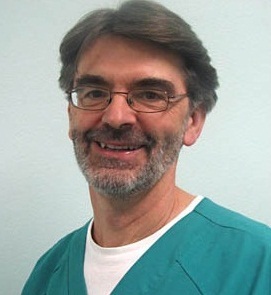
 Dr. Peter Saul is a Senior Intensive Care specialist in the adult and pediatric ICU at John Hunter Hospital, and Director of Intensive Care at Newcastle Private Hospital in Australia. After spending time as the Head of Discipline for Medical Ethics at Newcastle University, he is now a leading adviser to the State and Federal health departments. Over the past 35 years Peter Saul has been intimately involved in the dying process for over 4,000 patients. He is passionate about improving the ways we die.[/caption]
Last month I came on a very interesting study called "Dying in the 21st Century" conducted by Dr. Peter Saul in Australia who is an intensive care surgeon.
The findings of Dr. Saul's research I found to be parallel with what I so passionately advocate. Dr. Saul shared that in the 1970, '80s, and even in the '90s, the primary focus as a physician or surgeon was to "extend or prolong" life.
As a result of the medical profession prolonging life, today there are an extraordinary amount of people who have literally no quality of life. Meaning they are 100% mentally and physically incapacitated. Some of these people resemble those who have dementia or Alzheimer's who just sit and stare off into space while strapped in a wheelchair, others are on life support and or in a coma. Why?
Because their patient advocate forms and medical durable power of attorney documents were never completed. In talking to the family members of those who are incapacitated, the overall consensus was that they felt they would always discuss it at a later date. Sadly, the only thing that came upon a later date was an illness, accident or medical emergency.
Dr. Saul also went on to say that, through the eyes of those who practice medicine, is a belief that there are really only four ways to die, with the third being the most tragic.
The first form of death typically resembles some fluke, suicide or childhood disease. Fortunately, through vaccines, medications and other pro-active measures, this type of death has decreased dramatically and in some cases are obsolete.
The second way many people die is through a terminal illness or illness like cancer that was discovered too late.
Third, and sadly the most common way people die is in the hospital's ICU (illness or critical care unit). They enter into ICU via an emergency, illness, surgery or even an accident. They legally do not die, however, they often begin the equivalent to a death sentence through zero quality of life and are placed in a long-term care facility (The extremes cases we all know are Karen Quinlin and Terry Schivo).
Dr. Saul's team found out that each time a person entered into ICU, the next of kin was asked if their loved one had patient advocate forms completed along with their medical durable power of attorney. More often than not, their response was "no."
The fourth way death occurs is also increasing in numbers. Simply said, people are becoming frail. Longevity combined with their health and lifestyle have finally taken its toll on them, and their internal organs are becoming old, wearing out and shutting down. The physicians at Dr. Saul's hospital were in agreement that the third way people faced death, via living absolutely no quality of life, including the ability to remain on life support for the rest of their life, brought on even a greater sense of stress and financial hardship for the family. Families openly shared that if they possessed any documentation of "what" their loved one wanted, they would carry out those decisions as a gift of love.
The other realization that came out of this research was that, yes, doctors have the capability to saving a life. However, if there is no quality, maybe its better to spend the time to educate and inform people to have the "conversation or talk" about the pros and cons of advance directives and medical power of attorneys, then place the decision in on the potential patient for the family to carry out.
Through pro-active education in the young adult years, it's the intent to inspire people to document their wishes, as well as encourage them to revisit their choices every few years, as situations and or beliefs may change.
From my viewpoint, I couldn't agree more. I'm not an advocate of death; I'm an advocate of life. Life for me is an environment where I have the ability to recover and be functional, as well as independent.
My family will never have to make that decision, as I have already addressed these issues. Regardless of what your position is, my question to you is, "Have you had the conversation or talk yet AND are your decisions documented? If not, why not?"
I'd love to hear from you. Please share your thoughts at jodi@clockfuneralhome.com, Facebook, or @AuthorJodiClock on Twitter. or "like me on Facebook
September 17, 2012
Jodi’s Emergency Surgery Reveals Lessons for Elder Care Planning
Each of us have our personal and professional life, or if you’re anything like me, the separating boundary’s have never been clear. When your livelihood revolves around death and dying (as mine does) there is never a convenient time for anything. In fact, the one thing you can count on is altering your plans, even the best laid ones!
For those of you who don’t know me (or my husband), I’m a hardcore Bruce Springsteen groupie. Having spent my summers as a kid in the late seventies and early eighties on the Jersey Shore, I can’t help but feel that he and I are share some type of kindred spirit. Heck, “Born to Run” was such powerful song when I was pregnant, I seriously considered “Wendy” for a girl’s name. So who cares and why am I writing about this in an article about elder care or end of life issues? Trust me, there is a point.
A few months a go Dale and I were invited to join our “Bruce roadie buddy” and his wife to see Springsteen’s latest tour the “Wrecking Ball” at “Wrigley Field” in Chicago — in a private skybox no less!! Pure nirvana! We planned this event for weeks. We scheduled ourselves off work for that weekend, hired a limo for transportation once we reached our friend’s home, selected the perfect Bruce concert t-shirts to wear, had been listening to the playlist and even set Google Alerts to “Springsteen” for concert reviews leading up to our event. I even had secured a pet sitter in advance — we were on it!
Apparently my appendix had a different agenda for the weekend.
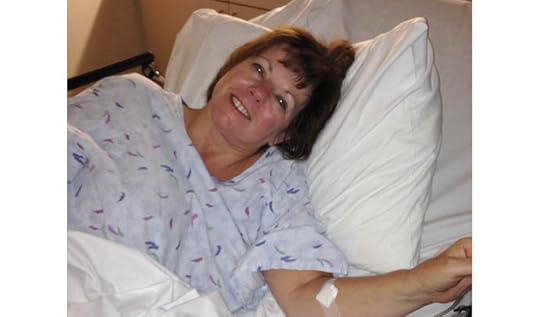
The concert was on Friday evening and that Wednesday evening prior, after much denial, I realized that the pain I was encountering was not just a case of gas (caused from an earlier meal which consisted of fried food), I was suffering from was classic appendicitis. I reluctantly asked to go to the hospital realizing that attending the concert Friday was not going to be feasible.
My husband dutifully drove me to the emergency room where I was greeted with helpers, a wheelchair and placed immediately in an “intake” or processing room. It was at this point, my mind temporarily shifted from Springsteen to observing what was happening around me. What I found was a very structured, cohesive and, in all candor, a seamless transition from processing, diagnosis, surgery, recovery and finally release. In fact, I would go so far as saying that I had a very positive experience from start to finish, despite not wanting to be there.
I’m not what some people in the medical community would consider an HMO nightmare. I only visit the doctor for pro-active preventative measures, when I need a prescription or in case of an emergency. All be it, oddly enough over the past three years I’ve had counting this three medical setbacks which is more than I’ve had in the last 29 years since my son was born. For this reason, the nurse registering me was able to access and pull up all my medical records immediately.
Once all the biographical information was verified and the official diagnosis was made, the surgeon was at my bedside clearly providing me with three types of surgical options and explained the entire procedure to me along with recovery expectations. He did not rush me, minimize my questions or laugh at my whining regarding not wanting to be there due to the concert tickets. When were finished, the surgeon left to scrub in and the hospital’s clerical staff started focusing on a few items that had to be discussed before surgery could take place. A person came in with a computer and the entire time I was being prepped for surgery the following questions were asked.
What’s my name, birth date and place of birth?
Who is my immediate next of kin?
Who is the secondary emergency contact?
What is the relationship with the second emergency contact and their phone number?
Was I allergic to any medications?
Do I want to change my “living will”/”advance directive” wishes that’s on file
Do I want to change my “do not resuscitate” order for any reason?
Would I like clergy to be paged to pray?
What am I having surgery for?
Do I want them to contact anyone?
Am I here on my own free will?
The next thing I remember was being transported to the operating room. Once I was transferred from the gurney to the surgery table, the surgeon and his team didn’t miss a beat. They told me that this was being recorded and went on to state each of their names and roles, what procedure was about to take place and then asked me:
My full name
My date of birth
What did I think I was there for.
More importantly, the surgeon asked me if I had any special musical requests while I was being placed under anesthesia. Of course, you can surmise that I requested The Boss and my last waking memory was singing (off-key no less) Born to Run and attempting to waive my left non-IV arm up in the air reciting, “tramps like us, baby we were born to run!” as they all sang with me and placed me under.
I woke up later to be told the surgery had been successful. They also shared that if I had attempted to procrastinate any longer coming in, the appendix would have most likely burst as it was very inflamed.
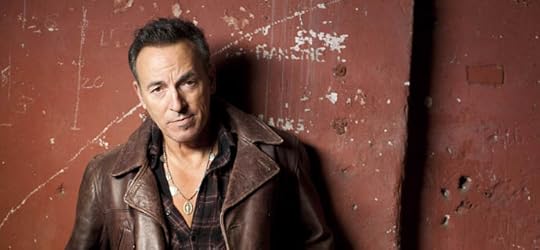
Bruce Springsteen‘s recording career spans more than 30 years. His newest album “Wrecking Ball” was released on March 6, 2012. He was also present — in spirit and song — during Jodi’s surgery. Photo by Danny Clinch.
From this point I won’t go on about my surgery, however I would like to point to 10 very key things that took place.
1. This was an unplanned surgery.
2. If I had not had “advance directives/living will” on file in their system, I would have had to make many decisions. (Note: There are numerous levels of advance directives. In a time of high emotions, pain and under the influence of some medications this is NOT the time life-sustaining decisions should be made.)
3. The decisions that I had made prior to this unplanned event were made in a calm, emotion free setting. This one-act of planning ahead saved everyone in the process time and enabled us to focus on the situation.
4. The hospital also clearly confirmed the “Do Not Resuscitate – DNR” order. (Note: this was a way to double-check and have the hospital be clear on what my wishes were in the event of something going wrong.)
5. The hospital confirmed my primary and secondary next of kin. (Note: this is critical as family dynamics change daily!)
6. The hospital offered me an opportunity to pray or talk to clergy.
7. The entire team double even triple checked every last detail from my past medicines, medical history and biographical information.
8. The staff made sure I clearly understood my diagnoses and the type of action plan I had selected for a solution.
9. Someone from the staff asked me if I was there of my own free will.
10. The surgeon provided options for procedure type and did not assume how I wanted the surgery to be performed. (This is critical, as it allowed me to ask questions and be my own advocate, hence remain in charge.)
All of the above happened within an hour and a half from stepping foot into the hospital. I don’t remember how many individual people I saw, but I do know that each of them followed their professional protocol to the fullest. I also know that they did not assume a thing. Last but not least, I know that they made it a point for me to be my own advocate.
So let’s bring this full circle to elder care planning. What I experienced in the hospital in terms of paperwork, liability and protocol was seamless. Conversely, I had previously completed my advance directives/living will and Do-Not-Resuscitate order AND had the most current ones on file within their system. If this one simple act had not been done, the entire process would not have been streamlined. Decisions would have had to be made, signed and witnessed.
Fortunately my husband with me to act as my second set of eyes and ears, therefore someone else besides me could also advocate. My surgeon not only had a wonderful bedside manner, he and his team laid out options and explanations — at no time did I ever feel pushed into something I did not want to go through with (except missing the concert!). I want to clearly thank Mercy Hospital’s Hackley Campus’s second shift emergency room team, Dr. Zwemer along with his surgical team, and the third and first shift on the surgical fourth floor recovery team. Everyone I came in contact with made my encounter better than expected.
What’s the lesson or lessons? Every day we get up and move on with our lives. None of us know how our day will ultimately transpire. Some of the components that are in end of life planning are simply common sense planning.
Lesson 1: Every person over 18 should have advance directive/living will completed — it just makes sense! Mine happened to be previously on file and current. Folks, just have it available and keep copies of them not only where your important documents are stored, keep one in your car in a special document file in glove box, heck even place a copy in your smart phone – it can be accessed easily.
If you do not have these items completed and want a set that is accepted all almost every state (maybe all by now) email me and I’ll send you’re the “Five Wishes” which has been featured in “Time,” “Newsweek,” and NBC’s “Today Show.”
Lesson 2: When possible bring a second person to act as your advocate.
Lesson 3: Remain in control. Ask questions about your diagnosis and recommended next steps. You only have one life and one body — take control and be your own champion. Please remember and respectfully saying, doctors are not gods, they are educated people who make educated decisions based on past experience and learning.
Last but not least, if you are an adult child who may be faced with taking care of your parents, don’t be a hypocrite! Make sure you have these types of end of life tools completed so you can show them yours. Let them know that these are vital for the unexpected turns in life and how relieved you would be if you knew what their wishes were and where their documents are stored — just case!
July 14, 2012
Just how does “Obama Care” impact Medicare?

Summer of 2012 marked the most important decisions of the Obama administration. The Supreme Court weighted in on a decision of 5 Judges vs. 4 Judges to uphold the law.
Please Note:These are just the facts – no opinion or biased part line is meant to be imparted. The purpose of this blog entry is to share how this decision impacts Medicare.
Chief Justice Roberts a Republican appointed by President George Bush, was the swing 5th vote. One of the most conservative members of the Supreme Court concurred with the some of his more moderate to liberal colleagues to support what he felt was in the best interest of American regarding the implementation of President Obama’s healthcare plan.
The year is 2012. The Supreme Court has 5 Republicans and 4 Democrats. It’s not uncommon for the court to align itself along party lines. On the afternoon of June 28, 2012, the court’s decision marked a surprise for many Republicans, especially the ultra conservatives. The decision to uphold President Obama’s change in healthcare should be a sign to American’s r regardless of political preferences that its possible to place party lines aside and work together towards a solution.
Each of us may have an opinion or even suggestions of our own on this issues, however, the reality is a decision has been made by the Supreme Court. Rarely do these decisions become overturned. As an American, a tax payer, and a registered voter, I’m personally more interested in “what is” vs. “what was” or “Could be”. (at least on this topic) My husband, son and myself are all small business owners. This will impact each of us. OK – so now what? It’s time to look at the facts and work within the guidelines. Like every other decision, there are pros and cons. For purposes of this blog the Medicare is the only item I am focusing in on the anticipated results.
In today’s world, its critical is that each of us become a responsible advocate for our children, ourselves, parents and even grandparents. I’m not worried so much about the “boomers themselves” as I am concerned about the present elderly generation, the “matures”, that typically don’t question authority or subject matter experts. By this, I’m referring to professionals like doctors, attorneys, lawyers, accountants, policeman…you get my drift. The WW2 and post war generation don’t ask for second opinions or rarely challenge the “professionals recommendations or advice. Unlike the “matures” the “boomers” challenge everything, hence this is where “we”, the adult children of senior parents come in.
Like anything else, before any of us can advocate or coach our parents through what te do regarding their Medicare coverage or prescription drug expenses, we first we need to understand the new rules and how they impact our parents on a level that’s personal, their health insurance and finances. In all candor, there are some very good provisions made for seniors regarding their healthcare financial needs.
By the year 2020, the Medicare’s “black hole” or “gap” in coverage regarding prescription healthcare will be 100% phased out. What does this mean? Seniors will be responsible for 25% of the cost of their medications up until Medicare’s catastrophic coverage kicks in. Many seniors purchase a Medicare D (prescription drug coverage) due to this “gap” of coverage.
Let’s break this down:
Before 2011 seniors who purchased Medicare D for prescription coverage had to pay 100% of all prescription drugs, when expenses exceeded $2,830 until the out-of-pocket expense reached the “catastrophic coverage” kicked in. This translates to $4,550.
Beginning in 2011 seniors who purchased Medicare D for prescription drug coverage who reach the “gap” $2,830, received a 50% manufacturer discount on the total cost of “brand name” medication.
In 2013 some of the brand name medications will be covered within the gap. This is above and beyond the 50% manufacturer discount.
In 2013 Retiree Drug subsidy paid to employer plan sponsors will become taxable income.
By the year 2020 those who purchase Medicare D will also cover up to 75% of brand name prescription drugs (above the 50% manufacturer discount) and up to 75% of the generic drugs.
An out of pocket reduction in catastrophic coverage will be reduced by the amount of current manufacturers discounts.
Succinctly said, the overall outcome by the year 2020 will have fully phase out the existing “gap” of Medicare D’s prescription drug coverage. Seniors will then pay a flat 25% of the total cost of their medications up until their catastrophic coverage kicks in. For Senior’s on Medicare this is a positive change, and will enable them to have not spend as much money on their prescription drugs, therefore leaving a few more nickels in their pocket to either save or place towards other expenses.
It not my intention to make a political statement, however it is my intention to point our that as Americans we have an obligation to take care of our seniors and our veterans in terms of providing ways for them to not have less of a lifestyle or options available to them as they age. They are the generation who fought for the rights we have today and will have tomorrow.
At the end of the day, it is what it is. I’m encouraging you to now think about how this will impact you or your parents bottom line when it comes to their prescription drugs?
Please take a look at the monthly savings you or your parents or even grandparents will be able to re-allocate somewhere else or even save. Once you have determined the presumed dollar cost savings, please share it with us.
The only way anyone will understand this, or be able to feel the impact of this, is if someone takes note and makes a financial journal account and review it. If you haven’t got a handle on the dollars spent out-of-pocket for prescription drugs, its time you do. Only time will tell if the presumed outcome will become reality. For your parent’s sake (or yours) let’s hope it makes a positive impact on their bottom line.
Talk to me!
July 13, 2012
Join the conversation!
First off, I want to express my sincere appreciation to Windy City Publishers for encouraging me to write “Navigating the Eldercare Journey…without going broke!” Without their push, I ‘m quite certain that I would still be one frustrated individual attempting to educate people who are intimidated or unsure about the questions to ask and steps to take when faced with caring for their their aging family member or loved one.
Second, I need to thank my husband Dale, son Brett, my step daughter Kelly Clock, all of the employees at Clock Funeral Home, sister Sharon, and friends who had to listen to my ideas, concepts and allowed me the space and time to birth this concept into a reality.
Third, I’m so fortunate to have a group of professional “thought leaders” and mentors who were kind enough to take time away from their lively hood to read my rough drafts, were brutally honest, therefore challenging me to re-arrange my draft, change the original title and format to what readers see today.
Last, but certainly not least – my ex-mother in law. Yes, you read that right. The premise of the storyline is actually some of the many experiences she endured through her husband’s illness. Her journey combined with stories I have listened too or witnessed while working with my husband at our funeral homes provided the real life scenarios that regular people, just like me, otherwise known as “blended family” America.
Now that I shared just some of the back story of “why” this book was written and “where” the premise came from, it’s time for “you” to start sharing too. Please join me in creating an online conversation on topics that need to be discussed. Understand I am not an attorney – I’m just someone who has worked within the end of life profession and watched too many people make poor choices based on “well intended” misinformation and die penniless.
I’m not here to judge, preach politics nor religion. My objective is to listen, research, clarify, present facts and provide solutions. What you elect to do is your choice. All I ask is that you make an informed choice.
Please – feel free to email me, leave a response or forward this to a friend. Like “Navigating the Eldercare Journey…without going broke” on Facebook and follow me, Jodi Clock on “twitter” and Linkedin.
So what’s your situation, fear or point of view? Talk to me!