Christopher Shields's Blog
April 28, 2014
Breathing Life into Maggie O’Shea (Part Two)
I’ve been told that all authors come to love their characters—that they become the Authors’ children. I’m no different. I love Maggie, despite what she put me through. She was the most difficult character to develop, and the one I spent the most time wrestling with. She didn’t talk to me throughout the day, like many authors recount of their characters, but she did tell me how she was supposed to react in her story. When I messed up a line, or sent her in the wrong direction, she let me know.
The first challenge for me was the easiest—determining what kind of personality she’d have. Throughout my life, I’ve been surrounded by strong, smart women. Maggie had to be clever—maybe not at the same level as Candace, but definitely clever. Of course, there are practical reasons for that. If it’s true that few readers want to read about idiotic characters, it’s truer still that few Authors want write them. I also wanted Maggie to be disciplined, but bullheaded, strong, yet vulnerable, and overly self-sufficient at times, having to learn to trust. The challenge, once I determined her attributes, was to create a character who could grow from the first page, and then put all of that in a teenage girl.
I have to admit, once I determined that my protagonist was female, I had a panic attack. I know very little about teenage girls. I don’t have children of my own, and I didn’t grow up with a sister, so I worried that I’d create a stereotypical teenaged girl that readers would reject. Worse still, I worried that I’d create a character that teenage girls, and the people who know them, wouldn’t believe. It’s crazy, each time I sell a book, my first thought is, “Gosh, I hope they like her.”
I didn’t base Maggie off of any particular person I know, but I did take nuances and attributes from several people and incorporate them into her. I’ll only talk about one for now. I made Maggie a swimmer because of one young woman, whom I dearly love. A former swimmer, and former student of mine, this particular “kid” impressed me with her drive and tenacity. I think athletes, especially those who compete in sports like swimming, have an internal fire that is developed from thousands of hours of training. They don’t get the limelight like quarterbacks, pitchers, or point guards, but they train nonetheless. I admire that tenacity, and it was a quality Maggie had to have.
Strong from the start—I didn’t want Maggie to be helpless until some metamorphosis changed her—those characters irritate me (and, no, I’m not naming any names). Yes, Maggie had to be strong from the start. I wanted her to be frustrating at times, and she is, but never annoying or sniveling. The reason why is simple: many of the people I love the most frustrate me, and I them, but that makes our connections stronger—it certainly keeps things interesting.
Over the months, I’ve had a number of readers comment on one aspect of Maggie they enjoy—the constant internal dialog. Honestly, it’s one of the things I enjoyed most while writing her. I didn’t start out writing Maggie that way, but I found “she” wasn’t happy until I did.
The other aspect of Maggie that I am delighted I settled on was her mixed Cuban and Irish heritage. I am fascinated by both cultures and the beauty of both peoples. Maggie definitely identifies with her Cuban heritage more than her Irish, but both are important. I don’t believe she would have been as strong a character without the influences of both, and I hope I’ve done them justice.
As I said before, it was a struggle to figure out exactly who I wanted Maggie to be, and now that the series has ended, I’m happier than ever that I stuck with it. This part of the story is over, sure, but I feel as though Maggie is out there, somewhere, with Gavin. Even if she only exists in the minds of a few readers, that makes me happy.



April 22, 2014
What Inspired the Weald Fae Journals Series? (Part One)
It all began six years ago. On a warm Ozark Sunday morning back in 2008, I found myself looking at a piece of property on the shores of Beaver Lake in Carroll County, Arkansas. The bluffs, the wet-weather stream beds, the gnarled trees—the land spoke to me. Rick, my partner, and I climbed down to the water’s edge through a mass of vegetation that seems to grow everywhere in the Ozarks, and were captivated by the quiet moments we shared listening to the gentle lapping sound of waves breaking on the pebble shore. I started that day looking for a place to build a house, not the setting for a fiction story. That particular piece of property sold years ago, but it did stir the creative juices and set the WFJ series in motion.
The idea for the Weald Fae Journals came about slowly and, if I’m being honest, it started out dramatically different than the story you now know. Rick and I both commented on how “magical” the property seemed. As is often the case with us, we began talking about the kind of house we’d build there. From the beginning, there was only one style that would work for me. A huge fan of Carmel by the Sea, I had to have a storybook cottage—the land demanded it. I spent a week or two scouring the internet for images and plans, hoping to find the perfect storybook home. It didn’t exist. So I sketched it, and awkwardly plotted the lines on a CAD program until I had a floor plan. Over the next few weeks, I tweaked and altered the plans until I’d created a cottage that I have ever since dreamt of building by the lake. Every detail of it emerged, from the chestnut colored beams and stone fireplaces, to the plum roof tiles, the old stone gazebo, and the octagonal library. I’d lost myself in what was possible—practicality never played a role. It became Aunt May’s cottage in the WFJ’s series (and yes, I will build it one day).
Once I had the cottage plans (and then managed to convince Rick that a storybook would be the way to live—not an easy task, by the way), we set out searching other pieces of property. For weeks we looked, and then one day, yet another Sunday, we found the perfect piece of land. Unfortunately, on a visiting professor’s salary, I didn’t have the means to buy it at the time, but I found a way to make it look like I had envisioned. The Weald was born.
Originally, the idea of writing about the land and the cottage was intended purely as a way to entertain our friends’ children. I thought it would be amazing to write my own “Weald Creation Story,” and add it to the mystery and charm that already existed on the land. For months I wrote pages and pages of “fairy tales,” aiming to keep children entertained and, I hoped, make their visit to the Weald a little more magical. I continued until I’d written about 160 pages. No protagonist, no Unseelie, just fairytales to bring each crazy feature of the property to life. That’s how it stayed for months.
In the fall, Rick and I were walking around Lake Fayetteville—which is just a few miles from where I live now, and often served us as a surrogate for Beaver lake—and everything changed. It occurred to me that I should write a story that people might want to read. That was daunting. I’d practiced law for a few years, conducted terrorism research at the University of Arkansas, and had just finished my Ph.D. Interesting achievements, yes, but none of them provided me a clue about writing fiction. Today, I believe it’s a good thing I was blissfully ignorant and naïve, both about writing a novel and finding an agent. Had I known anything about literary agents and slush piles when I began? Well, I rarely do anything that leads to perpetual rejection and unmitigated frustration. But I digress.
I knew I wanted to write a fantasy fiction—it’s my favorite genre. With that in mind, I tried to breathe life into a protagonist, craft a struggle, and create a world for it to take place. I wrote the first chapter—it took a week. What I had was awful, and I knew it. Maggie was a sniveling brat, and I still didn’t have a real plot. Other than the fact that I knew she would have powers, I had nothing else.
Some people call me driven—and I suppose with three post-graduate degrees, that is somewhat true of me. But more than anything, I’m stubborn. I refused to let a little thing like “no plot” stand in my way, so I did what I’d been trained to do elsewhere in my life…I started researching. I spent the summer of 2010 prepping for a class I was teaching in the fall, and reading everything I could on the Fae. I didn’t read popular fiction. Instead I read books on folklore and books by authors who believe them to be real. Early on, I paid more attention to Irish legends of the Sidhe than anything. I found them fascinating. I preferred the more ancient version of Sidhe that tied those beings to the elements, rather than the fallen angel tradition that came much, much later.
As my research progressed, I began looking at Fae and similar beings from other traditions—German, Chinese, Native American. It was mesmerizing. That summer, the summer of 2010, the Fae as I’ve written them began to coalesce. With a better idea of what I wanted, I returned to my manuscript and began working on story details. I wrote the Earth trial first, figured out the Water trial next, and crafted sentences for a few weeks with a clearer picture of who I wanted Maggie to be. While trying to sleep one night, but unable to keep my mind from wading through the story, a plot began to form in my sleep-deprived brain. Excited, inspired, I got up—I think it was about 2 a.m.—and settled in front of my computer. By 6 a.m., I’d outlined the entire WFJ series—all four books. While I freely admit to “massaging” parts of it from time to time, the finished product is remarkably close to that original outline. I still intend to build a storybook cottage on Beaver Lake, but in some ways, I feel like I already have.


January 17, 2014
MODERN GOOD READS FEBRUARY BOOK OF THE MONTH NOMINATIONS

It is time to nominate our February Book of the Month. Let’s let the fun of a new book and discussion begin.
This month, in anticipation for Valentine’s, we are looking for your FAVORITE ROMANCES… We have a few already on our reader’s favorite bookshelf, but wanted to add a few more to our selections. Please add your favorite romance to our list and we will get the poll up soon.

This is a great group of book lovers… We have great genre discussions, more free offers than any other group. I am looking forward to a great discussion!!!


September 19, 2013
Toby Little: Writing Letters to the World
Repost from the Huffington Post: this story of Toby Little moved me. What a great commitment, and a joy to read. Here’s the original story:
Many little kids dream of changing the world, but how does someone so small make an impact on a place so big?
This 5-year-old boy from the UK may have found a way.
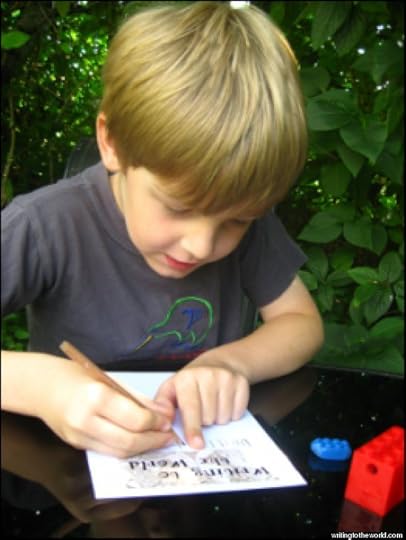
Toby Little, of Sheffield, England, is reaching out to every country in the world through a campaign of handwritten letters. He’s determined to contact at least one person from each of the UN’s 193 nations — and get a response back.
Toby’s mission began earlier this year with a reading assignment from school. His mother, Sabine Little, told The Huffington Post via email:
In the UK, children bring books from school to read at home. Back in May, he chose a book called “A Letter to New Zealand,” which describes the journey a letter takes. After reading it, he asked, “Mummy, can I write a letter to New Zealand?” –- and while I was still trying to work out how I might wing that, he said, “Can I write a letter to the whole world?”
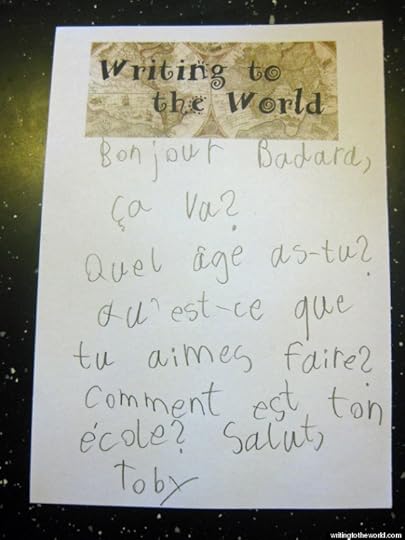
At first she thought his enthusiasm for the project would wane, but 239 letters later, Toby is still going strong.
So far he’s written to 187 countries and heard back from 66 of his contacts. He now has a website called “Writing to the World” where he and his mother track his progress.
“Every country we find is celebrated as a success -– more so, the further along we get -– there are only six missing now!” Sabine Little wrote.
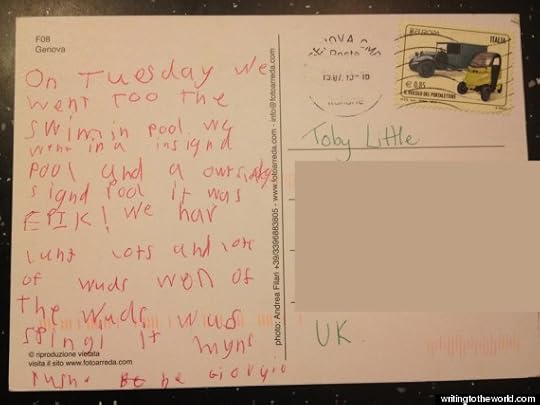
But Toby’s project won’t end there. The 5-year-old also wants to find a way to help the people he’s connected with.
“When we started writing letters, we kicked off with easily accessible, first-world countries,” his mother added. “Suddenly, we got an address for Somalia. When we researched the country, Toby was sad and asked what he could do to help. Together, we looked for a charity whose work was accessible to children.”
Toby chose ShelterBox, a charity that provides for families and children who have lost everything due to disasters. Just today, Toby met his goal of raising $950 (£590) for a shelter box containing all the resources a hard-hit family might need. And his fundraising won’t stop there.
“I want the world to be a better place,” Toby told Good Morning America.
What’s the next goal for a boy who’s already reached almost every country in the world?
“If you ask Toby, he’ll tell you that it is to visit all the countries!” Sabine Little wrote.
You can also find Toby on his Facebook page. Go, Toby!


July 11, 2013
ASK AN AGENT Event w/ Sheree Bykofsky, Literary Agent, July 17th — 19th

Modern Good Reads Presents:
ASK AN AGENT, with ~ Sheree Bykofsky
SHEREE BYKOFSKY ASSOCIATES, INC.
July 17th-19th
Discussion here═► ASK AN AGENT w/Sheree Bykofsky
Sheree Bykofsky Associates, Inc., AAR, represents hundreds of authors in all areas of adult non-fiction as well as literary and commercial fiction. Her non-fiction specialties include popular reference, business, health, psychology, poker, spirituality, self-help, humor, cookbooks, pop culture, biography, women’s issues, decorating & crafts, music, and much more.
*Full list of Authors/Books Represented Here ═► http://shereebee.com/books-represented-by-sheree-bykofsky-associates-inc/
Sheree is an Adjunct Assistant Professor of Publishing at New York University and an Adjunct Professor at Rosemont College. She teaches and lectures at a variety of conferences and symposiums around the country, including the upcoming interactive 2-hour workshop entitled “The Six Secrets of Successfully Published Authors” at the Ocean City, NJ, Free Public Library on Wednesday, August 21st at 7:00 p.m. EDT in meeting room N111. For more information about “The Six Secrets of Successfully Published Authors,” please contact Karen Mahar at: Karen@oceancitylibrary.org
Author and Speaker:
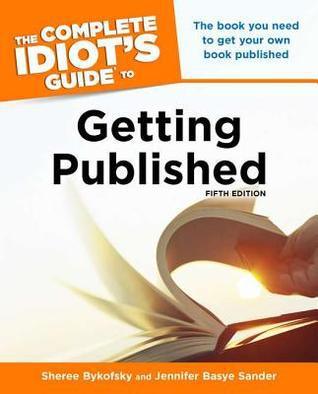
Sheree Bykofsky is the author, co-author and editor of more than twenty books, including the best-selling The Complete Idiot’s Guide to Getting Published (Pearson), now in its fifth edition.
http://www.amazon.com/Complete-Idiots-Guide-Getting-Published/dp/1615641270
http://shereebee.com/
http://www.goodreads.com/author/show/43497.Sheree_Bykofsky
ADD it to your “want to read” shelf here══►http://www.goodreads.com/book/show/12927072-the-complete-idiot-s-guide-to-getting-published
——————————————————————————————————–
★ RAFFLECOPTER GIVEAWAY ★
WIN ONE OF THREE COPIES!!
——————————————————————————————————–
ENTER: A Rafflecopter Giveaway
COME JOIN US at Modern Good Reads for a chat with Sheree on publishing, an agent’s role in today’s turbulent world of publishing, and working with NY Publishers.
July 17th-19th
Discussion here══► ASK AN AGENT w/Sheree Bryskofsky


July 10, 2013
Ask A Publisher ~ LISA RUTHERFORD, CEO of digital publisher COLILOQUY, July 11th-12th
Modern Good Reads Presents:
Ask A Publisher ~ LISA RUTHERFORD, CEO of digital publisher COLILOQUY
July 11th-12th
Discussion here═► Ask A Publisher ~ LISA RUTHERFORD, CEO of digital publisher COLOQUIY, July 11th-12th
BIO:
LISA RUTHERFORD is the co-founder and CEO of digital publisher Coliloquy. She has been e-reading since 2006 and is deeply passionate about using technology to create new types of books and tell stories in ways that weren’t possible on the printed page.
Lisa started off as an undergraduate English major from Pennsylvania, before making her way west to California. Most recently an entrepreneur and venture capitalist, Lisa was named an AlwaysON Top 25 Women to Watch in Tech and has an MBA from Stanford and an MA from the University of Chicago.
ABOUT COLILOQUY:
Coliloquy is a digital publisher focused on active and interactive storytelling. We leverage advances in technology to create groundbreaking new forms of digital content and innovative business models. Originally developed as part of the Kindle Developer Program, we launched in early 2012. Eighteen months later, we have over 30 authors under contract, and our books and apps are available across all tablet, phone, and e-reading platforms, including iOS, Android, Kindle, NOOK, and Kobo.
Coliloquy publishes a wide range of interactive series and standalone novels – from YA to adult suspense to nonfiction and everything in between. Recent projects have included:
HARD LISTENING, a mixed media memoir by an all-star line-up of literary titans, including Stephen King, Mitch Albom, Scott Turow, Amy Tan, and Dave Barry. The book interweaves, essays, fiction, email conversations, fun quizzes, and archived footage for a unique look inside these authors’ lives.
[image error]
GEORGETOWN ACADEMY, our “West Wing meets Gossip Girl” YA series, just wrapped up its first season in our new mini-series format and featured our popular choice point technology.
[image error]
KINGDOM KEEPERS INSIDER, an interactive app that invites readers of the Kingdom Keepers MG book series to help author Ridley Pearson write the seventh and final book in the series. Winners of weekly contests will be included in the final book published by Disney in 2014.

Some of our coolest technology implementations can be found in our interactive series
– Heidi R. Kling’s SPELLSPINNERS OF MELAS COUNTY (YAR) includes multiple pathways and a spooky magic trick in THE GLEANING
– Kira Snyder’s PARISH MAIL (MG/YA mystery) features twisting pathways and choices that unlock special scenes for careful readers
You can see a full list of our titles here:
http://www.coliloquy.com/productscat/titles/
ASK ANYTHING!
I’m happy to answer just about anything…our technology, authors, publishing trends, chief kitten officers, marriage, having it all, why Waynn is the best cofounder, pies, mistakes we made, and things we’ve done right…
SUBMIT MANUSCRIPTS TO WIN A READING FROM OUR EDITORIAL TEAM:
Coliloquy’s editorial team will read two unpublished manuscripts or self-published books.
Submit Manuscripts Here═► WIN ONE OF 2 PUBLISHER’S READING OF A MANUSCRIPT
Contest will be open from July 11th through July 14th. Winners will be announced the week of July 15th.


July 5, 2013
Book 3: The Aetherfae
Finally! The Aetherfae is live on Amazon. I’ll get a link created for it ASAP, but until then, just search under “Weald Fae.”


December 4, 2012
EPISODE 1: REFUGEES OF TALEMN ÁLAINN
For thousands of millennia, no Fae clan had established dominance over another. Border skirmishes had occurred over precious territory, but never had an incursion threatened even a single clan’s sovereignty. The sparring parties found themselves checked by other clans unwilling to allow any clan an advantage. The ancient Fae, immortal beings in existence for epochs, formed the core of each sovereignty. Masters of the elements, stoic and sober, the leaders grew complacent over time, satisfied with merely maintaining the status quo. After an age, and with the territorial borders stabilized, only one point of contention remained: what to do with humankind.
Unlike any species the Fae had previously encountered, the human race organized into civilizations, altering the land, constructing cities, and erecting monuments. Some Fae found the new species fascinating and somewhat similar to themselves. Others, however, grew repulsed by humankind’s disregard for the natural world. Dissention within the clans festered for centuries, leaving allies quarreling amongst themselves. Each clan governed its own comrades, some forbiding extermination of physical beings, others turning blind eyes to barbarous acts of torture and slaughter. Some clans preyed upon the superstitious nature of men, holding themselves out as deities and demanding that humans pay tribute to them through worship and sacrifice.
Against the counsel of most elders, some individual Fae sought to challenge the balance of power. Like a precursor of sorts to mankind’s pursuit of nuclear fission in the twentieth century, a few Fae sought to create the fabled fifth element, Aether. Aponi, an elder with the Ohanzee clan, had grown fond of humans and loathed the torment they endured at the hands of other Fae. She experimented with the elements of Earth, Air, Fire, and Water, until she discovered the precise combination. Suddenly, everything changed.
When Aponi failed to persuade Tse-xo-be, the leader of the Ohanzee, to force the Ometeo, a neighboring clan, to end its practice of human sacrifice, she split from the Ohanzee and attacked the Ometeo by herself. Powerful but vulnerable in her solitary quest, Aponi was nearly destroyed by Tonitiuh, an Ometeo elder. It was a lesson she heeded well. Aponi sought out like-minded Fae. From the original clans the world over, she persuaded many of her kind to join her and amalgamated a new clan. They called themselves the Seelie—the Fae word for “seeking good” and “enlightened one.” Angered over Tse-xo-be’s rejection, Aponi adopted the name Ozara.
It was the first new clan in an epoch. The Seelie covertly recruited new members, and the original clans remained unconcerned. A century passed, and the Seelie clan continued to grow. Ever patient, the Seelie kept to themselves, never challenging the territorial boundaries of others. Numbering in the hundreds, the Seelie changed that in 4,500 B.C.E. when they converged on the Gainjin, a small clan of Fae in Melanesia (present day Papua New Guinea). Some Gainjin had tortured humans for sport; the Seelie exterminated them. The Gainjin who survived either joined the Seelie or went into seclusion.
Over the next decade, the original clans experienced numerous defections but took no action. The elders viewed self-determination as an essential component of existence. Taking advantage of the clans’ inaction, the Seelie clan expanded its size and sphere of influence. For decades, the five most powerful clans, the Ohanzee, the Olympians, the Sidhe, the Ancient Ones, and the Jinn, avoided a confrontation with the Seelie. Their apathy set in motion a shift in power that forever altered the role of the Fae in the physical world
The Weald: 4200 BCE
The Ohanzee elders gathered near the portal, the Seoladán, awaiting the return of their leader, Tse-xo-be, and news from the clan parlay in Salastrau (near present day Fontainebleau, France). Wakinyan stood silently, ignoring the cold wind that blew strands of his long black hair across the sculpted features of his face. Patiently watchful, never moving or blinking, he listened intently to the river below as it slowly etched patterns into the limestone bluffs that lined the valley.
“You are concerned?” Sinopa asked.
Wakinyan’s face remained stoic. “Of course. You?”
Sinopa lowered her brown eyes and nodded. “I have memorized the sounds and smells of the Weald myself.”
With a faint nod, Wakinyan acknowledged what all the Ohanzee feared: the possibility that one of their own may one day force them out of the Weald. An eroded plateau in the center of Talemn Álainn (present day North America), and the location of the sole Seoladán on the continent, the Weald had served as the center of the Ohanzee territory for millions of years. Losing it had always seemed unfathomable.
“Perhaps not all is lost,” Sinopa said. “It is possible the Sidhe will join us.”
Wakinyan tightly pressed the lids closed over his light brown eyes, grimacing. “It behooves them to aid us, but I fear Danu will not involve the Sidhe. They fear Ozara. As do the Ancient Ones and the Jinn. Only the Olympians seem to recognize the threat, but they seek only to preserve their perverse relationship with humankind.” Wakinyan slowly opened his eyes and turned to Sinopa. “We should have acted sooner–destroyed Ozara when we could. Our passivity, I fear, will cost us the very thing we value the most.”
Paytah took physical form first, having passed through the Seoladán ahead of Tse-xo-be. Paytah’s face, normally devoid of emotion, provided the seven waiting Ohanzee elders with the answer they feared. Tears welled in his immortal eyes. Overcome with emotion and unable to speak, he spun, transformed into a tawny colored panther, and disappeared into the woods.
Tse-xo-be, appearing as stoic as always, assumed human form. He stood silently in the clearing atop the hill. Wakinyan’s square jaw dropped to his chest and his arms went slack. It was done: the Sidhe would not help.
“What of the Ancient Ones? The Olympians?” Sinopa asked.
Tse-xo-be shook his head.
Another elder, Nodin, asked, “Do we fight?”
Tse-xo-be shook his head again. “We are three hundred. They are three thousand. We will not prevail.”
“Do you believe Aponi would actually destroy us?” Nodin asked
“Aponi is dead to us,” Wakinyan said, shifting his gaze to Nodin. “Ozara will destroy us. You already know it to be true.”
“What are we to do?” Sinopa asked.
“Zeus offered us sanctuary,” Tse-xo-be said, “and Wakinyan and I a place on the Olympian Council. I believe the offer to be in good faith, but I suspect our acceptance will only bring Ozara’s wrath to their clan.”
“Attack the Olympians? Surely the other clans will stand against the Seelie if they invade the continent,” Sinopa said, a deep furrow forming above the bridge of her nose.
“No, I do not believe they would. Anuket, Asharyu, Cuanlin, Sherman, and Victoria have joined the Seelie Council,” Tse-xo-be said, allowing the Ohanzee elders a moment to ponder what those five names meant. The Seelie Council, numbering twenty ancients and an Aetherfae, had become the most formidable alliance in history. “The Seelie have exploited our nature: the clans’ distrust of one another and our singular desire to remain isolated and independent. While we lingered, observing the status quo, they changed the rules.”
Sinopa turned and stared into the distance, her dark eyes fixed on some infinite point above the flat-topped hills of the Weald. “They move against us now? How long?”
“In my existence, I have never before said this: we have no time.”
Sinopa turned back to Tse-xo-be, catching a glimpse of the resignation on his face. “Then what is our plan?”
“It is my desire to keep our clan intact,” Tse-xo-be said. “Be it a century or an epoch, we will reclaim the Weald. The Seelie alliance is built on the most fragile of foundations: that humankind will evolve beyond the petty desires and shortsightedness we have all witnessed from the species. In time, my friends, we will retake the Weald.”
“Into hiding then?” Wakinyan asked.
Tse-xo-be nodded. “Yes.”
One by one, the Ohanzee transformed into their natural forms and scattered across Talemn Álainn.
Copyright © 2012 Christopher Shields.
All Rights Reserved


December 3, 2012
EPISODE 2: RISE OF THE UNSEELIE – FALL OF ATLANTIS
Tse-xo-be waited patiently for Paytah’s arrival. Tse-xo-be stood motionless in a small, rocky clearing, surveying the sea around the western shore of Talemn Álainn. He had not seen Paytah in a century—not since he and Paytah had returned from Salastrau with news that neither the Sidhe nor the Ancient Ones would aid the Ohanzee with their defense against the Seelie takeover.
The Ohanzee, powerless against the rising power of the Seelie, had remained in hiding for over a century. Ozara had claimed the Weald for the Seelie Council, her dominance sending a clear message to every clan on Terra: none could refuse the Seelie. One after another, the Seelie forced each clan into submission. In time, only a few clans remained truly independent. The intentional torment and extermination of humankind had come to an end as the Seelie clan systematically stamped out the practice among the remaining Fae clans.
Some of the original clans attempted to form alliances, but many millennia of distrust undermined their tenuous relationships. The distrust ran deep: it was engrained in the Fae consciousness and prevented any agreement from lasting. The Seelie might have been vulnerable to a unified front if all clans banded together, but that did not happen. The twenty Fae on the Seelie Council, many of them former elders from the original clans, had plotted the Seelie rise to power in spectacular fashion. The Seelie clan continued to grow, and by 4200 BCE it openly recruited Fae from the original clans.
Tse-xo-be had long wondered about Paytah. Paytah and Ozara were both original elders of the Ohanzee and had been close friends for thousands of centuries. They, however, viewed humans from dramatically different perspectives: Paytah loathed the species as much as Ozara loved them. When she discovered the secret to Aether before Paytah, he lobbied the remaining members of the Council to destroy her, even suggesting the Ohanzee aid the Ometeo of the Yucatan. Tse-xo-be and the Council rejected Paytah’s proposition. The Ohanzee were not fond of the Ometeo’s barbaric practice of forcing human sacrifice, but the Ohanzee respected their sovereignty. When Ozara severed ties with the Ohanzee, changing both her appearance and her name, Paytah was devastated and angry. None of the Ohanzee could prevent him from leaving the clan, so they simply let Paytah go.
Tse-xo-be knew Paytah had been attempting to discover the secret of Aether and harbored trepidation over their meeting. He did not know whether Paytah had been successful in creating the powerful fifth element, and he was suspicious of the reason behind Paytah’s desire to meet him. Tse-xo-be did not have long to think about it, however. His summoner drew close.
He turned to the east when he felt Paytah take form beyond the mountain that circled the surf break. Gone was Paytah’s long black hair and brown eyes, the signatures of the Ohanzee when in human form. His skin, once a deep bronze, was fair. His hair, as silvery-white as a cloud in the morning sun, was short, spiked, and his eyes were now piercing blue and deeply set underneath a pale brow. In a silver robe, like those the Seelie wore, he nodded at Tse-xo-be, his old mentor.
“Tse-xo-be, it is good to see you,” he said.
“And you, Paytah—but your appearance…” Tse-xo-be paused. “You no longer use that name, do you?”
“Zarkus is my name.”
Tse-xo-be smiled and turned back to the breaking surf. He studied the crash of the waves as the roiling white water and the bursts of mist so starkly contrasted with the black stone they pounded, each volley of the sea carving just a bit more away from the stone coast. It was symbolic, he thought, of the old clans–their power had been slowly whittled away by the endless onslaught of the new. “Zarkus it is. Why have you summoned me? I presume it is to ask that I join the clan you have been building.”
Exuding too much pride and confidence, Zarkus said, “I am here to offer you the Weald.”
Tse-xo-be shifted his brown eyes to the unfamiliar visage of his old friend. “At what price?”
“The unification of my clan and the Ohanzee will shift the balance of power. Together we can eliminate the hegemony of the Seelie and restore your rule of Talemn Alainn,” Zarkus replied. “We have no interest in this place, beyond purging it of Seelie.”
Tse-xo-be knew from Zarkus’ words that he was not merely seeking new recruits, but building alliances. It also meant he did not know the secret to Aether. If Zarkus could conjure the fifth element, he would not need the Ohanzee–he intended to achieve by force what he could not accomplish with skill.
“What is it you want in return?” Tse-xo-be asked.
“You already know what we want,” Zarkus responded in a whisper.
“Indeed. And what of the humans? Are we to help with their extermination?”
Zarkus’ face contorted, tensing, his lips thinning into a flat line. His deep blue eyes filled with malice. “They are a pestilence, a dangerous and destructive life form. They spread and consume, damage and destroy—you are wise, Tse-xo-be. I know you must foresee the calamity they bring.”
Tse-xo-be felt the rage behind Zarkus’ words, sensed the loathing in his voice. Zarkus’ essence was clouded now, filled with darkness. For a dozen millennia Zarkus had despised humans. Tse-xo-be sensed something else, however: confidence—the kind of hope one has when he has calculated the solution to a lingering problem. Zarkus’ tone chilled his old mentor to the core.
“Zarkus, I do see the potential danger. I am not a fool. Extermination, however, is not required.”
Zarkus’ mouth fell slightly agape until the muscles in his jaw tensed, grinding his teeth with enough force to be heard over the waves. “They were a breath away from extinction already, and extinction is the fate that awaits all physical species. Why postpone the inevitable?”
“They survived,” Tse-xo-be said in a patient, matter-of-fact tone. “As with all physical species that do so, humankind has earned a place in Terra. Who are we to hasten their demise? Who are you, Zarkus, to interfere with nature, the very thing you hold most dear? Does fire not destroy forests and spawn rebirth? Do floods not wash away flora and fauna, yet leave fertile soil in their stead?”
Zarkus growled. “Those arguments have grown stale.”
“Stale, perhaps, but they are no less true,” Tse-xo-be countered, gently nodding his head.
“I came here as a courtesy, but I see I have wasted my time.”
Tse-xo-be nodded again. “Yes…yes, apparently you have.”
Zarkus’ eyes widened His nostrils flared. “A time will come, Tse-xo-be, when the Ohanzee are forced to take a side.”
“For your sake, my impetuous underling, I hope it never comes to that.”
Zarkus bellowed, “The Ohanzee will learn to regret your…” but before the last syllable left his lips, Tse-xo-be pinned him to the ground with his bare hands, snapping the bones in both of Zarkus’ arms.
“You fool,” Tse-xo-be said in a whisper, “have you forgotten who I am?” Tse-xo-be folded Zarkus backwards, breaking his spine, and lifted him into the air. “Mind your place,” he said, slinging Zarkus into the ocean over his shoulder.
Tse-xo-be shifted into Naeshura, his natural pure-energy state, and moved to the east. Zarkus, gasping and humiliated, healed and transformed into Naeshura. As he crossed Talemn Alainn, his anger grew. Tse-xo-be was stronger, Zarkus admitted to himself, but the Unseelie had greater numbers. Let him deny two thousand, he thought. One day Tse-xo-be will beg for my mercy, but I will have none.
In three hours, Zarkus reached the eastern coast of Talemn Alainn somewhere near the Lalonquin Islands (Present day Bahamas), then set his course east across the vast Atlantic to find his clan. They waited for him two miles off the western coast of Atlantis, exactly where they were supposed to be. Zarkus would have been happier with the Ohanzee along. Even though Tse-xo-be and the elders were in seclusion, they remained dreadfully powerful—a force not to be underestimated.
Zarkus arrived to meet his clan, and immediately ordered the forces to split and encircle the island—the first phase of a plan the Unseelie hoped would lead to the decimation of Atlantis and serve as a decisive victory against the Seelie. To the Unseelie, and Zarkus especially, Atlantis was an abomination—Fae living among humans, as humans. To Ozara and the Seelie, it represented a great experiment—a study in what might become. Over a century, the Atlantean Clan constructed the canals and cities, and worked to guide the human populace, some two hundred thousand, to live in harmony with nature. Zarkus reeled at the perversity of it: buildings of smooth stone, crafted by Fae and human alike, had no relationship to nature. Fae prancing around like humans? Revolting.
After quickly creating an Atlantean sailing vessel on the coast, the Unseelie sailed it into the port of Triaus. The glowing orange sun settled on the western horizon, just touching the southern slope of Mount Lazzio some ten miles in the distance, as the they crossed the port waters toward the primary canal entrance. Following the Grande Canal, a wide, stone-lined passage to Atlantis’ interior, the Unseelie advanced. Past the first elaborate lock of massive counterweight stones, they took human form, acting as casual visitors sailing toward the capital city to avoid raising any alarm.
There was no reason for any alarm after all. The humans on Atlantis knew nothing of the Fae, though many secretly lived among the populace. The humans fished the waters from vessels created by Fae and designed to take advantage of even the slightest breeze. The Atlantean Fae had paved the roads that linked each village on the thirty-two mile long island. Fae tutors educated humans on the workings of nature and the elements. Some humans had even engaged in the most dangerous of practices: controlling the elements. It terrified the Unseelie. To them, the once beautiful island had been adulterated by roads, canals, and cultivated fields. Nature, the Unseelie believed, had been bent to the will of a mortal species unable to exist in harmony with it.
Propelled by gentle winds that continuously blew in from the sea, the Unseelie vessel neared the stone dock below the village of Caspia, a fishing village some five miles from Poseidus, the capital city. Men and women cleaned the day’s catch with Fae knives, the best in the world. Earth aligned Fae taught humans how to process iron ore and combine it with nickel, chromium, and vanadium to produce steel more than five thousand years before other humans would learn to do so on their own.
Zarkus and five Unseelie ascended the intricately carved stairs to the village center. The stone passage transitioned smoothly from the dock through dry-stacked stone walls. Atlantean roses (more similar to Bougainvillea than true roses) of white and fuchsia hung in cascading boughs and filled the path with sweet floral perfume–they would be the first of several species to go extinct that day. The stone path opened to a granite archway, and beyond it the carefully constructed stone homes and shops of Caspia surrounded a small piazza. There, a Fae named Thaddeus greeted Zarkus. He briefly marveled at Thaddeus’ fine human form; bronze skin, light brown hair coiffed short in the style of all Atlantans, and massive gray eyes set wide in a chiseled face. A fountain burbled in an obsidian basin just feet from where Thaddeus stood.
“Travellers, welcome to Caspia,” he said, waving his left arm in an open gesture, palm up, the custom of Atlantean hospitality.
Zarkus repeated the greeting. He glanced at the setting sun, waiting patiently for it to disappear behind Mount Lazzio. Just a few minutes, he thought.
Humans gathered in the village’s gleaming red and black stone structures, enjoying meals, music, and kinship. All afforded by Fae interference, Zarkus thought. The stone masonry was far too precise to have been performed without Fae assistance. The mortals were adorned with material too fine to have been produced by human hands. Zarkus hid his anger as he scanned the village. The piazza and the homes around it were lighted by blown-glass lanterns. The Atlantean Fae built kilns and trained the humans how to create glass from silica, soda, and lime. Millennia would pass before humans elsewhere would discover the technique.
The Atlantean Fae, a clan of fifty, had shown the humans of Atlantis how to cultivate the volcanic soil. Hidden among mortals, the Fae brought the rains, regulated the temperature, and invented the tools that made the island-state rich in agriculture. Each year, the mortal population expanded their knowledge faster than any other civilization. The Unseelie believed the knowledge was too dangerous to pass on to the primitive Egyptians or the barbarians living elsewhere. Seeing Atlantis first hand, Zarkus was more determined than ever. It was worse than he had thought.
The moment the last glowing piece of the sun fell out of the twilight sky, Zarkus slipped his razor claws through Thaddeus’ ribcage, and set loose an internal fire. Caught completely off-guard, Thaddeus’ mouth gaped open, his eyes watered, and then his essence collapsed into a small white light. With a flash, the first Atlantean Fae had died. There were similar flashes in each village on Atlantis.
Two humans rushed at Zarkus, wielding weapons of fine Atlantean steel. As they approached, he transformed into a panther equal in size to a large horse. The human attackers trembled at the sight of his snarling, growling transfiguration. Their hearts raced, fueled by adrenaline so powerful Zarkus could smell it. Fear produced an intoxicating smell, but the emotion itself, leaking out of their human brains like nectar, affected Zarkus like an opiate. He savored their emotional offering for a few seconds before he leapt, slashing and biting.
The first scream of the Caspian victims lasted for only an instant. The Unseelie used a powerful blast of electrical energy, a soinneán, to subdue the people of Caspia. The energy entered each human’s nervous system, dropping them all into semi-conscious heaps of flesh.
Pity to leave them so soon, Zarkus thought, but they will be waiting when we return from the capital. More important things to do.
If the other Unseelie companies had been as successful, twenty-three Fae were now dead, leaving only twenty-seven Atlantans in the capital. The Unseelie returned to the vessel and cruised to Poseidus. Zarkus and his company, the oldest and most powerful Fae of the Unseelie clan, had to infiltrate the city and destroy Poseidon, the ancient leader of the Atlantans. The Unseelie drifted five miles along the canal as it wound through verdant fields of squash, grain, and grapes, and then past groves of olives. At the third lock, the Grande Canal entered the capital’s outer ring.
Designed by Poseidon himself, the City of Poseidus lay at the base of three rolling, wooded hills and was surrounded by channels of water—Poseidon’s element. A broad canal ringed the capital center. The center was a half mile in diameter and contained public buildings, baths, piazzas, amphitheaters, temples, and a thriving marketplace. Constructed of white marble and several stories tall, the pillared buildings glowed under the night sky from a thousand glass lanterns. The few non-Atlantean humans who visited were always awestruck. Bridges linked the city center with the second ring of the city, where residences of black and red stone flanked cobbled paths planted with olive and lemon trees. Balconies along the paths displayed dozens of species of Atlantean Rose planted in finely crafted pots of a thousand designs. Another wider canal separated the second and third rings of the city. The outer ring, tucked inside a thick, heavily ornamented stone wall, contained the glass shops, the metal furnaces, the artisans, the fabric mills, and more residences. The Atlantean military housed guards in the outer ring, where sentinels patrolled the parapet atop the wall. Atlantis had never been invaded—no human army dared.
Past the first ringed canal, the Unseelie vessel caught the perpetual current that moved the canal waters, and the vessels in them, to all parts of the city. Inside the first ring, Zarkus relaxed. No alarm had been raised. As he approached the center ring, he sensed Poseidon’s location: he waited ahead in the Senate building. A vast structure of smooth marble columns and a domed central hall, the Senate was the most advanced building in the world. Twelve Fae also waited in close proximity to Poseidon. The five council members and seven guards, Zarkus mused. No match for us.
The remaining Atlantean Fae were scattered about the city center. Getting to them all before an Atlantean changed into Naeshura and disappeared through the Seoladán would be difficult, but not impossible. The Seelie were enthralled by the experiment of Atlantis and frequently visited in great numbers. The Atlantean Fae had grown accustomed to visits. As long as the Unseelie maintained human form, the Atlanteans would suspect nothing until it was too late.
Alighting onto the stone pier at the capital center, Zarkus and his assassins made their way to the Senate. Joined from the west by a contingent of fifteen comrades and from the north ten more, Zarkus had the numbers. From each of the island’s canals, Unseelie Fae filtered into the capital and quickly located each Atlantean Fae. Through the great hall of the Senate, a human guard wearing a bronze breastplate over a deep blue tunic with gilded stitching led the Unseelie to Poseidon’s chamber.
The broad, circular room lit by glow of numerous flames reflecting off the gleaming marble walls was beautiful, Zarkus admitted to himself. Definitely the work of Fae—the engineering was beyond human capacity. Poseidon, cloaked in a flowing expanse of dark blue cloth, raised a watchful eye as Zarkus strolled to him. Zarkus hid his discomfort…and his fear. Poseidon was twice as old and twice as strong. Even though Zarkus knew that his mentor, Tse-xo-be, was far more powerful and had trained him well, Poseidon still posed a danger. He steeled himself for the confrontation.
“Poseidon, my old friend, I have travelled to marvel at the splendor of Atlantis.”
Poseidon extended his arm, palm up, in the traditional greeting, but he was uneasy. He scanned the visiting Fae. His uneasiness grew as he realized they came from dozens of different clans but wore the silver robes of the Seelie.
“Do not be alarmed old friend, Ozara sends good tidings.” Zarkus bowed at the waist, both arms stretched outward with palms up—the Seelie greeting. Poseidon appeared to relax. His words rang in Zarkus’ head, but no human heard them. “Paytah, you have joined the Seelie?”
“Yes, I have. Ozara is most convincing. She told me a visit to Atlantis would quell my fears…that it would demonstrate the potential for both species to work together. You must forgive me, though. I, like Ozara, have taken a new name. It is Zarkus, now, my old friend.”
Poseidon’s cobalt blue eyes fixed on Zarkus as he considered the possibility, stroking his white beard between thick fingers. “Welcome, Zarkus,” he said, his bass voice echoing back from the domed ceiling. It was the signal.
Zarkus channeled Quint and forced the orange substance into Poseidon’s chest. It was a move Zarkus had practiced ten thousand times, and he succeeded before the ancient Fae could react. The Unseelie elders joined instantly and lashed out. In moments, the chamber filled with flashes of dying Fae. Two Unseelie perished: Beffin, a hulking blond warrior Zarkus had recruited from the Sidhe, and a guard, Thorin. Two deaths were costly, but the Unseelie had superior numbers. The Atlantans fell in quick succession. Poseidon, clutching the gaping wound in his muscular chest, countered Zarkus with a wall of water while blocking a second assault. Zarkus fought to keep solid footing, and pressed another attack. A young Unseelie guard advanced from the side, channeling lightning, but Poseidon blocked it. Piercing the guards barrier, Poseidon connected with the water in her physical body and turned it to steam. The Unseelie shrieked in agony, her skin expanding into a fleshy balloon, then splitting, before she disappeared in a white flash.
Only two Atlanteans remained: Poseidon, and Clarisse, a seven hundred thousand-year-old Earth aligned Fae who had crushed two Unseelie between massive slabs of marble. The ten remaining Unseelie focused their attacks on her. Lightning pierced the dome and struck her barrier, sizzling and snapping. Chunks of marble glanced off her energy barrier. Cassandra, a raven haired Unseelie, crossed the space in a blur, lashing out with burst of air that sliced through the granite columns supporting the roof. Cassandra pierced Clarisse’s barrier, severing her legs. Crumpling to the floor, Clarisse looked up to Poseidon, tears rolling down her oval face, and focused her mind on the depths of earth below them. The ground beneath the city shook as Clarisse forced a fault to shift violently. The foundation of the Senate buckled as she flashed out of existence. The domed room collapsed on the Fae inside, buying Poseidon a few precious seconds as the Unseelie shifted into Naeshura to avoid being crushed. Poseidon sensed twelve hundred Fae converging on the city, but not one of them was Atlantean. Frantically, he searched with his mind—his clan was gone but for him alone.
“I will see you destroyed for this,” his voice rumbled in a guttural scream. Poseidon, last of the Atlantean Fae, shifted into Naeshura and forced his way into the Seoladán, leaving Atlantis to the Unseelie.
Zarkus and the Unseelie escaped the Senate to find buildings collapsing all around them. Humans were scrambling for boats, but with no Fae to control the canal waters, the vessels bobbed helplessly, overladen with screaming cargo.
“We must act quickly,” Zarkus commanded his clan. “Poseidon escaped—he will bring reinforcements.”
Waiting offshore, forty Earth aligned Fae settled deep below the ocean surface. The Unseelie intended to send a message—the next phase of the plan would surely do it. Working from the north end of the island, they flattened it to the sea floor.
Zarkus and the Unseelie Elders watched as the great island slowly sank beneath the waters of the Atlantic. The suffering and drowning of the human inhabitants filled Zarkus with rapturous pleasure—he tingled all over. In an hour, nothing but the peak of Mount Lazzio remained. A few minutes later, even it sank below the waves. The Unseelie permitted a few humans to survive to spread the tale, to instill fear in the rest of humanity.
Word spread among the clans of the world: a new clan, the Unseelie, had risen to challenge the Seelie. Ozara and the Seelie Council were devastated by the news, shocked that the Unseelie had amassed such numbers. They plotted the next move. The original clans were caught between two superpowers and feared collateral damage. Before the Seelie could exact revenge, a new threat arose from one of the original clans in the Middle East: Ra, the Jinn leader, learned Aether.
Copyright © 2012 Christopher Shields.
All Rights Reserved


November 27, 2012
EPISODE 4: THE SECOND BATTLE OF THE AETHERFAE
The deep wound on Sarin’s chest healed and he shifted forms, from black leopard to human, as he crouched on the charred field. Twenty minutes earlier, it had been a lush green pasture warmed by the mid-day sun. Within minutes the war left it scorched and completely devoid of life, except for the armies locked in battle. Writhing black clouds blocked out the sun. Only the occasional bolt of lightning, the glow of fire, and the flash of dying Fae lit the mayhem. In a fraction of a second, Riel closed the two hundred yards between them, in the form of a massive, snarling jackal.
A wall of raging, swirling fire three hundred feet wide raced toward the Unseelie front line, followed by a curtain of violent, buffeting wind that caused Sarin to see double. A mortal would have been disoriented by the vicious changes in air pressure. Even the young Fae were temporarily stunned, but Sarin had experienced an attack of that magnitude before. He relied on his Fae senses to track Riel’s movements.
All around Sarin, Seelie were dying, and across the field, even more Unseelie had met their end. Unlike mortal wars, which left the bodies and body parts of the dead strewn about in a grisly thatch, the Fae disappeared in a bright flash when they died. The wounded Fae lying scattered across the battleground were trying to heal themselves while avoiding a lethal blow. Tarsha, an Air inclined Seelie, did not make it. Sarin was saddened when her shriek abruptly ended and Tarsha’s essence flashed out of existence. Young for a Fae, at only 25,000 years, she was nonetheless a formidable warrior who had joined the Seelie from the Jinn of the Middle East. She had been his friend.
The stronger of the two battling clans, the Seelie, held strong the front line, even though oldest and most powerful among them were guarding the flanks, picking off younger Unseelie each time the dark Fae attacked from another angle.
Sarin, ever patient, waited for Riel to commit to an attack. Riel was quite skilled, a veteran of the last Fae war, but he was also aggressive. Too aggressive. He’d scored a hit, a flesh wound that slowed Sarin down, but it was a wound that Sarin had allowed, a calculated tactic.
Two young Unseelie forced lighting from the dark, roiling sky. Sarin trained his eyes on the trajectory of the bolts, giving Riel an opening. When Sarin blocked their attack, his old friend committed to finishing his assault and lunged. Sarin waited until he felt Riel’s massive canines pierce the skin around his right forearm. He strengthened his energy barrier, preventing Riel’s teeth from sinking too deeply into his flesh, and curled his left hand into a fist before transforming it into a boney dagger. Spinning underneath and between the Riel’s legs, Sarin slipped the point deep into his chest, to the heart, and Riel collapsed on top of him.
“I’m sorry brother,” Sarin whispered, as he shredded the Unseelie’s organs from inside his body.
Riel struggled to close his fangs on his adversary’s throat, but Sarin’s barrier was too strong. Realizing the trap had been sprung, Riel fought to dislodge Sarin’s hand and heal the damage. He struggled in vein; it was a mortal wound, even for a Fae.
Riel’s body relaxed and he shifted into human form. Strikingly handsome, like all Fae males, Riel’s blue eyes locked on to Sarin’s face.
“This is not your fault, my clever friend. You were always stronger than me.”
Guilt welled up in Sarin’s chest, but he kept his hand in place, gripping Riel’s tattered heart. “I will make it quick, brother.”
Wincing through the pain, Riel forced a smile. “Eighty thousand years – if I must die, I take comfort that it is by your hand, old friend.” He labored to fill his lungs. “You know, Sarin, the humans will bring nothing but disappointment and destruction – the Egyptians did that three thousand years ago, the Romans are worse today – it will not end until they’ve destroyed everything in this world we care about. You may have beaten me, but you chose the wrong side.”
“There is only one side I could have taken, Riel. The physical world belongs to them, not us.”
An explosive burst of green energy lit the sky, preceding the hideously familiar flash of another dead Fae. At once, the fighting stopped and the clouds began to lighten from black to gray. Sarin and Riel, like every other Fae on the battlefield, stared beyond the hill, wondering who had prevailed. Dagda, the second Aetherfae, was the Unseelie Clan’s greatest hope of defeating their rivals. When the melee began, he followed his Seelie counterpart, Ozara, away from the main conflict. She’d taken only the human, Aeden, with her.
Sunlight filtered through openings in the dissipating clouds as every immortal waited silently to learn the outcome. The answer came quickly. In bright flashes, three-dozen Unseelie shrieked and popped out of existence as a deceptively fragile-looking veil of green energy encircled those who remained. Ozara settled in the middle of the field, calm and confident. Her blazing red hair rode a breeze that drifted over the ruined space, and her amber eyes surveyed what was left of both clans.
Riel fought for breath, his punctured mortal lungs only partially filling. Sarin felt the struggle against his fingers and looked down once again. They had been friends once, both members of an ancient clan that claimed the black forest of central Europe, but each had taken different sides.
“My friend, it looks as though you’ve won the day, but the victory will prove hollow – mark my words, this is not over. Now, if you are my friend, you will kill me quickly. Don’t force me to exist another moment under her tyranny. I beg you.”
Sarin nodded, and said, “Good bye.” He channeled fire and set it loose inside his rival’s chest. Riel’s grimace turned to a smile and he seemed at peace the moment before his essence collapsed forming a tiny sphere of bright white light in Sarin’s outstretched palm. Then, like the others, he ceased to exist in a flash.
Sarin stood, his hooded gray eyes fixed on Ozara. She nodded. Her face appeared sad, even in victory. In her arms she carried the body of the human, Aeden. She looked down at him. “This Maebown destroyed Dagda. The war must end.”
When the terms for peace had been reached, and Ozara’s newest edicts laid out, the Fae from both clans shifted into their natural forms, invisible to human eyes, and departed the scarred field.
Copyright © 2012 Christopher Shields.
All Rights Reserved