Ninie Hammon's Blog
August 16, 2014
Ranked #1 on Amazon Kindle Top 100 List! (So What?)

I have to write this REALLY fast. Please pardon hte typos; don’t have time to edit. Things change QUICK on Amazon and I have to post this while it’s still true.
In the newspaper business, we used to call stories like this a “Hey Martha.” That’s defined as: a story so stunning Billy Bob actually sets down his beer and yells, “Hey, Martha…you gotta see THIS!”
Here it is…are you ready for it?
Five Days in May just hit #1 on the Amazon Top 100 Free Books List.
Wait, hold on, there’s more. It was listed #1 in Psychic Suspense, #1 in Inspirational Fiction and #1 in Contemporary Religious Fiction. That’s 3—count them—THREE categories! None of my books has ever been on the Top 100 Amazon Anything List. And Five Days in May just went free yesterday–#1 in only 24 hours! Can you believe it? Just 24 hours!

Pause here to catch my breath. Look out at the crowd of family and friends and tweeps and strangers who accidentally wandered onto this blog and can’t find the little X to bail out.
I gaze into their faces, expecting to see mirrored there the excitement that’s on my own. That’s not what I see. What I see reminds me of a sign on the wall in a coffeehouse in Perth, Scotland: “Whatever happened to you today, keep in mind there are 1.3 billion Chinese who flat out don’t give a rip.”
Oh, you guys care. But not a whole lot, and most of you are thinking: “Ninie, get a grip. It’s not like this is the final sign of the Second Coming.” And you’re right, of course. (I looked up, didn’t see a rain of frogs. We’re good.)
Getting a book into that coveted #1 slot is a big deal ONLY to the book’s author. It’s a ho-hum to everybody else. Life as we know it on the planet will not be altered in any way by this accomplishment. In truth, it’s one of the most ephemeral accomplishments in publishing. While I’m writing these words (I’m typing as fast as I can!) some other book has probably already bumped my book down to second place.
Sobering.
Gut check here: Ranking #1 on Amazon’s Top 100 List does not matter diddley squat. Fun, but of no lasting consequence. But something way more important has happened that does matter, something I’ve wanted all these years, yearned for, worked and struggled for. Readers all around the world will plop down on a comfy couch on some sunny/rainy/foggy Saturday morning/afternoon/evening. They’ll snuggle into a pair of warm slippers, open Five Days in May and read these words:
 “It dropped out of the sky at 3:41 p.m. central daylight time on Friday, May 10, 1963 into a field in southeastern Oklahoma eight miles west of Tishomingo. It was so big you could have seen it from Tishomingo if it hadn’t been dark as midnight there, hailing hunks of ice the size of hockey pucks. But you could see it from Madill, eleven miles away. Well, the top of it anyway. And the monster super-cell thunderstorm that birthed it, you could see that for more than a hundred miles in every direction.
It didn’t look like a tornado, though. At well over a mile wide and eight miles tall, it looked like a bubbling wall, like a curtain the greenish-purple of a day-old bruise coming down onto the stage after the last act of a play.”
Thousands of readers are settling in, willingly suspending their disbelief, easing down into a world I created, walking around in it, having a look-see. They’re meeting people who are as dear to me as family. Getting to know them, like them and care what happens to them.
And that’s enough. Way more than enough. If I don’t sell a single book after this free run is over, that’s fine. (Who gets into the writing business for the money? Please.) I’ve planted a seed now. If the seed’s good enough, it’ll grow. All I’ve ever asked is a chance to plant a seed.
So, do rejoice with me over my TEMPORARY status as a best-selling author. Because it symbolizes what really does matter. People are reading my book.


August 13, 2014
Five Days in May wins Mom’s Choice Award
 TOOT! TOOT!
(That sound you hear is me tooting my own horn.)
May I have a drum roll, please? A little louder…building …. louder… now a final Boom!
And in the silence that follows, a small voice says: …uh…did I tell you guys that my inspirational suspense novel Five Days in May JUST WON A 2014 MOM’S CHOICE AWARD!
See me bust out in the Ninie Happy Dance—sort of a gangnam style meets Napoleon Dynamite…on hot tar…barefoot…drunk.
The award is granted in both both silver and gold medallions, kind of like the Olympics—and I didn’t even have to sing the National Anthem! The information they sent me says “Mom’s Choice Award honorees have been featured on Good Morning America, Oprah, The View, Fox & Friends, Discovery Channel and C-SPAN.” I’ve been sitting by the phone, but so far, it hasn’t rung.
Ok, I’ll stop clowning around. A Mom’s Choice Award is the real deal. I’m excited and I wanted to share the good news with my friends–and the (inappropriate?) humor helps take the sting out tooting my own horn.
I’m sure you’ve seen the blue Mom’s Choice Award seal on all manner of things for years—books, fiction and non-fiction, for children and adults, games—even toys. I entered my book in the award competition because I respect what the organization stands for and I knew its reputation would make a statement to potential readers about the nature and quality of my book.
“The Mom’s Choice Awards® (MCA) is globally recognized for establishing the benchmark of excellence in family-friendly media, products and services. Thousands of award entries from more than 40 countries are evaluated by a panel of judges bound by a strict code of ethics and the evaluation process uses a propriety methodology in which entries are scored on a number of elements including entertainment value, originality, and overall quality. Judges are looking for fiction and non-fiction books that help families grow emotionally and spiritually; are morally sound and promote good will; and are inspirational and uplifting.”
The bottom line is that the Mom’s Choice Award seal on my book assures readers that it’s clean—no profanity—adult entertainment. The seal does NOT mean that the book is devoid of character and personality, squishy-pure pablum. If it were a movie, Five Days in May would be rated at least PG13 for adult themes and situations. My young teen grandsons are not allowed to read it. People suffer and die in Five Days in May. But there are spiritual themes that lift the book above the basic “good clean story.”
Five Days in May is about four people, four death plots, five days and a killer tornado. http://bit.ly/9eFiveDaysMay
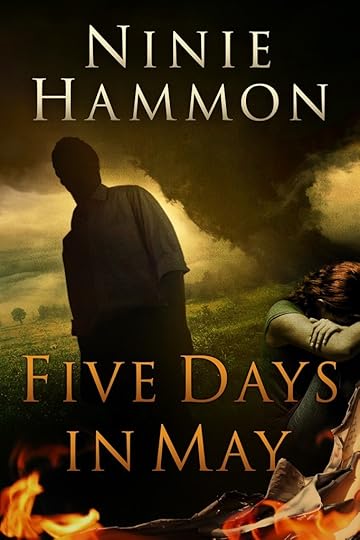
A twister’s coming. A big one, a monster F5–a mile wide and eight miles tall.
The writhing finger of death hurls across the prairie toward Graham, Oklahoma, one Friday afternoon in May, 1963, on a collision course with the lives of 4 people—each of whom has already planned a personal rendezvous with death in some other form that day.
In Jonas Cunningham’s mind, what he’s planning isn’t murder. The handful of little white pills that will free his precious Maggie from the fog of Alzheimer’s is a gift, a final act of unconditional love.
Jonas’s 16-year-old granddaughter, Joy, isn’t planning “murder” either. She’s pregnant and sees only one way to keep from shaming her family. Secrets like that are hard to keep though, in a small town.
Joy’s father, Rev. Mac MacIntosh has lost his wife and his faith and on Friday, he plans to commit professional suicide—not just leave his church, but abandon his call to ministry.
Princess has an appointment with the Reaper on Friday, too, one she’s been staring down for 14 years. At 5 o’clock, the state of Oklahoma will strap her into an electric chair called Sizzlin’ Suzie and turn on the juice.
But as the strange, psychic death row inmate meets daily with the minister during the final 5 days of her life, everything in both their lives begins to change. Princess knows—about Mac’s life and family. And sees—the Big Ugly coming to eat up the world. She sees other terrible things, too, and is determined to carry to her grave an incredible secret about the little sister she confessed to beheading a decade ago.
When the savage tornado roars with a sound like gravel in a blender into their small prairie town on that May Friday, all 4 of the people who’d penciled in “death” on their calendars actually do confront eternity.
But none of them comes to the crossroads of life and death by the path they’d planned or leaves with the result they expected.

Shortly after Five Days in May was published, Publisher’s Weekly, the “book industry Bible,” provided the book a starred review under the headline “A Great, Gripping Read.” The review said “Five Days in May has a well-woven storyline and wonderfully rich characters. It’s a fine story about love and sacrifice that will hook readers to the end.”
So there you have it. Social media makes it possible to share life with your friends—both the sadness and the triumphs. I share humor here every day. I’ve shared sadness, too, sometimes. So I hope you’ll rejoice with me over this accomplishment. I’m glad I entered the competition and VERY pleased that I won.
The last time I won anything was in a cake walk in 7th grade. I got the grand prize award—the pineapple upside down cake with cherries on top. And I have to tell you, if I had to choose which award I’d rather have in my hand right this minute, I …
(Sorry…it’s that inappropriate humor thing again.)
June 26, 2014
Three ways to lead Amazon search bots to YOUR book
 A NEWBIE’S GUIDE: NOVEL MARKETING FOR DUMMIES PART 3
Whenever my husband and I have time to kill in London, we pop up out of the Knight’s Bridge Tube Station (like prairie dogs checking for coyotes) and step beneath the big green awnings of what is arguably the world’s most famous department store: Harrods.
Occupying a full city block of some of the priciest real estate in the known world, the store is home to 4.5 acres of the most exquisite hats/shoes/coats/food/toys/furniture /cosmetics/jewelry/whatever-else-you-can-think-of. That’s why my husband and I go there—for the expensive merchandise. Oh, not to BUY the stuff. Are you kidding me? I couldn’t afford a Harrods plastic bag to put a sandwich in. No, we go there to play a game.
At exit #7 we synchronize our watches. We must return to that spot in exactly 30 minutes. During that time, we race around like lunatics all over the store’s seven floors—because whoever shows up at #7 with a cell phone picture of the MOST EXPENSIVE ITEM (excluding jewelry) wins the game.

Not a Formula One…a mere Aston Martin Cygnet.
The last time we played, I thought I had him. I’d found a painting with a price tag of £90,000. (With the exchange rate at the time, that was roughly $135,000.) But I groaned when Tom handed me his phone—on the screen was a picture of a FORMULA ONE RACECAR … for a measly £2.7 million.
How did he find that car? We’d both frantically searched the store with the same product goal in mind, but I never saw it. I’d wager that the 15 million customers who assail Harrods every year have a product in mind, too, so in a store that big, how do any of them ever find what they want?
 And Harrods is a hairball beside Sasquatch compared to Amazon, a retail behemoth that won’t even disclose how many sales it makes! Folks whose arithmetic skills didn’t stop at the multiplication tables have done some educated calculations, though, based on the numbers Amazon does release. Best guess is that the company sold roughly 368 million items during the 2013 Christmas season. On Cyber Monday, customers were snapping them up at roughly 450 items PER SECOND. The store shipped enough merchandise during the season to deliver an item to every household in America.
 Amazon’s not telling how many eBooks zoomed out there into customer Kindles last Christmas, either, but it has reported that more than 150 KDP authors sold more than 100,000 copies each.
We’ve talked in Driftwood Marketing about dividing the tasks of book marketing into four bite-sized chunks. Product—making your book excellent. Store—positioning your book where customers can find it. Promotion—making enough noise that customers notice you. And Sales—pricing and strategies to entice the customer to buy, buy, buy.
In my last blog, I talked about categories, about slotting your book into the proper “department” in the Amazon store. This week, we’ll finish our discussion of store by talking about how to get noticed once you’re there, using: keywords, book description and Author Central.
Customers use Amazon’s category lists to find the department in the store with the kind of books they’re seeking: mystery thrillers and suspense, romance, scifi, etc. So if you’ve done your homework and have selected the perfect category for your book, you’re sitting pretty—right? Not necessarily.
 Let’s say your purple rubber duckie has been properly slotted into the Toy Department of Harrods … but the sales clerk stuffed your duckie between a gigantic Pooh Bear and a selection of Barbie doll dresses way back in a corner. Truth is, most customers will browse the big merchandise tables by the front door and never make it to the back of the store.
Same with Amazon. Many customers skip the category system altogether and go straight to the “front tables”—the search engine. They type in exactly what they want and instantly page after page of inspirational-Amish-paranormal-zombie-steampunk-fantasy-romance books appear on the screen. What’s important to know here is that 85 percent of customers stop looking at those search results after the first two pages.
Want to make a sale? Then your purple duckie must be smack in the middle of a front table in Harrods and your book must appear on the first two of pages of Amazon search results. Don’t know about duckies, but the way you get your book to the front in Amazon is with keywords, book description and Author Central.

Ok, so this image has nothing to do with keywords. It was just too cool to pass up!
1. Keywords
Amazon allows you to select seven “search” keywords or phrases when you upload your book. So, I need to pick keywords that relate to the content of my book—right? For Five Days in May that would be … let’s see… there’s a tornado in it and a death row inmate about to be executed and a woman with Alzheimer’s. Hmmmm. The keywords should be: tornado, death row, execution, Alzheimer’s, euthanasia, death penalty and … Oklahoma! Right?
In the words of that great philosopher and theologian Rocky the Flying Squirrel, “Wrongo, Moose Breath.”
You must view keywords from the reader’s NOT the writer’s perspective. What words would a customer type into Amazon’s search engine if he were looking for a book like Five Days in May? How many readers are looking for a fiction book about the death penalty? About Alzheimer’s? Do I honestly believe thousands of Amazon customers are diligently typing “tornadoes” into the search engine?
Look for the general themes in the book. The keywords I did select for Five Days in May are: inspirational suspense, contemporary fiction, psychological suspense, psychic paranormal, crime fiction, women’s fiction. (Plus “small town” because it was required to get the book into the right category.)
It’s not like the best keywords are some closely-guarded secret. Amazon will cheerfully TELL you what the most-searched words are. Just type a word you’re considering, like “suspense,” into the search box and the dropdown will list other words customers combined with it to find what they were looking for.
2. Book description:
Your book description has a dual purpose. It must be slam-dunk perfect for two totally different audiences: readers and Amazon’s search bots. That is reeeeally tricky. In 4,000 characters, you have to seize the interest of a browsing reader AND jam in your seven keywords so the search bots will prominently display your book. Make your description a keyword landfill and the bots will find you but the reader directed to your book will think you’re an idiot; make it a keyword-free master sell-job and Amazon won’t send any customers your way to read it. But hey, you’re a writer! Crafting elegant prose is what you do!
3. Author Central page
Please tell me you have one. If you don’t, stop reading right here and high tail it to Amazon and build one. It is your “face” on Amazon, to reveal who you are to readers—with a bio, pictures, video, blog posts—whatever. Readers buy from people they like so be engaging. Mine begins: “I think I might be able to grab and hold your attention here if I set myself on fire. That’s probably the only way, though, and …” Don’t pass up all that free advertising.
There’s another equally important reason for your presence there. You can feed the search bots more keywords in the Back Flap, Inside Flap, From the Author and Author Bio copy on Author Central.

This is the description of my book, Black Sunshine, using Amazon’s HTML coding.
DON’T enter your book description through Author Central, though. Enter it in that idiotic little box on the dashboard you see when you upload your book. You get more words there. AND you can enter HTML coding so you can use bold, italic—even Amazon orange—to make your description stand out from the crowd. Amazon has its own HTML coding, but you can go online and find out how it’s done.
So…
“Product” is all spiffy? Check!
“Store” is set up to draw customers? Check!
What’s next?
Why shouting, of course. (AKA promotion.)
Write on!
9e
April 30, 2014
Two Things You MUST Get Right: Categories and Keywords
 A NEWBIE’S GUIDE: NOVEL MARKETING FOR DUMMIES PART 2
You spend hours thumbing through the catalogue and finally find a picture of exactly what you want—a pink dress with orange stripes and no sleeves in a size 8. So you flip to the order page. But the dress isn’t there. In fact, you can only find three possible selections. One is “fashion apparel > dresses > summer.” That’s not it! Then there is “pink dress” with a list of seasons for you to select. The third option is in the category “women’s clothing” where you can find “dress > stripes >orange.”
Then you notice that there’s a blank space at the bottom of the page of selections where you can fill in a couple of words. But what words? Will typing in “pink” or “sleeveless” or “size 8” with one of the three possible selections get you what you want? Even more maddening is that you can see testimonials of smiling customers who bought the dress! And their completed order forms say: “pink dress > orange stripes > no sleeves > size 8!” How in the Sam Hill did those people use one of the three possible selections on the order page—coupled with some “unknown” words written in at the bottom—to come up with the correct order? And what kind of store lists a product on customer pages that you can’t order from the pages in the back?
The answer to that question, boys and girls, is: The Amazon Kindle Store. Welcome to the world of categories and keywords.
For those of you popping into this blog for the first time, we’re in the middle of a discussion of Driftwood Marketing—which is a diabolically simple method of dividing all the activities involved in marketing a book into four categories: Product, Store, Promotion and Sales.
I said in my last blog on Product that next I’d tell you all about Store. But that’s not going to happen. It’d be easier to jam a sperm whale into a fish tank than to fit the information I’ve accumulated under the heading “Store” into a single blog post. (I can never fit my carry-on into the overhead luggage compartment, either—there’s a lesson in here somewhere.)
For my purposes, I limited “store” to Amazon, since it is the 100-pound gorilla in the book marketplace. For authors, the single most maddening attribute of our big monkey friend is categories and keywords. One marketing expert wrote that the dashboard categories “are not exactly identical to the customer categories.” You could say that. You could also say that the dashboard categories “only vaguely resemble” the customer categories. On a clear day. In good light. When you’ve just cleaned your cheater reading glasses.
For those just starting out, here’s the drill: when you upload your eBook, Kindle Direct Publishing allows you to pick two categories where the book will be listed. It’s your job to figure out where Loyal Reader would look if he wanted a book like yours.
Let me stop here in the explanation of the process to share with you a great and profound truth. Are you listening? Write this down: If you don’t get this part right, you can lean over and kiss book sale success goodbye. Nobody will ever read your book because nobody will ever FIND it unless you slot it into the proper categories.
The categories I’m talking about live in the left margin of an Amazon book page. Scroll down to Kindle Store, Kindle eBooks and you’ll find a gi-normous list.

Three things to note here.
One: the numbers in grey beside the categories tell you how many books are listed in that category. Big numbers are not a good thing—at least not for the little yellow minions of us out here who aren’t instantly recognizable names to hordes of readers. Pick a big category with thousands of competing books and you become Waldo at a red-striped-shirt convention. You have to keep narrowing categories down until you find one with a small enough pond that your book has a shot at big-fish-dom. Though the number of readers who click through to those sub-divided categories is smaller, those folks are buyers, not browsers. They know what they want and when they see it, cha-ching!
Two: you want a small category so you also have a shot at showing up on one of Amazon’s lists: Best-sellers, Hot New Releases, Movers & Shakers, etc. The best strategy for the short kid in the back isn’t to jump up and down. The best strategy is to figure out a way to get to the front row. Those lists will put your book in the front row.
Three: Lots of readers ignore the category listing on the left of the page altogether and merely type words into the Search box associated with the kind of book they’re looking for. You want the seven keywords you enter into the dashboard to be those words!
 I went through this process and figured out that the category best suited for one of my books was: Kindle Store > Kindle eBooks > Mystery Thriller & Suspense > Suspense > Paranormal. With 1,801 books, the category is big enough to attract lots of lookers and specific enough to find a buyer. (I could have gone down one more level to Psychic, but that puddle has only 275 fish.)
Next, I signed into KDP to select my chosen category from the dashboard. You know where this is going, don’t you. That category was nowhere to be found in the dashboard selections. So what did I do? I used the empirical scientific method of the ancients: I guessed. I selected a category with words “similar to” the words in the front, and the next morning I scanned through all 1,801 books in the Kindle Store > Kindle eBooks > Mystery Thriller & Suspense > Suspense > Paranormal category to see if my choice of words had succeeded in getting my book listed there. It didn’t. So I tried a different combination of dashboard words. That didn’t work either. On the fourth try, I selected Fiction > Thrillers > Suspense from the dashboard and used “paranormal” as one of the keywords—and Houston, we have lift-off!
A couple of side notes here:
 First: This process took days. If you’re not willing to go to this much trouble, just stuff your book into a bottle, toss it in the ocean and hope whoever finds it on the beach doesn’t use the pages to house train a puppy. Whining about this doesn’t get very far with me. Whatever you have to do, I had to do SEVEN times.
Second: To add another nut to the trail mix, you can’t see all the dashboard category choices at once! You’re provided a two-inch window and you must scroll up and down the list, trying to remember what was above and below the items you can see—like trying to find the elephants when you watched the whole parade through a knothole in a fence.
 I finally went so crazy I took screen shots of all those two-inch windows and put them together into a list I could print out and hold in my hand. My list has all 52 of the main headings and the drop-downs of the ones I use most often. Even with just those two drop-downs, there were 261 items on the list. (I’d be glad to share my incomplete list with you if it would be helpful. Just sign up for my email list at http://bit.ly/9E-MailList and ask me to send it out.)
Next blog we’ll talk more about Store. Practice your mantra: “My book is worth it!” Because it is.
April 8, 2014
The One Thing You Have to Get Right To Sell Your Book
 A NEWBIE’S GUIDE: NOVEL MARKETING FOR DUMMIES PART 2
A man sits down on an airplane beside a stunningly beautiful young woman and knows instantly they were made for each other.
“So tell me,” he asks, “what kind of men do you like?”
“I’m very attracted to native American men,” the bombshell gushes, “with those big eyes and high cheekbones.” She pauses. “Oh, but I think Jewish men are sexy, too. They’re so intense and determined.” She pauses again. “And southern men–I just love the sweet drawl when they talk.”
She flashes him a breath-taking smile and asks coyly, “…and what did you say your name was?”
“Geronimo Bernstein,” he replies. “But my friends call me Bubba.”
My point with this lame joke, and I do have a point, is that if you believe your book is a perfect fit for your target audience, then you must make it Geronimo Bernstein with a side order of Bubba. You must package your book in a way that’s so appealing to readers they’ll be willing to give it a try.
We’ve been talking the past couple of weeks about marketing devised by dummies to be implemented by dummies. At the beginning of 2014, I knew waaaay less than nothing about how to market a book and after three intense months of study I have now progressed to the point that I know nothing at all. And from that lofty perspective, I developed Driftwood Marketing.
 Let me announce in a claxon cry one more time for the record: None of these marketing ideas are mine; I didn’t come up with any of this stuff. My lone contribution is organization. Think of the warehouse where Indiana Jones’s Ark of the Covenant was stored and imagine that all those boxes are filled with information about how to market a book. (And I would submit that those boxes wouldn’t hold it all.) Driftwood Marketing is a method of sorting those boxes into four categories: Product, Store, Promotion and Sales.
Today, we’ll talk about Product.
Clearly this is a forehead-slapper, but I’ll say it anyway: the one thing you have to get right to sell your book is write a great book! Your single most important consideration in book marketing must be content. The best sales techniques in the world won’t sell a lousy book. (Ok, there are a few notable exceptions.) Writing a spectular book requires hiring an editor—a real one, not the guy in your bowling league who took a college English course once. And a proof-reader—so Loyal Reader doesn’t bump his head on a single grammar mistake, missing quotation mark or typo anywhere between “it was a dark and stormy night” and “the last zombie on earth starved to death.”
Which brings us back to our friend Geronimo Bernstein.
Fortunately, you don’t have to figure out for yourself what readers are seeking in a book they’re willing to pay for. There is a wealth of information on what transforms a browser into a buyer. And the echo I heard bouncing off the walls of all my research was this: Almost all buying decisions are based on the cover, title and book description. And … if you get lucky… a sample.
Folks, buyers don’t READ, they SCAN. Their eyes are flitting over images and words like water spiders on a still pond. Your job is to grab their attention, to stop them with a catchy title and a dynamite cover design so they’ll pause long enough to read the book description.
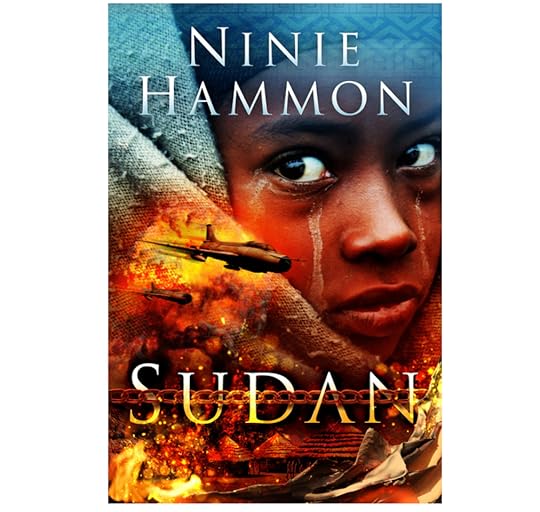 COVER
COVER
Buyers equate quality with expertise. Duh. If your cover is lame, why would the content be any better? A good cover must:
*Be appropriate to the genre. Bare-chested hunks with grizzled chins, chiseled grins and abs with more lumps than bad gravy are the exclusive purview of bodice-ripper romance novels—not cozy mysteries or zombie haiku.
*Have clear, striking images—no jumbled Find-Waldo-On-The-Beach.
*Pop when it’s the size of a postage stamp.
TITLE
What is a good book title? Marketing books don’t tell you that because they can’t. A great title is the one that perfectly fits your book and either nails exactly what the book’s about or makes the mystery of what it might be about so enticing the reader is willing to check further to find out.
How you come up with a title is its own art form. I found some great suggestions in Michael Alvear’s Making a Killing on Kindle. (This is not an endorsement of that book; some of his marketing techniques are clearly unethical.) Actually, I didn’t do any research on titles because all seven of my books already have one, but if yours is still in a bassinet labeled Baby Boy Book, you have some serious work to do.
BOOK DESCRIPTION
This is probably the most important 200 words you’ll ever write. Spend all day on it. All week! It must be so intriguing, punchy and gripping that the reader is compelled to find out more.
 FIRST CHAPTER
A browser will become a buyer if—and ONLY if—the sample of your writing he reads sings. No, it has to do more than sing. It has to bust out in a Napoleon Dynamite dance routine and whistle Dixie with a mouthful of crackers. Your first chapter has to be the best possible example of your writing skill. Make it a cliff-hanger so the reader must buy the took to find out what happens next and you will hear that magical cha-ching.
MAKING THE NEXT SALE
Loyal Reader has just turned the last page of your book and his eyes linger dreamily on the two three-letter words centered there. Ahhh. He liked the book, enjoyed the story. Might like to read something else by this author.
Stop right there!
There is NO time that you are more likely to sell your next book than seconds after the reader just finished your last one. Don’t miss that opportunity. EBook writers, don’t make Loyal Reader dig through the bowels of Amazon looking for your author page—maybe miss a couple of times because he spelled your name wrong and then the water heater springs a leak and he forgets all about you and your books and the sale is lost.
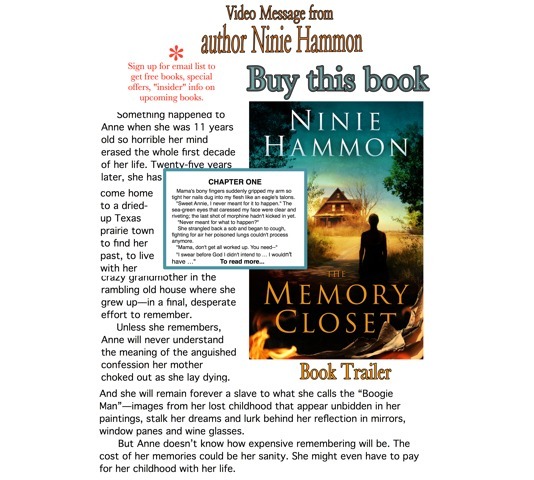 Make it easy. Put clickable links in the back of your book. Print authors, put Amazon links in huge type and customize them (with Bit.ly or some other service) so the reader has no trouble typing them in.
Those pages after “The End” are golden, your one-time shot at a reader who’s still glowing from the remembered images of the world you created. I have placed in my eBooks an approximation of what you see here, a page for each of my six books in the back of the seventh that offers the reader a wealth of choices—from a three-minute video of me discussing each book to an email list sign-up form and a (gentle) plea for a review.
Is having this much information—about six different books—too much for the reader to wade through at the end of a book? You got me, I couldn’t tell you. I’ll let you know as soon as I upload my books and get some reader feedback.
So this is all you need to know about “product”–right? Riiiight … and Lassie was a poodle. What I’ve given you here is the little I could jam into a single blog post.
Hang in there, it gets worse. Next week, we’ll talk about “Store,” where there’s even more information to compress.
March 23, 2014
Driftwood Marketing: A Newbie’s Guide to Selling Books
 A NEWBIE’S GUIDE: NOVEL MARKETING FOR DUMMIES PART 1
In last week’s post http://bit.ly/9eDummies, I said that what I’ve dubbed “Driftwood Marketing” is a method of chopping book marketing into bite-sized pieces.
Don’t believe it. I lied.
Unless your mouth opens wider than the San Andreas Fault, none of these pieces are bite-sized. Gut check here. Properly marketing a book requires thousands of small steps. The next obvious question, of course, is: Do you have to do all the steps? If you do, I will never write another novel. Instead, I will spend every waking moment for the remainder of my days marketing the seven I’ve already written. I did the math. Though there’s a slight margin for error here, I calculated that it would take roughly 137 hours and 42 minutes a day to perform every task that all the different marketing gurus say I absolutely have to do to successfully market a book. Then I multiplied that number by seven.
 Before you go looking for a razor blade or a cyanide pill, let me help you along to the conclusion I reached early in my marketing study. You can’t do it all. In case you missed that, let me say it again, louder: YOU CAN’T DO IT ALL. Every writer must design a marketing plan unique to her and unique to each book she writes, with no guarantees that what sent one book zinging up the charts won’t doom the next to the Amazon sub-basement.
Having said all that, I’ve come to believe that whether they use these terms or not, every writer’s marketing plan will involve elements of Product, Store, Promotion and Sales. That makes your job two-fold.
First, you must understand the four broad categories and what are considered best practices in each. (Along with picking up a few tricks and a long-shot scheme or two that worked with a handful of writers and who knows, you might get lucky.)
 And second, you must decide where you’ll concentrate your time and energy within each category and what tasks you will ignore—at least for the time being.
Remember, if this were easy, everybody’d be doing it.
Here’s an overview of Driftwood Marketing. I’ll get into more detail about each element in future blogs.
PRODUCT
Your product is the book you’ve written. (I told you this isn’t brain surgery.) As an author, you look at that precious little bookie-book the way a mother looks at a newborn baby, and you love it unconditionally just the way it is. As a marketer, you’ll have to acknowledge that all newborns look like W.C. Fields and that in all likelihood Junior is so ugly his yo-yo won’t come back up the string.
That’s ok, though. You can fix it—with hard work and a little cash. And you MUST fix it. You make us all look bad when you palm off on unsuspecting readers a book you wrote over a weekend when you were snowed in and the internet went out—a book with a cover you designed using a Comic Life program, then “edited” by reading it over once before you paid your drunk geek roommate $25 to format and upload it to Amazon.
In the Product element of Driftwood Marketing, you’ll have a checklist stretching to Seattle and back that covers story, copy and line editing, layout and cover design, a title that sings, a first chapter that grabs the reader by the throat and links in the back that sell your other books.
STORE
Even if the hardcopies of your book occupy prime real estate on front tables and line the shelves of traditional bricks-and-mortar bookstores, the ePub version of it resides in an online store where there are no tables or shelves. How much do you know about survival in the belly of the beast, deep in the bowels of the 800-pound gorilla appropriately named Amazon? Mark it down: no one will ever buy your book there because no one will ever find it unless you select the category and keywords that make Amazon spiders happy—keywords you’ve scattered like feed to chickens throughout your book title and description and all over Author Central. You’ll have to understand Amazon lists, too, that can put your book in front of thousands of eager readers or leave it behind in the Dungeon of Book Obscurity, a floor below the Amazon sub-basement.
 PROMOTION
Do you have a—drum roll, please!—platform? If you do, do you know how to use it to market your book? If you don’t, do you know how to get one? What are the techniques to grow an audience in all these virtual realms Twitter/Facebook/Pinterest Goodreads/Google+/LinkdIn?
How can you use public speaking, paid advertising, media attention, book signings, blog tours, email blasts and a website to promote sales? (And the bigger question, in my opinion, is how do you escape from the padded room with a padded door in St. Somebody’s Home for the Bewildered after you’ve done all this?)
SALES
How much will you charge for your book? What’s it worth? How do you decide? How do you launch a book? (Or seven of them!) When and how do you do price pulsing? How can you leverage “free?” You can make those decisions by consulting your Magic Eight Ball … “reply hazy, try again.” Or you can dig in and find out how professionals use pricing to sell books.
 And at the end of the day, after all this mind-numbing labor, how can you be sure you’ve done the right things? You can’t. The fifth and final element of Driftwood Marketing really ought to be LUCK, only there are no lists of best practices available for that. A huge element of serendipity, of blind chance determines which books are wildly successful and which take up permanent residence in the catacombs beneath the Dungeon of Book Obscurity.
Folks, I write. It’s all I’ve ever done, has been my profession since the day decades ago that I first stuck a Reporter’s Notepad into my purse and ventured out into the wide world in search of someone with a tale to tell. God designed me for it, planted in my heart an abiding passion to wrap truth in great stories—stories that make you feel something, about people who matter to you. Stories that speak to your soul. I want to spend my time writing! And I know I speak for thousands of my comrades in arms when I cry out from the depths of anguished frustration that I don’t want to spend hours and hours every day studying SEO, price pulsing and Amazon algorithms!
But I will. Because my books matter.
So do yours. Meet you back here for Part II.
March 10, 2014
A Newbie’s Guide: Novel Marketing for Dummies

Shortly before Thanksgiving, I swallowed hard, put on my big boy pants and offered to purchase from my publisher the rights to all seven of my novels. They weren’t selling as well as I believed they could and I was frustrated with the publishing company’s method of marketing them. I watched indie publishers, saw how nimble they were in promotion and pricing and came to believe that would be more effective. To my stunned amazement, my publisher agreed to sell. Six weeks of negotiations, contract back-and-forth and (gulp!) money later, I moved in, a card-carrying citizen of Indie Publishingdom.
 I decided at that point to take a break from writing my weekly writing tips blog posts. (For those of you who’ve missed them, that’s where they went!) I determined to set aside my eighth novel as well, and for the first part of 2014 concentrate on figuring out how to effectively sell the other seven. Well, now it’s March. And I am here to report that book-marketing is NOT a dragon you can train in eight weeks.
In the beginning, I felt like a flea on the floor at a dog show. There were way too many choices, they were all huge and they wouldn’t hold still long enough for me to jump on. I tired quickly of the claxon cry from all sides that I HAD TO effectively market my books only to discover that nobody seemed to have any idea how to do it. No, that’s not true. EVERYBODY seemed to have an idea, but none of them agreed.
And in order to understand all those Everybodies, I had to learn a whole new language called MarketingSpeak. Knowbies use it to prattle on to newbies about such things as SEO (search engine optimization), KDP (Kindle Direct Publishing), TA (Target Audience), AB (Also Bought) and IHT (I hate this!) So far, I’ve read 11 different how-to-market-your-novel books.
I decided to start with John Locke, who was the first author to sell a million ebooks on Kindle. Bad decision. The man actually bragged in an interview about buying 300 reviews! I determined right then that if the road to success led into the Enchanted Forest of Scammed Readers, I’d grind my laptop into metal shavings and go into real estate!
Finally, though, I located ethical advice. Ethical but contradictory. Amanda Luedeke says you absolutely, positively have to have a big platform, and Jonathan Gunson has a plan to build one with blogs and Twitter. But Michael Alvea says that’s baloney—on dry toast with catsup—that platform is a colossal waste of time.
Some tell you to concentrate on Goodreads—duh, that’s where the readers are.
Others tell you to concentrate on Amazon—duh, that’s where the customers are.
And still others advise you to put all your social media, book reviews, Facebook pages, social karma, blog tours, Twitter interviews, webinars and candy bars into the top of a big funnel and badda boom, badda bing, out the bottom will drop customers. Plop. Plop. Plop.
After two full months of doing nothing but studying marketing, I have gleaned only one timeless truth which I shall pass on to you (listen up, this part will be on the mid-term): At least fifty percent of what is touted out there as expert advice on how to sell books is nothing more than a pile of the warm, sticky substance you find on the south side of a horse going north. Unfortunately, the truth I didn’t discover was which fifty percent.
 Frantically treading water to keep from drowning in an bottomless sea of information, I spotted a piece of driftwood and I’ve managed to keep my head above the waves by clinging to it with all my strength. The driftwood of my metaphor here is not an epiphany in which all marketing secrets have been revealed to me. My driftwood is a way for an amateur to look at marketing. My methodology is crude, with lumps, bumps and splinters—just what you’d expect from a piece of driftwood. There’s no new information here, nothing particularly astute that involved profound critical thinking. It is not a thing of beauty, but it works for me.
You’ve heard me say many times about writing a novel that you can eat an elephant—one bite at a time. Well, my driftwood is an ax to chop the elephant into bite-sized chunks. (Ok, the metaphor’s wearing a little thin here.) After two months of struggle, I’ve managed to whack the mammoth marketing elephant into four parts: Product, Store, Promotion and Sales. Each one of those parts is HUGE. So’s an elephant’s leg, but it’s not as big as the whole elephant.
 Product:
Duh. My books.
Do you know what constitutes a great title from a marketing perspective? There are useful tips out there for how to pick one. Do you know what a good cover looks like? The criteria is not whether it appeals to you, three readers and Uncle Hurl in Omaha. The criteria is a huge checklist of elements that stand for excellence from a marketing perspective.
For example: if you’re strictly an indie publisher, you’re likely not selling paperbacks readers hold in their hands where they can examine the finer points of your cover design. An ebook cover has to POP when it’s only the size of a postage stamp! Chances are the beautiful, delicate script font you picked won’t be legible that small.
What about live links in your books to your other books? Do you have a request for reviews? A link to an author video? A link to a trailer?
 Have you moved all the extraneous material to the back of the book. A reader can only sample about ten pages. Do you want to waste four of those on Acknowledgements, Dedication, Copyright and About the Author? You need a one-two punch of the title and your name, then page one of Chapter One.
Oh, and about Chapter One. Does it end with a cliff-hanger to make the reader click “buy” to find out what happens?
Speaking of cliff-hangers, I’m going to take my own advice here and leave this post dangling. In succeeding posts, I’ll talk in more detail about Product, Store, Promotion and Sales. Explaining it to you helps me clarify it in my own mind.
I’ll return to my how-to-use-foreshadowing-to-create-suspense series eventually, but right now I’m struggling not to drown. If you are, too, grab hold of my driftwood. I’ve got Band-Aids if you get splinters.
Write on!
9e
February 14, 2014
Stephen King’s Pet Sematary: A Textbook on Creating Suspense
 TEN WAYS TO CREATE GUT-GNAWING SUSPENSE #1 IN MINIATURE
Out on Route 15, a tanker truck droned by, one so big and long Louis couldn’t see his house across the road. Written on the side, just visible in the last light, was the word ORINCO.
“One helluva big truck,” Louis commented.
“ORINCO’s a chemical fertilizer fact’ry,” Crandall said. “Them trucks come and go all day and night. And the oil tankers and the dump trucks.” He shook his head. “That’s the one thing about Ludlow I don’t like anymore—that frigging road.”
A semi roared by, its running lights twinkling like earthstars. “That’s one mean road, all right,” Crandall repeated softly.
Then Jud Crandall tells Louis Creed about the pet cemetery in the woods where children take their pets to bury them.
“It’s not as odd as it prob’ly sounds,” Crandall said. “It’s the road. It uses up a lot of animals, that road does. Dogs and cats. When a good animal dies, a child never forgets.”
Louis’s mind turned to Ellie, as he had last seen her tonight, fast asleep with Church purring rustily on the foot of the mattress.
Excerpted from Pet Sematary By Stephen King
*Spoiler alert: Don’t read any further if you haven’t read the book.*
I believe I have in my possession every word Stephen King ever set on paper. Not in invisible digital sorcery—in hardback books. Most of them I bought for myself, justifying the expense of hardbacks as celebrations of special occasions—birthdays, Christmas, that sort of thing. Of course, if he had a new book out, I’d celebrate National Eat a Pickle Day, too, or Save the Aardvarks.
 Stephen King is the undisputed king of horror. But you can’t properly horrify people without first simmering their emotions in a stew of suspense , and we can go to school on how he creates tension in his stories. Pet Semetary is a textbook in the technique called “create in miniature,” one of the suspense-building methods we talked about in my last blog. Create in miniature uses a small event to foreshadow what’s to come—when a spelunking character bumps his head and causes a small landslide, the reader is put on notice that a cave-in might be just around the next bend.
In Pet Sematary, King drops a string of events, breadcrumbs on a path. Only his crumbs lead the reader inexorably into the forest not out of it, and Loyal Reader is digging his heels into the dirt the whole way, pleading with the pages … oh, no, that’s not REALLY where he’s going with this. But we’re talking Stephen King here–of course that’s where he’s going.
King hints at something terrible, then serves it up on a platter in ever-increasing portions—like little Russian dolls, each one swallowed by a bigger one.
When Louis and Rachel Creed and their children Ellie and Gage, move into a new house, elderly neighbor Jud Crandall warns Louis about the trucks from the nearby chemical plant. In the excerpt above, there is a clear sense of foreboding about how the trucks zoom down the road in front of the new house. The road is set up as an inexorable force of evil and Loyal Reader understands in the set-up that the evil force is inescapable.
 1. The smallest Russian doll
The couple’s cat, Church, is run over by a truck. Jud takes Louis to the pet cemetery, supposedly to bury Church. Instead, Jud leads Louis beyond the deadfall to “the real cemetery” which is an ancient burial ground once used by a Native American tribe.
The next afternoon, the cat returns. But it’s different. No longer lively and playful, the cat relentlessly hunts mice and birds but merely rips them apart without eating them. And it gives off an unpleasant odor.
Loyal Reader senses that the cat’s burial and resurrection in miniature might just be a harbinger of worse things to come and a sense of dread lands plop in the pit of his stomach.
 2. The second Russian doll
King spares Loyal Reader some of the horror of the second doll by telling it in retrospect, as Louis’s memory of Gage toddling toward the road with his father in frantic pursuit, the rumble of a truck growing louder and louder in his ears.
It is the “bigger terrible” set up in miniature by the death of Church. And Loyal Reader is immediately struck by King’s intended sense of foreboding that what lies in the pages ahead is a repeat of the other act that was played out in miniature with the cat.
 3. The third Russian doll
The reader isn’t the only one who dreads what’s coming. Jud has figured out what Louis is planning, too, and tries to dissuade him by telling him the story of a soldier killed in World War II who was buried in the pet semetary and came back to life a monster. But Louis doesn’t listen, digs up his son’s body and buries it in the pet semetary.
Gage comes back in far worse condition than the cat. First he kills Jud, then he kills his own mother.
When Louis finds his wife dead and loses what little sanity he has left, Loyal Reader begins to feel that familiar tightening in the pit of his stomach. Will what happened to Church—in miniature—and to Gage—in miniature—be played out in full with Rachel?
 The biggest Russian doll
This is the culmination of all the miniature acts. The earlier events have pointed bony fingers at it and we are prepared. When we see Louis pick up his wife’s lifeless body and start toward the woods, we know what’s coming. Though he says he “waited too long with Gage” and that his wife will return just as she was before, we know she won’t—because we have watched the inexorable march of foreshadowing in miniature. Oh, we’re horrified when we hear her speak Louis’s name in a gravelly voice, like there’s dirt in her mouth. But we are not surprised.
Have you picked up on “create in miniature” in other of King’s work. Or in the work of any other author, for that matter. Do share it below so we can all learn from the masters.
Write on!
9e
December 13, 2013
Ten Ways to Create Gut-Gnawing Suspense
 I checked the door—locked, just like it’d been the other four times I checked it—and with a final quick glance into the dark corners of the room, I crawled between the cold sheets, grateful for Aunt Margaret’s assurance that I wouldn’t be disturbed.
“Don’t you worry, child. Won’t be nobody in that big old house but you.”
The wind of the approaching storm banged a loose shutter and the house sighed eerily, moaned as it settled into the night like an old crone easing herself into a rocker. Then I heard a sound from the room above me and my next breath caught and hung in my throat.
Aunt Margaret had lied.
Of course she did, you idiot. Your gut told you not to trust a woman who claimed at Crazy Uncle Albert’s trial that she’d thought he was burying tulip bulbs in those holes he dug in the back yard.
The springs on the bed in the room above creaked under the weight of someone sitting down. I lay in the darkness as still as a concrete garden gnome. Then I heard the clunk of something hitting the floor. Uncle Albert had worn size 13 shoes.
I sucked in a gasp.
And waited.
But there was only silence.
Uneasy yet? You should be. Even this amateurishly scary scene creates suspense–in five different ways. It also supplies a word picture/graphic of what we’ll be talking about here for the next few weeks, provides the simplest, most basic definition: Foreshadowing is dropping that first shoe so the reader spends the rest of the scene or chapter or book waiting, anticipating, trying to guess when the other shoe will fall.
Think of foreshadowing as previews of coming attractions, hints that prepare Loyal Reader for what’s coming and build in him a sense of anticipation—and apprehension, too, of course, an understanding that life is about to go seriously south on the characters in this story. A writer can use an entire scene to create suspense, with elaborately detailed foreshadowing, or simply drop a clue with just a few words.
Alastair Shelbourne stopped in his daily trek up the mountain to the ridge when he heard voices rising out of the fog that lay like clotted cream in the valley at his feet. On the first day of the school year, children in the Gaynor Junior School were singing All Things Great And Beautiful and their voices, drifting eerily up through the thick white mist into the bright morning sunshine, were the voices of angels. The 62-year-old grandfather stood still, listening. Then he smiled. It was the last time he ever would.
When Butterflies Cry
Jonas got out the green bottle of hand lotion, started on her right foot with a big handful of it, smeared it on every toe and in between them, around the callus and the bunion, up on the top of her foot, to her ankle, her calf, her knee and her thigh. Rubbing the lotion in, smoothing it, stroking gently in the dark with his big, rough hands all the way up to the diaper she slept in.
Soon as he’d smeared lotion all over her, she stopped wiggling. Didn’t itch anymore and she could sleep then. He lay beside her, staring into the darkness with hot tears running down his temples into his hair, wondering if he could do it and certain that he had to. Knowing this was the last sunrise he’d ever spend in bed beside his Maggie.
Five Days in May
There are more techniques to build suspense in your novel than I’ve got space to write about or you’ve got time to read. So I’ll narrow the field down to a tidy list-number. Here are ten ways to create foreshadowing:
1. NARRATION
This is the most obvious method, of course. Simply make a statement that hints of dire events to come, as in the two examples above—the last time Alastair would ever smile or Jonas would ever watch the sun rise beside his Maggie.
 2. DIALOGUE
Consider what Gandalf says after he finally speaks “friend” and enters the ancient Dwarf Kingdom of Moria. “There are older and fouler things than orcs in the deep places of the world,” he says to Frodo in a quiet voice. About twenty pages later, Gandalf is yanked down into the guts of the mountain by one of them.
Or in my shoe-dropping scenario:
“Don’t you worry, child. Won’t be nobody in this big old house but you.”
Riiiiight.
3. ACTION
When Miss Dimwit checks the door five times and then casts a furtive glance into the dark corners of the room, I’ve tipped off the reader to keep a lookout for the Boogie Man lurking in the shadows.
4. SCENE/SETTING
The “house sighed eerily, moaned as it settled into the night like an old crone easing herself into a rocker.” A creepy setting sets a suspenseful tone.
5.CHANGE IN THE WEATHER/ENVIRONMENT
Creepy weather sets a suspenseful tone, too. The archetypal horror story begins, “It was a dark and stormy night” for a reason. “The wind of the approaching storm banged a loose shutter” in my scene for the same reason.
6. AN OBJECT
You can signal impending doom with an object as innocent as a forgotten cell phone, or as obvious as a “Bridge Is Out” sign lying face-down in the mud.
 7. CREATE IN MINIATURE
When Melanie Daniels arrives in Bodega Bay and is attacked by a seagull, we’re served notice that Alfred Hitchcock’s Birds are likely to be particularly “foul” creatures. When a spelunking character bumps his head and causes a small landslide, Loyal Reader says to himself, “Mark it down, there’s gonna be a cave-in.” And, of course, there is.
8. POINT OUT AN APPROACHING EVENT
As soon as Catniss Everdene mentions the upcoming Reaping, readers understand that her participation in it will not go well.
9. Conversly, you can DIRECT THE READERS’ ATTENTION TO A NO-POSSIBLE-WAY EVENT.
Even if he were unaware of history, as soon as the ship’s captain announces that the Titantic is “unsinkable,” Loyal Reader knows to start looking around for a life jacket.
10. UNREASONED EMOTION/GUT REACTION
Miss Dimwit’s gut tells her not to trust Crazy Uncle Albert’s wife.

Han Solo needs to do a better job of listening to his own internal organs. “I’ve got a bad feeling about this,” he tells the others gathered with him in a garbage compactor. He says the same thing when he’s tied up in the Ewok village.
Luke says it as his ship approaches the Death Star, Princess Leia says it when they’re in the cave that turns out to be a giant space worm’s mouth and C3PO says it when he’s on his way to Jabba the Hutt.
Overkill? Yep. But when the viewer hears those words, he instantly has a bad feeling about it, too.
As a preview of coming attractions in 9e’s Blog, I plan to unpack these foreshadowing methods, dig in and see what they look like in stories and how we can best put them to work in our own fiction.
And I’ve got a good feeling about it. Really. I do.
Write on!
9e
December 2, 2013
Writing ISN’T the most important thing in a writer’s life

It’s likely that a fair number of the people reading these words are experiencing post-NaNoWriMo flashbacks, recognizable by uncontrollable bouts of splitting infinitives and seizures in which you roll on the floor crossing out every third tile in red ink.
Even those of us who didn’t try to write a novel in a month routinely try to write one during every spare sliver of down time we can scrounge, doing the math in our heads: the cake doesn’t come out of the oven for 35 minutes–that gives me 33 minutes to write. And that’s glorious! How else would we ever get those words on the page when we’re juggling a job, cooking/cleaning/laundry and taking the pet aardvark to the vet. I get it. I do.
But hold onto your shorts, Mildred, I’m about to say something heretical: there might possibly be something in life more important than writing.
Folks, it’s Christmas. How many of those do you figure you have left? Fifty? Twenty-five? How many while the kids still believe in Santa Claus? How many while your parents still remember who you are? I don’t know about you, but I don’t want to be the writer who looks up from her laptop one day to see that the rest of life has passed me by and I missed it.
My novel’s not going anywhere. It’ll be waiting for me after I help put the popcorn strings on the tree. The spaces between the yellowed kernels get bigger every year and I often wonder why we used red thread. It shows up so bright where the knots of popcorn have crumbled away. Of course, we never dreamed at the time it would matter. We weren’t making anything to last, just decorations to hang on the tree that Christmas and then throw away. The popcorn strings were temporary. Just like the lives of those who made them.
***
Both of them had daisies in their eyes. I remember noticing it for the first time as the 3-year-old looked up adoringly into her face. The little boy had inherited his grandmother’s deep hazel eyes, with gold highlights that sparkled like the pedals of a flower around a black center.
And I remember noticing how at home in her hands the needle and thread looked. Whenever I tried to sew, I was so clumsy I always poked myself in the finger, drawing blood so the laughing child suddenly looked concerned and offered to kiss it to make it well. But she never poked herself, not once the whole time she sat in the wide oak platform rocker, balancing a squirming child in her lap as she strung lengths of popcorn to put on the Christmas tree.
There was no snow on the ground outside the windows as she worked. Clouds the color of pewter hung just above the treetops, dripping dreary winter drizzle into the red Mississippi mud. The magnolia tree in the front yard still had a few yellowed blossoms scattered among the seed pods. The grass was still green. The temperature hung on a nail at 50 degrees, moving neither up nor down with the passing of December. It was a strange, disorienting first-Christmas-away-from-home for a young couple and their 3-year-old child.
The only thing that brought a sense of family and tradition to the season was the grandmother’s presence, the sight of her arthritic hands stringing popcorn on long pieces of red sewing thread, her off-key voice singing Christmas carols in the comforting Texas twang that was already beginning to fade into Deep South mush in the speech of the towheaded youngster in her lap.
When each popcorn string was complete, there was an elaborate ceremony involved in placing it just-so on the tree, much backing-up-and-eyeballing it, making sure the drape and swag were perfect enough to satisfy and imperfect enough to imply a lack of planning and a carefree spirit. The little boy got to eat all the candy canes whose position on the tree interfered with the popcorn strings, and he crawled around on the carpet beneath the tree, munching happily on stray pieces of popcorn gleaned from among the fallen pine needles.
There was a lot of laughter, rich childlike laughter that year. It’s etched in my memory with the smell of hot cider and home-baked cookies and Texas chili bubbling on the stove. The grandmother’s eyes never strayed far from the little boy. She slipped him extra cookies when she thought I wasn’t looking. She pretended not to notice when his squirming on her lap pained her arthritic legs. She hugged him tight and dried his tears when she left to go back home to Muleshoe after Christmas, telling him she’d be back, that they’d make new popcorn strings for the tree next year.
But they didn’t.
Her heart failed in May.
She died in a Texas nursing home without ever seeing the little boy with flowers in his eyes again.
* * *
The popcorn strings are always the first decoration to go on the tree. Right after the lights. My three sons know that. They’ve always known it. It’s been that way every Christmas any of them except the oldest can remember.
They also know the strings are precious beyond measure to their mother and their oldest brother. And that they are fragile and growing more fragile with every passing year. And they know the story, too, but it usually gets told every year anyway. The story of how the first Christmas after the death of their grandmother—the grandmother two of them never knew—was a very sad Christmas. And how their mother discovered the popcorn strings the grandmother had made the year before, tucked away in one of the Christmas decoration boxes.
I never did find out, I’ve told them for almost three dozen Christmases now, how it was that the popcorn strings wound up in the Christmas decoration box. I know I intended to throw them away. In fact, I thought I did throw them away. But maybe their oldest brother wanted to keep them and sneaked them into the box. He does not remember.
All I know is that when I spotted them among the ornaments, I cried, great gulping, heaving sobs. Then I took my 4-year-old son by the hand and together we put the strings on the tree with the other decorations—in my mother’s memory. It has been the same every year since.
When the oldest left home, the popcorn string tradition passed to my middle son. When he joined the Army, the job fell to the youngest. Even after they were all gone, one or the other of them always has been home at Christmas to put the strings on the tree.
The little boy with daisies in his eyes has children of his own now. After Christmas last year, his wife repaired the strings, interspersed the old, crumbling yellow kernels with fresh popcorn on new red sewing thread.
And this year the job of putting them on the tree has passed down to another generation. My youngest grandson is 5 —a year older than his father was the Christmas after my mother died. It was his job this year to put the strings on the tree. Oh, his hands weren’t as big as his father’s and uncles’ hands. His little fingers weren’t as gentle. He twisted the red sewing thread as he worked and crumbled some of the popcorn under foot. But I figure his great-grandmother understands.
Write on!
9e