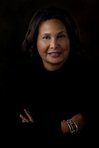
Jennifer Davis Carey's Blog
April 7, 2014
Author Events in New York
Blue Mongoose Publishing is pleased to announce two events with author Jennifer Davis Carey,
Saturday, May 3rd from 2-4pm
An Island Emptying Out,
An Island Filling Up
Jennifer Davis Carey
discusses her debut novel
NEAR the HOPE
115th Street Library
203 West 115th Street
New York, NY 10026-2403
Since the turn of the 19th and 20th century New York has been home to the one of the largest populations of people with roots in the Caribbean diaspora, and the culture of the islands is a part of what gives the City its identity. The 115th Street Branch of the New York City Public Library is pleased to host author Jennifer Davis Carey, as she discusses her debut novel, Near the Hope, which moves from the lush world of Barbados to the hazy glow of New York at the turn of the 20th century to follow a young emigrant woman who leaves her beloved island to navigate uncharted challenges.
AND
An Evening of Caribbean Authors
May 5 2014 7:30 pm, at Greenlight Bookstore, 686 Fulton Street (at South Portland) in Brooklyn, New York
Jennifer Davis Carey (Barbados), author of Near the Hope
Esther Figueroa (Jamaica), author of Limbo
Elizabeth Nunez (Trinidad), author of Not For Everyday Use
Introduction by Carole Boyce Davies (Trinidad & Tobago), author of Caribbean Spaces: Escapes from Twilight Zones
Reception with Caribbean food from Gloria’s
The evening will be introduced by Cornell University professor Carole Boyce Davies, whose new work Caribbean Spaces draws on both personal experience and critical theory to illuminate the dynamic complexity of Caribbean culture and trace its migratory patterns throughout the Americas.
Both events are FREE AND OPEN TO THE PUBLIC. WE HOPE YOU WILL JOIN US!

Saturday, May 3rd from 2-4pm
An Island Emptying Out,
An Island Filling Up
Jennifer Davis Carey
discusses her debut novel
NEAR the HOPE
115th Street Library
203 West 115th Street
New York, NY 10026-2403
Since the turn of the 19th and 20th century New York has been home to the one of the largest populations of people with roots in the Caribbean diaspora, and the culture of the islands is a part of what gives the City its identity. The 115th Street Branch of the New York City Public Library is pleased to host author Jennifer Davis Carey, as she discusses her debut novel, Near the Hope, which moves from the lush world of Barbados to the hazy glow of New York at the turn of the 20th century to follow a young emigrant woman who leaves her beloved island to navigate uncharted challenges.
AND
An Evening of Caribbean Authors
May 5 2014 7:30 pm, at Greenlight Bookstore, 686 Fulton Street (at South Portland) in Brooklyn, New York
Jennifer Davis Carey (Barbados), author of Near the Hope
Esther Figueroa (Jamaica), author of Limbo
Elizabeth Nunez (Trinidad), author of Not For Everyday Use
Introduction by Carole Boyce Davies (Trinidad & Tobago), author of Caribbean Spaces: Escapes from Twilight Zones
Reception with Caribbean food from Gloria’s
The evening will be introduced by Cornell University professor Carole Boyce Davies, whose new work Caribbean Spaces draws on both personal experience and critical theory to illuminate the dynamic complexity of Caribbean culture and trace its migratory patterns throughout the Americas.
Both events are FREE AND OPEN TO THE PUBLIC. WE HOPE YOU WILL JOIN US!


April 3, 2014
Caribbean Authors' Night at Greenlight Books in Brooklyn
I am looking forward to this wonderful event at Greenlight Books in Brooklyn. May 5th in the evening. Hope to see friends and family there!
http://www.greenlightbookstore.com/ev...
http://www.greenlightbookstore.com/ev...
January 6, 2014
An interview with the author
Tell me about the title of your novel?
The book is loosely based on my grandmother’s life as an immigrant from the small island of Barbados. She saved the correspondence between her and her father in an ancient handbag that she kept in her dresser drawer. I still have them. The letters from her father all bear the address “Taborvilla, Near the Hope.” To me, the phrase ‘near the hope’ resonated not just as an address or a district in Barbados, but as a metaphor for my grandmother’s longings as well as those of the millions of other immigrants coming to America.
What did you learn from writing your book?
I learned a tremendous amount of the history of Barbados and the aftermath of slavery in terms of economic and social structure. I also learned about the experience of that first wave of immigrants from the Caribbean who came to New York at the turn of the century and their experiences as they struggled to strike a balance between cultural identity and cultural assimilation.
How did you become interested in writing?
For me writing is both a personal, and a public and political act. I have always loved to read stories that transport the reader into different times and places and that allow you to experience the world through other’s eyes. There are many stories that have yet to be told. Particular those stories about those consider “other” or “outsider.” It is those stories that I feel compelled to tell. That is true not only in my writing, but in my work in education and public service.
I have also loved to read since I first discovered books as a small child. To me, writing is an extension of that. Both conjure people and worlds.
What was the hardest part of writing this book?
The hardest part of writing this book was facing some unpleasant truths. The depravity of the plantation system in Barbados and its effect on my ancestors was difficult to learn. The discord between blacks of the diaspora with roots in the American South and those with roots in the Caribbean continues to be painful.
Is there an important message or theme that you want readers to grasp?
I hope that readers will consider the tension that exists among immigrants between maintaining and passing on cultural traditions and values, memories and history and assimilating into an adopted culture. I also would like readers to consider the question of the power of first love and the nature of sacrifice—not only for what is but for what may be, for that hope for the future and future generations.
What kind of research did you do for this book outside of your personal experience?
I did significant genealogical research and read widely on the history, culture, and economy of the Barbados. During a trip to the island, I visited historical and cultural sites. I did the same in Brooklyn and Manhattan. I also talked with relatives and tapped their memories. For the New York chapters I read books and articles on Triangle Shirtwaist Factory. David von Drehle’s Triangle: The Fire That Changed America was particular useful. For the experience of the Pullman Porters I found Larry Tye’s book, Rising from the Rails most useful.
The book is loosely based on my grandmother’s life as an immigrant from the small island of Barbados. She saved the correspondence between her and her father in an ancient handbag that she kept in her dresser drawer. I still have them. The letters from her father all bear the address “Taborvilla, Near the Hope.” To me, the phrase ‘near the hope’ resonated not just as an address or a district in Barbados, but as a metaphor for my grandmother’s longings as well as those of the millions of other immigrants coming to America.
What did you learn from writing your book?
I learned a tremendous amount of the history of Barbados and the aftermath of slavery in terms of economic and social structure. I also learned about the experience of that first wave of immigrants from the Caribbean who came to New York at the turn of the century and their experiences as they struggled to strike a balance between cultural identity and cultural assimilation.
How did you become interested in writing?
For me writing is both a personal, and a public and political act. I have always loved to read stories that transport the reader into different times and places and that allow you to experience the world through other’s eyes. There are many stories that have yet to be told. Particular those stories about those consider “other” or “outsider.” It is those stories that I feel compelled to tell. That is true not only in my writing, but in my work in education and public service.
I have also loved to read since I first discovered books as a small child. To me, writing is an extension of that. Both conjure people and worlds.
What was the hardest part of writing this book?
The hardest part of writing this book was facing some unpleasant truths. The depravity of the plantation system in Barbados and its effect on my ancestors was difficult to learn. The discord between blacks of the diaspora with roots in the American South and those with roots in the Caribbean continues to be painful.
Is there an important message or theme that you want readers to grasp?
I hope that readers will consider the tension that exists among immigrants between maintaining and passing on cultural traditions and values, memories and history and assimilating into an adopted culture. I also would like readers to consider the question of the power of first love and the nature of sacrifice—not only for what is but for what may be, for that hope for the future and future generations.
What kind of research did you do for this book outside of your personal experience?
I did significant genealogical research and read widely on the history, culture, and economy of the Barbados. During a trip to the island, I visited historical and cultural sites. I did the same in Brooklyn and Manhattan. I also talked with relatives and tapped their memories. For the New York chapters I read books and articles on Triangle Shirtwaist Factory. David von Drehle’s Triangle: The Fire That Changed America was particular useful. For the experience of the Pullman Porters I found Larry Tye’s book, Rising from the Rails most useful.