James Porteous's Blog
October 11, 2022
The Next World War is at Your Door #1
The Next World War is at Your Door. New posters for the next World War III Inc.
#WW3Inc #WWIII #StandForPeace

The Next World War is at Your Door
#WW3Inc #WWIII #StandForPeace


April 26, 2022
Austin: We talked about how to win the current fight and build for tomorrow
 US Secretary of Defense Lloyd Austin, left, and Secretary of State Antony Blinken, at a meeting Sunday, April 24, 2022, with Ukrainian President Volodymyr Zelenskyy in Kiev (Photo: Ukrainian Presidential Press Office)
Austin effectively admitted—for the first time by a US official—that the United States is a combatant in the war.
26 April 2022 | James Porteous | Clipper Media News
In a number of ways, this is narrative mana from heaven.
It essentially opens to door to move past the ‘sensitive’ and often ‘illegal’ problems with questioning ‘Ukraine’s war’ and allows the discussion to return to the lack of peace talks between the US and Russia.
And it also raises the question as to who is actually ‘standing’ for the innocent citizens of Ukraine who find themselves caught in the middle of this US-sanctioned war.


James Porteous | Clipper Media News
26 April 2022 | Andre Damon | WSWS
On Sunday, US Secretary of State Antony Blinken and Defense Secretary Lloyd Austin traveled to Ukraine, where Austin effectively stated that the United States is a party to the Ukraine war.
After meeting with Ukrainian President Volodomir Zelensky, Austin declared in prepared remarks, “our focus in the meeting was to talk about those things that would enable us to win the current fight and also build for tomorrow.”
In using the first-person plural to describe both the United States in Ukraine as engaged in a “fight” against Russia, Austin effectively admitted—for the first time by a US official—that the United States is a combatant in the war.
This statement is especially striking given the declaration by Biden in March that, “Direct confrontation between NATO and Russia is World War III, something we must strive to prevent.”
Combining the statements of Austin that “we” are engaged in a “fight” against Russia, and Biden’s declaration that a war between the US and Russia would mean “World War III,” it is impossible to avoid the conclusion that the proxy war between the US and Russia over Ukraine threatens to rapidly spiral into a world war.
Austin then said, “We want to see Russia weakened to the degree that it can’t do the kinds of things that it has done in invading Ukraine.”
Austin’s statement echoed the declaration by US Army Europe Commander Ben Hodges that the US should aim for “breaking the back of Russia.” A recent New York Times editorial also invoked the prospect of “bringing Russia to its knees.”
Commenting on the statements by Austin, the New York Times’ David Sanger wrote,
Mr. Austin’s comments, bolstered by statements by Secretary of State Antony J. Blinken about the various ways in which Mr. Putin has “already lost” in the struggle over Ukraine, reflect a decision made by the Biden administration and its closest allies, several officials said on Monday, to talk more openly and optimistically about the possibility of Ukrainian victory in the next few months.
Sanger continued,
There is a second risk: that if Mr. Putin believes that his conventional military forces are being strangled, he will turn to stepped-up cyberattacks on Western infrastructure, chemical weapons or his arsenal of tactical, “battlefield” nuclear weapons. It is a possibility that was barely conceivable eight weeks ago, but is regularly discussed today.
“Given the potential desperation of President Putin and the Russian leadership, given the setback they’ve faced so far militarily, none of us can take lightly the threat posed by a potential resort to tactical nuclear weapons or low-yield nuclear weapons,” William J. Burns, the C.I.A. director, warned earlier this month.
In other words, the Biden administration is consciously leading the population of Ukraine, Russia, the US, and the world down a path that risks nuclear war.
Yet there is no public discussion of the implications of these policies, nor has the Biden administration alerted the population about the vast danger posed by its escalation of the war. Rather, for months, it has systematically worked to chloroform public opinion about the dangers of nuclear war. Thus, Biden recently declared, “I don’t think he [Putin] is remotely contemplating using nuclear weapons.”
Russian officials, by contrast, have repeatedly threatened the use of nuclear weapons and have stressed the immense dangers posed by the present conflict. On Monday, Russian Foreign Minister Sergei Lavrov warned about the risk of nuclear escalation, stating, “the risks now are considerable.’
Lavrov concluded, ‘NATO, in essence, is engaged in a war with Russia through a proxy and is arming that proxy. War means war.”
The remarks of Blinken and Austin made clear the massive scale of US involvement in the war. “The strategy that we’ve put in place—massive support for Ukraine, massive pressure against Russia, solidarity with more than 30 countries engaged in these efforts—is having real results,” Blinken said.
On Sunday, Blinken and Austin announced over $322 million in new weapons financing for Ukraine, bringing the total US weapons shipments to $3.7 billion since the start of the war, Reuters reported. US weapons deliveries include Javelin missiles, artillery, ammunition and drones.
On Monday, the US defense department announced that it was using an emergency declaration to approve the sale of $165 million of ammunition to Ukraine. The Pentagon said the sale would include ammunition for howitzers, tanks and grenade launchers.
Reuters reported that the plan “could include artillery ammunition for howitzers, tanks and grenade launchers such as 152mm rounds for 2A36 Giatsint; 152mm rounds for D-20 cannons; VOG-17 for automatic grenade launcher AGS-17; 125mm HE ammunition for T-72 and 152mm rounds for 2A65 Msta.”
This week, the US will host a meeting of dozens of countries centering on arming Ukraine.
Now, two months since the outbreak of the war, US officials are stating publicly what they previously admitted only in secret: The United States is the driving force in a war aimed at crippling and subjugating Russia and overthrowing its government.
Austin’s de facto admission that the two countries with the world’s largest nuclear arsenals are both parties to the military conflict in Ukraine must be treated as a stark warning by workers all over the world. The present crisis poses immense dangers and raises the urgent need to mobilize the international working class in opposition to war.
F-35 Modernization: The Cash Cow that Keeps on Giving
 An F-35A takes off from Hill Air Force Base, Utah, March 14, 2014. After getting upgrades, the F-35A is on its way back to Nellis AFB, Nev. (U.S. Air Force/Airman 1st Class Joshua D. King)
The modernization program, set to upgrade the Lockheed Martin-made F-35, is now expected to be pushed into fiscal year 2029
F-35 modernization program’s costs, schedule keeps growing: GAO
25 April 2022 | VALERIE INSINNA | Breaking Defense
WASHINGTON: The F-35’s Block 4 modernization program added three years to its schedule and $741 million to its estimated cost in 2021, according to a new report released today. by the Government Accountability Office.
The Block 4 modernization program is set to upgrade the Lockheed Martin-made F-35 Joint Strike Fighter with more powerful computing systems, software updates and new weapons and equipment, much of which remains classified. However, the cost and schedule of the effort, which started in 2018, continues to snowball.
The Block 4 modernization plan was initially set up to wrap up in 2026. By 2020, the F-35 program office had pushed that date out until 2027, the GAO reported last year. This year’s report extends Block 4 development and delivery “into fiscal year 2029, in part, due to the addition of new capabilities,” the GAO said in its annual report on the F-35.
Meanwhile, “costs continued to rise during 2021 due to crucial hardware development and testing upgrades, among other things,” the GAO stated. In 2021, the F-35 joint program office increased its cost estimate for the Block 4 effort to $15.14 billion — $741 million more than its 2020 estimate of $14.4 billion.
According to the GAO, two main factors drove the cost increase.
First, the estimated cost of the Technology Refresh 3 (TR-3) effort grew by $330 million. TR-3 — which comprises a new integrated core processor, memory unit and panoramic cockpit display system — essentially provides the technological backbone for the Block 4 upgrades, which would not be able to run on the F-35’s current computing systems. “According to program officials, much of the increase in TR-3 costs occurred because its development is more complex than originally expected,” the GAO stated.
RELATED: F-35 to get more expensive in next deal, program exec says
While the report didn’t get into details, TR-3 is both behind schedule and over budget; for its part, the Pentagon still believes the upgrade will be ready for F-35 Lot 15. If the program doesn’t suffer further delays, TR-3 hardware will be introduced into the production line later this year, Lt. Gen. Eric Fick, the Pentagon’s F-35 program executive, said in March.
The second major factor in the cost spike was the growth in costs for testing and lab upgrades needed to update the aging F-35 test aircraft so that they can be used in future weapons tests. Costing an additional $312 million, this area also covered an “increase in flight test capacity” required to validate that Block 4 capabilities perform as planned.
Schedule Delays Continue
While cost increases and schedule delays often are tied together, the factors driving the three year delay are different from those that drove the extra costs.
“We found three contributing factors for the recent Block 4 capability schedule delays: ongoing software quality problems, a pause in Block 4 software development due to funding issues, and the addition of new Block 4 capabilities,” the GAO stated.
For Block 4, the F-35 program office has adopted an approach it calls Continuous Capability and Development Delivery (C2D2), which incorporates agile development processes where new software is regularly created, tested, revamped and rolled out. However, the program office has routinely faced software quality issues, meaning that software coders sometimes have to focus on fixing defects rather than getting new capability out the door.
While software development problems have been a longstanding hurdle for the Block 4 development effort, an eight month pause starting from January to October 2021 added to delays.
According to the GAO, the temporary stoppage in Block 4 software development efforts occurred “when the program office ran out of funds due to the TR-3 cost overrun” and “the contractor paused work on Block 4 development and focused its work on TR-3.”
The program office believed that focusing on TR-3 was critical for keeping Block 4 development on track, as many Block 4 capabilities cannot be fielded without TR-3. However, the endeavor came at an expense — currently, 39 of the original 66 Block 4 capabilities are now behind schedule because of the pause, the GAO said.
Finally, the program office added 25 new capabilities to the Block 4 modernization effort, which further exacerbated schedule delays, the GAO said.
Air Force leaders have repeatedly spoken about the need to field Block 4 F-35s as quickly as possible.
“The Block 4 capabilities are what we really need for the pacing challenge — for China and their advanced systems. So we need to get that done,” Air Force Secretary Frank Kendall said last week. “We’ve been behind schedule for a couple of years with that.”
In the meantime, the service plans to slash F-35A procurement, which officials believe will allow it to avoid expensive costs to retrofit operational jets in the near future. The Air Force requested funds to buy 33 F-35As in FY23 and 29 jets in FY24, before ramping up to 43 in FY25. (In previous years, the Air Force had regularly requested 48 F-35As per year.)
Despite the near-term cuts to the Air Force’s annual F-35 buy, the service is ramping up its investment in the Block 4 effort, requesting $414 million for F-35 modernization in FY23, a sharp increase from the $248 million it received last year.
The Air Force’s approach to the F-35 program sharply contrasts with the Navy and Marine Corps’ buy plans. The sea services intend to keep F-35 procurement steady over the next five years, purchasing 13 F-35C carrier variants and 15 F-35B short takeoff and landing variants in FY23. Both services are also basically doubling their investment in Block 4 modernization in FY23, requesting $114 million for the F-35B and $155 million for the F-35C.
April 24, 2022
United Russia: Rape, Torture and the Wagner Group
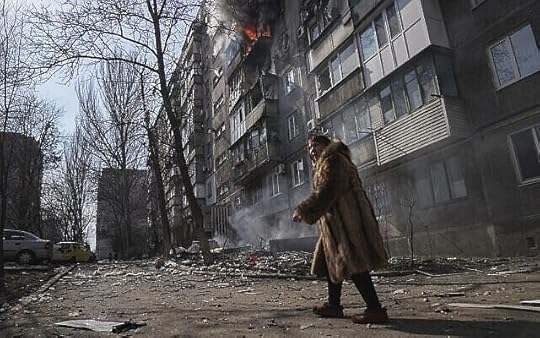 A woman walks past a burning apartment building after shelling in Mariupol, Ukraine, March 13, 2022. (AP Photo/Evgeniy Maloletka)
‘Life is very dangerous. Not because of the people who do evil, but because of those who sit back and watch it happen.’ Albert Einstein
24 April 2022 | David Rosenthal | Times of Israel
“We have to respect the ruthless truth of war.”
-Vasili Grossman.
The “Russian Bear”, as it is known in the Russian imagination, represents among other things the 16th century myth that these animals left the forests during the winter to go to houses in search of food, causing families to leave their homes in horror and then die from the cold. In fact, the political party of the terrible, ruthless and dangerous Putin uses a bear as its image. “United Russia”, under that name the new tyrant seized power of the nation that had previously also been ruled by a monster: Stalin.
Top articles on The Times of Israel
Jewish Fractals with Natan Margalit – Sponsored Content
This is not the first time Russia has wreaked havoc. The mass rapes perpetuated by Russian soldiers and officers on German women and girls have a dark place in contemporary history. Some estimate that the Soviets may have sexually abused as many as 2 million German women and girls, including children who were abused and in many cases murdered. In addition, in many cases there was “mass rape” where the victim was raped by the same or different men up to 70 times or until she breathed her last breath, and even after that.
For example, of the estimated number of women raped in Berlin alone after the fall of the Reich, at least 100,000 women were abused, of which 10,000 were murdered as a result of this transgression. Thus, 10% of the victims did not resist this humiliation, which, more than physical pleasure, gave the perpetrator a perverse satisfaction as if it were a trophy. Humiliation, anger, fear, arrogance, disgust, among many other things, is what those women and children felt. Even if they had survived such a horrible, inhumane and merciless act, a part of their lives died in that sinister event.
Russian war correspondent Natalya Gesse asserted that the Red Army was an “army of rapists” that had carnal access to girls from the age of eight to women in their 80s. For Professor Alexander Statiev, the Soviets found in aggression against civilians their victory celebration.
Violence nourished their victor’s ego, so the more ruthless they were, the more victorious they felt. And to take on women and girls, the most fragile and unprotected in history, shows in itself a great level of cowardice and dehumanisation. Although it was not only the Soviets who were the first and only ones to take advantage of women and children, but other troops did the same, and history leads to very similar episodes in other times, but the Soviets were and are among the most ruthless. Mass or gang rape is a hallmark of their wartime actions, as is torture.
The German World War II historians Theodor Schieder and Hans Rothfel documented the testimonies of women victims of the Soviet army in 1953 under the title “Documentation of the Expulsion of Germans from East-Central Europe”. There, Anna Schwartz, one of the victims, argued that “the Soviet occupation of Eastern Europe began, literally and symbolically, with the forcible occupation of German women’s bodies”.
It was also etched into the memory of this written compilation that visual images and sexual undertones were also present there, as German women bore the scars of the Red Army soldiers’ rapes as war wounds. Indeed, the general consensus of the women interviewed focused on how, once the Russians arrived, “no woman or girl was safe from the liberators”.
After an absurd number of women and girls were raped, tortured and even killed, history repeats itself – wasn’t it enough what women of a couple of generations ago went through, and what’s more, are these events now forgotten?
Well, there is no reasonable explanation for the events in Bucha. Whoever denies this genocide also denies his or her capacity for understanding and violates his or her conscience.
People burned, mutilated, tortured and, of course, raped women and children – that is what the Russian troops shamelessly left in the open, amidst the threat and cruelty. A message to Ukraine of course, but more than that, a message to Europe and the United States.
Putin has given the order to tear the Ukrainian people apart, and within that crusade, civilians are one of the main targets, in the quest to demoralise and cow the brave Ukrainian citizens who, along with their president, have demonstrated sufficient resistance and resilience, despite defending themselves alone and at a great disadvantage against the new machinery of terror. Just like the Nazi terror machine, even if Putin calls Zelensky by this adjective, he and his collaborators are the new Nazis.
Ukrainian women and girls become one of the main victims of the war, through sexual abuse as a weapon of war by the perpetrators. As it has been revealed what happened in the territories occupied by the Russians, sexual assaults at gunpoint, mass rapes, torture and even rapes committed in front of children have been found. The women and children who have suffered these terrible events, some are being accompanied by professionals, however, the figures are not clear and there is a lot of silence.
What remains is the hope that there will eventually be a trial, as rape and sexual assault are considered war crimes and are against international humanitarian law. There will have to be a kind of new Nuremberg trials, this time against Vladimir Putin and his terror squad.
In Bucha, a major city in Kiev Oblast, a genocide took place. At least 400 civilians were viciously murdered. Most of the women were sexually abused before being executed, found naked, shot and burned. There are cases of burnt people and even whole families who met their end like this. Also, elderly people who died of starvation. Orphans were kidnapped, children were taken away. Dogs who died of starvation in the dog shelter, that happened too.
When Zelensky and his government speak of a genocide they are telling the truth, whoever does not want to see these events as genocide, something is not right. Also, the Russian government has created a Nazi-like propaganda from the Kremlin and the FGB (Federal Security Service, formerly the KGB) to demystify and try to hide the horrible crimes against Ukrainian civilians that they are committing. The fact that the massacres cannot yet be compared with the most terrible genocide in contemporary history, i.e. the Holocaust or the “Shoah”, does not mean that what has happened in Bucha, Mariupol and Volnovaja, etc., is not genocide, and that it will become a new Babi Yar, that ravine of death on the outskirts of Kiev which has a figure of up to 150,000 innocent civilians killed, mostly Ukrainian Jews, but also Soviet prisoners of war, partisans, gypsies and communists.
In turn, Putin’s alibi is to claim that he is “denazifying” Ukraine, using as a scapegoat the Azov squad, which, while neonazi, is also the result of Russia’s historical harassment of Ukraine. Azov is a civilian militia that is now part of the Ukrainian military defence and has managed to give a good response to Russian troops. Putin took advantage of this situation to justify the massacres they have carried out, and there are more than one.
On the other hand, Putin uses mercenaries who are not in the least interested in the type of conflict but in money and blood. Among the myriad of mercenaries and foreign armies Putin is using in his plan to invade Ukraine and perhaps later Europe, is the Wagner group, a veritable Nazi squad. Its name is evidence of this even, for Wagner is by Richard Wagner Hitler’s favourite composer, the same as the “Ride of the Valkyries”.
This unofficial paramilitary group was founded by Dmitry Valeryevich Utkin, a ruthless former Russian military officer who has been involved in horrendous operations in the area and is now a terror protagonist in Ukraine. Utkin is known to be a lover of Hitler and the Third Reich, and has Waffen-SS and Reichsadler tattoos on his neck and chest.
Likewise, the Wagner Group’s ringleaders have been photographed and filmed in Nazi uniforms, again recreating events of the Second World War. Their aim is clear, to replicate the terrible events that bathed Europe in blood in those days …. Utkin has been accused of being “responsible for serious human rights abuses, including torture and extrajudicial, summary or arbitrary executions”. In fact, on 13 December 2021, the Council of the European Union imposed restrictive measures against Utkin and other individuals linked to the Wagner Group.
Wagner, being a “secret” mercenary group, and having no official relationship with the government, acts in a ruthless manner with no lessons in humanity, only in the interest of money. Yevgeny Prigozhin, better known as “Putin’s chef”, is the man behind Wagner. This Russian oligarch is involved in various affairs of the regime, especially this one of the mercenaries.
In short, the war crimes that have so far claimed at least 2,000 lives and forced hundreds of thousands of people to emigrate will at some point be brought to trial. We are facing a new genocide and it cannot be kept quiet, despite the fact that there are those who deny it or do not want to pay enough attention to it or simply abstain. Albert Einstein, the genius of the last century who lived through the terror of the Nazi extermination machine, said well: “Life is very dangerous. Not because of the people who do evil, but because of those who sit back and watch it happen.
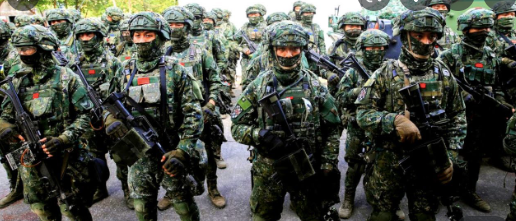 Ukraine: Mercenaries at War
https://clippermedia.org/ukraine-mercenaries-at-war/
Mercenaries. Soldiers of fortune. Many names. Many groups. Many nations. They join battles all over the world | Clipper Media News
Ukraine war: $100 billion in infrastructure damages alone
 Ukrainian family flees in aftermath of Russia bombing. Photo Credit: Ukraine Ministry of Defense
The full cost of the war could be between €200 and €500 billion.
And yet the ‘policy’ of allowing the war to continue until one side or the other is ‘defeated’ continues. The longer the war continues, the higher the price of reconstruction. It could reach a trillion dollars.
And who will spend that much? Let’s be honest: Ukraine will be ‘rebuilt’ by the same people who detroyed Iraq, Afghansitan, Syria… The list goes on and on.
And the answer, as before, is no one will pay, unless Ukraine secures the funds to pay for it through IMF or World Bank loans or some version of Halliburton.
James Porteous | Clipper Media
24 April 2022 | Silvia Ellena | EurActiv
With the EU’s plan for Ukraine’s recovery in the making, the president of the European Investment Bank (EIB) Werner Hoyer warned that the country’s reconstruction will require huge investments from both public budgets and private capital.
“If we will finally get the chance to rebuild Ukraine, then we are talking about sums which are beyond imagination for the time being,” Hoyer said during an event organised by the Atlantic Council on Thursday (21 April).
The EIB president said while Western governments have been “generous” in their provision of direct budget support to Ukraine since Russia’s invasion in February, in the long term, reconstruction will require huge investments.
A recent study by the Centre for Economic Policy Research (CEPR) estimates the cost of the war between €200 and €500 billion.
On Monday Ukraine’s infrastructure minister Oleksandr Kubrakov said the Russian invasion has caused an estimated $100 billion worth of infrastructure damages alone.
Since the invasion, more than 300 bridges on national roads have been destroyed or damaged and dozens of railway bridges have been blown up, the minister said, calling for more international financial support to rebuild the country’s infrastructure.
In March, the EIB approved a €668 million financial package to help Ukraine and the neighbouring countries cope with war-related damages.
However, Hoyer said “much more will have to be done” going forward.
In his view, private capital will also be critical when support for Ukraine moves from direct funds to project financing, similarly to what happens with climate goals.
“This is where an institution like ours comes in, or other multilateral development banks, who can go to the capital markets and mobilise private capital, convince people in the markets, and investors that they’re doing something serious and good.”
EU support for UkraineWhile the priority remains immediate support to address the humanitarian crisis and stop the aggression, the EU has already started working on a post-war reconstruction plan.
“The EU is committed to providing strong support for a democratic Ukraine once the invasion has stopped,” a Commission spokesperson told EURACTIV.
The EU executive is currently setting up a Ukraine Solidarity Trust Fund for the reconstruction of Ukraine, which was agreed by member states at the 24-25 March EU Council.
While discussions on the fund are ongoing, it is still “premature” to establish the funding needs for the country, the spokesperson said.
Meanwhile, the EU’s Economic and Investment plan for the Eastern Partners should also mobilise investments of up to €6.5 billion to support the country’s recovery.
According to Hoyer, Ukrainians will use the funds not only to restore what has been destroyed by the war, but to “build a strong economy.”
“When they rebuild, they will make true what some people only have in the headlines ‘rebuild better’,” he said.
“Overdue changes”The ongoing crisis can also be a lever for “overdue changes” in the rest of Europe, added Hoyer, who sees the war as an opportunity for the continent to push forward the transition towards sustainability and energy independence.
“We have been blind not to see this energy dependency of most of the European nations from Russia and other suppliers.”
As part of the sanction regime against Putin’s country, the Commission plans to drastically reduce dependency on Russian fossil fuels in the coming months.
As a first step, on Thursday the EU executive and the International Energy Agency presented a 9-step plan to guide citizens to decrease energy consumption.
However, cutting reliance on Russian energy will also require structural changes, including new technologies.
Hoyer said the EIB and other multilateral development banks can play a crucial role in providing the necessary investment to introduce new energy sources in the short term, urging “not to waste the next six, eight months” before starting the transition.
April 23, 2022
Watch: Fairport Convention – Folk Heroes (Doc) (2017)
The team worked closely with Fairport for over a year. ‘Our aim is to explain how important Fairport’s influence has been and continues to be’
 Fairport Convention
There are so many ‘music docs’ that either do not feature the artists or the music. But this is an excellent exception, filled with the songs, music, band members and history of not only one of the best UK bands, but the best bands full stop.
PLEASE NOTE;:THREE AUDIO TRACKS HAVE BEEN “MUTED” DUE TO COPYRIGHT REASONS. THIS IS NOT AN ERROR. CONTINUE WATCHING AND THE SOUND WILL CONTINUE.
The reason for this is that if the doc had uploaded the complete original soundtrack, the copyright holders of the ‘offending’ songs would have put in a complaint and the entire doc would have been immediately removed from youtube. So the producers are not to blame, but if you want to complain, send a note to YouTube!
Fairport Convention are a British folk rock band, formed in 1967 by guitarists Richard Thompson and Simon Nicol, bassist Ashley Hutchings and drummer Shaun Frater (with Frater replaced by Martin Lamble after their first gig.)
They started out heavily influenced by American folk rock, with a setlist dominated by Bob Dylan and Joni Mitchell songs and a sound that earned them the nickname “the British Jefferson Airplane”.
Vocalists Judy Dyble and Iain Matthews joined them before the recording of their self-titled debut in 1968; afterwards, Dyble was replaced by Sandy Denny, with Matthews later leaving during the recording of their third album. Wikipedia
23 April 2022 | James Porteous | Clipper Media News
The film tells how five young musicians in North London formed Fairport Convention during 1967’s ‘summer of love’. The band went on to shake English folk music to its roots by fusing it with rock, an approach which outraged some purists but delighted a new and devoted audience.
In the subsequent five decades, Fairport Convention has attracted widespread critical acclaim, won a coveted BBC Lifetime Achievement Award, and Radio 2 listeners voted Fairport’s groundbreaking album Liege & Lief ‘The Most Influential Folk Album of All Time’.
The documentary has been made by London-based independent producer Special Treats Productions. The company’s previous television music documentaries include ‘XTC: This Is Pop’, ‘I’m Not In love: The Story of 10cc’ and the award-winning film ‘UB40: Promises and Lies’.
The film features rare archive interviews and footage as well as newly-filmed interviews with the current Fairport members and, among others, Ashley Hutchings, Richard Thompson, Iain Matthews, Judy Dyble, Joe Boyd, Ralph McTell, Maddy Prior, Bob Harris, Suggs, Rick Wakeman, Steve Winwood, and Ian Anderson of Jethro Tull.
Through these interviews, the film examines Fairport’s first five years in detail, including the tragic motorway crash which killed drummer Martin Lamble.
It goes on to explain Fairport’s pivotal role in the evolution of British folkrock; how the band fostered major talents such as Sandy Denny, Richard Thompson and Dave Swarbrick and spawned other notable bands including Matthews Southern Comfort, Steeleye Span, and Fotheringay.
 Singer/songwriter Sandy Denny
The story is brought up to date with contemporary material filmed at Fairport’s annual ‘own brand’ music festival held at Cropredy in Oxfordshire. The closing sequence features the band’s 2017 festival performance when virtually all the surviving former members joined the current line-up on stage.
The Producer/Director has been working closely with Fairport for over a year. He says: “Our aim is to explain how important Fairport’s influence has been and continues to be – in other words, why the band matters.
“We have not set out to make a comprehensive, year-by-year history of Fairport; that has been done before. The film concentrates on two periods – the first five years and the band today. The result is a celebration of a very British institution and an assertion of Fairport’s continuing relevance.”
Fairport Convention Folk Heroes Documentary (2017)Fairport Convention – Folk Heroes documentary review

Rob Hughes published November 15, 2017 | Louder
Among the many talking heads in this absorbing account of Fairport’s life and times, it’s Rick Wakeman who provides the best quote.
The band’s decision to go electric in the late 60s, opines the keyboard maestro, “was like putting a condom machine in the Vatican”. Plugged-in folk music just wasn’t one for the fusty traditionalists. For the less blinkered, however, Fairport’s assimilation of indigenous folk and rock’n’roll offered routes between worlds that had hitherto been neglected.
Almost everyone in Folk Heroes seems to agree that the watershed moment came with 1969’s A Sailor’s Life, the centuries-old ballad that Fairport fashioned into what founder member Ashley Hutchings calls “the first British traditional folk rock track”.
Director Charlie Thomas (who also made the recent XTC doc, This Is Pop) does a fine job of explaining how they got there and where they took it, with help from key members past and present – Simon Nicol, Richard Thompson and Dave Pegg included – alongside admirers and associates such as Steve Winwood, Ian Anderson and producer Joe Boyd.
It’s a front-loaded drama that focuses on the path-beating years, from their beginnings as a covers band in Muswell Hill to the rediscovery of a wealth of traditional homegrown music that fed into Liege & Lief.
There’s tragedy along the way, such as the road crash that claimed the lives of drummer Martin Lamble and Thompson’s girlfriend, Jeannie Franklyn (which, Thompson admits, left the band in deep shock for years).
But there’s also insight into what made the early line-ups so unique, be it the extraordinary guitar flights of Thompson or the pure majesty of Sandy Denny, the singer-songwriter described by Ralph McTell as “complex, dangerous, wild, crazy…”
Tantalising footage of primetime Fairport is intercut with scenes from this summer’s 50th birthday bash at Cropredy, the old guard of Nicol and Pegg propping up the legend while also foraging into the future. The best vintage clip of all shows the late Dave Swarbrick on stage, in tan leather coat and fetching blue cap, ciggie fixed between his lips, sawing away on electric violin like a man in a hurry.
Post-Babbacombe Lee, the film sprints through the the 70s and comes to rest at present-day Cropredy, a celebration of the Fairport fellowship that’s the biggest folk festival in the UK. “Fairport has always been a band of friends,” muses Thompson, “people dear to my heart.” It’s an oft-told tale, but Fairport’s story is as much about deep bonds and lasting connections as it is groundbreaking music.
Why Isn’t There an Uber For Live Music?
The live music industry stems from a long history of being a gig economy with bands and musicians performing a series of one-off engagements

23 April 2022 | Eurasia Review
While digital platforms like Uber continue to proliferate and expand the gig economy into new sectors of work, some industries, such as live music, have structural features that keep them from adapting well to online platforms.
The difficulty of quantifying value, the complexities and contingencies of the task being performed and the fragmentation of the organizational field make certain industries resistant to platformization, according to the paper, “Why Isn’t There an Uber for Live Music? The Digitalization of Intermediaries and the Limits of the Platform Economy.”
The paper was co-authored by Ian Greer, a research professor in the ILR School, and published in the March issue of the journal New Technology, Work and Employment.
Co-authors include Dario Azzellini of the University of Zacatecas and Charles Umney of the University of Leeds.
At face value, the live music industry seems ripe for platformization, stemming from a long history of being a gig economy with bands and musicians performing a series of one-off engagements with infrequent long-term employment. Likewise, other aspects of the music industry – such as recorded music – have long been available on various digital platforms.
However, through interviews and a systematic review of 168 “intermediary websites” – including agents’ websites, platforms and listing sites allowing individuals to connect offline – in Germany and the United Kingdom, the authors identified external issues that limit the growth of platforms.
Valuation is a first problem. Usually, platforms take intangible qualities and simplify them into some form of numerical scores, such as star ratings, which can then be quickly compared. In the case of judging musicians, many of the intermediary websites expected visitors to examine audio files, press photographs, video samples and select customer testimonials, which “undermines the transaction-accelerating function of platforms.”
Moreover, live music, as a set of tasks, is complex, and a live music transaction involves contingencies that vary widely between engagements and are unpredictable by nature. As a result, the service and its price – along with contingencies such as food, drinks, dressing room, equipment set up and tear down – are subject to ongoing negotiation, which are severely limited through intermediary websites.
Finally, fragmentation of the field prevents live-music platforms from achieving economies of scale. The authors explain that “function” gigs (i.e. a wedding or corporate retreat) and “creative” gigs (i.e. playing original compositions at a festival) involve fundamentally different expectations from the client, and while the same musicians may work across both domains, the gigs are radically different. These differences make a one-stop platform catering to all market segments impractical.
“While our selected industry is a distinctive and specific one, this general point merits consideration much more widely,” concluded the authors. “Another notable finding from the study is that the platforms we uncovered almost all operated using a commercial logic.
None of them displayed the ‘sharing economy’ ethos … and we found no evidence that unions or collectives were creating platforms to improve the terms of exchange on live music markets. This surprised us, because, despite being only very infrequently collectively organised, historical evidence gives plenty of examples of collective mobilization over working conditions by musicians.”
High Oil and Gas Prices Could Affect Luxury Real Estate
 Photo: High oil and gas prices could impact luxury markets worldwide. GETTY IMAGES
This is very good news. We are not going to get any traction on the ‘cost of living crisis’ until the Superrich start to feel some pain.
22 April 2022 | PORTIA CROWE | Mansion Global
How Persistently High Oil and Gas Prices Could Affect Luxury Real Estate
As anyone with a car will likely have noticed, oil and gas prices have been at record highs lately. Prices, which had already been steadily rising since the height of the pandemic, shot up shortly after Russia invaded Ukraine in February.
It followed a dip during the pandemic, when global activity ground to a halt. As vaccines were rolled out, lockdowns lifted and economies recovered, energy prices had begun to creep upwards too. Then the war began and the U.S. and other countries announced bans on, or reductions of, Russian oil and gas imports. Brent crude hit $127.98 on March 8, up from $68.87 in December 2021 and $19.33 in April 2020.
More recently, natural gas prices have been hovering near 14-year highs, while oil prices, which came off their early March highs, have again been edging up. A gallon of gasoline in the U.S. cost $4.10 last week, up 43% from a year ago.
It appears the elevated prices will linger for some time. And that could have significant impacts on the housing market, including luxury markets in New York City, London and elsewhere around the world.
From rising inflation and interest rates to a potential new trend in energy-efficient renovations, there is much to consider for prospective home buyers when it comes to long-term real estate planning.
Inflation and Interest Rates
One obvious impact is that higher energy prices feed inflation. In the U.S., the inflation rate rose 8.5% year-over-year in March, its biggest increase in more than 40 years. British consumer price inflation, meanwhile, rose to 7% in March, its highest level in 30 years.
But the worst may be yet to come. According to Olafur Margeirsson, head of global real estate research at Credit Suisse Asset Management, inflation “may even be structurally higher in the future than it was in the most recent past.”
Liam Bailey, global head of research at Knight Frank, said that will lead to slowing of property price gains through this year.
“This current round of inflation from energy prices…is prompting central banks to raise rates, and that will be something which will slow property price growth,” he said. “We’re already seeing the impact.”
In March, following an increase in mortgage rates, U.S. home sales fell by 4% from the previous month and by 8% compared to March 2021, signaling a cooldown in the market.
For Amanda Agati, chief investment officer at PNC Financial Services Group, this is a “pivotal point” in time as it relates to interest rate decisions by the Federal Reserve, or Fed.
“The mortgage rate being above 5%—that’s a key psychological point for a lot of consumers,” she said. “It won’t destroy demand, necessarily, but it definitely will give home buyers pause at these levels if you need a mortgage to move forward.”
She expects the Fed to increase rates by 50 basis points in May, and 25 basis points in every meeting thereafter this year.
But will that affect the luxury buyers, who often do not need financing? Mr. Bailey said the luxury market is not immune from changes in the cost of debt or the cost of living.
“The mainstream and luxury markets—people sort of move between those markets, and they tend to move in tandem,” he said. “Even in the luxury market, the cost of debt is a significant influence on the price people are willing to bid for properties.”
If it becomes more expensive to service debt—and therefore buyers cannot move as easily, pressuring the lower end of the market—that creates a “stickier” market, Mr. Bailey said, because it prevents people from forming chains.
“So everything begins to slow down slightly,” he said.
Mr. Margeirsson said the luxury market can especially be affected in the short- to mid-term, but that ultimately it comes down to the local economy of a city or real estate market.
“Luxury home buyers and investors should be mindful of the local inflation and interest rate dynamics, for they will play a key role in the mid-term dynamic of the local real estate market,” he said.
Mr. Bailey also said that geography can play an important role when it comes to inflation.
“There’s a big difference between Europe and North America,” he said. “The general view is that the U.S. may be moving towards the end of that process, whereas in European markets, and the U.K., to an extent, we’ve still got some way to go.”
The Impact on the Consumer
Article Continues After Advertisement
Higher oil and gas prices also affect the buying power of individual consumers.
“I do think affordability will start to come into the [equation], even at the upper end of the market,” Ms. Agati said.
And while the extra money spent at the gas pump is less likely to impact prime real estate buyers than it will the average consumer, “the luxury market is not immune from broader market signals,” Mr. Bailey said.
What’s more, if prime real estate buyers derive their income from the industries that are being hit, their real estate investment plans could be affected as well.
“If consumers have less purchasing power, they generally buy fewer goods,” Mr. Margeirsson said. “If the luxury buyers own the companies selling those goods, their profits and income will be affected as well.”
In other words, Ms. Agati said, if you think of luxury homebuyers as the chief executives, owners or board members of public companies, “you have to think that they’re very much focused on what rising energy prices will do for profitability and margin expansion potential.”
She is nonetheless “bullish” on the U.S. consumer.
“Even though there are a lot of challenges in the short run…we do think that consumers are in good shape to weather the storm,” Ms. Agati said, adding that there is roughly $2 trillion sitting on consumer balance sheets in the U.S.
The pandemic prevented many consumers from spending as they normally would, so there is pent-up demand for housing as well as other durable goods and services.
“Usually when you get to this phase of the cycle, historically speaking, consumers are exhausted,” she said. “But from a balance sheet perspective, we’re in really good shape.”
While real estate demand isn’t expected to dry up, it may evolve. As mortgage rates rise, for example, that will prevent some buyers from reaching into the luxury market.
“If you don’t need a mortgage it’s not really relevant,” Ms. Agati added. “So it will change who is a luxury homebuyer.”
One demographic that could begin to show more demand for luxury real estate is those who work in the oil and gas industry.
“It seems to me that oil and gas companies have a new lease on life, especially North American shale drillers, and appear to be focused on profits over production in this environment which is leading to positive cash flow for the first time in years,” Ms. Agati said. “So the profitability backdrop and dynamic for the energy sector at large has changed really significantly, but I think the key question is how long does it last?”
Mr. Bailey noted that oil exporting countries will have more wealth to spend as a result of high energy prices.
“Probably within the next one to two years, you’ll see quite an impact in terms of Middle Eastern demand in the U.S. and in Europe,” he said.
Supply Chains and Renovations
The impacts of heightened energy prices are also being felt by people building or renovating properties. That’s because oil and gas are key inputs for raw materials, such as rubber, plastic, chemicals and fiberglass insulation.
“We’ve seen really significant shifts on the part of builders and contractors to move from fixed prices to [contracts] that have escalators in them,” Ms. Agati said. She noted that renovation prices can rise even higher when you account for “significant increases in shipping costs, which are largely a function of rising energy prices.”
Mr. Bailey said there is a renewed concern around supply chains across the globe.
“We’ve seen it recently, in the U.S. and London, that properties which are newly refurbished or brand new—available to sell right now—are trading at a premium,” he said. “For people considering buying properties that need restoration or renovation projects, you’re going to be delayed—it’s going to take a long time to get workers and materials.”
Alternatively, oil and gas prices may impact the home renovation industry in a less immediate way.
“This current rise in energy costs is [leading to] more interest in energy efficiency in buildings,” Mr. Bailey said. “It could well lead people to consider how they could improve their homes or make them more energy efficient—it’s just coming at a bad time in terms of it being difficult to get materials.”
PNC’s Ms. Agati also said we could see “a renovation boom and an upgrade cycle” with a focus on greater energy efficiency.
“That comes in the form of furnaces and energy-efficient windows, but it could also come in the form of solar panel installation or utility investments,” she said, noting that current oil and gas prices are “potentially an important catalyst.”
How to Plan for the Future
So what should prospective luxury real estate buyers be thinking about as they plan for the future? Mr. Bailey’s advice is to “take a sober assessment of the market” right now.
“It’s been an incredibly volatile market over the last year or so, and people have been, for very good reasons, keen to purchase a home that suits their requirements and family needs through the pandemic,” he said.
But he believes both the U.S. and the U.K.—followed by other markets globally— will move away from a seller’s market and towards a buyer’s market over the next 12 months.
“So as an investor, or buyer, you can probably afford to take your time to assess the market,” he said.
Ms. Agati stressed the importance of location when making long-term real estate investment plans.
“If you’re in London, if you’re in Europe, it’s a very different story potentially than what we might be seeing in the U.S.,” she said. “To some degree the U.S. is a bit more in control of its own destiny…because we’re so limited in how much energy and consumption we get from Russia.”
She also said it is important to differentiate between prospective investors and homeowners.
“When I think about luxury homeowners, I tend to think of them as more price elastic,” she said.
If you are building or renovating a home for yourself, you may be less focused on the return on investment, and therefore more willing to go ahead with a contract that has escalators built into it.
As for real estate investors, however, she said they tend to be less price elastic, meaning the return projection is more important in their decision-making process.
“From an investor perspective, the need to make additional investments, which aren’t cheap, around energy efficiency, the need to put more sophisticated wiring and technology in the home…getting the materials—I just think there are a number of factors here that make this point in time much more challenging for an investor as opposed to a homeowner,” Ms. Agati said.
Investors should pause and assess all the variables, she said, noting that the return profile will not be as attractive as it was six to 12 months ago. For those who have time on their side, she said it could be worthwhile to wait before investing, as we could see “some cooling” in the second half of the year or in 2023.
On the other hand, for those looking for a home for their own use, “taking action now is probably smarter than waiting, because we think rates are going to continue to rise,” Ms. Agati said. “Things are going to get more expensive before they get cheaper.”
April 12, 2022
What is the Arbitration Epidemic?

What is the Arbitration Epidemic? Mandatory arbitration deprives workers and consumers of their rights. It might be more widespread than you think
#law #courts #workers #busines #arbitration
What is the Arbitration Epidemic
Ukraine: Lethal Arms, Donbas and more (2014 – 2018)

Ukraine: Lethal Arms, Donbas and more (2014 – 2018) A sampling of articles and videos talking about the origins of some of the issues facing Ukraine today
#ukraine #russia #history #lethalarms #war
Ukraine: Lethal Arms, Donbas and more (2014 – 2018)