Paul W. Perkins's Blog
June 4, 2016
This Makes My Joy Complete
have no greater joy than to hear that my children are walking in the truth." (1 John).
I have been a Pastor for over 25 years. In that time I have had the privilege to have served in four churches. When I think of each of those churches I thank God for the people I was able to impact with the gospel. I also thank the Lord for how I was blessed by them.
Ministry is hard work, whether you are a lay person or a full time Pastor. Just read through the New Testament in one or two settings and you will come to understand two things: 1. Church is hard, and 2. God loves the church. If we keep these two things in mind we will persevere in the church and fall in love with her over and over again.
Facebook, with all its worldly flaws, has been a blessing to me. I keep in touch with people from each of the churches that I have pastored. From time to time I peruse their websites to see how the churches are doing. And with each church I can truly say with the Apostle Paul, "For though I am absent in body, yet I am with you in spirit, rejoicing to see your good order and the firmness of your faith in Christ"(Col. 2:5). Of course I didn't start the churches or have the fatherly investment in them like the Apostle. But I did pour my heart and soul into them while I was there, and their outcome matters to me. When I say outcome I am not referring to size, but depth. To see people that I have ministered to passing down their faith to subsequent generations is satisfying. There is no greater joy.
It is Faith EFC's 50th anniversary this year and as one of the former pastors I have been invited to preach (June 26h). The congregation doesn't know what an honor this is for me. There are a lot of people there that I know, and even better a lot of people that I don't know. The latter is the evidence that the church is reaching beyond themselves. The Apostle rejoiced because the Colossians had two things that are necessary for a healthy Church, 1. Good order, and 2. Firmness of faith.
Why is good order important? I believe It is Paul's way of saying, "Good work, you are unified and working together." In each of Paul's letters unity is a theme. Churches cannot grow if there is division. Unity of mind, spirit, and direction are essential. Whenever there is division, backbiting, and conflict the church is distracted and Satan can claim a victory. Unity is imperative.
But unity for the sake of unity means nothing. The Apostle rejoiced because of the firmness of their faith. The word firmness can mean steadfast or consistency. Chart our lives and we can see the ups and downs of our faith. Sometimes we are strong and sometimes we are weak, but most of us have been consistently growing, persistent in our love for Jesus, and steadfast in our calling. This isn't of our doing, but the mighty work of the Holy Spirit. Left to ourselves we would quickly fall away. It is our unity in the Spirit and the firmness of our faith that keeps the church on course.
It is for this reason that I rejoice when I "lurk" my former churches. As a whole the churches are seeking to love God and love others, and for that I rejoice and give God the honor and glory. I'm just saying.


June 1, 2016
Crisis of Faith
My crisis of faith began with one sentence, "What are you reading?" I was determined to have my devotions and read my bible. I was a new believer rooming with two non-believers. Their question seemed innocent, they were curious about my early morning reading material.
I don't even remember what passage I was reading. I just wanted to be a good testimony. When they started talking about science and creation, about the impossibility of a universal flood, of the ridiculousness of miracles, I had no answers. It wasn't that I was unsure of forgotten information. Their arguments were plausible. I mean who could ignore scientific evidence.
This morning googled top arguments against Christians and they haven't changed. They all revolve around the basic assumption of naturalism, that God doesn't exist, and the triumph of science over the incompatibility of faith. They sound reasonable.
That's why Paul was writing the Colossians. He didn't want them to be swayed away from their faith by arguments that sounded good. Deception is a key tool in the devil's arsenal, and he uses it the area of weakness. If a loved one dies, "how could God allow it?" If you have cancer, "Why is there pain and suffering in the world?" If you like science, "Doesn't evolution disprove the creation myth?" If your a philosopher, "If Jesus is the only way why are there so many religions in the world?" If you are caring, "Would God really send people to hell who have never heard the gospel?" "How can a loving God even contemplate sending someone to hell?" If you don't like the bible's restrictions, "But doesn't God want me to be happy?" Plausible, reasonable, arguments abound.
When presented with plausible arguments doubt can set in, bitterness can take root, and apostasy can follow. In my crisis God led me to Bible College. For others it is a good book, their pastor, or a friend. Counter arguments, however, are not what keeps us from falling away. They are important, but they are secondary. The Apostle Paul told the Colossians that what would keep them was the knitted love of the body that led the to a deeper understanding of the mystery of God in Christ. It is the same for us today.
What anchors me in my deepest emotional need is the reality of God's existence. I cannot escape that fundamental truth. Through the working of the Holy Spirit, God teaches me that His love is unshakable, and that it was powerfully expressed in the death and resurrection of Jesus! The issues I face, the questions I have, and the doubt I encounter are always seen through the lens of His unfathomable love. There are answers to all the playable questions, there is nothing new under the sun. But unless we are set firm on the foundation of Christ the storms of life, the deception of Satan, and our own lusts will lead to apostasy.
What plausible arguments are tugging on your faith? What strong, faithful believer can you confide in? It's not a sin to have doubts, and it's not anti-intellectual to believe in God through Christ. Deepen your understanding of Jesu
May 31, 2016
An Atheist Pastor and Empty Love
I was reading an article about an atheist pastor in a church in Canada. She has been the pastor there since 1997. Since her installation all vestiges of the Christian Faith have disappeared, and the only cross left is hidden away behind some curtains. The services are a mix of self help motivational speeches to love one another, and testimonies of personal accomplishments. Just recently the national board has decided to review her situation to decide if she fulfills the churches doctrinal positions. *Sigh*
When the Apostle Paul told the Colossians they were to be knit together in love it wasn't so that they could fulfill some personal agenda or meet some emotional need. There were two specific outcomes that their love together was to accomplish: to reach all the riches of full assurance of understanding and the knowledge of God's mystery. Both of which are Christ.
Riches of full of assurance understanding. I gave my life to Jesus as a senior in High School, but I wasn't complete in Christ. My standing in Him was secure, but I had not attained maturity. In fact, in my first year at the University of Florida I was confronted by two atheists who seemed to know more about the Bible than I did. Their questions created doubt,math at led to bitterness, that led to mocking the preacher. My friends were aghast, and love took me aside to find out what my problem was. The outcome led me to go to Bible College to find answers. I did not have full assurance.
Bible college gave me a lot of the answers I sought, but created more, as well. I never doubted the existence of God again, but there was a point where I doubted my position in Christ. There were great preachers who spoke in our chapels, calling us to lives of holiness and service. I didn't grow up in a Christian home, and I felt anything but holy. I started to doubt my salvation. I expressed that to a friend and he loving led me to understand the full assurance that I have in Jesus. My works don't make me holy, Jesus' blood covers them.
The riches of a full understanding of assurance is of greater value than any riches the world has to offer. It has kept me through depression, upheld me when ministry was difficult, and keeps me steady when personal doubts weigh me down. The world will tell you that you can't be assured of anything, but God says otherwise. He tells us that nothing can snatch us out of his hand. Tragedy, difficulties, and even death can't separate us from His love. Like the pearl of great price or the treasure in the field, this assurance is worth every worldly possession to attain. The good news is that it doesn't cost us anything. The assurance rests on the character of God.
Knowledge of God's mystery. There is a deep and though experience in knowing God's mystery. It is knowledge saturated with an experience with the Holy Spirit. It is a knowledge that is based on fist hand experience. We did not see the death and resurrection of Jesus personally. Our knowledge of his sacrifice and power have been passed down to us by reliable sources and the Word of God. But our encounter with God is a personal experience in the context of the body of Jesus. We know these disciples of Jesus because they are knitted together in love and are the hands and feet of Jesus. The body of Christ working in concert with the Holy Spirit create an experience where we can know the mystery of God.
Facts are interesting, but it is their fusion with personal experience that makes them meaningful. When the Holy Spirit speaks to our spirits that we are children of God it is an experiential moment. But it happens in the context of God's word and the life of the body. When my friend explained to me the assurance I had in Christ he explained facts, but it was the Holy Spirit who confirmed in my heart the reality of that mystery.
Knitted together in love. Our love for one another is for one thing only. To help us understand and know Christ. Yes there is healing, there is encouragement and blessing, and there is mutual care, but those aren't the end. The end is the glory of God in the Christ. John Piper reminds us that we are most satisfied when God is most glorified.
If our love for one another had its in end in our self-fulfillment, then our love would end when our needs were not met. But as a church we are steadfast in our love for one another because there is a greater cause beyond ourselves, that is Christ and his kingdom.
So, as you are loved and as you love, may you come to a full assurance and understanding of your salvation in Jesus, and may experience first hand the power of God in Christ. I'm just saying.
"being knit together in love, to reach all the riches of full assurance of understanding and the knowledge of God's mystery, which is Christ" Col 2:3.
May 24, 2016
Knitted Together to Defeat Satan
The greatest danger to the church is divisiveness. There are a lot of sins that can lead to it, but sins are forgivable. When we come to Christ we are to put aside envy, strife, and contentiousness, not just because they are sins, but because they lead to a fractured body of Christ. Satan has his greatest victory within the church when he gets us to fight among ourselves.
It's not easy. There are plenty of "good" and "righteous" reasons that split churches: bad theology, moral corruption in leadership, social issues, church and national politics. As I read through the New Testament the Apostle Paul wrestles with the churches in regard to the issues that divide them. He calls out their sin, corrects their theology, and exhorts them think of others first. He believed that the truth spoken in love would unite the church. He also believed that church discipline unites the church. Removing cancerous thinking and behavior is crucial to a healthy body. But he always hoped it was a way of restoration for the individual.
Today I read, "For I want you to know how great a struggle I have for you and for those at Laodicea and for all who have not seen me face to face, that their hearts may be encouraged, being knit together in love" (2:1,2).
It seems counterintuitive for a Christian to brag about their struggles on behalf of others. But the Apostle didn't do it to glorify himself. His purpose noble. He wanted every believer, who had seen or not seen him, to be knit together in love. He wanted them to be united.
There is nothing like a common struggle to bring people together. The never Trump movement casts an apocalypse of a Trump presidency. Republicans try to bring us together against the evils of a Hillary presidency. We coalesce around perverse social issues and sign petitions in order to speak as one voice. As Christians we are called to pray together for the persecuted church. There isn't a drought of causes that can unite the church nationally or locally. But the Apostle Paul wanted the churches to know his struggle, not to advance a personal cause, but that their hearts would be knit together in love.

I can still picture my mom sitting on the couch knitting. She knit afghans. Not the nation, but knitted blankets. They were the terrible colors of the 70's. She wasn't very good at it, but it was relaxing. She tried to teach me, but I was even worse. It was complicated; knit one and pearl two. They were strong, interlocking weaves stringing together multiple colors in interesting patterns. There were no two exactly alike.
That's what love does. Through the love of Christ, through our common faith in him, our love for one another links us, in all our diversity, into a stronger unit (unity). Knitted love doesn't come without struggle. The Apostle wanted to encourage us with his struggle so that we would struggle through the knitting process of love and come out on the other side a tapestry of color and diversity, united in Christ.
There is only on struggle, however, that can truly unite the Church. It is the struggle for the gospel. It is the one truth that all believers can rally around. We stand together on the foundation of Jesus and then struggle in love over our diversity. Struggle isn't the opposite of love. Strife, contention, backbiting, selfishness, and unforgiveness divide us, because they drive an unloving wedge between believers. But love doesn't seek its own agenda, but the servant seeks the agenda of his master. Our Master calls us to be knitted together in love. It is the defining behavior of the believer, "and they will that you are my disciples because of your love for one another."
So, as a minister of the gospel, who struggles on your behalf with the mystery of the kingdom, let me encourage you to set aside the sins that entangle you (that screw up the afghan) and forgive offenses, give thanks for your blessings, encourage others and be knitted together in love. The gates of hell can't stop that! I'm just saying.
May 23, 2016
I Am Struggling

I am struggling. I am unemployed, homeless, and dependent on the people I am suppose to take care of. It's a humbling place to be. But it also has refocused my attention and effort to a call that God placed on my life; the ministry of the gospel.
I have been meditating on this passage for the past week, "For this I toil, struggling with all his energy that he powerfully works within me" (Col. 1:29)"
it has been a difficult meditation for several reasons.
It's bigger than me. I can't get my head around the mystery of God in Christ. The facts are easy to know, but the depth of it; I can't even scratch the surface. How is it that God sacrificed His Son for my sin? The perfect for the imperfect, the light for the dark, the infinite for the insignificant.It's all encompassing. God's grace covers all sin, and requires full surrender of those who believe. You can't be a half Christian. You can't walk in the light and in the dark. You either follow Jesus or you don't. It's not about perfection, it's about commitment to an everlasting cause.It's all pervasive. Priorities aren't linear. You can't put God as number one, then your spouse and kids, and then your job. Life fluctuates too much to identify what I give my time, money, and effort as an indicator of priority. Priorities are like a circle with God at its center, spouse, family, church, the world move out in concentric circles. Things like money and time are dictated by what is at the center. God moves in and through everything. As a believer He dictates what is important about everything in our lives. That's hard when His will flies in the face of my feelings, experience, and will.That is the context of the Apostle Paul's statement that he toils for the gospel. He works hard, and when ministry is hard, he works harder. The image of toil is not one of joy. It's plugging away through the pain when you would rather give up. It's about setting your eyes on Jesus and not growing weary when you think it's all for nothing. You keep on toiling.
When the Apostle Paul said he struggled for the gospel, he identified with all who want to see fruit, but the harvest seems meager. He struggled with rebellious, unforgiving, bitter, and contentious people, like us, and kept going. He saw people through the eyes of Jesus and he struggled through their imperfections, but not in his own strength. He struggled with the energy that powerfully worked within him. He did not rust in his own strength but the power of the Holy Spirit in him. What the heck that does that mean?
How does the power of God work in me when:
The church has mistreated me.Leadership is so focused on their vision that I become invisible.Congregants are consumed by their own needs that they demand the leaders to meet them perfectly.Evil seems to be winning the culture wars.Believers forget that we are to forgive 70X7.When everyone is doing what is right in their own eyes.
These are the burdens that weigh us down and cause us to give up. But Jesus said that he has overcome the world! The Holy Spirit resides in us to remind us that we are more than conquers! God's mercies are new every day. When I face a situation that seems overwhelming I rest because the outcome is not in my hands. Yes, I toil, struggle, and press on, but the Father judges, draws, redeems, and transforms.
I am to do my part; pray without ceasing, love without discrimination, teach the word, admonish the wayward, exhort the convinced, evangelize the lost, disciple the committed, shepherd the hurting, forgive those who have hurt me, have mercy on all, and give judgment over to God. I am thankful that Spirit of God gives peace, comfort, and encouragement. He does that in two ways:
Through His indwelling. The Spirit of God in us is beyond our understanding. He prays for us when we don't know what to pray. He convicts us when we are starting down the wrong path. He gives us unimaginable peace when chaos looms unrelenting. He reminds us of God's promises in His Word. He Speaks to our spirit and reminds us that we are the children of God.Through the Church. Like the Apostle Paul, who had faithful people around him, we have believers who have not forsaken their call. They come along side of us to encourage and console. They lift us up in prayer and remind us that we are loved. The church is the body of Christ. No believer can truly follow Jesus without being a part of His body, good and bad.
To this God has called me, and to him I give my struggles. For in Him I have the strength to do all things. I'm just saying.
May 13, 2016
Allah and God: Are they the same - A letter to a Pastor
Dear Pastor Jack,

One only needs to glance briefly at the newspaper or news websites to see the impact of the Islamic world. Indeed, in our own cities and towns, Muslims are showing up - and Muslims of all stripes. The question is no longer whether Christians feel called to the Muslim world. The Muslim world has come to us. The question is how we will engage people who follow Islam in either word or in deed.
This question poses some challenges, because a multitude of messages abound from Muslims. We see pictures in the news of suicide bombings from Islamic militants. People who claim to be moderate Muslims say that radicals misinterpret the Quran and that Islam is a peace loving religion. They also say that Muslims and Christians believe in the same God. "There are some differences, yes, but we are spiritual cousins, descended from Abraham." Even some of our own fellow Christians assert that Muslims are our brothers and that, if we only accepted them, there would be peace and harmony.
Muslims need Christ just like anyone else. The current globalization and migration patterns (particularly as western countries accept refugees from Syria and Iraq) have given Christians an unprecedented opportunity to reach out to their friends, colleagues, and neighbors to demonstrate and speak the Gospel of Jesus Christ. There are lots of ways we can do this. However, in doing so, it is helpful for us to know what Muslims believe. Knowing their world view helps interpret actions and words in a more correct light.
Pastor Jack, some people know that Islam comes from the Middle East, that a man named Mohamed was the prophet that started the Islamic faith, and that there are certain things that Muslims do - fast, pray, and visit Mecca. I am sure you have heard Muslims use the name of Allah for god. Did you know that Muslims will say that they believe in Jesus more than Christians? There are possible similarities here, but is Islam and Christianity truly the same? There are three questions I want to address which, I hope will help you discern this issue. Answering these three questions will help us to engage our Muslims neighbors:
1.Is the God of the Bible the same as the God of the Quran?
2.Is Mohamed truly a prophet in the same sense as a Biblical prophet?
3.Is Islam a violent religion?
1. Is the God the Bible the same as the Allah of the Quran?
Before I answer this question it is good to review the character of God from a Biblical standpoint. First, He is Spirit. He is not of material nature, but is outside of creation. Second, God is a person - He is not an amorphous force flowing through all of the created order, as believed by Hindus. He has a mind, a will, and can experience feelings. Third, God is One. He is whole, and there are not multiple gods. Last, God is Triune. He is made up of the Father, Son, and Holy Spirit. Apart from God's nature there are the attributes of God. His natural attributes include the fact that he is all knowing, all powerful, present everywhere and eternal. There are also his moral attributes: holiness, righteousness, faithfulness, mercy, and love. And let's not forget the personal nature of God. He wants to be known and interact personally with his creation. So how does the God of the bible compare with Allah?
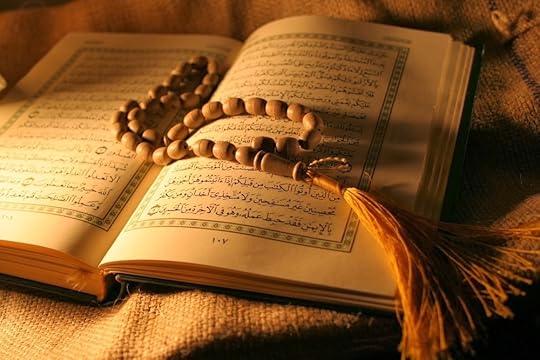
Sources are the first issue. Muslims look to the Quran as their authoritative and essential source of information concerning Allah. And, as you know, Christians look to the Bible for information about God. But you may not know that the Quran sometimes gives credence to the Bible as authoritative (Surah 10:94 ). Of course in later revelations the Quran accuses Christians and Jews of changing the scripture at worst and misinterpreting them at best.
How, then, does the Quran describe the character of Allah? On the surface, there are a number of characteristics that are similar to the God of the Bible. When considering Allah's nature, we find that Allah is One (47:19), as in Scripture. Allah is outside of creation, and is self-sustaining (3:1). Allah is also sovereign over all creation (17:13). He is never referred to as spirit, though one would suspect that Muslims would find commonality in Christian's description of God as spirit. Allah's natural attributes are similar as well. He is perfect in knowledge (15:25), and Allah is to be exalted (45:37).
Christians and Muslims would find common ground in Allah's moral attributes. Allah is never unjust (4:40). He gives life (46:33), and created the world in six days (32:4). He has dominion over his creation (5:120). As Allah interacts with his people, he is gracious and merciful (1:1-4), and watches over them (67:19), and says that he will be their friend (6:127). He demands right behavior (96:1-19), but he forgives (11:3).
Right behavior includes caring for the poor and for widows (93:6-11), ensuring justice for the poor (4:2), and doing good to others (4:36). It also includes worship as Creation and people adore Allah (2:21). But when people do things that are wrong, Allah forgives (11:3). In one instance, there is an intercessor (34:23). However, if anyone disregard's Allah's message, there will be hellfire that awaits them (72:24).
In spite of all of these similarities, there are a number of characteristics that are at odds with scripture. And many of those characteristics bring into question the integrity of the attributes discussed above. First, the Quran says that Allah is above all comprehension (6:103). For the Muslim this means Allah is unknowable. However, this defies logic. Certainly, there are certain things that we do know about God. While many statements about God's nature are in the negative, there are characteristics that can be known: his justice, his forgiveness, and most importantly in the Quran, his oneness. So Allah can be known to some degree. The Quran also explicitly denies the trinity (5:73) and specifically says that Allah does not beget, nor his he begotten (112:1-4). This seems to be a reaction against Christian theology that Mohamed encountered that contradicted his strict adherence to Allah's oneness, and his misunderstanding of the idea of begotten. Allah also swears by things other than himself. He swears by the sun, moon, stars (91) and swears by the angels (79:1).
Another contrast are a number of practices Muslims must do that can be summed up in obedience (26:108). Obedience is the most important aspect of a Muslim's life. Unfortunately, Allah might engage in tempting people (43:36-38). Fortunately, he forgives, but it is conditional forgiveness (3:31) and based on behavior. This stands in direct contrast to God, who forgives through faith in Jesus. In a number of places in the Quran, Allah's forgiveness and salvation is based on the work that people do (23:102). However, forgiveness is only for those who avoid great sins (53:32). This calls into question whether Allah's mercy is a consistent. Unfortunately, for those who cannot please Allah, Allah declares that there is no intercessor (40:18).
When people do obey, he will make them successful (3:147), which is consistent with “Christian” prosperity theology, and in contradiction to the reality in 1Peter that Christians will face persecution and difficulty. The same deeds that bring prosperity to obedient Muslins will also reap eternal rewards (95:6).
Another issue with Allah's character is that he changes what he says (10:64), so what is said now may not be what is said later. In fact, Allah tricked the Jews (who are apparently his chosen people at one point) to think that Jesus died, when in fact Jesus did not die (4:157). God only loves those who love him first. But all of this is for naught. If Allah decides, he will punish you whether you live a righteous life or not (17:54). An interesting command not found in the bible is that Allah tells the angels to fall before man (38:72)
One of the biggest differences between Islam and Christianity is the purpose for creation. There is a strong tradition in Christian history, in what John Piper calls Christian Hedonism , or rather finding our deepest satisfaction in the Glory of God. However, Allah is not focused on the joy of his creation, he is focused on obedience and judgment (45:22). In fact, judgment is one of the most important topics to a Muslim. There is no security in their salvation. Allah may allow them into paradise if they do enough good works (23:102), but in the end, they may not make it in at all if Allah so wills (2:7).
Pastor Jack, these contradictions call into question the claim that the God of the bible is the same as Allah. One of the most striking contrasts between Allah and God is that Allah grants forgiveness without exacting any punitive judgment. That is, when a wrong is committed, there is a need to give punishment for that wrong. For Christians, this is satisfied in the death and resurrection of Jesus. However, for Muslims there forgiven sins are not satisfied through punishment. So while Allah is just, his justice is not perfect . By perfect I mean that Muslims do not believe in the depravity of man or that forgiveness provides entrance to the presence of Allah for eternity. As such man does not need to be cleansed from sin to enter into his holy presence. Forgiveness, for Muslims is just a key that gains entrance into a paradise devoid of Allah. That is why Muslims do not have a problem with Allah’s capricious nature. If holiness isn't required to enter into the presence of a holy being, then forgiveness doesn't require restitution for sin. Their claim that Allah is all powerful and can do what he wants sounds reasonable. But inso claiming, they dismiss the idea of a perfect deity. Either Allah is capricious or he is perfectly just. He cannot be both.
So what is the conclusion? Are Allah and God the same? The only sources we have are from the Bible and the Quran. It seems fairly clear to me that the Bible and the Quran are describing two significantly different gods. One might say they are the same because they are both "one", but the differences are too wide. I don't think we can reasonably and honestly tell our Muslim friends that we believe in the same god and that we believe essentially the same thing. It should be noted that not all Muslims will be well versed in the Quran, and that most of them might not understand some of the more capricious elements of Allah’s nature.
2. Is Mohammad the same as the Prophets in the Bible?
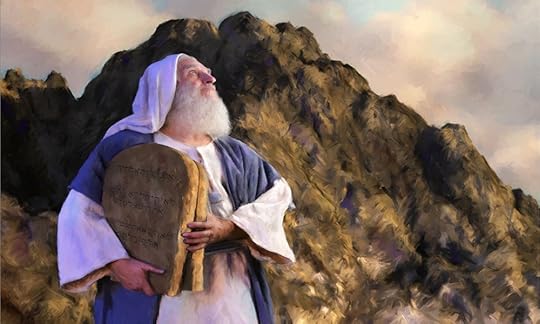
Muslims might make an appeal to Christians that Mohamed is part of the tradition of Abraham, Moses, and Jesus. Certainly passages in the Quran refer to many characters that we are familiar with. Some Muslims will make the argument that in John 14, Jesus was not referring to the Holy Spirit, but was referring to Mohammad! In fact, one person I spoke to acknowledged that Mohammad's message is, in fact, somewhat different from Jesus’. He went on, though, to say that the differences in the message between Mohamed and Jesus is not the same as the difference between the message of Jesus and Moses. So how do we discern whether Mohammad is prophet in the same vein as Moses and Jesus?
Pastor Jack, it might be wise to review the office of prophet. Prophets claim to speak for God. This claim is serious, and the Old Testament was extremely harsh towards prophets who were found to be false. So how do we know that a prophet has authority? The most common appeal to authority is to words that were already recorded from God. Old Testament prophets such as Isaiah, Samuel, and Jeremiah spoke with authority to call individuals and people back to obedience to already revealed laws and covenants with God. 1 John 4 instructs us to test the spirits and confirm that the message the preacher or prophet is giving matches that of the Old Testament.
Mohammad's message never called people back to the message of Jesus in the New Testament or the laws and covenants of the Old. Mohammad proclaimed that Abraham and Moses declared that there could be no intercessor (53:41). Though Mohamed uses Biblical characters, his stories do not match those of the Old Testament (Surah 20). Though there were elements in Mohammad's message that can be a point of connection with Scripture he leaves out significant requirements. Mohammad is calling people to obey (Surah 92), and certainly obedience to God is to be lauded. He warns people that if they do not follow Allah that there will be punishment (111:2). Certainly as Christians part of proclaiming the Gospel is not only proclaiming that which is good, but also warning against eternal damnation.
However, I think it should be noted that there were prophets who did come and give new revelation, or new perspective on revelation. Moses' words from the Lord were not something the people of Israel were familiar with (though God's character could be seen in them). Both Moses and Jesus presented a new message, and had to show that they had authority. Moses displayed miracles in front of Pharaoh and in front of the Israelite community. Jesus not only performed miracles, but took it a step father and did that which was only ascribed to God, he forgave sins and made people clean.
The message of Mohammad was not accompanied by miracles. In fact, the people that Mohamed preached to in Mecca wondered why there were no miracles. They were looking for some confirmation of his message.. Mohammad at first declared that soon miracles would come that would show people he had authority (21:37). However, Mohammad could not produce any supernatural miracles (20:133). Rather, the Quran declares that the Quran itself is a miracle (17:90-93). Recently, I spoke with a Muslim friend who repeated this. "The Quran is a miracle! Nothing written by man could ever be so beautiful." In his biography of Mohamed, In Ibn Ishaq gives accounts of Mohamed performing miracles, but the biography was written over 100 years after Mohamed died, and so it seems these stories were added later in order to reinforce Mohammad’s authority.
I should emphasize, Pastor Jack, that the message of Mohammad is not in line with scripture. While Jesus brought something new and seemingly foreign, it was possible to look back at the Old Testament and see how Jesus fulfilled, not only the prophecies, but became the lynchpin of the whole of process of God bringing his people back to him. Jesus was the logical next step . Indeed, Jesus even explained this on the road to Emmaus. Mohammad didn't do anything like this. Mohammad’s message was that Jesus is not divine and that God is not Triune (4:171-172). Mohammad's message also denies that Jesus ever died on the cross (4:157-158). It is not possible to reconcile the message of the bible with the message of Mohammad. The only way to bridge the incongruence is to assert that scripture has been altered - one that we as believers do not accept.
The third issue of authority is the source of the authority. Where did the Quran come from? The Quran asserts that it is the direct word of God, not mediated by any man as Muslims will say of the bible. However, when Mohammad first received his revelation, he was unsure of whether or not he was possessed . His wife had to convince him otherwise. This is a shocking recording in the Quran, since it so adamantly argues for its own authority (68:2). In contrast, the source of Moses' message was God, and that was clearly laid out when he visited Mt. Sinai. It was displayed powerfully with the cloud of the Lord that stayed with Israel while they traveled. Jesus' source is God himself, since he is God.

There are additional problems with the Mohammad. Mohammad was not subject to the laws that the rest of the Muslim community was subject to (66:2). In particular, he was allowed more than four wives. You also get the sense in the Quran that some of the regulations are based on his own personality and idiosyncrasies. At one point, the Quran declares that chattering women are not to approach the prophet (33:53). Is the Islamic practice of separating men and women based on this?
The conclusion is, I believe, clear. Mohamed is not a prophet in the biblical sense. He has no authority. His message is not the same as that of the bible. He even questioned the nature if Quran’s source. Did it come from Allah, an angel, or a jinn? The source of his authority is in serious question as he was not even sure who he was talking to, even after the revelation had finished. Third, Mohamed has no power or miracles to confirm his authority.
3. Is Islam a religion of peace?

Pastor Jack, for Christians who do not regularly interact with Muslims, this is one of the most pressing questions today. There are contradictory messages: the Islamic State in Iraq and Syria adhere to the most violent and brutal forms of Islam, while the new mayor of London is a Muslim who, on the day after he took office visited a cathedral, visited a holocaust museum, and spoke vehemently against anti-Semitism, chastising even his own party. Which Muslim message is true?
The Quran itself is unclear. There are a large number of verses that command Muslims to kill and destroy. The most famous is the verse of the Sword - "kill the polytheists where ever you find them" (9:5). There are a significant number of similar verses. However, there are verses such as 5:32, "if you kill one man it is as if you have killed all of humanity." There are conflicting opinions among scholars as to which one is more important.
The question lies in how you interpret the Quran. Are particular comments situational or universal? Certainly there are similar questions and accusations about the bible. How are Christians today to understand God's command to Israel to destroy the people of Canaan? Most Christians would interpret that as situational. One of the difficulties of the Quran is that there is not an inspired narrative with which to judge the commands. It is as if you have Isaiah separated from the Old Testament context. Ibn Ishaq's biography of Mohamed helps to give some context, but while this is certainly authoritative on the life of Mohammad and his following, it is not considered inspired.

A unique problem in the Quran is the principle of abrogation. Abrogation is the Islamic theological concept that whatever comes later supersedes what comes before. 2:106 says, "None of Our revelations do We abrogate or cause to be forgotten, but We substitute something better or similar: Knowest thou not that Allah Hath power over all things?" Mohammad certainly recognizes that he is changing the message, so he determines that whatever comes later supersedes that which comes earlier. Topics of abrogation include wine, divorce, and of most interest - fighting and violence.
The problem is that the Quran is not clear as to which text abrogate another. There are also questions on the order in which the Quran was revealed. Additionally, it does not seem as if Mohammad has a clear theology which directs abrogation. Revelations seem to be, for the most part, situational. So where the Bible has a theme of God redeeming his people, the Quran struggles to pull together the patchwork of responses into an inconsistent theology.
Let's consider one of the most quoted verses on violence, 9:5-7. It states, "But when the forbidden months have passed, then fight and slay the pagans wherever you find them, and seize them, beleaguer them, and lie in wait for them in every strategy of war, but if they repent and establish regular prayers, then open the way for them, for Allah is oft forgiving, most merciful." First, we find that this is referencing a specific event. It is after the forbidden months (months when it was not polite to engage in warfare). Second, the preceding verses refer to a specific treaty with the pagan tribes around them. Mohammad gave them four months to convert. If they were not converted before hand, then they should be killed.
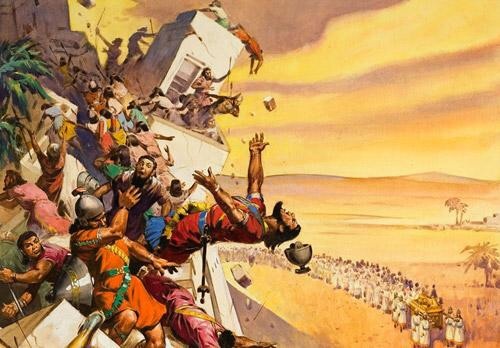
How is this verse dealt with by Muslims? Some Muslims will say that it has a specific context, and will compare it to verses in scripture such as 1 Samuel 15:2-3, where God commands Israel to wipe out the Amalekites. Few Christians, and certainly no Christians respected by the Church, would take the view that this is in effect for the church today.
However, there are plenty of Islamic scholars that would take this verse in the Quran and apply it universally. Not only applying it universally, but since this verse is a much later revelation, that it abrogates most or all prior verses that describe peaceful ways in which Muslims should engage with people of other religions. It should be noted that Mohammad's followers and successors interpreted the verses as aggressive. Indeed, Muslim empires have a long history of treating Christians within their lands as less than equals. Not only that, but there is a significant portion of Muslims who interpret these verses as universally applicable, and probably a number of Muslims who are sympathetic to this interpretation (though not ready to pick up the sword themselves).
The immediate question for us, Pastor Jack, is what this means as we engage our Muslim neighborhood. First, I would encourage you not to assume that your friend interprets these verses as I have described. There are plenty of well meaning Muslims who see the Quran as a truly peaceful religion, though I suspect that he (or she) will not have wrestled with the verses in the Quran that advocate violence. Second, if the topic comes up, meet that person where they are at; not where the Quran is at. Third, the temptation for many of us is to become defensive, or worse, self righteous, when it comes to verses like these. But we must strive to show love in patience, kindness, not boasting or prideful.
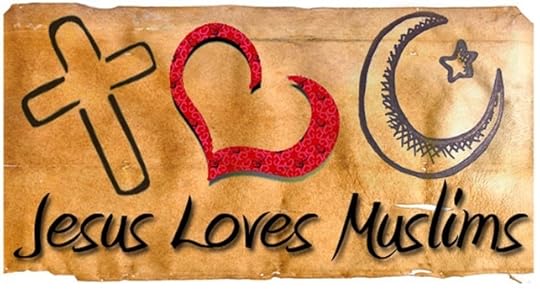
The Muslims we meet need the love of Jesus. Many are hungry to meet God in some real way, and have not had a personal experience with God the Father, the Son or the Holy Spirit. Their religion is based on works, and there is often fear about whether or not Allah will let them into paradise. However, we are secure in knowing that no one can snatch us out of the Father's hand. I encourage you to engage with your Muslim friends, showing them love and compassion not only in talking about issues of religion, but in all aspects of life. And as you share with them, share with them the good news of the death and resurrection of Christ. Not all hearts are good soil, but some are. And maybe, just maybe, God is using this time to grow the church among Abraham's lost son.
Sincerely,
Edmund
May 11, 2016
Who Done It? A Godly Mystery!

Everyone loves a mystery. The good ones have common elements: Hero, Villain, Plot, Sub-plot(s), suspense, twist, climax, resolution. When the story is over we are emotionally moved to identify with the outcome. The emotion cans be positive or negative, the identification can be with the hero or villain. God has presented us with a mystery that had been hidden for generations.
Hero: Triune God
Villain: Satan
Pot: the perfect creation has been cast into darkness by Satan. How will God (if he can) redeem his creation.
Sub-plots: Cain and Able, David and Bathsheba, the Kings and Prophets, etc.
Twist: The cross. Our hero (Jesus) seems to have been beaten by Satan. The Hero loses.
Climax: The resurrection. Sin and death are defeated. Satan no longer holds captive those who are followers of Jesus.
Resolution: the church age, as it lives out the reality of the resurrection in a continuation of the redemption of all of creation. The second coming of Jesus is the finally, the curtain call, of the story.
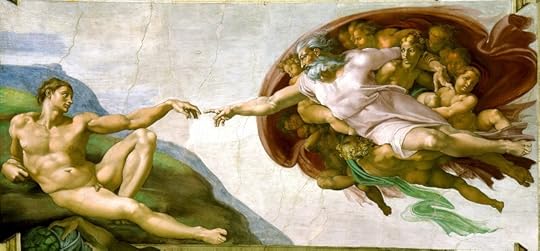
We are living in the resolution! We have a privilege that had been kept hidden for generations. We are now minsters of the gospel, called to make known the Word of God, through which the mystery and its resolution has been made known. God in his mercy has made known to us a way through the veil of sin, to be forgiven, washed in the blood of Jesus, to have hope to live with Him forever.
But I have a question, why did God keep the gospel hidden for so long? Three passages give us clues.
"For while we were still weak, at the right time Christ died for the ungodly" Romans 5:6
"But when the fullness of time had come, God sent forth his Son, born of woman, born under the law, to redeem those who were under the law, so that we might receive adoption as sons." Galatians 4:4,5
"making known to us the mystery of his will, according to his purpose, which he set forth in Christ as a plan for the fullness of time, to unite all things in him, things in heaven and things on earth." Ephesians 1:9,10
The answer is somewhat elusive. The bible doesn't come right out and say, but we do know that the time was right and the events of time had become full, complete, and sufficient. So, what was the rightness and fullness?
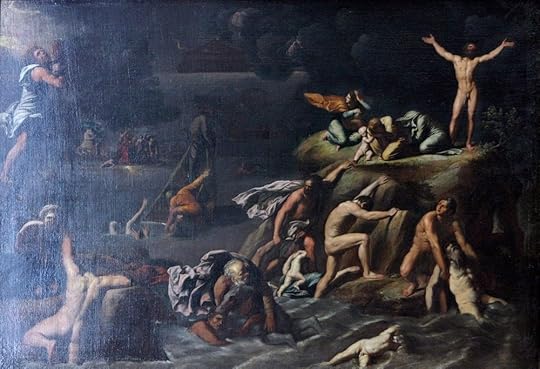
It happened before, you know, back in Genesis,
"The Lord saw that the wickedness of man was great in the earth, and that every intention of the thoughts of his heart was only evil continually." Genesis 6:5
Sin had run rampant. The whole earth had turned against God. It was so bad that God regretted creating the world. This seemed to be the climax of the story, and that Satan had won. God lost the cosmic battle over man's heart and he was going to destroy it all, but was he? The twist in this sub-plot took Satan by surprise. Instead of destroying all of creation God only destroys man, and even in this he spares the ones who had stayed faithful to Him.
The fullness of time was not a positive moment. It was the wickedness of man's heart. If not for God's actions all would have been lost. If we take the Genesis genealogies at face value it was around 2000 years from creation to the flood, and from the flood to Jesus another 2000 years.
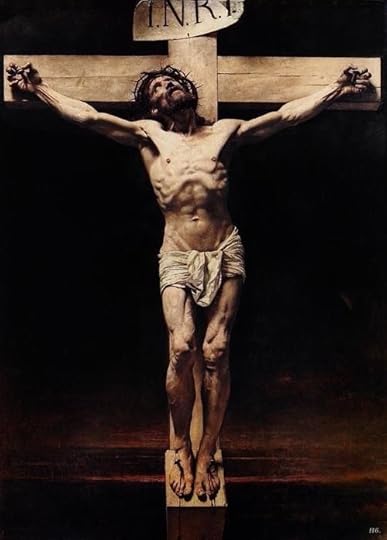
The fullness of time between the flood and the cross was the same thing, the wickedness of man. This time it included the insufficiency of the law to bring about the heart change (righteousness) required by God to redeem His creation. Something had to be done to deal with sin and to fulfill the requirements of God's holy nature as illustrated by the law. It seemed hopeless because everything in creation was (is) insufficient.
BUT, at the right time, when we were in sin, God sent His Son to fulfill the requirements of the law. The climax to Satan and the world was the cross. In that moment everyone but God thought the Father had lost. When the darkness couldn't be any thicker God pulls back the veil and reveals the twist: Jesus is resurrected, death is defeated and sin no longer has a hold on creation!
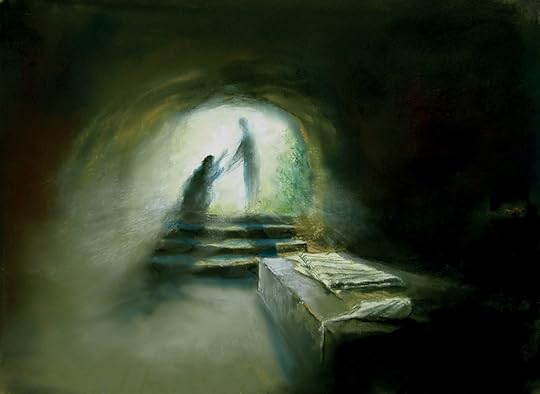
Today we are ministers of this great story, making known the word of God and God's victory. The sub-stories in the process of resolution are the skirmishes between Satan and the Church. In his death throws the evil one is still trying to thwart God's plan, but everyone who knows the Word understands that the battle of redemption is over and now we are fighting for the hearts of those who are still lingering in the shadows.
Paul says in Romans that the whole of creation groans waiting for its resolution. Peter says that God is not slow in keeping his promise to resolve all of Creation, but that one day the totality of God's creation will be consumed by fire and something more majestic will takes it place!
To this we have been called! The story is ripe for the telling. Are you with me? I'm just saying.
May 7, 2016
You're Called What?
I have been called by God. That is a weighty claim. It can be full of abuse, misuse, and arrogance. It is also full of responsibility, fear, and obligation. Looking back at the Old Testamentsaints, prophets, and kings who had been called by God is a sobering study. There were those who were persecuted, Kings who abused it, and those who stood steadfast in their call to deliver the Word of God.
The New Testament apostle, prophets, and pastors felt the same weight of their call. They could not resist it, they struggled with it, they endured hardship as a result of it, they wrestled with the church through it, and they often died because of it. They found their inspiration and strength in the Spirit, their hope in the resurrected Jesus, and their security in a loving Father. They felt the love a grateful church, and they were spurned by the same.
I have been called by God. As I look back on my life I believe the Spirit has affirmed this call, over and over, and when I have resisted it I have be discontent. It is in understanding the nature of the call that helps ground me in it and persevere through it.
Colossians 1:25a, "I became a minister by the stewardship of God." All those who have been called by God are given a stewardship. The ministry doesn't belong to us or the church, it belongs to God. He gives it to us to care for, to feed, and nurture. He expects a return when He comes back, but it is not based on the world's idea of success. Have we been faithful and have we invested in the lives of others for the glory of God? The call by nature is ouward. It is not about me, but about others. It is a ministry.
Colossians1:25b, "that was given to me for you." Ministry by nature is for the benefit of someone else. It isn't about building personal kingdoms, majestic cathedrals, large incomes, or personal followers. It's about building God's kingdom, God's church, God's investments, and followers of Jesus. That means as a minister, called by God, I exist for you, the church. Not to be at your every beck and call, but to serve you in such a way that will make you fully devoted followers of Jesus.
Colossians 1:25c, "to make the Word of God fully known." As a minister I am called to make the Word of God fully known to the Church, so that it can become the bride which is honoring to God. The Word of God defines how I am to minister. I am to speak the truth in love, bring comfort to the broken hearted, pray for the sick, strengthen the weak, help the poor, and equip the saints to do likewise. I do this on behalf of God, for the church, unto God's glory.
I have been called by God. I know I haven't done it perfectly, but I hope that I have done it faithfully. I don't want to come to the end of my life and find that I have wasted my call, that I have invested unwisely, that I have set my bar too low, and my legacy was but sand.
Have you been called? Maybe not to full time ministry, but to minister within the Church. You have been given a gift, how will you use it? How will you invest it for the kingdom of God? Don't bury it and hope for the best. Hold it out for God to bless and use, and watch what he does with it. It's not ours anyway, we are only stewards. I'm just saying.
April 13, 2016
Ouch! That Hurt!

I am not a big fan of suffering. In fact I would rather avoid it if possible. I would chose a pain free life over the alternative any day. I'm with the Apostle Paul when he instructed Timothy to "[pray] for kings and all who are in high positions, that we may lead a peaceful and quiet life, godly and dignified in every way."
Of course Jesus said that the world hated him and they will hate us as well. Which means we don't need to go looking for trouble, it will find us. That's why suffering at the hands of other believers is so discouraging. Most of us have experienced it at some level or another, and depending on the severity and our threshold for pain, we either stick it out or leave. *Sigh*
This is where I struggle. If the church is the body of Christ, how can I in good conscience abandon her just because things get difficult? There are some who say that they haven't abandoned their faith just the church. But the church is the body of Christ. It is in the midst of the church that we demonstrate our love for Jesus. The church is the hands and feet of Christ, not the individual.
I don't want to diminish anyone's pain, because I know from experience how harsh the body of Christ can be. But what does Paul mean when he tells the Philippians that to truly know Christ they need to experience the power of his resurrection AND the fellowship of his suffering?
Paul tells the Colossians that he rejoices in his suffering for the sake of the church. I know that part of that suffering is from unbelievers, but he also suffered at the hands of believers. He doesn't make a distinction, but rather rejoices because his efforts promote the gospel and gives glory to God.
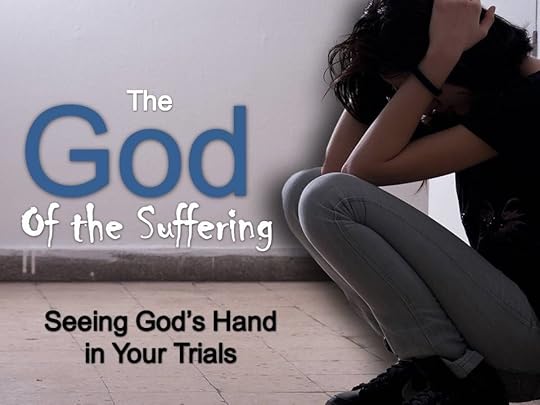
All I know is that people who give up on the church, even though they have faith, are not living in obedience. Even though obedience is difficult we are still to walk in it. This suffering is what was lacking in the suffering of Christ.
Jesus' suffering wasn't insufficient for the salvation and sanctification of the church. But suffering in this life is continual until the day of Jesus' return. When we suffer for the sake for the body of Christ we are continuing in Jesus' humility toward those who believe. In a sense we are filling what is lacking, and since we are the body of Christ, it is Jesus who suffers.
So how do we, who have suffered at the hands of the church, turn it around so that we are suffering for the sake of the church?
1. Rejoice. James says that we are to rejoice in our suffering because the outcome is godly character. Paul tells the Philippians to rejoice and not be anxious because God is in Control. Some times it takes stepping back and taking a deep breath to see and understand what God is doing in your suffering. But he is doing something. Don't disengage.
2. Restore. Seek restoration with those who have wronged you. This might mean asking or granting forgiveness. It might mean bestowing mercy if they are unrepentant. It might me swallowing pride and confessing where you might have been wrong. This isn't easy. It wasn't easy when I did it, and it won't be easy for you. But then suffering for the sake of the church never is.
3. Return. Find a church to fellowship with. It may be the one you left, or it may be another one. Whichever you chose it is imperative, obedience calls for it. We are not individually the church, and we can't live in fellowship with Jesus apart from his body. To think otherwise is to have fallen for a lie.
4. Re-engage. You are uniquely gifted to fill a role within the body of believers. You add to its fullness. If it needs a teacher, teach. If it needs a giver, give. If it lacks compassion, be merciful. Every believer has a gift to use, use it.
I am falling in love with the church again. Not because she is perfect. Not because I have found the secret to be pain free. Not because anything has changed (though maybe in me). I am falling in love again with the church because she is the bride of Christ. She is the body of Jesus. She is the vehicle God has chosen to express love to Him, to each other, and to the world. I am finding my first love again, and it is the best feeling ever. I'm just saying.
"Now I rejoice in my sufferings for your sake, and in my flesh I am filling up what is lacking in Christ's afflictions for the sake of his body, that is, the church." Col. 1:24
April 12, 2016
Dried Up And Useless
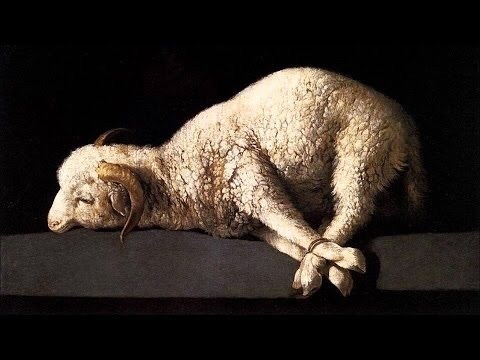
Over the past couple of weeks I have been visiting my son in the Middle East. In their small group we have been studying the book of Leviticus, in particular the offerings. Last night we were reflecting on the the incongruity of the sacrifices' as a sweet aroma to God and the reality that the numerous and continuous sacrifices would have smelt horrible. Blood splatter, flies buzzing, and decaying flesh served as a reminder of the human condition. So what made such a stench a pleasing aroma to God? It was the Israelites' faith that their offering would reconcile them to God. It was the sweet smell of grace and forgiveness.
Paul says that the cross is an aroma of death to unbelievers but an aroma of life to those who believe. It's a messy process delivering people out of darkness and into the light. But then again we are messy people. We who believe are most fortunate because Christ's blood has reconciled us to the Father in order to present us unblemished and above reproach to God. We celebrate in the prospect of standing before our Father loved and accepted. But there is a condition.
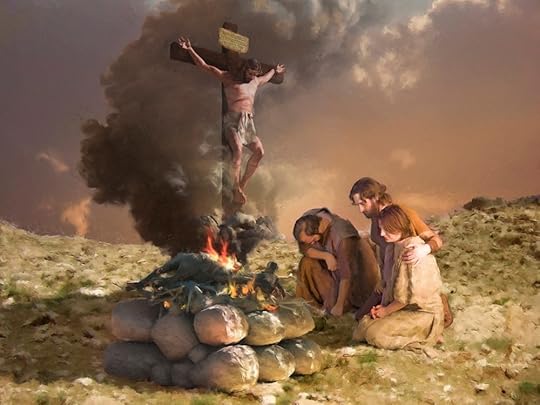
Wait just a minute! I thought once saved always saved. I thought no matter what I do me and God are good? I thought works is dead?
Colossians 1:23 gives a clear warning that we need to heed. We will be brought before the father unblemished if we continue in the faith. I have seen too many parents watch children wander from the faith and then say, "well, at least he accepted Jesus as a child." But according to Paul past professions are meaningless in the face of apostasy.
The Armenians will say he left the faith and the Calvinist will say he was never a believer, but it doesn't matter how he gets there if the lack of faith sets him a part from God. There are too many wolves in the church that want to water down or add to the gospel. They preach prosperity, liberation, legalistic, and hedonistic gospels. They delude the cross and blood, and sanitize Jesus' death. They pick and chose what scripture will make them feel good or justify their behavior. They are unstable and shifting, and in the end abandon the faith for an empty forgery.

We have less to worry about outside the church than we do inside. We hear of the atrocities against Christians by Muslims and worry that the church will disappear in the wake of its brutality. But the self inflicted wounds of textual criticism of the late 1800s turned Europe into a Christian wasteland by 1905, and the twentieth century has seen an increasing decline within the church of America. The church needs to listen to Paul's words to the Colossian church. We need to use them as a rallying cry to a deeper faith on the foundation of Christ. Only then can we stand unshaken amidst the storm.
Our behavior matters. Our thinking matters. Our love for one another matters. Our deep and abiding faith in Christ matters. Praise God that we have been reconciled by his blood and that he is presenting us unblemished and above reproach before the Father! Don't be led astray. I'm just saying.
"he has now reconciled in his body of flesh by his death, in order to present you holy and blameless and above reproach before him, if indeed you continue in the faith, stable and steadfast, not shifting from the hope of the gospel that you heard." Col. 1:22,23