Michelle Rene's Blog
May 23, 2019
June Announcements and Appearances
 There is a lot going on right now in my world. Manufactured Witches and The Dodo Knight were released to rave reviews, Manufactured Witches was made into an audiobook, and several of my books have placed in indie book contests.There's one big weekend coming up on the horizon my fans might want to know about. June 21st - 23rd. The Dodo Knight placed with Next Generation Indie Book Awards. That's an amazing honor, and I'm so excited about it! This means I'll be travelling to Washington D.C. to accept a medal at the Indie Book Award gala on Friday the 21st. The next day, I will be attending the ALA Conference (American Library Association). I'll be signing copies of The Dodo Knight from 12pm - 2pm at the Headline Books (957).Sunday, I'll be back in Dallas, teaching three classes at the DFW Writer's Conference in Hurst. I'm lecturing about the following...Bringing Historical Figures to LifeWorking With Indie PublishersEverything You Need to Know About Writing CompetitionsCome by and see me if you are attending either of the conferences. Below are the links...DFW ConferenceAmerican Library Association Conference


July 16, 2018
Types of Publishing: The Good, The Bad, and The Wordy
 So far, I’ve been writing this blog for creatives in general. I advocate for the need and wellness of people who dare to dream with words, music, art, etc. I will never stray from that mission.However, I’ve been getting an overwhelming number of questions from my writing community about the business of publishing. Marketing, agents, and publishers to name a few of the topics that come up often. So I’ve decided to devote my next series of blog posts to the business of writing. For all of you creatives who are not writers, I promise to come back to you later. On to the matter at hand. Publishers. Oh lord, why did I choose that beast of a topic to go first? This is probably the biggest question I get, and I get it often. How do I get published? My answer to them is always “How do you want to get published?” With the literary world in flux, the landscape of publishing options evolves seemingly overnight. So when a young (or seasoned) author comes to me and asks this question, I tell them about all of the choices they have, and what they should expect with each one. I’m in no way a lawyer, but I’ve read enough contracts (mine and other people’s) to make me dangerous. There are a lot of charlatans out there, so you should be informed before you sign on the dotted line. On to your choices... the different types of publishers.1. Traditional Publisher - The Big FiveStephen King, Charlaine Harris, J.K. Rowling and the like go this route. When I say the big five, I mean Penguin/Random House, HarperCollins, Simon and Schuster, Hachette, and Macmillan. Some argue there are six if you go into more international markets, but these are basically the big dogs. If you go with them, it works this way. They will offer you an advance against royalties for print, audio, media, and distribution rights of your book. What that means is you don’t pay a dime to get your book published, and when it is, you get a percentage (royalties).What your royalty rate is depends on the contract. Generally speaking, you’ll get about 10% - 15% on your paperback and/or hardback book. The reason for this small return is that the publisher has to pay for a lot. Editing, cover design, print costs, etc. E-book royalties are a good deal higher (normally 30% - 50%). The reason for that is the overhead on an e-book is much smaller since there are not printing costs, but the price is normally a lot lower, so it sort of evens out.What does an advance mean? The publisher will offer you an amount of money in advance of the publication of your book. Then, you must “earn out” your advance in order to start collecting royalties. So if Macmillan buys your book with a $10,000 advance, you must first earn $10,000 worth of royalties before you start getting royalty checks. Advances can range from $100 to the seven digit range depending on the author. Obviously there is more to it than this, but I’m trying to give a crash course here, and this is the short and sweet version of how advances work.This sounds like the best way to go, but here’s the catch... it’s very very difficult to get the top five to publish you. You will need a literary agent (more on agents in another post), a fantasticly marketable book, and a lot of luck. Having an agent does not guarantee you a deal. There are trends, publishers’ lists, and acquisition editor’s tastes to consider. When I say the industry is in flux, I meant it. If you try to write a book for a trend, odds are by the time it gets to an editor, that trend has passed. So yes, luck is a big factor. Hitting it at the right moment like lightning in a bottle.All this is why getting a deal with a big five publisher is very difficult, especially if you are unknown.2. Traditional Publishing - Indie PublishersThis is a growing part of the publishing landscape. With the invention of print-on-demand (POD), it’s becoming possible for smaller (indie) publishers to jump into the publishing fray. These are publishing houses, that are not affiliated with the top five, but they operate with a traditional publishing model. You will not pay for editing, cover design, printing, etc. The royalty percentages are about the same, if not higher. Some of these publishers do offer advances, but most do not. The advances tend to be on the small to modest size compared to the big guys.With any traditional model, you sign over rights to your book for a period of time. The run of contracts tend to be anywhere from 2-10 years. 4-5 years seems to be the most common. After that, your rights revert back to you, and you can continue to publish with them or take your book and walk. Never EVER sign any contract that doesn’t have an end of term date. If you do, your rights could belong to them indefinitely. The good thing about these indie traditional publishers is that you generally don’t need an agent. Most accept unagented submissions, so any dealings you have with them are direct. Indie publishers are often more open to take risks on unusual and genre-bending books than their larger counterparts.Many of these (if they are profitable) get bought out by one of the bigger publishers and become an imprint. Imprints are like divisions of a larger publisher. One imprint might focus on romance while another does mystery. For this reason, you now see imprints of big name publishers accepting non-agented submissions for certain genres. The biggest downside to these are that there are a lot of charlatans out there. If you are submitting without an agent, you have no one in your corner to read your contract and advocate for you. Definitely consult a lawyer before signing anything. A little homework can help you sift through the publishers out there. Here are some helpful tips and things to look for:- Covers: You can’t always judge a book by it’s cover, but you can a publisher. If the covers are terrible, that’s a good indicator they aren’t putting the money into quality cover design and editing. Some young publishers can’t afford great covers at first, but are good publishers. My advise is to keep an eye on them and see if they improve over time. That’s when you know they are here to stay.- Website: Two things here. First, is their website professional in appearance? You want the publisher who promotes your book to do so professionally. Second, are they catering to authors or readers on the site? Publishers who seem to be advertising to writers to publish with them often are running a scam. That doesn’t go for everyone one of them, but if you are publishing books, your focus should be on selling them rather than selling your publishing services. Often times, those who say “publish with us!” are vanity publishers disguising themselves as traditional publishers. More on vanity publishing below.- Longevity: How long has this publisher been around? It’s sad, but a lot of indie publishers go under within 3-5 years. I myself have had two of my publishers shutter their doors. If they have been around longer than that, and seem to be growing, that’s a good sign.- Reviews: How are their books rated on Amazon and other sites? Are they getting Kirkus, Publisher’s Weekly, or Foreword Reviews coverage? Do they get their books in the hands of librarians, booksellers, and bloggers? These are all good indicators of the amount of marketing they are willing to put behind your work. You will have to do a lot of marketing yourself (this it true with every kind of publishing including with the big five), but a traditional publisher should be invested in partnering with you to sell as much as possible.3. Self-PublishingThis type of publishing is probably done more than any other. It’s name tells you all you need to know. You do everything yourself. You hire an editor, you hire a cover designer, you set it up for e-book and POD. All the marketing is on your shoulders as well.In today’s age of publishing, you don’t need a publisher. Modern technology makes it easy and affordable to create your own book and list it on Amazon, Kobo, Smashwords, etc. for everyone to buy. All of the cost is on you, but all of the profits are yours too. That means after overhead costs, you get 100% of everything you sell and all rights belong to you.This used to be a taboo in the industry. It was considered to be what lesser authors did because they couldn’t get through the rigorous screening of a publisher. That is not the case anymore. While there is still a small stigma in some circles about self publishing, the financial success of such authors as Andy Weir (The Martian), Hugh Howey (Wool), and E.L. James (Fifty Shades of Grey) have changed the stereotype. The plus side of this is that the author reports to no one. They are the boss. While all the financial responsibility falls on them, so does the success. Self published writers are often the ones who want to control everything about their book.The dark side of this is that for every success story, there are thousands of self published books wasting away in obscurity. We used to publish a few hundred books a year. Now, we publish a few million. Getting noticed and selling books is extremely difficult (this goes for all types of publishing but self publishing is the most vulnerable). Those who succeed get great covers, great editors, and market market market.4. Hybrid PublishingHybrid publishing is something that has been growing rapidly in the past ten years. There are a lot of opinions on this type of publishing and what it means. Some say it’s just a pretty word for vanity publishing, while others say it’s turning the most profit for devoted authors. Hybrid publishers offer you services to publish your book. Basically, you pay for editing, cover design, layout, etc. Sometimes this is through a package deal and sometimes it’s in an a-la-carte plan. Unlike self-publishing, where you are in charge of finding your cover design and the like, a hybrid publisher has a stable of professionals they use to work on your book. In short, they take care of everything.With a hybrid publisher, you will get a higher royalty rate than with traditional publishing because you paid for everything up front. I’ve seen rates that go from 60% to 100% as far as royalties go. In my personal opinion, I would never sign a hybrid contract that offers you less than 60%. You should retain all rights to your book as well.Here are a few things to look for when vetting a hybrid publisher.- Covers, Editing, and Marketing: Pretty much everything I said above with traditional indie publishers applies here. Look for professionalism and quality.- Discerning Tastes: A big thing that is supposed to differentiate hybrid and vanity publishers is that hybrids don’t publish just any book that is submitted to them. Part of the appeal of going with a hybrid is having a publisher’s name on your book and not just your own. There’s no point in that if the publisher accepts just any old book. You might as well make your own LLC and publish it yourself.- What do you get: Read the the fine print and see what you get vs what you pay. Some publishers make you pay an arm and a leg and then still want to keep 30% of your royalties. For what? Are they marketing your book? Are they getting you reviews? Do they advertise you on their site and in a newsletter? Are they doing anything other than offering you a publishing service? If the answer is no, they shouldn’t get a chunk of your royalties. That’s just a vanity publisher in hybrid clothing.- Cost: How much they cost is also a big indicator. I’ve seen hybrids charge anywhere from $2K to $20K. Yes really. The whole point of a hybrid publisher is that they are invested in some capacity in your work. If they want to charge you over $10K to publish your book, they sure as hell better offer you something special in there that you couldn’t get on your own or with a vanity publisher.- Affiliation: Is the publisher affiliated with a larger publisher? In the recent years, traditional publishers have been offering hybrid options. Maybe you can’t get an offer from them for a traditional contract, but you could go through their hybrid imprint. Some call this a cash grab for publishers, but others say it’s a way to get your book out there with the prestige of a larger press behind you. Like anything else, do your homework and see what they offer versus what you pay.5. Vanity PublishingI’ve talked a lot about vanity publishing above, so here we go. Vanity publishing is a bad word in the literary community. So much so, you have a lot of vanity publishers posing as hybrids or even traditional publishers.Vanity publishing is where you pay a publisher to publish your book. For a fee, they do all the editing, cover design, layout, etc. They give you the files, and most help you publish it as an e-book and POD. Basically, they do everything for you.A lot like hybrids, right? Well, there’s a few differences. Vanity publishers accept any book. Merit is not a factor. That’s why it’s called vanity publishing. Anyone can hire them to publish their book. And generally, they do zero marketing for you. Some say they will, but that’s normally bogus unless you pay for a marketing service.Another difference is that you get 100% of the profit. This is a service you are paying for. You get all of the royalties and keep all of your rights. If a vanity publisher takes anything off the top, don’t go with them. Normally, they will post as your publisher, so you still get the added prestige of having a publisher’s name on your book. However, if the publishers is a well-known vanity publisher, that name doesn’t mean much.Here’s the thing, and it may be an unpopular opinion. There’s nothing wrong with a vanity publisher if that’s what you want. If you want the control of self-publishing but don’t want to go search out the talent you need to put your book together, go find a vanity publisher to do it for you.Often times, they are called self publishing presses since “vanity” is a bad word, but there are some good ones out there. Make sure you do your homework. What do their covers look like? How is the quality of their editing? What sort of distribution channels do they use? If possible, go buy one of their books to see the quality. Read reviews from other authors that went through them.6. Co-op PublishingThis one is fairly new and very confusing. I haven’t heard one hard and fast definition of co-op publishing, and the examples I’ve come across are varied. The purest version I’ve seen is this. Co-op publishing is where a collection of authors work together to produce each others’ books. Often times a publishing house is born from this collaboration where the members chip in with their varied talents. Little to no money is paid, and the publishing house as a whole takes a small percentage of the royalties for website and overhead costs.What this boils down to is that each member must contribute something as payment. Maybe you are good proofreader or cover designer. Maybe you are all about blogging. Marketing might be more your bag. Either way, everyone chips in to produce each others’ books.This can be with larger co-op publishers and small. The larger ones are almost like traditional publishing houses in that you must be screened for merit and participation values. If they are in need of cover artists, and you are a good cover artist, you have a better shot at getting in.This model can be used by anyone really. Any group of writers can create a co-op publishing LLC easily. As long as everyone is willing to contribute something, the cost should be little to nothing and the rights to your book are all yours. I have seen hybrid publishers boast a co-op imprint or a co-op model of publishing. Those I’ve read about don’t seem to jive with the example above, which is why I say the definition seems to be varied. The hybrids who offer this co-op plan sell it as a hybrid setup with extra cost for them to team with you on marketing. Personally, that seems like an upsell to me rather than a co-op model, but that’s just my opinion from the examples I’ve seen. There might be co-op options with hybrids out there that don’t follow this route.In the end, co-op publishing should be what it stands for. Cooperation.That’s it! Those are your choices... for now. Have I burned a hole in the back of your brain with all this? I know it’s a lot to take in. It’s a lot for me to write down fourteen years worth of publisher knowledge into a blog post. Just know, you have options. Choosing a publisher path is a deeply personal decision. Do you have the stamina to shop a book to publishers for years? Do you want to take the reigns and do everything yourself? Homework homework homework. I can’t stress this enough with all forms of publishing, but especially indie publishing. Talk to authors who worked with them, ask questions about how much you pay, and what rights do they hold. How long does your contract last?It’s all up to you. It’s your choice. In a way, that’s what is beautiful about the publishing world today. You have choices. Your book can reach readers that will love it. Just don’t jump into it blindly.
April 25, 2018
The Value of Competition
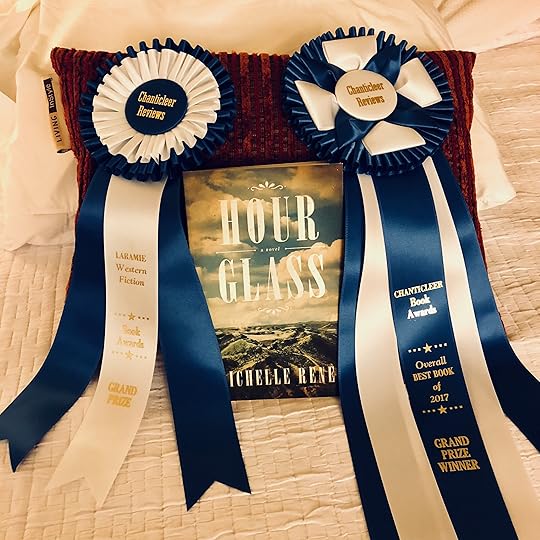
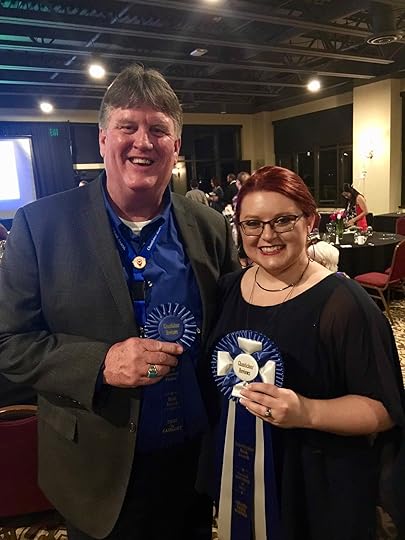
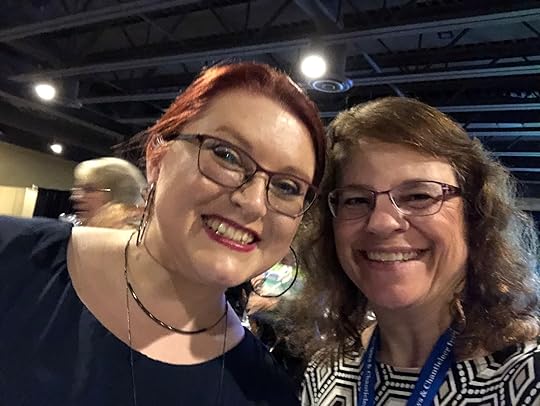
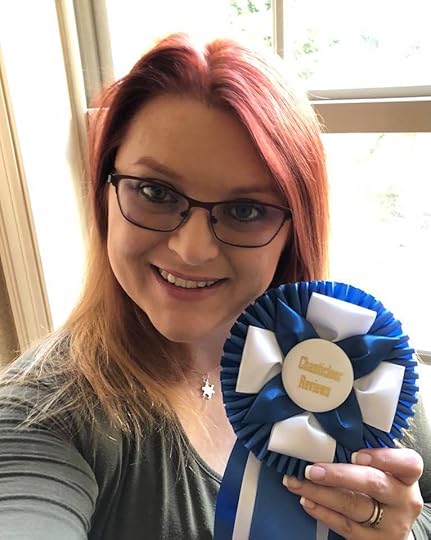
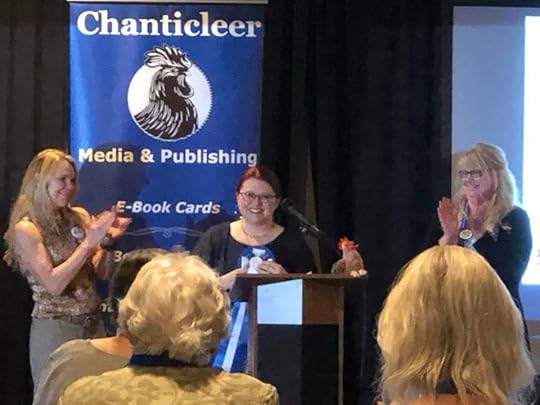
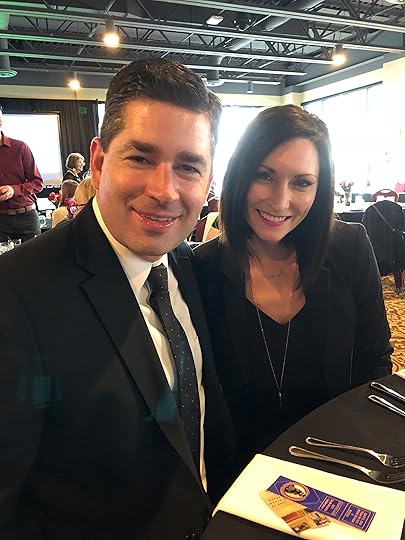
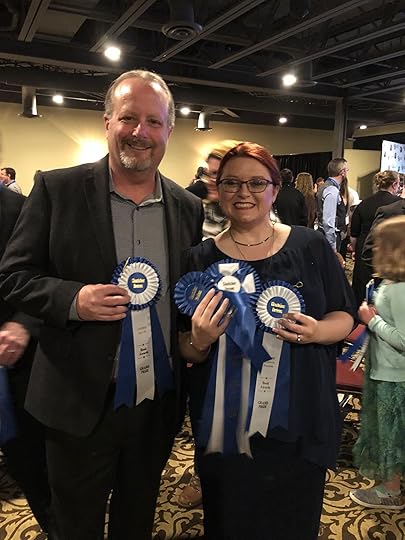
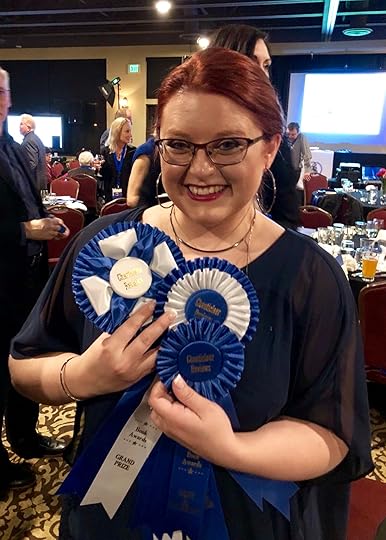
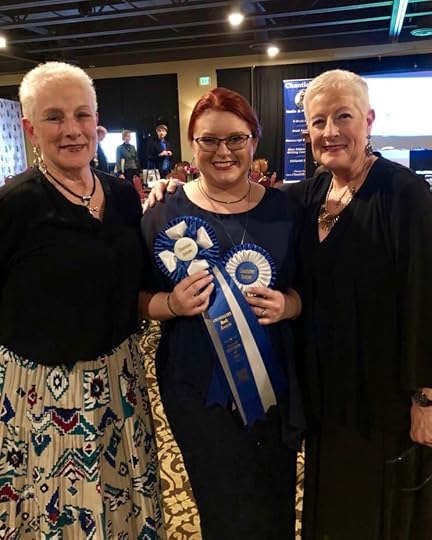
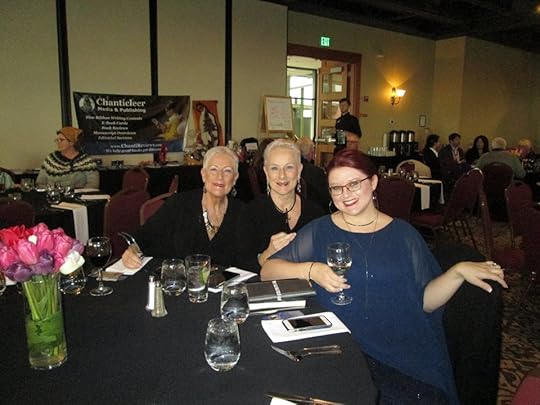
 This post may sound like an oxymoron. Michelle Rene, the creative advocate who monologues regularly about the virtue or working together, is now writing about how important competition is. She must have won something recently. Well, that's true, but there's more to the story. "Look to your left and look to your right. These people are your competition." I've heard that before in college, and I'm sure most of you have too. Everyone around you is competition for money, prize, jobs, etc. This is true but it isn't. There's more to the story.Let's face it. There are more people in the world than ever before. And it's easier than ever before to put something you've created out into the world. Technology connects us all. This is wonderful in that it gives voices to those previously denied. People are able to create art, write music, and publish books on their own.The issue now is getting your work noticed. Your one book/painting/song gets swept away in the tidal wave. I'll use books as my example since it's relative to my experience. Not too long ago, the publishing industry would publish 250 books a year. Now, around 2 million books are published a year. How the hell can you stand out?Competitions. Now, there are the rules that we remember from school. Everyone competes with one another for the big prize. There can only be one winner and the rest losers. Now, it's not polite to be a sore loser, but the nature of the game made us seethe internally as kids. "Why didn't I win?" "His project wasn't so great."This old way of thinking about contests had good and bad qualities. Competition often makes people try harder. If there's a prize involved, the want is stronger. This brings out our best performance. Well, for some of us it does. The rest, those who never win, don't even try because they've been beaten down over and over again by those who always win. What's the point in trying? There's only one winner and the rest losers.I'd like to submit a different way to approach contests.What if we didn't see everyone as our competition? What if we observed our work and it's placement in a contest as a benchmark to measure our own accomplishments and not someone else's? What if we celebrate others around us in the spirit of lifting each other higher? If competition motivates us to do better, imagine where our work can go if we all collectively move the bar together? It's no secret that I'm an indie author and a staunch advocate for creatives. Ever since I started submitting my own work in competitions, I started seeing this idea as a reality. The idea that these other authors are not my enemies. When I entered my novel, I Once Knew Vincent, into the Chanticleer Reviews Book Contest, I had no idea what to expect. When they told me I was a finalist, I was floored. As soon as tickets were available, I went to Bellingham, WA to attend the conference and award gala. There I found a community of authors. A supportive group who pulled me in and congratulated me when my book won first in category. "Keep writing," they said. "You're doing great. This is worth it."These people are still my friends today. Did I win the big prize? No. I lost the overall historical fiction prize to the man who won the grand prize. When I watched him go to that stage, I felt two things. Not bitterness toward him like you'd think... like we've been conditioned. He's a lovely person, and we are still friends. I was truly happy for him because he was just like me. A writer trying to tell a story. I was disappointed it wasn't me, but hey, I still got a cool ribbon for best in category! What did this make me do? I wanted to try harder. To write better. To go back home and bleed it all out on the page again. I wasn't labelled "loser." Those other writers weren't really my competition. I was. It's the opposite of how we are taught to see contests. Winning a contest isn't really about beating other people. It's about elevating your work to a winner status. That's a different mentality... a saner one. Staring at other people's work and comparing it to yours gets you absolutely nowhere. There is no win if you aren't producing your best work. Screw what everyone else is doing. If you're writing your best book, it won't matter what the others are doing.I've been to these contests, and I've cheered on my friends. Sometimes we were in direct competition and sometimes we weren't. But always we cheered one another on. I wanted to see my fellow creatives succeed sincerely. Other writers were the same. We've created communities of support. These are my colleagues, my advocates... even when our books are competing. Last Saturday, I went to the Chanticleer Award Gala, the same one that lifted me up for the first time three years ago. My novel, Hour Glass, was up for an award. I sat at a table as they announced the category winners, and my friends cheered loudly when I won for best western novel. Such a great moment!When they announced that Hour Glass was the winner for the best book of the year, I could barely see straight from the excitement around me. Writers, most of whom were competing for that very honor, were on their feet and screaming my name. The world trembled as I walked up to the stage. I was so shocked, I barely remember any of my speech, but it ended with everyone giving me a standing ovation. People mobbed me after. They wanted me to sign their books, take pictures with them, and talk about my story. I was hugged all night by people I both did and did not know. Newer authors were inspired by my speech and were enthusiastic to start their next books. I rose above the sea of books not to the jeers of others but with their applause. It's such an honor. I competed against no one but myself... and I won.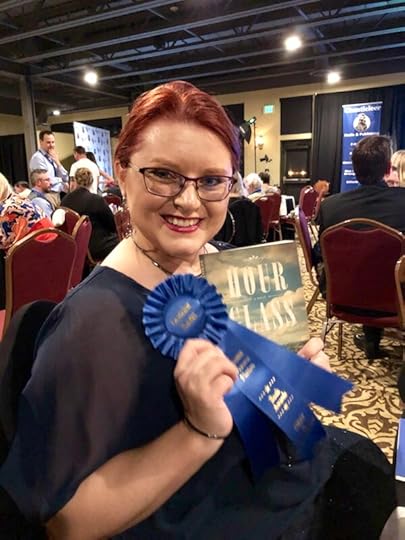
March 2, 2018
Charity Zombie Anthology
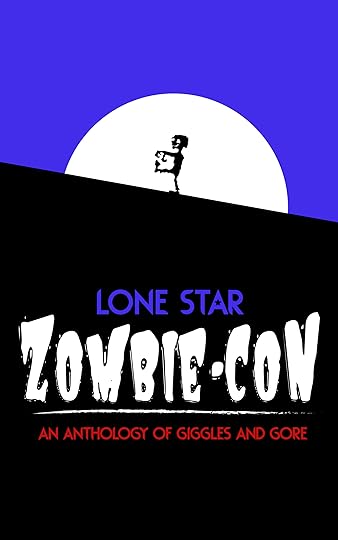 Last September I was scheduled to be on a panel at Fandemic discussing zombies in our culture and why we as humans are so fascinated with putting them in film and books over and over again. Then, Hurricane Harvey ravaged Houston and cancelled the convention. My fellow panelists and I felt helpless in the face of our fellow Texans suffering so much, so we banded together and created an anthology to help. Lone Star Zombie-Con is a collection of Texas based, humorous zombie stories set against the backdrop of conventions and their quirky following. It was a lot of fun to work on, and we are very proud of our little book. My story is titled "Dead Eyes" if you are looking for it.If you would like to buy the book, the link is below. All proceeds go to the Houston Food Bank and the Montrose Center of Houston.Buy Lone Star Zombie-Con
January 22, 2018
Pre-Orders For Tattoo
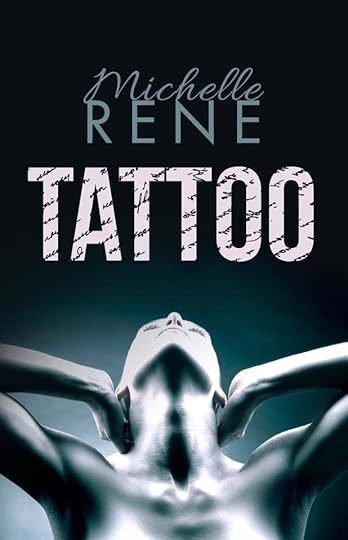 I'm very excited to report my experimental novella, Tattoo, is now available for pre-order. Not only is it being listed as one of the top eight sci-fi fantasy books to read this spring by Foreword Reviews Magazine, but it received a glowing starred review from Publishers Weekly. "Rene (I Once Knew Vincent) pours emotion into carefully chosen visuals in this beautifully haunting tale of lives written on skin." - Publishers WeeklyBe sure to pre-order it now!Pre-Order Tattoo
November 21, 2017
The Power of Persistence
 "A professional writer is an amateur who didn't give up." This is a pretty popular meme going around the internet that makes aspiring authors all over feel all tingly for the fraction of a second it takes to read it. It's a borderline cliche phrase, but it also happens to be fairly true. I have known too many authors who gave up too early. So many feel there's a story inside them... some feel like there's a few hundred stories inside them. Most will never take the leap to try to write that first story, and even fewer will actually finish it. Of those of us who complete our story, most will be too terrified of rejection to show anyone. When we do, we often get knocked down time and time again for our efforts. This is the same for any creative endeavor. You can ask any published author no matter gender, race, or background, they will have the same rejection stories. Stephen King once said he kept a nail on his wall and pinned every rejection letter he ever got on it. When it was full, he replaced the nail with a spike. If you build up a thick skin against the outside world, the inner one will get you. Creatives suffer from Impostor's Syndrome. You both think you are indeed worthy while being afraid someone is going to out you as the giant hack that you are. Even Neil Gaiman reports feeling this way in his blog. Putting your heart on paper is terrifying, and holding it out for the world to see is even scarier. Many times I've written about the need for a good support system. Friends, family, and especially other creatives. If everyone lifts each other up, we can all equally benefit from the collected stories of our lifetime. Unfortunately, we don't live in a utopia. You have to carve a slice of the world for yourself, and good people aren't always going to be nearby.I'm here to tell you that you must be your own cheerleader first. No one will rally to support you if you don't support yourself. It's a tall order when you're doing something that leaves your underbelly exposed, but it's essential. You must believe in yourself in order to write the book, to finish the book, to show the book, and defend the book. I read the quote above in a slightly different way. You are a professional now. Right now. You are sitting down to write your story. That puts you way ahead of the vast majority of the population who would never dream to do so. Celebrate that. Only when you give up are you an amateur. Quitting is the only defeat. It's the only rejection that means a damn.Believe in yourself because you are worthy of it. And if you can't find it in you to shout from the rooftops right now......fake it till you make it, baby.
August 12, 2017
An Argument For Homage
 I used to be adamantly against fan fiction. The idea of taking an already well known story and writing your own take on it seemed wrong to me somehow. Writers should create new worlds, new stories, and new characters instead of just relying on someone else's. Then, I began thinking of this in a different way, and my opinion changed.When I was in art school, we studied the greats. Part of that was doing master copies. We'd choose a painting by someone we greatly admired and attempted to copy it to the best of our abilities. I spent hours pouring over books and staring at masterpieces in museums. This exercise allowed us to not only discover how they made that piece but how to riff on it. We could make it our own a little, and thus, were a part of it somehow. In music, you see the same thing. Would Adele covering an Aretha Franklin song be considered the same as my old definition of fan fiction? No, it would be considered an homage. Musicians take songs they admire and put their spin on them not only as their own expression, but out of respect for the artist who originally performed it.Film is no different as is performing arts. Any director, actor, or dancer will tell you about their influences and mentors. I've never heard any performer say no one inspired them. No one's work impacted their own. This is how styles and genres are defined and expanded upon. Fan fiction in the writing world is more of an homage. This is the realization I've come to. Of course, there are good and bad versions of this, and plagiarism should never be tolerated. The thing to consider is every piece was deeply inspired by someone else's work, and they sought to create something they thought was beautiful from that inspiration. To build off of someone else's world is an active practice of admiration. Look at Wicked, both the musical and the book series. This is considered fan fiction, but what an amazing form of it. Gregory Maguire took a story that is internationally known and celebrated, and he made something beautiful and unique by showing us a different take on the story. Everyone knows the story of Dorothy in the Wizard of Oz, but he takes a darker view of the whole thing from the Wicked Witch's perspective.My one caveat to all of this is, and of course this is just my personal opinion, if you are a true creative, you shouldn't live completely in the homage world. Pay tribute to the ones who inspired you, but then create work that is just yours. After all, that's how the next generation gets inspired.In the spirit of homage, I will share a flash fiction story I wrote. (Flash fiction meaning it's under 1000 words.) I adore Alice in Wonderland. Always have. This story is one I wrote as though Alice went back to Wonderland to find everything very very wrong. Please enjoy.All This For A WatchBy Michelle ReneWe both stared into the hole beneath the shriveled tree. The poor dear was quite dead now and gnarled in a crippled sort of way. A cold breeze ruffled our clothes and the rabbit cupped his paws over his nose for warmth.“What happened to the tree?”“Once it was green and never was it mean,” he said looking away.“Now you speak in riddles?”“I only speak in sorrow and so will you if you return.”Looking at the poor creature in front of me, I had never seen him worse off. His white fur now looked spotty and balding in places. The small waistcoat he wore was in tatters. His signature possession, which I had yet to see him without, was gone. Some creatures are simply not meant for carnage.“You are much changed,” I said.He nodded, and I gazed down into the dark hole once again. There was a smell rising, like dead things.“What happened?”“Go see for yourself. And if you see that cat, tell him he could have helped.”I leapt down into the hole and fell as I did before, crashing through several nests of black feathers along the way. They embedded in my dress and stuck to my arms the way they might a bird’s wing. By the time I landed, I was adorned in a costume of black plumage.Something solid landed heavily on my head. It fit like a helmet, and when I removed it to inspect the thing, I saw it was a rather large cap and beak of a bird. Possibly, these were the remains of a normal sized bird, and I had shrunk as I so often did.Replacing my helmet, I soldiered on through the broken doorway and out into the garden. My flowers, even the insulting ones, were plucked and mercilessly woven into large nests. A hair’s ear, a lizard’s tail, and a few errant cards were stuffed in among them. The garden appeared scorched and raw. Chess pieces littered the field, scattered like corpses on a snowy battlefield.Two large ravens pecked and played with a poor red bishop who pleaded for his life. They tossed him about just the same, laughing at his misfortune. One wore a rather ornate hat of a style I recognized.“Stop that!”The ravens ceased their torment to face the shouting voice. It happened to be my voice. With a few flaps, they were upon me. One to the left, and one to the right.“A hero?” asked the one to my left.“But she looks like one of us,” said the right.“Surely not a hero.”“Behold what we do to heroes.”One raven gestured to my friend, the white knight. He had fallen from his horse in the snow, perhaps for the last time. He had always been so gallant, and now he was so terribly still. A white knight among nothing but white. Such a queer and horrid sort of camouflage. When I looked beyond the trees, other eyes stared back at me, hidden eyes. They were watching me, hoping for my help.“I am no hero,” said I, standing as tall as I could.I was, despite my best efforts, still only was as tall as the birds’ bellies.“I am a raven like you.”“Raven!” squawked one of the beasts. “We are no raven! We are magpies! There were four and twenty of us, but now only two. And not three.”The magpies began to advance on me, and I took a step back for some distance. One jingled a bit when he walked, a beautiful pocket watch purposefully wrapped around his leg. I wasn’t sure what to do for answers can be elusive. Yet there was a glimmer, only a glance really, of a crescent smile directly behind the birds.“A poem I think,” said I with a sudden confidence.I leapt onto a nearby rock and puffed out my chest as a raven might do.“How doth the little crocodile…”“Bah!”“Who wants to hear of crocodiles?”They were agitated and getting closer again in a menacing way. Snow crunched beneath their feet, and wilted flowers fainted beneath the snow. Again the smile flashed behind them, a little closer this time. If I wasn’t mistaken, there was a wisp of a wink as well.“How doth the little magpie,” I yelled as they approached.The two beast ceased their malicious march, and smiled as best as birds are able. Magpies rarely cared anything for the truth and loved only what was fashionable. I continued my rhyme as the shadow of a cat floated closer behind them.“Improve his shiny beak.”“And pour the blood of those who die,”“Across from cheek to cheek.”“How cheerfully he likes to grin,”“With freshly polished jaws.”“But the danger tends to lurk within,”“The cat’s unfriendly claws.”Their surprise only lasted a moment before the Cheshire Cat ripped the birds to ribbons. There was a flutter of claws and feathers, and before long, the rapid beating of wings was silenced. When the deed was done, a cheer rang out through the woods. The living ran forth to help the injured and mourn the dead.I removed my raven’s helmet, and looked the cat in the eyes. A chilly wind passed between us. He only smiled back, seemingly unmoved by the carnage. Cats often live for carnage, so perhaps it was merely the nature of his breed.“Hello, Alice,” he crooned gently.“You could have helped sooner,” I snapped.“Yes, I could have,” was all he replied.I reached down to the magpie who jingled and removed the lovely watch from his leg. This required breaking a few of his heavy toes, but it was no matter to me. Perhaps I too was becoming the type unmoved by carnage. Either way, the watch had to be freed. I had a friend who needed it back.
July 20, 2017
Hour Glass Pre-Order
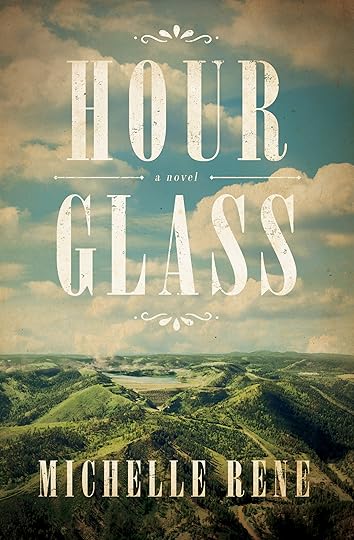 My historical fiction novel, Hour Glass, is now available for Pre-Order! Set in the lawless town of Deadwood, South Dakota, Hour Glass shares an intimate look at the woman behind the legend of Calamity Jane told through the eyes of twelve-year-old Jimmy Glass.After their pa falls deathly ill with smallpox, Jimmy and his sister, Hour, travel into Deadwood to seek help. While their pa is in quarantine, the two form unbreakable bonds with the surrogate family that emerges from the tragedy of loss. In a place where life is fragile and families are ripped apart by disease, death, and desperation, a surprising collection of Deadwood’s inhabitants surround Jimmy, Hour, and Jane. There, in the most unexpected of places, they find a family protecting them from the uncertainty and chaos that surrounds them all. Pre-Order Now!
June 6, 2017
The Abusive Muse
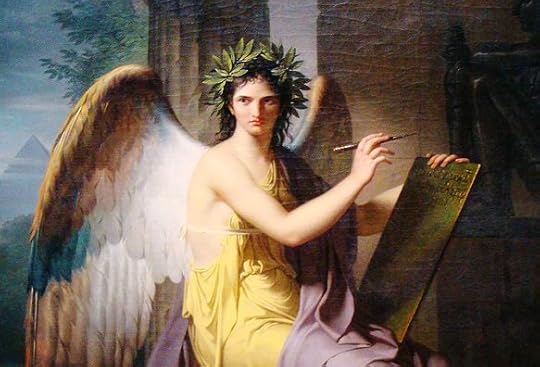
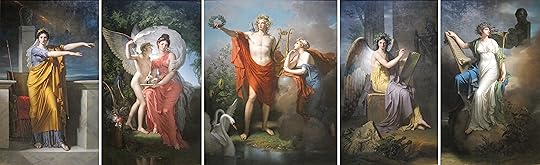 Like all creatives, I have an abusive muse. Throughout the ages, people have been dealing with muses. Centuries ago they were pictured as winged, angelic-like figures whispering gentle nuggets of wisdom and inspiration in the ears of poets, musicians, and artists. I have a slightly different take on muses in that I think they are a bunch of jerks.In my time living among insanely talented creatives, I've seen muses in all their forms. Some have actual people who work as their muse. Lewis Carroll had a real Alice who acted as his muse for Alice in Wonderland. Others look to nature for inspiration. Where would we be if Henry David Thoreau hadn't lived near Walden Pond? Most describe the muse as some unquantifiable thing that whispers in their ear and visits their dreams. I read Bird By Bird by Anne Lamott, and she describes her muse as someone in a basement whispering ideas through a vent in the floor.I'd like to introduce my muse. My muse doesn't gently plant ideas in my dreams. She doesn't whisper anything in my ear or through a vent. My muse basically shows up whenever she wants to and bashes me in the head with a sledge hammer. To make matters worse, she normally shows up when I'm working on something else or when I'm actually trying to get some sleep.My muse: "What? She thinks she gets to sleep? That's adorable."
 This is probably why my brain looks like an Hieronymus Bosch painting. For those of you who don't know who Hieronymus Bosch is, go look him up right now because wow. His work is a gorgeous hodgepodge of the beautiful and bizarre. Now back to muses. It's easy to see why I call mine abusive, but here's the thing. I bet most of you reading this wish you had her. You wish your muse showed up all the time and tortured you with ideas. Why am I complaining when I am constantly inundated with ideas? The simple answer is that I can't sleep, and shutting my brain off is nearly impossible. No matter how your inspiration works, I bet he/she/it is a pain in the ass. You text and they don't respond, or if they do, it's at inappropriate times. You set a meeting with your muse because you need to get work done, and they never show, leaving you hanging when you're on a deadline. You nurture yours like a tiny flower, and just when it's about to blossom, it decides to wither away. Let's face it, having a muse is like being in a terrible relationship. So why do we try? Why do we put up with this nonsense? If we described this like it was a relationship to a friend, they'd say to leave that person immediately. They aren't healthy to be with. Why do we keep going back?Because we love them. Creatives need their muse, their inspiration. Despite my complaints, I love that angry, sledgehammer-wielding muse of mine. She tells me the best things, even when it's three in the morning. There are some people who never see a version of her ever in their lifetime, and for that I'm grateful to have her.If we didn't have these abusive creatures, the world would never see the beautiful things our minds are capable of. It would never fully know how powerful the human condition can be and what amazing stories we are capable of.To end I'd like to share some lyrics from the audition song from the musical, La La Land. It says it better than I can."A bit of madness is key To give us new colors to see Who knows where it will lead us? And that's why they need us"
May 11, 2017
Writing Advice: Why Listen To Me?
 There are a million places a writer can turn to find advice on how to write. Simply type "writing advice" into any search engine, and voila! A plethora of links will say, "Top Ten Commandments for Writing" or "Ernest Hemingway's Rules For Writing" or "Twenty Tips To Make Your Writing Pop!" It appears writers feel the need to go out search for a guidebook on how to perfect this crazy thing we do.As I have gone along in my career, writers actually come seek me out, thinking I have magic knowledge they don't possess. I never get used to it. Why listen to me? I don't have all the answers, and the newsflash is no one else does either. Not even Ernest Hemingway.So why do we read these articles? Why seek out online lists that say the same thing over and over again? Why do we email authors we like for advice? I think it's a combination of things. We as creatives struggle constantly with our own feelings of inadequacy. Putting yourself out there is terrifying, so maybe if you read these tips/rules/commandments from on high it will better equip you for the long road ahead.The truth is this. You are already equipped. You have all the rations you need. You are a writer, a creature with worlds in your brain. No one knows how to move forward on your journey better than you, even if you don't realize it.I'm not saying you can't find valuable information in the advice you receive. Of course you can. Sometimes a person says something about your work that really opens things up for you. I do this all the time with my book coaching clients. I read their novels, and give them positive insight into their own writing. I love seeing how it lights them up and moves them to run with their new arsenal of inspiration. Sometimes I read a note about my own writing, and man does it fill me with new air.“Rules” or “Tips” are vague, generalized, and often provided as click bait. What I describe above is specific feedback about your work. I think we can all agree they are different, but they do have one thing in common…one question you as a writer need to ask yourself before taking that nugget of information and moving forward with it…why are you listening to it?Going back to the journey metaphor. You are going about your way with all the supplies you need to reach your goal. Someone walks up to you with an energy drink and hands it to you. “This will help you on the road ahead,” they say. “Trust me, everyone says you need it to keep going.”You look at the energy drink and think of how much these make you sick to your stomach and don’t want to take it, but the helpful person says to do it anyway. So you take it and move on your way, but your progress slows because you keep stopping to drink the nasty thing over and over again even though it makes you sick. Everyone says it's what you should do, right?Now imagine a different person approaches you with some power bars and says, “This will help you on the road ahead.” You remember that you love power bars, so you take them. Getting to your destination is so much faster and more fulfilling since you are happy to eat your power bars along the way.Personally, I hate power bars and energy drinks and muscle powder stuff and all that, but this analogy illustrates my ultimate point. Both of these people meant well, and both offered something they thought would help. The difference is in you, the writer. It’s how you feel about what is offered.If someone gives you advice, and it doesn’t feel right in your gut, don’t take it just because everyone says it’s right. When it doesn’t fit you, it doesn’t fit you. There is no wrong way to write, art, act, sing, etc. If the advice offered lights you up like a Christmas tree, then by all means take it! Run with it as fast as you can!This goes for me. I tell my book coaching clients if I ever suggest something that doesn’t seem right to them, by all means don’t do it. Who the hell am I? They come to me because I’ve been published, because I’ve won awards, and because I give positive advice. However, I am not them. I can’t pack their supplies for them. I can only offer something that I think can help.I see the same basic three rules (more or less) every time I read about writing advice. It's not bad advice, but some of it might sit like sour energy drink in your stomach, and I want to tell you that you don't have to follow it. My personal opinion on these “rules” are as follows:Write A Little Every Day!I personally don’t subscribe to this one at all. I’m a binge writer. The kind you see doing NaNoWriMo every year. My record was a first draft written in sixteen days, and it’s one of the best books I’ve written. I say write at a pace that suits you.Read Read Read!I personally do subscribe to this one. I read like a fiend, and it helps my writing. However, I know writers who find this difficult. Whenever they read a lot, the voice of the past novel they read gets in their head and infects their writing. They struggle to find their own voice when that happens, so this doesn't work for them.Never Use (insert plot device/pov/such and such word/prologues/trope/cliché/adverb/the list goes on) In Your Writing!I dislike this one the most. This is your story. You write it how you see fit. Every writer uses some of these “never use” tools. Every. Single. One. If you make them work, then who cares?Time to be a hypocrite...I do have one rule for you dear writer/artist/actor/musician. It’s the only rule I know when it comes to reaching your goal in this world. Your journey will come to a screeching halt if you don’t listen to this one. The only rule that matters.Never Give Up.I don’t care how you get there.Never Give Up.