Joe Vulgamore's Blog
August 6, 2017
MANTRA: OM MANI PADME HUM
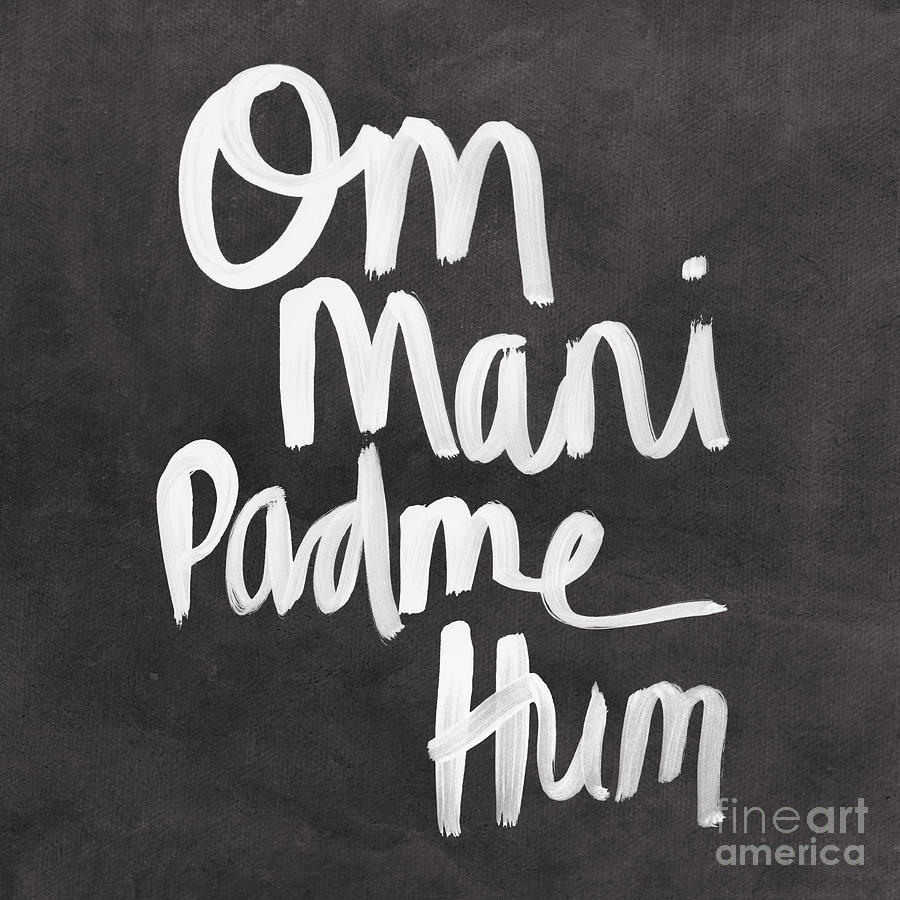
Mantra for Purifying Karma
Karma... that sneaky little bugger also known as "Cause and Effect", certainly has a way of making it's presence known in forms both subtle and gross. The word is used very loosely by almost everyone these days. Anytime someone feels 'wronged' or mistreated, you may often hear someone say, "Karma's a bitch" or "I will let karma deal with it"... or something to that effect. But essentially, it is commonly meant as a repercussion for doing some kind of deed or action that is deemed bad or wrong.
So going with this loose interpretation of the word 'karma', how can we get rid of our 'bad karma' and replace it with the good?
Using the mantra, "Om Mani Padme Hum" during meditation (or any other time) can help.
What is Om Mani Padme Hum?
Firstly, let's get clear on the definition of 'mantra'. In our westernized, modern-day spiritual practices, the word “mantra” has become as mainstream as “intention.” But the two are actually quite different. The word mantra can be broken down into two parts: “man,” which means mind, and “tra,” which means transport or vehicle. In other words, a mantra is an instrument of the mind—a powerful sound or vibration that you can use to enter a deep state of meditation.
Like a seed planted with the intention of blossoming into a beautiful flower, a mantra can be thought of as a seed for energizing an intention. Much in the same way you plant a flower seed, you plant mantras in the fertile soil of practice. You nurture them and over time they bear the fruit of your intention.
In many spiritual practices, mantras are often used as a vehicle that helps you access heightened levels of awareness. Awareness, in this context, refers to the ability to pay attention to the choices you make in your everyday life, and recognize when something isn't working so you can change it. The 'Om Mani Padme Hum' is no different.
*** There is a lot of ancient history and culture that is part of this mantra. Far too much to go into this simple article, but at the end of this writing, I will give you a few links to check out if you are interested in learning more.
According to Tibetan culture, it is said that all the teachings of Buddha are contained in the Om Mani Padme Hum, and that to know the phrase is to know enlightenment. Contained in this verse is the truth of the nature of suffering and how to remove its root cause.
But this poses a bit of a problem; the translation from Sanskrit to English is very rough and not at all adequate to convey such teachings. The definition is actually not possible in just a couple of sentences…in fact, the entire phrase has to be broken down to be properly understood.
Breaking Down the Mantra
Traditionally, these special words are repeated over and over again until they begin to gather within us a certain “emptiness”. Not “emptiness” in the traditional sense where we imagine an experience of nothing…rather it is experiencing ourselves in the moment - on purpose - without attachment to our own ego.
We become free or “empty” of everything but an inner awareness.
That form of enlightened awareness gives us the knowledge to save ourselves from suffering by the use of compassion... toward our selves and others. Compassion is the key to cessation of suffering. In fact, this mantra was handed down from the great Bodhisattva of Compassion known to Buddhists as Avalokiteshvara.
The 6 Syllables and Their Relationship to Suffering
There are 6 syllables in this mantra. Each of the 6 syllables has certain Sanskrit meanings that are important... so try to put your 'Right Intention' behind each as you say or read them. These syllables are believed to oppose certain internal forces that cause suffering. They are as follows:
Om (ohm)- Om is the sound or “vibration” of the universe. This sound is the most important of all; but in the context of chanting and mantras, it is meant destroy attachments to Ego and establish Generosity.Ma (mah)- Removes the Attachment to Jealousy and establishes Ethics.Ni (nee)- Removes the Attachment to Desire and establishes Patience.Pad (pahd)- Removes the Attachment to Judgment and establishes Perseverance.Me (meh)- Removes the Attachment to Possessiveness and establishes Concentration.Hum (hum)- Removes the Attachment to Ignorance and establishes Wisdom.
How to practice the Mantra
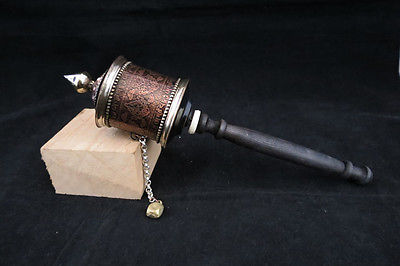 Ideally, this mantra is said aloud during meditation or prayer times. However, viewing a written copy of the mantra is said to have the same effect. The mantra is often carved into stones left in piles near paths where travelers will see them.
Also spinning the written form of the mantra around in a Mani wheel is also supposed to have the same effect; the more copies of the mantra, the more the benefit.
In this modern age, I would recommend making a screensaver for your computers and mobile devices, chanting along with the mantra on Youtube, and of course, repeating during meditation. I personally use this mantra during walking meditations. I use it in combination with "Right Intention" and Mindful Awareness. It's amazing!
Conclusion
It's easy to become continuously distracted and waste our energy with trivial things that soon become enormous in our lives. Not only that, but all the actions done with ego and with the poisonous mindsets of anger, attachment and ignorance. Proceeding with intention and action from those mindsets creates what many view as 'negative karma that causes suffering'.
On a metaphysical spiritual level, this mantra will purify your karma and bring blessings in the form of compassion, generosity, loving-kindness, and wisdom. I think that's a wonderful way to live.
Stay Zen!
***Resources
Dharma-Haven.org
Yowangdu.com
Joe Vulgamore CHT is is a Life Coach, Hypnotherapist, and Holistic Healer. He is author of the Best-selling book "Alignment- Law of Attraction and the Seven Universal Laws" and "Powerful Powerful You - Understanding Your Power". For almost 30 years, Joe has helped thousands of people from over 14 countries, across 5 continents, to make life-transformations through one-to-one coaching, books, and workshops.


August 4, 2017
THE EIGHT-FOLD PATH
 Image by Getty Images
Let Go Suffering Through the Eight-fold Path
"Pain is inevitable, suffering is optional." - Buddha
In another article, I wrote about the 'Four Noble Truths' as taught by Buddha, or at least my understanding of them. In short, they tell us that there will be suffering and that suffering can be relieved through following our ethical and spiritual paths.
One of the bases for the cessation of suffering in Eastern philosophy is known as the Eight-fold Path. This is the path that the Buddha described in the 4th Noble Truth.
For me, the Eight-fold Path is a wonderful beginning to understanding the nature of things "as they are". Although I am not a true Buddhist, the Eight-fold Path continues to be a source of light as I grow to understand my own sufferings and aspire to liberate others along the way.
Below, I will give my layman interpretation of the Eight-fold Path, what it means to me, and why I think it's important.
Eight-fold Path
This Eight-fold path helps us attain the state of Nirvana - a place of perfect peace and happiness - by freeing us from attachments and delusions, thereby helping us to understand the innate truth of all things. This path, therefore, helps us with ethical and mental growth and development.
Buddha laid great emphasis on implementing the teachings since a higher level or existence can be attained only by translating thoughts into actions.

*In the teachings below, please interpret the word "Right" as meaning "True" rather than a judgment of 'right and wrong'.
The Eight-fold path suggested by Buddha involves adherence to:
1. The Right View
This means seeing things from a higher perspective. Seeing things as they really are, without any false illusions or pretenses. It means to see and understand the temporary and transient nature of worldly ideas and possessions; and to understand that cessation of suffering requires non-attachment to the idea of permanence.
2. The Right Thought
"What we think, we become." What goes on inside our minds (our thought process) determines our course of action. It is, therefore, necessary to follow the path of Right thought along with Right Intention. To have the Right Intention behind the Right Thought is of utmost importance to maintaining ones ethical standard. Awareness of our purpose or role in life helps make the passage of suffering more bearable, allowing us to think in ways that keep us on our life-paths.
3. The Right Speech
This means to simply speak truth (with compassion and love), to avoid slander and malicious gossip, and to refrain from abusive language toward oneself as well as toward others. Harsh words that can cause distress or offend others should also be avoided while also staying clear of mindless idle chatter which lacks any depth.
4. The Right Action
Behaving peacefully and harmoniously; Right Action, to me, means:Staying in harmony with ourselves and fellow sentient beingsBehaving peacefully toward ourselves and fellow sentient beingsAvoiding overindulgence in temporary pleasure (Instant gratification)Abstaining from ethical misconduct, fraudulent behavior, deceitfulness, or conspiracy to deceit.Aligning our 'Right Intentions' with our thoughts and actions.
5. The Right Livelihood
This means to earn our abundance without resorting to illegal and nefarious activities; nor at the exploitation of other sentient beings.
6. The Right Effort
This means to remove our limiting beliefs, outdated values, and influences of others as it relates to 'Right Thinking' and 'Right Action'. It means we have to train our minds to think in the right direction if we wish to achieve our aspirations with inner-peace. Once we gain control over our thoughts and replace the unpleasant ones with something pleasant, we begin moving with 'Right Effort'.
7. The Right Mindfulness
The Right Mindfulness, together with the Right Concentration, forms the basis of Meditation. This is a purposeful mental focus on our emotions, states of mind, and physical well-being, while staying away from worldly desires and other distractions that invariably induce suffering. This refers to the ability of the mind to see things as they are without being led astray by judgment or attachment.
8. The Right Concentration
This principle is fundamental for proper meditation. Meditation is one of the few ways to achieve true inner-peace. Meditation allows us to open ourselves as a conduit to receive higher understanding and wisdom. This is the most vital of all the aspects stated in the Eight-fold path since, without higher understanding and wisdom, one cannot move on to a higher level of well-being.
So there we have it... my basic laymen understanding of the Eight-fold Path. This path has lit my way through the darkness as I aspire to assist others into the light. Staying on this path has helped me weather many storms and grow exponentially from the lessons.
I hope this has provided some light and helps you take the next steps toward creating a life of joy and contentment.
Stay Zen!
*Acknowledgments: Zen-Buddhism.net, and the collective works of Thích Nhất Hạnh
Joe Vulgamore CHT is is a Life Coach, Hypnotherapist, and Holistic Healer. He is author of the Best-selling book "Alignment- Law of Attraction and the Seven Universal Laws" and "Powerful Powerful You - Understanding Your Power". For almost 30 years, Joe has helped thousands of people from over 14 countries, across 5 continents, to make life-transformations through one-to-one coaching, books, and workshops.
August 3, 2017
THE FOUR NOBLE TRUTHS

Suffering is Optional
The Four Noble Truths are the very basis of Buddha's teachings. The first teaching ever given by the Buddha was to five student monks under the Bodhi Tree in a deer park. During these teachings, Buddha spoke of four truths he had come to understand during his own search for enlightenment.
Although I am not a true Buddhist, many of the Buddha's teachings resonate with me. My own personal journeys from darkness to the light have opened my eyes - indeed my heart - to the Four Noble Truths and the Eightfold Path.
Pain and suffering are a part of life. They are... and no amount of positive thinking will keep them at bay forever. As humans, we form attachments, we have desires, and we make judgments, and we feel emotions throughout the entire spectrum. With acceptance of being human, and living in a physical world, we must accept that suffering is a part of our path. In fact, if we don't acknowledge or accept it, our resistance will simply create more suffering.
However, the Four Noble Truths also tell us that suffering can be eased, suffering can be temporary, and the cessation of suffering can lead us to a purified experience.
The Four Noble Truths
The Four Noble Truths can get very detailed with lots of esoteric names for various states of things. As much as I enjoy reading about Buddhism and following the Bodhisattva path to enlightenment, I prefer to break things down into a practical, everyday jargon that is sometimes easier to understand.
I do this to honor the Buddha and his teachings. I do this to provide light to any who are in need. As always, I highly encourage everyone to search for your own meaning.
To me, and to an understanding that works for me, the Four Noble Truths are as follows:
1. There will be Suffering
Life always involves suffering, in obvious and subtle forms. Even when things seem good, we always feel an undercurrent of anxiety and uncertainty inside. We do not find lasting happiness or satisfaction in anything we experience. This is the nature of our earthly physical existence.
2. The Cause of Suffering
The cause of suffering is desire and attachment to the idea of what our desires represent. We suffer because of our mistaken belief that we are a separate, independent, solid “I.” We believe that we are separate from that desire. The painful struggle to maintain this delusion causes an attachment to an idea that things are permanent. When proven otherwise, suffering occurs.
3. The End of Suffering
The good news is that all experiences are temporary. They are like passing clouds that obscure the sun of our enlightened nature, which is always present. Therefore, suffering can end because it too is temporary. Our Ego can be purified - rather than satisfied - and a more enlightened mind becomes available to us. We can end our suffering through practicing non-attachment... or at least choosing our attachments with enlightened wisdom.
4. The Path
By living ethically, practicing mindfulness, and developing wisdom, we can take our lives in a direction that minimizes the suffering we allow. No matter what a person's life path happens to be - when traveled ethically, mindfully, and observed from a higher perspective - we are more able to recognize obstacles and distractions that can bring suffering. We can better discern whether our desires will bring us pain or pleasure. And we can choose to enjoy life without attachment to the idea of permanence.
There are literally millions of ways for one to follow one's path... and like all wise teachers, the Buddha suggested that each of us search and find our own truth to follow and live by. I encourage you to do the same.
If you're interested in learning Mindful Awareness Practices to help relieve the suffering of anxiety, stress, fear, or anything else that might be an obstacle on your path, Contact me . Let's talk about how Mindfulness can serve to heal you.
Stay Zen!
Joe Vulgamore CHT is is a Life Coach, Hypnotherapist, and Holistic Healer. He is author of the Best-selling book "Alignment- Law of Attraction and the Seven Universal Laws" and "Powerful Powerful You - Understanding Your Power". For almost 30 years, Joe has helped thousands of people from over 14 countries, across 5 continents, to make life-transformations through one-to-one coaching, books, and workshops.
July 27, 2017
I AM THE BOATMAN

The Path of A Boatman Bodhisattva
Today I’d like to talk a bit about my personal mission, which is to help others with their struggles, and help them transform their suffering and pain into mindful openness, gratitude and joy.
I am on the path of the Boatman Bodhisattva. I venture willingly into darkness; because it is there I find those who are searching, and I ferry them to the light. I aspire to become “enlightened” simultaneously with other sentient beings, helping to relieve their suffering, and encouraging them along the way.
For those on the path of the Boatman, we do this by allowing the experience and exploring our personal pain and suffering to its fullest extent. Doing so gives us a greater understanding so that we may help others more efficiently.
What??? You actually explore your suffering? Yes... I do.
Aren't you afraid of attracting more suffering? No... I'm not.
Don't let the modern Positive Thinking Movement make you think that you will. That belief is a false indoctrination from modern gurus.
These days it is so easy for people to get caught up in the whole “Positive Thinking Movement”, which has its merit for sure. We absolutely should think about positive things to create a positive life of love and light. I do not argue that. But how helpful is light if it is not taken into the dark places, with the courage to deal with the disturbing, the unspeakable, and the broken... and bringing those who are there back home to the light?
You see, a true understanding of Divine Oneness shows us that if you are suffering, I am also suffering. If I suffer, then you suffer. Evidence of this is easy to see in our interactions with others, lending support to a friend, working through a rough patch with a lover, or lending a hand to someone in need. We all influence each other in so many ways, and the world we are living in was co-created by all of us. I have been created by all of you – in a way – by your willingness to listen to my ramblings and allow me to help… and you’ve been created by me – in part – by how I’ve influenced you.
We are all facets on the same diamond… but diamonds do not shine in the dark and treasure is not found in the light. If we want our treasure, and wish for our diamond to sparkle, we must venture into darkness to retrieve it.
With that in mind, how can we not help each other when we’re in pain? How can we not reach our hearts out to our co-creators?
Modern New Age thinking says "It's okay to be selfish". It says that if a person is in darkness, to turn your back and walk away, lest they drag you into the darkness with them. Modern New Age thinking, and its perverted indoctrination to the masses, has helped create a world of selfishness and arrogance seen at unprecedented levels. And with it, comes judgment of those who are still in the dark.
Don’t believe me? Just look at the state of the world today. Even on a smaller, more personal level, one can notice how someone has slowly changed from the humbleness of gratitude to continuously singing their own praises. Ever notice how someone used to pay forward, but now expects the world handed to them on a plate... with a side of positive vibes? Ever notice how New Age thinkers (LOA practitioners in particular) abandon others on a whim, because they fear to be near a lower vibe? Ever heard someone say "When they awaken, they will understand."? That is a judgment and an elevation of self above another.
If you are observing with an open mind – free of attachment and judgment – you will see it.
Most people in the Positive Thinking Movement prefer to just dance in the light and scream 'fortune-cookie-philosophy' toward the darkness, call themselves "Lightworker", and feel like they've done a great service to the world... and that's okay. Some help is better than none at all. For many, it's all they can muster.
I do not mean to sound like I am judging those who work in this way. People are free to do as they please, and the world needs them too. They are every bit as valuable and important to the unfolding of events as everyone else. And once recognized, they help bring clarity to us through the contrast they exhibit. For that, I am grateful.
Given this view, coupled with understanding of an interconnected world, I am obligated to help others, to connect to others, in whatever way I can.
For me, walking the path of the Boatman means:
Avoid hurting others when possible (criticizing, yelling in anger, etc.). And help others do the same.Releasing my judgment of others to become more understanding, loving, and compassionate. And help others do the same.Being mindful of my own pain, and staying with that pain, fear and discomfort – in order to heal – rather than hiding behind a wall of false positivity. And help others do the same.Connecting with my own tender heart and basic goodness, so I can help others do the same.Being forgiving of myself when I am imperfect, and seeing the goodness underneath my imperfect actions. And help others do the same.Loving myself – and others – in every way I’m capable. And help others do the same.
This is the Bodhisattva Path, as I see it. It’s working through my own suffering and abilities to love, so that I can connect with others at this level and help them do the same.
I am the Boatman. I venture willingly into darkness to ferry others to the light. Would you like a ride?
Stay Zen!
Joe Vulgamore CHT is is a Life Coach, Hypnotherapist, and Holistic Healer. He is author of the Best-selling book "Alignment- Law of Attraction and the Seven Universal Laws" and "Powerful Powerful You - Understanding Your Power". For almost 30 years, Joe has helped thousands of people from over 14 countries, across 5 continents, to make life-transformations through one-to-one coaching, books, and workshops.
WALKING THE PATH OF A BOATMAN
The Path of A Boatman Bodhisattva
Today I’d like to talk a bit about my personal mission, which is to help others with their struggles, and help them transform their suffering and pain into mindful openness, gratitude and joy.
I am on the path of the Boatman Bodhisattva. I venture willingly into darkness; because it is there I find those who are searching, and I ferry them to the light. I aspire to become “enlightened” simultaneously with other sentient beings, helping to relieve their suffering, and encouraging them along the way.
For those on the path of the Boatman, we do this by allowing the experience and exploring our personal pain and suffering to its fullest extent. Doing so gives us a greater understanding so that we may help others more efficiently.
What??? You actually explore your suffering? Yes... we do.
Aren't you afraid of attracting more suffering? No... I'm not. Don't let the modern Positive Thinking Movement make you think that you will. That belief is a false indoctrination from modern gurus.
These days it is so easy for people to get caught up in the whole “Positive Thinking Movement” which has its merit for sure. And we absolutely should think about positive things to create a positive life of love and light. But how helpful is light if it is not taken into the dark places, with the courage to deal with the disturbing, the unspeakable, and the broken... and bringing those who are there back home to the light?
You see, a true understanding of Divine Oneness shows us that if you are suffering, I am also suffering. If I suffer, then you suffer. Evidence of this is easy to see in our interactions with others, lending support to a friend, working through a rough patch with a lover, or lending a hand to someone in need. We all influence each other in so many ways, and the world we are living in was co-created by all of us. I have been created by all of you – in a way – by your willingness to listen to my ramblings and allow me to help… and you’ve been created by me – in part – by how I’ve influenced you.
We are all facets on the same diamond… but diamonds do not shine in the dark. Treasure is not found in the light... we must venture into darkness to retrieve it.
With that in mind, how can we not help each other when we’re in pain? How can we not reach our hearts out to our co-creators?
Modern New Age thinking says "It's okay to be selfish". It says that if a person is in darkness, to turn your back and walk away, lest they drag you into the darkness with them. Modern New Age thinking, and its perverted indoctrination to the masses, has helped create a world of selfishness and arrogance seen at unprecedented levels. And with it, comes judgment of those who are still in the dark.
Don’t believe me? Just look at the state of the world today. Even on a smaller, more personal level, one can notice how someone has slowly changed from the humbleness of gratitude to continuously singing their own praises. Ever notice how someone used to pay forward, but now expects the world handed to them on a plate... with a side of positive vibes? Ever notice how New Age thinkers (LOA practitioners in particular) abandon others on a whim, because they fear to be near a lower vibe? Ever heard someone say "When they awaken, they will understand."? That is a judgment and an elevation of self above another.
If you are observing with an open mind – free of attachment and judgment – you will see it.
Most people in the Positive Thinking Movement prefer to just dance in the light and scream 'fortune-cookie-philosophy' toward the darkness, call themselves "Lightworker", and feel like they've done a great service to the world... and that's okay. Some help is better than none at all. For many, it's all they can muster.
I do not mean to sound like I am judging those who work in this way. People are free to do as they please, and the world needs them too. They are every bit as valuable and important to the unfolding of events as everyone else. And once recognized, they help bring clarity to us through the contrast they exhibit. For that, I am grateful.
Given this view, coupled with understanding of an interconnected world, I am obligated to help others, to connect to others, in whatever way I can.
For me, walking the path of the Boatman means:
Avoid hurting others when possible (criticizing, yelling in anger, etc.). And help others do the same.Releasing my judgment of others to become more understanding, loving, and compassionate. And help others do the same.Being mindful of my own pain, and staying with that pain, fear and discomfort – in order to heal – rather than hiding behind a wall of false positivity. And help others do the same.Connecting with my own tender heart and basic goodness, so I can help others do the same.Being forgiving of myself when I am imperfect, and seeing the goodness underneath my imperfect actions. And help others do the same.Loving myself – and others – in every way I’m capable. And help others do the same.
This is the Bodhisattva Path, as I see it. It’s working through my own suffering and abilities to love, so that I can connect with others at this level and help them do the same.
I am the Boatman. I venture willingly into darkness to ferry others to the light. Would you like a ride?
Stay Zen!
Joe Vulgamore CHT is is a Life Coach, Hypnotherapist, and Holistic Healer. He is author of the Best-selling book "Alignment- Law of Attraction and the Seven Universal Laws" and "Powerful Powerful You - Understanding Your Power". For almost 30 years, Joe has helped thousands of people from over 14 countries, across 5 continents, to make life-transformations through one-to-one coaching, books, and workshops.
July 5, 2017
[INFOGRAPHIC] GET A HANDLE ON ANXIETY WITH THESE BREATHING TECHNIQUES

Be Mindful of Your Breathing
- By Abby Quillen
How much do you notice your breath?
If you’re like most people, you don’t. Our breath started when we were born—that first cry or gasp as we entered the world—and it continues, mostly uninterrupted (unless we’re doing something like swimming!) for the rest of our days. But while breathe is never really interrupted, it can be disrupted and not because of anything good.
Anxiety—the worries of the world, the headaches of our daily lives—can make a tremendous impact on how we breath. It can take our breath from smooth and deep to shallow and jagged. And that can make us even more stressed out that we typically feel.
Learning to identify when this is happening and following some easy-to-learn practices can, however, help you get past those difficult, stressful times and get your breath back to normal. What should you do? This graphic can help.
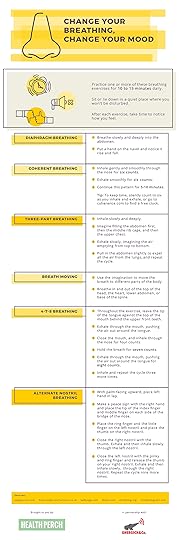
"Breathing Techniques That’ll Help You Get a Handle on Anxiety in Minutes" on Health Perch
* This article originally appeared on Northwest's Health Perch Blog. Read it HERE.
** This is not a paid endorsement. Joe Vulgamore CHT receives no compensation for sharing this information.
Abby Quillen writes about sustainability, green living, health, business, and other topics. Her work has appeared in The Christian Science Monitor, YES! Magazine, and dozens of other publications. She lives in Eugene, Oregon with her family. Visit her at abbyquillen.com.
June 16, 2017
HOW TO USE SPIRITUAL BREATHING FOR WELLNESS
 Try Spiritual Breathing To Raise Your AwarenessAn ancient Vedic practice that has been used for millennia to increase overall wellness is Spiritual Breathing. Spiritual Breathing has been realized as an emotional, physical, and spiritual practice by almost every culture around the world since recorded time began.
 There are very powerful energies surrounding us. The air, for example, contains such energies, a fact attested to by most major spiritual traditions. The Hindu notion of "prana", which means breath, refers to the energies carried by the air. The Hindu word for soul, "atman", also means breath.
Many other cultures recognize the close relationship between "breath" and "soul" energies. The Christian Prayer of the Heart, Gregorian Chant, the Sufi Zikr, and the Yoga of Pranayama are practices all centered on the relationship between breathing and increasing wellness - mind, body, and spirit.
At time in the past, when you've become stressed, has anyone ever told you to "breathe", or "Take a deep breath and count to ten"? Well now you know where those phrases originated and why it is good advice.
Spiritual Breathing enables more of the vibrant, healing energies to be drawn into us from the air and raising our vibration. In contrast with the practice of "conscious breathing", in Spiritual Breathing we direct our attention to the energies in the air we breathe, rather than simply to the physical sensations associated with breathing. We then set our intention to heal with the aid of these energies.
Focus on the Energy
We intentionally draw the energy into us, infusing our body with that energy. We can capture the energy and carry it into us as we inhale. Alternatively, we can focus our attention as a “filter” placed in the nostrils to release the energy as the air enters the nose. The energy that we breathe forms an inner atmosphere, which holds the healing properties of the energy.
We reach out, with our attention and intention, from this inner atmosphere and draw the energy into us. As we exhale we re-focus our attention, allowing the negative energies to pass out of our bodies and out of our mouths through our open hearts. In turn, this raises our awareness of self.
As we become aware of this energy, we discover an unmistakable and wonderful flow of energy in our breath, strengthening our alignment with the Universe. We can feel a vibrational shift. But this shift is never automatic; it requires intention and attention... as well as practice.
Spending a little time each day on this practice proves invaluable in filling us with the sensation of a shift and establishing our connection to our higher selves. And with more practice, you can learn to direct this energy to specific points in your body. This will help you to localize healing.
Spiritual Breathing Exercise 1
Find a place to relax undisturbed for at least ten minutes. Sit in a comfortable position and clear your mind. Once your mind is clear, set your intention to absorb healing energy.Use your imagination and visualize shimmering particles of energy entering your body as you inhale. Allow this Universal energy to spread throughout your body, first from your center, then spreading outward through your limbs. As you exhale, imagine those shimmering particles absorb the negative feelings and energies and push them out through your mouth as a cloud of black smoke. Allow the cloud to dissipate into nothingness. Continue this exercise for 10 minutes or until you can no longer feel any negative energy in your body. If your mind wanders, gently return it to your breathing. Focus only on the energy during inhalation and exhalation.
Is the inhale smooth? Is the exhale smooth?
If you have trouble synchronizing your breathing with the energy flow, please use the .gif below...

If, after practicing this exercise each day for a week or two, you still find the energy flow elusive, please drop the exercise and consider returning to it again at another time.
If you would like professional guidance, you can try this Free Meditation
Keep in mind the many spiritual traditions affirming the benefits of spiritual breathing. As you become more practiced, your ability to contact and absorb the energies will grow. Then this will begin to resonate in your overall state of wellness.
Stay Zen!
Joe Vulgamore CHT is is a Life Coach, Hypnotherapist, and Holistic Healer. He is author of the Best-selling book "Alignment- Law of Attraction and the Seven Universal Laws" and "Powerful Powerful You - Understanding Your Power". For almost 30 years, Joe has helped thousands of people from over 14 countries, across 5 continents, to make life-transformations through one-to-one coaching, books, and workshops.
June 4, 2017
5 TIPS TO BEAT ANTICIPATORY ANXIETY

Don't Worry Until There's Something to Worry About...
Anticipatory Anxiety is the anxiety we experience in anticipation of exposure to the things we think are going to bring us pain or suffering. For example, if you are claustrophobic and you worry about taking an elevator later in the day... that is Anticipation Anxiety. Another example might be if you have a fear of contamination and you worry about having to use a public toilet... that is Anticipation Anxiety. Similarly, if you have a fear of public speaking and you worry that your anxiety will ruin your next presentation... that is yet another example of Anticipation Anxiety.
In other words, Anticipation Anxiety is the fears that pop up when we play the “waiting game”. It is a direct result of over-thinking.
Anticipation Anxiety plays an enormous role in causing us to avoid our sources of anxiety so much that we often fail to enjoy the things we love or experience something new because of it. It pushes us to stay away from our phobias, worries, and obsessions. It is extremely powerful and difficult to eject.
Anticipatory Anxiety is entirely paradoxical. Any attempt to avoid it makes it stronger. We want to avoid it in order to reduce anxiety, but the truth is that Anticipatory Anxiety generates additional anxiety. It becomes so dominant that we just attract more of what we fear.
It's a lie...
Anticipatory Anxiety is not a true predictor of how much anxiety we will feel in the actual situation. The fact is that 95% of the time, Anticipation Anxiety is far greater than the anxiety we experience when we actually make contact with what frightens us.
This is an insult to our common sense, but it is true nonetheless. Here is another example:
Suppose you are afraid of flying. Despite these fears, you schedule yourself to fly in a week. When you think about the flight, you think about plane crashes, decompression, hijackings, and death anxiety soars. You think to yourself, “Here I am a week before the flight and just thinking about the flight in the comfort of my living room brings my anxiety up. If I am that anxious just thinking about the flight, imagine how freaked out I am going to be when I am actually on the airplane. I have to cancel that flight.”
But Anticipation Anxiety gets it all wrong… it is a lie. The truth is, we encounter the majority of our anxiety before we even attempt our desires. If you can stay in the situation past that surge of anxiety, you will remain relatively comfortable for the remainder of the time. Most times, we will have experienced 80% or more of all our anxiety by the time we actually work up the courage to try. If you can start to build momentum toward your desire, you will see that most of the Anticipation Anxiety will have largely passed, and then you can enjoy the fruits of your desire.
One of the biggest problems with Anticipation Anxiety is that it increases our indecision. Anticipation Anxiety generally becomes more pervasive as we get closer to an actual event. We find it harder to just “put off” thinking about it. The anxiety we feel often makes us wobble in our determination to pursue the goal.
So how do we deal with Anticipation Anxiety? Here are some tips…
Label your Anticipation Anxiety as just that--Anticipation anxiety. It is real anxiety, but it is different from the anxiety you will experience when you make contact with your fears. Remind yourself that Anticipation anxiety has a life of its own, and can remain a potent problem even after you have otherwise conquered your fear. Remember that Anticipation Anxiety is not an accurate indicator of how anxious you will be when you are actually achieving your goal. Stay with the fact that 95% of the time your Anticipation Anxiety will be much greater than the anxiety you experience when you are in the situation.Try to turn your Anticipation Anxiety into a learning experience about the power of your mind to affect your feelings. Realize that while Anticipation Anxiety is real anxiety, it a type of anxiety that is 100% generated by images in your mind. There are no physical or behavioral triggers to this anxiety. It is independent of external causes. You will usually think of worse case scenarios when anticipating how terrifying your future experience will be; these scenarios have nothing to do with the reality of your circumstances.Understand that this anxiety bluffs you into believing that you won’t be able to handle your fear in the upcoming situation. This anxiety is a lie. Once you gain confidence that you can handle the anxiety that arises there, you will be able to treat Anticipation Anxiety for what it is—a lie that has nothing to do with the fears you are anticipating.When you feel this anxiety come on, or when you catch yourself experiencing Anticipation Anxiety, repeat this mantra for 3 to 5 minutes… “What I’m feeling is a lie, what I fear is a lie… I’m not gonna listen cause I know it’s a lie!”
Mindful Awareness and Meditations that keep us in the Now are also very effective in the case of Anticipatory Anxiety. And always remember... "I'm not gonna listen cause I know it's a lie"
Stay Zen!
Joe Vulgamore CHT is author of the Best-selling book "Alignment- Law of Attraction and the Seven Universal Laws" and "Powerful Powerful You - Understanding Your Power". He is a Life Coach, Hypnotherapist, and Holistic Healer. For almost 30 years, Joe has helped thousands of people from over 14 countries, across 5 continents, to make life-transformations through one-to-one coaching, books, and workshops.
May 28, 2017
QUICK EXERCISE FOR SUDDEN ANXIETY ATTACK

Try This Old-school Exercise to Relieve Anxiety
You know the feeling... the walls suddenly close in, your heart begins beating out of your chest, and your mind immediately begins to panic. You might be awake in the middle of the night, at the grocery store, or in a business meeting and BOOM... There it is. Sometimes it even feels as if you are going to die.
It's downright scary and often prevents us from having any joy at all. How can we deal with it?
Long-term, the best choice is to find a professional to help you heal inside and out, and develop top quality stress-management skills. A good life coach or therapist can help you significantly without the use of medications.
But what happens in the moment? How do we deal with anxiety when it punches us right in the gut?
Well, there are several tried and true techniques for immediate relief of an anxiety attack. One of my favorites happens to be the old "5-4-3-2-1 Grounding Technique". It has been around forever and is often taught to persons with anxiety to "ground" oneself in the moment.
The following is a step-by-step instruction on this technique. Try it in different situations, you may find it works well for insomnia, anxiety, cravings when quitting smoking or for general relaxation.
5-4-3-2-1 GROUNDING EXERCISE
This technique a common "sensory awareness" grounding exercise that many find helpful in relaxing or getting through difficult moments.Describe 5 things you see in the room.Name 4 things you can feel (“my feet on the floor” or “the air in my nose”)Name 3 things you hear right now (“traffic outside”)Name 2 things you can smell right now (or 2 smells you like)Name 1 good things about yourself
By the end of the exercise, you should feel calmer and more at ease. Repeat these 5 steps more than once if needed.
Remembering grounding exercises in a moment of stress or panic is difficult if it is not something we do on a regular basis. These techniques work best if practiced regularly (every morning for example) for about 2 to 3 months in order to create the habit.
I genuinely hope this has helped you. Please share with anyone who can benefit.
Stay Zen!
Joe Vulgamore CHT is author of the Best-selling book "Alignment- Law of Attraction and the Seven Universal Laws" and "Powerful Powerful You - Understanding Your Power". He is a Life Coach, Hypnotherapist, and Holistic Healer. For almost 30 years, Joe has helped thousands of people from over 14 countries, across 5 continents, to make life-transformations through one-to-one coaching, books, and workshops.
May 16, 2017
HO' OPONOPONO MEDITATION FOR FORGIVENESS

Ancient Hawaiian Forgiveness PracticeThe Hawaiians have a practice of forgiveness called Ho'oponopono. In general, Ho'oponopono means "to make right with the people with whom you have relationships". In this practice, forgiveness for a wrongdoing should happen immediately because it is inappropriate for anyone to carry anger or guilt any longer than necessary.
Part of this practice lies in the cultural belief that we carry inside our subconscious parts of the souls of all the significant people in our lives. Ho'oponopono makes any perceived wrongdoing "all right" with them, and they "all right" with you. The process of Ho'oponopono is to align with and clean up our relationships with other people in our lives.
How to perform this meditation
This exercise is my own modification of Ho'oponopono. I modified this exercise because "true" Ho'oponopono requires a guide from a Shaman or Family Elder. While I am a qualified and experienced healer, True Ho'oponopono is a cultural understanding far deeper than I am familiar with.
However, in my experience with this modification, I have been able to forgive many perceived wrongdoings from others, and forgive myself for my perceived wrongdoings. If you put forth an honest effort, I believe it will help you too.
1. Enter a meditative state and bring to mind anyone with whom you do not feel total alignment.
2. In your mind, see yourself sitting on a platform in a meditative pose. Then see the person you want to forgive (or seek forgiveness from) on a platform directly below you.
3. Imagine an infinite beam of love and healing energy flowing from the Universe into the top of your head. Open up the top of your head, and let the energy beam flow down inside your body, fill up the body, and overflow out your heart. Let the overflow of healing love and energy flow down and surround the person on the platform below you.
4. Once they are surrounded in the healing energy - and with genuine truth - forgive them, and ask them forgive you. Repeat the following :
I'm Sorry (repentance)Please Forgive Me (ask/give forgiveness)Thank You (gratitude)I Love You (pure energy flow)
***Note - It does not matter if they accept or give forgiveness. The gesture, if from the heart, is all that is required.
5. Let go of the person and see them floating away. As they do, cut the cord that connects the two of you. If you are healing in a current ongoing relationship (friend, spouse or significant other), then bring the person inside you.
6. Repeat this process (over several sessions, not all at once) until you can see the person or think of them without feeling any negative emotions.
You can perform this exercise with anyone and everyone with whom you feel the need. It makes no difference if the person is living or dead, receptive or not receptive. As I said before, it is the gesture that is important to your healing.
Stay Zen!
Joe Vulgamore PCP CBI is author of the Best-selling book "Alignment- Law of Attraction and the Seven Universal Laws" and "Powerful Powerful You - Understanding Your Power". He is a Life Coach, Hypnotherapist, and Spiritual Healer. For almost 30 years, Joe has helped thousands of people from over 14 countries, across 5 continents, to make life-transformations through one-to-one coaching and workshops.