Thomas Norman DeWolf's Blog: Here's what Tom says about That!
March 19, 2023
The Last Chairlift
 John Irving has been one of my go-to authors, and inspirations for my own writing, for more than four decades. I’ve loved all his books that I’ve read. There are several I have not read. I’m saving them. I don’t want to run out of John Irving books to read before I depart this life. This one is hefty, weighing in at almost 900 pages. And each page is infused with life, love, humor, sorrow, hope and impending death. I remember reading about his approach to writing, that he writes the last sentence of a story and then writes toward that sentence. Knowing this, once I got there, I spent some time reading that final sentence over and over… then the last paragraph again… then the last page again… and that final sentence a few more times just to ponder. And, of course, that final sentence is perfect for this story.
I maintain an active goodreads page where I you can check out the reviews I’ve written of the books I’ve read.
The post The Last Chairlift appeared first on Tom DeWolf.


June 18, 2022
The Past is Present
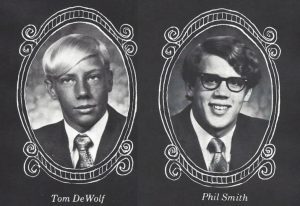 I graduated from Western Christian High School exactly 50 years ago this month. One of my closest friends in high school was Phil Smith. Our senior pics are on the right, scanned from our yearbook. After graduating, I headed to Oregon to attend Northwest Christian College and the University of Oregon. Phil went to Pennsylvania to attend Messiah College, which was founded by his great grandfather.
Fast-forward 40+ years, and Phil and I reconnected, we think our first re-connection was via Facebook, then 8 years ago in person for the first time when I was speaking at a college near where he lived in Lancaster, PA (after living and working in the U.K., Rwanda, and elsewhere around the world).
Last August, I received an email from Phil connecting me with his nephew, Steve, who serves as Senior Minister at First Congregational Church in Old Lyme, Connecticut. I’d been to Old Lyme many years ago to locate the grave of my 8x great grandfather, Edward DeWolf. Phil introduced us because of the social and racial justice work we’re both committed to. FCCOL is committed to learning about, and acknowledging, the role its early leaders, and all of Old Lyme, played in participating in, and perpetuating, slavery. They are part of a powerful effort, The Witness Stones Project. From their website: “Between 1670 and 1820 more than 200 enslaved African Americans and indigenous people labored in the historic town of Lyme. Today, Witness Stones honor the humanity and the contributions of vital members of our community. The bronze plaques that mark sites of enslavement on Lyme Street restore forgotten history and serve as memorials to those once held here in bondage.”
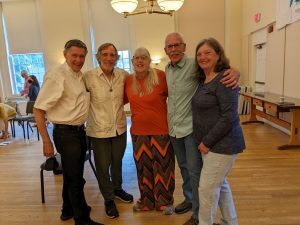
L-R: Gary Jungkeit, Tom DeWolf, Pat (Smith) Jungkeit, Phil Smith, Becca Smith
Turns out Steve is the son of Phil’s older sister, Pat, who was Phil’s and my math teacher in high school, and Gary Jungkeit, who was choir director during our senior year. Over the succeeding months, Steve, Phil and I stayed in touch and pondered what we could do together. It resulted in the FCCOL flying me to Connecticut to lead a workshop on Saturday afternoon, June 11, and preaching the sermon in Church on Sunday morning, June 12. Though I graduated from Northwest Christian College in 1978, I never entered the ministry. Forty-four years after receiving my diploma in Biblical Studies, I’d be delivering my first-ever sermon from a pulpit.
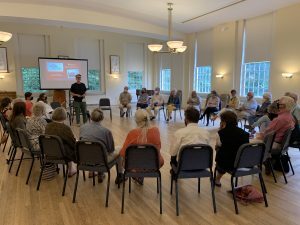 We expected maybe a dozen folks for the workshop, but more than double that number showed up so more chairs were added to the circle. Participants were deeply engaged as I introduced the Coming to the Table Approach to racial healing, including the use of the Circle Process (with values and touchstone discussions), Restorative Justice and Trauma Awareness & Resilience principles.
The biggest treat of the weekend was being able to spend more time with Phil than we’ve ever had since high school, AND to be with his wife Becca and their son Iranzi, Steve, his wife Rachel, and their children Sabina, Elsa and Augie, as well as Pat and Gary (Sabina, Elsa, Pat & Gary would perform with bells at the beginning of the church service on Sunday).
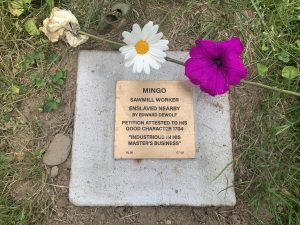
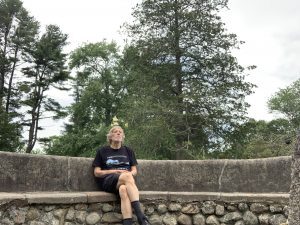 One weekend earlier, my cousins Dain and Constance Perry were in Old Lyme to present the film of our family journey, Traces of the Trade: A Story From the Deep North, to the community. During their visit the Witness Stones project places a stone to honor Mingo, a man owned DeWolf. I had known of Edward’s involvement in King Phillip’s War, helping to murder upwards of 1,000 indigenous men, women, children and elders in the freezing winter of 1675. I didn’t know until Dain called me that he had also owned enslaved Africans. This was more than six decades prior to the family becoming the most successful slave-trading dynasty in North America over three generations (50 years). I sat on a circular stone bench nearby, thinking about all the harm caused by my ancestors, and the resilience of the people they owned and the people they traded, all to support their greed and power. It is projects such as Witness Stones that will help us acknowledge the truth of the past and show us a path toward healing, equality, justice, transformation, and liberation.
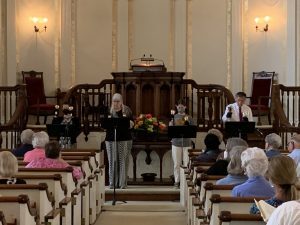
 There were more than 100 people in church on Sunday morning. I was uncertain how my message would be received. I shared why I left the church back in the 1970’s, how church people, including ministers, were complicit in perpetuating slavery, how the systems of racism and white supremacy that were at the foundation of the creation of the United States are still operating very effectively today, resulting in widespread advantages for people like me (people of European descent, especially men) and equally widespread disadvantages for people of color and other marginalized communities. The service was recorded and you can CLICK HERE to watch it online. The whole service, from the choice of hymns to the choice of scripture, was built around this theme of the past being present, of the sins of the fathers still impacting all of us today. To watch just the sermon, you can fast forward to about the 32-minute mark. Apparently the words I shared connected with many in the congregation, as they offered a standing ovation as I concluded. I trust the ovation was evidence of the congregation’s commitment to continued healing work.
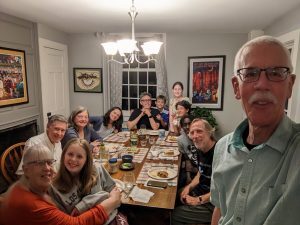
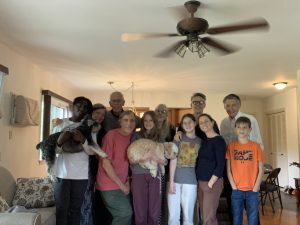 Two days went by very quickly. Fortunately, there were times for a long walk with Phil, and another with Steve, and meals with the whole, extended family. We’re already talking about “what’s next” on this healing journey. As I look back at Phil’s and my graduation 50 years ago this month, and the wildly circuitous route that eventually brought us back together for this weekend focused on learning and repair, I marvel at how God works.
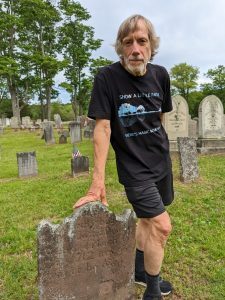
The headstone of Edward DeWolf (1646-1712)
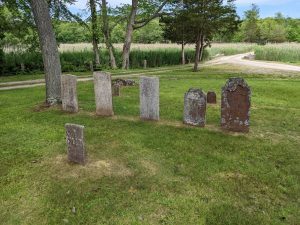
graves of enslaved people located at the far end of Duck River Cemetery
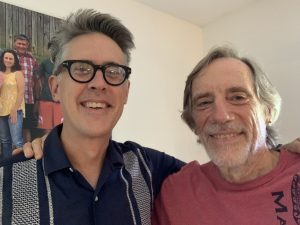
Steve and Tom
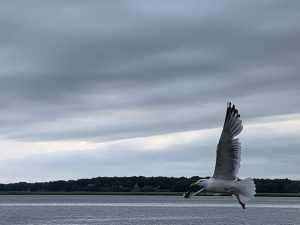
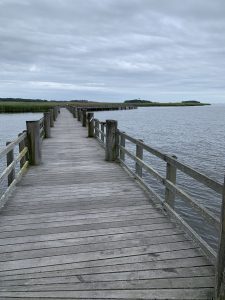
A walk along the Connecticut River
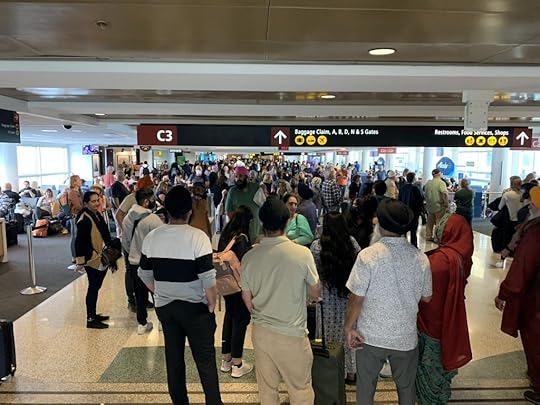
I’ll admit I did NOT enjoy the 3 flights back home… WAY too many people, 3/4 of whom were unmasked, traveling that Monday…
The post The Past is Present appeared first on Tom DeWolf.
December 24, 2021
It’s a Wonderful Life: Pilgrimage to the real Bedford Falls
 “It’s a Wonderful Life isn’t the way life is, it’s the way life should be.” – Frank Capra
I’ve thought a lot, and read a lot, about “pilgrimage” over the past few years. I embarked on a huge pilgrimage in late 2019 when I walked 550 miles across Spain on the Camino de Santiago. I began to understand many experiences qualify as pilgrimage, depending upon one’s intentions. For me, a visit to the Baseball Hall of Fame a few years back with my friend Stephen Birchak, was definitely a pilgrimage. Going to Seneca Falls, NY in December 2021 was also a pilgrimage.
I’ve loved Frank Capra’s classic film, It’s a Wonderful Life, for as long as I can remember. I can’t tell you the first time I saw it, but my family has been watching it every year for probably half a century. When it was in the public domain, I bought my own 16mm copy so I could screen it every year at Pat & Mike’s Cinema & Restaurant, the cool joint downtown that my friend John Ellis and I owned and operated together for five years in the early 1980’s, and where I met my wife, Lindi. We didn’t charge admission for IAWL, and we packed the place every night for a week, every year. I remember vividly the moment on July 2, 1997 when I heard that Jimmy Stewart had died. I was driving home from Portland. I pulled over to the side of the road and cried.
 2021 is the 75th anniversary of the premier of IAWL. We found out about the 5-day celebration in Seneca Falls, New York, hosted by the It’s a Wonderful Life Museum, about a year ago and began making plans and reservations. We were a little nervous with the Covid Pandemic still raging, but trusted that our vaccinations, boosters, masks, and other precautions would keep us safe. Glad to report they did.
 Why Seneca Falls? The town claims it provided Frank Capra with the inspiration that led to how Bedford Falls would look when being built on a soundstage in Culver City, California. He’d stopped in Seneca Falls for a haircut on his way to visit an aunt a few years before the film was made. There are multiple more “coincidences” that certainly convince me that Seneca Falls is the “real” Bedford Falls! Harry Smith, on the Today Show, agrees. Watch the segment shown on December 9, the second day of the Festival. You can also watch an interview with Jimmy Stewart’s daughter, Kelly Stewart Harcourt.
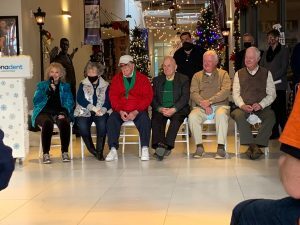
Karolyn Grimes, Carol Coombs, Jimmy Hawkins, Michael Chapin, Ronald & Donald Collins at the opening ceremony for the celebration
Featured guests for the festival included several of the child actors from the film, all of whom are in their 80’s now: Karolyn Grimes, who played Zuzu, Carol Coombs, Zuzu’s sister Janie, Jimmy Hawkins played Zuzu’s little brother Tommy Bailey, Michael Chapin was young George’s Friend on the sledding hill (Michael’s sister, Lauren Chapin, starred as “Kitten,” the youngest daughter in the TV series Father Knows Best), and twins Donald and Ronald Collins played Little Pete Bailey for a few seconds in a crib. Don and Ron still tease each other about who is actually pictured in the film.
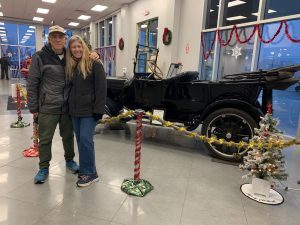
Lindi and me with “the” car!
Other special guests included Mary Owen (Donna Reed’s daughter), Monica Capra Hodges (Frank Capra’s granddaughter), and Carol Moss Loop (Virginia Patton’s daughter), and all the way from Colorado, George Bailey’s car was there; the very car Jimmy Stewart smashed into a tree.
We spent time listening to the actors and others reminisce and joke with each other. Jimmy Hawkins and Monica Capra Hodges shared memories.
 Monica’s dad driving her grandfather around with Jimmy Stewart or Bob Hope in the back seat.How Lionel Barrymore was made up to look like the guy in American Gothic with the bald cap and all.The most challenging scene to film was the family decorating the tree when George arrives home, Janie practicing piano, Zuzu upstairs in bed with a cold, little Tommy repeating “’Scuse me! ‘Scuse me!” Just so much going on, on so many levels.Capra didn’t know the gym floor opened to a pool and changed the script to incorporate it once he did know.Years later when he was asked, there is only one scene Frank Capra would change in the movie. Mary Hatch would not have become a spinster librarian. For one thing, the film sort of perpetuates negative stereotypes about spinsters and librarians. Mary was strong and would have been strong no matter what. “The running joke throughout the Capra family,” said Monica, “Is that I’m an elementary school librarian. Thanks, Grandpa.”Capra used humor to break up heaviness and then slip in the message of the moment. This reminds me of our family documentary, Traces of the Trade, and how humor was used to lighten the load of the film as well.A frequent visitor to the Frank Capra’s home was Walter Lantz, creator of Woody Woodpecker. Lantz’s wife was recorded as Woody’s memorable laugh. Monica remembers asking her to do the laugh, which she would always do.
We listened to Mary Owen talk about her mom, Donna Reed. She spoke of being taught to swim by Aunt Esther… who happened to be Esther Williams, a close friend of Donna’s.
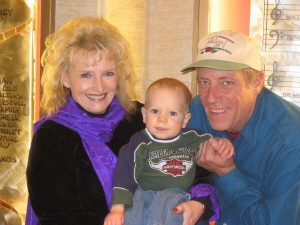
2004 at the opening of the Tower. My grandson here is now 19!

We listened to Jimmy Hawkins and Karolyn Grimes reminisce for about 45 minutes before watching IAWL on the big screen. I’d already spent time with Karolyn and her husband Chris. Karolyn helped us reopen the Tower Theater in 2004 after we’d taken an old, run-down theater and transformed it into a state-of-the-art community performing arts center that has been hosting movies, plays, music and myriad other events for almost 18 years now. Karolyn and Chris remembered the Tower very well. I brought a gift bag for Karolyn from the kind folks now running the Tower. Karolyn and Chris were very appreciative. We were in the second row this evening to listen to Karolyn and Jimmy. She saw me and spent the next five minutes talking about the Tower and what a wonderful venue it is and how Lindi and I came all the way from Bend, Oregon to be here. That moment was both humbling and very special.
Karolyn didn’t see IAWL until she was forty years old. She made sixteen films as a child, including Rio Grande with John Wayne and Maureen O’Hara, and The Bishop’s Wife with Cary Grant and Loretta Young, but her parents both died by the time she was 15, and she was shipped off to live with relatives in the Midwest who didn’t approve of Hollywood, so her career ended. Today, 80% of her life is devoted to IAWL, “So I see it a lot now!”
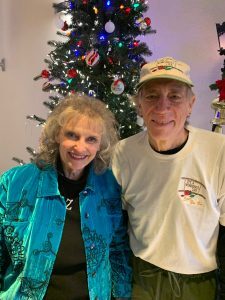
Karolyn Grimes (Zuzu) and me in 2021.
We watched documentaries and listened to stories about various aspects of making the film. All the presentations were held at the Episcopal Church across from the IAWL Museum. I haven’t spent that much time in church every day… ever. Our backs were definitely sore from the pews.
The final night featured the closing banquet. Lindi and I were seated at “Little Pete’s” table with the twins, Ron and Don Collins, and their wives, plus another couple from Long Island. What a treat to talk over dinner with these folks. We sang Christmas carols accompanied by Bert the Cop on accordion. We watched Michael Rohan as George Bailey one final time. He called Jeanine Roos, who played Little Violet in the film, who was unable to travel here this year. A mic was held to “George’s” phone as Little Violet said, “I send my best wishes. I love you all. Thanks for supporting the film!”
The next day, we flew to Maryland to visit our son, daughter-in-law, and three of our grandchildren. Of all our grandchildren, it’s been longest since we’ve seen these three, so we were thrilled to be there. While walking to the grocery store the morning after we arrived, I passed a sign that read, “Capra Financial Group.” Of course I had to check it out. A man was walking out the front door as I approached. He got in his car and I motioned to him. He rolled down his window. I asked if he was related to Frank Capra; that I’d just come from the IAWL Celebration.
He smiled and said Capra was a shortened version of a longer Italian name. But, he did grow up in Hollywood and his father worked with Frank Capra. He lived next to Dan Blocker and went to school with his son, Dirk. I told him how I’d worked on the film crew for Love at Large, a film Dan’s other son, David, produced.
Our conversation only lasted a couple minutes but made my whole day. As I walked away I thought about timing. Walking by, I saw the sign. I could’ve kept going and stopped on my way back, but I didn’t. Instead, I walked up as he was walking out. Living life as pilgrimage is wonderful like that when we pay attention.
Next up on my pilgrimage agenda is to visit both the Donna Reed Museum in Denison, Iowa, and the Jimmy Stewart Museum in Indiana, Pennsylvania. Scroll down for a few more photos of our time in the “real” Bedford Falls.
Hee Haw! And Merry Christmas!
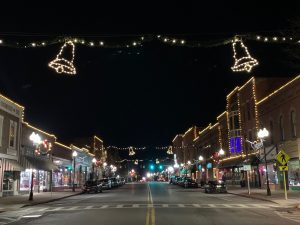
Hello, Bedford Falls!
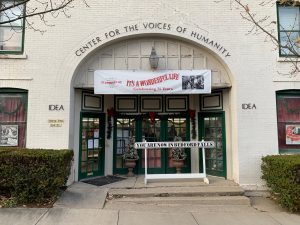
The It’s a Wonderful Life Museum
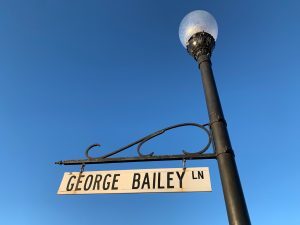
On the bridge… yes “that” bridge…
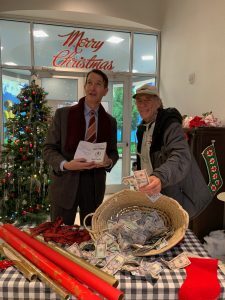
Donating to George Bailey (Brian Rohan), the richest man in town!
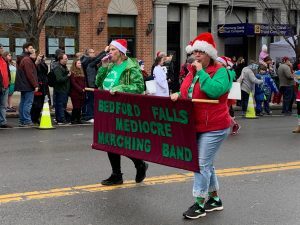
It wouldn’t be Christmas without a parade… and a Mediocre Marching Band!

…and Fireworks over the bridge and river!
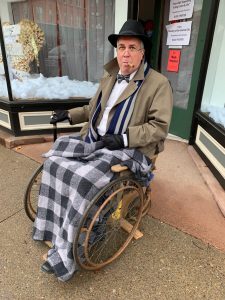
…and Mr. Potter
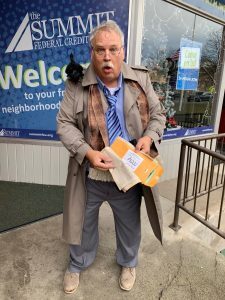
Actors dressed as characters from the film, including Uncle Billy…
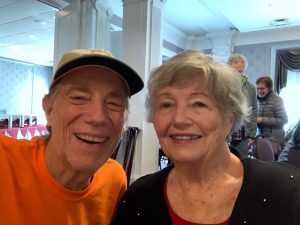
With Carol Coombs, little Janey Bailey…
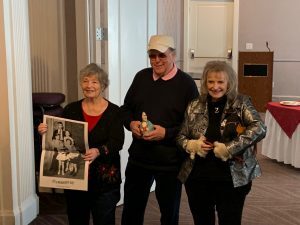
What a treat to spend time, and talk with, Carol Coombs, Jimmy Hawkins, and Karolyn Grimes
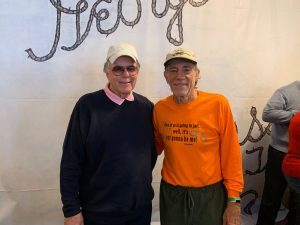
With Jimmy Hawkins, little Tommy Bailey (‘scuse me! ‘scuse me!)
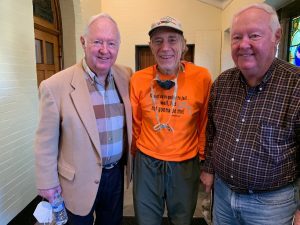
with Don and Ron Collins, Little Pete Bailey as a baby in a crib.
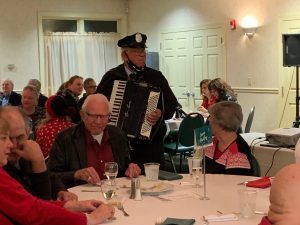
Bert the Cop leading us in singing Christmas Carols…
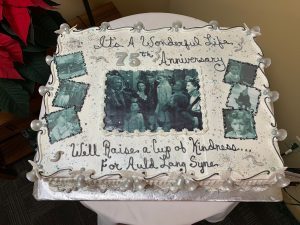
The amazing cake at the Closing Banquet…
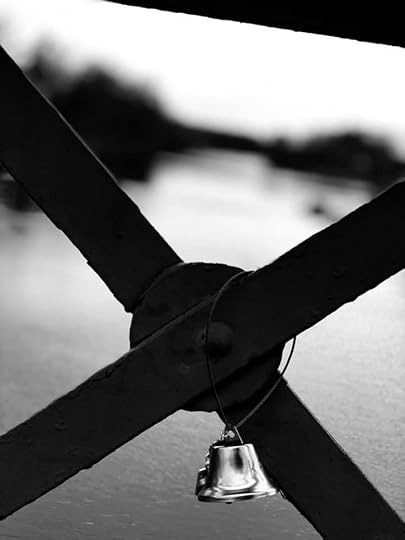
Every time a bell rings, and angel gets her wings…
The post It’s a Wonderful Life: Pilgrimage to the real Bedford Falls appeared first on Tom DeWolf.
February 12, 2019
Robin DiAngelo talking White Fragility in my town, with security guards
(Note: this post first appeared at Beacon Broadside)
I looked forward to Dr. Robin DiAngelo coming to the town where I live, Bend, Oregon, since her appearance was announced a few months ago by The Nancy R. Chandler Visiting Scholar Program of Central Oregon Community College (COCC). She was the featured speaker for this year’s Season of Nonviolence. I’m a big fan of her work, and we share a publisher: Beacon Press. I’ve not had the opportunity to see her present until now. I reserved tickets for her Wednesday evening presentation as well as her workshop the following morning. I attended with several friends; members of our local Coming to the Table affiliate group.
White Fragility
I’ve read Dr. DiAngelo’s New York Times bestseller, White Fragility (read my review here), and consider it one of the “must read” books for white people to become more fully aware of our own “stuff” around race, how we perpetuate it, and how we become “fragile” in defending ourselves against charges of racism. Jodie Geddes and I include White Fragility in the Recommended Reading section of our new Little Book of Racial Healing.
“I don’t want you to understand me better. I want you to understand yourselves. Your survival has never depended on your knowledge of white culture. In fact, it’s required your ignorance.” – Ijeoma Oluo, 2017
From this early slide, Dr. DiAngelo spent an hour and a half naming what white people desperately need to know and acknowledge, and what so few of us do. She explained what white fragility is:
“The inability to tolerate racial stress. Racial stress is triggered when our positions, perspectives, or advantages are challenged. White fragility functions to block the challenge and regain white racial equilibrium.”
If you are white and reading this post, please read White Fragility: Why It’s So Hard for White People to Talk About Racism. Check out a similar presentation to what she shared in our town on YouTube. She names the problems, the wounds, the challenges, the racism. She points out that in North America, “we live in a society that is deeply separate and unequal by race.” She doesn’t couch things in comforting words. In fact, her book and presentations are decidedly uncomfortable for most white people because we haven’t done our work in understanding our own connection to racism, its perpetuation, and its impact on all people of color.
So, that’s your homework, my white friends.
Security Guards
But my main purpose in writing this essay is to ponder the meaning(s) of the presence of the security guards.
I sat in the third row with several friends in the sanctuary of the Unitarian Universalist Fellowship. The presentation was moved from Central Oregon Community College to accommodate more people. Her presentations both filled completely, plus waiting lists. When the event began and Dr. DiAngelo was introduced, a tall, strong, white man in uniform stood at the front of the room on the left. Another stood to the right. They looked out at the gathered crowd with serious looks on their faces. They never moved; never showed any emotion or response to anything Dr. DiAngelo said. A few more security guards were stationed elsewhere throughout the sanctuary. During her talk, she shared that she received a death threat last week. Well, I thought, that explains the security guards.
At the conclusion of Dr. DiAngelo’s presentation, one of the guards moved to stand a few feet to her left as she set on the front edge of the stage to talk with attendees and sign copies of her book. He didn’t move. He didn’t blink. No nonsense. Deadly serious.
To the friends I sat next to, including an African American man, I said at the conclusion of her presentation, “I found it really disturbing to have the security guards standing there throughout her talk.”
“I could hardly listen to what she had to say,” my friend replied. “I’m black and he’s a cop.”
I stared at him for a moment, shook my head, and said, “I realize that as disturbing as it is for me, it is so much more for you. In all honesty, I was thinking this is completely unnecessary here. Nothing bad will happen in Bend, Oregon. Especially not in this church. But of course, it can. And my inclination to think otherwise highlights my own racial blinders.”
“This is what I need you and other white people to understand,” said my friend. “This is the impact that I deal with every day.”
I walked over to one of the organizers of the event. I learned the college had received messages from close to a dozen people who were very upset that COCC would bring Robin DiAngelo to town. Very upset. Enough so, apparently, that a team of security guards was hired and was very visible.
After most everyone had left, I spoke to one of the security guards who had been positioned at the front of the room. I asked him how he felt about needing to be there. He started sharing what sounded like a “company line” of just doing his job, etc., etc., and I interrupted.
“What I’m asking is about you personally. How do you feel inside that we live in a town where your presence is needed for an event like this?”
He looked into my eyes, then. It felt like he was really seeing me. “There are some really angry people in the world. They can cause a lot of damage. It’s too bad, but I’m glad we can help make sure everyone stays safe.”
I appreciate the event organizer and the security guard being open with me. Their words remind me of my own blindness to what goes on in our world… in my town. White people unwilling or unable to see our own stuff. White people willing to use violence – in letters to a local college, or in acts of violence – to avoid understanding and admitting that we are the problem. White people are the problem. In a nation founded on racism and white supremacy (the enslavement, murder, rape and centuries of abuse of African people, the annihilation and forced removal of indigenous people, the violence directed at, and theft of land of Mexican people, and so much more) – the foundational elements in the creation of the United States – white fragility is very much alive and well today; causing ongoing harm, and sometimes violent death, to people of color.
Let me be as clear with my readers as Dr. DiAngelo was with us that night. It is up to white people to understand that our ancestors created racism. We have inherited it. Our denial and deflection and fragility perpetuate it. It is on us to eradicate it.
To order Robin DiAngelo’s book, White Fragility, click here,
Click here to read my review of White Fragility
The post Robin DiAngelo talking White Fragility in my town, with security guards appeared first on Tom DeWolf.
February 2, 2019
Adventures with Ledlie Laughlin (1930-2019)
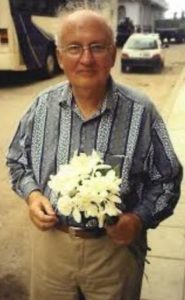 When I learned the Celebration of his Life would be held the next Sunday, January 27, I contacted our mutual cousin, Elizabeth, who lives in Queens, New York. We agreed that I would fly to New York and the four of us (her, me, her husband Fari, and their son, my godson) would drive up to Connecticut to honor Ledlie with his family and friends. Becky told me her father had asked that I share some memories with those gathered, which brought a big smile to my face. What follows are a few stories I shared, and a few I didn’t so I didn’t yammer on too long; stories I’m particularly fond of.
Traces of the Trade
Ledlie and I are 6th cousins, once removed. We met in 2001 when we both participated in the journey that would become the documentary film, Traces of the Trade: A Story from the Deep North , and my first book, Inheriting the Trade . We were roommates throughout filming in July and August that year in Rhode Island, Ghana, and Cuba. We became very close… despite his snoring like a chainsaw in desperate need of oil.
There was the night, after dinner at a local restaurant in Ghana, when Elizabeth tried to get Ledlie to dance with her. He resisted until the sound system began to play a song with the lyrics, “Shake that booty in the name of the Lord.” How could he resist? He’s a priest, after all. He danced with Elizabeth with the biggest smile on his face.
At the conclusion of filming each day in Ghana, Ledlie and I would sit at the bar in the hotel in Cape Coast and enjoy a glass of rum. We shared an affinity for good rum back then. We were the only two in the bar each night, except for the young woman who tended bar, and occasionally a colleague of hers. We talked, laughed, and wound down from the heaviness of each day’s excursions and discussions related to the slave trade.
Butt to Butt
The only serious argument we had came in Ghana after being in the dungeon at Cape Coast Castle; a dungeon where African men would be held for weeks to wait for a slave ship to take them away in shackles across the Middle Passage forever; a dungeon located directly beneath the first Anglican Church built in West Africa. Ledlie had retired a few years earlier from a long career as an Episcopal priest.
“How do you feel now,” I asked, “with that church sitting right above all those enslaved people in that disgusting dungeon?”
“It would’ve been worse had the priests not been there,” he quickly replied.
I was so angry I wanted to scream. The room we shared in the hotel had one bed. It was a king-sized waterbed frame with two, small twin bed mattresses inside. We slept that night like a couple who went to bed angry; butt to butt. The next morning, as I wrote in Inheriting the Trade, Ledlie said he wasn’t prepared for our confrontation; that he knew he came across as a bit defensive.
“But I need to come to terms with it. This is complicated, but I thank you.”
Ledlie was so open to facing his own “stuff,” his own racism and his privilege. He was such an inspiration, and a true moral centerpiece for our journey, and the film. In his honor, I wore a Guayabera shirt to the Celebration of his Life; a shirt I bought when we were together in Cuba during filming.
Several years ago, he recorded an audio version of my book, Inheriting the Trade for the Connecticut Library for the Blind and Physically Handicapped. I listened to Ledlie read as I flew across the country for his memorial service. He remained so alive and present as I listened to him read my words to me.
New York
He and Roxana rented a small apartment for many years in Chelsea, a neighborhood in New York City, near The Church of St. Luke in the Fields, in Greenwich Village, where he once served as priest. I cherish our New York memories; of touring his church, and the seminary he attended, walking together in Central Park, visiting the private club where he was a member, where many artists and writers were members, drinking fancy rum, of course, before dinner. He spoke that night of his privilege, the level of wealth that allowed him to belong in this club, and that he wanted me to know about this part of his life as well as the rest of it; that he struggled with his own feelings about all of it. Ledlie was a contemplative man.
Elizabeth and Fari live in Queens, so we all met in the City several times over the years. Ledlie presided at their wedding on a beach in Massachusetts, and at the ceremony in their apartment where I became godfather to their baby boy.
Connecticut
Visits over the past decade have mostly been at their home in Connecticut. They live in a small town, really the tiniest of dots on the state map. A peaceful place of respite filled with long walks with their dog Corky, sledding in the snow in winter, learning about the making of homemade maple syrup, listening to the croaking of the frogs in the pond, and sharing stories.
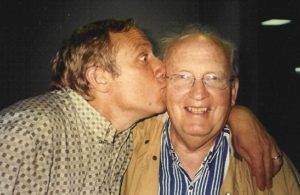 I especially cherish our visits over the past couple years, visits when it appeared Ledlie didn’t know any of us; to hold his hand and tell him I love him. To witness the twinkle in his eye and that same voice saying hello. And I know without a doubt he was there… communicating differently, in a language I don’t know… and trusting he was with us at the celebration of his life in the church where he and Roxana were married six decades earlier, and at the reception in the nearby retreat center where I, and many others, shared stories of our times with Ledlie. Knowing that he was standing tall there – now among the ancestors – with that big Ledlie Laughlin smile on his face, enjoying all the nice things we shared about him… and not so much the mischievous side of him…
Like the time Ledlie and I went outside from our hotel room in Cuba late one night, to the beach, where we dropped our clothes on the sand and went skinny-dipping in the Caribbean Sea – him smoking a fine Cuban cigar… both of us with huge smiles on our faces… cherishing the profound journey we shared with our cousins. Standing naked in the dark, in the Caribbean, the vast ocean of stars twinkling above us. This may be my favorite memory of my adventures with Ledlie Laughlin…
See you on the other side, my friend, and my dear 6th cousin, once removed…
The post Adventures with Ledlie Laughlin (1930-2019) appeared first on Tom DeWolf.
September 16, 2018
This Old Guitar
I’ve joined the cult of people committed to walking 10,000 steps per day, every day (well, most days… you know), for exercise; to help preserve the health and fitness of my body as I age. On Saturday, September 15, I achieved my 8th successful 10,000-step day in a row, and 12th successful day in September, by walking across town to pick up a movie at a Redbox kiosk that wasn’t available at the one near our house. I walked through Drake Park along my way and removed my earbuds as music from the park was louder than Bruce Springsteen singing through my iPhone.
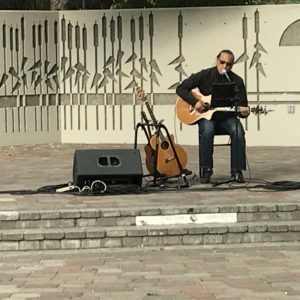 Bill Keale was on stage. Turns out St. Charles Medical Center was celebrating a century of offering health services here in Bend. The celebration was taking place just blocks from their first location downtown atop “hospital hill;” across the street from the old St. Francis church. I’ve heard Bill perform many times over the years and paused to take in the closing notes of Here Comes the Sun. I stood near a tree to listen to Abraham, Martin and John, and Morning Has Broken. Born in Hawaii to a family of musicians (including his cousin Israel “IZ” Kamakawiwo’ole), his voice and guitar are a beautiful and comforting gift to our community.
I walked on. When I returned to walk back through the park close to an hour later, Bill was still playing. I sat in the grass to take in the rest of his show. When he said, “I have one more for you,” he explained he had worked at St. Charles for the past 27 years. This is close to what he said…
“My first job was in shipping and receiving, but that job ended. I applied for another job in housekeeping. I loved that work, cleaning rooms for people in need. And I loved the other people I worked with in housekeeping. I’d play my guitar and sing for patients and my co-workers. They seemed to like it. Nobody else was singing for them, I guess.” Bill smiled. Over the years his work responsibilities changed and grew. He offered gratitude to the people who helped him along the way, supported his career. “One day my friends at the hospital presented me this gift, this guitar. They had it built special just for me. I love my family at St. Charles and this song is for them.”
He began to play John Denver’s This Old Guitar on his beautiful, handmade Breedlove…
This old guitar taught me to sing a love song
It showed me how to laugh and how to cry
It introduced me to some friends of mine
And brightened up some days
It helped me make it through some lonely nights
Oh, what a friend to have on a cold and lonely night
There weren’t a lot of people in attendance. Those of us who were received the blessing of Bill Keale’s gift; his music, his voice. Several of us offered Bill a standing ovation. I then walked up to the stage.
“Thank you,” I said.
“You’re welcome.” His smile beamed.
“Especially for your story about caring for people at the hospital. I talked with my cousin just yesterday. Her mom is in a care facility now. They had a hard time finding one that felt right; one where it felt like the people working there cared for their patients; loved them and hugged them, radiated community and love. Once they found the right place, it felt okay moving their mom in. Whether it’s hospitals or schools or workplaces, once we realize we’re here to care for each other, these places begin to work right.”
“That is so true. Thank you.”
We embraced. Others stood nearby wanting to talk with Bill. I turned to walk across the park toward home. I put in my earbuds and turned Bruce back on. I was listening to his concert at the New Orleans Jazz festival from 2006, one year after the devastation of Hurricane Katrina. After taking in the blessing of Bill’s music, We Shall Overcome and When the Saints Go Marching In sounded just right as I completed another 10,000-step day.
This Old Guitar
I’ve joined the cult of people committed to walking 10,000 steps per day, every day (well, most days… you know), for exercise; to help preserve the health and fitness of my body as I age. On Saturday, September 15, I achieved my 8th successful 10,000-step day in a row, and 12th successful day in September, by walking across town to pick up a movie at a Redbox kiosk that wasn’t available at the one near our house. I walked through Drake Park along my way and removed my earbuds as music from the park was louder than Bruce Springsteen singing through my iPhone.
Bill Keale
Bill Keale was on stage. Turns out St. Charles Medical Center was celebrating a century of offering health services here in Bend. The celebration was taking place just blocks from their first location downtown atop “hospital hill;” across the street from the old St. Francis church. I’ve heard Bill perform many times over the years and paused to take in the closing notes of Here Comes the Sun. I stood near a tree to listen to Abraham, Martin and John, and Morning Has Broken. Born in Hawaii to a family of musicians (including his cousin Israel “IZ” Kamakawiwo’ole), his voice and guitar are a beautiful and comforting gift to our community.
I walked on. When I returned to walk back through the park close to an hour later, Bill was still playing. I sat in the grass to take in the rest of his show. When he said, “I have one more for you,” he explained he had worked at St. Charles for the past 27 years. This is close to what he said…
“My first job was in shipping and receiving, but that job ended. I applied for another job in housekeeping. I loved that work, cleaning rooms for people in need. And I loved the other people I worked with in housekeeping. I’d play my guitar and sing for patients and my co-workers. They seemed to like it. Nobody else was singing for them, I guess.” Bill smiled. Over the years his work responsibilities changed and grew. He offered gratitude to the people who helped him along the way, supported his career. “One day my friends at the hospital presented me this gift, this guitar. They had it built special just for me. I love my family at St. Charles and this song is for them.”
This Old Guitar
He began to play John Denver’s This Old Guitar on his beautiful, handmade Breedlove…
This old guitar taught me to sing a love song
It showed me how to laugh and how to cry
It introduced me to some friends of mine
And brightened up some days
It helped me make it through some lonely nights
Oh, what a friend to have on a cold and lonely night
There weren’t a lot of people in attendance. Those of us who were received the blessing of Bill Keale’s gift; his music, his voice. Several of us offered Bill a standing ovation. I then walked up to the stage.
“Thank you,” I said.
“You’re welcome.” His smile beamed.
“Especially for your story about caring for people at the hospital. I talked with my cousin just yesterday. Her mom is in a care facility now. They had a hard time finding one that felt right; one where it felt like the people working there cared for their patients; loved them and hugged them, radiated community and love. Once they found the right place, it felt okay moving their mom in. Whether it’s hospitals or schools or workplaces, once we realize we’re here to care for each other, these places begin to work right.”
“That is so true. Thank you.”
We embraced. Others stood nearby wanting to talk with Bill. I turned to walk across the park toward home. I put in my earbuds and turned Bruce back on. I was listening to his concert at the New Orleans Jazz festival from 2006, one year after the devastation of Hurricane Katrina. After taking in the blessing of Bill’s music, We Shall Overcome and When the Saints Go Marching In sounded just right as I completed another 10,000-step day.
The post This Old Guitar appeared first on Tom DeWolf.
August 7, 2018
Adventures in Grandparenting (cont.)
My 9-year old granddaughter and I recently took a walk downtown to the library. She and her sister go to the library multiple times per week with their mom, their grandmother, or me. This time we were returning a few books. As we left our house I noticed she was carrying one of those small, plastic magnifying glasses.
“What’s that for?” I asked.
“Just to see stuff up close,” she said. “Lean over, Papa.” She stared through the magnifier into my eyeball. “You got a huge eyeball, mister!” She said and laughed.
It was a bright, sunny day outside. “Do you know what else you can do with that in the sun?” I asked.
“What?” she said.
“I’ll show you when we get to the park.” And we were off.
Once at the park, about halfway between our home and the library, she picked up a maple see pod and began to work with it between her fingers. “Wanna see something cool?” She asked.
“Absolutely,” says I. 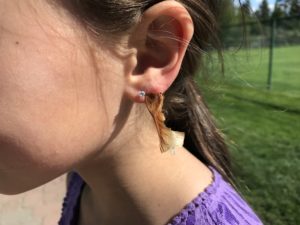
She turned away from me and was doing something with her hands on the side of her head. With a big smile on her face, she turned around and exclaimed, “Earrings!”
She had split the maple seed and clamped it to her earlobe.
“That is so cool!” I said. “Where’d you learn to do that?”
“My friend at school.”
“I love it!” I said. “Okay, give me your magnifying glass.”
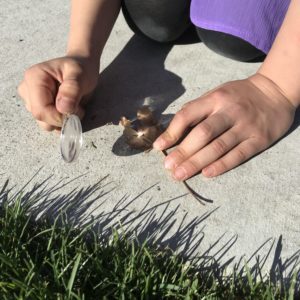
She handed it over. I placed a dried leaf on the sidewalk and worked the focus of the sun into a bright spot in the middle. “If you keep this bright point focused long enough, you can burn this leaf.”
 “Really?”
“Yep. You gotta be careful though. This is literally playing with fire.”
“I will. Can I try?”
“Sure.” I handed her the magnifying glass and she bent over the leaf. It took a while for her to hold the glass steady enough, with a tight enough bead, but eventually a tiny slip of smoke began to rise from the leaf.
“We better get going,” I said. “We have a lot to do today.”
It took an extra long time to get to the library. She insisted we stop several times to try burning multiple leaves. I hadn’t done this since I was about her age. We talked again about the importance of being careful with fire, but I was glad to teach her about the power of the sun and magnifying glasses. Just as she was glad to teach me about a Maple tree’s natural jewelry. It was a good exchange and another wonderful walk… and another reminder (as if I needed one) about how wonderful it is to be a grandfather.
Adventures in Grandparenting (cont.)
My 9-year old granddaughter and I recently took a walk downtown to the library. She and her sister go to the library multiple times per week with their mom, their grandmother, or me. This time we were returning a few books. As we left our house I noticed she was carrying one of those small, plastic magnifying glasses.
“What’s that for?” I asked.
“Just to see stuff up close,” she said. “Lean over, Papa.” She stared through the magnifier into my eyeball. “You got a huge eyeball, mister!” She said and laughed.
It was a bright, sunny day outside. “Do you know what else you can do with that in the sun?” I asked.
“What?” she said.
“I’ll show you when we get to the park.” And we were off.
Once at the park, about halfway between our home and the library, she picked up a maple see pod and began to work with it between her fingers. “Wanna see something cool?” She asked.
“Absolutely,” says I. 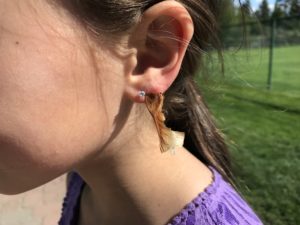
She turned away from me and was doing something with her hands on the side of her head. With a big smile on her face, she turned around and exclaimed,
“Earrings!”
She had split the maple seed and clamped it to her earlobe.
“That is so cool!” I said. “Where’d you learn to do that?”
“My friend at school.”
“I love it!” I said. “Okay, give me your magnifying glass.”
Making Smoke
She handed it over. I placed a dried leaf on the sidewalk and worked the focus of the sun into a bright spot in the middle. “If you keep this bright point focused long enough, you can burn this leaf.”
 “Really?”
“Yep. You gotta be careful though. This is literally playing with fire.”
“I will. Can I try?”
“Sure.” I handed her the magnifying glass and she bent over the leaf. It took a while for her to hold the glass steady enough, with a tight enough bead, but eventually a tiny slip of smoke began to rise from the leaf.
“We better get going,” I said. “We have a lot to do today.”
It took an extra long time to get to the library. She insisted we stop several times to try burning multiple leaves. I hadn’t done this since I was about her age. We talked again about the importance of being careful with fire, but I was glad to teach her about the power of the sun and magnifying glasses. Just as she was glad to teach me about a Maple tree’s natural jewelry. It was a good exchange and another wonderful walk… and another reminder (as if I needed one) about how wonderful it is to be a grandfather.
The post Adventures in Grandparenting (cont.) appeared first on Tom DeWolf.
July 31, 2018
September 11, 2017 @ 4PM
Inheriting the Trade: A Northern Family Confronts Its Legacy as the Largest Slave-Trading Dynasty in U.S. History (2008, Beacon Press; Tom’s first book of his experiences in making Traces of the Trade): “Tom DeWolf’s deeply personal story, of his own journey as well…
The post September 11, 2017 @ 4PM appeared first on Tom DeWolf.