
booksftpolitics:
“It is a truth universally acknowledged,...
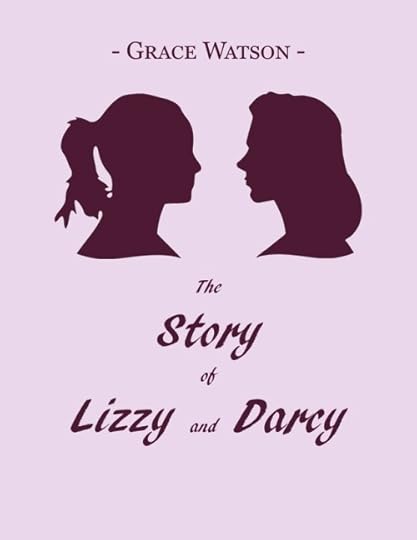

“It is a truth universally acknowledged, that a single man in possession of a good fortune must be in want of a wife.”Or is it?
Grace Watson is the debut author of The Story of Lizzy and Darcy, a queer modern re-telling of
Pride and Prejudice. Quite literally bringing new meaning to the title and the classic love story, Grace joins Books ft. Politics to talk queer history, publishing and what we can expect next from her.Why did you choose to queer Jane Austen’s classic tale over writing a new story? Do you think there is specific value in carving out queer spaces in stories we all know so well?
I’m a huge fan of Pride and Prejudice and I absolutely love re-imaginings of it. I was watching one of my favourites, Bride and Prejudice, which puts the story in a cross-cultural setting, and I started thinking about how well the story would work in a queer setting, to the point that I was convinced that someone must have already written or made it! When I discovered that no one had, I started thinking more and more about how best to bring that new dimension to the well-loved classic. When it comes to stories such as Pride and Prejudice, there’s a reason that they’re so universally well-loved, and I think that’s because they ring true to our own experiences and we can all relate to it in some way. By putting a queer perspective on it – in the same way that stories such as this one have been set in different eras and cultures – we can start to appreciate the same story from someone else’s point of view, which can give us a fresh perspective, as well as allowing us space to identify ourselves more closely with the story.
You chose to set your re-telling in the present day. Do you think it’s also possible for non-heterosexuality to exist in Georgian fiction like Austen’s work?It is absolutely possible! Historical queer fiction is really, really important, because it reminds us that there have always been queer people, as well as bringing to light how life was different for queer people in the past. I was tempted to set The Story of Lizzy and Darcy in the past, but I couldn’t do that without the main obstacle in their relationship being their sexuality. I wanted to tell a love story without the characters’ genders being the main focus, and I can only hope I achieved that!
Do you want The Story of Lizzy and Darcy to help readers think about Pride and Prejudice in different ways? Are there any comments you are trying to make on Austen’s work?Pride and Prejudice has not only stood the test of time but has managed to do so without feeling outdated, which is a rare feat. I am honestly just incredibly grateful to be given the chance to play in the Austen-sandbox for so long, which has helped me to understand the characters (and my relationship with them) much more deeply. If anything, I hope to have proven that one of the most famous romances in Western canon is not exclusive to those two people in Georgian England. When it comes to a ‘truth universally acknowledged’, it’s that two people, regardless of gender, ethnicity or social status, can meet, have a terrible first impression, and while learning more about each other and themselves, fall in love.
Your work features characters that identify as bi-sexual, aro/ace and trans. Is it important that both your female leads are LGBTQIA+ activists?I knew very early on that Lizzy and Darcy would both be involved with activism, at least to an extent. Lizzy Bennet is outspoken, self-assured, independent and not afraid to speak her mind. Mr Darcy in the book is very aware of his position in his society, even if he’s not particularly good at expressing how he feels about that. Darcy Williams is also very aware of how her background has given her privilege, but struggles to balance that with how she can sometimes feel isolated because of her sexuality or ethnicity. It felt natural that both of these women would do what they can where they can, even if it’s just calling out someone’s heteronormativity. I will happily admit, though, that there was a certain amount of hero-worship and projection going on here! When I wrote the first draft of The Story of Lizzy and Darcy, I was still slowly coming to terms with my sexuality, and was lacking the confidence to admit to myself that I really did belong in the LGBTQIA+ community. Unconsciously, this turned into a way of taking my favourite fictional couple and making them more like the person I wanted to be.
You replaced Lizzy Bennet’s younger sisters with male twins. Was it important to show that men can also be vulnerable to manipulation and that abuse can occur in platonic friendships as well as romantic relationships?
George Wickham can very easily be served as a personification of toxic masculinity, and I think it was a really interesting – and important – theme to explore. The worst thing about these sorts of ideals is that they’re infectious, and it can be easy, as happens in the book, for a young man who’s feeling lonely or insecure to see someone who seemingly represents everything they think they should be and to be manipulated. It’s just important to show vulnerable men as it is to show strong women, because everyone is strong and everyone is vulnerable and our genders don’t define that. Sander (the updated Lydia Bennet) sees the world in a black-and-white, very heteronormative way, and to him abuse is something that happens to women at the hands of their male partners, which is a far too common preconception and one that needs to be challenged.
Lizzy and Darcy have very strong opinions but what do *you* think it means to be ‘accomplished’ in 2017?I think that an accomplished person knows the value of hard work, strives to achieve their goals, and most importantly is always seeking to become a better, more rounded, and kinder person. Being aware of other people as three-dimensional is only possible if you are aware of your own grey areas, and are continuously making an effort to do more good in the world. And that can be the smallest things; if you brighten someone’s day, you’re one step closer to changing the world.
The publishing world features heavily in ‘The Story of Lizzy and Darcy’. What improvements would you like to see happen next for LGBTQIA+ representation?I think that we need to move away from this idea that diversity and representation is something that only young people want and need. The best places to look for representation are the young adult shelves – which is absolutely fantastic – but we can fall into a trap of seeing diversity as a token thing rather than as a way of making a story more interesting, three-dimensional, and true to life. It would also be great to see better LGBTQIA+ representation across more genres, an area in which television is streaks ahead of books, which are again miles ahead of film. Why should fantasy worlds be filled with straight white people? Why are futuristic societies so heteronormative? All of that being said, I’m really looking forward to what’s going to happen in the coming years. Our generation is a powerful one with a lot to say and I really think we can – and have started to – change the face of fiction.
What’s next for you as a writer?
I’m currently writing a spin-off/sequel to The Story of Lizzy and Darcy which follows Will, set about a year later, which will hopefully be out by the end of the year! I also have a couple of ideas up my sleeve. One is an original historical novel following a gay and lesbian couple in the Second World War, and the other is a steampunk-esque, queer version of a well-loved classic, which I can’t wait to write!Finally, please recommend three reads for an inclusive TBR!
The Song of Achilles by Madeline Miller. This is my absolute favourite stand-alone book, and tells the story of Achilles from the point of view of his friend and lover, Patroclus. Apart from being beautifully written, it’s also an interesting insight into a society that has a very different attitude towards homosexuality than ours does.
Lies We Tell Ourselves by Robin Talley. This book tackles so much and does it so deftly. The story follows Sarah as she fights the daily battle that is being one of the first black students at a newly integrated high school while coming to terms with her sexuality.
A Place Called Winter by Patrick Gale. Harry Cane has left his life in England in the early 20th Century to avoid scandal after his affair with another man is found out, and moves to Canada. One of the key themes in this book is how traditional Western standards and gender roles were – and are – forced upon other societies and cultures.
You can get your copy of The Story of Lizzy and Darcy here .


