The Age of Innocence
The Age of Innocence, by Edith Wharton 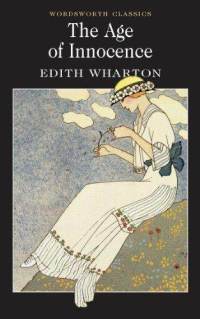 Blurb:Widely regarded as one of Edith Wharton's greatest achievements, The Age of Innocence is not only subtly satirical, but also a sometimes dark and disturbing comedy of manners in its exploration of the 'eternal triangle' of love. Set against the backdrop of upper-class New York society during the 1870s, the author's combination of powerful prose combined with a thoroughly researched and meticulous evocation of the manners and style of the period, has delighted readers since the novel's first publication in 1920. In 1921 The Age of Innocence achieved a double distinction--it won the Pulitzer Prize and it was the first time this prestigious award had been won by a woman author.My ReviewThis book came very highly recommended by a friend and I have to say, at first I really couldn't get into it; like many classics it's very wordy and takes about ten pages to say what could have been said in one! It's also dealing with social issues that aren't an issue for most people nowadays - all the rules and social conventions were interesting to read about and gave me a greater sense of the era but could get a bit tedious after a while. However, in the end I did get into it and ended up quite enjoying it. I liked the characters (kinda anyway) and the feminist ideas that were presented were very ahead of the time. The social commentary, as well as being very interesting, was amusing at times and I can definitely see why she won the Pulitzer Prize...
  My favourite quotes from 'The Age of Innocence': '...Americans want to get away from amusement even more quickly than they want to get to it.''What could he and she really know of each other, since it was his duty, as a 'decent' fellow, to conceal his past from her, and hers, as a marriageable girl, to have no past to conceal?' '... why his bride should not have been allowed the same freedom of experience as himself.' 'No doubt she simply echoes what was said to her; but she was nearing her twenty-second birthday, and he wondered at what age 'nice' women began to speak for themselves. "Never, if we won't let them, I suppose," he mused,' '...to be saved at all costs from further wounding herself in her mad plunges against fate.' 'She spoke with the cold-blooded complacency of the aged throwing earth into the grave of young hopes.' 'There was no use in trying to emancipate a wife who had not the dimmest notion that she was not free;'
Blurb:Widely regarded as one of Edith Wharton's greatest achievements, The Age of Innocence is not only subtly satirical, but also a sometimes dark and disturbing comedy of manners in its exploration of the 'eternal triangle' of love. Set against the backdrop of upper-class New York society during the 1870s, the author's combination of powerful prose combined with a thoroughly researched and meticulous evocation of the manners and style of the period, has delighted readers since the novel's first publication in 1920. In 1921 The Age of Innocence achieved a double distinction--it won the Pulitzer Prize and it was the first time this prestigious award had been won by a woman author.My ReviewThis book came very highly recommended by a friend and I have to say, at first I really couldn't get into it; like many classics it's very wordy and takes about ten pages to say what could have been said in one! It's also dealing with social issues that aren't an issue for most people nowadays - all the rules and social conventions were interesting to read about and gave me a greater sense of the era but could get a bit tedious after a while. However, in the end I did get into it and ended up quite enjoying it. I liked the characters (kinda anyway) and the feminist ideas that were presented were very ahead of the time. The social commentary, as well as being very interesting, was amusing at times and I can definitely see why she won the Pulitzer Prize... My favourite quotes from 'The Age of Innocence': '...Americans want to get away from amusement even more quickly than they want to get to it.''What could he and she really know of each other, since it was his duty, as a 'decent' fellow, to conceal his past from her, and hers, as a marriageable girl, to have no past to conceal?' '... why his bride should not have been allowed the same freedom of experience as himself.' 'No doubt she simply echoes what was said to her; but she was nearing her twenty-second birthday, and he wondered at what age 'nice' women began to speak for themselves. "Never, if we won't let them, I suppose," he mused,' '...to be saved at all costs from further wounding herself in her mad plunges against fate.' 'She spoke with the cold-blooded complacency of the aged throwing earth into the grave of young hopes.' 'There was no use in trying to emancipate a wife who had not the dimmest notion that she was not free;'


No comments have been added yet.