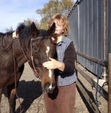
A Mother’s Day story
(This was a part of last week’s Telling Stories newsletter. The newsletter goes out every two weeks. On opposite weeks the Hat Island News has begun publishing. If you’d like to receive either newsletter, you can sign up by clicking the links above. There’s a free signing bonus with either one — a short story. I’d love to have you join us.)
I was listening to Think on NPR recently — Krys Boyd was interviewing a woman about memoir writing. A woman called in; she’d been assigned to write an essay about someone who had had an adventuresome life. She decided to do it about herself. Her friends and partner demurred; she should write it about her father, her partner said. He had lots of interesting stories.
So the caller goes on to talk about all the things she’d done in her life, and it was truly amazing and fascinating. And the memoir writer says, yes, this was exactly her point. Women aren’t allowed to be the center of stories, not even their own.
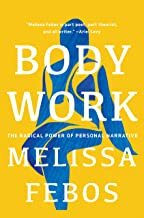
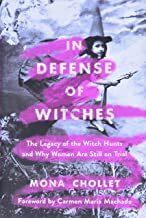
It hit me hard, and so I bought the book, Body Work by Melissa Febos, and it is now my breakfast reading — pushing aside a History of Witches by Mona Chollet which dovetails into Febos’ thesis in some ironic and painful waves. (Febos, it turns out, is a professor at University of Iowa who not only writes memoir but teaches it. And her first published memoir is about herself as a dominatrix. Yes, I’ve ordered it, too. Of course, I did.)
But this isn’t about Febos’ book, or Chollet’s, fascinating as they both are. And it’s not going to be some revelation about my own life, although Febos’ book challenges some of my own prejudices about memoirs. So maybe someday.
No, this is a long lead-in to a Mother’s Day story. Because listening to the caller talk about her life of adventure, and having it dismissed, made me remember my mother.
Mom died twenty years ago. She’d married at 32, late for her generation, and so, when she died at 77, I was 45. It was sudden, and none of us were prepared for it. She had two requests: She wanted to be buried in the cemetery in Union, Oregon, the town I grew up in, not where they were living now. Not that difficult, although no family member had lived in Union in 20 years.
And she wanted a Nazarene minister to perform the ceremony.
A bit more difficult. None of us attended church at that point, and Union had lost its Nazarene church when it grew too small to sustain a pastor. Word had it that the young minister in Baker City was a good man. So the call was made, and he agreed. And we all went back to Union to bury my mother.
The pastor asked to meet with us to talk about my mother, because he hadn’t known her, and he wanted to be able to personalize the message he would deliver. And so we did — in a motel room on a hot, dry-heat day, where the air-conditioner unit in the window couldn’t keep up. A minister, my father, two brothers, and me, perched on the beds and chairs, talking about Mom. Awkward. Claustrophobic. Miserable.
My father talked about how Mom was a good wife and mother, and told a rambling story that was more about him than her, but he was in his mid-80s, and us kids had heard the story before. We didn’t interfere; the minister had a brief frown, but he listened patiently.
My brother talked about her as a mother, about how she took their teasing good-naturedly. (She hated it, actually, but she never told them.)
And my other brother interjected that she was also a great teacher, and that a lot of people would remember her as a teacher, both at church and at school.
Pat Breedlove, wife, mother, teacher. They agreed — it’s on her tombstone even.
And the pastor looked at me and said, “you’ve been silent.” No one let me get a word in, to be honest.
I told him about my mother.
Dorothy Davis grew up poor in the Depression on a isolated homestead in the foothills of the Cascades. No running water, her father was disabled, and her mother took in laundry — and washed it in the creek — to keep the family afloat. She’d been born a premature twin, and even by the first grade she was thought to be developmentally slow — to the point where her teacher decided she wouldn’t be able to spell her real name, Dorothy, and made her use Pat — for her middle name of Patricia.
Surprising them all, she graduated from high school — just as WWII broke out.
Pat Davis went to work for the Navy in Seattle, down on the piers, a brave thing for a young woman on her own. Living in Seattle, working on the Navy Pier, adventures.
She became a Christian, and, after the war was over, she went to Northwest Nazarene College in Idaho. She wanted to become a missionary, and got a degree in education. She became an ordained preacher and ‘rode circuit’ throughout central Idaho in the early 1950s.
“Your mother was one of those preachers!” the minister exclaimed. “She was quite the pioneer then. She and women like her built this church.”
I nodded, because it was true. The Nazarene Church was an offshoot of the Methodists in 1908, and although a ‘plain’ church, allowed the ordination of women. And during the Great Depression and two World Wars, it was women who kept the denomination alive. My mother walked in their footsteps.
Mom also went to Chicago to teach literacy in the slums there, one summer. And when she came back, she went to the University of Washington and got a master’s degree in education.
“So not so dumb after all,” the minister said, appreciatively. “UW is not easy to get into.”
He and I had tuned out my father and brothers, who were making small noises that threatened to interrupt — this wasn’t the woman they remembered — nor wanted remembered.
Mom met my Dad, who had just retired from the Navy, when she was teaching back in her hometown. He had recently divorced and now had custody of his stepdaughter who happened to be in Mom’s English classes. Hallmark Channel cute. It was a whirlwind romance, and they married in 1955. I was born 9 months and 3 days later. (Those 3 days were important to my mother when she told this story.)
Mom taught most of their married life, first in the Seattle area where Dad worked as a guard for Boeing, and then when we bought the ranch outside Union, she taught in eastern Oregon as well. It was her income that kept the family — and the ranch — afloat. A common, and under-acknowledged, story among family farms.
She truly was a fantastic teacher, baby brother was right about that. (I bumped into one of her students when he became a colleague of mine at the university. Mom made him memorize Poe’s The Raven for fighting after school rather than turning him in for suspension. It changed his life, he said, now a professor with a PhD.) At her funeral, people came to speak of her who hadn’t seen her in 20 or more years but whose lives were changed because of her as a teacher, mentor, counselor — friend.
And me? I remember the woman who let me read whatever I wanted to. Although she was a devout Nazarene her whole life, she never banned a book. She loved literature — she taught high school English — and she passed that on to her kids and to her students.
(All right, once she ‘banned’ a book: I was 8, maybe, and found a book of hers, called the Valley of the Dolls, and was struggling through it (adult book) waiting for the dolls to show up. The book disappeared. LOL. The book is about the wild life and drugs of the rich and famous. She told me about it later. Much later.)
She was an amazing woman in her own right, although she would have described herself in the same way that my father and brothers did. She probably never realized how her independence and life inspired others as much as her ability to teach and to nurture a student’s intellectual growth.
I’ve lived an independent, and adventure-filled, life. And family often refer to my father as the source of my sense of adventure — his Navy years, buying the ranch, then a fishing boat and going to Alaska. (He couldn’t have bought the ranch without Mom as his partner, by the way. Just pointing that out. And Mom had her Navy years too — she once confided that she’d held a higher security clearance than Dad did. Which still makes me grin.)
But it was my mother, really, that I inherited it from. Her life showed me that a woman could do things, important things. She taught me to love books, and encouraged me to follow my interests no matter how contrary to the status quo (often my Dad) they might be. She believed in the power of the written word, and that service to others was the highest calling.
So Happy Mother’s Day, Dorothy Patricia (Davis) Breedlove. I miss you.
The post A Mother’s Day story appeared first on Telling Stories.