creating a vision board for my manuscript
The first time I ever created a vision board was during my GCSE English Literature class. We were dissecting articles, and trying to decide the mood that the writer was trying to achieve. I am a very visual person, and so I love a vision board for my own life, be it a Pinterest board for what I want to wear or eat, or a collage slipped into my journal to keep me on track with my goals and aspirations. But to date I have never created one for a manuscript.
Yesterday, I finished what can be loosely defined as a first draft of my next book. It’s rough and ugly, and wildly inconsistent, but the skeleton of a story is there. Any written work today would have been pointless, though. Because before I sink back into it, I need to decide upon a few important things before I undertake the first major edit.
What is the mood of my story?Which characters are important? Obviously, the protagosnist, but what about the others?What are the most important events for each character?What characteristics for my characters do I need to enhance during this draft?What is the timeline?How do the lives of each character effect the other?
These are a few of the questions I ask myself at this point, but the last one is the most important. Why are all these characters together in this story? How do they effect the lives of the others? Some of the effects might be positive, others negative, but I need to be absolutely sure of what they are before embarking on more changes. Plus, assessing these things at this stage will really help to refine the overall arc of the story, and will shape the finished book.
And I have found today that creating a vision board helps me answer these questions. I found images that relate to important parts of the story, or important characters and their interests, and printed them all out. Then, I began to cut and categorise. I kept the images for one character together, and then try to put each group into a rough sort of timeline. This created a sort of storyboard of emotions and events. I began to understand the mood, the setting, the colours. Weather patterns as the story unfold became clearer, as did the things that stir the senses, like smells, texture, and taste. I didn’t understand the importance of water in this manuscript, or the part buildings were playing until today. Now that has become clear. When I look at the board I can see the arc of my characters lives, and the points where they intercept. To anybody else, it might just look like a collection of images, but to me the story is told visually, and I know the temperature and nature of the story. I can see the highs and lows and how my characters feel at each moment in the story. Even their reasoning, the thing that drives them to behave the way they do, is clearer to me after this.
I have long been aware of the positive effects of creating a vision board. But now I see it can also be so helpful when it comes to writing. So, now this board will stay on my wall through the edit, and I will refer and add to it as and when I need to. Instead of panicking about this next step, which honestly, was feeling a little overwhelming, it's easier to see where I'm heading, because the map is right there in front of me.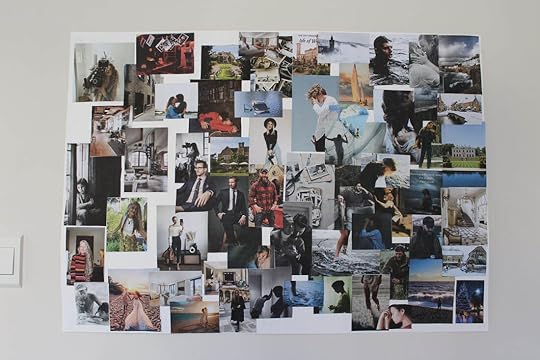
Yesterday, I finished what can be loosely defined as a first draft of my next book. It’s rough and ugly, and wildly inconsistent, but the skeleton of a story is there. Any written work today would have been pointless, though. Because before I sink back into it, I need to decide upon a few important things before I undertake the first major edit.
What is the mood of my story?Which characters are important? Obviously, the protagosnist, but what about the others?What are the most important events for each character?What characteristics for my characters do I need to enhance during this draft?What is the timeline?How do the lives of each character effect the other?
These are a few of the questions I ask myself at this point, but the last one is the most important. Why are all these characters together in this story? How do they effect the lives of the others? Some of the effects might be positive, others negative, but I need to be absolutely sure of what they are before embarking on more changes. Plus, assessing these things at this stage will really help to refine the overall arc of the story, and will shape the finished book.
And I have found today that creating a vision board helps me answer these questions. I found images that relate to important parts of the story, or important characters and their interests, and printed them all out. Then, I began to cut and categorise. I kept the images for one character together, and then try to put each group into a rough sort of timeline. This created a sort of storyboard of emotions and events. I began to understand the mood, the setting, the colours. Weather patterns as the story unfold became clearer, as did the things that stir the senses, like smells, texture, and taste. I didn’t understand the importance of water in this manuscript, or the part buildings were playing until today. Now that has become clear. When I look at the board I can see the arc of my characters lives, and the points where they intercept. To anybody else, it might just look like a collection of images, but to me the story is told visually, and I know the temperature and nature of the story. I can see the highs and lows and how my characters feel at each moment in the story. Even their reasoning, the thing that drives them to behave the way they do, is clearer to me after this.
I have long been aware of the positive effects of creating a vision board. But now I see it can also be so helpful when it comes to writing. So, now this board will stay on my wall through the edit, and I will refer and add to it as and when I need to. Instead of panicking about this next step, which honestly, was feeling a little overwhelming, it's easier to see where I'm heading, because the map is right there in front of me.


No comments have been added yet.