Exploring the Creative Process of Ric Stuecker
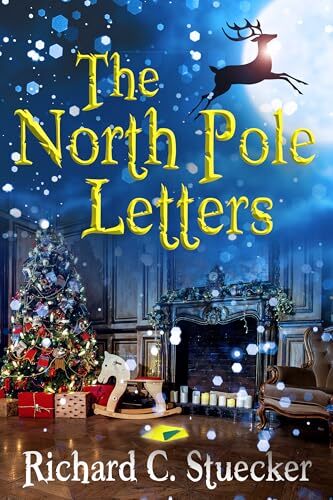
Ric Stuecker has published two collections of poetry, a book of essays, a young adult Christmas novel, and an adult Road Novel, which has been accepted for publication in 2025. He has had several short plays produced in workshop. You can find The North Pole Letters on Amazon: https://www.amazon.com/North-Pole-Letters-Richard-Stuecker-ebook/dp/B0DMNGJ9WW/
Step Into Ric’s Writing Studio
Generally, I have several writing projects in progress at any particular time. I focus on one and have a second to switch to if I need to think about the first or need a rest from it. The third is usually on the back burner. At the moment, I am focused on writing a Christmas romance for adults. I was challenged by my writing partner to write one since both our wives love Christmas romance movies this time of year. My second project is re-writing a detective novel set in Louisville.
I have two writing partners currently. One is a poet who writes brief prose memoirs. The other is a novelist and humorist. We have coffee, talk about writing, and support each other in our efforts. We all write very differently in different genres at different rates of production. But conversations about writing and authors and techniques keep me going.
When I am writing, I generally write sitting in a leather recliner, halfway back. I have tried writing at a desk and even at a stand-up desk but I seem to prefer the recliner. I have soft music playing or a movie on TV, something familiar. I do not write well in silence, but I mostly have to be alone. At this moment I am in my living room with Alexa playing soft Christmas music I can sometimes hear if I stop writing. My living room is somewhat like a lobby or lounge in a lodge or country inn. Around the room are a variety of antique yet sturdy wooden chairs, including a Morris craftsman-style sitting chair, an artisan, hand-crafted oak rocker, a walnut armchair my grandmother rescued many years ago, and my wife’s new recliner. Next to my recliner is a small buffet I received from my great aunt and refurnished. Next to my wife’s chair is a rescued base of a walnut washstand. There is a marble table under a large picture window. There is a white brick fireplace at one end of the room, bookended by two built-in bookcases. It needs new gas logs, which we will probably purchase in the new year. Above the mantle is a portrait of my daughters, Naomi and Jude made by Matt Gatton, an art photograph he made using a Victorian printing technique. Immediately across from me is my great-grandfather’s oak desk that my mother hauled back from New England one summer in the 1960s.
We collect art, and both my daughters are artists. Behind my chair is a block print of our home made by a friend of Naomi’s. Next to it is the block print of Scituate Harbor that my friend Rex Lagerstrom made that was used as the cover of my collection of poems, Ghostlier Demarcations. Because it is the holidays, the room is festooned with garlands, large ornaments hanging from wooden cornices above the windows, and a Christmas tree decorated with ornaments salvaged from my wife’s and my parents. There are several family heirloom nativities or creches.
I usually have some sort of sweet and savory snacks next to me. They replace the cigarettes I used to smoke when writing. I stopped smoking when I was thirty-six, forty years ago.
I don’t have a specific time to write. At the moment, it is late afternoon. If I am feeling particularly productive, I will write late at night and into the next morning.
The Technique
My ideas and method of writing depend on the genre, although there is a voice in my head that starts speaking, either creating images for poems or a storyteller who tells me a story that I write down. If it’s a poem, I might jot down words, phrases, or images. If I am writing fiction, I sometimes will write a line outline of events I want to include and the order I might want to include them. Mostly, I use notes so I won’t forget something I want to include. Quite often, I will find an opening line I want to use and go from there. Then, I sometimes find that the poem starts later in the poem. Some of my poems are narrative and describe a scene with some sort of turn toward the end. Many of my narratives are descriptions of memories, like driving with my grandmother to Scituate Harbor early one morning when I was six. Other poems are highly expressionistic and are a series of conjoined images. It seems like different parts of my brain open at different times. So far, my fiction is memoir-driven.
The first time I felt like a writer was when I was a sophomore in high school. My English teacher asked us to write a short poem in the style of Walt Whitman. It was the first time my writing voice took over, and I could feel the words, images, and rhythms of the poetry I was writing. It has been the same ever since. If I don’t feel the presence of my “inner writer,” I don’t write.
The biggest lesson I have learned is that however brilliant I believe my first draft is, as Hemingway said, “It’s shit.” So, I rewrite and rewrite and rewrite. The second lesson is that there is a stopping point when I have to say: “There it is, no more.”
That First Book Feeling
I made my living as a consultant to schools and communities on positive youth development and working with high-risk students. I wrote three books for Research Press. There is nothing like opening the box of books when the publisher sends them. I still feel the same thrill each time. Sometimes I then ask myself, “Who wrote this?”
Genre
I get very excited about writing in different genres at different times. When I retired, I returned to my long-held desire to write creatively. It’s in my bones. I have been a teacher, a director of a center for chemical dependency recovery, a consultant to schools, and a grant writer for a nonprofit. In each of those jobs, I used the skills I now use as a poet and writer: creating learning environments and experiences for students, writing copy for brochures, books for teachers, and even federally-funded research grants. To return to writing poems and stories, I took an MFA degree at the Bluegrass Writers Studio at Eastern Kentucky University. Every time I took a different class, I got very excited about that drama. In fact, I wrote a book of poems and a creative nonfiction memoir and had plans for a full-length play, all as my final thesis! For now, I feel like I am finished with poetry, but who knows? Lately, I have been working on and publishing writing that is memoir-driven. But I have taken those memoirs and highly fictionalized them into a Christmas novel and an on-the-road novel about a cross-country trip taken in 1970. I just get fascinated and go with what I feel I need to write.
What Flows Versus What Challenges
The easiest part is writing the first draft. The dreaded rewrites are the most difficult. Especially cutting ruthlessly, even though I am often in love with pieces that need to go.
Why
I have no choice but to write. No one wants to be around me if I am not writing.
The Infamous Writer’s Block
I do not believe in writer’s block. Just start a new project or revise an earlier piece.
From Where Do the Words Originate
All my prose and some of my poetry come from memories. A weird part of my brain writes expressionistic poetry.
Reading Equals Entertainment
I want my readers to be entertained in some way. I believe all good writing comes from the need humans have for being entertained. We have always drawn pictures about ourselves and our adventures beginning on cave walls, and poets and storytellers have been creating verse around campfires for millennia.
Advice for Aspiring Writers
I believe that good writing is knowing the roots of fiction and poetry. That means voracious reading not only in the genre one most loves to read but goes back to its roots. If you are into magical realism, fantasy, or science fiction, make sure you know Homer and Virgil, Beowulf, the Icelandic Sagas, Medieval Romantic literature, as well as later masters like Tolkien and Lewis. They were fully versed. All writers in English should revel in Shakespeare.
Favorite Books/Authors
I read in at least two or three ways. The first is for pleasure. My secret passion is reading mysteries and detective fiction. The second is both to study and to learn but also to enjoy. I recently have studied Shakespeare by watching his plays on video and movies, reading them, and reading various biographies and interpretations. Right now, it’s Victorian novels. I had forgotten what it was like to lose myself in the Brontes, Dickens, Thackery, et cetera. Third, for technique. If I am writing poetry, I read a bunch of poems. I go back again and again to Joyce. I’ll just pick up Dubliners or Portrait and even Ulysses. Just for the music.
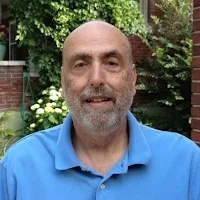
Ric Stuecker is a writer and poet living in Louisville, Kentucky with his wife, Barbara, of over fifty years. He holds an A.B. in English from Duke University, an M.Ed from Spalding University, and an MFA in creative writing from the Bluegrass Writers Studio at Eastern Kentucky University. A Pushcart Prize nominee, he has published two collections of poems with Kelsay Books (The Uncertainty Principle and Ghostlier Demarcations), a collection of essays on conscious aging with John Hunt Publishing (Vibrant Emeritus: The Elder in the Twenty-First Century), and two novels with Next Chapter Publishing (The North Pole Letters and Coasting America). Ric is a certified presentation skills coach and a certified life coach, and he has keynoted, hosted, and presented numerous state, regional, and national conferences. He has mentored successful poets, fiction, and creative non-fiction authors and has taught creative writing at Francis Parker School, Saint Xavier High School, and Indiana University Southeast. Ric and Barbara often travel to visit family in Lucca, Italy, and Cape Cod. Mostly, they dote on their beautiful grandchildren: Lucy, Sylvia, Marley, and Dane.