
Adventures in Reading – Roundup 2024
Goodreads thinks I read four books this year, but I seldom post reviews there so it’s not accurate. In fact, I read 74 books. This sounds very impressive until you learn that 30 of them were MG (middle grade), which are about half the length of an adult book. But it’s research for my writing! So that’s fine. I think I’d still read them even if I wasn’t preparing to write my own, though – from the courage of Mold (Mold and the Poison Plot by Lorraine Gregory) to the kind heart of Herbert Lemon (Malamander by Thomas Taylor), the heroes and heroines have all the odds stacked against them but they fight back with pluck and good-heartedness.
A foray into Bluesky (which, just after the US election, went from tranquility to the noisiness of a hedge at dusk when all the birds have flown in to find a roost for the night) altered me to The Thorny Paradise edited by Edward Blishen, a collection of essays by children’s writers from the mid-70s, about the revolution in children’s writing. I recognised just about every author in the contents page, so it was a must-read for me, both for a piece of nostalgia and something to reflect on as I’ve been working on two children’s novels this year. Each author, of course, has their own take on the subject, but several themes ran through the book, and struck me. One was a rejection of “how-to”, interesting for me to read in a decade where “how-to” books and courses proliferate. Another was a belief that you didn’t aim to write for children particularly, but that you wrote the story you needed to tell. A third was that you should never write down to children or patronise them in any way.
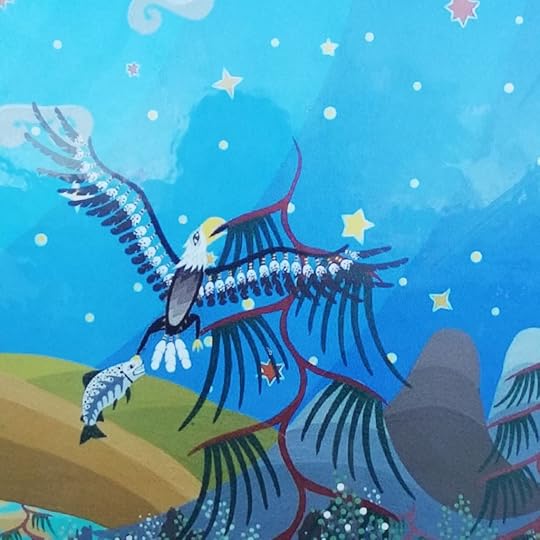 Detail from an electricy box in Vancouver, February 2024
By far the biggest genre I read in was fantasy, and so it’s apt that my reading discovery should be Tiffany Aching. One of my friends had referenced her so much that I found myself a copy of the first book that featured this character from Terry Pratchett’s Discworld, The Wee Free Men. And then I bought the other four Tiffany Aching books, so I could see what happened next to the girl who defended her brother from a faerie with a frying pan and the tiny, fierce warriors who elected her as their “hag”.
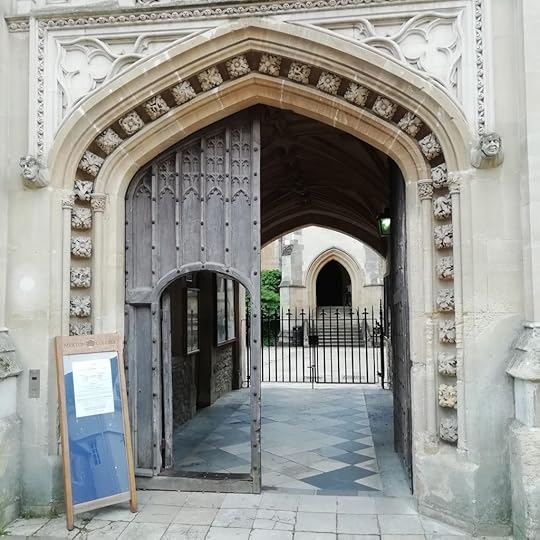 Oxford, April 2024 — we did the Tolkien and CS Lewis tour
Another reading highlight was seeing that folk horror/uncanny literature for children is back. Having delighted in the unsettling works of Alan Garner and Penelope Lively as a child, I was very pleased to see that The Whispering Hollow by Rachel Burge was published this year. It’s a delightfully creepy story, and each time I see the build-up of leaves at my front door, it reminds me of the leaves that encroach on the grandfather’s home, signs that the forest is trying to take over.
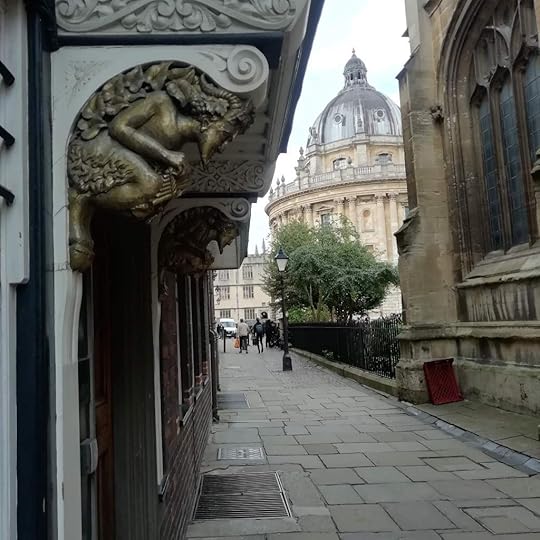 Inspiration for Mr Tumnus? Oxford, April 2024
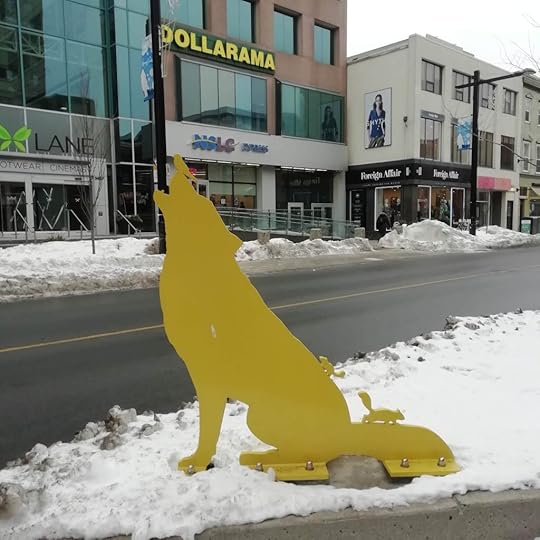 Coyote the Trickster is a regular character in First Nations myths. While artwork and exhibitions about these myths were everywhere, it was clearly the tiniest tip of an iceberg, so I’m not at all equipped or qualified to write more about it.
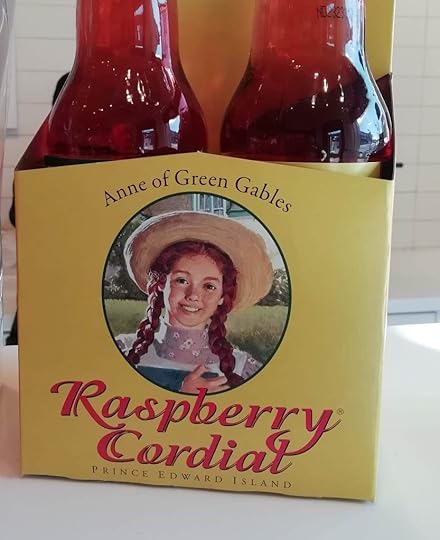
In February we took a trip across Canada, starting in Vancouver and ending in Halifax. Three weeks on public transport meant I needed to rely on my Kindle for reading matter. I enjoyed revisiting Anne of Green Gables, in preparation for our stopover on Prince Edward Island – her forays into her own world of the imagination are so wonderful – although I found the sequel disappointing. I did pick up a paperback half way across Canada – Bad Cree by Jessica Johns, a riveting horror that draws on the landscape, indigenous folklore and historical injustices of Canada. It was a fitting read for a trip that included visits to museums that charted the legends and lore of the First Nations, and the shockingly recent history of the abusive residential schools First Nations children were forced into.
 dav
davOne of the wonderful things about the writing group I belong to is that many of the members published books this year. They are a talented, hard-working bunch. I’ve bought and read a small section of them, which included: Fyn Carter and the Agents of Eromlos by Ian Hunter, a middle-grade science fiction with echoes of Doctor Who and Star Wars (seriously, why aren’t there more books in this genre for this age group?), The Dream Maker by Kiera Nixon, a richly imaginative piece of speculative fiction for young adults) and Slettbyrd by Jenny Moore, a tense dystopian novel for young teens about fear and prejudice in an ice-bound society.
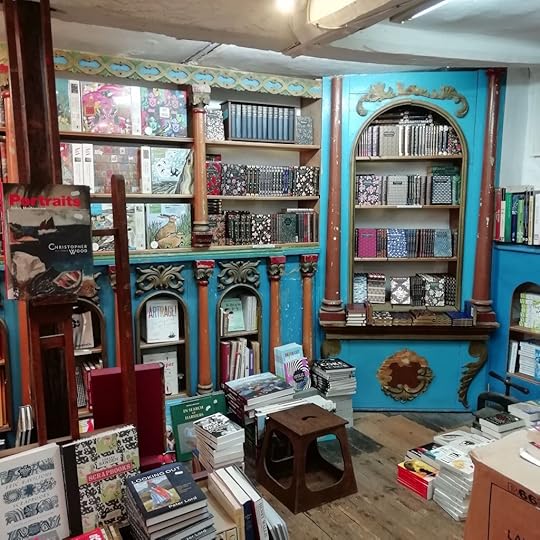 Any post about Hay-on-Wye will include a photo of this bookshop, because it’s so pretty! Easter 2024
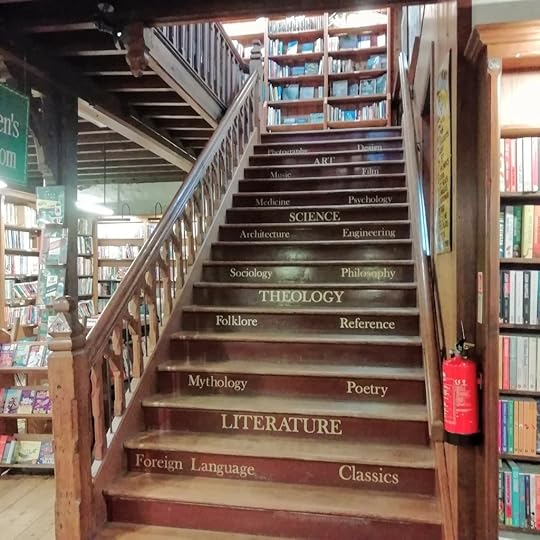 Same again…
Sadly, though, it was time for me and my husband to say goodbye to Ruth Galloway, heroine of a long-running mystery series by Elly Griffiths. We’ve devoured each book and The Last Remains concluded the series. The hunt begins for another compulsive detective series!
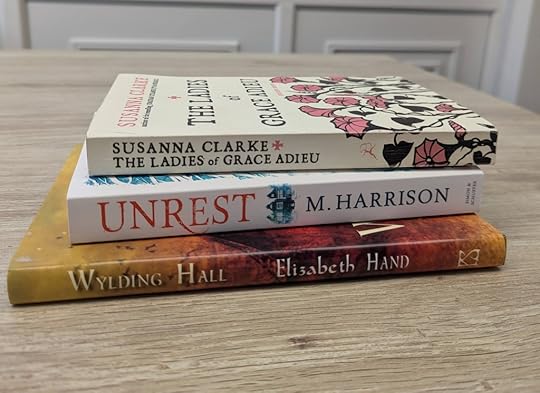
It’s very hard to pick out a top five/nine/whatever the trend is on social media. But these three certainly stand out, even in a year full of delightful discoveries:
Unrest by Michelle Harrison
Is Elliott’s boss faking the ghostly events in the museum? What happened to Ophelia’s boyfriend? Why is Elliott haunted, and how can he deal with it? A gripping plot and an ultimately satisfying solution. Bonus points for an Essex setting, the historic museum in mid-Essex contrasting nicely with the gloomy flat in Tilbury with the terrifying bathroom.
Content warning: this book deals with some very dark issues, including suicide.
Wylding Hall by Elizabeth Hand
While the multiple narrators were rather confusing and not as clearly differentiated as they could be, I really enjoyed the method of narrating the story as if it was a documentary looking back. It’s a horror story that’s not really horrific, with folklore and secrets and passages and mystery, and instead of dark, stormy weather it uses bright summer. It does seem to be very much inspired by Fairport Convention, except that their lead singer didn’t disappear mysteriously.
The Ladies of Grace Adieu by Susanna Clarke
This is my Number 1 for 2024.
I really should have enjoyed Jonathan Strange and Mr Norrel, with its wild mix of Regency and faerie, but I didn’t care for the hero at all. But having enjoyed Susanna Clarke’s Piranesi, I moved on to this collection of stories by her. I thought it was wonderful. I found I was pausing between stories so I didn’t finish the book too soon, and to give me time to savour each. And the illustrations by Charles Vess are a gorgeous addition. These are faerie tales, not fairy tales – the supernatural beings here are tall, powerful, capricious and morally ambiguous. No selfless fairy godmothers here! In sum, the perfect recipe of faerie folklore plus Regency vibes plus a cornucopia of wild, imaginative details and plot diversions, and dark (but not too dark) humour.


