Solarpunk: Creating the future by imagining it
‘There’s millions of people, peopling out there, every day. It’s hard not to be inspired by that.’
‘…you create the future by imagining it.’
‘We have the requisite amount of goodness to do what needs to be done.’

A big welcome today to James Graham, better known as JimJames, who has come to writing more recently. I know JimJames through activism circles and Norwich Writers Rebel, the collective of writers I set up a few years ago, bringing people together who are exploring the climate and ecological emergency in their writing. Whenever there is a drumming event with Extinction Rebellion, he is always to be seen putting his heart and soul into this craft, something he is now also doing with his writing. Solarpunk as a genre is not something I am very familiar with. If you, too, don’t know much about it then read on and find out about JimJames and the new worlds he is weaving with his writing.
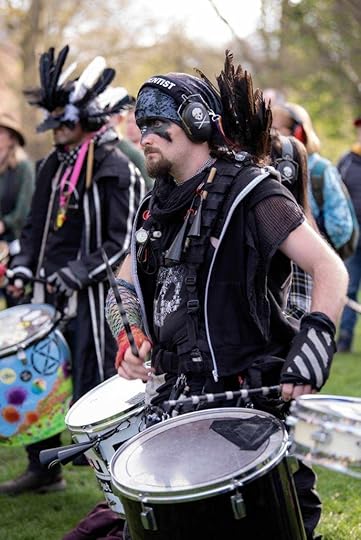
Welcome JimJames. Can you talk about how and why you got into writing and what Solarpunk is?
It’s difficult to say what ‘got into writing’ means for me at this point. Part of me has always wanted to do this, or expected that I would someday. I remember having writing pretensions when I was young but more recently, I decided that one of the things that was missing from the discourse around climate change and transition in the activist sphere more generally was any idea that the future was ever going to be pleasant or that we were going to find niches of joy and do the things that people do all the time, even when times are hard. I know some of that is a deficit mindset where we look at problems because there are problems and we assume the rest will sort itself out. That’s fine, but you create the future by imagining it. We start by thinking about what it’s going to be and how it will work and I just didn’t see a lot of that happening.
Countering it was this wave of doomy, cynical, smartest-guy-in-the-room, and frankly, deeply boring rhetoric about how It’s all just screwed, and Don’t worry with this activism and Stop doing it, it’s all pointless anyway. This is the only thing that really makes me angry these days. I just keep wanting to scream in these people’s face No! Fuck you and your edgy bullshit. I want to live! If we can. I want my people to be happy and find their place and joy and do things that matter to them. Solarpunk for me is exactly that mentality. It has a reputation as being comfortable and soft, and that’s fair, but the point is that it’s doing it because life’s hard, and it’s important that we embrace the small comforts.
The Robot and Monk novellas are quintessential Solarpunk reads, a bit like taking MDMA or having a good solid hug or warm bath, but don’t lack peril or drama for it. I think that’s important that you can have fiction like that, but I want people to be telling stories like that about this world. It gets called Hopepunk or hopium much more often I and don’t like that. A lot of the attempts at climate fiction I’ve seen aren’t very good at ‘staying with the trouble’, they tend to create narratives that either pretend problems aren’t important or they fixate on one particular problem to solve. I want to be able to tell the story where it all turned out okay, but it’s credibly grounded in reality. A story that’s talking about technology and ideas and principles that already exist so we don’t have to have magic.Some cool new technology for sure, but mostly stuff that already exists and it’s important to me that somebody is doing that. I will not say for a second that that person should be me, but not enough people are doing it and I do have the kind of professional background to be able to talk credibly about this, and make it feel real for people.
In an ideal world, what would you like to see happen with your writing?
In an ideal world, I would love to see millions of people read the story and be inspired to spark gentle little revolutions and send me lots of money so I can write more of them. That would be wonderful, but I will settle for reminding people that even in the worst of times, even during the actual real-time end of the world, they are allowed to find comfort and joy in simple things and that will happen. I don’t think we talk about it enough, not in this useless economy.
The very basic idea of my book is just tracing a credible, albeit not terribly likely, story of how we get from here to being okay through all the problems. It’s a project of packing as many good ideas as I can possibly think of that we could use to solve big and small problems into one thing and if a few people come away with those ideas, and enjoy how they fit together and feed each other, I’m happy. If a few people come away from reading it thinking That was cool idea, I’ll look up that or I could totally do that at home or Yeah I want to be that guy, that sounds like a good job I could do and then they look them up and realise they already exist, that’s cool. This may sound a bit lame, but I’d like to inspire people. I think the point is it’s inspiring but with a grounding in actual reality; inspiring from now rather than hoping for something better to happen later.
Can you name one or two of your favourite books of all time and why they’re so important to you?
Quite a lot of my favourite books, certainly some of the better books I’ve read until very very recently were kind of Grimdark Sci-Fi. That’s probably partly where I’ve turned to the opposite in that I got tired of the people attracted to the misery thinking they were doing something clever, when despair feels like rest now. I got tired of being that guy.
I like a bit of dark on occasion but as counterpoint.
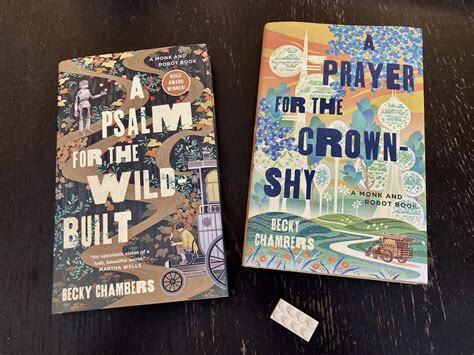
When people ask for my favorite books now I tend to use it as a way to expose them to literature that I think is good rather than the ones I remember enjoying. The answer to that question is the Robot/Monk series or basically anything by Becky Chambers. The other books that I’ve read and now have bought physical copies to be able to hand to other people are HumanKind by Rutger Bregman and Braiding Sweetgrass by Robin Wall Kimmerer, just because those were the two best examples of books I can think of that made me think differently and really ‘blew my mind.’ My worldview changed as a result; they’re challenging in a way that makes you think better of people, not worse. Again, I think that’s something that we need more of now.
The book that I’ve actually based mine on is called World War Z and it’s a ‘speculative oral history about the Zombie War’ which, although not particularly high brow, it feeds something in me that wants to know how people respond to things. By training, I’m a social scientist. I think about systems and how systems change and that’s what I want to read/write about. Zombie media is all about how people deal with stress and I want to write a story about how people manage that in a positive way. Where things get better rather than How do people deal with stress the way and simply survive? Which is what a lot of climate fiction does.
What are you most proud of?
I have never really thought of myself for someone with very grand ambitions. That is perhaps somewhat ironic for one who, when people ask what they do for a living says, “Trying to save the world, Pinky”. That’s also perhaps an odd thing to say as someone who is now embarking on what is going to be quite a large and complex writing project as their first serious work. But I am reminded of Kingdom of Heaven, which is a slightly pretentious medieval epic but has many lines that’ve stayed with me:
‘By what you do every day, you will be a good man, or not.’
I think that is important to me more now than I realized, along with another line from the same:
‘What man is a man that does not make the world better?’
I am aware of how pretentious this is going to sound but I’m proud of my life and what I spend my time doing. Maybe that’s not every day but most days. I’ve built a life where I’m comfortably living in the trenches of climate action/strategy and telling stories about the next world. At least, this is what I’m happiest being proud of. It’s not strictly an achievement or a milestone but there’s been lots of them and when they’re over, it’s always onto the next, the what I do every day.
Who or what inspires you the most?
Here’s a quote from Paul Hawken of Project Drawdown:
When asked if I’m pessimistic or optimistic, my answer is: If you look at the science about what is happening on earth and you aren’t pessimistic, you don’t understand data. But, if you meet the people working to restore the earth and the lives of the poor and you aren’t optimistic, you haven’t got a pulse. What I see in the world are ordinary people willing to confront despair, power, and incalculable odds in order to restore grace, justice, and beauty to the world.
Responding to that question with someone else’s words feels cheap but that is it. I have worked for many years in climate science, system change and activist spaces and at every turn I am confronted with beautiful people working so hard with almost no hope left in spaces that require them to be so careful and gentle with each other and they don’t stop. And they’re not alone! There’s millions of people, peopling out there, every day! It’s hard not to be inspired by that. I think going back to the book, the core and to an extent the core of Solarpunk more generally is that people, peopling, will solve the problem. Perhaps not solve it, but it can be enough to make the future better, to get us where we need to go. If we establish the focus of our society as ‘people peopling’, I think we might be ok.
Where is your favourite place in the world?
I think my home, my house. I’m sorry that’s not more interesting, but I am glad that the place I am most comfortable and feel safest in is where I spend most of my time. There’s a slightly more temporal answer to that question in the sense that the favourite place I have ever been is in London for the Rebellions. Even though that was time in a very particular construction of circumstances, but those were the places around London where I felt most happy and purposeful and at peace, I think. Very often tired and sweaty and dirty and sad at the same time. I constantly wonder what it would take for life to be like that every day. I think that would be my ideal. Possibly not under the specific circumstances of the impending apocalypse and police, but that feeling of purposeful community and having something to do all the time and being surrounded by wonderful people that you love regardless of whether you know them or not doesn’t feel like a bad blueprint for a society.
What gives you hope?
Honestly, not a lot. I long ago developed what I described as ‘an allergy to good news’. I don’t know exactly when it happened, but it was sometime around the Masters when I was doing green technology and sustainability politics. When you understand, when you look at the whole scope of the unfolding disaster around us, every step forward just reminds me of every of how far we have left to go. Whereas every time Musk or Trump doesn’t something so ridiculous it’s just funny because against the backdrop of utter unfolding disaster, what’s one more clown? But, every time we take a step forward I think Oh god, now I’ve got to do the work. By the same token, I think it’s important to not let that feeling make one cynical. I don’t think I would have survived this long. I think ‘qualified optimism’ is the term. We could even call it ‘studied naivety’ if you wanted to, I think. Very simply, we have all the tools we need. We have all the ideas. We have the requisite amount of goodness to do what needs to be done. That reality, confronted with the still-ongoing apocalypse is very frustrating but it’s so easy to fall back on when things get really bleak. I remember that we absolutely can have nice things and we absolutely can do better.
For others wanting to write but who lack confidence or don’t know where to start, what would you say to them?
At this point, I’d ask them for tips. I think I’d want to sit them down with a coffee and ask about their project to get me excited about it because that’s what I want someone to do for me. Time to bounce ideas off someone. I have no pretence at being a writer at this point. I have written, currently, the plan for a very long book, some of the first chapter and a couple of short stories within the setting.
To answer the question: I know the advice that I’d be given by absolutely everyone is ‘Just start’. Do something and do a little bit every day if rhythm is what you do well, but if not find those moments when you are struck by inspiration: write something then. Then when you smoosh it into something bigger, it’ll be crap and then you can edit it into something better and then you can hand it to someone who knows what they’re doing, then it’ll be even sharper. You can throw it at all your friends and they’ll be nice about it, probably, because that’s what friends tend to do. I take great comfort in the fragility of some of the people who end up being in charge of things. If they could do that with such confidence, then you can knock it out of the park, so get on with it. I believe in you at least as much as they believe in them.
Humberside
As we passed the Goole our bow wave danced and jumped through between the ruins. The plants that grew over the old walls lapped and waved. We followed the old highway as it rose out of the water and ran alongside us towards Snaith. The land beside the highway grew greener as the salt water released its poisonous grip.
We’d left the homeship in Cleethorpes Harbour and taken the smaller skiff inland while flights of cargo drones whizzed overhead. Sure, they were annoying, but there was no way we’d be able to deliver all that food and material by hand. Our job was handing off the resettlers to their negotiated landing places. The world was on the move, everyone knew it, but here, today, the Boonmees had travelled across the crumbling world, but they had been chosen to live here, welcomed and needed for their expertise and experience with salt water inundation and coastal defence.
As we approached Snaith, there was a gaggle of people waiting on the jetty. The encroaching saltmarsh tickled the underside of the reclaimed wooden and plastic panels that had grown out from an old concrete railway siding. The storm last night had blown in one of the floating solar arrays. The little island bumped up against the edge of the saltmarsh while an opportunistic maintenance crew traced cabling through the mattered plant life to ensure everything was in order. We could see flickers of fish scudding into the estuary from their disturbed nurseries on the underside.
There were cheers, greetings, offers of food with beer, and the predictable requests for news as the six of us landed on the jetty. We followed the throng up Ferry lane and into the town proper. This close to the water’s edge, most of the buildings had been mined out, ready to become a breaker reef like Goole with their useful innards being transferred further inland to provide resources for the rest of the town. Urban mining wasn’t just the domain of the neomad wrecker clans, everyone in town played their part in stripping out buildings before damp mulched them down to poison the ground. The salt scent of the sea receded, replaced with petrichor as we emerged into the ruderal cracked crossroads that served as the central gathering place in town. The old Plough Inn slumped, tired on the other side.
Mok Boonmee was already engrossed in conversation about what species of plants he’d brought with him to be germinated in Snaith’s salt marsh, and I took it upon myself to introduce his young’uns to their new lodging at the Inn. They were delighted to find their rooms fitted out with everything young people would need to acclimatise to a new place. The townsfolk had donated everything. It was always a surprise to find how welcoming people could be, and how generous. It was why I always insisted on coming ashore and meeting them first hand. As we crossed from cosy dimness into the brightness of the crossroads, the sound of tabla, violin, many stamping feet vibrated the air as voices rang out in grateful welcome.
Thank you so much JimJames for coming on my blog and keep going with your brilliant Solarpunk tales to help breathe new perspectives into future narratives mired in dystopian doom. Please keep us posted how you get on.

To compliment this blog post, read Amanda Fox’s guest post on writing, activism and the natural world and an interview with poet Caroline Mellor.
The post Solarpunk: Creating the future by imagining it appeared first on Rebecca Stonehill.